Living in Colorado, I spend plenty of time hiking and wandering through the woods. Every time, I look around and think about the settlers who first came to this area of the country and how good we have it now. Even then, they had more technology than our earliest ancestors. I reflect on what I know and how I would have fared without power tools, electricity, and a drive-through when I’m feeling hungry. In Stonesaga, players are thrown into a prehistoric fantasy world where every action could lead to the life or death of your character and their tribe.
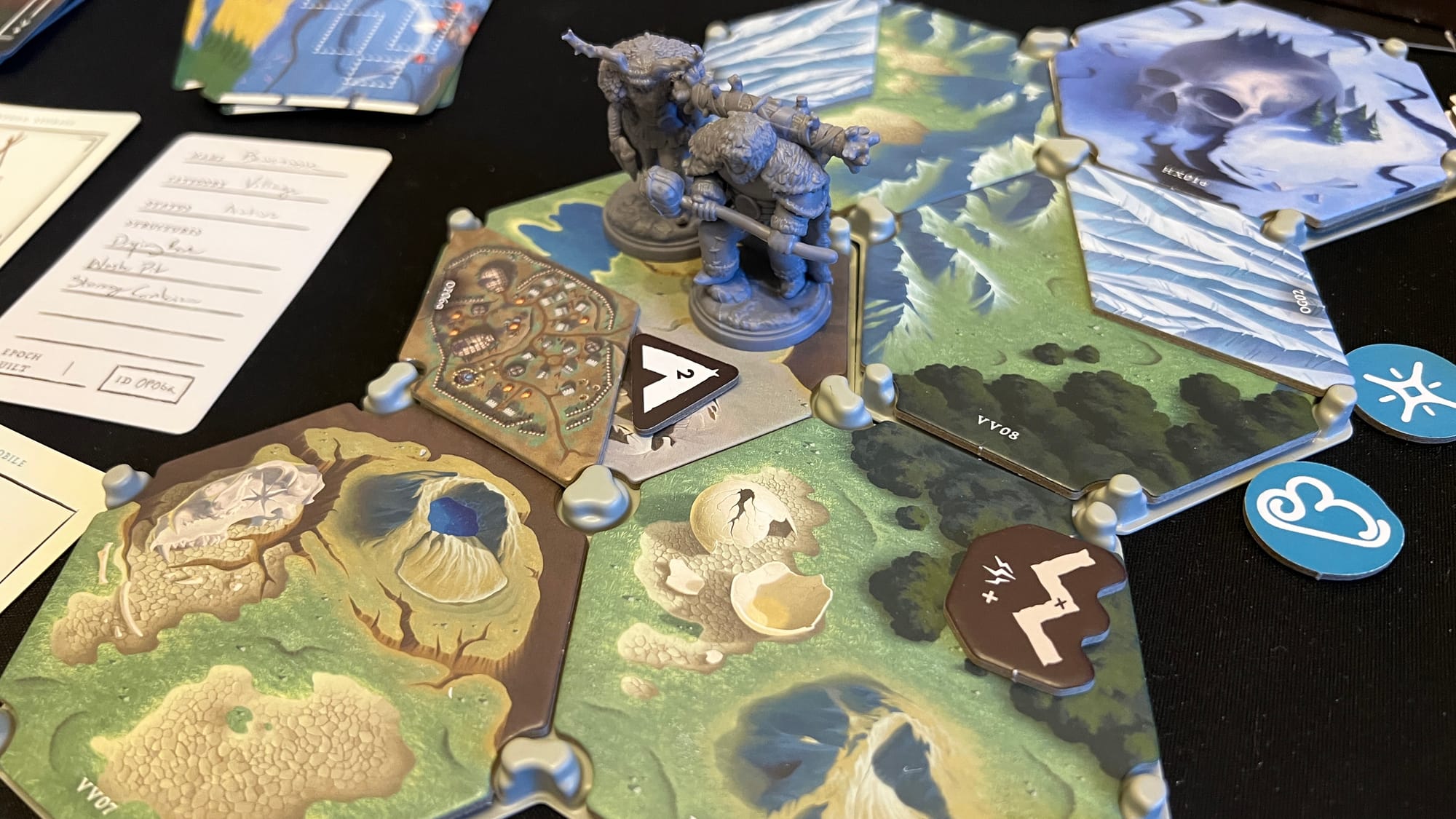
Stonesaga is a 2026 cooperative campaign game from Open Owl Studios and designers Max Brooke and Luke Eddy. In Stonesaga, 1-4 players cooperatively navigate the wilderness in support of their tribe. Each session comes with a challenge and multiple goals that need to be met, placing the characters into new situations they must overcome. While advancing through the game, players gather resources, craft tools, and deal with the natural landscapes and inhabitants of the world. Each challenge adds to the story of the tribe and determines whether they will thrive and survive in an ever-changing world.
Stonesaga does a fantastic job of transporting you into a prehistoric world. The bulk of the action takes place during the Day Phase, where each choice expends energy. While players have goals to meet, they must take a variety of actions to gain the necessary resources to get there. Each tile of the map features different landscapes that offer different resources when players interact with them. Some of the most fun comes from taking on one of the three embedded mini-games to gather those resources.
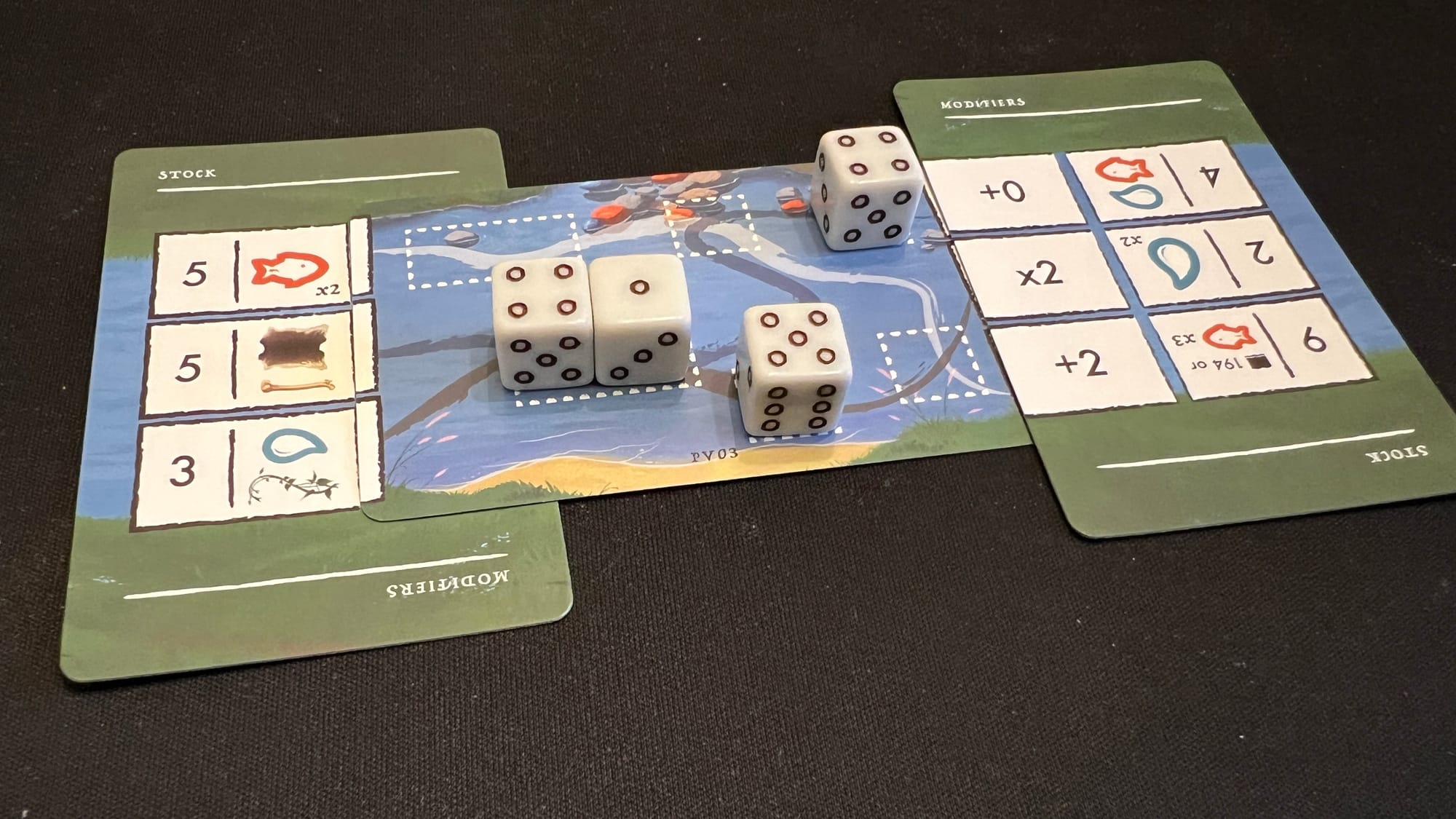
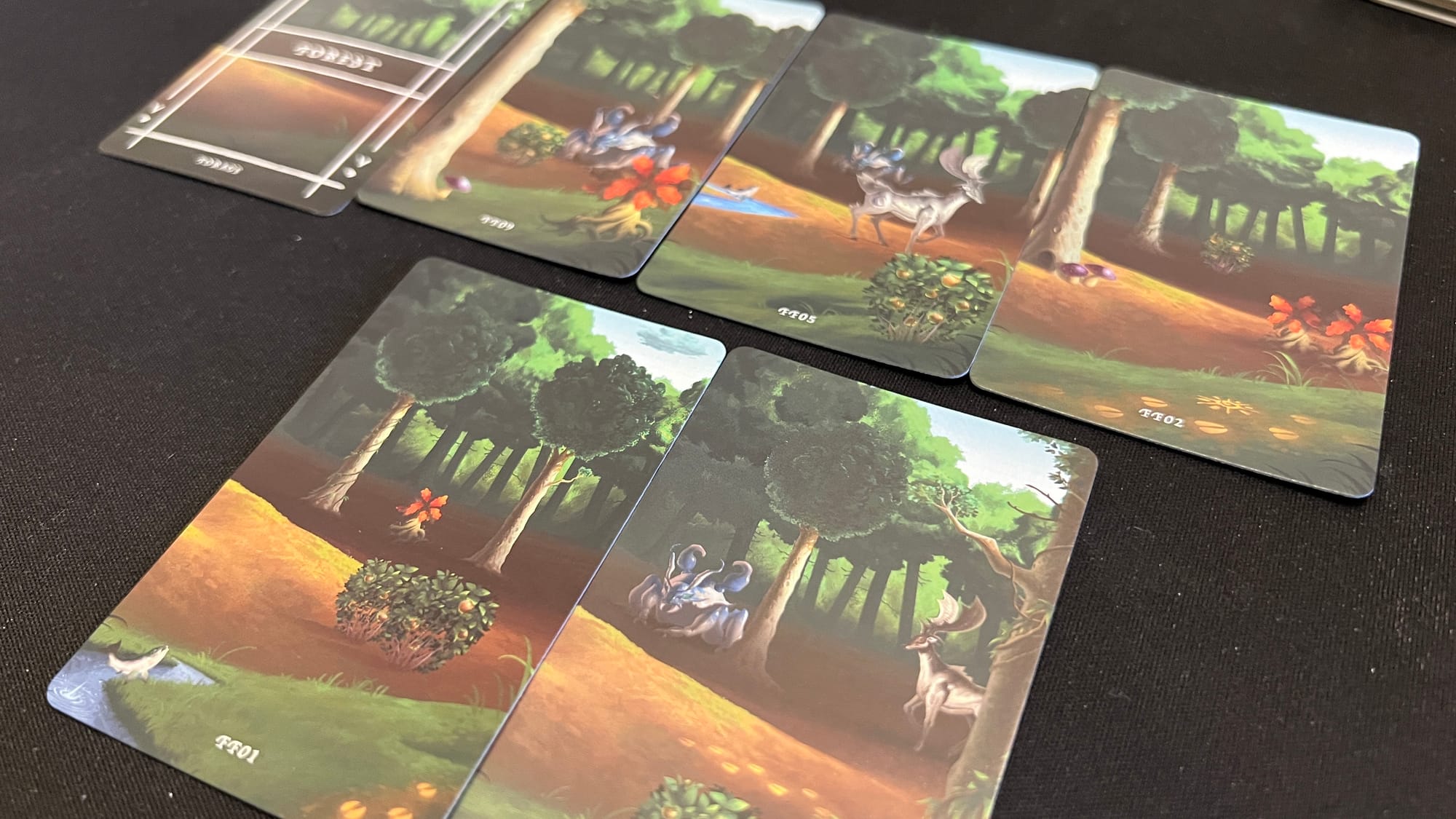
When encountering a lake or river, players can gather water or try their hand at fishing. Players place dice on a variety of special zones to overcome a number threshold. The kicker is that potential modifiers can add or subtract from the total needed after the dice are placed. Four raw minerals can be gained by mining various landscapes. Specific tiles of each type go into a bag, and players can pull out up to three of them, gaining the associated raw materials. Players can also hunt and forage when visiting tiles with forest or prairie features. You can push your luck by drawing new cards to get better options for plants and wildlife, but push too far and you may have to face a predator, which can be rather difficult to defeat.
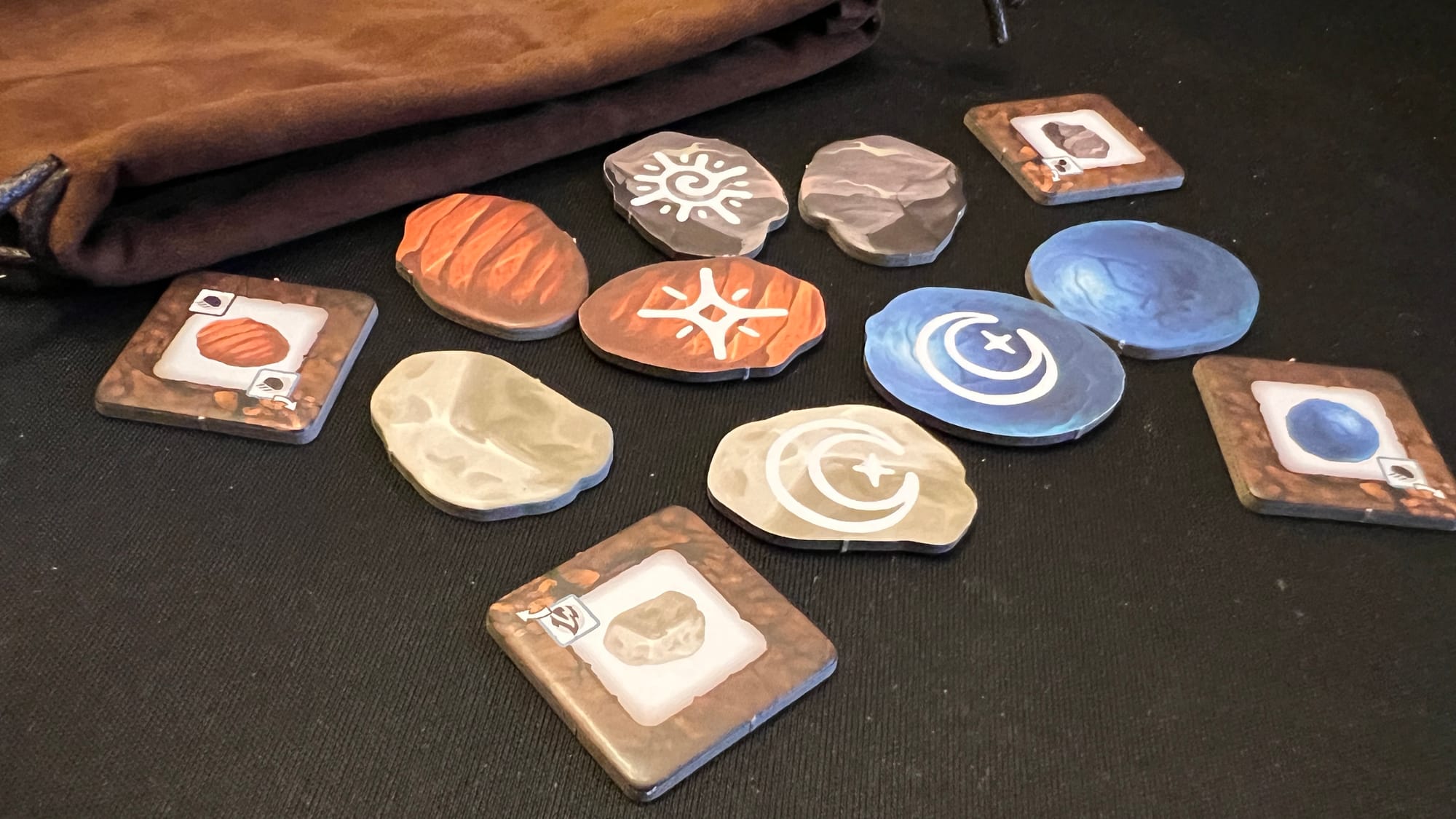
There is randomness to these systems, but Stonesaga gives you ways to mitigate much of it. When mining, you know which ores have gone into the bag, and the different textures can even give you an idea of what you are pulling. The unknown is the omen symbol on the back and whether it will trigger something from the accompanying table. Fishing is more dependent on the cards and dice, while hunting and gathering have their own uncertainties. As your tribe progresses, however, the tools you craft can help mitigate that randomness. The wilderness remains unpredictable, but you're rarely completely helpless against it.
Over time, some of these daytime actions can become repetitive, especially when playing solo. With multiple players, you can spread out the responsibilities, specialize in different tasks, and trade supplies with one another. Solo, you're doing everything yourself. There are moments when gathering resources can feel like a grind because you know exactly what you need to craft an item or complete a goal.
However, that grind also creates some of Stonesaga's tension. Do you spend your limited energy gathering food, water, and shelter so you are prepared for the night, or push forward without them in hopes of reaching the larger goal faster? Playing defense keeps your tribe safer, but it can slow your progress. Sometimes you have to risk being unprepared to accomplish what you really want to do.
Another fantastic and innovative element of the game is manipulating the raw materials you gather. Most materials need to be drilled, cut, crushed, or hit to refine them into craftable materials. The crafting system is where this game really shines. Two tiles can be combined to create a four-letter code that “may” create a useful tool when compared to the Codex. Two of the same material tiles can also be rotated to complete unique items depending on their orientation.
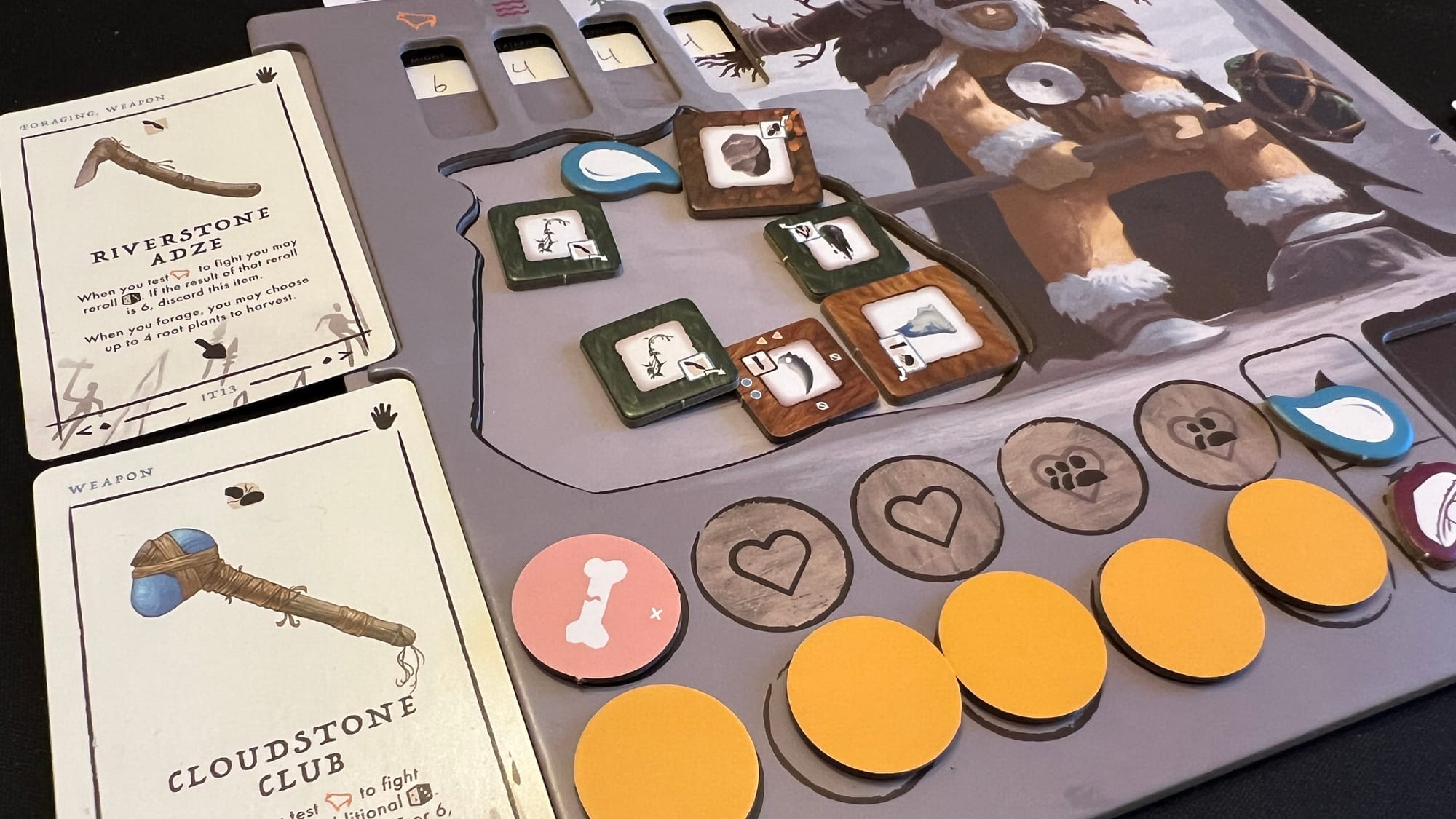
Experimenting with this system during the early game is both exciting and frustrating. Changing the orientation of two tiles can produce completely different results, and you may end up creating something you weren't intending and have to go back to the drawing board. Finding a successful combination actually feels like discovering something.
As your society develops, you gain access to better items and potentially stronger materials. More importantly, your tribe remembers what it has learned. Once you discover recipes, you don't have to waste time blindly experimenting with those combinations again. You can go after the materials you know you need and intentionally craft items that will help accomplish future goals. Crafting therefore evolves from experimentation into another form of progression as your tribe accumulates knowledge about the world.
The strategy of the game comes from deciding which actions to take, when to push for leveling up your characters, and when to focus on the goals and challenges. Go without food, water, and shelter, and you may not recover as much energy overnight. When all players decide to end the Day Phase, the Night Phase begins. Players recover energy and potentially encounter experiences that could advance or hinder the tribe.
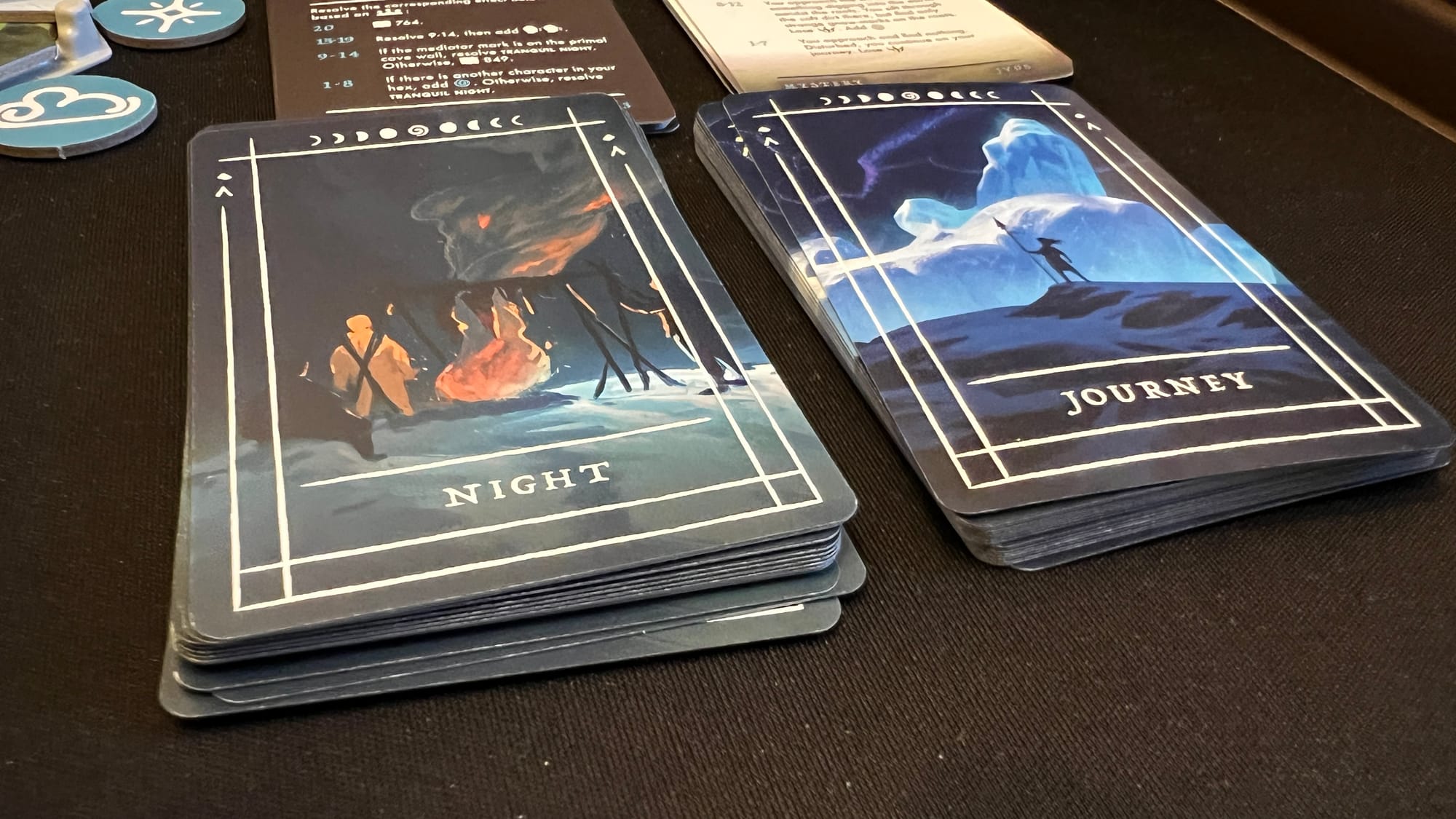
The Night Phase also helps keep the larger gameplay loop from becoming stale. As the campaign progresses, the deck grows with new challenges and adventures, while the changing goals of each chapter give you different reasons to venture into the wilderness. The basic actions may remain familiar, but the variety and progression of the story continually change what your tribe needs and what you are working toward.
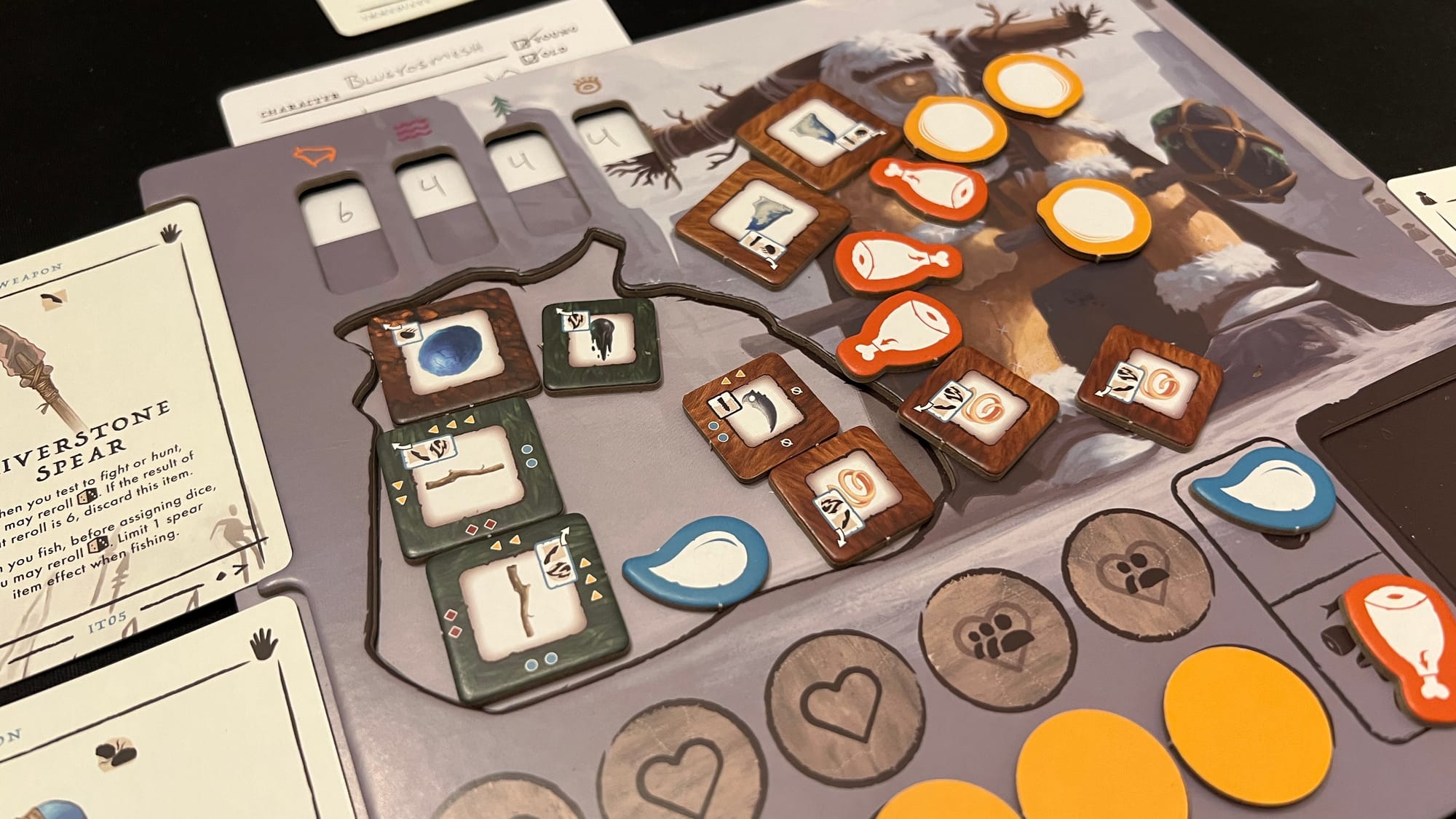
Another great feature is reconciling the load each player carries. Tiles are different shapes and sizes, and everything being carried over to the next day must physically fit within the dual-layered carrying sack on each player's game board. Overnight, perishable food items begin to decay, while depleted locations on the board regain their stores. Even deciding what you are willing to carry forward becomes part of preparing for tomorrow.
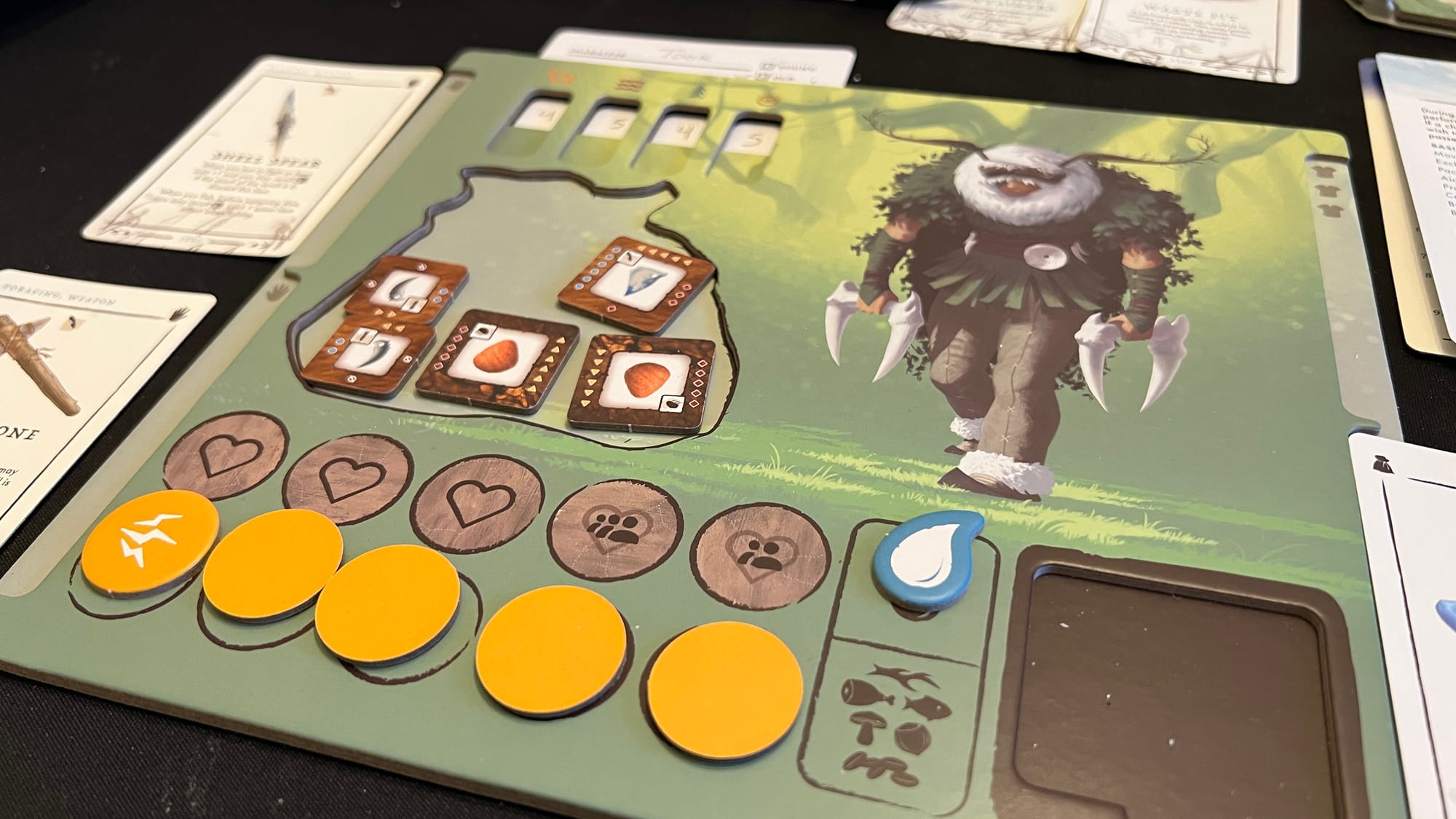
Character progression works a little differently than you might expect from a campaign game. Characters improve through how they interact with the environment and can temporarily level up different skills, but those skills—and the characters themselves—don't last forever. Characters can die from the harshness of the land, fall during a random encounter in the wilderness, or simply die of old age.
When that happens, you create a new character. Each generation can bring new skills and personalities while carrying relics from the past into new situations. Your characters may only last a handful of sessions, and there are plenty of cards available to create new ones, along with a fun name generator that may or may not produce something true to life.
This generational system reinforces one of my favorite ideas in Stonesaga: your individual character isn't really the main character of the campaign, the tribe is. Individual members come and go, each contributing something during their short time in the wilderness, while the tribe continues to grow around them.
That growth isn't always purely beneficial. Some items and structures are permanently tied to locations, while others can move with the tribe. Increasing the population means more people contributing to the society, but it also means more mouths to feed and more people who could become discontented. Those factors can change how you approach future scenarios. Progress doesn't simply make everything easier; a larger society brings larger problems.
That helps establish the game's approach to difficulty. How dangerous Stonesaga becomes often depends on how much you are willing to risk. Your daily actions can prepare you for many of the challenges ahead, but every action spent preparing is one that isn't advancing your larger goals. At times, it feels like an offense-versus-defense decision: prepare for everything and move slowly, or take a chance and push ahead.
Failure can certainly be frustrating, but Stonesaga generally gives you a way forward. There isn't really a traditional “lose” condition hanging over the campaign. Instead, setbacks become something the tribe has to adjust to. Part of the fun of a campaign game like this is figuring out how to move forward despite those setbacks and seeing how the players respond when things don't go according to plan.
Cooperation becomes especially important because no single player can do everything efficiently. Different skill values allow different characters to shine at different tasks, encouraging players to divide responsibilities across the map. Like many fully cooperative games, Stonesaga can be susceptible to quarterbacking. An experienced player will naturally have a better understanding of what resources are needed and which actions might be most efficient. This is especially noticeable when introducing a new player to an established campaign because so many systems have been layered on top of one another. The game is at its best when experienced players give everyone an equal seat at the table and allow them to participate in deciding how the tribe moves forward.
The campaign itself starts by helping you establish and grow your tribe before eventually introducing larger and branching decisions. Those decisions can help guide the flavor and direction of your story, meaning one tribe's journey could look different from another. More importantly, the narrative weaves nicely into the actions you are taking each day rather than feeling completely separate from the game you're playing.
This box is full of content, and when unpacking the game for the first time, you may feel a little overwhelmed. However, the game does a great job of helping you sort all the components into the proper places in the included trays and then guiding you into your first game. The opening scenario walks you through the basics and adds more rules and opportunities as you progress through the goals. The rulebook is definitely dense, but it provides examples of how to complete each action, and page references are littered throughout the game when needed.
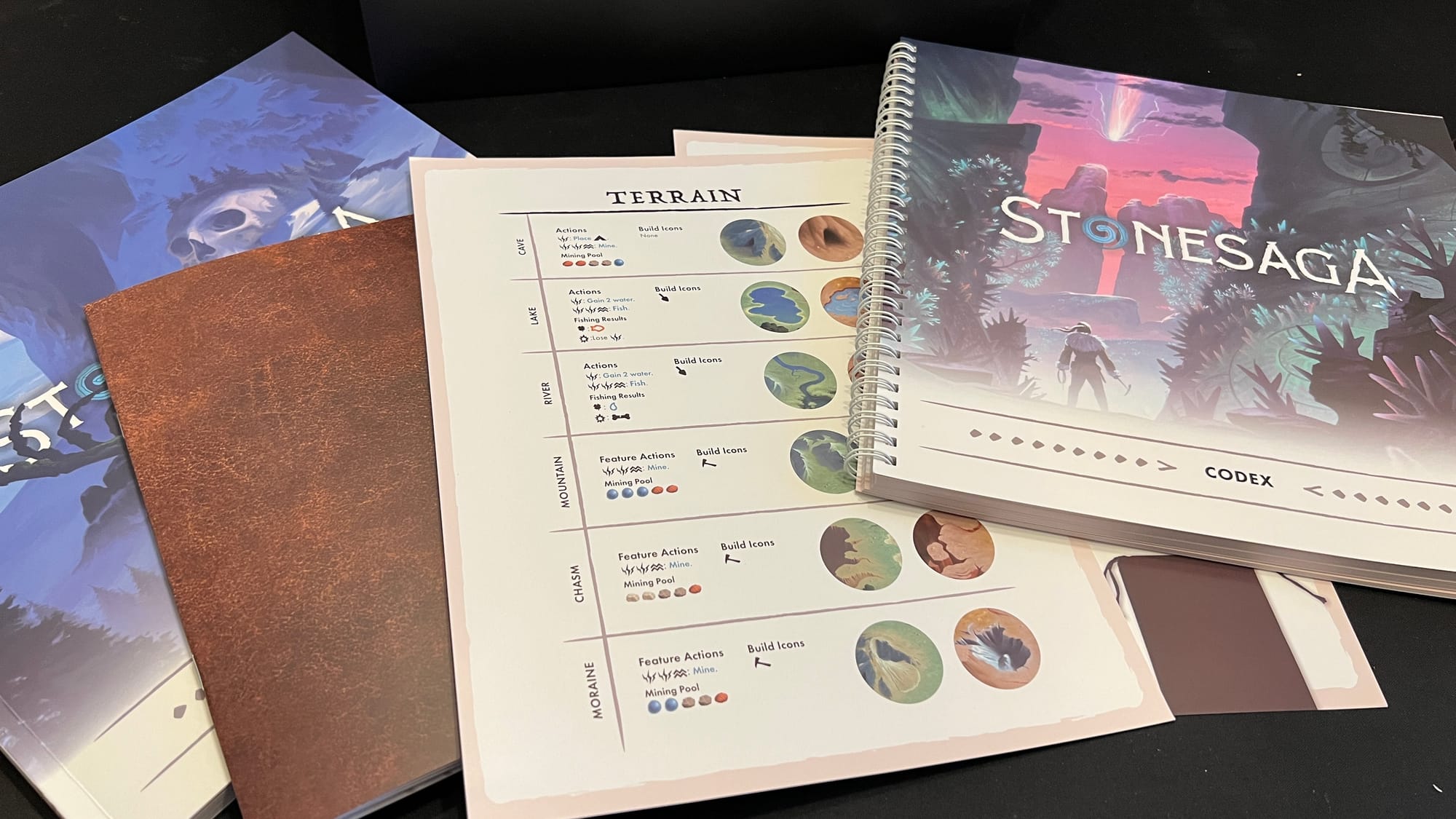
The Codex is another fun way to navigate the world. At various points throughout the game, you will reference story passages, tables to interpret omens, crafting recipes, and even cave drawings to add to your tribe's cave wall. The game also includes various player aids to walk you through the steps of each action, and those get a lot of airtime when you're starting out.
The developers have also created a companion app containing much of the Codex along with real-time errata updates and an updated rulebook. Unfortunately, it doesn't contain everything from the printed Codex, so there can still be some jumping back and forth between the two.
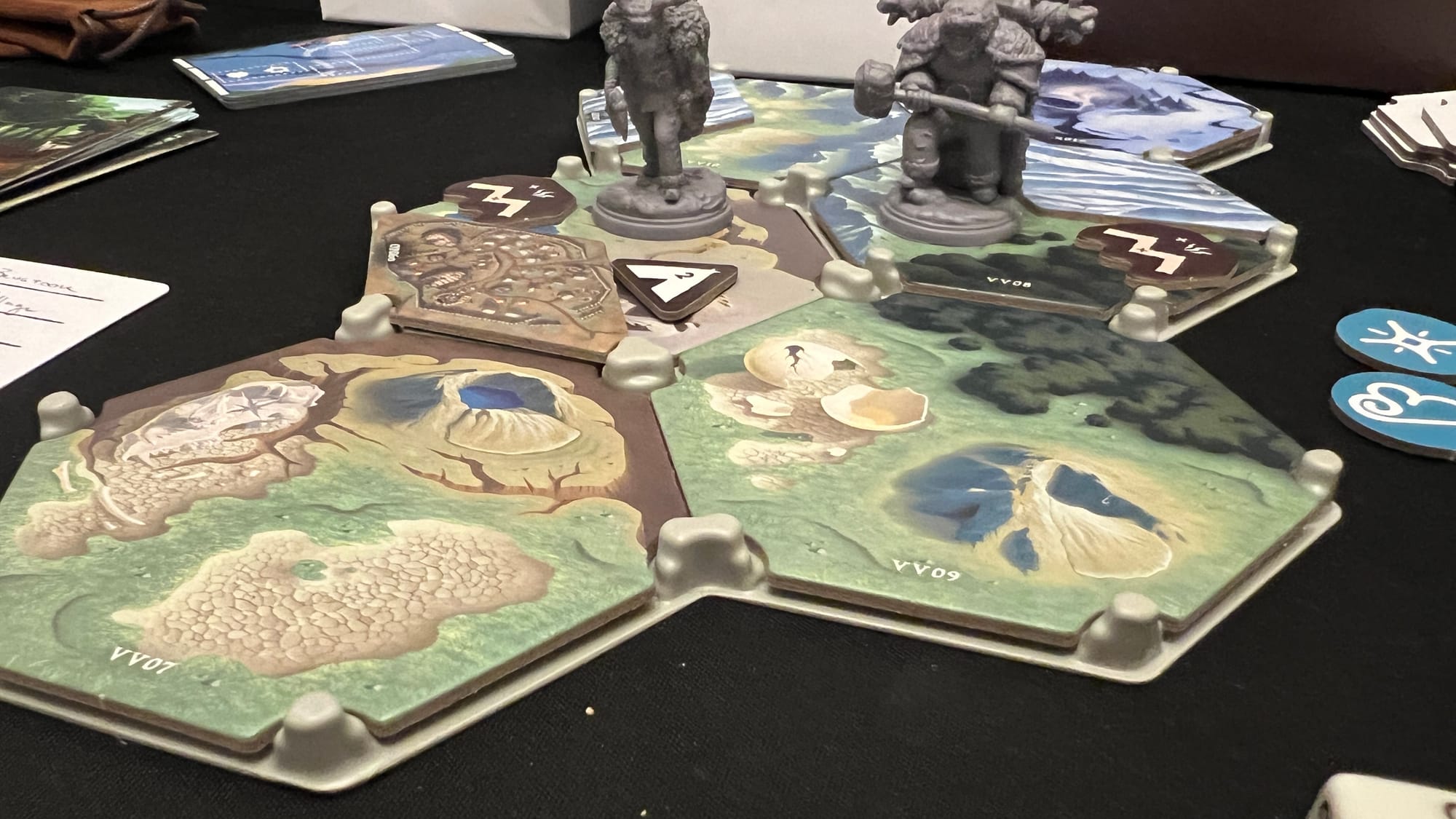
The components themselves are fantastic. The artwork is inviting, and each of the tiles in the game is unique. The map system has players discover tiles stored in three-tile trays, and between sessions those trays stack nicely so your evolving map can be stored and easily returned to the table. Players also catalogue their discoveries as they progress, making it surprisingly easy to pack away such a large campaign.
Stonesaga is the kind of game I would love to leave set up on the table all the time, but that's not always an option. My sessions have generally lasted an hour or two, getting longer as we've progressed through the story. Thankfully, there are natural stopping points between goals, and the storage system makes packing up an ongoing campaign much easier than the size of the game would suggest. Just make sure you take good notes before putting everything away.
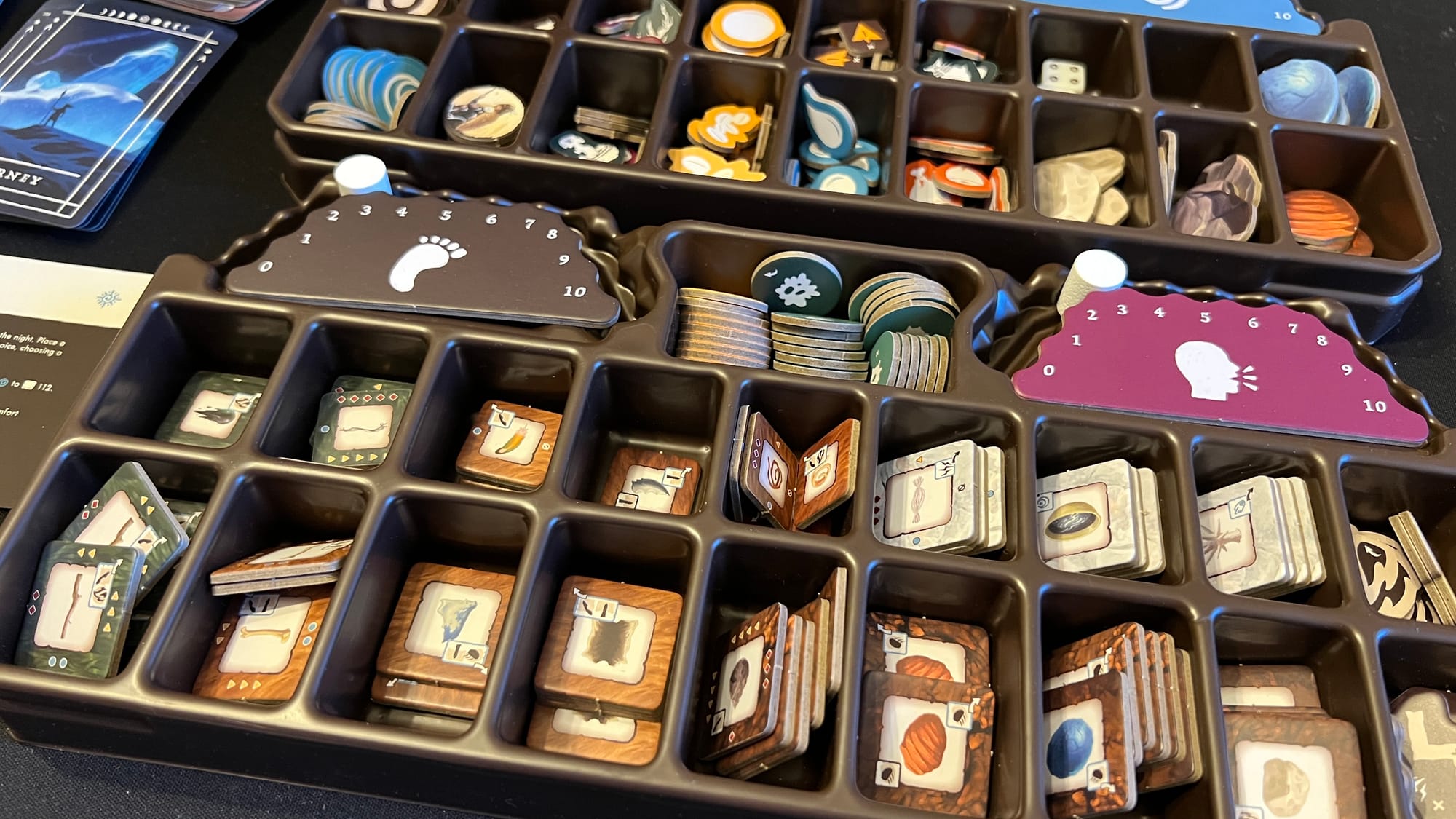
The included Game Trayz make setup easier, and nearly every component has a logical place in the box. Stonesaga also comes with miniatures representing the four player characters. As characters age or die during the campaign, players can change out miniatures and player boards to represent their new characters. As you move deeper into the game, you may also discover giant creatures lurking in the wilderness, represented by their own unique and intriguing miniatures.
All of the cards are stored in two card boxes, and I have to say this is one of the most frustrating parts of the game's storage. There isn't enough friction on the sides, so stacks of cards easily fall over inside the boxes and have to be readjusted frequently. Considering how often you need to flip through cards over the course of a campaign, this small annoyance adds up.
With a game this size, there is also the possibility of errors or missing information. When searching for clarification, I ran across a large errata document for the first printing. The second printing from the more recent crowdfunding campaign will come with updated materials, and updated digital rulebooks have been posted, but the amount of errata associated with the game is still disappointing. The companion app helps by providing updated information, but when I am looking for an escape from technology, I would love what's physically in the box to be up to date.
Stonesaga is a game for people looking for adventure through a cooperative campaign experience and who enjoy discovering systems alongside the narrative. Each time I got the game to the table, I was drawn in by the story and the interconnected puzzle of exploring, gathering, crafting, and deciding just how far we could push before calling it a day. Building up the tribe and exploring the land for expansion is immensely satisfying, and watching individual characters come and go while the tribe continues gives the campaign its own personality.
That doesn't mean Stonesaga will be for everyone. This isn't a game for someone looking for a complete, self-contained experience every time they sit down at the table. It asks for a campaign commitment, comes with considerable rules overhead, and occasionally requires players to work around errors or consult multiple sources for information. Some of the repeated resource gathering can also become a grind, particularly when playing solo. Players who prefer to pursue their own strategies rather than work together may also find the cooperative nature limiting. For everyone else, there is a tremendous amount of game packed into the core box, with two expansions available to push the experience even further.
So, can I survive the tabletop wilderness? So far, yes. But winter is coming, the wilderness keeps getting bigger, and stranger creatures seem to be showing up every day. I'll keep pushing forward to see if I can hold my tribe together.
Stonesaga
Great
Stonesaga is a cooperative campaign game where players explore a prehistoric wilderness, gather resources, craft tools, and build a tribe that evolves across generations. Its fantastic crafting and progression systems create a strong sense of discovery, though repetitive resource gathering and some rules and errata issues can occasionally slow down the adventure.
Pros
- Fantastic crafting system
- Strong campaign progression
- Immersive world and story
Cons
- Resource gathering can drag
- Rules and errata issues
- Potential for quarterbacking
This review is based on a retail copy provided by the publisher.