In our YouTube unboxing about Marvel Crisis Protocol Alliances, I had called out the probability of this game being a great gateway game, and after a few rounds with it, I’m willing to back that statement, but with a few caveats.
Marvel Crisis Protocol Alliances is a new board game format of the popular skirmish wargame, Marvel Crisis Protocol. I am a big fan of the game system as it’s easy to learn with a wide range of models, and we have covered a lot of MCP on GamingTrend.
So when Alliances was announced, it made sense. Other wargaming companies have produced board game variants of their lines, as they are an easier entry into the hobby, and for the hobbyists, the board games usually contain special sculpts of models. And Alliances fits that mold perfectly.
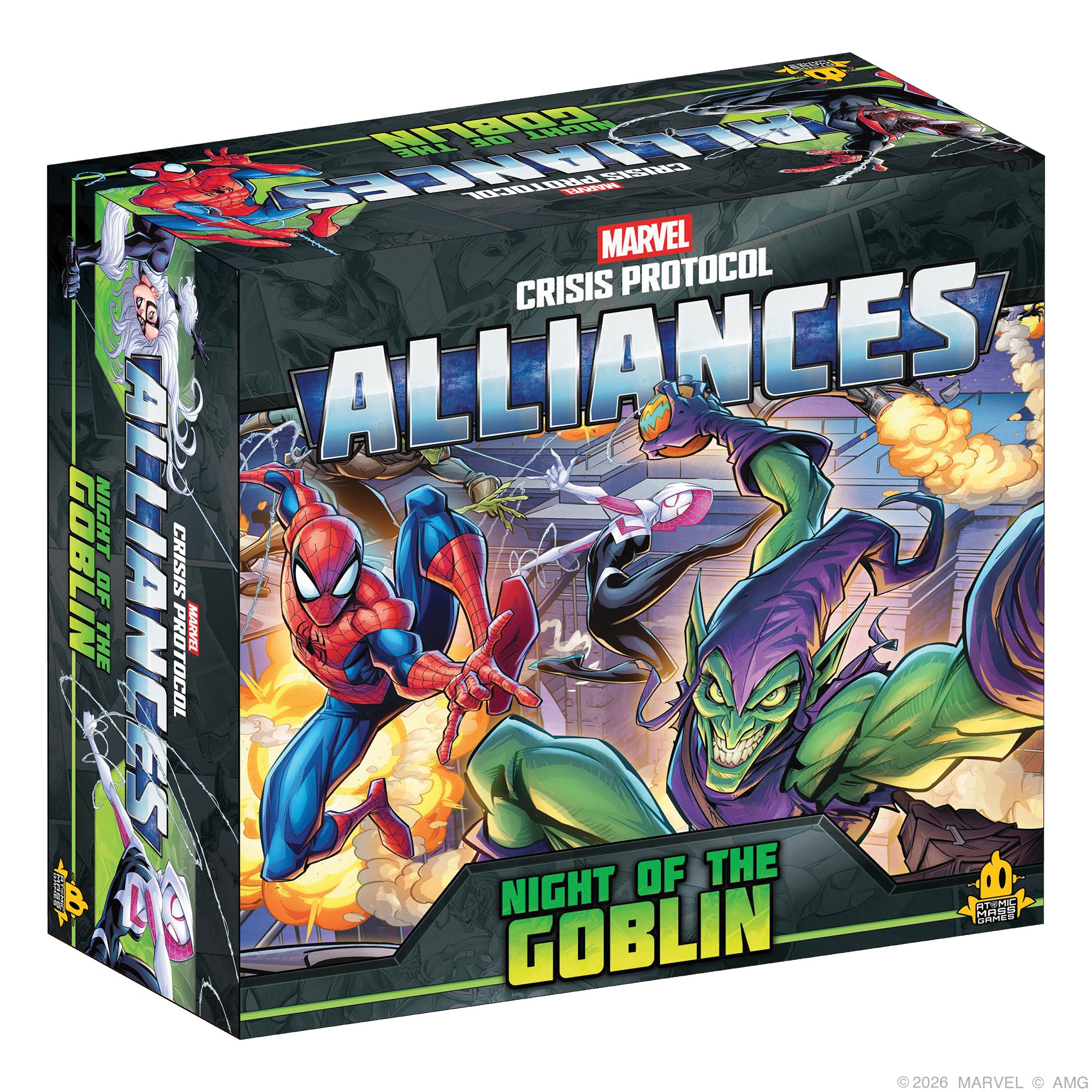
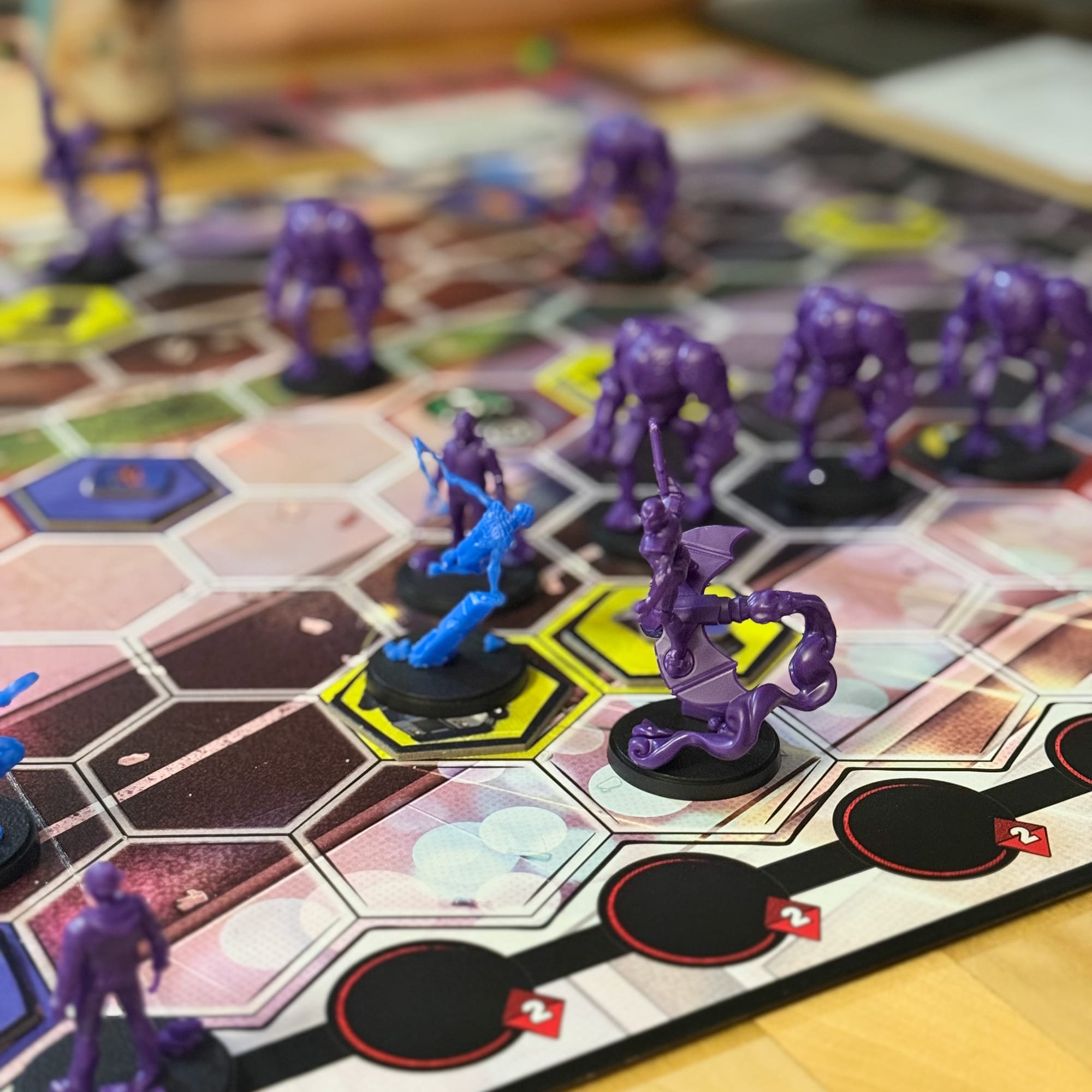
The first Alliances box: Night of the Goblin, is set up for up to 1-4 players (yes you can solo it), and pits 4 heroes against the army of the Green Goblin. The models included are unique sculpts to the game, all put together with a push-fit system called F.A.S.T.
The gameplay is reminiscent of beat-em-up video games, with a system where the board constantly produces enemies while the heroes have some goals per map to finish in order to win.
In short, the game is a blast, and I do recommend it, but I have some concerns about replayability.
 Asmodee USA
Setup and Unboxing
As covered in our unboxing video, you’ll get 23 push-fit models, including Ultimate Spider-Man, Black Cat, Ghost-Spider, Spectacular Spider-Man, The Green Goblin, and a bunch of minion models. An important note here is that the game not only includes the necessary materials to play the game but also updated MCP cards for the 5 models I just mentioned. This is clearly a benefit to players of both games, and a way to sell folks on the core game itself.
Everything is high quality, and the push-fit system is interesting, so let’s dive into that. If you want more details, please watch our YouTube unboxing!
The F.A.S.T system (Fusion Assembly SysTem)
If I’m honest, I’m torn. While I like the ease of assembly, where a lot of the models didn’t require glue…this also takes away from the kitbashability of the model. In MCP, there are always ways to customize a model, and by having a nicely engineered model, you lose that.
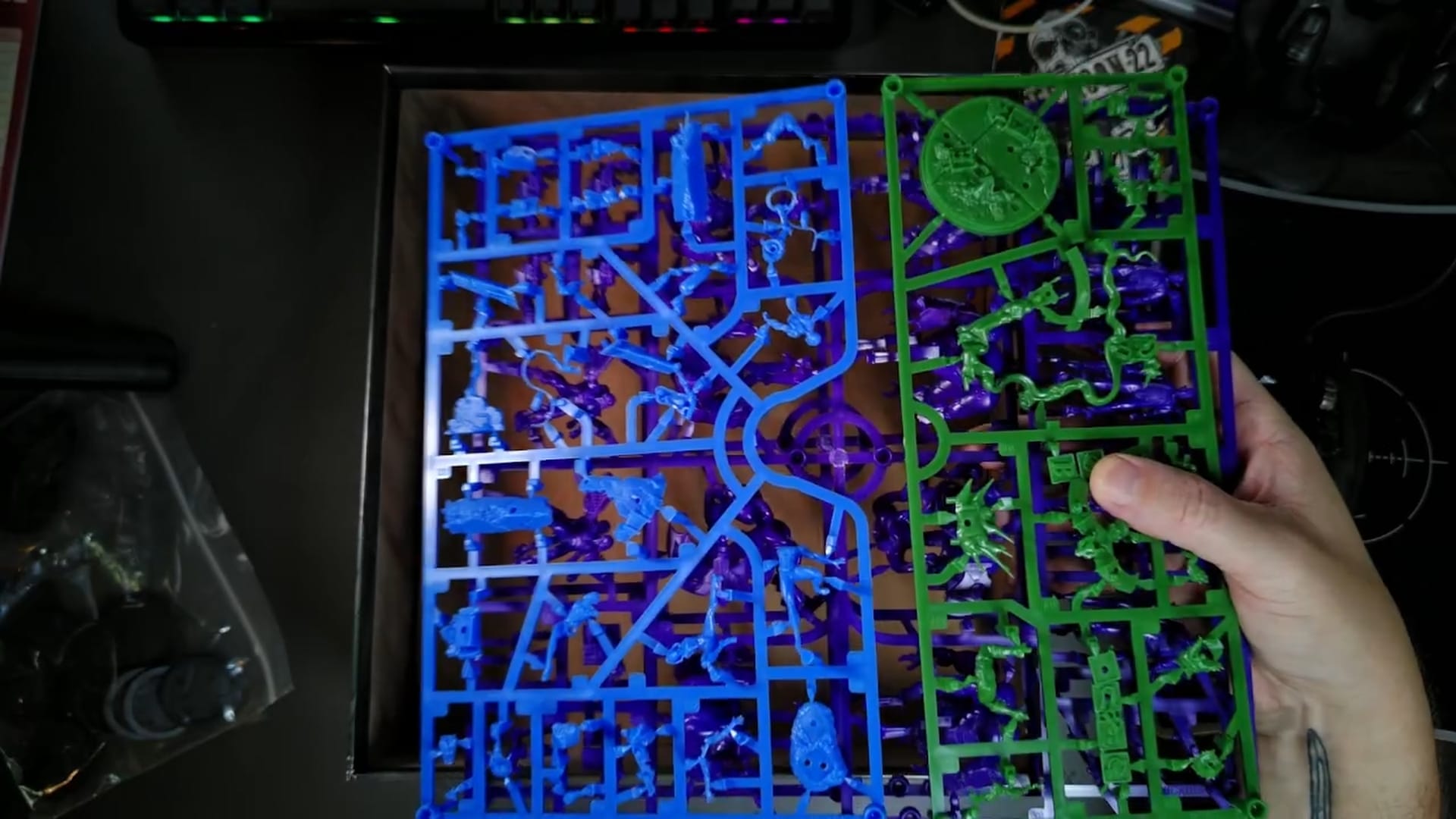
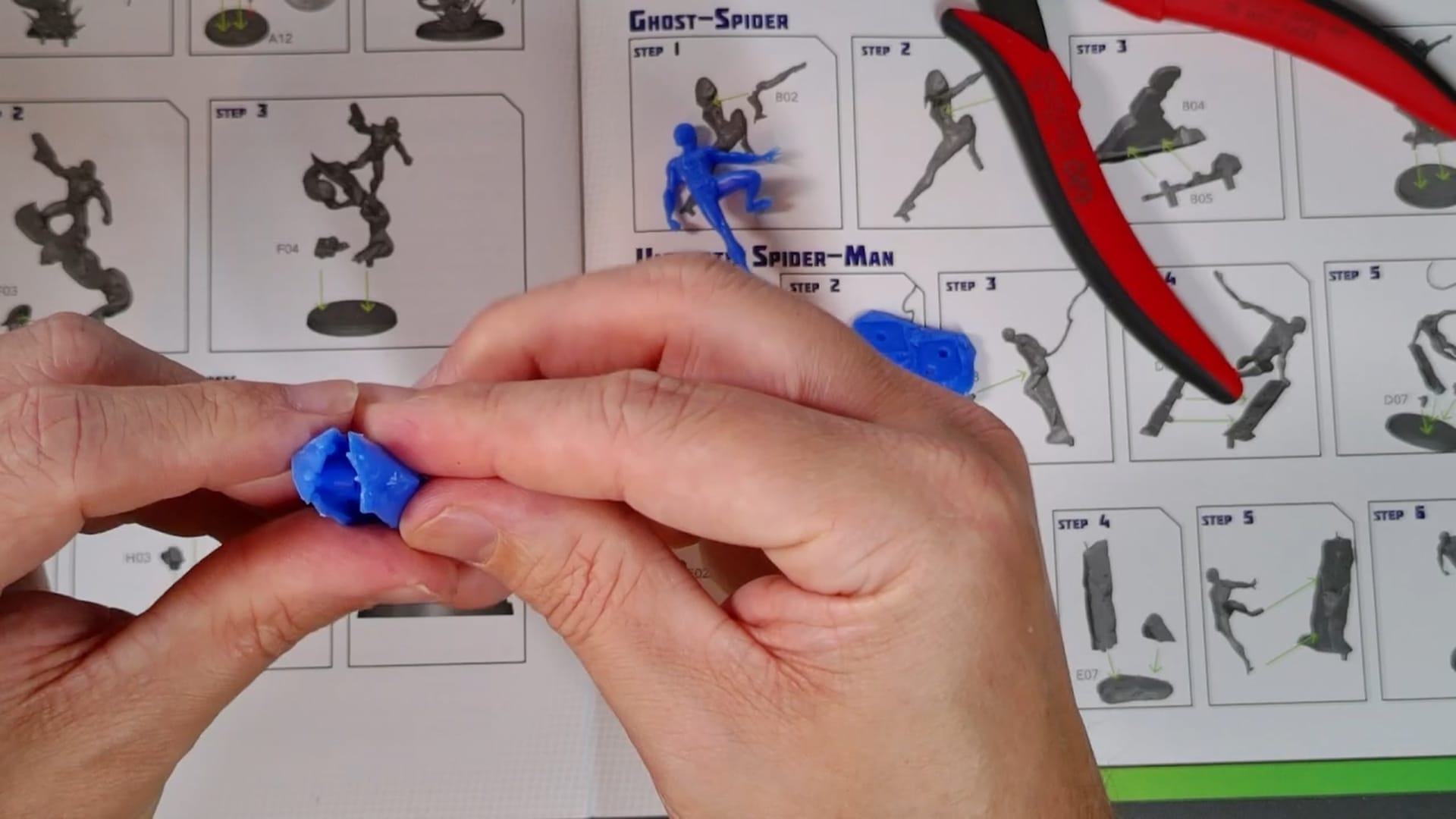
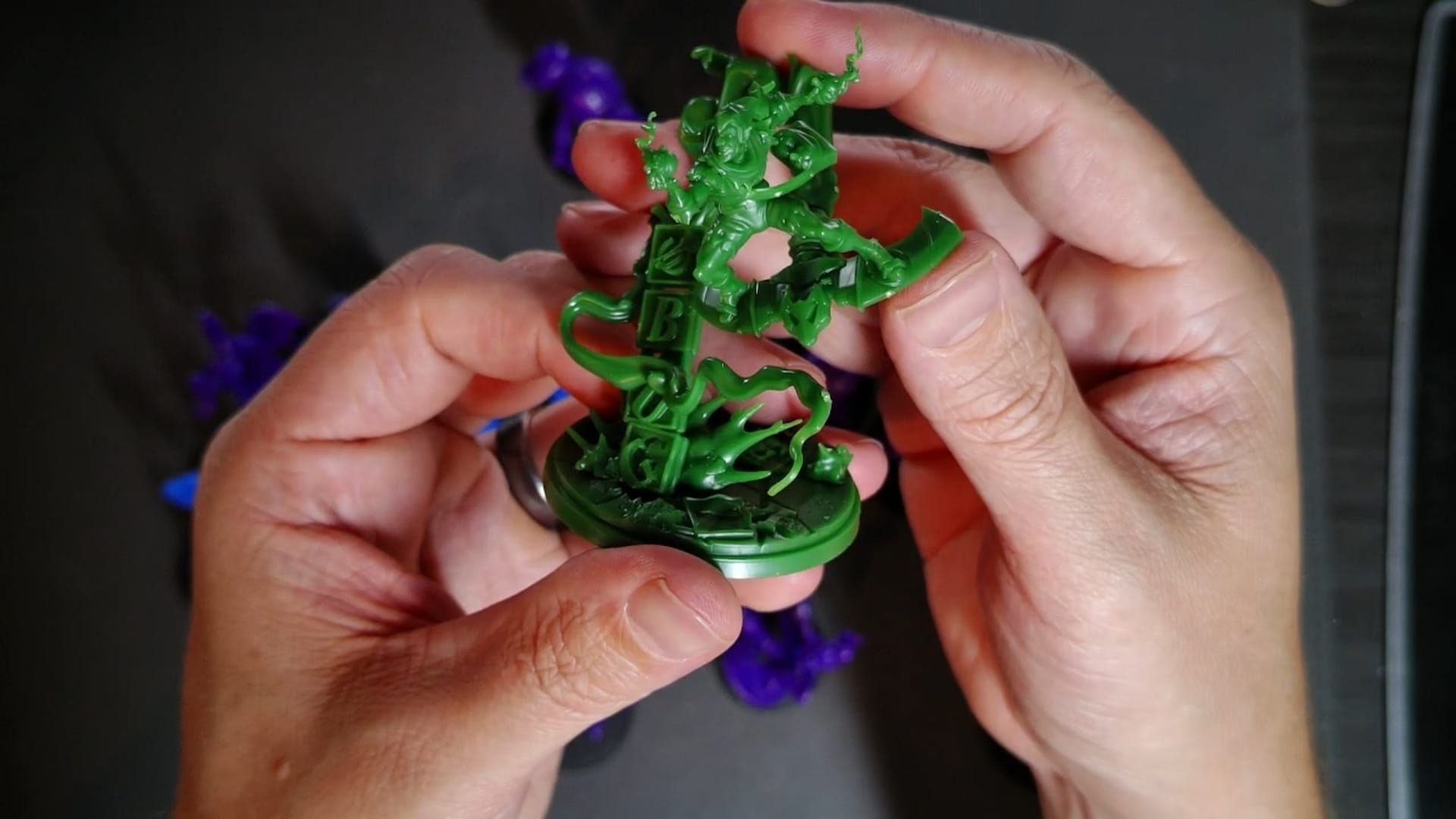
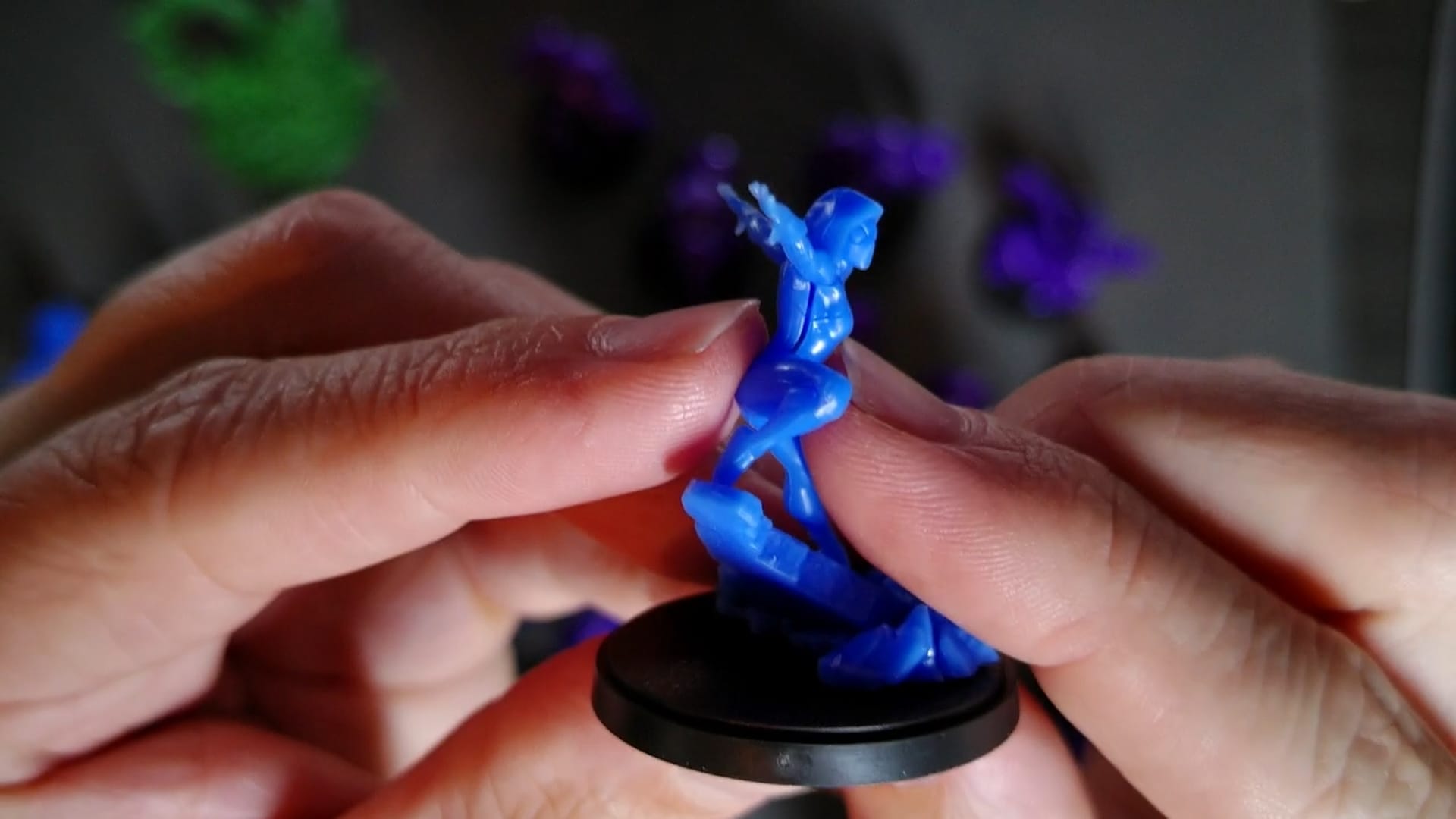
But if the goal of this game is to get new players in the door, the push-fit system works. Some of the models didn’t really work well with this setup. The War Glider Goblins kept falling off of their stands, and some of the Spider-team didn’t really come together well. So, buyer beware. Keep that super glue handy.
How’s it Play?
Digging into the gameplay, this is where I’m a big fan. The game comes with two double-sided Stage boards, and traditionally, players should play through all four, which I think really lends to the video game experience. A big part of this is the leveling-up system, which occurs when the players defeat enemies, succeed at objectives, or complete boards. And a second part of this is the Enemy Spawn system, which keeps the board full most of the time.
The level-up system, I think, is the more intriguing aspect of this form of Marvel Crisis Protocol, as, like in a video game, it enhances the characters to better match the difficulty and randomness of the enemies.
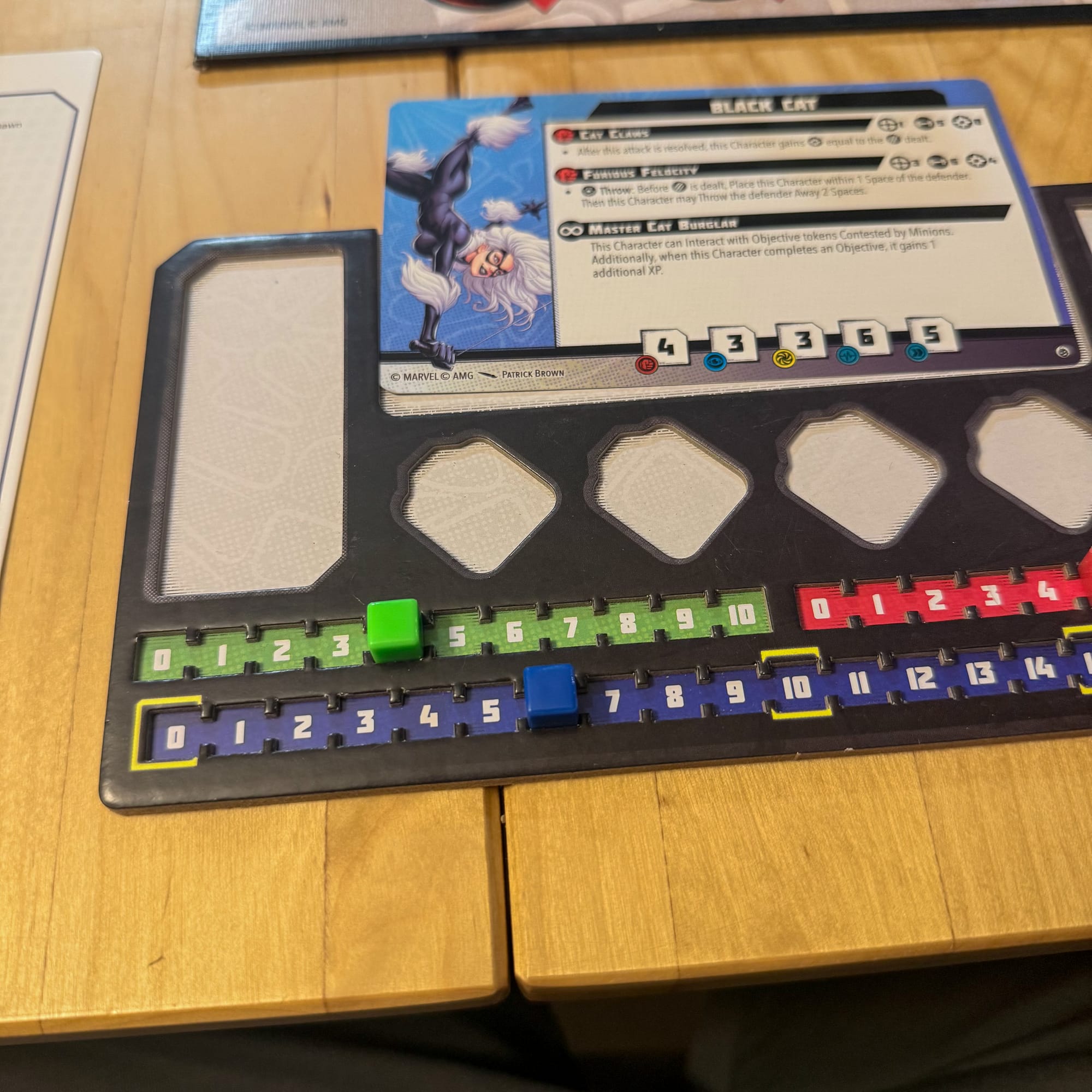
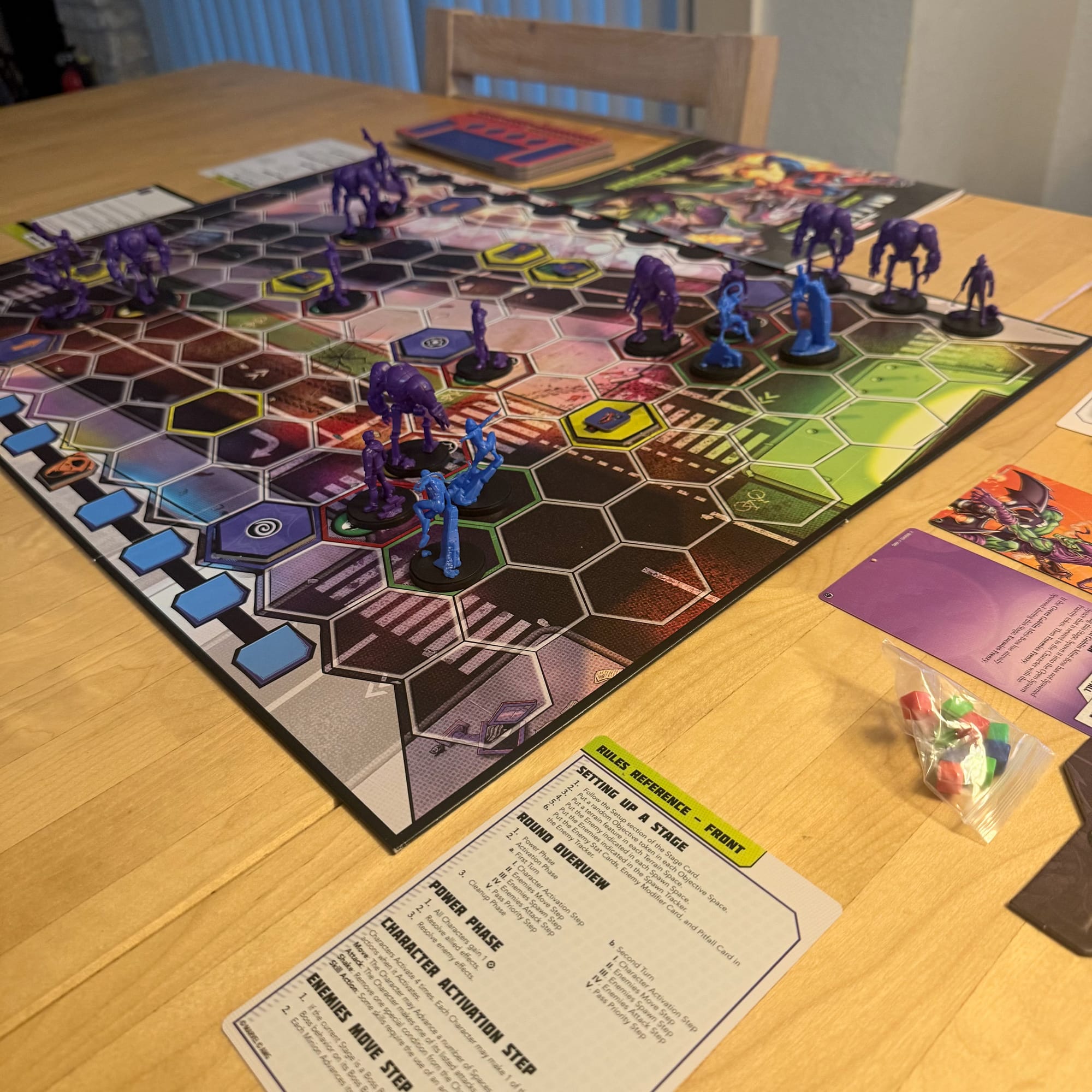
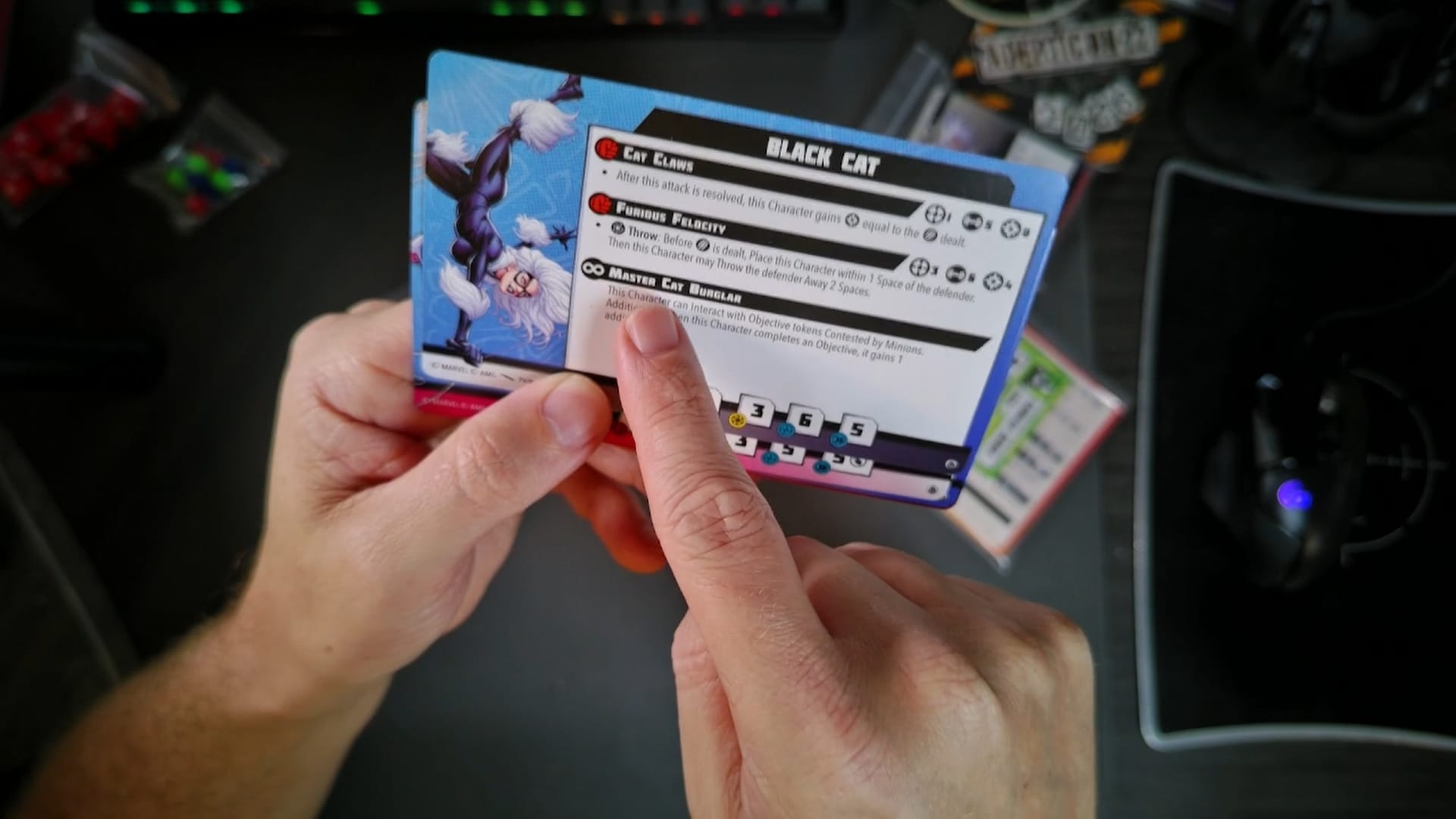
A game will initially take about 2 to 2.5 hours, with subsequent games taking less time. If you’re inviting friends over for game night, save yourself a half hour and set up the game; this way you don’t have to teach the minutiae of the game itself. For players of Marvel Crisis Protocol, the game is very familiar.
For Character Cards, the attacks, skills, stamina, speed, and defenses are all the same icons as in the normal game. For those who don’t know, each of those areas align back to a score that generally represents the amount of dice, distance, and energy that is needed to perform a special action, move, or handle your health or energy pools.
Unlike in MCP, the energy and health are tracked on a Character Dashboard, which is a lovely piece of cardboard meant to hold the character card, an inventory, tracking cubes, activation tokens, and special condition tokens.
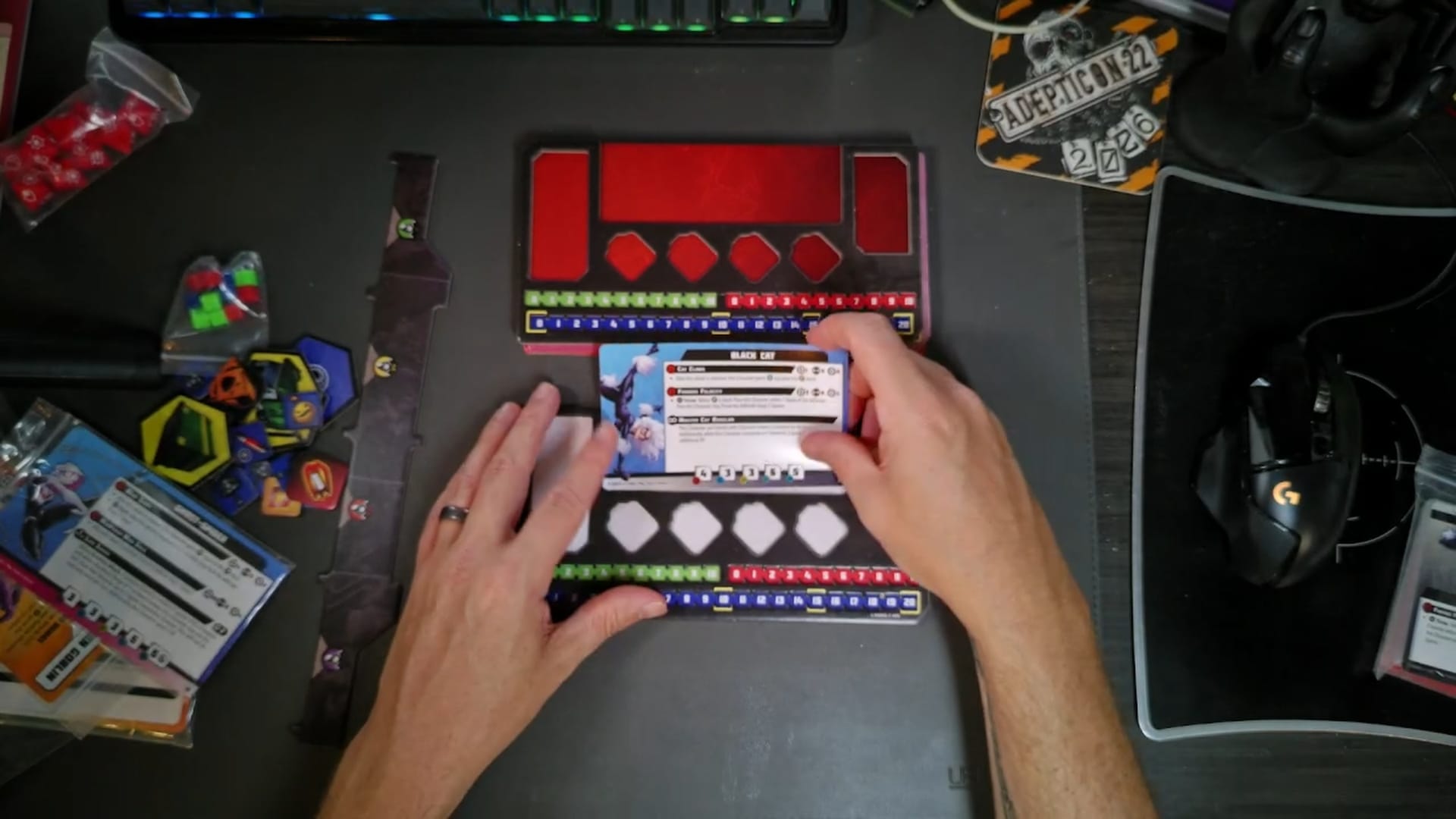
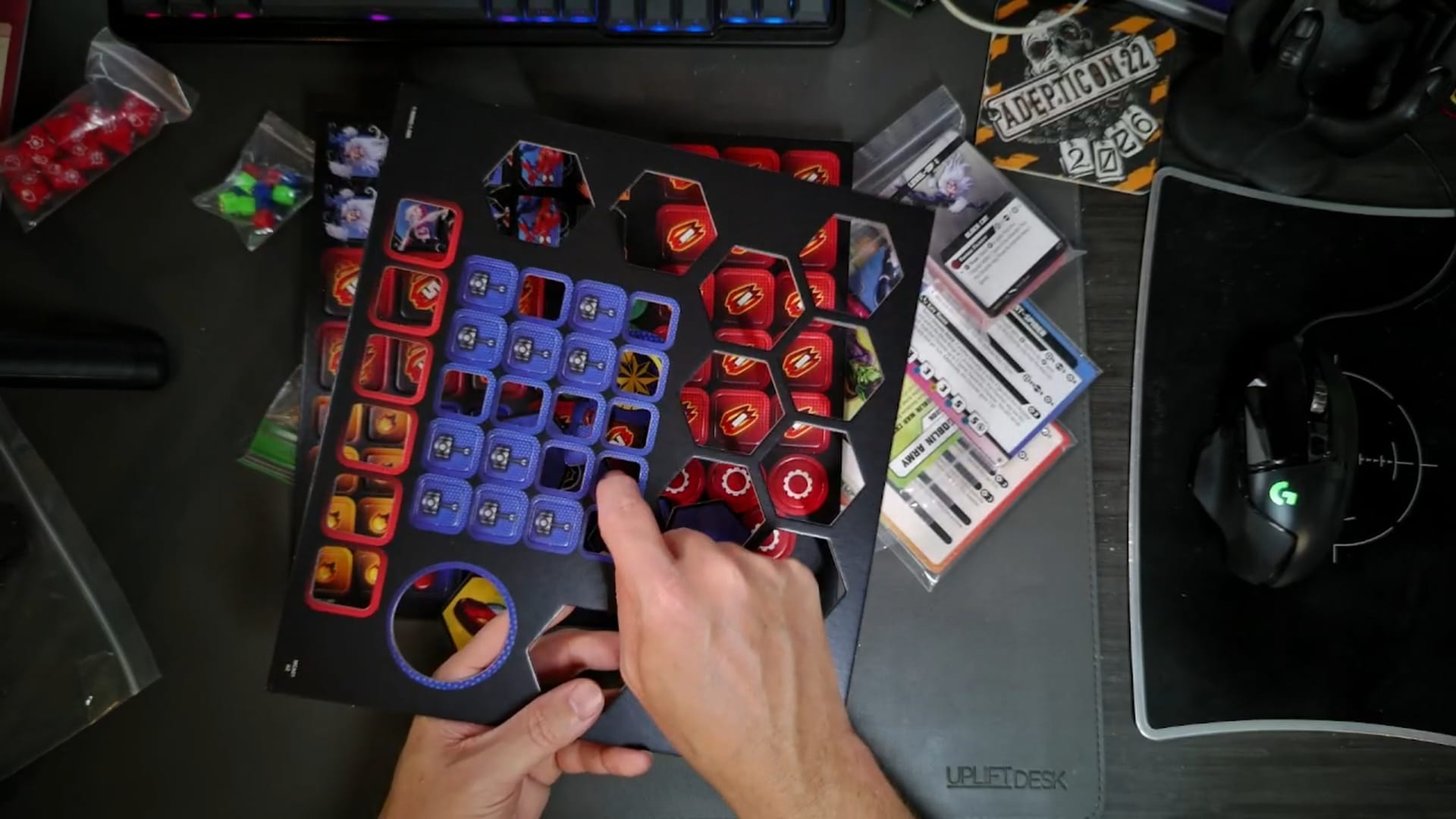
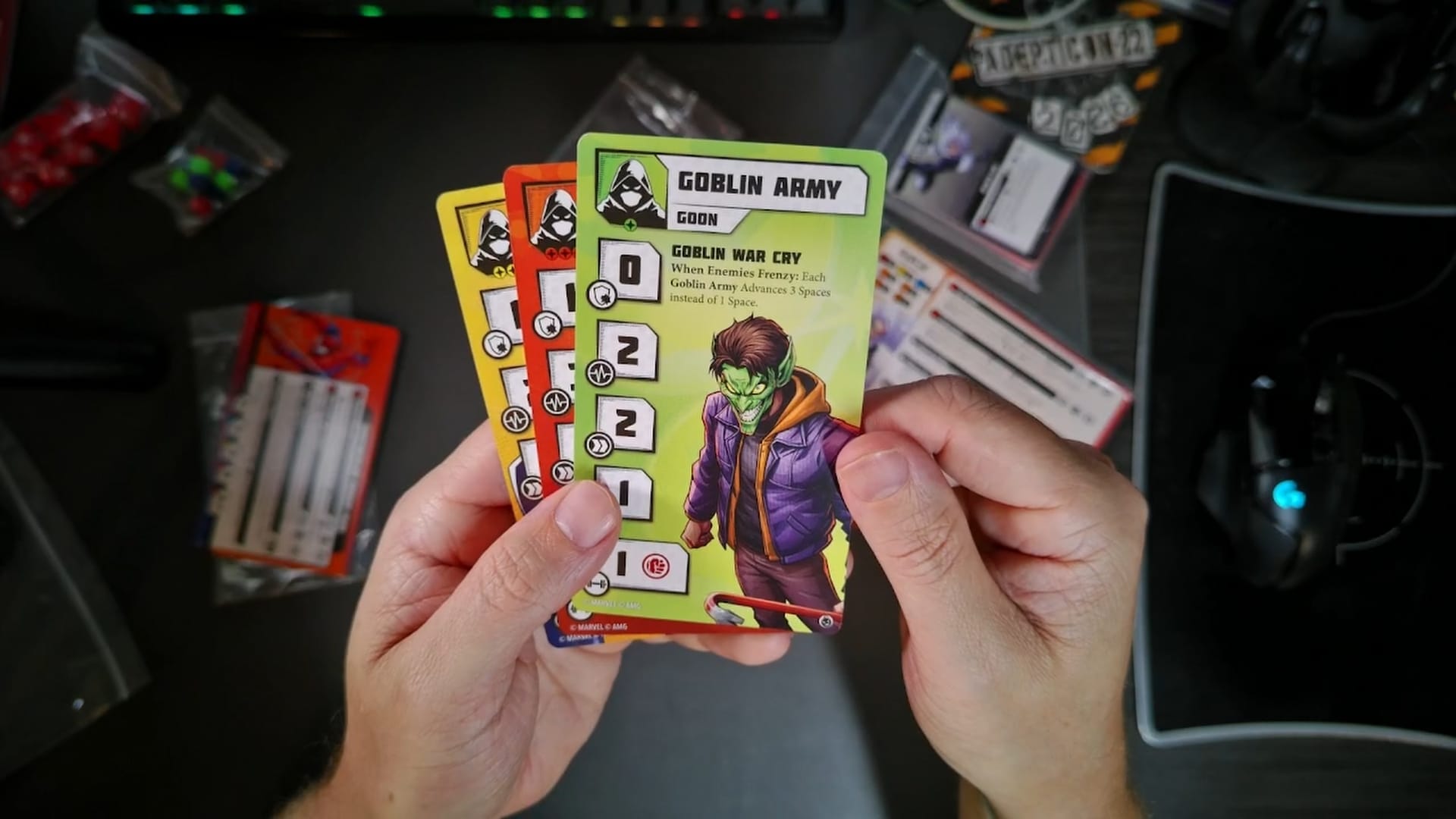
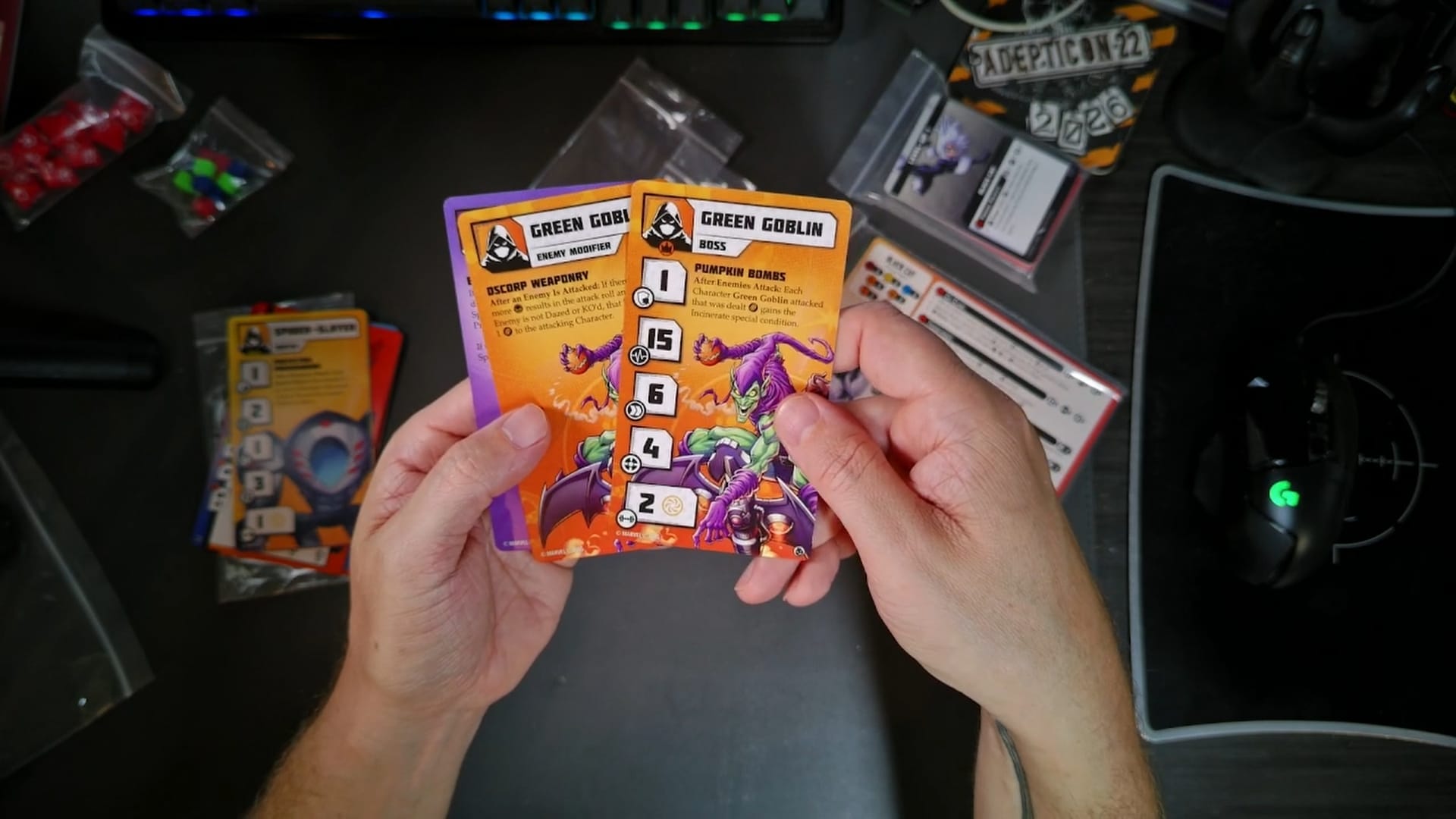
Like in MCP, characters gain power through certain attacks and taking damage. Unlike in MCP, you can only go up to 10 power, so this game encourages you to spend instead of hoarding energy.
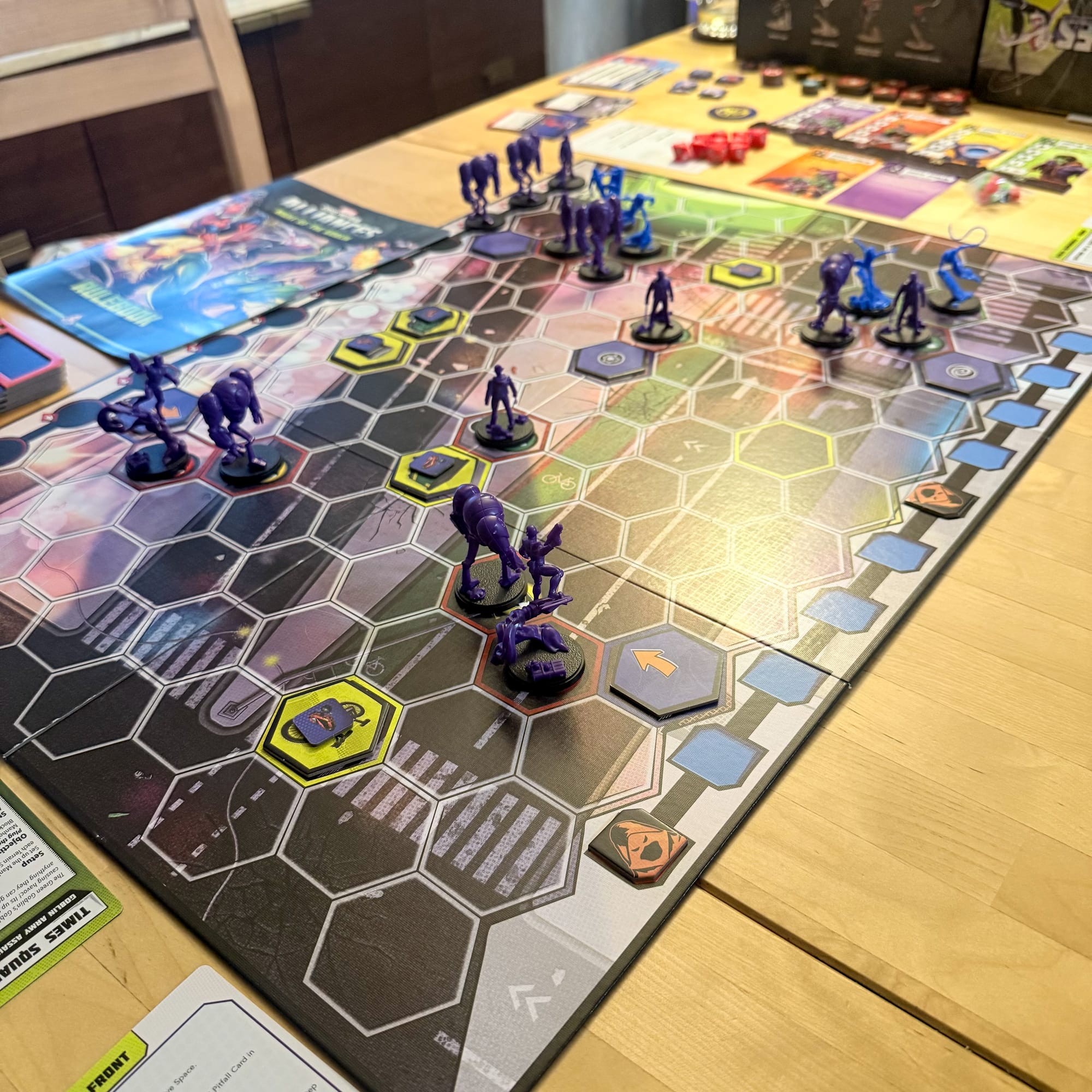
Attacks and skills are similar to the parent game, where some attacks build power, some spend power, and some help each other out. The game truly encourages collaboration, and I’m here for it. Movement is dictated by moving hex spaces on the board, and this unit of measurement also dictates range for attacks.
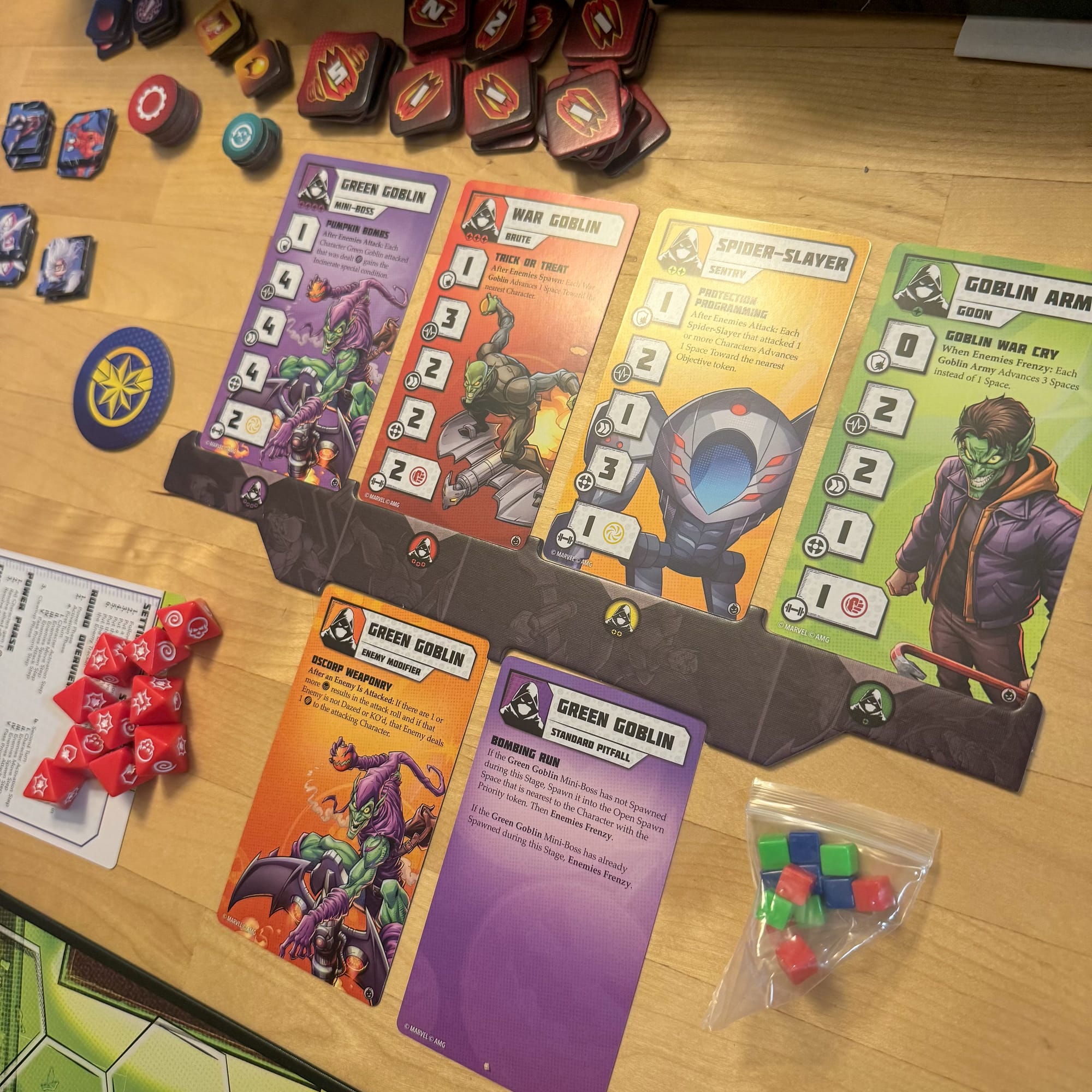
On each Stage, there are spaces for terrain, objectives, the heroes, and the enemies. When you start a game, you fill all of those; it’s very easy, and the different cards that go with the stages make it exceedingly easy to set up and remember. Then, you set up the enemy tracker. This is another area that holds the enemy stat cards, modifiers, and the pitfall card (this is applicable to the boss or mini-boss). Line up extra enemies on the Spawn Tracker (on the bottom of the stage), and either roll-off or decide which player goes first.
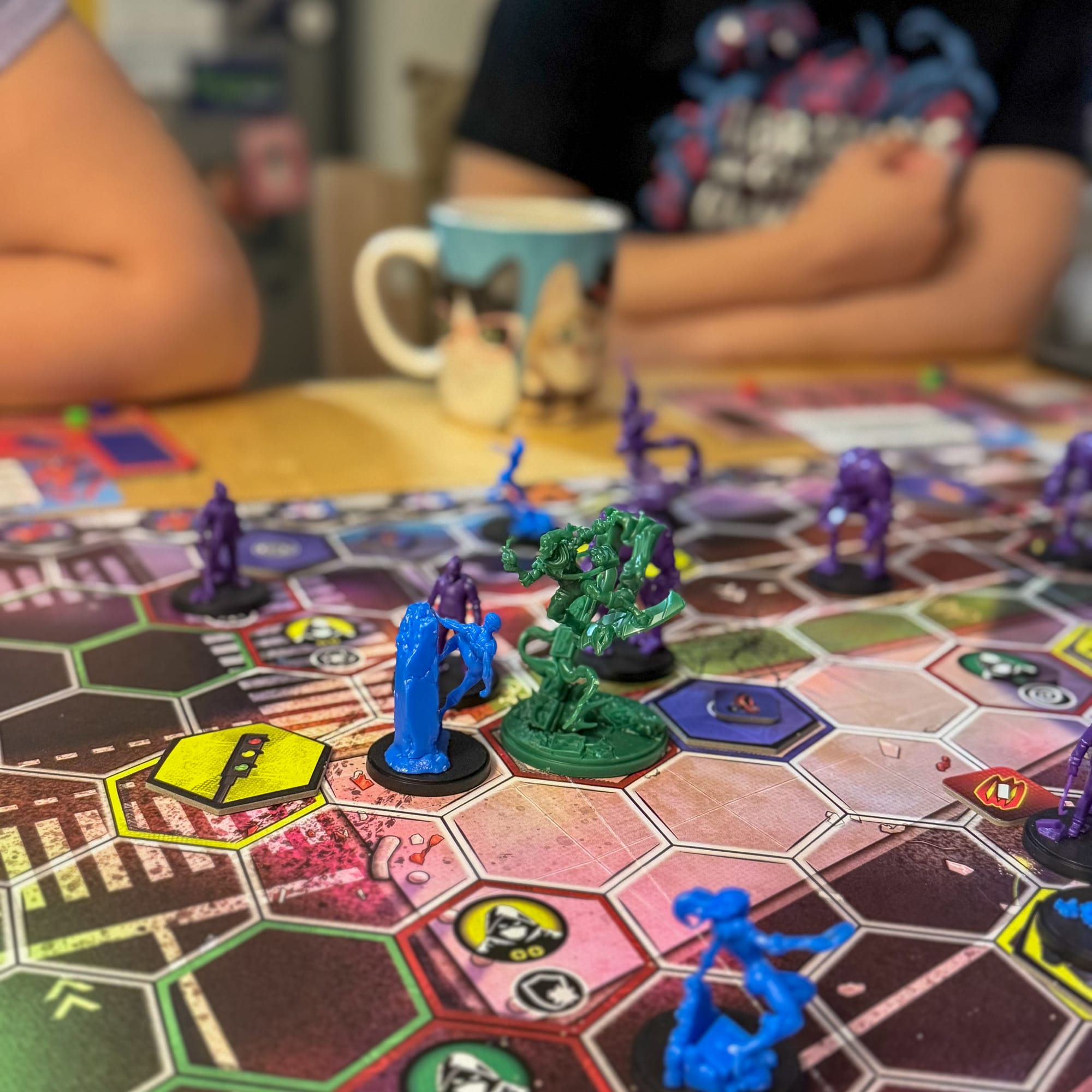
Then the game follows a lot of standard MCP and wargame rules. Players determine priority, and then gameplay is handled in a series of phases. A power phase, an activation phase, and a cleanup phase. For those not in the know: Power Phase is when players earn power; Activation is when they move/attack/interact and the enemy does the same, along with spawning, and Cleanup is when you resolve effects and reset for the next round.
What makes this game different from MCP is the nature of the players vs. the board aspect, which I really enjoy. It made our table strategize. Who was going to spend their four actions getting to an objective? Who was going to run cover? Who just wanted to smash?
And that’s where I find the most enjoyment of Alliances…it really does feel like a beat em up brawler game. The difficulty can ramp up significantly with the rules around enemies. Each enemy has special text that triggers during certain phases. For example, after the enemies attack (this happens after character activation), each Spider-Slayer that attacked 1 or more characters advances toward the nearest Objective. This adds a lot more fun complexity vs. “enemies move and attack whomever” basic rules you would see in other PVE board games.
The game keeps you on your toes. In the sessions my table played, we all were excited to smash minions but then dreaded the movement and Enemy Spawn step, which involved a chance roll to summon the Green Goblin to the board…this happens a lot, so just be prepared.
But that level of action and drama is exactly what this game needs.
What could be better?
For an exciting game, we found ourselves a little bored once we got to the final stages. Each board and mission tends to follow the same formula: find the objectives, fight off the enemies until you handle the objectives, repeat. The Daily Bugle Mission is a standout, as it includes a timer mechanism. This also hinders my desire to play over and over again.
Also, the leveling-up system, while novel and interesting, tended to become another thing the players needed to remember while gaming. In order to level up, you need to refer to two sets of rules and then manage extra cards. I think a seasoned wargamer will get this, but folks who aren’t used to a bunch of resource management won’t have the best of time.
And lastly, the models. The push-fit system is touted as the way to get people into this hobby, but the quality of the push-fit isn’t perfect (I still had to use glue), and at that point, why bother with sprue-based models? Other board games output beautiful models that don’t require assembly, and because these are push-fit, it makes kitbashing or modifying a bit more difficult, so I find myself wondering why? Along with that, the game comes with no model storage, so once you build the models, they’re going to shift and float around in the box. I unfortunately broke off some webbing from the Web Warriors in this case.
Is it worth it though?
At the top of this review, I said this is a great gateway game. And despite my criticisms, I think Atomic Mass Games has really hit on something here. They’ve taken an already highly successful and easy-to-play wargame and converted it into a board game with minimal rule changes. And the rules and gameplay are great and can easily introduce a player to wargaming or Marvel Crisis Protocol.
The intent down the road with the next 3 Alliances releases will be that players can mix and match the games, but what I really want to see is the backward compatibility with my existing MCP characters. I’d love to bring She-Hulk, Professor X, and the Guardians of the Galaxy into the game.
The push-fit system, I think, needs more work. They have brilliant engineers, so I imagine the system will get easier and easier, and I’ve heard rumblings that the system will be expanded to Legion…so I get a little concerned that the ability to customize models might vanish, which would be a bit of a sting to the hobby world.
I recommend this game, especially to fans of Marvel Crisis Protocol who want new models, people looking to get into the world without a big investment, and definitely for tables who want to expand into miniature-based gaming.
Marvel Crisis Protocol Alliance: Night of the Goblin
Great
Marvel Crisis Protocol Alliances is a successful expansion of the core game, acting as a great standalone that can pull in new audiences. While the push-fit system can be faulty at times, the gameplay makes up for it.
Pros
- Great game design
- Easy to learn
- Exciting to play and consistently fun
Cons
- Can get repetitive
- Push Fit system can be flimsy (get some glue)
This review is based on a retail copy provided by the publisher.