More than 200 years ago, the dragons descended and shattered civilization, driving humanity into the wilderness, leaving behind only ruins, forgotten treasures, and lurking monsters. Now the Dragons Down calls to a new generation of adventurers seeking fame and glory. Will they bargain with the hardy settlers who have returned to the frontier? Delve into ancient ruins in search of lost riches? Slay terrifying guardians and carve their names into legend? Dragons Down hands players a sprawling fantasy sandbox and lets them decide exactly what kind of hero they want to become.
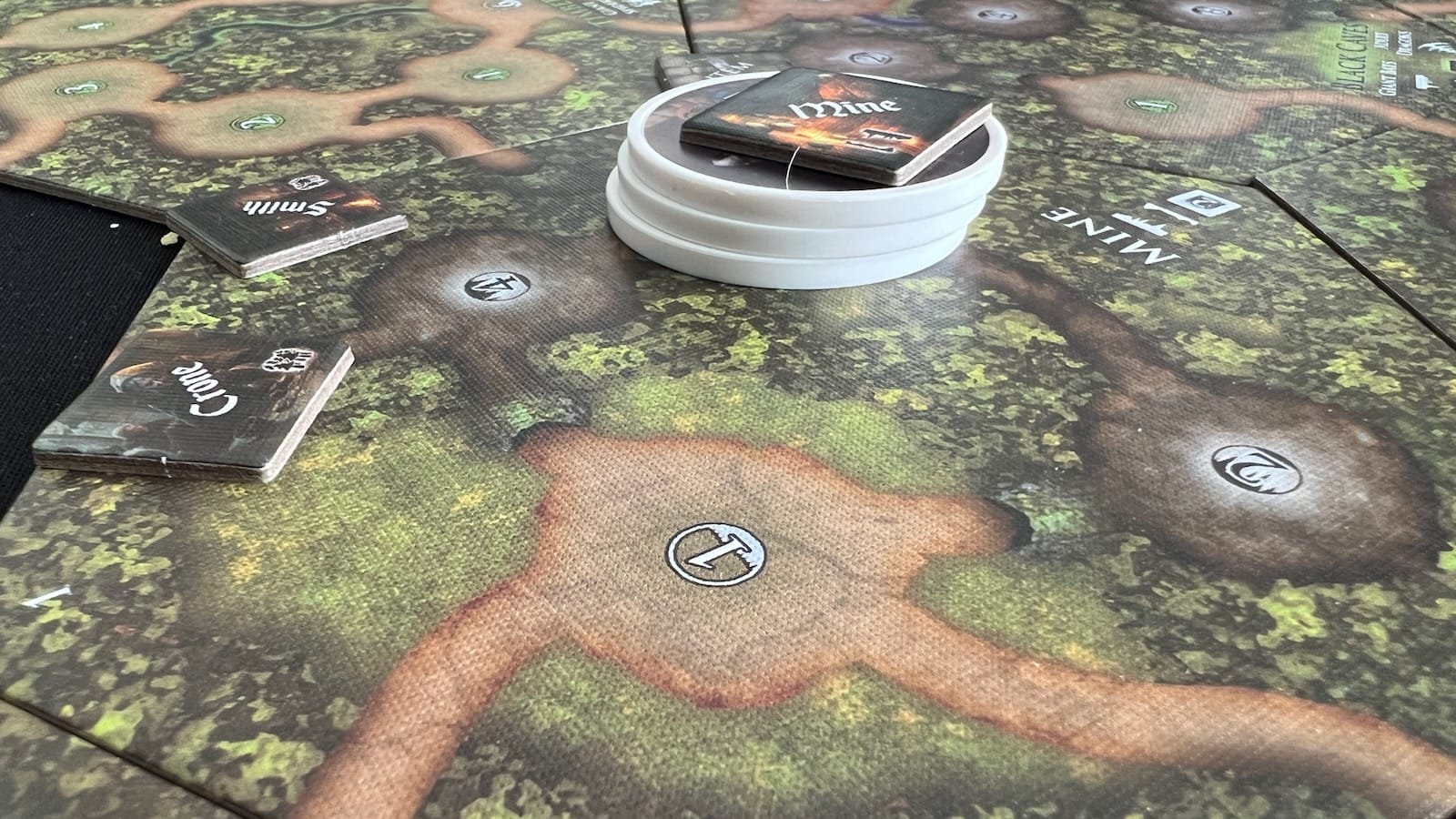
Published by Mr. B Games and Active Magic Games and designed by Scott Demers, Dragons Down is a fantasy adventure game for one to four players that plays in roughly 30–45 minutes per player. The game is inspired by the classic 1979 board game Magic Realm, a title that has developed a devoted following among gamers who enjoy deep fantasy adventures. Even without prior experience with its predecessor, it's easy to see the appeal. Dragons Down drops players into a wilderness filled with treasures, monsters, settlements, and plenty of opportunities to forge their own legend.
The biggest thing Dragons Down has going for it is that no one is going to have the same adventure.Over the course of thirty turns, players explore a wilderness filled with hidden treasures, ancient ruins, dangerous monsters, and scattered settlements. Every decision shapes your journey. Some heroes will become famous monster hunters, others will spend their time chasing treasure, completing missions, or learning new spells. The goal is simple: become the most legendary hero in the land.
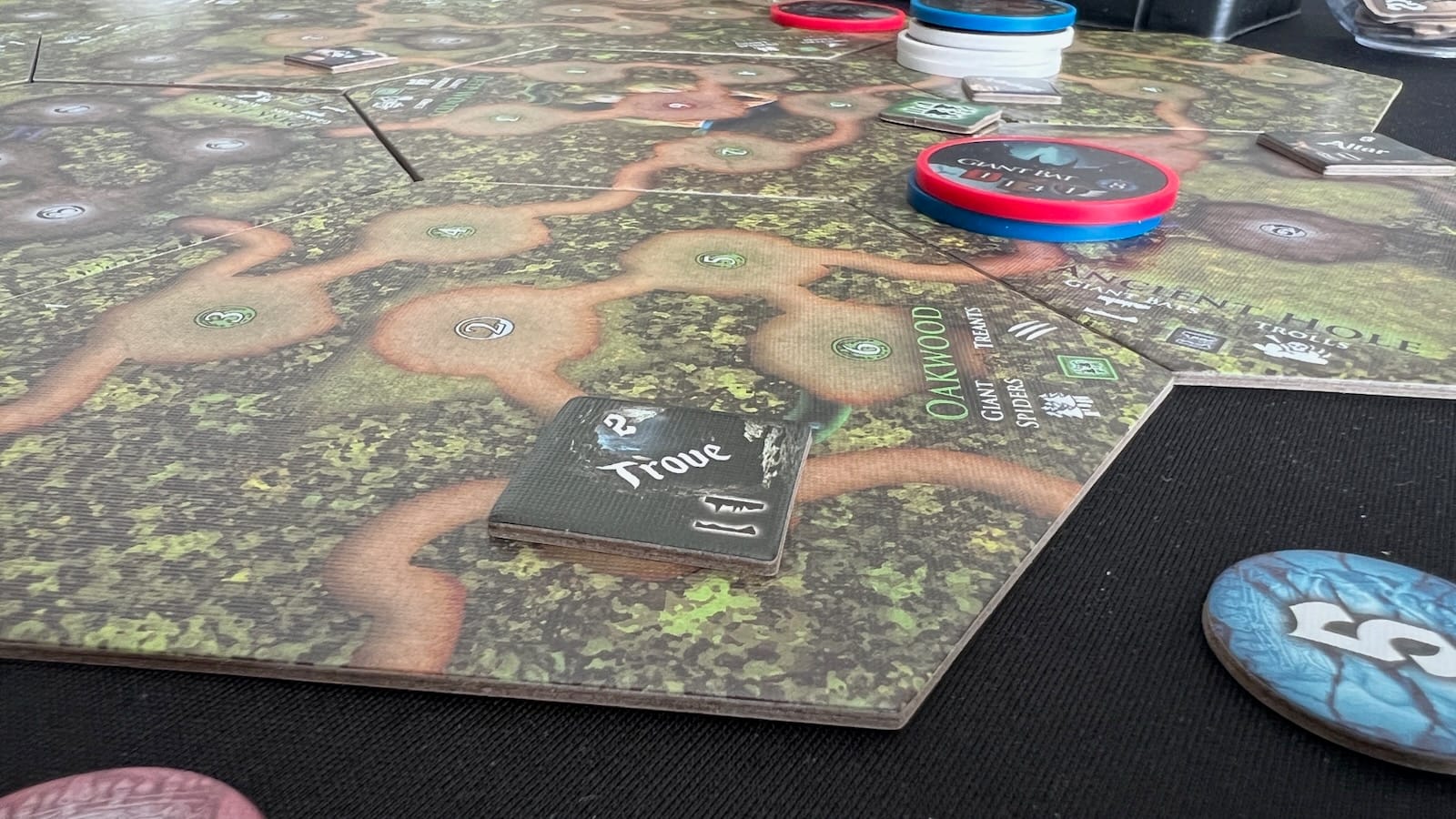
Each turn, players receive four actions that can be spent moving across the map, interacting with locations and towns, searching for treasure, preparing for battle, or manipulating the threats around them. Once everyone has finished taking actions, the world fights back as monsters may appear and challenge the heroes. While Dragons Down supports up to four players, I found its strengths shone brightest in solo play, where the focus stayed on exploration, discovery, and building my own story.
Every unexplored tile holds the promise of something unexpected. When a player enters a new area, they reveal a random wilderness token that determines what they find. Sometimes it's a simple treasure cache or useful item. Other times it's a unique site packed with treasure and danger. Because terrain packs include their own collection of special locations and all of those locations are mixed together before play, there's always an element of surprise. You never quite know what you'll uncover next, and that uncertainty kept us excited to explore.
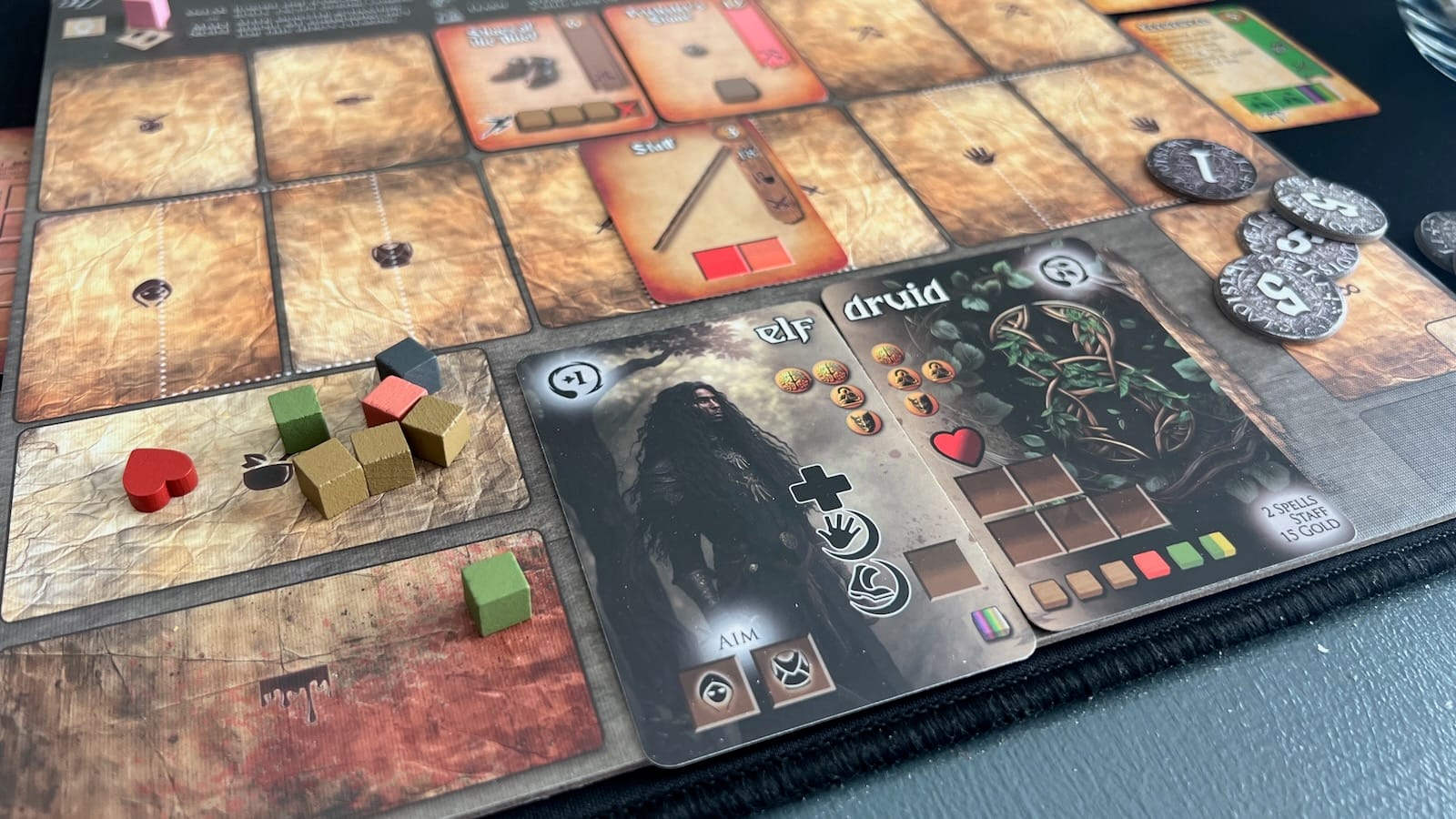
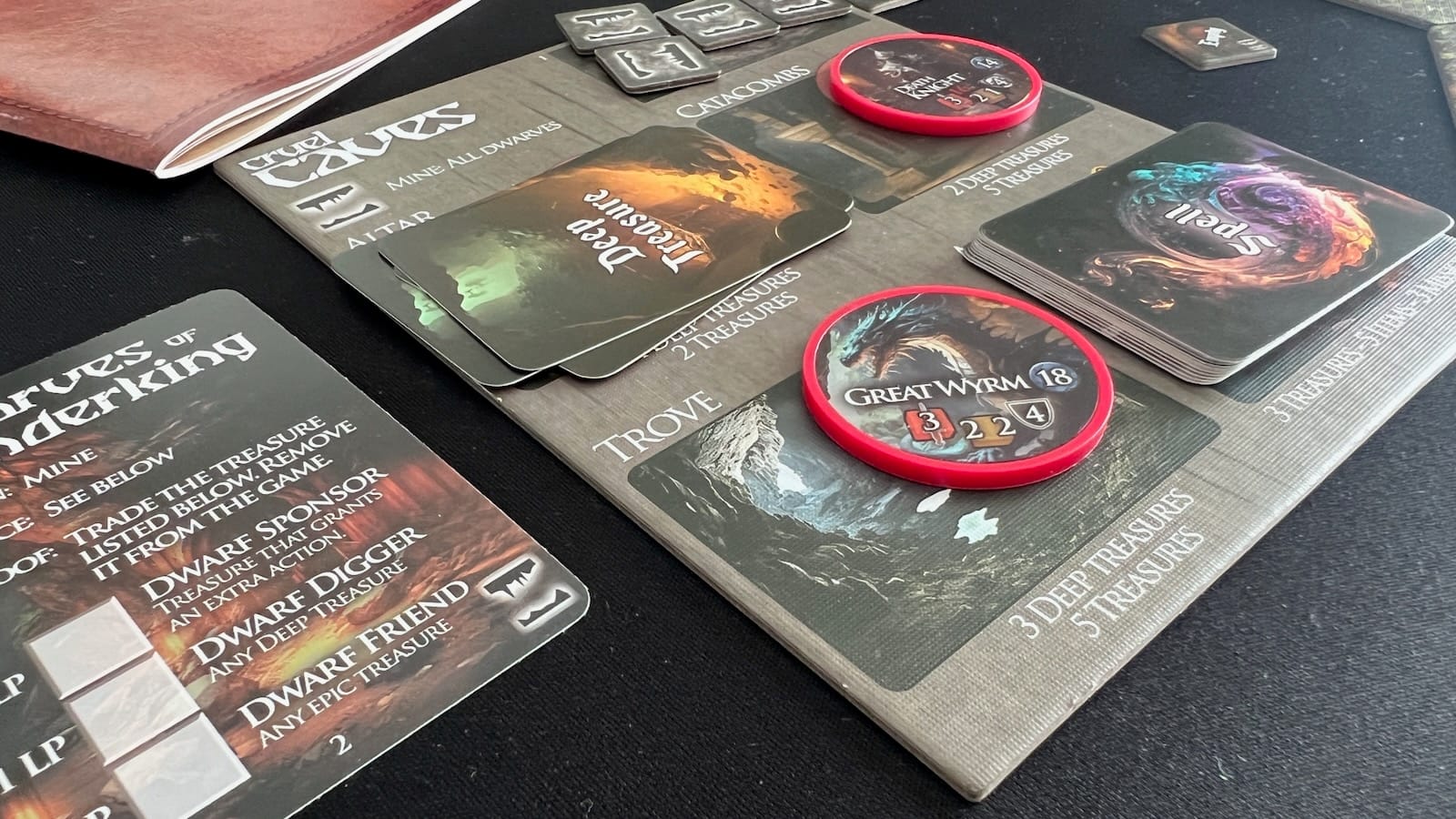
Of course, treasure rarely comes without danger. Linger too long at a valuable site and its guardian may appear, forcing players to decide whether to flee, hide, or stand and fight. In one game, my hero needed to visit the Altar site to complete a mission that required sacrificing two treasures. While I was there, greed got the better of me and I decided to loot the remaining treasure as well. That extra turn was all it took. The altar guardian appeared and put a serious hurting on my hero before I barely escaped with my life. The mission was completed, but lessons were learned that day.
Combat is easily the most unique and most challenging part of Dragons Down. At the end of each round, dice are rolled to determine whether monsters appear based on the terrain occupied by the players. Early in the game, heroes are fragile and ill-equipped to deal with powerful threats, creating a constant push-and-pull between exploration and survival.
Combat was also the hardest part of the game for me to learn. Battles require players to manage colored cubes, compare maneuver speeds, attack values, armor ratings, and several other statistics to determine turn order, attacks, damage, and survival. The system eventually clicked for me, but getting there took work. Even after I felt comfortable running combats myself, teaching the process to new players remained a challenge.
The thing is, combat isn't bad. In fact, there are some genuinely interesting tactical decisions hidden beneath the layers of rules. The problem is getting comfortable enough with the system to see them. For me, combat was easily the biggest barrier to entry.
That complexity extends to the rest of the game as well. Dragons Down is filled with rules covering equipment, encumbrance, spellcasting, monster abilities, and exploration. During my early plays, I spent a lot of time flipping through the rulebook looking for clarification. More than once I knew the answer was in the book somewhere but couldn't find it quickly. Thankfully, there are excellent player aids, tutorial videos, and community resources available that helped smooth out the learning curve.
Normally when a game frustrates me this much while I'm learning it, I move on. Dragons Down had other plans. Different races, classes, maps, treasures, quests, and terrain combinations make every adventure feel different. One game might turn into a monster hunt. The next might have you wandering around looking for treasure and trying not to get yourself killed. The game constantly creates stories that feel unique to your character and the choices you make. That's where Dragons Down shines. The rules give you enough direction to know what you're doing, but they don't tell you how your adventure should play out.
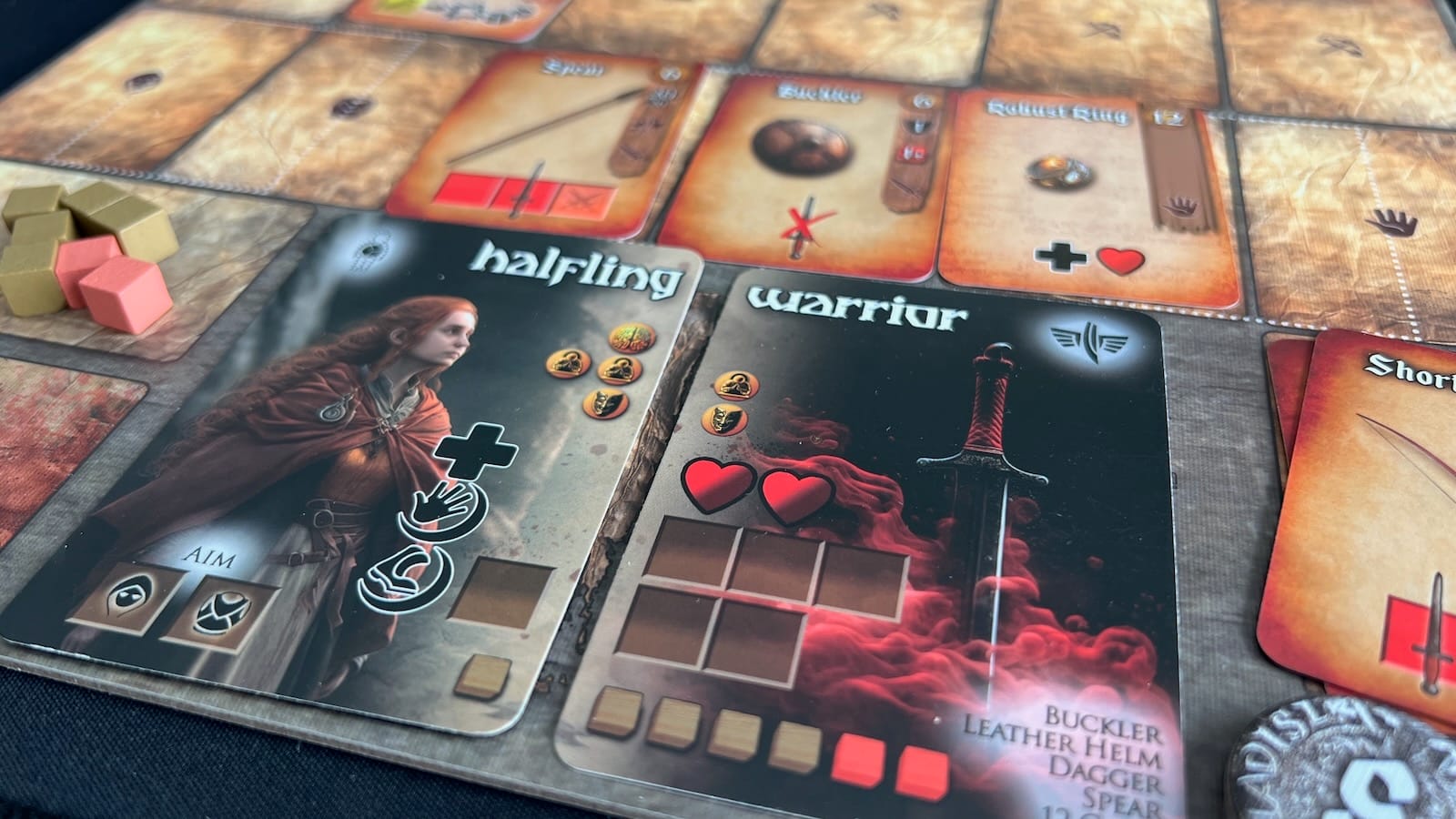
That freedom won't work for everyone. Players who enjoy a clear objective and a direct path toward victory may find themselves frustrated by how open the game can be. Progress often depends on adapting to opportunities as they appear rather than following a carefully crafted plan. Some character combinations can also feel less effective than others. In one of my early games, my Elf Druid struggled to keep pace while a Halfling Warrior was racking up fame and legend points with relative ease.
The best way I can describe Dragons Down is that it feels like someone squeezed a fantasy roleplaying campaign into a board game box. The focus isn't on building an efficient engine or solving a puzzle. It's about exploring the unknown, adapting to whatever the wilderness throws at you, and creating memorable stories along the way.
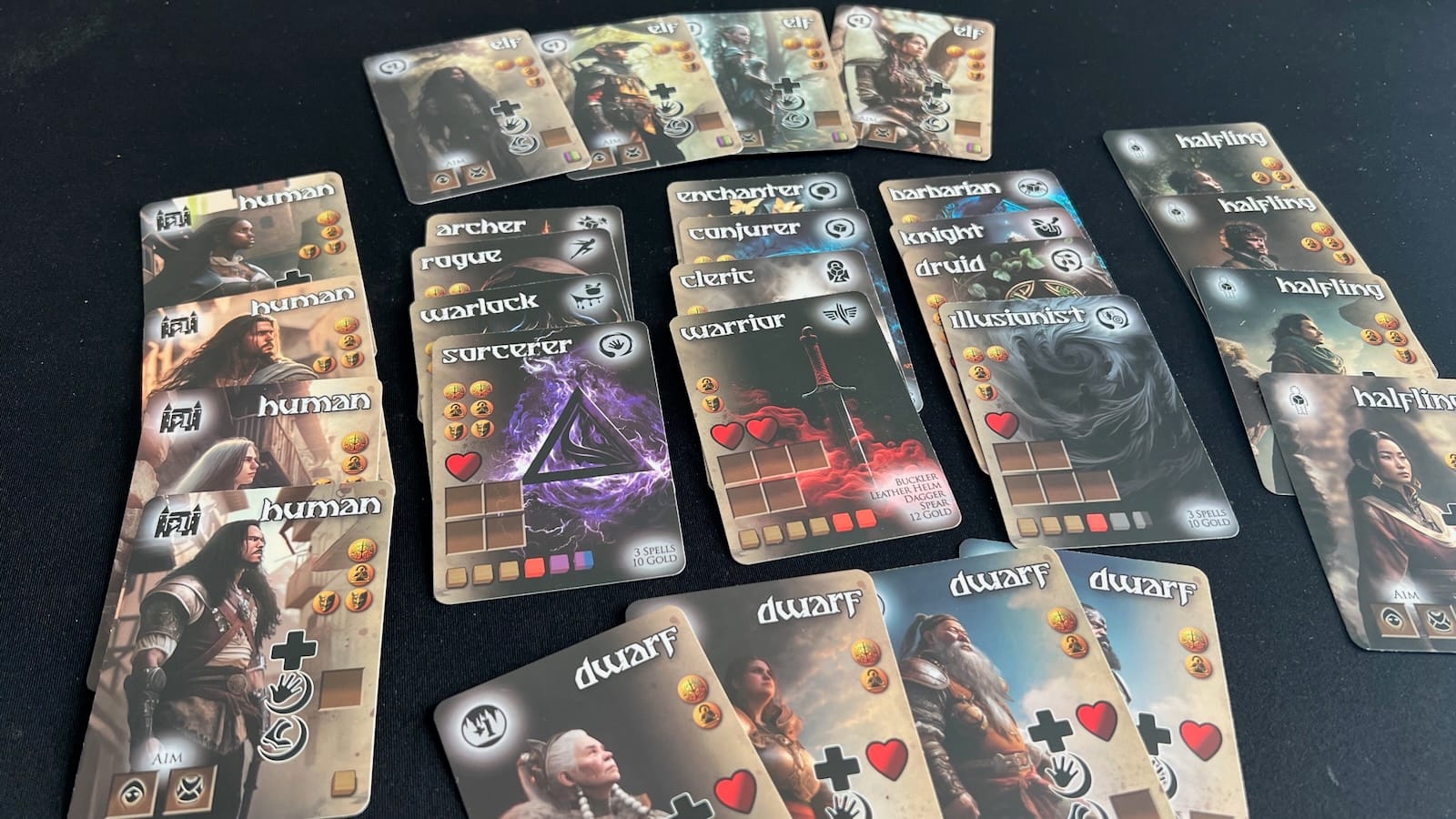
From a production standpoint, Dragons Down delivers. The artwork is vibrant and fits the theme. The location tiles bring the wilderness to life while remaining functional during play. Terrain tiles are easy to distinguish, and the double-sided hero cards offer a welcome variety of character representations. Card layouts remain consistent across the various decks, making information relatively easy to identify once you're familiar with the iconography. The monster artwork is intimidating, though I occasionally found myself mixing up certain combat values at a glance.
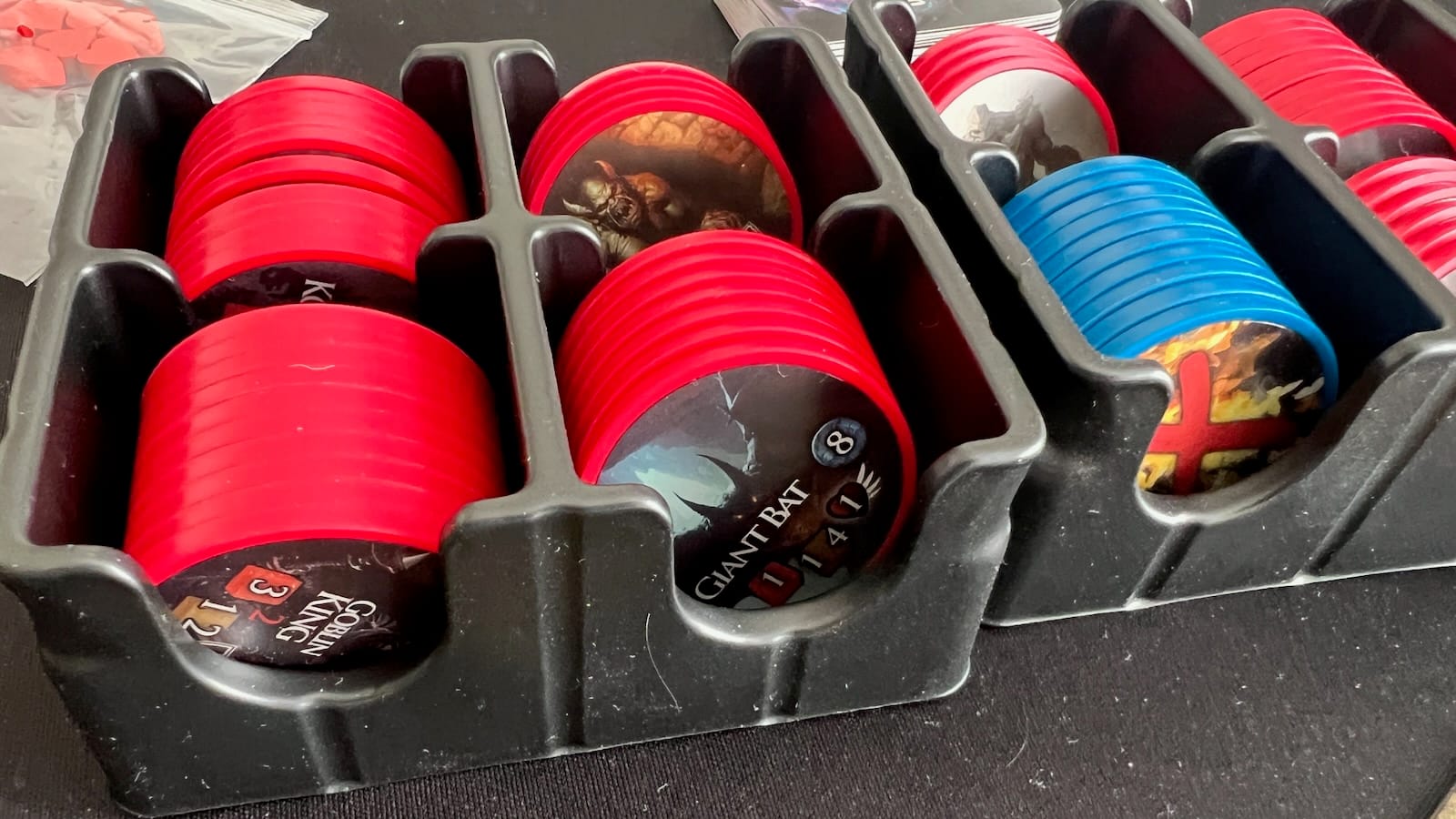
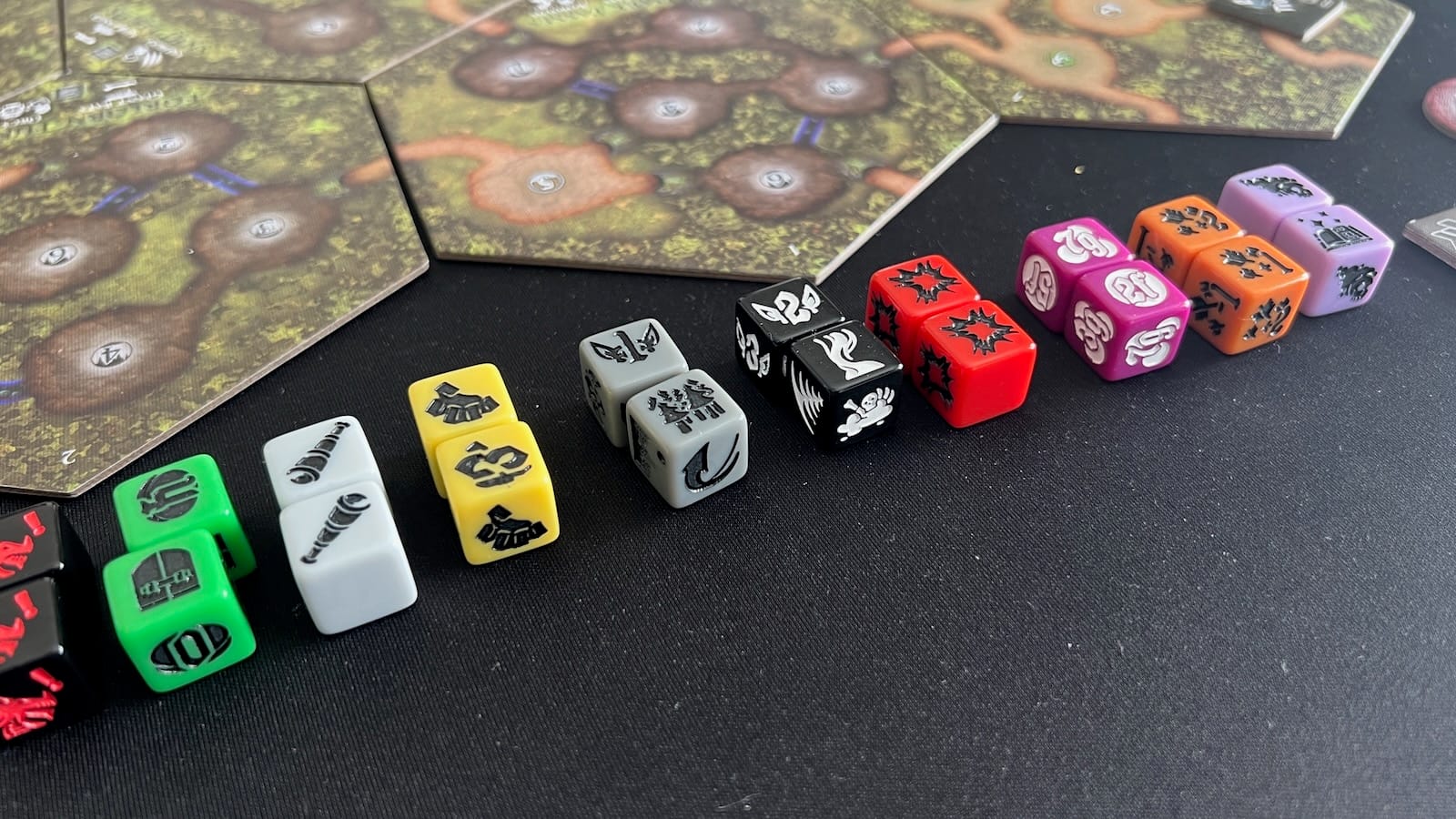
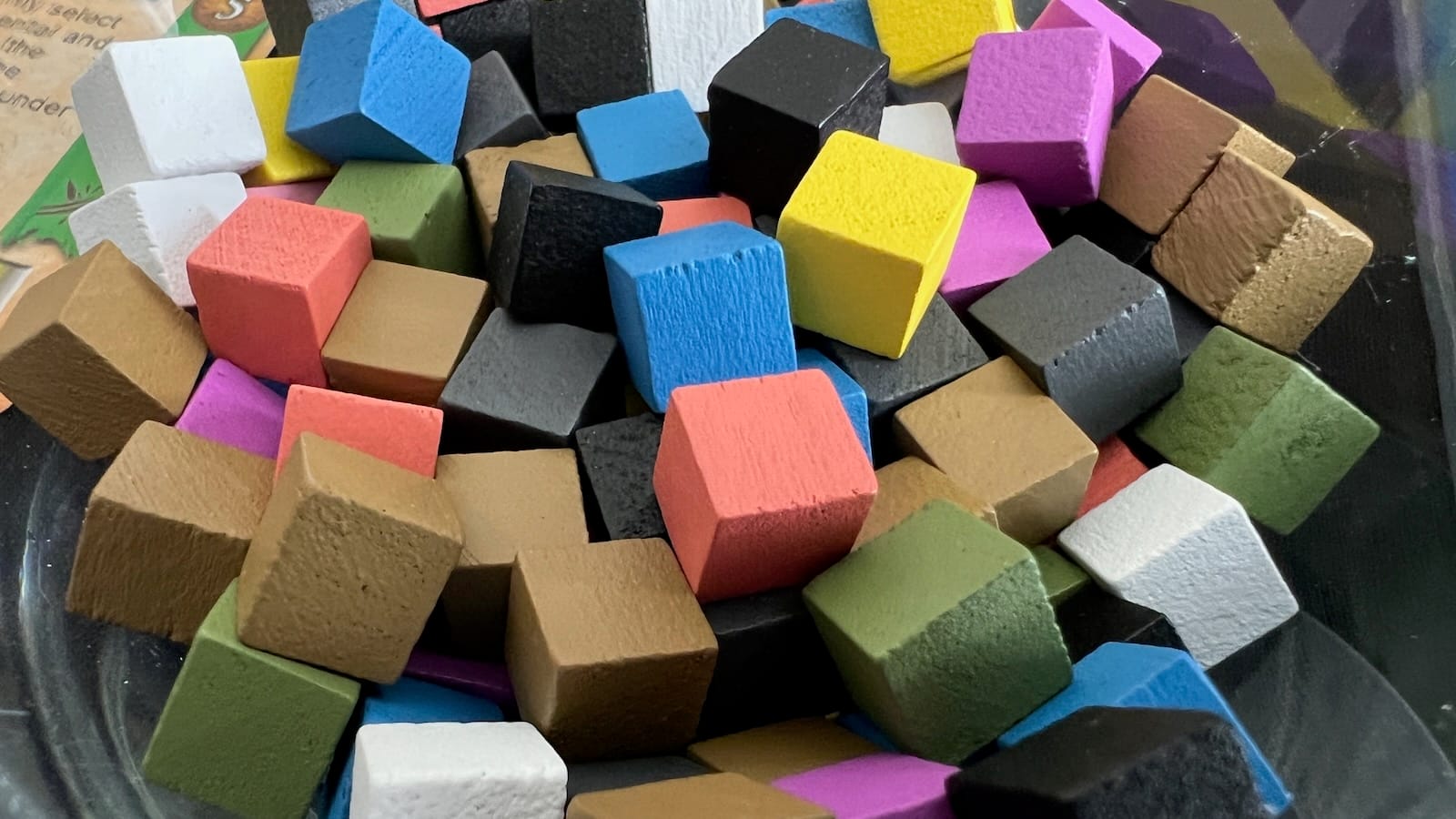
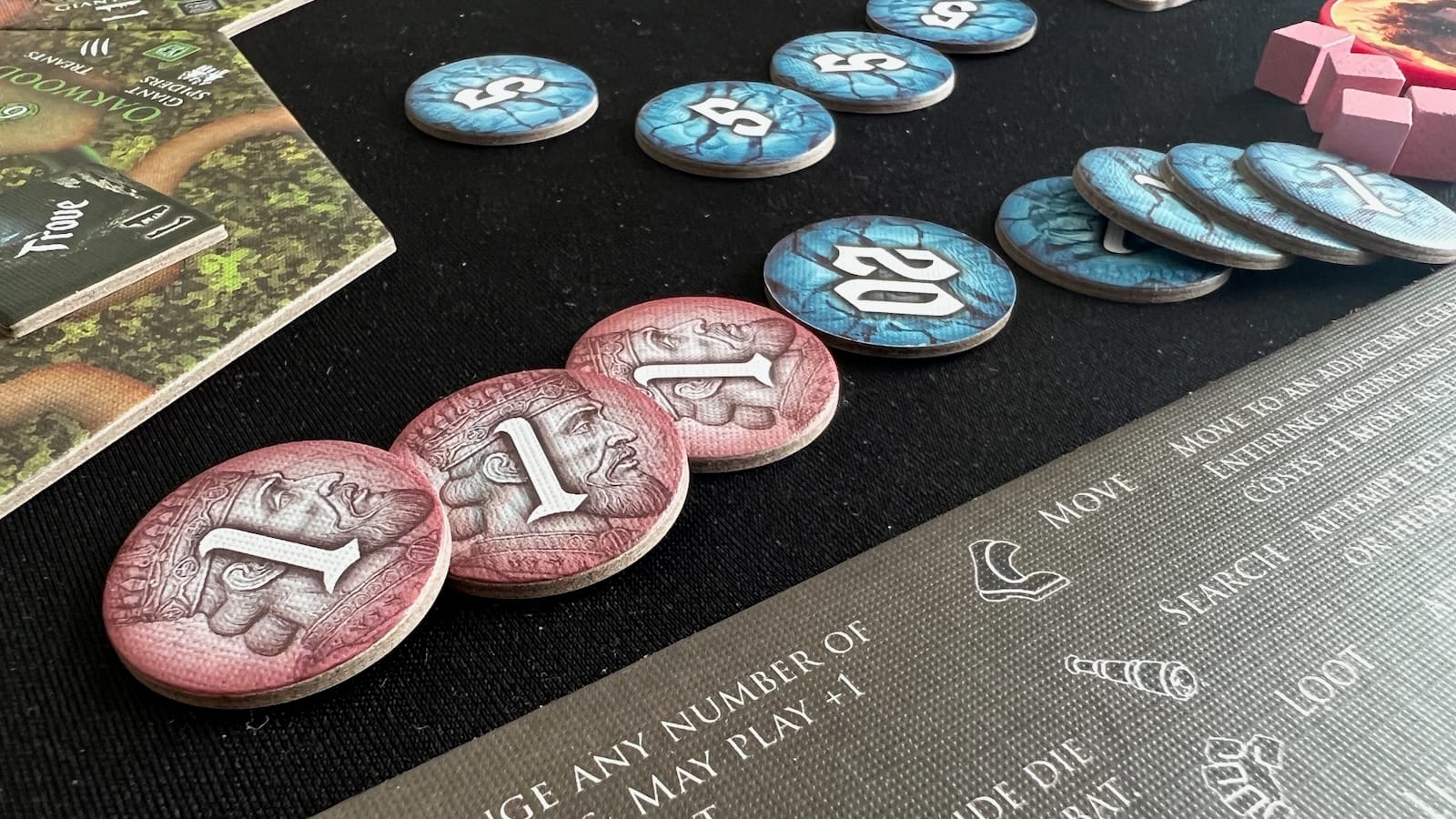
The components are generally excellent, though there are a few usability issues. Some cube colors are surprisingly similar, particularly when matching weapon cubes to action cubes, which occasionally caused confusion at the table. Also, the poker chip player and monster markers can obscure the information on the tiles due their size. On the other hand, the dice are fantastic. They're colorful, easy to read, and make every roll feel important.
The game includes both a rulebook and a scenario book, with the scenarios providing additional structure for players who want more guidance. While all the information you need is present, the organization of the rulebook could be improved. Important rules are sometimes difficult to locate quickly, and the glossary tends to blend into the rest of the layout. Given how often players will reference the rulebook, clearer visual organization would have gone a long way.
The game also includes a pad of adventure logs that are meant to be filled out by each hero throughout the game. The logs allow players to mark what locations they’ve found, what actions they’ve taken, and what tiles they’ve visited. However, some games you just don’t feel like writing everything down. An added round tracker for those not wanting to use the pads would be nice.
The most surprising thing about Dragons Down is how much I wanted to keep playing it despite its rough edges. Every time I finished a session, I found myself thinking about what I would do differently next time. Maybe I'd take a different route. Maybe I'd tackle a monster I avoided before. Maybe I'd finally figure out how not to get myself nearly killed by a site guardian. The game kept pulling me back in.
Also, my favorite experiences came while playing solo. Once I understood the systems, exploring the wilderness at my own pace became incredibly rewarding. Teaching the game to others was often exhausting, but adventuring alone was consistently engaging. Everything I liked about the game seemed to work even better when I played by myself. Even though I haven't gotten through all that the base game has to offer, I am excited to see the new terrain packs, rules, and treasures that come in the different expansions.
Dragons Down isn't for everyone. Players looking for a streamlined experience or a straightforward path to victory may bounce off its complexity and open-ended design. The learning curve, teaching difficulties, and frequent rulebook references ultimately keep it from being an easy recommendation. But for the right player, there's an incredible adventure waiting on the other side.
Dragons Down
Great
Dragons Down is a fantasy adventure sandbox where the journey is entirely your own. Explore dangerous wildernesses, battle monsters, uncover forgotten treasures, and build your legend however you choose. The rules can be dense and combat takes time to master, but players willing to invest will find a deeply thematic adventure that rewards repeated play, especially solo.
Pros
- Deeply thematic gameplay that creates memorable stories
- Outstanding solo experience
- Exceptional replayability through races, classes, terrain, and exploration
Cons
- Dense rule set with many nuanced interactions
- Difficult to teach to new players
- Combat can feel fiddly and occasionally unclear
This review is based on a retail copy provided by the publisher.