Infinity, produced by Corvus Belli, is a 35mm skirmish-style wargame set in a cyberpunk future one-hundred and eighty-five years from now, requiring players to focus on tactical combat, utilizing a mixture of troop abilities, awesome terrain and environments, and various missions to succeed.
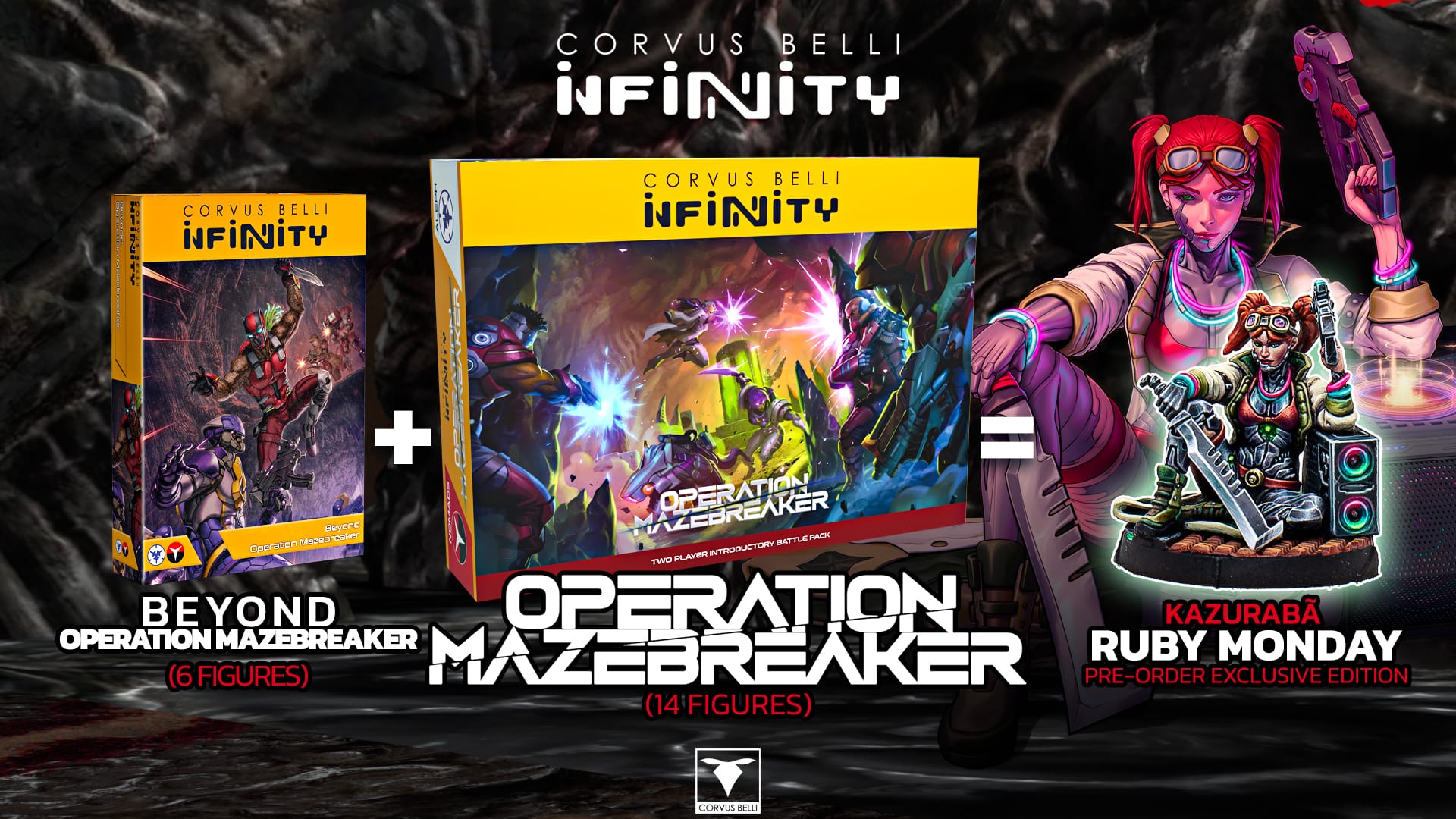
We’re lucky enough to have the brand new Operation Mazebreaker 2 Player box sent our way, along with an additional squad of models, and even a pre-order exclusive, and in this article, we’ll dip into the details of the box, an introduction to Infinity, and some thoughts before we go forth into this new (to us) game!
What is Operation Mazebreaker?
Every time I see Infinity at a convention, it’s beautiful. Metal miniatures painted expertly on tables that are chock full of terrain. This isn’t a game about sprawling battlefields; this is a game about corners, levels, and cyberpunk density.
The Operation Mazebreaker box comes fully packed for two players, including 14 metal miniatures for both the Nomads and Aleph factions, a full color book detailing both lore and rules for Infinity, 6 d20s (3 per army), punchout cardboard markers, templates, measuring tools, a 32”x24” battle mat, and an entire cardboard scenery set!
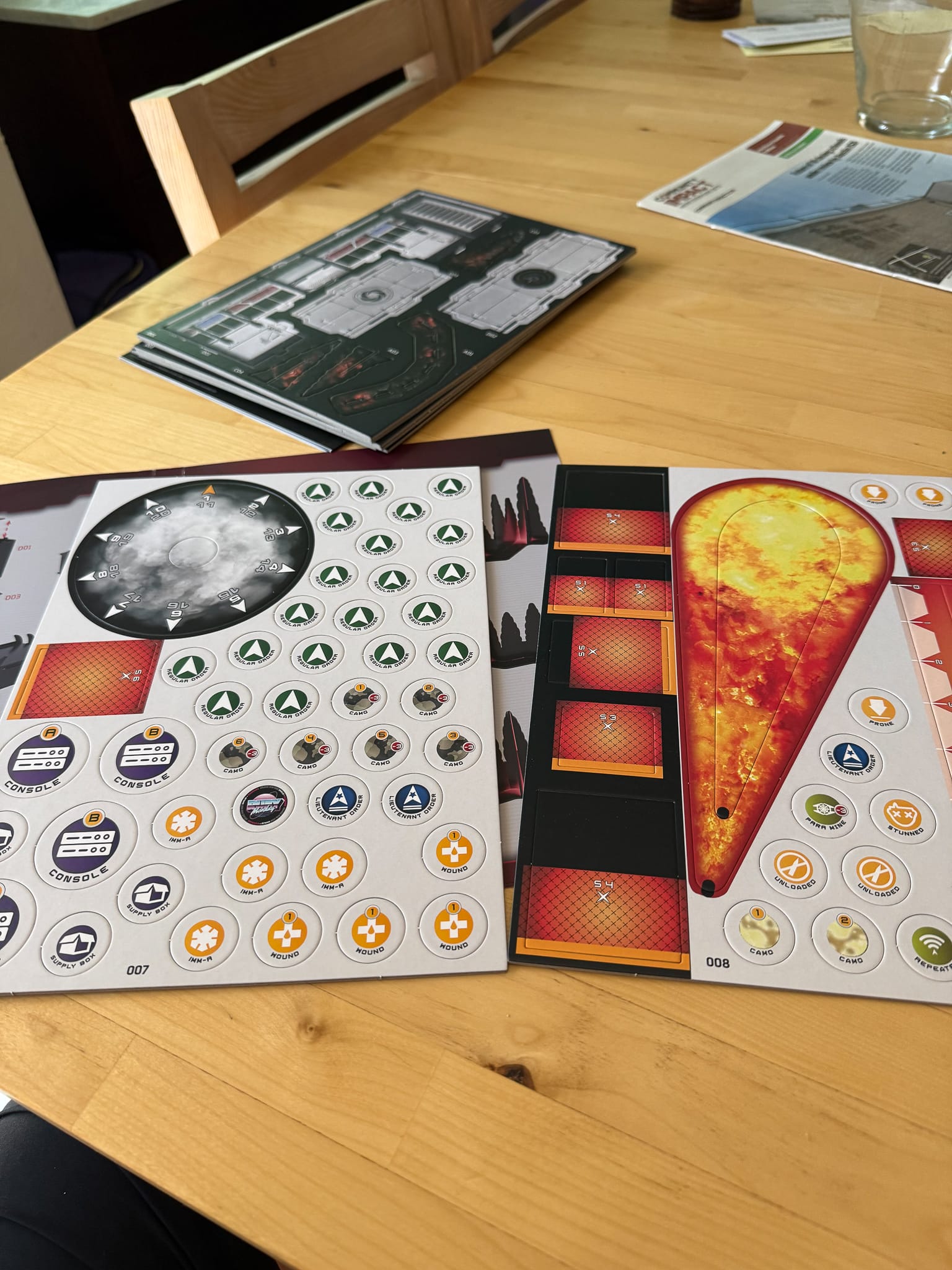
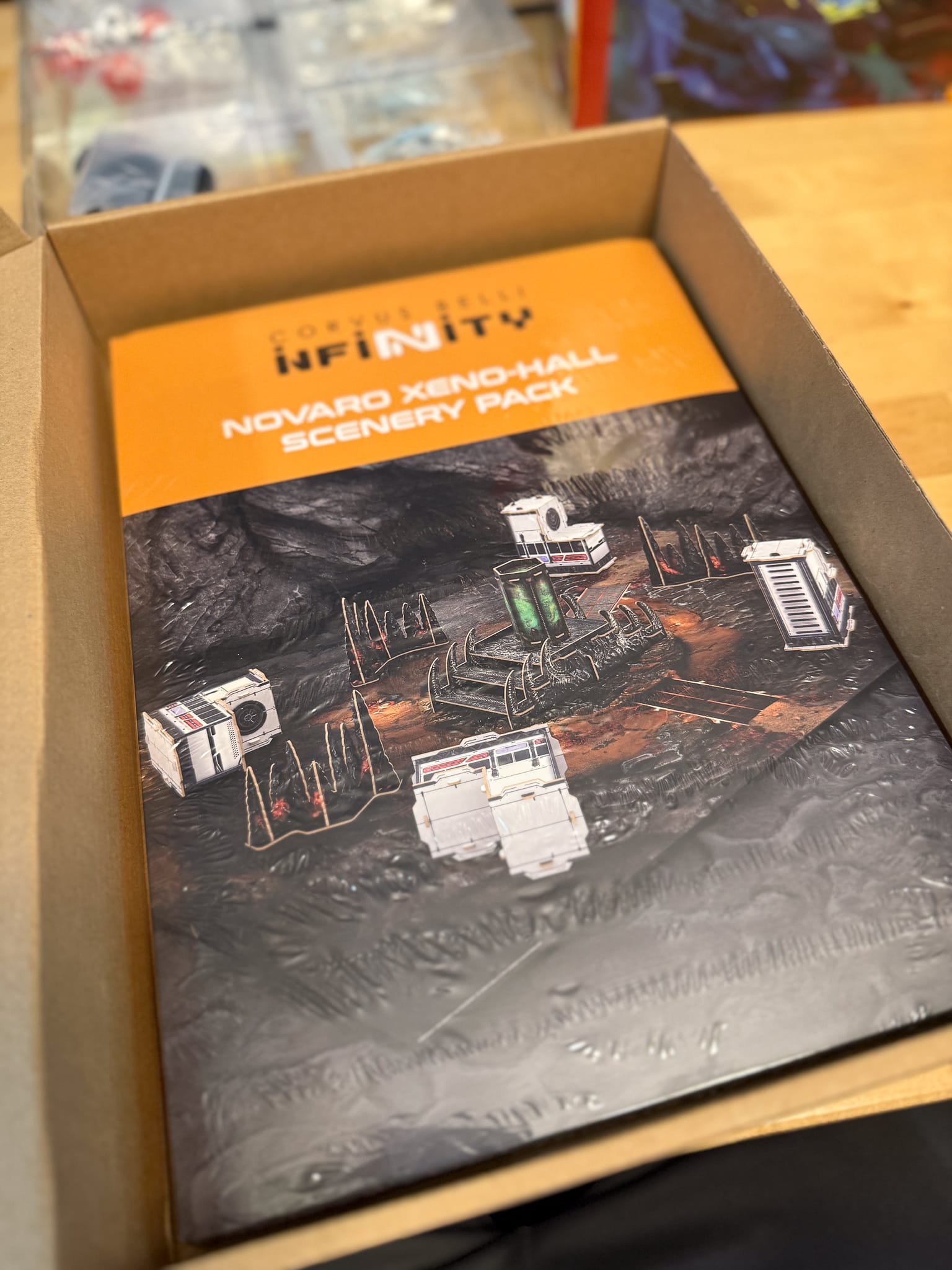
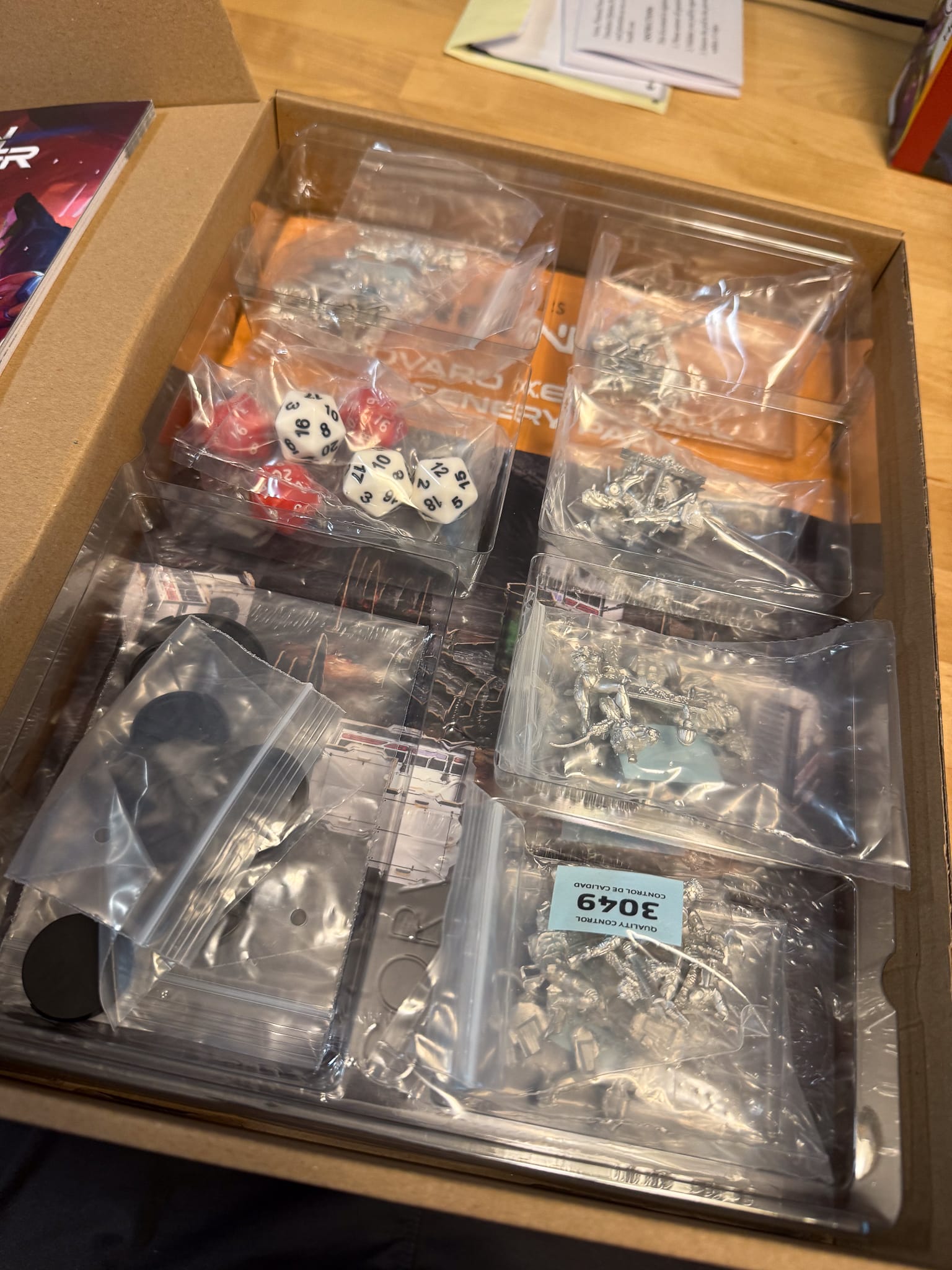
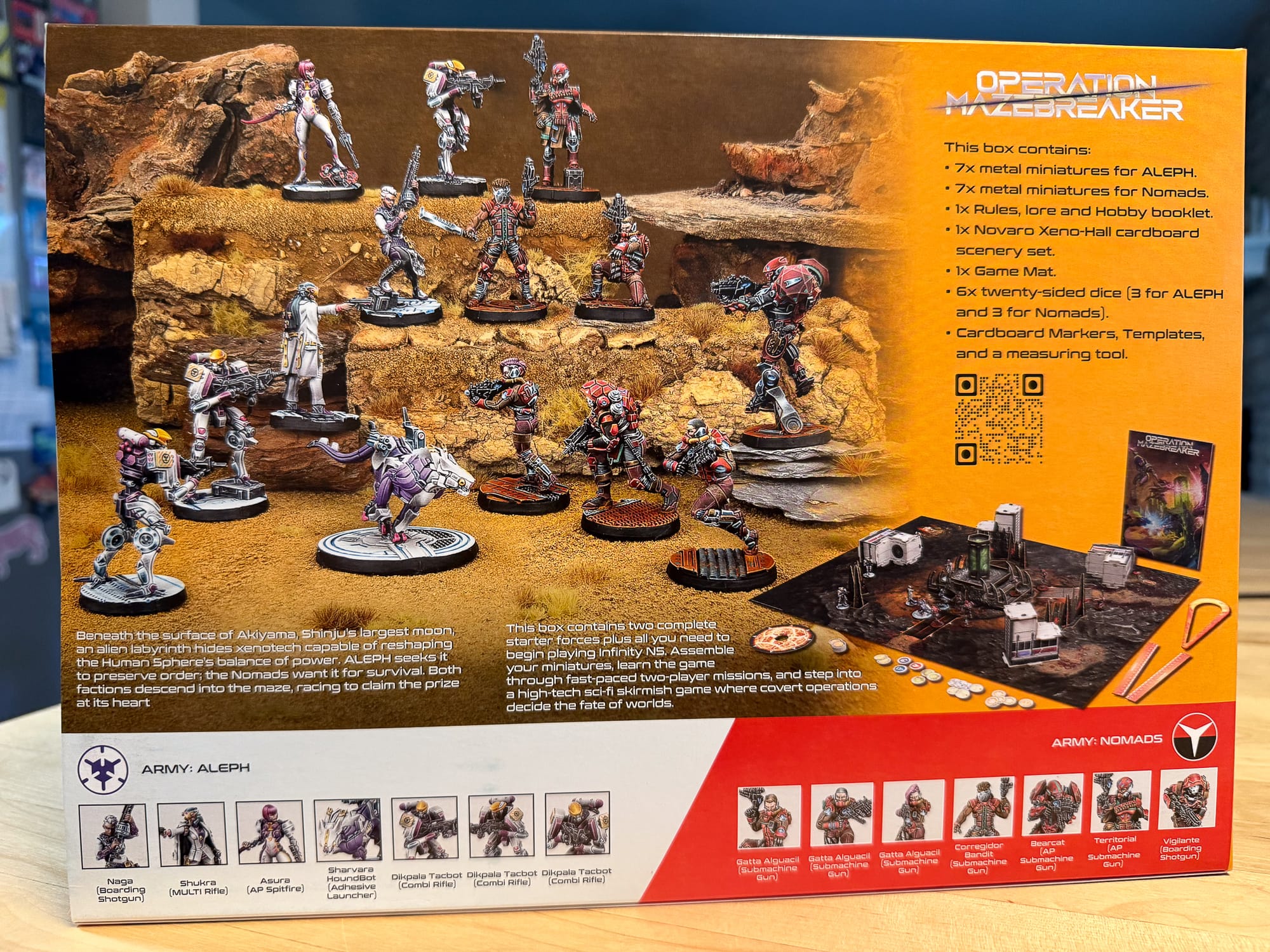
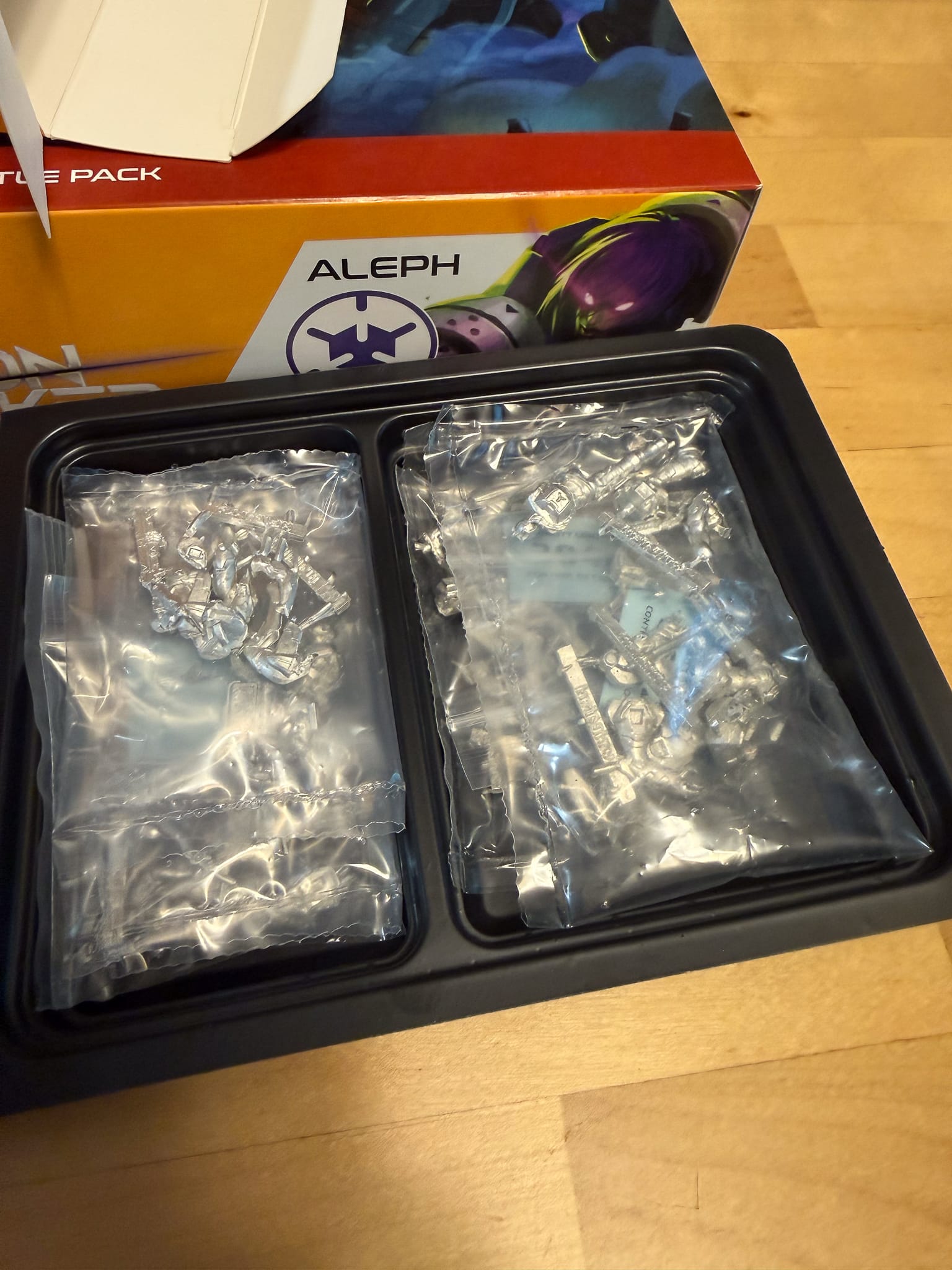
This box is hefty, and I’m all here for it. I really like that the box comes with everything a player needs. One could say that various markers are missing, but Corvus Belli keeps everything online and updated.
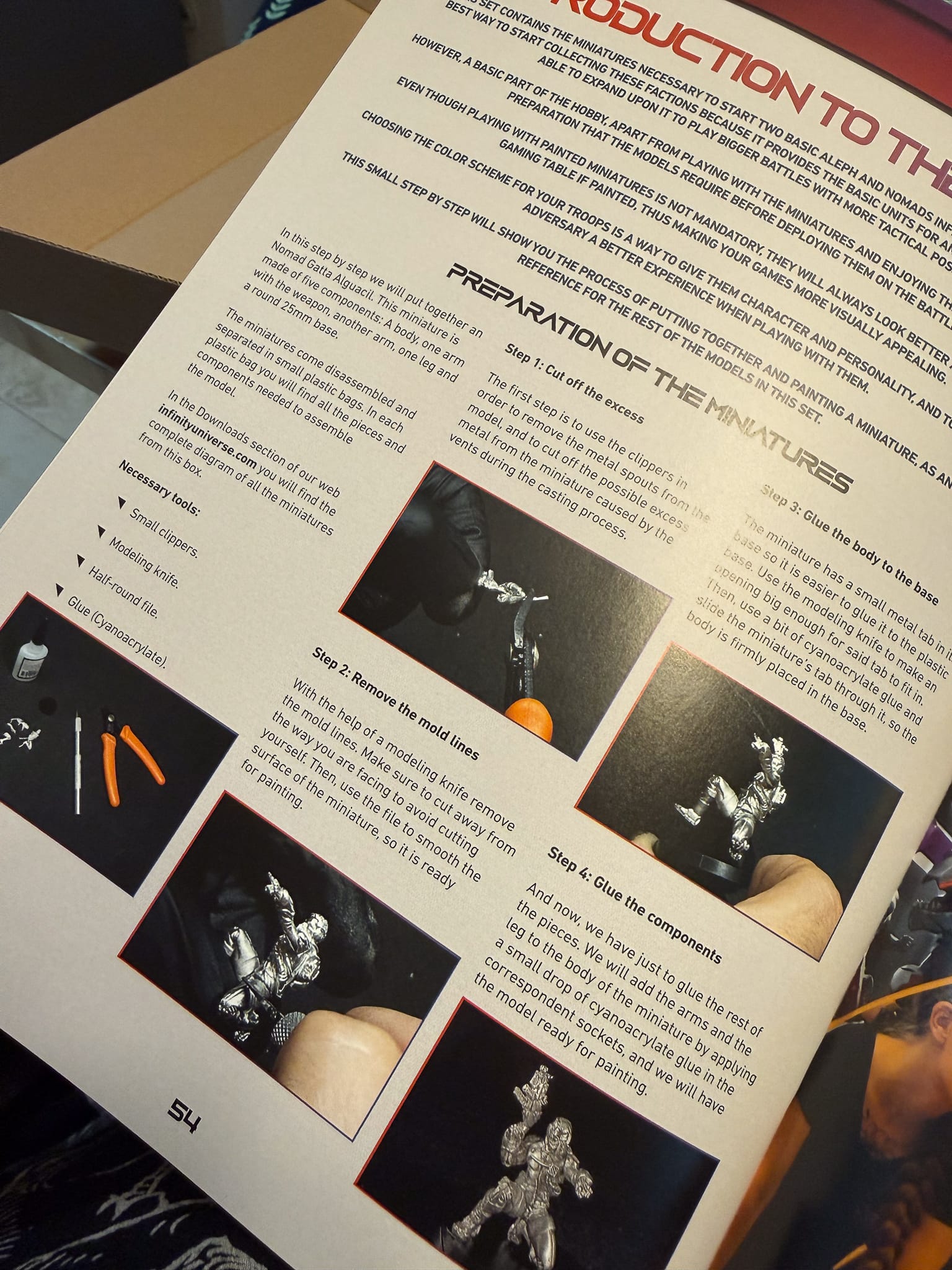
Digging into the models, these are beautifully rendered metal miniatures. If you haven’t dealt with metal miniatures before, I highly recommend digging into our “how to prepare models” article, because metal miniatures have a little bit of nuance to them, and if you’re not ready, you will be irritated. When I first opened up my Infinity models, I forgot to wash them first, and was surprised that glue wasn’t sticking any parts together! I definitely recommend using an Activator to help speed up the process of glue drying.
 Alec Kozak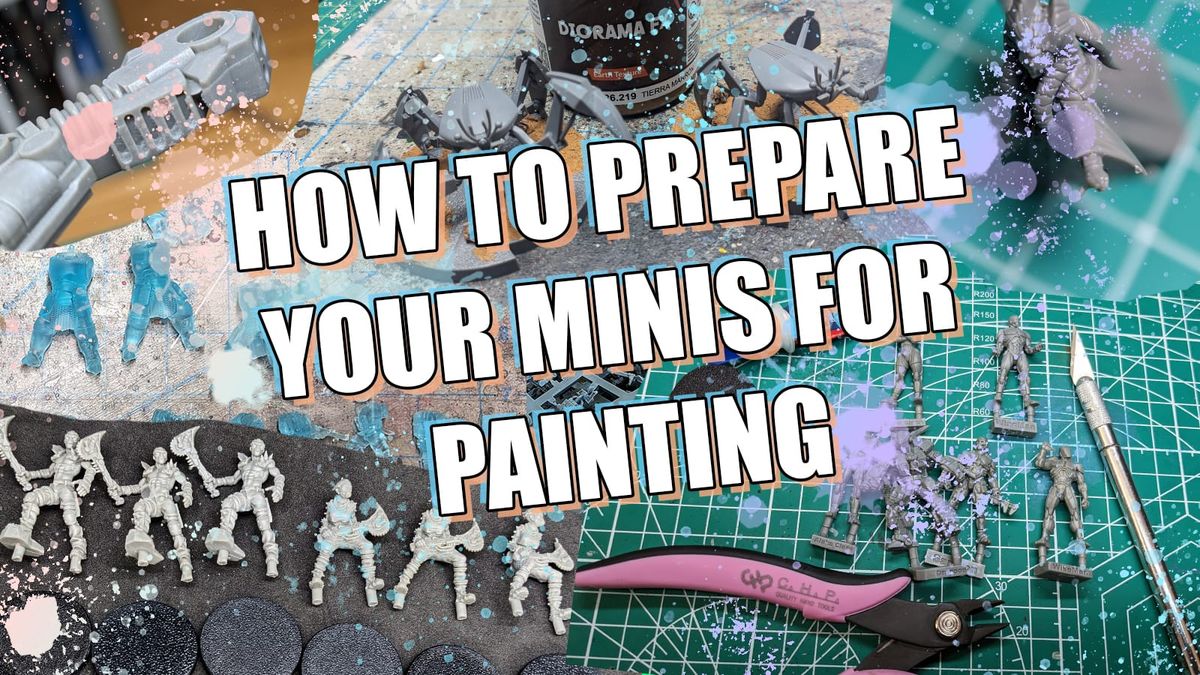
Be patient. As much as I love the metal minis, the constant back and forth of ensuring you have enough glue to activator ratio can end with snapped models and a lot of frustration.
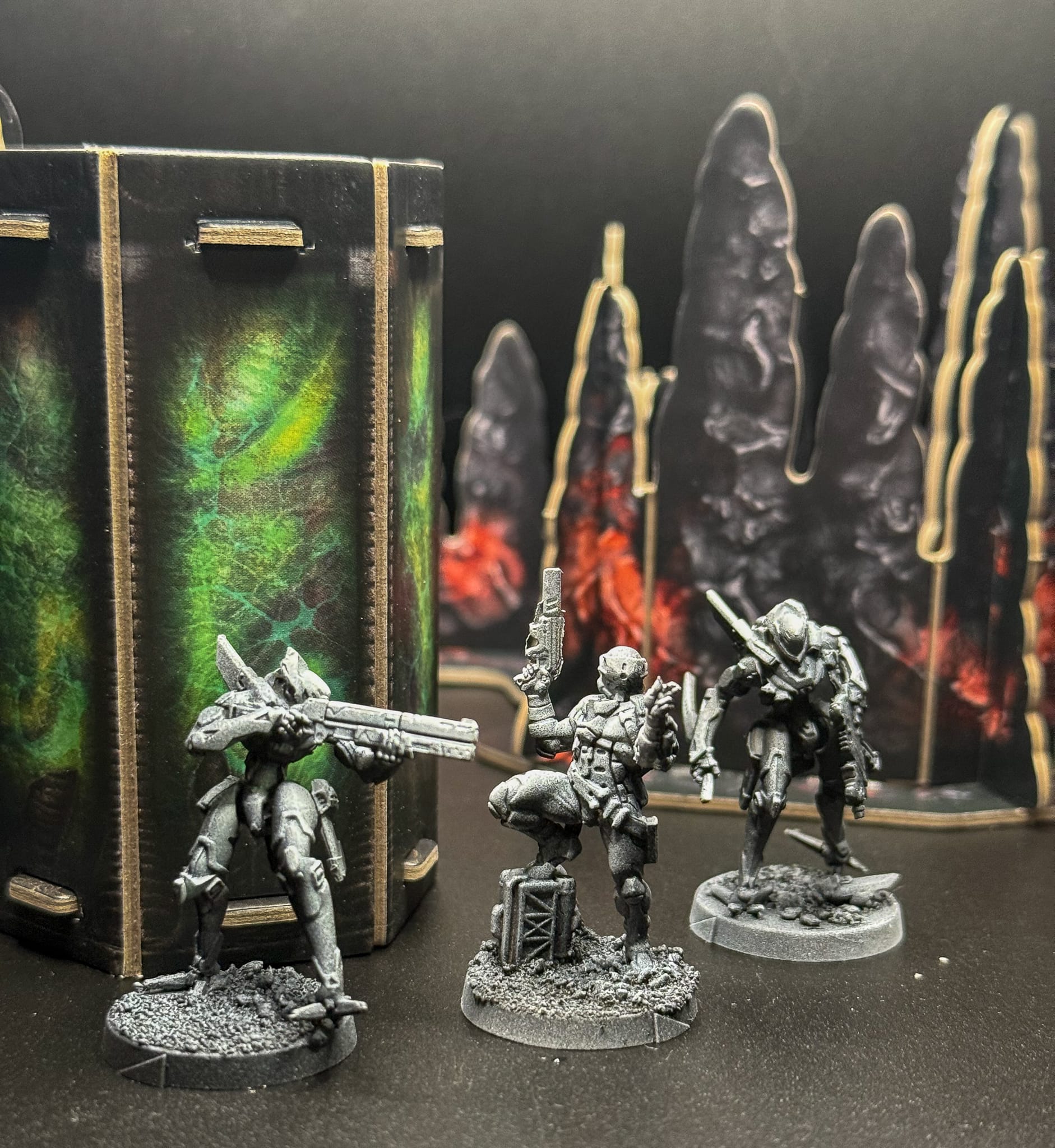
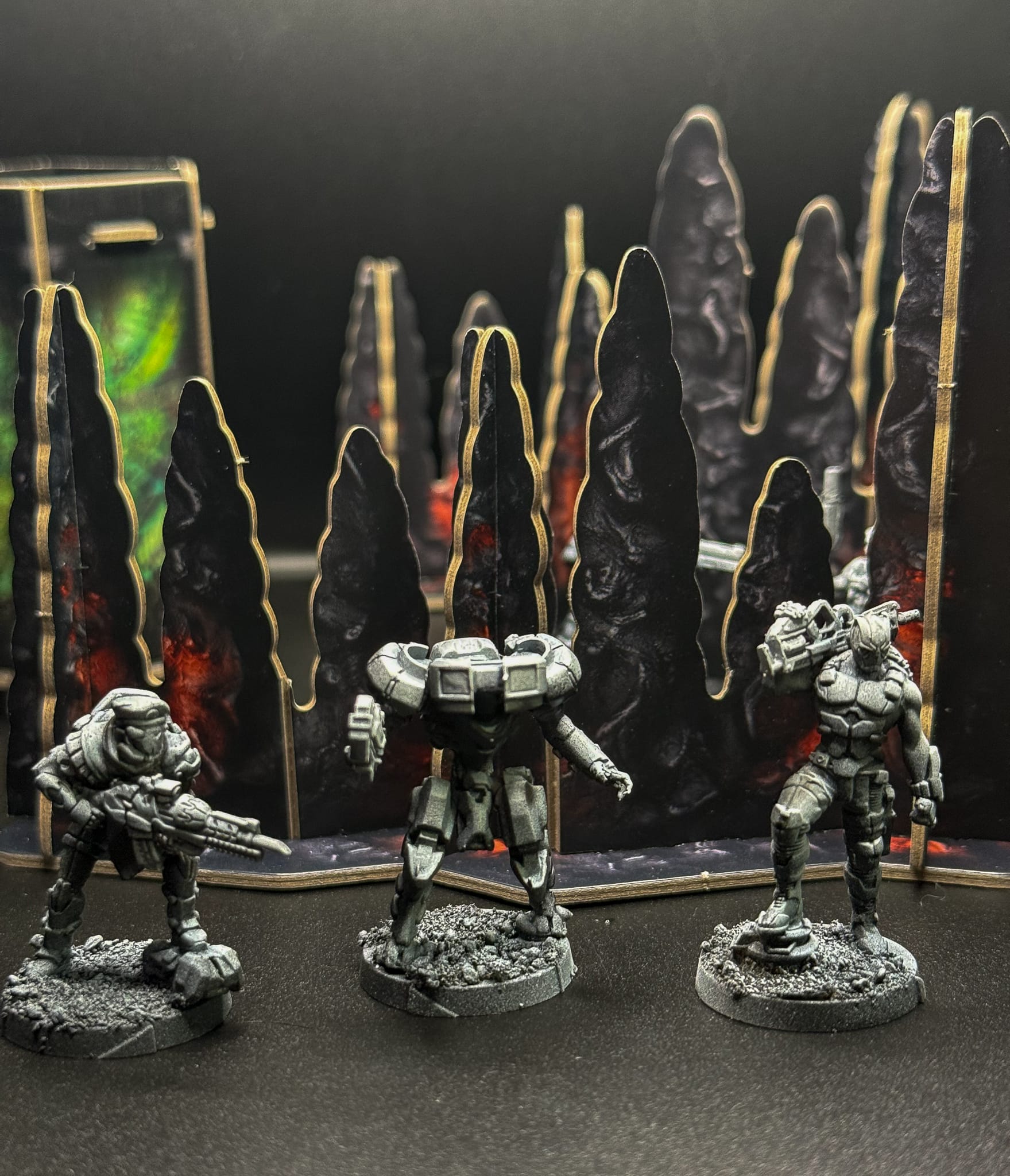
Models from the Beyond Operation Mazebreaker box
For the most part, these models are very easy to assemble. I found that I was able to put together the Beyond Operation Mazebreaker box with ease. I used my Dremel tool to drill perfect holes in the bases, and hit all of my bases with various materials in order to pre-base the models (I’ll go into painting the separate army schemes in a future article).
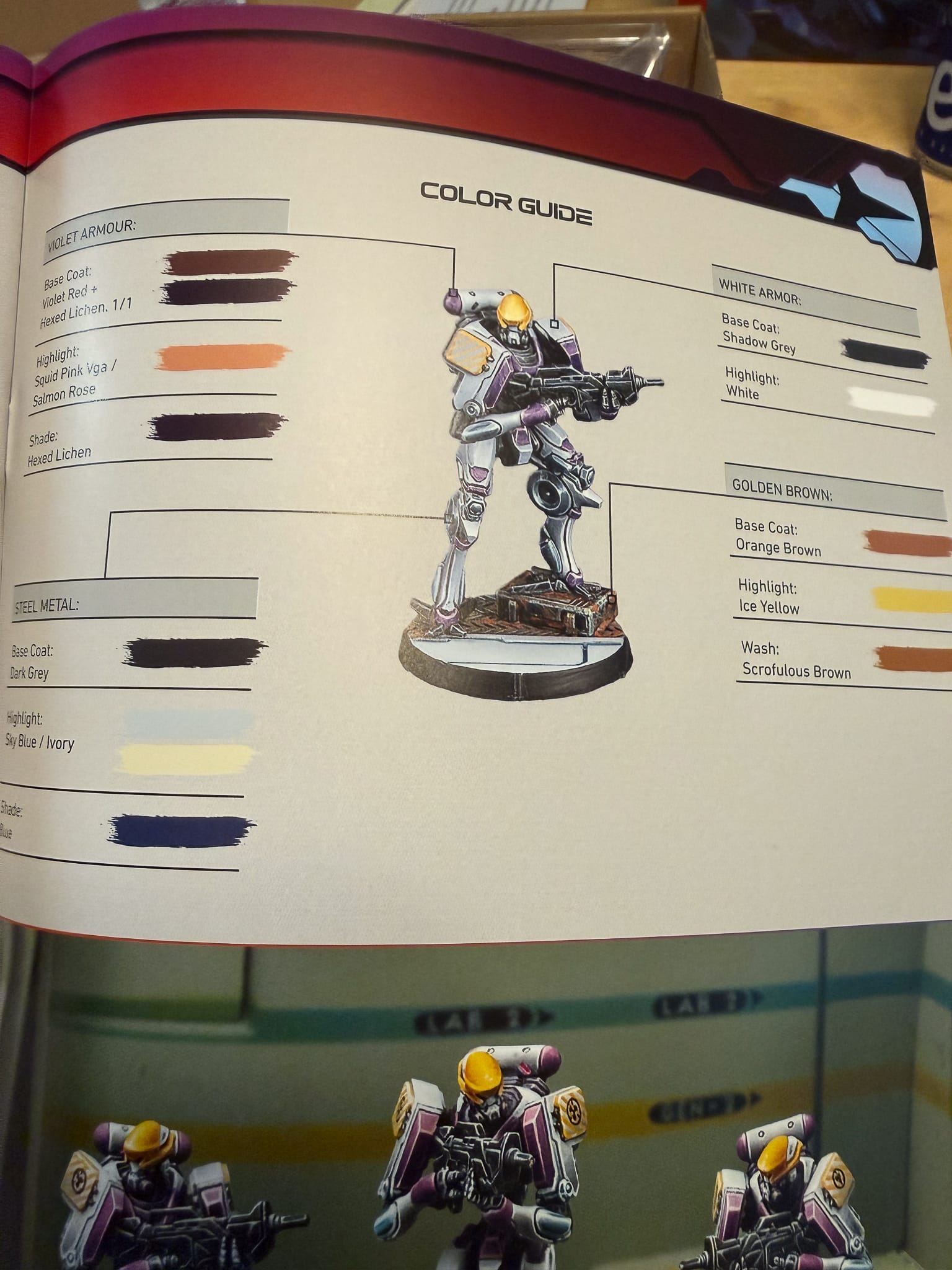
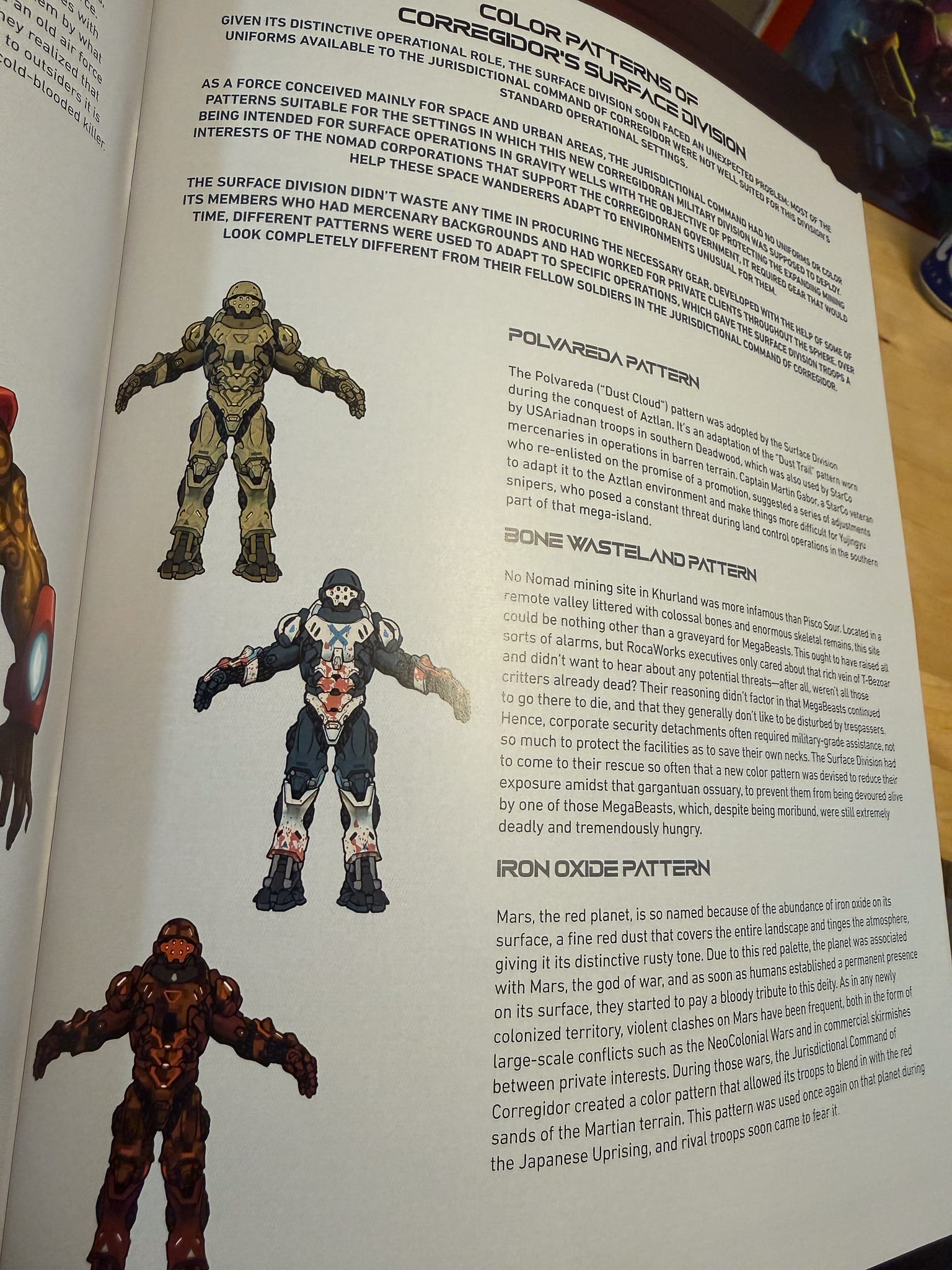
As a primer for painting (good joke, eh?) the Infinity rule book has some excellent resources. A guide on how to prep metal models, and painting guides for both the Nomads and Aleph forces. What I really like here is that they use color swatches and some generalized names for paint, though I will say phrases like “Japanese Uniform WW2” don’t help out the reader too much, but there is a swatch so I know I need a greenish brown. Also, in earlier pages of the book, you can see some color schemes that differ from the box art, which is very cool and inspirational!
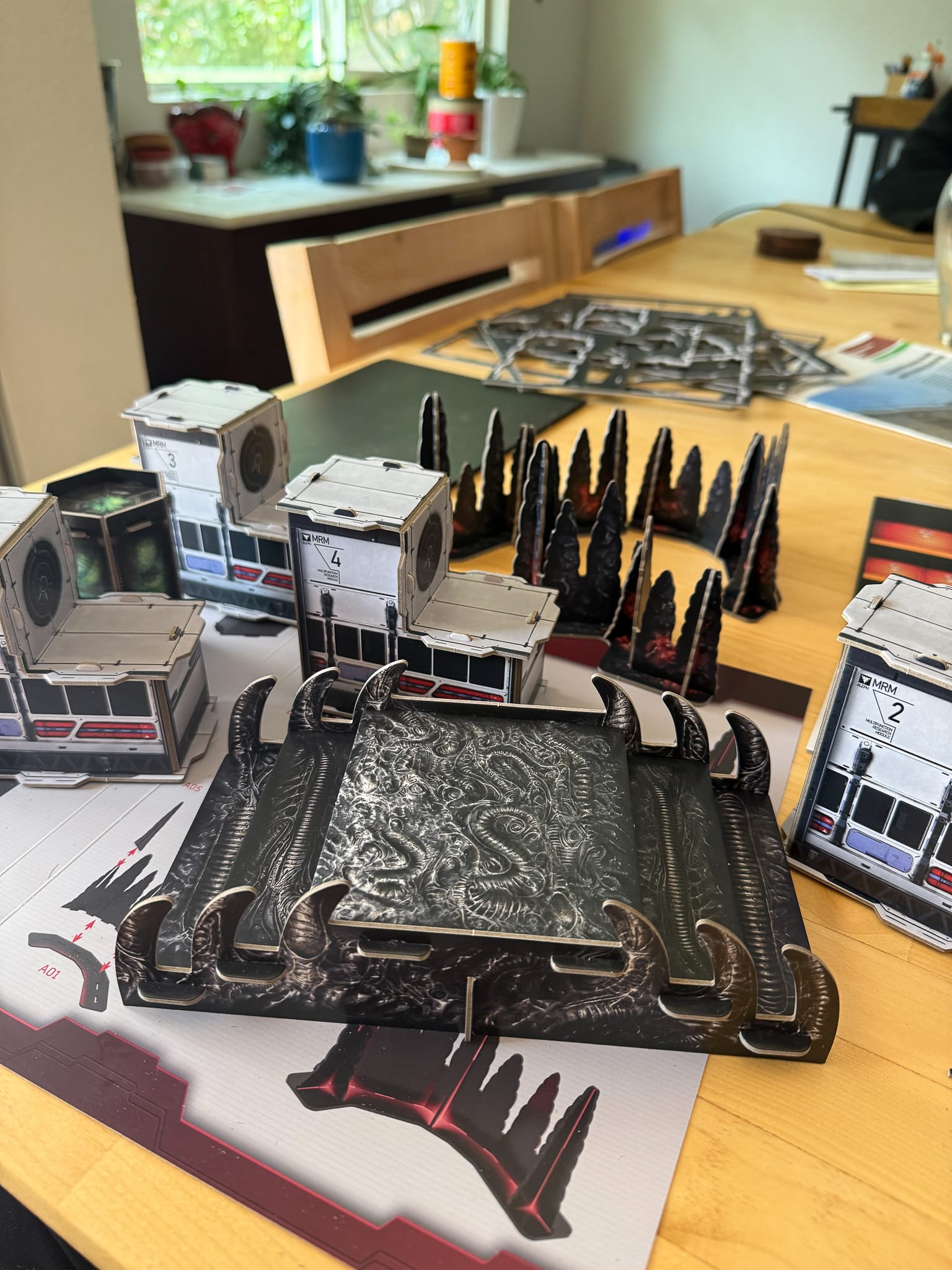
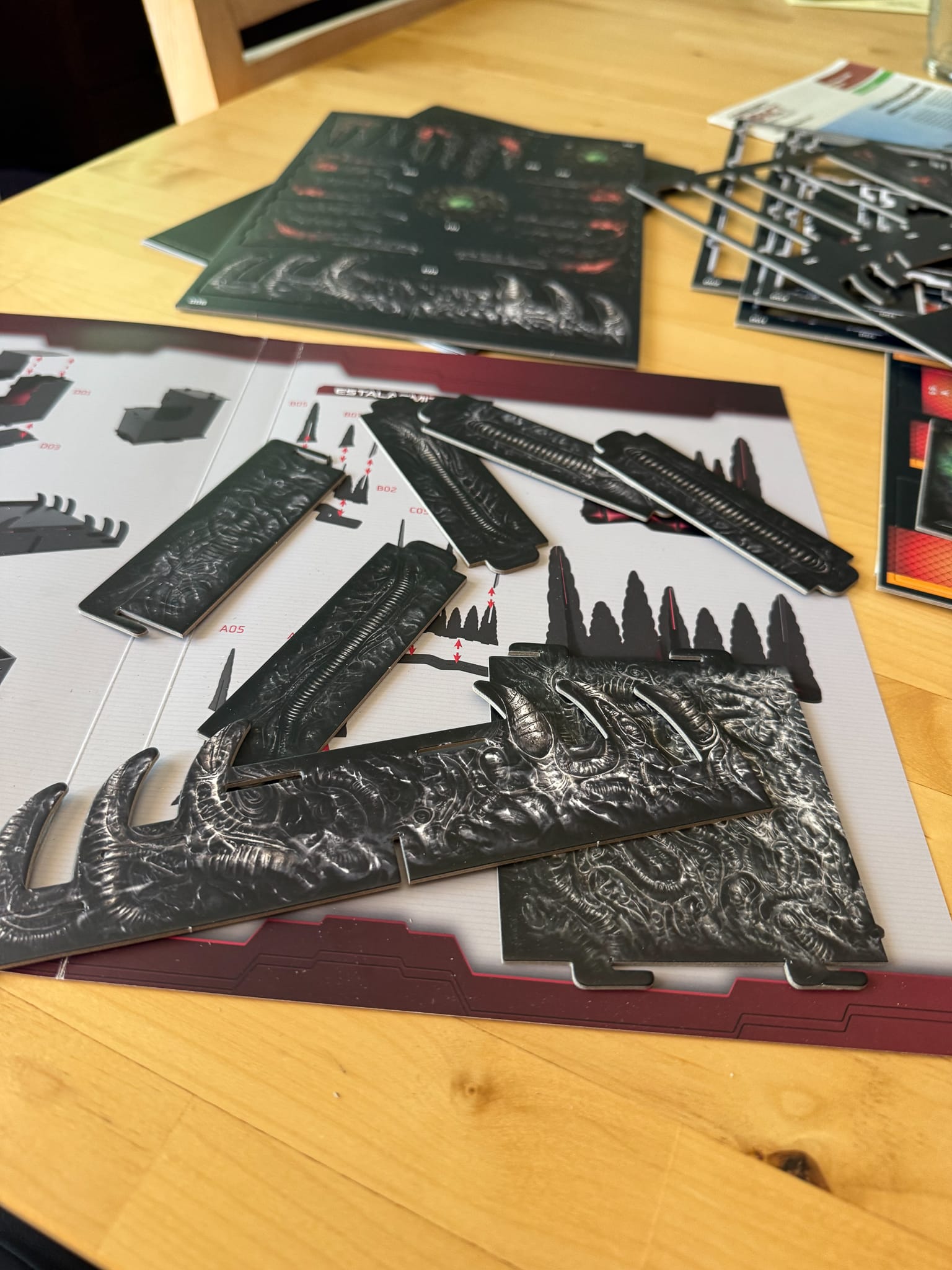
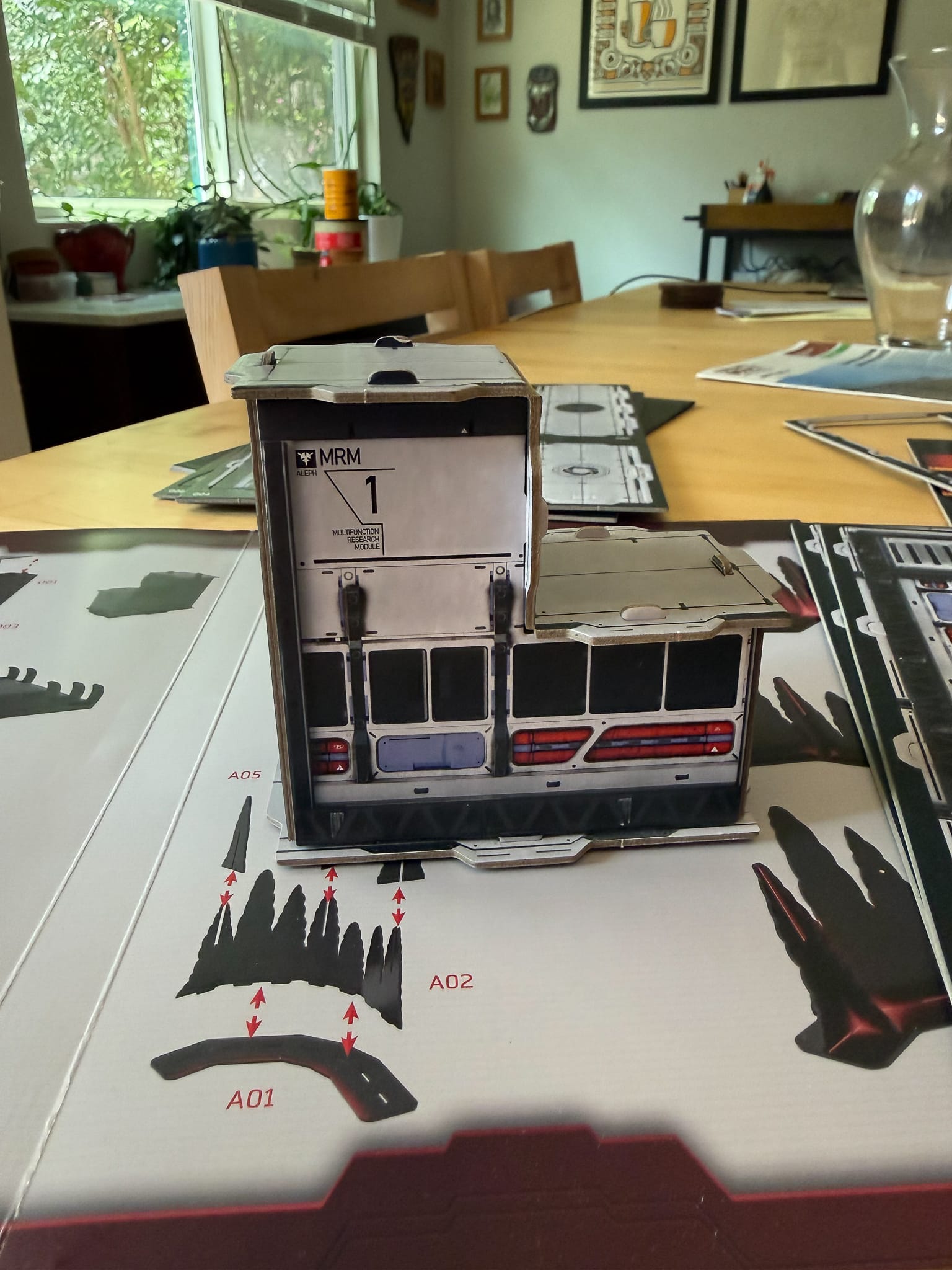
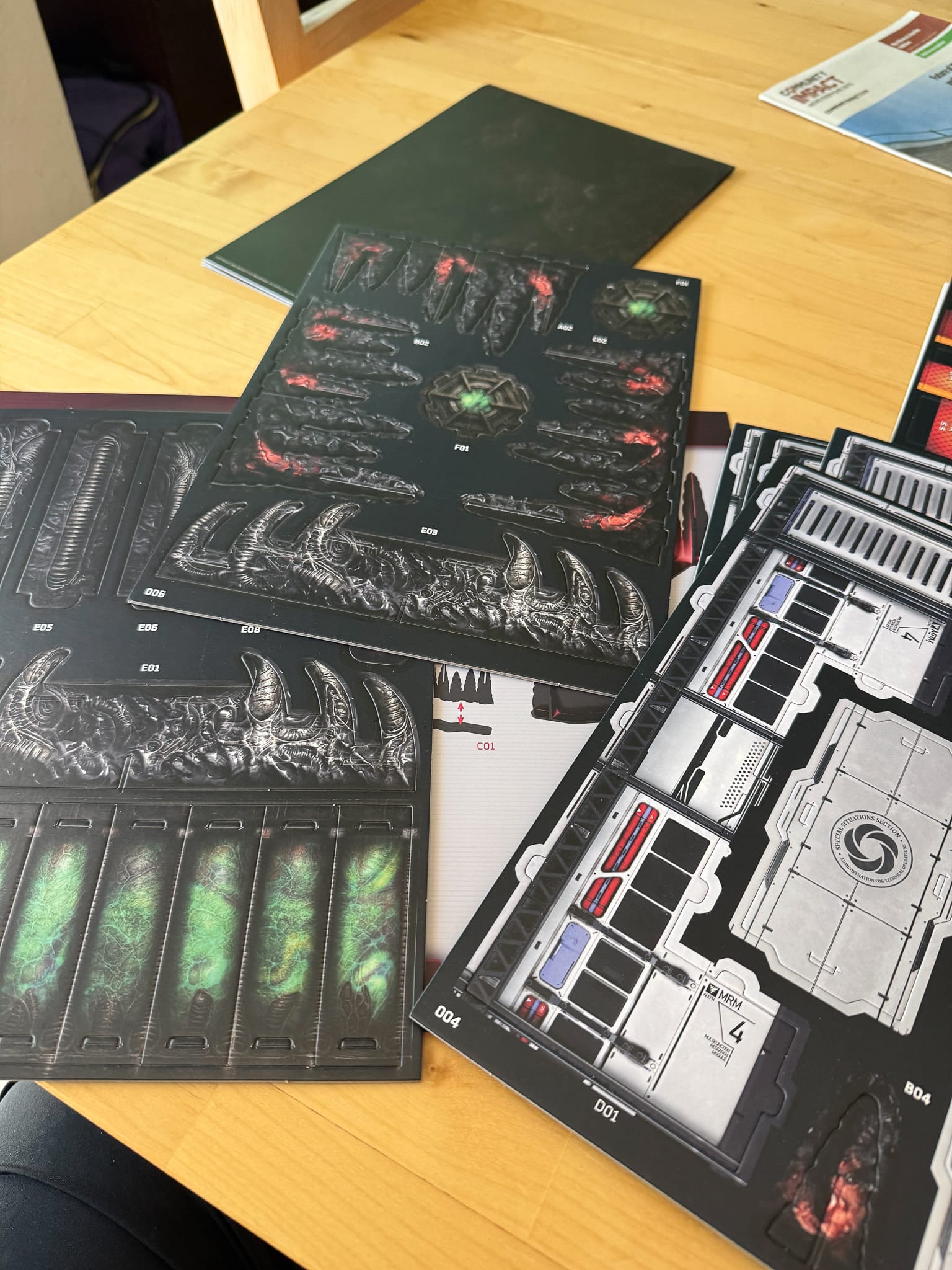
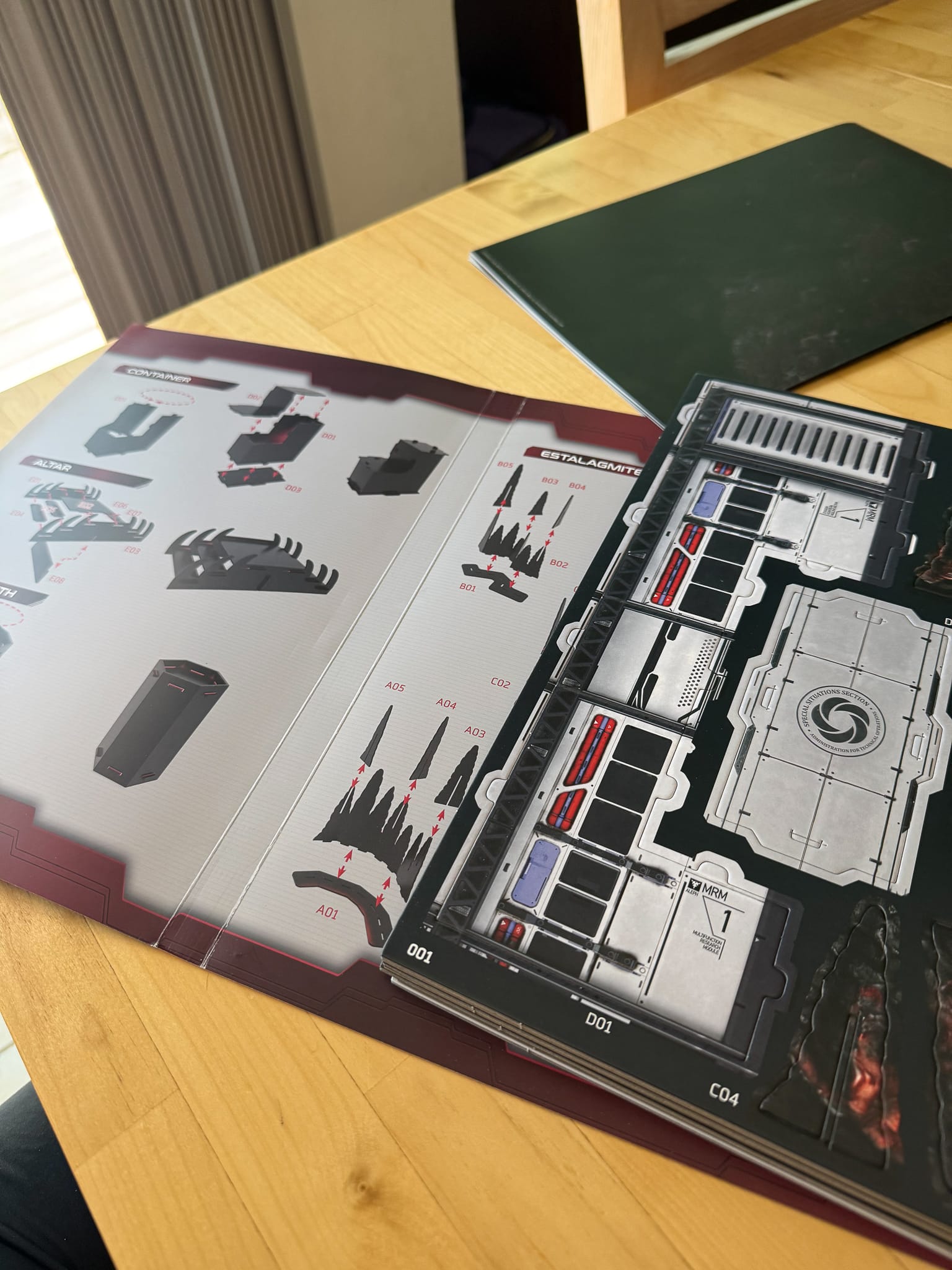
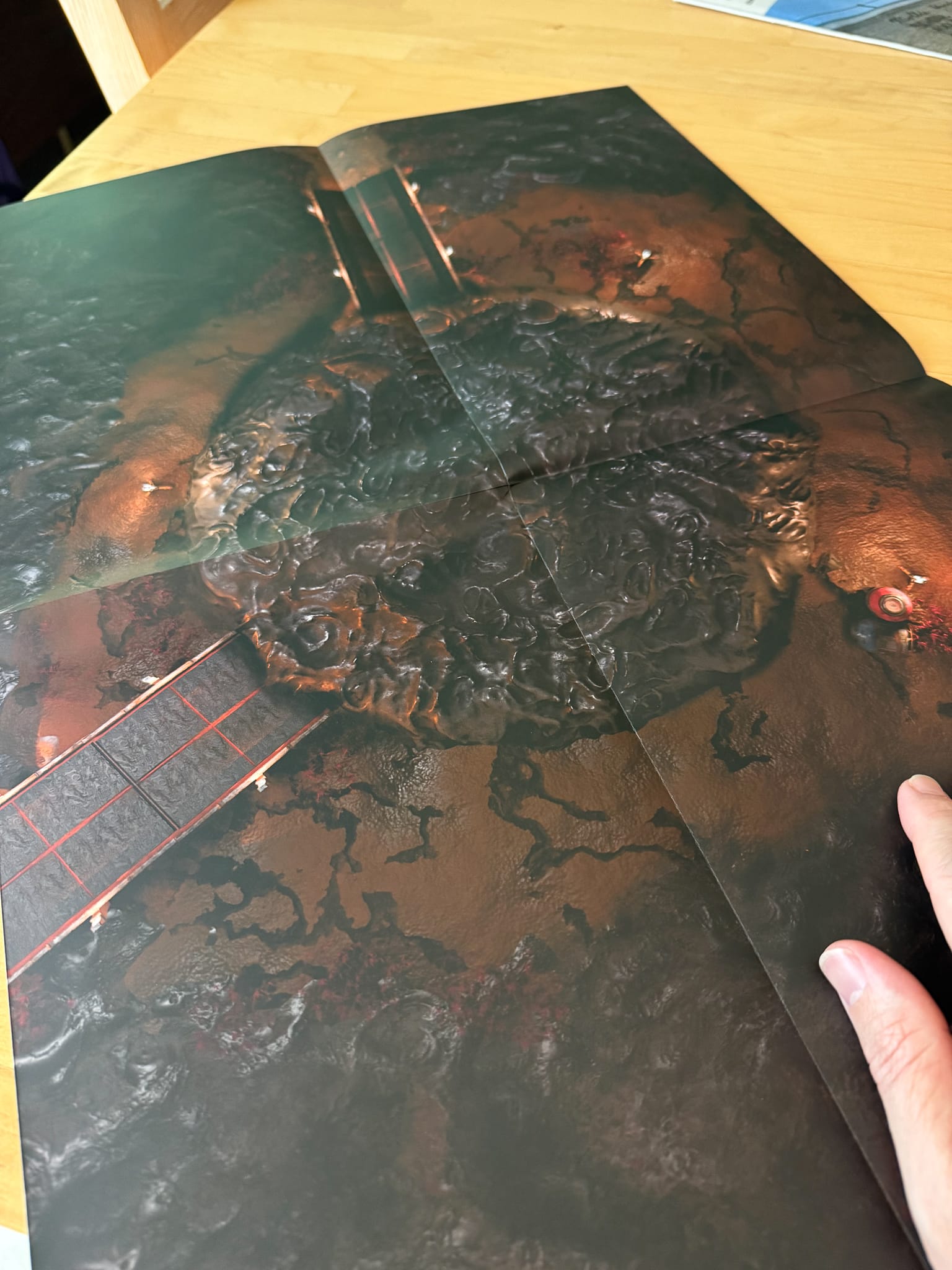
While I wait for glue to dry, let’s dive into the included terrain. The Novaro Xeno-Hall Scenery Pack includes four buildings, three stalagmites, a raised platform, and a circular energy tube thingy. All of the pieces are high definition artwork and all thick cardboard, which is nicer than some other games that include flimsy terrain. I will say that putting the stalagmites together was one of the more painful experiences I had, but for the most part, it’s not bad snapping everything together. You don’t need glue, which is a bonus.
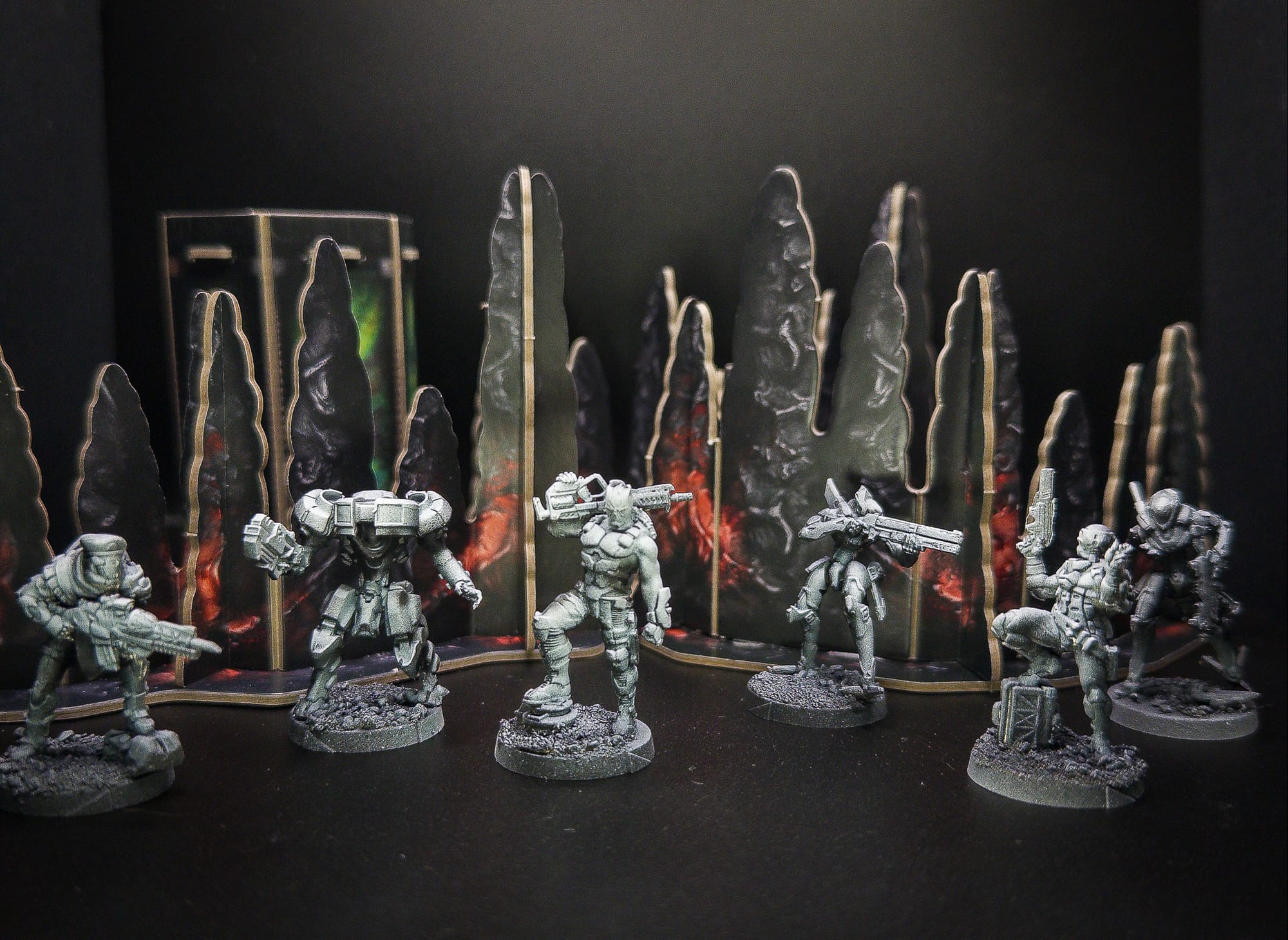
Cybernetic sleekness rendered in metal
Now that we’ve got some solid models glued and primed, let's take a look at them. The detail on these metal models is pretty fantastic, but I will warn you that metal models can be tricky to prime. For these, I went with a rattle can of black primer, with a light spray of white primer to give me a Zenithal highlight. However, after everything dried, I realized that I needed to go back in and fill in areas where the primer hadn’t hit. So, my airbrush saved the day. I also realized at this point that I may have built some of the Aleph models incorrectly, but I have a fun idea when it comes to painting them (in a future article).
So for now, let’s dive into the Operation Mazebreaker book that came with the box. Number one, thank you for giving me a printed book. As much as I love that plenty of companies supply rules for free with updates, I really don’t want to read the rules on a computer or worse, my phone. I view tabletop gaming as a way to break away from the distractions of technology, and I really appreciate that Corvus Belli drops a full book into this box set.
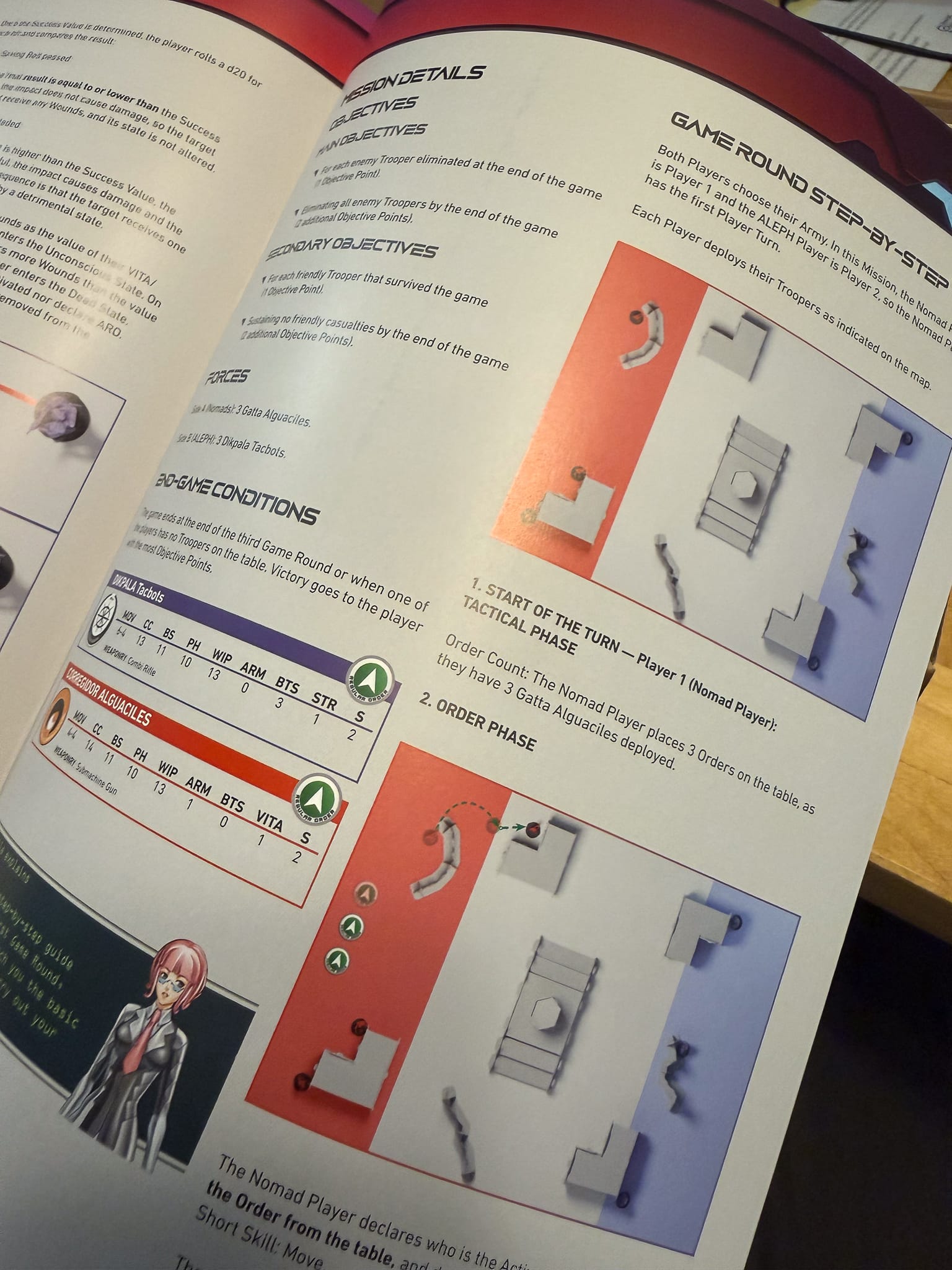
Each Unit in Infinity has a series of attributes, which are numeric values representing individual unit capabilities. These are used to help make rolls and figure out success/failure. Like other wargames, these tend to be movement, ranged combat, physical skills, health, armor, and a unique value called Structure, which applies to mechanical Troopers.
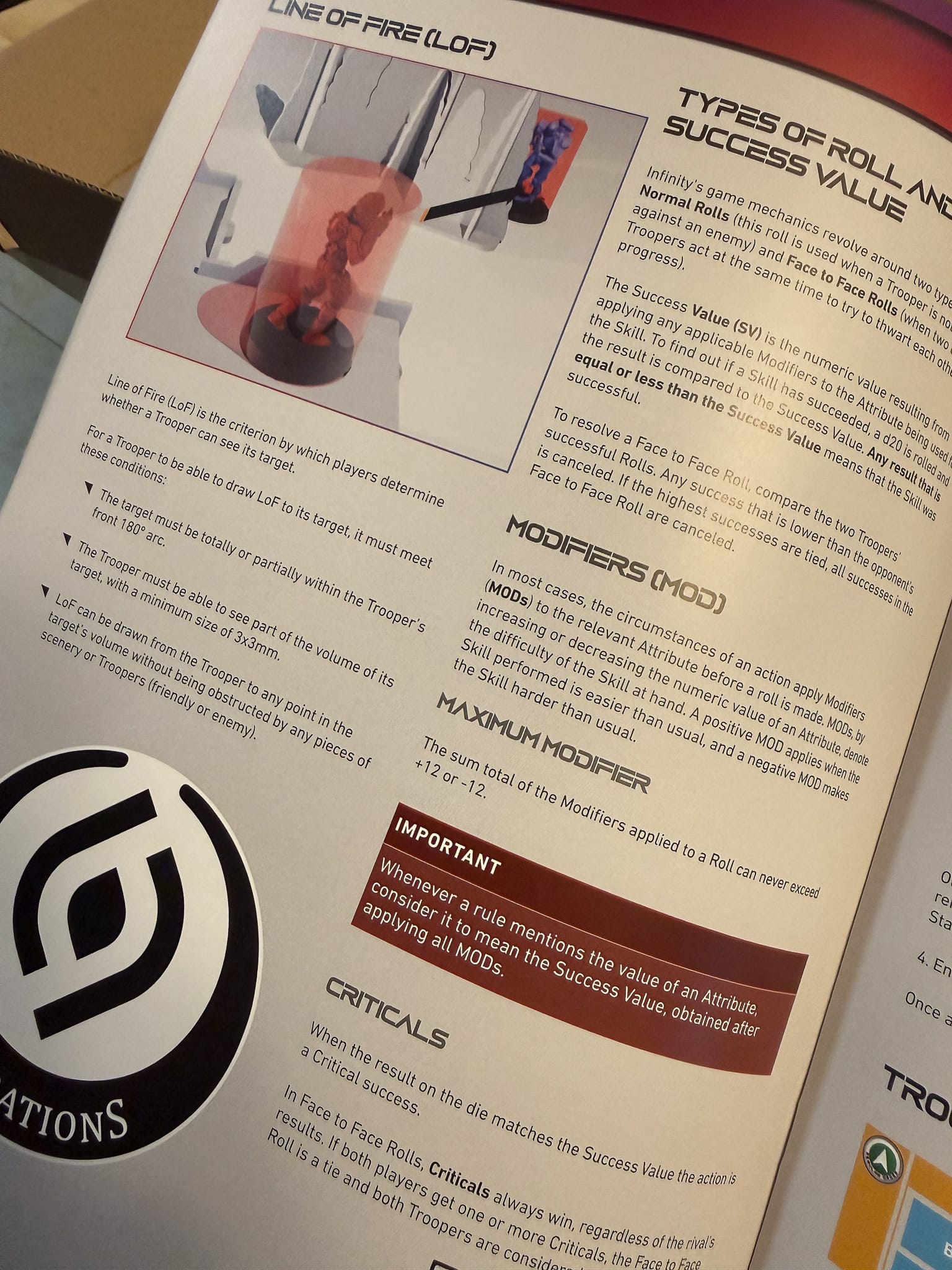
Distance is measured base to base, and the line of sight is determined by seeing the volume of a model. This is why terrain is pretty important in Infinity, creating lots of strategic moves and chances.
Success/Failure is determined via a d20 system, where you roll, add the skill, and if the result is better than the Success Value, you succeed. When you fight an opponent, rolls are set up as Face-to-Face rolls, which are when 2 or more Troopers act at the same time to hurt each other.
Crits are determined via the die matching the Success Value. Easy to understand. There are 4 phases to each player's turn: Tactical, Order, States, and the End.
In Tactical, the player determines which models can take action, and adds a “Regular Order" to the pool.
In Order, which is the main phase, the player determines which of 2 skills to activate, which could be a combination of Basic Short Skills and Short Skills (we’ll get into that in a moment).
In States, players carry out checks for any States or Skills that would require it.
And in End, the player’s turn is over. Repeat this for 3 rounds, and the game is over. Points are determined either through holding Objectives or eliminating each other (naturally, it’ll be easier to hold objectives than constantly fighting, but you do you.)
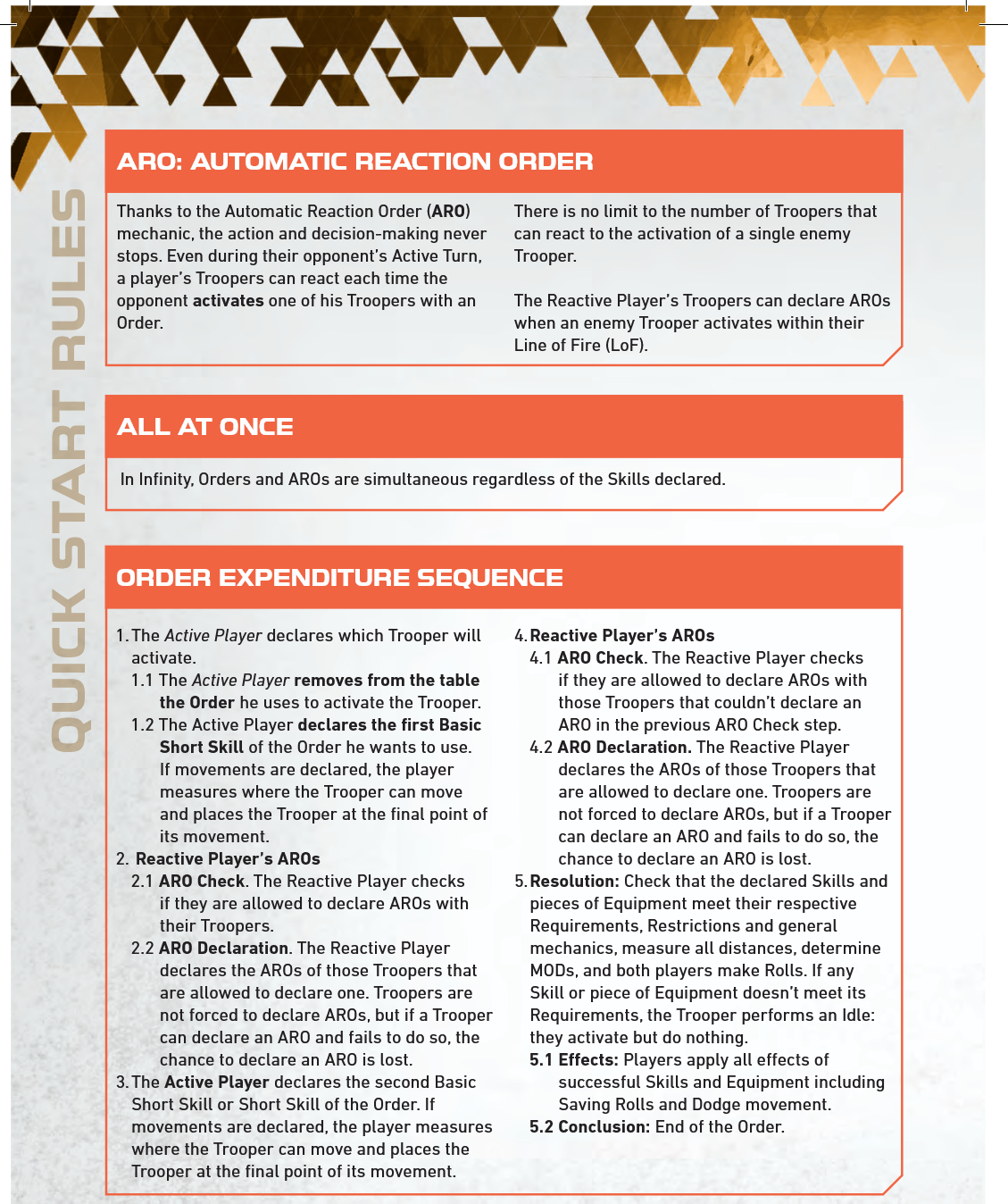
Something unique about Infinity is the use of the ARO, or Automatic Reaction Order. What this mechanic does is that during the Active Player's turn, the Reactive player can have their models react to each order. This means you can fire back, dodge, reload, and a number of other skills, all outlined in the full Infinity rules, which you can download for free.
Personally, I dig this. I’ve played a few wargames, and I like the ones that encourage players to react to each other at the same time, versus just dice rolls.
In Operation Mazebreaker, the book contains several missions that take you through all of the rules, which I find to be super helpful, but if I were to continue through them, you’ll never get to the end of this article.
Here’s a quick breakdown of what each mission teaches you:
Mission 1: Outer Perimeter, which will teach the player some condensed core mechanics, including movement, shooting, the phases, and some basic objectives focused on attacking each other.
Mission 2: Inner Perimeter, which teaches the players Initiative and Deployment rolls, along with close combat and silhouette rules (line of sight).
Mission 3: Access Hatch 24 teaches players about special orders for unique units, the Mimetism Skill (which is basically a stealth roll), new weapons, and is really about the role of a Lieutenant on the field, and how they can help your force.
Mission 4: Central Intersection is focused on how high and low success values work, unconscious and dead states work, modifiers, more weapons, and Forward Deployment, which allows you to deploy models beyond the normal deployment zone.
Mission 5: Checkpoint Sutala allows you to discover more skills and AROs, such as camouflage, Irregular Troopers, and order combinations.
And finally, Mission 6: The Aquarium Xeno-Hall brings in the concept of Long Skills, which take up the entire Order you give to a model, more weapons, equipment, and it pulls in the entire force.
So by the time you get through Mission 6, you now know how to use all of the models included in the box, and should have a good understanding of all of the skills, rules, and it’s been presented in a very intelligent way. Honestly, it’s the most impressive part of the box.
Should you check Operation Mazebreaker out?
I feel like by this point, my unboxing article is turning into a review of the materials, and I think that’s fine. By publication, I won’t have played Infinity, as I still need to build the models in the box, which is a hurdle, seeing that I have to squeeze it in. But reading through the book, I love how this is presented. The online community for Infinity is massive, and any question you have can be solved through websites like Human Sphere and the resources from Corvus Belli, and their own forums.
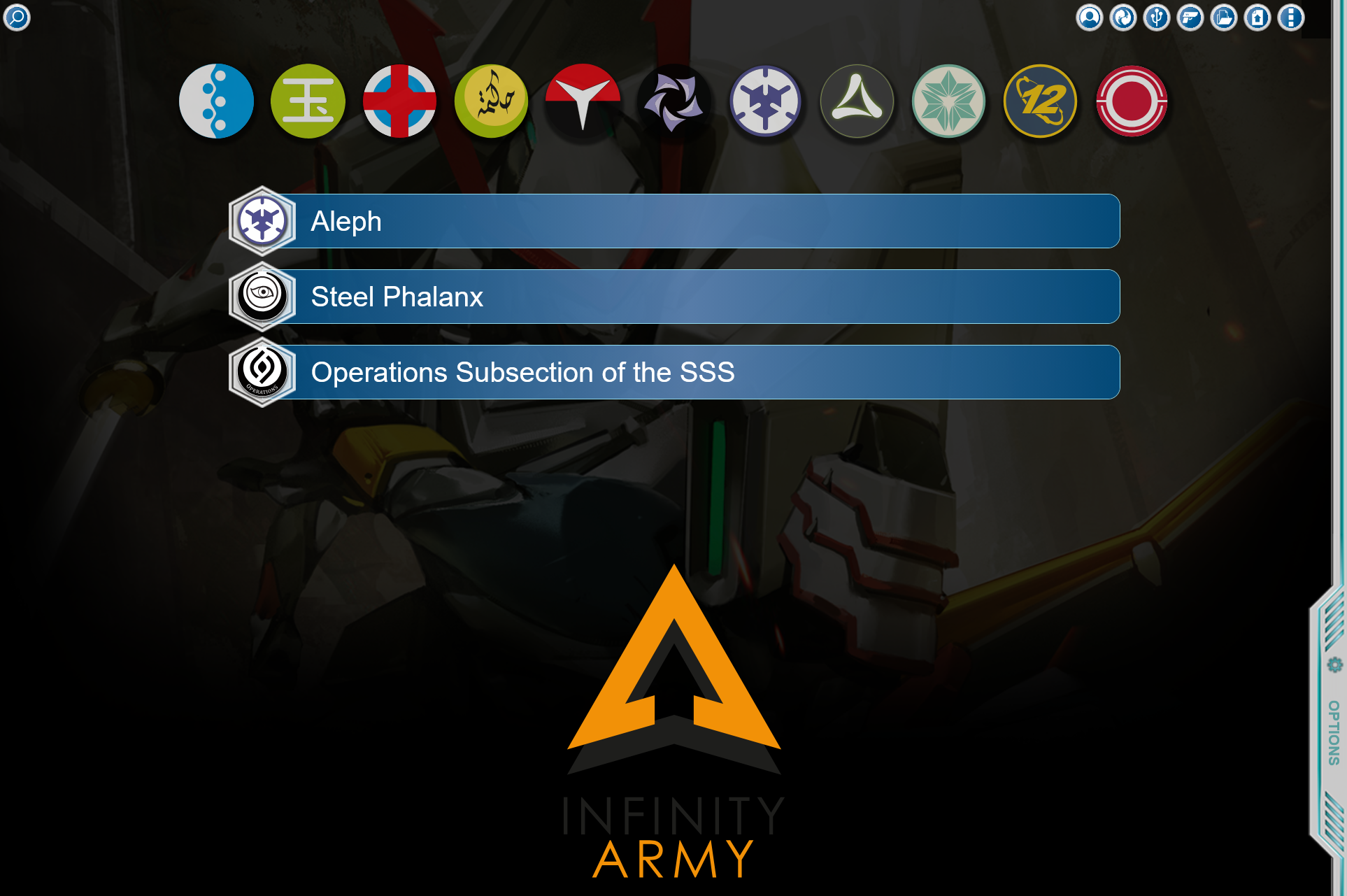
Surprisingly, there is an Army building app for Infinity, along with a web version, which helps keep all of your character cards in one place. And it’s very nicely built!
Also, the cost of this box is pretty solid. The retail price is $174, whereas Warhammer’s latest starter set is a whopping $300, and for that, you’re getting some beautiful models, some really nice terrain, and access to an easy-to-understand and exciting game system.
If I’m honest, if the models were plastic and easier to assemble, I’d probably rate this higher, but considering the rules, mechanics, and the sheer coolness of the game, I’m definitely stoked to get into more Infinity!
Infinity: Operation Mazebreaker
Great
Operation Mazebreaker is an excellent entry into the Infinity universe, giving you 12 models, terrain, and an easy-to-understand version of the rules.
Pros
- Excellent tutorial and resources
- Beautiful models
- Excellent terrain
Cons
- No model instructions
- Metal models can break easily
- Hard to assemble
This review is based on a retail copy provided by the publisher.