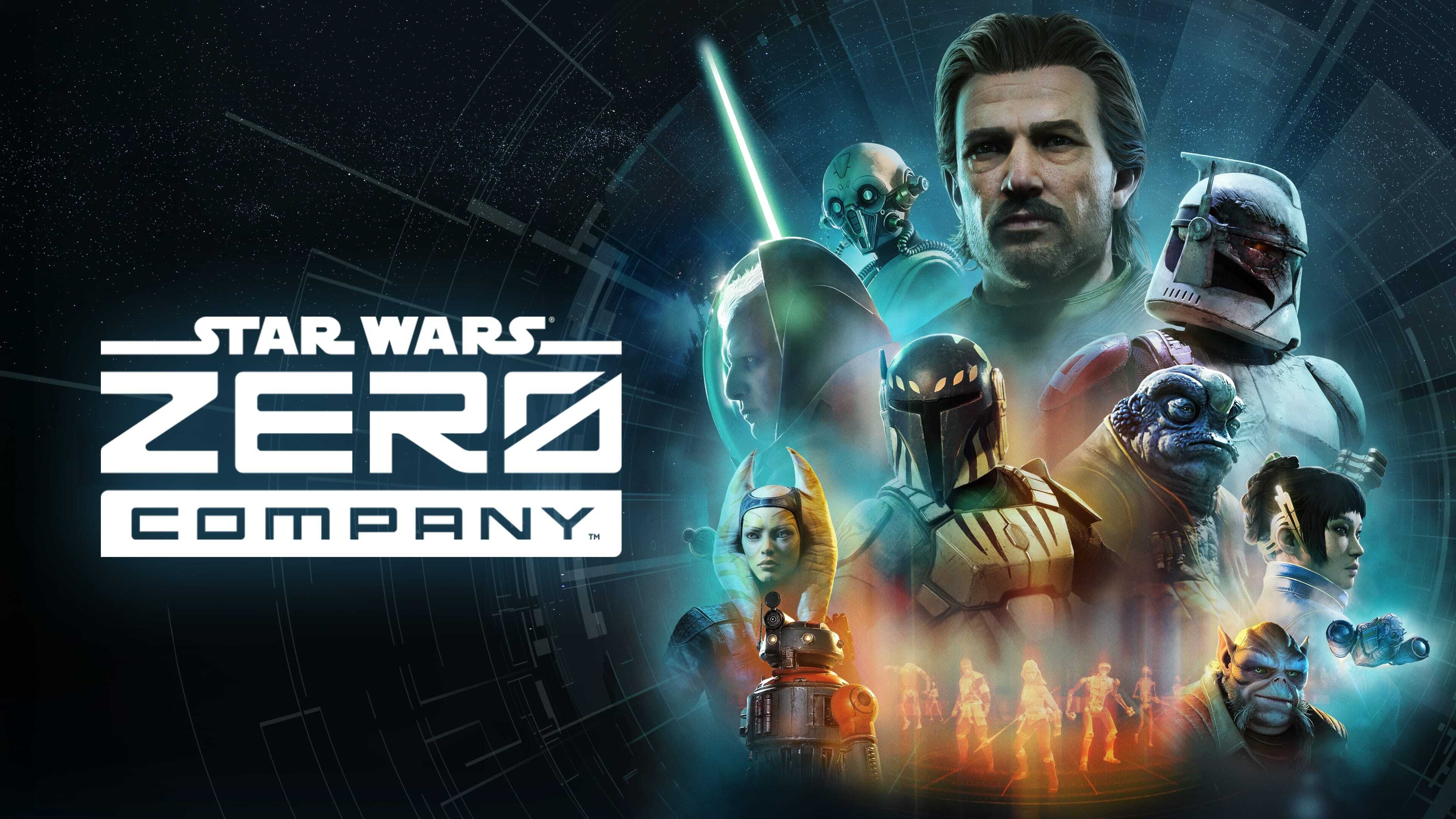
Zero Company is a Star Wars game that probably shouldn't exist. I'm not saying it doesn't need to be made – on the contrary, I love seeing these kinds of swings. It's that most of the time, big franchises don't get funding for niche genres. I've gotten to play a very large chunk of Star Wars Zero Company, and now that I've engaged with Bit Reactor's vision, it's criminal that it has taken this long to get another Star Wars tactics game. Zero Company is epic, and the team clearly understands both Star Wars and strategy games.
My demo began with creating a character with the surname of Hawks (not to be confused with Tom Clancy’s HAWX, or Tony Hawk). I’m impressed with the amount of customization you can do here, with several species to choose from and plenty of facial sliders to adjust, alongside a veritable storefront of outfits and accessories. You can also pick headgear or a helmet, while disabling it for cutscenes – an appreciated extra for those who love a new hat but don’t want it obscuring their character when something important happens.
Speaking of important happenings, Hawks is a former Republic Captain turned mercenary, selling his Zero Company squad to the highest bidder. Think a rowdier, more diverse Bad Batch. As the story progresses, you’ll meet new faces to add to your bunch of hoodlums, bringing with them fresh skills and allegiances (as well as their own wants and needs) which will spice up your base.
You’ll spend a lot of time with these contractors, and Bit Reactor’s presentation has to be commended. For instance, cutscenes provide a cinematic flow often missing in this genre, and give you a closer look into your squad’s lives. It’s clear the team has borrowed some elements from Marvel’s Midnight Suns, and to great effect. No longer will you run your base from a single side-view, but instead explore a sprawling, retrofitted, derelict station that serves as the primary hub for the team. You’ll also interact with them, learn more about them, and otherwise get to know them as more than “just another medic on the crew”.
Building said squad is how Star Wars Zero Company really gets into the nitty-gritty of a tactics game. Each operator – including Hawks – has a specialization and talent that gives them a set active or passive ability. You’ll want to pay close attention to these, as they are the crux of whether your crew makes it out alive. My Hawks, for instance, specialized in Gunslinger, giving him the ability to shoot several targets at once with his blaster. Trick, your clone buddy, has a talent that allows him to get back up on his own if he’s downed, as well as a rocket launcher that can turn the tide in a hurry. There are too many combinations to go over here, alongside how many your squad may house. It’s just a good idea to mix things up and pay attention to what you’ll be doing in whatever mission you’re on to get the best outcome.
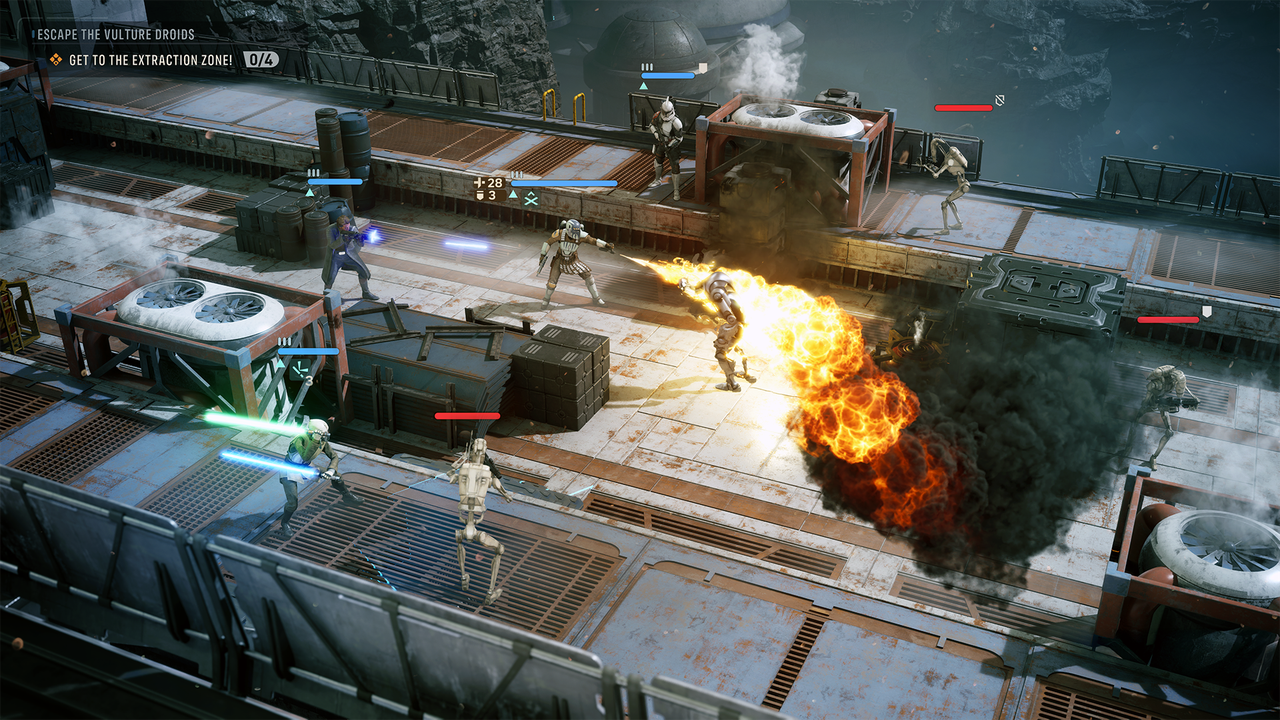
In order to utilize these special skills, you’ll need to accumulate “Advantage”. Accomplishing tactical tasks, taking down foes, and dodging the occasional blaster will slowly accumulate advantage. Each one of your crew can use some of that advantage in small amounts or large amounts for big or small special attacks and moves. One of your team (the one with “Uppercut” in his name, obviously) can rush over and smash a foe in the guts with his massive fist. Trick’s rocket launcher is a massive splash damage attack that can destroy nearly any cover the enemy might be using, and a sniper can take can’t-miss shots from a distance, just to name a few. Here’s the hitch, though – so can your foes. Your cover, your friends, your crew is just as vulnerable – plan accordingly.
At a holotable, you'll plan out your Operations and Missions. These are different in how they are approached – Operations are choices you make from the holotable, while Missions have you heading to the planet, station, or muddy back alley in question. There are special conditions like time limits or unlimited reinforcements to do these; some you're going to miss, and others are main Missions that require your attention at a certain point. Doing a mission takes up a day/cycle, so you'll want to pay attention to what is available, because missing it might affect a relationship with your crew if it was important to them.
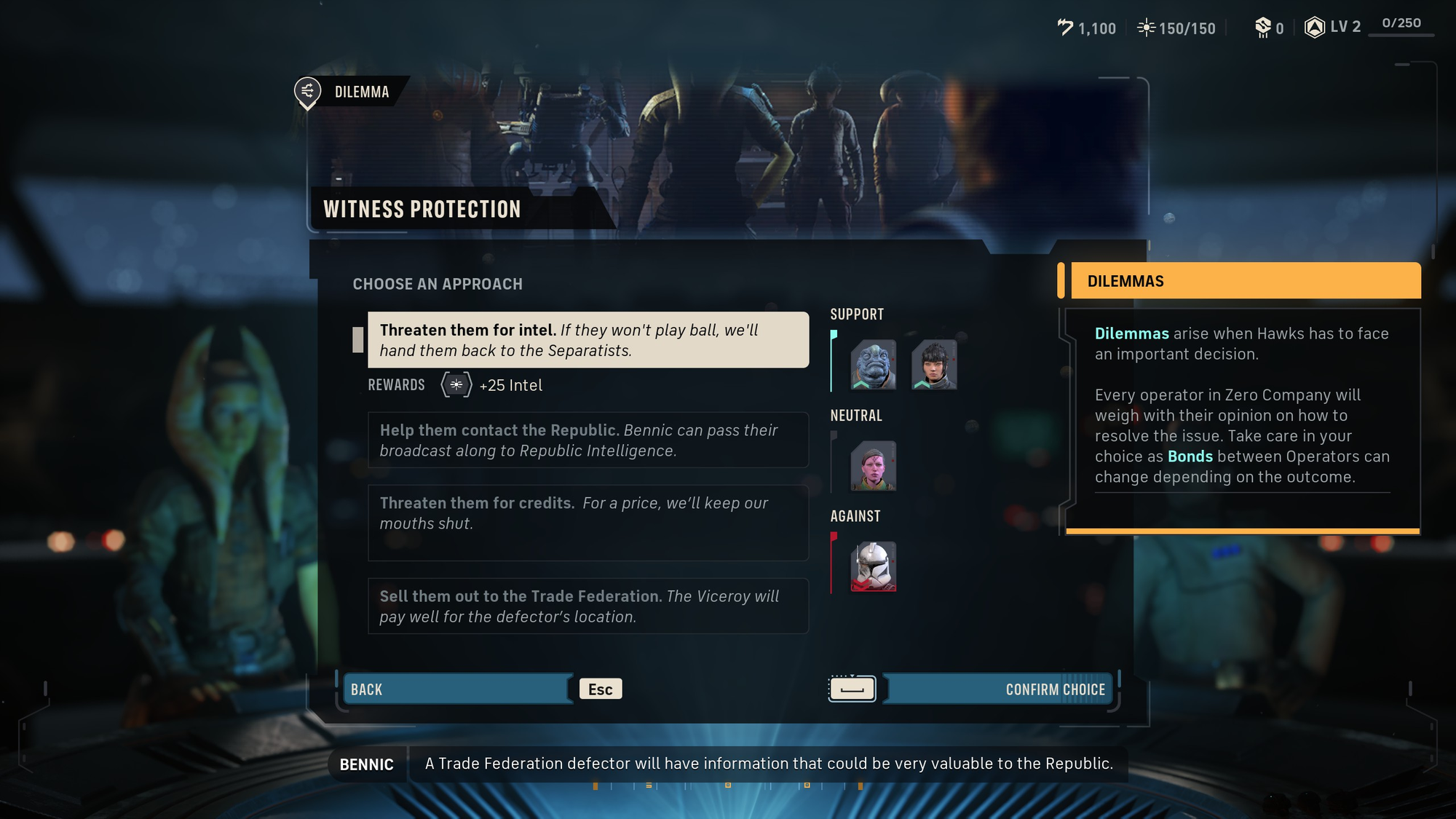
Operations have great benefits. In these, you'll most likely just make a choice from on-screen prompts, or send a couple of Zero Company operators to investigate or fight. Given the number you usually have of them, along with the required intel you'll spend each cycle to do them, you'll want to make sure the rewards are useful. Some are unknown and based on your previous choices, while others are straightforward – extra credits or weapon upgrades, for example. All of them are bound to certain sectors, and raise or lower your influence in said sectors, which have ancillary benefits. You're never going to get to them all, so plan out what can help your current team and leave the rest for your next playthrough.
Each Mission has you reaching a destination and beginning in two ways: a third-person, strictly-pathed introduction to your eventual battleground, or straight to the fight. Once you're in place, every one of your chosen squad gets three action points, which are spent in order to move, attack, defend, and more. All of your abilities are based around the specializations and talents mentioned earlier, so having a good mix to your version of Zero Company is the right move. Your objectives are usually simple – kill all the enemies, plant a charge to detonate, or steal something for example, before absconding to an evac if necessary.
I used quite a few different characters as I've played, like a Mandalorian named Cly and a Jedi Padawan named Tel-Rea Vokoss, but I had a specific squad that was my favorite. Hawks is always your captain, surrounded by three others of your choosing. I picked Trick to be my suppressive fire, a Mirialan sniper, and of all things, a BR-1 astromech. This may sound like a weird blend of personnel, but it worked more times than not.
See, the droid was the key to everything. BR-1 doesn’t have an attack, but makes up for it by enabling its teammates. Launching a grenade or popping a medpack over is appreciated (and watching your crew snatch them out of the air is always awesome), but giving up to three action points to your crew to further their attacks or moves is the best support one could hope for. Getting an extra shot in from my Mirialan came in clutch several times, often eliminating a foe before they could get an extra move in that could cost one of my squad their lives.
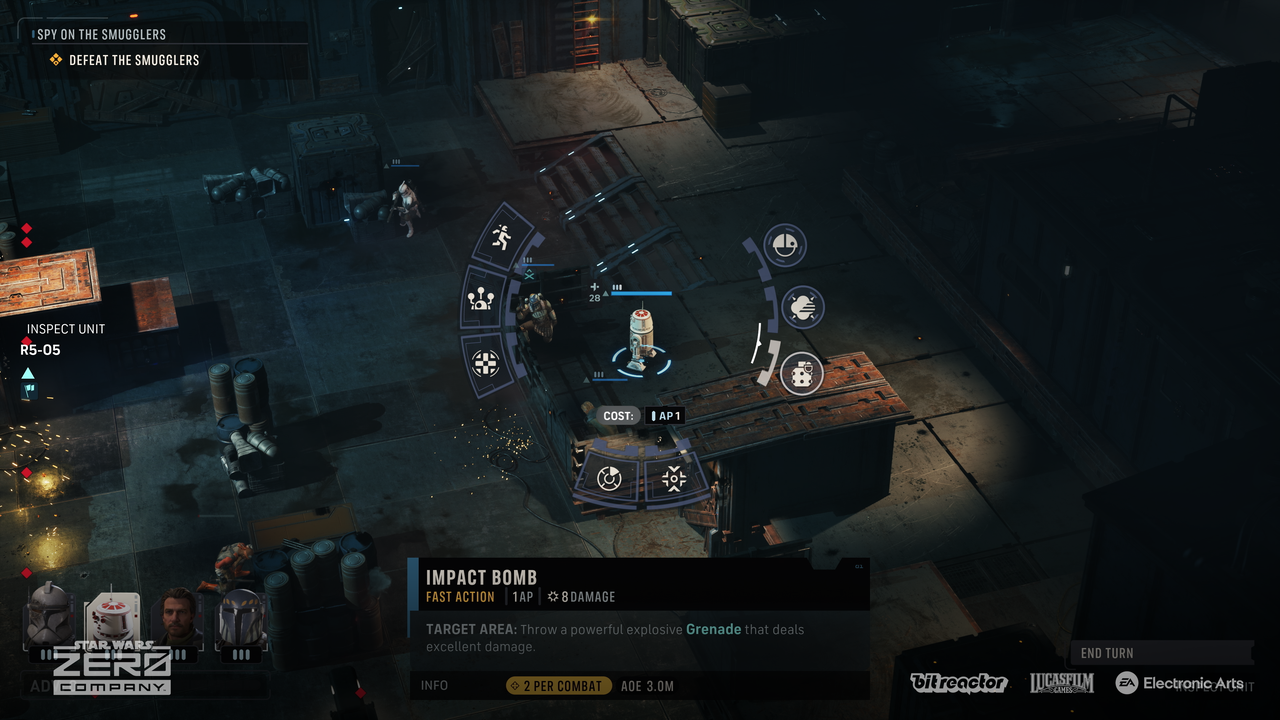
When your team structure clicks for you, it really clicks, as you know exactly the moves to make to one-up the incoming hostiles. Synergizing these moves is what makes the game so much fun; discovering new ways to do things or realizing you have that one ability that will save your butt from destruction is exhilarating, along with it being debilitating if you get it wrong. Ultimately, the choice is yours, and yes – a whole crew of Astromechs is not only viable, but a personal favorite of one of the dev team, encouraging you to try out all sorts of fun and unusual combinations.
Surviving is important because perma-death does exist in Zero Company. While I never had it happen organically during my runs (although I came pretty dang close), you are introduced to the possibility in the tutorial. Bit Reactor handles it in a great way as well, as a memorial terminal in your base shows your fallen comrades along with a few stats to remember them by. You can turn it off if you want, at least, which is a good choice for a game that wants to pull new players into it.
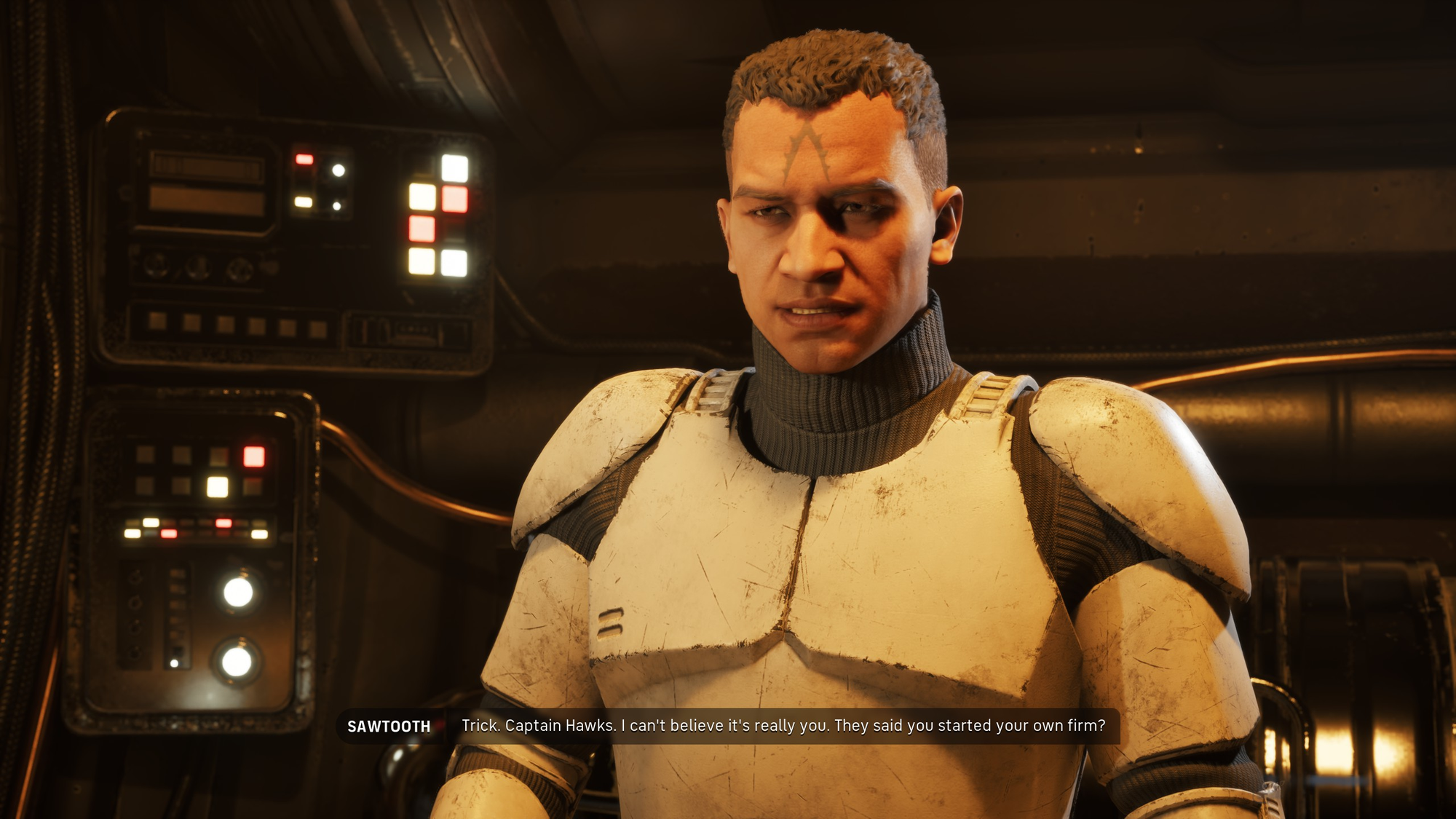
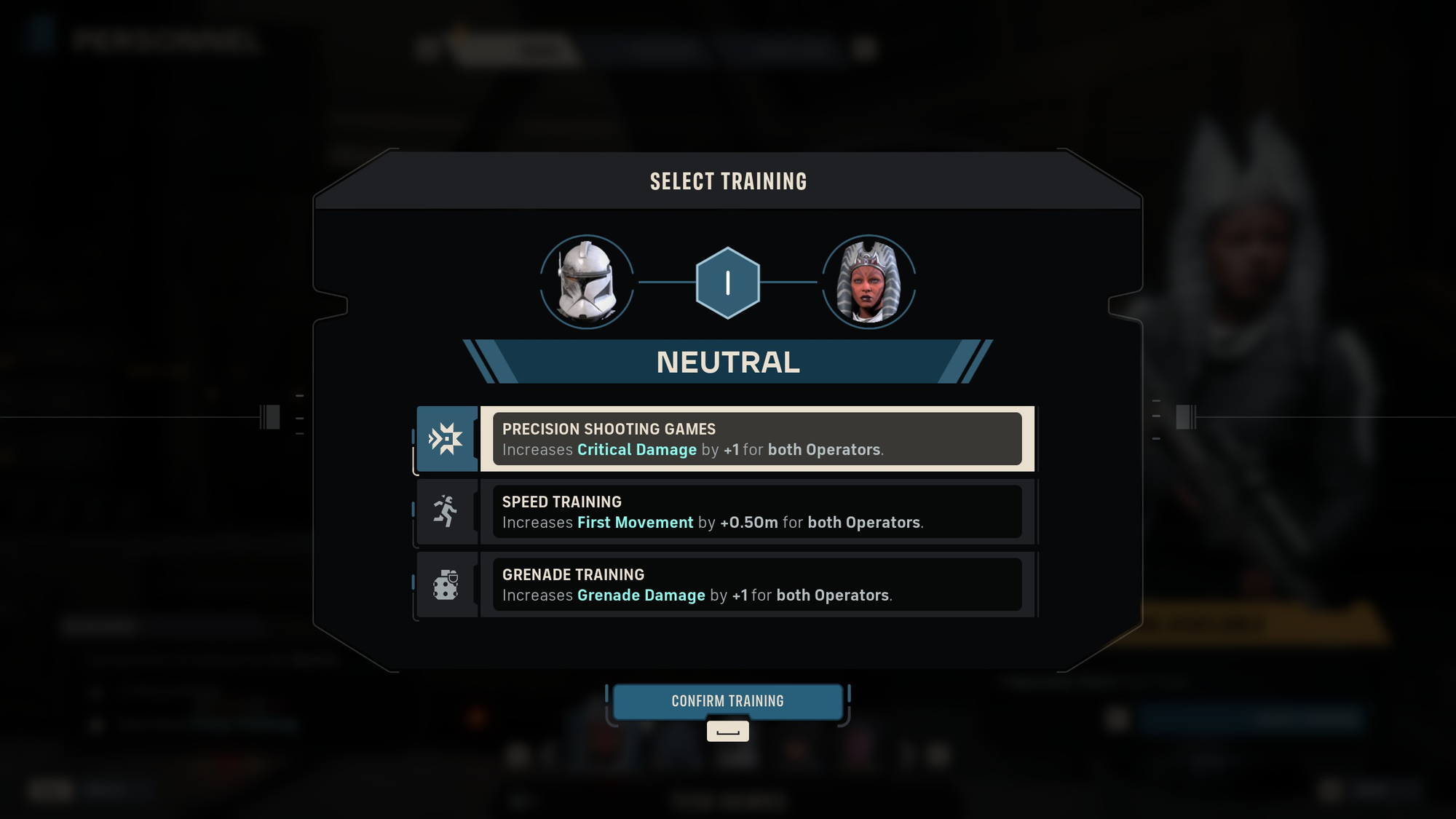
If and when you survive your encounters, you’ll head back to your base to rest up and prep for the next assignment. Here, you’ll get the opportunity to chat with the team to get special missions surrounding them, and perhaps build stronger bonds. You can also heavily upgrade everything: the base itself, your crew, and your weapons. There is so much to dig into – I could bore you with an info dump, but trust me when I say you’ll be spending hours going through all of it and mid-maxxing your team and base. If all you care about is looking good, that’s available too, as most characters have some form of outfits or gear to change and even weapons have different variants for equipping. Just about everything can be customized in some way.
The bonds you create with the characters drive the heart beneath the game, just like they do in the greater Star Wars series. In my fifteen hours of playing, I still feel like I’m in the beginning stages of the story, as an evil infection is powering up a terrorist group known as Infinite Coil. That said, I do feel a connection with the people I’m working with. I know that Kabb likes opera, that Runa is a bit of a knob, and that one of my crewmen is hunting down a rodent like there’s no tomorrow. Bringing life to the main narrative isn’t usually too hard, but filling the nooks and crannies outside of it can be a challenge. Bit Reactor is nailing that part, creating a lived-in space that is immersive and interesting, and with some fantastic writing and voice acting to bring it all to life. Hearing a droid yell “Whyyyyyy” when you pop his head off never gets old.
Beyond just the well-developed characters, your bonds with them matter in the gameplay. Both in talking with them and engaging with them in missions, you earn points that move your relationship status forward… or backwards in certain cases. These bonds exist between each member, and you get to choose a bonus towards each one as you progress. I love the interactivity, along with how it pushes you to tinker with other members of Zero Company to raise your levels. It’s another area that encourages experimentation and multiple playthroughs.
To finish up, I have to talk about the Bespin mission, albeit with as few spoilers as I can muster. This was my final experience in Zero Company until release (and wow was I sad to see it end – we’re EXCITED for this one!), and it's an outstanding level that hammers home the intricacies of the game. When you arrive and make your way through the lobby to a meeting room, you're greeted by General Anakin Skywalker, who is doing a prisoner exchange with the Umbarans. As it occurs, Infinite Coil interrupts with a droid assault plane, which decimates the room and kills an Umbaran and Dozen (the clone Anakin was intent to save). Hawks, Anakin, and the remaining Umbaran team up in what is a truly cinematic battle that is perfectly executed in design. You'll have to play it to believe it, but the build-up throughout my time with Zero Company was well worth it for the payoff.
Star Wars Zero Company might still be a tactics game at its core, but it's one that has impressed me to no end with deep systems, stellar companions, and a real Star Wars feel that makes it so much more than that. It’s far from a reskinned XCOM clone. I feel like I've only scratched the surface of what's here, and with all the detail above, it's not enough to simply read; you're going to have to play it. Given we're just over two weeks from release, you may want to go ahead and get it pre-ordered – the Force is strong with this one. Star Wars Zero Company launches on August 27th for PC, PlayStation 5, and Xbox Series consoles.