Every once in a while, a piece of hardware arrives that doesn’t just improve on what came before—it redefines your expectations entirely. For me, QIDI printers have always occupied that rare space where reliability and specifications meet to create a remarkable device that demands your attention. The QIDI Plus 4 earned its place in my workshop through sheer consistency, delivering more than a thousand hours of flawless prints, including my massive Warhammer 40K Space Marine armor build. It also punched out multiple single‑piece helmets that pushed its dimensions to the limit. It was a machine I trusted implicitly, one that never flinched no matter how demanding the project. How in the world would QIDI improve on this design? Well, somehow, I think they just might have done exactly that with their shadow-dropped QIDI Plus 5. After more than 100 hours of prints, I think it just took the crown from its predecessor. Let’s talk about why.
Reviewing the QIDI Plus 5 had a lot to prove. Yes, it’s a bigger printer bed, but that can’t be the only thing it had to offer. As it was stepping into the shadow of a proven workhorse, it had to do more than that to take the crown. From the moment I lifted the Plus 5 out of its shipping box (carefully, because this is a nearly 66 pound, fully enclosed Core XY beast) it was clear that QIDI wasn’t content with incremental progress. It has improved on just about every metric that matters. Better bed temp control, an improved extrusion system, upgraded belts, a larger print volume, and much more promised a more refined and capable device in ways that immediately matter to anyone who prints large, complex, or high‑temperature models.
Like the QIDI Plus 4, the Plus 5’s setup is a breeze. Surprisingly, plugging it in and following the instructions on the screen continues to be the standard as it runs you through a visual guide to nip all the little bits that hold the device secure for shipping, raise the bed, calibrate, and more with full guidance. This is a big improvement over QIDI’s contemporaries as they tend to abandon you to a QR code or a setup PDF, at best. QIDI instead ensures anyone can set this device up as it walks you through everything without missing a single step. Even the screen itself gets a nice upgrade (albeit in a slightly smaller package). It’s bright, responsive, and sports an upgraded interface thanks to an upgraded OS. It’s slightly bigger than its predecessor. QIDI did move the USB connector off of the side of the screen, instead locating it on the body of the device. I do wish they’d put it right next to the screen up front, but perhaps next time.
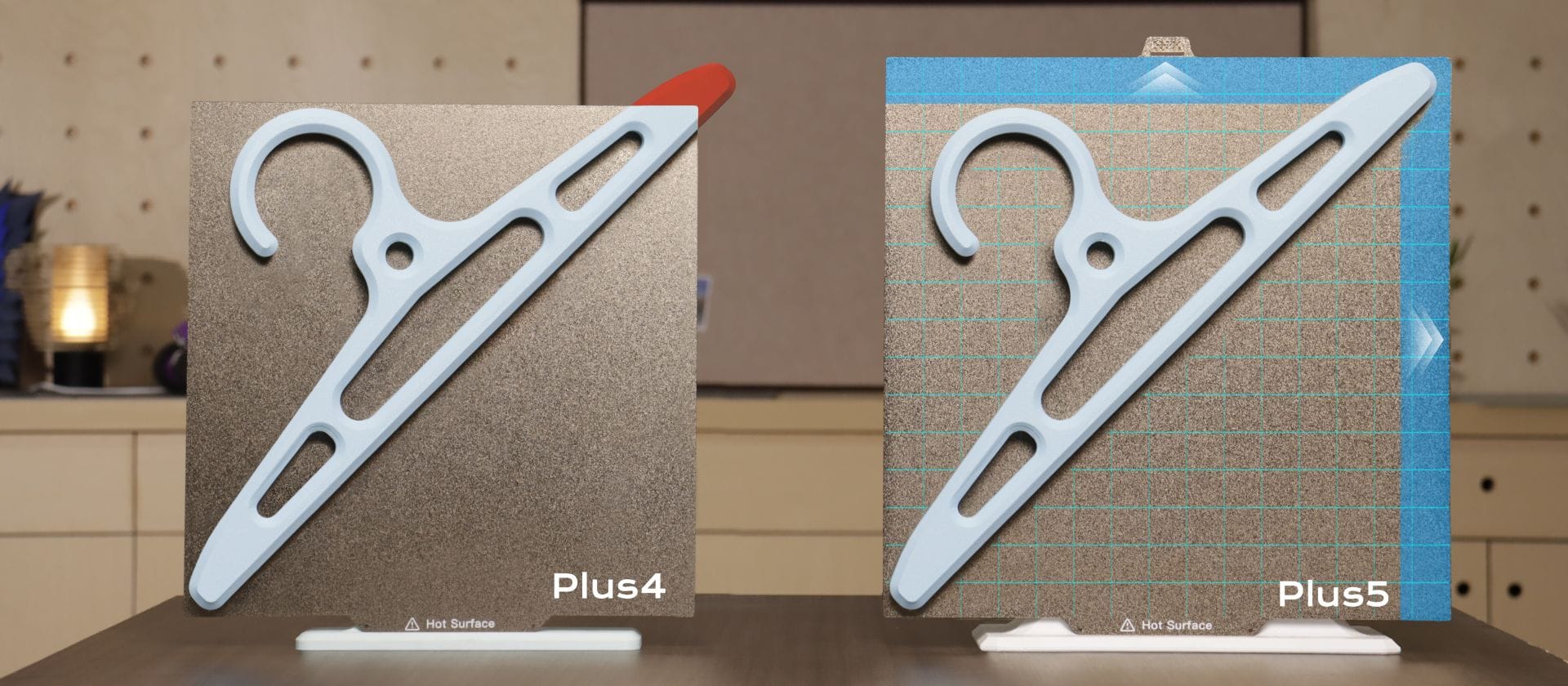
The first thing you notice once you put on the textured plate is the expanded build volume. At 320 × 320 × 300 millimeters, the Plus 5 finally gives you the breathing room that the Plus 4 only just managed to accommodate. The Space Marine Primaris helmet I printed in a single shot on the Plus 4 fit—but just barely. The Plus 5 makes prints like that feel comfortable, not precarious, letting you ensure you have a safe build and more flexibility with placement. Large armor plates, cosplay weapons, engineering prototypes, and multi‑component assemblies like the helmet I ultimately printed all benefit from the extra space. As with the Plus 4, the fully enclosed chamber means you can take advantage of that volume with materials that demand thermal stability, such as replacement parts like gears and objects that might have fluids in them. If you ever wanted to print that planter shaped like a skull, an enclosed printer is a must, and the Plus 5 handles it with ease.
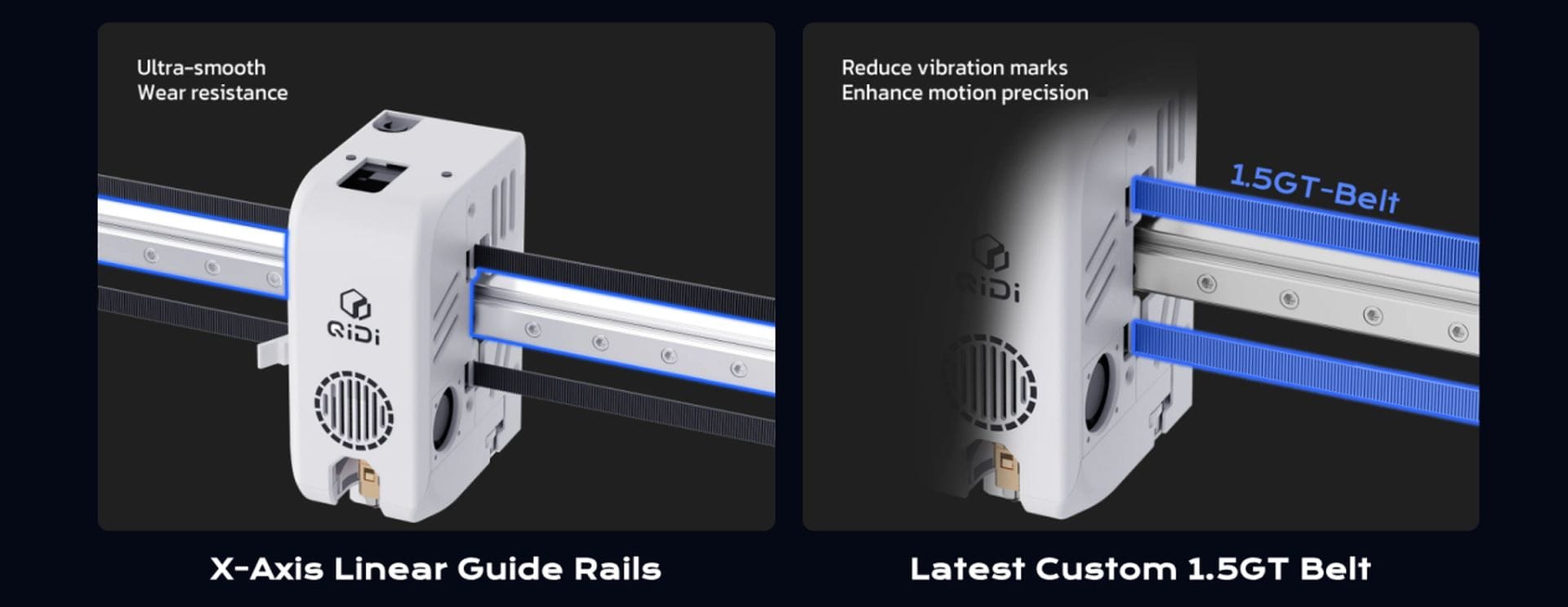
The size increase is only the beginning of the spec upgrades on the Plus 5 – engineering upgrades are immediately noticeable the moment the machine begins its startup routine. The new CoreXY motion system is smoother and more controlled than anything QIDI has shipped before. New linear rails guide the toolhead with a precision that eliminates the micro‑vibrations and ringing artifacts that can plague even well‑tuned printers. If you’ve ever had a small split that you had to fill (my aforementioned Primaris helmet had one just above the cheek to fix), you’ll appreciate the new rail stability. The 1.5GT belts provide a finer tooth profile that allows the machine to execute tiny movements with greater accuracy, again reducing small artifacting issues that can ruin a print. When the printer performs its input‑shaping calibration—shaking itself with deliberate violence to measure resonance—you can feel the sophistication of the system working to counteract motion artifacts before they ever appear in a print. It’s a joy to watch, and it showcases how all of these upgrades work seamlessly together to ensure a clean first layer every time, and then a reliable extrusion throughout.
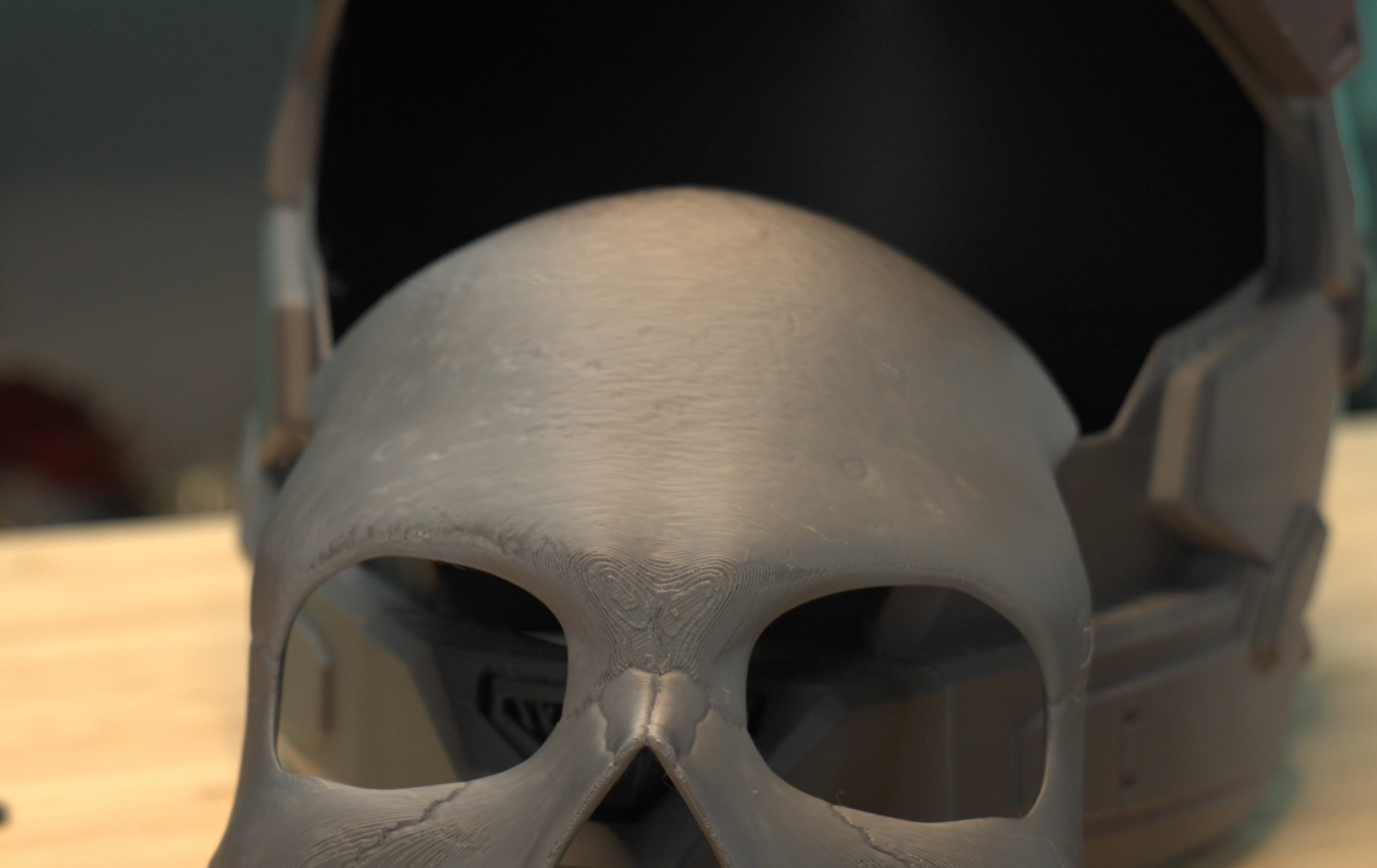
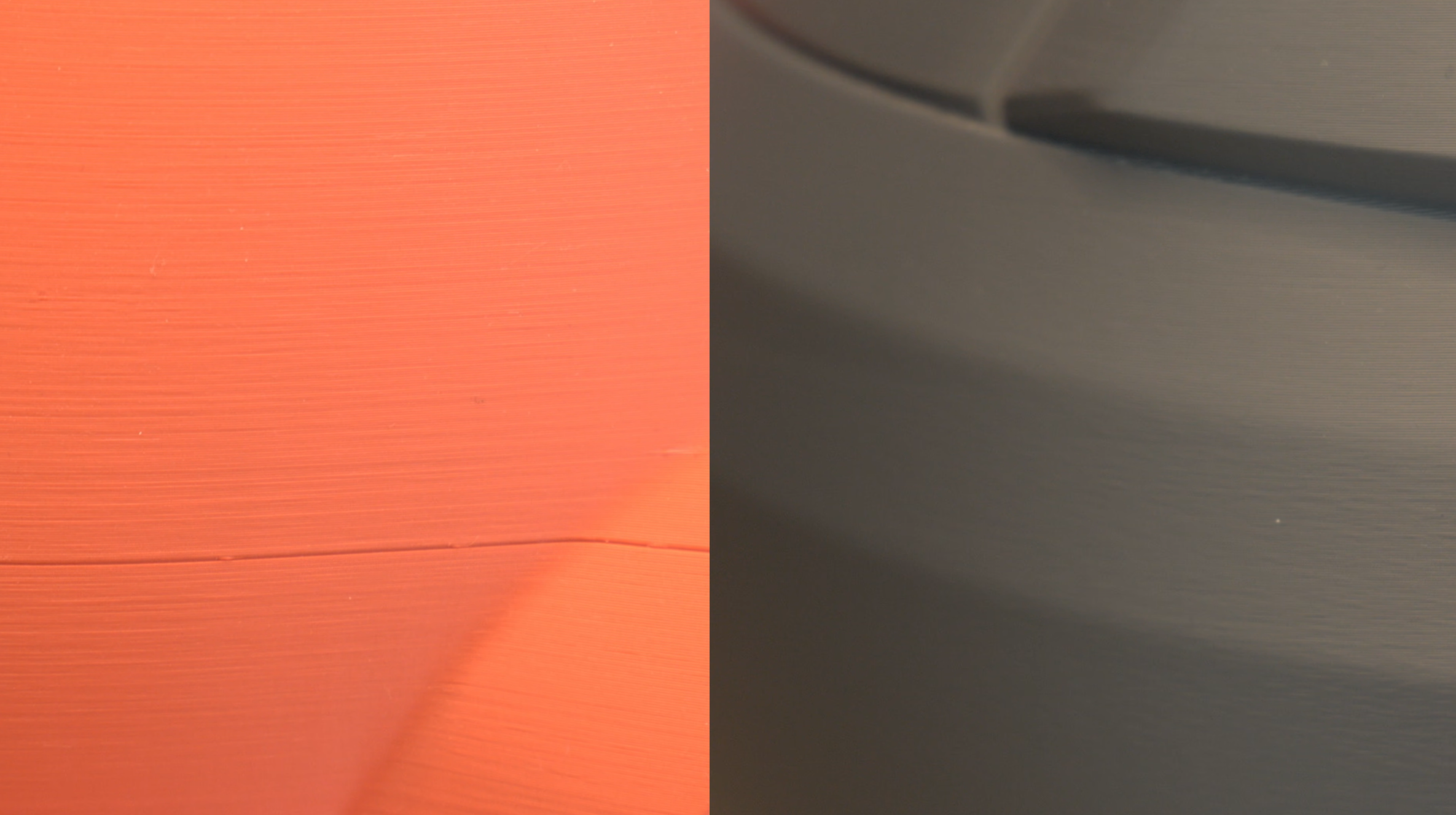
All of this engineering effort pays off in the final product, as we quickly saw. I went through my usual routine, knocking out a small X/Y cube to check for calibration, then a plate of chip clips that help my mom’s arthritic hands deal with closing bags easily, and finally a huge leap to a full-size helmet from the folks at Galactic Armory. This time around I opted for a multi-part Halo Reach helmet. The Plus 5 produced prints that are noticeably cleaner than the Plus 4 – something best illustrated by the unboxing and review video you can see above. That’s a huge statement, given how clean the Plus 4 prints already were. Layer lines, even on standard PLA, are nearly invisible. Surfaces that would normally show faint striations instead come out smooth and uniform. The skull on the Halo Reach helmet should have shown striations across the skull surface, but instead it had small dents, chips, and a surface quality that approaches what I would normally have to use resin to achieve. This is the Plus 5 not only delivering reliability, but also prints that look like they came from a machine operating at a much higher price tier.
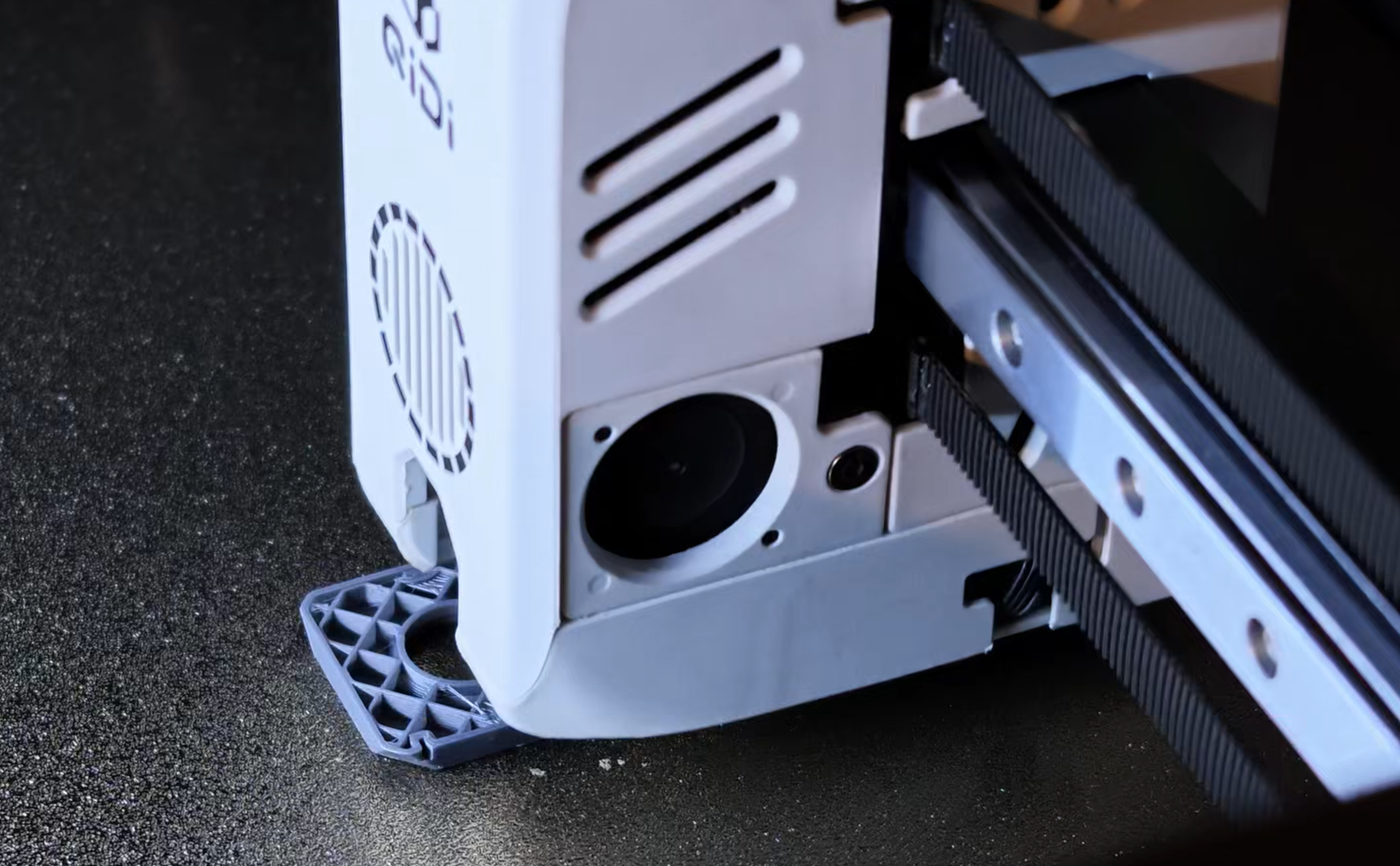
A major contributor to this leap in quality is QIDI’s new nozzle. Instead of relying on a probe with an offset (an approach that always introduces a layer of mathematical abstraction and often a small bit of drift), the Plus 5 uses a nozzle-as-sensor approach to physically touch the build plate and measure deflection. This approach eliminates probe offsets entirely and ensures perfect first‑layer accuracy, regardless of the plate’s texture or material. Whether you’re printing on textured PEI, smooth PEI, glass, or anything else, the Plus 5 touching the surface ensures a first layer that is consistent, repeatable, and astonishingly precise.
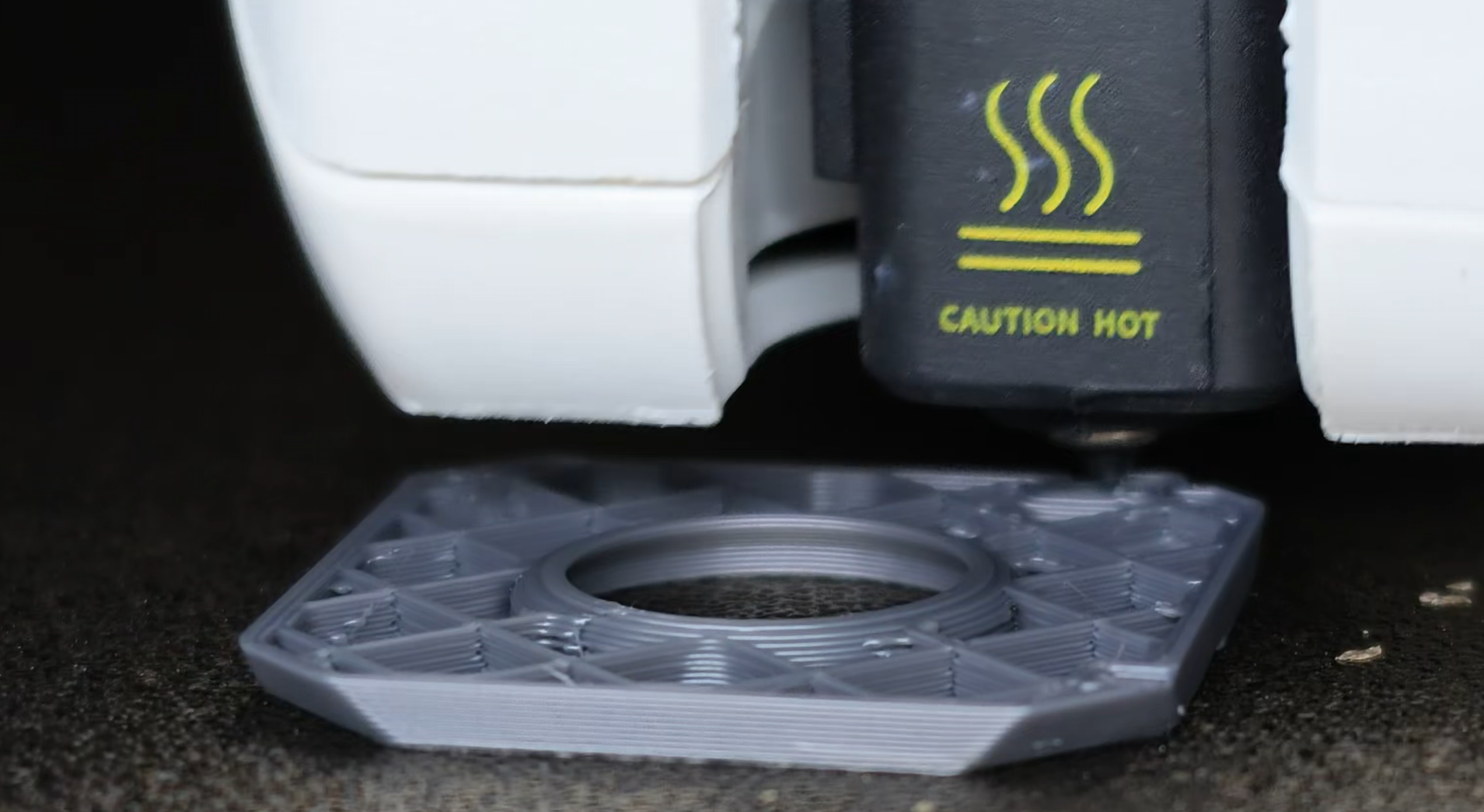
The thermal system inside the Plus 5 also picks up an upgrade. The heated chamber reaches up to 149° Fahrenheit (65°C), allowing for stable printing with engineering‑grade materials that would warp or delaminate in an open printer type. Heading down to the plate, a huge coverage improvement lies underneath. Rather than a spiral style, the bed is comprised of a full-coverage ultra-dense silicone that provides edge-to-edge uniformity that you can’t get otherwise. Moving away from the typical serpentine trace you find in most consumer printers gives the Plus 5 the ability to eliminate cold spots entirely. At scale, that’s rarely if ever the case. The end result are large prints that adhere evenly across a large surface, stay flat, and maintain consistent thermal behavior from corner to corner – critical to avoid warp. Even if you aren’t printing more complex materials, simple ABS sticks cleanly as well.
The hotend is another standout upgrade. With a maximum temperature of 690° Fahrenheit (370°C) and a flow rate of up to 40 mm³/s, the Plus 5 is built to handle high‑speed, high‑temperature materials without clogging. It’s not just about heat, though – you also need to control thermal cycling to avoid heat creep. To that end, QIDI integrated active cooling directly into the toolhead. In what amounts to a miniature air conditioner for the extruder, the Plus 5 is able to keep the hotend stable, even during long and demanding print sessions. Combined with the chamber heating, the Plus 5 becomes a platform capable of printing literally anything and everything from PLA to PPS‑CF with confidence. I look forward to trying more exotic and challenging materials. Am I going to take up printing dental appliances? Doubtful, but I will likely print a handful of cosplay accessories that’ll hold up to more vigorous handling.
Once printing begins, the Plus5’s reliability becomes immediately apparent. Just like the Plus 4, the Plus 5 has been flawless in testing, minus a bad orientation on my part. Beyond that, zero failed prints, clogs, jams, calibration drift, or anything else – it simply prints what I throw at it, and it does so beautifully. The consistency is remarkable, especially given the machine’s expanded capabilities. It feels like QIDI took everything that made the Plus 4 dependable and built an even more robust foundation beneath it to keep that consistency, but also raise the quality to the next level.
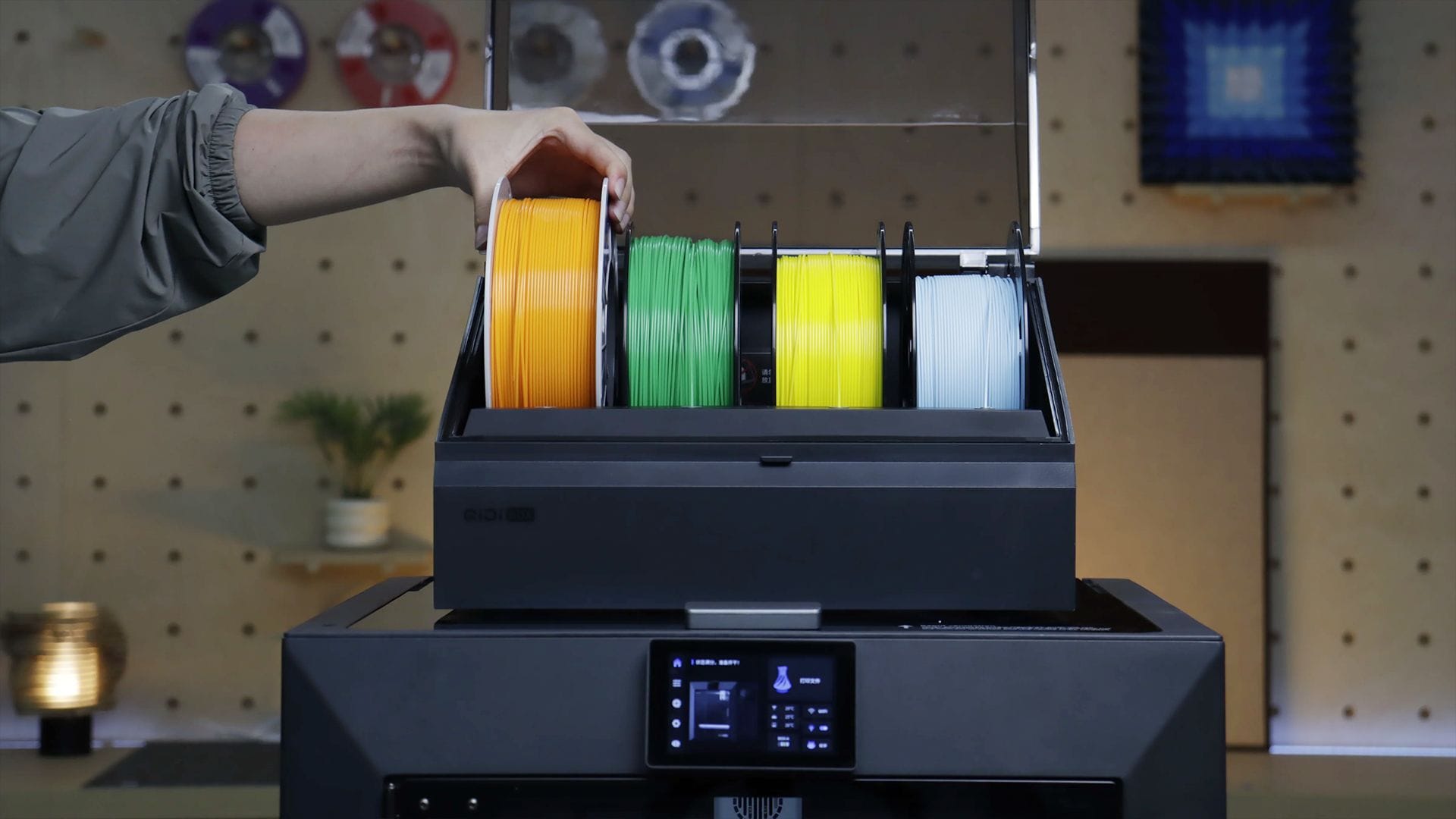
While I didn’t get to test it, the Plus 5 also supports the QIDI Box for multi‑color printing, enabling up to sixteen colors with filament tangle detection, clog detection, auto‑refill, and run‑out recovery, just to name a few features. While my initial testing focused on single‑material performance, I will be returning to the QIDI Box to test how it handles a complex multi‑material workflow to push the machine even further.
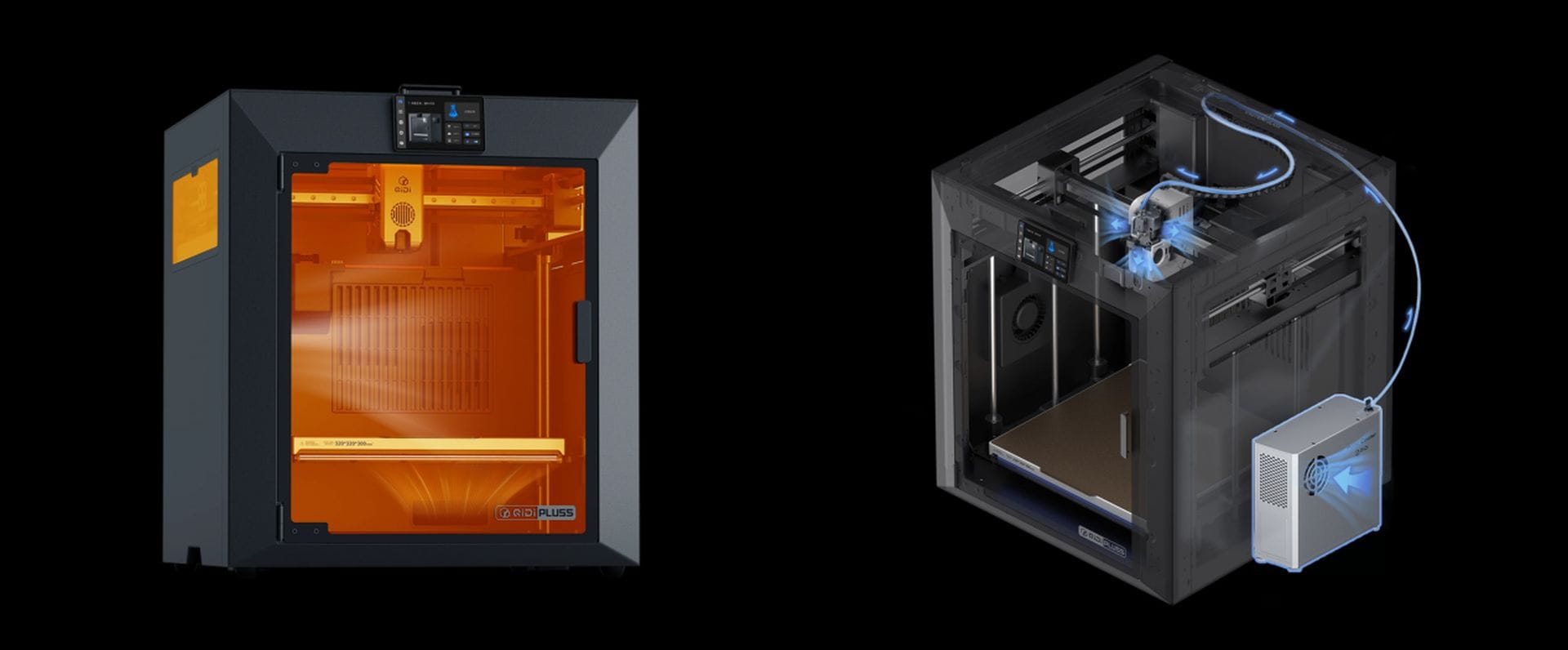
While I’m far less concerned about the fumes coming from extrusion printing compared to resin 3D printing, thankfully, the Plus 5 sports a new three‑layer air filtration system. It does so with a removable G3 pre‑filter, H12 HEPA, and activated carbon filter that pledges to capture “99.5% of dust and airborne particles”, making the Plus 5 safer than an open or unfiltered XY printer.
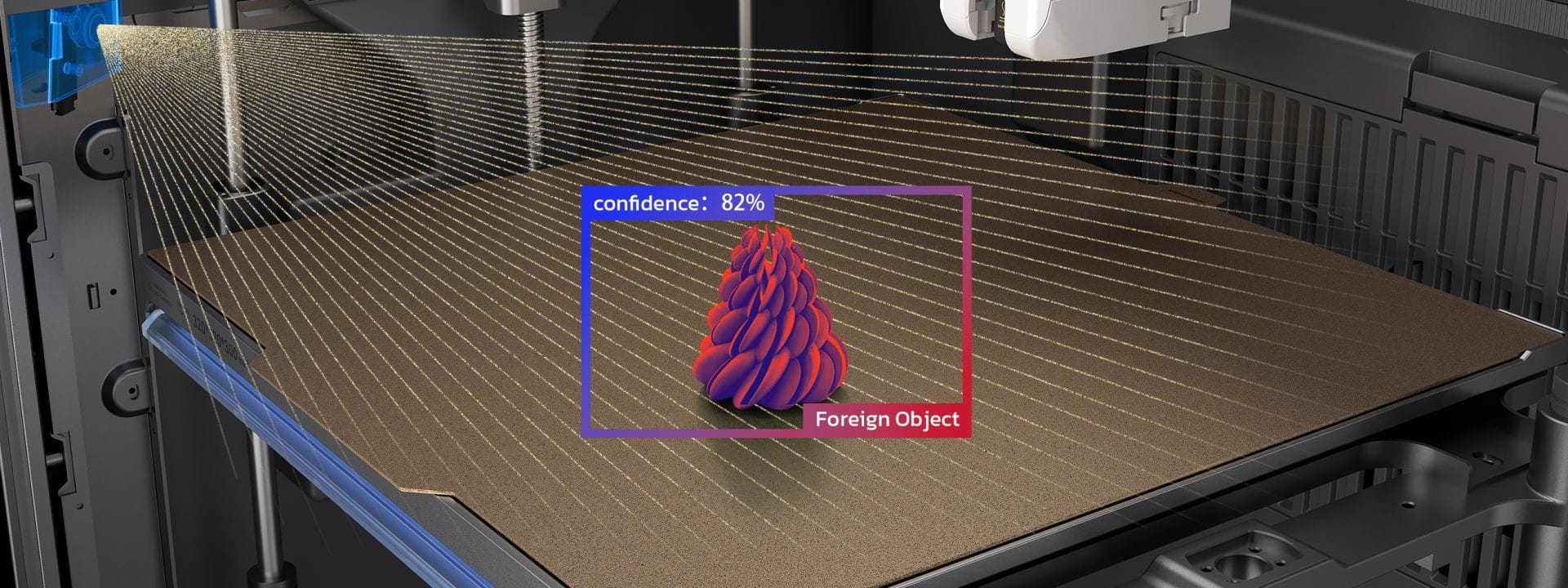
Inside the box, an upgraded 1080p AI-integrated camera provides anomaly detection, spaghetti detection, and timelapse recording, while multiple sensors monitor chamber temperature, hotend temperature, bed temperature, motherboard temperature, and exhaust flow. The entire chamber is flame‑retardant (something I hope to never test in practice) and designed for long, uninterrupted print sessions.
With a new slicer coming with the upgraded hardware, the QIDI’s software ecosystem gets a much-needed shot in the arm. QIDI Studio (the new name for the software suite) now supports high‑speed printing, engineering‑grade material presets, and open‑source fluid control interfaces, so you won’t need to use a third-party slicing software. Additionally (and also for free) you also gain access to a growing library of optimized models that have already been tested on the device. The fact that it’s using open-source software (Klipper, Moonraker, etc.) is a huge plus, and one that ensures that this device will have a useful life far beyond any closed-source printer.
The prices on the QIDI Plus 5 are about what you’d expect from a device of this caliber, but not what I anticipated given the increased prices for just about everything. At launch the QIDI Plus 5 Combo (that’s the printer and the QIDI Box) is $899, but if you have a previous QIDI printer you can get that down to $819 until August 31st. If you just need the printer, the price drops to $749 for normal pricing, with a loyalty price of $699 before 8/31. Impressively, that’s actually the same price as the QIDI Plus 4 at launch. I have to applaud QIDI for holding the line.
After spending time with the QIDI Plus5, it’s clear that this machine isn’t just an upgrade, it’s a completely new platform. QIDI has taken everything that made the Plus 4 exceptional and rebuilt the platform with a level of engineering ambition that pushes the entire category forward. The Plus 5 is bigger, faster, cleaner, safer, and more capable in every way that matters. It’s a printer that doesn’t just meet expectations; it exceeds them so thoroughly that it redefines what a mid‑size enclosed printer can be. For makers, cosplayers, engineers, workshop owners, and anyone who demands industrial‑grade reliability and precision, the QIDI Plus 5 is one of the best printers you can buy in 2026. It is, without exaggeration, the most impressive mid‑size enclosed printer I’ve ever used. Here’s to hoping it can deliver 1000 hours of flawless prints, just like its predecessor. From what I’ve seen so far, it’s another powerful upgrade from a company that continues to go from strength to strength.
QIDI Plus 5
Phenomenal
With consistent delivery, but somehow even cleaner results, the QIDI Plus 5 manages to top its predecessor in every meaningful way. It’s now my go-to printer, and my immediate recommendation to anyone who wants a reliable and well-built printer that will serve them for hundreds or even thousands of hours into the future.
Pros
- Incredibly clean prints
- Layer lines are all but erased
- Open source software expands its life
- Impressive array of engineering upgrades
- Consistent results
- Well positioned on price
Cons
- None!
This review is based on a retail copy provided by the manufacturer.