Over a year ago, AK Interactive sent us their first two offerings in the Artist Acrylic line, which included a set of Primaries and a set of Black & Whites. Having never experienced “artist acrylics”, I jumped in head first and found them very versatile. In my journey as a painter, it introduced me to the concepts of single pigment paints, which in turn gave me more control over my colors, though it required me to understand how to thin them properly.
 Randy Gregory II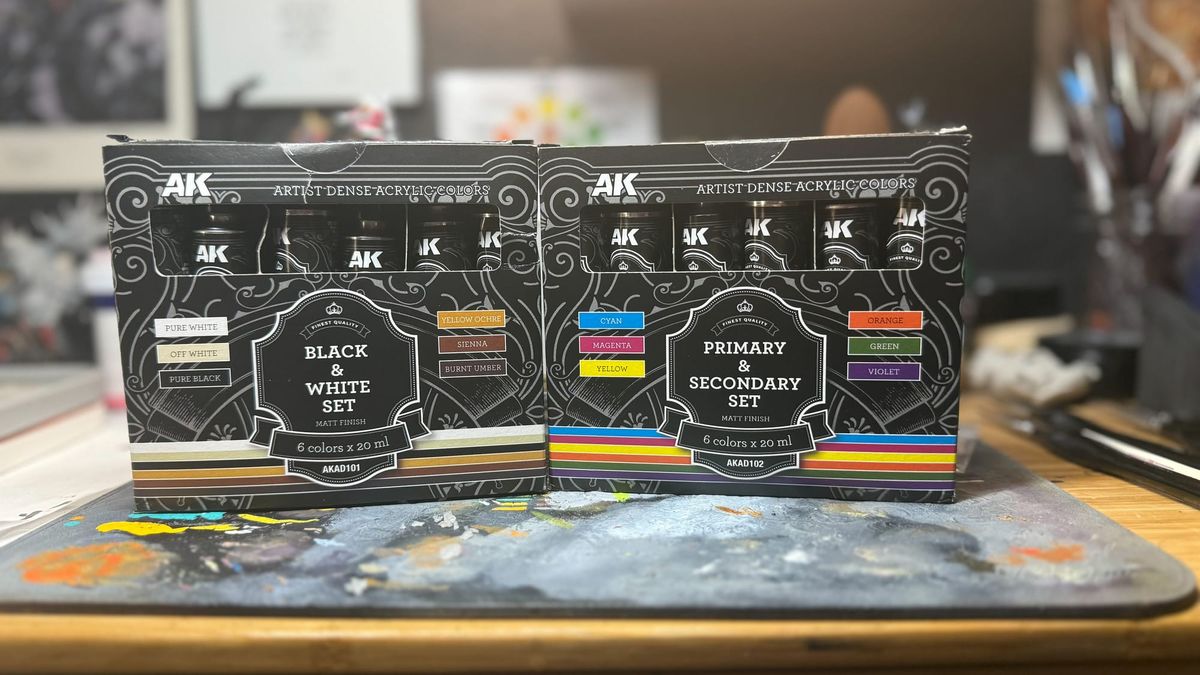
A year later, I find myself more experienced in our art, and when I work on Display level painting projects, I reach for single pigment paints because I need more control over my tones. AK Interactive sent me the rest of their line which has just been released, and after spending a good month and some change with them, I’m happy to continue recommending these paints. Let’s dive in and I’ll explain why these are great and why artists should invest in some good thick acrylics.
What’s in the tubes?
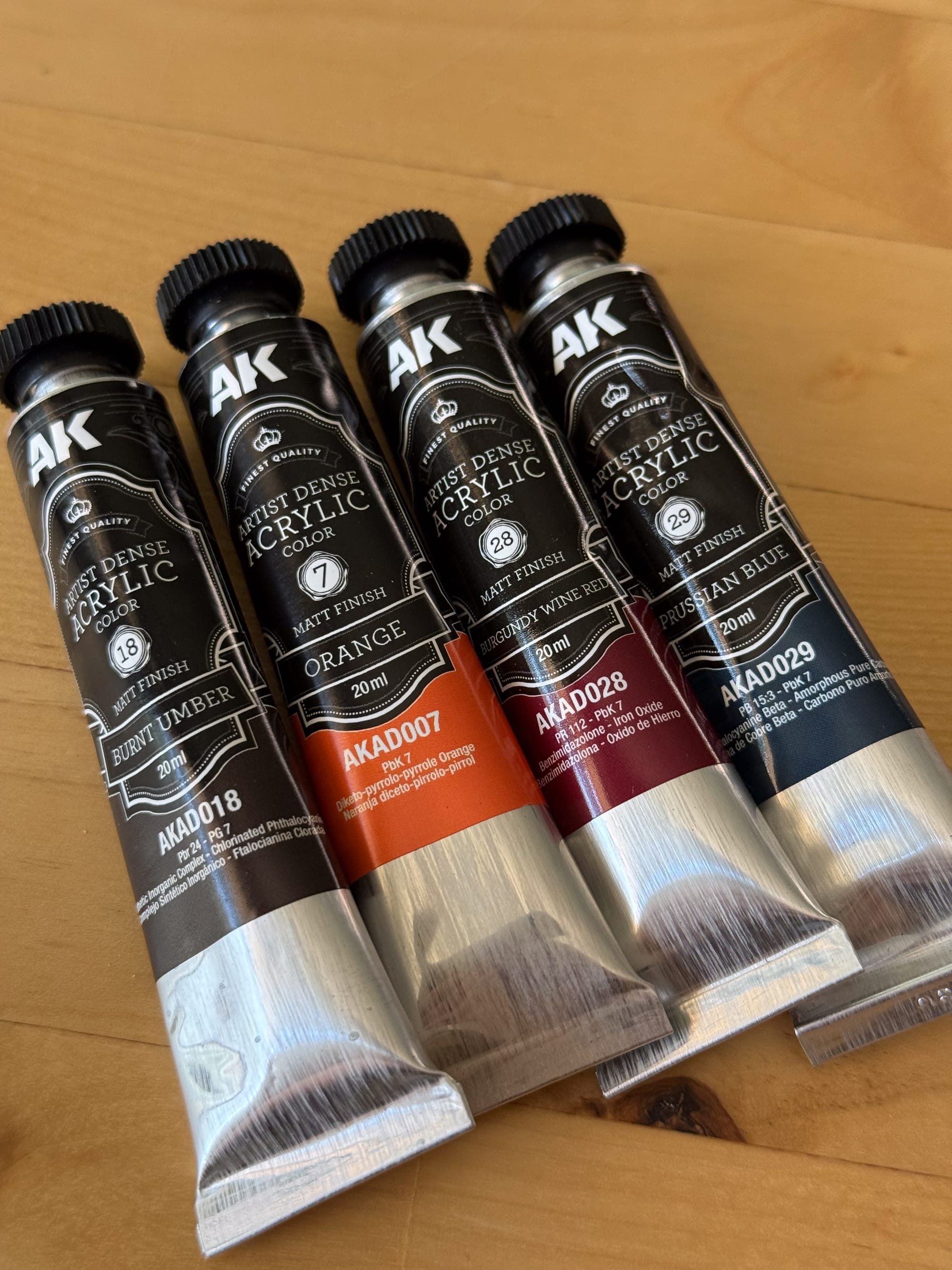
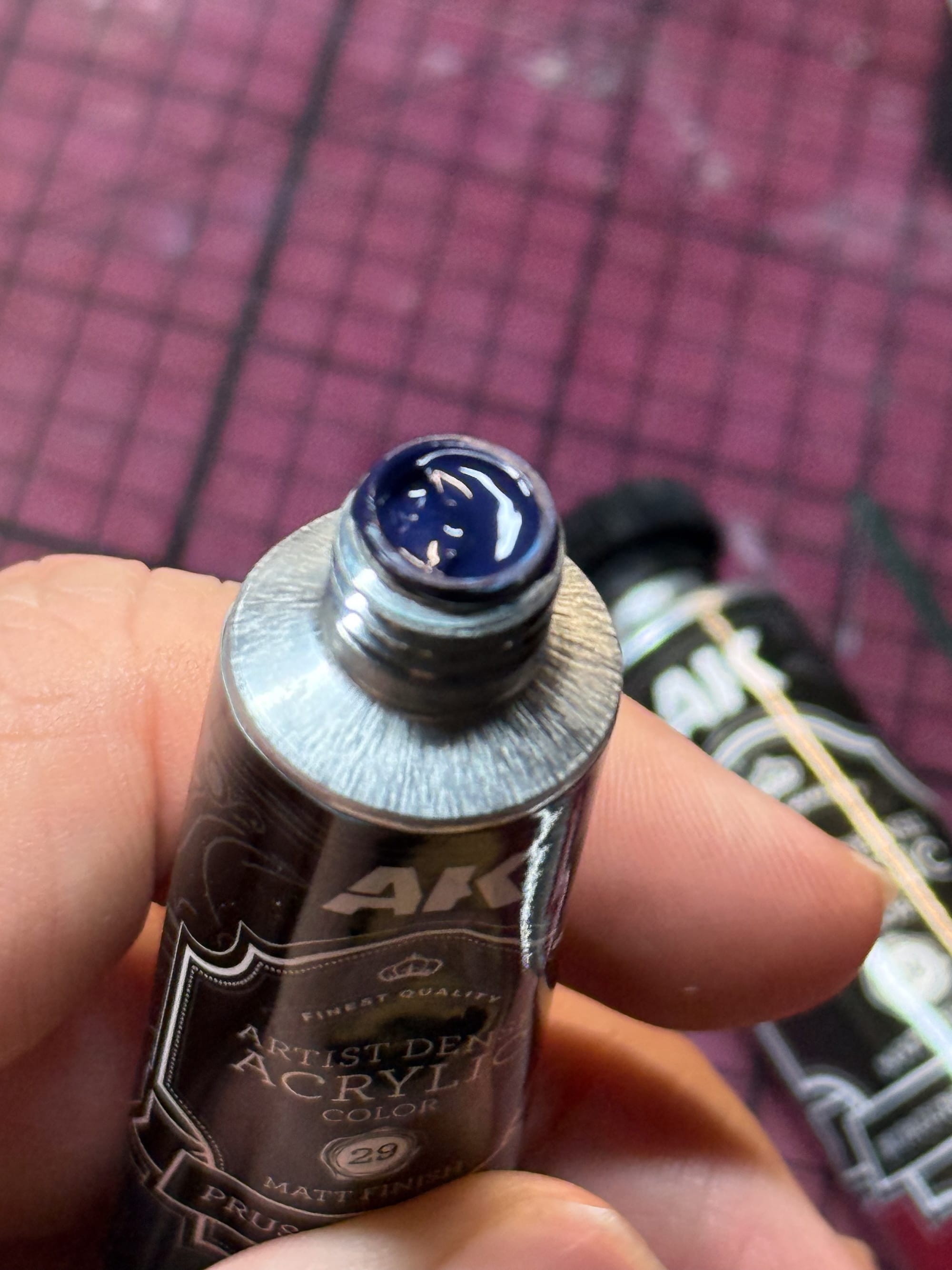
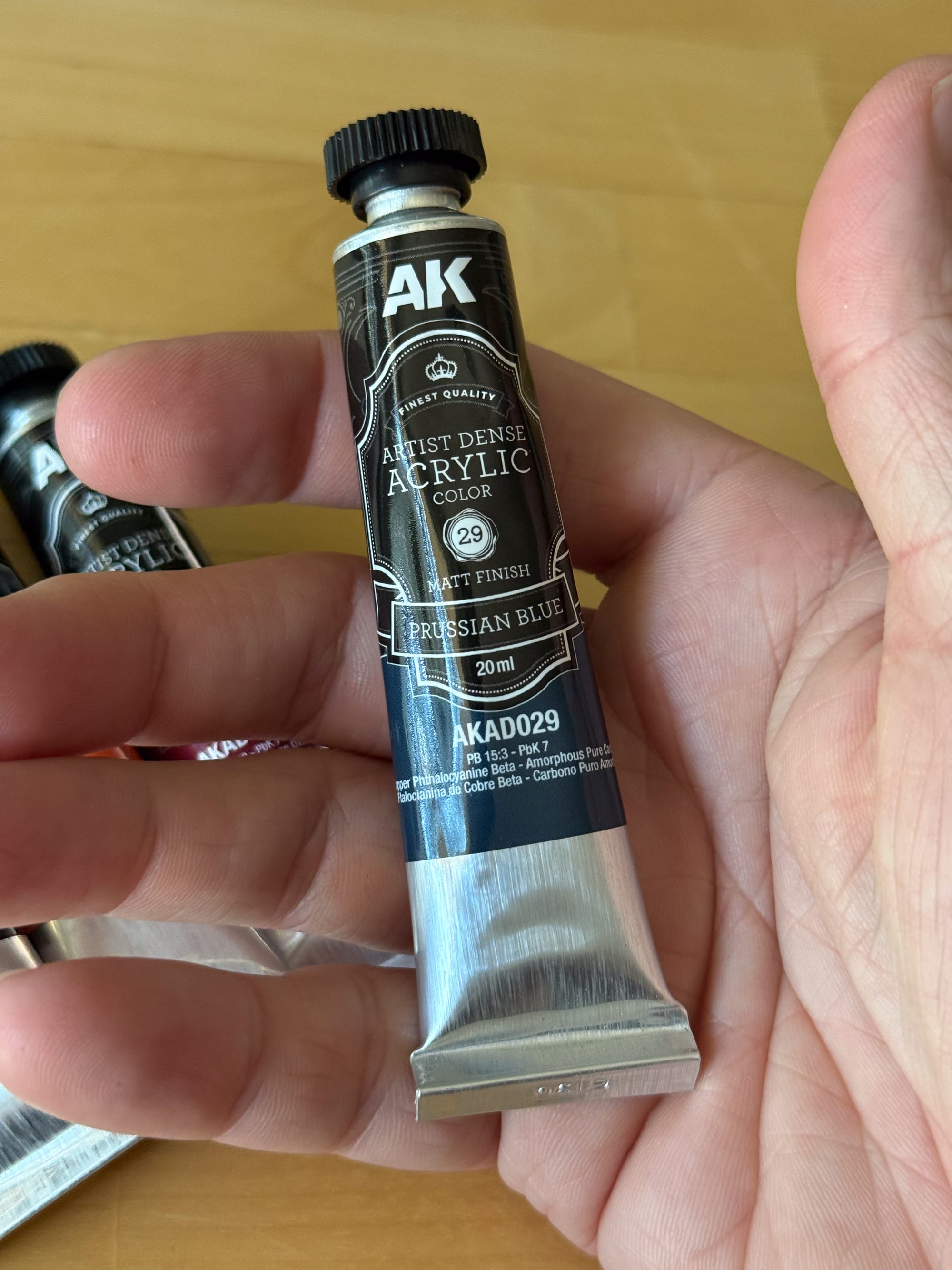
In addition to the colors I already owned, AK Interactive sent the Green, Blue, Yellow, Flesh, and Black & White sets, which compliments their existing set by supplying you with additional colors.
Like the previous sets, these are thick acrylics. Each 20ml tube lists the name and specific pigment(s), as these paints due contain multiple pigments in them…for example, the Yellow pack includes Golden Yellow which is a single pigment (Diarylide Yellow) and Intense Yellow which is a combination of PY83 and PY3 (for those not into color codes, just think it’s two different yellows put together). This kind of breakdown on the labels is a great move for artists who really want to know what’s going to come out of the tube.
And to help y’all visualize this, here’s a chart I made of the paint. This is undiluted on white foamcore.
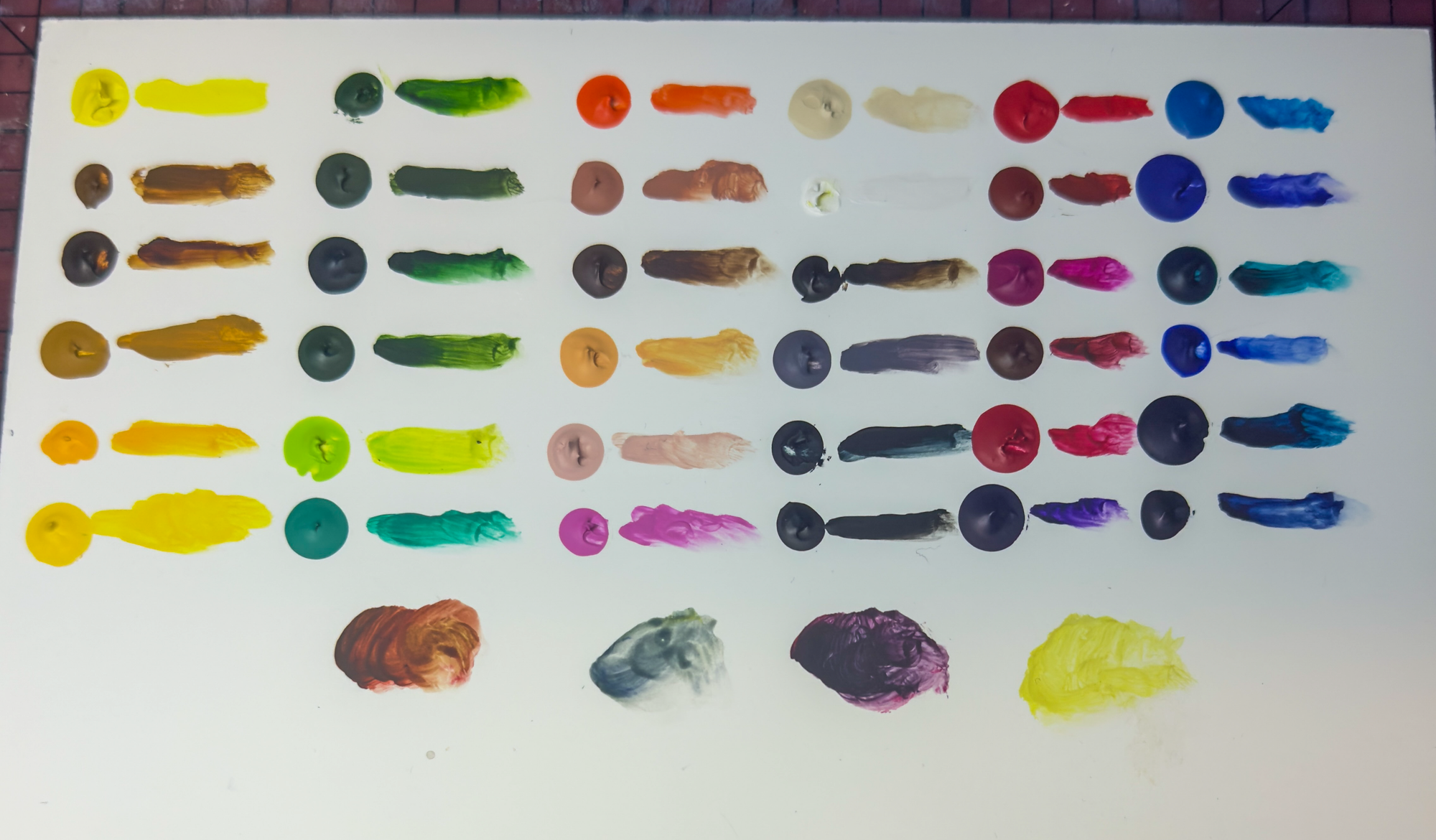
The sets include the following colors:
Flesh
AKAD007 Orange
AKAD013 Basic Flesh
AKAD017 Earth Brown
AKAD021 Golden Flesh
AKAD022 Pale Flesh
AKAD023 Cold Skin
Black and White
AKAD001 White
AKAD002 Off White
AKAD003 Pure Black
AKAD018 Burnt Umber
AKAD019 Paynes Grey
AKAD020 Violet Grey
Red
AKAD005 Magenta
AKAD009 Violet
AKAD014 Red
AKAD015 Oxide Red
AKAD027 Crimson
AKAD028 Burgundy Wine Red
Yellow
AKAD006 Yellow
AKAD010 Yellow Ochre
AKAD016 Sienna
AKAD024 Golden Yellow
AKAD025 Intense Yellow
AKAD026 Oxide Yellow
Blue
AKAD004 Cyan
AKAD012 Ultramarine Blue
AKAD029 Prussian Blue
AKAD030 Dark Prussian Blue
AKAD031 Oxford Blue
AKAD032 Turquoise
Green
AKAD008 Green
AKAD011 Faded Green
AKAD033 Napoleonic Green
AKAD034 Moss Green
AKAD035 Jade Green
AKAD036 Lime Green
This is a pretty wide range of paint, and with it, you can create most colors that you need, and with proper thinning you can easily achieve washes and filters. Let’s go to the paint table to see how they’ve worked out. For my models, I’ve used them on a few models and my most recent painting project for Marvel Crisis Protocol, the Inhumans!
 Randy Gregory II
How they paint
Over the last month of painting or so, I’ve worked on a set of Marvel Crisis models, a few busts at a convention, and a larger scale miniature as part of a two day class. And I used the AK Interactive Acrylics on each project. I mixed them with paints from Golden, Army Painter, and Kimera, and with the exception of the paints taking on the satin finish of the Kimera Velvet, these paints mix wonderfully well with each other.
I also mixed these paints with water, Golden High Flow, AK Ultra Matte Varnish, and Vallejo Retarder, and the paints kept up with the natures of each additive.
Layering
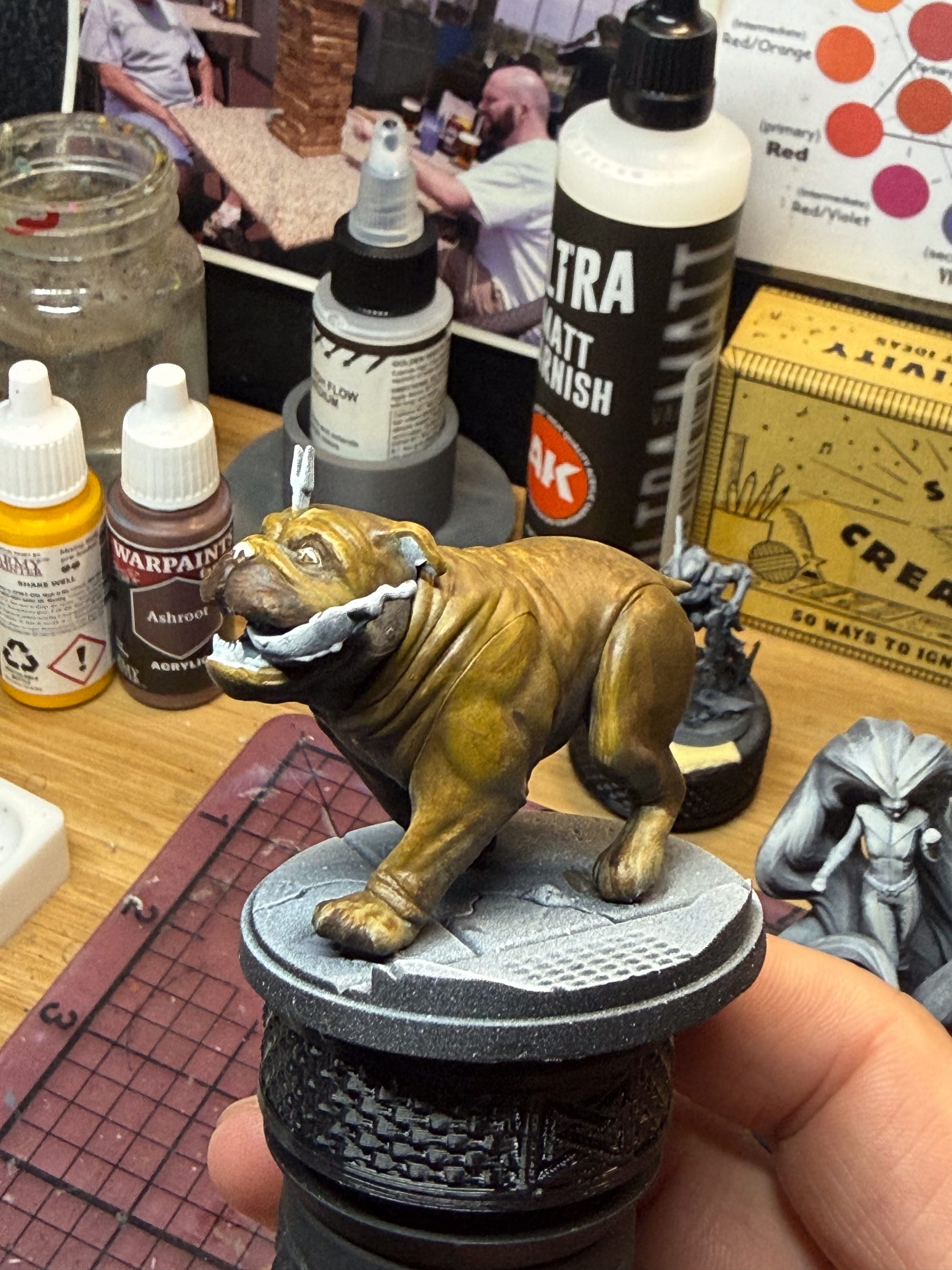
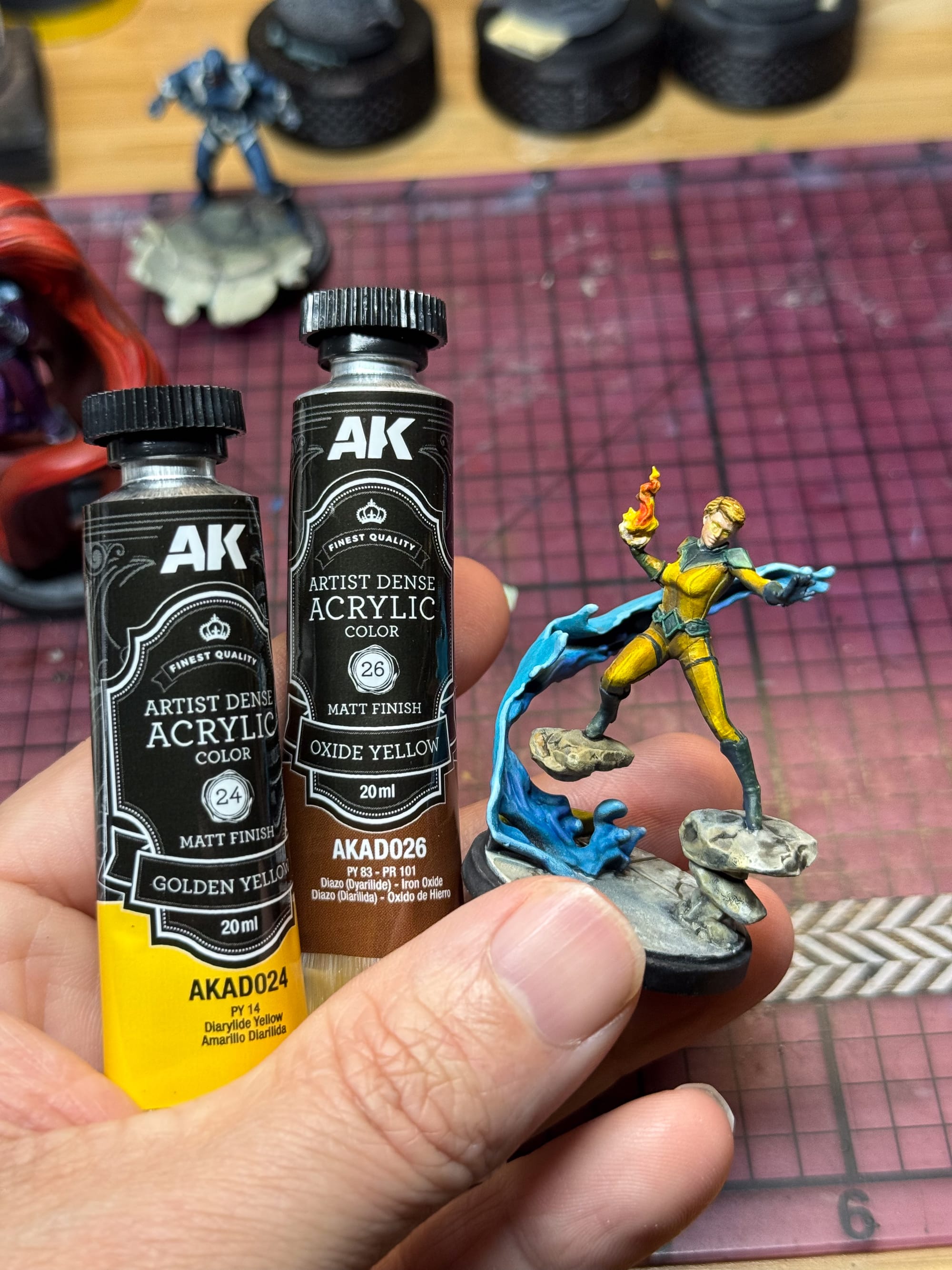
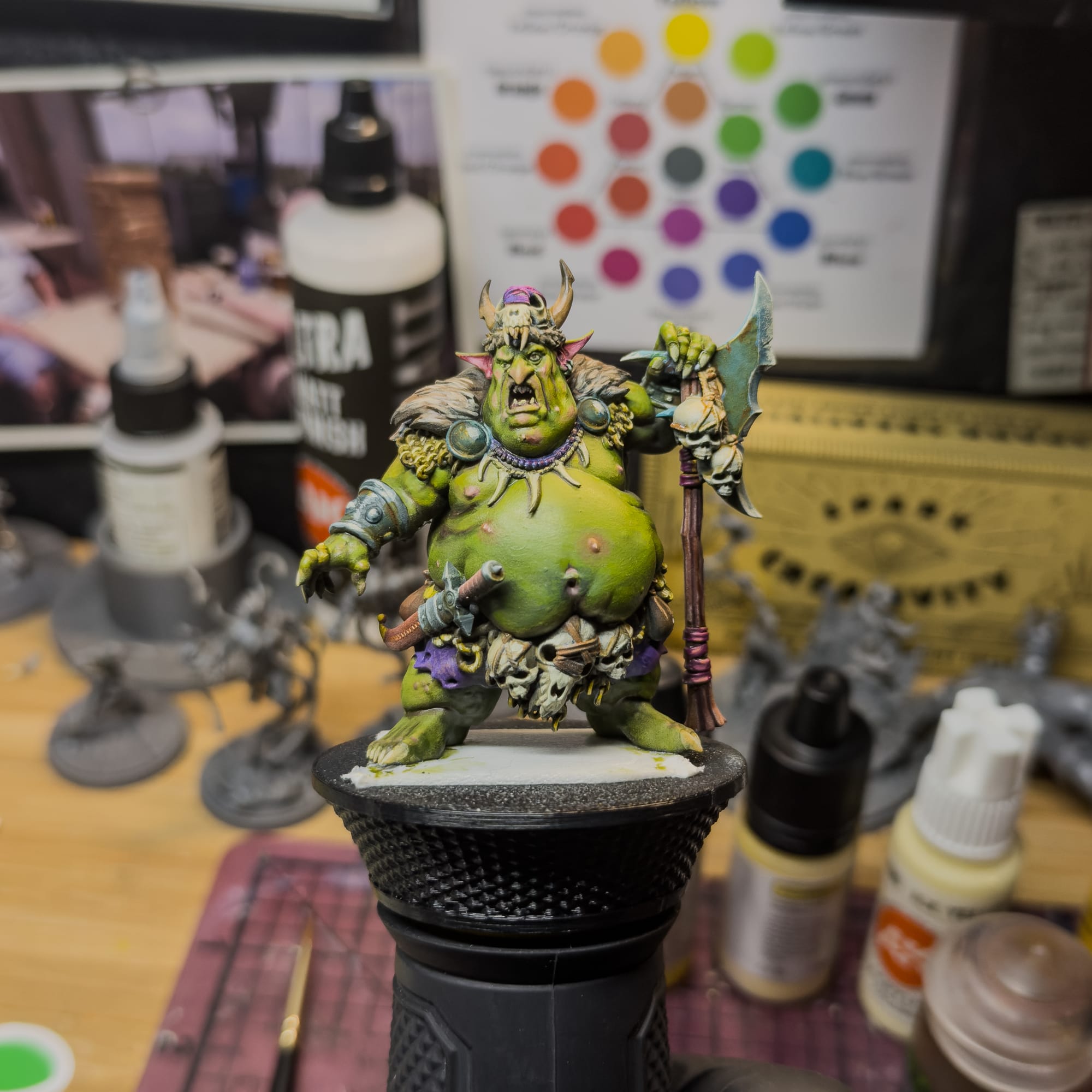
These paints layer well, but you want to focus on how you’ve watered them down. With Lockjaw, it did leave some noticeable brushmarks, but with time and effort, you can eliminate the brush marks, much like how I did on the Orc King.
With these paints, I found that planning your paint process before getting into the palette is generally a good idea. Some of these paints, like the blues, can really take over your painting, so it’s good to plan it all out and understand how they will behave.
One thing I really like about these paints is using the black and white set to help create underpainting for my models, which is how I approach all of my gaming pieces now. This allows me to render volumes in grayscale and not really worry about the color mix, which I can just cover with more translucent paint.
Washing / Filtering
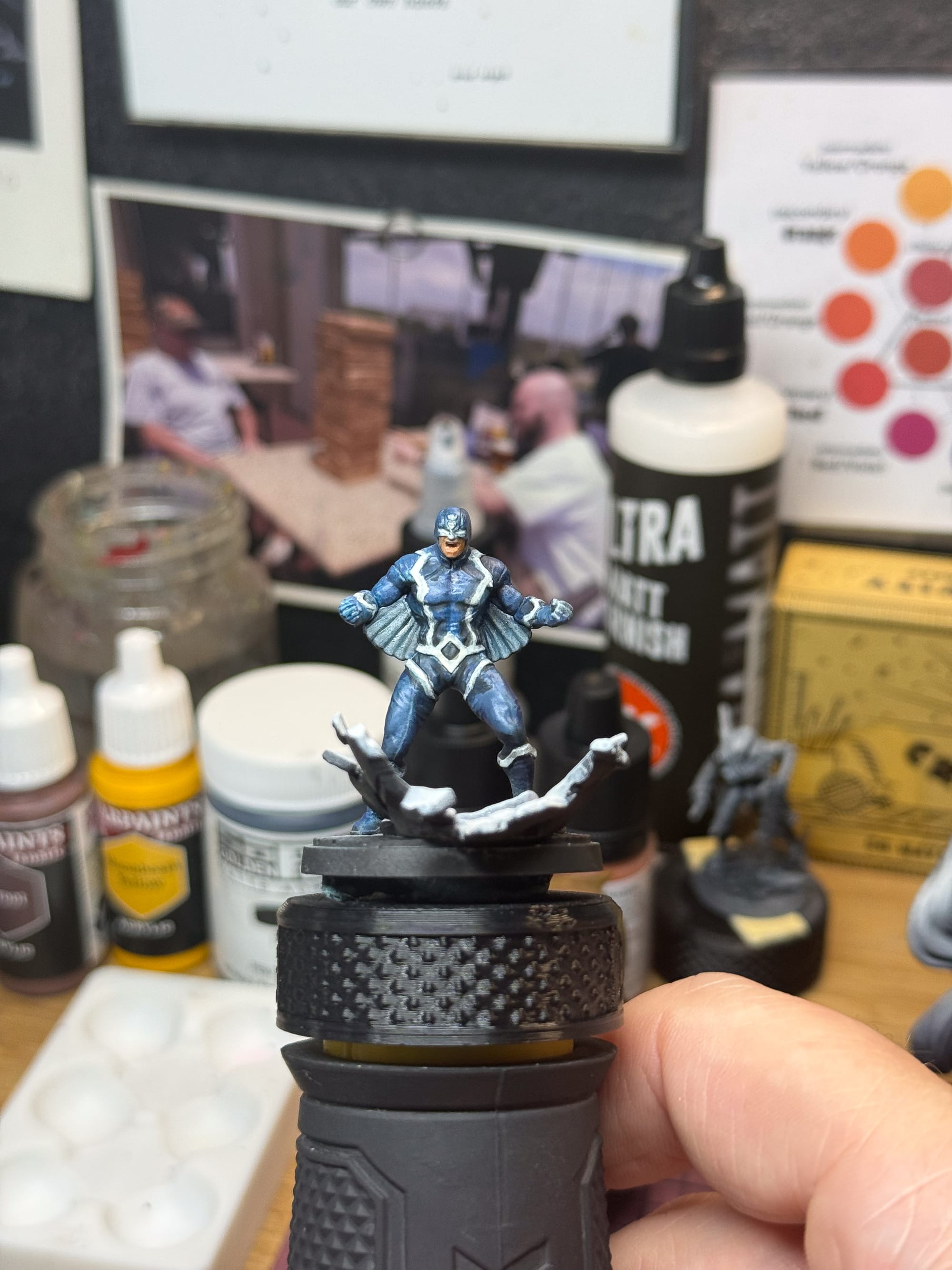
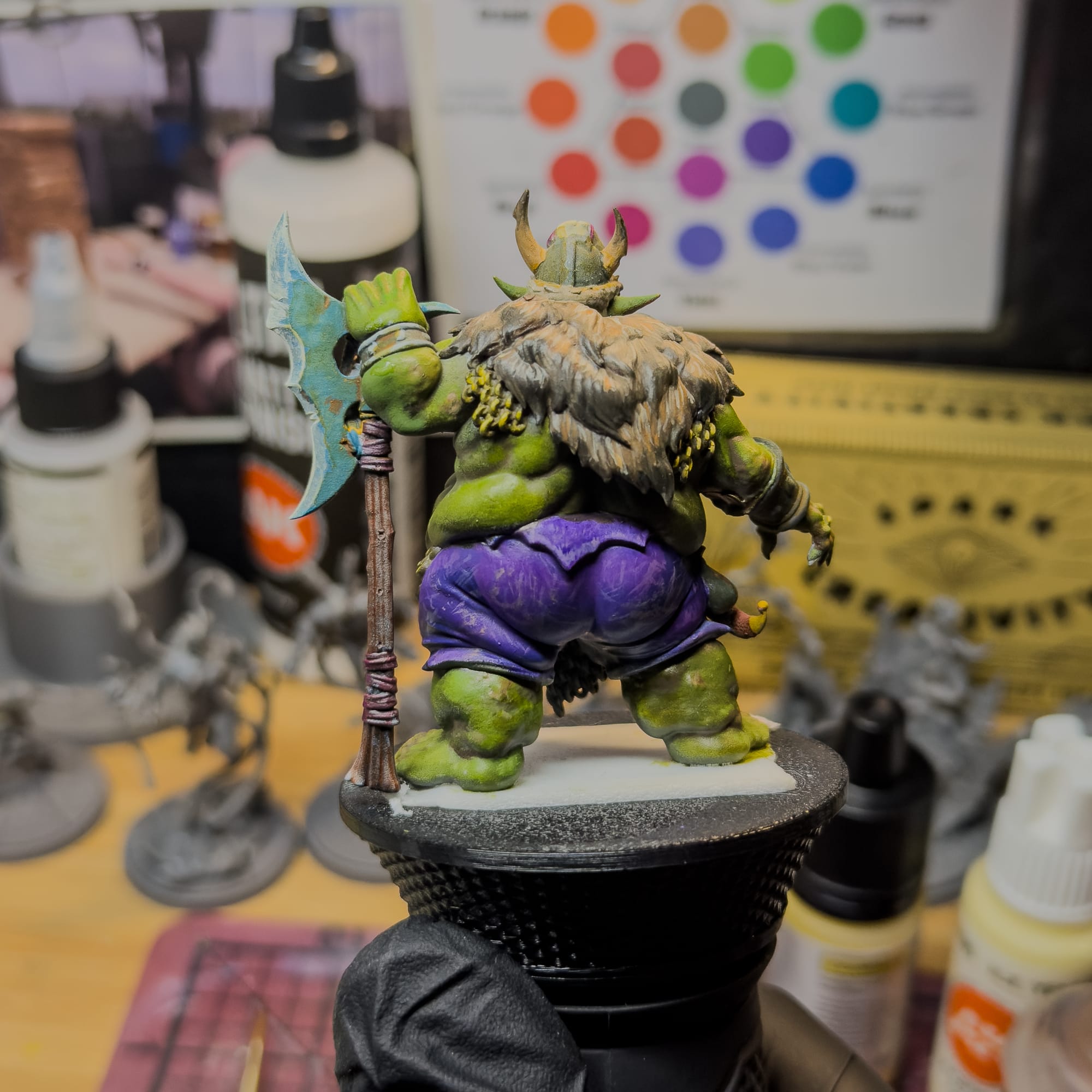
Which brings me to the next section. A strength of single and lesser pigment paints is the ability to turn them into washes and filters, allowing for tinting of areas of color.
When we look at Black Bolt for instance, I had to use filters of blue because while his outfit is very dark, I wanted to bring my highlights up subtly, which required multiple thinned down passes of Ultramarine Blue.
These models turn into washes so easily. On the Orc King, I used Burnt Umber to add in micro details on his weapons, and mixed them with greens from both AK and Bear Cavalry in order to create a deep green for my shadows.
Fine tuning
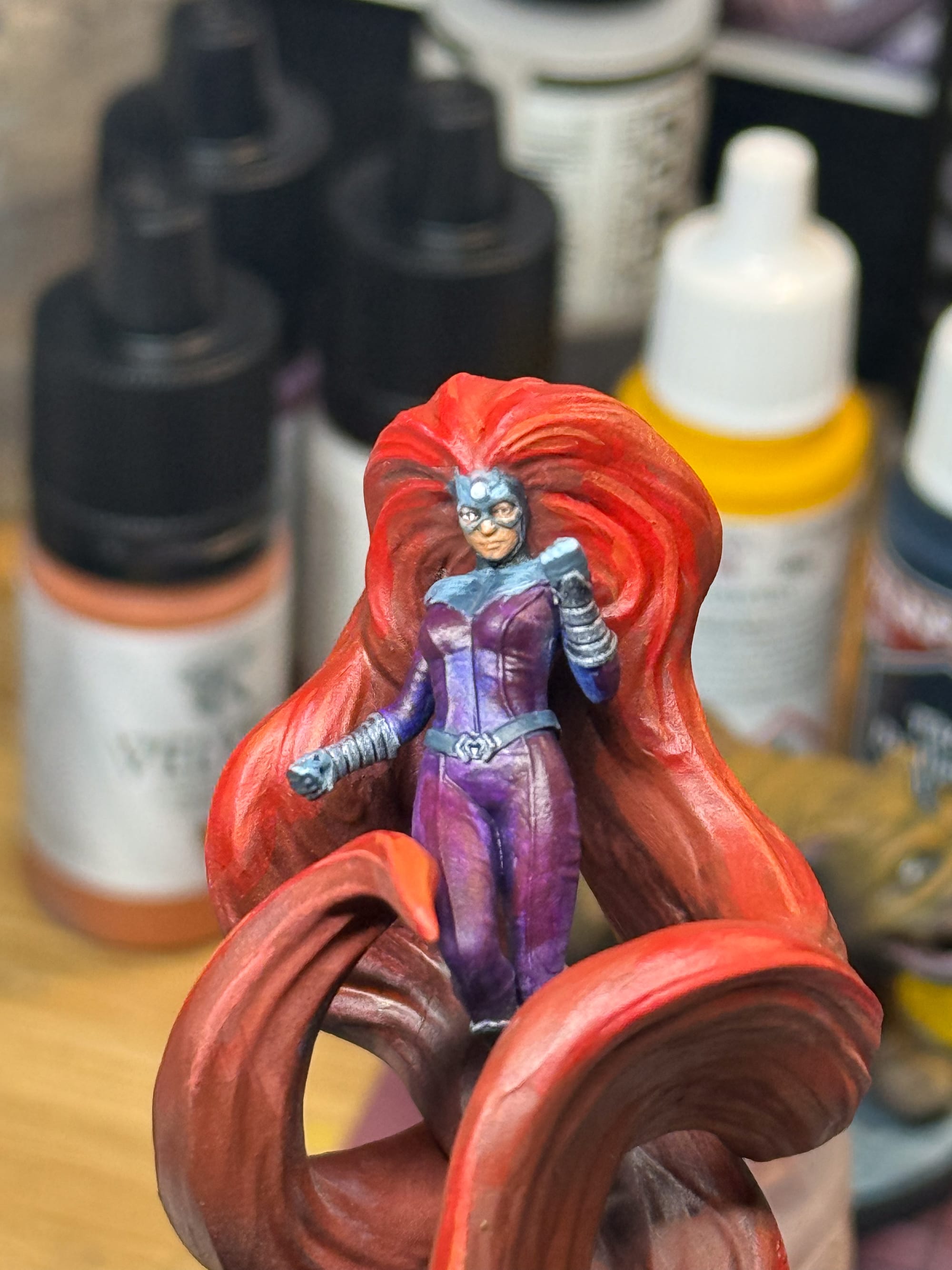
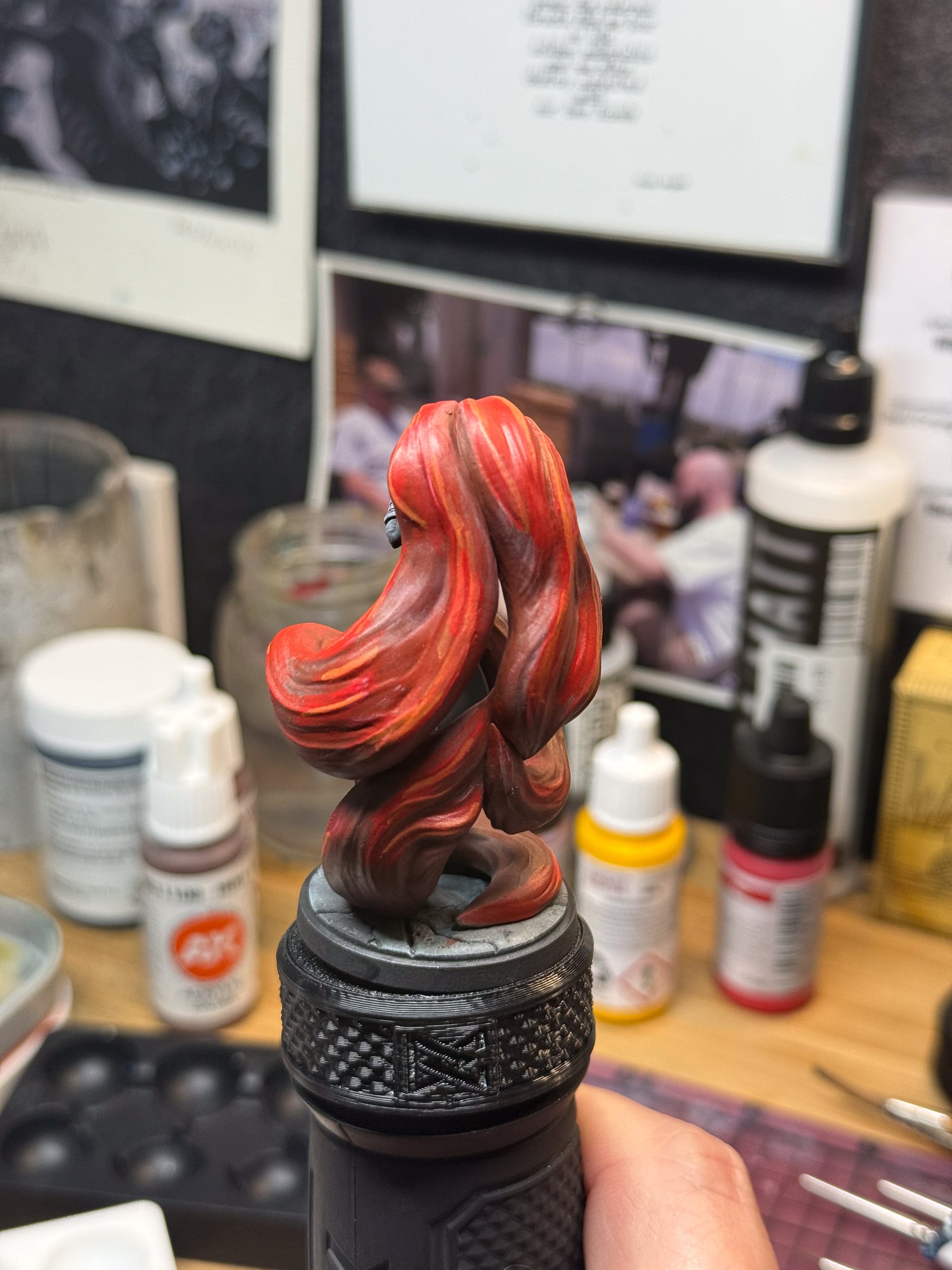
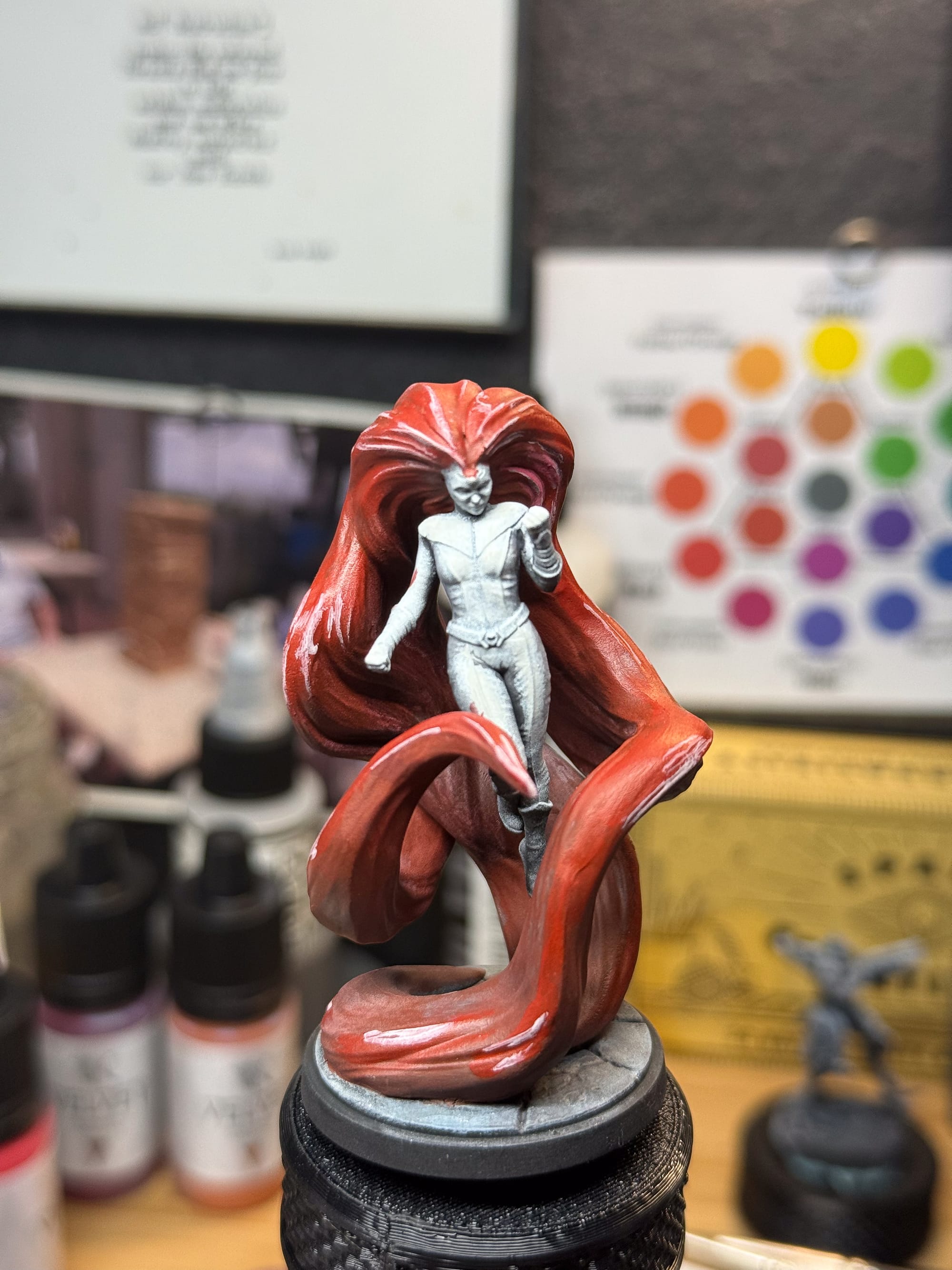
I really want to talk about reds. On Medusa, I had to paint a variety of red tones to make her hair work out, and this paint really helped. Off White is the most versatile of the set for my needs, as it provides much needed body to other paints.
In the photos, I took Off White and mixed it with different inks. I’ve been using inks lately in a lot of my projects, but they’re very fluid. So by mixing it with a thick acrylic, you can add more body, and if you’re using the same color, it adds more vibrancy to the paint. In my situation, I use Off White to build a desaturated version of an ink.
This is how I start building highlights. By using Off White, I’m not creating the absence of pigment, I am creating brighter versions of the pigment, which helps me emulate white tones in my work. This means when I eventually use white, it’ll be for highly specific parts of a model, perhaps working in a specular highlight, or something that I really want to draw the eye towards.
What could be better
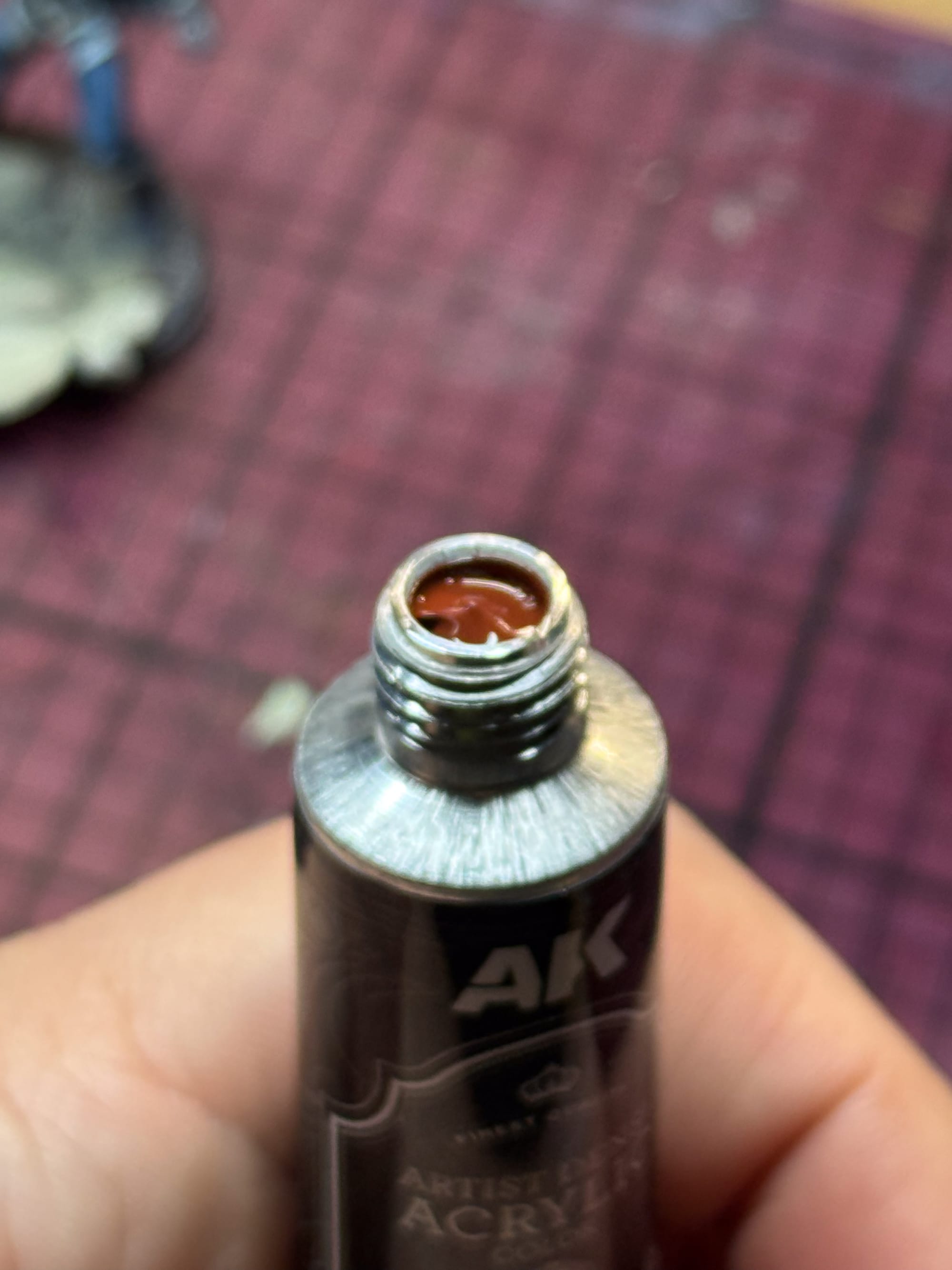
You won’t find that particular bright yellow orange tone, you have to make it. They can dry out pretty quickly on a wet palette, depending on the environment around you, so be adequately prepared with water or medium on hand. But these complaints aren’t true complaints of the paint, it’s an observation of what someone’s experience may be with the paint. My advice if you’re just looking to learn: grab a paint that you like, and experiment with it. Paint out some lines, create a wash, do some layers on a test model. “Texture Trainer” style models are perfect for this kind of experimentation. Or just grab whatever model you have that you don’t want to look perfect and go play!
My Verdict
Once again, these paints are a winner in my book. I love the body they provide, the versatility of the paint, and the tone of them provides a great platform for creating or amplifying other colors.
While I admit that using tube paint is difficult (thinning, they can dry on the palette quickly, not a beginners paint), what I’ve been able to achieve from this paint has left me pretty happy, and I start with these paints on all of my display or competitive level projects.
AK Interactive Artist Dense Acrylic Paint
Excellent
Once again, I happily recommend these paints to anyone looking to step up their painting skills, but these are not for inexperienced painters or people who just want to get their army painted.
Pros
- A true level up for painters
- Fantastic pigmentation
- Can build almost any color
Cons
- Slight learning curve
This review is based on a retail copy provided by the publisher.