Back in November of last year, we learned about Bear Cavalry, a small paint company out of the Pacific Northwest with an eye for sustainability and coffee grounds. We were impressed by their paints and texture pastes, as they made excellent work of painting up some Trench Crusade and Victoria Miniatures models. Hobby Editor Alec Kozak found that that paste was great on his Trench pieces, while I found the basic color set more than valuable on painting up some tabletop ready schemes.
 Alec Kozak
 Randy Gregory II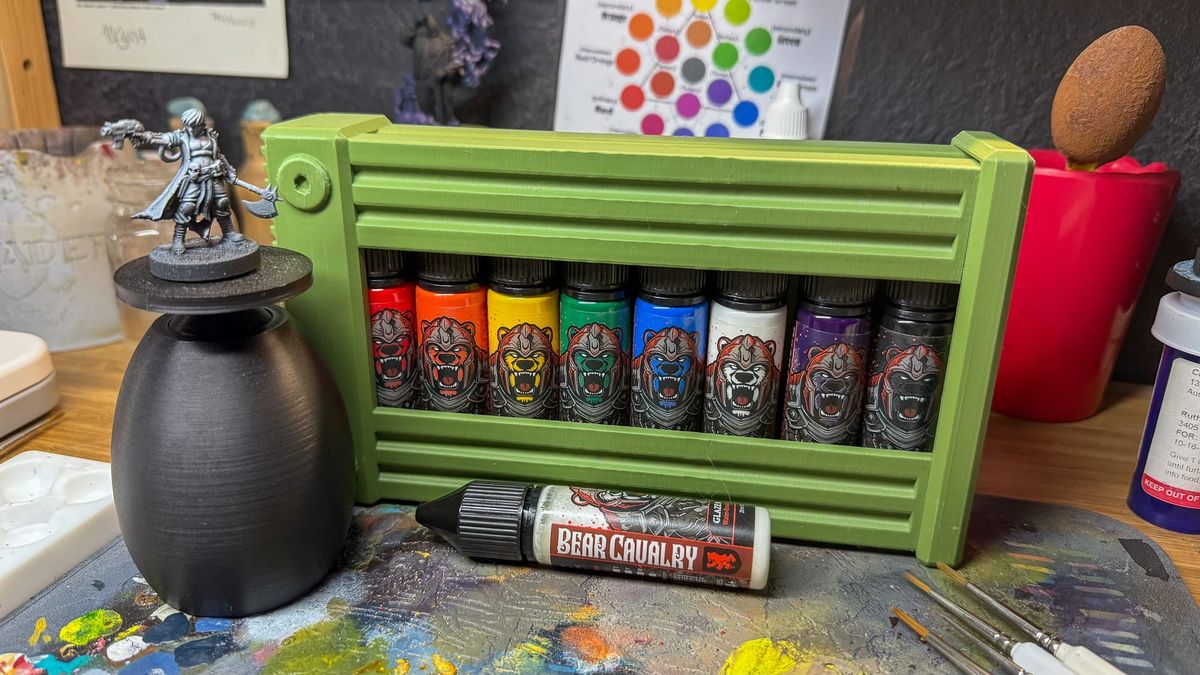
So when I was sent the rest of their range, I found myself wondering what more there was to cover with this paint? Turns out I had an orc model sitting around, some foamcore, and more experience, as a painter and a tester of hobby products. And now, I find myself looking at Bear Cavalry, wondering “is there a necessity for another line of paint out there”, and my conclusion is a “yes, but”. Let’s take a deeper look.
The Packaging
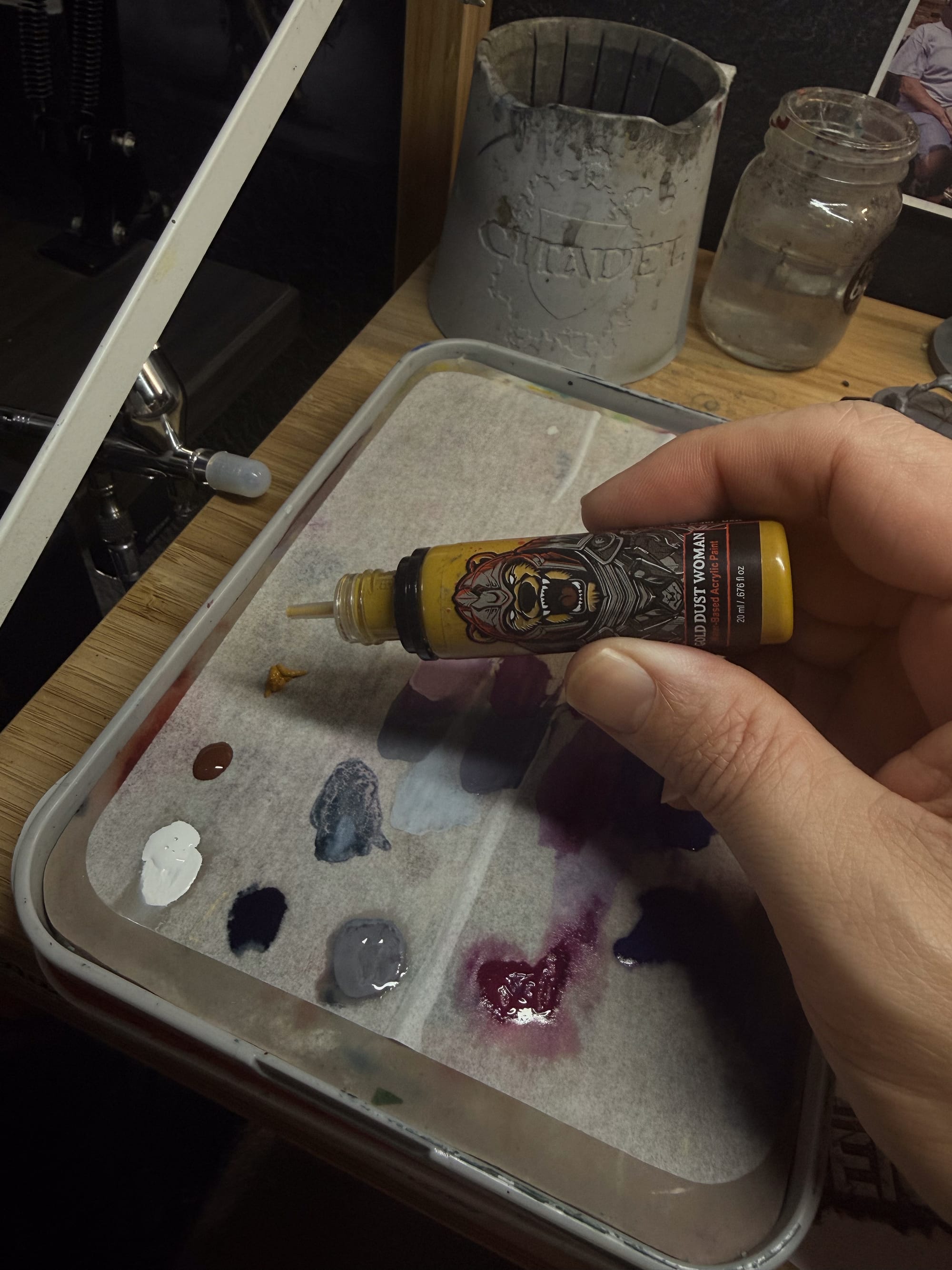
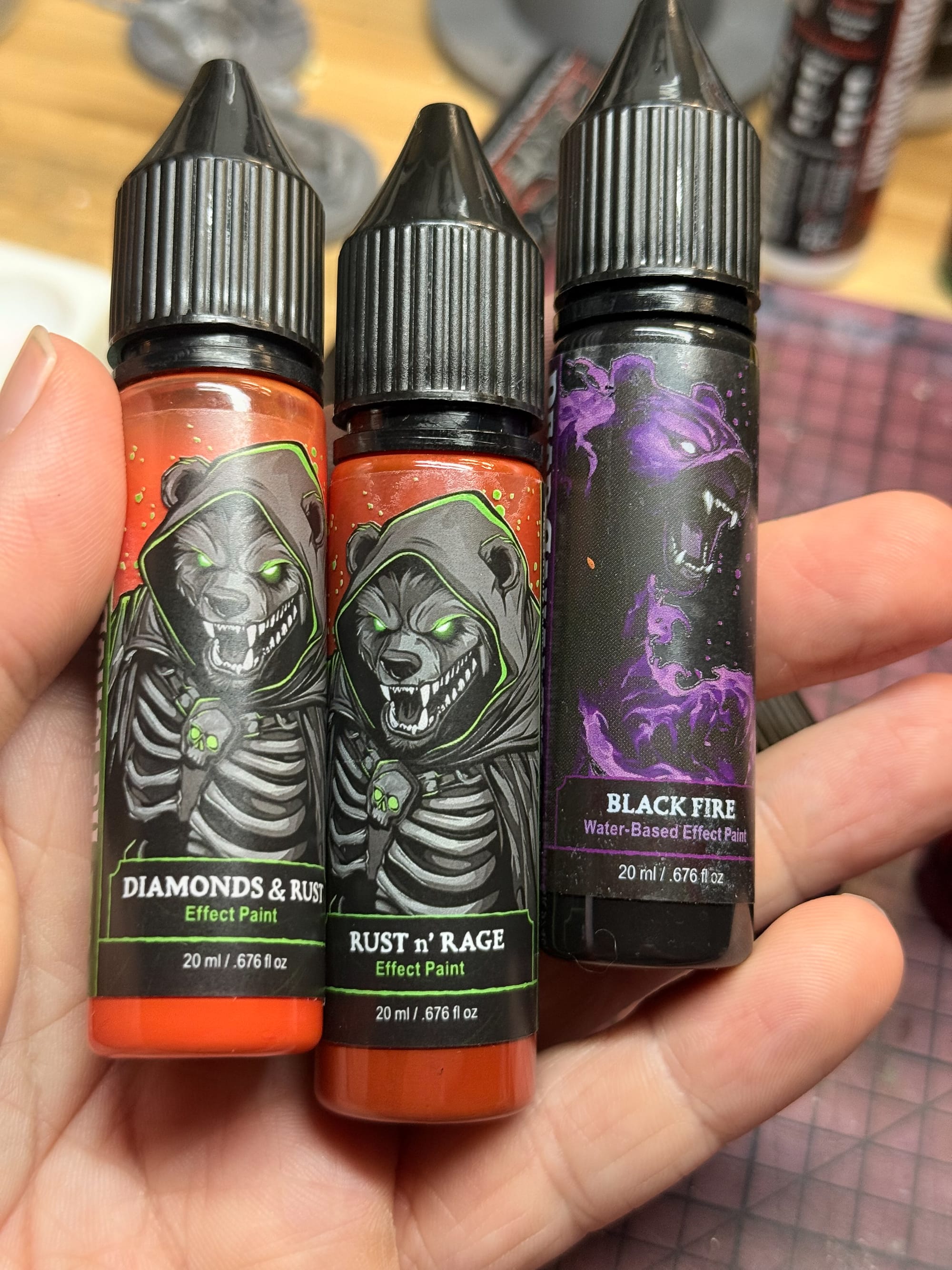
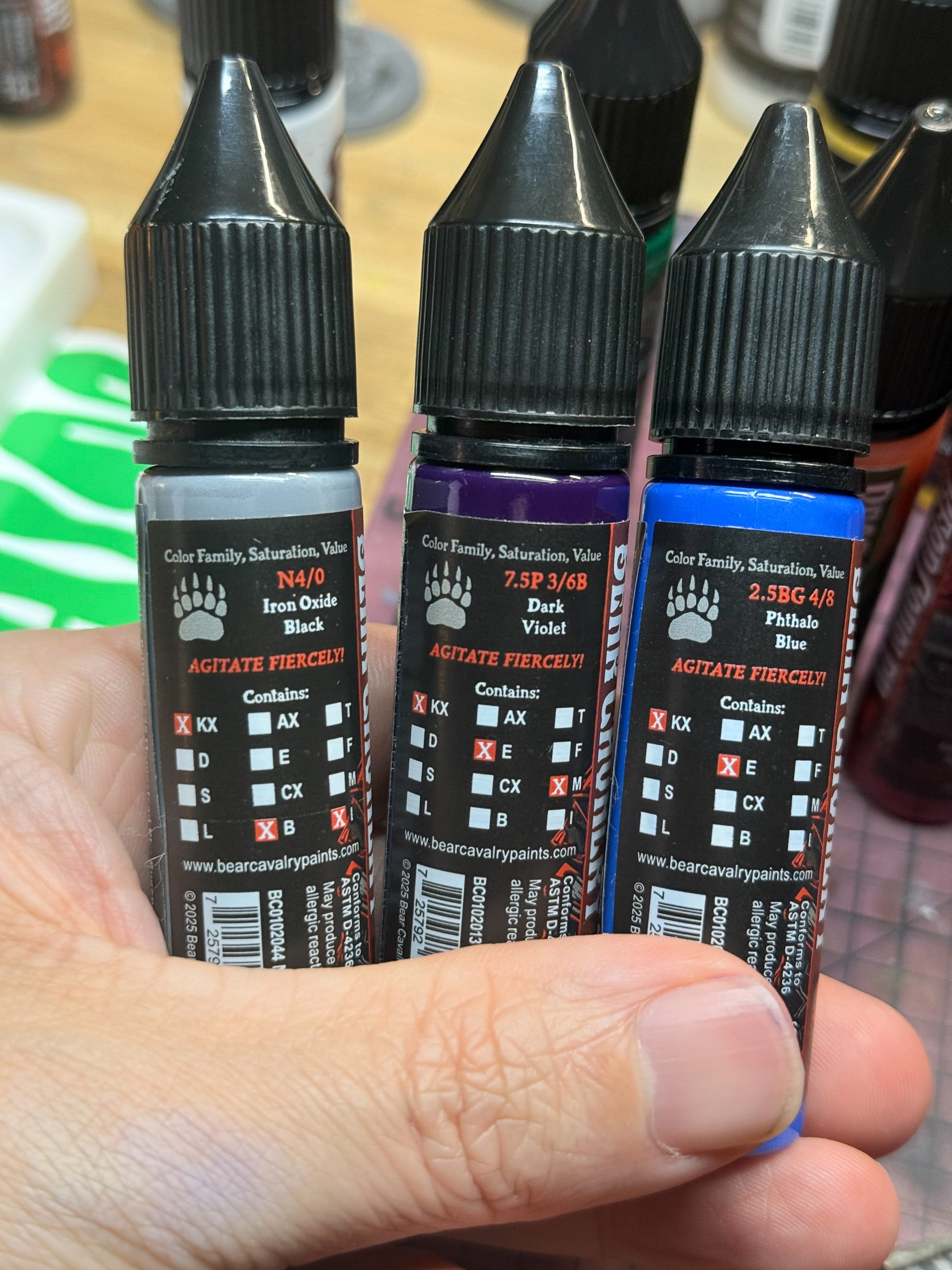
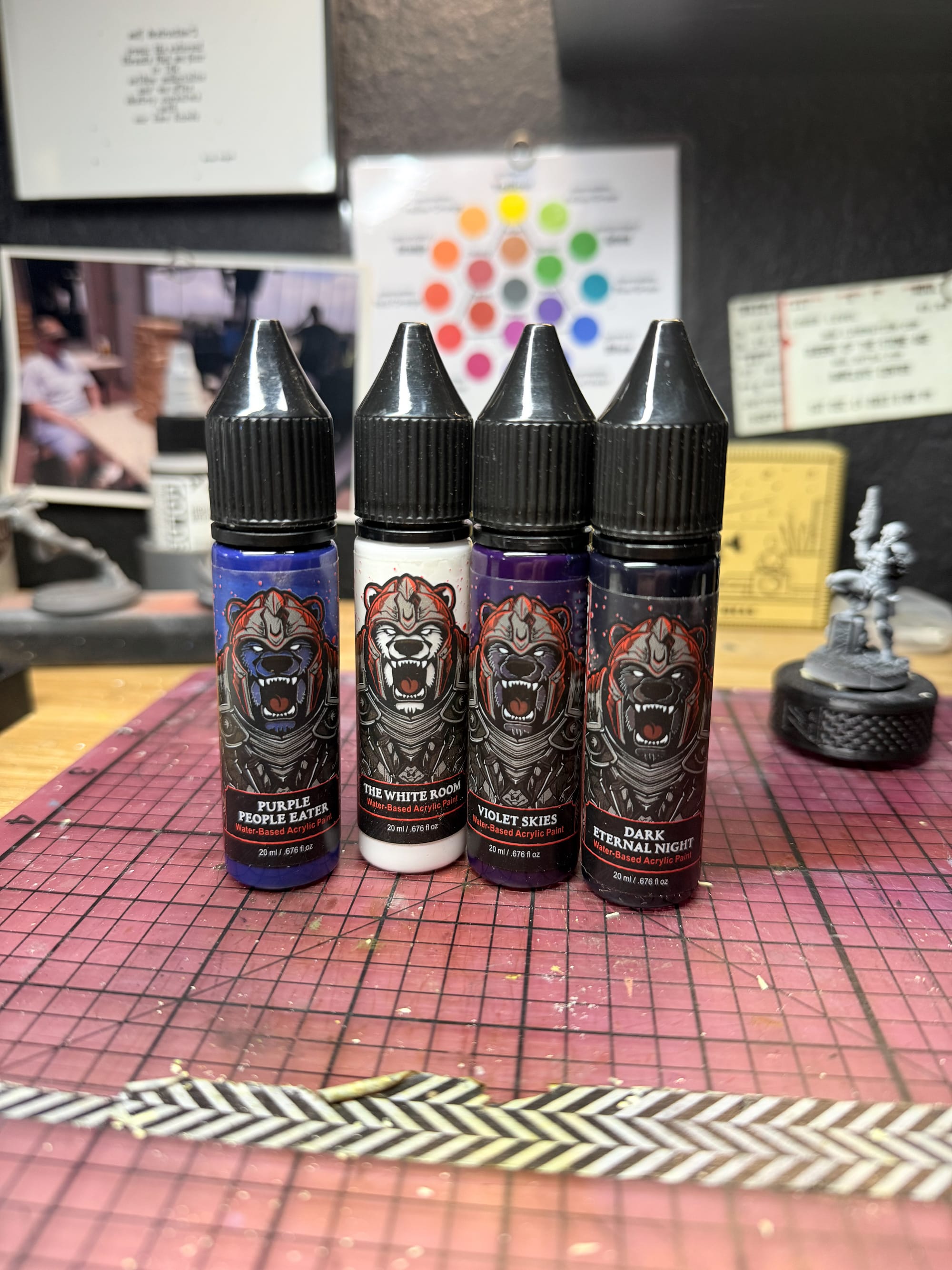
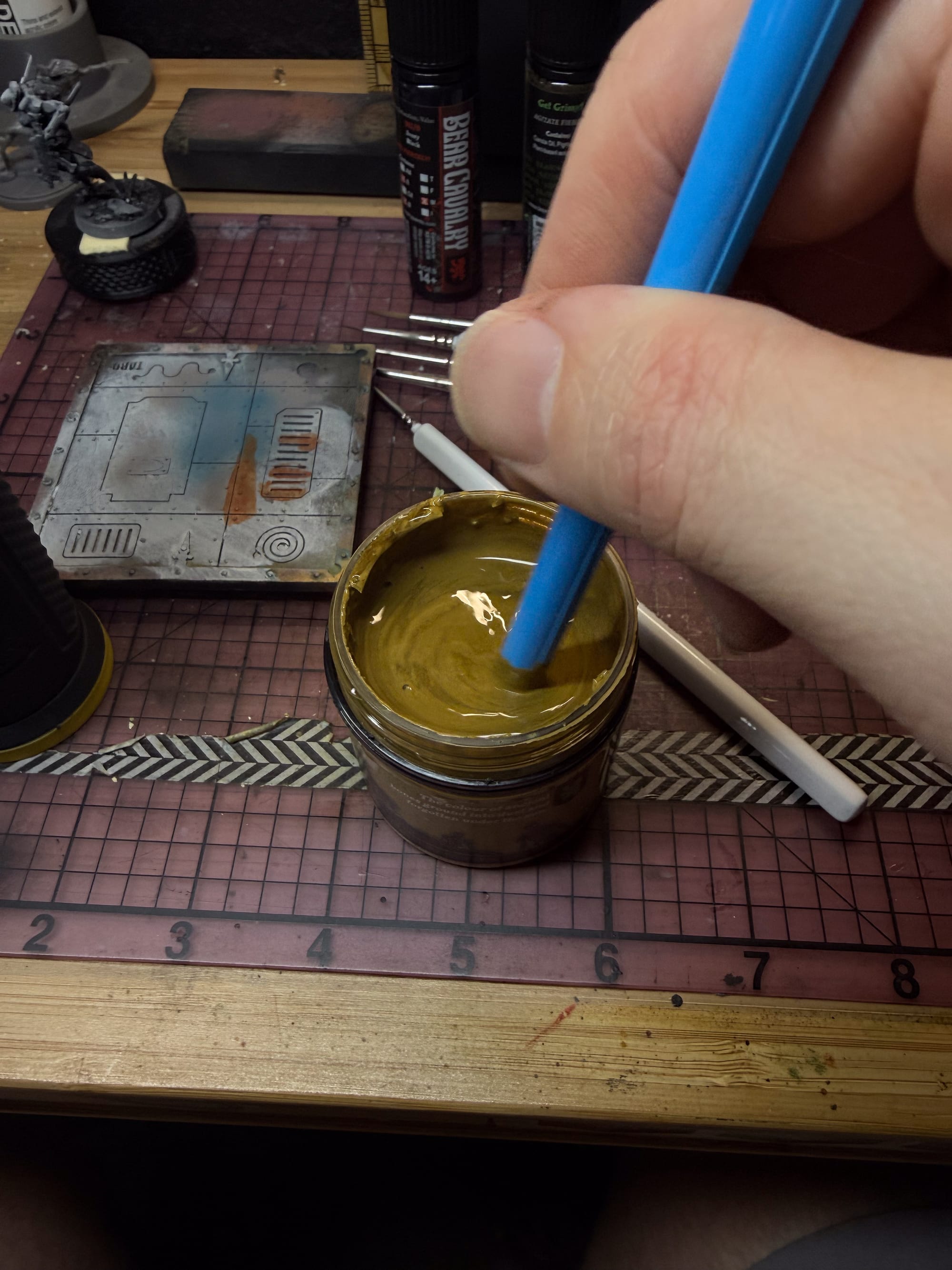
Pro Tip: Stir that texture paste and try not to eat it.
Bear Cavalry sent me 48 paints, 2 washes, 3 effects, and 4 texture paints. Each Paint, Wash, and Effect are all packaged in 20ml bottles, with a screwtop and thin nozzle. These bottles do an excellent job of keeping the paint from drying out, which is a big positive, but I found sometimes if I crammed the top on awkwardly, I would bend the nozzle a bit. Easy to fix. I did find it impossible to remove the nozzle, which became a problem for only one paint in the set which is almost too dry to get out of the bottle, which reveals a challenge. Other brands of paint are in smaller bottles which usually allow access to the paint inside with a tug of the nozzle (Reaper, Vallejo, AK, Army Painter) or are fully unscrewable (Monument Hobbies) or are a pot that constantly dries out (old P3 and Citadel)...and try as I might, I couldn’t get the nozzle off of a bottle of this paint without the fear of damaging the entire bottle. And that kinda stinks. Luckily, only one bottle in the entire line that was sent to me was dry, so I’m hoping it’s a one time issue.
The texture pastes are a whole other story. Each is packaged in a 2oz jar, but are sealed with a childproof cap which can be an absolute pain to open. Don’t do what I did, where I tried to push down and push in the tabs on the side…just push down.
The labels for each paint showcase the paint very well, and like some other companies, they show the actual mixes of pigments you’ll be painting with. As someone who prefers single pigment paints, I love this. On each bottle you’ll find a breakdown of the pigments, and while it’s confusing to hold a bottle of Venetian Red and see an X marked next to an S, there is an entire chart on the Bear Cavalry site. This is a really nice step towards educating artists.
The Colors
In my previous review, I was sent the Primaries, and I thought they were all excellent. Like that original review, I think Bear Cavalry paints are very intense, but the amount of hues in the entire set leaves me somewhat wanting. Take a look at the image.
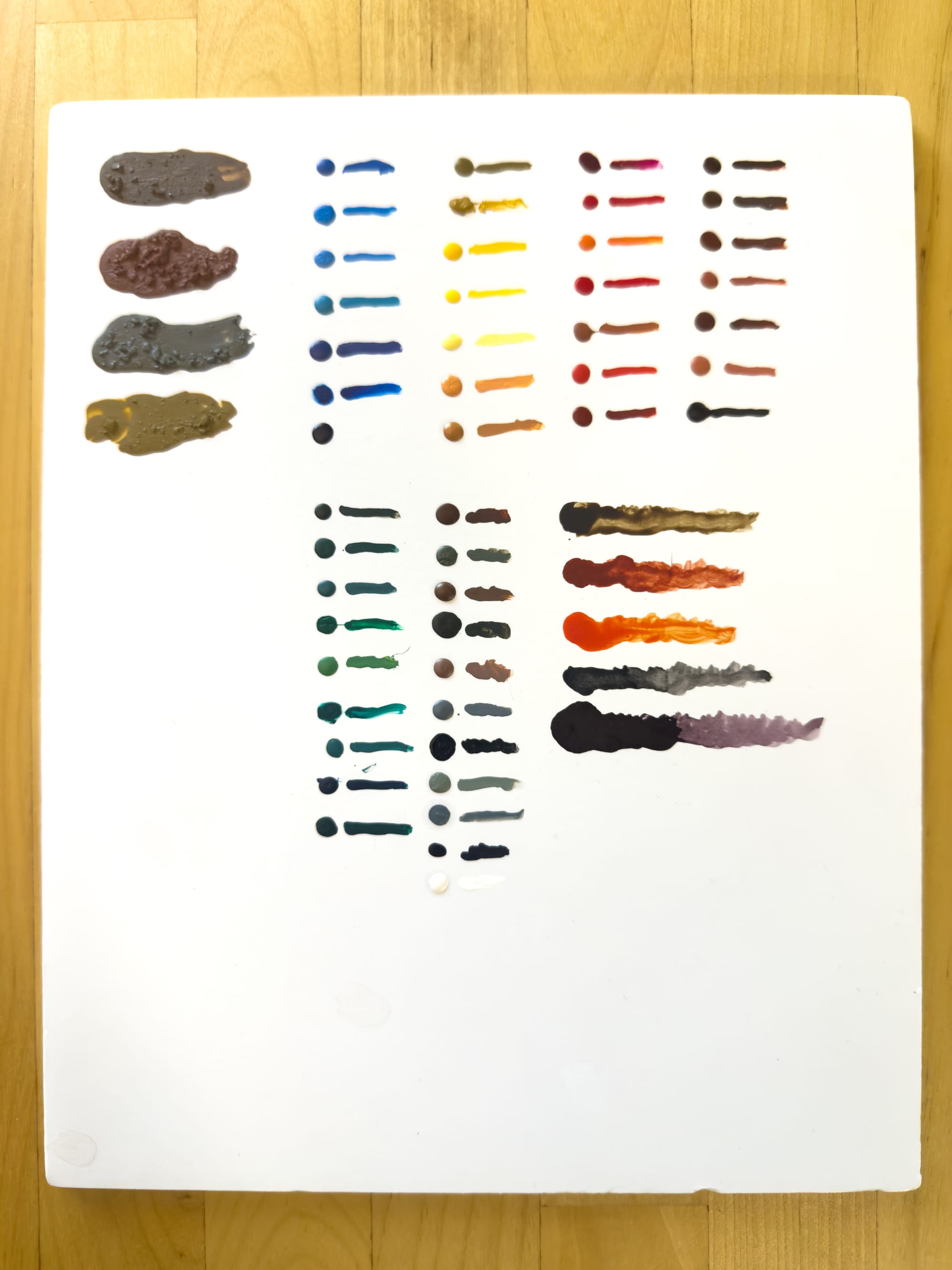
This is a test of everything they sent me, undiluted on white foamcore. What I see is a lot of intensity, not as many hues as I would expect from a range, and the values tend to skew more gray or black.
What is there is done very well. I think the chromatic grays (Glass Moon Night, Iron Man), their reds (The Red Baron, Sekigahra, Blood Red Skies), and browns (March of the Fire Ants, Hunters Quiver, Bison-Beast) all really stand out. The rest of the set, which includes yellows, greens, blues, and skin tones, I’m less hot about. I think the greens all kind of run together in a very forestry way, the skin tones feel non-existent when compared with the browns. A few standouts exist. Green Hell, Pale Blue Dot, Mindcrime Magenta, Bismarck’s Grave, and Battle of Yellow Tavern are really great paints to use, and I’ll be folding them into my regular rotation moving forward, as I really love saturated paints that I can dilute. And these dilute very well. Let’s turn to our Orc to see how they paint.
How They Paint
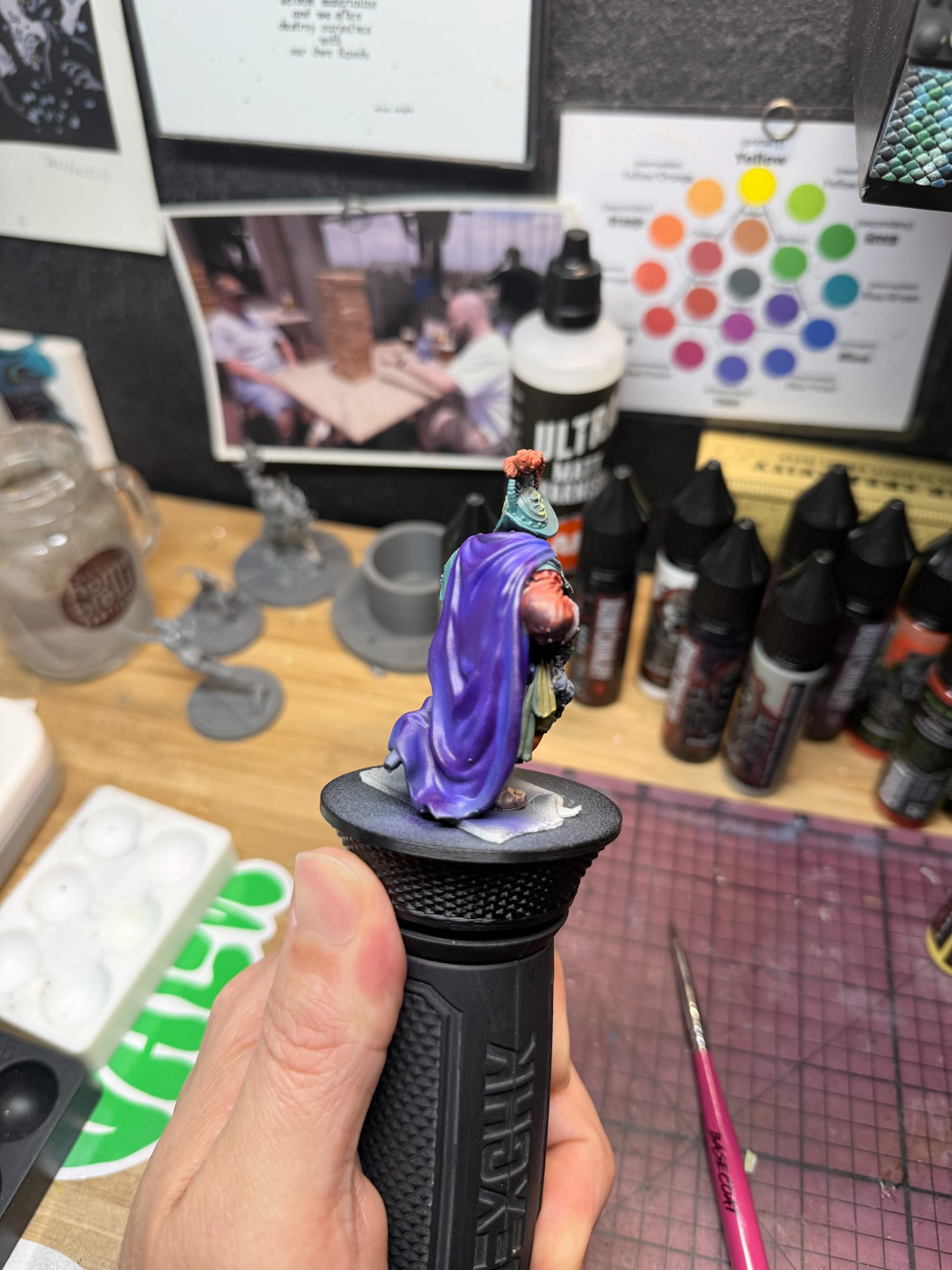
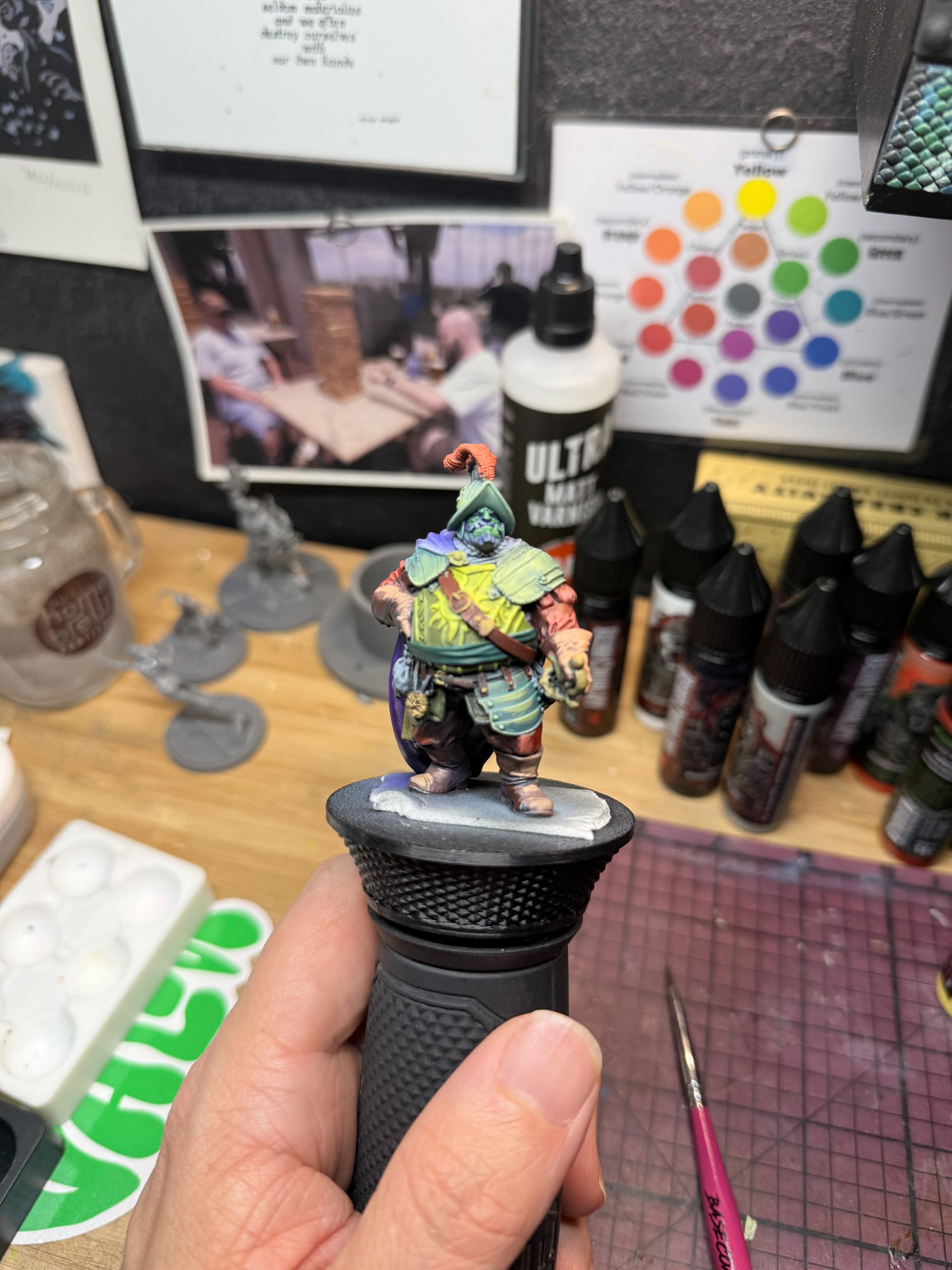
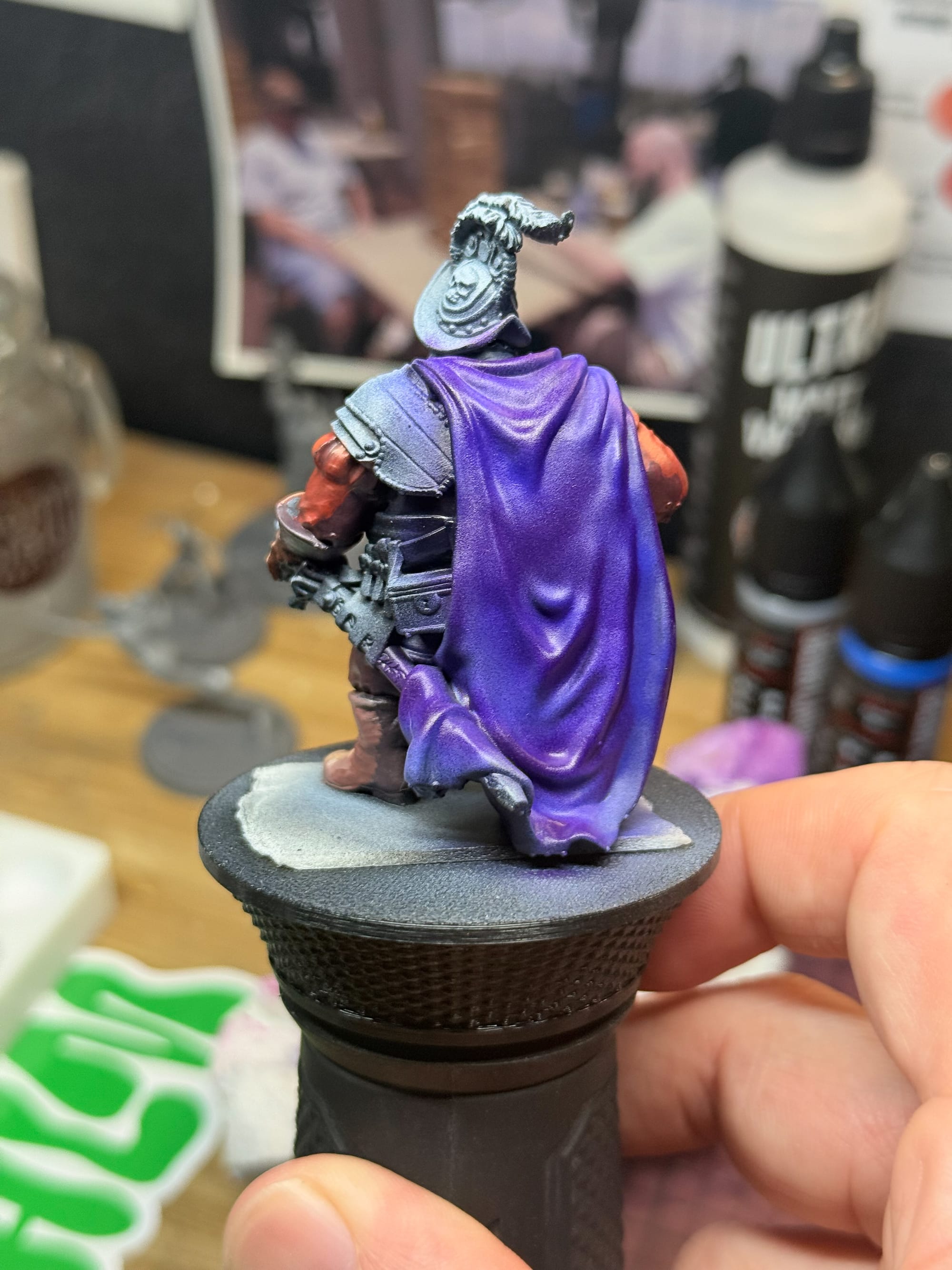
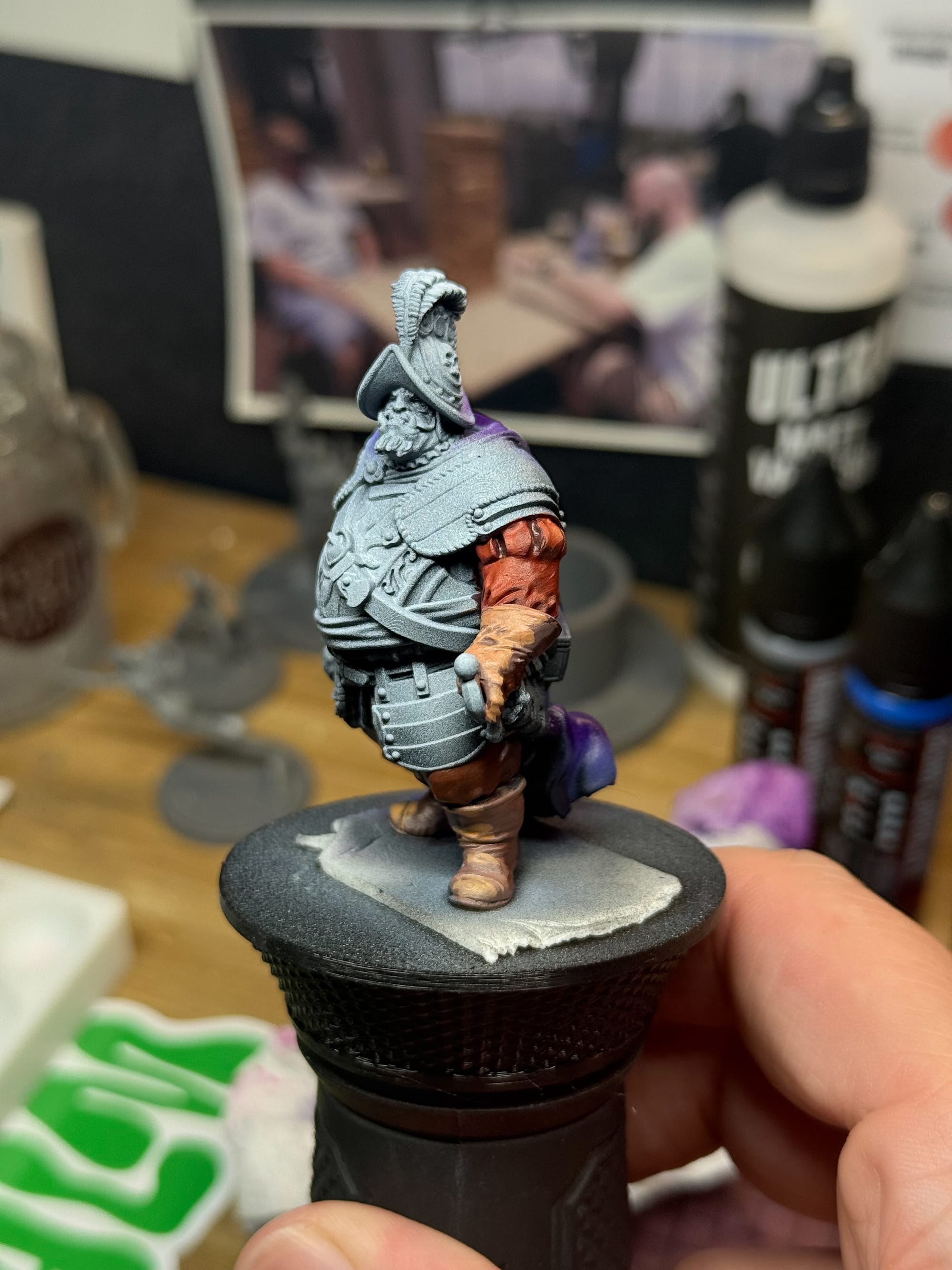
When I test a paint range, I dive into several techniques: How well do they blend, layer, glaze, and wash? Our test models included an orc conquistador from Titan Forge, and some Aleph from Infinity.
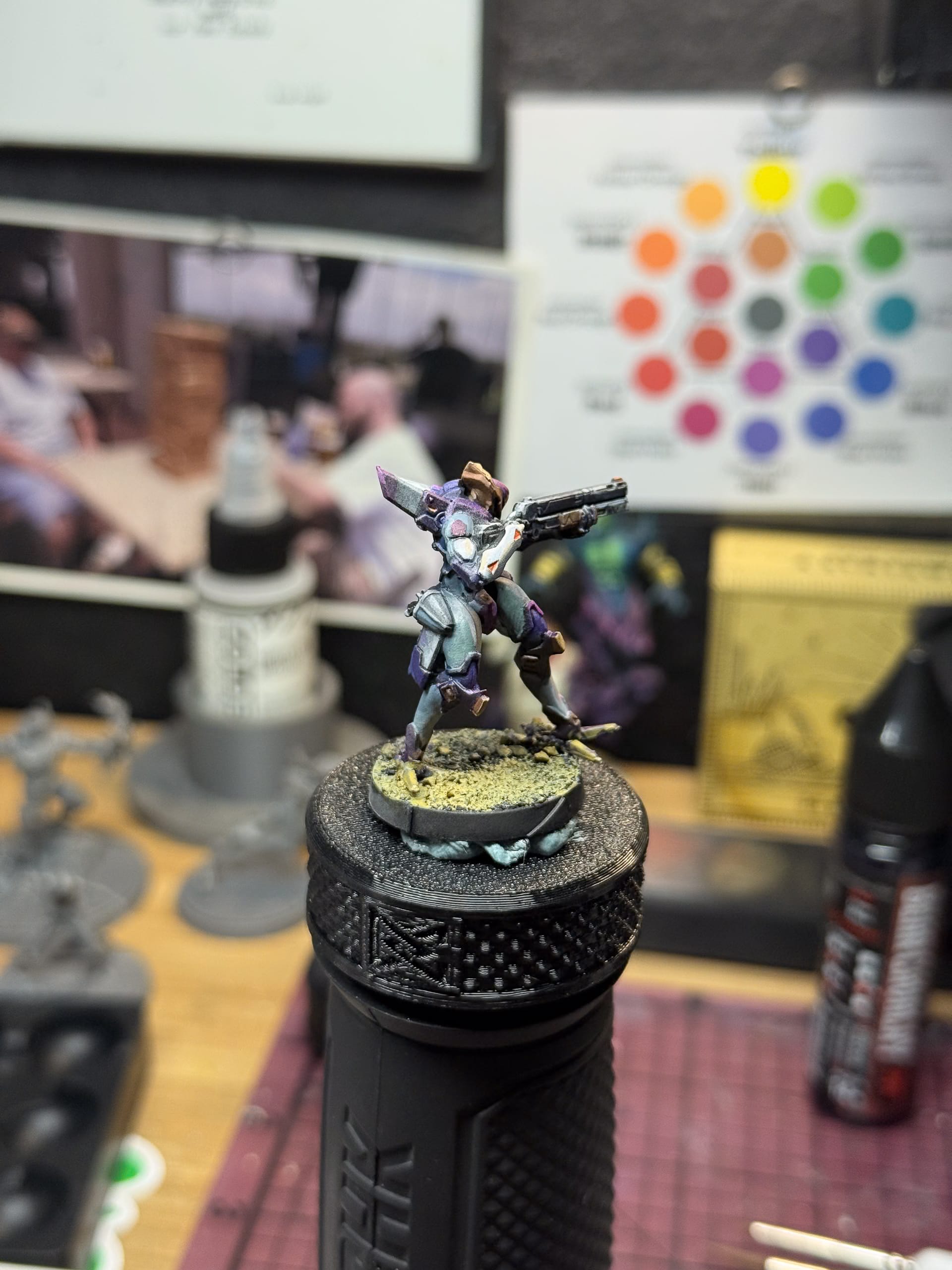
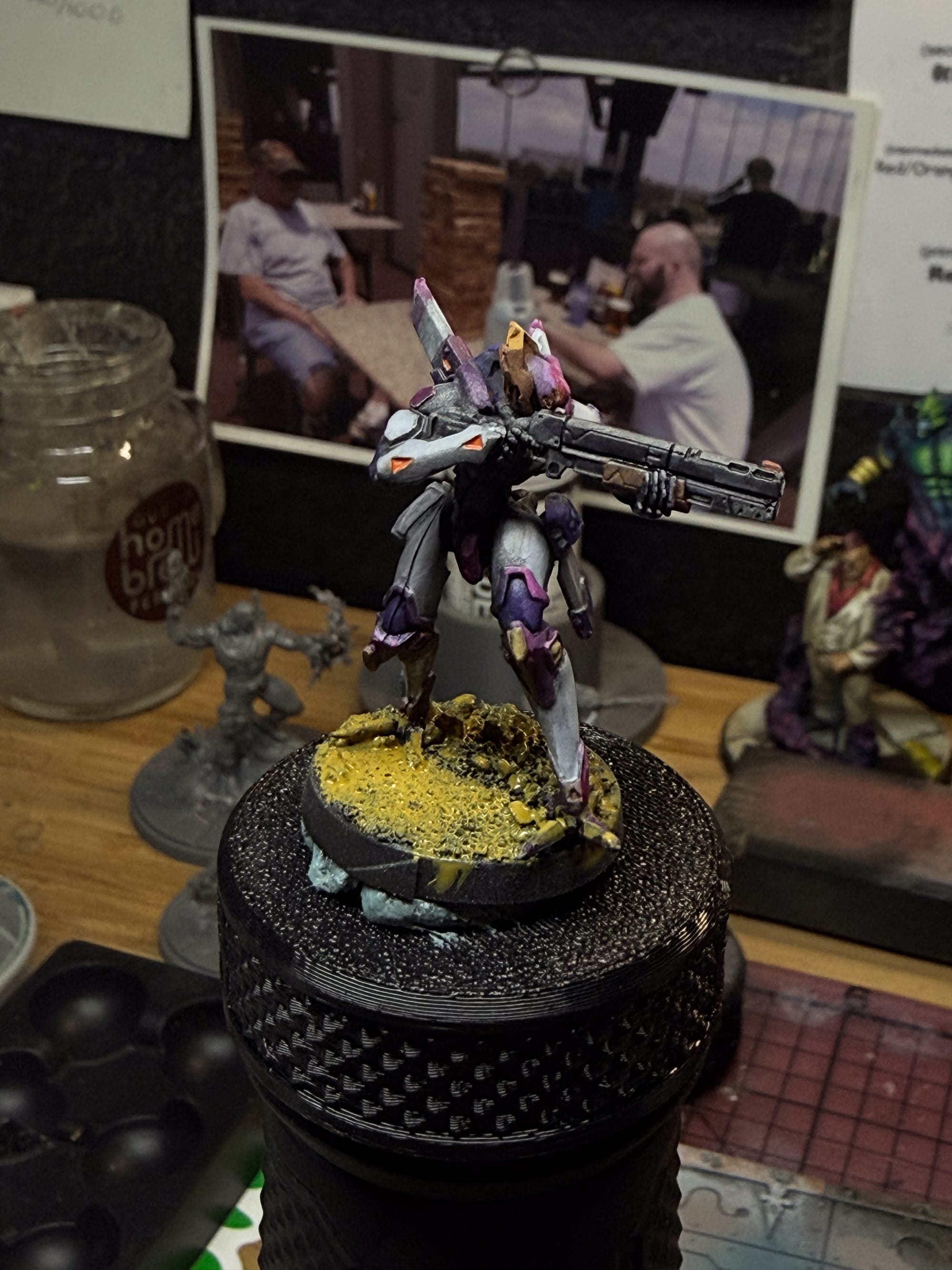
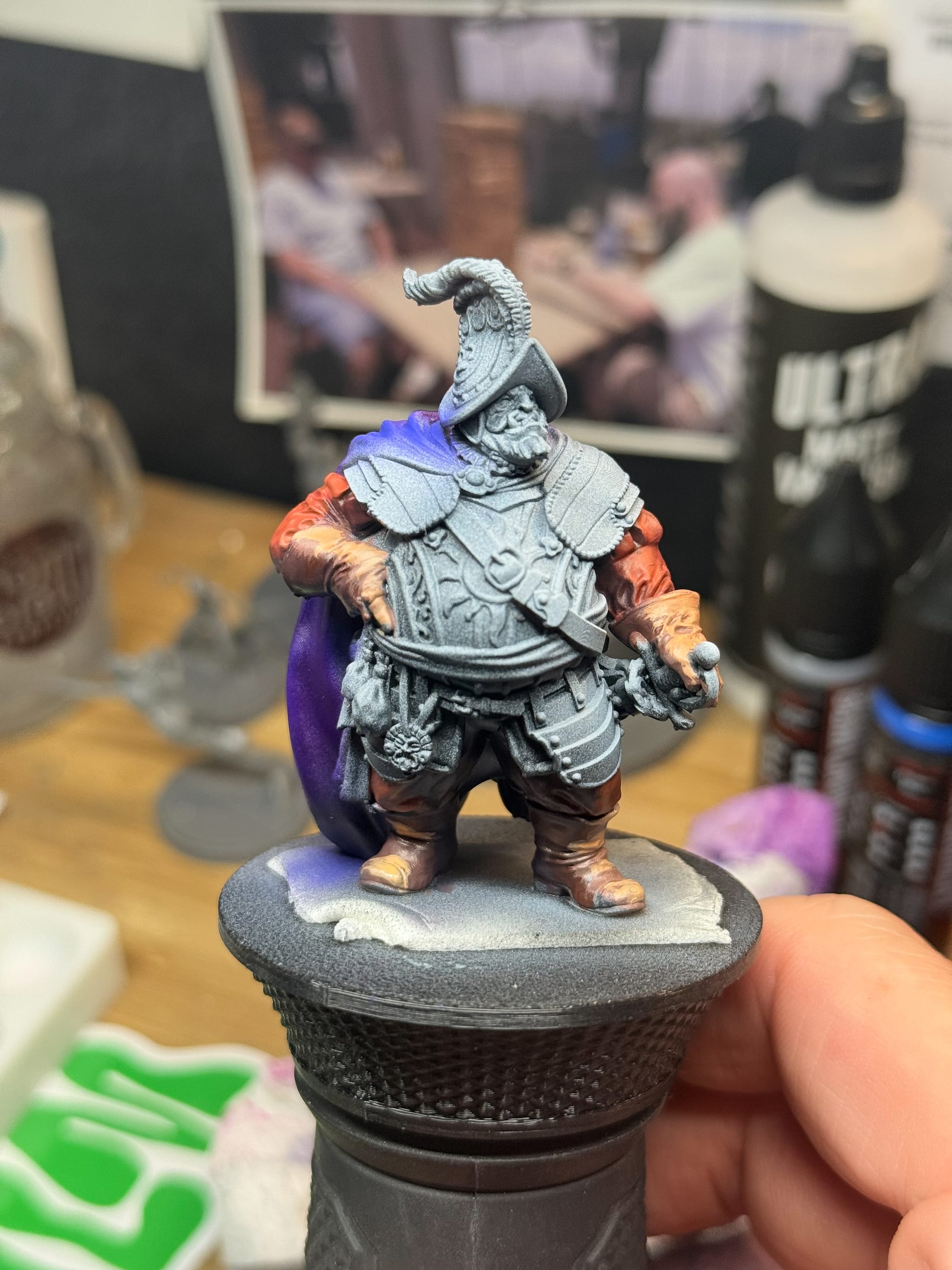
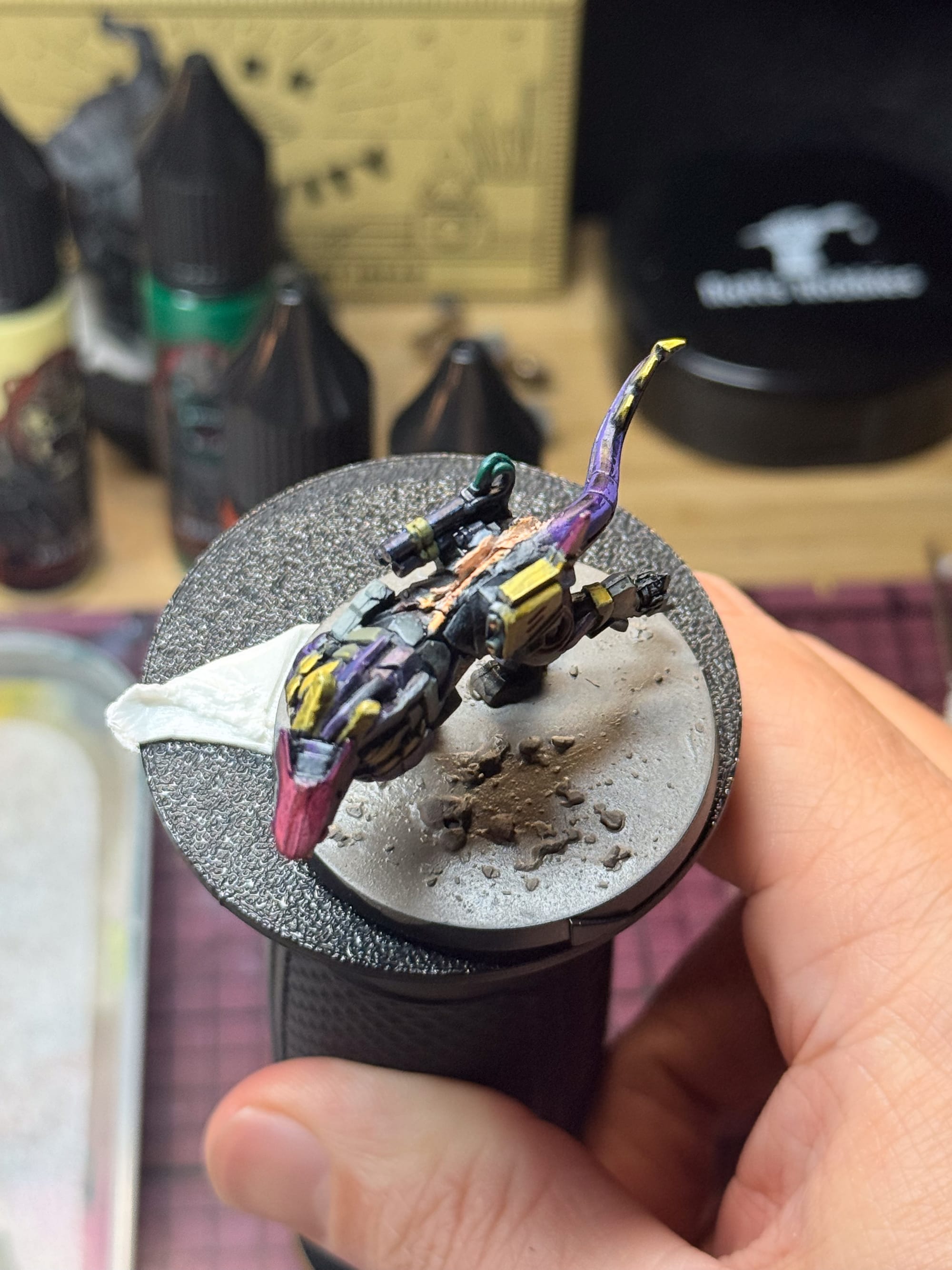
Airbrush
On the back of the model, I took a blend of dark violet and purple and layered it in a few passes all over the cloak. I then added a lighter purple into the mix to hit all of the highlights, then added a dark grey tone to the mix to hit the undersides and all of the shadows across the model.
Wet blending
For my wet blending test, I took some browns, oranges, reds and proceeded to paint all of the ruffly clothing. I found that the colors blended really nicely together, never once coming apart or losing intensity in certain areas. I also used these paints mixed with AK Interactive and Kimera, and they blended very well, with both the heavy body and ink nature of both paints. The versatility of these paints is notable.
Layering
With traditional layering, let’s talk base coating. For base coating, most paint brands recommend a few thin layers. With Bear Cavalry, coverage is effortless. I do find that if I thin the paint down too much, it’s easy to get into wash territory, so really think about your palette, the water in it, how much you dilute the paint. This is a good thing though.
Drybrush and washing
For the helmet, an idea appeared: what if the helmet was kinda rusty or worn, with verdigris styled wear and tear? So I used two of the effects paints, one called Diamonds & Rust, and one called Rust n’ Rage. Both are rusty orange colors, but think of them as newer and older rust. Using both, I layered in my tones, and then drybrushed my desaturated greens back on top. While I liked the effect, I did notice that my rust tone was a little glossy for my taste. With all of these tests complete, I feel confident in how I can re-rank these paints.
The Good
As I had pointed out in my previous article, Bear Cavalry kills it when it comes to primary colors. I think the base primaries absolutely rule, and I’ve spent time with them in other applications. Green Hell, Battle for Yellow Tavern, Bismarck’s Grave, Neptune’s Fury are incredibly solid paints. I’m very impressed with their yellow, as it blends really well with other colors and can stand out on its own. I happily can say that several Bear Cavalry paints are a part of my everyday paint kit now.
The Could Be Better
First, I think the wash, effects, and texture paints all could use another look. When I look at Texture Paints, I want not just color differences, but texture differences. While I love the chunkiness of the paint, I want more variety in my chunks.
The washes and effects really all feel like washes, and they’re fine. All dry to a matte finish, and they all work, but they don’t stand out. Streaking Grime doesn’t feel like other versions of the same paint, and for a paint with actual canola oil in it, it’s not very oily. And as I pointed out earlier, some of the other paints just don’t feel unique enough from each other.
Moving Forward
I really think Bear Cavalry is producing solid paint. And as a new company in a crowded market, that is hard to do, and cheers to them for that. I happily recommend their paints, and as always, I recommend that you try out different paints and learn what works best for you. For me, Bear Cavalry provides solid coverage, awesome blends, and a few standout paints that happily live on in my collection.
Bear Cavalry Paints
Great
Bear Cavalry has some excellent standout primary paint colors and some extremely useful grays, reds, and browns, great for anyone who wants a more grounded paint palette.
Pros
- Excellent primaries
- Blends perfectly
- Mixes with plenty of other paints
Cons
- Texture pastes lack diversity
- Some colors feel duplicitous
This review is based on a retail copy provided by the publisher.