I was around 60 puzzles into my journey north in Order of the Sinking Star when I hit a wall. I’d navigated through intricately designed mazes and perplexing brainteasers, but something about the current conundrum had me truly stumped. The sinking feeling of dejection inside of me was short-lived, however, as it was then I remembered that Order of the Sinking Star grants an absurd amount of player agency - and I wandered off to discover new horizons. While I haven’t quite managed to uncover and solve all 1000+ puzzles just yet, I’ve uncovered the map, encountered one (of multiple) "endings", and experienced more than enough enigmas to know that I’ve fallen in love.
The latest venture from Jonathan Blow’s Thekla Inc. may not be quite as aesthetically pleasing as The Witness or as narratively compelling as Braid before it, but the sheer amount of aggravatingly ingenious puzzles on display won me over entirely. Every addition of yet another new character or mechanic elicited both an exasperated laugh and a deep-seated excitement to experiment.
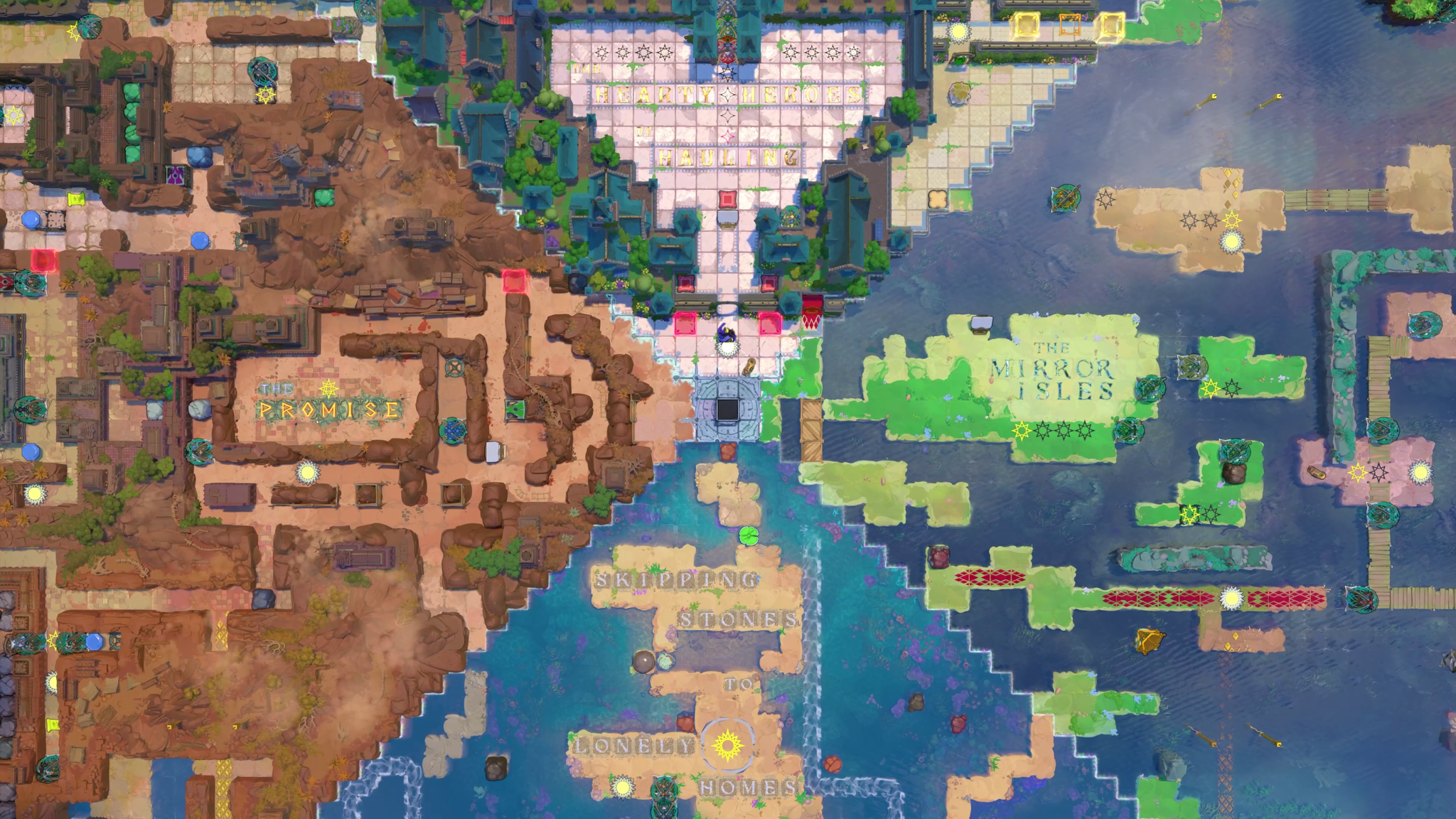
As you begin at the Crossroads, you’ll be able to choose which cardinal direction you want to head in first. The game (and myself) would encourage you to begin by going north. Here you’ll find the Heroes of Hauling; an ever-expanding string of puzzles in which you control various characters, each with their own unique trait/ability. While the scenarios begin simple and often involve just one character, the thread unwinds fast, and before you know it you’ll be dealing with complex and strategic sequencing puzzles involving several characters at once.
That openness, alongside player satisfaction after adversity, and surprise evolutions in gameplay remind me quite a lot of the intended experience when it comes to the design of games like Elden Ring. Heading in any of the cardinal directions is not only possible from the get-go, but also actively encouraged. In the same way that you can turn around from a boss giving you trouble in Caelid, you can leave a pesky puzzle behind and walk elsewhere until you feel ready to come back. You might even garner some additional information/mechanical context in the meantime, which can help!
Puzzle games for me often live and die by their approach to failure and/or pressure. The paralyzing fear of screwing up often dissuades experimentation, and thus it’s a massive relief that there are no real fail states, time limits, or soft-lock opportunities in Order of the Sinking Star. A simple button input rewinds time one move and can be held as long as you want to rewind over and over - so keep going with your trial and error until you find the solution; you’ll have to do so a lot!
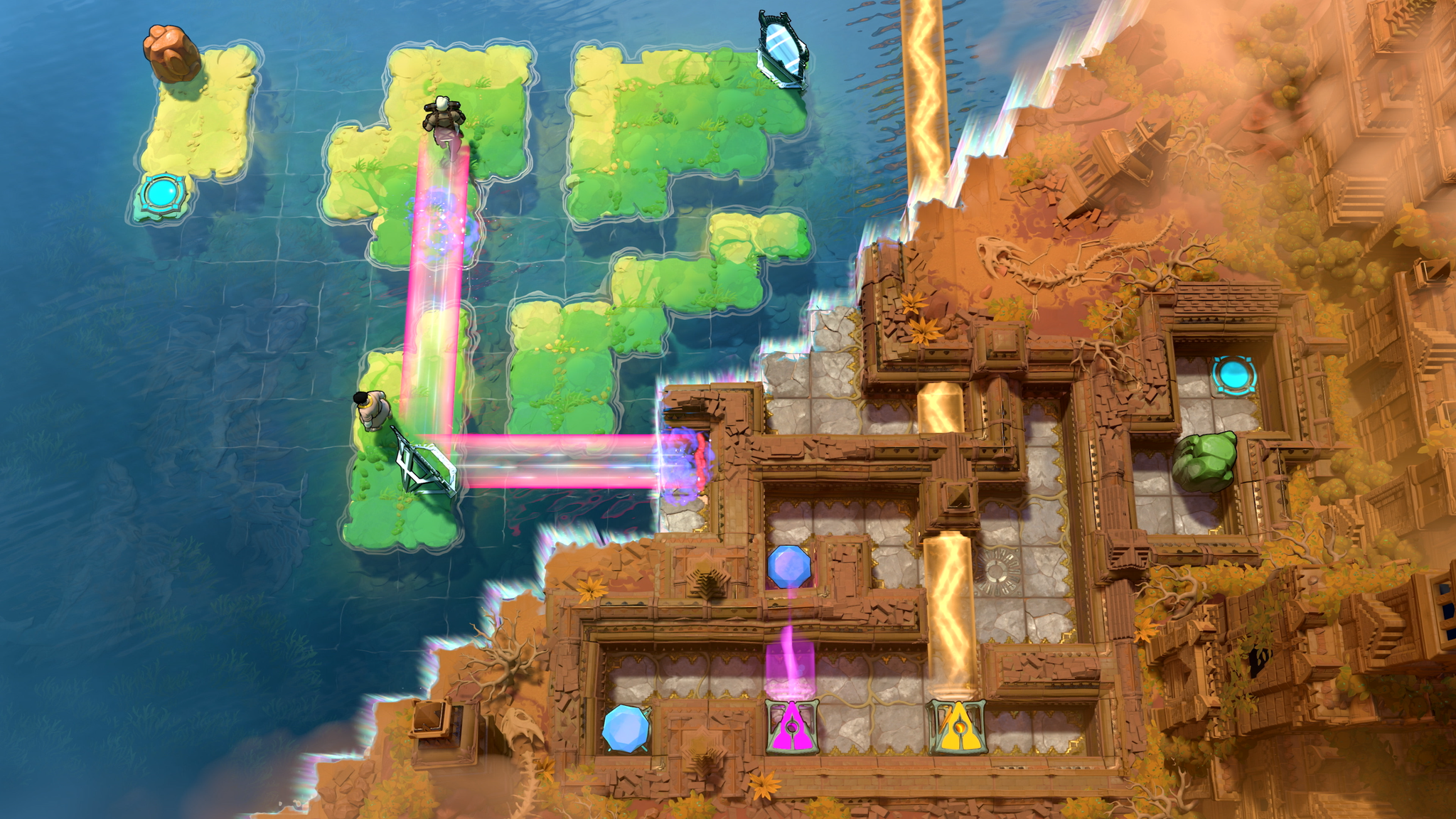
Another obligatory (and complementary) cornerstone for me when it comes to this genre is the “aha!” moments. Above all else, Order of the Sinking Star is positively filled to the brim with these little revelations. Whether a solution was immediately apparent or took me several hours to piece together after stepping away, I almost always had a smile on my face or chuckled aloud as I was executing the plan I’d drawn up, knowing I’d finally clocked what the developers wanted me to learn/do.
These cardinal directions I mentioned offer puzzles that revolve around an entirely different set of gameplay concepts and characters, and by proxy continually present you with new scenarios to keep the game feeling fresh. To make it even better, most puzzles (as all good puzzles should) double as mechanical lessons that become increasingly vital later on. As examples of this variety, heading east leads you to the Mirror Isles where you’ll be using (you guessed it) mirrors to teleport both yourself and objects to navigate disparate islands. In contrast, heading south reveals Skipping Stones; a string of land masses where you’ll need to bounce stones and lilypads across the water to create platforms and navigate/redirect water currents.
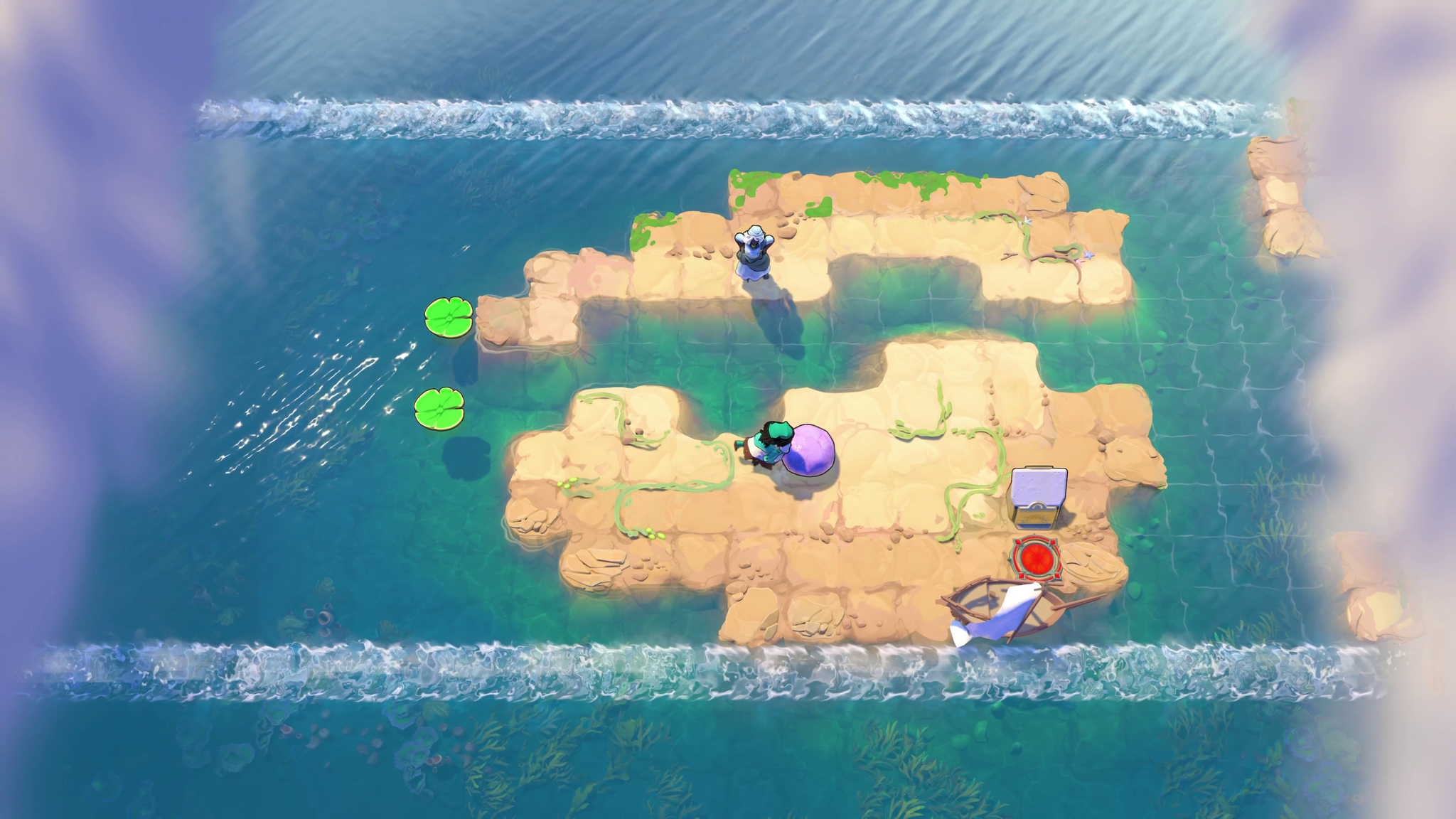
An appreciated mechanic baked into the world design is the ability to fast travel around the map via specific, activated points. As a result, navigation never became cumbersome regardless of whether I was running to or away from a puzzle. Furthermore, standing on any of the countless stars that you interact with to begin each puzzle allows you to see a screenshot of the puzzle itself, alongside the ability to replay them after completion. Considering that many act as mechanical lessons, being able to get a bird's-eye view of each or jump back in at the touch of a button was welcome.
As you venture further out from the main hub, you’ll begin encountering puzzles which bring mechanics and characters from different cardinal directions together. Almost every single one at first blush had me laughing at how complex each appears (believe me, they are), but with a little effort I managed to deduce how to chip away and make small steps to complete the overall picture. Before I knew it, I was steamrolling through multiple puzzles in a row, and it honestly felt like seeing through the Matrix.
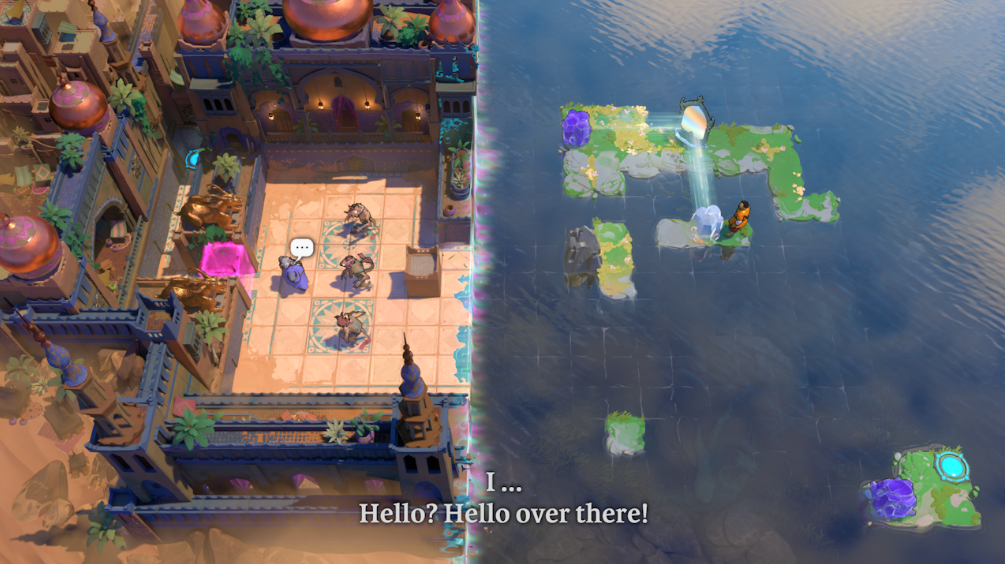
The game ran flawlessly on PS5 Pro, looking and sounding great with an often zen-like OST. Going a step further in terms of sound, every voice actor crushes it in their role, working with a relatively strong script across the board to provide a slow-burn narrative with compelling (if somewhat infrequent) character development and interactions.
It’s definitely not all golden, though, as depending on your capability to plan several steps ahead and/or think outside the box, you will likely hit multiple walls in terms of progress. I say this with the understanding that I mentioned earlier about being able to go elsewhere and try something else. However, there were a few different instances over the review period where I was at a complete stall in my progress in every available puzzle for multiple hours, and that led to a little more frustration than I’d typically prefer.
There’s no hint system or workarounds here - you’ll just have to get gud, power through, and brute-force through experimentation, or resort to guides if you really can’t figure it out. For my taste, this flip-flopped between being too obstructive to my enjoyment and an expected part of the genre. The complete absence of a safety net for those struggling can certainly become a turnoff, particularly if the goal of a given puzzle is more ambiguous than usual. This was also the case in The Witness, and if you bounced off of that because of specific puzzles perplexing you, it’s likely you’ll encounter the same problems here.
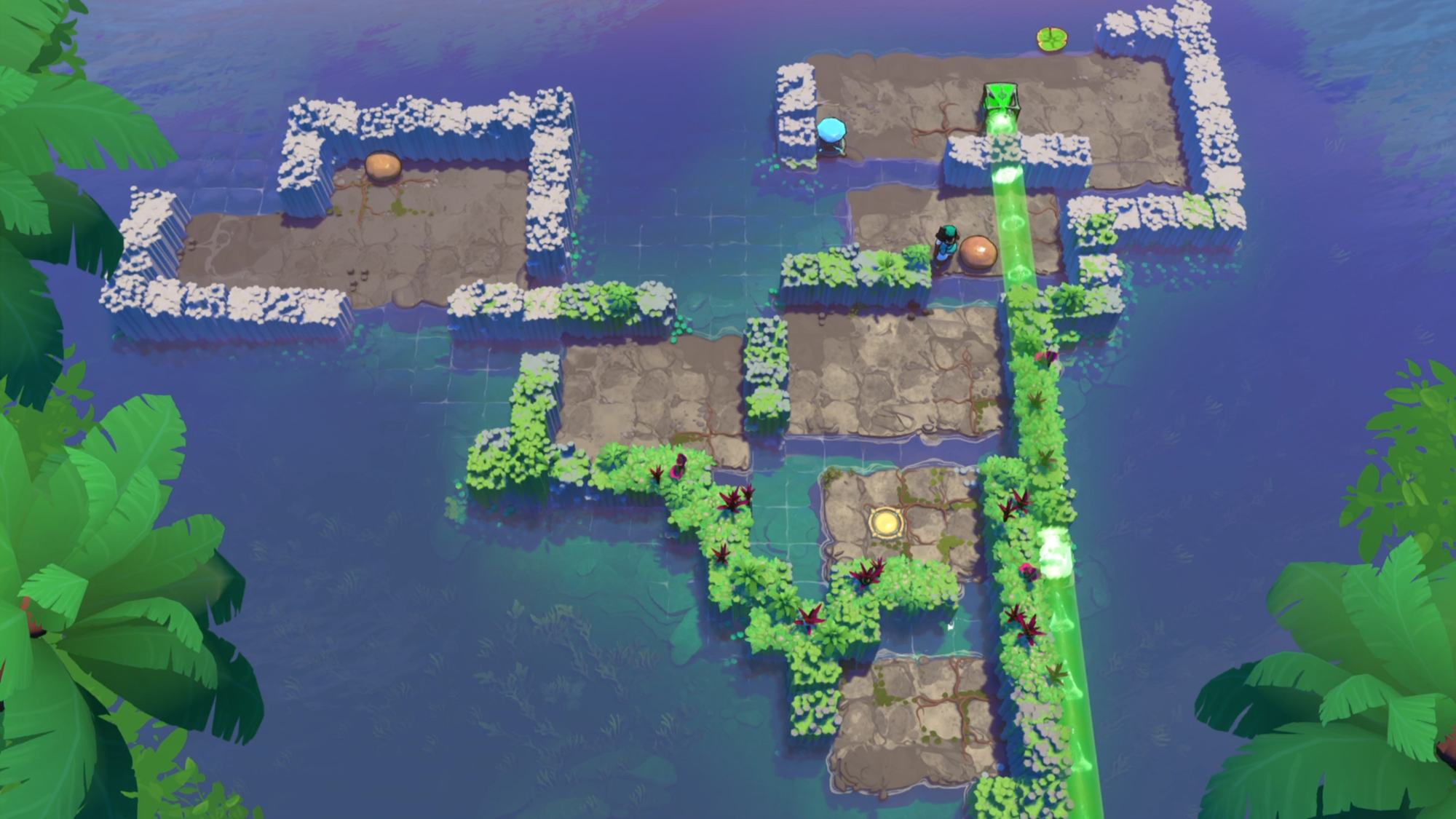
The freedom in terms of exploration and world design also compounds these issues. There were several times where I’d make decent headway in a specific direction and run into a progression blocker - not due to difficulty, but because the (irritatingly smart) interwoven nature of the world meant that I had to trigger something elsewhere to be able to continue. Forcing me to switch up what I was doing and engage with other puzzles/mechanics after a few hours of linear progression isn’t abnormal and was sometimes welcome. But if I had to go to a place I was really struggling with, my flow would be broken, and I had to board the struggle bus in order to make additional headway.
The problem with slowed progress extends to the story; the narrative beats become more distant from one another and thus become a little harder to follow, especially considering the lack of a glossary, dialogue history, or a menu to replay audio recordings you’ve found. As a result, the story didn’t grab or impact me as much as I’d have liked. Regardless, the banter, lore, and developments shared between characters were still always a treat and had me paying attention to every word.
That push and pull between the freedom that the game allows juxtaposed with the unforgiving nature of its puzzle design had me at times feeling a little conflicted about my playthrough. Ultimately though, the game elevated above the gripes that I had and has become another great puzzler to add to the pantheon. I can completely understand why some players might end up hating it due to its complexity, but me and my puzzle-loving brain ended up relishing it.
Order of the Sinking Star
Excellent
With the sheer amount of excellently designed and multi-layered puzzles in Order of the Sinking Star, I’m not surprised it took 10 years to bring to market. It can lead to frequent frustrating progression blockers and is incredibly unforgiving if you can’t grasp certain mechanics, but when the pieces do come together and the epiphanies occur, it hits like nothing else, and I’d say those sublime moments make it well worth the wait.
Pros
- A staggering number of excellent puzzles
- Impressive non-linear world design
- Lack of punishment encourages experimentation
- Compelling VO from the entire cast
Cons
- Complex logic with no hints can entirely prevent progress
- Narrative beats can be hard to follow if progress is slow
This review is based on an early PS5 copy provided by the publisher. Order of the Sinking Star comes out on October 8, 2026.