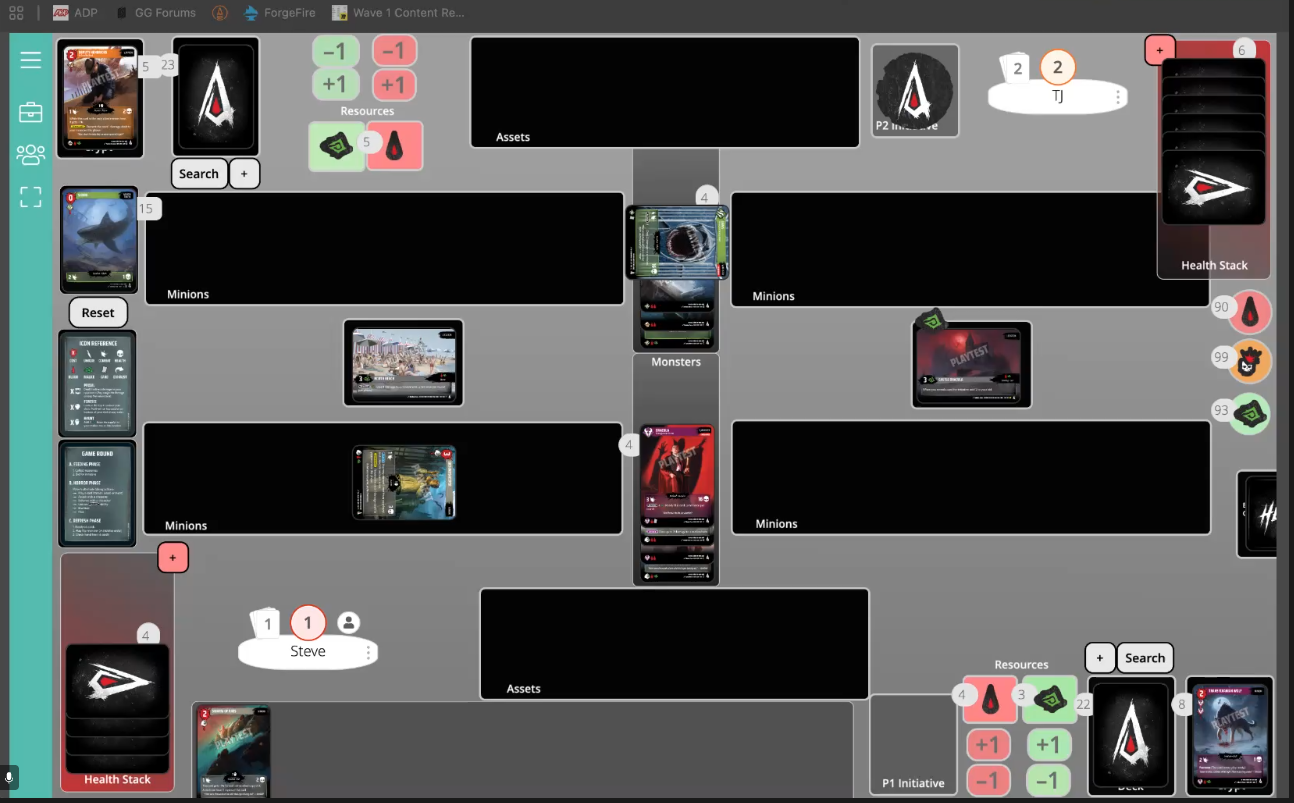
On Friday the 13th, I was able to sit down, virtually, with Hellbreak designers Steven Kimball and TJ Spalty from Ghost Galaxy and get a demo session of the new horror-themed trading card game. Hellbreak offers players the opportunity to go head-to-head using classic and iconic horror movie monsters and icons. GamingTrend got the opportunity to play with the Learn to Play demo decks, Jaws and Dracula, and sit through the digital demo.
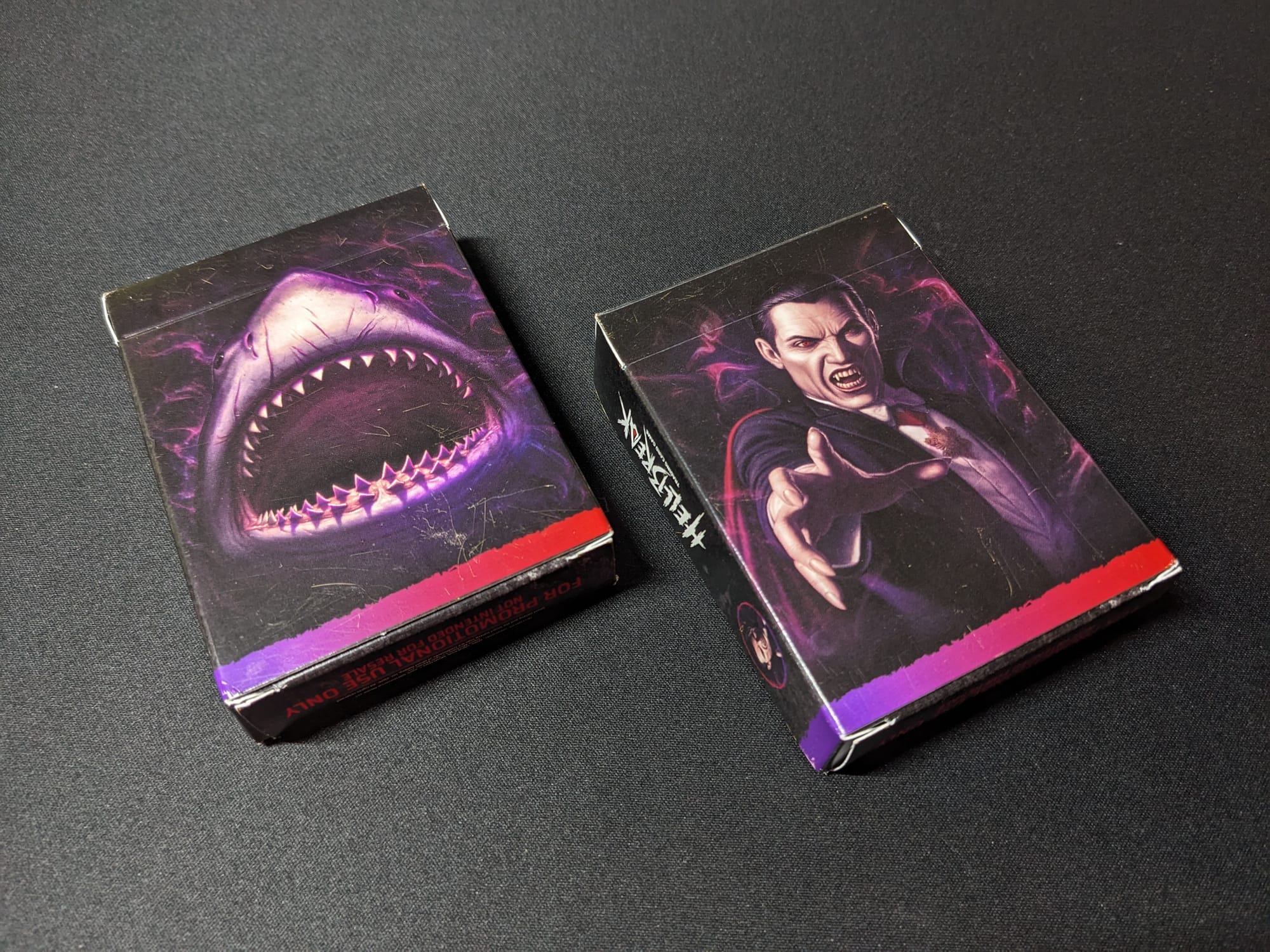
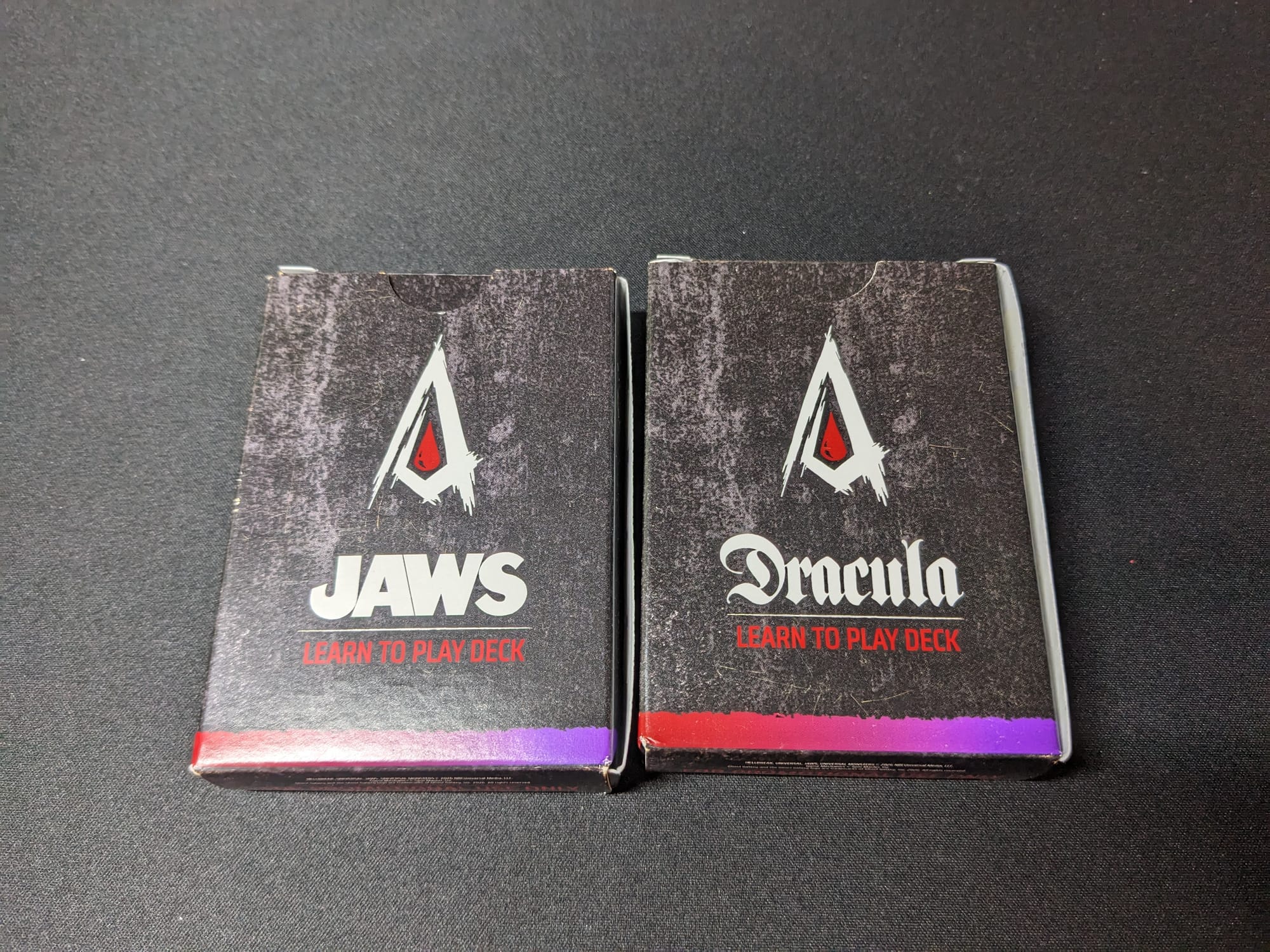
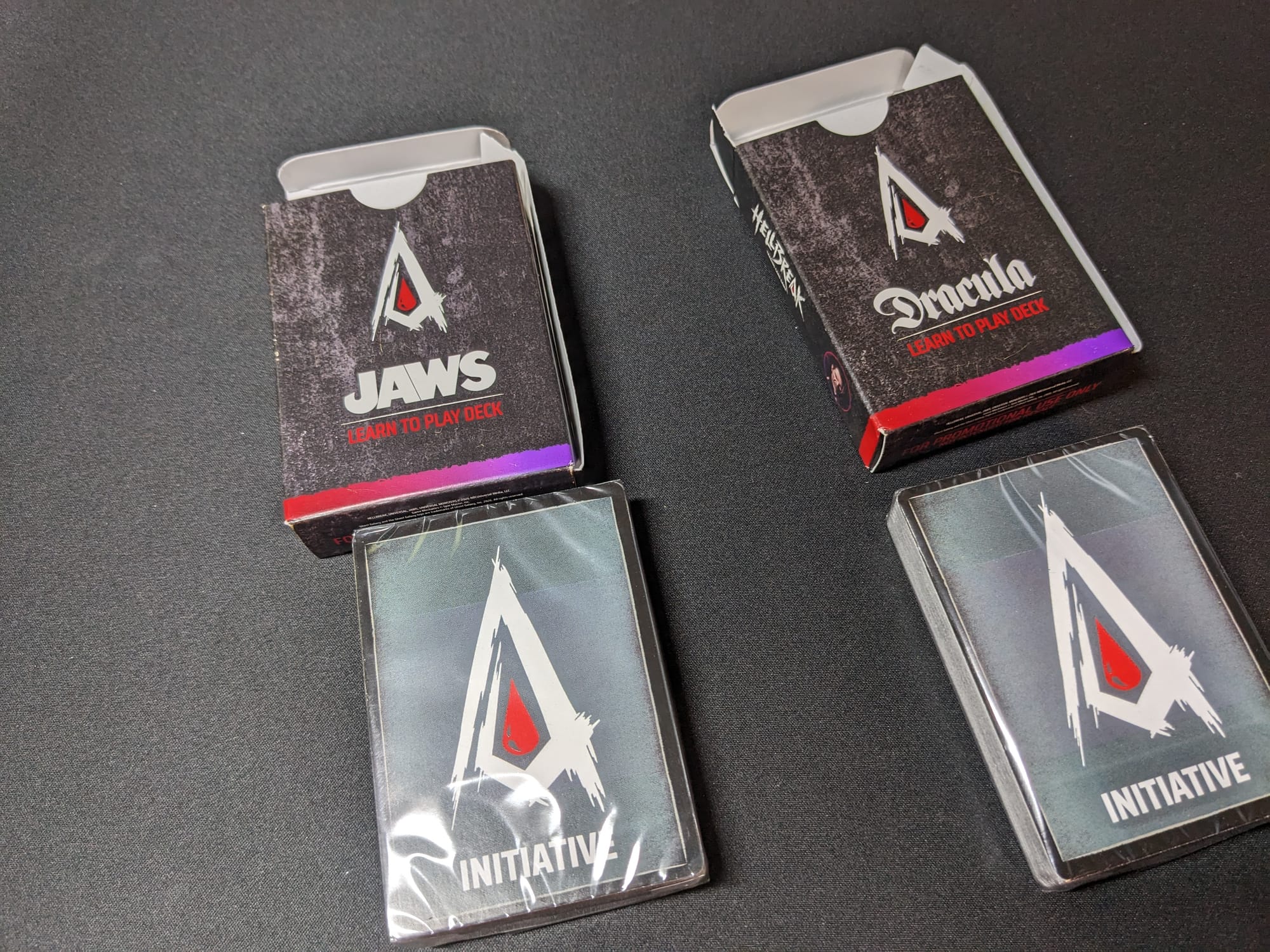
Learn to Play demo decks, Jaws and Dracula
This is the second time GamingTrend has delved into Hellbreak. Earlier this year, Mark Streed sat down with TJ at GenCon 2026 to play in person. Check out their playthrough!
With nearly two years in development, Hellbreak is finally releasing in January 2027, with its first set, Dawn of Terror. The game was supposed to initially release on October 31st, 2026, but with a massive surge of demand for product following several conventions, including GAMA and GenCon, forced the team to make to the hard choice of pushing back the launch to allow for more product to be printed and be available for players upon launch. A lack of product, and subsequent secondary-market inflation, has plagued many new (and veteran) TCGs entering the market in recent years.
Dracula, Jaws, the Bride of Frankenstein, Jason Vorhees, and the Headless Horseman headline some of the classic horror characters coming in this set. Since monsters are the focal point for the game, the gameplay revolves around them and makes them the (mon)stars of the show. Hellbreak is designed for horror fans and TCG players alike, emphasizing the gorgeously macabre art and keeping fans and collectors in mind.
With demo cards in hand, I got to sample a head-to-head battle between Steven and TJ, who played Dracula and Jaws, respectively. It became clear quickly that the game was built on a long history of popular TCGS, but adds thematic elements of horror movies to provide a uniquely fun experience.
Basic Rules Overview
Players build a deck of 50 cards, plus one monster and two locations. Within the deck, players can choose a combination of minions, events, and assets, with a maximum of three copies of any card. Cards belong to one of five different aspects; Cursed, Deranged, Feral, Revenant, and Void. These aspects affect what cards can be played for a given deck, which allows players to mix-and-match different characters and motifs. So, for example, someone could play a deck with the Bride of Frankenstein and sea creatures, if they were so inclined.
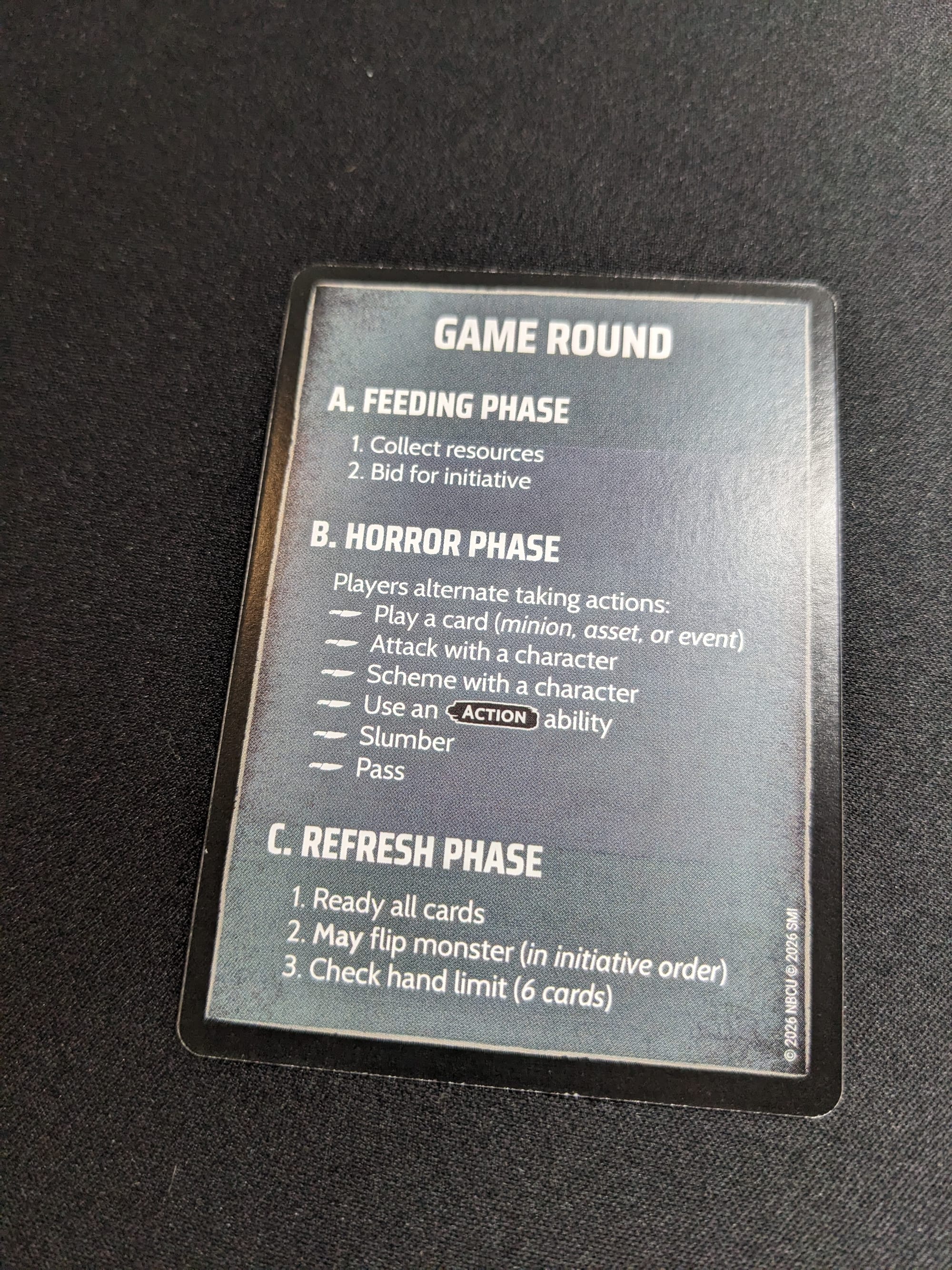
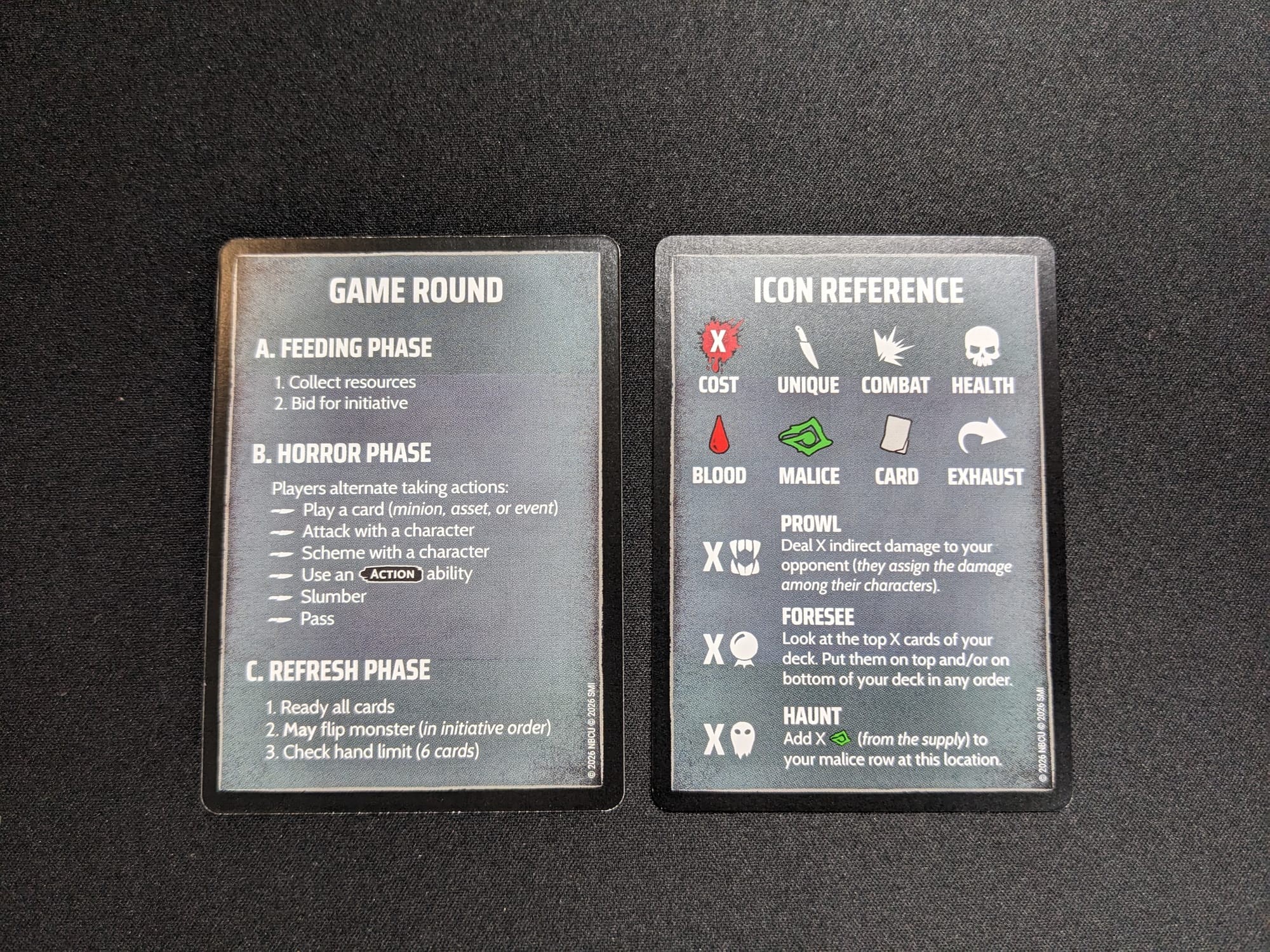
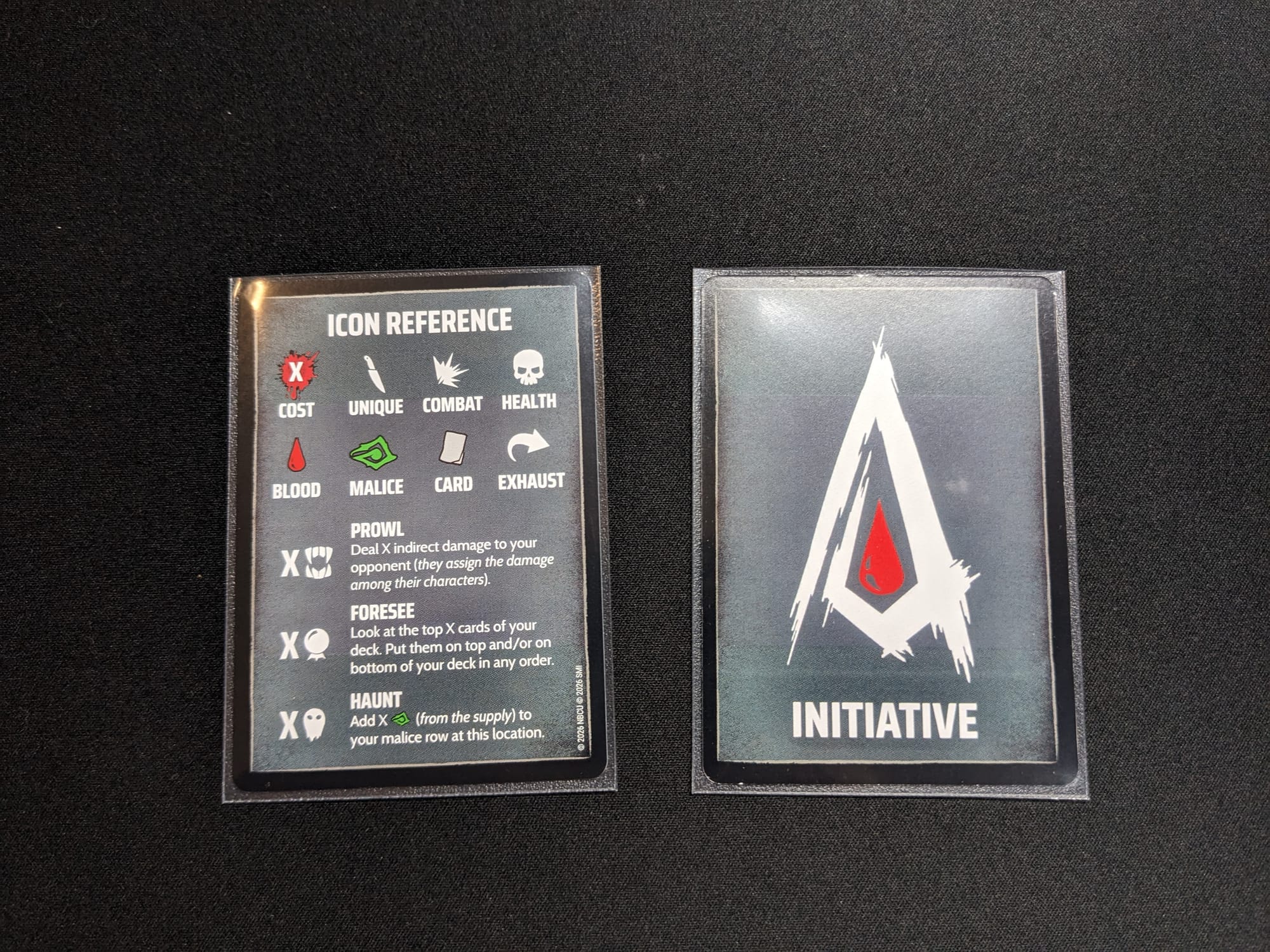
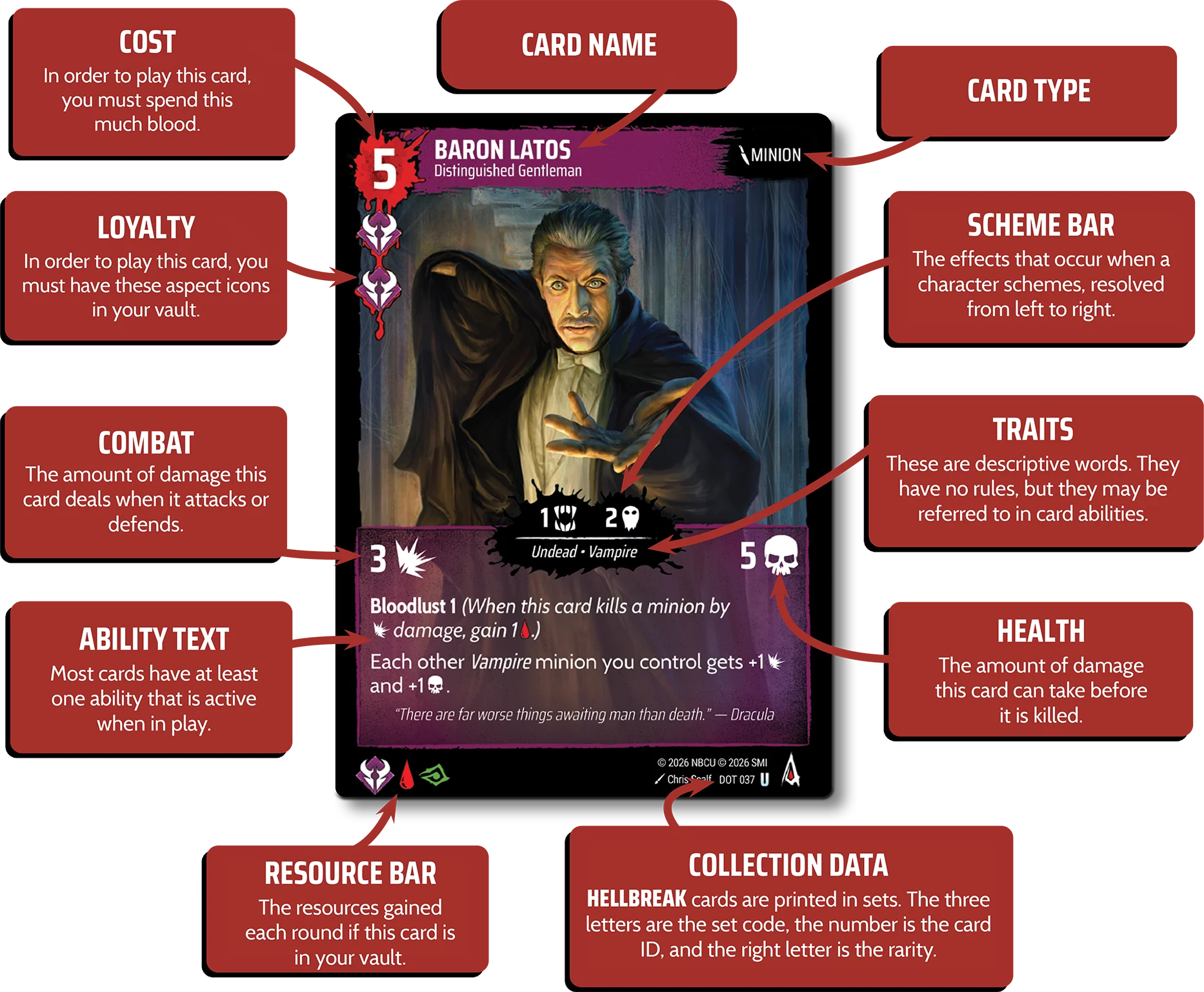
Games are played over a series of rounds, and each round has three phases: Feeding, Horror, and Refresh. The two reference cards included have reminders of these phases, as well as a breakdown of the icons and abilities.
The goal is pretty simple: defeat your opponent's monster by dealing enough damage to it to deplete their health pool to 0. Players can summon minions, use malice (a game resource) to do special actions or ready monsters, and control the locations, all of which contribute to the end goal of defeating the monster. Think of the game as a classic monster movie mash-up, but you get to the tell the story of how the nightmare legends fight it out!
A couple of standout mechanics that I feel make this TCG stand out among the already very crowded card market are the following:
- Your monster (character) has two “stances”: lurking and unleashed. Like in the movies, players can make their favorite monster stay in the shadows and build up power until they’re ready to strike.
- Initiative Bidding - Each round, players get to bid for initiative by playing a card from their hand, comparing the blood cost. The highest blood cost goes first, and that card gets added to the vault, which is the area where the character resides. These cards add to the resource generation each round, as well as increasing loyalty and adding aspects to allow for more cards to be played. A loss in initiative doesn’t necessarily mean a loss for the round.
- Dual Locations - Players choose one of their two locations to bring to the table. While minions have to be played at one location or the other, your character can attack at both. Think of it as two lanes of combat, and so players have to be mindful of where their minions go so as to avoid keeping a lane completely exposed. Additionally, players can ‘haunt’ the locations, which can allow for a player to take control of the location and gain its bonus.
- Monster health uses cards from your deck. When you take damage, you flip these cards over and have the chance to trigger a ‘jumpscare,’ which is a card ability that can change the flow of the game, either by dealing damage back to the opponent or granting you tokens, for example.
- Resources are tokens that stay between rounds. Akin to Fantasy Flight Games’ Star Wars: Destiny dice-and-card TCG, players retain the two resources in the game between rounds: blood and malice. Blood is typically used to pay for card costs, while Malice pays for abilities. Another neat mechanic is that Malice tokens can bring in cards readied, instead of being exhausted, normally.
So, needless to say, there are a lot of different elements to balance on the table. It may seem like a lot up front, but each piece has its place, and honestly the gameplay seems very smooth and logical.
You can check out the complete rules and download the Quick Start Guide here:


For a complete breakdown of all cards released, check out the official Organized Play site on PlayStile:

Hellbreak Demo Deck content
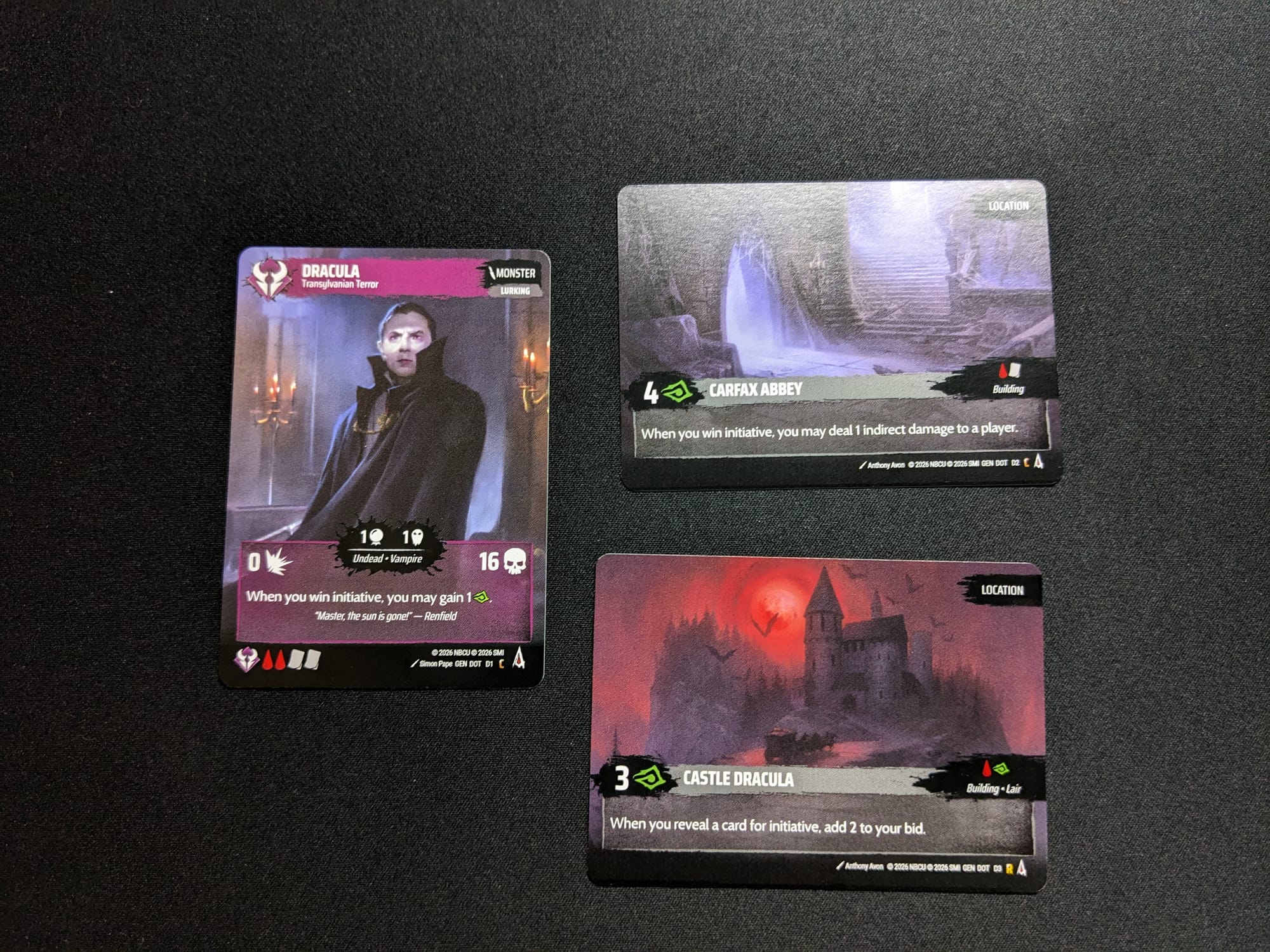
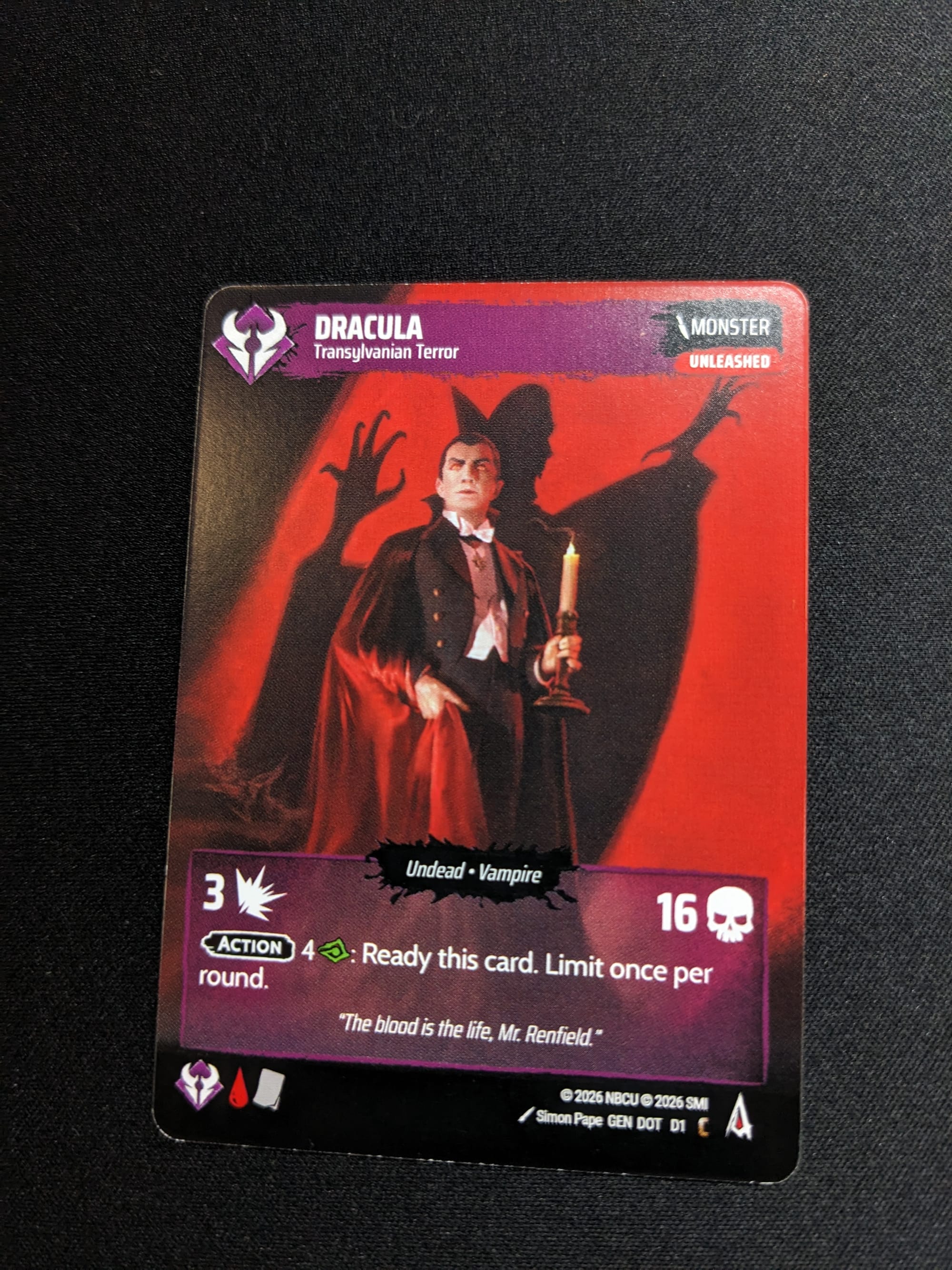
TJ and Steve were able to play through a couple of rounds in the time that we had, showcasing most of the actions, mechanics, and triggers one might expect. As I played along, I got to check out the cards for each deck more closely. Here’s a breakdown of each Learn to Play Deck:
(also, because I am not a monster, I sleeved my cards beforehand, removing some later for photos.)
Dracula Learn to Play Deck Pictures
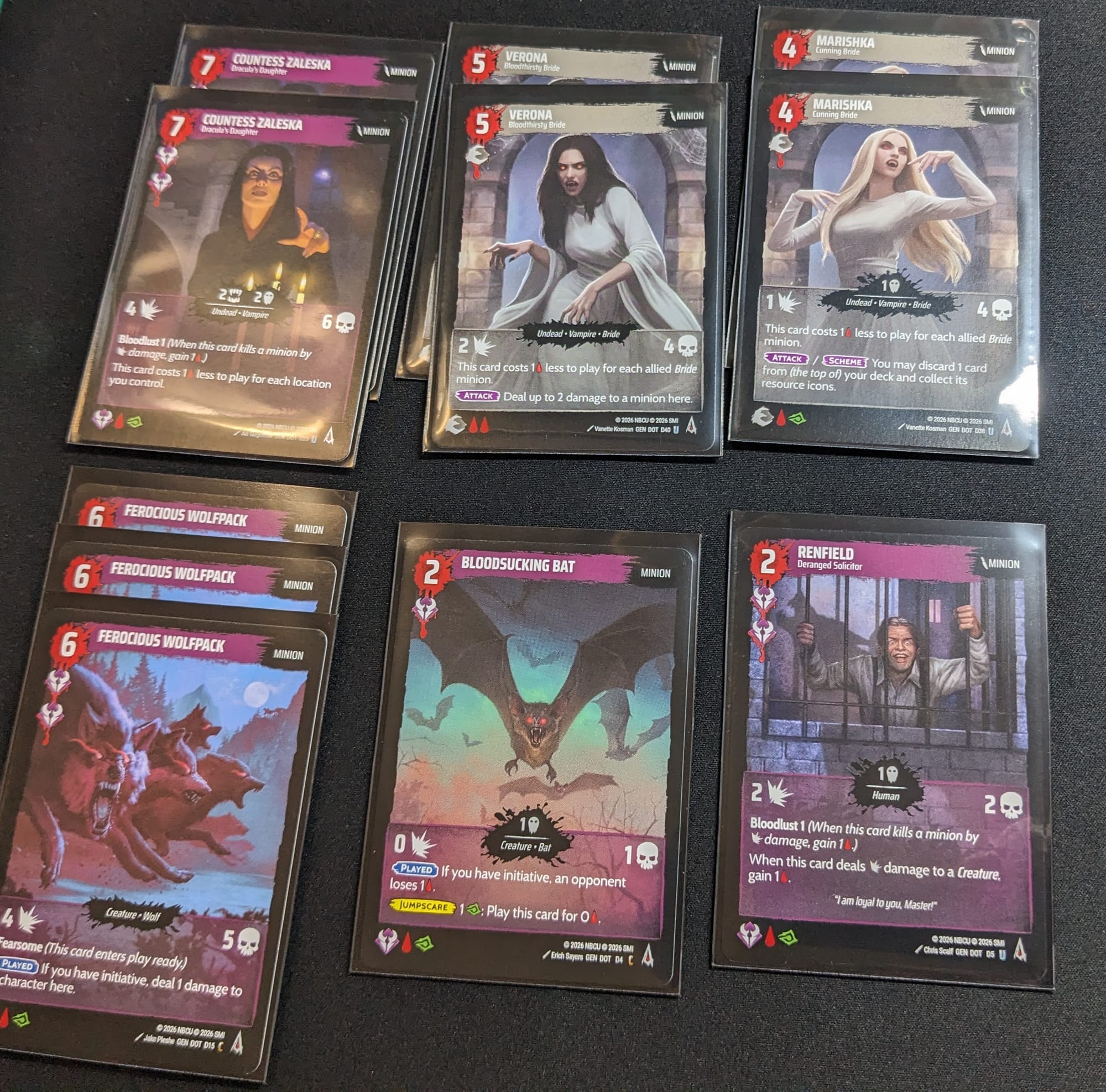
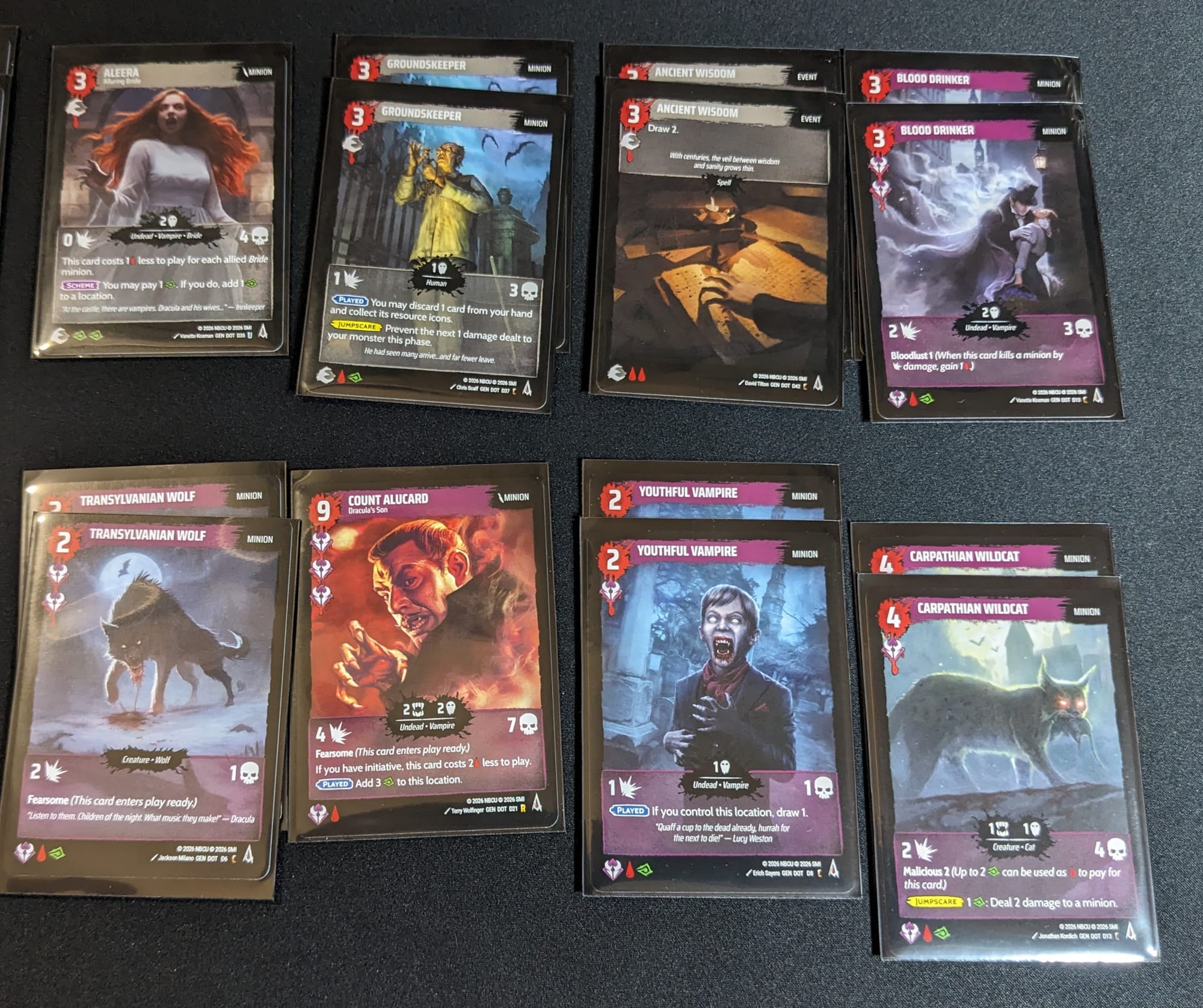
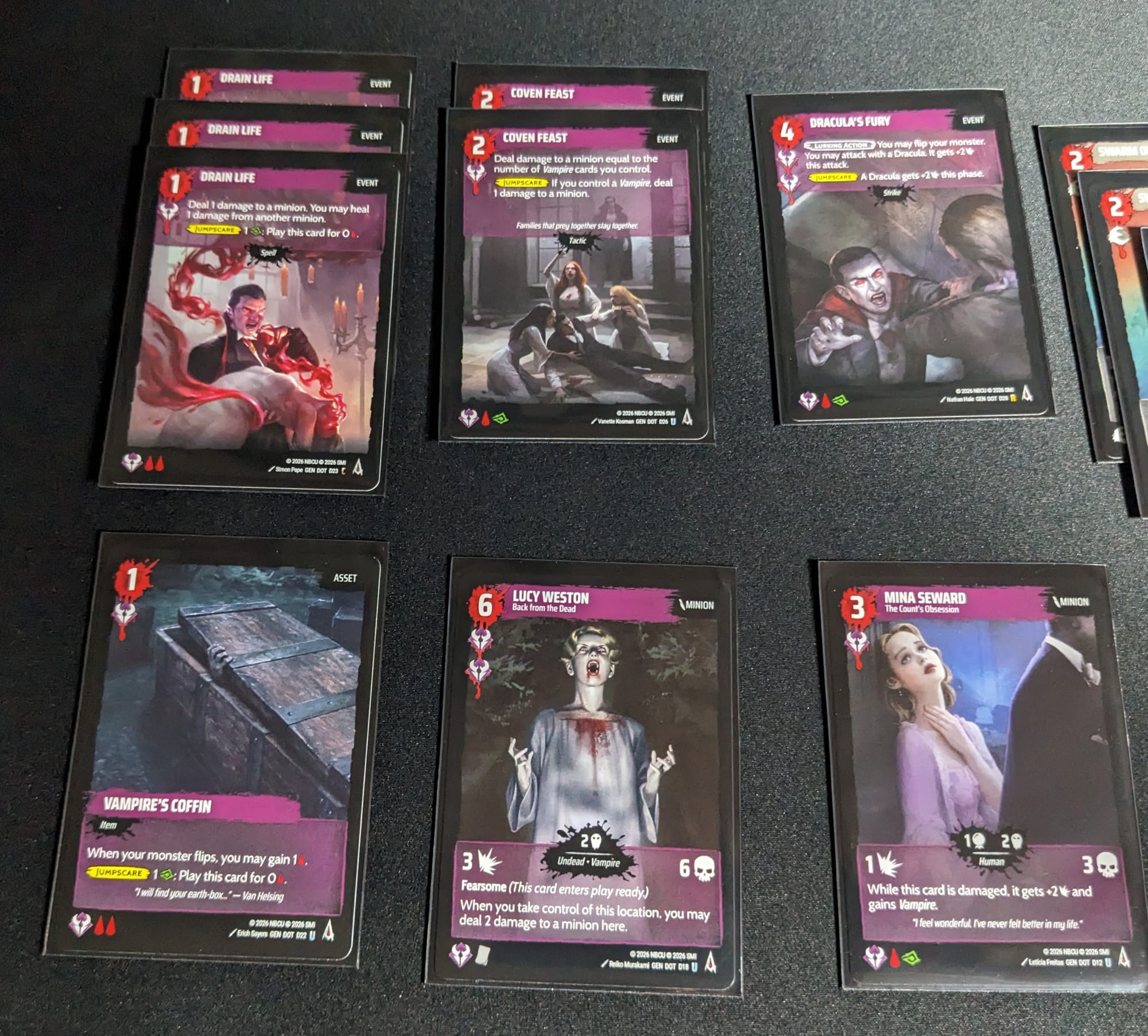
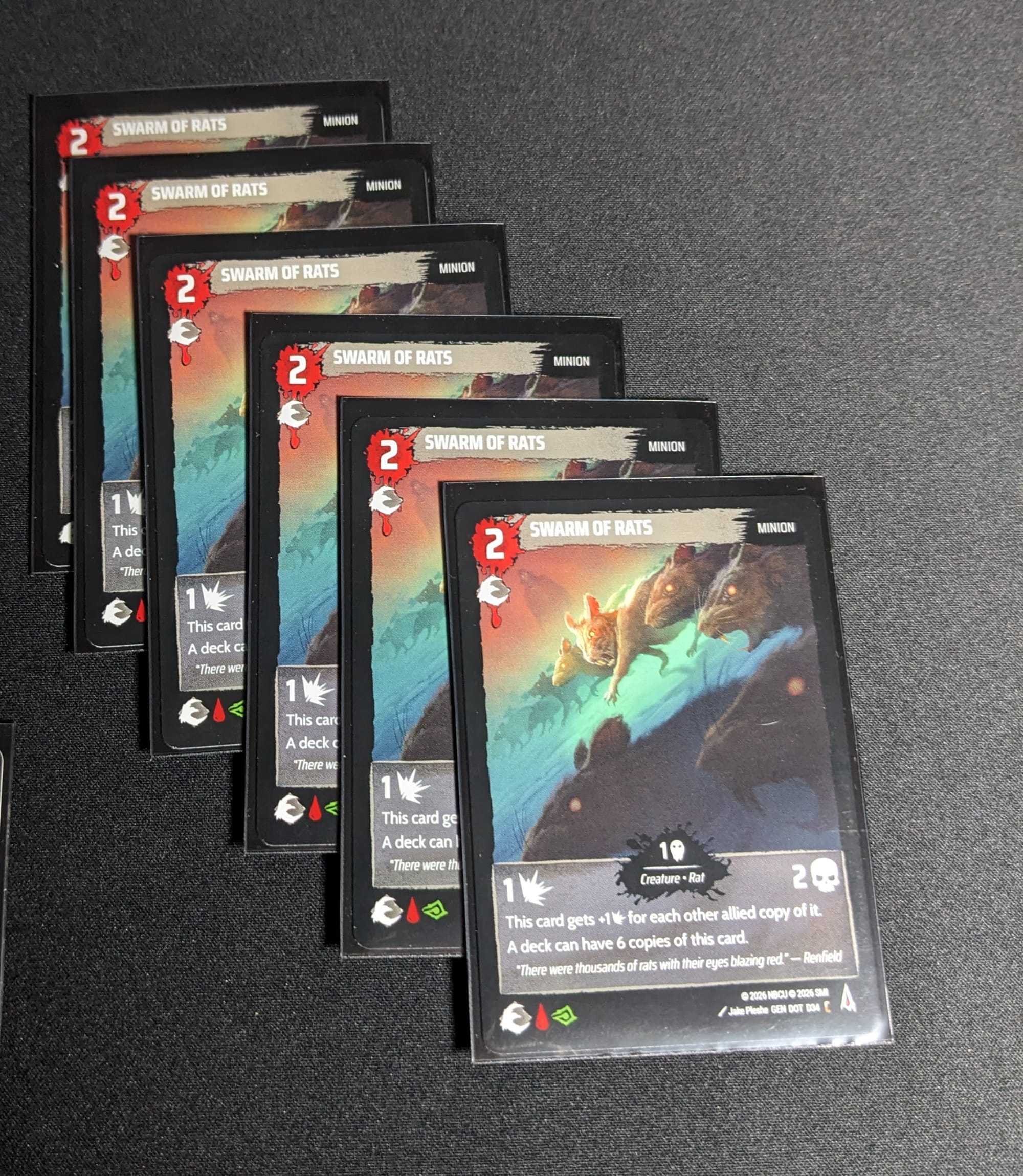
Six. Six Rats. Ah ah ahhh
Jaws Learn to Play Deck Pictures
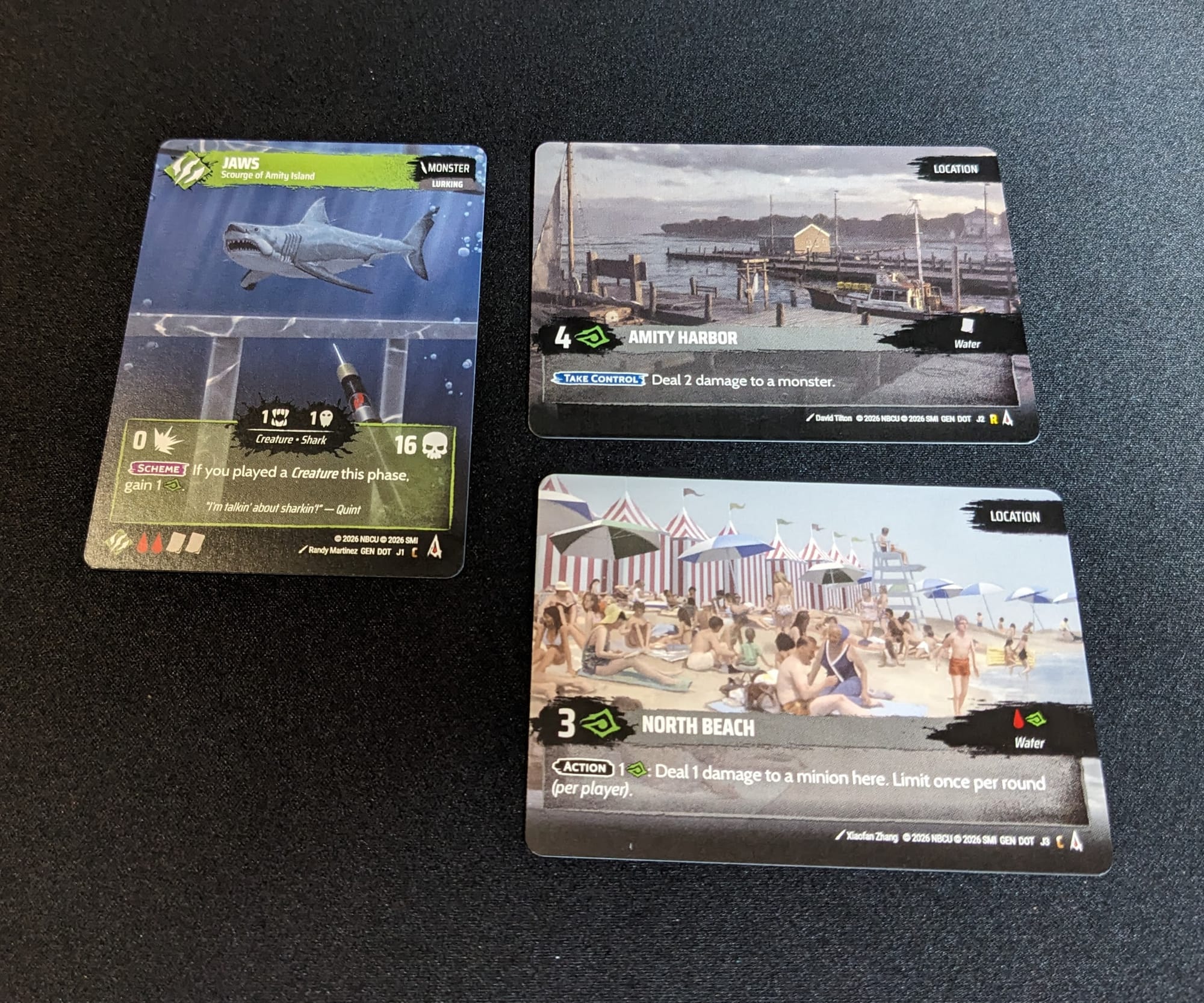
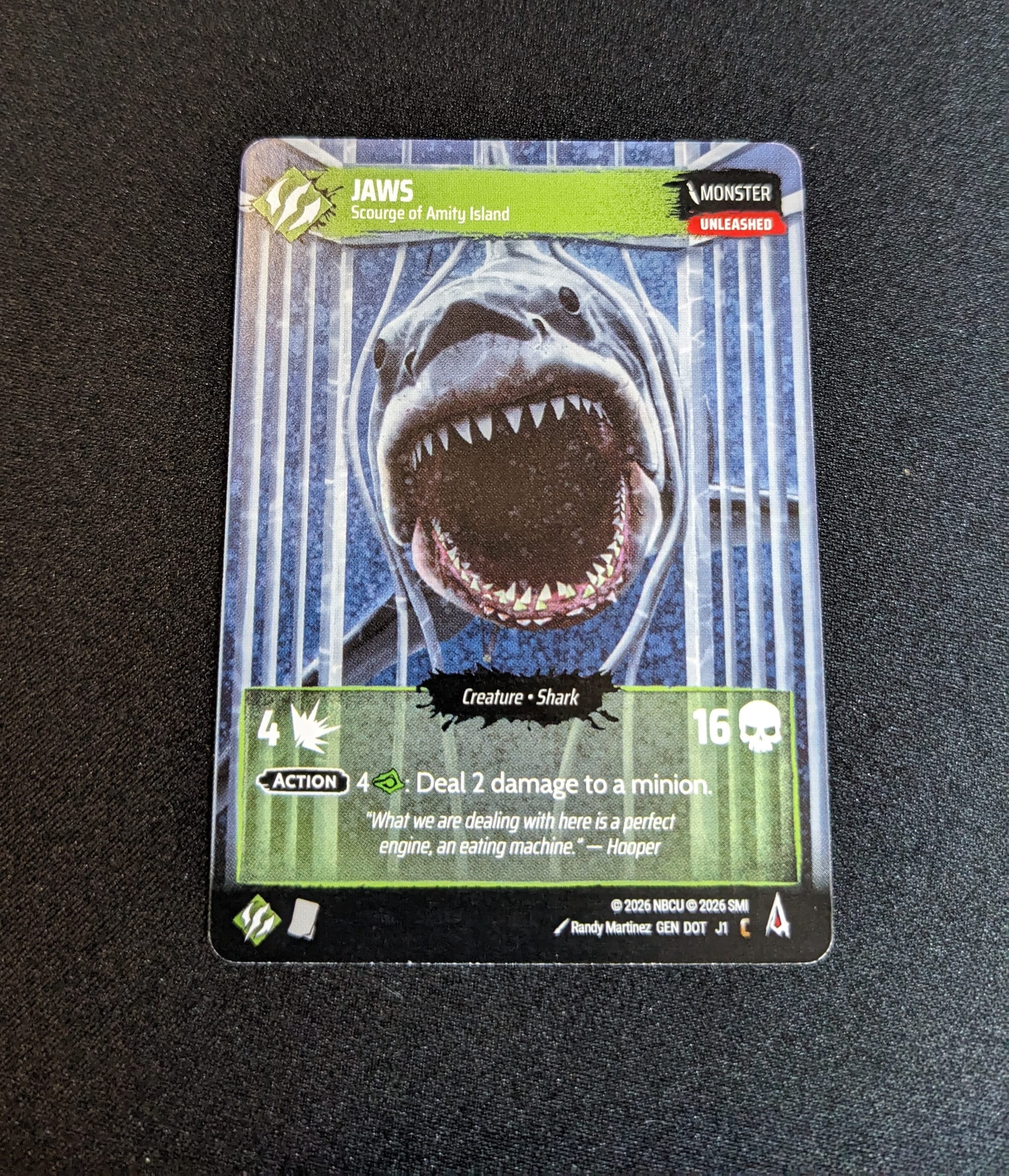
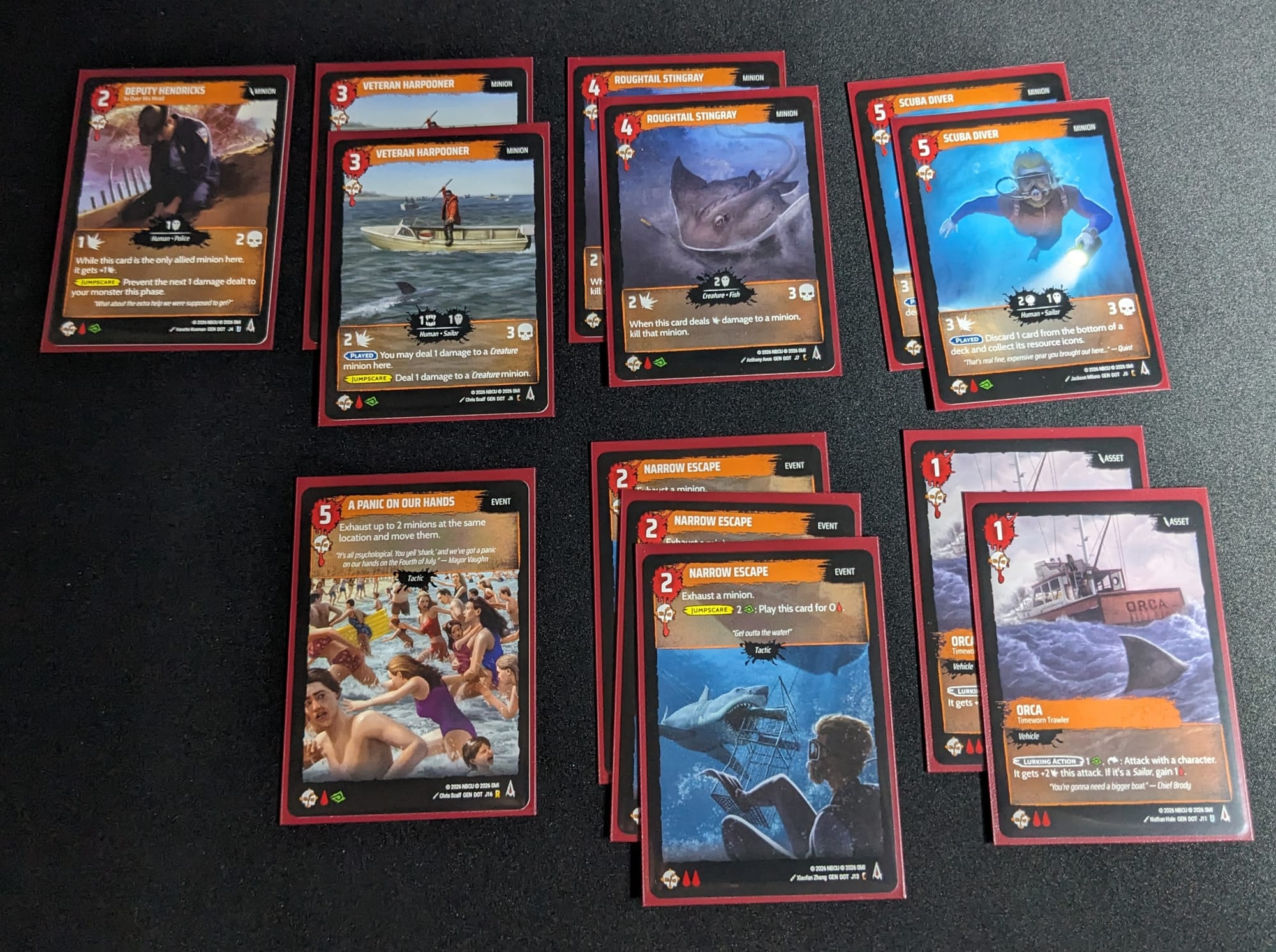
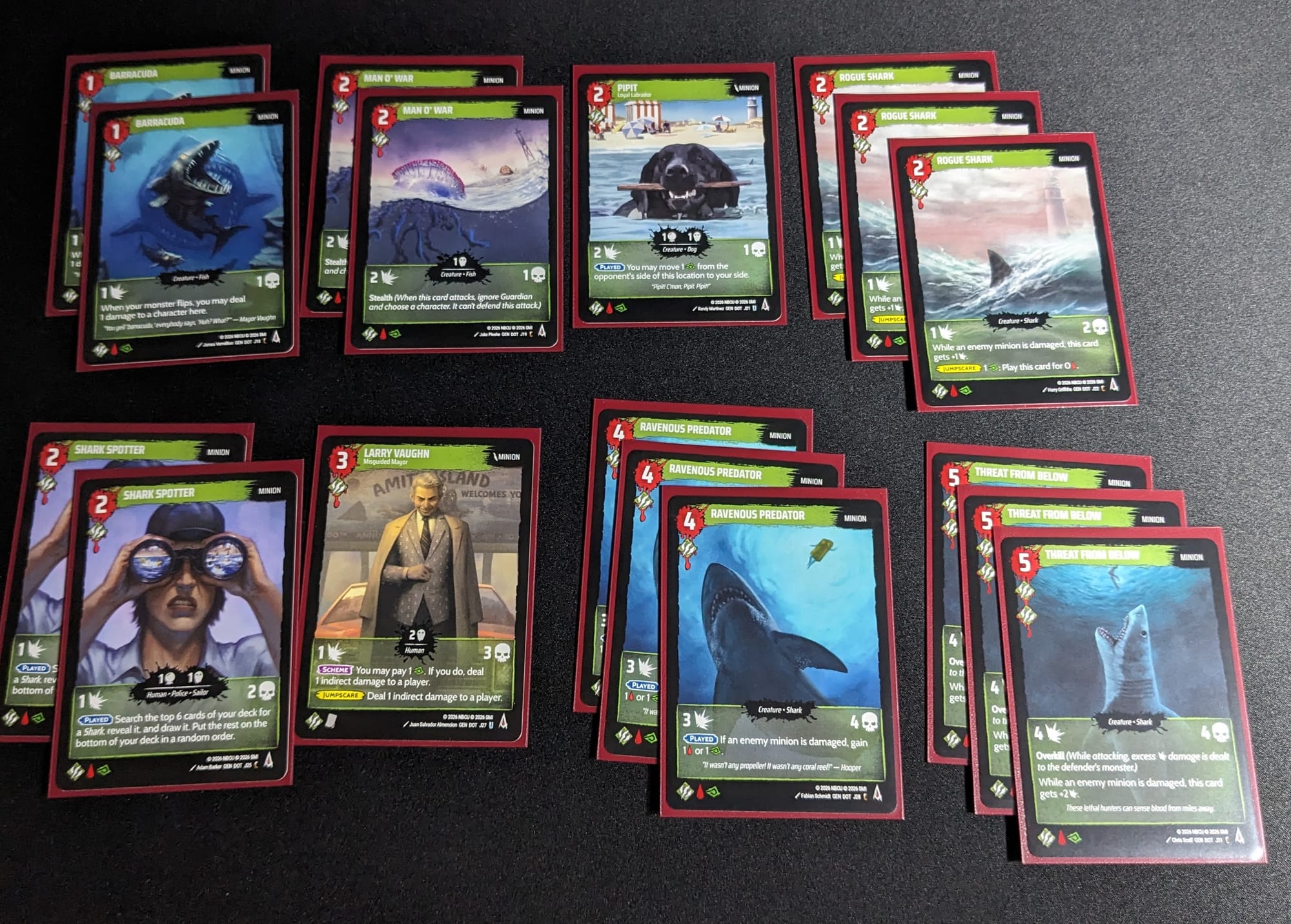
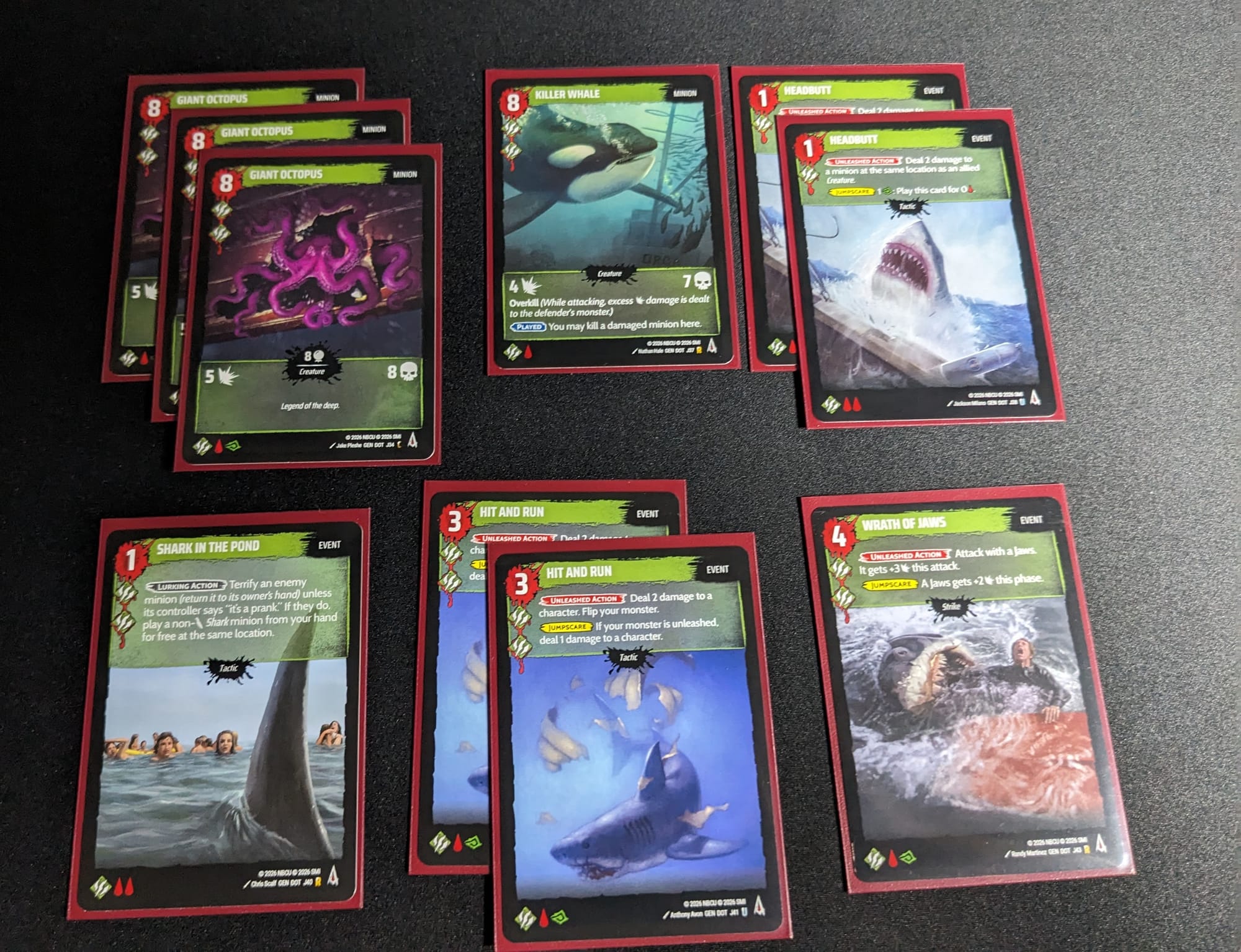
You're going to need a bigger deck (because this only comes with 40 cards)
While these two decks are preconstructed, there’s no reason someone couldn’t mix and match them if they wanted, so long as they still functioned properly for the aspect/loyalty rules.
One thing to note is that the art walks a fine line. Steve and TJ explained that, while the game is geared towards older players, they had to dial in the art to an appropriate level that stayed true to the visuals of their source (i.e., the movie) but kept fans and collectors happy, too. Different art versions of the cards will be available in the sets, including the Demented rarity, which is meant to capture the horror icons in their classic movie-poster element.
What’s Coming Next for Hellbreak
Dawn of Terror launches with a 2-player starter (Jaws vs. Dracula), a Booster Bundle of 9 packs with some exclusive items, booster packs, and booster boxes. Booster Packs contain 13 cards each (of course it’s 13), including a foil, borderless card, and rare-or-higher, and are available in 24-pack booster displays/boxes.
After the initial launch, players and collectors can expect a 4-month release schedule, for a total of three sets a year. While there won’t be a new starter set for every expansion released, there will be themed decks/sets released through the year, supposedly with classic pairings (perhaps Freddy vs. Jason, Frankenstein vs. the Wolfman, etc.?). The team said more monsters are to come, especially since they now have secured licenses with AMC, Blumhouse, Paramount, Lionsgate, in addition to Universal Pictures and Amblin Entertainment.
Organized Play has been previously announced, and both Limited/Drafting and Constructed Formats are going to be available. Both TJ and Steven made it very clear that Ghost Galaxy/Spin Master are focusing on the local game store for product purchasing and organized play, allowing players to play local and go national for competitive play. While a multiplayer format is TBD, it was stated that cards have been designed with verbiage in such a way to allow for their inclusion in the format. They are a couple of years ahead in development, so there is more content to come for sure. To keep the game fresh, card rotation will occur, but I think you can expect that to happen after the first couple of years.
I am incredibly excited for this TCG, as it offers some fresh card mechanics in a relatively untouched, niche genre. Seeing Sleepy Hollow and Smile cards gives me hope for a large variety of monsters and entities, assuming they can secure the licenses. Until then, I am looking forward to possibly getting Boris Karloff’s (or maybe Arnold Vosloo’s) Mummy, Captain Spaulding, and maybe the Lipstick-Face Demon or Old Woman from Insidious.
Is it too much to ask for Hugh Jackman’s Van Helsing?
Follow GamingTrend on Instagram, Bluesky, and YouTube for more Hellbreak TCG news and reviews!