Metroidvanias are certainly a dime a dozen these days, and Echo Weaver has a handful of issues commonly found in the genre that sometimes left me a little aimless and frustrated. However, the unique elements that it presents through its knowledge-based progression, well-implemented time limit mechanics, and nifty platforming suite were enough to salvage the experience.
As the last Weaver in this strange, dilapidated world, you must venture out from a starting point hub and explore a number of interconnected regions. Encountering NPCs and environmental puzzles provide you with Leads: vague hints at what to do and where to go in order to solve problems and progress further afield. The majority of the time, these Leads are more than enough to go off of, but occasionally I had a Lead that sat in my menu for longer than I think it should have because I just couldn’t discern where the answer to the problem lied. That ambiguity is, as one would expect, an intentional catalyst to prompt exploration and experimentation, and it heartily succeeds.
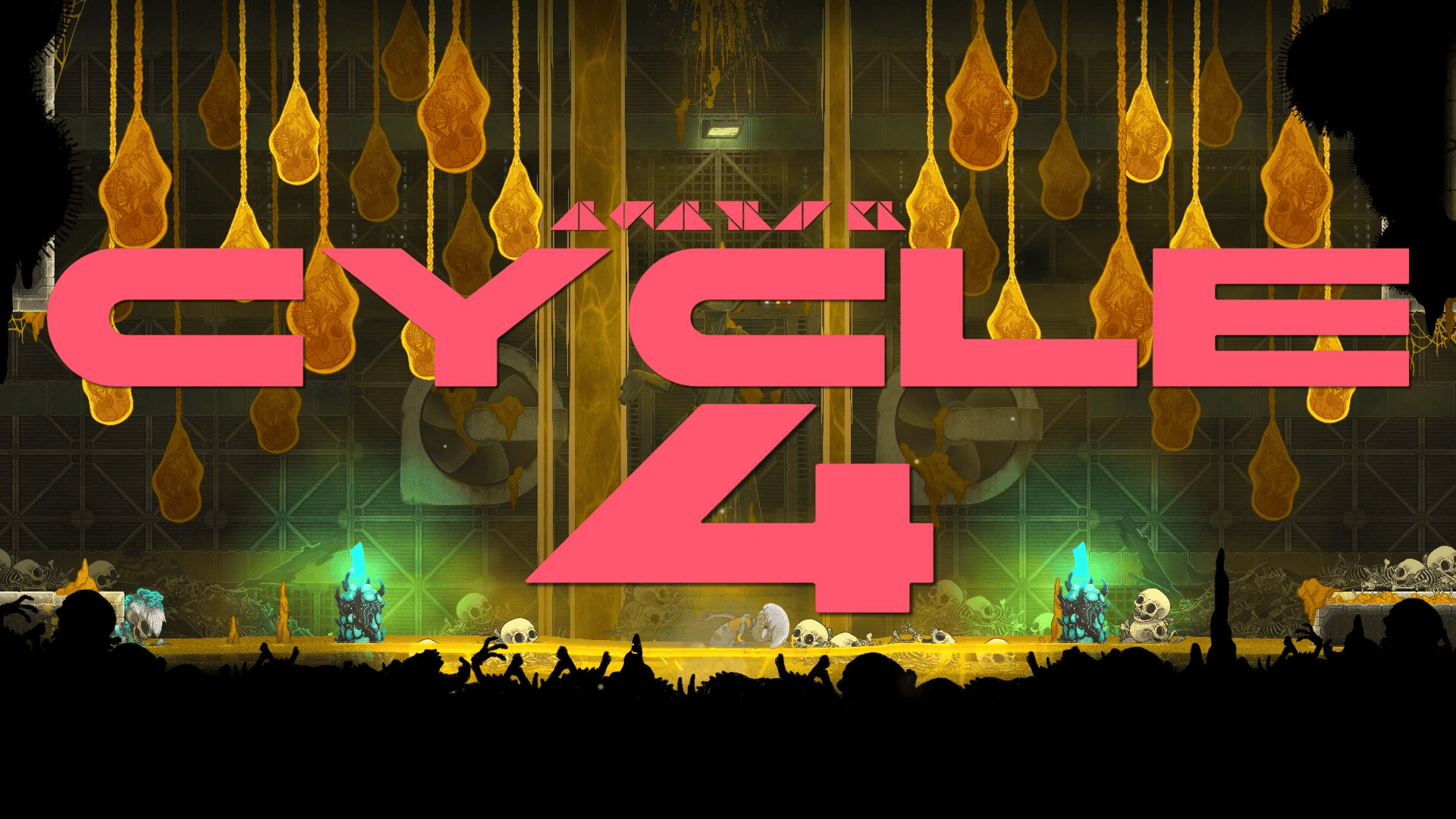
As soon as a cycle begins, you’re on a ticking timer. When the timer runs out, you’re sent back to the hub and have to begin exploring all over again. While exploring, you can collect crystals scattered around that can also be gained by destroying breakables and killing enemies. These will be automatically absorbed and extend your time, allowing you to explore deeper. All of that works seamlessly, and progressively made me plan further and further ahead in terms of which routes to my intended destination had the larger collection of crystals. I’d have appreciated the option to display an actual numerical timer to know specifically how much time I had left, but it doesn’t actually matter too much that I’m left in the dark — the ambiguity actually led to an increase in tension as I was rushing to complete something and I knew I had mere seconds left.
Furthermore, there are dozens of specific areas of the map that are directly affected by time passing — akin to something like Outer Wilds. Doors sealing, buildings collapsing, reservoirs flooding, and much more. When you reach certain points, you’ll often see a UI pop-up telling you exactly how many seconds after the beginning of a run these things occur. That stringency was exhilarating and confounding — how on earth do I get halfway across the map in 10 seconds? That ever-expanding structure and gratifying loop as you explore prior areas with new abilities genuinely shines.
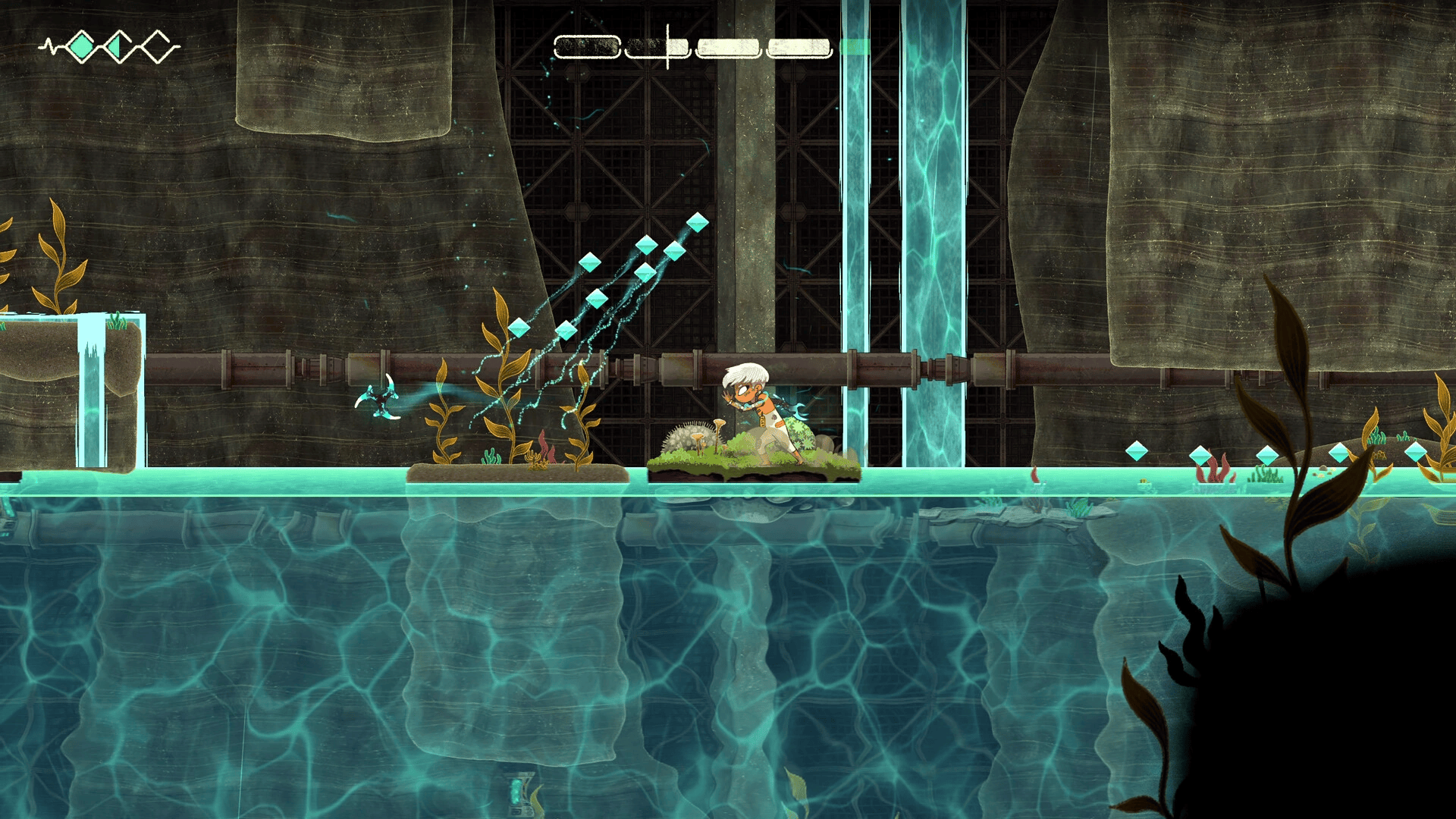
The mechanics (both immediately apparent and not) provide you with a handful of opportunities to experiment with to achieve these exploratory goals, and the fact that you can “sacrifice” your run at any time and reset is handy if you don’t quite manage something in time. Your corpse from the prior run also gets left behind, which is a nice touch. Playing with time extrapolates out in other ways too, as you can sacrifice a minute of your timer to heal if you get hit by enemies or hazards. Going further, you can use time to interact with specific objects in the environment to progress — saving you from shorter but riskier workarounds while still giving up valuable seconds. It’s a compelling risk reward system that added a layer of complexity and strategy missing in other Metroidvanias. Hell, even your currency to purchase maps for each region is time!
Uncovering each of the mechanics available to you was a delight as I figured out how to do each new thing, but the non-linear nature of these discoveries is where the game faltered most. From my playthrough, I know for certain that I discovered certain things before I was probably “supposed” to, receiving acknowledgements and introductory narrative beats relating to abilities I’d already been using for multiple hours.
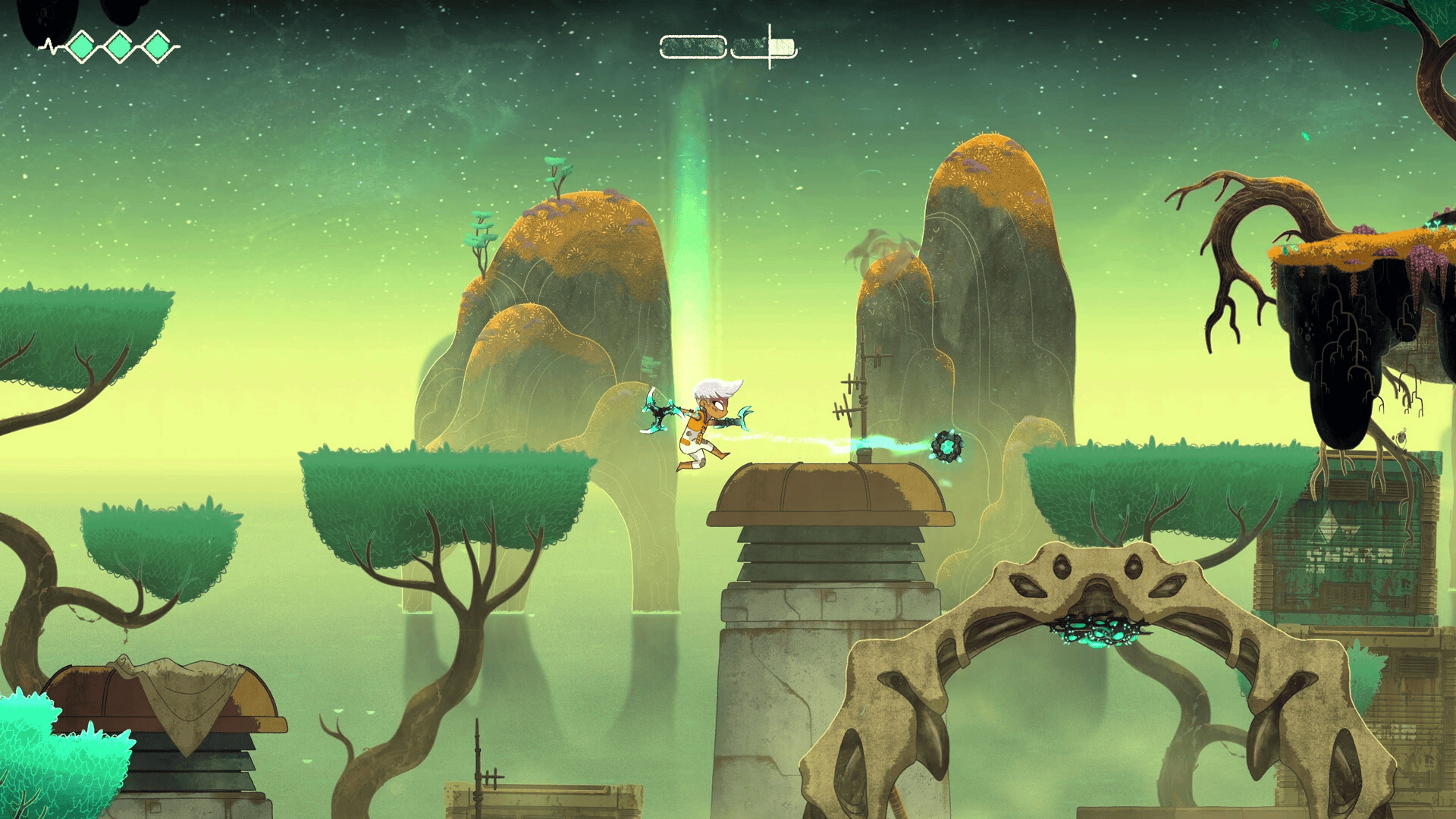
This “sequence breaking” doesn’t soft-lock or affect the game by any means, it’s not a linear adventure after all. I want to be clear that the overall experience still held up, but already venturing to the far corners of the map in the third or fourth hour felt a little overwhelming compared to the more tailored progression earlier on. I can certainly pin some of these issues on the fact that I actively went out of my way to use abilities as creatively and deviously as I could, but the game did let me do it. It’s admirable no doubt, but the result isn’t always a positive.
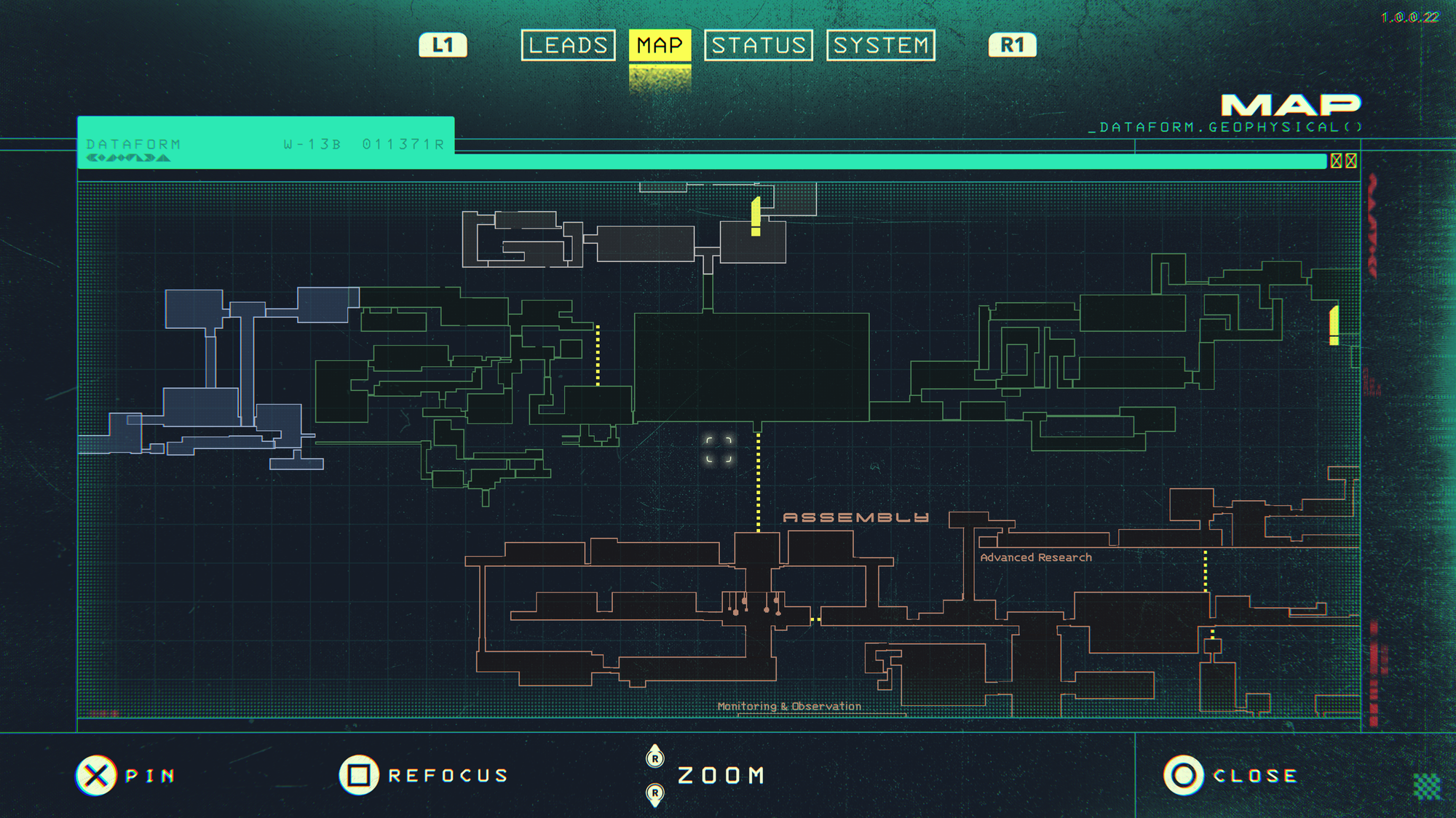
Part of the progression problem is exacerbated when you’re exploring a mostly uncovered map, yet there are no signposts or icons at all. There’s a few signs here and there, and there are some location names dispersed on the map, but it’s otherwise barren and not quite enough to make navigation as breezy as I feel it should. Sure, the game lets you place your own icons on the map, but never actively encourages you to do so (or even outright tells you that you can), so several runs ended up completely useless as I was running around trying to remember where a specific thing was. If you’re jumping in, be sure to do this from the start!
While the story never had me fully hooked, the character writing is strong throughout and is carried by some wonderfully entertaining NPCs, including Z, the giant spider who acts as the map vendor. It seems obvious to suggest that a game focused on accruing knowledge and solving mysteries would be vague in its storytelling in the opening hours, but I could have done with a little more meat on the bone in terms of the “why” of it all. Why am I venturing out to these people and places? What is my specific goal? Why should I care?
I felt much the same way about Moonlight Kids’ previous game ‘The Wild at Heart’ - endearing characters, interesting mechanics, lovely music, and a serviceable but ultimately underwhelming story. Echo Weaver has interesting story elements and concepts that could drive intrigue, along with some truly compelling player choices toward the end, but they don’t land as strongly as they needed to in order to keep me invested. As a result, I think that you’re mainly going to want to be here for the gameplay.
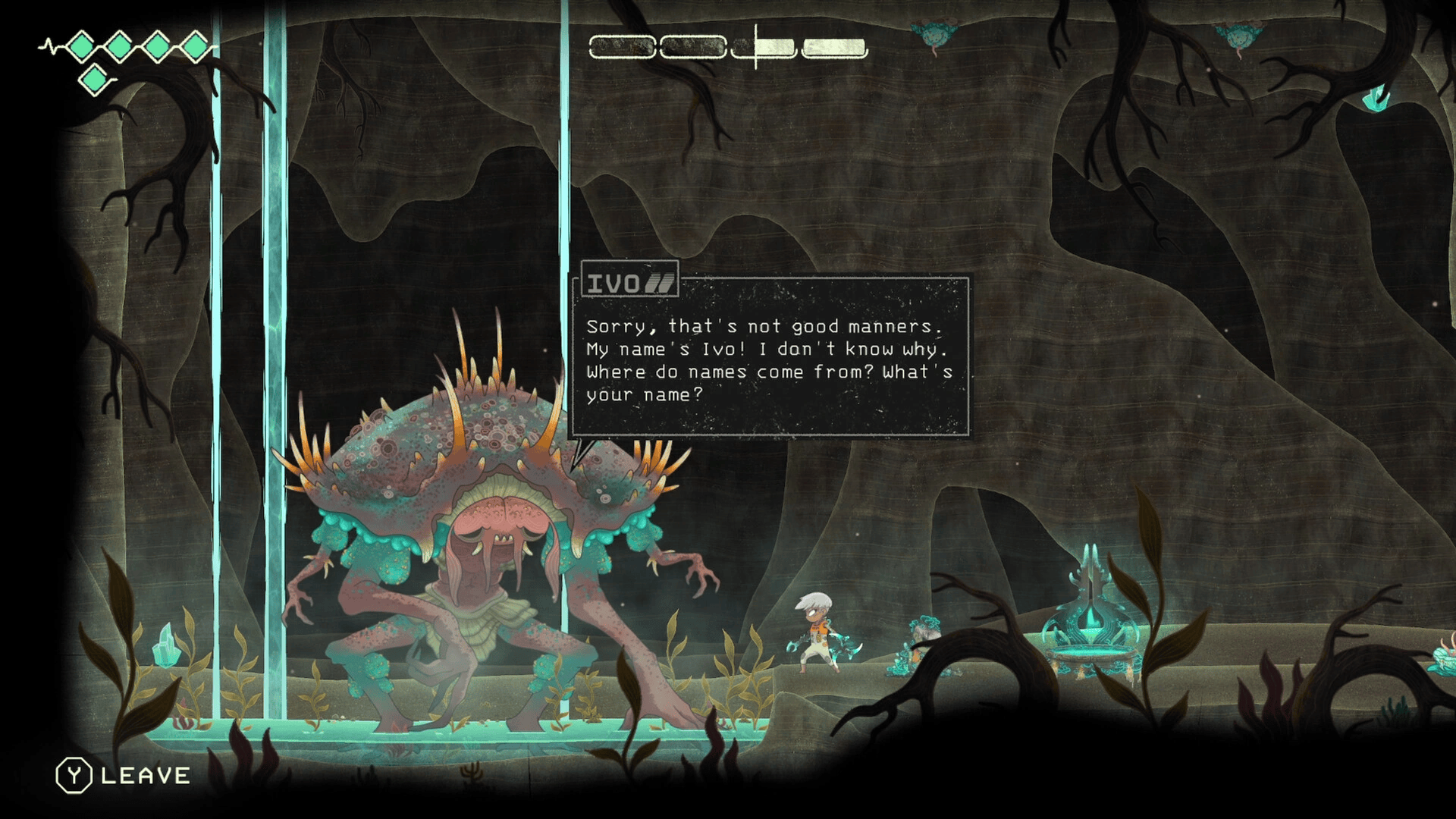
The central element of gameplay revolves around your Glaive, a shuriken-like device/weapon that is integral to puzzles, traversal, and combat. Figuring out ways to use the Glaive to explore, circumvent time-limited world elements, and solve puzzles were all a joy. Even if it leads to the aforementioned sequence breaking, that feeling of stumbling into something others might not was consistently gratifying, and there are plenty of secrets to discover. The one issue is in combat which, in all fairness, isn’t required too frequently. It generally feels underbaked as a mechanic, to the extent that calling it combat feels like a bit of a misnomer — you’re just jumping away from enemy attacks and throwing the Glaive repeatedly till they explode.
The game certainly improves as it goes on as you come to understand the ins and outs of the map, and have mastered traversal and general gameplay mechanics. In the final hours of my playthrough, I was loving the complexities of parkouring, dashing, teleporting, and more — it’s just a shame it took me until about halfway through the game to reach that state.
There are a couple of points that I have zero qualms with. First off, the puzzles are consistently fantastic and have a very smooth difficulty/complexity curve, whether you’re talking about platforming puzzles or specific environmental interactions when a Lead is being pursued. They often force you to employ your toolset in entirely unique ways, like throwing your Glaive offscreen to hit something hidden and trigger a reaction nearby. The sincere curiosity and brainteasing these puzzles prompted was the primary driver for me throughout.
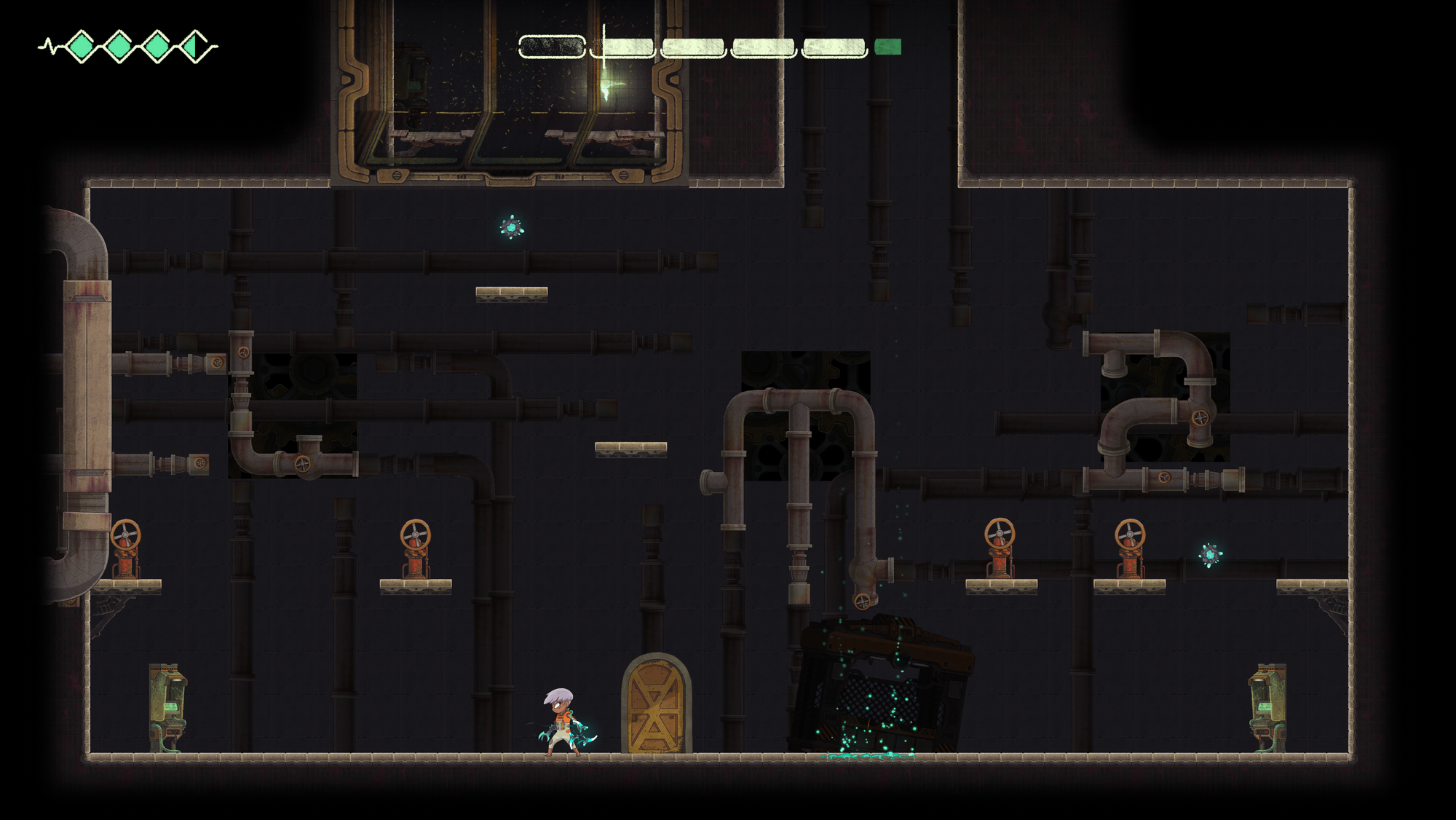
Secondly, the music is enchanting, often relying on ethereal and even morose soundscapes that perfectly fit the ambience of this dilapidated sci-fi world. I’m a very big fan of subtle, understated scores that I could play as ambience in the background, and Echo Weaver is the latest addition to that list. Regarding more high-octane tracks, there are a couple of real high points in specific (spoilery) parts of the adventure.
There’s a little bit of a dichotomy in my feelings toward Echo Weaver. On one hand, it presents a unique, compelling and well-designed world with interesting and satisfying mechanics that you have to discover to come up with solutions. But on the other hand, there is certainly a small twinge of disappointment, as while I deeply appreciate many things it’s attempting, I wish things had coalesced even better and that I’d loved my experience even more than I did. It apes elements of some of my favorite games of all time — namely Outer Wilds and its approach to discovery, experimentation and knowledge-gated progression in both the world and its narrative. Echo Weaver gets many of these elements right, and though it doesn’t quite reach those astronomical heights in terms of polish or the overall experience, getting close is easily good enough.
Echo Weaver
Great
Echo Weaver is a very compelling concept for a Metroidvania, and presents some truly great gameplay ideas that I don’t think I’ve seen before. It’s a melding of various mechanics and while some of the resulting design choices make the game stumble just short of reaching excellence, the overall experience is one I can still see echoing in my brain for a long time to come.
Pros
- Inventive and satisfying platforming mechanics
- Time restrictions keep each run interesting
- Strong visual identity and OST
- World design is deceptively complex
Cons
- “Sequence breaking” can lead to confusion
- Lack of general signposting is frustrating
- Underwhelming combat
This review is based on an early PC copy provided by the publisher. Echo Weaver comes out on October 8, 2026.