I’ve played a fair number of media tie-in board games before. Some are good. A lot are bad. But generally, you don’t need to actually know the book/show/movie connected to the game. In fact, I’ve taught the Firefly board game to quite a few people who barely even knew about the show, and folks still have a lot of fun (and some become fans of the show afterwards). But I’d yet to find a game whose tie-in really did much for fans aside from helping form a stronger connection with the theme. Until I played Mistborn: The Deckbuilding Game. Out of all the people I’ve taught the game to, fans of Mistborn have grasped the concepts of the game much faster than people unfamiliar with it, due to how the game replicates the magic system from the series. Even people who’ve played many a deckbuilder struggle for a little bit if they haven’t read anything prior, whereas fans have picked it up instantly. To me, I think this is very impressive, and speaks volumes for how well the theme is integrated with the actual mechanics. This isn’t to say that the game is difficult to learn if you haven’t read the books; just that familiarization means that the metal-burning mechanics are more intuitive if you know what the designers are trying to replicate.
Strong theme-based mechanics aside, Mistborn has a lot to offer beyond a standard deckbuilder. In particular, I appreciate that unlike other PVP-based systems, there are other win conditions you could pursue instead. There’s also a solo/co-op mode that I found was just right with two players (which later got some extra content; I’ll be touching on that in its own section).
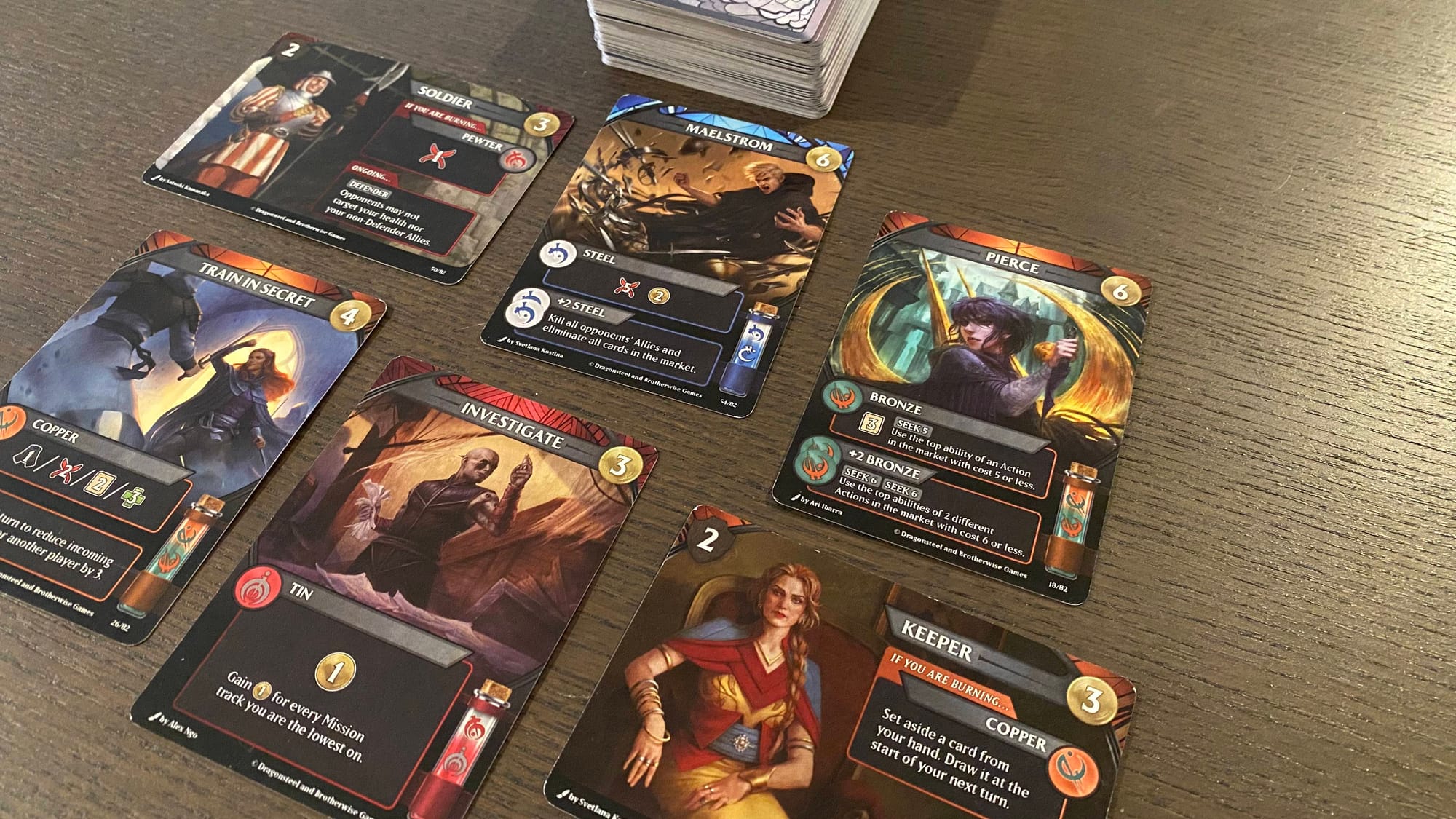
For anyone who is a fan, I do want to point out that while the game primarily covers the first book, some of the art could spoil bits from books two and three as well. I’m not really going to cover any of that in this review (outside of showing pictures), but do keep it in mind if you’re still reading the series.
Rules & Components
In case anyone was worried about the game being obtuse or difficult for non-readers: it really isn’t. The rules do a great job of explaining the mechanics, with plenty of useful graphics and sidebars to prevent it from being pure blocks of text. Just don’t make my mistake and be sure to fully read the multiplayer targeting rules instead of just assuming that it works like King of Tokyo, because it’s a bit different—you can pass the target to any player after being attacked, not just the attacker.
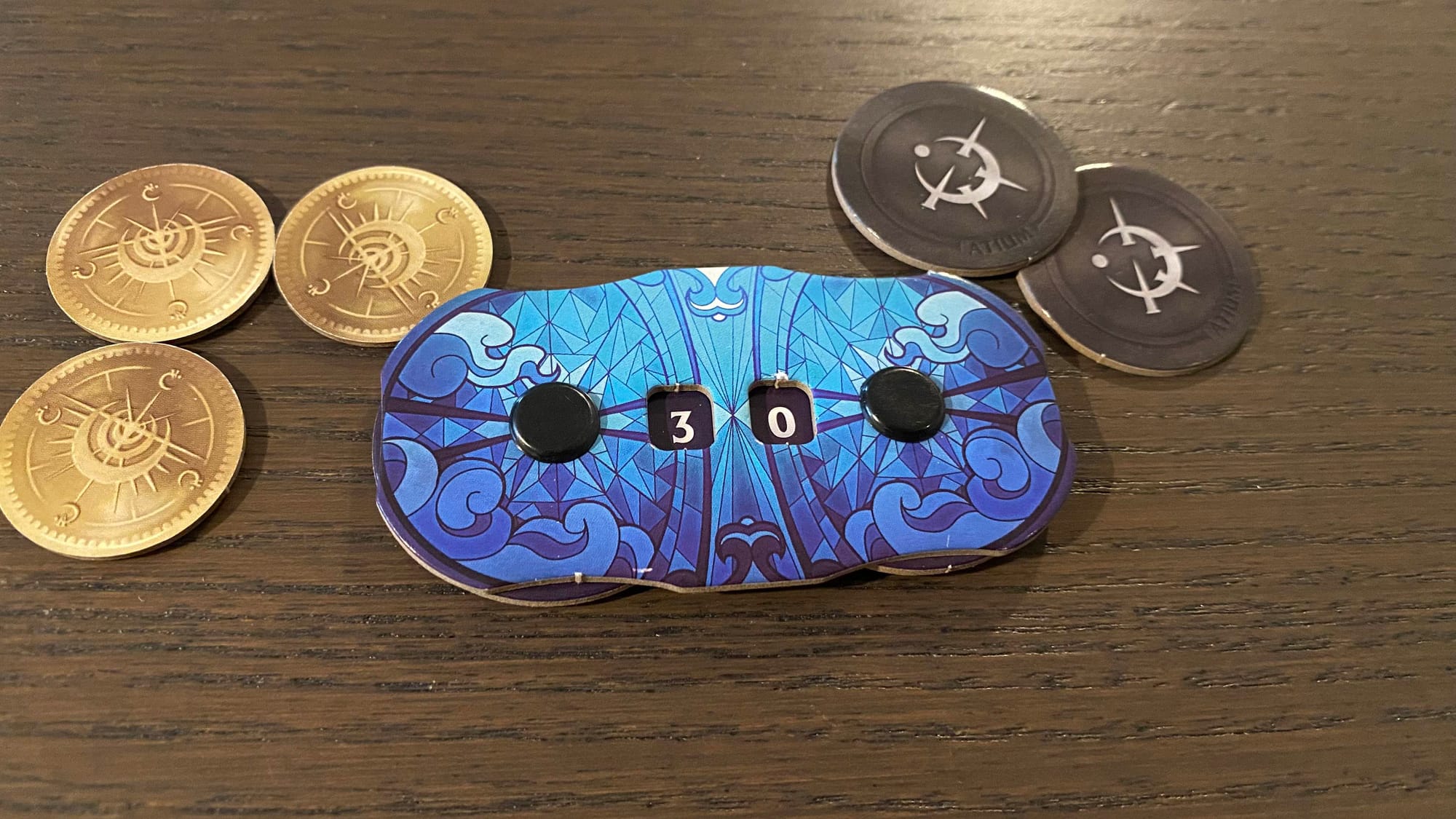
The card quality is perfectly fine; nothing too fancy there. While the very first print run had some issues with miscut cards, Brotherwise quickly sent out replacements (at least, they did for me), and subsequent printings don’t seem to have had any issues. The cardboard is thick enough to not be chintzy, but not super-chunky like I’d normally prefer. Still, no complaints here. Brotherwise did later release some fancy enameled metal Metal tokens, but I’m not sure how available those will be outside of preorders.
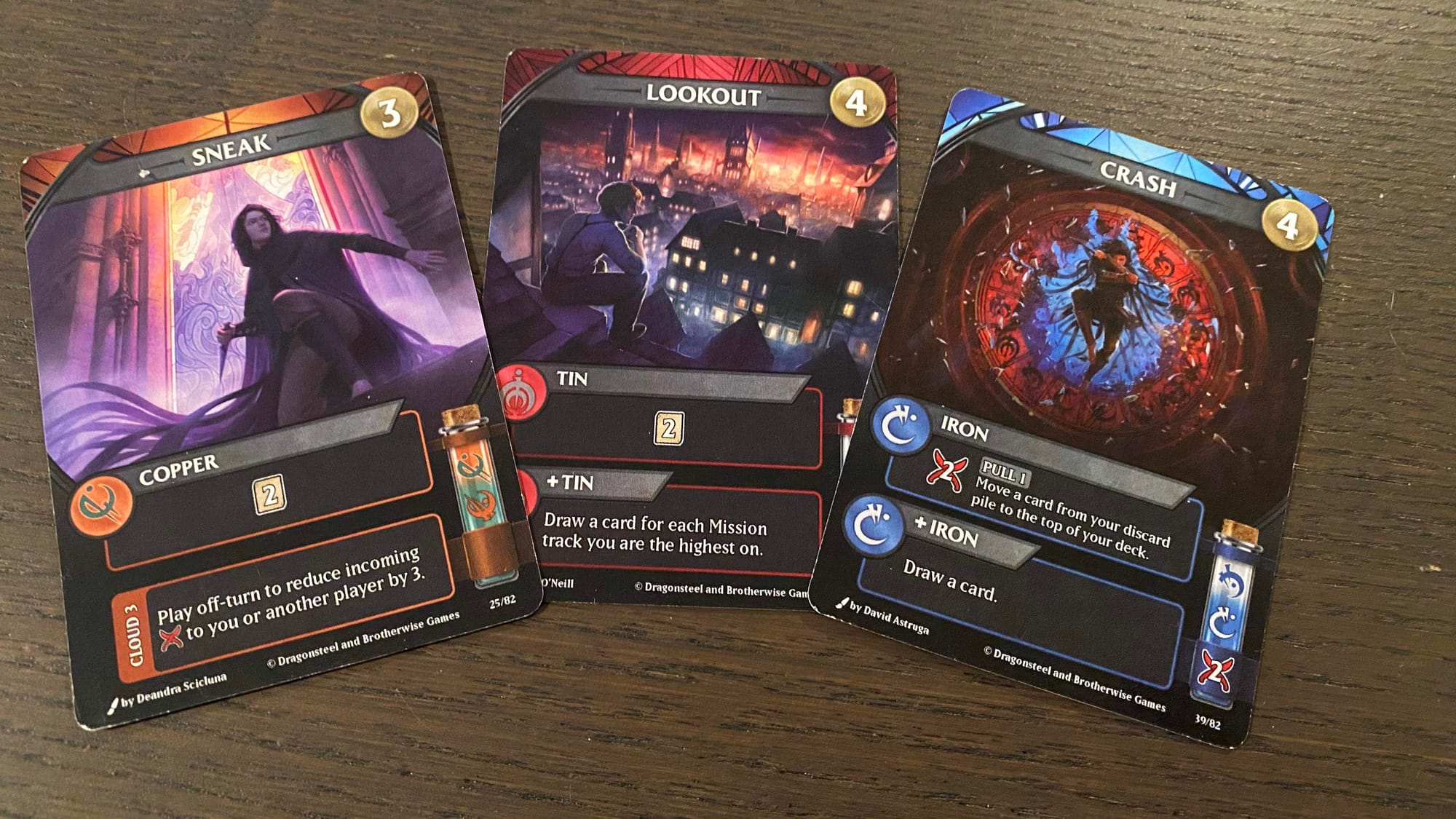
The art, however, is gorgeous. Honestly, I was sold on this game as soon as I saw the cover. Every card looks great, from the stained-glass Trainings to depictions of some of my personal favorite scenes from the book. I would absolutely buy several of these as prints *cough*Crash*cough*. There are over twenty artists involved, but I’ll give special props to the art directors Johnny O’Neal and Katie Payne for leading that.
Gameplay
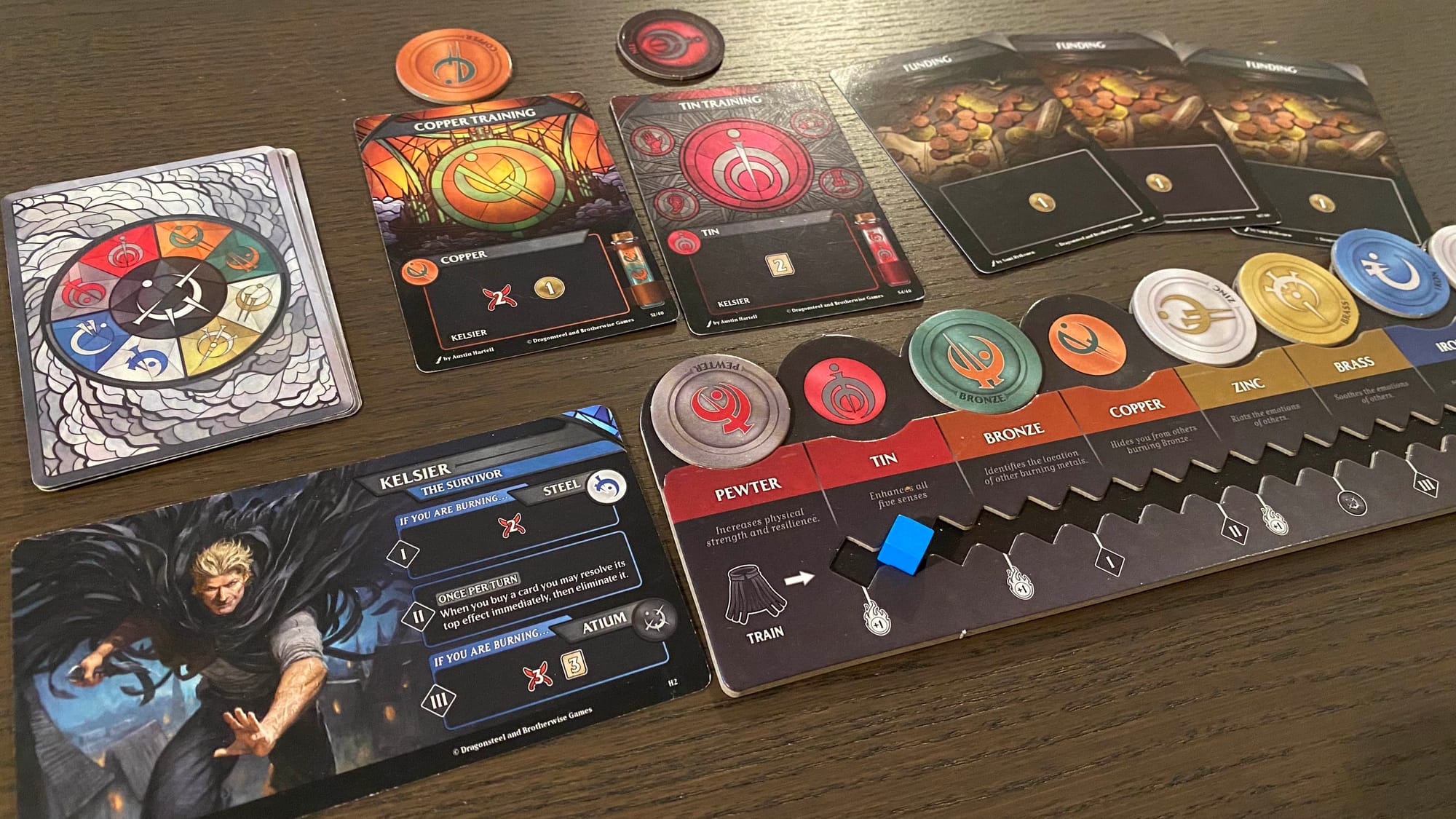
The big feature of Mistborn: The Deckbuilding Game is, of course, burning metals. For those unfamiliar, characters in the series are able to “burn” ingested metal to fuel their magical abilities. In this game, that’s represented by eight different metal tokens which can be burned (spent for the turn, up to an amount based on your training track) or flared (exhausted, with no limit, but they stay depleted until manually refreshed by discarding a card). Cards can be used for their effects when paired with metal, of course, or discarded to refill a previously flared metal, but they can also be used to fuel your other cards. This creates a really interesting resource management where your decisions go beyond your current hand, which also strongly encourages players to focus on one or two metal pairs (each metal has a pair, and while cards are only fueled by a particular metal, they can be used to fuel the paired metal as well).
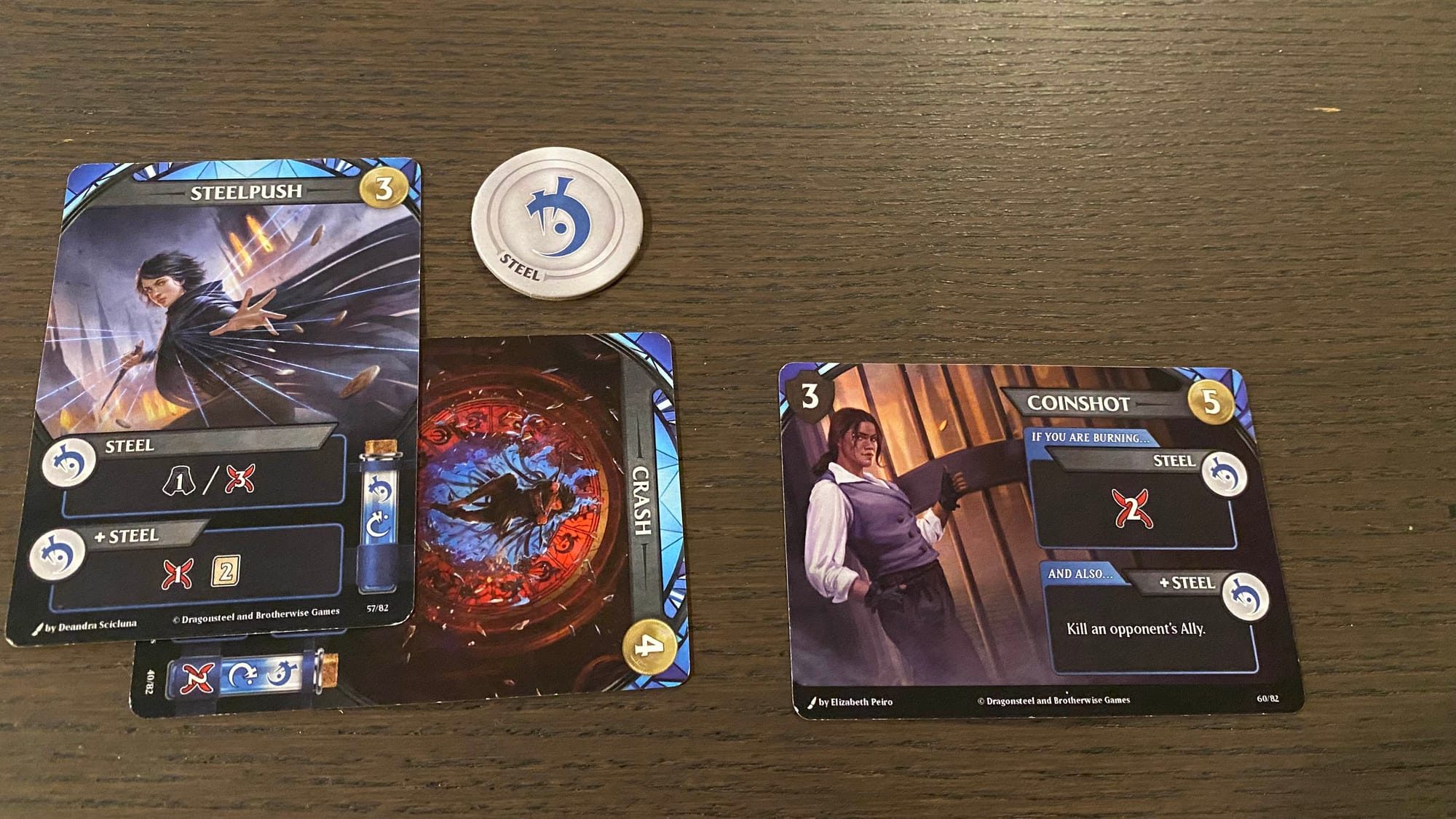
Going along with these persistent resources, Mistborn has my favorite style of “always available” purchases. In similar randomized-center-row deckbuilders like Ascension, there are cards you can always purchase to slightly improve your deck, but they can end up clogging it in the late game. Instead, you can purchase Boxing tokens. These act as one-time resources to purchase cards, but don’t go in your deck—they’re just available for you to use whenever you need. Additionally, each character has the same Tier II ability on their training tracks: once per turn, after buying a card, you can trash the card to perform its effect immediately. On top of enabling some great late-game plays when you need the extra damage or healing now, it means you can throw some money at middling cards if you’ve got leftover funds without worrying about how they’ll dilute your deck later. It feels really satisfying to keep a nice, consistent deck in games like this, and Mistborn really gives you the tools to do that.
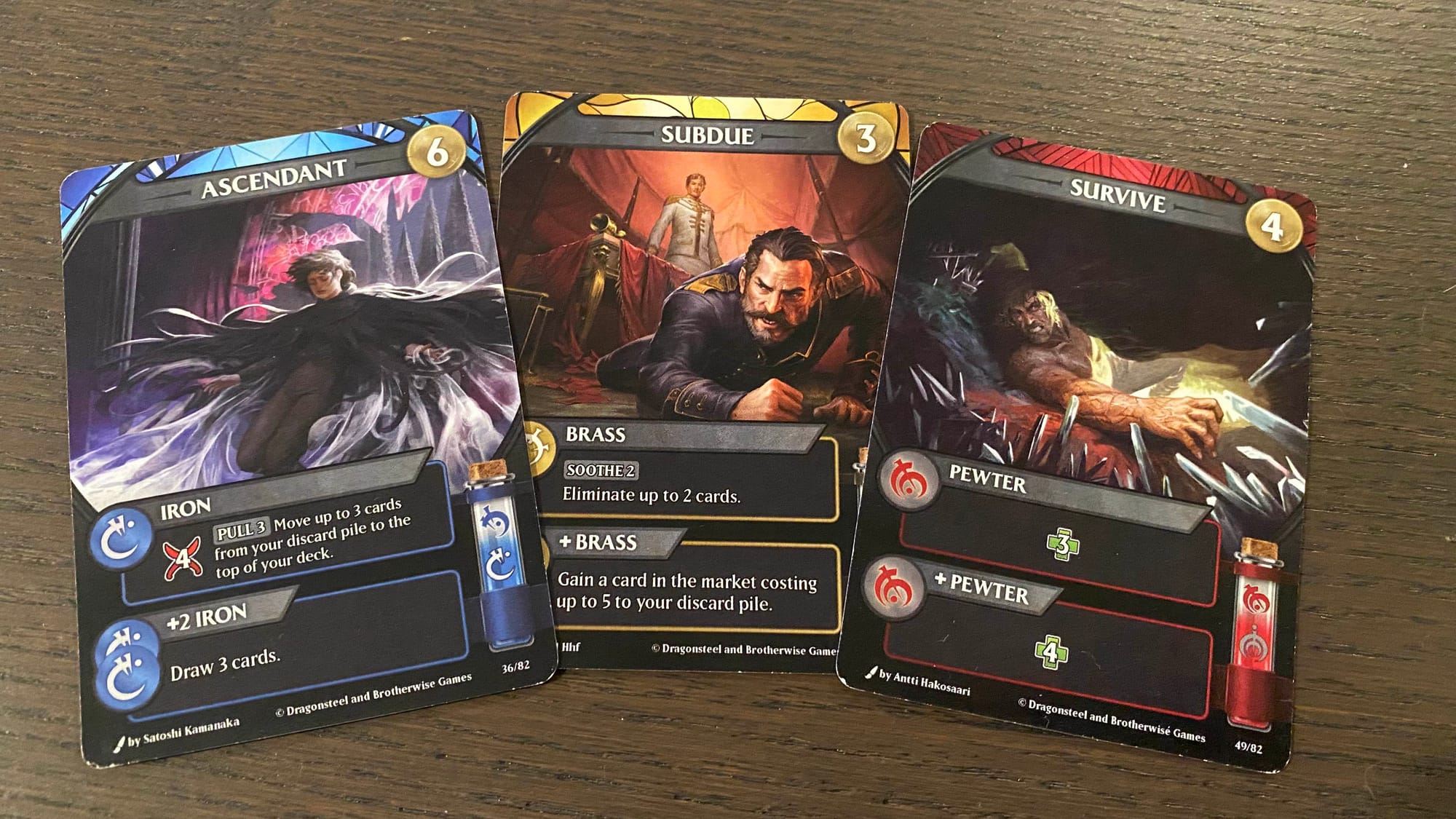
Another change from typical deckbuilders here is that there are multiple win conditions. You can, of course, overwhelm your opponents with damage and simply be the last Mistborn standing. But you could also play the Confrontation card and pay a whopping four Atium when you do and immediately win (I haven’t seen anyone do that myself, but it’s possible). However, the third objective is much more feasible: simply reach the top of all three mission tracks first. See, at the start of the game, three of the eight included mission cards are dealt out. Each player can advance along any of these by spending Mission Points, granted mostly by Bronze and Brass cards, which provide bonuses at various tiers, with additional rewards for the first player to reach each. At the very top, some even grant ongoing benefits like extra cards drawn for each hand or a higher burn limit. And, as mentioned earlier, finishing all three immediately wins you the game. It’s nice to have multiple paths towards victory, since it makes your deck feel more tailored rather than everyone at the table trying to accomplish the exact same thing.
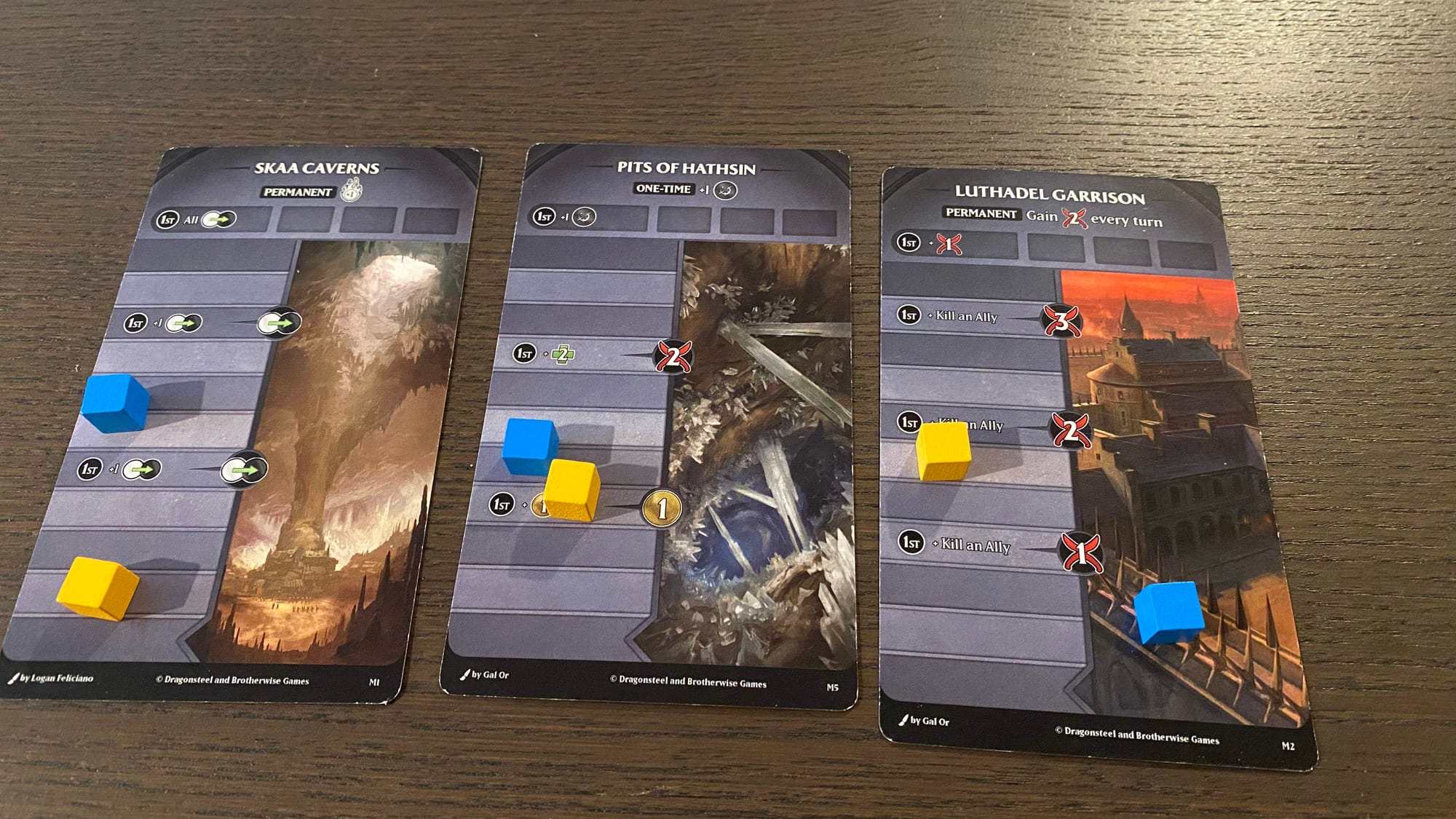
However, the mission tracks also bring in my largest complaint about the game. I haven’t done extensive testing to say for sure, but based on my anecdotal experience, the mission tracks are the dominant method of winning. Unlike attacking players, your progress can’t be reversed (by players healing), and you get some bonuses along the way. The issue is further compounded, albeit slightly, by Marsh’s special ability allowing him to just gain more Mission Points than anyone else. As soon as Marsh gets access to some decent cards, it almost feels as though the rest of the table needs to team up to take him down. Which is a great concept if a game is actually designed around that, but this isn’t. Once someone starts pushing mission points hard, anyone going for combat needs to quickly tighten up their deck and kill the mission player. The target mechanic makes this especially difficult with more than two players, since the largest threat can just pass it onto someone else and force the table to beat itself up while they climb the tracks.
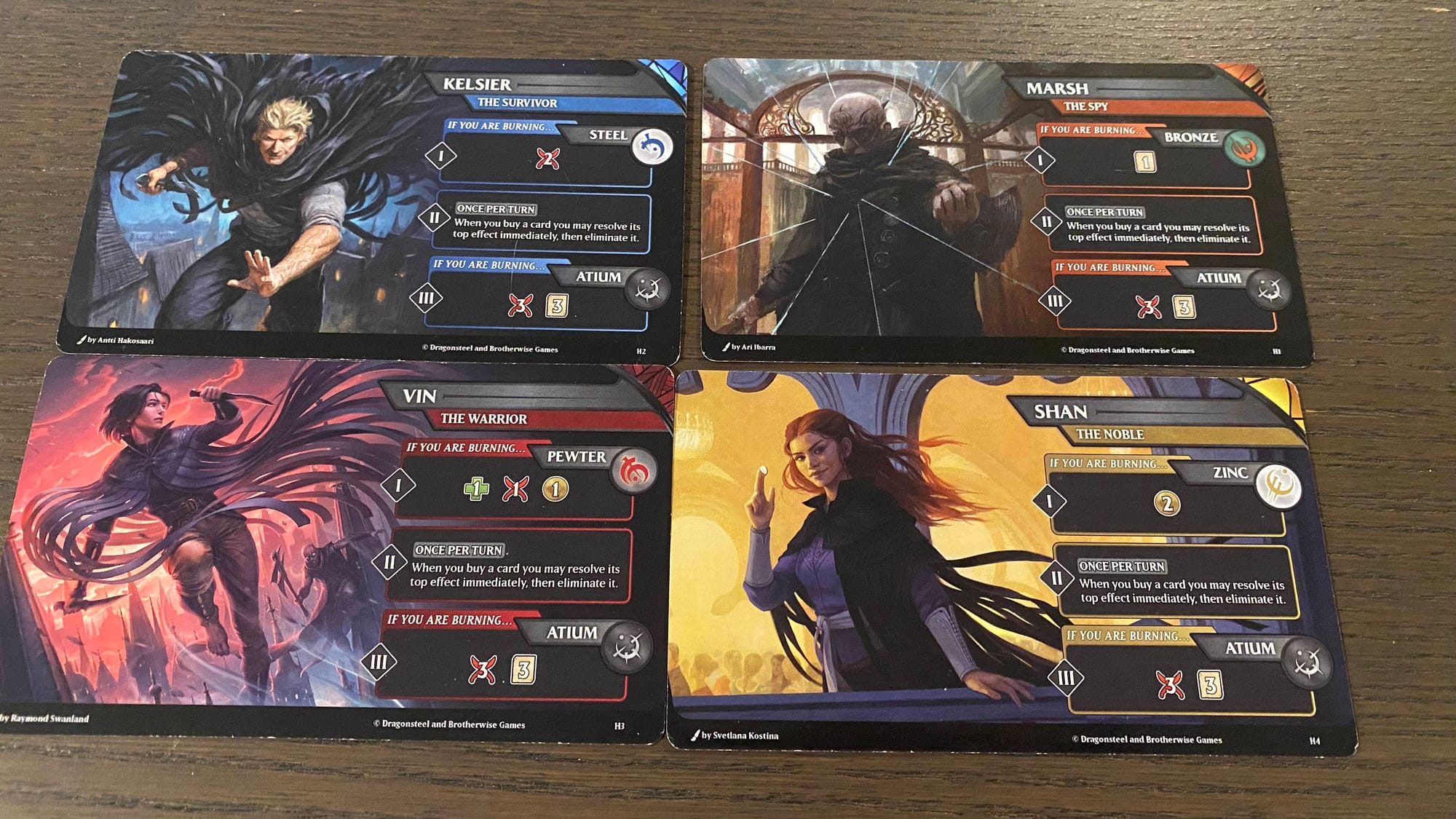
I don’t think it would have taken much to improve the balance here, either. Some adjustments to the targeting system so players can’t hide behind it so easily, or even just dealing out four missions instead of three to extend that race a bit. Anything to help the game feel less like “us vs. Marsh”.
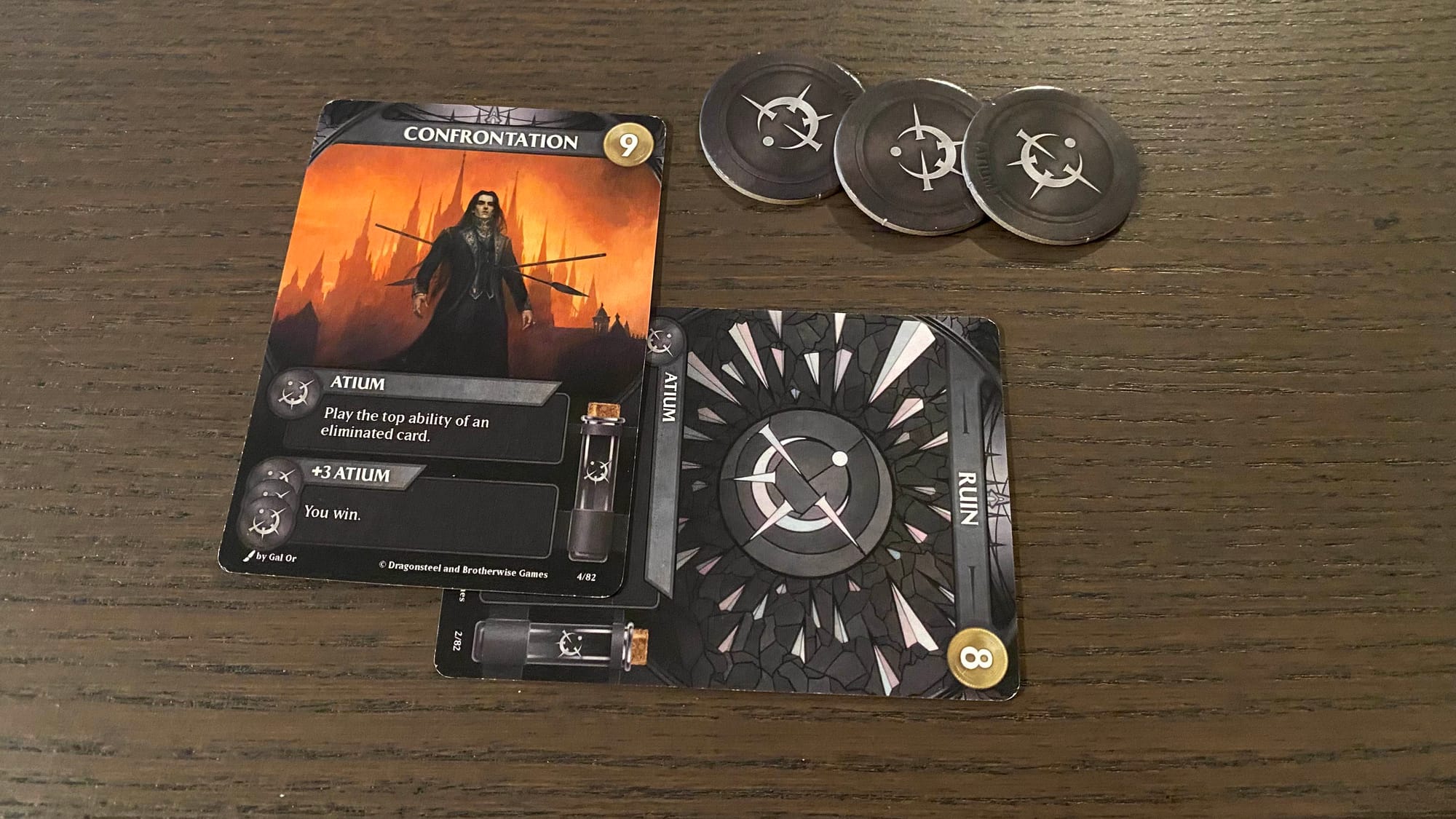
Before covering the other game mode, I want to throw in that I like how the Ally cards work here. Often, deckbuilders will give you cards that sit outside your deck once played to give you an ongoing effect. Mistborn does that, and it isn’t anything new. Allies can be attacked to be sent back to your discard, and some require you to use matching resources to trigger or improve their benefit that turn. Again, neither of those are new. But what’s different here is how you spend those resources. If I burn or flare iron to power a card I play from hand, that also counts for any iron-based Allies I have in play. Or I could just burn iron without a matching card, simply to trigger my Ally if I really need that extra damage or whatever now. It adds another little layer to the resource management that I liked, without feeling like the card just adds another resource drain.
Solo/Co-op
Mistborn: The Deckbuilding Game includes a flexible co-operative mode that pits 1-4 players against the Lord Ruler. Running this boss is super simple; just draw and resolve the top card of the deck. Sometimes it’ll be an Adversary, which sits in front of you like a normal Ally card, except they impose some penalty and often need to be smacked several times before they leave. More often, the Lord Ruler will have an Edict which just has a series of effects to resolve, typically involving his Dominance—a track for the power he’s dedicating to stopping the players—which in turn determines the value of X on some Edict effects. These Edicts will also force the card market to cycle a bit, so players can’t rely on something sticking around just because they haven’t touched it.
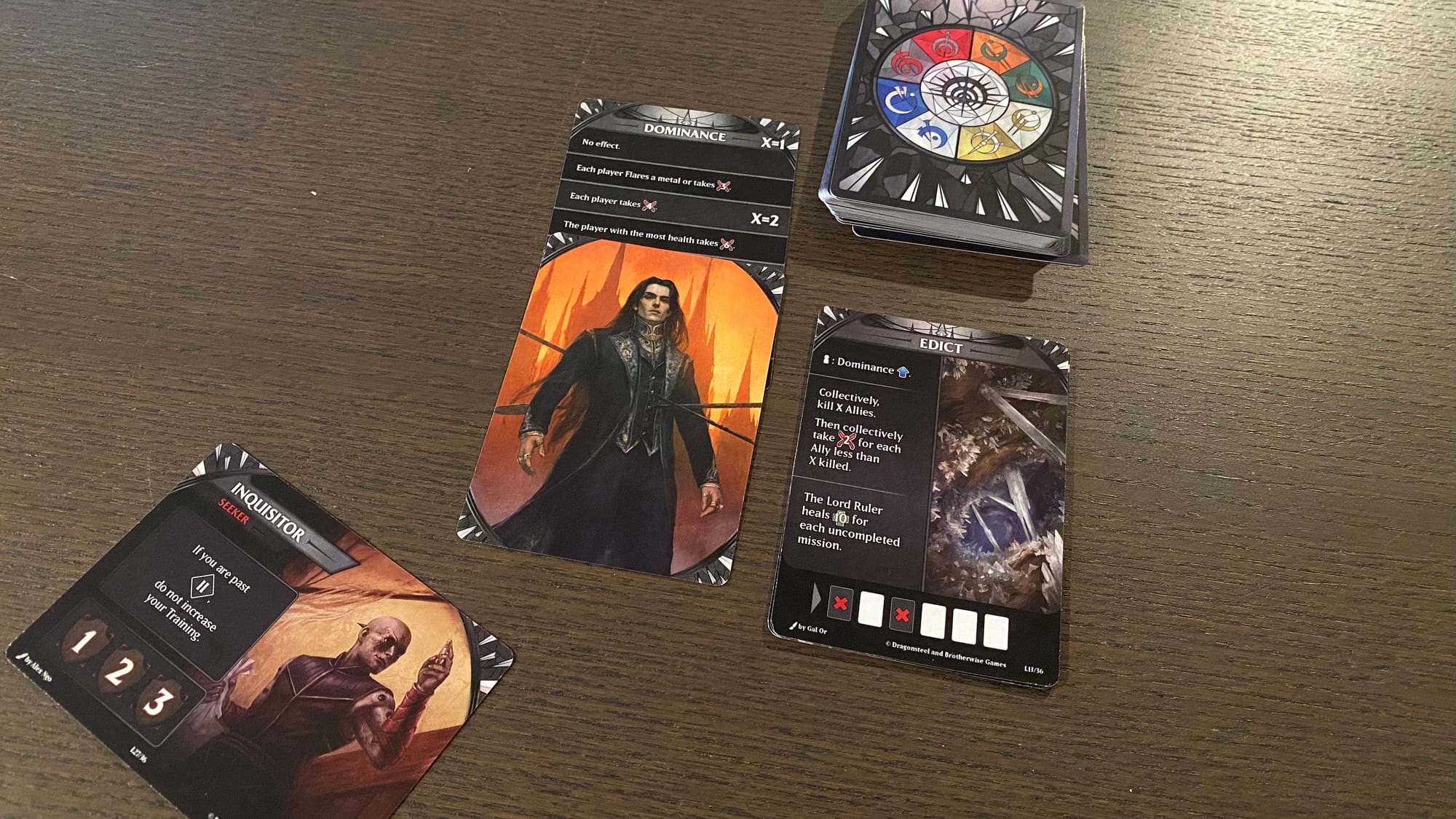
Killing the Lord Ruler simply requires whaling on him until his larger health pool is depleted. However, his Edicts will frequently heal him based on the number of unfinished missions, so really you need to complete all the missions, then lay on the beating.
Because the Lord Ruler activates after each player's turn, larger player counts are significantly more challenging for co-op. In a full four-player game, the Lord Ruler is “improving” (adding Adversaries or issuing Edicts) four times every time you’re able to “improve” (advancing up mission tracks or purchasing better cards); he quickly outscales the players. Brotherwise has since made a Dominance Track Pack available for free as a Print-and-Play (and limited physical release). This adds variant Dominance tracks for different difficulties as well as alternate rules for 3-4 player co-op.
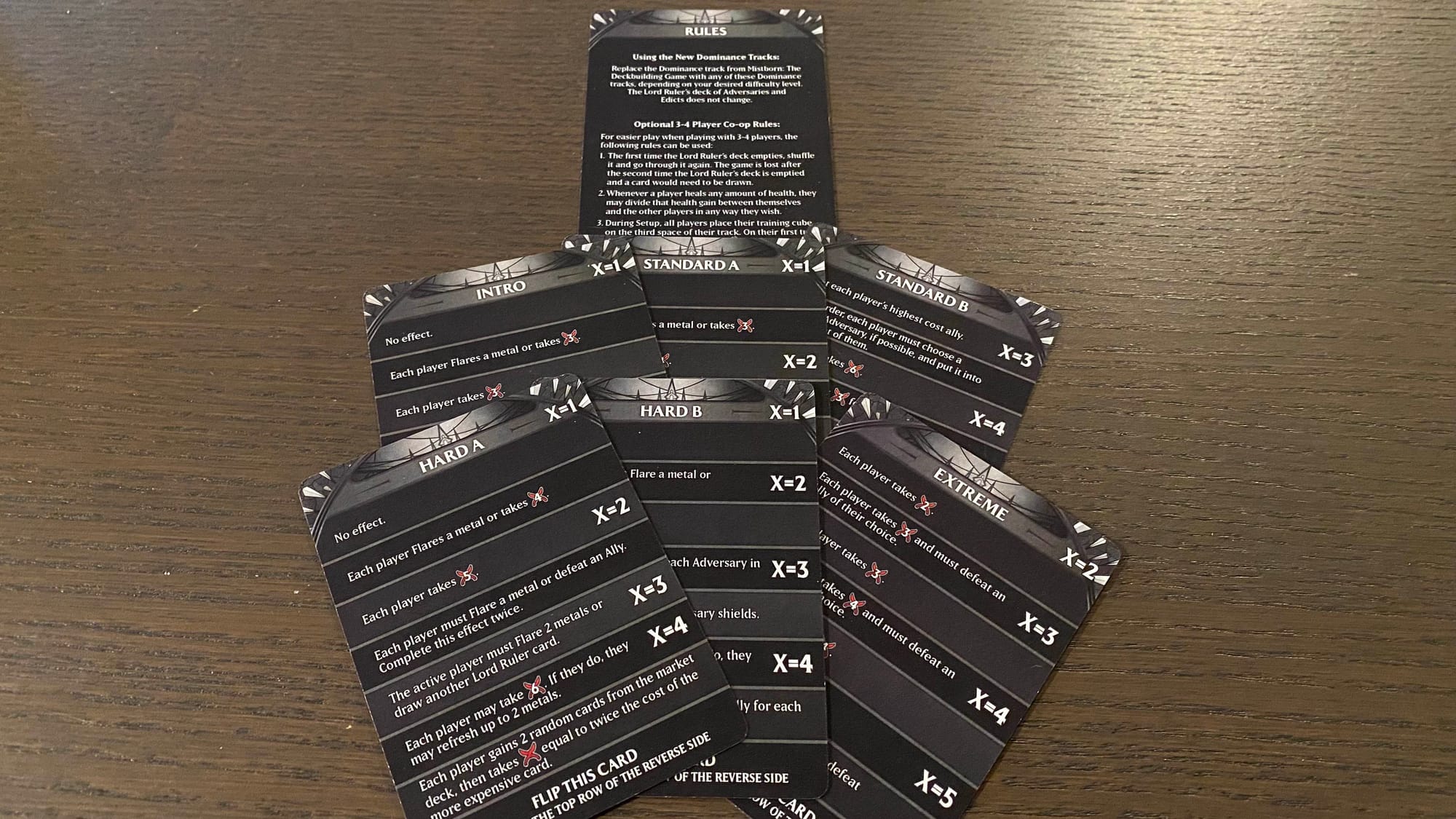
I really enjoyed fighting the Lord Ruler both solo and in two-player cooperative, thanks to the simplicity and challenge. However, if you want to play it with more than two, you really need to get the extra pack. It’s unfortunate that this hadn’t been developed prior to the game’s release, but at least it’s free.
Mistborn: The Deckbuilding Game
Good
Mistborn: The Deckbuilding Game is a real treat for fans of the series and a solid game still for anyone who isn’t. It doesn’t reinvent the wheel, but it adds just enough spice to the typical deckbuilder formula that I felt satisfied. Add to that a solid cooperative mode and some phenomenal art, and you’ve got something great on your hands. Unfortunately, the game is bogged down a bit with some balancing issues in both game modes. At least one of them has already been fixed with some free content.
Pros
- Gorgeous art
- Mechanics tie well into the theme
- Metal management is both novel and fun
- Multiple paths to victory
- Co-op is very easy to run
Cons
- Possible balancing issue with mission track victory
- Co-op does not scale well with more players, unless using extra content
This review is based on a copy provided by the reviewer.