You can’t dispute the power of a new Call of Duty release. Whether or not it’s all over the social airwaves, the numbers this franchise does would be envious of any publisher. One of their strongest brands, Modern Warfare, had a stumble in its last entry, and one that’s more based on a short timeline for creation than anything else. With four years of development and the lead studio taking the helm, Infinity Ward is back with a first, and it’s a four. Is this Modern Warfare game four-midable? Or four-gettable? Let’s find out together.
Campaign
Consequences. Oftentimes the actions of one affect the masses, and the theming of consequences echoes throughout the campaign of Call of Duty: Modern Warfare 4. Although several players in this story are culpable for the ensuing chaos, the ending carnage has a high cost, and also leads further than expected.
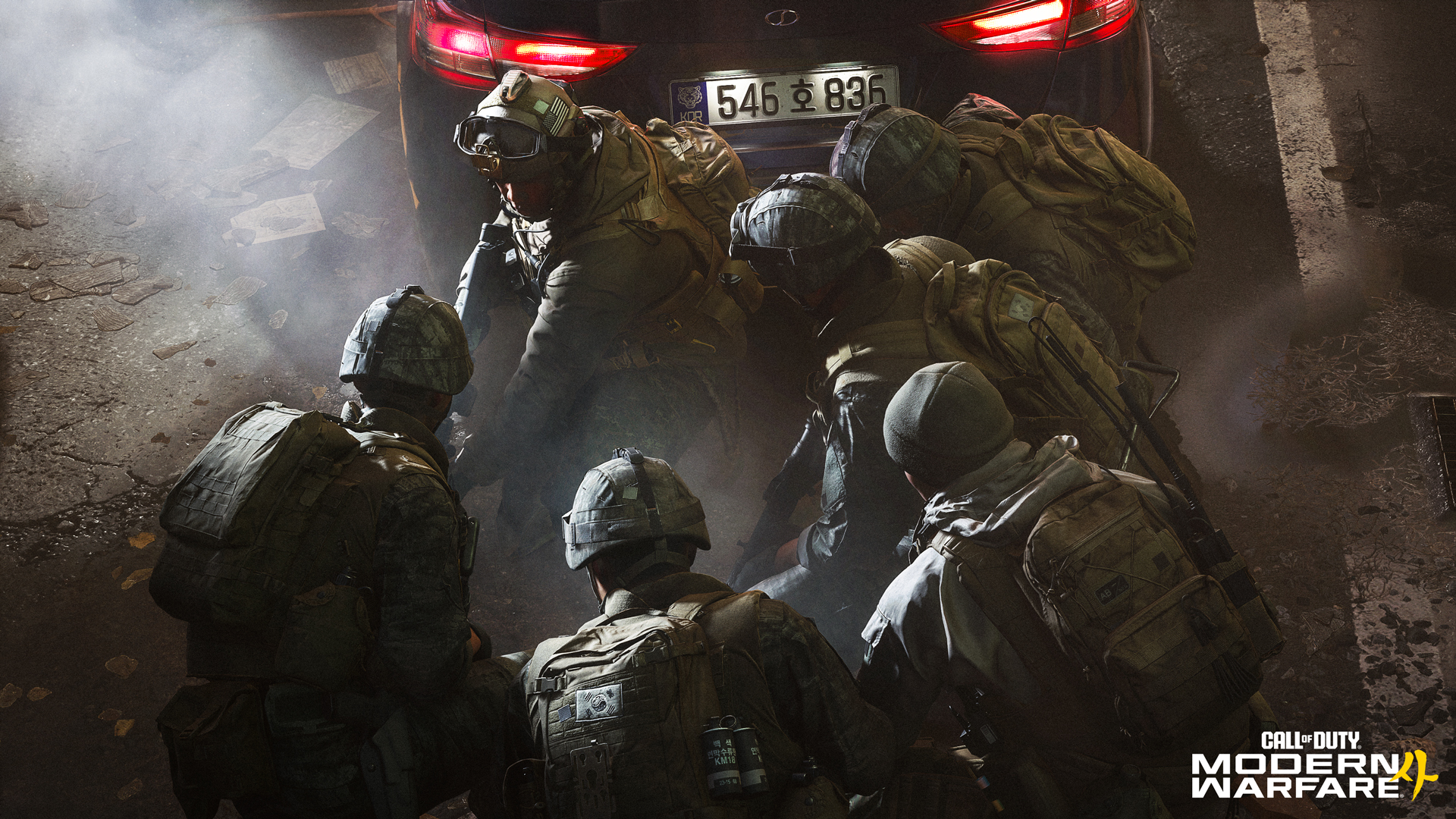
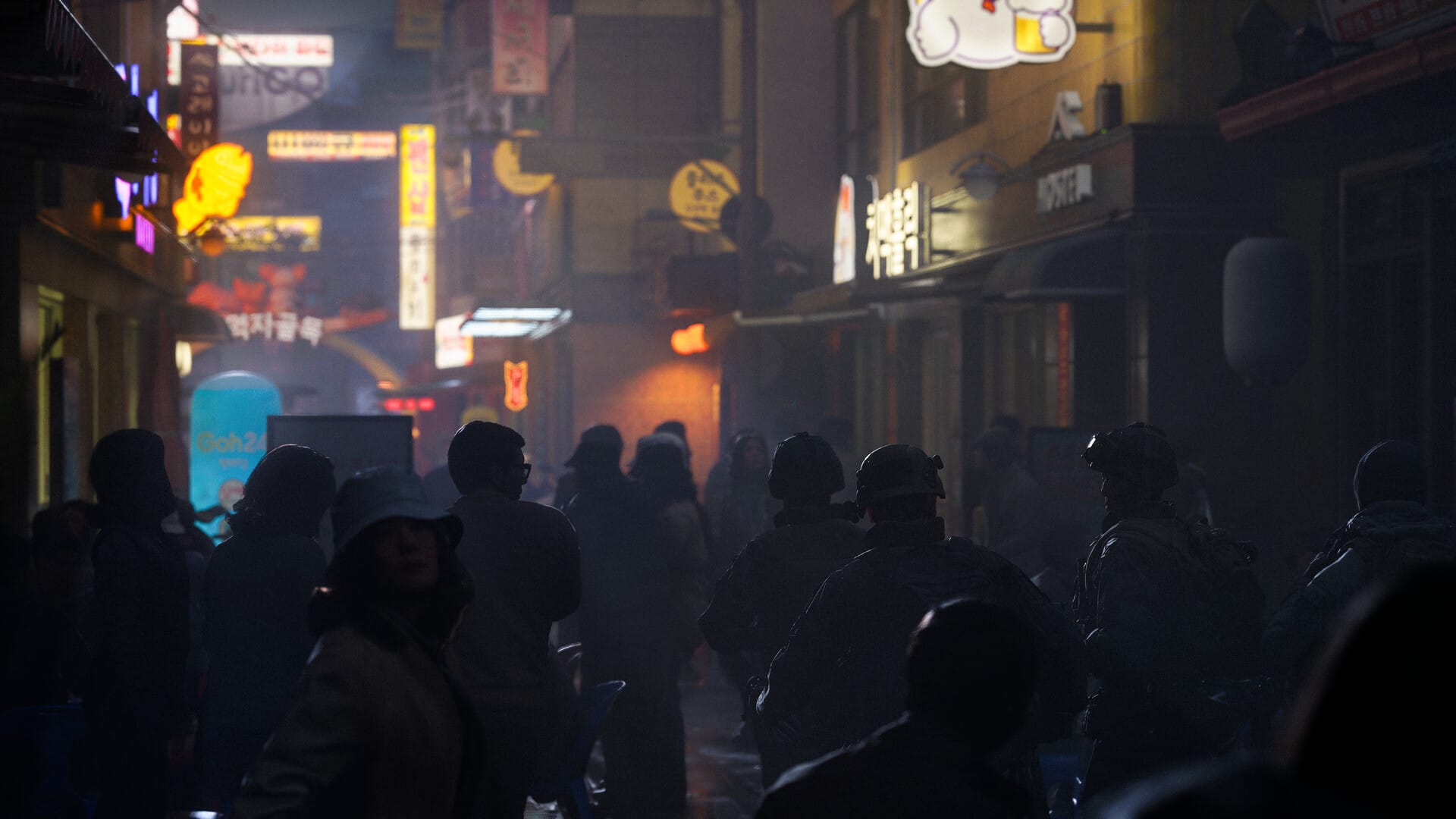
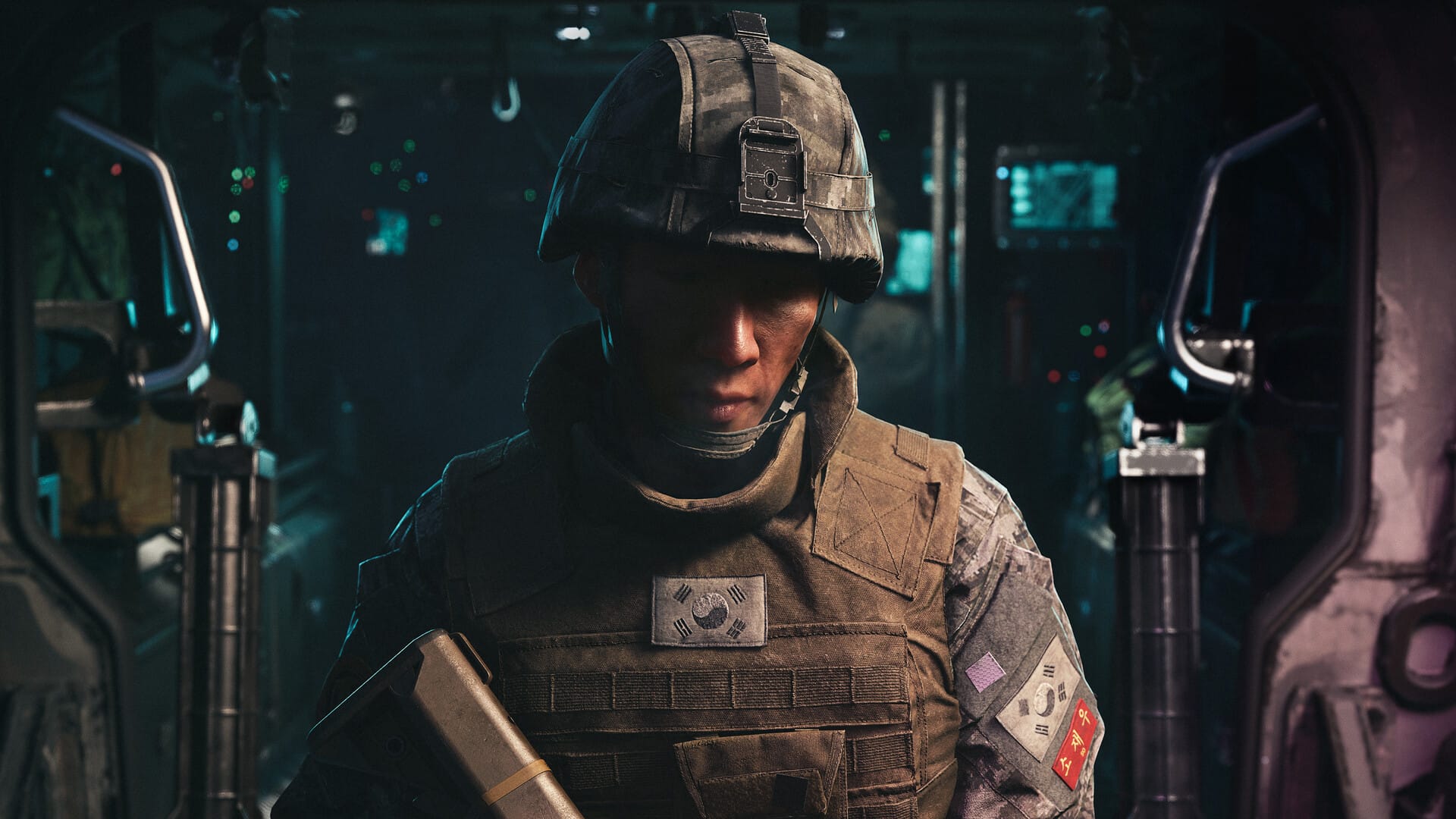
Modern Warfare 4 opens rather expertly, showcasing the people and places of the world. First, the South Korean squad you'll spend a bit over half the game with are on patrol, and they're a legitimately loveable bunch. Joking around as they make a stop at a convenience store, the banter is just what you'd imagine. Everything suddenly becomes serious as an unknown weapon disrupts all electrical systems and renders many discombobulated, and as the bombs rain down from North Korea, the tone shifts from silly to somber.
Their story reminds me a lot of how I felt as a teenager playing the original Modern Warfare series. They're all fresh, inexperienced, and afraid, but that doesn't stop them from pressing on to do what they've signed up to do. You feel for them in each tragic moment that occurs. My personal favorite is Corporal Dunn, the lone American of the group, as his brash exterior is regularly wiped away by the harsh war around him to show just how human he is. Following him is Park, the player character, who gets to participate in a lot of great set pieces along the way.
Second comes Captain Price. The initial mission that sets his journey up occurs four days before the events in South Korea, building to the use of the aforementioned super weapon. Drained of any empathy from the loss of Soap and murder of General Shepherd in Modern Warfare III, the descent into the darkest parts of Price is well constructed. His introductory mission is immaculate, reminiscent of a John Wick scene as he enters a club to find Makarov. It's a horribly kept secret that you'll kill Makarov quickly, and the way it's done seems fitting given what he's done to Price.
That feeling, however, fades as Modern Warfare 4’s narrative goes on. Price's lack of control even seems foreign to him by the time he reaches the midway point of MW4. As consequences begin to mount, he realizes, although somewhat too late, that his quest for vengeance isn't worth the cost. The lives he's convinced himself of saving are simply invisible statistics compared to the real people he sees die. Everything you'll encounter works, even if certain parts are somewhat contrived or predictable.
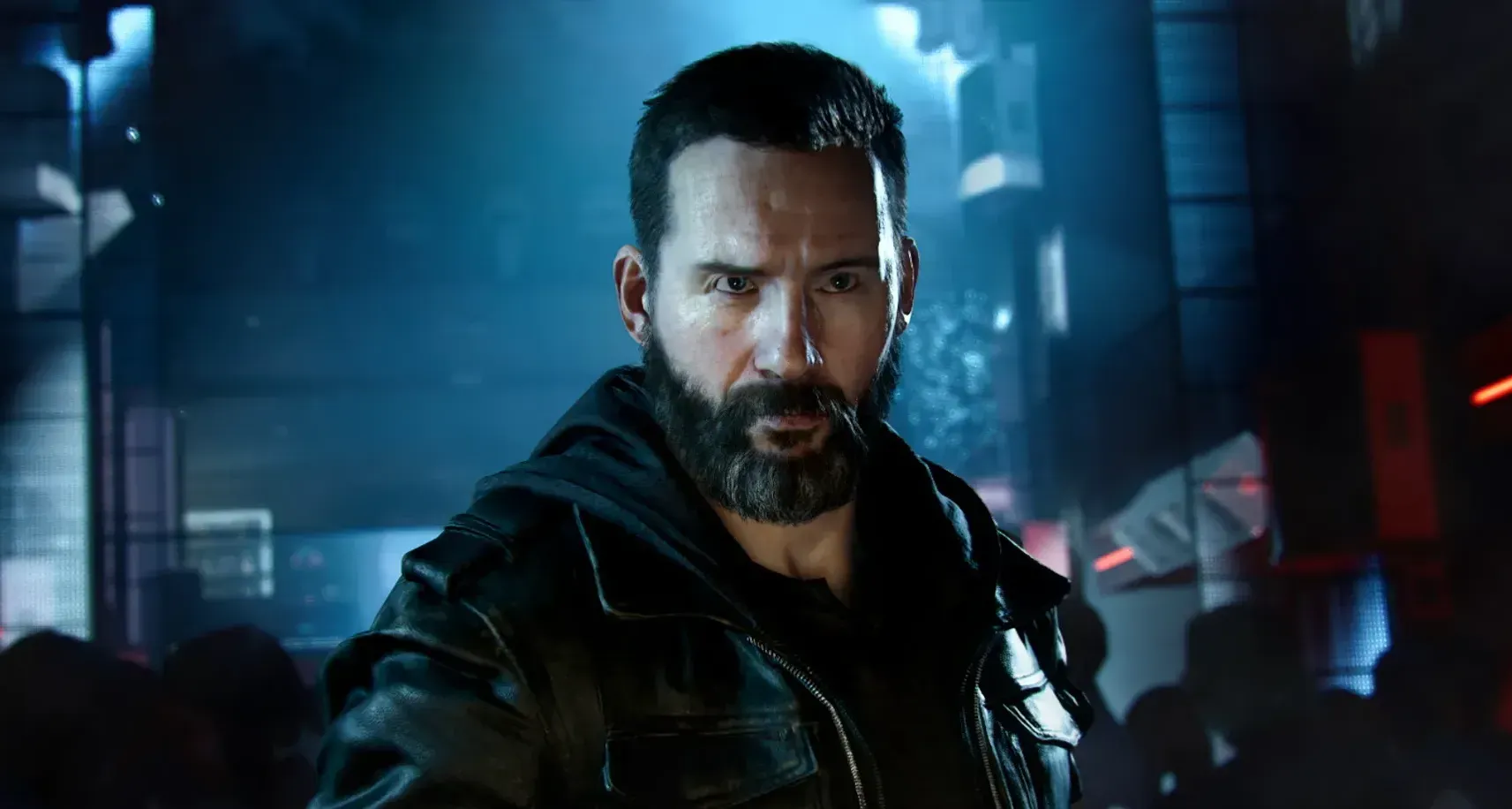
To no surprise, the weakest part of this campaign might come down to the villains. North Korea’s leaders are actually great, with Ri Seung-Ho (the new Supreme leader) being more of a misunderstood character. Ri Ju-Young, his sister, is a vicious army commander that lusts for power, and will do anything to get it. While a bit one-note, her motivations at least make sense. Valeria is a product to move the story forward, and Mads Mikkelsen’s “The Archer”? Let's just say I would have more of an opinion if he was in the game for longer than ten to fifteen minutes. My disappointment lies in the fact that he delivers great character work in his limited time, held back only by a painfully basic plot line.
Even with those issues, Modern Warfare 4 manages to have heartfelt moments. As much as I enjoyed previous story beats in the rebooted trilogy (except for you MWIII), it felt like Infinity Ward chased nostalgia a tad too much. Evoking memories of what was is fine, but that didn't need to happen here. Sure, some characters return, but it never feels like they're baiting me with those cameos. The way the game closes enforces this thought, paving the way for whatever comes next for Modern Warfare.
Where Modern Warfare 4 shines most is in its gameplay, which shouldn't shock anyone. Call of Duty always boasts world-class gunplay, and mechanically it's still the best at what it does. What might be more impressive to me is the flow of the campaign, however. Most campaigns do the whole “jump between multiple parties shtick”, but MW4 does it with aplomb. The cadence is stellar, with pacing that compliments each chapter. I also love the gameplay variety – rarely did I feel weary of what I was doing. There were slow paced stealth sections, fast moving chase sequences; heck, even a level that had me playing Call of Duty: Frogger Warfare.
There's one section that does pull in an open-level, and that space is a lot of fun. It may be the best one any Call of Duty team has done yet. I had thought it was essentially a taste of DMZ (which we'll discuss soon enough), but it turns out this is a bespoke map and experience, even if it might resemble the mode. Infinity Ward also accounts for those who may not want to stop and smell the roses, allowing you to fast travel directly into the narrative-led events. It's a nice touch, letting you be as much or little involved as you'd like. The ending might be even better, a large-scale firefight that lets you jump between three squad members. I'm reminded of Battlefield 2: Modern Combat’s hot-swapping; MW4’s use of the idea in today's tech is exhilarating.
Speaking of Battlefield, one other mission of note has you taking back South Korea, and it's a humongous space. We've seen Call of Duty set grand stages before, but Counter-Attack might take the cake. From storming multiple buildings to blowing up enemy fortifications, you feel the war efforts as you drive out the occupiers. Next to the first two missions, this might be the strongest.
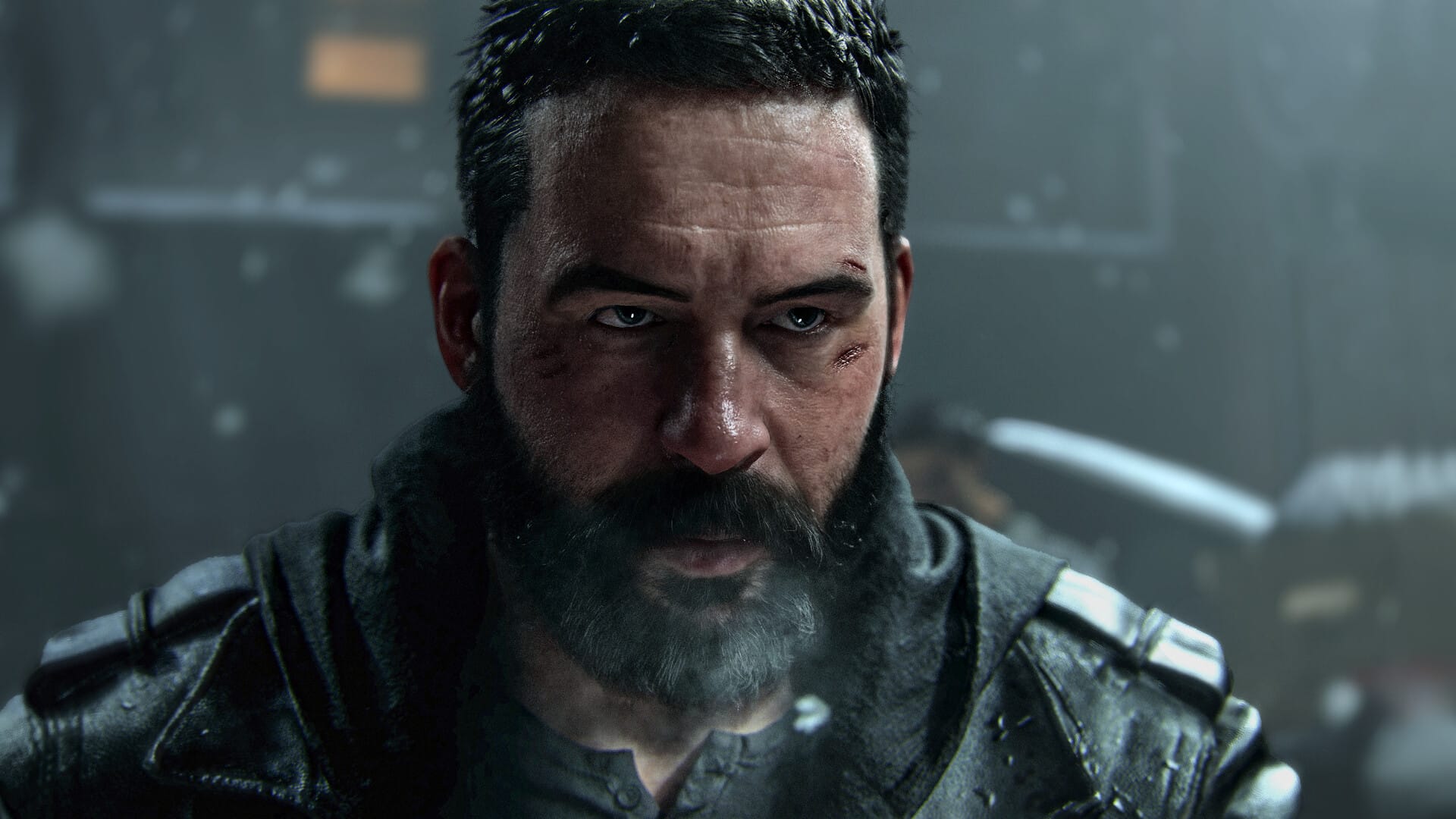
I'm unsure why year after year Call of Duty games never get recognition for the stupendous visuals they offer. It's deserved; the mocap and art teams have truly outdone themselves once again. Price, Mads, Gaz, Park, and more look lifelike. When you step into the convenience store at the very beginning, you're greeted with a rush of color and vibrancy. Every facet of Modern Warfare 4 is incredibly detailed, an award-worthy display. I heard about several different initiatives over my time with the developers describing their work on implementing new HDR and ray tracing tech, and it shows.
Following right behind is the audio design. One of the best parts of playing a Call of Duty game is listening to the sounds of gunfire and explosions around you. This title is no different, as MW4’s guns make you feel like you're actually firing a gun, just through the sound. Weapons like the Axion assault rifle feature the chonky bangs you'd expect it to provide. The Striga submachine gun is more of a pop, but still sounds like the weapon you're looking at. I'm almost always happy with Call of Duty’s audio design choices, and it's fantastic here.
For the most part, Modern Warfare campaigns tend to be strong. Modern Warfare 4 continues that trend, with a fresh perspective with matching fluid gameplay and mission flow. If the quality here is indicative of MW4’s online suite, we're in for another great year of COD.
DMZ
Now this is what the people have really been waiting for. Extraction shooters are still finding their footing, and even with the massive success ARC Raiders found last year, we’re searching for one that has real staying power. DMZ’s beta was an alright start back in Modern Warfare II, but this version is supposed to be more than just a concept. Thankfully, Infinity Ward has been hard at work with it since Modern Warfare II wrapped up, and this iteration has grown into Infinity Ward’s best crack at a third game mode.
Infinity Ward doesn't just throw you in blindly. A short cutscene and intro mission occur, showing you the wiles of Hajin as a CIA operative. You'll unfortunately lose this infiltration into the territory to a fresh bad guy working for the North Koreans. What might be worse is that your dog is left to fend for itself, wounded by the wayside. I swear, Infinity Ward, if you don't let us eventually rescue that dog…
After all of this commotion, you choose an operator that will become your newest proxy for DMZ. There's some ugly stuff going on for both Korean sides, so it'll be up to you to work your way through plenty of high-level foes to help the region settle down (even if we know that won't happen since the mode must go on). Where the active duty slots were more about collected loadouts, this version of DMZ has more in store for your selected agent. Some may not like that the Vault Edition comes with an additional slot, but as long as there aren't purchasable armaments, I'm less concerned about a singular extra character who could carry a few extra things.
In DMZ, you'll begin at the Forward Operating Base, or FOB for short. This is an explorable menu of sorts, with actual stations where you can go to enact your actions before the infill. If you'd like, however, you can just swap through menus without moving around. One of my favorite, and most impressive, areas is the firing range. The developers made it so you stay in third-person throughout the FOB, but once you cross the yellow line of the firing range, it shifts instantly to first-person for testing your loadout weaponry. It's just awesome.
While spending time in menus doesn't sound that exciting, the amount of things you're able to engage with compared to the original DMZ is astronomical. Your stash is here, waiting for you to either swap or sell items to keep it clear for new stuff. A 3D printer lets you make new gear or upgrade the FOB… if you have the resources collected for them. Gunsmith lets you add new attachments to guns, provided you have the cash. There are even spots for dog tags you've absconded with, information to buy to track down valuable lieutenants, and more. Take your time to discover as much as you can about the FOB, it'll make your subsequent trips into Hajin easier.
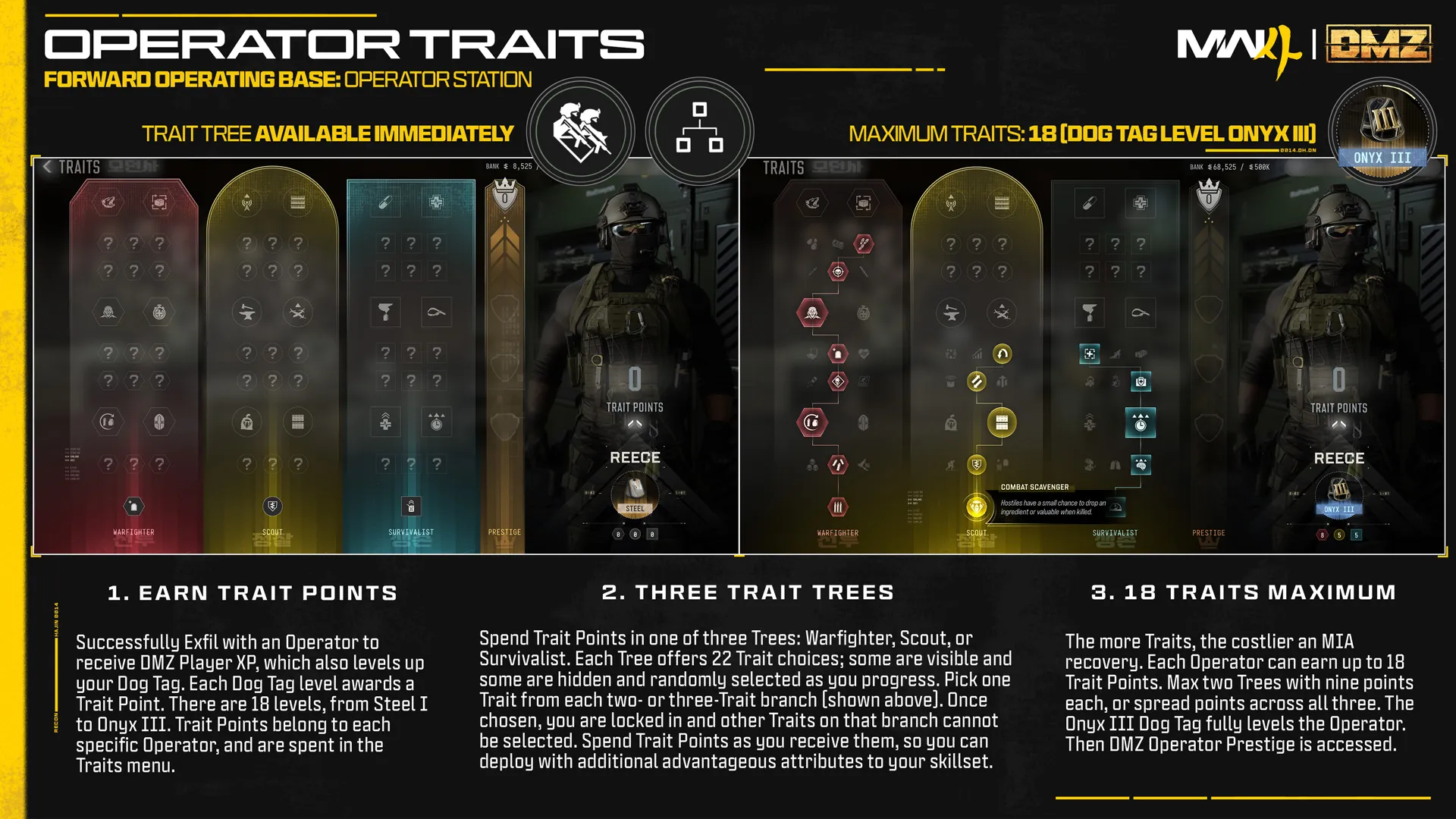
Traits will also make those trips easier. Infinity Ward has added a skill tree, but the way they've done so has been executed expertly. You have three to choose from: Warfighter, Scout, and Survivalist. One offers bonuses for your fighting, one for looting, and the other for staying alive. Where the team has really gone above and beyond is what happens when you unlock them. There are several that are permanently there for unlocking, but alternating rows with three randomized perks.
When I say randomized, I mean that they are legitimately random. These are pulled from a pool, which makes each choice even more important. You also only get one choice per row; no grinding to get everything. It's a good system, which forces you into making a build rather than being a do-it-all character. Even cooler, this saves to your current operator, not your account. If you lose them, you lose what they can do and either have to start a fresh new trait tree or move to your other builds. I love this because you get to experiment with different builds, which makes each one valuable for certain mission types or depending on the squad you're with. The opportunities for this system are simply tantalizing, and I couldn't be happier about the RPG-ification of this concept.
For instance, in a certain expedition, we encountered another group of players. Unfortunately, they got the best of my two teammates, leaving me to run around and stay hidden, hoping they'd get bored and leave. What helped me tremendously was, you guessed it, a trait. One of my company had an ability that worked with the UAV towers on the map; if he activated one, it stayed on for our entire excursion. This trait kept me in the know of the enemies’ positions, and allowed me to revive my squad once the coast was clear.
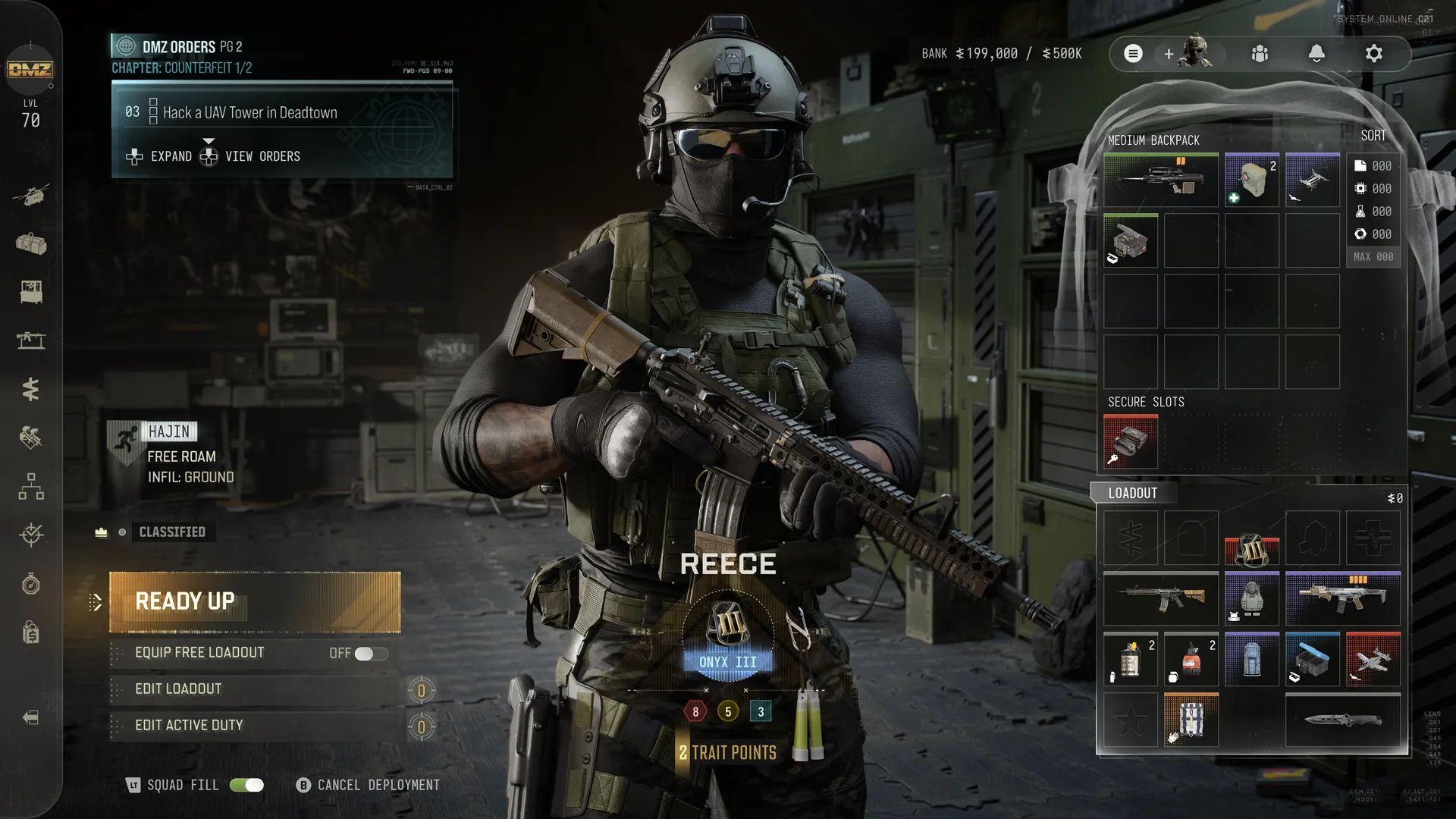
I won't bore you with too much detail on your loadout, but know that there's a lot that'll go into your choices. There's only so much room in that first backpack; you'll need to choose wisely. Outside of your backpack grid, two weapons of any type can be selected, lethal and tactical gear, field upgrades, killstreaks, mission items, headgear, self-revives, plate carrier vests, a melee weapon, and a parachute have space. Your dog tags also rest here, available to anyone who might take you down and want to take them home to place in that aforementioned display case. All of this stuff is in fact able to be looted, except for secure slots you gain from special backpacks. It's pretty much par for the course for loadouts – if you're familiar with Warzone, it's built quite similarly.
As you'll have finally gotten your kit together by this point, it's time to select your missions and get into Hajin. DMZ has specific mission tracks to follow, with three to start. They offer the usual list of objectives you're probably used to from extraction shooters, but as you complete them, you unlock more focused missions to take on. These are Story Missions, and they remind me of the Raids from Modern Warfare II. They feel linear even in an open space, usually take place inside a structure, and have special dialogue and tasks you don't generally see in the regular gameplay. There are even some puzzle elements in there – I'll let you find those moments on your own. Other players can still technically be a part of your story missions (the game adds players doing other story missions to yours), but they’d have to deviate from their mission to sabotage yours, making it less likely that will happen.
Dynamic Ops trigger an operation right at the start of your session. These are similar to the contracts you chased in the original DMZ (or Warzone), but are more meaty comparatively. Most have you completing several steps in order to finish them – like locating a chemical weapon, then finding the correct components to build a bomb to destroy it without setting it off. These can take upwards of five or so minutes, which is a far cry from the previous contract types. They also randomize the steps occasionally, which at least will add some flavor to jobs you'll be repeating as you progress. Geoffrey Smith, the Studio Multiplayer Creative Director, mentioned that players tended to be overwhelmed with map markers when they’d drop in, so the hope was that this kind of option helped players overcome that hurdle.
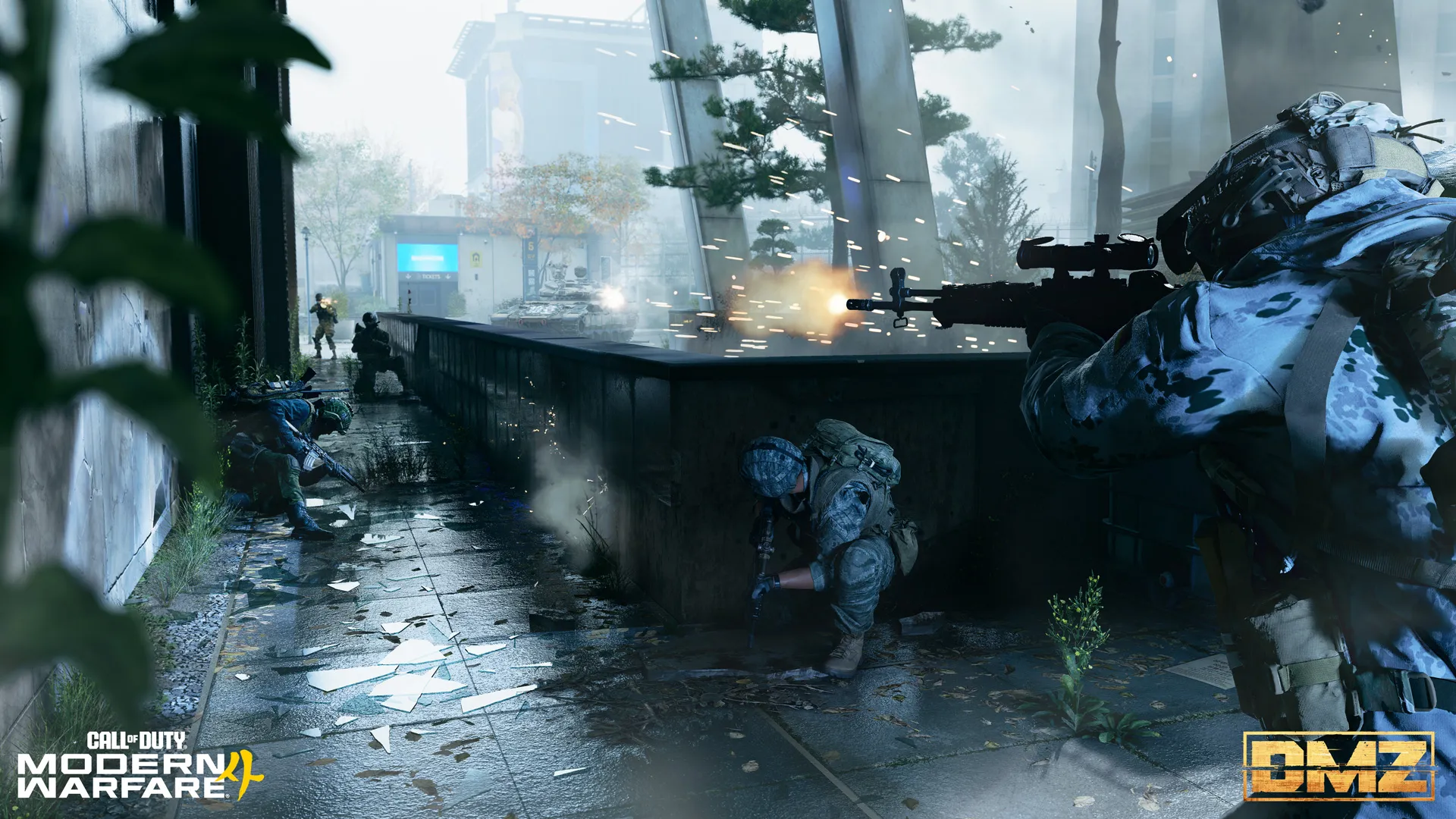
If you want to just jump into Hajin without an objective, you can choose Free Roam. This lets you go at your pace, which resembles the classic experience. If you want to do a Dynamic Op, just go find a phone to activate. If you're all about searching for parts or resources for the FOB, that's available too. Maybe you just want to infill and kill. Well, get to shooting buddy. The way you come in can even be adjusted, as you can spend cash to start in a land vehicle or plane.
Some of the best missions on Hajin have been hunting the lieutenants. Our opponent’s men are no slouches, and most have a hook that makes them a fun fight. One of my team had a real rivalry with a guy called Gorani, a stealthy sharpshooter who battled us with inflatable decoys, grunts, and a deadly marksman rifle. I wouldn't fight him solo, but I'd 100% recommend you play that one – it's amazing.
Hajin is equally amazing. This humongous map is the largest one built for any Call of Duty mode, and it shows upon entry. It felt like there was so much to see, and even in my close to ten hours of playing, it seemed like I’d only scratched the surface. Hajin has many spectacular views, with the cityscape towering, the seaside coldly churning, and the mountains casting shadows across the farmland. Sure, there’s familiarity in the rock, dirt, and pavement of Hajin, but in the same way a visit to the Rocky Mountains might be similar to a Smoky Mountain vacation. There’s even more to explore, however, as I found so many nooks and crannies alongside secret passages and bunkers. Infinity Ward has also added dynamic weather, so each instance of the map you drop into is different from the first! Trust me, there’s nothing like fighting an enemy team in dense fog.
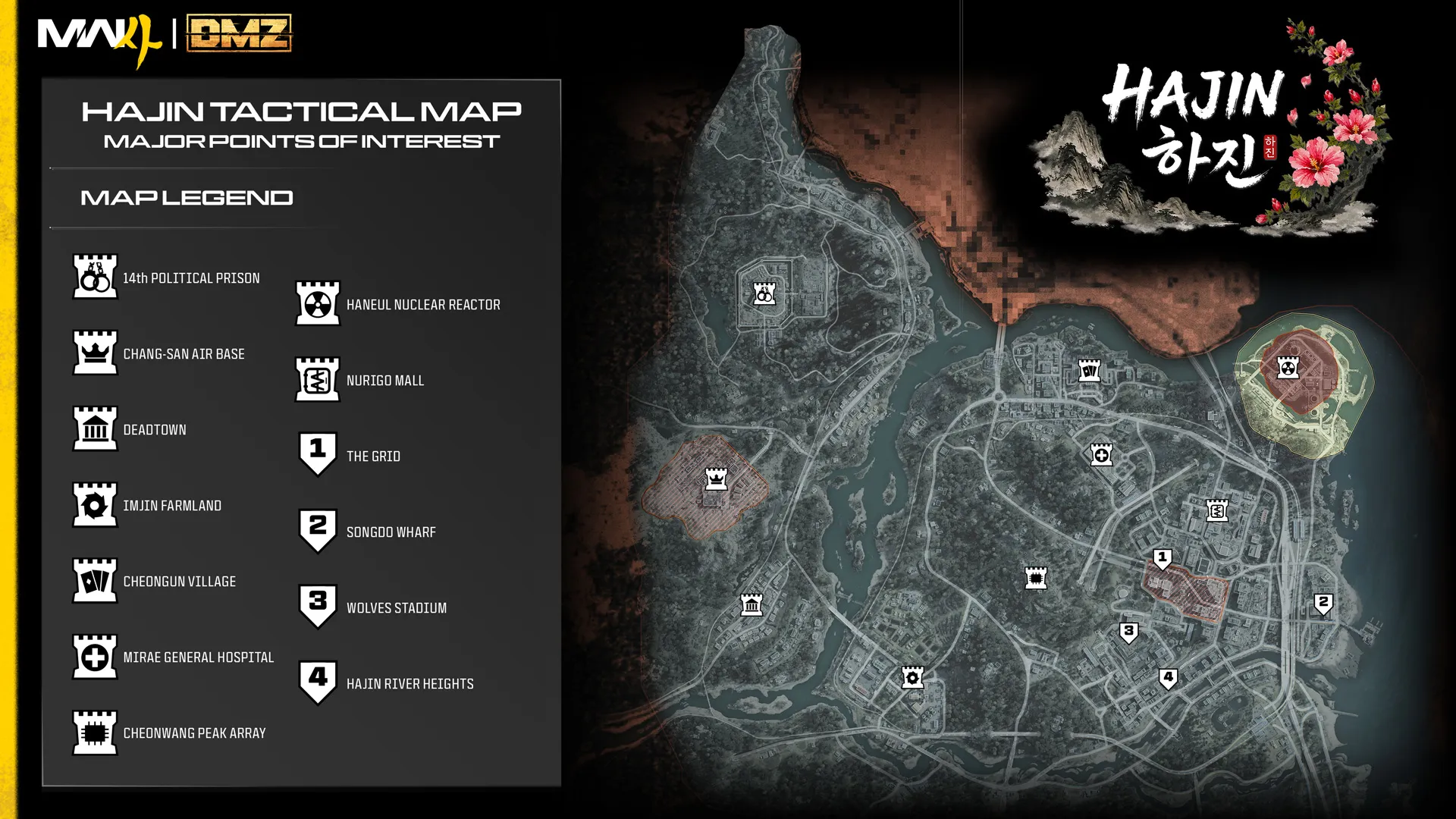
DMZ offers a real RPG-esque experience in its design. Talking with Jack Hoppus, one of the Technical Designers at Infinity Ward, the intention of the game is the discoveries you’ll make along your journeys. You might be hunting down a lieutenant, but hey, here’s a UAV to activate. Oh, what’s that side op popping up over there? It reminds me of why I love Fallout and The Elder Scrolls games – the feeling of coming across something yourself makes for good gameplay. While certainly not as deep as those two games, extraction shooters somewhat offer that kind of ideology: a character I create and build up over time, but I’m only visiting the map to play for thirty minutes at a time.
Speaking of thirty minutes, just like the previous mode, you’re going to have to get out before radiation starts to spread from the randomly designated point on the map. Exfil is something you can do at almost any time during your session, with a final exfil location opening up later on for stragglers. I’m really digging the changes to your experience while attempting to leave Hajin, in that there are no forces designated to try and stop you from exiting, beyond close-by AI bots or any real players trying to get out as well… or in wait to kill you.
Although there’s nothing really fresh about it, you can engage with other players. If you wish to be friendly, you can ask for a truce through proximity chat or a new ping option. If accepted, this will create a blue circle on your and the others map, which is considered your agreed zone of no harm. That said, it’s not binding; friendly-fire isn’t turned on and you can just attack if you want. It’s not gentlemanly, but it can result in some nice gear or dog tags to collect. Just be mindful the same can be done to you. There are supposed to be twenty teams of three at a time, but with how big Hajin is, I wouldn’t be surprised if your encounters are more limited to exfils. Still, I hope the team can utilize the right systems to keep griefing to a minimum, as the MWII DMZ beta was rife with the scum of the earth. I guess we’ll see what happens when the community gets into the game.
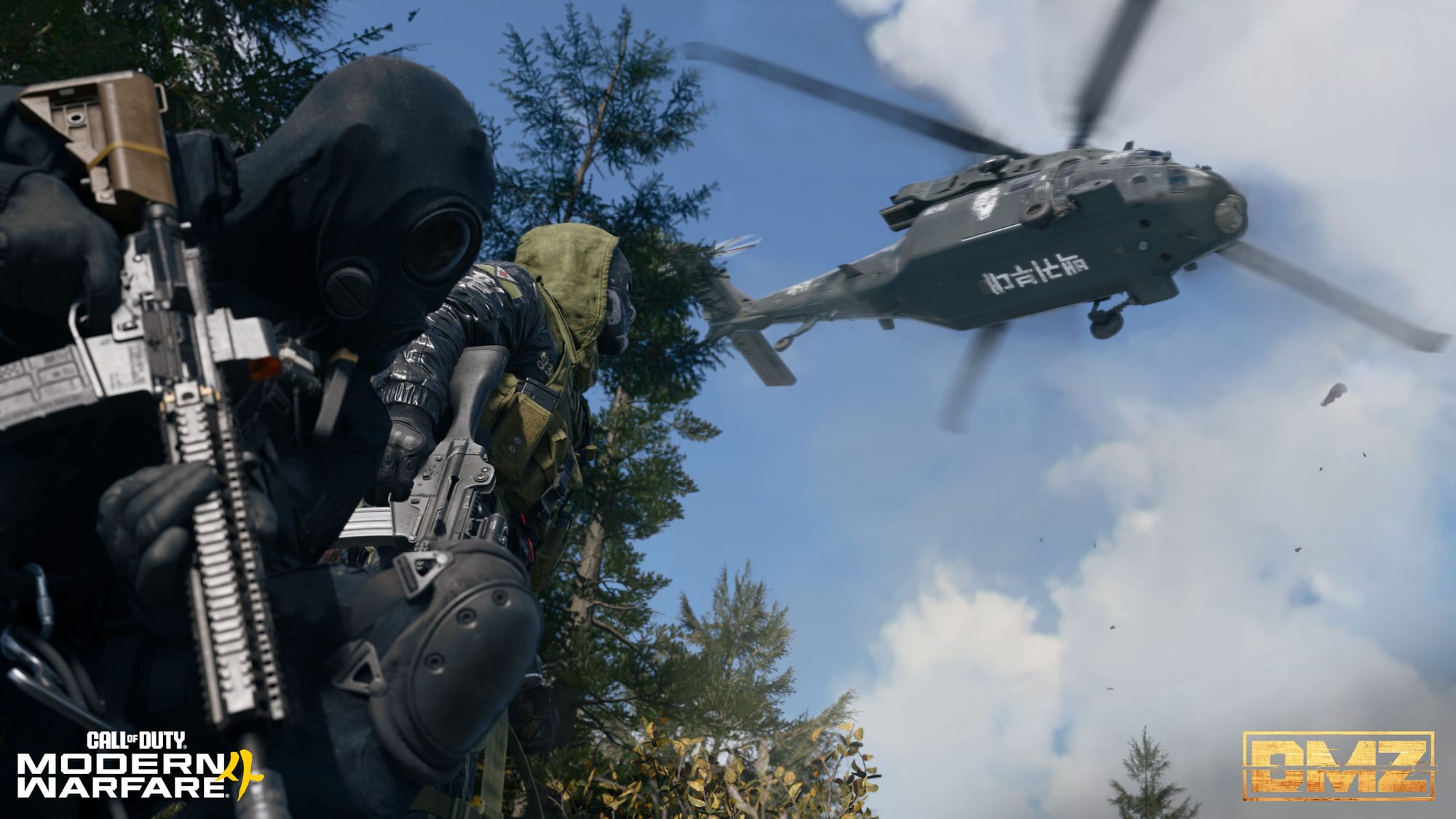
Other gunfights occur with AI bots, and they can be a pain. Especially the ones driving, those guys are madmen behind the wheel. When you kill too many, a system similar to GTA’s wanted level is invoked, causing you to be searched for. Stay hidden for a bit, and it’ll go away, but too many of these guys can become overwhelming. There are levels to them as well, with four different tiers of baddies to take on. Be careful, because you can get wrecked if you aren’t. Sometimes the best route to take is a quiet one, and I’ve really liked the new stealth mechanics for that. They’re basic, but it’s better than instantly being noticed and having no idea how, like in the original. Now you have a chance to get in, take a few out silently, either via takedowns or silenced weapons, and get out unscathed.
Losing a fight isn’t necessarily the end of the world. It sucks to lose good gear, but your operator can be recovered. If you have the money, or can eventually get it, the operator who is MIA can be bought back, and they return with their traits intact. The loadout you took in might be gone, but at least you don’t have to permanently lose a good team member. If you don’t care, however, you can dismiss them and start fresh.
Hopefully, the intensity of the DMZ’s extraction shooter style rises once the community makes their way into the game. I did notice that, even though there were some dicey situations, I rarely felt the pressure of a possible battle where I might lose everything. It’s not that it’s easy per se, but more that many situational moments had multiple off-ramps I could take. Infinity Ward has dubbed this the “action-extraction shooter”, so that’s going to be a part of it, but I’m sure there’s a happy medium to be found. It might just take the full squads hitting the map for me to see that side of DMZ.
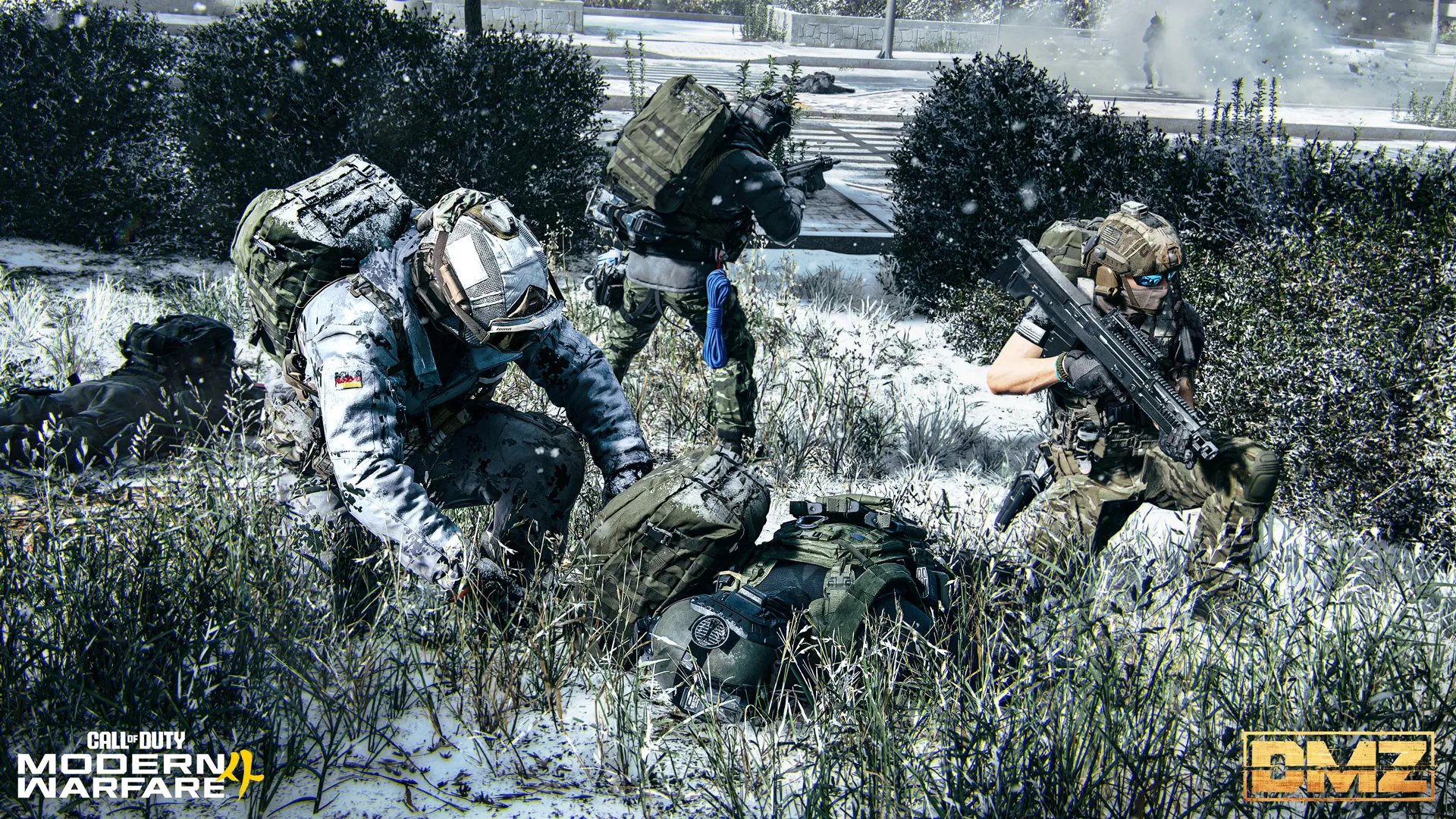
Loot seems fair across the board. I rarely go into a session without coming away with something useful. You can take it slow and just go through random houses, but there are marked locations on your map that reveal where you’ll have better chances for specific items. If I want a better gun, a trip to a military compound or police station makes sense. If I need medical supplies, the hospital is definitely the best choice. There is also tracking available for whatever you’re trying to make or upgrade at the 3D Printer, so it makes life a bit easier when it comes to finding what you need.
Overall, DMZ is a much deeper mode than it was previously. It’s managed to divorce itself from being just a variant of Warzone, even if down below there’s plenty of shared DNA. DMZ is fully realized, with lots of progression to engage with and even more map to uncover with Hajin’s expansiveness. I may only feel like I’ve played for a tiny amount of time, but I can’t wait to add much more to that and discover new secrets. This is a phenomenal upgrade from what came before. It’s going to have a lot of players hooked by its simple yet immersive gameplay loop… and I fear I’ve fallen victim already.
Multiplayer
My bread and butter is Call of Duty’s multiplayer. I play it constantly; I know the metas and map callouts, I watch every Call of Duty League match, and usually live. This is how I’ve kept up with great friends and made new ones, so this mode is special to me. After three straight years of quicker pace and higher TTK, I was a tad concerned about going back into an Infinity Ward title. Turns out, I had no reason to be, as this new squad anchoring the development has been willing to make massive shifts to evolve the Modern Warfare series.
Arguably the biggest change has come in the time-to-kill. Infinity Ward skews higher, aiming for a more realistic tone. Over the MW4 beta weekend, they went absolutely crazy swapping around the TTK, to the point I couldn’t believe I was playing a Modern Warfare game. Still, it was good to see them go after new data points. I wasn’t sure how things would go, as the final days of the beta it felt a tad too high, but they said they were making adjustments, along with a big buff to submachine guns. After playing with their final TTK pass in place, I can say it’s more or less where I’d like to see it. You’ll usually kill in about four bullets, give or take a bullet. I didn’t feel like I was getting deleted nearly as much as well, so hopefully some of the hit registration that makes people mad has been smoothed out.
Speaking of smooth, the movement has also seen additional tuning. While I do think there will be plenty who miss omnimovement, or just a snappier style, this game is a far cry from what Modern Warfare II was. That game felt clunky; this one is much crisper in how you move around the map. Yes, the pacing isn’t as fast, and there are still some dead slides and the occasional feeling of being cumbersome, but IW has cleaned up even more rough edges on the way to launch. I don’t expect to wall bounce into a sixty-foot slide when I play a Modern Warfare game, but it’s nice to see a more fluid system for movement in place.
The maps are where I’m possibly the most uncertain (outside of Combat Outpost, which we’ll discuss shortly). I don’t load into these maps and consider any of them must-play. I think they’re respectable, but it’s one of those spots where the more competitive player in me doesn’t see as much that works for that setting. Most of them feel a tad boxy, which can exhibit a weird feel. Spawns are somewhat readable, but also need fine-tuning to keep from those random moments where someone ends up behind you, and you don’t know why.
I do appreciate how varied the locations are, and the way the maps flow, which seems to follow the “go simpler” philosophy we received last year. My favorite is probably Rooftops, and that is more due to being an environment I don’t remember seeing much of in previous games, alongside a good flow and larger map volume. Infinity Ward still loves to throw in a lot of verticality, which can open up some good additional routes, but also means you can be shot from a lot of extra places. There are twelve maps to start, and with Season 1 arriving only two weeks after launch, I’m less worried about the quantity. These are good quality, but I do think there is plenty of room for improvement.
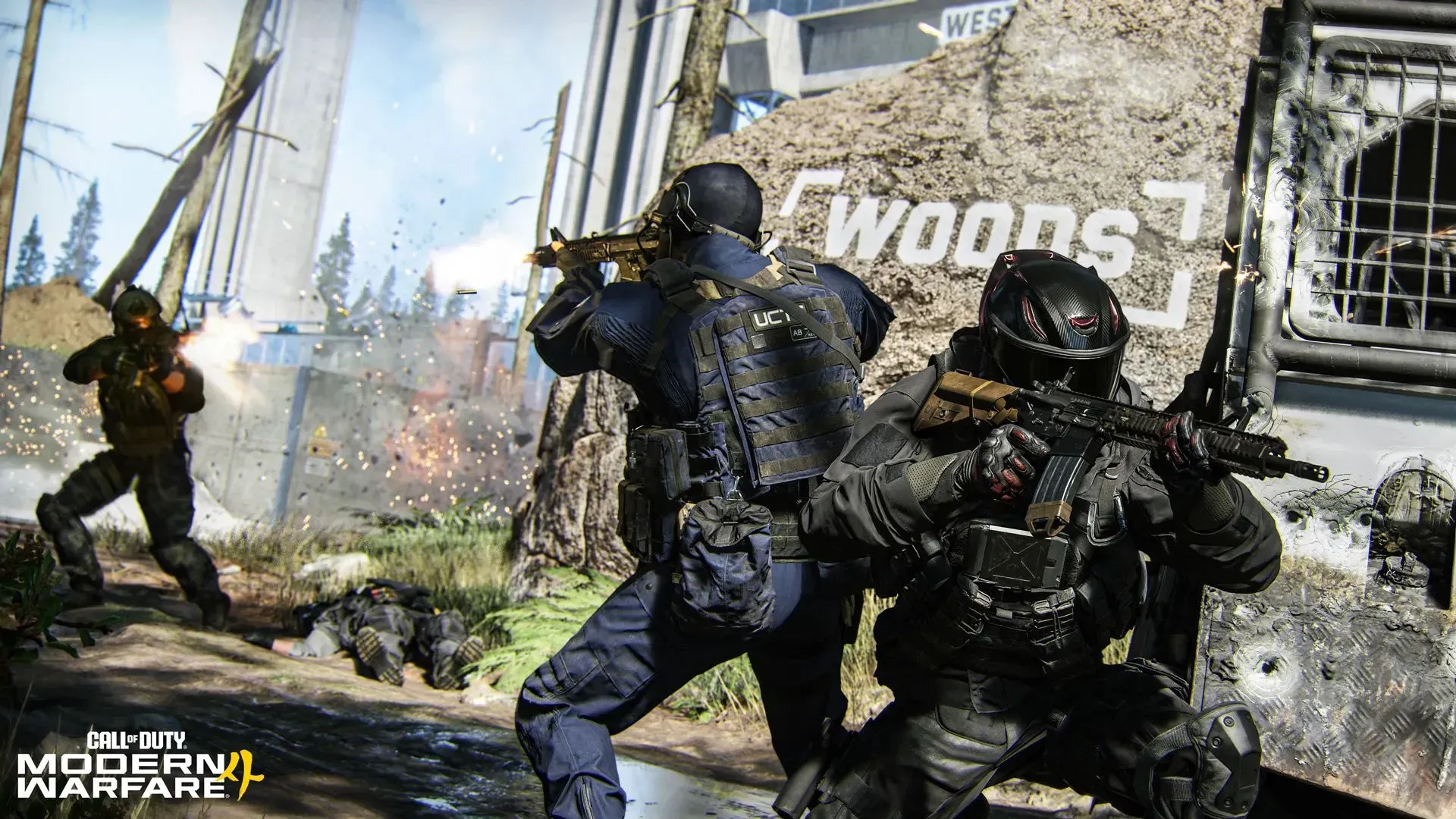
All of that regarding maps aside, Infinity Ward cooked with Kill Block. I sang its praises in our multiplayer preview from the beta weekends, and it continued to show off in my review sessions. A map that changes as you play, does so smoothly, has over five hundred combinations, and will work in other game modes is extraordinary and unbelievable. The technical prowess the team has displayed in creating this is incredible. As soon as there are more, I want to play as many different modes on Kill Block as I can. You need to experience this map for yourself; it is worth the cost of entry.
Infinity Ward has worked hard to build a lot of new modes for Modern Warfare 4. I wouldn’t say they all are bangers, but most work well, and some are standouts. First up is Collateral, which is a more intense version of Search and Destroy, while essentially being Call of Duty: Counter-Strike. In this mode, you’ll buy weapons, armor, gear – everything you can afford at least – before attacking or defending two bomb sites. It’s going to be intriguing to watch the COD community take this mode on, especially with more complex strategies around buying, saving, and knowing when to lose a round. Lemme play Kill Block Collateral, Infinity Ward, and I’ll be indebted to you forever.
Frontline and Hijack are also lots of fun. Frontline is pretty simple: it’s Team Deathmatch where each team has a dedicated side of the map to spawn at with protection. This prevents spawn trapping, but with a side flip at the midpoint, it also gives teams a breather to reset. You don’t always need to reinvent the wheel for a good time, and Frontline provides that.
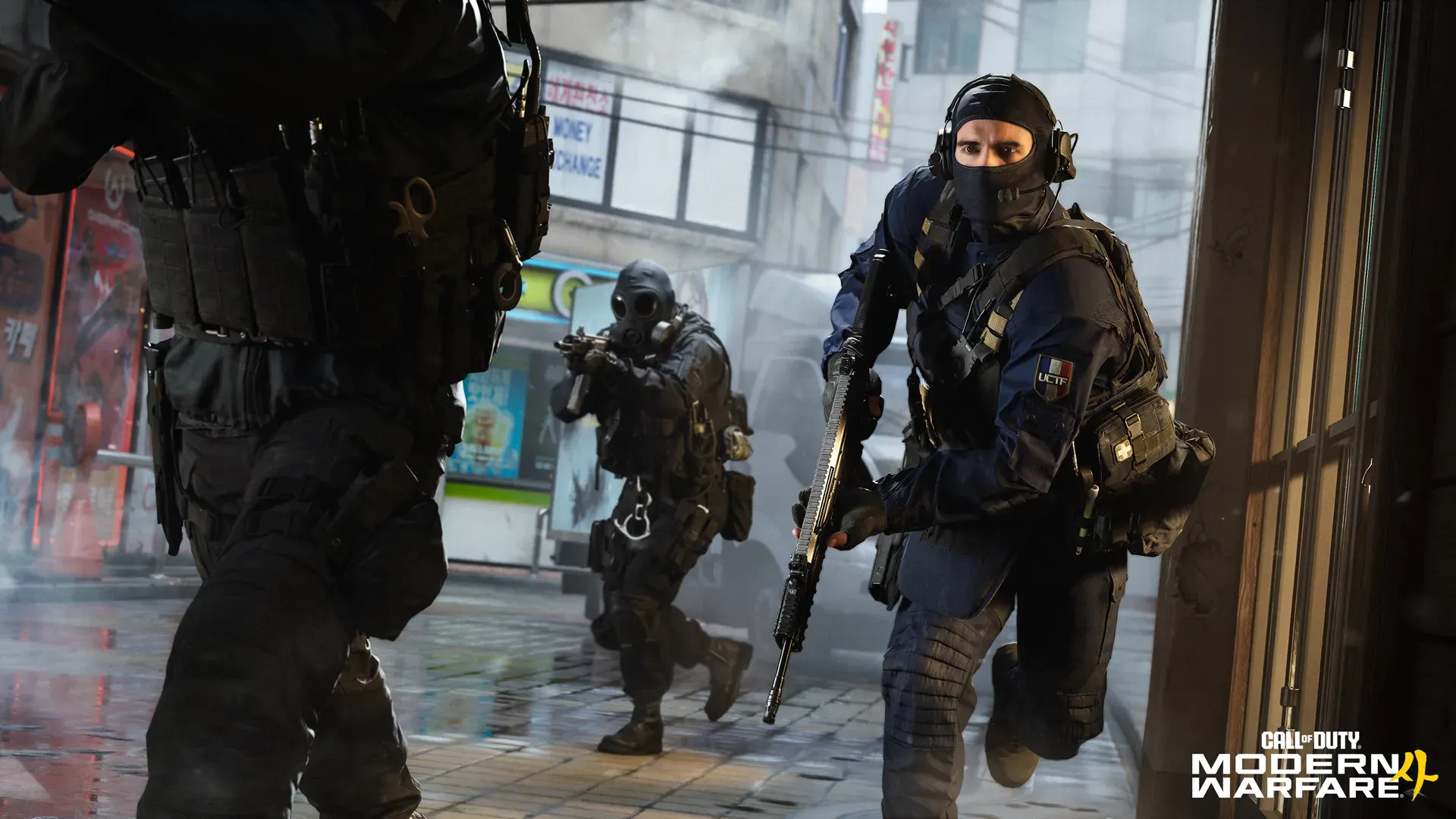
Hijack does somewhat reinvent the wheel, and mainly because it had to happen for this kind of mode to exist. With much fewer movement options available in Modern Warfare 4, a mode like Uplink or Overload doesn’t work. That said, Multiplayer Design Lead Jacky Reynolds wanted a tug-of-war mode in the game, especially as something that would work for the Call of Duty League. Hijack works because it’s quite different from anything else in the game, moving a data spike to an enemy tower before defending it for maximum score, and then doing it again. It’s going to be fun to watch pro teams duke it out in this mode, but also watch regular lobbies learn how to set up in the midst of the chaos. Overload was already a blast, and Hijack has the opportunity to match that energy.
Inflation may be the only mode I'm just not vibing with. It's not bad, a deathmatch-esque mode with money lying on the ground to pick up, and more of it to take from your opponent if you get the drop on them. I'm sure there's more to it than that, but it feels like TDM with extra steps. It might be worth playing a few times just to mix up your playlist, but it's not an exciting mode.
Ranked Play does excite me, and I have a couple of thoughts surrounding the competitive mode. First, here’s hoping it arrives quickly; hopefully as soon as Season 2’s launch. With the league starting up online tournaments in November, it’s a good time to capture people’s interest. Second, the maps. Season 1 probably needs to have at least one good option, because the current set only has a few I see as viable. Rooftops is the best one, with Munition and Lotus as two others I see working alright. Reactor 92 and Lithium are maybes, with Coal’s large nature probably keeping it from being a 50/50. Third, the weapons. With a decent range of guns, I’d love to see a multi-weapon meta. The M4 is probably going to be a do-it-all, but the Han 86, Patriot XMR, or Axion might be better suited to the mode to keep from everyone just running an M4. SMGs have a lot of choices, but the Iso and possibly the Striga seem like the best shots. Watching everything play out is going to be interesting, that’s for sure.
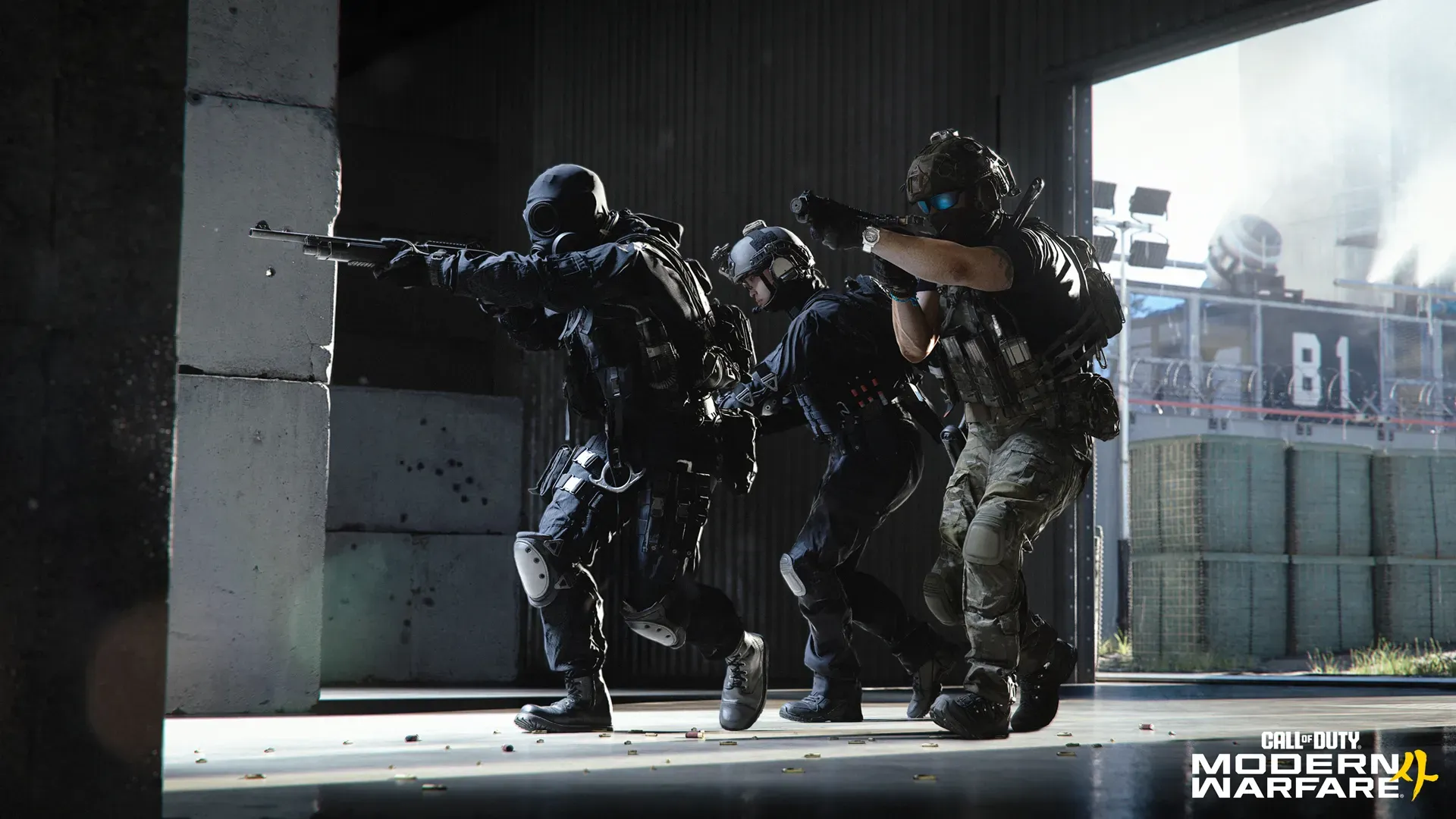
Moving away from anything even close to competitive, Combat Outpost is the new Ground War. I will largely stay away from a long discussion on it, as I dislike the style it puts out there. Spawning in and almost instantly getting my head torn off is not my type of fun. More patient players, or people who love Battlefield, are likely to have a great time in Combat Outpost. The points matter more, with multiple levels of capture that benefit your team with greater rewards, like tanks and killstreaks. Anyone who wants that big-map warfare experience without having to jump into Warzone should be pleased, especially as the maps are sections of Hajin. We’ve seen Infinity Ward use plenty of Warzone sections for Ground War before, but Hajin is a tremendous map that deserves more exposure.
I’m actually quite happy with the armory in this game, with the exception of wanting one to two more submachine guns in the mix. As someone who plays a more aggressive style, however, I’ll always want that. Each gun feels well suited to its role, with assault rifles having the ability to lock down mid-range, submachine guns and shotguns being deadly up close, and snipers having that crazy one-shot boom we all know and love… unless we’re on the other end of the scope. Marksman rifles do seem to have been toned down in my build, but they can still one-tap you if the person is a good shot. I’ll be interested to see which weapon will earn the title of most busted as we make it through launch weekend; there’s always one, and it’s always a problem.
What isn’t busted, and surprisingly so, are the Apex attachments. These little buggers are similar to the special attachments from past games, which take a gun and give it either a new feature or even change its platform. For instance, the M4 assault rifle can become the Hurricane submachine gun (a weapon you either remember from the beta or MWII), and the Oris 8.6 marksman rifle has a sheath of kunai blades mounted for quick access to throw. Where they aren't overpowered is in how they're implemented. They, in general, haven't been broken types of attachments, but they also block additional useful attachment slots, making it harder to beef up your gun. It's a good trade-off.
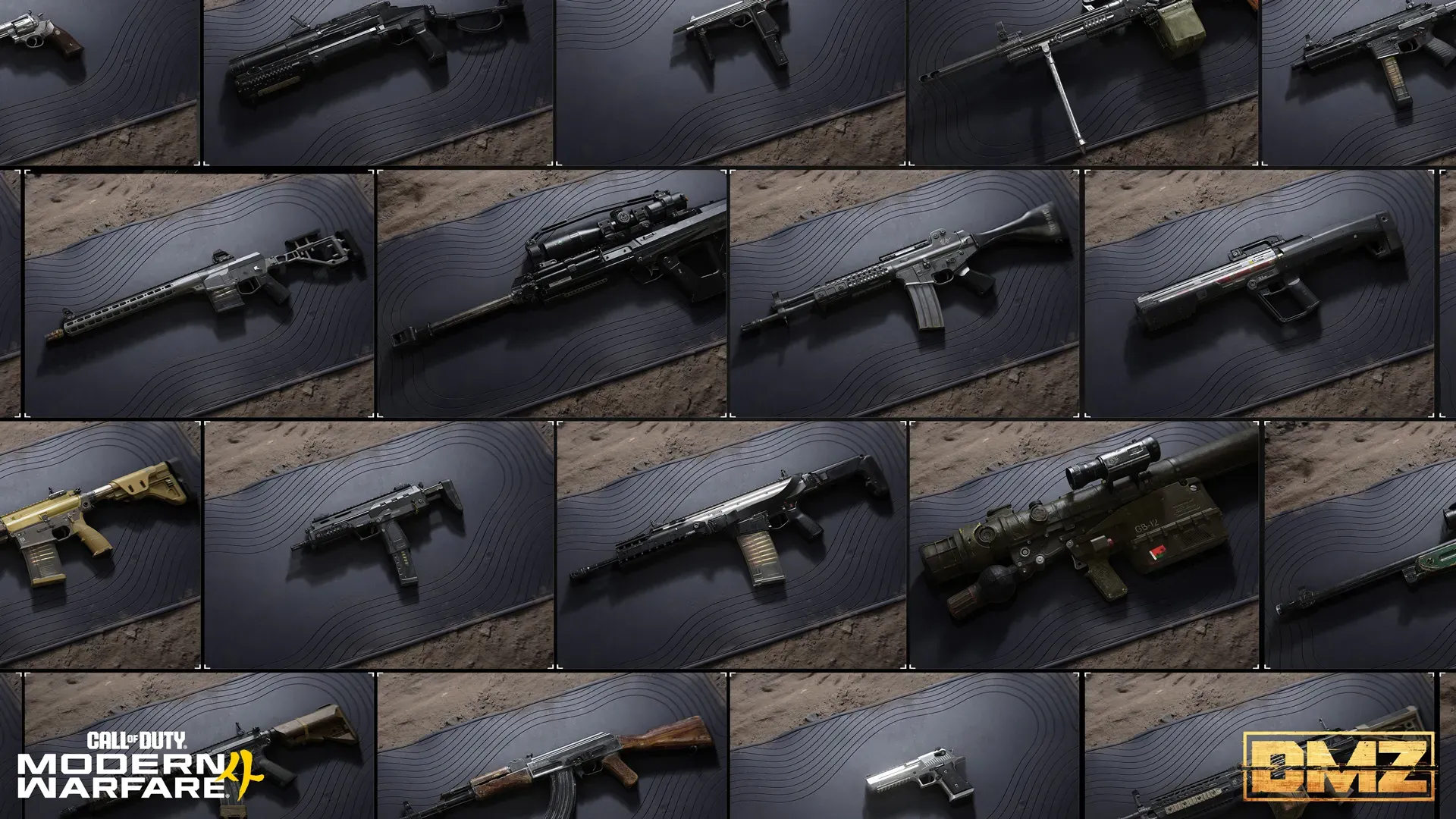
Modern Warfare 4’s theme for the rest of your arsenal almost seems to be simplification. In previous years, we'd be bogged down by a ton of new tacticals, lethals, and field upgrades. Not to mention more over-the-top perks and killstreaks. This year, it seems like everything has calmed, and Infinity Ward wants you to focus on what's already there. You're limited to five attachments on guns, and the unlock system makes crossover attachments already available on other weapons. Perks have been reshuffled, but only six are in each of the three slots. There are a few new choices, but nothing that goes too wild. I'm really happy to see this kind of restraint and adjustment by the team to give players more by giving them less.
There's still an elephant lingering in the room, and his name is matchmaking. Classic matchmaking, skill-based matchmaking, whatever name it takes, it's going to be a ride. I couldn't exactly tell you how it affected me in the beta, because I didn't do terribly, but I did feel like I was getting slammed in plenty of instances. A beta isn't launch weekend, however, and while Infinity Ward has said that's the type of matchmaking they're using, they've smoothed all the other aspects of the game. I won't hold my breath and think they've solved matchmaking, but I wouldn't be surprised if there are a few tweaks. That said, this is more times than not going to boil down to whatever the suits say.
Call of Duty: Modern Warfare 4
Great
Call of Duty: Modern Warfare 4 boasts the series most well-rounded experience. Excellent outings for campaign, multiplayer, and the outstanding DMZ mode come together to make for a strong Modern Warfare entry, and possibly the best of the reboot series. Infinity Ward has found their magic again – this is how you evolve a long-running franchise.
Pros
- Still the best gunplay in the shooter genre
- Stellar and provocative campaign
- DMZ rocks and has room to grow
- Multiplayer has a smoother foundation with awesome modes on top of it
- Tremendous visual and audio experience
Cons
- Not enough Mads Mikkelsen
- Matchmaking hovers over the multiplayer
- No standouts in map pool
This review is based on a retail PC copy provided by the publisher.