Gunsen’s one of those games I play as a design-first gamer, and immediately fall in love with. Who cares about anything else now that I’ve got an asymmetric TI4/Scythe Euro DOAM (dudes-on-a-map) objective rush streamlined down to play in under two hours, all silky smooth? Then people like Mike come in and ask me, what am I doing, what's the theme, and my best response is you’re Legend of the Five Rings clans trying to get seven fans before the others, because reasons? This is why I don’t understand the straights, collecting nice accessories is its own reward, but apparently this is a “thin theme” and automatically makes the game kinda bad. I’ll admit, there’s certainly plenty of choices made both in Gunsen’s design and production that are going to be polarizing, where you’re either going to love it or at least admit it has its merits. Because you're not allowed to hate it. Now, I’m on a mission to get this bad boy in front of every DOAM gamer out there, because it deserves a shot, or two or three. Maybe I’ll just Clockwork Orange-style strap you into a chair and force you to play Gunsen until you admit it’s better than Scythe. Watch out, ‘cause we are just out of spooky season, and the Gunsen Guy will still get ya.
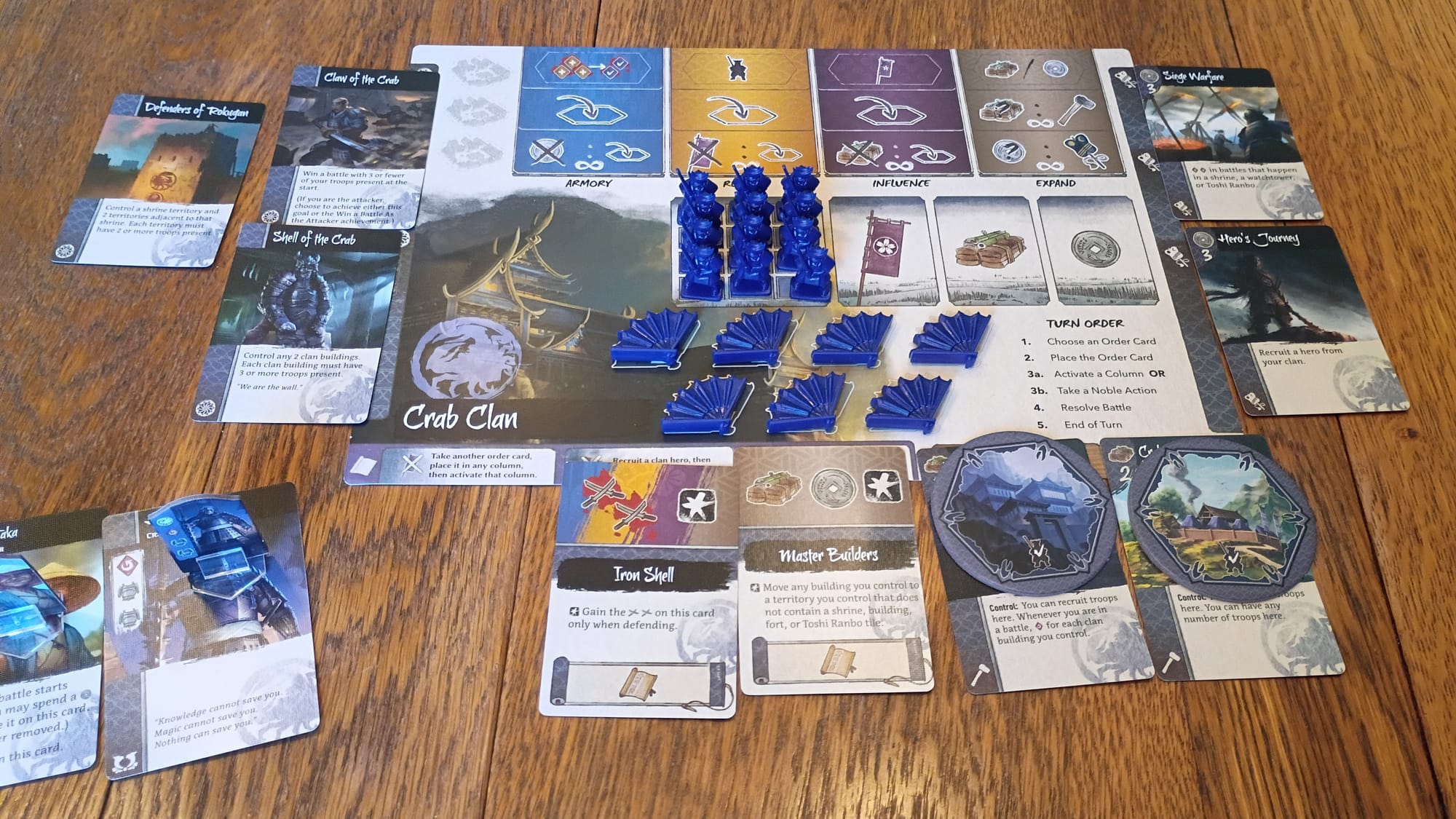
One of the things the American scene has lost in the shift away from the older design ethos was how great the genres we lived in were at generating player interaction, and the interesting table states that happened as a result. Gunsen leverages those strengths of its genre, light mechanics, and quick playtime to crank out them fighting boy juices at unprecedented rates from before the game even starts to the closing bell. Factions are picked in turn order during setup, and you totally can make informed decisions based on starting resources, randomized board setup, and what the people before you picked. I know that the idea of making choices that matter during setup is a taboo to some people, but that first game or two where you don't know what those setup decisions mean will also go incredibly fast because y'all won't know how to meaningfully interact and police each other yet, so somebody will figure out a way to pick up their 7 victory achievements in around an hour. Player turns amount to grabbing a card from the market and slotting it into its column in your player board to activate it, gaining troops, resources, and movement, or buying buildings and faction tech in the last column. The swing of when you get what you want in the market and everything hums to a garbage market forcing you to play the table and actually talk to folks to advance your table state is admittedly pretty big, softened a bit by the noble actions making three cards every game pseudo-wilds, at the cost of influence.
For the first few rounds, players will build their economies, work towards side objectives, cautious of cracking Toshi Rambo’s 5-strength first entrance requirement, ‘cause sure, it's two points for you between stepping foot in Toshi Rambo and the temporary control achievement, but somebody will waltz in with a lesser force and gain 3 with the win a battle as the attacker on top. Combat in Gunsen is an incredibly swingy and attacker-favored affair, especially early before players have built up sizeable armies and combat buffs. Whenever someone moves their boys into a hex with someone else's boys, both sides tally their respective stats (like strength, which largely comes from troops and dice, and blood and armor, which cards and heroes dole out); the defender rolls their dice and modifies the tracker accordingly before the attacker does the same, with the attacker winning ties. All that tracking makes combat jarringly clunky compared to the rest of the game, but it's still quite fast compared to how the genre as a whole approaches it. I honestly don't think it could be streamlined any more without losing something important or shifting some burden onto the rest of the game, which just doesn't make sense given how disproportionately it would affect the overall experience. After the first couple rounds of building up, someone will make a play on Toshi Rambo, and the game will end pretty quickly after that. Maybe not with a grand dramatic battle in the middle for all the marbles, maybe just somebody chaining their last noble action into building both of their clan buildings and the last of their tactics. Either way, those first few games will be fast, and if you're paying attention, you'll be learning Gunsen's flow, as dictated by the card market.
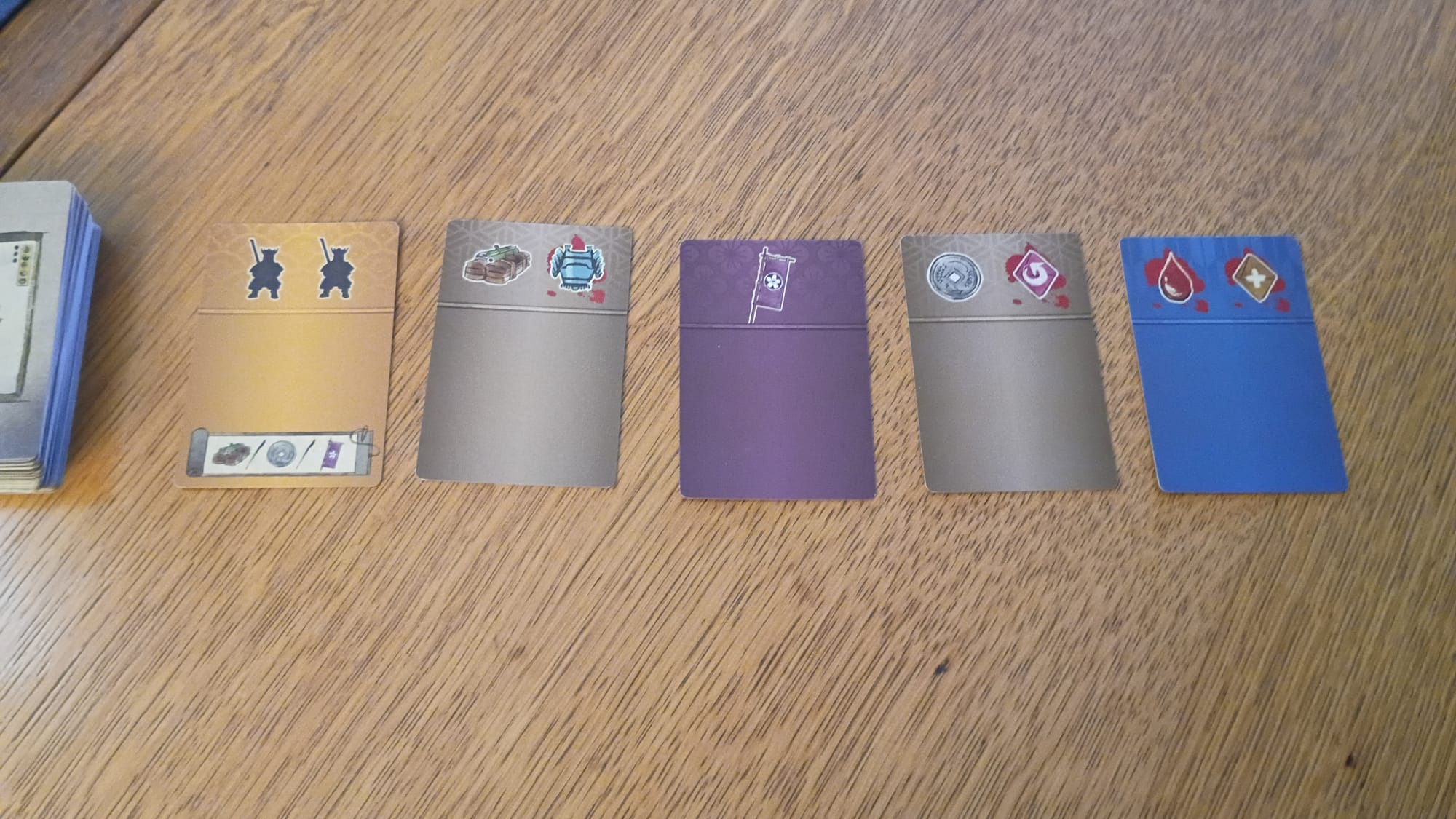
At first, you'll think of the market the way I did, as a simple but unbalanced way to keep players from pursuing one dominant strategy one game after another, to keep them on their toes. But Gunsen is a DOAM, and good DOAMs have never been about just doing what's best for you, damn the table state. What the market does is provide an uneven income of power to the players, so that players can put on their best Tokyo Gore Police cosplay and samurai cop-style cut each other down before they're doing things that are too strong. Gunsen doesn't force its players to do this; y'all can hunker down and only care about yourself, multiplayer solitaire, and let the person with the lucky draw win, but I dunno. That doesn't feel like the fault of the intimate collection of cards and dice when it gives you the tools to do better. Gunsen at its peak is the beautiful combination of negotiation, kneecapping yourself so you don't look like a threat, and then doing a triple backflip over the finish line while everyone’s looking at someone else that the genre always promises but seldom provides, this time actually attainable due to Gunsen's simple mechanics and short playtime. It may be time to start working on Ben Rosset’s lifetime achievement award.
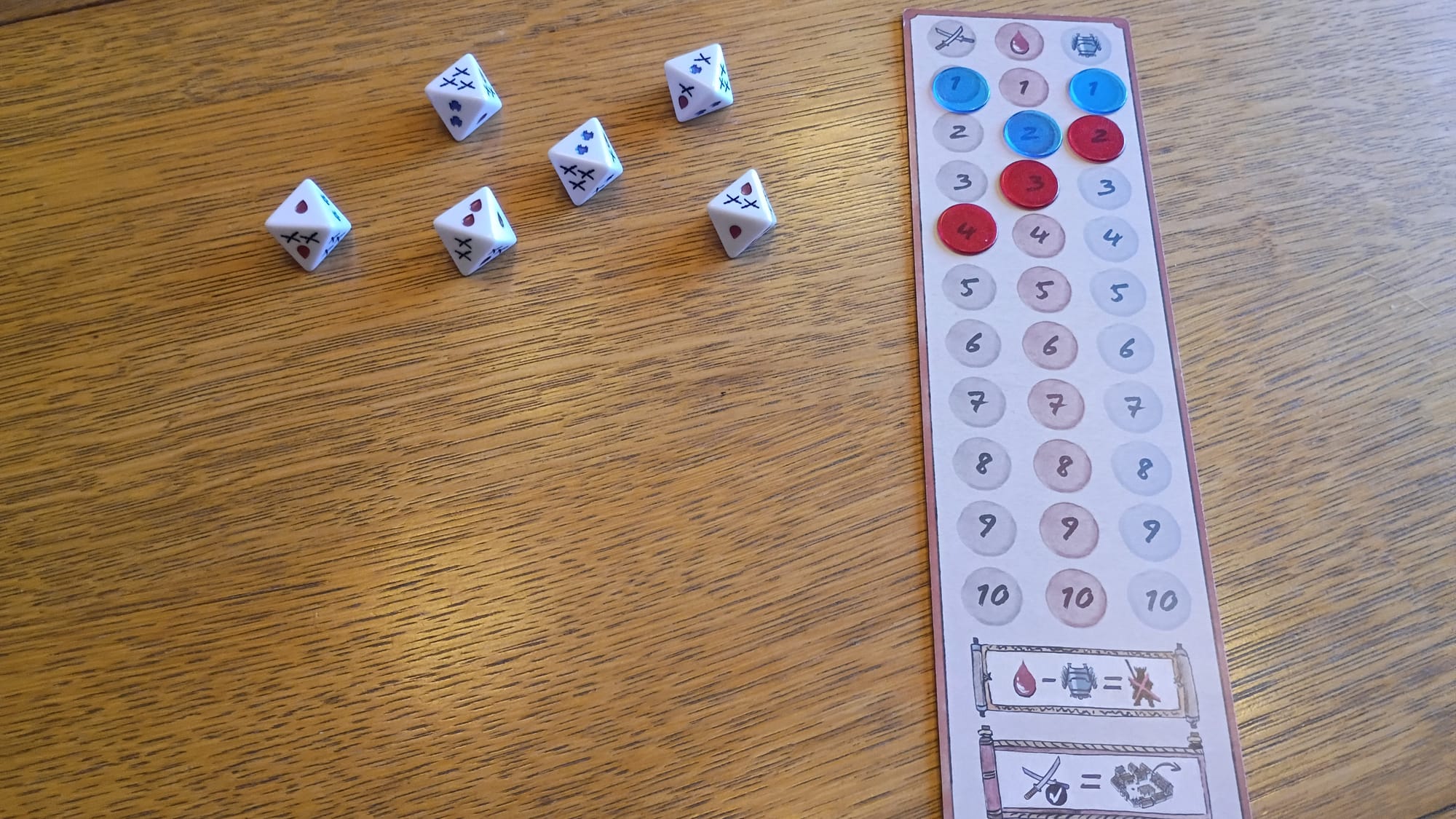
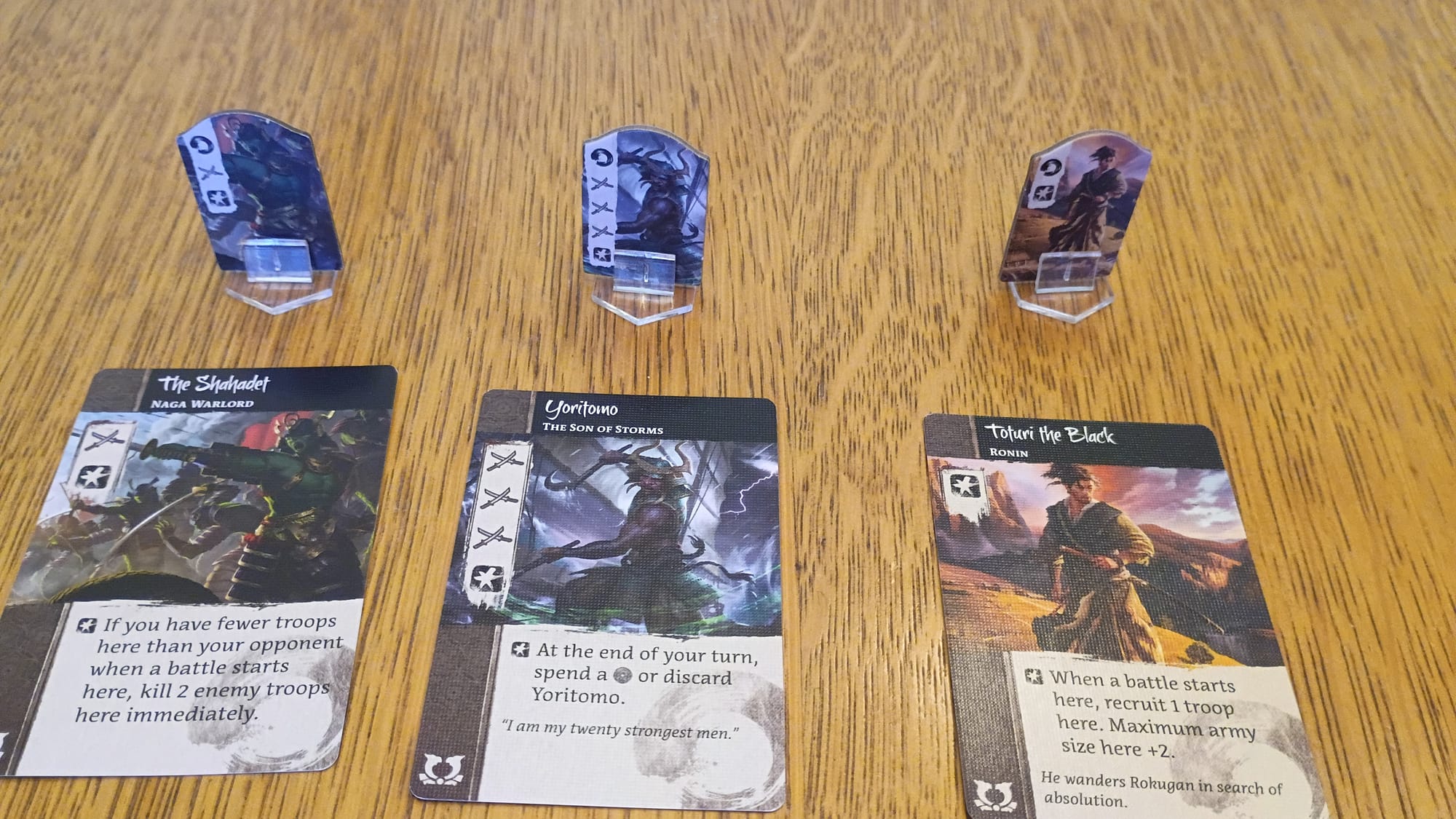
If Gunsen's design is an absolute master class, the production is more of a mixed bag. On the bright side, in today's age and Gunsen's price point, I would've been fine with faction components being wooden cubes and discs. Instead, we get samurai minis and interlocking fans, which feel great and vastly improve the readability of both troop numbers and who's got what objective (I might've checked with my components from other games after hearing bellyaching). But the iconography is unhelpful, the thin colored chits used on the combat tracker should've been just about anything else, and the wood and village tokens are similarly sized and shaped to where I've mixed them up during cleanup more than I care to have to deal with. I'm probably going to deluxify my copy anyways, and replacing the wood is on the top of the list, but oof. The rulebook is also not my favorite, but we all know I couldn't say substandard there, because bad rulebooks are still the standard.
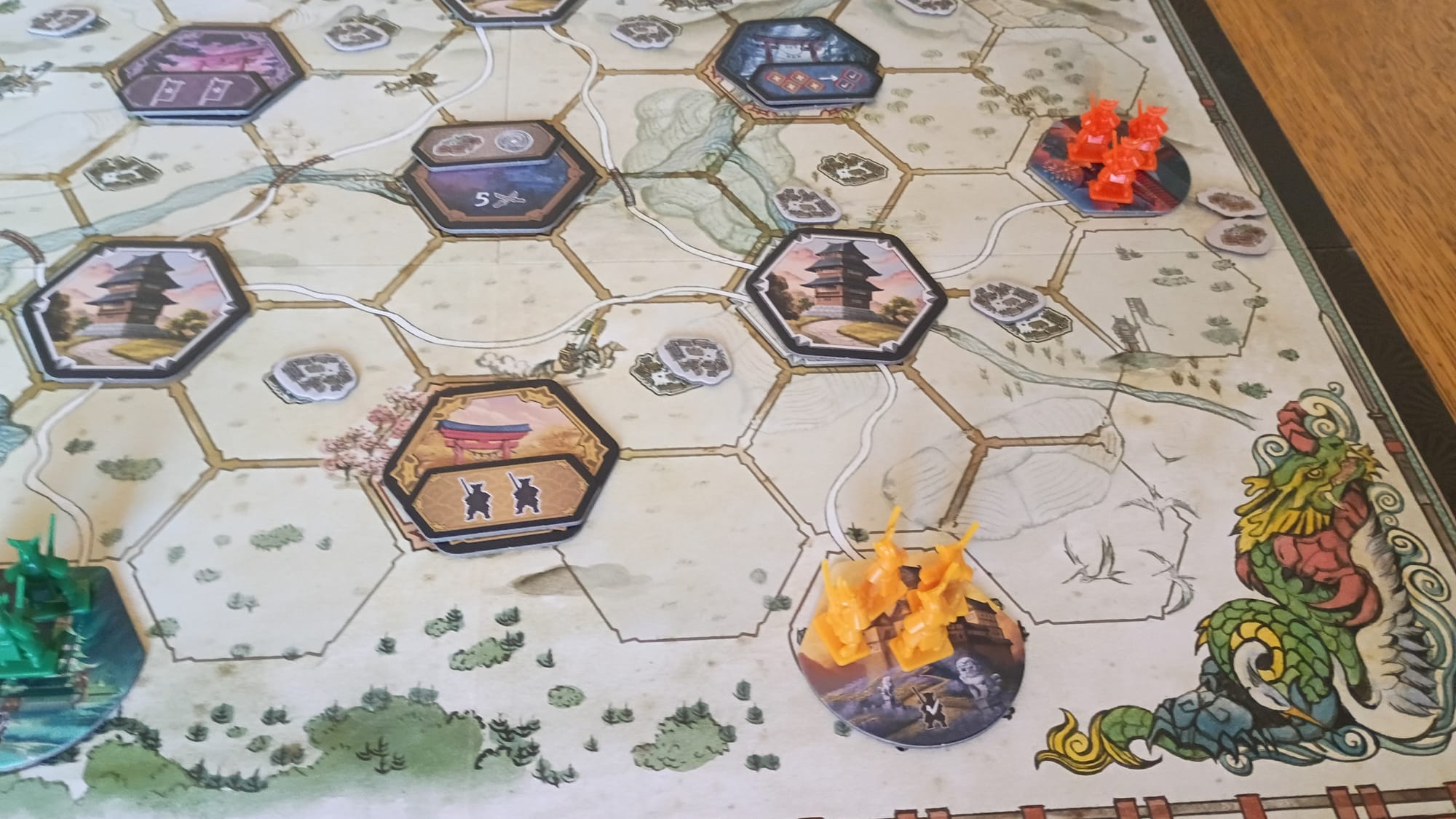
I'm generally the last person to talk about theme in a board game; theme should exist to help us learn and retain mechanics, but boy, does Gunsen's paper-thin theme fail even there. Strip away the Legend of the Five Rings art and names, tell me the name of this game is Boyfight! 2026, and I wouldn't bat an eye. A L5R fan would correctly pick the clans that do movement, economy, defense, troops, and versatility, but that's where the good ends. They'll either chuckle and shake their heads or be just as disappointed as I am that the Mantis representation is just Yorimoto showing up to be some guy the real clans can maybe hire, if there’s time. I don't care, though?L5R has become Asmodee's generic stamp-on theme, between this and River of Gold, and I'm perfectly happy with both. Avoid them if theme's the most important thing to you in a game, but I'll warn you that down that path lays a future of playing mediocre-to-bad games. Live your best life.
Gunsen: The Battle for Toshi Rambo
Excellent
Gunsen is the pinnacle of hands-off Dudes-on-a-map game design, hampered by some questionable publisher decisions. I can't tell you whether or not you’ll care about them, just that I really don't.
Pros
- I love high-level Twilight Imperium, but the barrier to entry means very few get to experience it. I also love High-level Gunsen, and almost every group that has a copy will be able to get there
- The lack of strict balance between factions creates intensely interesting table states if players decide to actually interact, and provides them with a teachable pubstomping if they refuse
Cons
- Where's the theme? do we need to portal to fantasy Asia to find it?
- There's no guardrails forcing y'all to stop the person in the lead, so a player making all the right choices improperly hindered by other players can barrel into a win in the fist handful of turns
- some of the iconography and components are mediocre at best
This review is based on a retail copy provided by the publisher.