Yin Yang debuted in 2019 under BGNation and a few other publishers, but this year it will receive both a revised version and a broader release under Capstone Games. While I hadn’t played the original myself, I was lucky enough at Gen Con to preview this latest edition along with another player who had, so I can offer some insight into what’s different based on what they’d said while we played. Note that since this is a preview, the components are not finalized (especially the Sharpied-on numbers on the action coins).
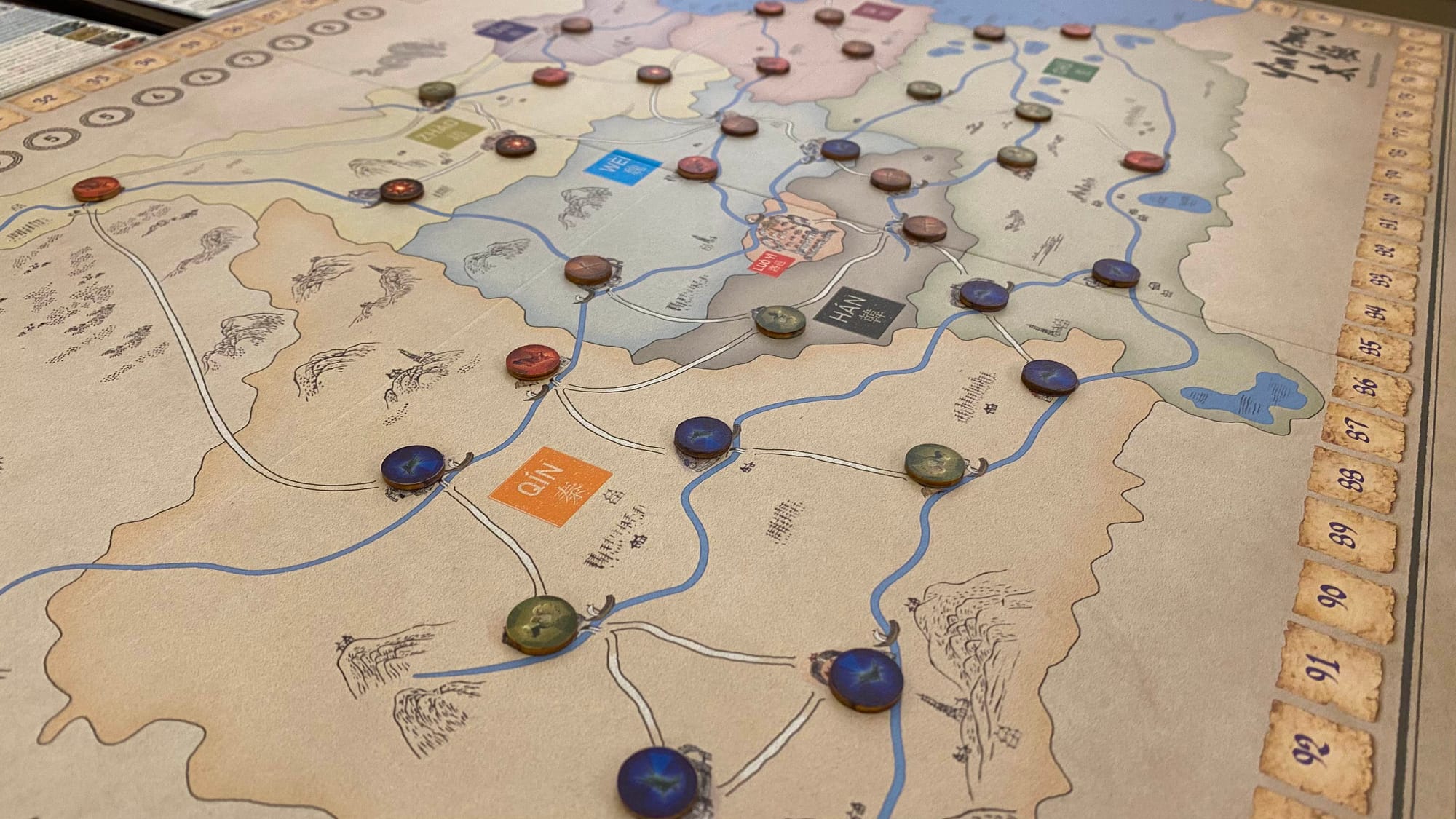
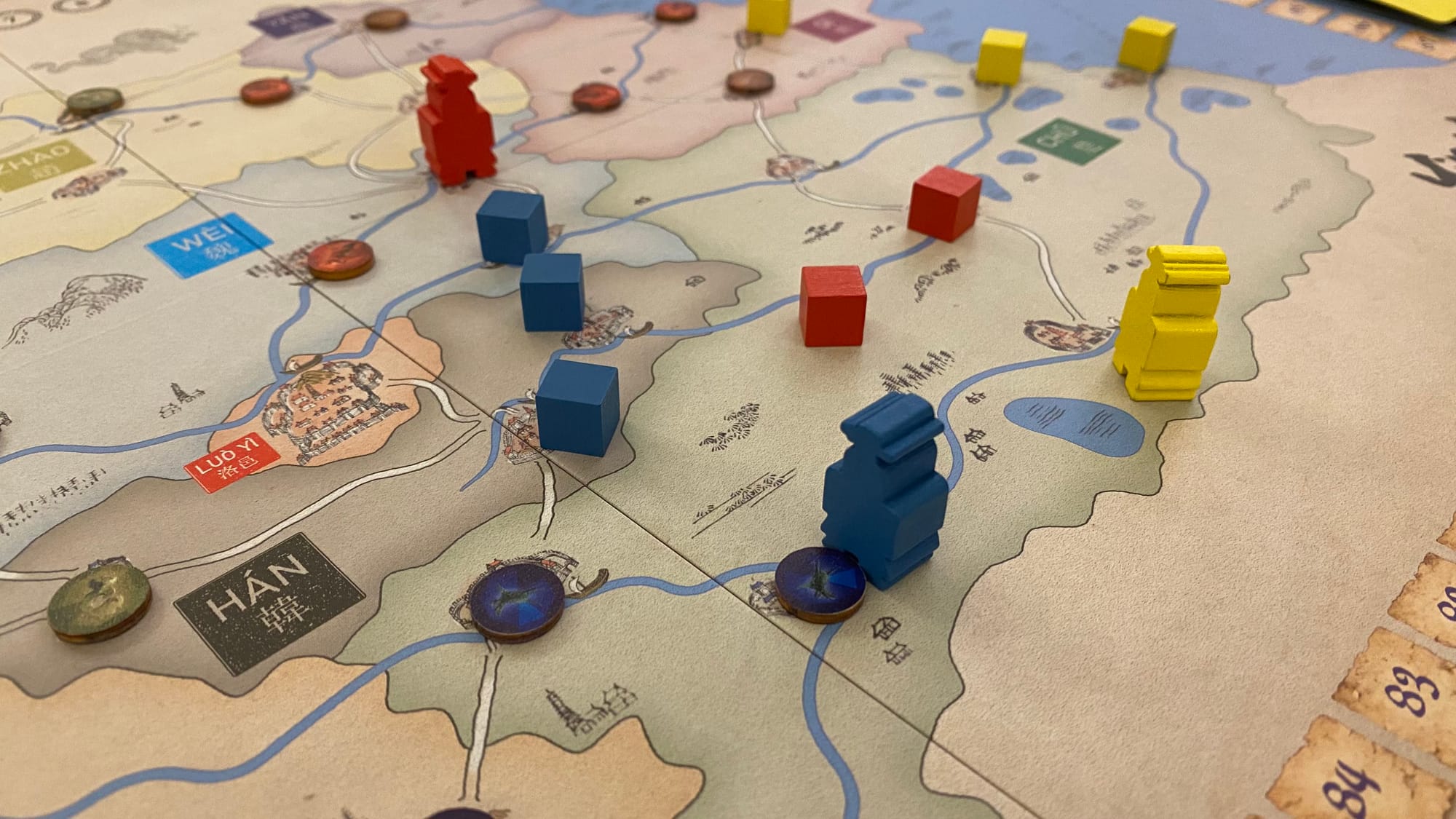
Yin Yang features an interesting mix of mechanics, but they all fit together pretty well once you get the hang of it. Mostly you’ll be moving across a map of China, collecting goods, and placing shrines. What’s most intriguing, though, is how you perform your actions.
Each round, the first player will place six marked coins into a metal tortoise shell, shake them up, then spill them onto the table in an array of heads and tails. These are then arranged onto a central board to determine which actions are off-limits for players to select this round.
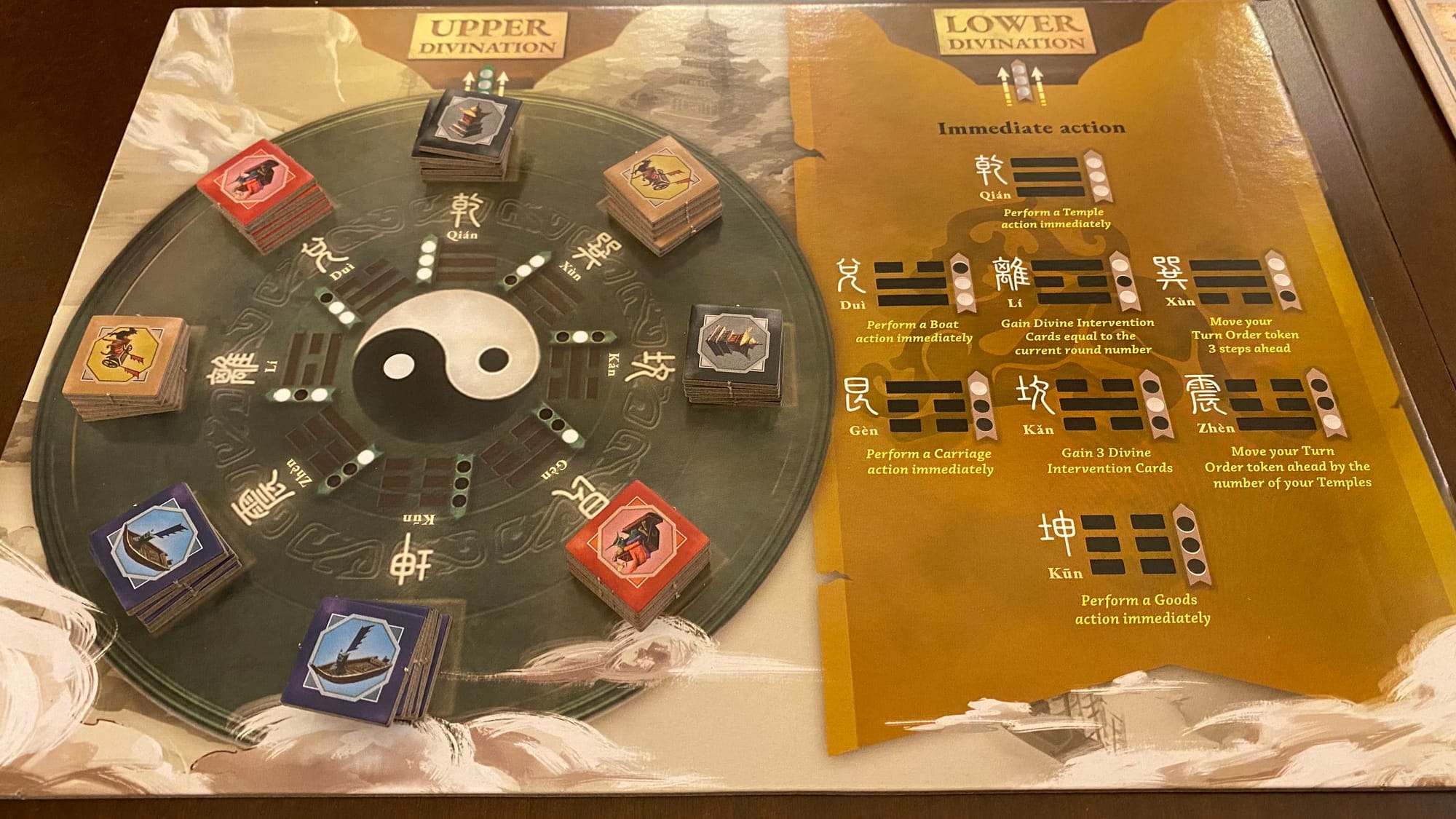
Then each player, in turn, shakes their personal coins (in the tortoise shell, of course) and arranges their results into two columns that determine both a permanent action token to claim and an immediate action to take.
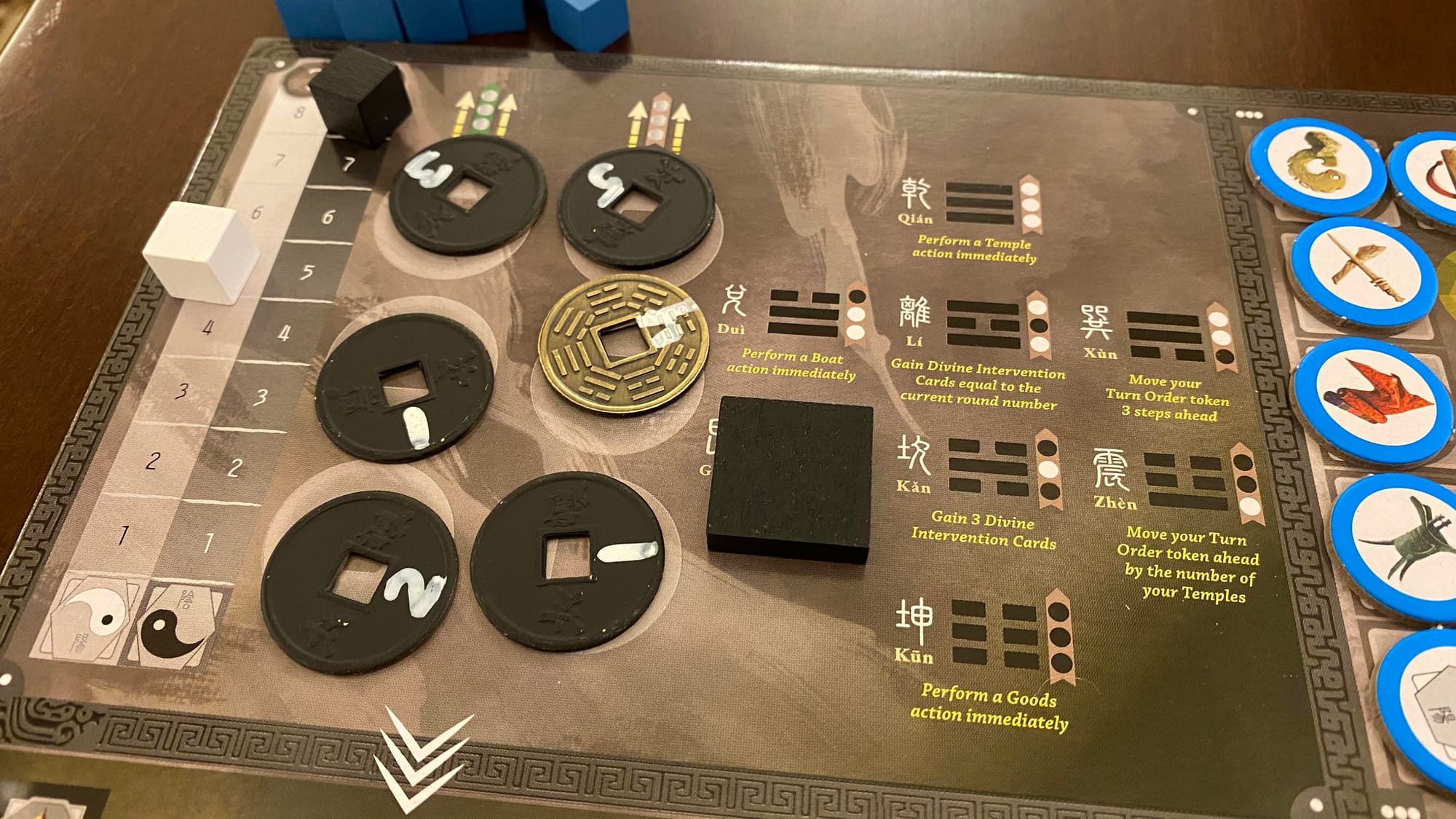
Finally, each player—in turn order once again—arranges the same coins along with their action tokens to create a series of semi-programmed actions. It’s not really action programming, since you set everything up right before your turn, but more of a long action combo.
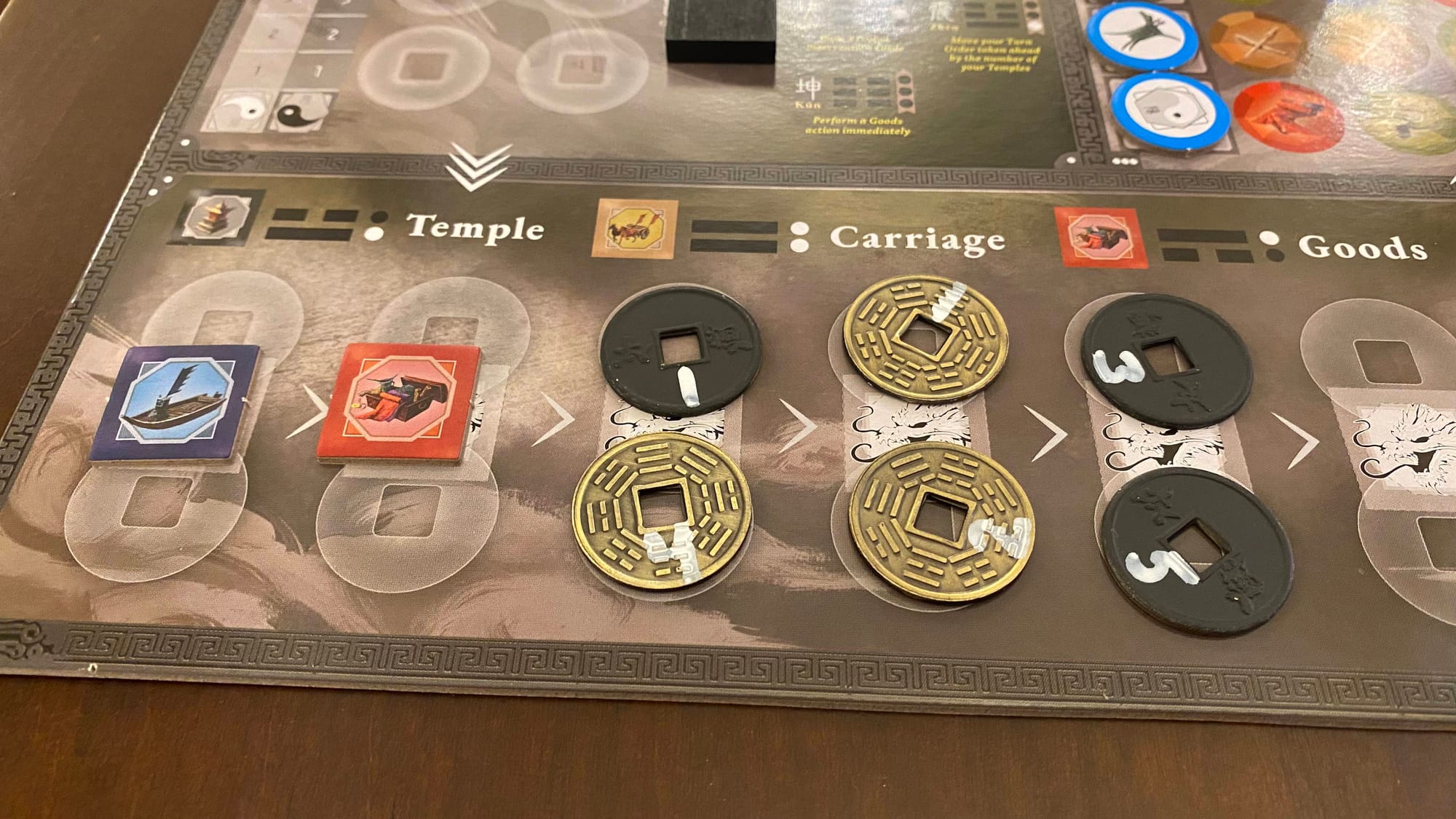
Sometimes your coins fall in a less-than-ideal set of heads vs tails, but you can fix this with the use of Divine Intervention Cards. This is the first major change from the original release, where each card had a unique ability, with some much better than others. Now, they act as a sort of currency where you can discard different amounts of them to activate specific effects—such as flipping your coins to fix your action options.
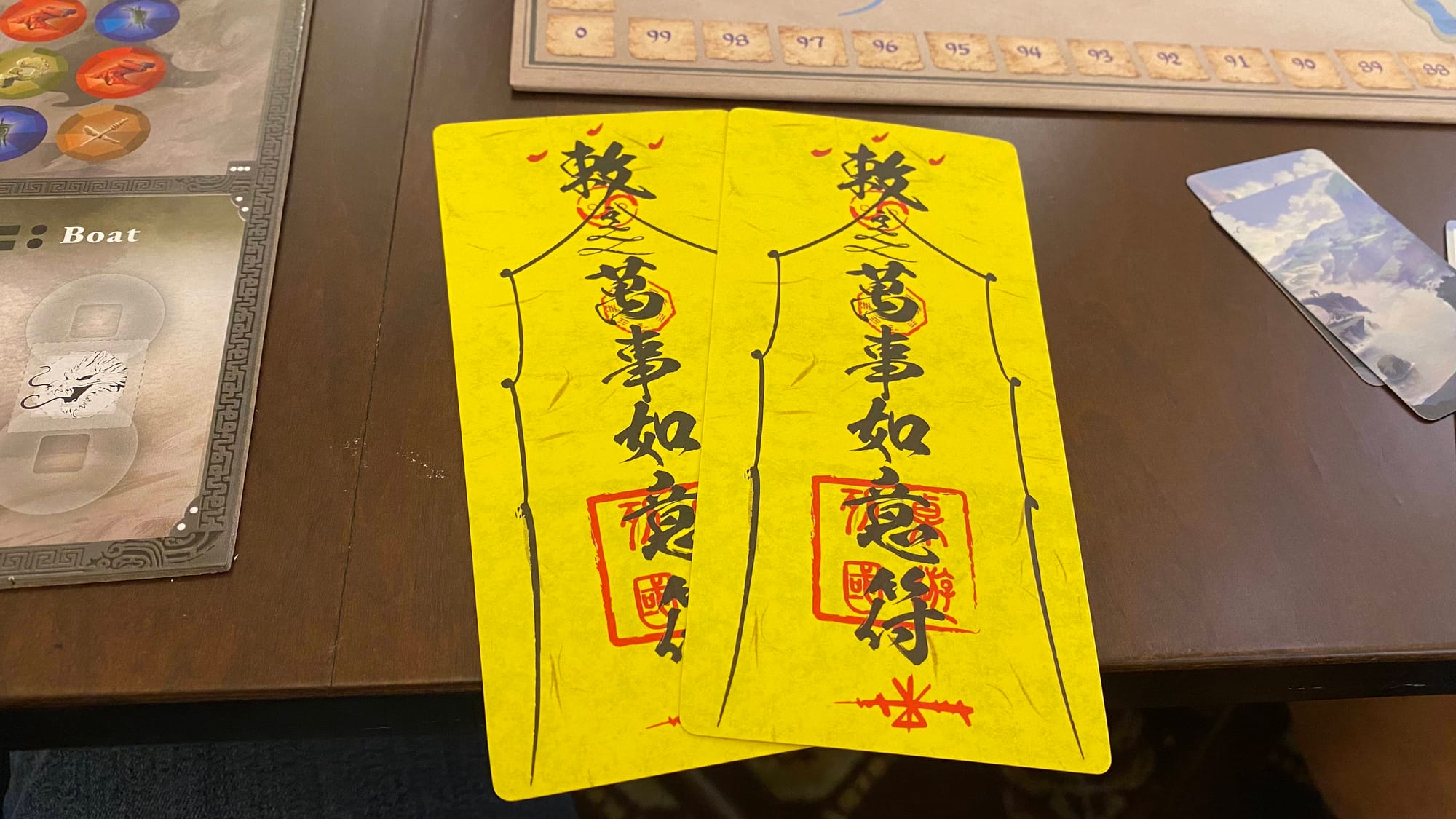
The other two major changes are better visual clarity on the game board and the addition goal cards. These goal cards are pretty standard eurogame fare, but it’s nice to have some initial strategy in mind when the game is so open.
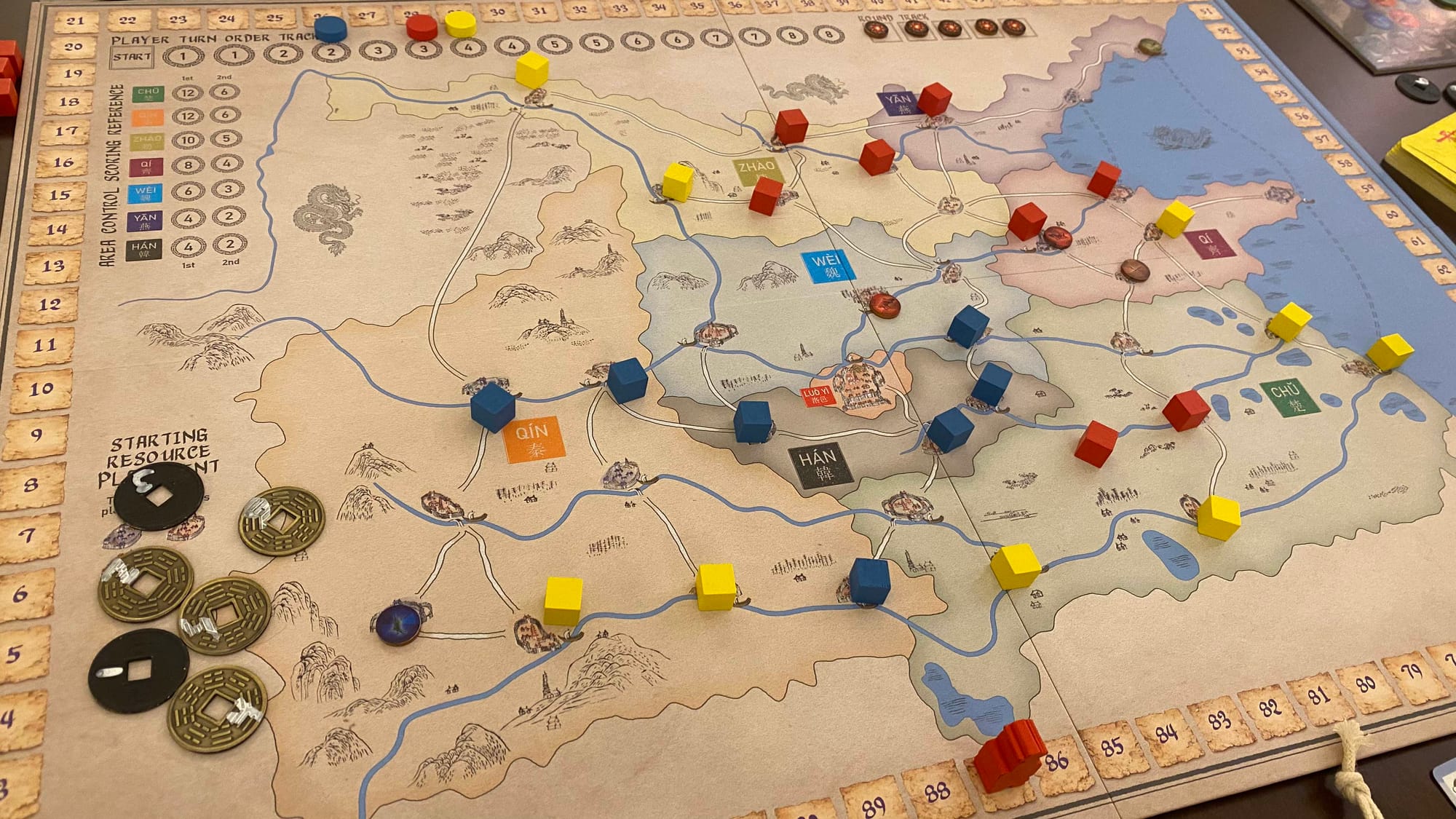
Something in Yin Yang I hadn’t expected to like so much was the scoring triggers. There are a lot of ways to score points in this game, but you can only unlock them by filling rows or columns of goods on your player board. So while your goal might really benefit from more of the blue goods, you might still need to pick up some reds and greens to unlock things like more shrine points or extra points for all those blues.
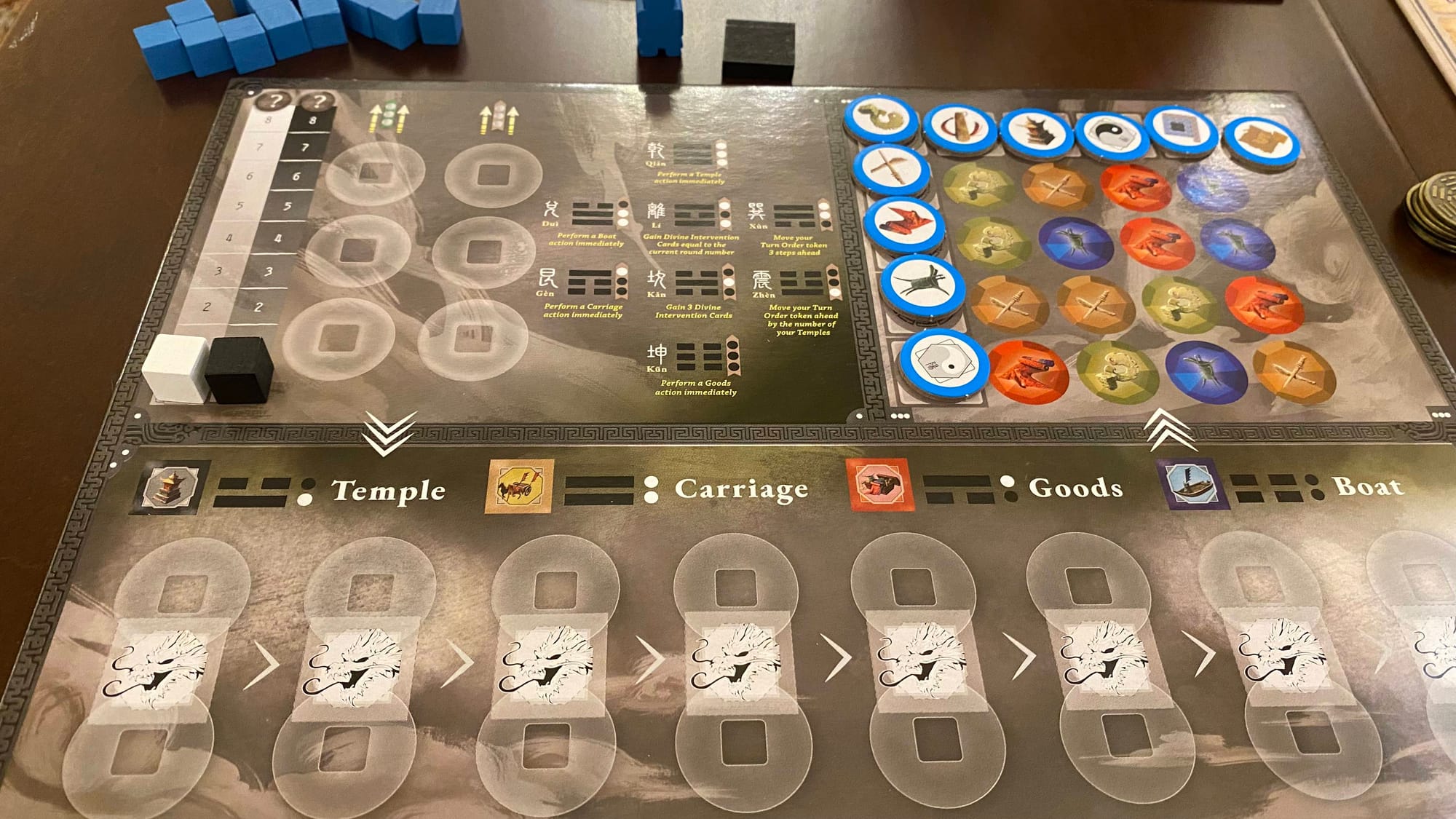
With the unique action mechanics, shrine area control, and funky scoring unlocks, it’s definitely a game you should try if you like eurogames that aren’t afraid to try something new. I had a lot of fun with it, and I look forward to its release. Yin Yang will be available at Essen and Stateside this October, along with Capstone’s other new game, Greenwood.