When beginning Village in the Shade, the game presents two options: either you can play the game as a cozy, consequence-free farming sim (cheeringly dubbed “Sunshine Mode”), or you can experience it as originally intended—a horror spin on the genre with scares to overcome, conspiracies to unravel, and bloodshed to avoid.
Well, considering how that’s the game’s whole hook, I wasn’t about to pass up on that. Besides, I’d played enough cutesy farm sims.
It’s difficult to explain what makes this farming venture so engrossing: much like Undertale, Village in the Shade employs a strict “don’t talk about Fight Club” rule where its surprises are best left for the player to discover. To discuss it in broad strokes is easy—you’re plopped into a rural Japanese farming village that’s anything but idyllic, haunted by yokai prowling its nightlife and bound by a rules-based apparatus where grave punishments await any resident who dares break them.
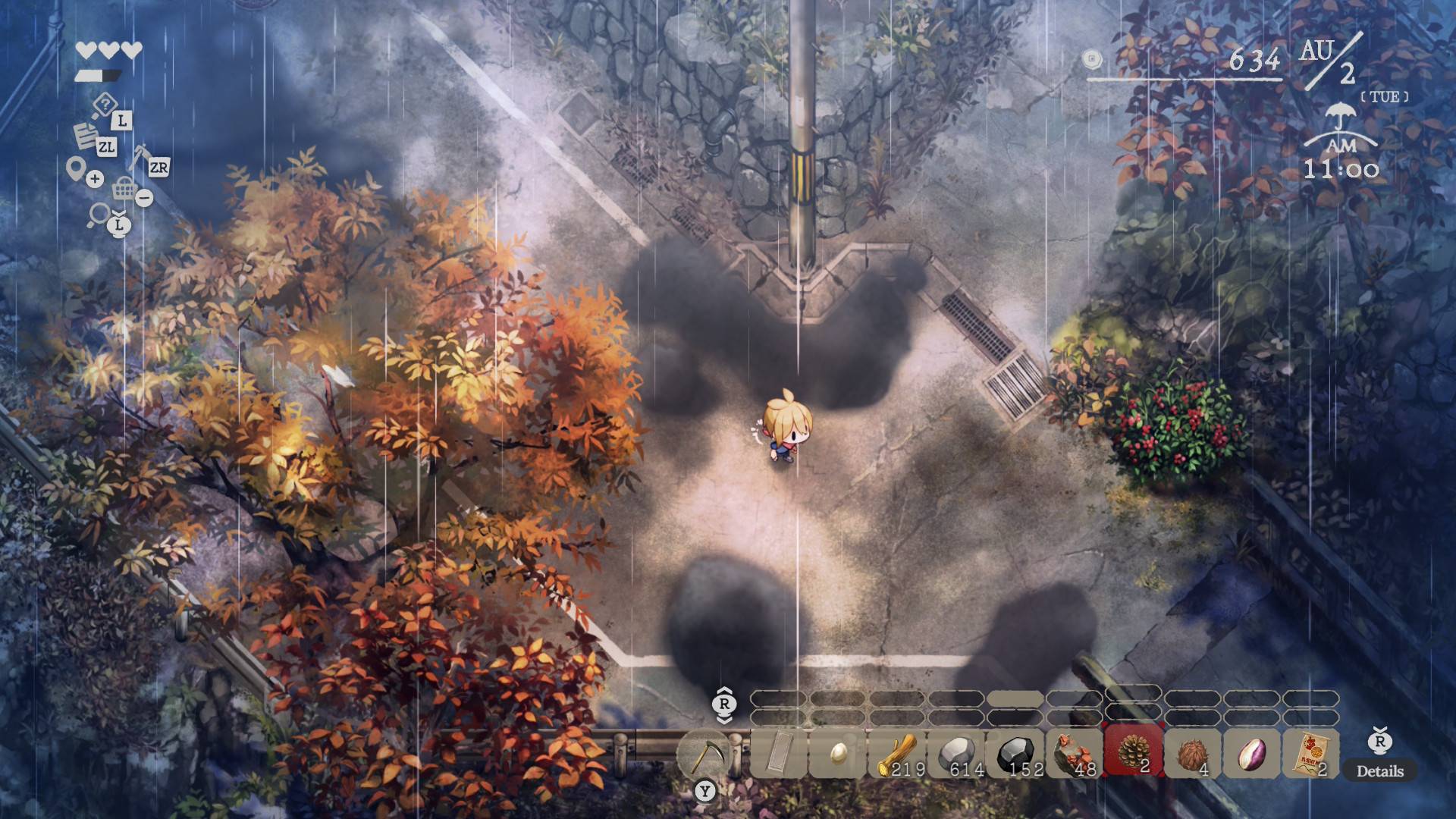
Getting into the nitty-gritty of it all, though? Yeah, that’s a tough rope to walk, so I’ve elected to elaborate from the perspective of emotion. There’s the shock from violence, for one: Village in the Shade wastes no time in getting its hands dirty, greeting players with a grizzly accident, and the bloodshed doesn’t end there. The game’s warm, gorgeous painted aesthetic and piano soundtrack constantly lull the player into a false sense of security, only to rugpull us with the occasional reminder that, no, the yokai are running the show, and you’d better watch your back if you so much as think about going against the village code.
Amidst our helplessness, we find ourselves poking and prodding at Kagatsu Village’s assortment of eccentrics—poor souls resigned to eke out whatever comfort they can from this hellhole. Some wear masks of optimism, which occasionally slip into sobriety when grim reminders interrupt their faux-peace. Others simply lose themselves in their work, distracting themselves from their trapped reality by taking a saw to wood or cooking up meals day in, day out.
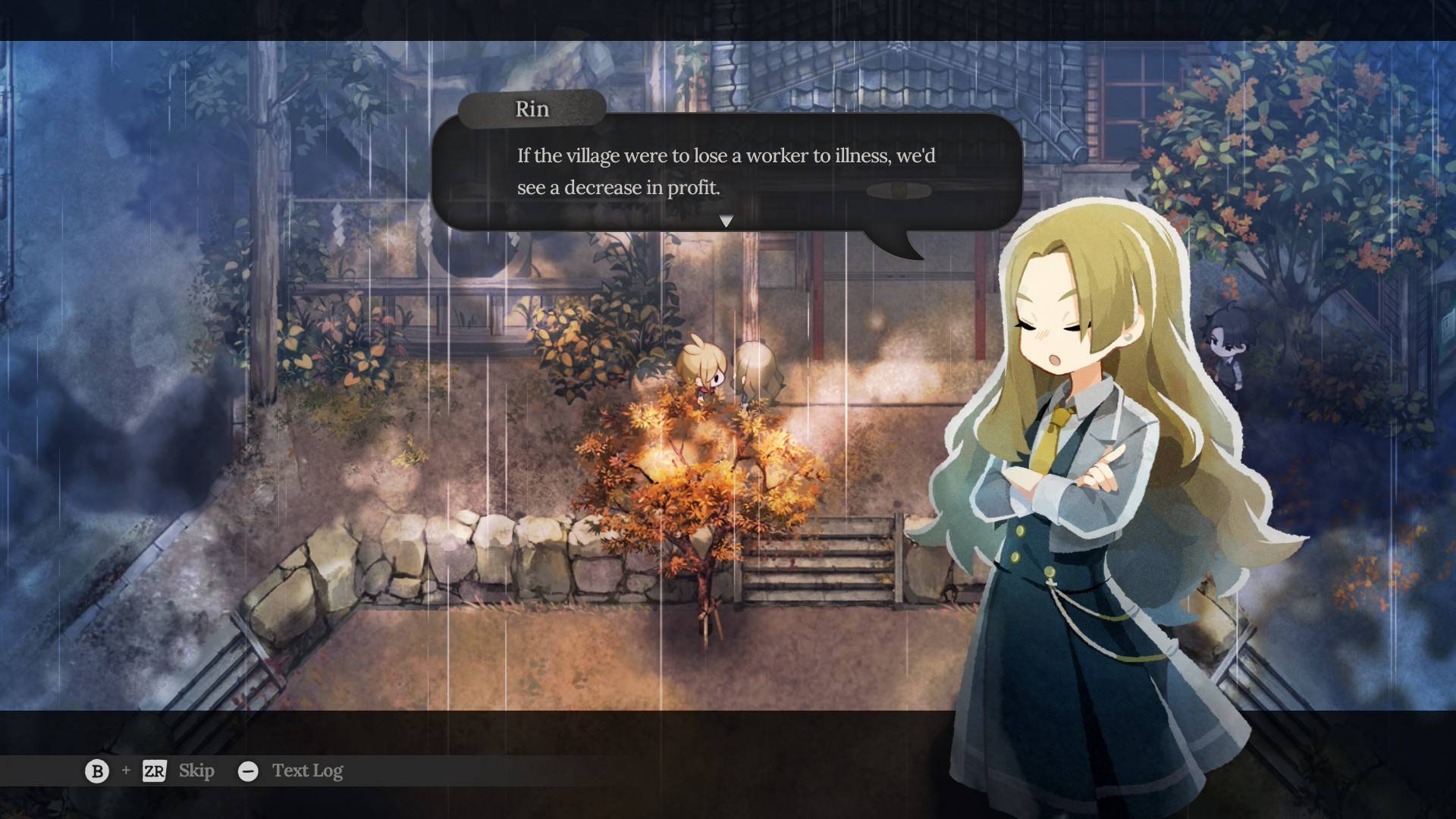
Yet for whatever pity I bear for Kagatsu’s residents, it’s far outstripped by the visceral hatred I’ve felt for its leadership. Adherents to its curse-based status quo, they continually inflict cruel and unusual punishments upon our pint-sized avatar, be it saddling him with a farm he doesn’t want or debts he couldn’t possibly pay, constantly stealing my money, and inducting him into the community via ostracization. As seen above, town chief Rin is public enemy number one in her capitalist-based heartlessness, and I’ve taken to swearing under my breath every day she waits outside my door—undoubtedly with some horrible little chore I’ll be forced to conduct against my will. Maybe I’m just breaking those rules out of spite; ever think about that, lady?
They’re victims in whatever’s behind this nefarious horror show, I’m sure. Yet for whatever redemption plots may be waiting down the road, that doesn’t mean that I have to like them. This is good: the best life sims employ a variety of personalities that aren’t just smiley-faced robots, but living, breathing people who click and chafe with one another. We mingle amongst people we enjoy while shaking our fists at our mortal enemies just down the road, but being in such a small community, we’re forced to cross paths whether we like it or not, and so we gradually pick apart what makes them tick. Maybe we’ll come to an understanding, maybe we won’t, but it certainly makes things interesting. (I think of the lost bite of Animal Crossing, which has long since defanged its more abrasive personalities. New Horizons rocks, yes, but you can’t deny the series lost something there.)
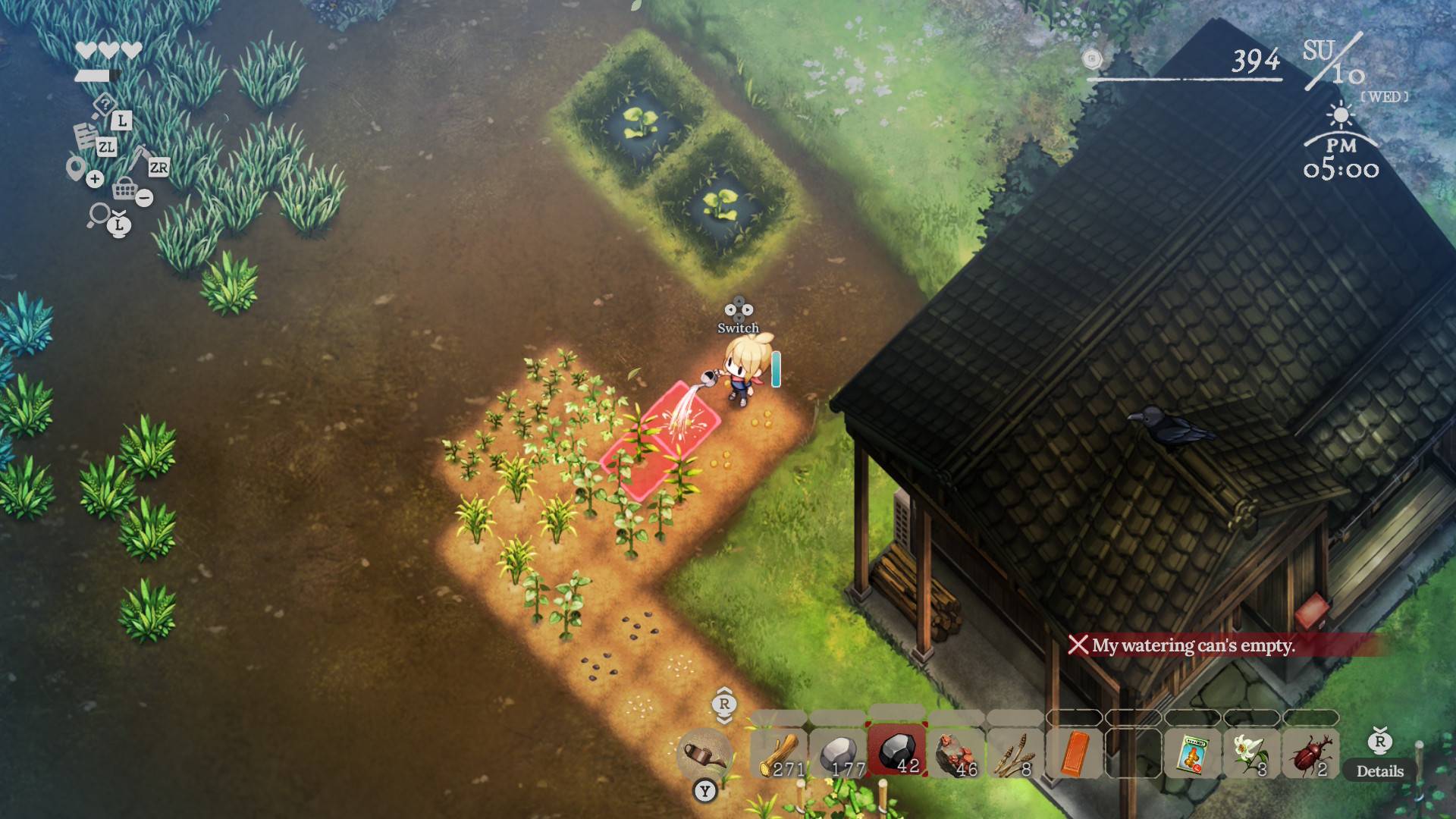
Still, I can’t rag on these poor villagers for their escapism; after all, I’m caught up in the agricultural grind, too. For all the existential creepiness, Village in the Shade presents your typical offerings of laid-back farming staples: there’s a messy plot of land to clean up and maintain, a wide range of crops to level up and sell, livestock to care for and raise, and furniture and buildings to plop around to express some creativity. As always, money makes the world go round, and you’ll be budgeting cash to scrounge up whatever seeds you can.
Whenever you’re not selling off your crops or whatever you found lying along the dirt road, you’ll be crafting. You’ll head down into the mines to mine ore for tool upgrades and farming infrastructure, but chipping away saps stamina, so pack meals accordingly. Magatama—those teardrop-shaped Japanese charms that Westerners may recall from Ace Attorney—are earned from specialized circumstances and offered at the hokora shrine for extra goodies. There’s fish to catch and cook, cows to milk, and tanuki to hunt. For a time, you can forget about your worries.
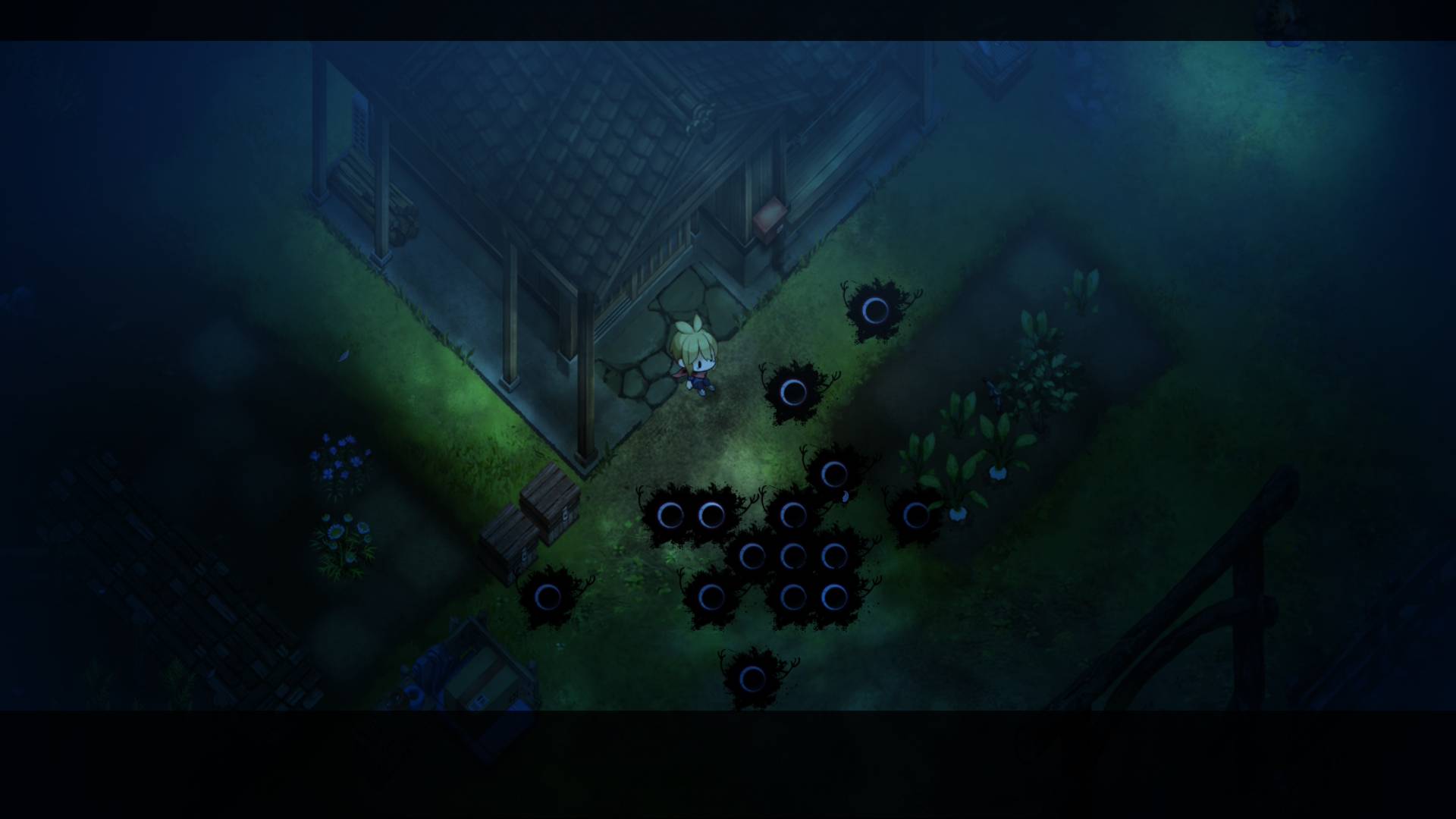
That is, until night rolls around and Kagatsu Village’s yokai come knocking on your door. While you could sleep away to avoid these living nightmares, you’ll never solve the mystery of the village curse that way. Venturing the Kagatsu nightlife is a deadly game of hide and seek, where these killer ghosts will hunt you down if you so much as cross their sights. Fear grips both player and avatar as a pounding, palpable heartbeat pulses through the controller—our lone compass in dodging the terrors of the dark.
Village in the Shade is all about breaking rules—farming sims serve as our retreat from the monotonous drudgery of reality, yet this game asks us to escape from a most unwelcome virtual life thrust upon us. How fitting, then, that it gives us the tools to literally break its own rules in turn: through curiosity and a touch of the rebellious spirit, we hack off Kagatsu’s authoritarian shackles one by one, facing our fears to unlock the secrets hiding within its festering core.
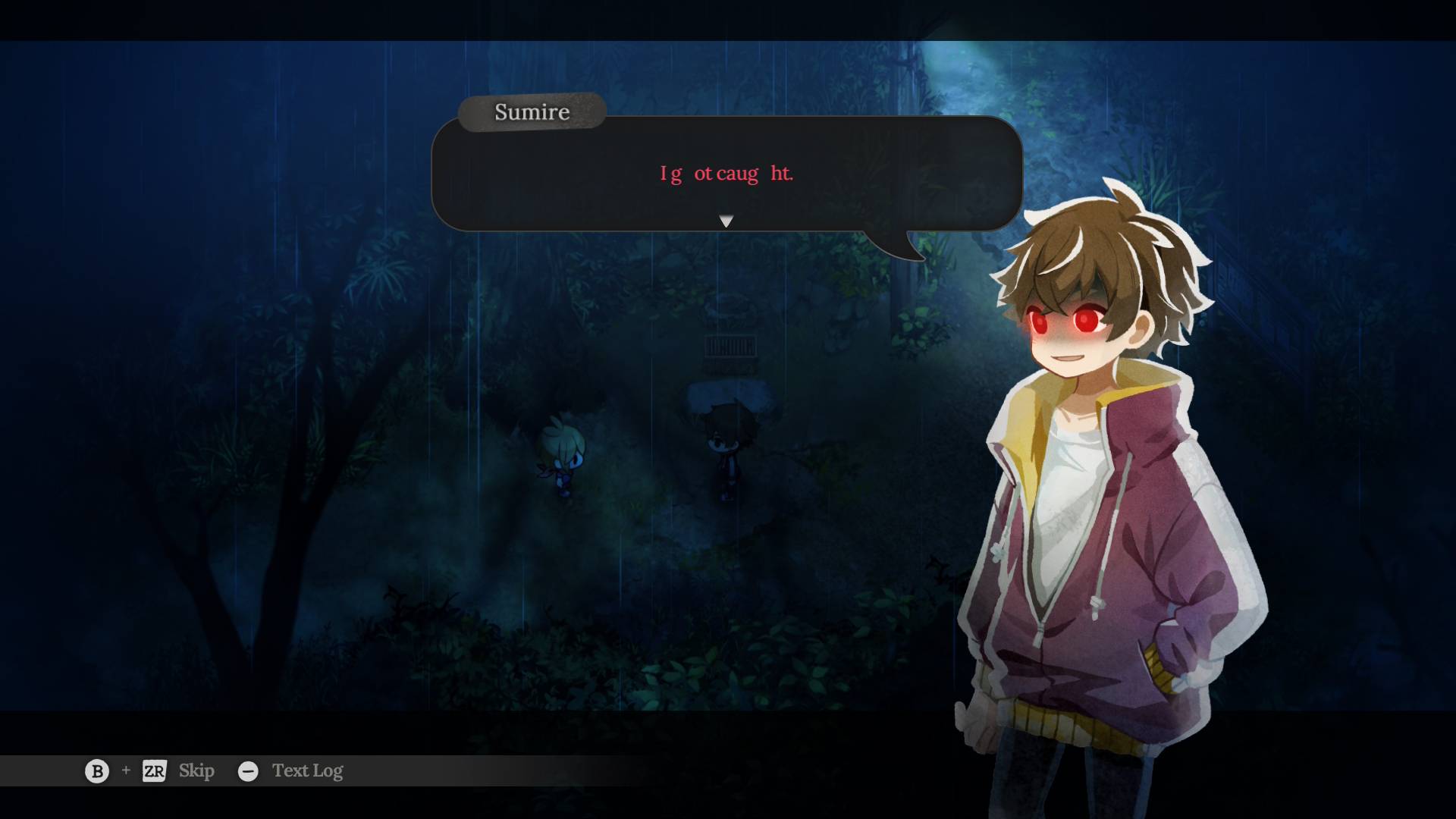
Armed with a compelling premise flipping a once-cozy genre on its head, Village in the Shade is an experience that’s spooked, surprised, and spellbound me over several dozen hours—a mystery box that’ll undoubtedly take many more to fully unpack. Check us out when our full review arrives next month.