If you’ve played a Mystery Dungeon game, it probably had Pokemon somewhere in the title. However, Mystery Dungeons actually began with Dragon Quest as a spin-off of Dragon Quest IV. Released in 1993 for the Super Famicom, Torneko’s Great Adventure: Mystery Dungeon starred everyone’s favorite merchant as he delved into an ever-changing dungeon to find goods to sell in his shop. Unlike future games in the franchise, this one follows in the footsteps of Rogue much more closely; Torneko starts every single run from scratch with an empty inventory and his level reset to 1. There’s not much of a story here either, other than looking for the big treasure at the bottom of the dungeon and slowly upgrading your shop as you bring more items to the surface, so you’re mostly dungeon delving for high scores and for fun. It’s very simple, but ends up being incredibly addictive.
As the very first Mystery Dungeon game, Torneko’s is by far the simplest. You move around on a grid, press the A button to attack an enemy directly in front of you, and open the menu to use various items you’ll find scattered about on every floor. Torneko can also fire his bow with the L button, provided he has arrows equipped. As you explore, Torneko’s hunger will slowly decrease. While your hunger is above 0%, you’ll slowly regenerate any missing HP with every turn that passes. However, at 0% Torneko’s HP will begin to drain with every step, so you need to keep him from starving by finding food in the dungeon.
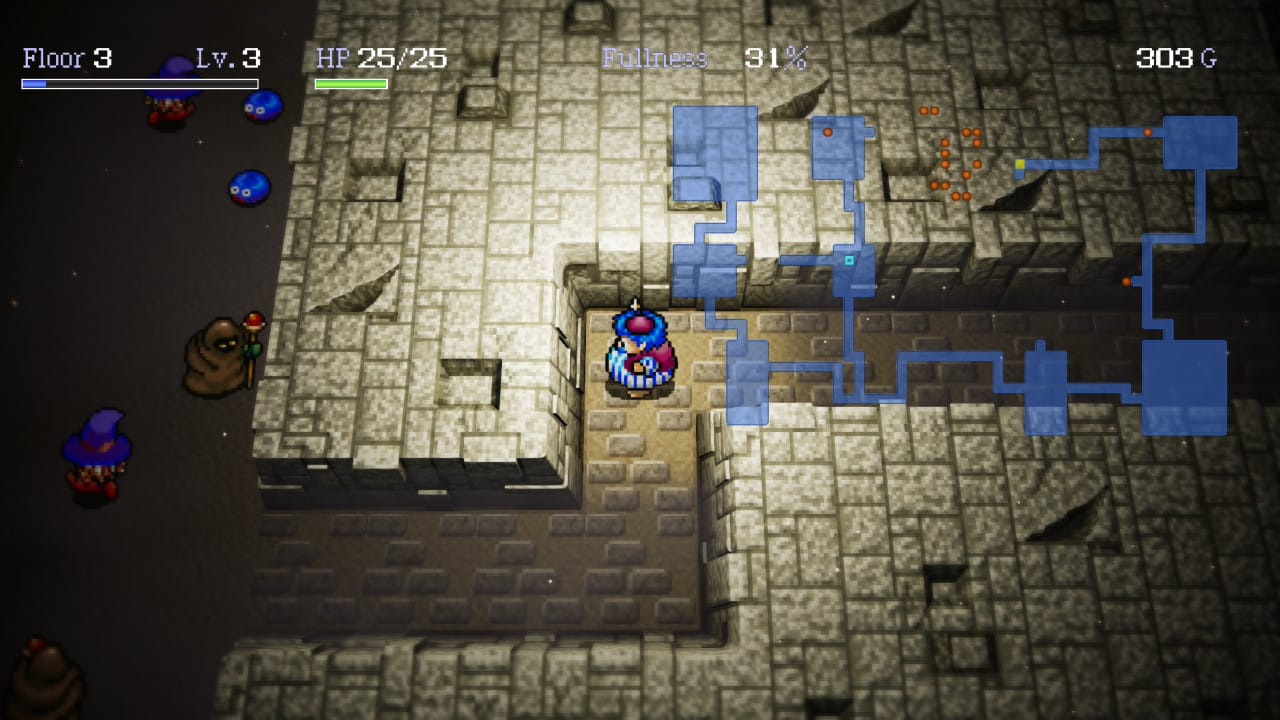
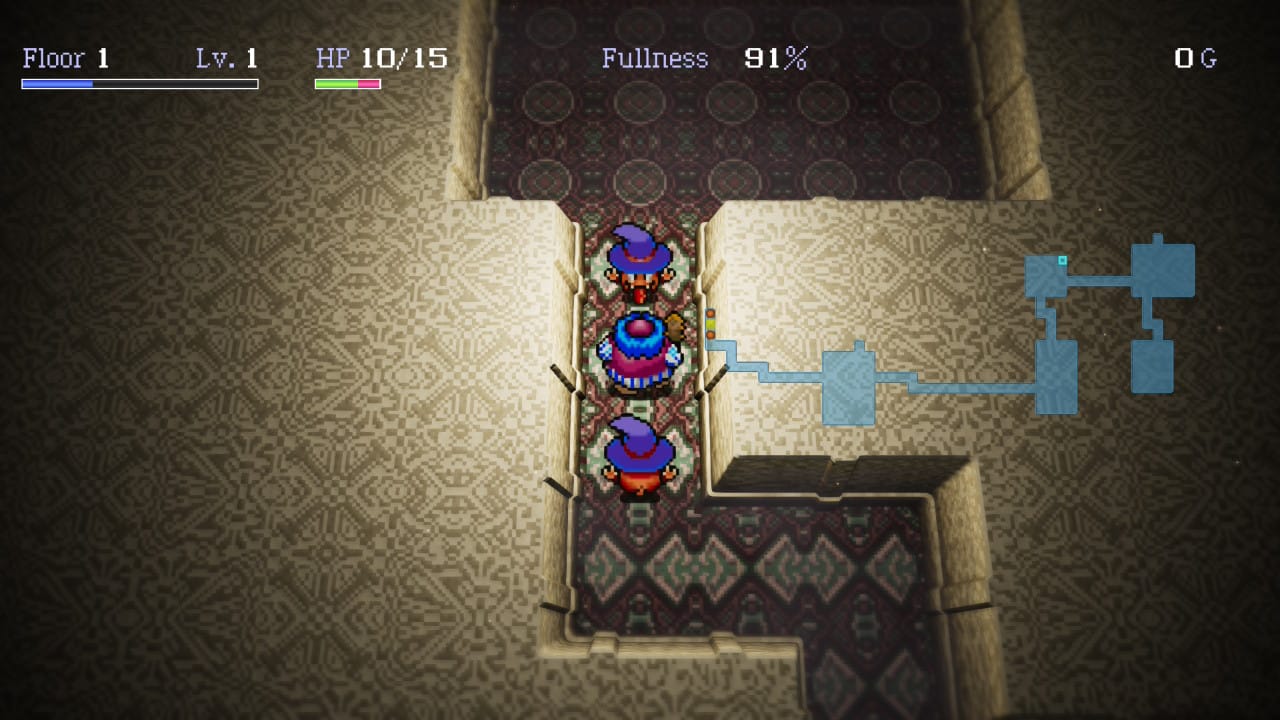
Finding food, of course, depends on random chance and luck, as does pretty much everything in this game. There’s only so far planning ahead and good decision making can take you; if the RNG isn’t providing, you’re absolutely going to fail. That’s something you’re going to have to be OK with to enjoy Torneko’s Mystery Dungeon. While some of my runs ended due to stupid choices on my part or taking unnecessary risks, the vast majority of outcomes were totally out of my control. Torneko could be cornered by enemies that replicate themselves each time you attack, find himself trapped in a monster den with no weapon or shield, or simply step on an invisible trap that instantly kills him. Quite simply, if you want to get to the end of the dungeon, you’ll have to wait until the game decides you’re allowed.
This remake does put a bit of an asterisk on that statement, though. In the settings on the title screen, you can adjust the game’s balance, including monster appearance rate, toggle monster dens, gold and exp. acquired, and the rate of item, bread, and trap appearance. On all but monster dens, you can adjust their values from 0x all the way to 2x in increments of 0.5. Some gameplay data won’t be recorded in high scores, play records, or achievements if you do so, however. I’m playing on Switch, so that last one doesn’t matter at all here.
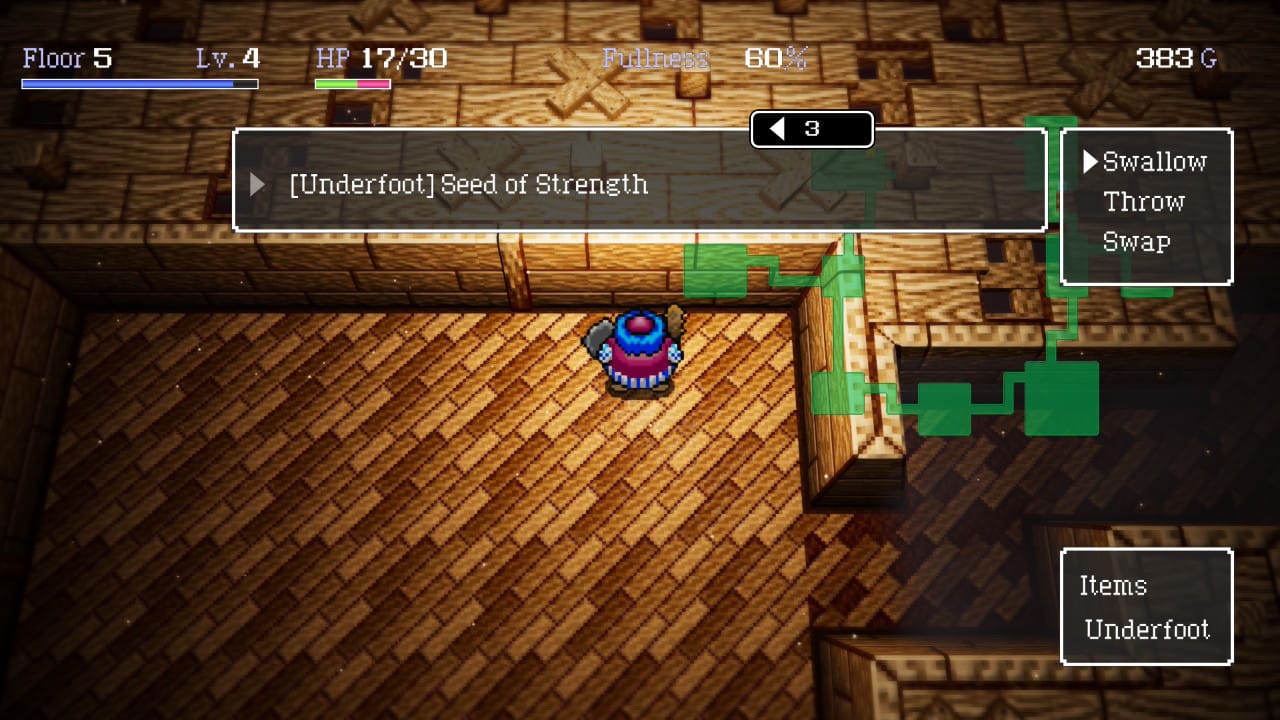
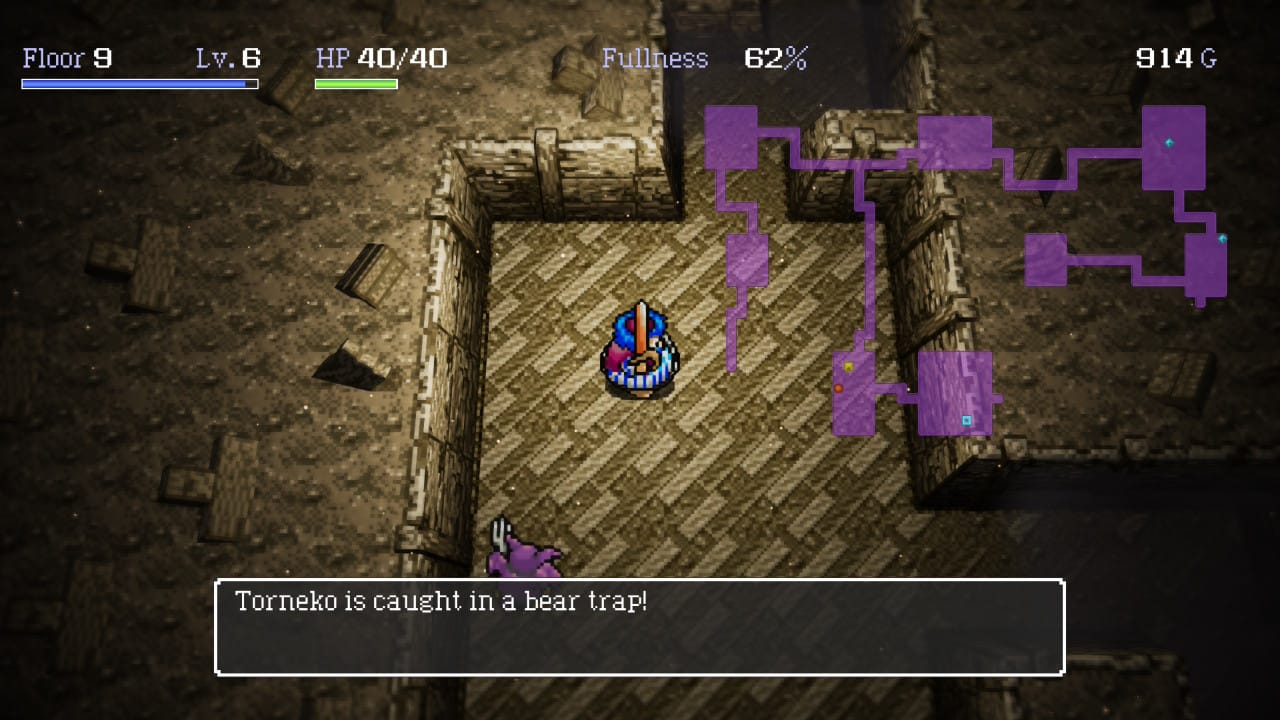
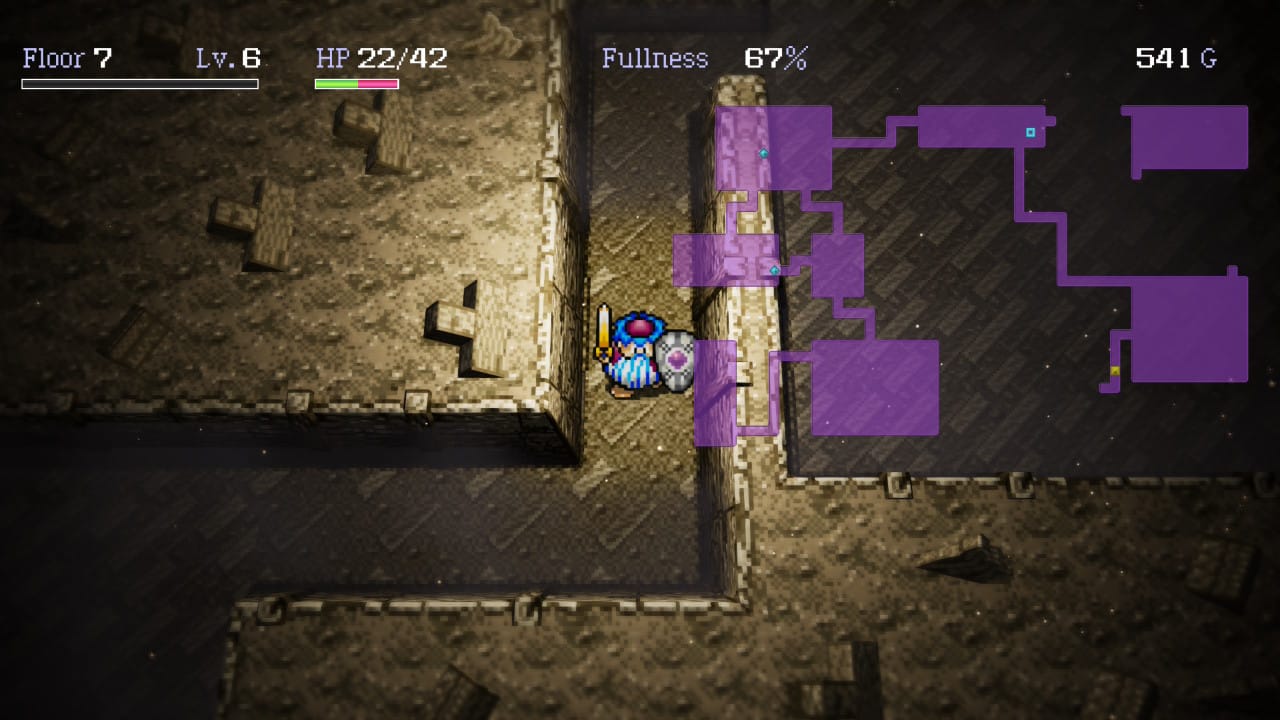
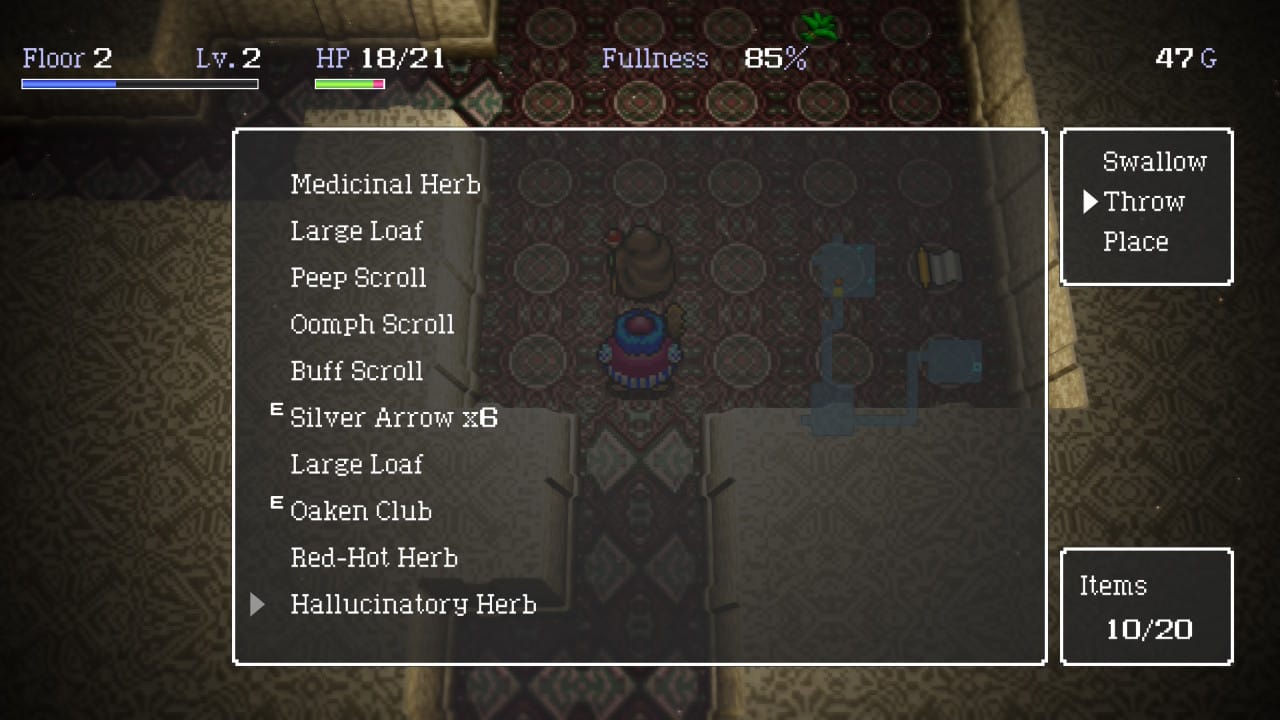
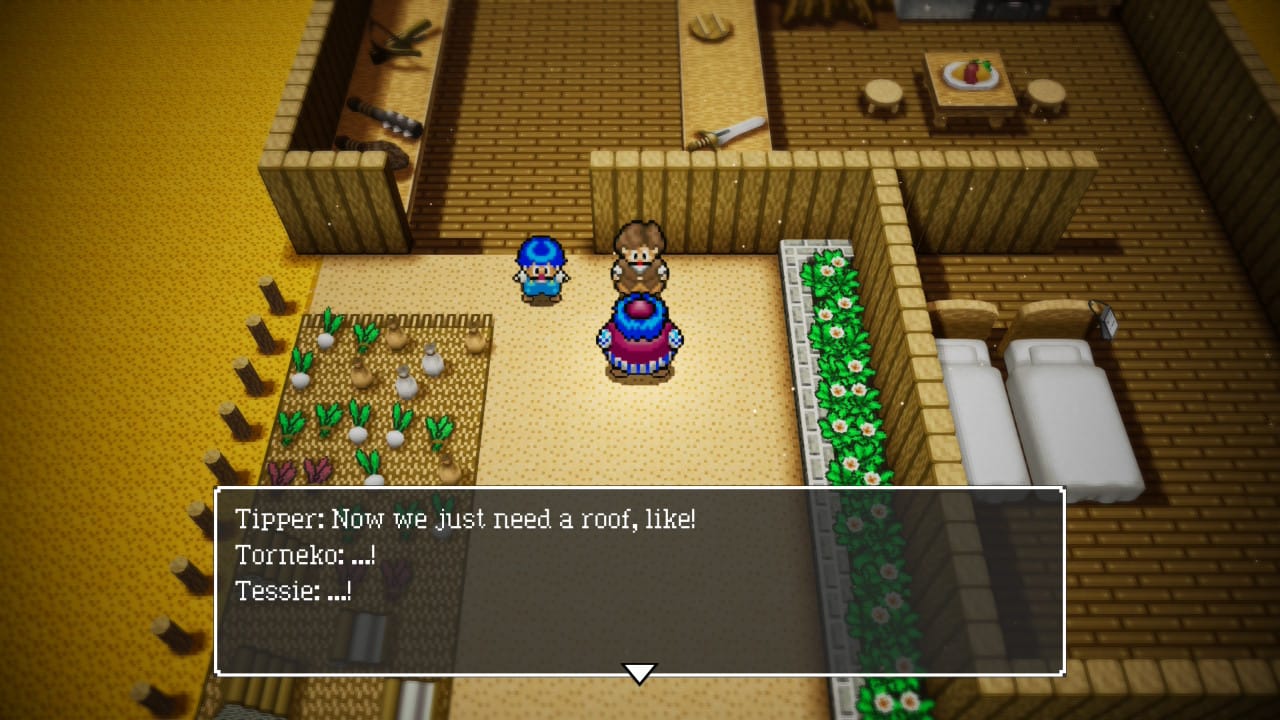
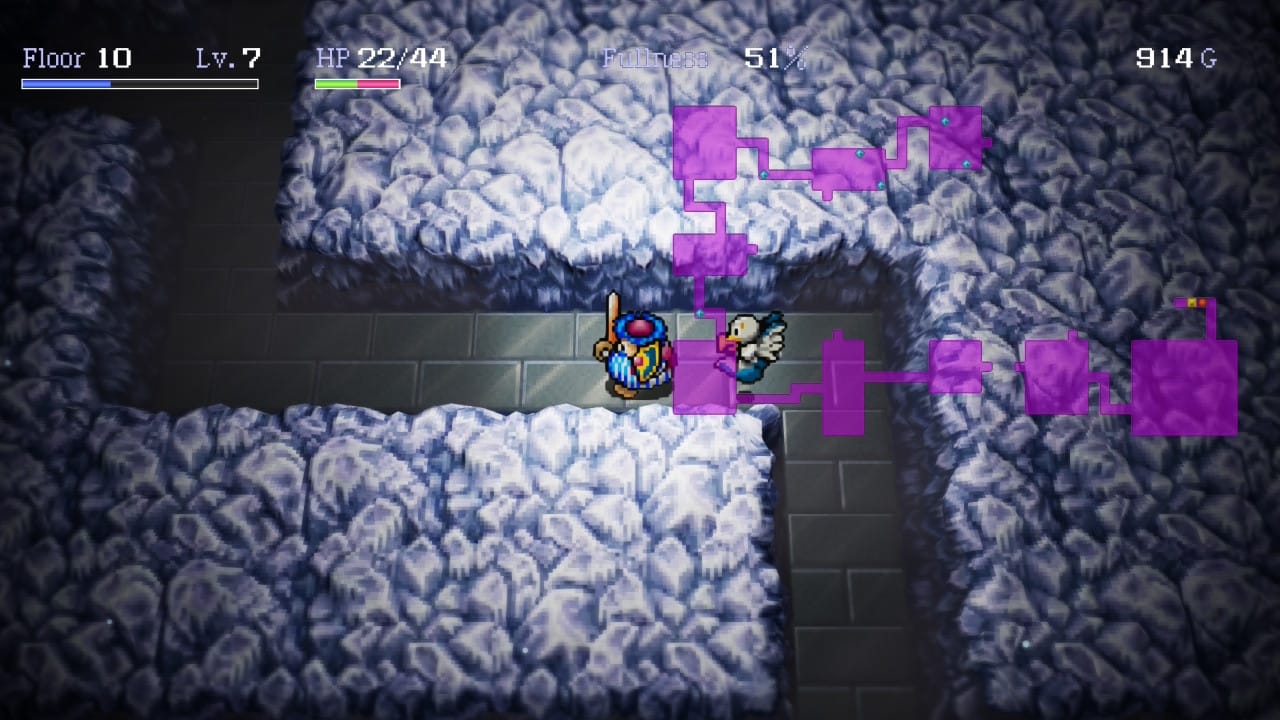
There is a Switch 2 version, but Square Enix sent me the Switch 1 version, and I’m not sure if there really is a difference between the two. I can’t imagine Switch 2 has more effects, and resolution’s not such a big deal here. As an HD-2D remake, the game… doesn’t look great. Torneko’s lifts most of the sprites from the original SFC version and essentially just changes all the environments to 3D. There are some effects here and there, but visually the game looks a little cheap and low effort compared to the higher-profile HD-2D titles like the Dragon Quest trilogy. The game is cheaper as a result at only $25, but still feels a little expensive at that price, especially since I would have just preferred they left the visuals alone. The same goes for the audio, as it seems to be using MIDI versions of each song. Dragon Quest usually has some pretty great compositions, but Sigiyama being the person he was means we never get to hear how good his work actually was.
Torneko’s Mystery Dungeon is a very simple but replayable game. It’s fun to just jump in for a quick run, even if it can be immensely frustrating if your delve is cut off early due to factors outside of your control. Get deep enough, and you’ll start encountering some interesting decision making, like having to choose between keeping your old weapons to sell when you get back to the surface, or tossing them to pick up a few more healing herbs so you can maybe go deeper. It’s less about the moment to moment gameplay, and more about seeing the big picture of each run. I’m glad it’s finally been localized, but I do think this remake deserved a bit more polish, especially in the visual department.
Dragon Quest Heroes: Torneko’s Mystery Dungeon -Classic HD-
Good
Dragon Quest Heroes: Torneko’s Mystery Dungeon -Classic HD- is an OK remake of one of Chunsoft’s landmark titles. It established an entire subgenre of rogue-likes, which can make this game feel a little quaint in comparison. This is by far the least appealing of the HD-2D titles visually, however, and could have used a lot more love there.
Pros
- A classic title finally localized
- Addictive yet simple gameplay loop
Cons
- HD-2D look is half-baked
- Music sounds bland
This review is based on a retail Nintendo Switch copy provided by the publisher.