Castlevania: Belmont’s Curse does a lot right: it's a tightly designed, snappy exploration game that provides some engaging combat and puzzle design. I liked the game, filled out the map, got the best ending, and enjoyed the experience throughout. For everything it does well, though, I’m not sure that being a Castlevania game is one of them. If anything, its ties to Castlevania create a miserable pile of comparisons that distract from its quality.
This is not a pedantic issue. If you were to suddenly change your name to Dracula, people would expect certain things from you. If they find out your idea of being a creature of the night has less to do with holing up in your castle or waging war against humanity, and more to do with staying up late to play Fortnite, they’ll likely be disappointed. You might still be a cool person, but you’re no Dracula. Calling yourself Castlevania creates the same problem.
At its core, Belmont’s Curse is one of those “modern” Metroid games. You know, like a Hollow Knight. An Ori. That one Prince of Persia game. All of those games broadly fall into a genre I will, for the first time ever, coin as “Meatsoulvania.” That’ll take off, I’m sure. They all crib Souls-like mechanics and design ethos for stuff like the combat, while also sprinkling those insta-death, insta-retry platforming sections popularized by games like Super Meat Boy.
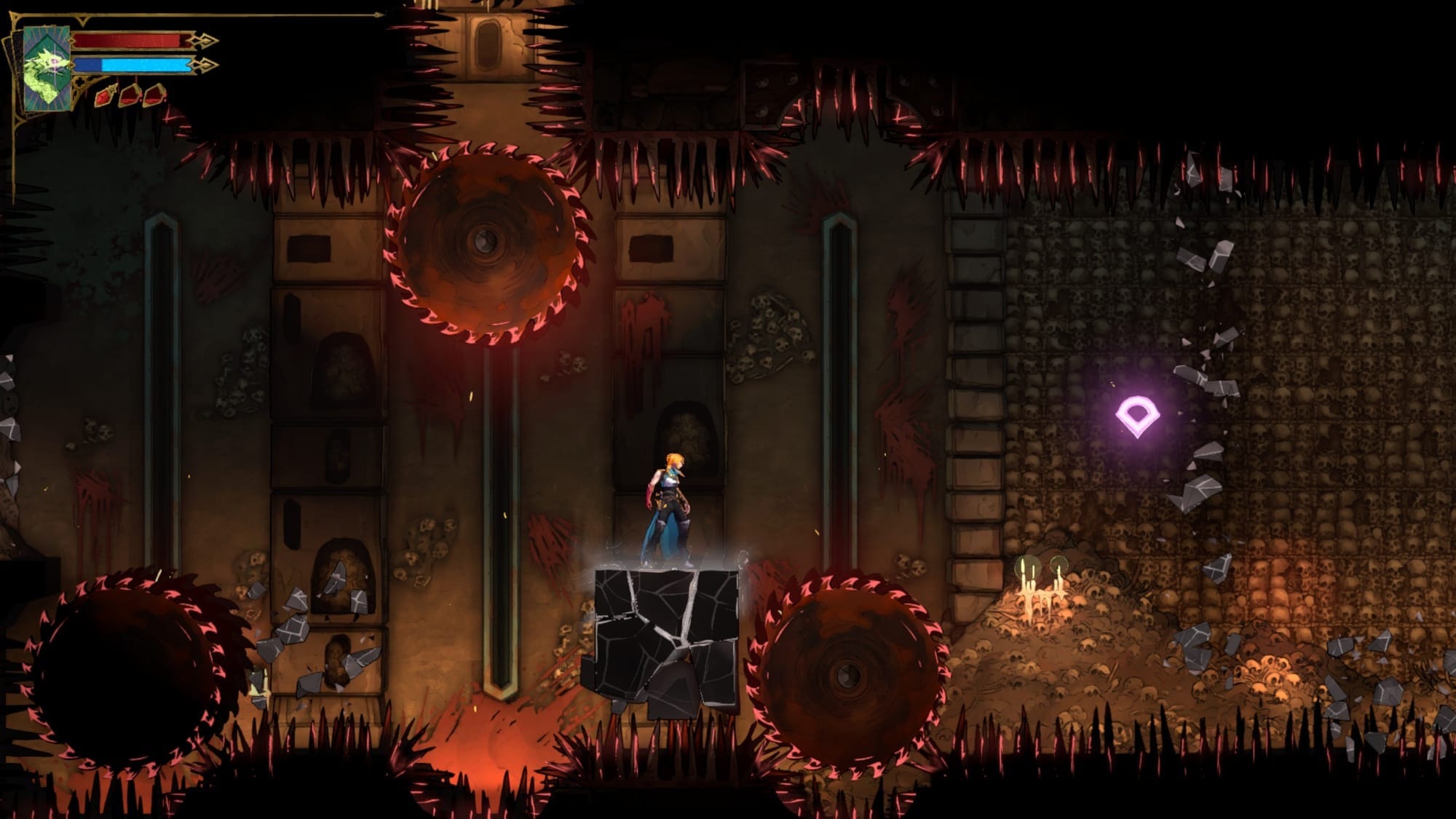
Belmont’s Curse falls neatly in line with the Meatsoulvania trend. The enemies hit hard, proper parry timing bails you out of most situations, you get three Estus flasks to recharge your health, a bunch of precision platforming breaks up the combat, and so on. Is any of that bad? Not at all. The game feels good to play and it’s well crafted for what it is. What it is just happens to not be particularly Castlevania.
I can see the counter from ten million miles away, of course: why must every Castlevania game be the same!? They don’t. But if I had to pick between a brand new Castlevania game being derivative of its lineage or being derivative of basically everything else on the market these days, I’d prefer the direction that gives the game more of an identity.
Castlevania already had a strong, distinct identity. Two of them, in fact. The classic era of the series focused on platforming and action that represents almost the total opposite of what Belmont’s Curse offers—they’re slow, measured, and all about caution. They’re the platformer equivalent of being a horror movie protagonist. On the other end of things, the “Metroidvania” side of the series did more than just open up the level design with a Metroid-like map. Games like Symphony of the Night and Aria of Sorrow also opened up the way you develop your character by introducing RPG mechanics: equipment, spells, and weapons that allowed the player a large degree of flexibility in crafting how they played the game.
If we’re feeling charitable, we could say that by adopting the Meatsoulvania style, Belmont’s Curse found a middle ground between the classic and Metroidvania styles of the series. It has challenging platforming sections of sorts and you do get some new weapons and equipment while exploring the Metroid map, so it kind of has Castlevania-ish ideas. Those ideas just happen to be executed in a completely different way than a Castlevania game would do them. Mankind ill needs a cope such as this. We all know the goal here was less about making a game like Castlevania and more about making Castlevania like another game.
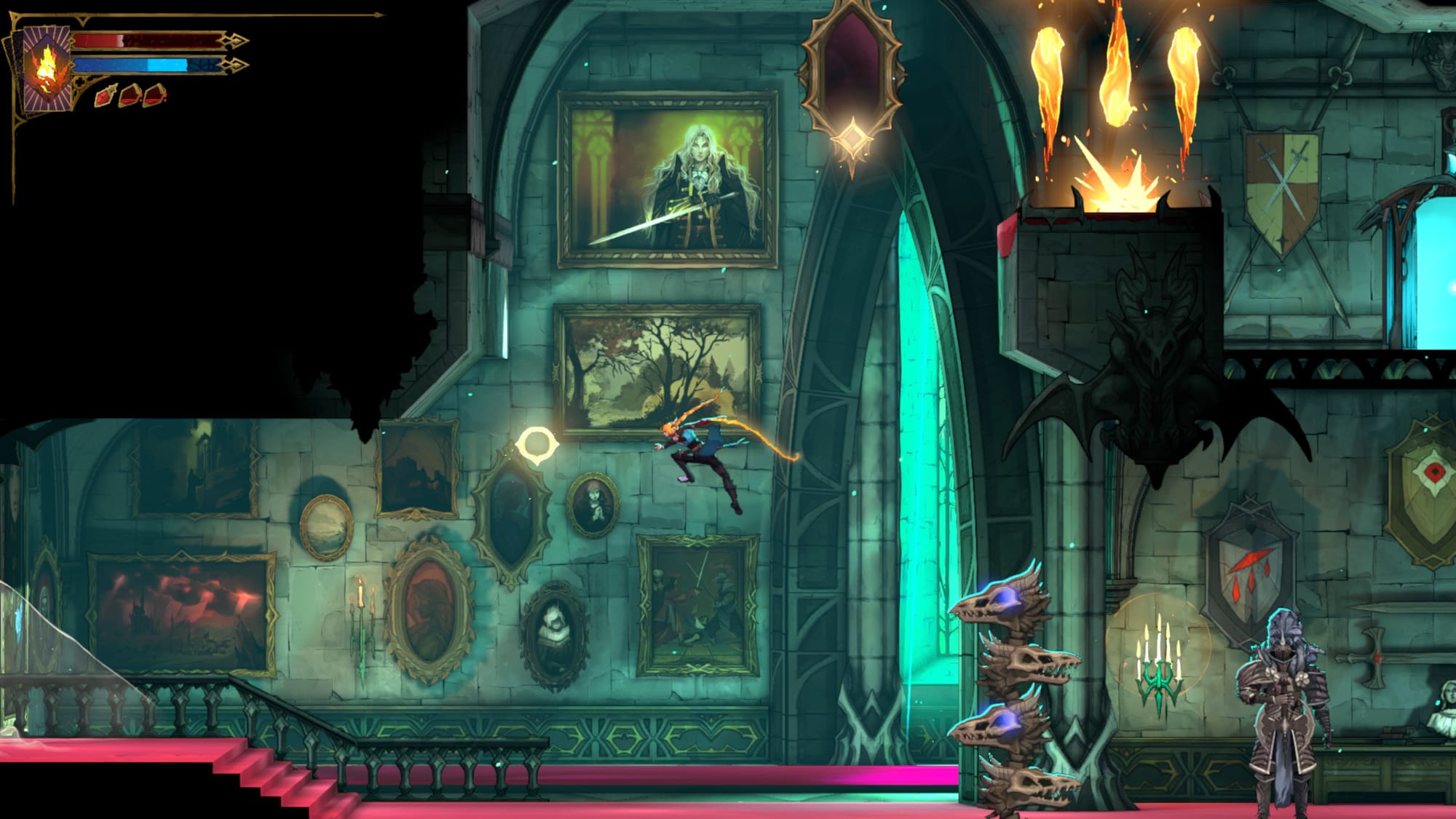
As is, I’d describe Belmont’s Curse more as a game where Castlevania makes interesting guest appearances. For example, I love how most of the traditional Castlevania enemies have been reinterpreted to fit this new style of game. Suddenly every enemy from the flea men to the living suits of armor are total badasses, with new and expanded takes on their movesets. The developers did a great job reinvigorating the enemies for the more hard-hitting, combat-heavy direction they chose.
To be fair to the developers, they do also try to give the Meatsoulvania formula some Castlevania-esque twists. Rather than just relying on your Estus flasks, some savvy exploration and combat will reward you with plenty of Dracula’s patented wall chicken to alleviate some pressure. You can use a variety of different weapons from swords to spears to the iconic whips the series is known for, although instead of being randomized drops they are all found at set locations in the castle, which limits their ability to shake up the game on subsequent playthroughs. A whip swinging mechanic even gives the game a little Bloodlines and Super Castlevania IV flavor. While none of these elements are game-changing, the effort is appreciated.
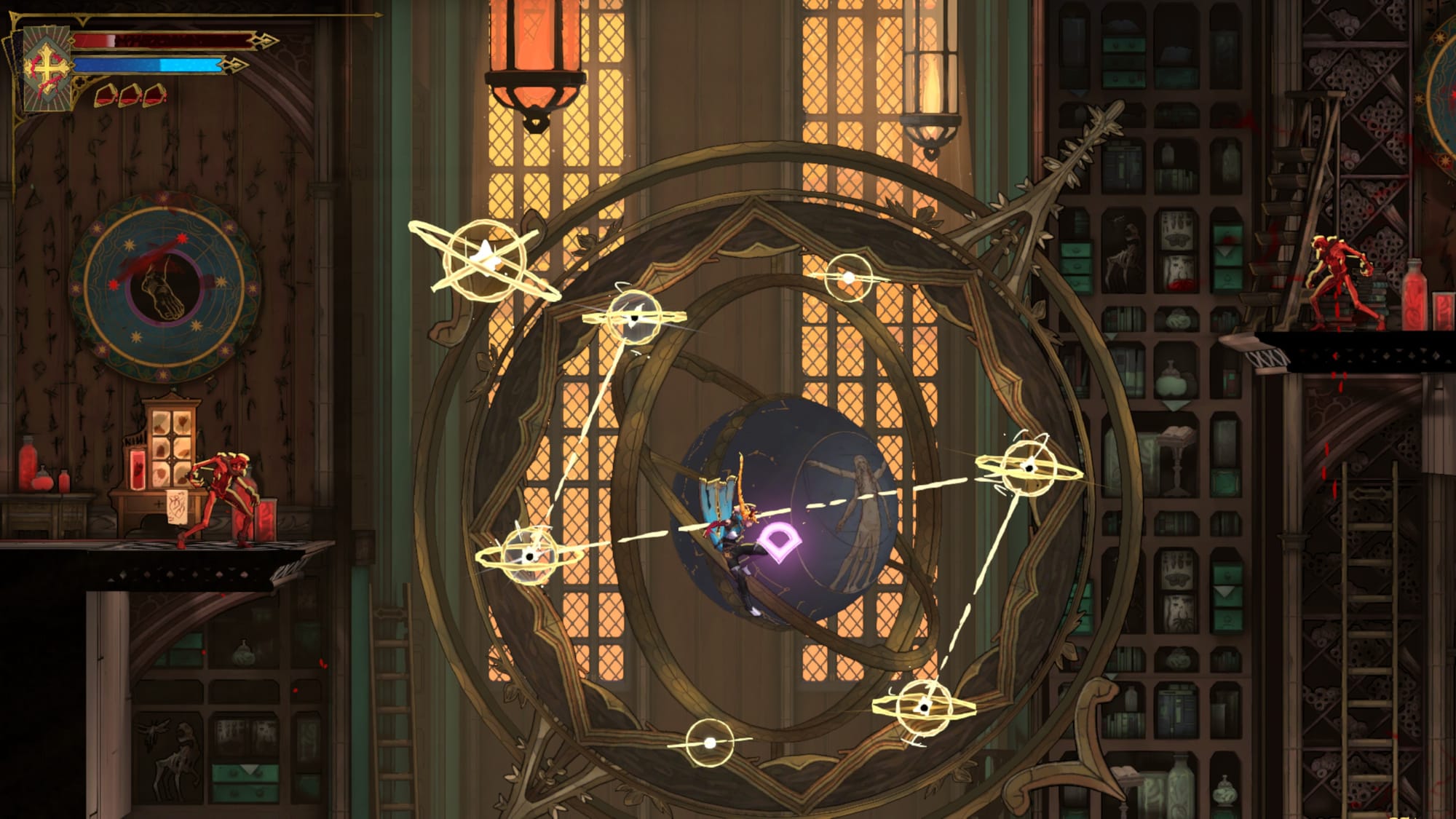
The integration of puzzles and clues into the exploration stood out to me the most. Early on the game opens itself up by giving you various leads on where to find its lineup of bosses, and simply exploring the map often won’t be enough to stumble upon them. Instead, the game gives you hints and clues about their location, which will often involve cross-referencing those hints with details in the environment to find secret walls. I can’t remember the last time a new release compelled me to write things down and draw puzzle solutions, so that’s a win in my book. It feels reminiscent of the kind of game Simon’s Quest aimed to be. That might be a coincidence, but it’s one I’ll give the team credit for because I like it.
Part of my hesitation to bequeath Belmont’s Curse with Castlevania’s legacy is that doing so invites unfavorable comparisons, with the soundtrack being the most notable. I get what the composer was going for—they aimed for something horror themed with a modern twist, so you get a lot of subdued atmospheric beats with orchestral flairs. The music works for atmosphere, but it often blends into the background as part of repetitive haze. Modern audio design would suggest that’s a good thing, but that’s not good for Castlevania. Castlevania music stands out just as much as any of the characters on screen: it’s often loud, catchy, and distinct. It’s the exact opposite of what Belmont’s Curse seems to be going for, which either due to direction from up top or the composer’s own tastes unfortunately misunderstands a vital element of the series.
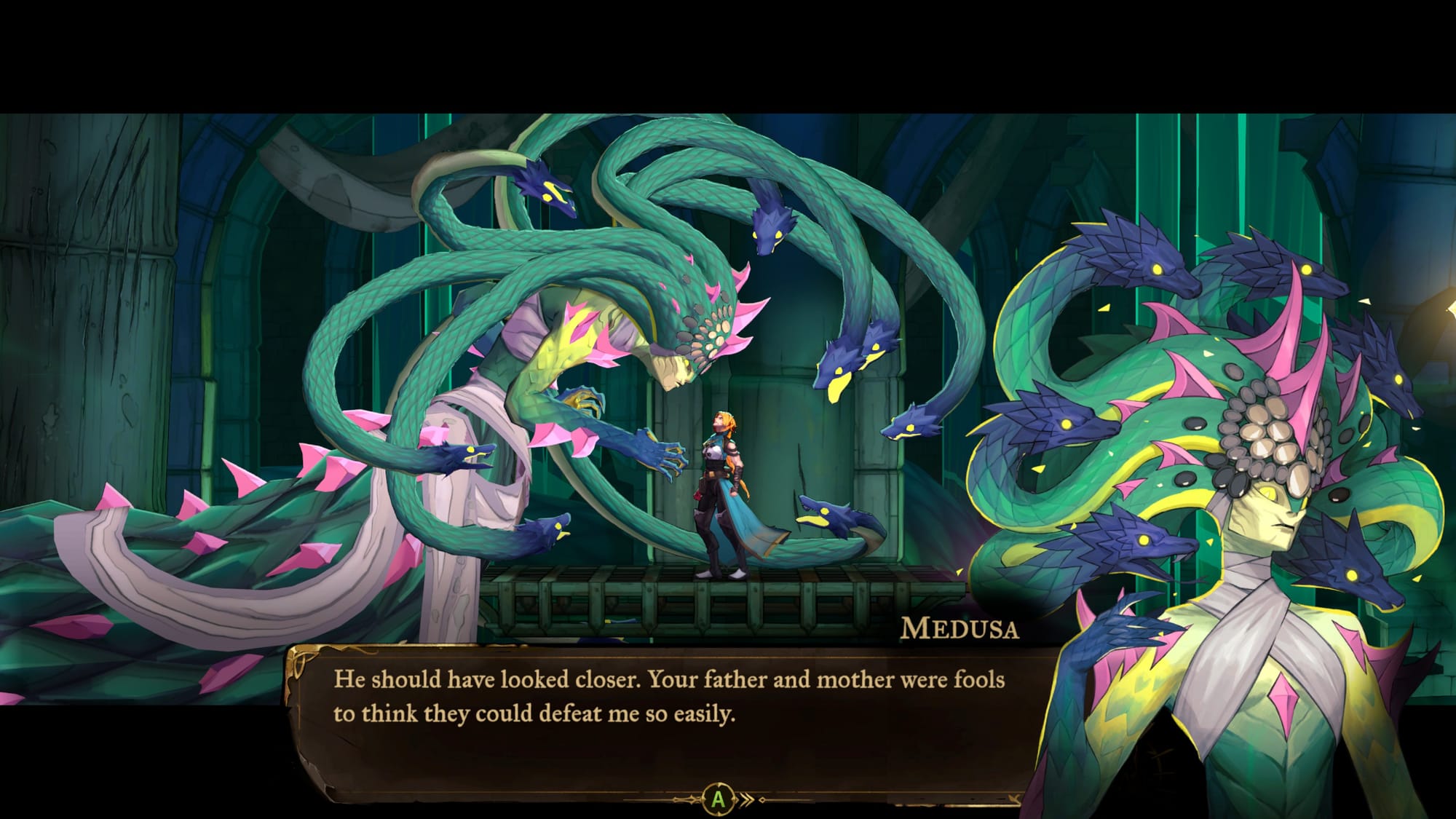
The misunderstandings continue with the story. I wouldn’t say Castlevania historically ever put much weight into its narrative, and that’s the problem. Most of the games had connections, but the stories themselves often stayed simple and standalone. In contrast, Belmont’s Curse wants to be one the most important entries ever. The story overtly ties as many entries of the series together as possible with some pretty questionable lore additions and interpretations of the characters to go with it. It made me long for the days of Genya Arikado in the Sorrow games, where any fan of the series understood the character’s significance but it was never directly spelled out or made integral to the story.
Belmont’s Curse doesn’t show the same restraint, resulting in a noticeable tone shift. I gotta call it as I see it: the story here feels like fan fiction. It needlessly mires itself in continuity in a way that harms games with stronger narratives, like Lament of Innocence. It reminds me of how a modern comic book writer might latch their story onto a bunch of well-regarded 20+ year old stories to add some legitimacy and continuity to it. I can’t buy this particular narrative as “canonical,” despite Konami’s insistence that it is. I suppose we’ll see how many games end up following what it establishes.
When I finished the game, I felt conflicted. I enjoyed my time with it. It also wasn’t what I was looking for in a Castlevania game. While I certainly believe in judging a game on its own merits, at a certain point I think it’s also fair to ask what the point of making it a Castlevania game at all was. If the answer was simply “money,” then unfortunately I can’t say that I respect the hustle.
Much like Dracula’s castle, the gaming industry has become a creature of chaos. Game design has been trending towards homogenization both in the AAA and indie spaces, and I suspect that will only get worse in the age of AI. It will only get more difficult for new games to stand out. Having a strong identity will decide what games will truly make an impact, and I don’t think Castlevania can do that by trying to be like something else.
Castlevania: Belmont's Curse
Great
Belmont’s Curse is a tightly crafted, enjoyable modern Metroidvania, even if its Castlevania branding distract from its strengths. By leaning into current trends rather than the series’ distinct identities, it feels more like a well-made genre entry that happens to feature Castlevania elements than the firm grounding this series needs.
Pros
- Well-designed mix of combat and platforming
- Fun integration of puzzles into the exploration
- Enjoyable reinventions of Castlevania conventions
Cons
- Doesn’t neatly fit with Castlevania’s identity
- Atmospheric soundtrack doesn’t stand out
- Story over-invests in continuity at the expense of past entires
This review is based on a retail PC copy provided by the publisher.