Entropy has the makings of a true landmark for horror RPGs, if the finished product follows through on the promise of the early access release. It’s a turn based game with PS1-esque polygonal graphics, placed in a medieval fantasy world amidst a looming apocalypse. Far from derivative, I found the early access version a culmination and refinement on its many influences, delivering what may end up being my favorite game in years.
My quibbles with its current version are distinct and fixable; balance and technology need some minor tweaks, but the real question remaining is how much new content will be added to the complete version, and how well its pacing integrates with the rest of the game. I’m not in love with Entropy, but I’m prepared to be if they can finish the job with the flair that started it.
Though Entropy has shades of Mork Borg and Fear & Hunger, the most direct influence is nigh-cult classic Koudelka. With more polish and better usability, the game escapes the “flawed but interesting” descriptor I would give Koudelka, rounding out into something unequivocally high quality and well-considered. It’s the cohesiveness of the mechanics, art design, and tone that makes a somewhat simple game hold the promise of a new classic.
Things open without much fanfare: you are the Player, as in an archaic actor for a theater company, choosing between Male, Female, or non-gendered Aemen body types. You also choose a small boost to one of your stats. Otherwise, there’s nothing really to character building, leaving this anemic enough to be nearly pointless. The town hosting your players is attacked by an army of monstrosities, seeing you flee with scant survivors to make your way in the world map.
The beginning is light on lore and context, but you swiftly gain more over time as you speak to NPCs. This quickly gives you a sense of weight and agency in exploration: random townspeople could hold interesting bits of lore, quests, or hints for upcoming monsters. Much of the game is based on this exploration and the risk/reward mechanisms contained therein. It’s a hard game, and will task you to carefully balance your resources and capabilities as you seek more advantages against lethal combat encounters.
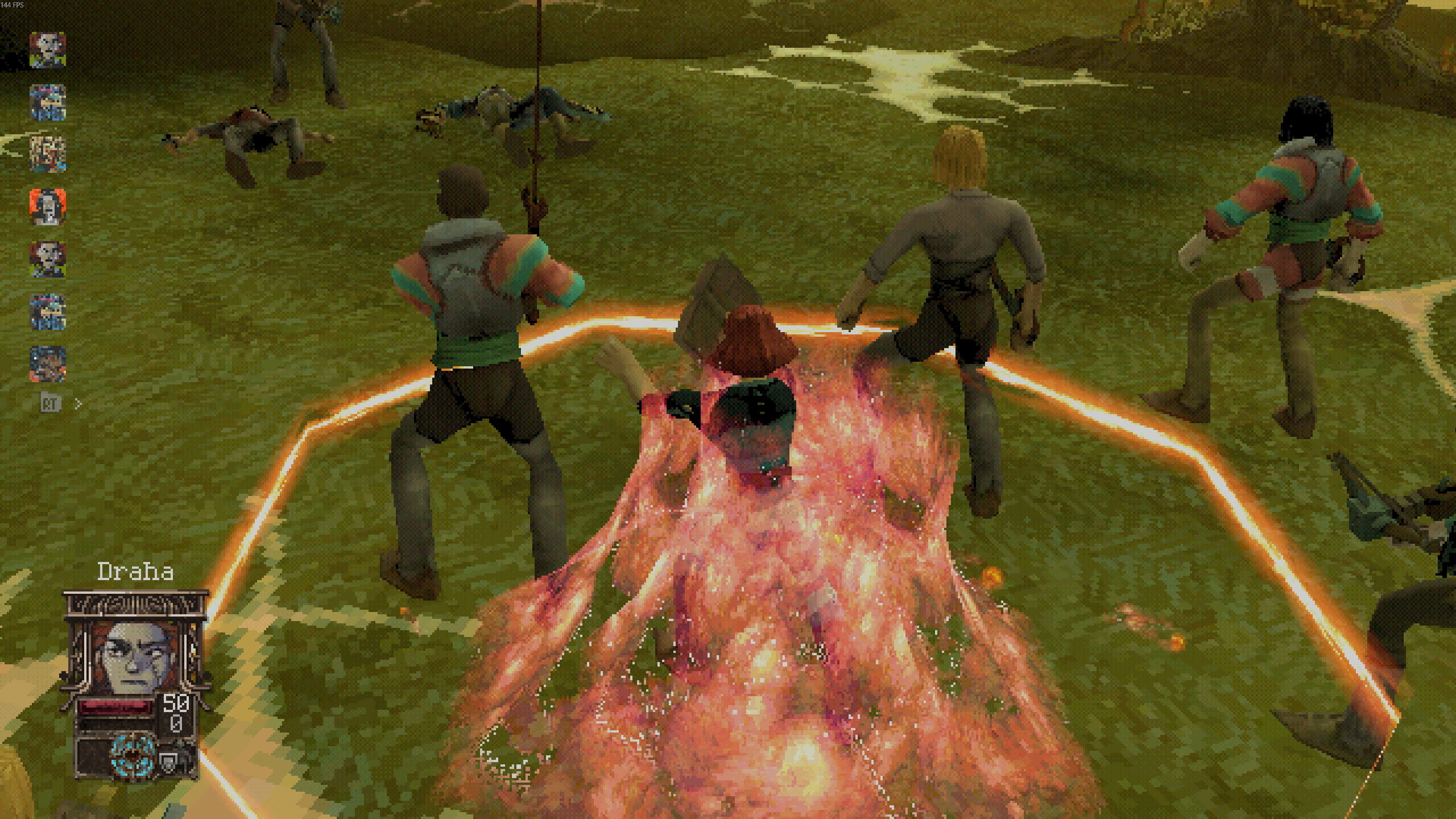
Those combat encounters are where the rubber meets the road, but the rest of the game is built around them. Turn-based fights play out on a grid, with front and back rows. Frontline protectors can use melee attacks and block attacks at the back row, unless the attacks are magical or ranged. Many abilities play with this dynamic, letting you move or bypass enemies. Every weapon has strengths and weaknesses. This isn’t just in terms of damage types, which might be better at reducing armor-based damage resistance or at dealing raw damage. The difference also comes in with the many weapon skills of the game. These can pierce armor, inflict buffs or debuffs, move enemies, and more.
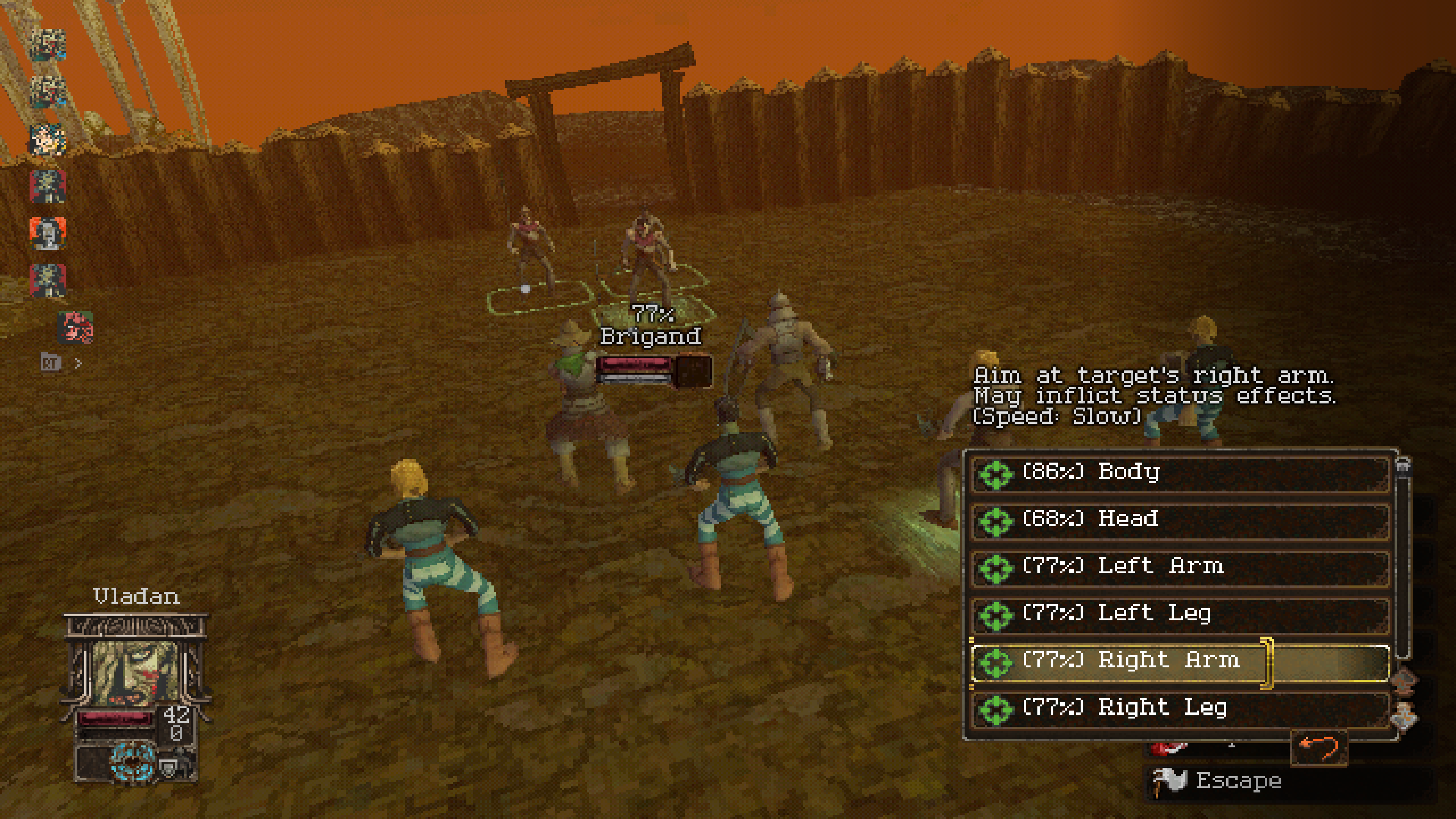
The game also features the option to target enemy body parts specifically. Crippling legs prevents movement, whereas targeting arms can force them to drop weapons. These same injuries can be inflicted on your party, becoming especially likely if they hit 0 HP, forcing you to carefully balance your equipment and party members. Characters can choose to use Tomes instead of weapons, unlocking magic that either has direct damage effects or buffs and debuffs. While spells don’t cost MP, they do carry the risk of back-firing and dealing direct damage to you.
Equipment is the most important part of a character, but only at first. Their stats do determine effectiveness with melee/ranged or magical damage, but also the speed at which they act. Two handed swords tend to delay your turn more than daggers, but give you a reason to consider using them with their higher damage and sweeping attacks. That all said, levelling up does give you more stats and a few limited Perks; similar to feats, perks make you more effective in many directions. They may unlock higher crit chance or reduce damage from misfires, for example. The game definitely needs more of these options, but the ones available currently are impactful choices.
At first blush, these details may sound familiar, but the way they come together is what’s most interesting for me. The combat numbers are low enough that you get to learn exactly what your capabilities and weaknesses are. It’s very clear what impact your decisions will have against which enemies, rewarding you for learning from your mistakes. Outside of combat, choosing how to spend your limited money has direct and immediate impacts on your effectiveness. At the same time, failures are punished harshly, but not to the point of ruining your game.
At one point, my lack of healing items led to a full half of my party dying outright, leaving one of the two remaining characters with a serious injury. I was saving up for a good party member; new recruits will be cheaper if they come with worse equipment and injuries, urging you to save money and hire the best on offer. However, the more people in your party, the less money you receive from battles. These people need to be paid, after all. This works as a balancing mechanism, giving you more resources if you’re out of luck but limiting your income if you have a full party. I thought I was screwed, with no way to restart, but I quickly found that I had plenty of options. The injury could be healed for a small price by visiting a doctor, and new party members were available. I had been set back, but was now earning money faster and with a better understanding of the risks.
This being a campaign rather than a rogue-like, it encourages sticking with your failures and decisions. Here is where some of the weaknesses start to creep in. There are narrative choices, especially from the many choose-your-own adventure encounters, where it’s unclear what effect your decisions have. This is both immediately true and for long-term consequences, at least I think so with the unfinished game. The normal and hard modes have aggressive autosave, meaning the only way to retry a decision is to restart the entire game from scratch. I appreciate this in a horror game to an extent, and I don’t want to cheat, but it is a shame that binary decisions can hurt you in irreparable ways, without much telegraphing. This also happened with a quest, where I had neglected a single button in an area, could easily have fixed it, but only realized once it was too late. My fault for not paying close enough attention to the journal, I suppose.
This isn’t as bad as Fear & Hunger, a game with similar horrific, body-mutilating combat. That game is out to fuck you unequivocally. A literal coin-toss can determine instant death or successfully saving the game. It has a much shorter run-time and less focus on story than Entropy, so you’re meant to go into the dungeon, die horrifically, and restart with more knowledge. Look Outside, another unmissable landmark for horror fans, is shorter with more options to save than Entropy. It’s far more open and choice-based, giving you more room to experiment. My one fear with Entropy is that it won’t strike this balance, leaving you screwed later in the game. It’s too early to say how this shakes out.
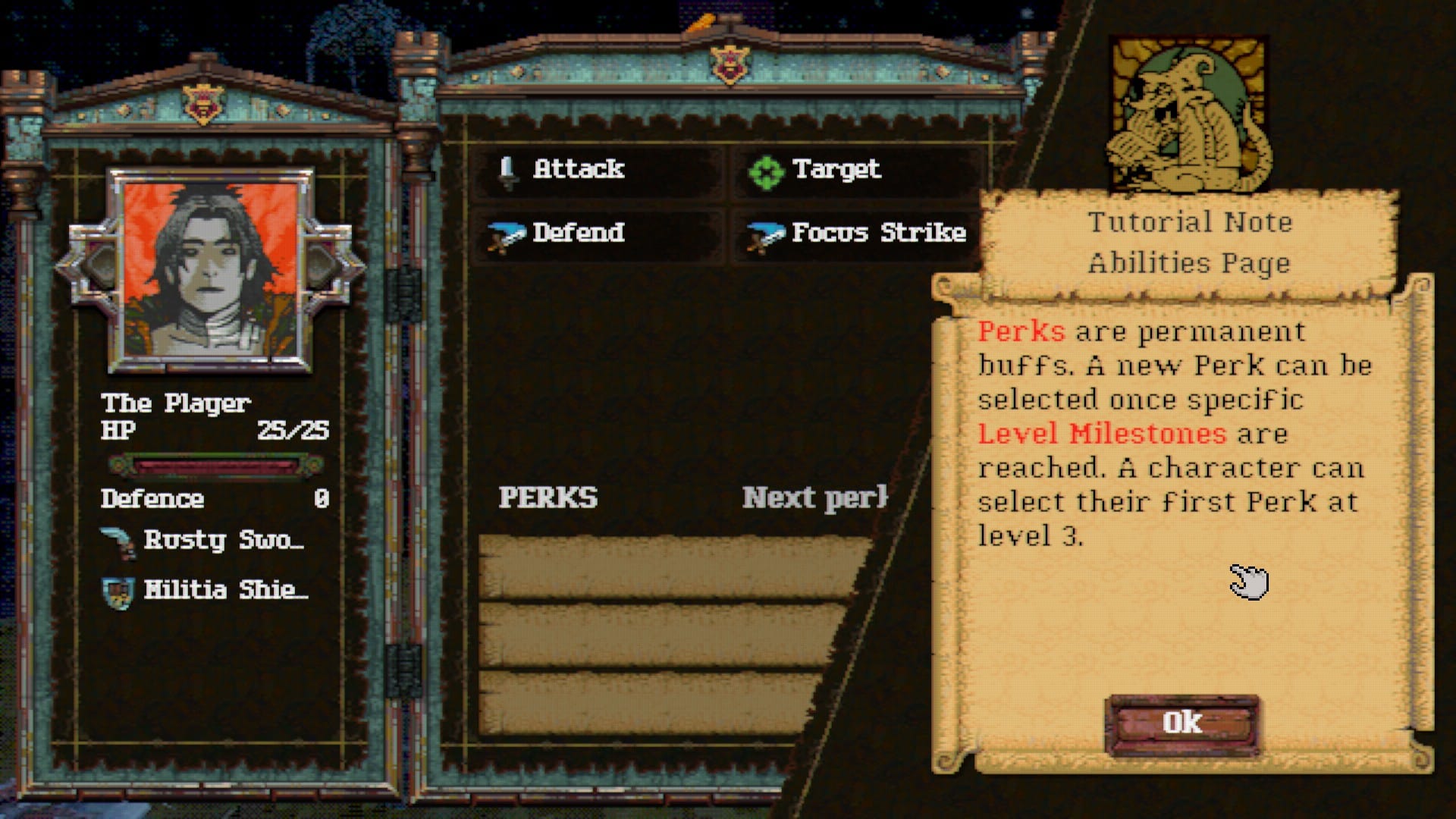
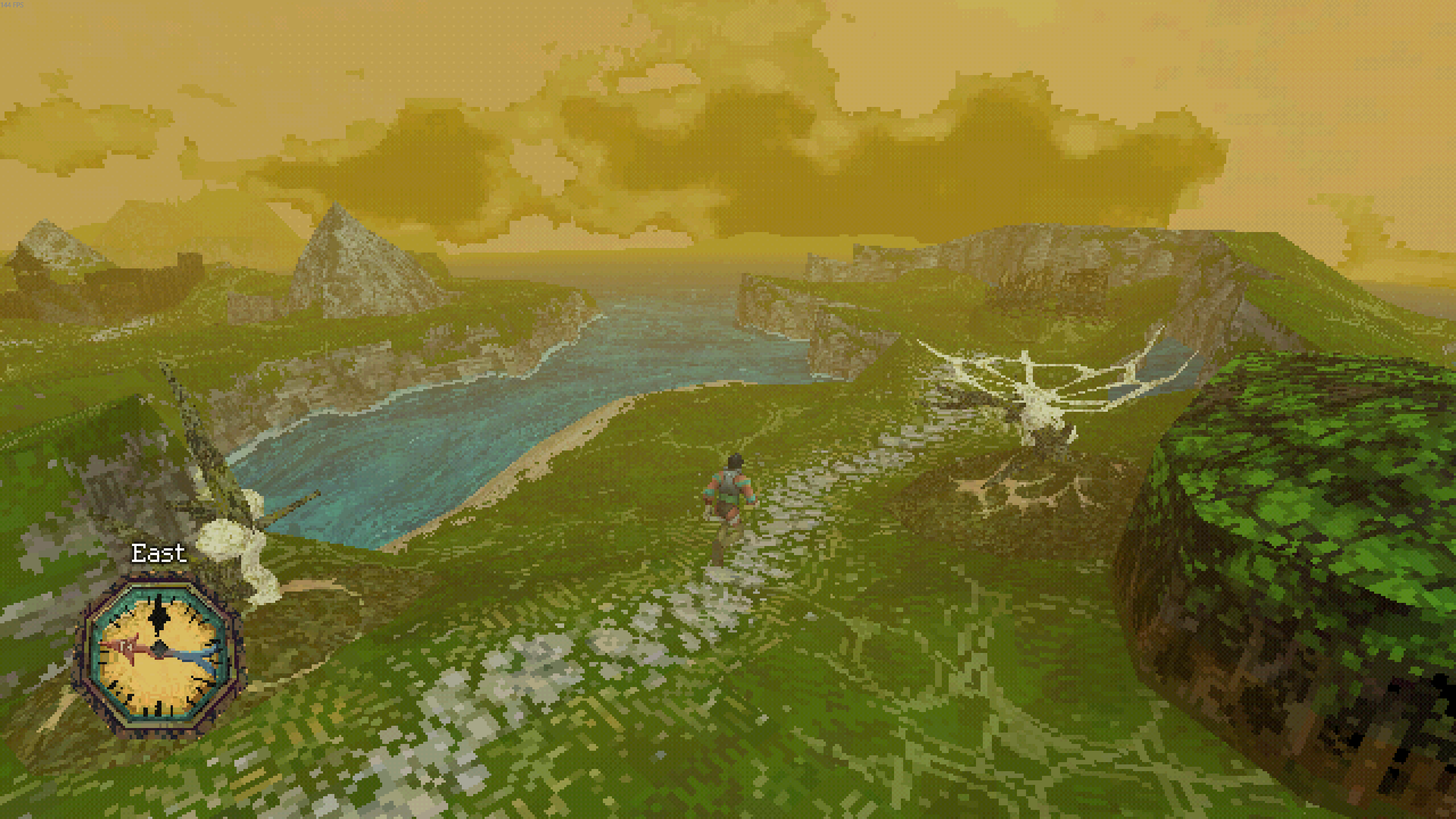
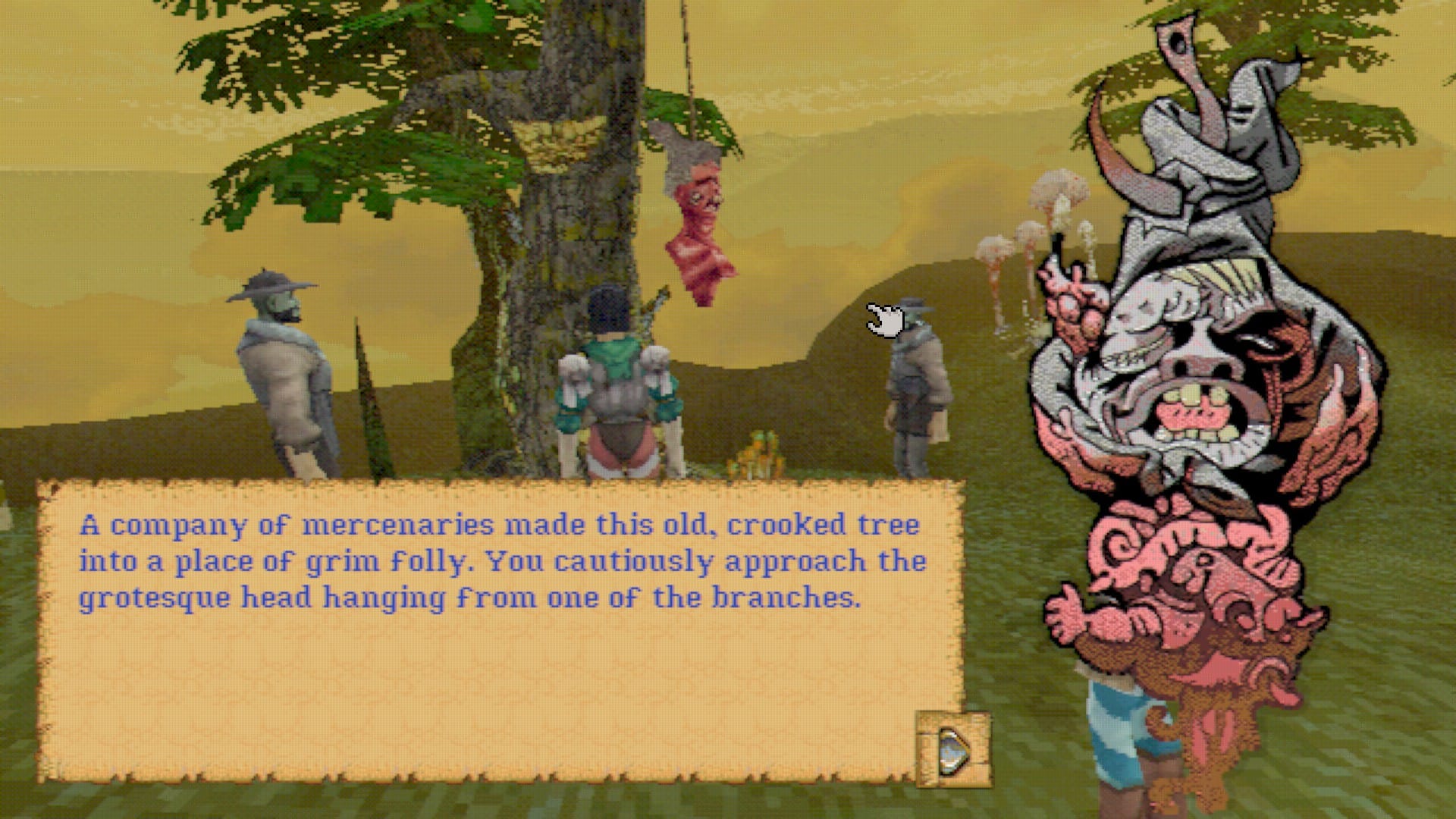
On top of the tight mechanical balance, the presentation is wonderful. The lofi, Felvidek-esque artstyle are a positive aesthetic decision, not a retro throwback. As graphics have gotten "better" they have gotten more powerful and realistic, but that doesn't mean they convey mood better. On top of the fact that they're more expensive and time consuming to produce, without necessarily lending to the atmosphere of the game. Esoteric’s distant, hazy presentation is perfect for a horror game. Combined with archaic, mechanical sound effects and aetherial monster voices, it sets and maintains its tone immaculately. The writing generally comes along for the ride as well. It’s not bad, but it did strike me as a little blunt to begin with. That being said, I found the quality increased as I got deeper into the game, using NPC dialogue and item descriptions to naturally build the history and culture of its world.
I encountered no technical issues, other than some problems with the in-combat log. You can choose to pop out this log to show you exact numbers for all dice rolls and effects. It’s a useful tool which gives you more insight into your decisions, but clutters up the game-space and doesn’t stick around long enough for you to examine it completely. I also found the limb-targeting abilities under-utilized in this early section of the game. Most enemies at this point are humanoid, with the same effects resulting from targeting the same limbs. I hope the final product will be more inventive, giving you enemies with multiple heads or tentacles, or other ways to tactically target body parts. Last in my short list of issues, I found the CYOA sections needing more in the way of art and descriptiveness. Often you’ll approach an interesting location on the world map, get some text on a black screen and maybe one illustration, and be left unsure what actually happened.
That all said, Entropy is on its way to something remarkable. The ~4 hours available now constitute the first act. I don’t know how many acts the game will have or of what length, but the foundation laid here can easily become one of my all-time favorites. The free demo is available on Steam now, with ongoing support through the Early Access phase.