Dr. Doom naturally evokes thoughts of deep existential philosophy. No matter how much power he gets or how many victories he accumulates, it never seems to be enough for him. He always wants more. While his accomplishments can be great, his endless pursuit of more inevitably leads to small oversights that cause his downfall. We can learn much from Doom’s failures. I personally keep his teachings in mind whenever I think of global or multiversal conquest.
Marvel Cosmic Invasion’s new Dr. Doom-themed DLC fittingly covers the same ground. I can’t say no to more Marvel Cosmic Invasion and that’s essentially what the “The Siege of Castle Doom” DLC is. The DLC adds two more characters, a new game mode with more enemies and challenges, and some more unlockable color palettes for the entire roster. To the extent that the DLC adds “more,” it almost inherently works for me. I expect most fans of the game to feel the same. When I put on my patented thinking cap, however, I can’t ignore that the “more” it adds doesn’t necessarily nail the little things that would have made it a true success.
As the DLC’s title suggests, the new mode has you siege Doom’s castle in a choice-based gauntlet that takes heavy inspiration from roguelikes. You pick your path through the castle via labeled doors that each contain a specific kind of gimmick. Some doors will give you health refills, others will activate events like boss rematches, while others will help you collect special orbs essential for progressing through the castle. The types of rooms and the specific waves of enemies or traps contained within them are selected from a random pool. On top of that, you can also pick up randomized powerups and select from different branches of upgrades as you progress. All of these elements combine to create what the world’s leading doctorates of doom are calling “near-infinite replayability.”
I don’t mind the idea conceptually. In execution, the concept feels both misguided and underbaked.
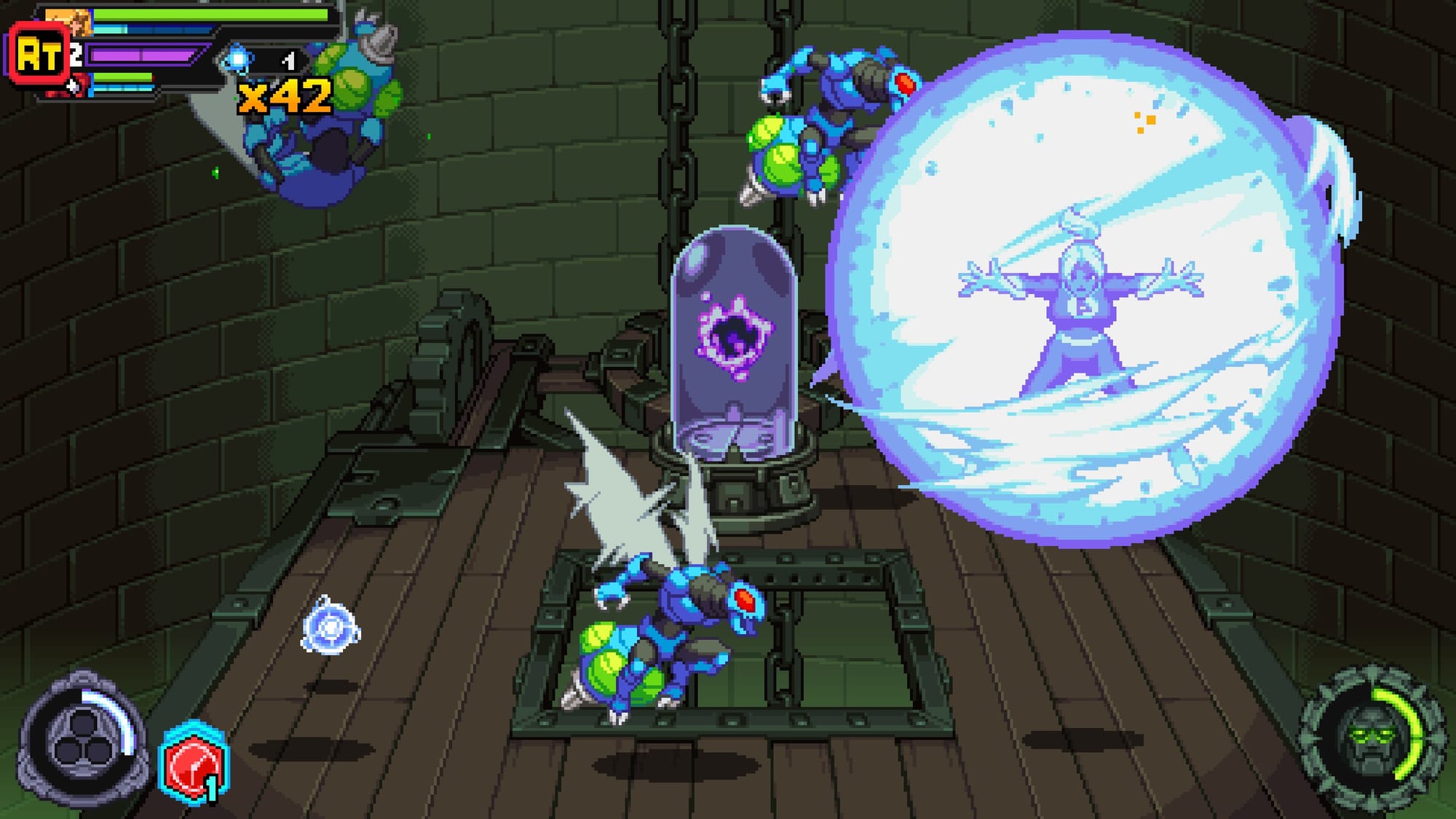
Beat-em-ups, like most games born of arcade design, face a major conundrum: the vast majority of gamers don’t understand them. Expert players know that the genre can already be considered near-infinitely replayable because the combat mechanics are easy to jump into and fun to master. The pursuit of a 1-credit clear can turn an hour-long experience into dozens or hundreds, with further replays following in the years to come simply because the act can be fun to perform. To the unenlightened, however, beat-em-ups are just excuses to smash buttons for about an hour and then never play again.
By attempting to placate that latter audience, modern beat-em-ups tend to focus on modes that have less to do with the core gameplay and more with superfluous choices. I can see the small amount of strategy at play with the path choosing – sometimes you might have had a tough room so you’ll focus on health, where at other times you might want to spin the dice on some other kind of bonus. These choices get balanced by competing meters that are affected by progression orbs; collecting them fills a meter that lets you move onto the next floor of Doom’s castle and decreases a meter that powers up Doom. The Doom meter otherwise slowly fills as time passes or you take damage. The premise here works to an extent.
In practicality, a competent player will be going for the progression orbs virtually every time they become available. It’s simply the most efficient way to handle the game. The other benefits only really matter if you’re not particularly skilled at the game or are having a bad run. In those situations, you’re already heavily putting yourself at a disadvantage because the game heavily encourages forward momentum. If the slowly ticking Doom meter fills completely, you get an instant game over. Because of that push, taking hits or lingering too long without collecting orbs already gets heavily discouraged, and having to pick doors to make up for your mistakes only further puts you on the back foot.
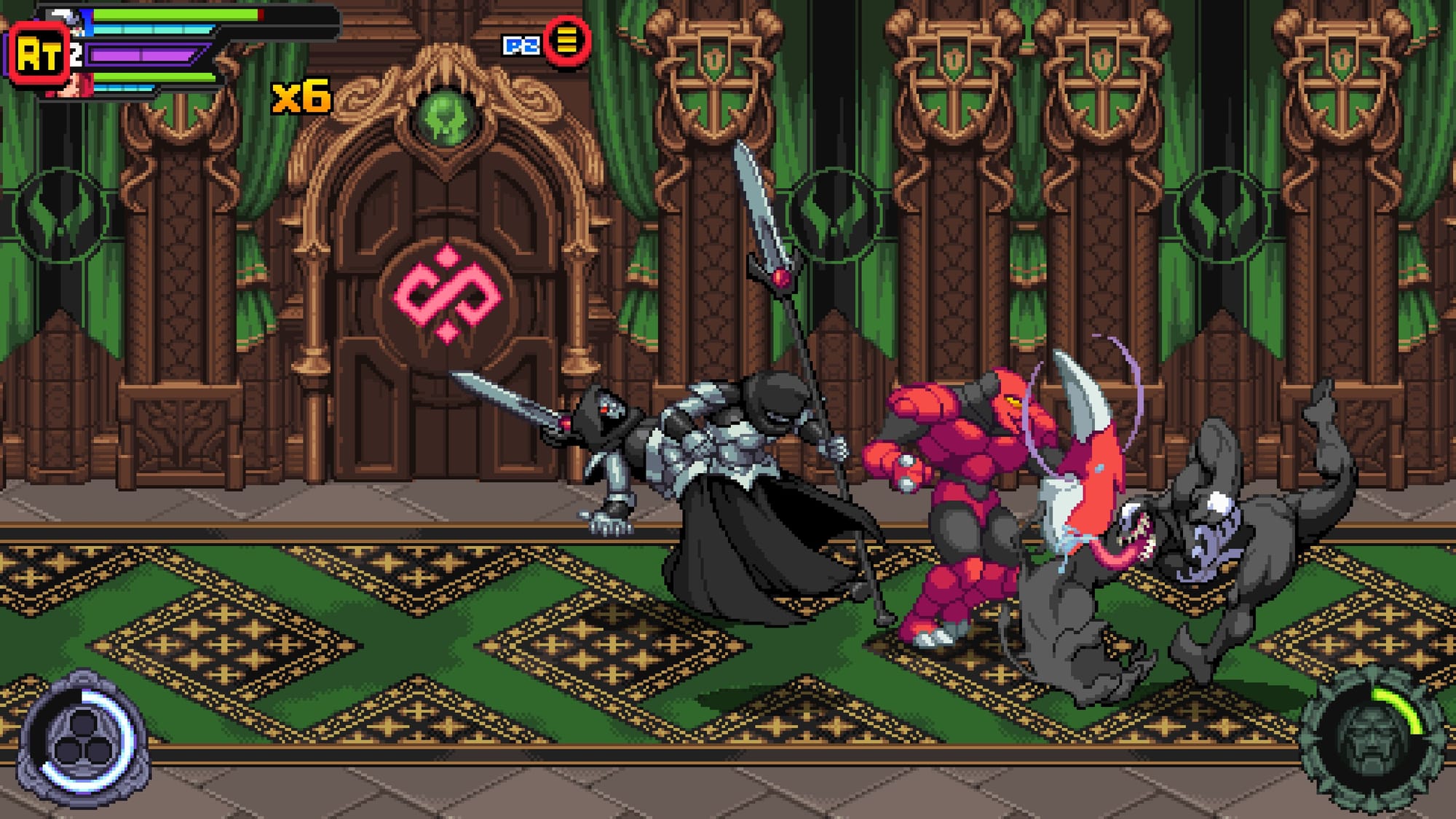
Once I figured out the core strategy, all the choices the mode forces you to make felt vapid. Most of the upgrades you pick up don’t matter too much; I completed the mode consistently focusing just on damage and defense. The powerups you pick up can occasionally be helpful, but they don’t dramatically turn the tide in any given situation I found myself in. Clearing the mode simply boiled down to fighting well with few mistakes.
That would be fine, except the mode adds very little to the core game mechanics. Doom’s castle features a few new enemy types, and a freezing gimmick for some outside snowy areas that I could take or leave. Aside from that, you’re facing the exact same enemies and hazards from the original game in slightly remixed fashion. If you enjoy the core game of Cosmic Invasion, you get a little more of it in a slightly new wrapper. I do, so the mode works for me on that level.
At the same time, because the wrapper differs little fundamentally from the base game, it can feel like playing a less fun arcade mode. The new additions might have been enough to carry an individual stage of the game’s story or arcade mode. For a mode that takes about 30-40 minutes to complete for a run, it all ends up feeling rather same-y and uninspired to be in the same kinds of environments for that long. In that sense, I would have preferred that all of the new enemies, backgrounds, and gimmicks that Dr. Doom’s castle has to offer were simply retrofitted into some new arcade mode stages.
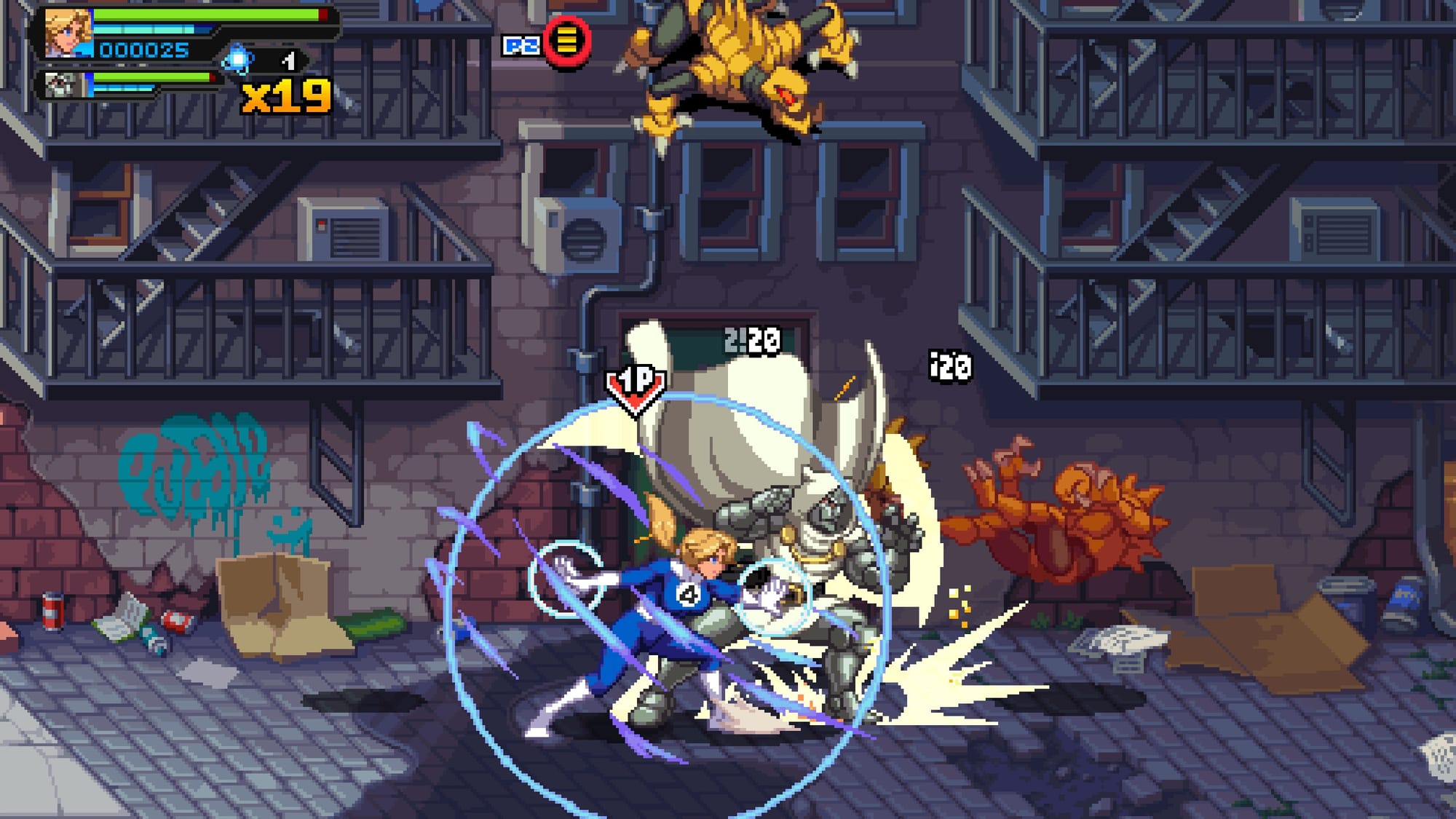
The content itself is solid, and it could easily fit into the arcade mode as new branching paths for more playthrough variety. That approach may not be as fancy as throwing together a pseudo-roguelike mode, but I think it would have been a more effective way to use the assets. As is, like most Dr. Doom schemes, the new mode falls short of its ambitions by overlooking the details.
Thankfully, the DLC nails the details when it comes to the new playable characters. Both Invisible Woman and Dr. Doom are fun to use and bring some unique quirks to their playstyles. Cosmic Invasion’s interpretation of the Invisible Woman is easily my favorite in any video game, although that isn’t necessarily a high bar to clear. She looks great, her bubble mechanic brings some fun chaos to the battles, and I love the idea of her super attack giving her some invincibility to convey her invisible-ness. Doom hits hard as you’d expect from a final boss-tier bad guy, but his sigil traps give him a layer of tactical thinking that the other heavies don’t.
I’m happy with having more Marvel Cosmic Invasion, and I’d welcome more DLC beyond this. However, I don’t think the new mode necessarily accomplishes what it set out to do. When I go back to Cosmic Invasion, I’ll likely stick to the arcade mode.
Marvel Cosmic Invasion “The Siege of Castle Doom” DLC
Alright
The “Siege of Castle Doom” DLC adds great new characters and more Cosmic Invasion content, but its roguelike-inspired mode manufactures replayability through meaningless choices. The new assets are solid, yet they’d probably be better used as additional arcade stages rather than a same-y 30–40 minute gauntlet.
Pros
- MORE Cosmic Invasion
- New enemies and concepts are solid
- Great character additions
Cons
- New mode gets stale easily
- Not the best use of the new assets
This review is based on a retail PC copy provided by the publisher.