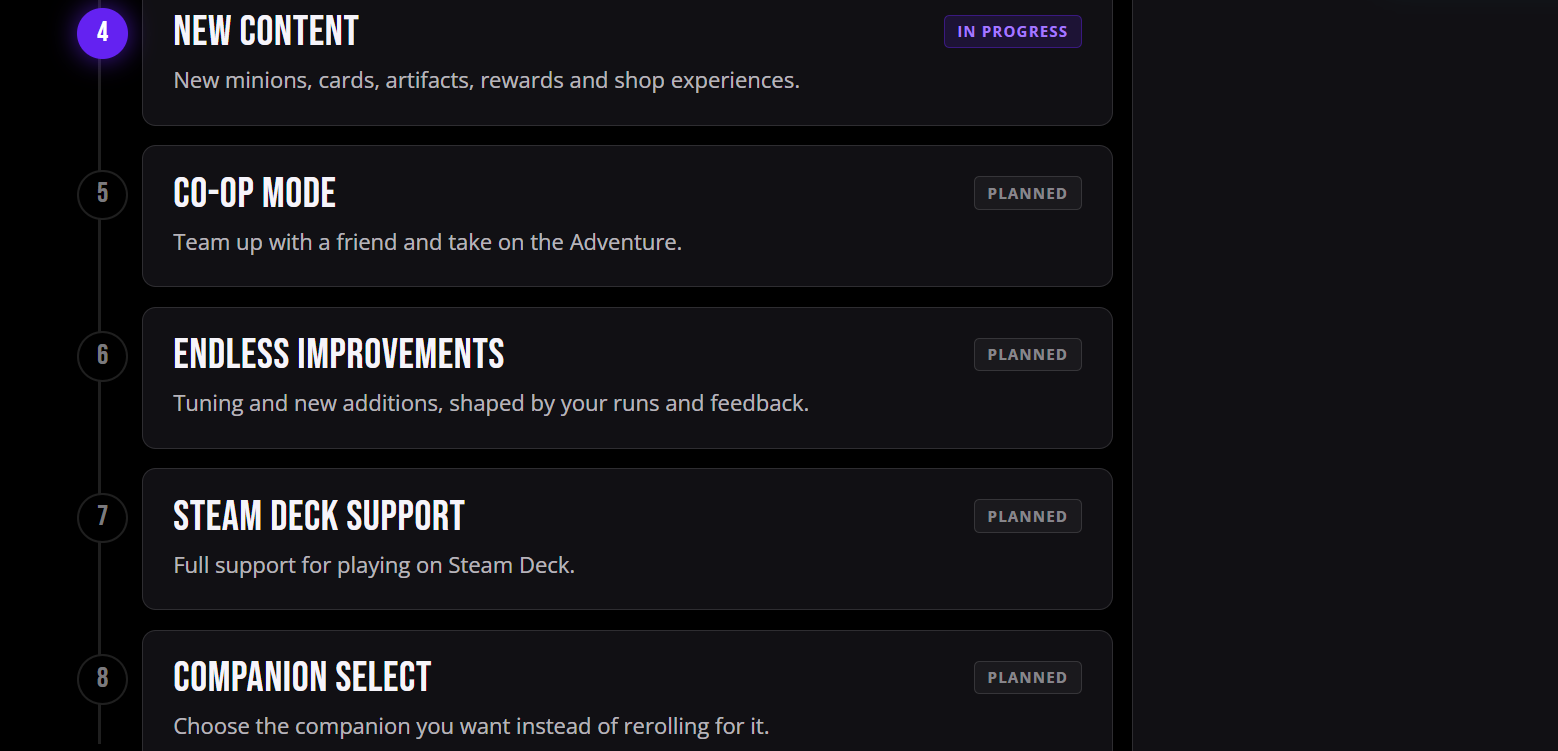
Backdraft’s meld of hero combat and deckbuilding has strong fundamentals but insufficient content to justify its price tag of $20. Though the game is not listed as Early Access, its roadmap does boast new and improved game modes, which might alleviate this issue. I hope the team can bring it to that point, because there is something compelling about a drafting based deckbuilder, especially with this level of polish on its base mechanics.
The game consists of an array of heroes, each with a special ability like extra card draw or damage on attacks. Those heroes start with access to one Element, and its associated pool of cards, and you will choose a summonable Minion with its own Element. From there, you’ll draft a deck of cards to go forth and do battle. Heroes all have limited HP, but you can add more Minions to your deck to attack the enemy or block attacks (if they have the right abilities).
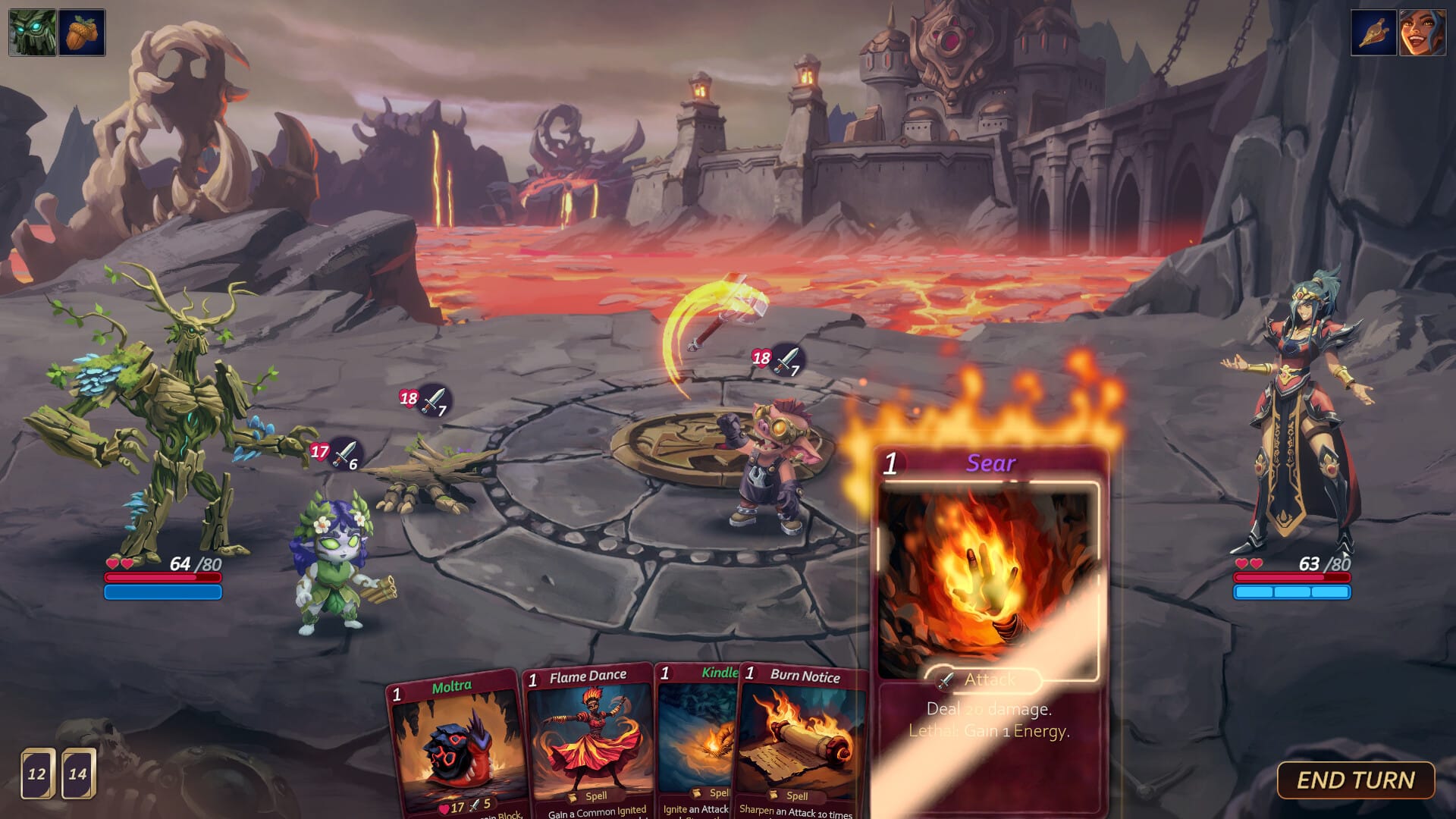
Your deck starts with some basic attack and guard cards, letting you expand from there in a few directions. The most obvious is by adding new spell cards, or attack/defense or Minions. Each Element has a few unique mechanics. Some will boost specific cards at the left of your hand, the Nature cards grow one another’s effects, and there’s some fun to be had in mixing these tools together.
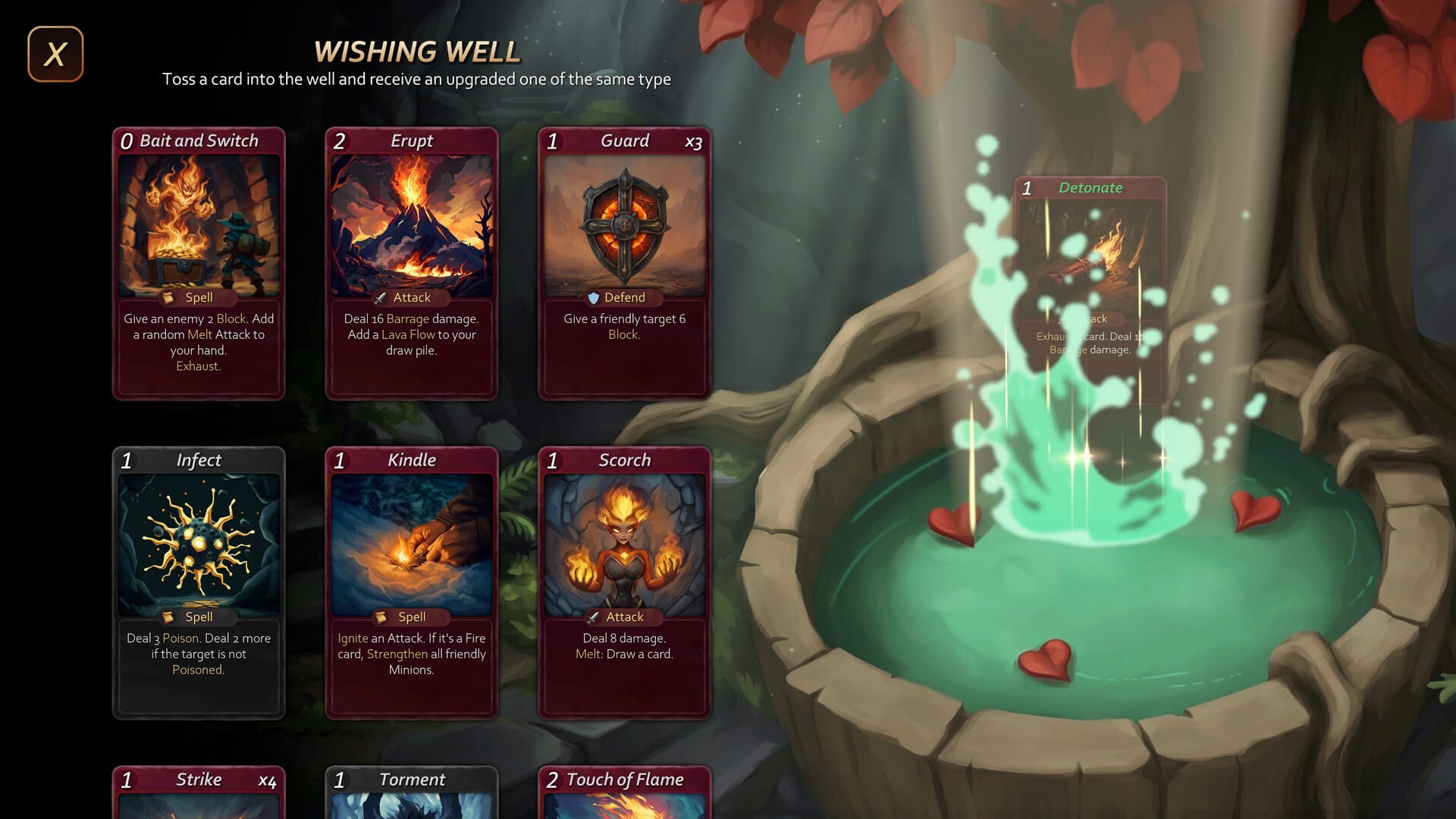
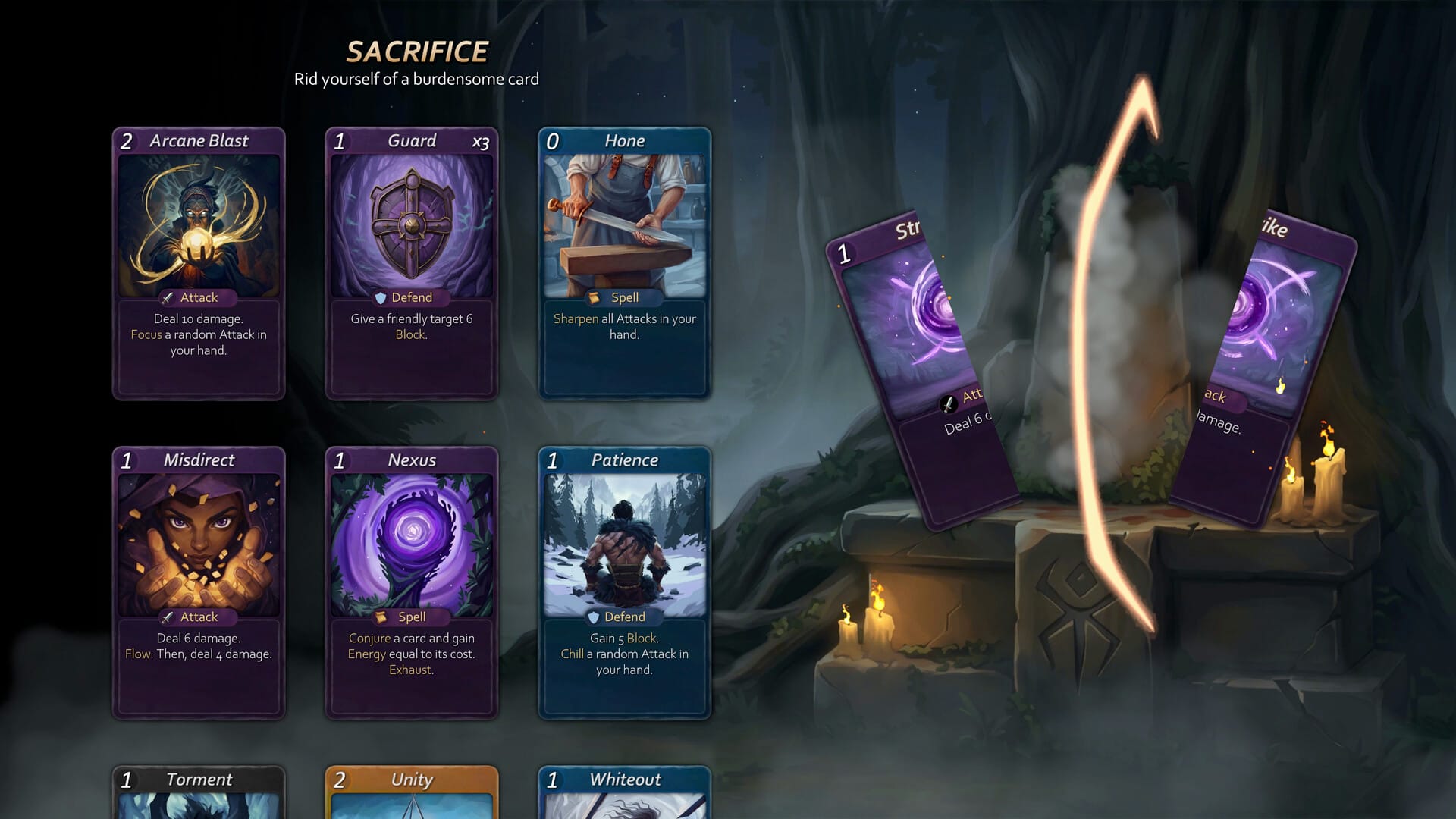
In the base mode, which just added an Endless option, you will fight through successive opponents. Between matches you can spend accumulated gold to buy new drafting packs and upgrade, transform, or remove your cards. After a certain point your deck becomes so refined that you’re going to mostly ignore that, and that point doesn’t take very long to reach.
Those elements make up the pieces of a great game, but there are too many pieces missing for Backdraft to claim that honor. Backdraft’s current iteration is too lacking in content and interactivity for any of its mechanics to ever shine through.
For one, the game boasts battles with friends, but with no online matchmaking you’re going to be limited in options. An online tournament option is coming, but against the “ghosts” of other players rather than players themselves. Maybe the upcoming co-op and versus drafts will help, but it’s too early to say and will need some structure around it to feel complete.
The base game, even with its new Endless mode, simply doesn’t have enough to hold your interest. You can go through a set of battles against AI opponents, but the ones I’ve played have been so easy that I wasn’t motivated to go on for long. There just wasn’t any real challenge or meat to the experience, which partially comes from the lack of interactivity.
Given that you don’t know what’s in your opponent’s deck and don’t have any way to respond to it even if you did, their actions and decks really don’t matter. The game is just about you doing what you do efficiently and hoping the enemy is less efficient. Sure there’s some utility in knowing when to block, but not enough to seriously matter. Mostly you’re just brining out your best stuff and swinging it as hard as possible. Maybe, occasionally, you choose to target an enemy Minion instead of the hero. That’s as far as it goes.
The level of complexity with all of the game’s mechanics only makes it harder to know what your opponent is doing, let alone respond to it. My turn usually goes by in a few seconds, but this is with multiple sources of boosts and special keywords playing off of one another. All of it results in damage to the hero or minions, potentially leaving a positive effect or block value behind.
The basic conceit of the game, with its heroes and cards and mechanics, might lead to something interesting if they’re placed in the context of a complete videogame. As it stands, the ideas and their inordinately familiar fantasy artstyle make this one to watch before considering a full purchase.
If you do find yourself interested, I encourage you to check out the Steam page or official website now for more information.