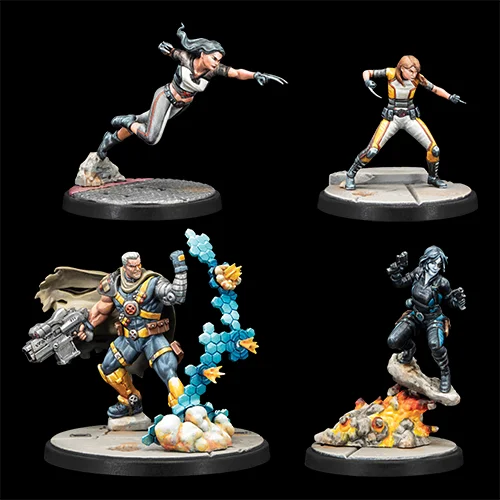
Wolverine, the most popular and iconic member of the X-Men, of course has a bunch of clones running around. In 2003, X-23 appeared in X-Men: Evolution as a female clone of Wolverine, raised by a secret organization that developed her to go kill Logan.
Ultimately, she didn’t, instead becoming a member of X-Force, the X-Men, and the New Avengers, and was eventually rewritten as Wolverine’s daughter, which I didn’t know until I started researching this article! Comics, right? A number of us will remember Dafne Keen, who played X-23 in both Logan and Deadpool & Wolverine, and a number of us are hoping we see her in the upcoming X-Men film in the Marvel Cinematic Universe.
Honey Badger, a clone of X-23 (which does this also make her a daughter? Let me know), has the same powers as X-23 and Wolverine, but only one claw on each arm. We’re honestly maybe two models away from a whole Wolverine affiliation, so let’s make it happen, Atomic Mass Games!
So, lore aside, let’s take a shot at making some decent-looking box art for these sisters, as both are a little challenging.

The Plan
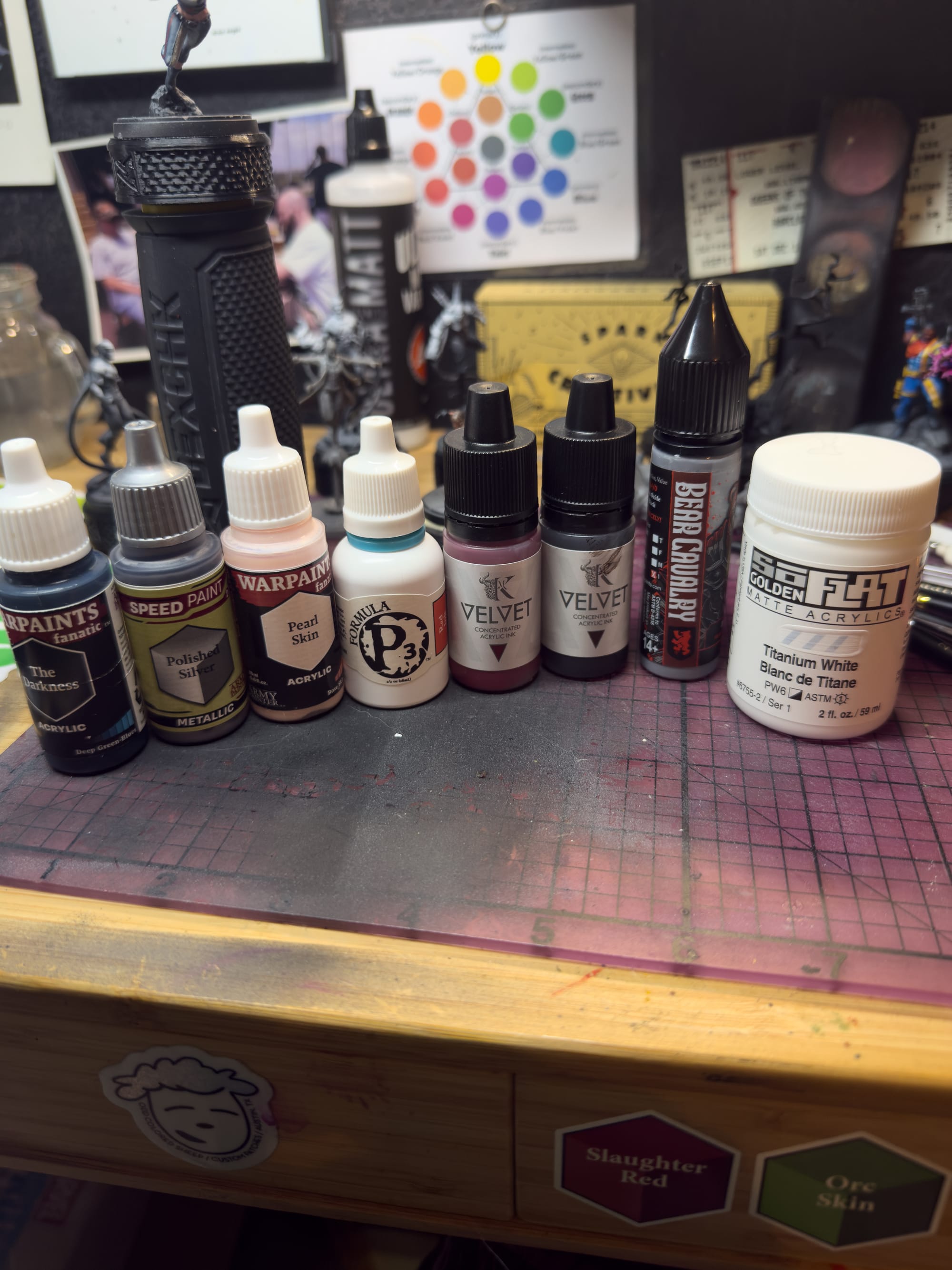
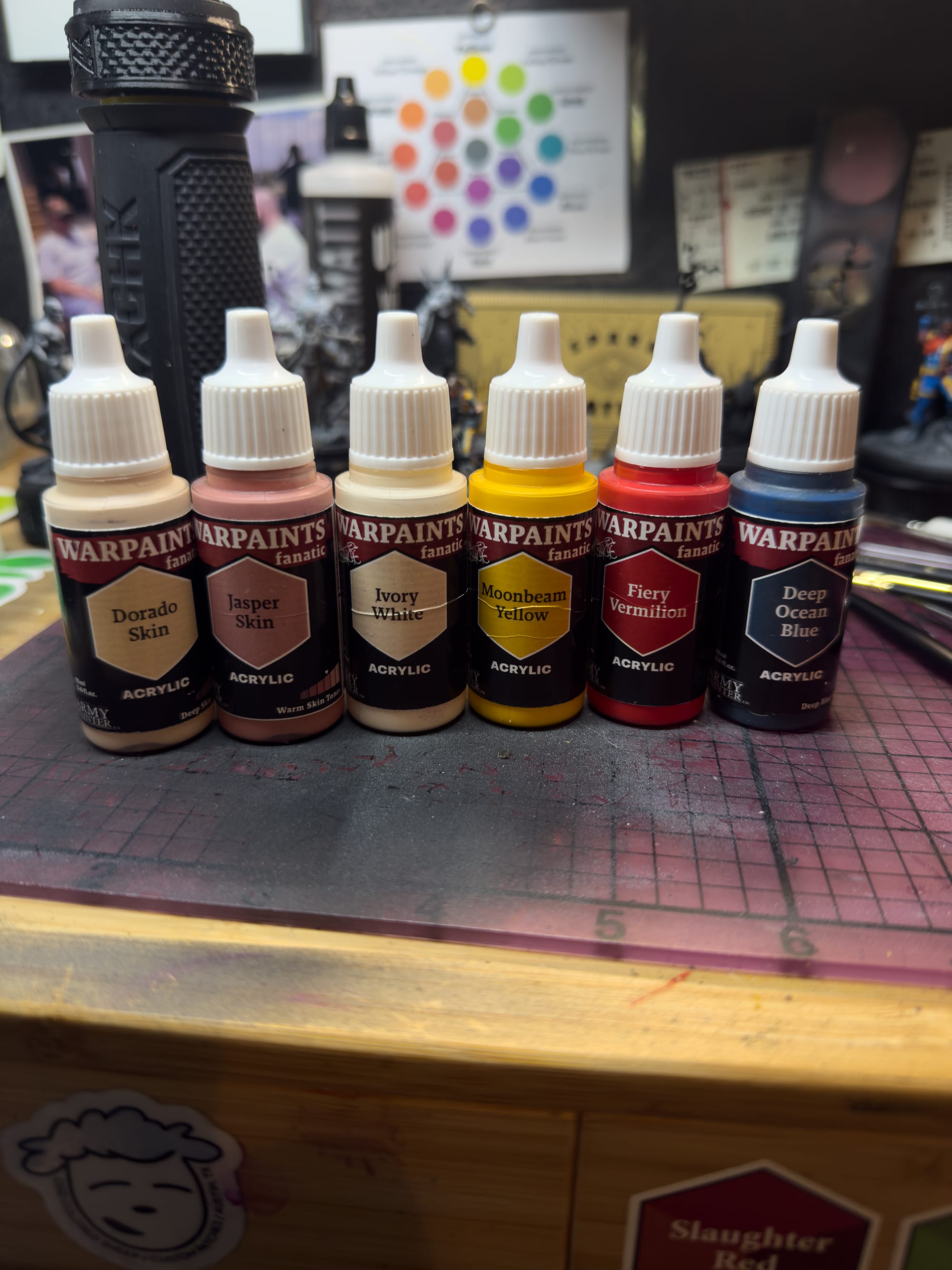
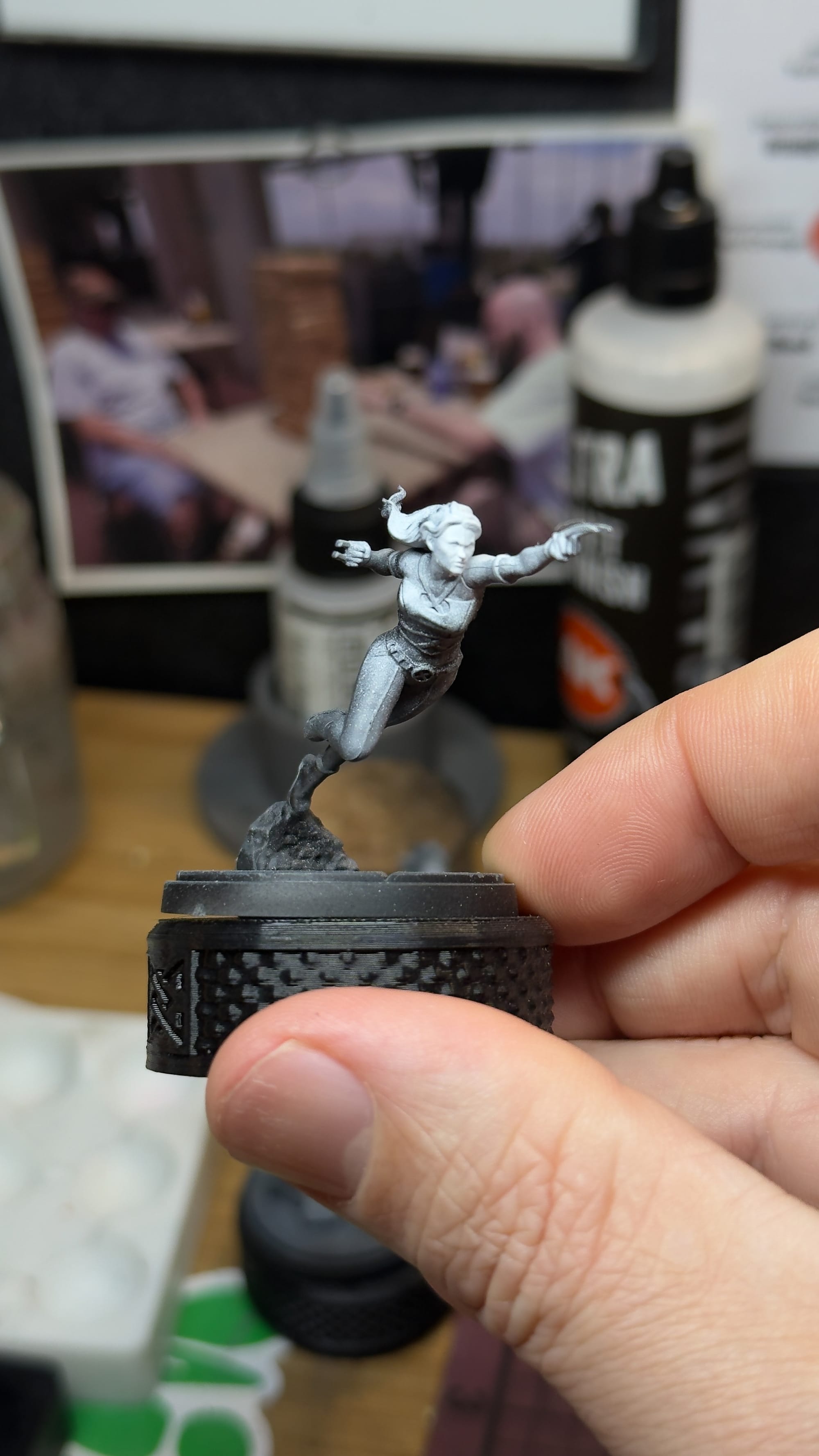
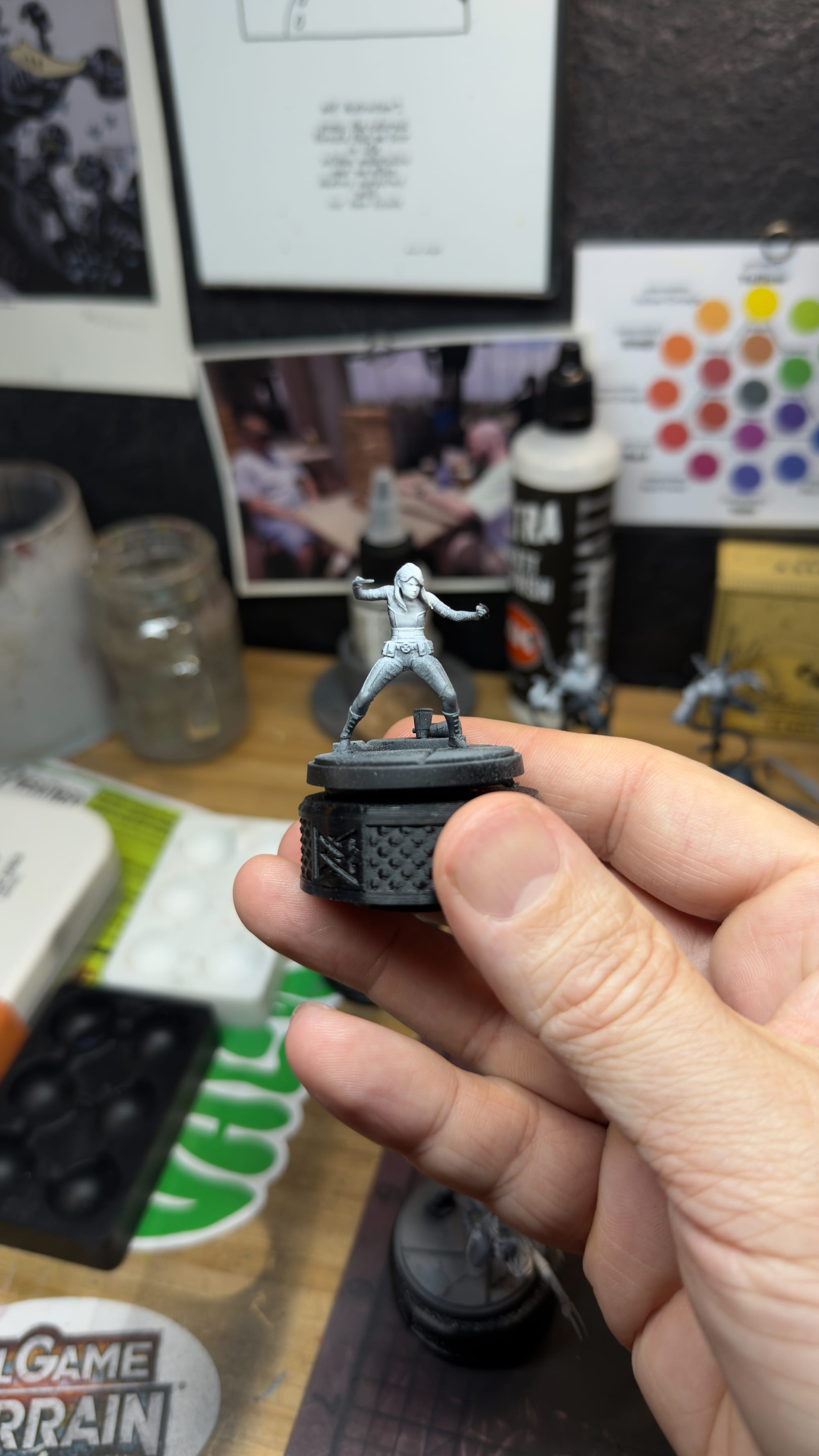
For these two models, since they’re clones/sisters, it means I can use a lot of similar paints. I also want to be quick on these models as they’re for the table. So this means I’m dipping back into the Army Painter Fanatics line, which some support from a few other brands.
Army Painter:
The Darkness
Polished Silver
Pearl Skin
Dorado Skin
Jasper Skin
Ivory White
Moonbeam Yellow
Fiery Vermillion
Deep Ocean Blue
P3:
Red Ink
Kimera:
Velvet Smoke
Velvet Crimson
Bear Cavalry:
Iron Man
Golden:
Titanium White
While these models may seem easy at first, there are some considerations. Honey Badger is roughly taller than an inch, making her one of the more difficult models to paint due to the details rendered at her size. She also has tiny piping on the costume, but her face is slightly obscured due to the hair, so there will be some easy parts to the model and some less easy parts.
On x-23, her pose is one of the wilder ones I’ve seen in MCP. There will be some shadow, but some areas should be bright because of the rules of the model (ensure the face is bright).
So my first pass, zenithal highlighting, helps create those areas. Like on some other models I’ve painted, the highlight is more of a guide for me to keep in mind, vs laying down transparent paint over the top.
"North Dakota, por favor."
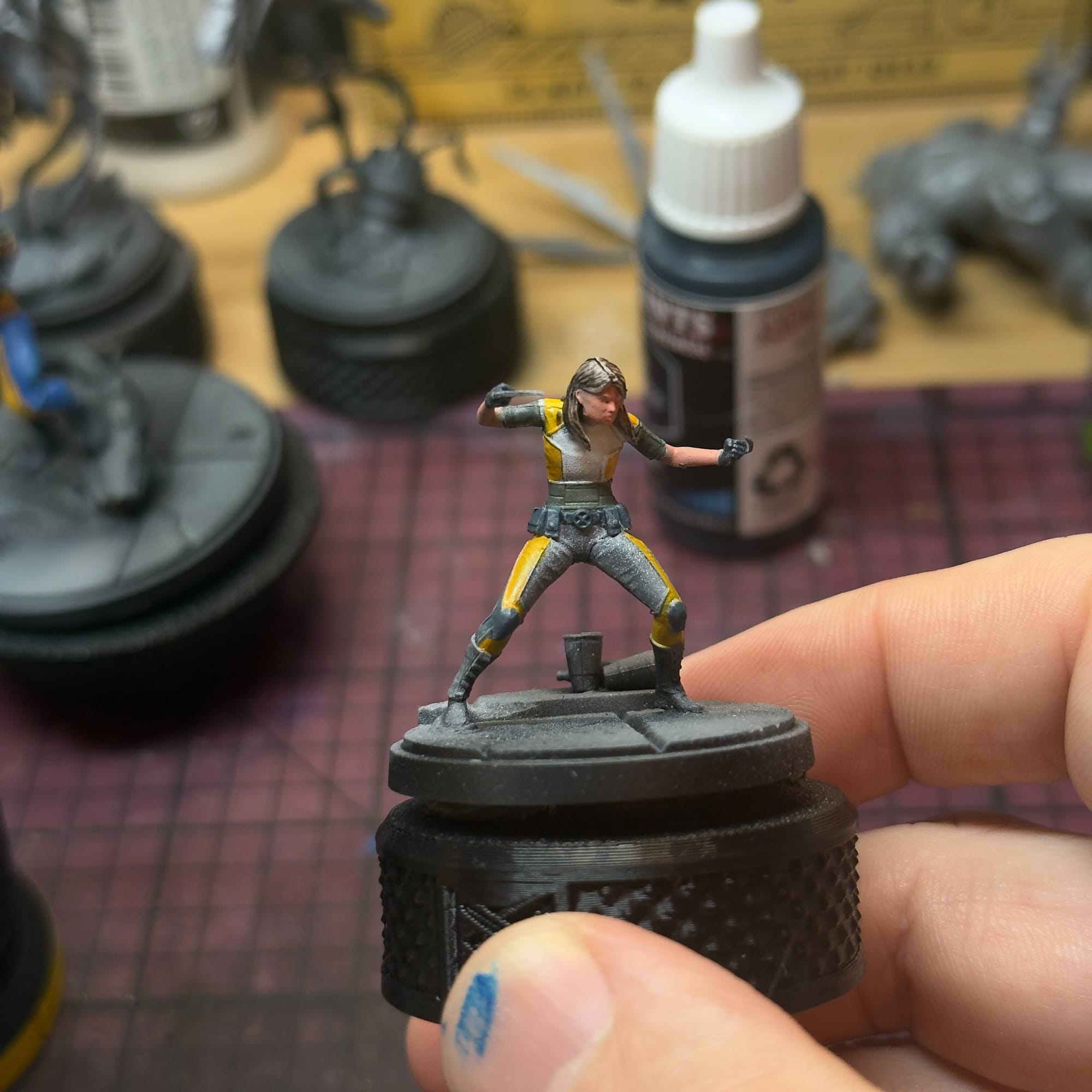
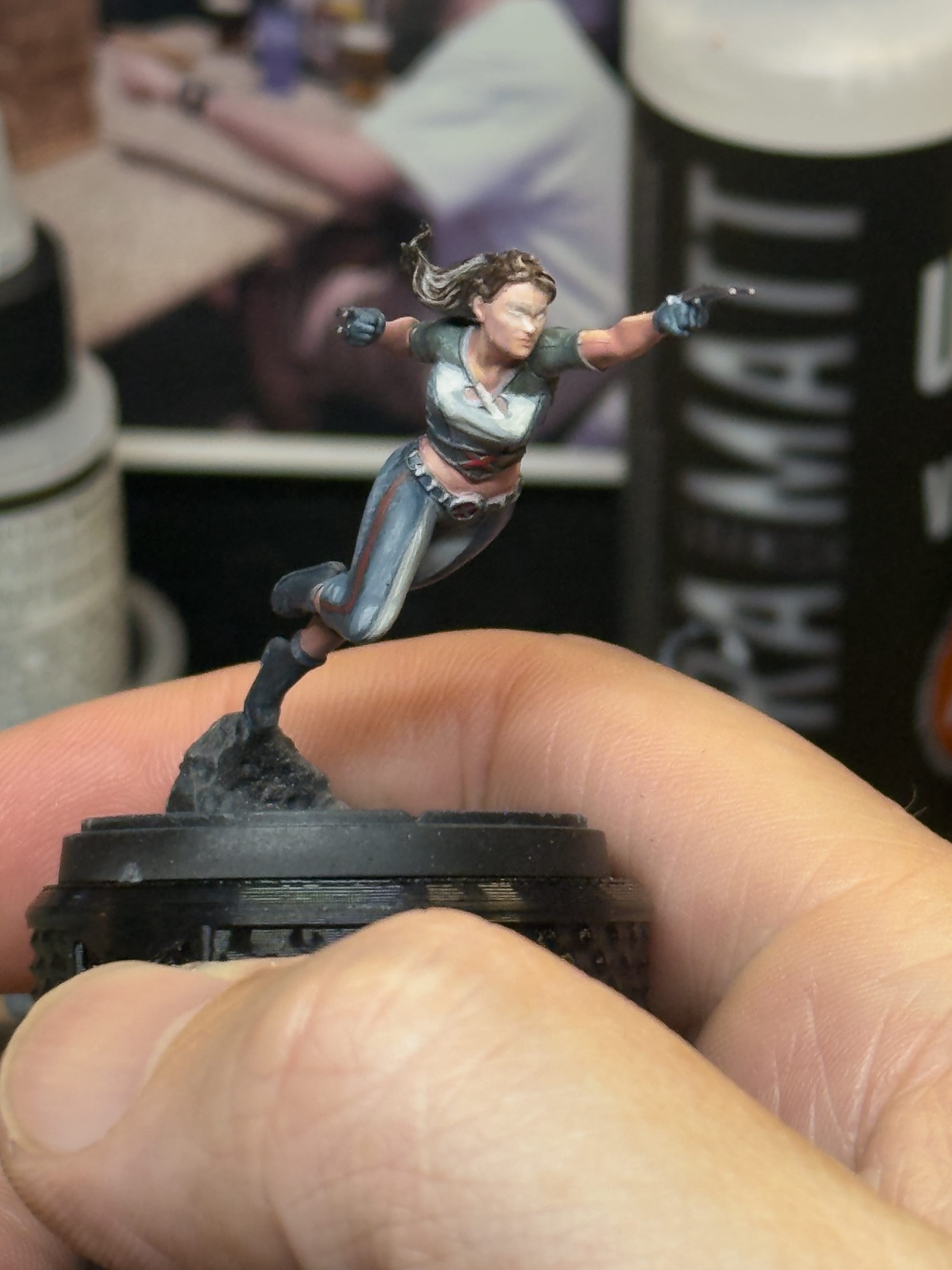
Lay down those solid basecoats first!
First, let’s handle the skin. Since the characters are clones, it’s ok to paint them exactly the same. Both models got 2 thin coats of Jasper Skin, then Dorado skin was added to the mix to bring it up in midtone. Moonbeam Yellow was then added to the mix, specifically for the highlights. To wrap them up, add a little bit of Ivory White, and you’re basically set. The hair on both models got two passes of Smoke, an ink from Kimera. This worked really well with my zenithal prime, giving me a nice hair highlight. Remember, this is for the table, not the display cabinet.
“I'm not your experiment.”
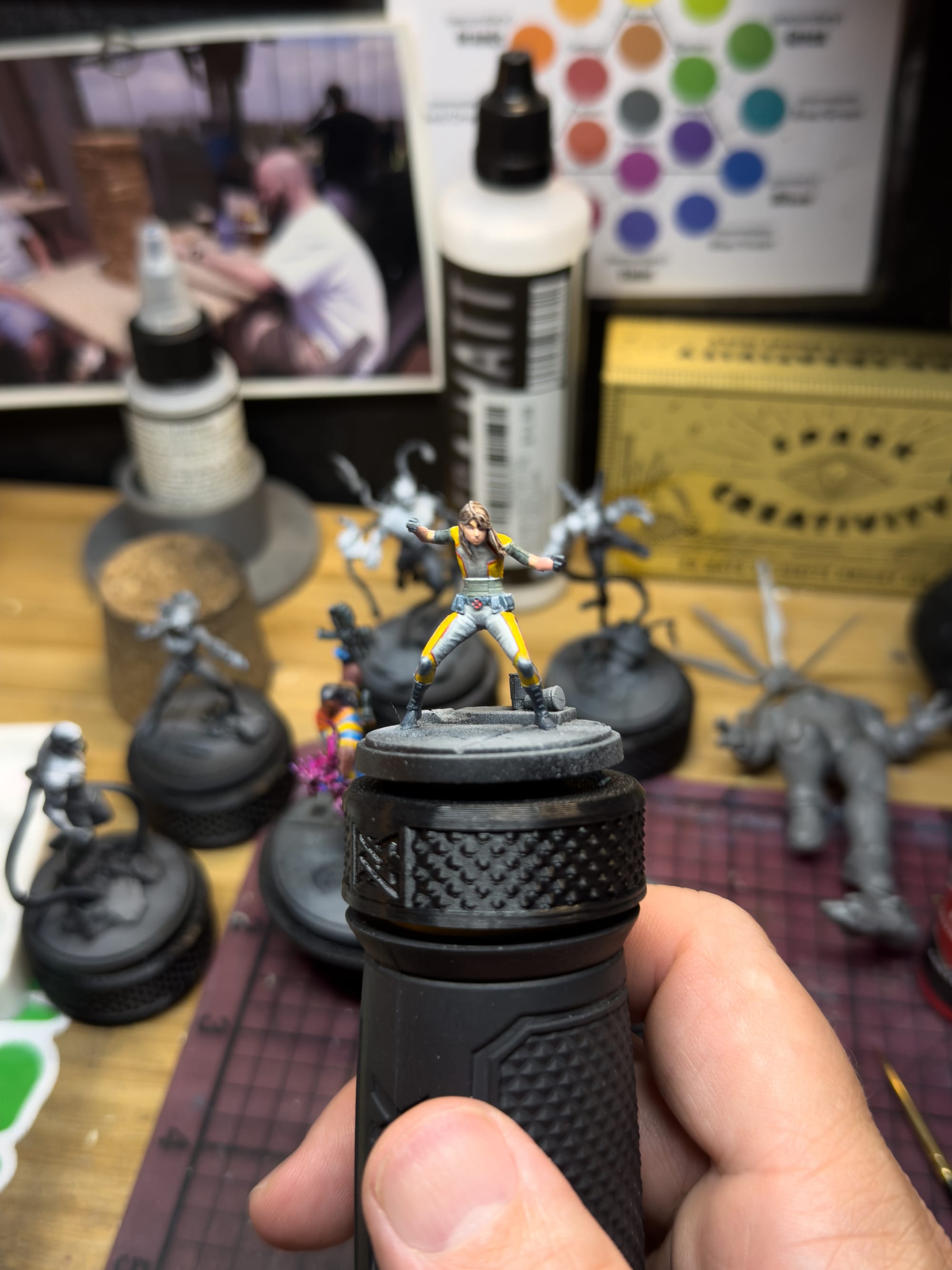
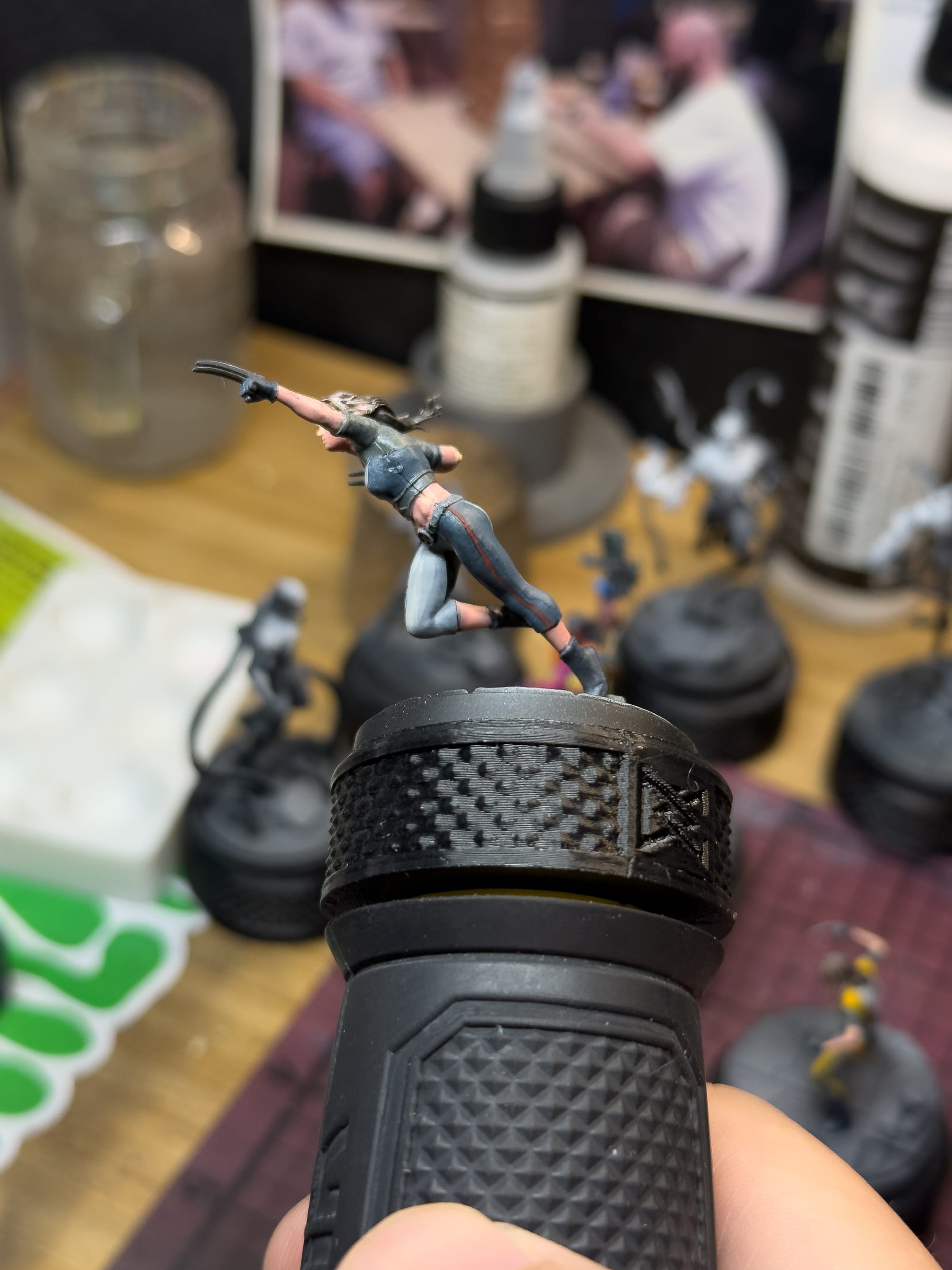
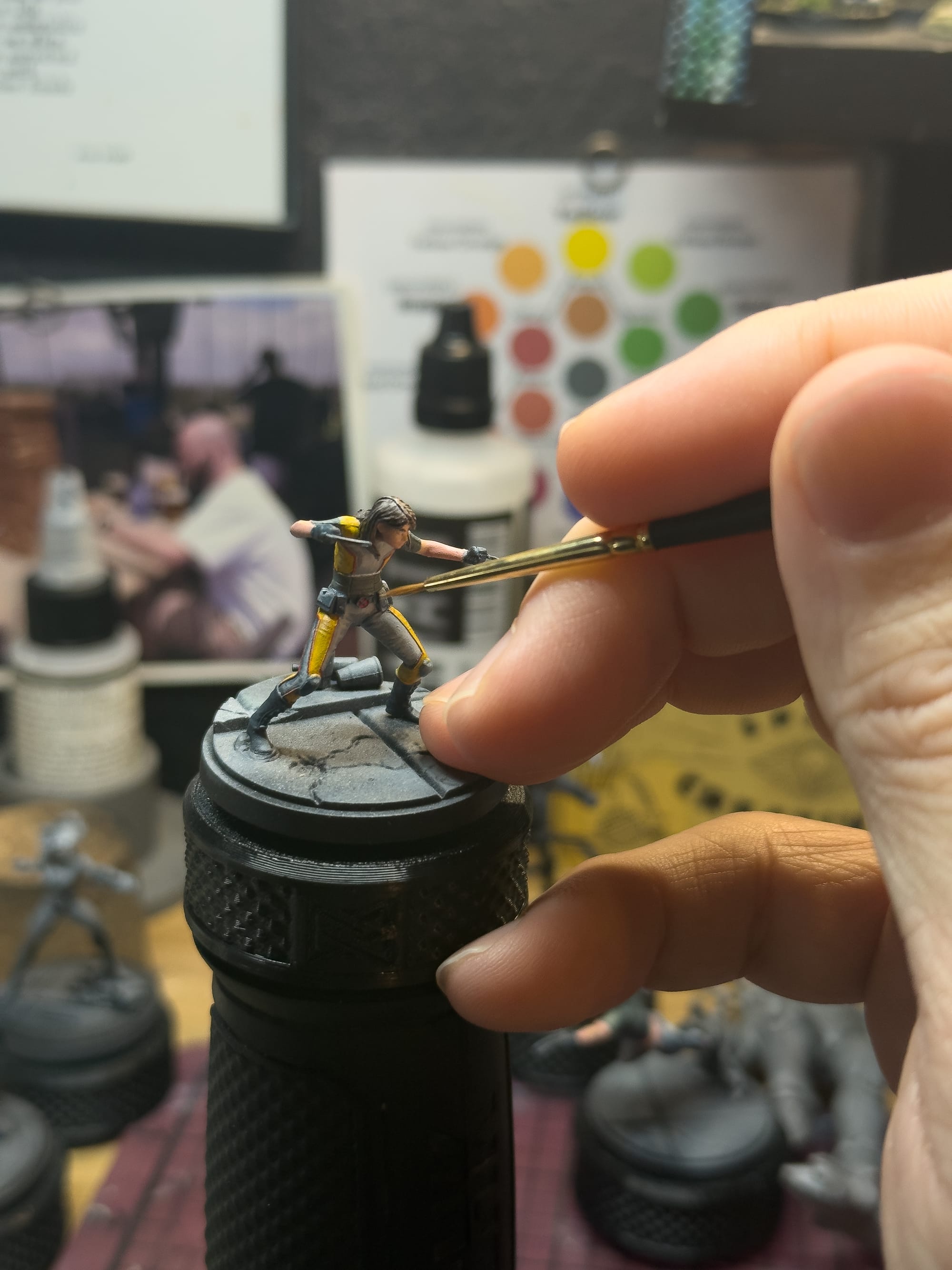
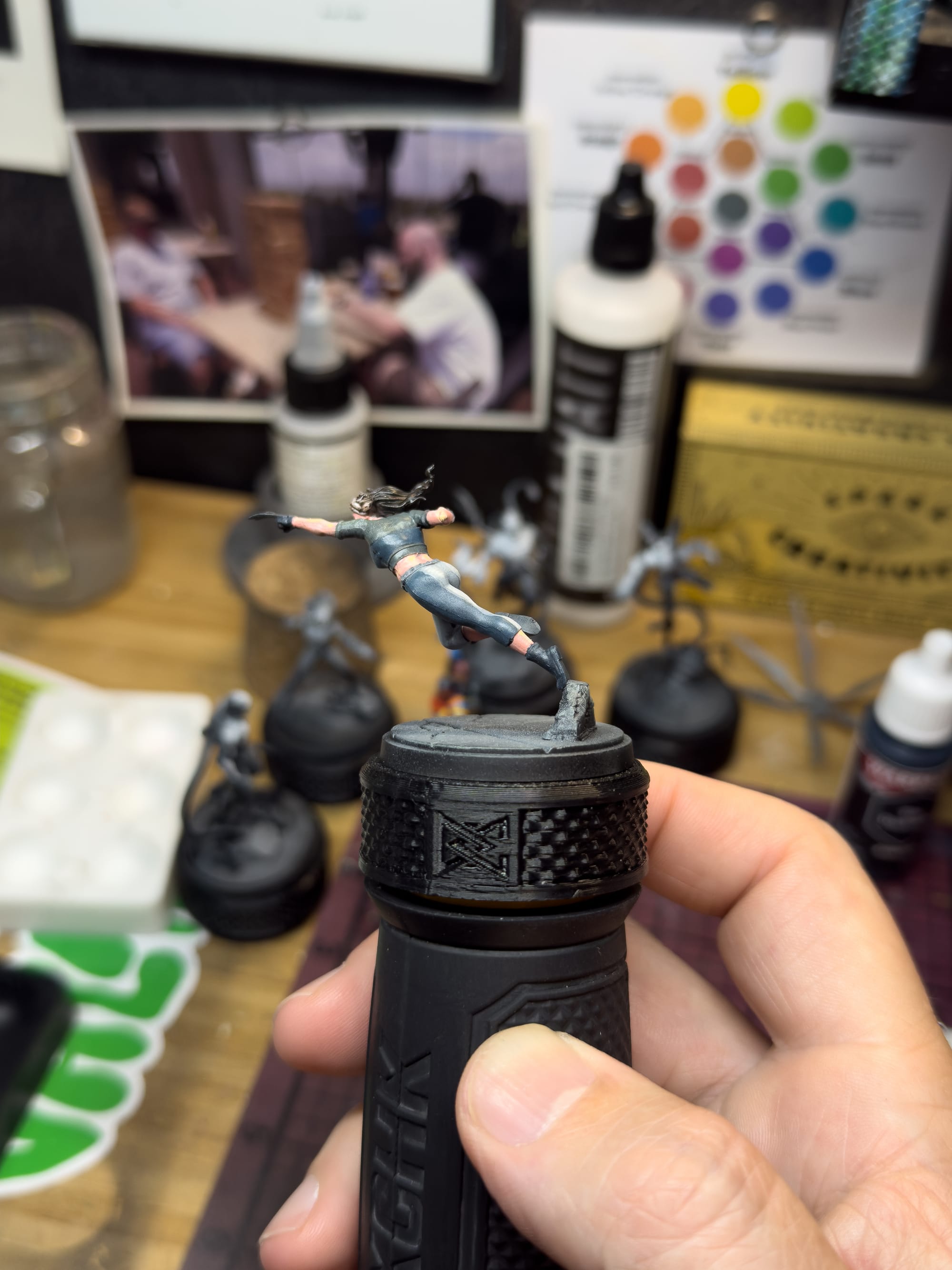
Exercise patience with smaller subjects
For the costumes, I had to go a little hard. On Honey Badger, She’s got a mixture of grays and yellows, both of which are colors with weird coverage. I took my time and ensured my paint was thin, and went to work. Multiple passes of Moonbeam Yellow plus some Jasper Skin helped create the yellows on Honey Badger. I then worked a mix of Iron Man plus Ivory White into the white/gray areas of the costume, and then added back in some Dorado skin for the shadows. Work them until you have 3 separate areas of darkness, midtone, and highlight. You can then choose to blend it all, but I wanted to keep the painterly look. I also used this same philosophy on X-23’s gray and white areas.
For X-23's dark costume parts, I used The Darkness, added in Dorado, and eventually ended with Ivory for my highlights.
On both models, I used a tiny brush and added in Vermillion to the X buckles.
Packs got a layer of Deep Ocean Blue plus some highlight, I think from Iron Man…basically make a brighter version of the blue, and there ya go.
Both models seem to be wearing some sort of undershirt. So I created a greenish-blue tone and used that to help break up the model a bit.
Now for the difficult part. Both models had piping, with Honey Badger having very tiny red piping throughout the model. X-23 also has this piping, but it’s less and a bit bigger. My advice is to grab the smallest brush you own and work carefully. Small strokes, and remember, you can always correct. With just one layer down, you create a guide for future layers. And if you can’t do it, don’t fret! You’re just painting this for yourself.
“This is the worst pirate ship ever!”

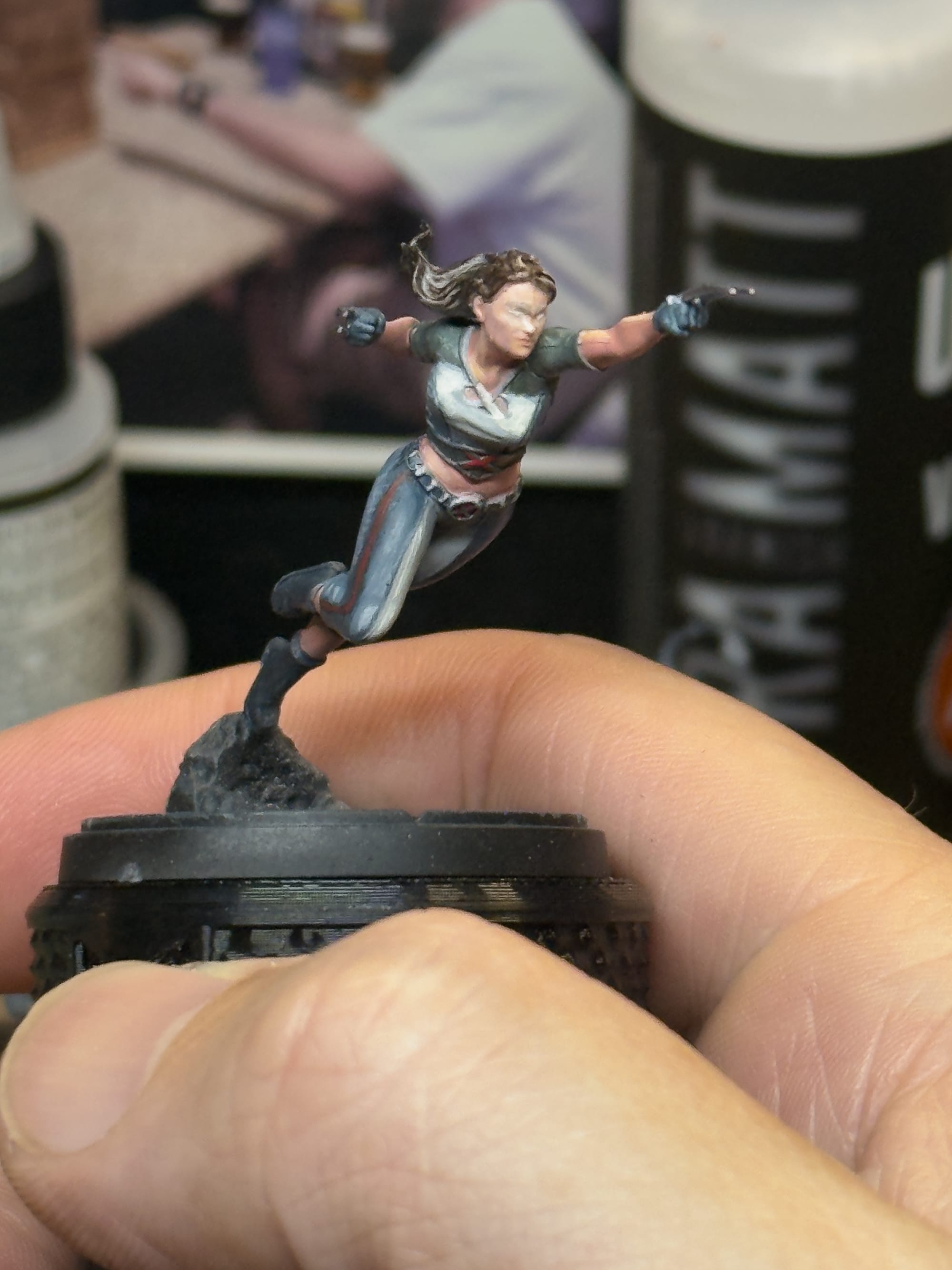
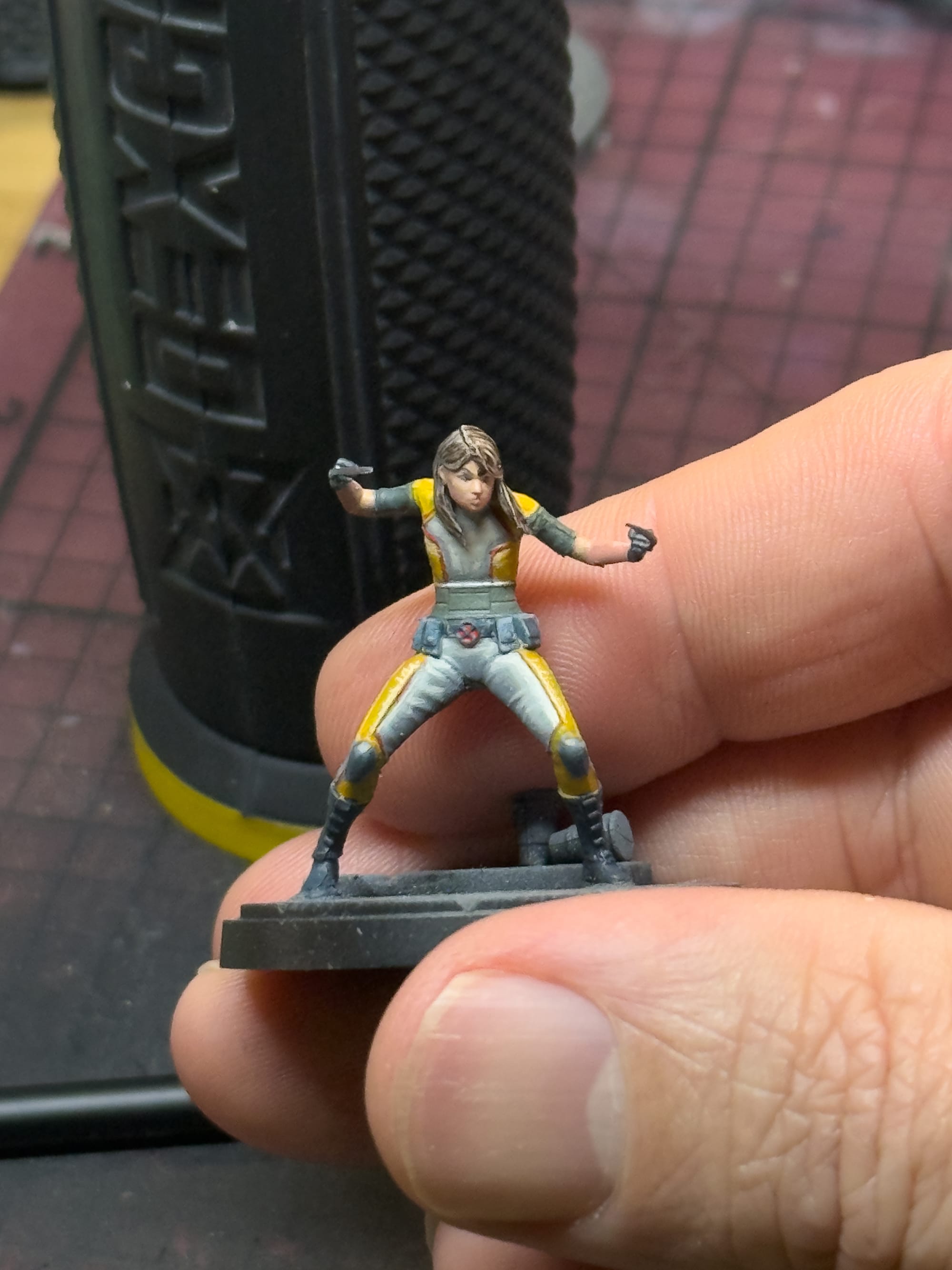
Eye painting is difficult, especially at small sizes. Look at tons of references!
Sometimes, projects don’t go so well. On this one, I want to talk about the faces. As artists, we sculpt with paint on top of a guide that sometimes is just hard to paint. Either the paint doesn’t work with you that day, the sculpt might need some deeper details, the brush isn’t great…a whole litany of reasons exists as to why, when you render something, it might not be great.For me, it’s the faces on both of these models. For Honey Badger, I definitely couldn’t paint eyebrows to save my life. For x-23, I couldn’t hit the eyes properly. Ironically, I did a decent job getting HB’s eyes.
To paint an eye, you want to start with a darker skin tone in order to create the shadows that make an eye stand out. Check out the reference photo. Then, you want to place an iris at the top center of the eyeball itself. Some people paint eyes with huge irises, and you can do that too, but a more realistic eye has some white going below the iris. Then, a dot of dark in the center of that iris. And if the eyes are big enough, add a tiny dot of white to indicate where light is coming from. Also, remember that eyes look in the same direction, which means the tiny dot is also in the same place.
To finalize these clones, grab whatever metallic you have on hand and hit the claws. I opted for Polished Silver, as it’s an Army Painter speedpaint that layers with one pass.
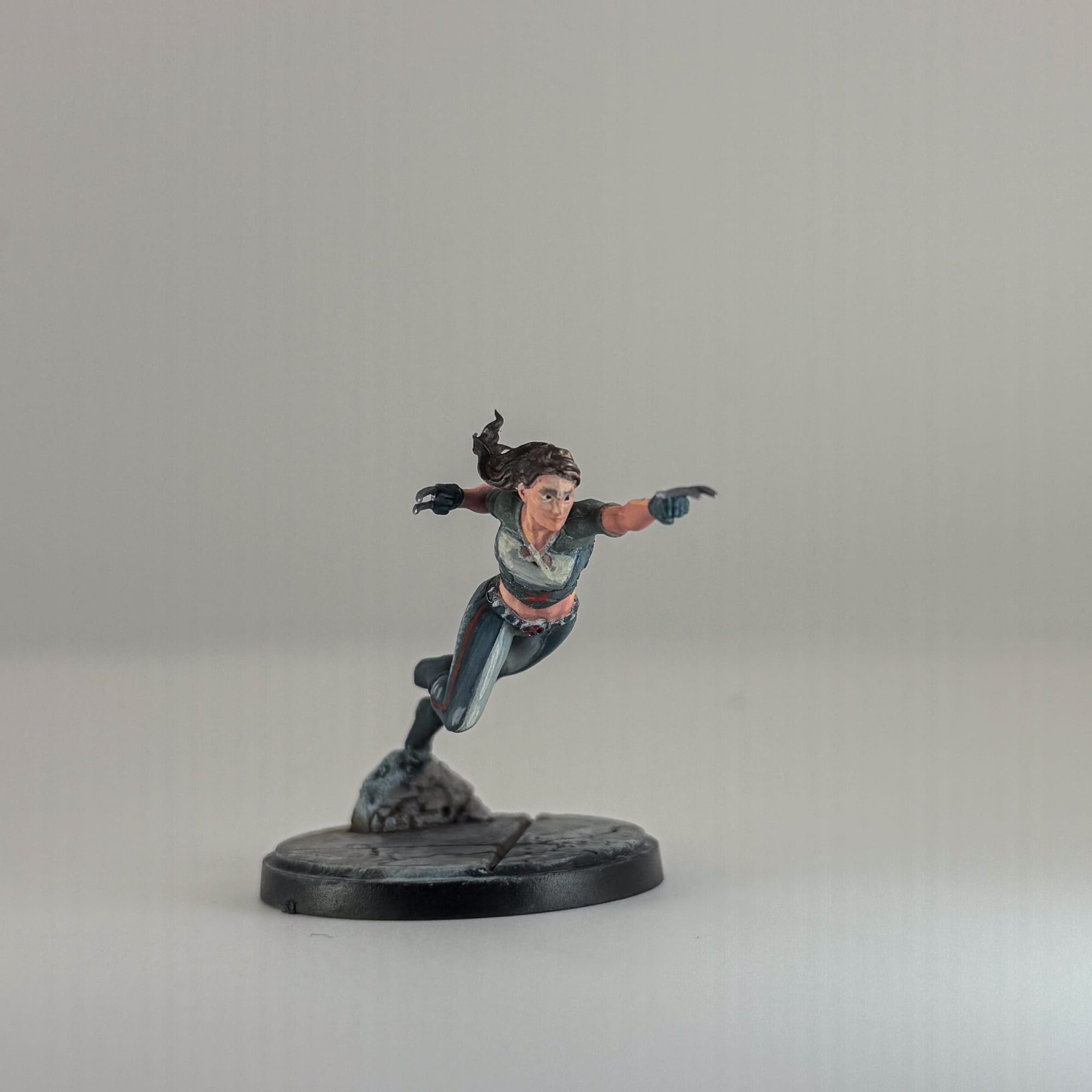
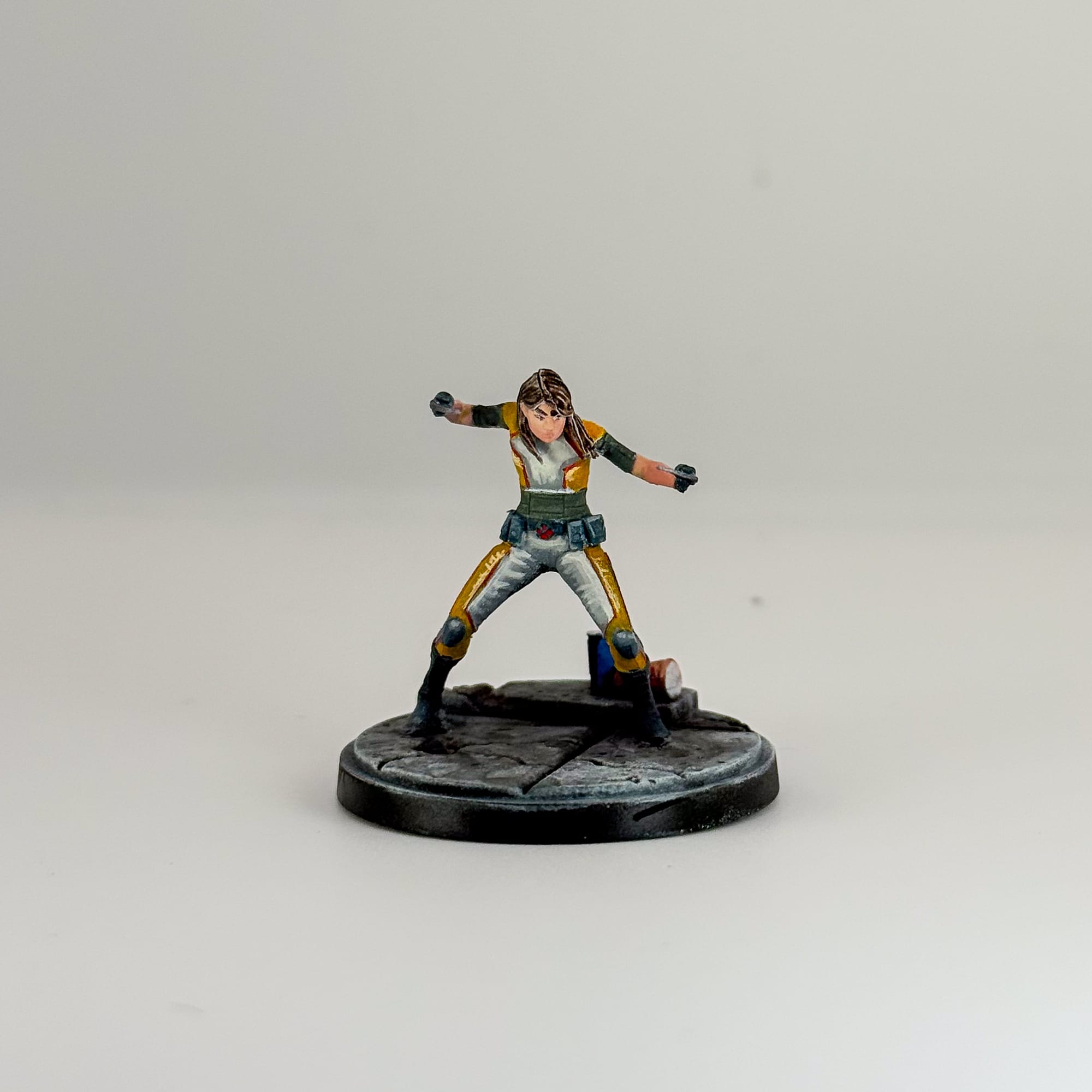
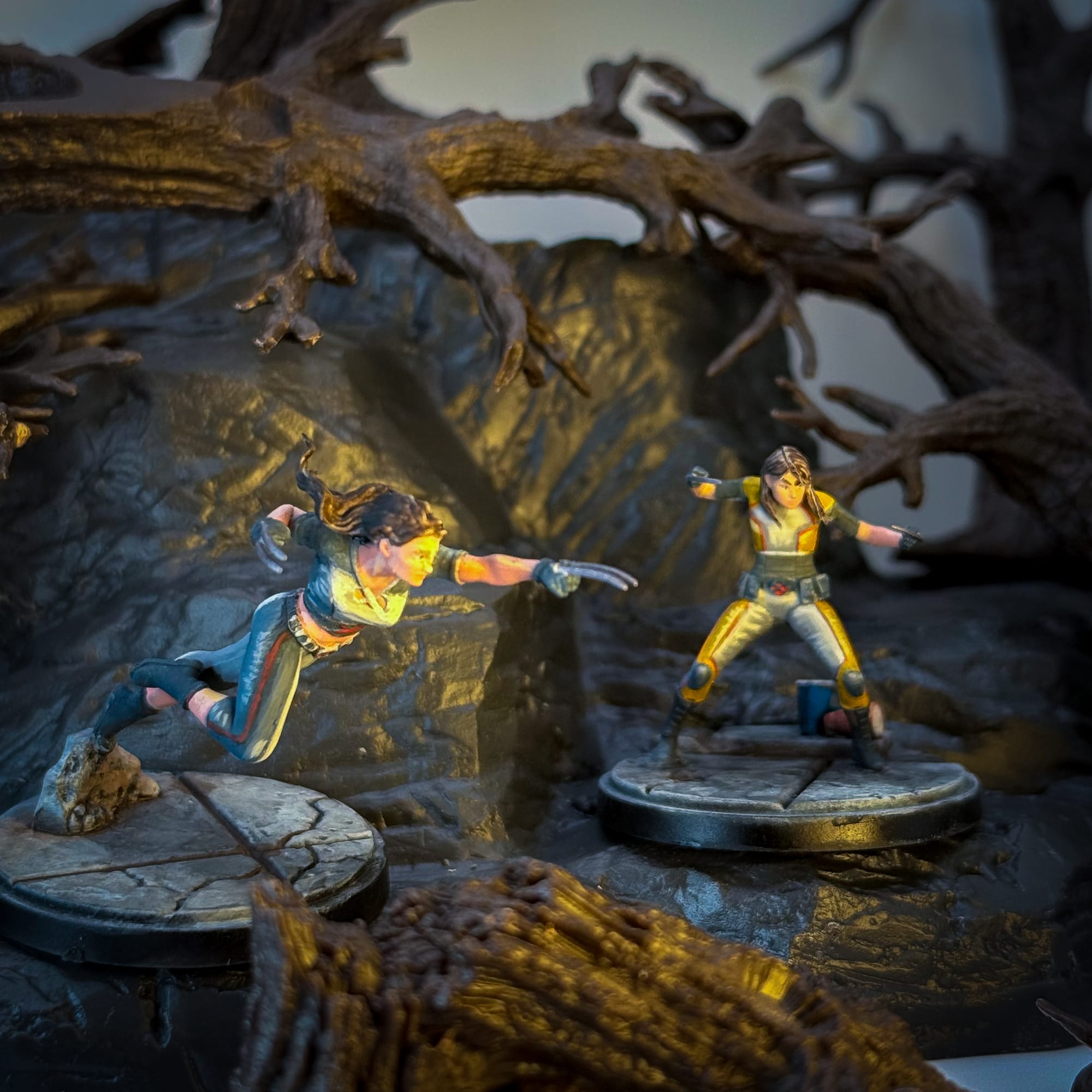
Clones / Sisters ready for combat!
With that, we’re done. At the end of the session, I really enjoyed the challenge of the costumes of these models. I learned to let go of trying to make a face work, and I’ll be taking the lessons I learned in contrast into the next one.
Hope you learned something too. See you on the next one!