My fellow Switch 2 owners, if you’ve yet to play To a T— Katamari creator Keita Takahashi’s latest interactive thesis on the human condition, which released last year everywhere but on Nintendo consoles—then I bring some bad news:
a) It’s not that great.
b) The Switch 2 port is no good.
Really, it’s hard to say which one is more disappointing. To a T’s brilliantly absurd premise of a T-shaped child’s day-to-day life is wasted in favor of aimless trivialities, yet it certainly deserved a better Switch 2 port than this: constant slowdown, fuzzy graphics, and broken effects turn what’s already a tedious game into a head-scratching one. (One of many pleasures, alas, denied to our handicapped hero.)
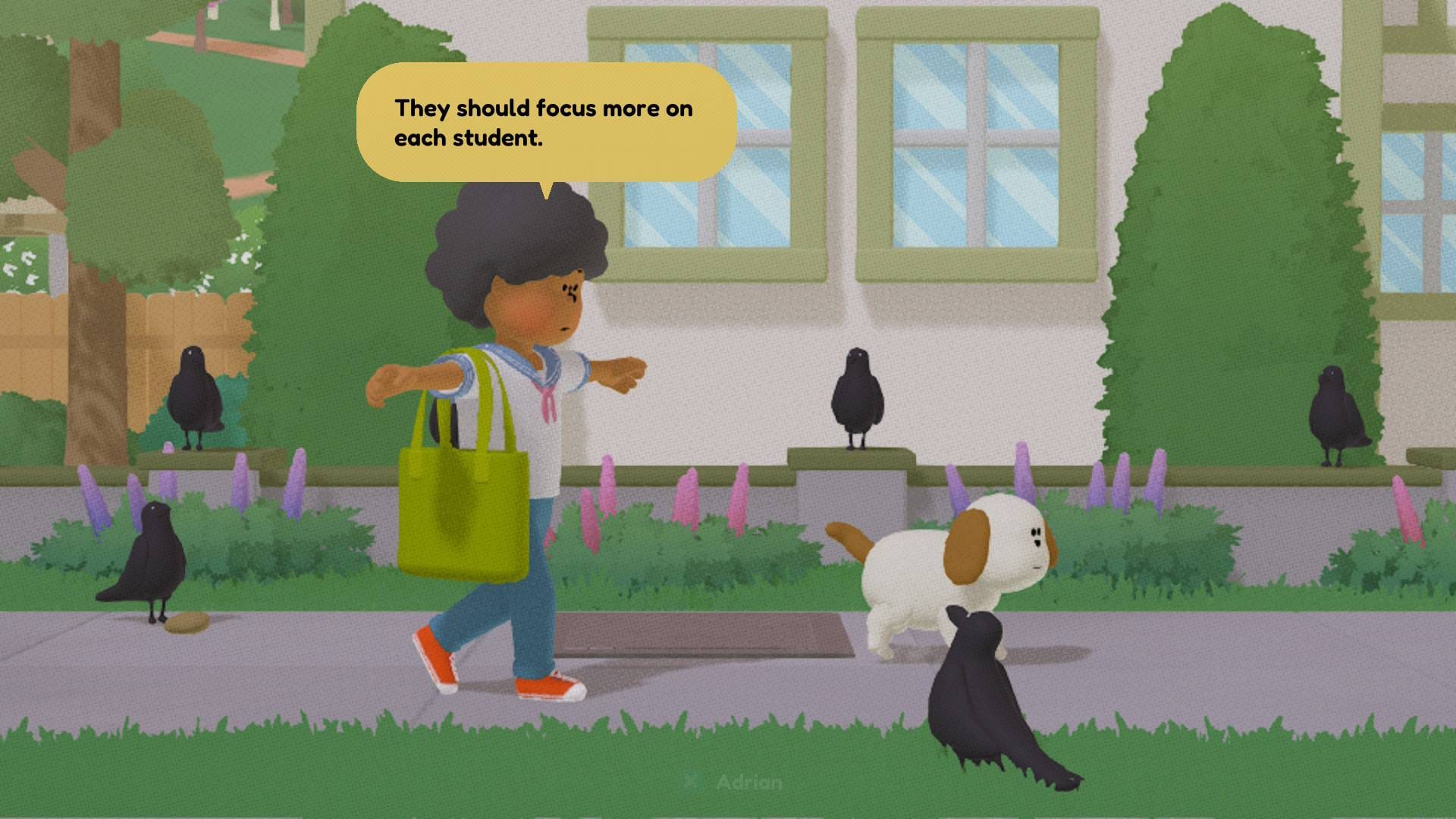
Believe me when I say it gives no pleasure to punch down on To a T: the game’s packed with the same great, big beating heart pulsing in every one of Takahashi’s works, its not-so-subtle allegory on disability met with acceptance and love at every corner. Cross-dressing leaves the character’s gender up to interpretation—an immediate surrogate for players of all stripes to step into this poor kid’s shoes. The game speaks to us with the gentle cadence of a Nick Jr. cartoon, right down to directly addressing the player with hellos and observations. The game commits to absurdism as any other Takahashi title, where humans co-exist with ice-cream selling giraffes and ladybug journalists without blinking an eye. The ending’s juvenile, farcical, and flat-out hilarious takedown on intolerance successfully highlights just how silly this whole “discrimination” business is.
To a T is inviting, welcoming, and full of sunshine and rainbows. It is also painfully, dreadfully boring. I am all about arguments for diversity, but the game’s menagerie of day-to-day excursions render it little more than a walking simulator. The game may present mysteries to solve and bullies to overcome, yet the constant parade of fetch quests never provide any sense of agency to either player or hero. The game is procedural to a fault: all eight bite-sized episodes greet each morning with playing dress-up. Walking sequences are slow and protracted. Every raised eyebrow and look of shock must be highlighted and lingered upon.
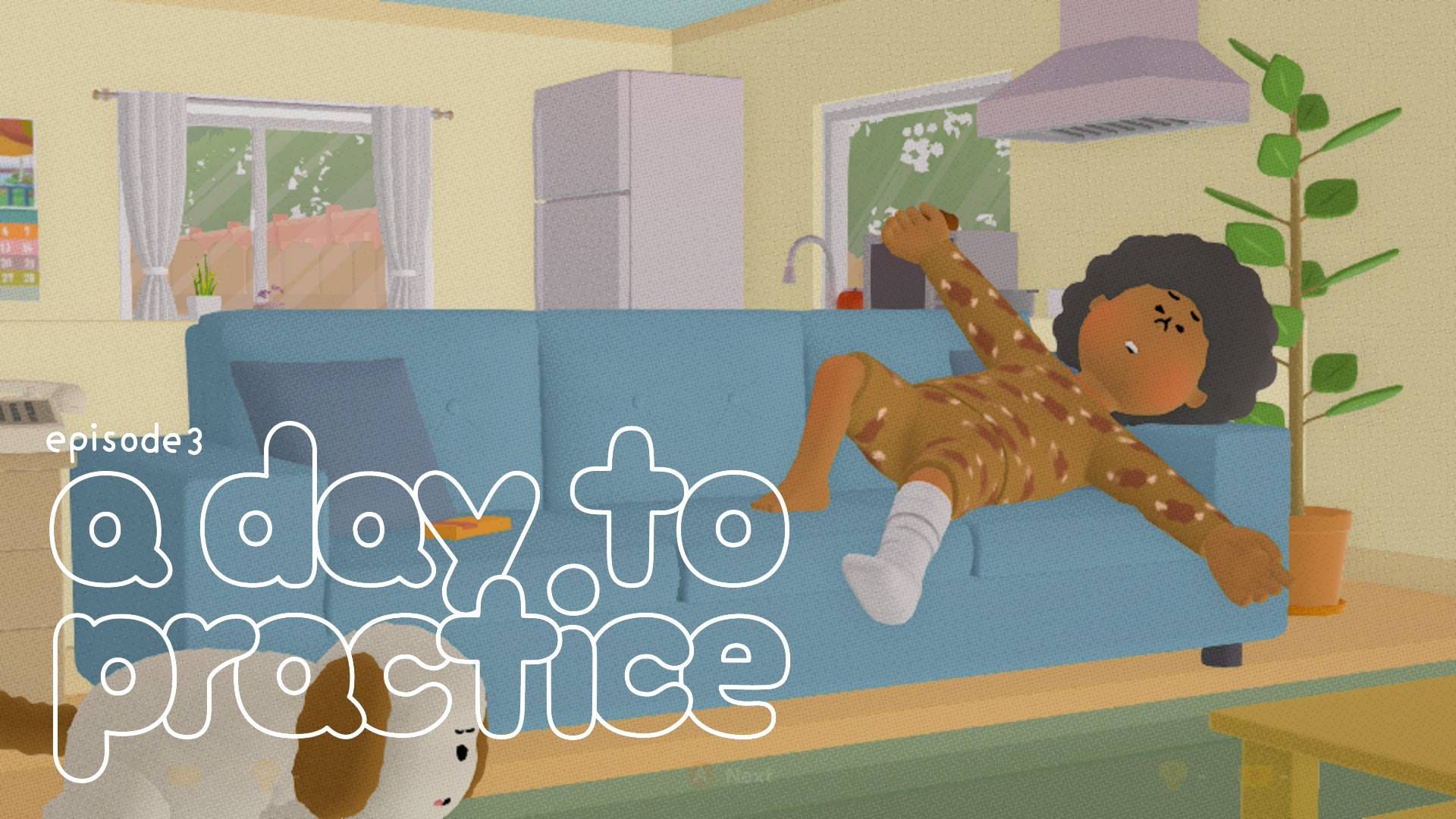
I recognize To a T’s redundancy is explicit in highlighting the everyday struggle of living with a disability—an admirable goal, yet one entirely focused in the wrong direction. The game is most compelling when presenting the child’s ordinary routines as Herculean tasks: messily pouring their cereal, washing their face with a specialized faucet, or even stretching feebly for the remote. Such bursts of ingenuity are its strongest argument for empathy, yet that they’re neglected in favor of constant monologues and backtracking means it presents no compelling feedback loop to stay invested. How I wish it actually embraced its core concept!
It is this unfocused design that leads to a mess of unclear restrictions and tells. The town promises nooks and crannies to explore, but the game railroads you so often you’re rarely given time to explore. Coins are littered everywhere, yet we’re almost never given an opportunity (nor reason) to spend them. To a T makes a big deal over the character’s sudden command of flight, but doesn’t just drop that plot point halfway through: the game never so much as tells you that ability’s unlocked, let alone bothers to make use of it. That’s, uh, not how game design works.
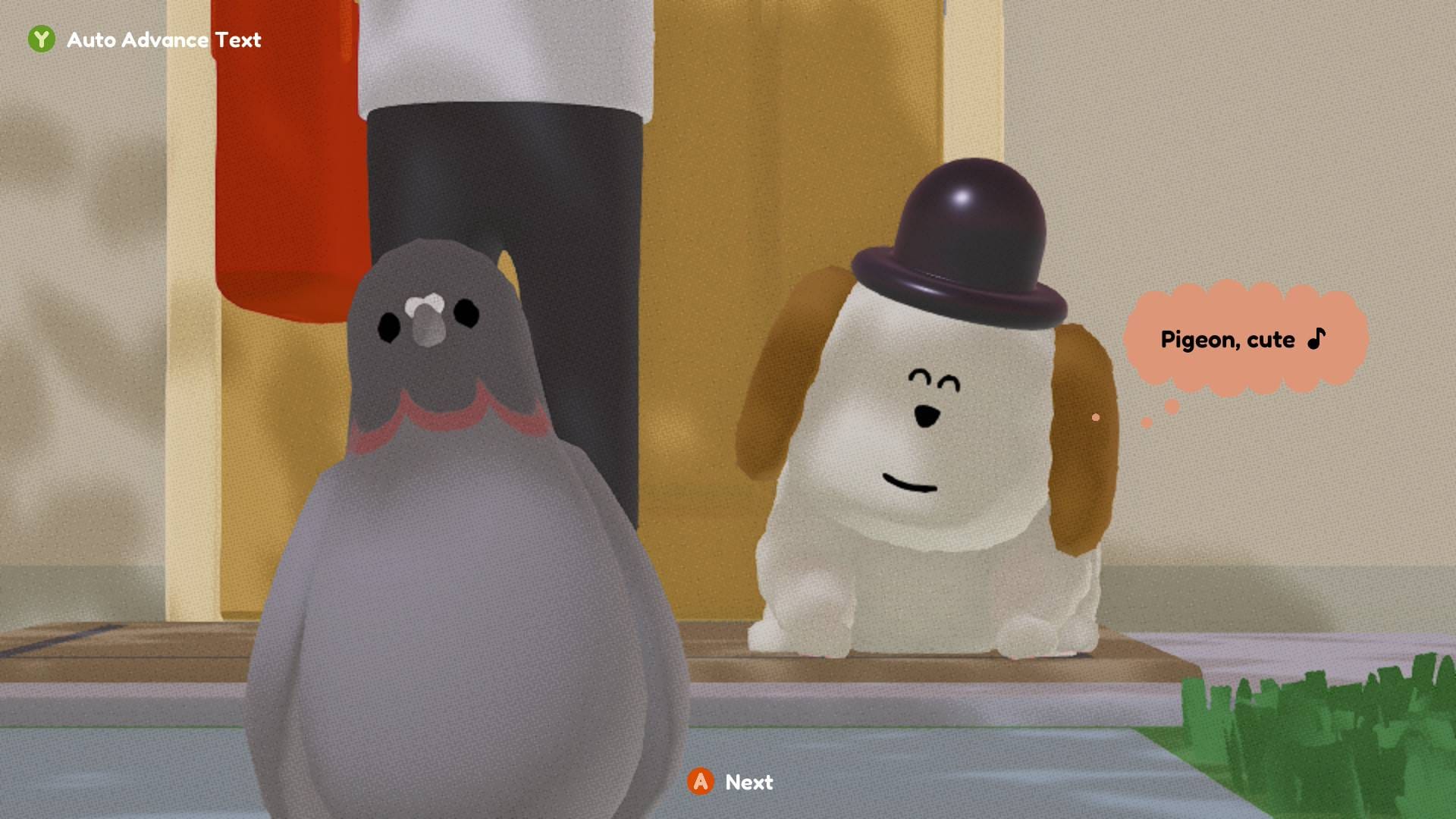
This is not the first post-Katamari Takahashi game that’s struggled to define itself: Wattam was a colorful parade of infant brain farts that squeaked out a profound message amidst its babblings, and even that engaged with its delightful absurdism of constant eating and pooping. There was feedback. Amidst its preschool scribbling, one could decipher a point to its pointlessness; I struggle to do the same for To a T: a game that steps onto its soapbox, prepped and ready to deliver its well-meaning speech, only to muddle its thesis statement with long-winded asides. For instance, the affirmative songs and abstract music videos introducing us to the game’s world are charming—it’s not so charming when we realize every episode opens and closes with the same exact songs. Listening to Steven Universe creator Rebecca Sugar sing about the wonders of cooking is lovely, but do I have to listen to it every time, or do I dare skip it knowing I might miss the occasional visual shake-up?
Many such questions abound within To a T, yet the biggest one stymies its Switch 2 release: why does this port run so terribly? Slowdown is a constant menace, hampering crowded rooms and reducing certain sequences into veritable slideshows. The graphical aliasing dampers the game’s colorful, clean brand of Takahashi minimalism. Sound effects bleed into the opening/closing songs, and clicking to the Home menu during said songs had them inexplicably fast forward.
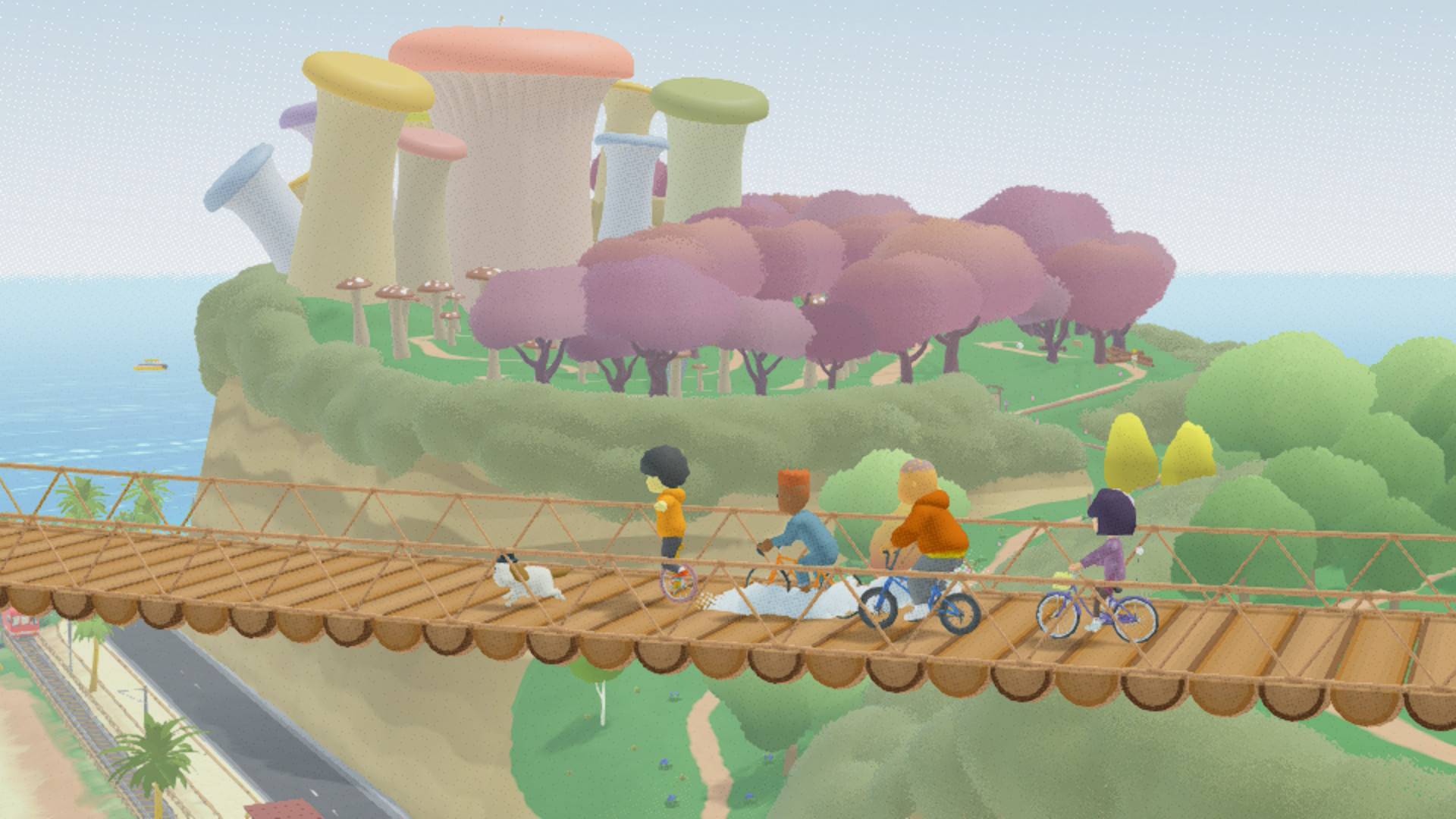
One would think a game like this wouldn’t be pushing Switch 2, but here we are. To a T’s fundamental failings aside, the game’s episodic nature would make it an ideal pick-up-and-play venture, but it’s simply not recommendable in its current state. Unless future patches address the issues at hand, I’d instead direct the curious to other platforms. (PC, PlayStation 5, and Xbox Series X, if you must.)
I am certain there’s a To a T where disability’s day-to-day rigors and the pleasant mundanity of friends bicycling together (or, in the case of our protagonist, unicycling) could co-exist with the mutual goal of cleverly subverting traditional gameplay. Alas, that’s nowhere to be found here, and with the poor performance on display, I’m left wondering who this Switch 2 release is for. Newcomers like myself walk away unimpressed, and fans are left with a sub-par handheld experience. At the very least, appealing to the latter wouldn’t be a stretch, no?
To a T
Mediocre
To a T wears its heart on its overlong sleeve, but good intentions alone can’t make for a compelling game. Between the unfocused design and messy performance, it’s an easy skip. Play the Katamari remasters if you haven’t already.
Pros
- Charming presentation with a beautiful message
Cons
- Makes little use of its core conceit
- Unfocused design makes for a tiresome experience
- Busted Switch 2 performance
This review is based on a retail Nintendo Switch 2 copy provided by the publisher.