Isn’t it grand when gaming’s holy grails finally see the light of day? It was like Nintendo gave the keys to its forbidden vault when the SNES Classic Mini came packaged with Star Fox 2 some nine years ago (geez, that long ago?), and now history repeats itself with two cancelled Virtual Boy games in Zero Racers and D-Hopper—just released for the Nintendo Classics subscription service. Now, I can already hear the jeers: “Virtual Boy? Come on, Ant, who cares about that hunk of junk?” Indeed, I’d concluded in my earlier Virtual Boy retrospective that the Switch 2’s historical curio was only just that: a time capsule only for the most passionate gaming scholars, eager to analyze that forgotten moment in Nintendo history where a commercial failure necessitated a sheepish exit from the industry—swept under the rug as if it never existed at all.
And yet, here I am enthralled by two cancelled specimens that perfectly encapsulate its thesis that never was. The Virtual Boy’s fever dream of stereoscopic 3D, blinding monochrome graphics, and uncomfortable ergonomics were indecipherable to a befuddled gaming public, yet only thirty years later does a moment of clarity finally arrive in Zero Racers and D-Hopper: games that utilize two very different forms of verticality to make their arguments for the console’s depth perception. Not that they could’ve saved Virtual Boy, mind—that poor thing was destined for gaming’s graveyard from the word “go”—but in the here and now, divorced from the realities of the mid-90’s, does Gunpei Yokoi and co.’s vision of transcending players into the realm of virtual reality come…well, close enough, but certainly closer than whatever made it to store shelves.
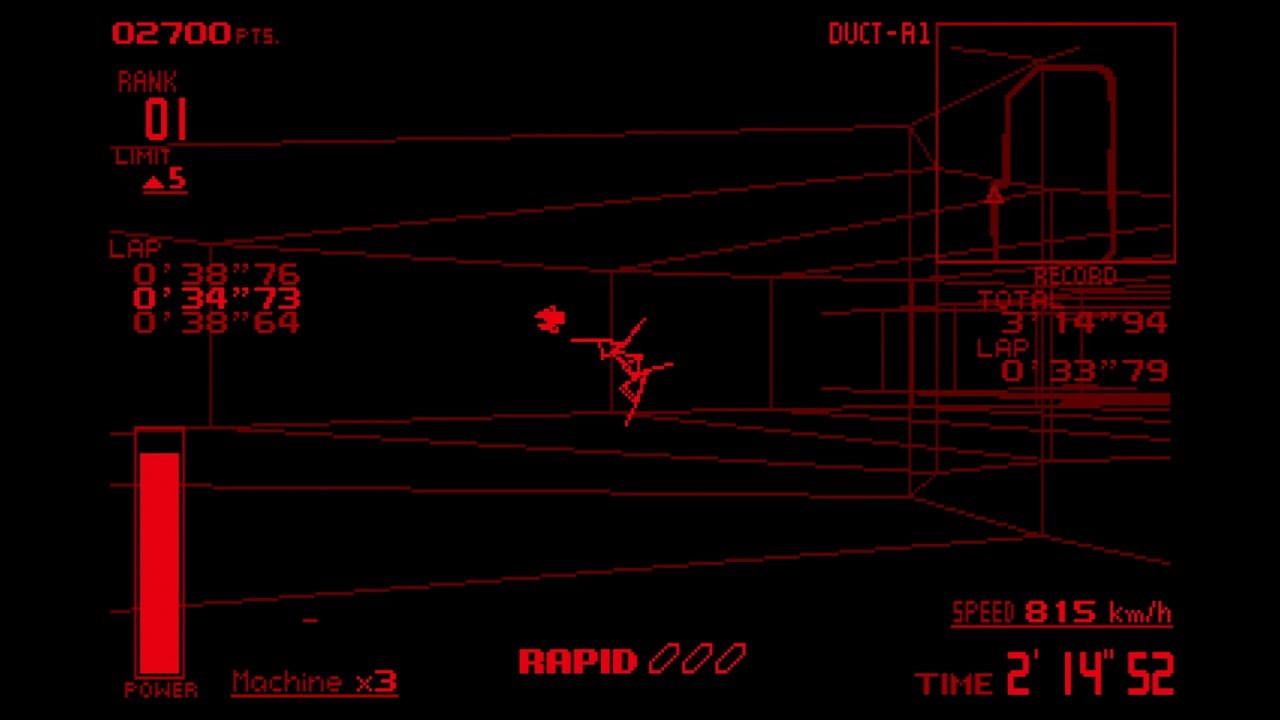
Zero Racers is interesting in how it’s not just a shelved Virtual Boy game, but also a long-lost entry in Nintendo’s F-Zero racing series. It comes with all the series hallmarks: blistering difficulty, transformative graphics, a health gauge that depletes with every scrape and crash, the art of boosting, and even a host of familiar machines—there’s Falcon, Stingray, Goose, and…” Origammy”? Dr. Stewart may’ve taken his Golden Fox out to pasture, but between this unearthed gem and 2023’s fantastic F-Zero 99, we imagine fans aren’t left wanting for choice. (Plus, hey, origami-themed space racers—how many of those could you name?)
Taking advantage of F-Zero’s formative lull, Zero Racers boldly adapts to the Virtual Boy’s 3D with freeform movement, its racers flying freely in wireframe tunnels rather than gliding upon futuristic circuits. Even so, Zero Racers retains the series’ identity in cutthroat play: the nondescript courses deceive in their simplicity, as fledgling racers will find themselves helplessly ping-ponging between walls, desperately clinging to life as their ship quakes and trembles before fatally crashing into another vehicle. Yet through careful practice and memorization do we stumble upon that same rhythm beating beneath every F-Zero racetrack: knowing when to boost, when to apply brakes (or, as any good F-Zero player will tell you, simply letting go of the accelerate button), and then sliding onto the pit stops for recovery—recharged and ready to rinse and repeat.
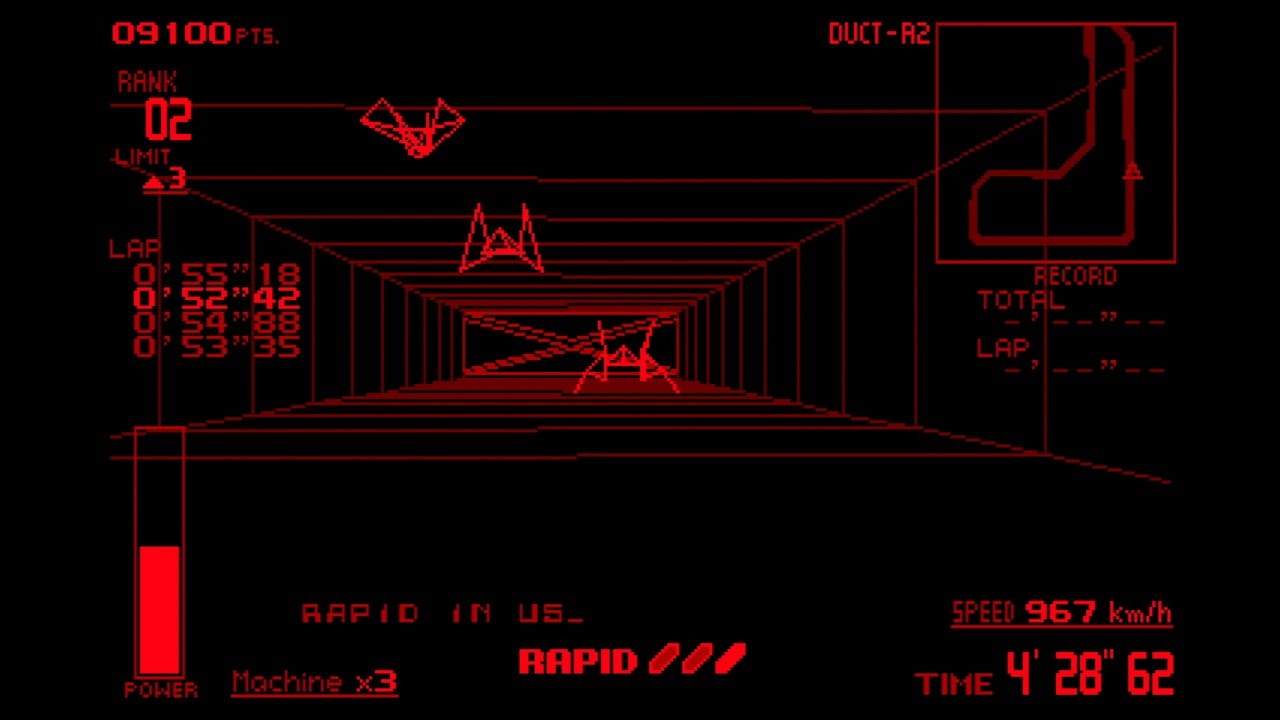
It’s in said rhythm that Zero Racers absorb us: collectible boosts and speedy “Jet Zones” are littered across the tracks, encouraging the player to learn the lay of the wireframe land. Music is dispensed in favor of pure atmosphere, the perpetual rumble of engines roaring throughout the race. What may initially feel claustrophobic and featureless quickly enchants in a manner akin to Virtual Boy cousin Red Alarm, seating the player into the pilot’s seat and rocketing them into the far-flung future.
Zero Racers comes with the same pratfalls as any other Virtual Boy game: the shoulder button acceleration disorients (I recommend remapping the buttons as necessary), and much as the text notifications try otherwise, the patented 3D means details inevitably get lost in the shuffle. But Red Alarm’s visual overload this ain’t: Zero Racers’ simple, clean presentation provides easier on-boarding despite its hard-as-nails racing. While Virtual Boy’s preference for boring abstractions over Nintendo’s familiar characters proved one of its biggest mistakes, Zero Racers proves how, much like the original F-Zero itself, you don’t always need context to forge riveting gameplay—through constant speed, engaging challenge and mind-bending design, it’s concerned only with taking us to a day at the races.
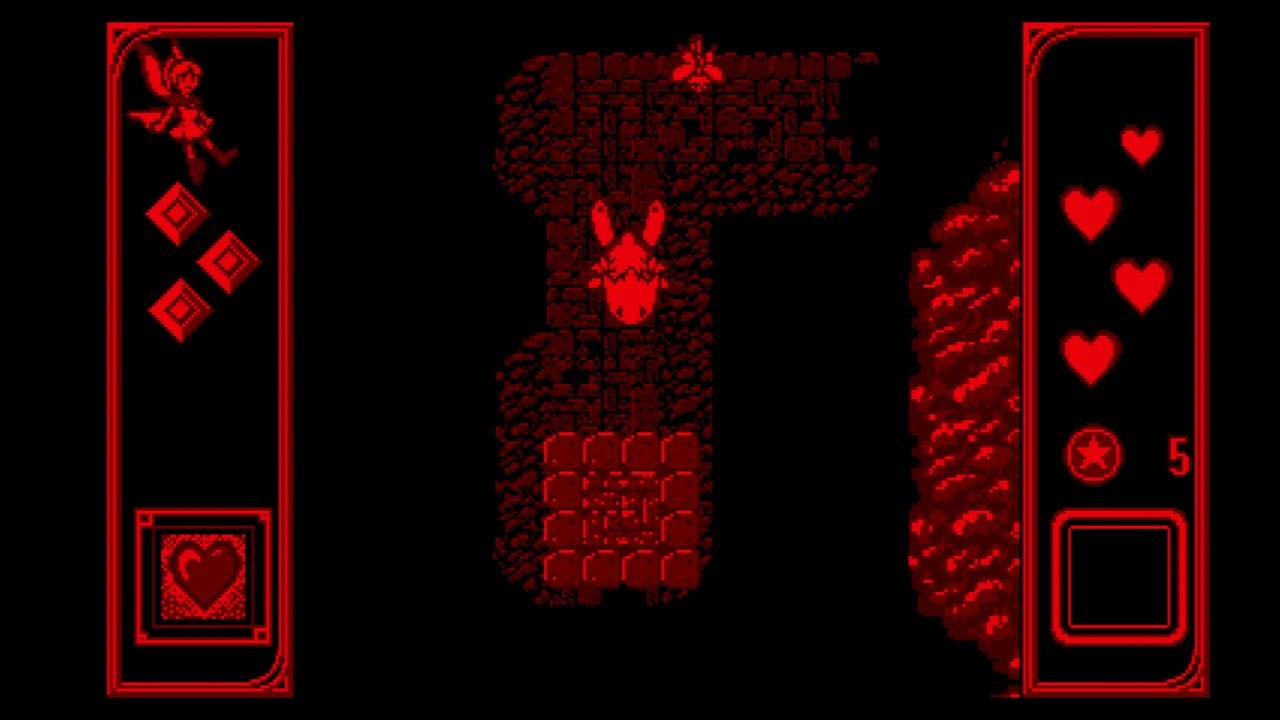
Ah, but D-Hopper! Now there’s a game bursting with character. You’ll forgive me if I refer to it as “Dragon Hopper” from here on—legal issues prevent Nintendo from using its true name despite being plastered on the title screen, but “D-Hopper” sounds like a third-rate timewaster you’d find buried deep in a Wal-Mart discount bin. Of which Dragon Hopper certainly ain’t; indeed, this little platformer from Intelligent Systems (Paper Mario, Fire Emblem) may well give Virtual Boy Wario Land a run for its money as the system’s best game, presenting eye-catching platforming coated with Kirby’s sugary sweetness—not even the monochrome displays can obscure the adorable cast, whimsical locales, and fanciful music propping up this fairy tale. (I highly recommend applying the belated color filters—the brighter options really make the light-hearted setting sing.)
Dragon Hopper is also an exercise in verticality, but this time from a top-down perspective: controlling a tiny dragon prince named Dorin, we hop up, up, and away from platform to platform. From the darkest depths of the fairy-filled underworld to Dorin’s heavenly kingdom of Celestia, the game’s pseudo-3D transforms its dioramic setting into a veritable pop-up storybook. Dragon Hopper’s assortment of clouds, cliffs, and castles stretches past into infinity, playing with elevation so that when you mistime a jump, Dorin’ll fall all the way down to the level’s first floor. (Nothing a rewind can’t fix, but for those seeking that classic friction, Dragon Hopper offers frequent doses of punishment) What’s otherwise a three-hour journey feels like climbing a treacherous mountain, with all the classic pratfalls and vindication that entails.
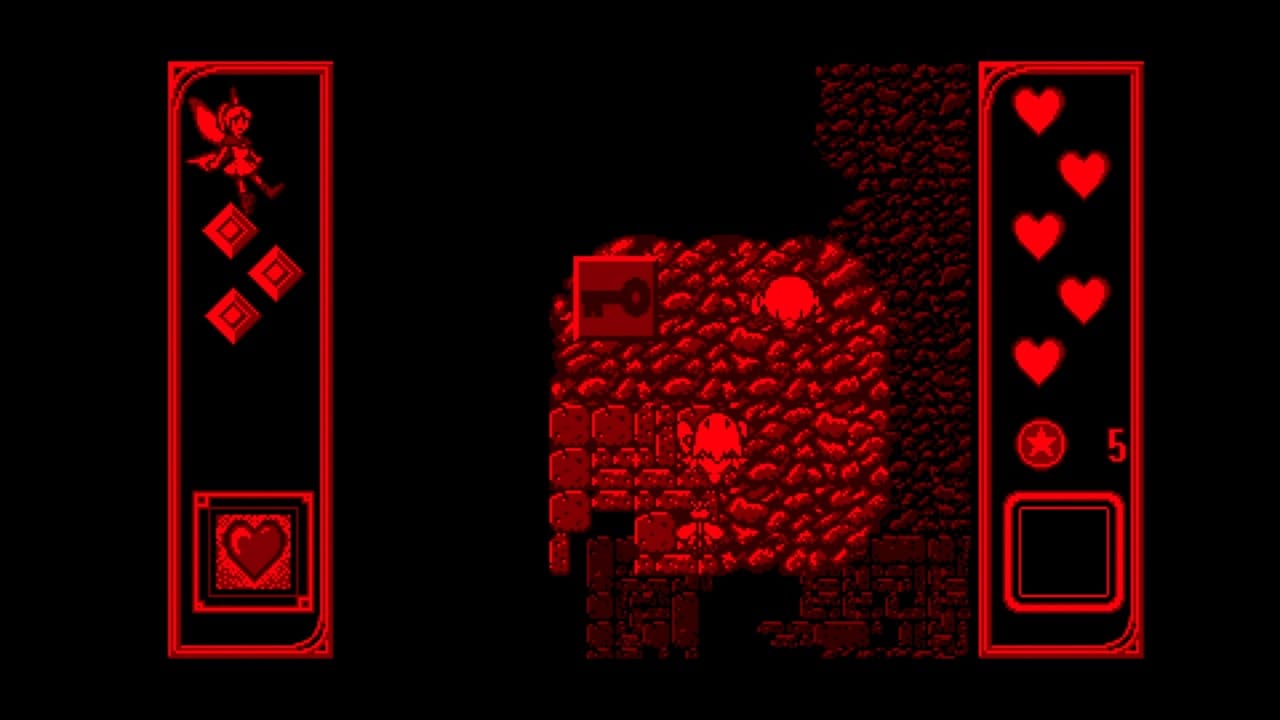
It’s an inviting game, but a different kind from the blank canvas of Zero Racers—it paints a world we can lose ourselves in. Dragon Hopper operates on a lock-and-key framework that’s been compared to Zelda, and while it’s a comparison not without merit, the game’s altitude-based platforming carves out a unique niche. For instance, the game offers a plethora of magic spells to unlock, but they’re unlocked via tokens hidden throughout its stages, so you’re encouraged to poke around and explore. (Admittedly, I only relied on the prerequisite healing spell throughout, but there’s no shortage of experimentation at play) Dragon Hopper grades you on your collectathon performance, so completionists will surely seek out every last token and spell for the ultimate rank.
Meanwhile, the combat is simple but engaging: Dorin plays with the game’s depth perception by pogo jumping upon any one enemy, flattening them into trampolined pancakes. However, the main draw is transforming into one of four elemental dragon forms in Earth, Fire, Wind, and Ice: each with their own respective powers in earthquakes, fire-breathing, and what have you. All have their situational uses, but players will naturally gravitate to their personal favorites—mine being Fire for picking off foes from a distance.
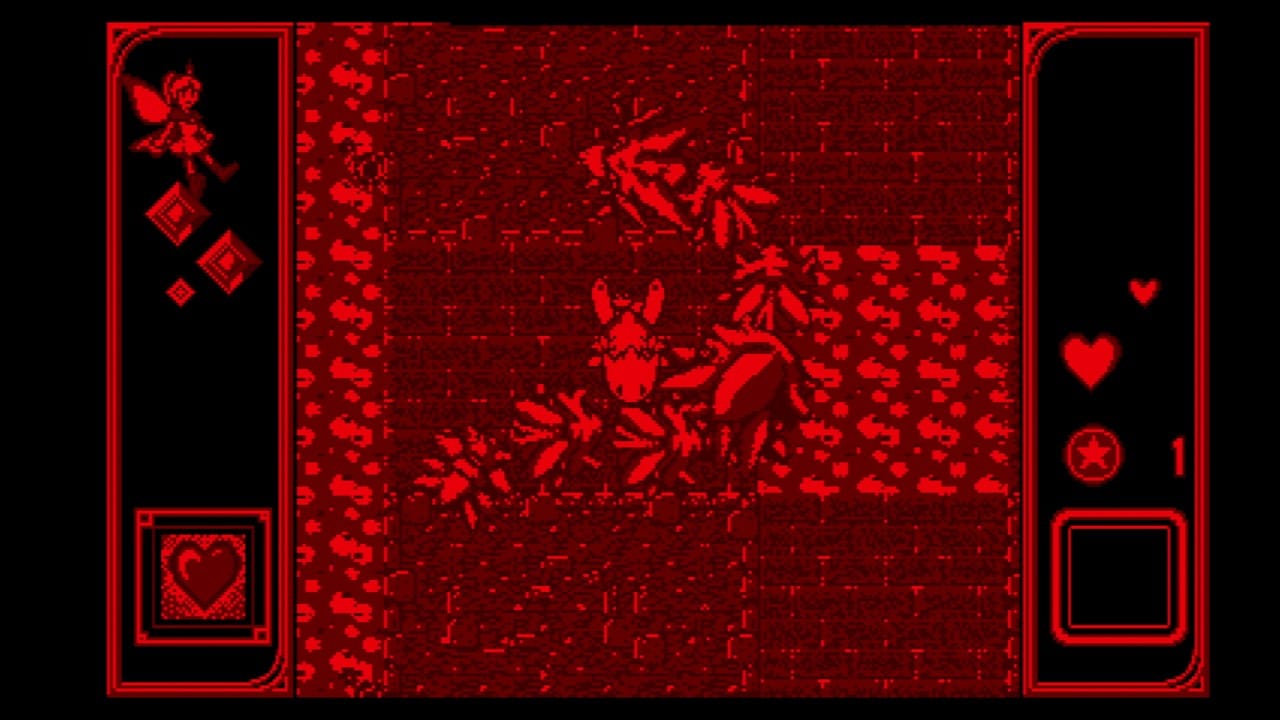
Topped off with an endearing little story and Minako Hamano’s moody score, and we’re left with a bona fide classic. It’s not often I can point to a Virtual Boy game I wholeheartedly recommend, but my passion for Dragon Hopper’s grown to the extent where I thoroughly demand Dorin’s return. Much as people wanted a Virtual Boy Wario Land re-release for 3DS, now I find myself wishing he found his dragon wings there!
But that’s a pipe dream for another day; for now, I simply bask in the miracle of welcoming these long-lost classics as official members of the Nintendo pantheon. The innate flaws of the Virtual Boy remain evident amongst its best efforts, but in Zero Racers and Dragon Hopper can we visualize the forbidden future that never could’ve been, yet still ponder upon. Now if only there was a way to make it so the stupid thing’s not killer on your neck. Augh.