So, there’s good news and bad news for Sonic Frontiers: Definitive Edition. The good news is that it’s, by and large, an improvement over the iffy Switch release; a version that looked and played like it ran on a potato-powered toaster. The bad news is that there’s no upgrade path for any Switch owners, meaning Nintendo fans need to cough up fifty buckaroos again for the “definitive” handheld experience.
Yeah, not great! Let’s dive into the pros and cons accordingly.
Sonic Frontiers launched in 2022 to an interesting reception: whereas critical/fan reaction was mixed on Sonic’s first open-world venture (our own dual review landing on a positive score), the game endures as a sales success for Sega. Indeed, I’ve taken to describe it as a beautiful mess of contradictions: the game is a whirlwind of intrusive prompts and haphazard obstacles, yet the open-ended design railroads you from one activity into another, crafting a veritable loop-de-loop of engagement. The confusing story yields genuine heart-to-hearts and character moments often alien to Sonic. The bosses are aggravating, confusing, and even profoundly abrupt, but boy, does that Crush 40 buttrock channel pre-teen me rocking out to the Sonic Adventure finales.
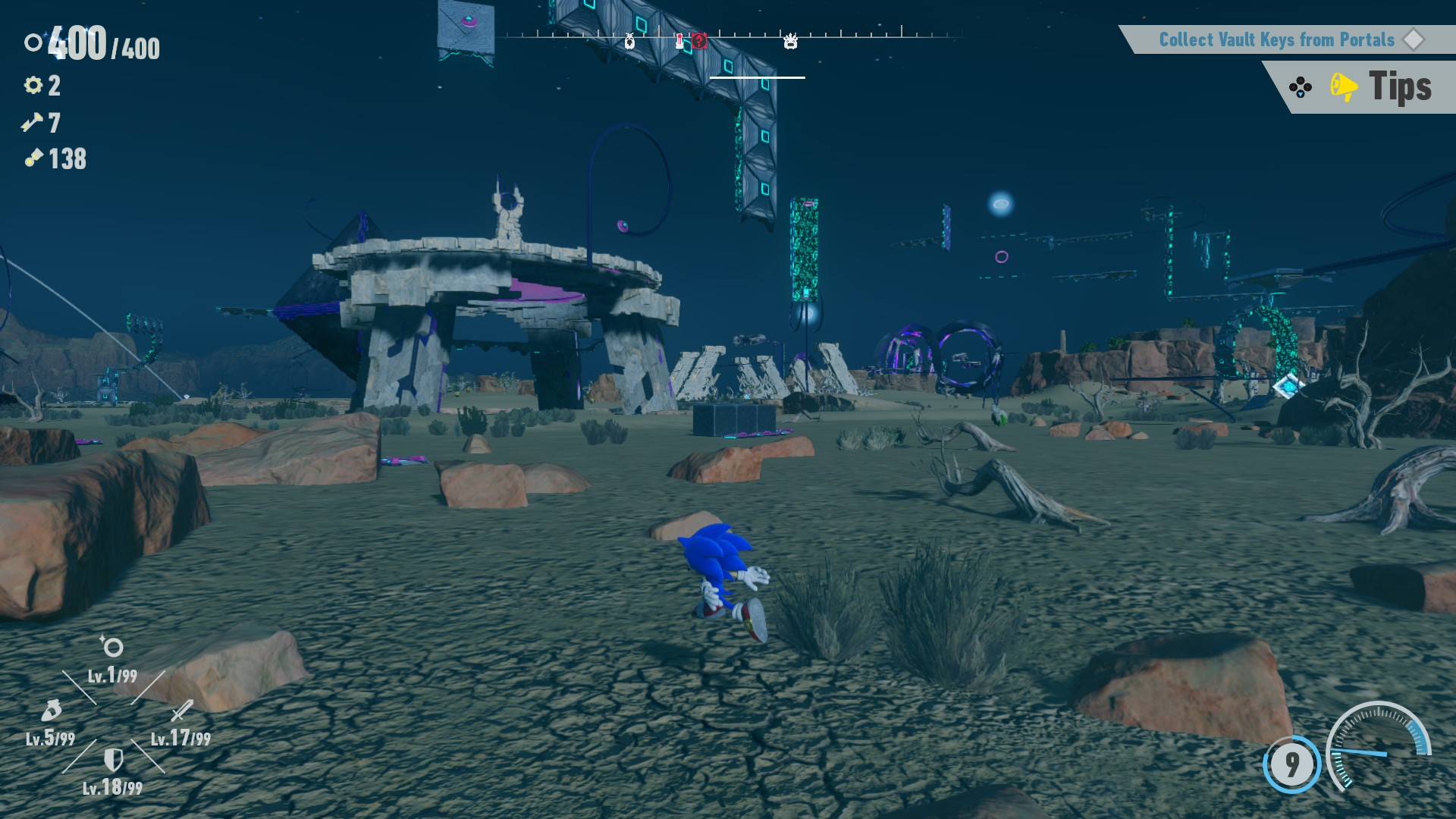
Wherever Sonic Frontiers lands on the quality scale to you, what’s important is that Sonic Frontiers: Definitive Edition is still the same game you played on Switch, PlayStation 5, or wherever else within the past four years—just with the free DLC included in the base game. (That all being the Final Horizon scenario, overworld jukebox, the boss rush and challenge modes, New Game+, and various other odds-and-ends) Point being: if you walked away from Sonic Frontiers unimpressed, this Definitive Edition will do little to change your mind.
But for fans of Sonic’s last 3D adventure, what is there to offer? Naturally, the graphical touch-ups are the biggest draw: Sonic Frontiers was an infamously blurry mess on Switch, with Nintendo’s little hybrid unable to render legible fidelity and maintain a consistent 30 FPS. Thankfully, Switch 2 is a notable upgrade as seen in Sega’s comparison below: whereas all cutscenes remain locked to 30 FPS, there’s immediate improvements in readability and detail via lusher vegetation and more refined texture filtering.
However, as Sonic Frontiers: Definitive Edition includes the visual modes featured in higher-end releases, your personal experience will vary. Whereas the Graphics Mode will present greater detail at the cost of 30 FPS, Performance Mode will offer 60 FPS at the cost of lower fidelity. And when I mean lower, I mean “still diagnosed with cataract vision”—while Sonic Frontiers runs undeniably smoother on Switch 2, I cannot imagine even the most ardent of framerate devotees bothering with something so grainy. Docked mode spruces things up a tad, but one needs only look at the below handheld shot to see how messy it is.
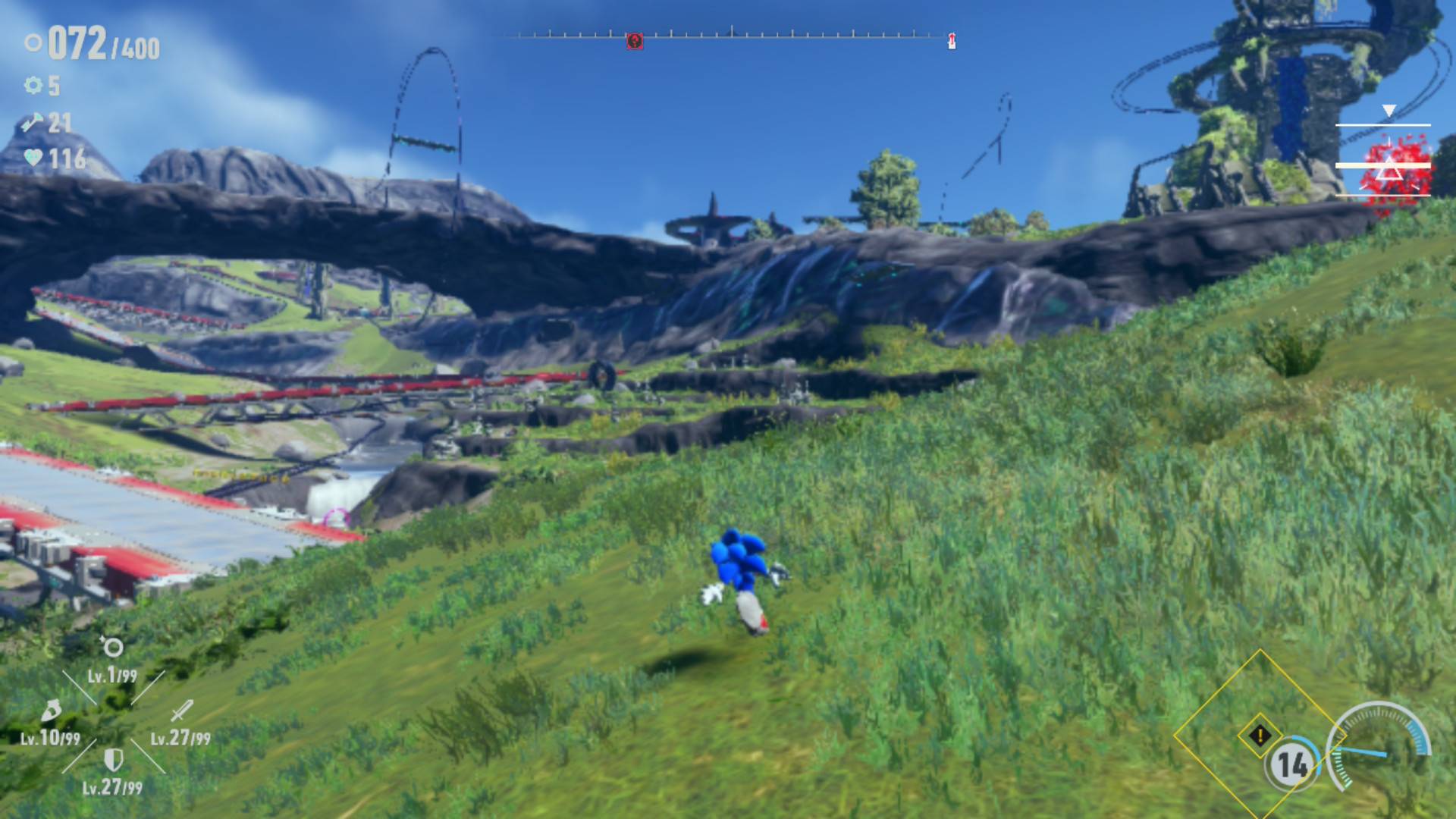
Thankfully, Graphics Mode offers a palatable middle ground. While the framerate drop is palpable, Sonic’s lightspeed movement can override any temporary discomfort to still deliver an engaging experience. (Keyword, “can”. We’ll discuss that in a bit.) Sonic Frontiers’ patented pop-in naturally lurks around every corner, but the decent fidelity means you won’t have to scrub your eyes every five seconds. And while we’re told there’s slight drops in boss battles or particle-heavy sequences, I can’t personally attest to any distracting moments. Hardly perfect, but gets the job done.
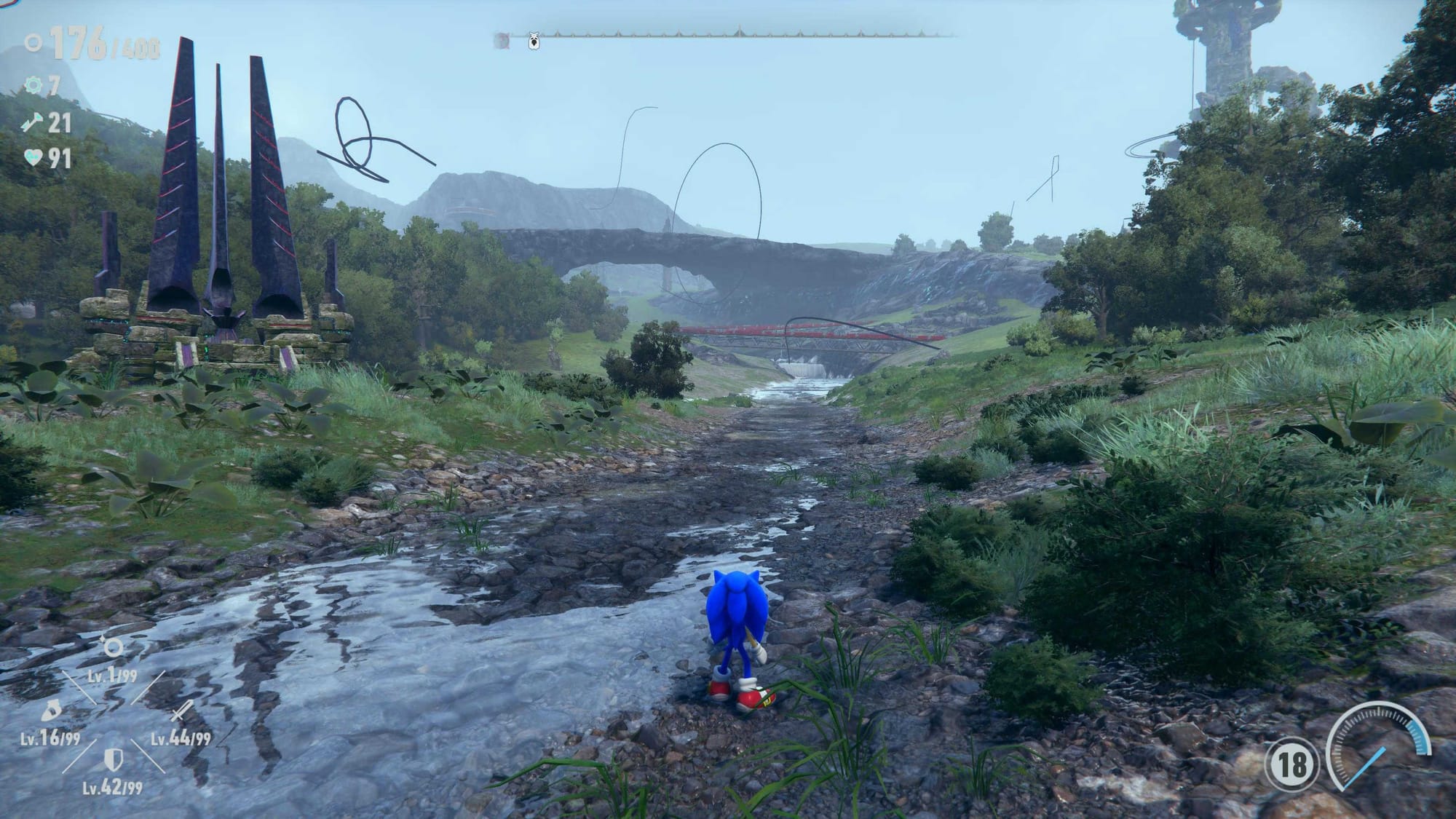
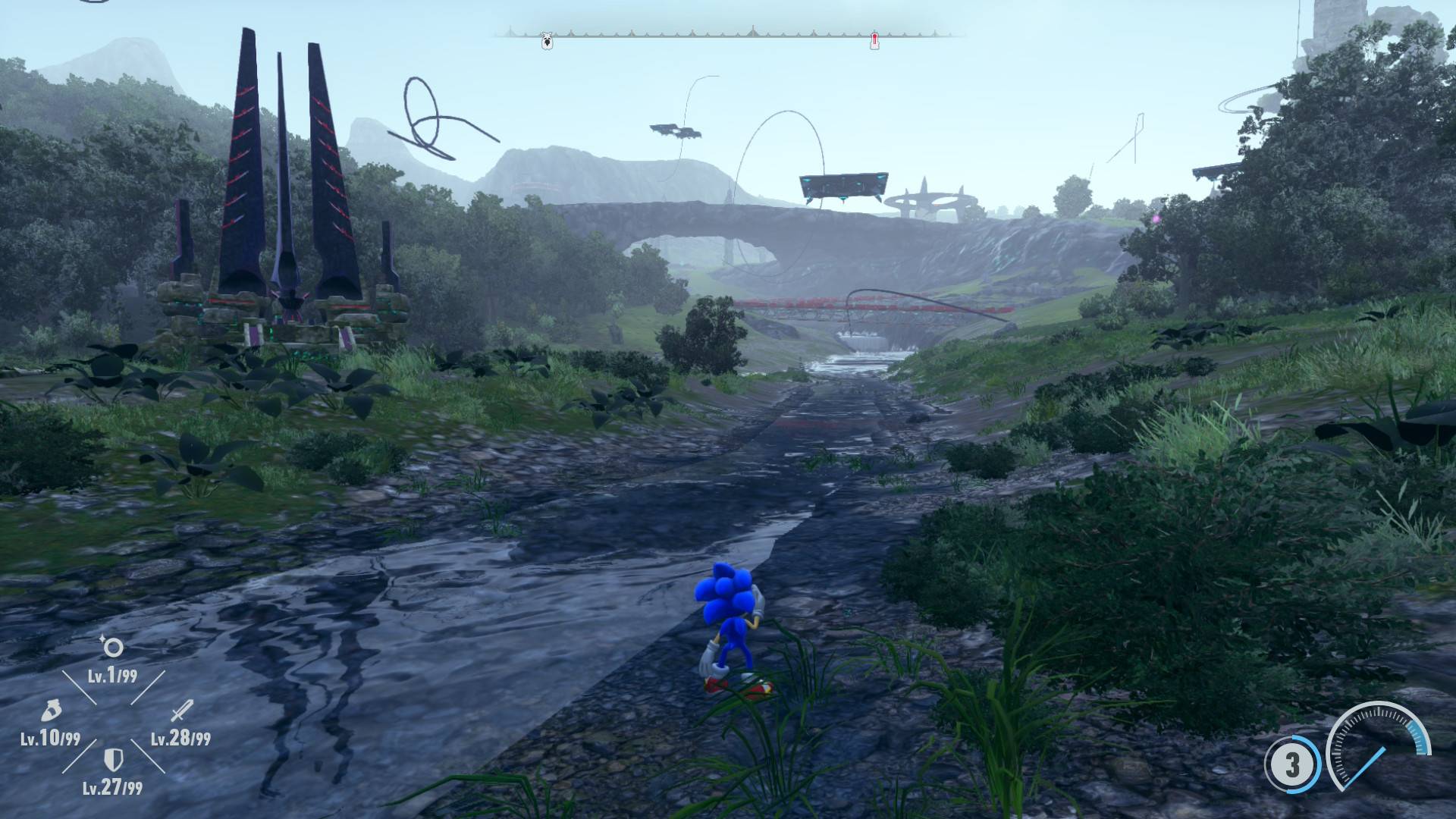
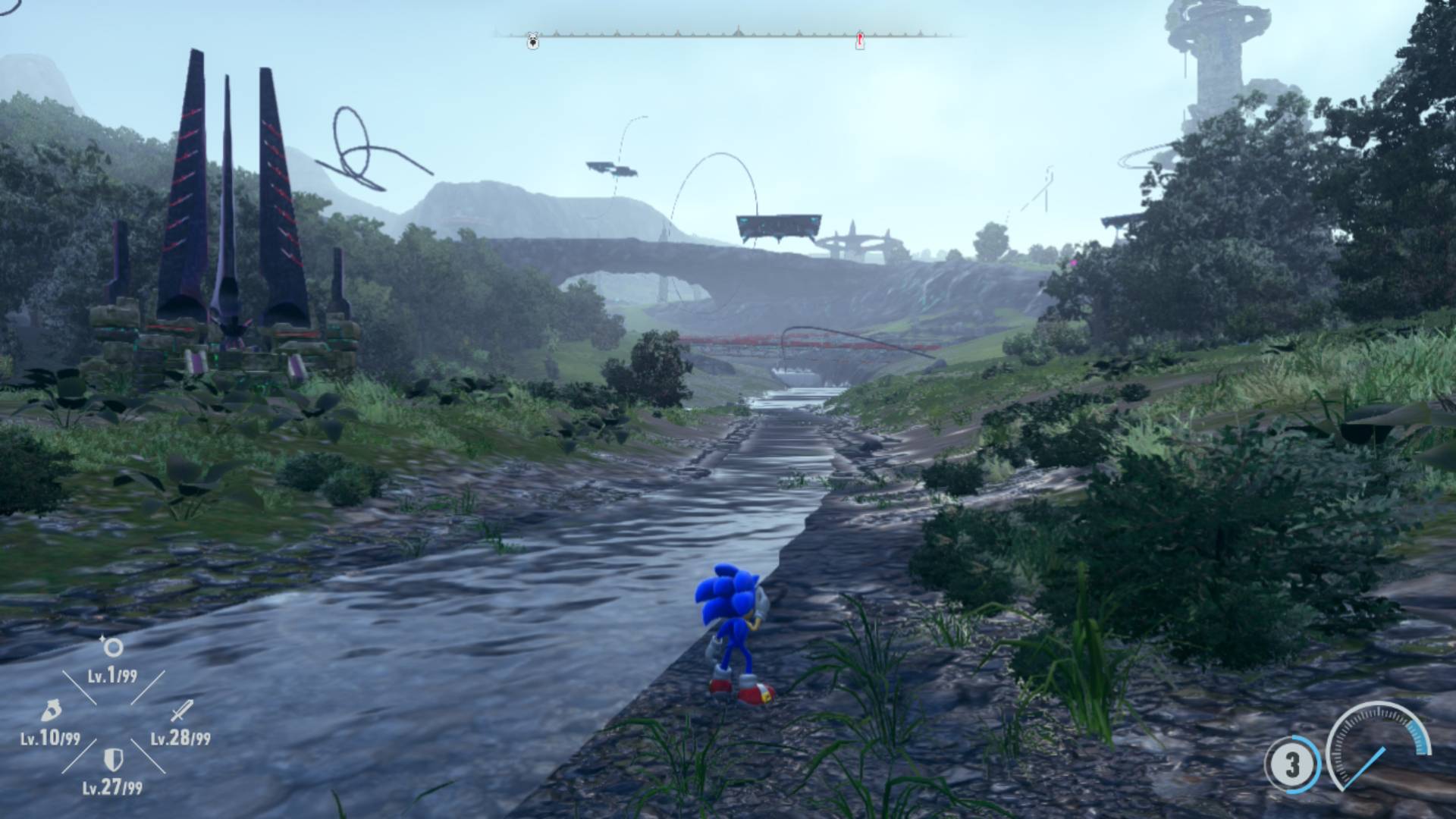
Of course, don’t expect this version to match higher-end consoles: we could discuss how advanced effects in motion blur and global illumination remain absent, but we’ll leave the minutiae to this DigitalFoundry analysis. As I never played the Switch version, I can’t personally provide a direct comparison, but what I can offer instead are direct screenshot comparisons with the PlayStation 5 version, which should speak for themselves:
PlayStation 5 Graphics & Performance
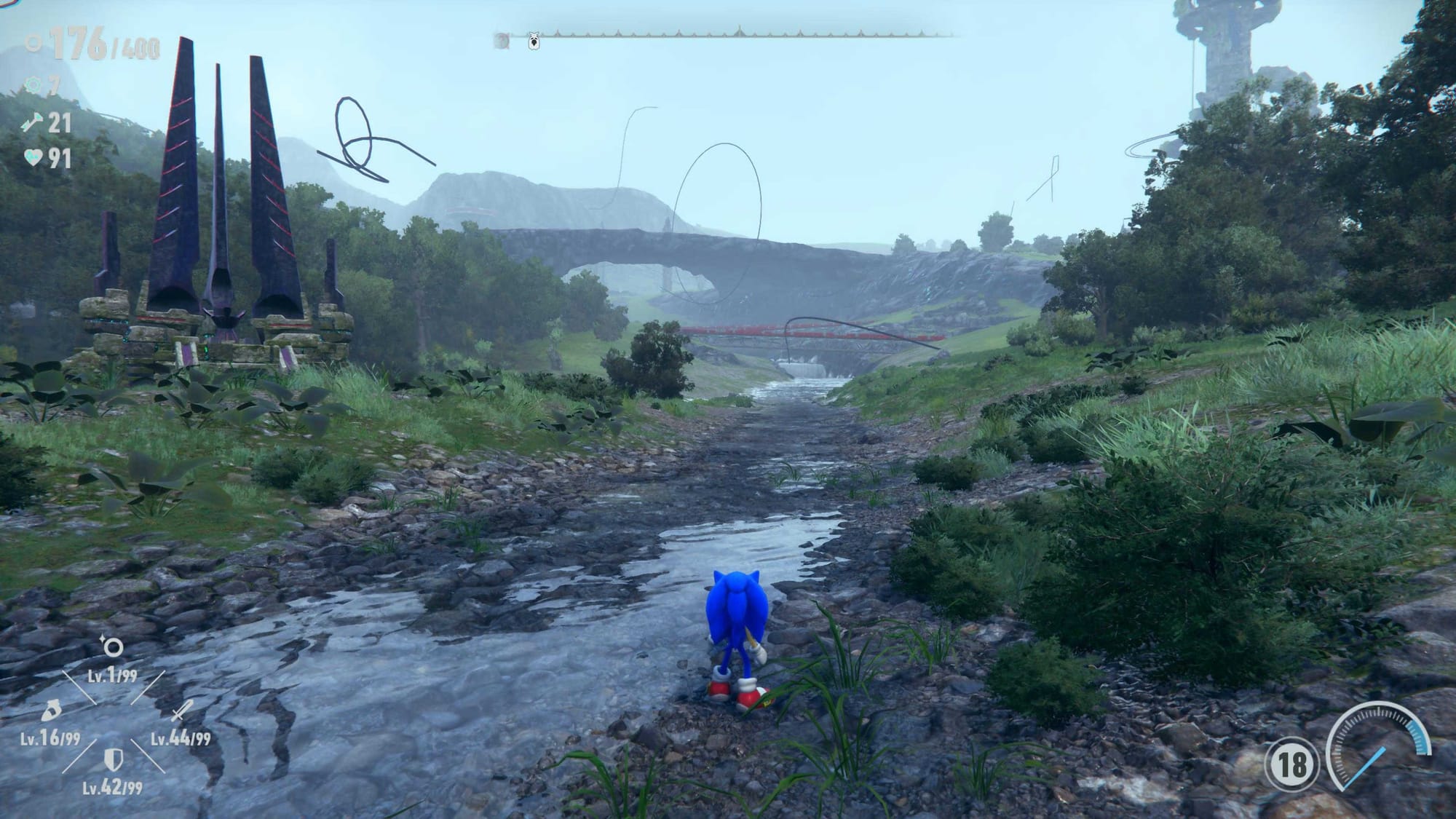
Switch 2 Docked Graphics and Performance
Switch 2 Handheld Graphics and Performance
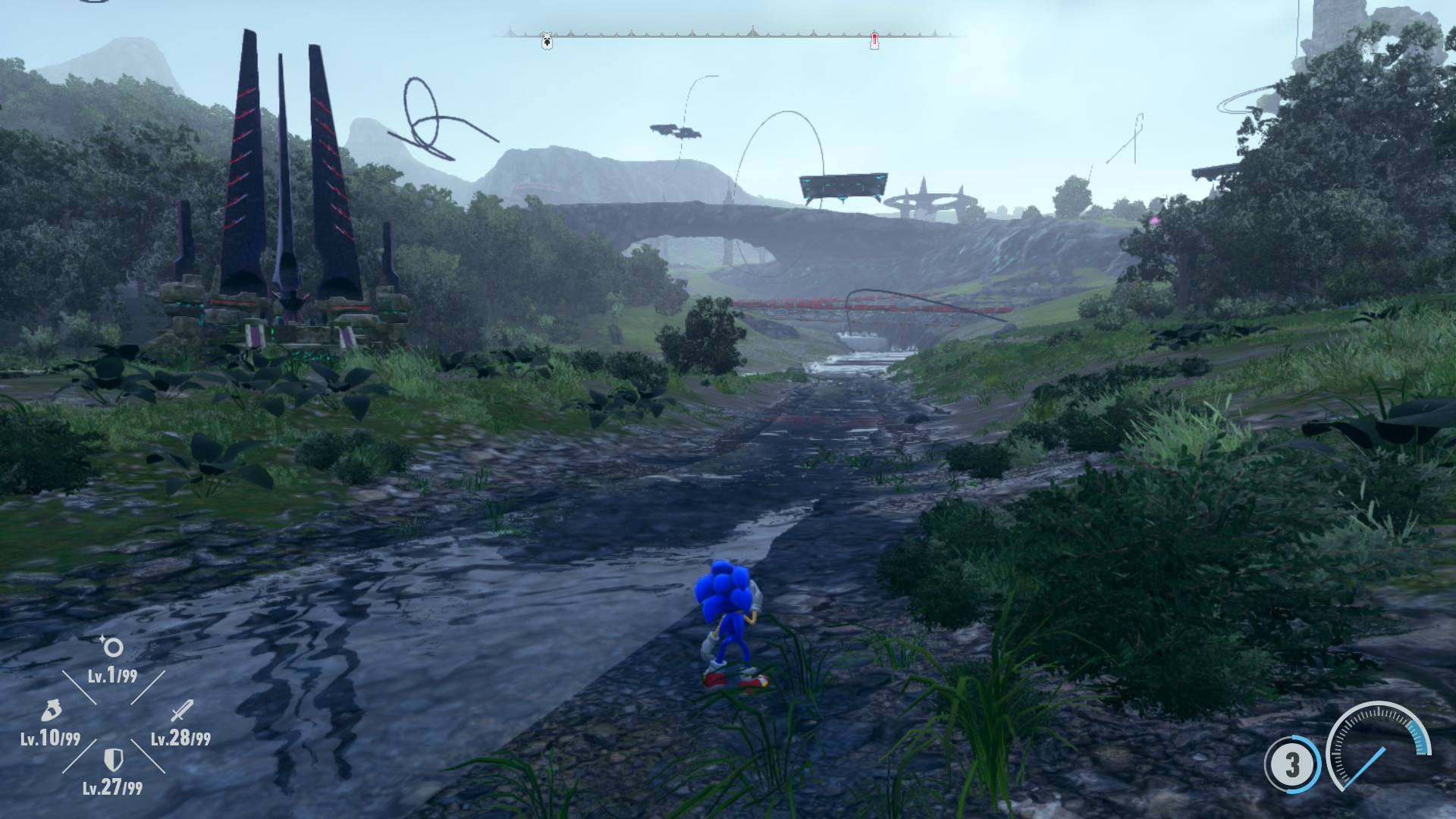
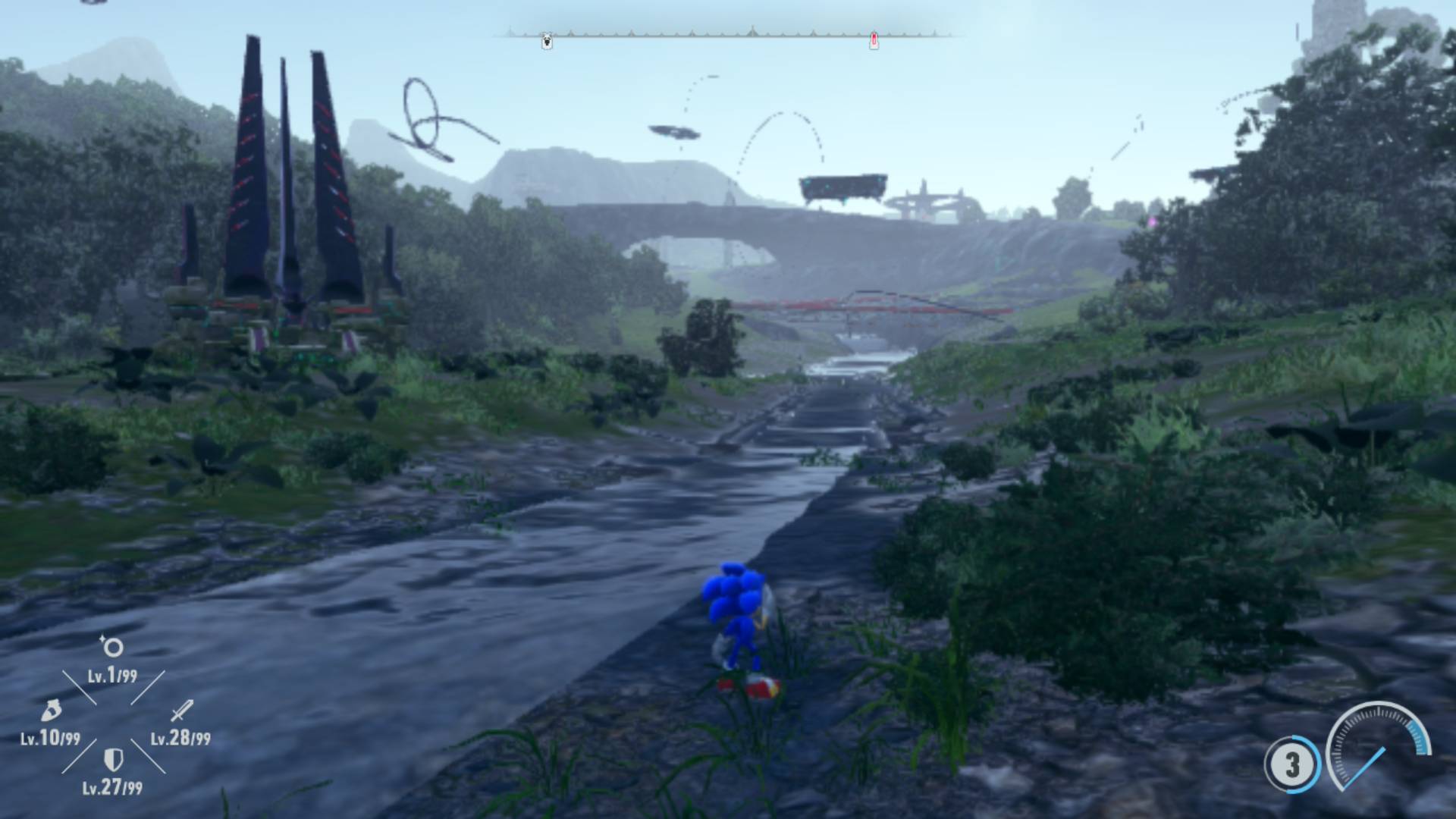
Again, it’s no contest—observe how Switch 2’s riverbed is a flat texture compared to PlayStation 5’s individualized wet rocks. You could say such details are easily overlooked with Sonic blazing past every hill, brook and mysterious floating rail, but ultimately Sonic Frontiers: Definitive Edition’s worth will depend on your priorities. Is clean image quality paramount above all else? Is the loss of fidelity still too much? Can you overlook any downgrades for stable performance? I confess that it’s difficult to recommend this version with only one viable mode.
Which leads us to the elephant in the room: is this Definitive Edition a rip-off? If you’re an existing Switch owner, then yes. Even if we were to ignore the ethics of Game Key Cards, that Sega couldn’t offer an upgrade path—free or paid—doesn’t just reek of greed but is simply downright offensive to the consumer. Forget how the Switch’s digital release currently costs $39.99—one could simply click over to Amazon and order a physical version for $29.99, and that’s to say nothing of other platforms! How crazy is it that the most expensive version isn’t even the most advanced? At least your save data carries over, but is that worth $50? Definitely not.
For my take, as someone who never got around to playing the DLC, it’s been fun digging into the new features—running around to classic Sonic music is undeniably a neat novelty and unearthed some unexpected memories. (Hello, Rouge’s sexy jazz!) But I could just have easily done that on PS5, with substantially better visuals—and for free. (Well, okay, this review copy was free too, but you likely don’t have that luxury. Point still stands.) As it stands, this so-called “Definitive Edition” makes little argument for its existence.
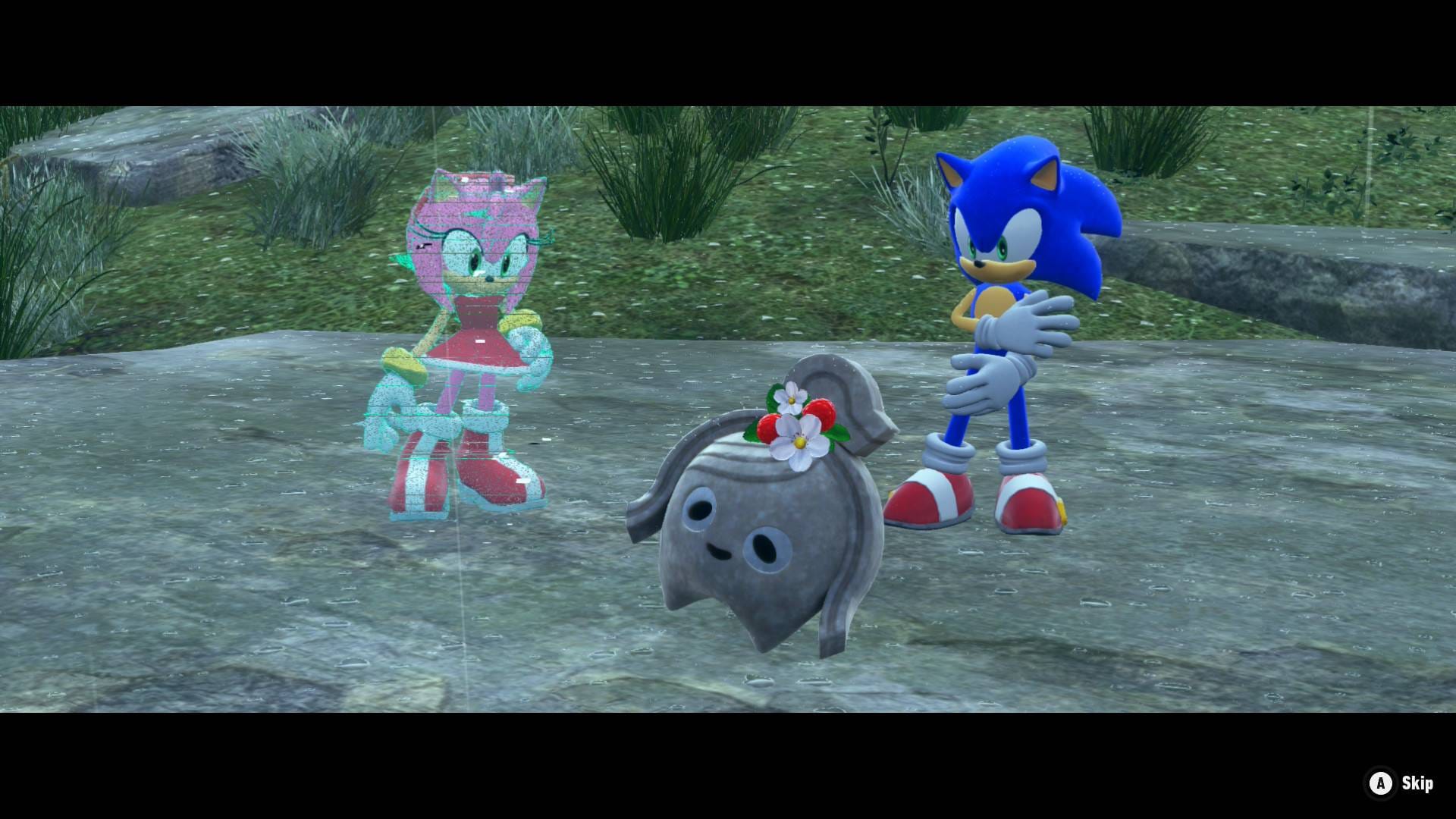
In short, Sonic Frontiers: Definitive Edition is best reserved for newcomers on Switch 2 who don’t have access to other platforms. Supposing you do, it’s best to ask: are the downgrades truly worth a convenient handheld experience? Think twice before spending your rings.