Few times in history has another character taking the mantle of an iconic superhero worked as well as it has for Miles Morales. Hailing from Marvel’s original Ultimate universe, Miles donned the iconic webbed mask of Spider-Man after the Peter Parker of his world died fighting the Green Goblin, and quickly proved himself to be a worthy successor. Something he’s continued to do even after being transported into the main Marvel universe following 2015’s Secret Wars event, where he’s protected New York alongside the original Spider-Man. Not as a sidekick, but as a full-fledged hero in his own right. Now, Miles is back with his own book, where he will face possibly the greatest struggle a Spider-Man must endure: finding a balance between life in the mask and out.
*Mild spoilers ahead for Miles Morales: Spider-Man (2026) #1*
Miles Morales’s life has been anything but normal in recent years. He's been forcibly bonded to the Carnage symbiote, dragged into multiversal conflicts, and even been turned into a vampire before being cured by the spider god Kwaku Anansi. Understandably, he now wants nothing more than to get back to being a friendly neighborhood level hero for a while, trading the multiverse for high school and cosmic-level threats for ordinary things like catching a falling construction worker.
It’s honestly refreshing to see Miles like this again. Spider-Man has always felt best to me as a street-level hero. That’s not to say that he doesn’t work in stories that see him running around the world with the or out into the cosmos with the Avengers or multiversal Spider-Beings to battle enemies with world- or universe-threatening power. He certainly does, and both Peter Parker and Miles Morales have proven themselves more than capable of standing amongst the mightiest characters in the Marvel universe. But there’s just something that feels right about them fighting criminals on the streets of New York (even if some of these can and have become larger-scale enemies at times).
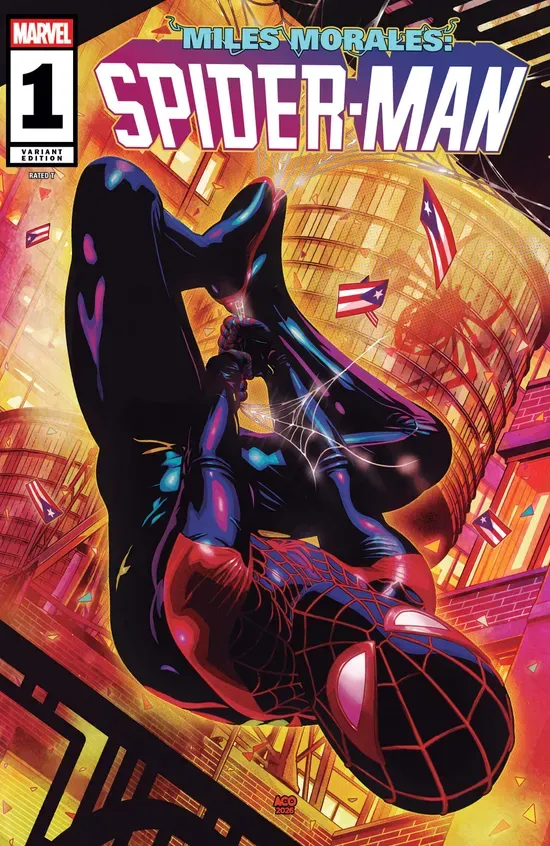
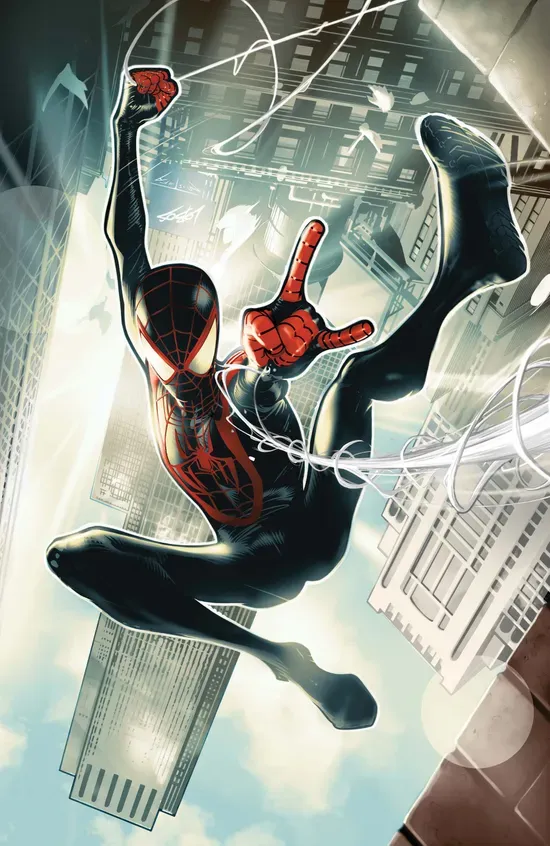
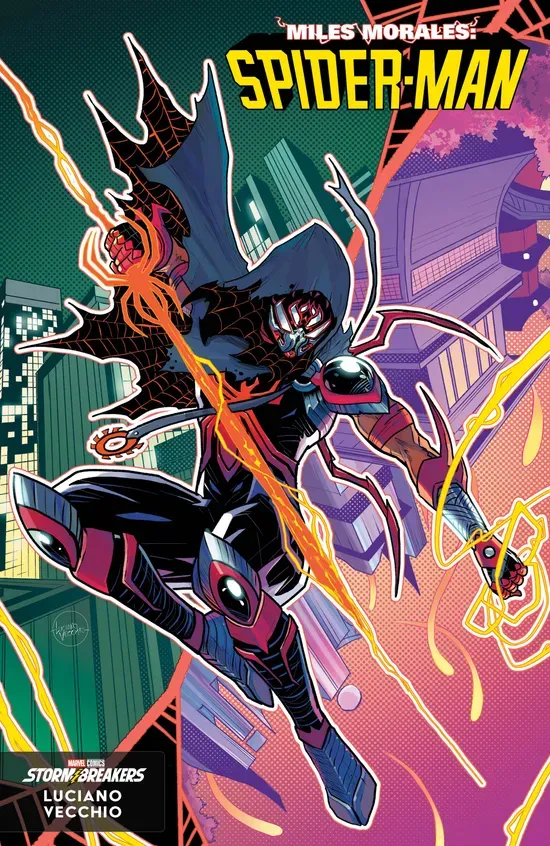
One big reason for this is that it makes their constant struggle for balance between their responsibilities as superheroes and their lives outside of the suit and webshooters clearer. Spidey isn’t thinking about ordinary things such as school/work or a date while off battling the likes of Thanos or Knull. But against someone like Dr. Octopus or the Prowler, we have room for those more mundane concerns to come to light. And that has always been Spidey’s greatest strength as a character. He’s more relatable than, say, a billionaire industrialist or a super soldier. From the very beginning, he was an uncool, awkward nerd, and becoming Spider-Man didn’t change that. If anything, it often seemed to make it more difficult. And that made it so easy for readers to connect with him.
By bringing Miles back to that after so many larger-scale stories, it opens the door for new readers to connect with him in that same way. Especially since writer Bryan Edward Hill presents the story in such a way that you can jump in blindly and not feel lost. It’s not a reboot, but rather a fresh start, trusting that readers are at least familiar with who the character is even if they haven’t kept up with every one of his recent appearances. As someone who has read comics for many years and seen similar attempts done to mixed success, I feel like it succeeds here. It doesn’t ignore what has come before it, but it also doesn’t rely upon it. We’re given all of the information we would need to understand where his character is at right now (delivered in an organic way that doesn’t feel overwhelming or obtrusive), but the focus is on the here and now. It’s a fresh start that the character needed.
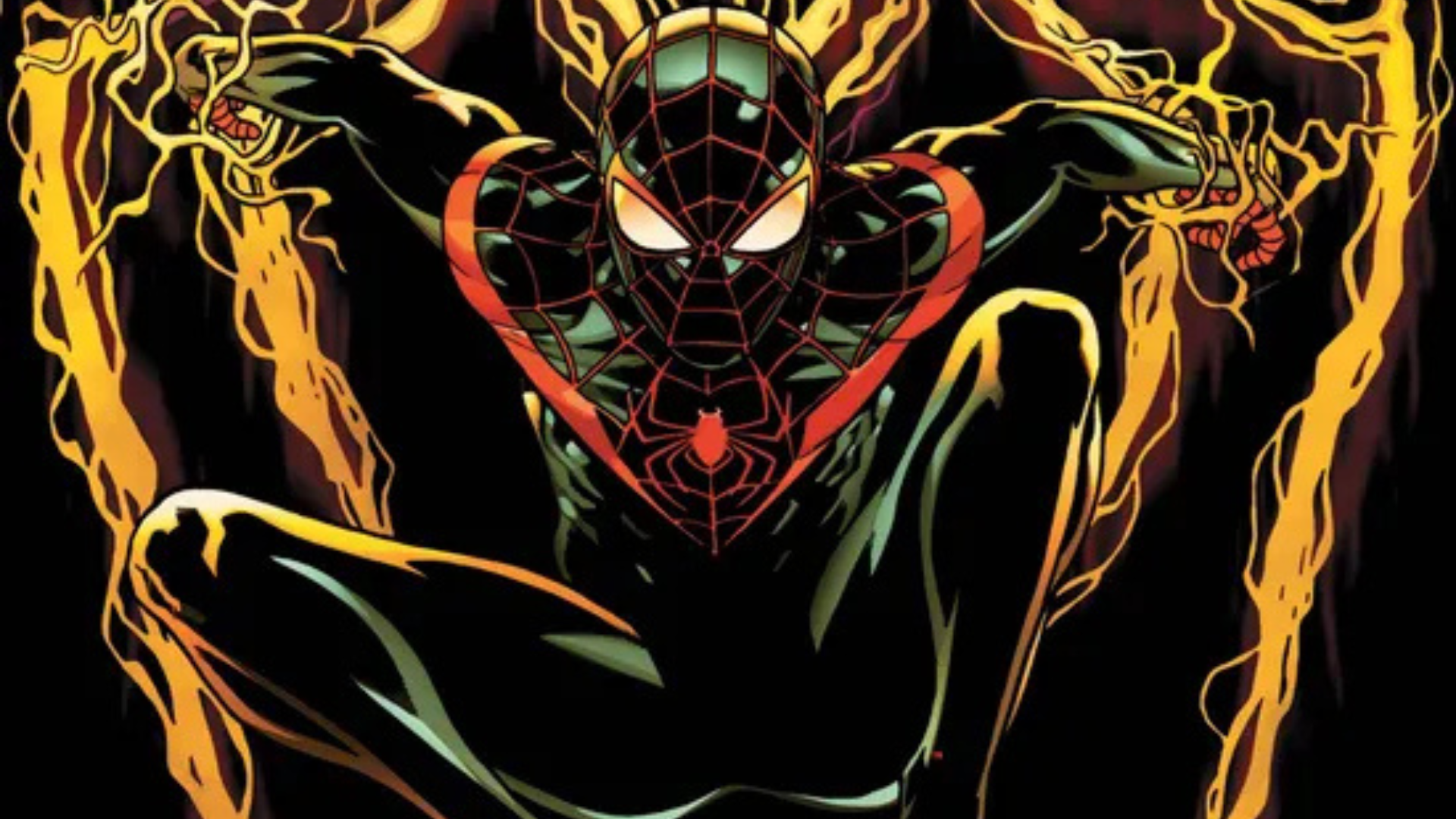
The artwork in the book is beautiful, with artist Nico Leon giving the story a lighthearted atmosphere that matches the tone Bryan Edward Hill is going for. This is most evident in the moments where Miles is out of costume and simply being a teenager. Going to class, talking to a girl, playing video games with his roommate. The scenes are bright and colorful, emphasizing how at ease Miles feels in them (even if he’s nervous around the girl he likes). When he’s Spider-Man, meanwhile, the panels are still colorful, but in a more dynamic way, accenting the franticness of those moments.
The art style shifts near the end of the issue, with Valentine De Landro taking over for some flashback scenes. Utilizing a different artist for this moment was a cool touch, as we’re seeing things from a different character’s perspective, and the change in art style emphasizes the different tone of those moments.
Whether you’ve been following Miles Morales’s adventures for a while or are only aware of him from the Spiderverse movies, this book offers a fresh start for readers new and old to jump in and see why he’s become so beloved by so many.
Miles Morales: Spider-Man (2026) #1 is available now from Marvel Comics.
Miles Morales: Spider-Man (2026) #1 review
Great
Miles Morales: Spider-Man (2026) #1 presents a fresh start for the beloved character, bringing him back to the familiar streets of Brooklyn for a more grounded story. Or, at least as grounded as a superhero story can be.
Pros
- Grounded setting allows Miles to shine as more than just a superhero
- Artwork from both artists
- New villain promises a conflict with personal stakes
Cons
- None
This review is based on a retail copy provided by the publisher.