When Ghost of Yōtei launched last year, I wasn't necessarily expecting to ever get a reason to return to Atsu and her corner of Japan. When Echoes of Sekigahara and Most Wanted were announced, I was pleasantly surprised as a result and hoped that it could deliver a knockout punch that'd firmly cement Yōtei right alongside Tsushima as some of my favourite open-world experiences. I'm pleased to report that this DLC does exactly that.
Echoes of Sekigahara Story DLC
To get something out of the way right off the bat, Echoes of Sekigahara is just more Ghost of Yōtei. But it’s Ghost of Yōtei at its most focused, distilled, and deftly executed. Much like other recent DLC for PlayStation’s first party fare (Burning Shores and GoW: Valhalla front of mind), Echoes of Sekigahara is a net contributor to the base game in all the core ways that matter; character development, refinement in gameplay, alongside story and spectacle worthy of the price of admission.
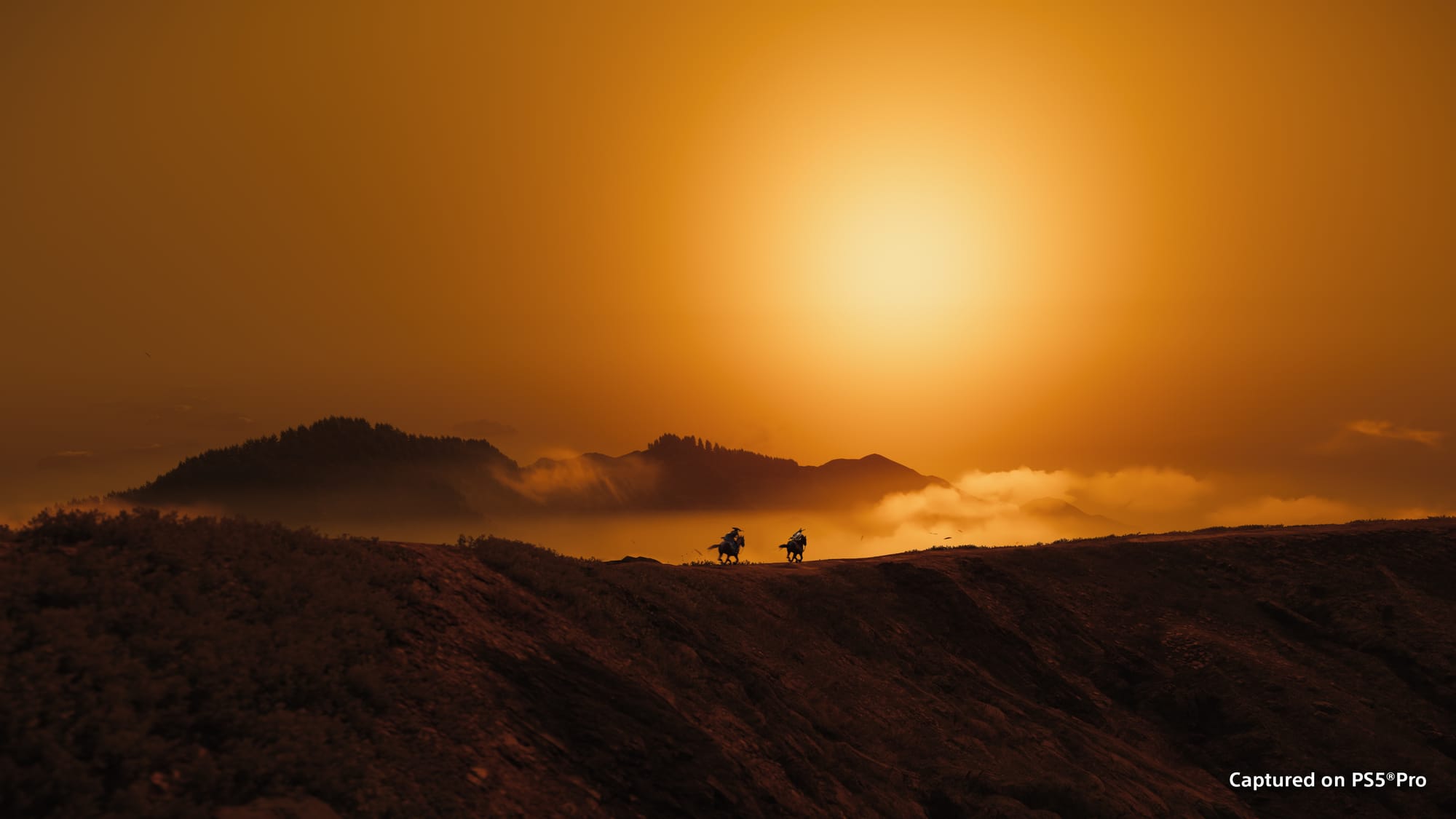
Exploring dual narratives in both present day Ezo and Atsu’s past, it grants additional context to the “who” and “why” of Atsu before her path for vengeance began in earnest. As a result, she becomes an even more well-rounded character over the course of the DLC, and Erika Ishii continues her excellent voice work aided by a strong script throughout. That script extends to the ensemble of characters surrounding Atsu, both old and new. Each NPC you meet contributes something meaningful to the experience, whether it’s directly in the main plot or the various subplots that you’ll uncover on your journey.
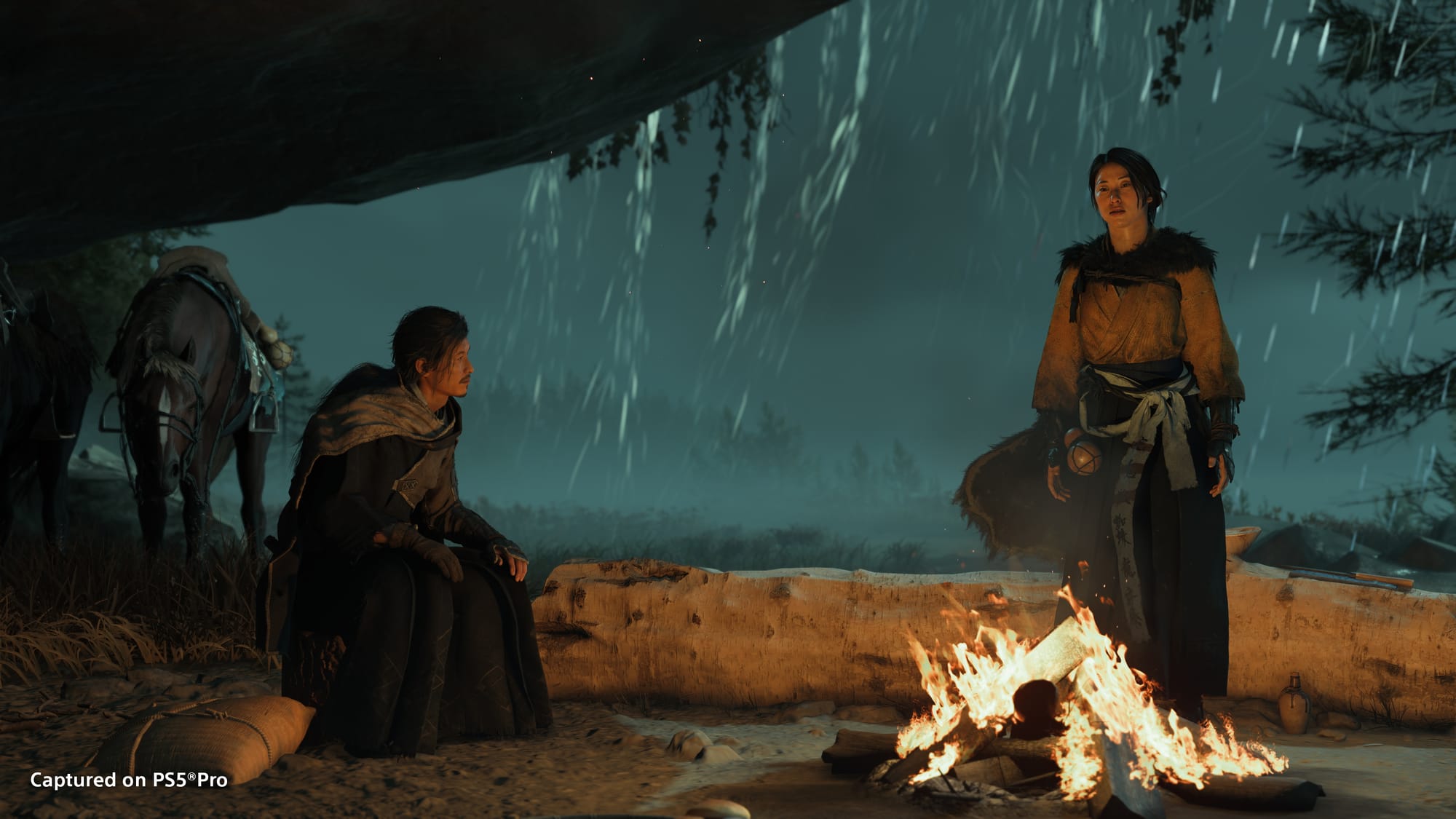
In the centre of the entire story is Nagato, a figure from Atsu’s past whose reappearance compels her into the Ashoro Foothills - the new region you’re tasked with exploring. While avoiding all spoilers, I was thoroughly impressed by the dynamic between Atsu and Nagato; their interactions at two different points in their lives was always a delight and gave me a flavour that was mostly absent in Yōtei’s main campaign.
Given that The Snake is killed in the opening of the main game, very little time was given to explore him in comparison to the rest of the Yōtei Six. Though he is still dead at the time of the DLC, his Viper gang are the primary antagonists here, and it’s an inspired choice. The power vacuum caused by his death leads to several suitors stepping forward - all of which you’ll have to cut down in a variety of dramatic (and sometimes humourous) showdowns. This is an angle that the main story didn’t have the framework or scope to explore, and it was intriguing to interrogate the wide-spread ramifications of an absent villainous character of regional consequence; and that theme of absence echoes throughout the DLC.
The Viper gang also introduce armored brutes which are resistant to any of your attacks, requiring you to pick up and swing away with heavy weapons you find in the environment. Coupling this with a couple other abilities, the combat loop is spiced up just enough to make the encounters in the DLC relatively fresh, engaging and challenging - even if you've 100%'ed Yōtei prior to playing through this.
Furthermore, the culminating few missions of the critical path are some of the most enthralling content that the franchise has offered thus far. It includes gameplay set pieces, environments, and narrative developments that felt to me like a conceptual promise from back when Tsushima was first announced, finally fulfilled.
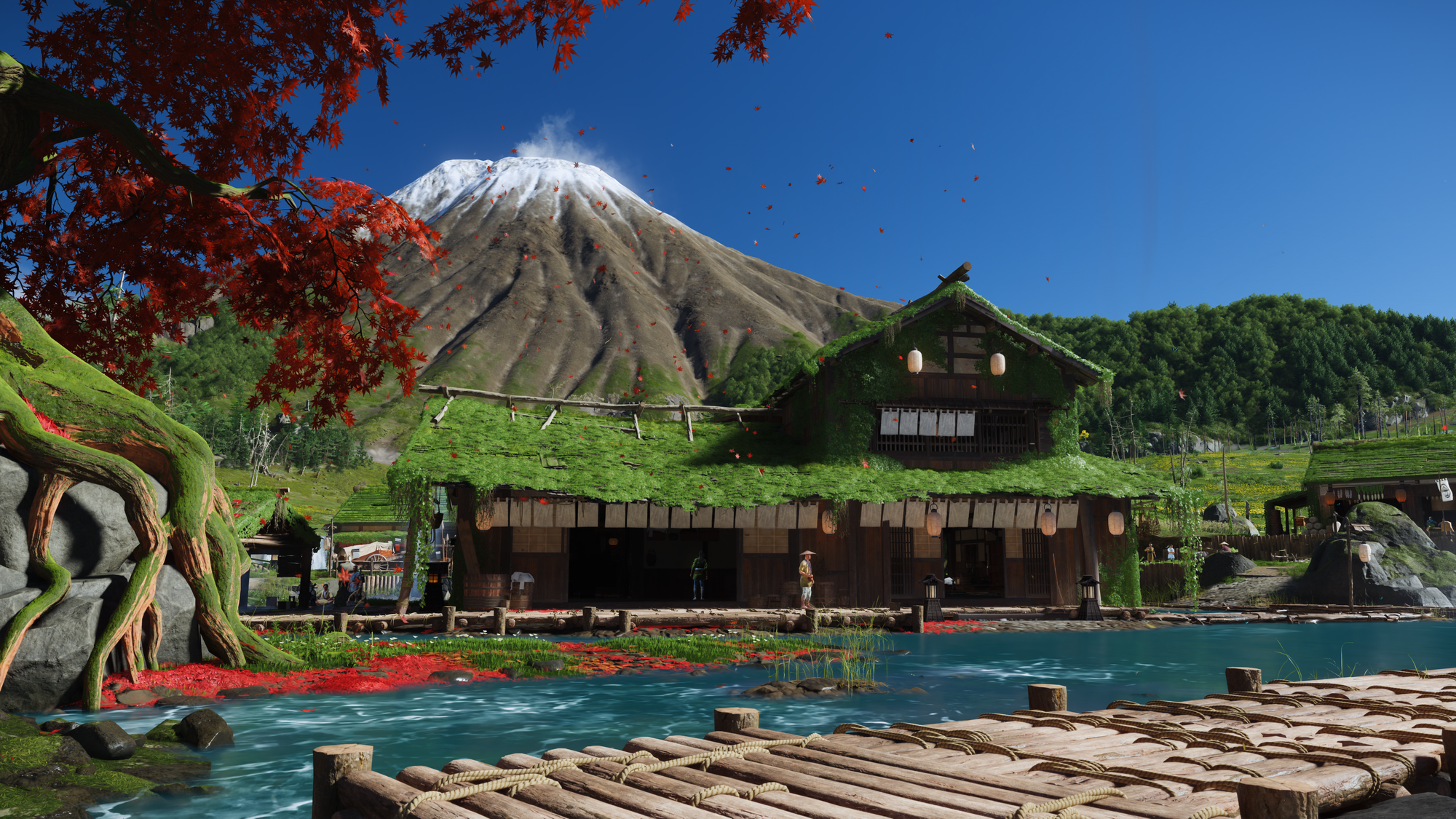
Something specific that incentivised me to engage with everything the new region had to offer was the way in which the characters you meet and activities you complete funnel into the central town of Ashoro Springs. Almost everything you do has a visual and often tangible impact on the village, and each consequential encounter out in the wild had me considering whether I should keep adventuring, or return back to town to see what had changed.
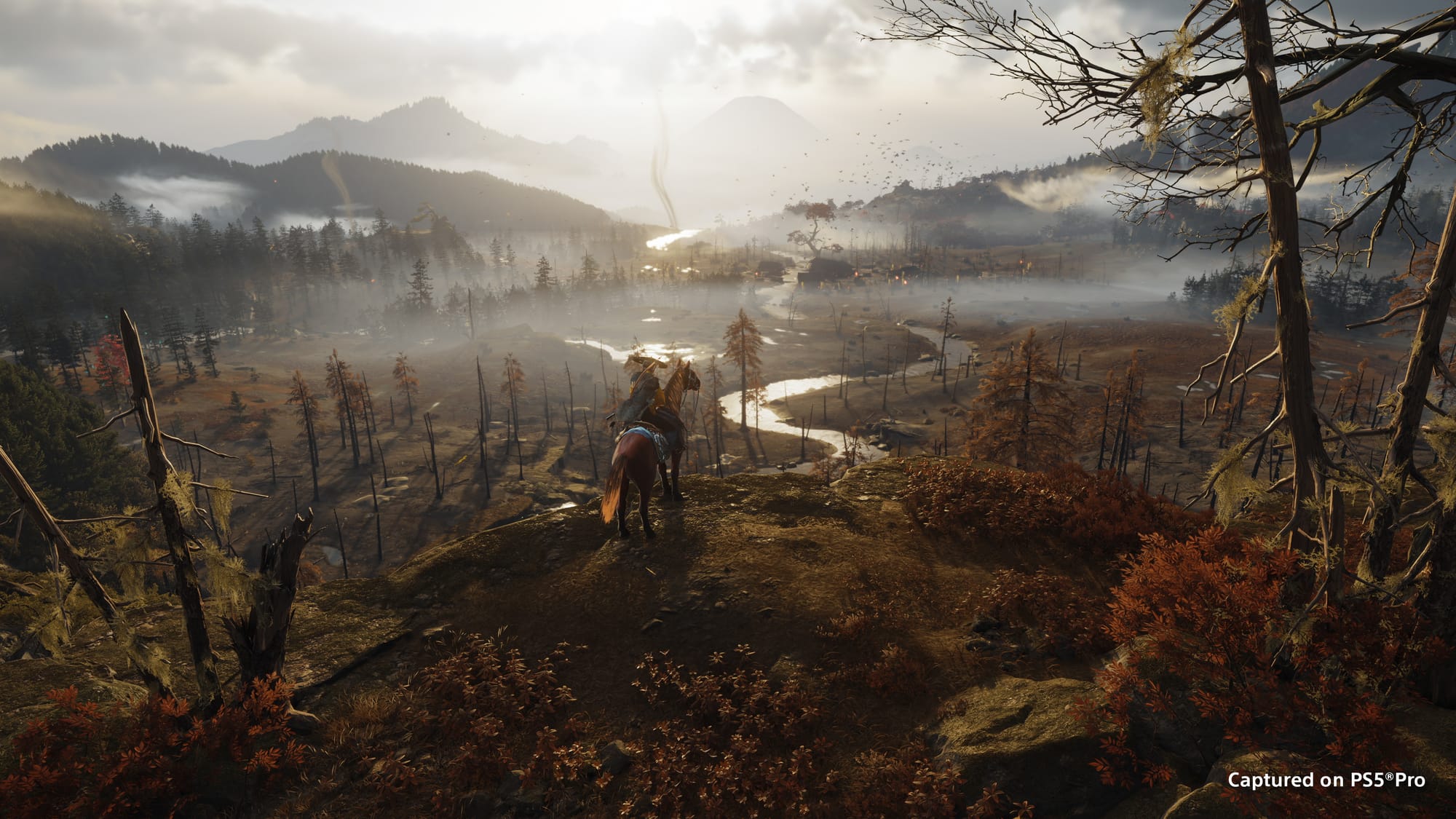
Speaking of Ashoro Foothills as a region, it’s more compact than other areas on the map but (mostly) manages to escape the sense of feeling too small. Even more so than the core Yōtei experience, Echoes of Sekigahara is a perfect encapsulation of just how masterful Sucker Punch have become at world design. In a comparatively small area, they have packed not only multiple stunning vistas, a healthy amount of activities, and a few surprises for good measure. One could argue things are a little too close together as a result, but for what’s there I appreciated the ease and brevity of sweeping between one activity to the next.
As is my natural tendency, I was unleashed into the region and immediately decided to do everything but the golden path; clearing out camps, uncovering shrines, stumbling upon radiant events, and completing side quests. I thought I only had the main missions left, but was delighted to uncover even more optional content as I progressed. If that all reads as the same loop from Tsushima and Yōtei you wouldn’t be incorrect. There are however a handful of new combat mechanics and gameplay features thrown in that I’ll leave for you to discover, but rest assured that they change up the combat loop in compelling ways, so long as you engage with them.
The general silver lining to experiencing “more of the same” is that Sucker Punch have found inventive ways to refresh that well-worn content. Several times throughout my 12 hours to 100% Sekigahara, I would stumble onto something thinking “I know what this is/what to do here” and more often than not I was taken aback by a shakeup to the muscle memory motions I expected to go through.
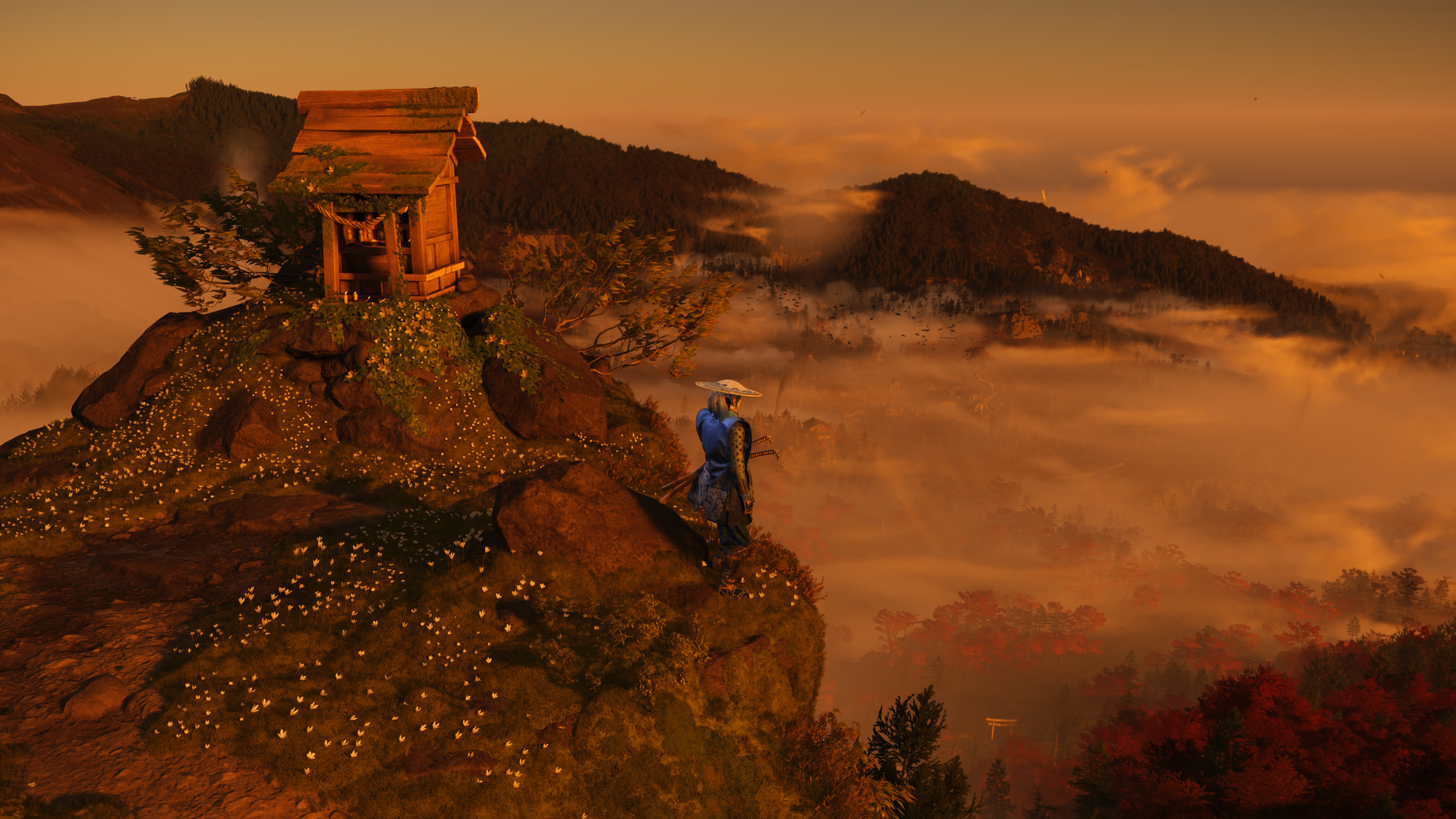
Playing in the Ray Tracing Pro mode on PS5 Pro, the game ran flawlessly and looked excellent while doing so, with only one minor frame drop in a particularly hectic sequence near the climax of the story. In terms of difficulty, I went through the entire DLC on Hard and I can safely say that the Viper gang and other foes gave me a run for my money on several occasions. Not only with combinations of enemy types and environmental hazards, but even movesets - particularly for Bounties and boss encounters. Some of the duels in Echoes of Sekigahara are arguably the toughest cooked up so far; fans of Takezo the Unrivaled are pretty well served here (iykyk).
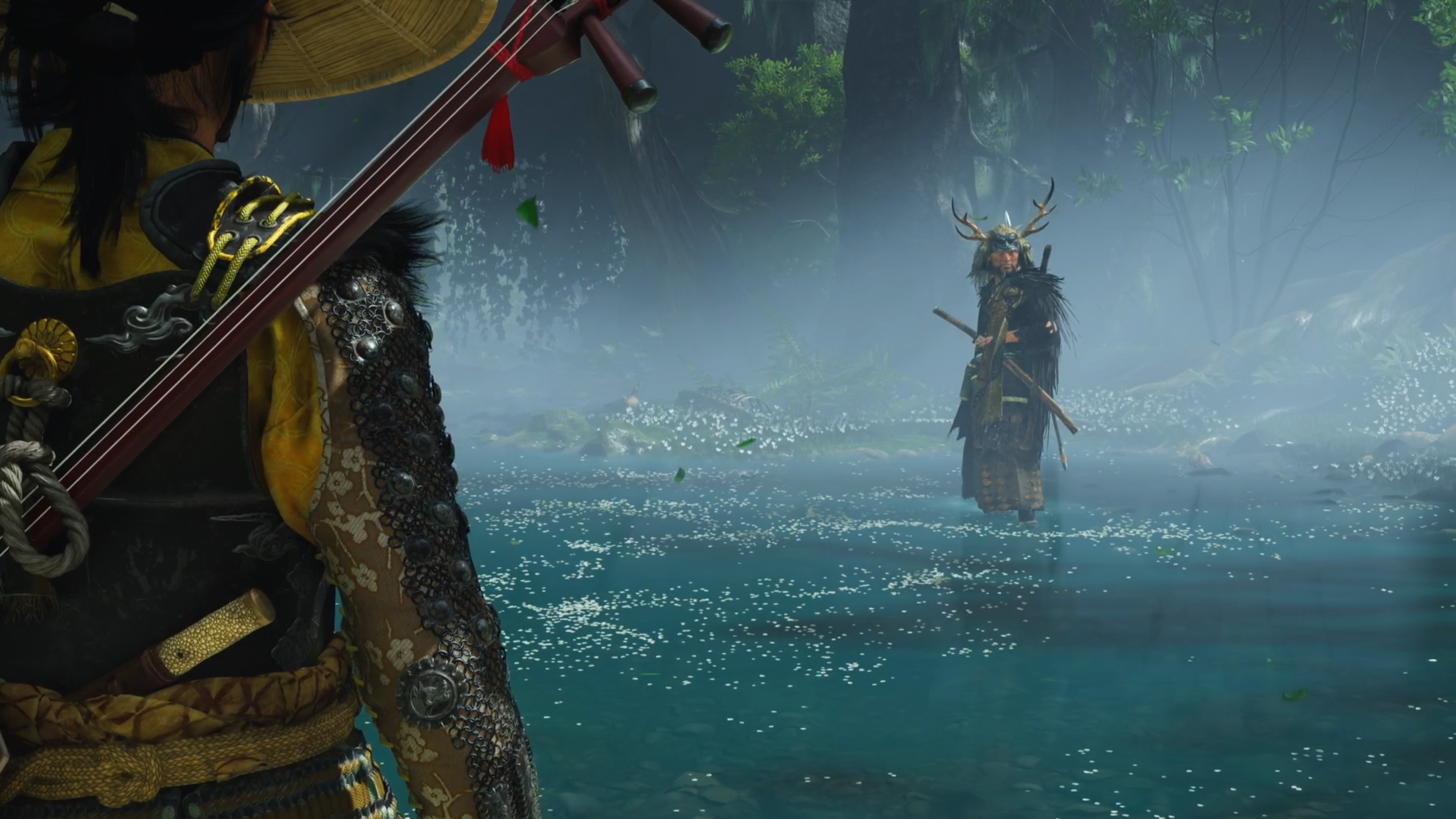
I haven’t even mentioned other features introduced alongside this DLC in the free Complete Edition update for all players; the Beauty of Yōtei screensaver mode, armor transmog systems, new Watanabe Mode songs and various other accessibility features all sweeten the overall package on offer here.
It’s clear that Sucker Punch are firing on all cylinders with this story content, honing their craft even further to provide a succinct 10 hour narrative with plenty of worthy side content to delve into. Not only does Echoes of Sekigahara excel at enhancing and improving upon the base game in many regards, but it also proves that there is still life and potential left in Ghost as a franchise should we eventually get a third outing.
Most Wanted Roguelike Mode
Sucker Punch didn’t see fit to settle on just a narrative DLC however, as just like No Return in The Last of Us Part II and Valhalla in God of War: Ragnarok before it, Most Wanted is the latest roguelike addition to the roster - and it sings… eventually.
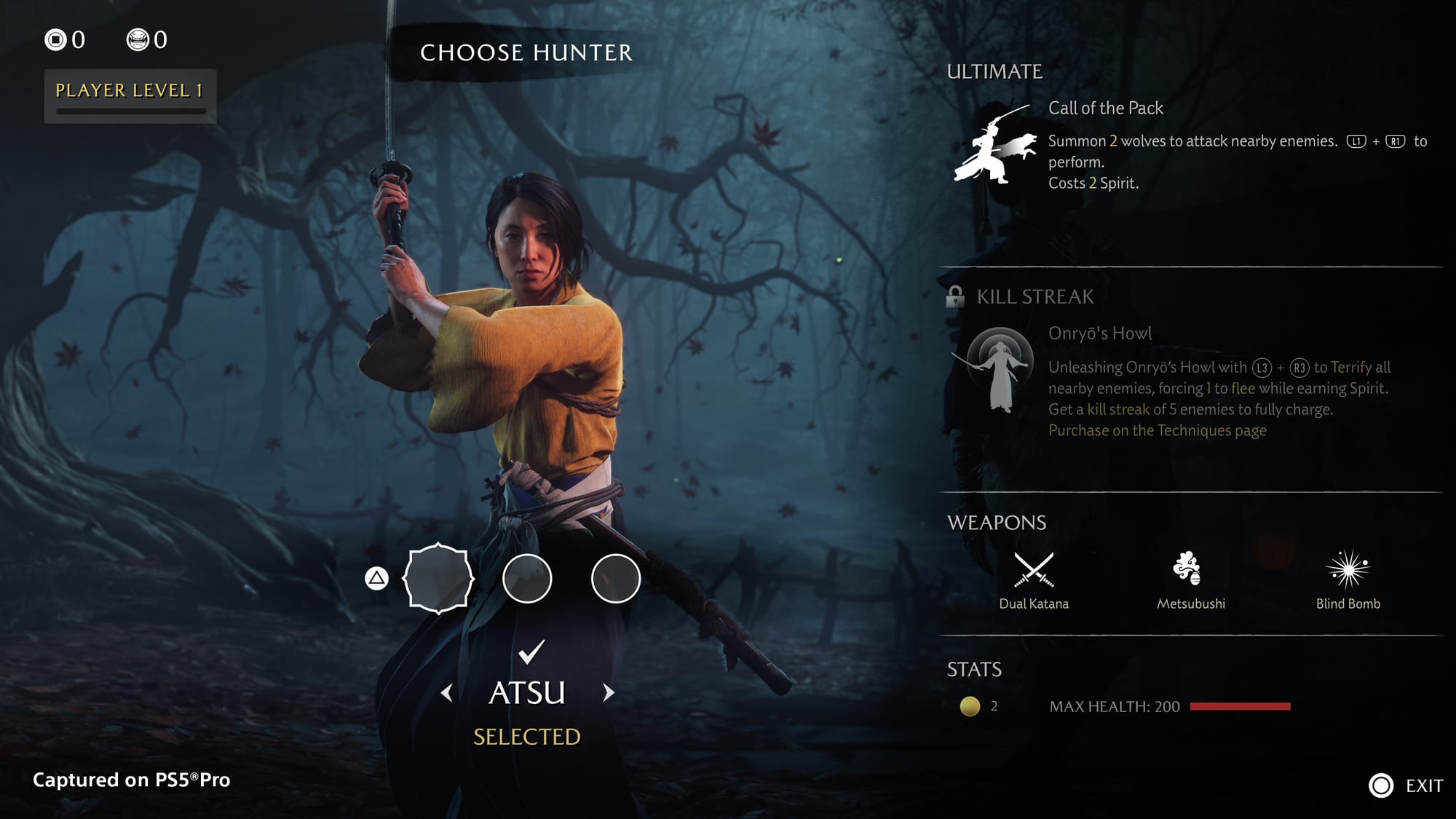
Playing as one of four unlockable characters (Atsu, Oyuki, Nagato, and Jin Sakai), you’ll have a starting weapon and equipment set, alongside a unique Ultimate. Pick a target— a member of the Yōtei Six— each with different difficulty levels and rewards on offer for a successfully completed run, and then the run begins.
Clear a set of enemies and you’ll get to pick from a set of randomized perks to confront the next round. At intervals you’ll begin a duel against one of the many opponents you encountered throughout the base game with unique reward choices thereafter. A mild critique is that there doesn’t seem to be (from my dozen or so hours in the mode) much if any variation in these bosses and their ordering. Considering the sheer number of duels in the game, it’s disappointing that so many don’t appear to return here, even if certain repeated ones make thematic sense - Kanta the Jailer on an Oni run, for example.
If you survive, you’ll eventually reach the end of a run where you have a showdown with your selected Yōtei Six member. Not only will you be far more powerful with a build you assemble on the go throughout the run, but the boss will also have unique elements, primarily multiple waves of reinforcements that weren’t present in their base game encounters.
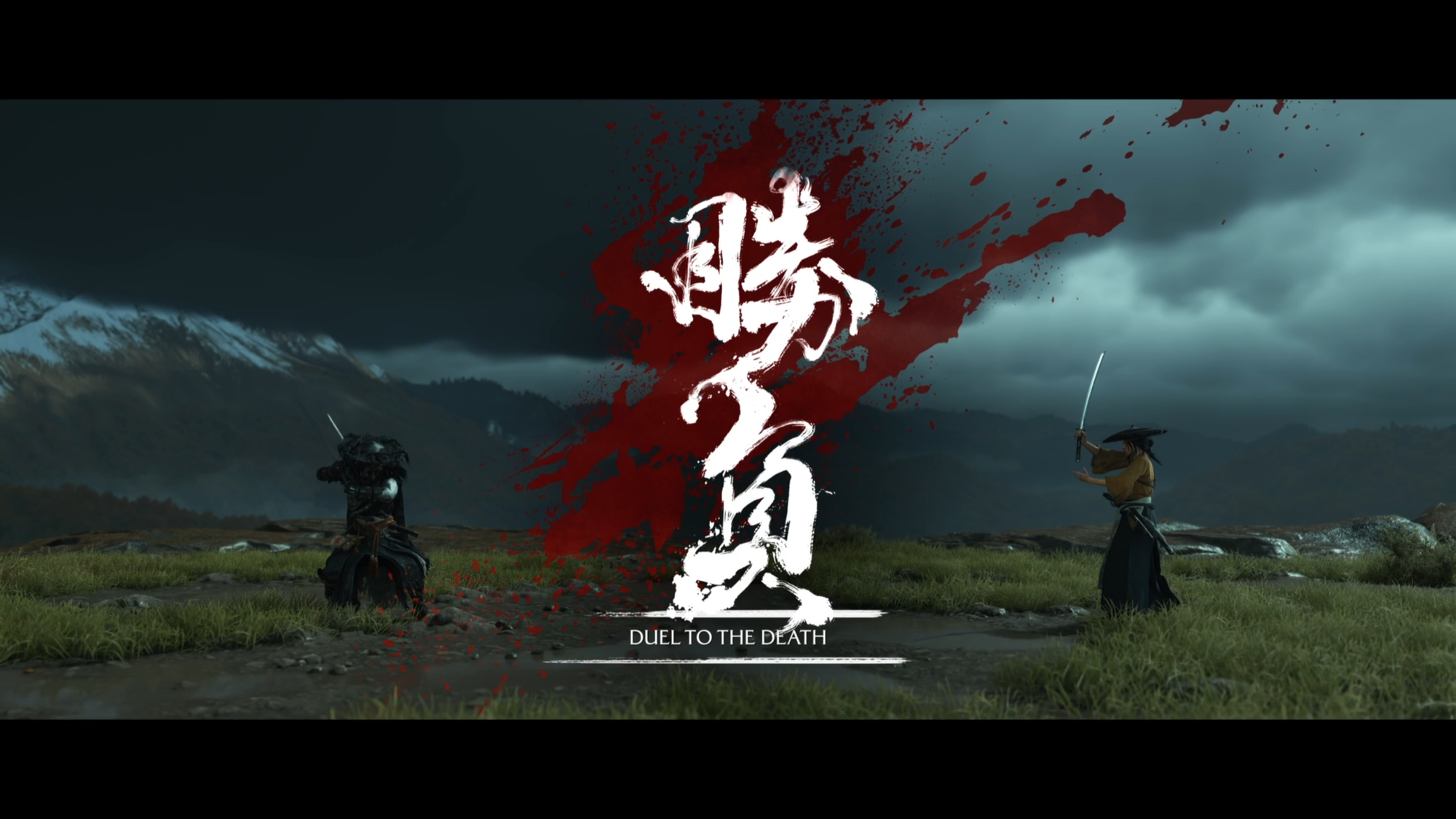
Whether you come out on top and kill your bounty or die trying, you’ll bring all your accrued currency back to the Most Wanted menu. Here you can spend it on unlocking global skills across all characters, character-specific abilities like Kill Streaks (think Onryo’s Howl), weapon upgrades, equipment damage and capacity upgrades, and more. Killing a Yōtei Six member multiple times also grants a secondary currency that lets you purchase things which Atsu can use in the base game, all of which fans will be happy to finally see added. The more you spend, you’ll cross thresholds that’ll unlock access to the other characters in the roster, and currency comes frequently enough to leave progression feeling smooth and without a need to grind.
It’s all generally standard fare for roguelikes, and Most Wanted doesn’t reinvent the wheel, but it’s a surprisingly compelling time nonetheless. The only issue is that Most Wanted doesn’t really reveal its best aspects until you get a decent chunk of the way in. Starting out it can feel quite repetitive and doesn’t differentiate itself in a meaningful way, skirting dangerously close to the “filler” content some more cynical may ascribe this to be. Equally underwhelming, at least on initial glance, is that neither Oyuki or Nagato fundamentally feel any different to Atsu - no new movement or combat animations. It’s purely that they start out with different weapons/Ultimates and have different voices (with dozens of new VO lines to boot, mind you).
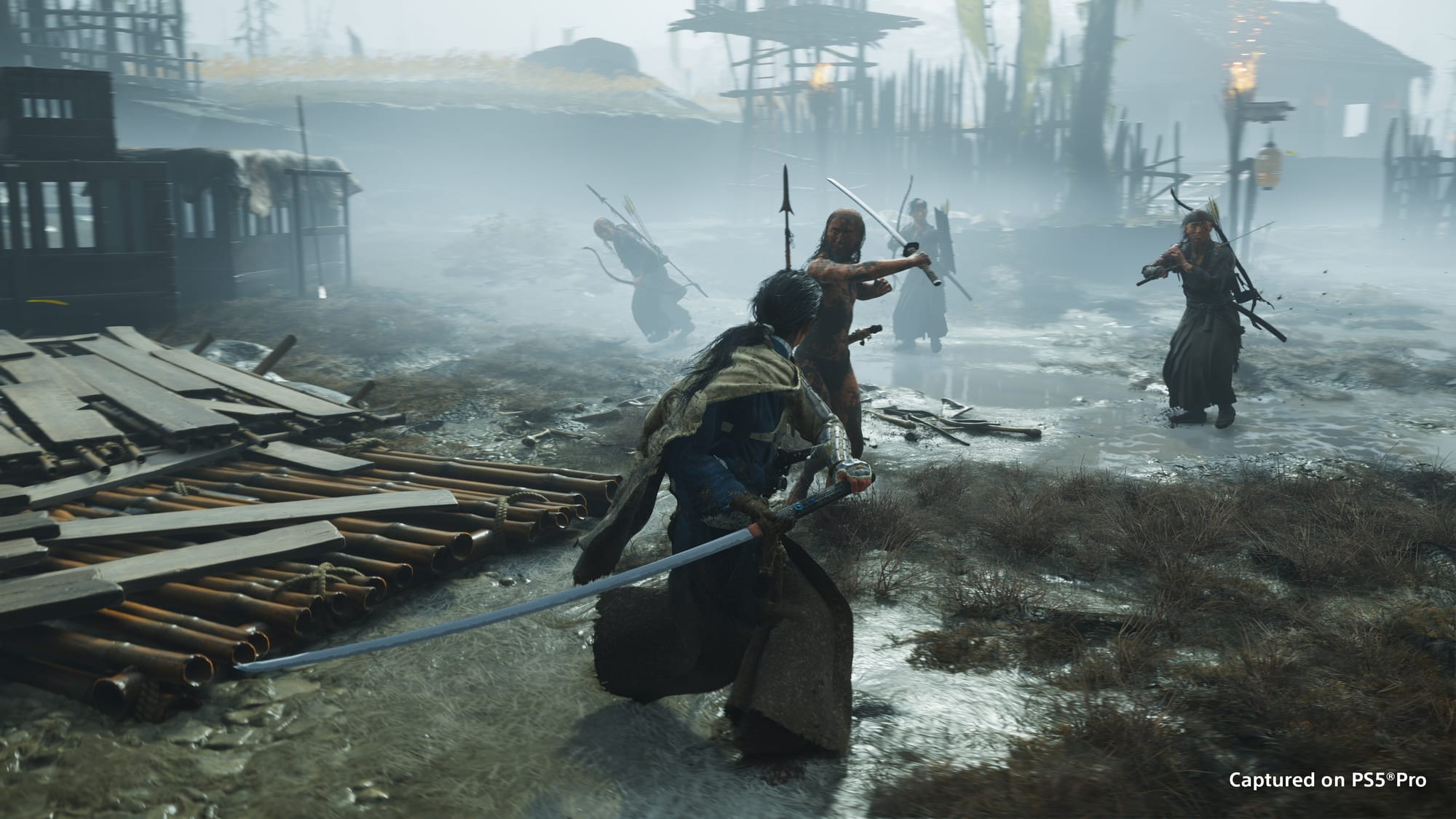
That sounds disappointing and in some respect it is, but I’d implore you to give Most Wanted time to breathe so you can learn that moveset differentiation isn’t really the point. As you gain access to all the characters and begin unlocking a good portion of their skill trees, new Perks become available in runs. These rarer Perks, in conjunction with a more fully fleshed out combat suite is where buildcraft truly comes into play, eventually feel amazing to bring together. Each run will last at most around 20 minutes, and by the end you can truly create an insane power fantasy akin to the fantastical elements found in the Legends mode.
I’d be remiss not to mention the presence of Jin Sakai here. Not only is it great to see the character back, but getting to play with Jin’s stance-based combat in Yōtei’s sandbox is both a little jarring to acclimatise to and incredibly satisfying - like picking up an instrument I’d mastered but not touched in years. Daisuke Tsuji returns to provide VO, and due to the inherent gameplay difference compared to the other three characters he quickly became my favourite to use. I often leant into a Ghost Stance build; triggering it as often as possible, with the added benefit of having perks that gave me the chance to trigger lightning strikes upon hitting enemies, parrying, *and* dodging. Storm Blade indeed. It was glorious.
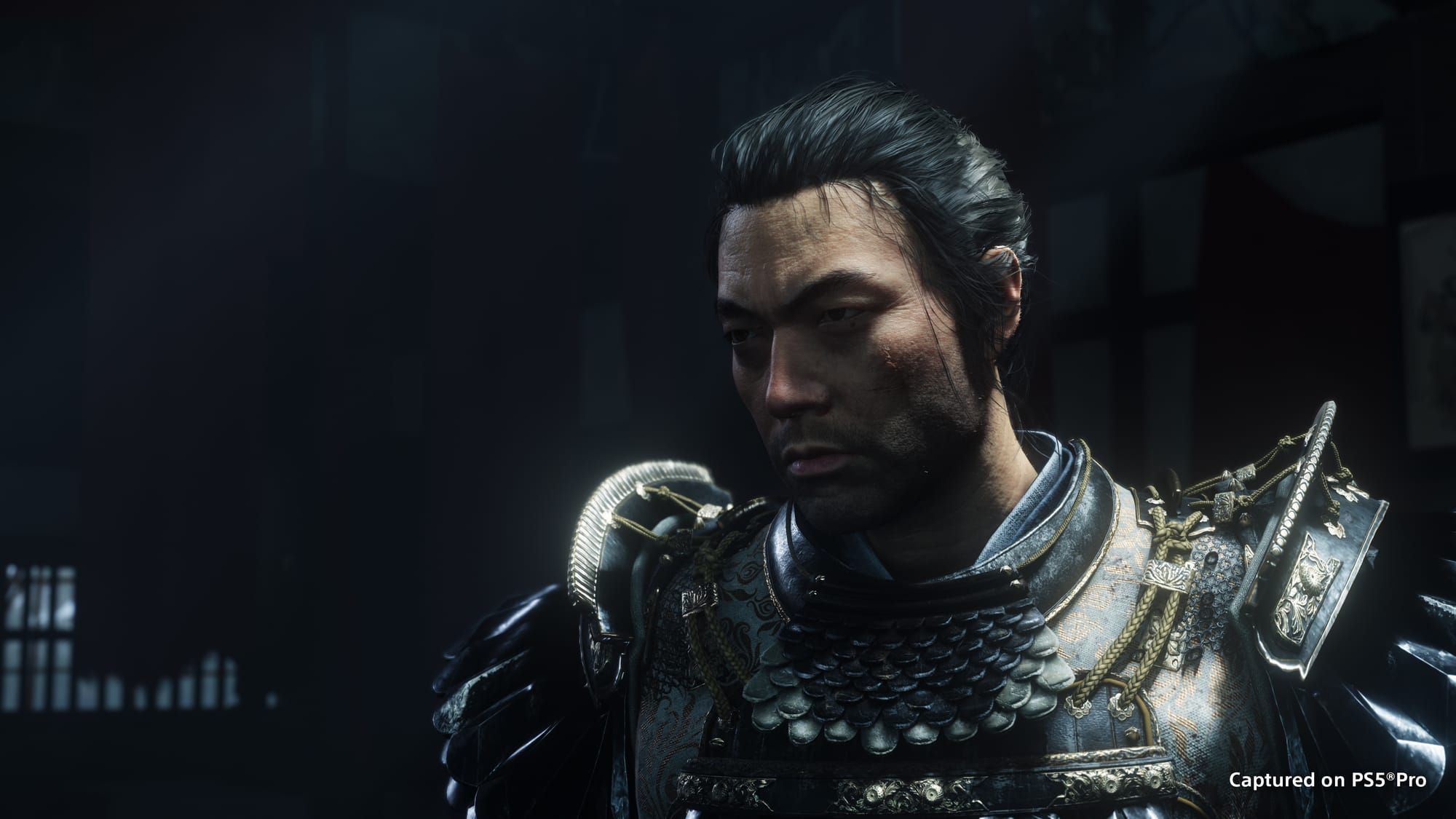
Overall, Most Wanted is exactly what you’d expect it to be. No more, no less. It meets the same quality bar as everything else, and as you’re hunting Bounties it’s thematically sound, even if its implementation does at times feel a touch uninspired and takes a little while to fully get going. By design, it’s not going to consume your time/life in the same way a Hades or Slay the Spire does, but for the couple dozen successful runs that it took me to unlock most key upgrades and rewards, I had a real blast.
Ghost of Yōtei: Echoes of Sekigahara + Most Wanted DLC
Excellent
Taking into perspective the complete package of Echoes of Sekigahara and Most Wanted, Sucker Punch have delivered some of its most distilled, compelling, and well-executed content yet. I don’t know that you could ask for much more from Ghost DLC; most bases are covered, and it’s arguably the best the franchise has ever been. If this ends up being the last we see of the franchise for a little while as Sucker Punch explores new pastures, they’ve ensured Ghost is going out on a pretty damn high note.
Pros
- Some of Sucker Punch’s best storytelling yet
- A gorgeous, compact region to explore
- New mechanics refresh combat just enough
- After some investment, Most Wanted shines
Cons
- Some narrative beats are quite predictable
- Most Wanted starts out a tad too anaemic
This review is based on an early PS5 copy provided by the publisher. Ghost of Yōtei: Echoes of Sekigahara + Most Wanted DLC comes out on October 1, 2026.