Strategy RPGs are a special genre. Blending turn-based combat with troop management sounds like a perfect match on the surface. While some developers have found the recipe for their own secret sauce, others are still struggling to get their ingredients lined out. With fans of the genre hungry for more (and one of the big hitters in the space about to release their next title), it made sense to serve something akin to the meal fans are salivating over. Unfortunately, Brigandine Abyss may have been pulled out of the oven before it had finished baking.

The Brigandine, a magical suit of armor that helped save the world a few hundred years ago, has fallen into the hands of Chaossolus, a chancellor who slew his king and declared himself the “Novus Imperator” who would revive the evil Abyssloa Empire. With the magical suit of armor and an unwavering mission, he sets out to conquer all the kingdoms of the world and revive the long-dead kingdom. The narrative setup is interesting. We have a single nation hell-bent on bringing the rest of the world to kneel. Obvious bad guys give us a clear antagonist for the story. Unfortunately, Brigandine Abyss struggles with its conceits and execution.
Before we get into the Story Mode, it’s actually going to be important to understand the gameplay systems in place for Brigandine Abyss, particularly because, like a game of Risk, the game is more interested in your engagement with its systems than conveying a story. There are two gameplay modes: Story Mode and Mission Mode. Story Mode has you controlling one of six nations, and it tells its story around special Event Battles. Mission Mode, on the other hand, lets you control one of 24 nations, with each having its own focused objective you’ll need to complete for victory. That’s…kind of it. Everything else revolves around the same gameplay systems.
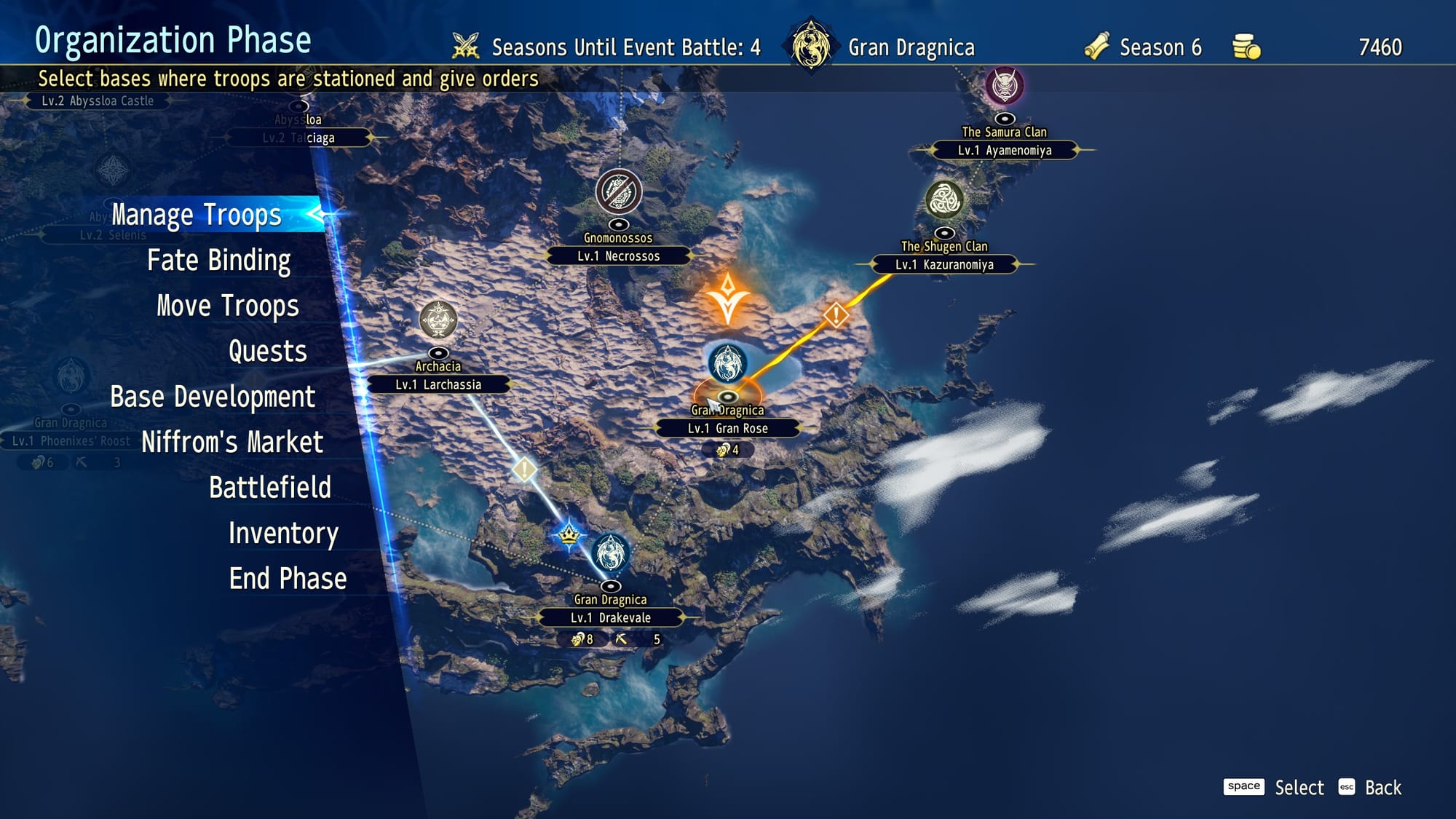
Gameplay in Brigandine Abyss takes place over two general phases. These essentially amount to a planning phase and an execution phase. In the planning phase, there are three sub-phases you’ll engage with: Organization, Attack, and Invasion.
In the Organization phase, you’ll take time to go to the bases you control and set up your squads. You’ll recruit leaders and monsters to assign under them (this process is called “Fate Binding”), buy and equip them with armor, move squads between bases, and assign squads you aren’t planning to use to perform quests. You can also upgrade your bases, barter for gear and materials, scope the layout of the battlefield, and review your inventory. If this sounds like a tedious phase, that’s because it is. Some folks really dig that sort of minutiae, so I can’t bag on it too much, but the sheer depth of everything going on here felt a bit encumbering to the experience for me. Things aren’t always explained very well, either, so I found myself in tight situations of my own making because I had too many squads doing missions, which left my base too lightly defended, or missed some other sort of tedium that came back to bite me later. It’s a lot, and it made the game feel about as smooth as sandpaper.
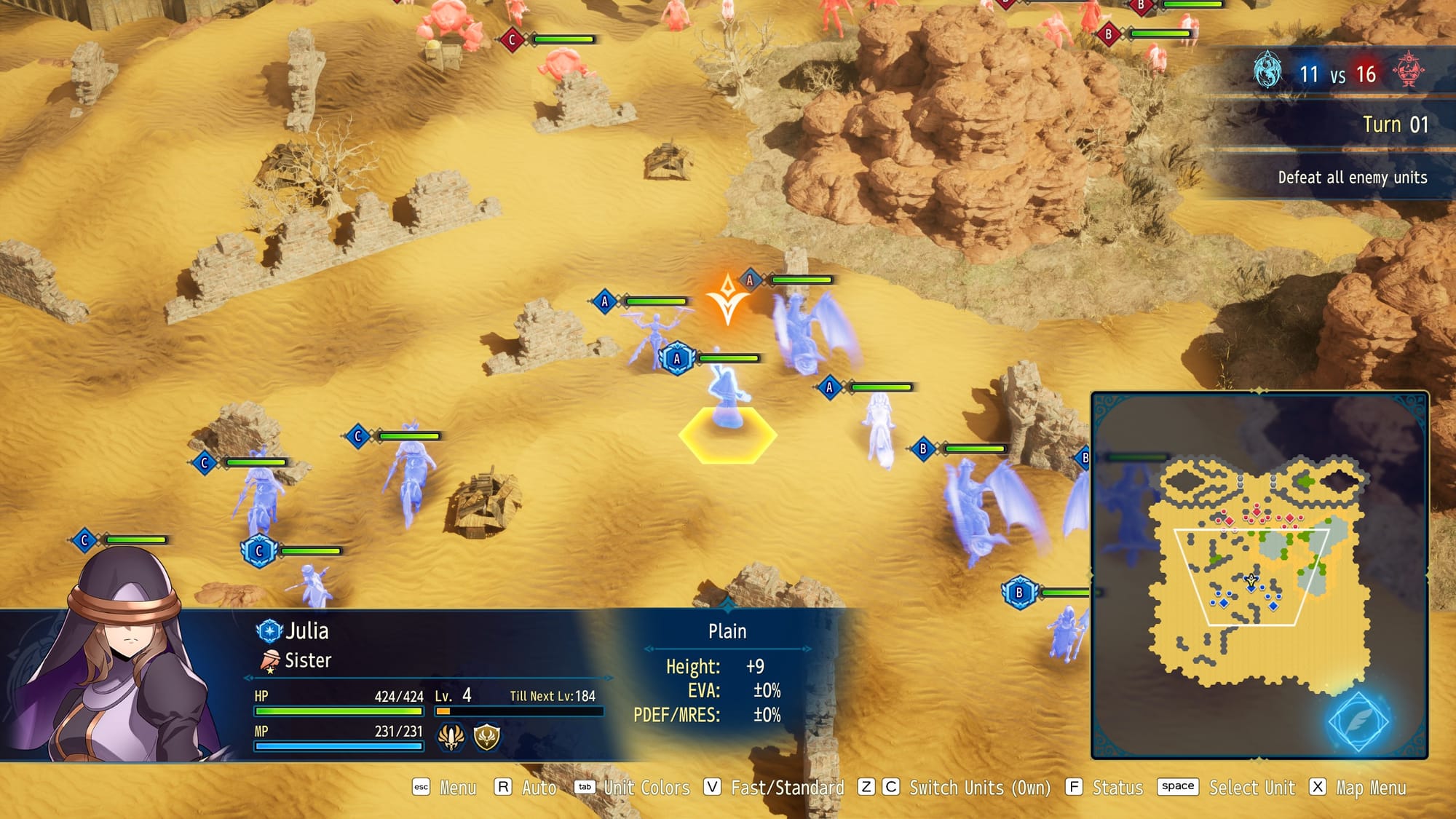
The Attack Phase essentially has you choose up to three troops from each of your bases to send toward an adjacent enemy’s base. You’re given the battlefield layout, which just shows static placement positions for the three squads (A, B, and C), which also gets pretty old, since there’s no dynamism to it. Battlefields and their troop placements do not change, so there’s little variety in how you’ll probably want to approach a certain map, especially if you’re fighting the same army on it again and again. You will need to be mindful as you go through this phase, though. If your troops are tied up attacking, you’ll need extra squads left back to defend or risk handing a base to the enemy.
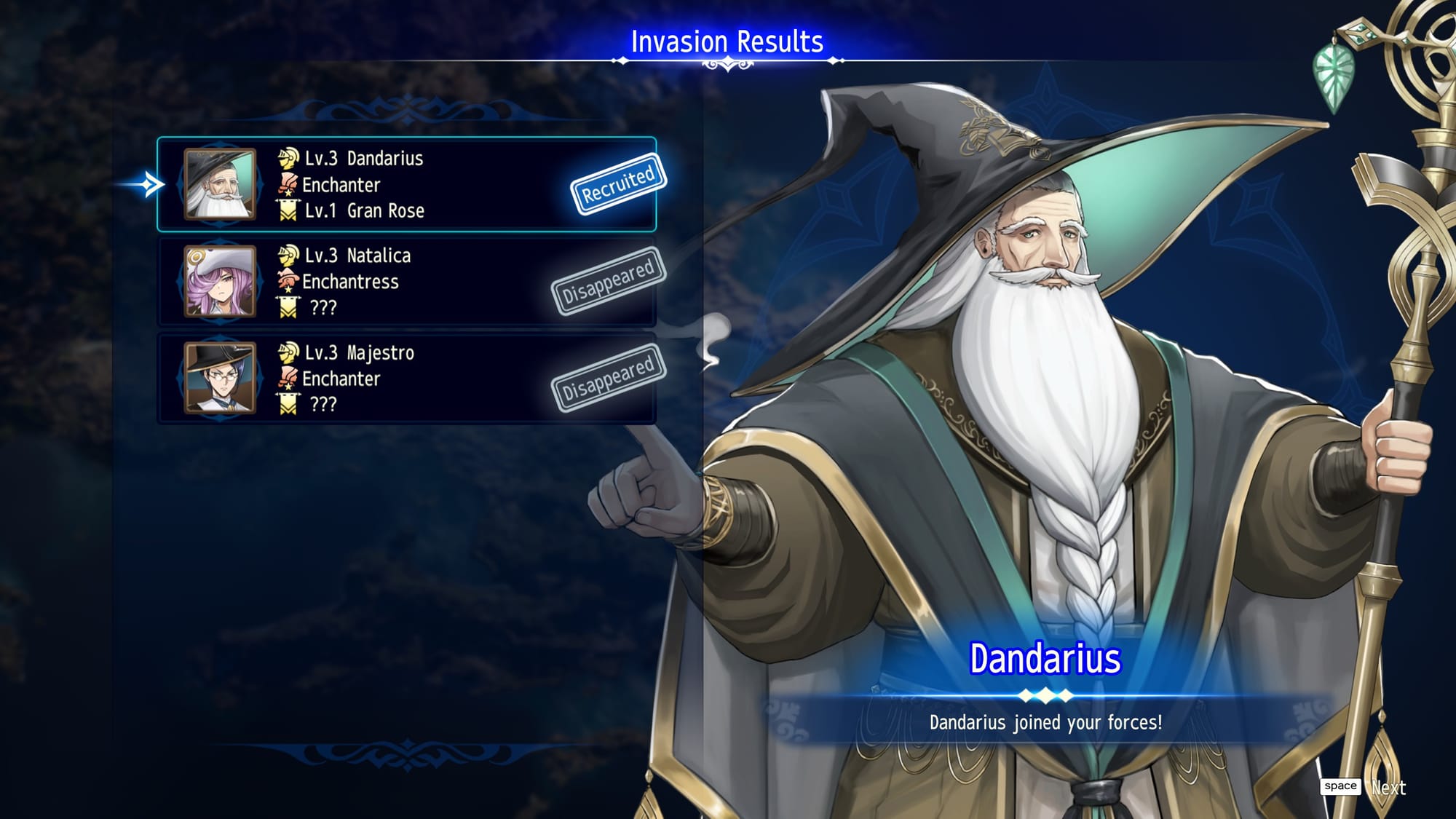
Finally, completing the Attack Phase takes you to the Invasion Phase. This phase uses what seems to be some sort of hidden initiative state to choose the order armies attack, then has said invasions occur and begin combat. This became a frustrating point of contention for me, since I tried to attack a single nation at one point and they had the advantage on invasion. They kept invading me, which left me defending and had the added effect of stopping my own invasion of them. It’s not random. Several seasons in a row I tried this and never got the chance to attack. I was effectively stonewalled on that front.
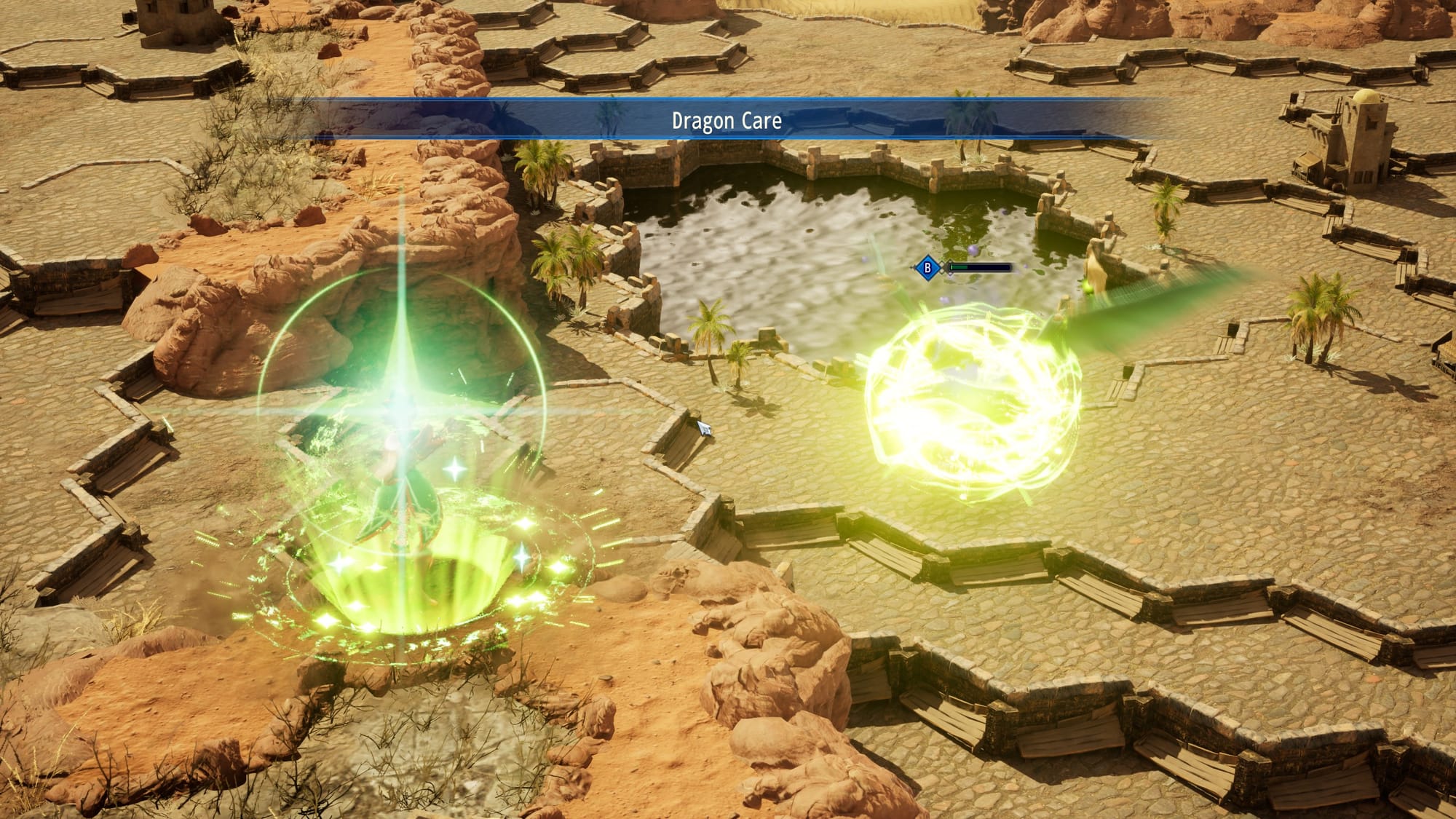
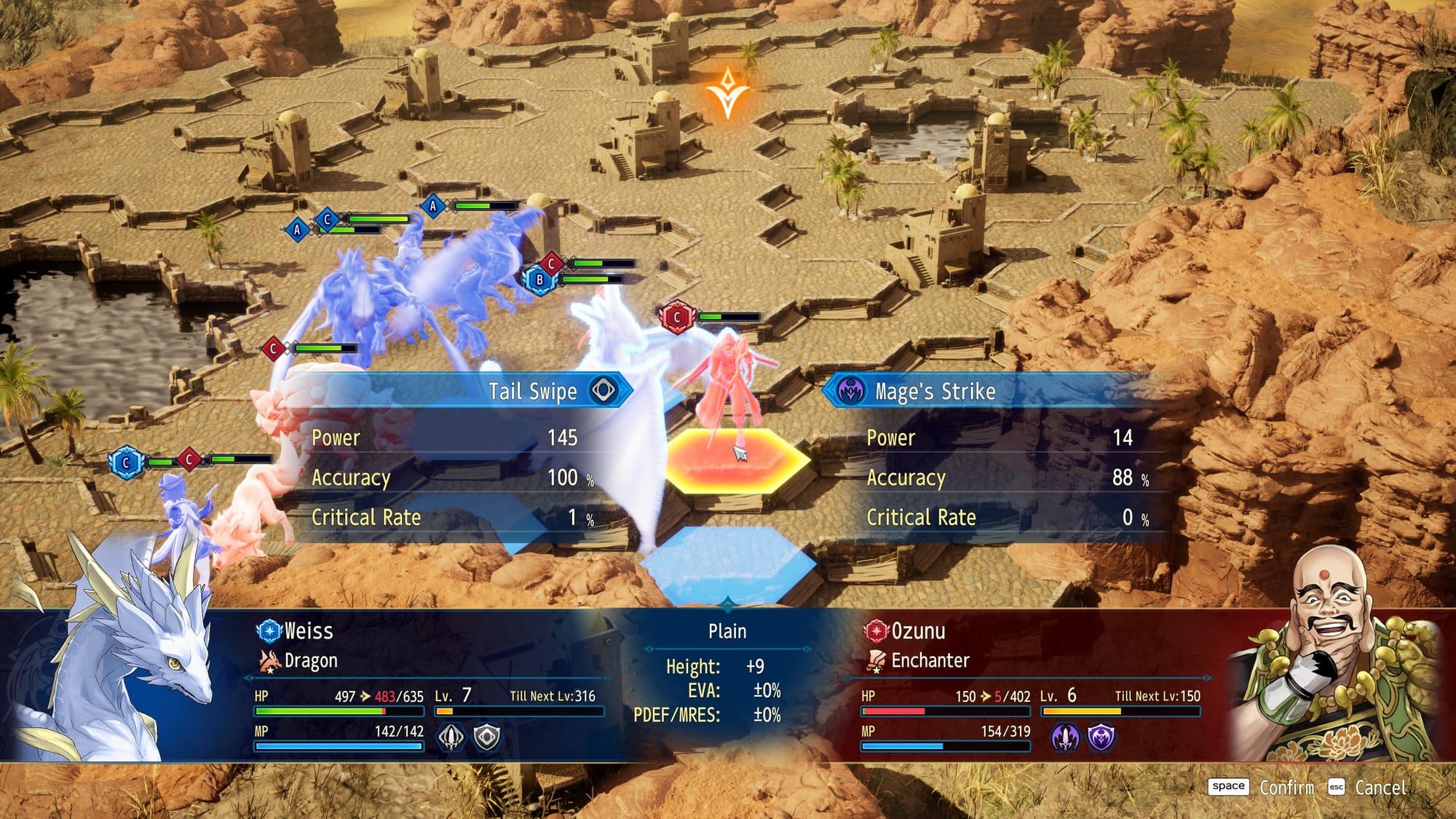
When an Invasion occurs, tactical combat starts. Brigandine Abyss sets up combat on a hex grid-based field. When it’s your turn, you’ll have the chance to interact with each of your monsters and leaders, maneuvering them into position and having them use their skills to fight. Brigandine Abyss puts particular emphasis on combat leadership. You can fight off all the monsters one at a time, and you may prefer to do that for XP or positioning, but the real goal is to wipe out your enemy’s leadership. If you can take out a squad leader, it removes their entire squad from the battlefield. This presents some interesting tactical decision-making opportunities that set Brigandine Abyss apart from many other SRPGs. On top of their normal combat prowess, leaders can also “rally” a single troop from their squad, absorbing them for a time for an added bonus (added movement, increased accuracy, etc.). Depending on the situation, it has the potential to make leaders a bit broken.
While we’re discussing unfair advantages, I think it’s worth noting that the game feels pretty unbalanced in its current state. Some classes are nearly impossible to hit, some squads are stacked to the walls with healers, and more. The game feels like it needs a significant bit of balancing to make it viable in the long run.
Now that we’ve gotten the core loop out of the way, let’s discuss the two game modes we mentioned earlier, while keeping in mind the same loop mentioned above applies to both.
Should you choose to engage with Brigandine Abyss’s Story Mode, you’ll choose one of six kingdoms to see their story played out. I chose the dragon-training nation of Gran Dragnica because, well, I like blue and having dragons at my disposal seemed like a good idea. There were a few setup story beats, then I was plopped into a massive world where every nation immediately went to war with all their neighbors. We have a world where everyone has clearly marked one nation as the enemy, but everyone is fighting to claim the entire world? It provides a jarring dissonance between what you’ve told me and what’s actually happening.
The story mode has you playing out rounds, labeled in-world as “seasons”, where you’ll have to manage your armies, attack foes, and fend off invaders. Every so often, you’ll have a story-focused “Event Battle” occur and, if you win that, you can keep moving the story forward…but losing it means game over. For the story of Gran Dragnica, you don’t even see the first Event Battle until you’ve had 10 seasons with the campaign, and a lot can happen in that time. It’s genuinely frustrating how little they guide their narrative experience, since you could realize you’d spent hours playing and guiding your kingdom only to realize you’ve made a critical mistake and correcting it would’ve meant hours of lost progress, and now you’re potentially hosed anyway. My time with the campaign felt like the juice just wasn’t quite worth the squeeze.
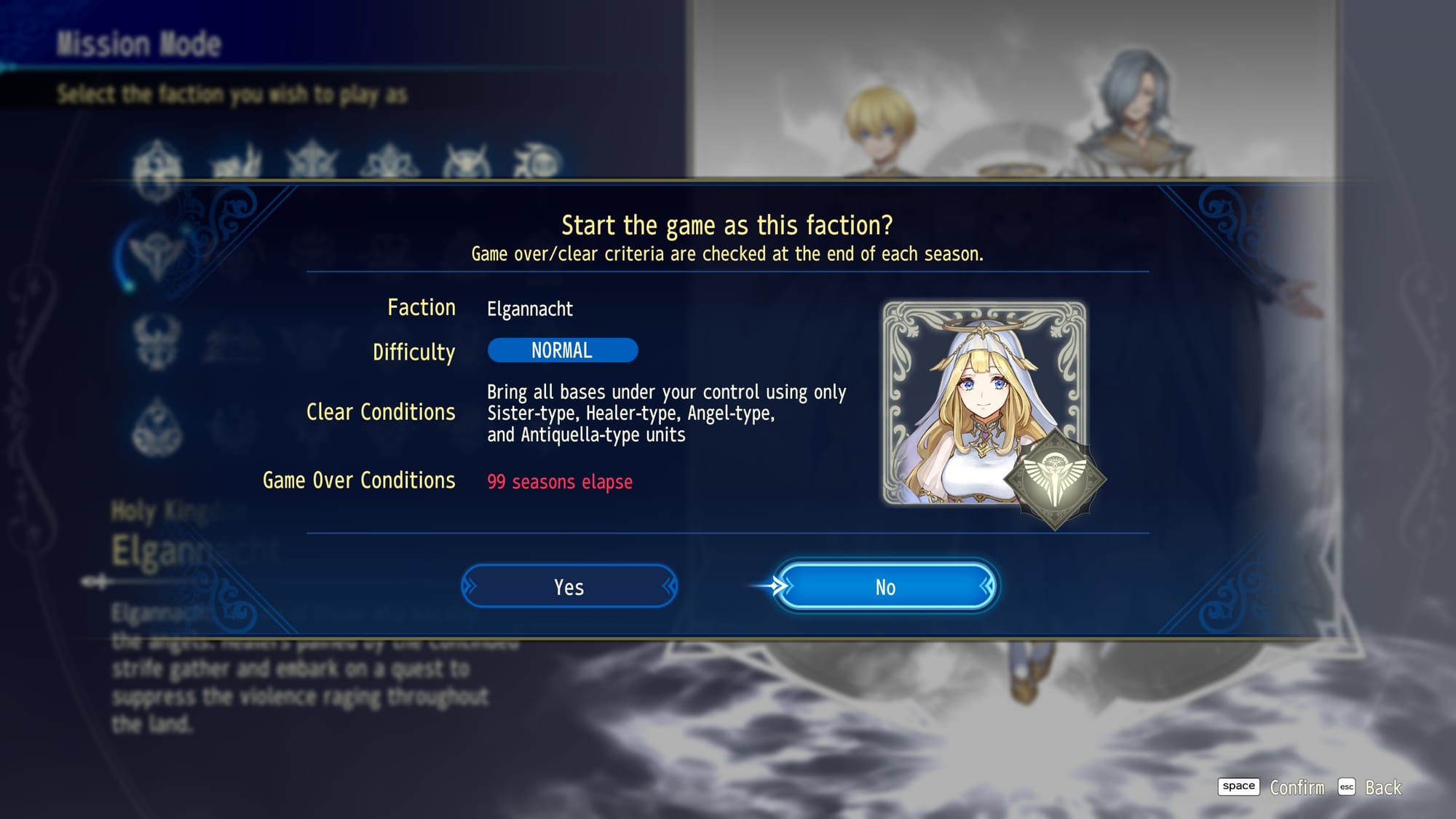
The game’s Mission Mode lets you pick one of 24 armies to control. Each has its own troop affinities and, more importantly, victory condition. One may require you to conquer every base within 99 seasons while another tasks you with recruiting 50 leaders of a particular troop type. There’s a greater deal of variety here, which makes Mission Mode feel more like what they probably wanted the game to be – a digital single-player tabletop game. There’s some narrative setup for each faction, but you ultimately just need to achieve your chosen nation’s goal.
While there’s fun to be had with Brigandine Abyss, the experience feels severely hindered. The gameplay loop drags the pacing of the experience down, and unbalanced combat can make the fun part of the game frustrating. If you enjoy all the minutiae of recruiting and outfitting troops, managing supply lines, and digging in for the fights, you may enjoy your time here. I do think the game’s focus on leadership-driven combat provides an engaging mechanic, but in its current state, the rest of the game feels like an unbalanced slog.
Brigandine Abyss
Mediocre
Brigandine Abyss is a competent SRPG with some flaws. The gameplay systems are a bit too deep to be wieldy and often feel like they get in the way of a smooth experience. Combined with a frustrating, underwhelming story mode, you’re left with a game that has the potential for fun but does little else to make it a must-play game.
Pros
- Takes an interesting leadership-focused approach to combat
- Wide breadth of factions
Cons
- Dense, repetitive systemic loops quickly lose their luster and bog down the experience
- Underwhelming, irritating story mode
- Mission Mode can feel like a mechanically dense tabletop game (could be a positive if that’s your style)
- The game needs to be rebalanced
- Static battlefields can get repetitive
This review is based on a retail PC copy provided by the publisher.