Tyler Catalano
Big Walk is a brand-new spin on the classic “friendslop” game we’ve become familiar with over the past few years. Typically, installments in this genre revolve around the comedy that occurs when friends are given the freedom to figure out an approach to a problem on their own terms. Big Walk’s developer, House House, have instead focused their game around the wholesomeness that blossoms when you’re forced to bond with your friends to achieve said goal. This sentiment is echoed in the load-up screen of the game with text, front and center, addressing the player: “Big Walk is a game about talking to your friends…Once you begin, Big Walk should be the only way that you communicate, so please, no voice calls, no talking face-to-face, and no looking at other players screens…” This request from the devs becomes even more essential when you pair it with proximity chat and the vastness of the world.
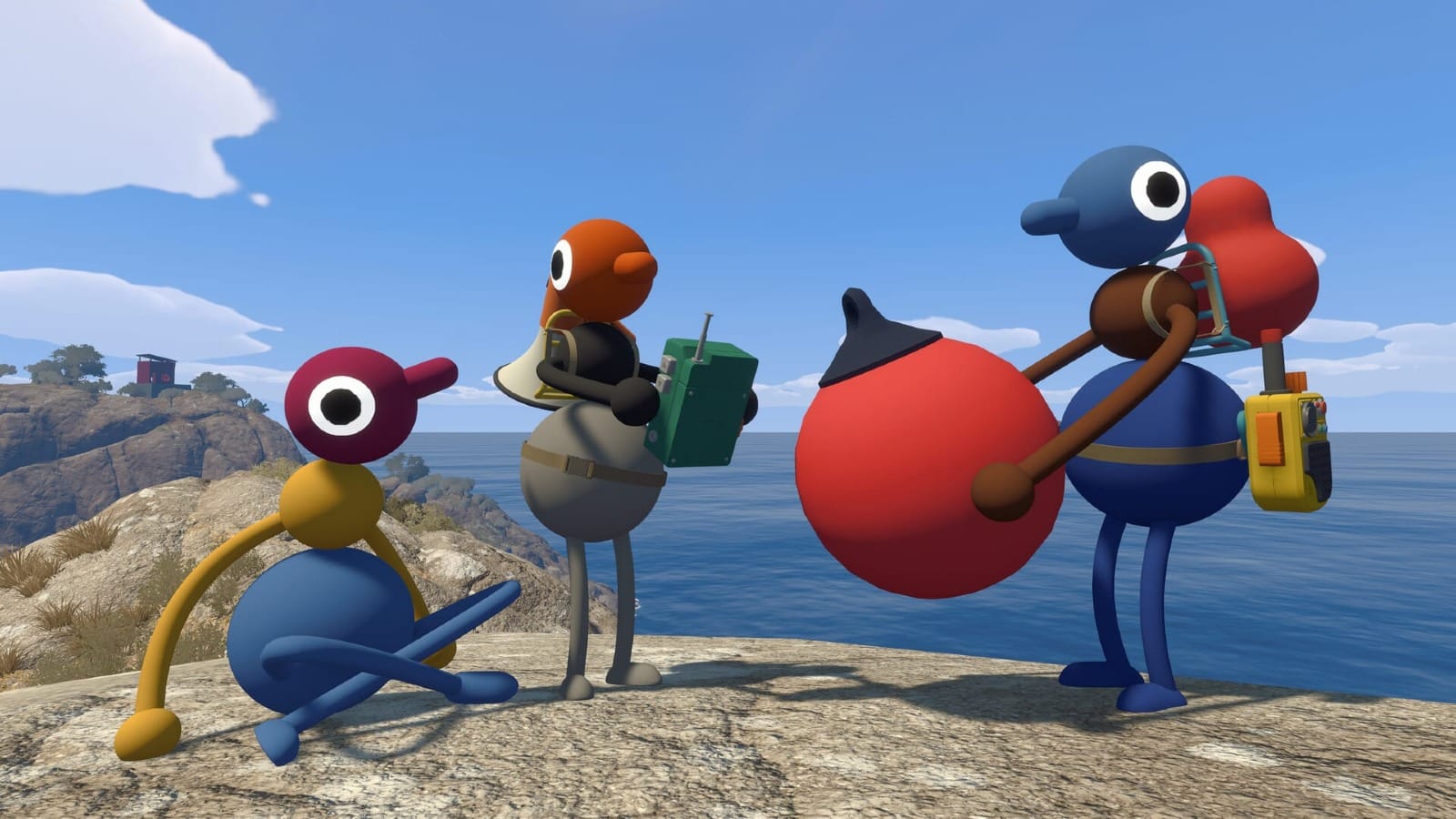
Boiled down to its simplest form, Big Walk is about you, the player, your friends, and the very big walk you are about to embark on. And when my friends and I discovered the sheer scale of the game and the island it takes place on, we were blown away.
Along this walk, you and your party will encounter a slew of puzzles. One of the most interesting parts of the game comes to light through these puzzles: The progression is anything but linear. The only goal is to solve the puzzles and collect what my party called “thingies”. In each designated area, there is a set amount of these thingies that are needed to unlock a key, and each puzzle, when solved, will reward you with one thingie. The keys you unlock as a reward for collecting the items can be used to open up avenues of exploration to make your life a little bit easier. The entire map can be explored without the use of these keys, but using them can initialize faster means of travel, such as a monorail, a ski lift, and a world map. For our playstyle, the foldable world map was the most beneficial item to unlock as it allowed our party to track how many of the island’s frankly insane amount of puzzles you have already solved. The main idea here was to not retread old ground. The map was also super helpful in planning out destinations based on key landmarks we could see in the distance.
While the gameplay itself makes for an incredible experience, it wasn’t what stood out to me the most about Big Walk. At the end of the day, what made me appreciate this game so much was the sound design. With each step you take, the world figuratively swirls around you. As it is a game that centers around walking, one thing I was extremely relieved to find was that each surface beneath your feet made a different sound when walking on it. If, in a game like this, there was only one sound of steps being repeated consistently in your ears, it would get monotonous very very quickly. You can hear the crunch of the grass beneath your feet, the thud of the wood while walking across a log, and the vibration of metal frames as you walk across the steel walkways. There is a constant ambiance of wind, birds, and the rustling of trees as you walk around, which I want to emphasize specifically for this game as a large part of the experience is the sounds you hear.
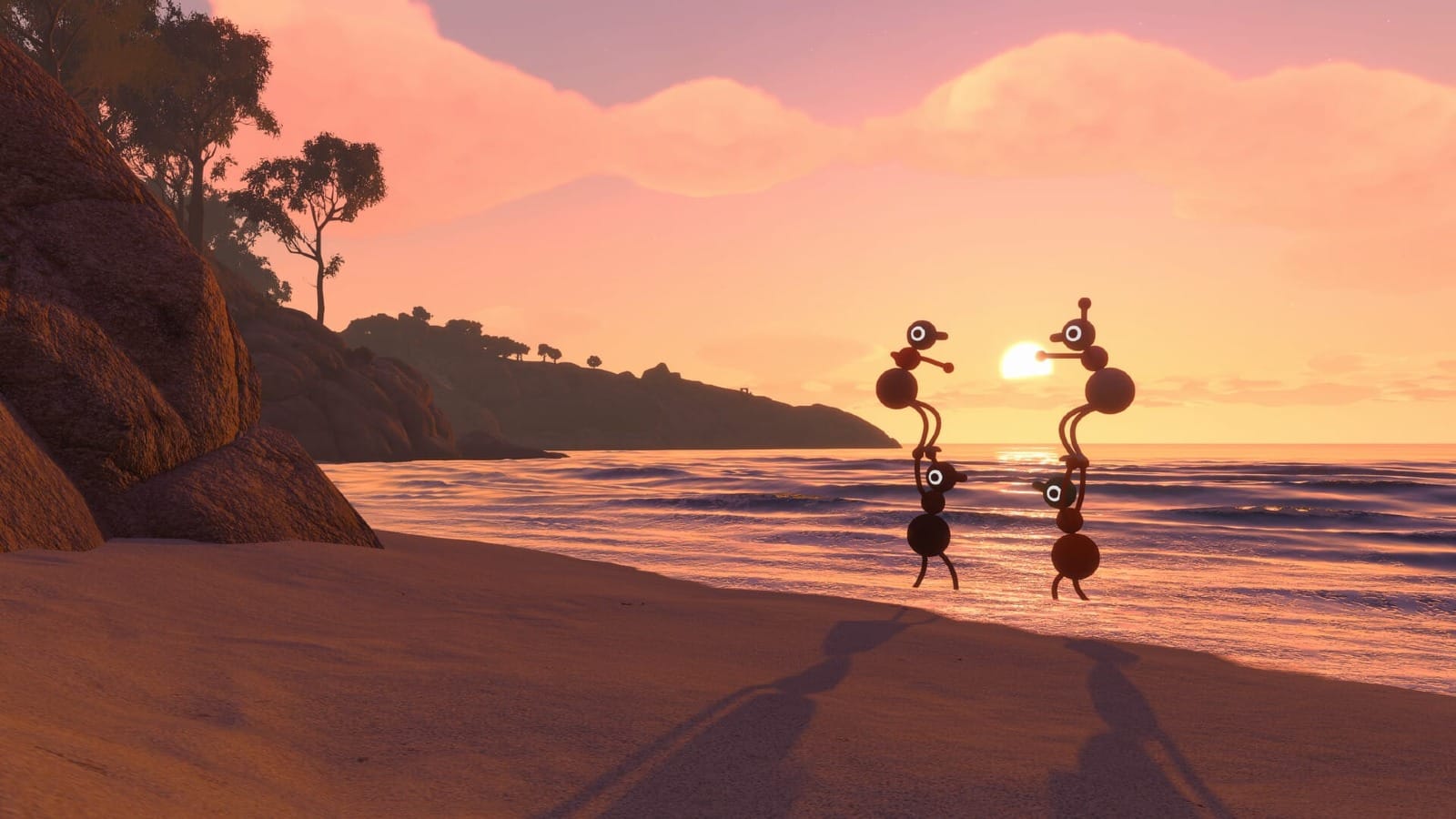
Some puzzles require you to split up from your party, such as one of the first ones you encounter. This one requires one member to stay back, clicking a button that opens a box in the distance, and lights up its destination. While one member holds down this button, another player has to go and retrieve the object from the box, breaking my group of three, and a single member left behind. In moments like these, you truly are alone with the world of Big Walk. With nobody else around, the soundscape suddenly feels much more present, and there is something abnormal about just standing there listening to the world around you. This isn’t how a normal game would present downtime to the player. Our modern gaming landscape wants to fill every moment with spectacle, but Big Walk doesn’t see the need. The game is perfectly content to just let you exist in its world for a moment. It is here that my favorite aspect of Big Walk truly shines through.
Unfortunately, my biggest problem with the game also shines through during these moments of adventure. The terrain isn’t exactly what I would call easily traversable. By that, I don’t mean that the difficulty of traversing a map is a problem, but instead, I’m talking more about how easy it is to get stuck on small pieces of terrain. This was one of the standout parts of the game to me because of how often it happened while the party traveled. In areas where the trees are close together, it's difficult to weave through them without getting stuck on a low-hanging branch, and often, getting unstuck from these branches is more difficult than any of the puzzles you have to face on your journey. Some games that have difficult terrain like this, where players are prone to getting stuck in parts of the map, have a button in settings that will save you from having to reload. A feature like that would be welcome in Big Walk, but isn’t present yet.
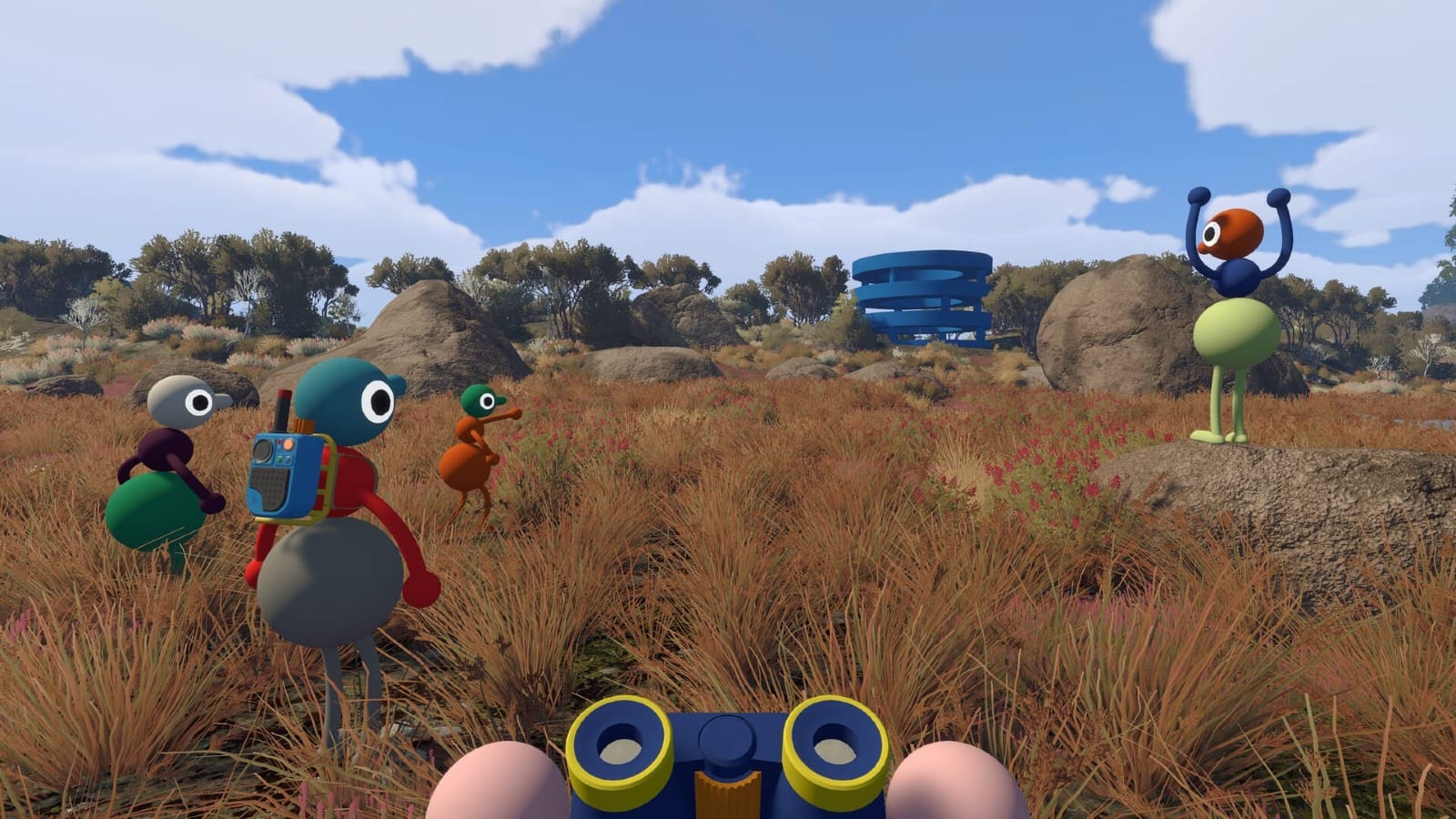
Taken as a whole, it’s a game that far surpasses the sum of its parts. It reminds players that gaming can be a way to unwind with friends at the end of a long day, not get even more stressed out. While there are some drawbacks, they seem like the type of issues that come from the game being new, that could be solved in the future. I know for a fact that I will be revisiting Big Walk with friends in the future, because this is the type of game that really shines when you remember that great games are meant to be played together.
Joey Caplan
I think I know my friends pretty well. I played Big Walk with four others — let’s use their Wu-Tang Clan names, since these folks are crucial to this review and deserve representation in some regard. In no particular order, we have: Wanderer Chromatic and Irate Bandit (two of my closest friends from high school), Misunderstood Madman (Wanderer’s younger brother), and Thunderous Bastard (Bandit’s girlfriend). Save for the fact that Wanderer infamously despises puzzles, we’re the ideal Big Walk group. We didn’t fight, nobody got upset, we never got stuck for too long. Bandit is our resident expert gamer™, our de facto leader in navigation and puzzle solving. Even still, Big Walk requires everyone to be in lockstep to solve its hardest trials, never leaving anyone feeling like a mere follower. We all settled into our roles, we chatted, we hiked, we laughed, we shot flare gun shells at each other for no other reason than that it’s fun to pull a harmless trigger.
As we approached the final area, I was already ready to hail Big Walk as a masterpiece. This ain’t friendslop, this is friendLasVegasbuffet. The island is perfectly crafted so that by the end, you feel like you’ve gotten to know its layout to a degree and feel a kinship with not only your friends, but the map itself. It has personality despite its wholesale rejection of lore; you will find out literally nothing about the island, not even its name. Big Walk offers you a playground, a sandbox in the more literal sense, where you and your friends make of it whatever you’d like to imagine. Even the buildings themselves are reminiscent of play structures, being pleasantly juxtaposed against the near-photorealism of the flora. It’s like being in an immersive, grown-up episode of Dora the Explorer.
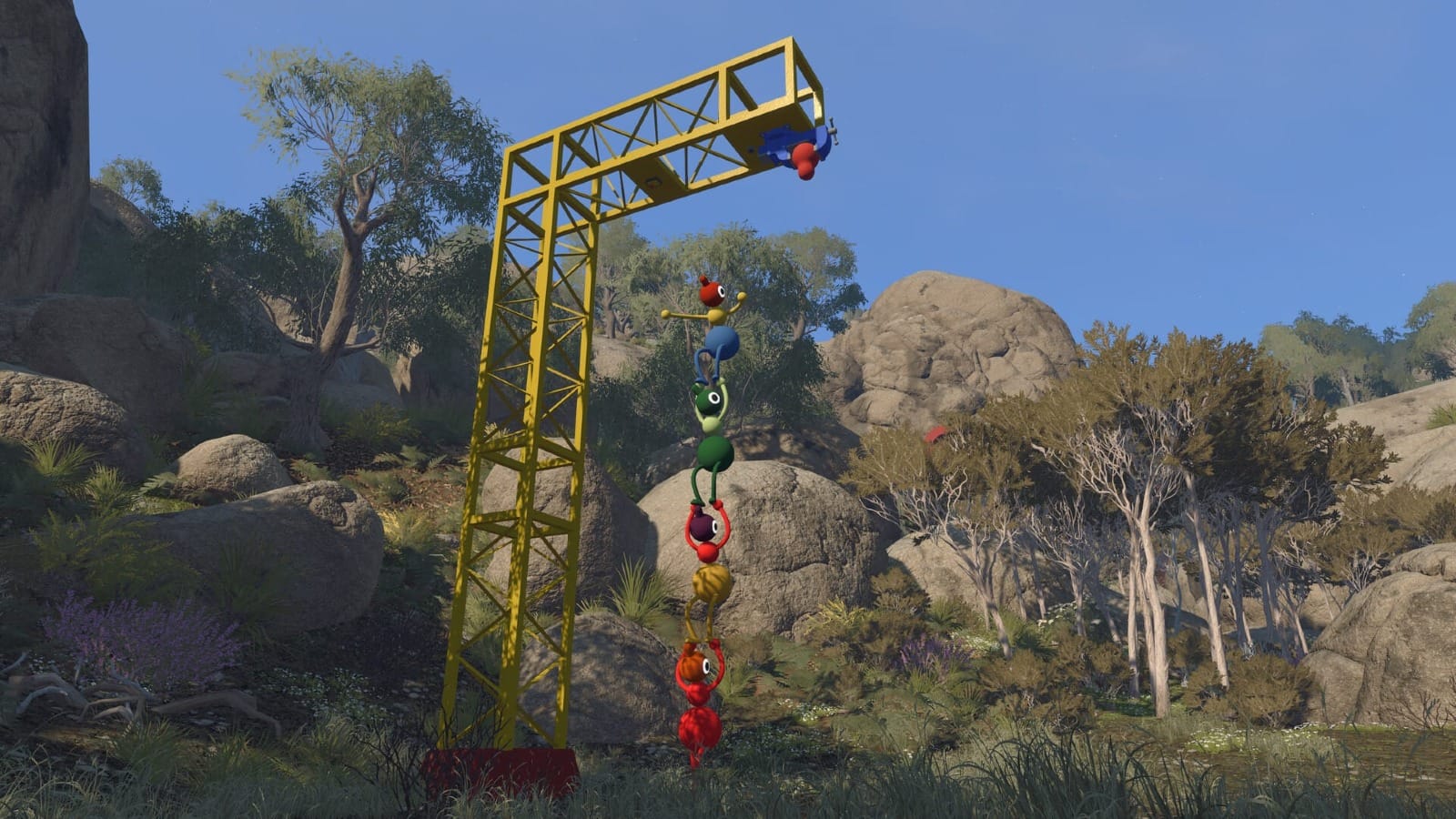
From what I can recall, though, Dora never got separated from Map and Boots and Backpack in the pitch black of night without a flashlight or anything to light her way. This will happen to you in Big Walk. You’ll be exploring with your buddies, chatting, feet crunching leaves, when all of a sudden there’s a lull in the conversation. You realize that it isn’t a lull, no, you’ve stumbled away from the group without realizing it. You call out. They’re too far. Bandit has the flashlight and Wanderer has the flare gun, leaving you in a dense forest with only the dim moon offering you glimpses of indistinct shapes. Big Walk is not a horror game, but its night is dark.
On a mechanical level, this means having to make interesting choices with the limited amount of gear you’re allowed to bring with you — sometimes bringing back an extra gourd/squash (what my group called the puzzle rewards that Tyler dubbed Thingies) means having to leave your light behind. On a basic human level, this means that the night can be uniquely scary. You know that nothing bad can happen, and yet your brain can’t shake the discomforting feeling of being suddenly alone with no way to reach out to those who left you behind. This makes it all the more relieving when you finally manage to find your way back, be it through a benevolent flare or the flash of a bright white bird-creature eye in the distance. It feels good to see your friends again.
The puzzles are brilliant in a vacuum — some are genuine tests of mental acuity à la The Witness, some are memory based, some focus on agility, and others are just plain fun. One of my favourites is not much of a puzzle at all: a single room contains a couch and a five minute timer, forcing you and your friends to converse idly, or to meditate, or to get up to go to the washroom (don’t do that!). We ended up talking about Game of Thrones and its controversies for the duration…perhaps we could have spent our time more productively.
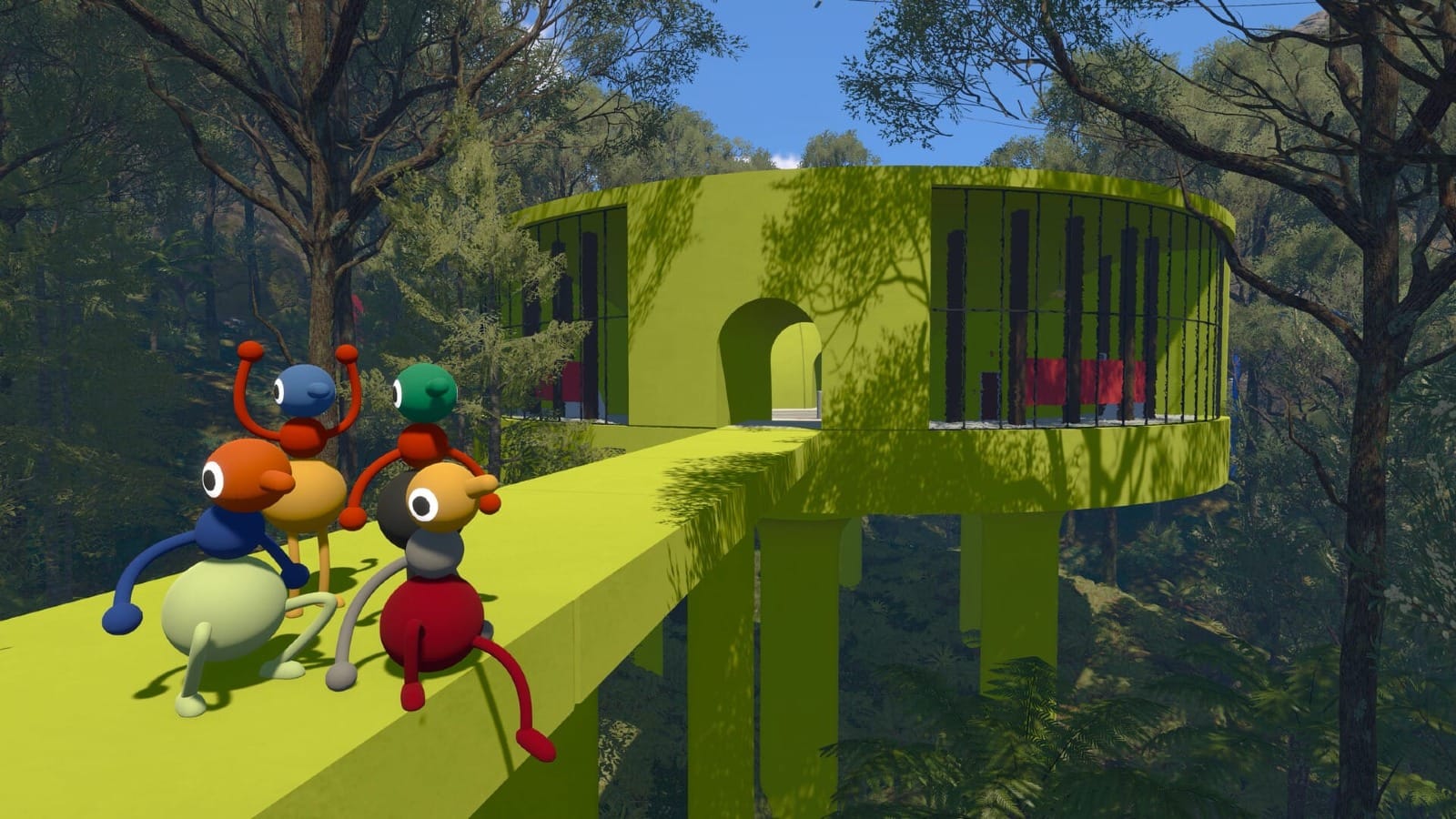
Each puzzle shares a common theme: communication. There isn’t a single puzzle that doesn’t encourage you to speak up, share what you’ve learned, and help your fellow bird-creatures to understand what needs to be done. You have a surprising variety of hand signals available to you, many of which come in handy particularly when the puzzles restrict your ability to speak. You’ll often be forced to communicate in non-traditional ways, relaying information through arm-waving, jumping, spinning, throwing — as long as the meaning of your motions is agreed upon by your friends, anything goes.
When all the towers have been populated with the requisite squashes, the final area will become open to you. You take one last Big Walk™ towards a massive black sphere ominously protruding from the horizon. As you approach, your friends’ proximity chat voices get warped and deep, and then disappear altogether. The colour scheme of your bird-creature disappears, too. Any identifiable part of you and your character are gone. It all happens too quickly to discuss beforehand, and once you enter the sphere, there’s no going back.
There are six puzzles to complete within the sphere. At no point will you have the opportunity to speak to the friends you’ve spent hours talking through solutions with. You won’t even know who you’re waving your arms at (I’ve had the sudden thought that this effect doesn’t happen when playing the game with only two players; for this reason and many others I highly recommend a 4+ person group). These puzzles are largely no different from those outside the sphere — except this time, they’re testing you on a different layer. Without you necessarily realizing it, Big Walk has been teaching you lessons the entire time. Every puzzle solution that incentivized using your characters’ motions to impart information was secretly preparing you for this gauntlet.
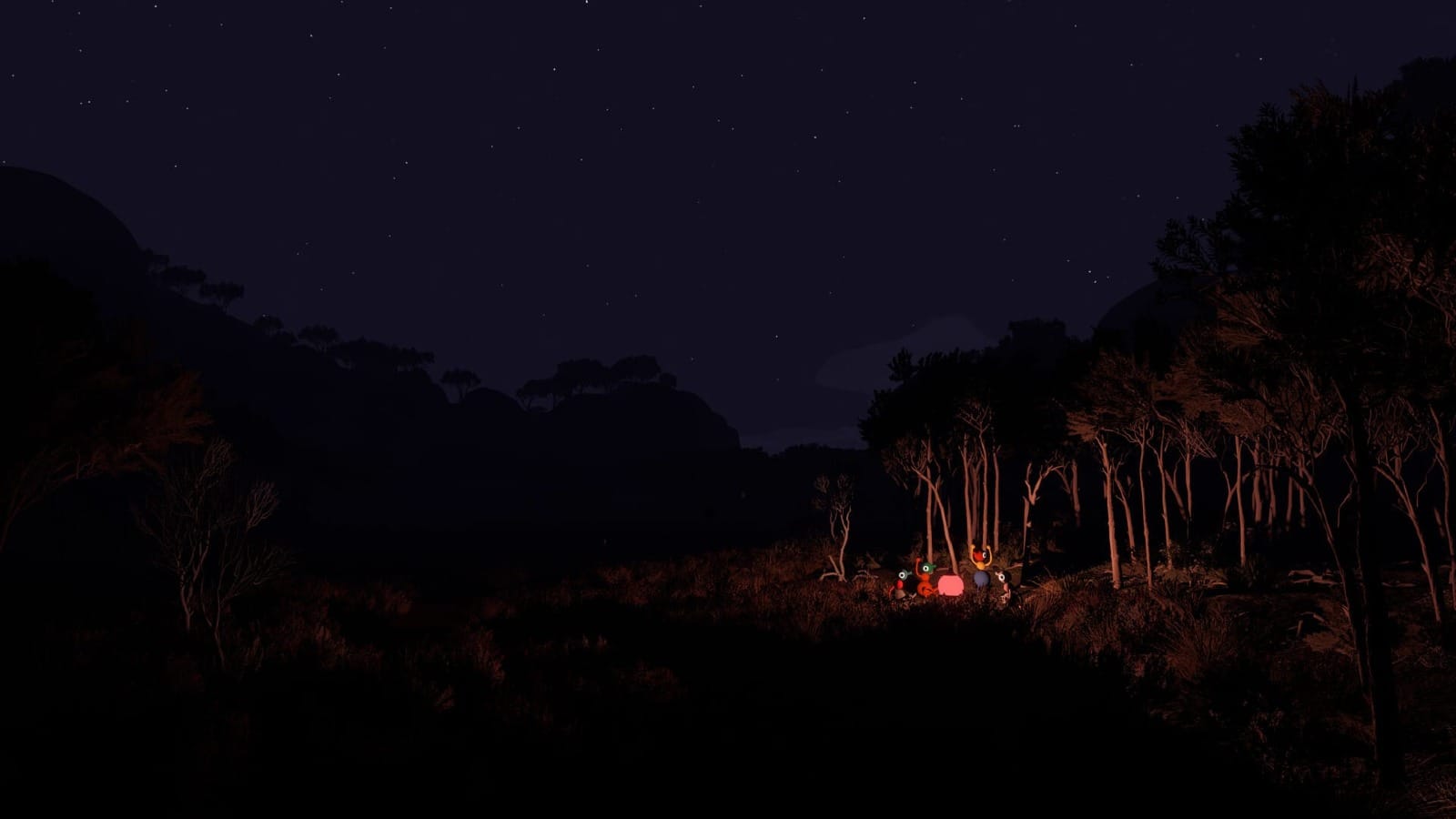
Any puzzle-solving role you may have gravitated towards, consciously or not, fizzles away in the sphere. You don’t know who anyone else is, and, just as crucially, nobody knows who you are. Here, you have the comfort — and immense challenge — of collaboration without pretense. You’ve checked everything at the door save for your strange, simple bird-creature body; the only form of communication you have left. These puzzles will test the strength of your team not through the power of friendship, but through the power of a new shared language that you’ve developed together. The language of the puzzles themselves has been learned as well: you’ve done enough pegs-with-symbol puzzles by this point to understand the basics on sight. The game tells you that you’re ready for a challenge that you didn’t realize you’d been preparing for, trusting you (and the developers trusting their own game design) to be able to pull it off. It’s an oddly moving, emotional finale, punctuated with a bittersweet final moment that had this typically stoic critic more misty-eyed than I could have ever expected.
Big Walk is a perfect game (save for a couple incredibly frustrating puzzles located in what’s clearly supposed to be the extreme puzzle zone that require an unreasonable amount of memorization and cannot realistically be completed without cheating unless my group was missing a fundamental aspect of them…also performance isn’t particularly steady on PS5 with random framerate drops being somewhat common). Even Tyler’s criticism didn’t put me off in the same way; I found that getting stuck on things was true to the experience of going on an uneven hike, and caused some emergent gameplay when being immobilized for a moment put you just far enough behind your group that you ended up lost in the night.
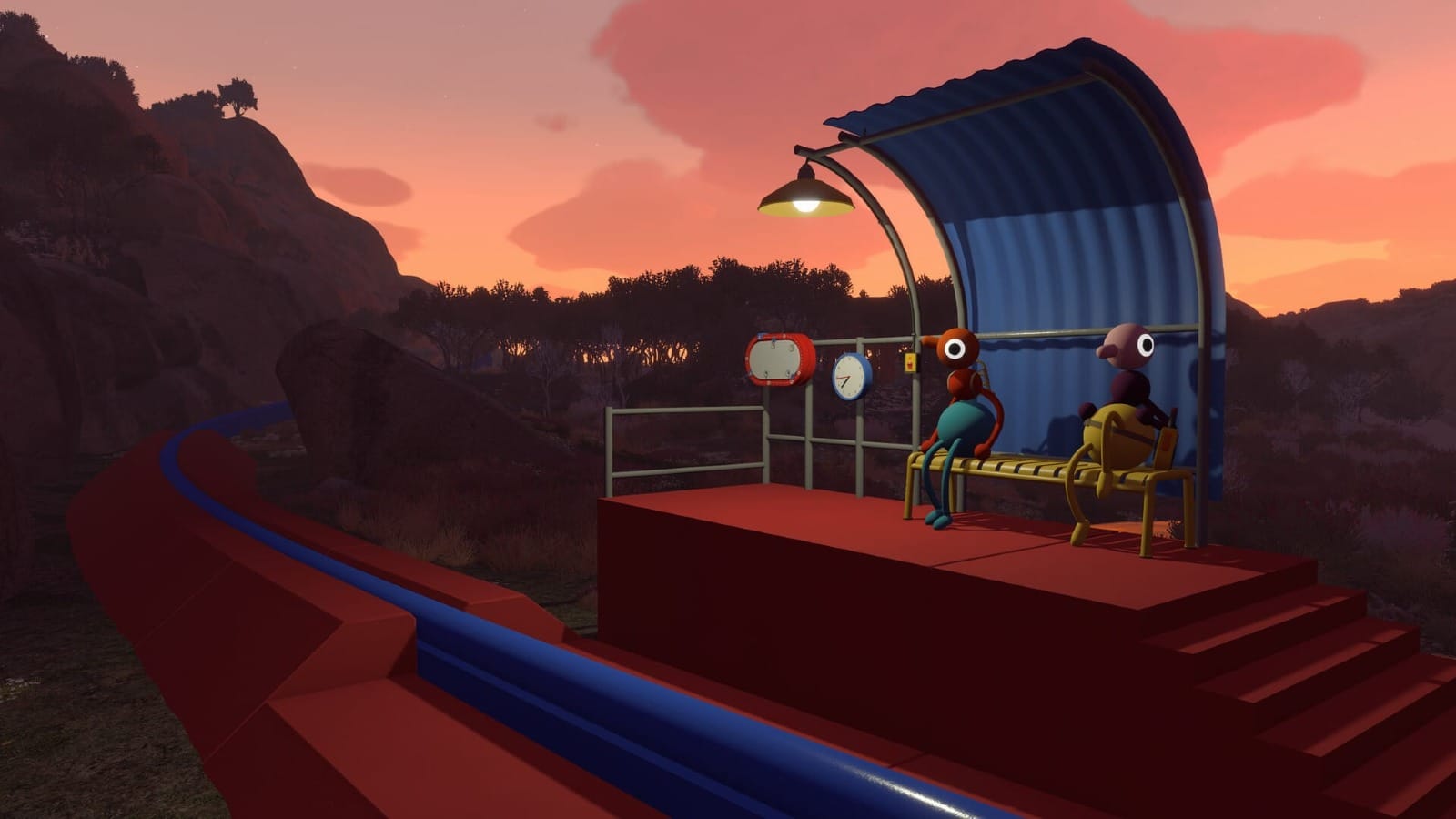
The puzzles, the friction, the “aha!” moments — this is simply the best game you can play with those close to you right now, and it's sure to bring you even closer. It feels like my friends and I went on a grand adventure (with a healthy amount of goofing off), sporadically learning new things about each other along the way. Even Wanderer, the aforementioned perennial puzzle poo-pooer, said he had “some fun", which is a glowing endorsement. I cannot wait to try to wrangle my friends back in to explore the island’s deeper secrets...or I’ll boot the game back up solo just so I can shoot the flare gun into the night a few more times. Why is that flare gun so irresistible?
Big Walk
Excellent
Big Walk is an incredible puzzle game, an incredible co-op game, and an incredible exploration game. If you have a group with even a passing interest in one of those things, big run, don't big walk to play this with them.
Pros
- Beautiful island playground to hike across
- Brilliantly designed collaborative puzzles
- You’ll lose your sense of self and find it again
Cons
- Occasional framerate issues
- I can’t wipe my memory and learn everything again
- It’s hard to find a time when five adults are available to play a game together, though that might just be a me problem
This review is based on a retail PS5 copy provided by the publisher.