The merging of intense action-RPGs like Monster Hunter and Wild Hearts with cozy and relaxing life simulations like Animal Crossing takes shape in Monster Fantasy, a new adventure by Jotoyo Games. These are the comparisons made in earlier impressions by fans and critics alike, and we’ve finally had a chance to take a peek into the core gameplay loop; gear up, hunt, gather, return to base, and prepare to do it all again. Our early hands-on session demonstrates how each ingredient of this cozy-meets-chaotic recipe makes it to the table, starting with the classes and combat.
There are four classes to choose from, which players can freely swap between at any time, even while out in the field. This was our first glimpse into the freedoms afforded to players on how they can play Monster Fantasy. With the inventory capacity of a warehouse, you can easily carry any gear and weapons you desire while still having plenty of space leftover for anything you pick up from hunting and gathering.
The first class is the Warrior class, which looks like your typical sword and shield, knight-in-shining-armor class. Attacks are slower than other classes, but deal more damage with a single hit. Of course, the shield also comes in handy for blocking incoming attacks, reducing how much damage you take. Successful attacks increase the Guard Level, which unlocks powerful finishers and further protects from taking too much damage.
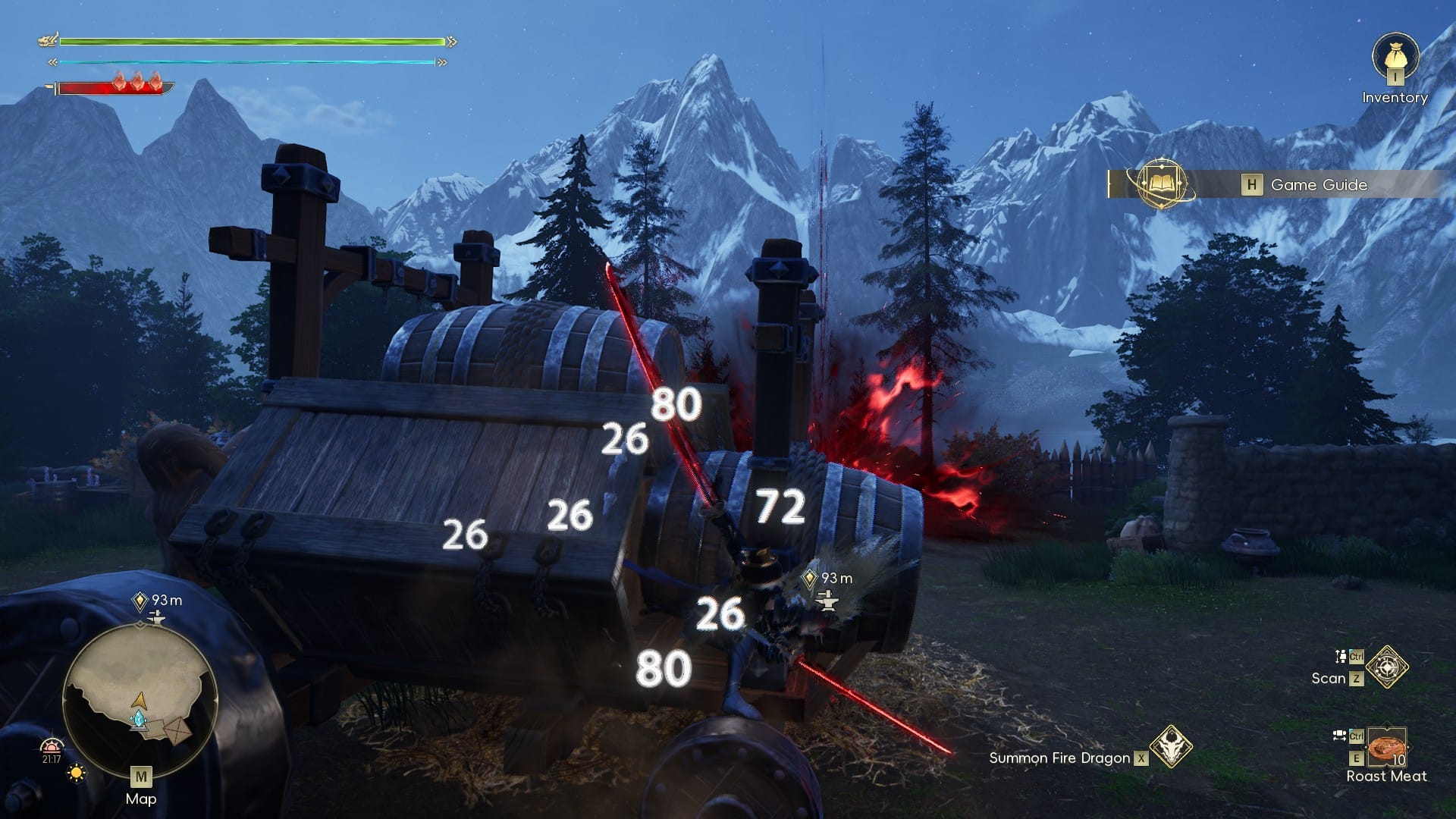
Next is the Blademaster, an agile dual-blade class for those who like to strike fast. I say dual-blade, however, the second sword is only used when in Rage Form, which is achieved by combining basic attacks with a Sweeping Slash and a special dodge move called Swallow Reversal. Successful combos fill up a Spirit Blade gauge, with level 3 unlocking Rage Form. While in this frenzied state, attacks are even faster and stronger. The swords glow red and your hair stands up like you’ve just gone Super Saiyan.
The Archer is one of two ranged classes. Each shot from the bow creates a mark on the monster that levels up with successive hits, causing additional damage hits with each attack. Combining a Spread Shot, which creates several of these marks, with a Homing Shot results in a chaotic flurry of arrows that erupt in every direction, dealing a ton of damage. It’s like watching a pyrotechnics display.
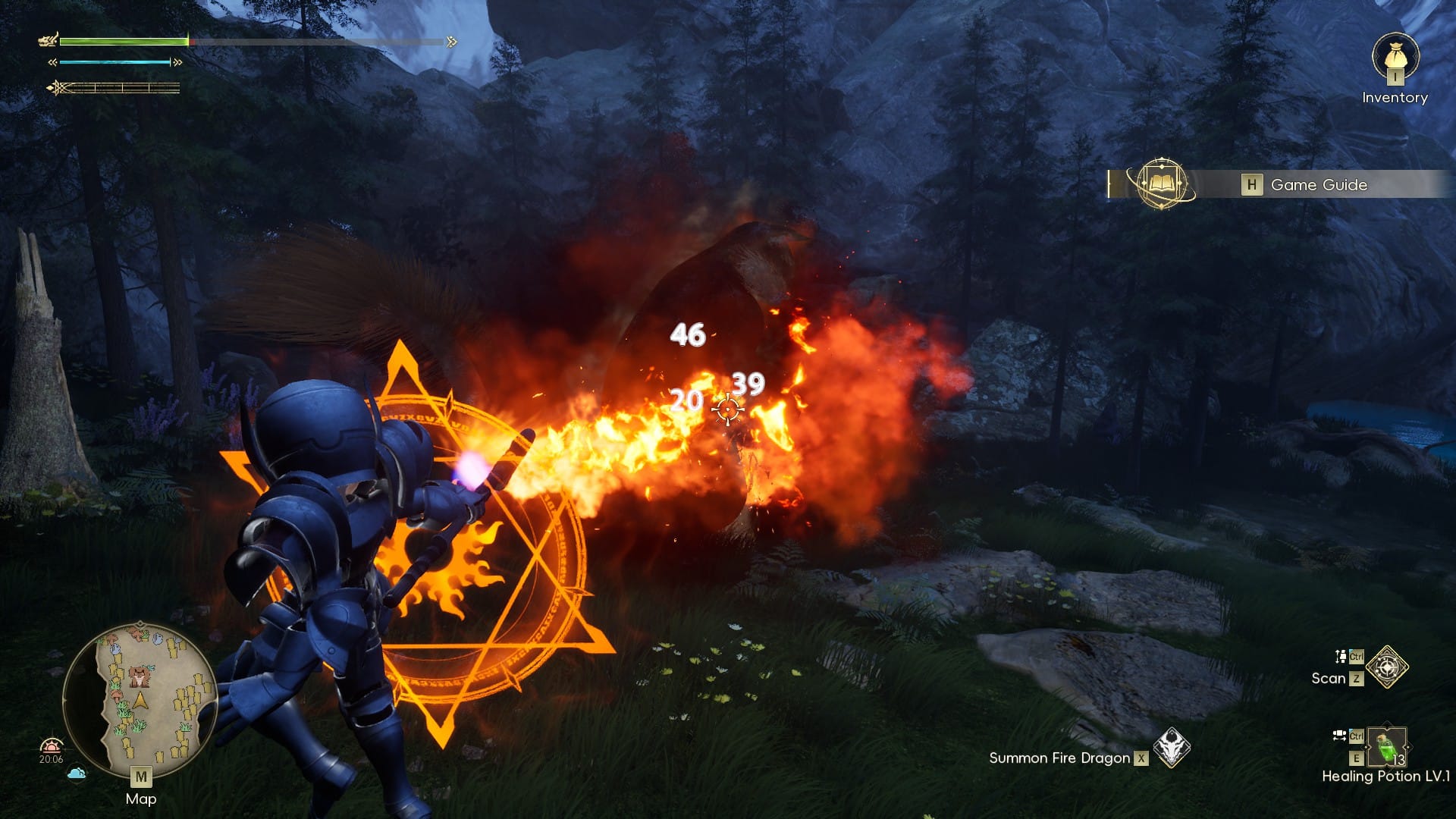
Lastly, and easily my favorite, is the Mage class. Equipped with a staff, the Mage harnesses elemental powers. Up to four elemental orbs can be summoned – Earth, Wind, Water, and Fire – in various combinations and forms, unleashing the most devastating attacks out of all the classes. Each element has a specific variation of each attack. Line Spells are the basic attack where the element is shot at the monster, which can be strengthened by combining all four elemental orbs together or four orbs of the same element. A Ground Spell unleashes a powerful attack from, well, the ground, like a meteor shower or fire eruption. The staff can also be enchanted with each element, temporarily turning it into an elemental scythe for some quick melee attacks until the effects wear off. Lastly, orbs can also be used to create a crystal wall to protect players from incoming attacks.
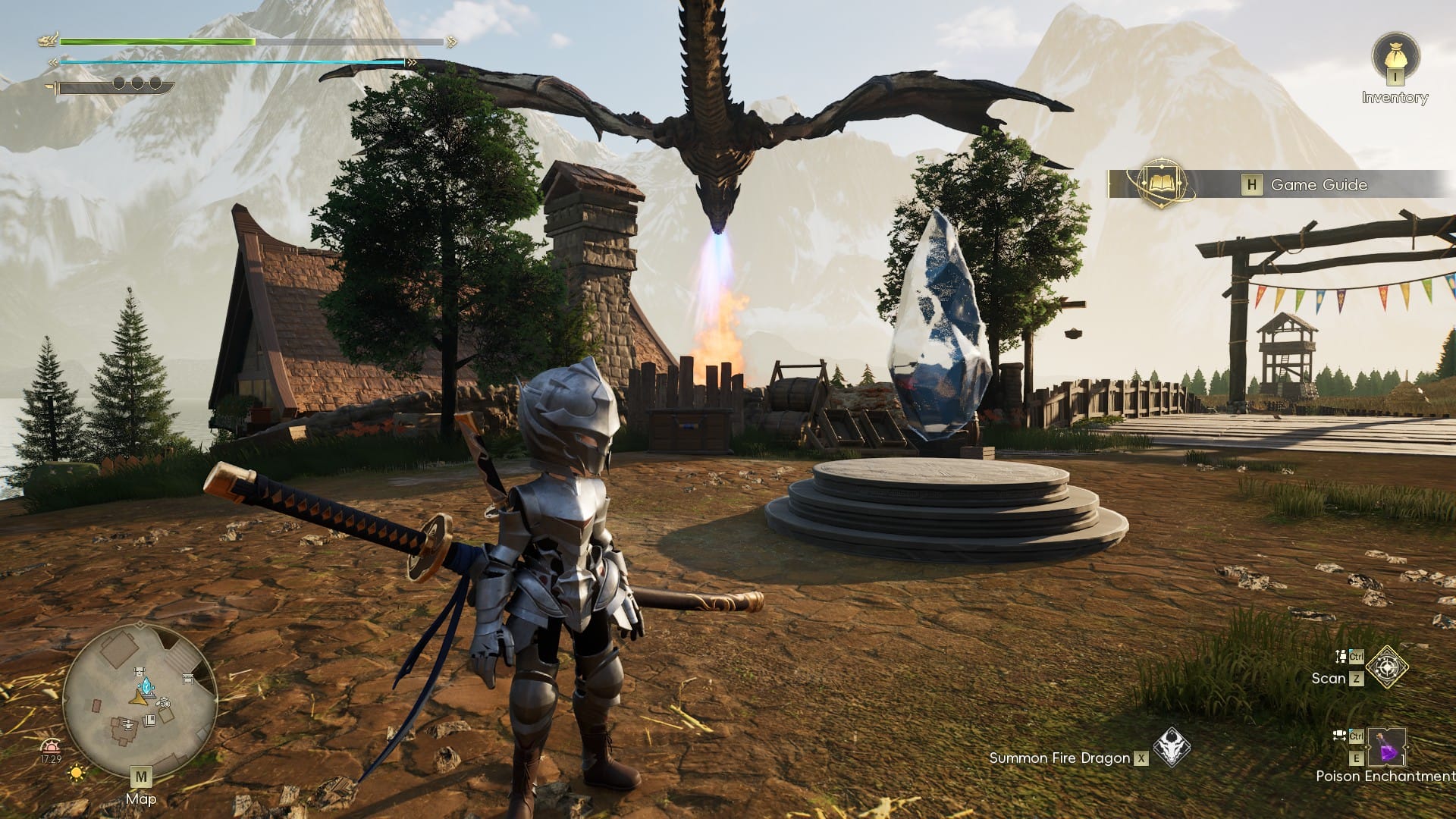
Regardless of which class we chose to play, we had an additional trick up our sleeve. While taming and having monster companions wasn’t an available feature of this build, we were still able to take advantage of a particularly powerful monster ally. With the press of a button, a dragon came soaring from the ground beneath our feet and then unleashed a sweeping blast of fire as it soared over the battlefield. This attack has a hefty cooldown between uses, but it was certainly a spectacular display of power.
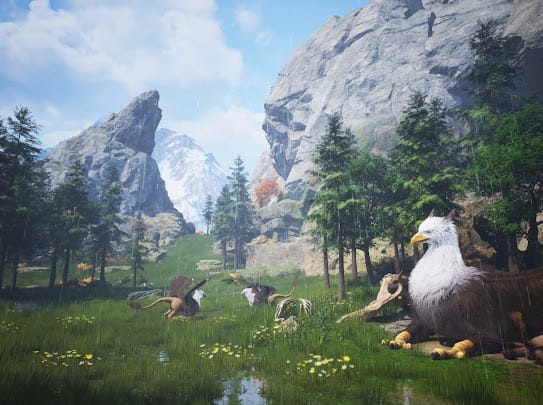
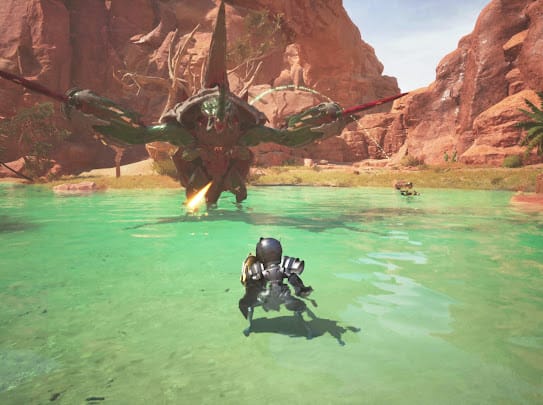
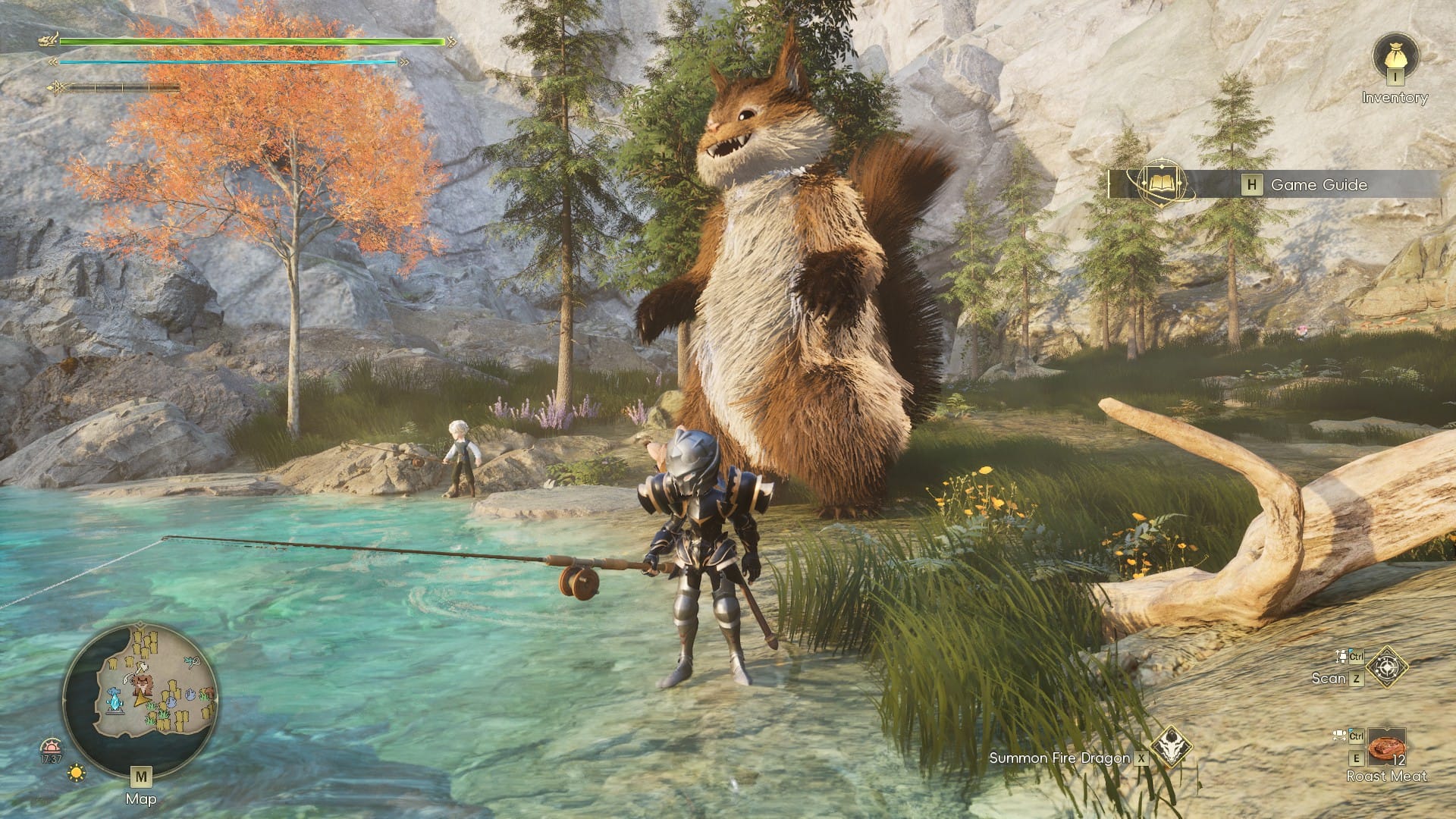
There were a few bosses, and their smaller counterparts, in this build that we were able to unleash hell on. The first was a Squirrel Bear. This is a huge, and quite feral, squirrel that barrels around to try to crush you while also hurling poisonous and blinding acorns at you. It is very cute but also quite terrifying. Next up, we faced a Griffin, a majestic creature with the front half resembling a bald eagle and the back end of a lion. The Griffin is dominant in the air but struggles on the ground. Lastly was the Beetle Tortoise, which is just as it sounds: It’s a very large beetle with an incredibly tough shell that regenerates when it burrows.
Each monster has attack patterns and special weaknesses that, once recognized, make it easy to fall into a cadence of attacks, defense, and recovery. In each encounter, I still often defaulted to the Mage due to its ability to levitate in the air while I experimented with the various elemental attacks. For example, I discovered that the Squirrel Bear is particularly susceptible to fire attacks, with its fur coat catching fire, causing additional tick damage over time. The Griffin and Beetle Tortoise are incredibly strong monsters that I struggled with no matter which way I approached them, although I could hold my own for a bit against the Griffin until it shot something from its wings that took me out in one hit.
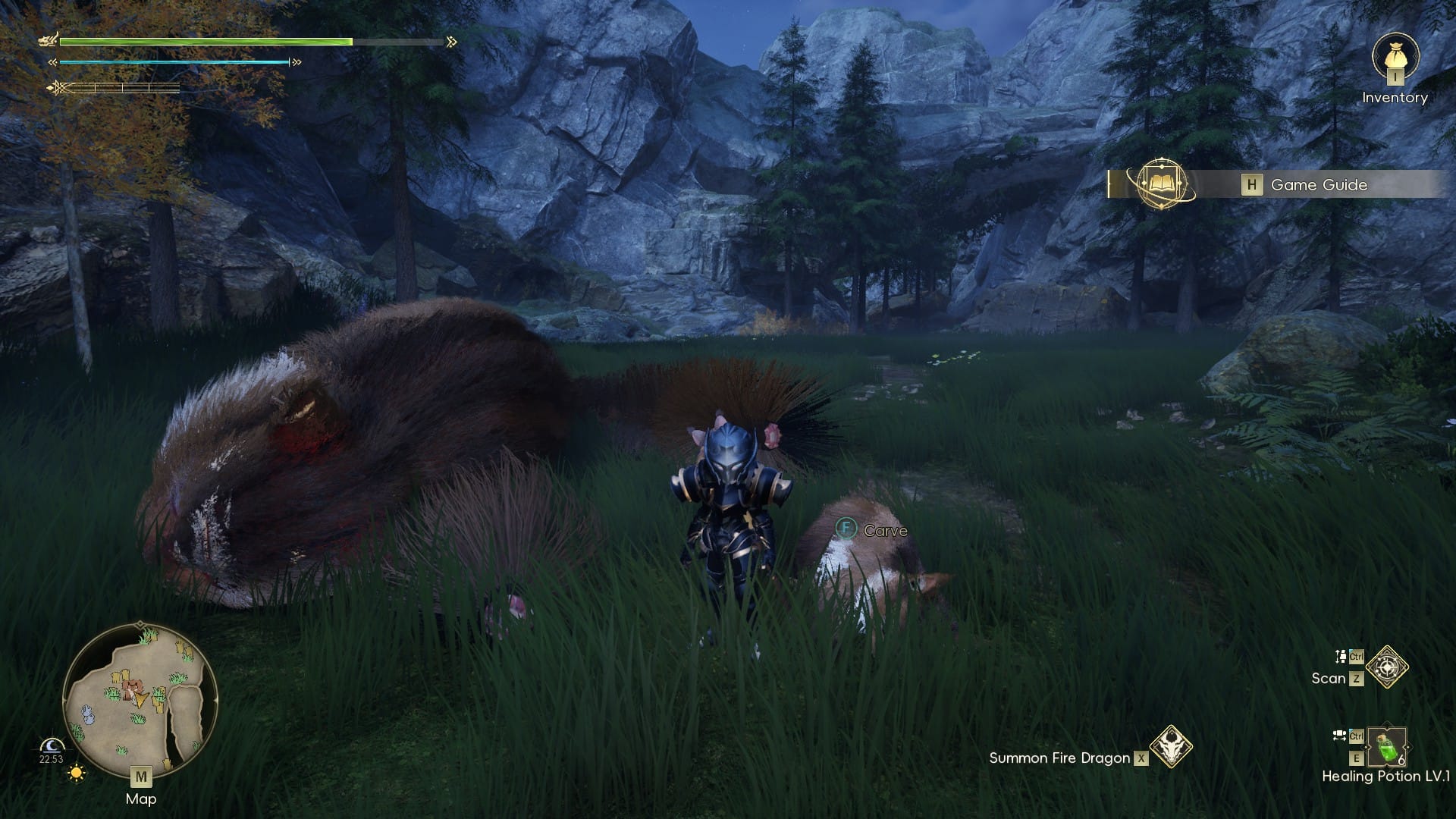
This leads us to the next ingredient, gathering resources. After defeating monsters, they can be carved to acquire various parts, which can later be used to craft better armor and weapons or cooked in various recipes. Smaller monsters can be carved four times while larger monsters can be carved a dozen times, which is quite a lot when you compare to other monster hunting games. If you manage to knock off a tail, horn, or other part of a monster, they can also be carved four times. Recipes and blueprints can be acquired back at the village, which we’ll dive more into a little later.
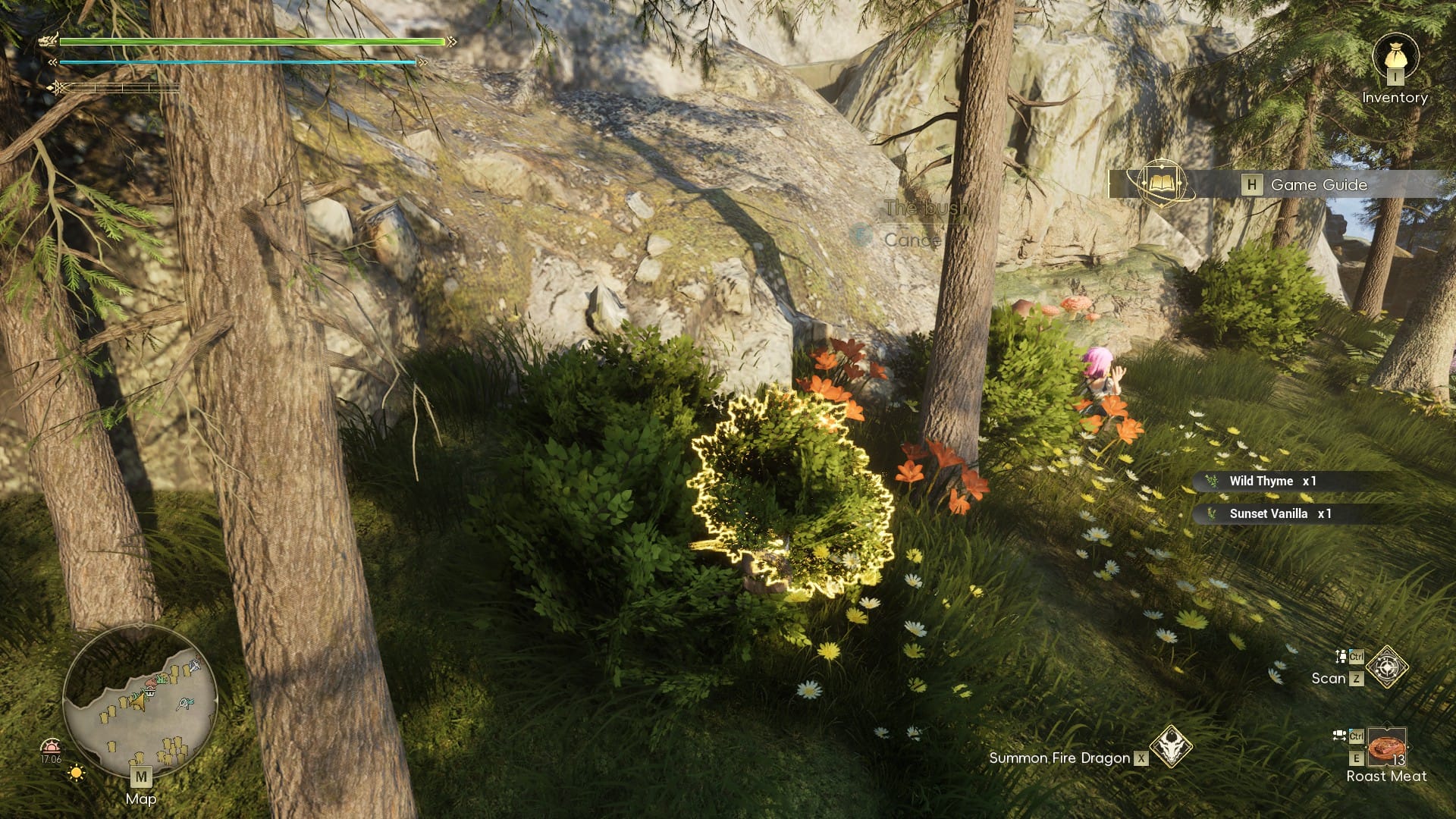
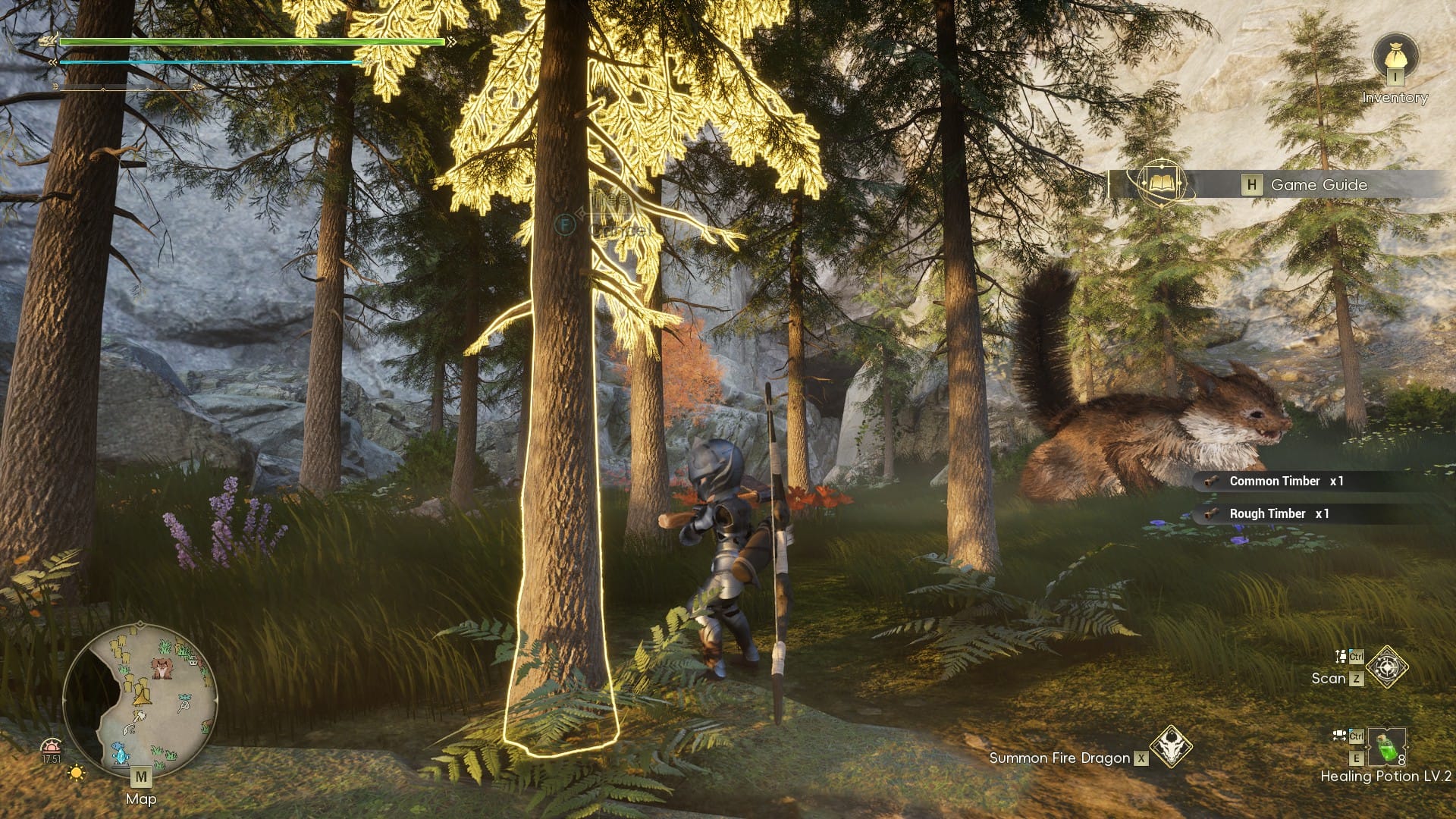
Aside from monster carving, you can also gather natural resources while exploring each map. Bushes, trees, and mineral deposits are scattered throughout, providing an abundance of crafting, cooking, and brewing ingredients. Trees can be hit three times, mineral deposits five times. Bushes give two produce items each, like tomatoes, celery, or even herbs used in health potions. You can also go fishing and bug catching. When you’ve got everything you need, you can head back to the village for a little R&R.
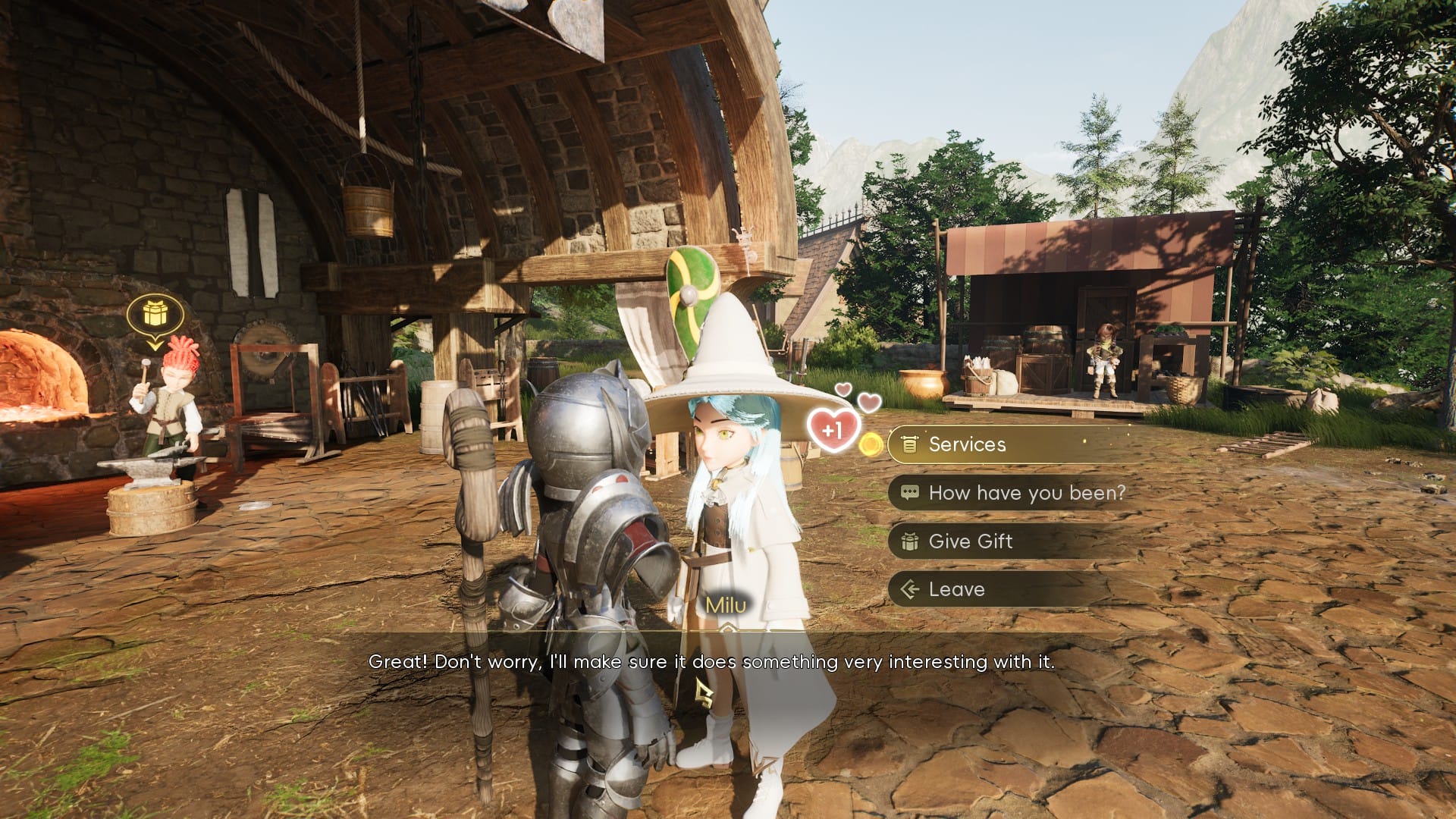
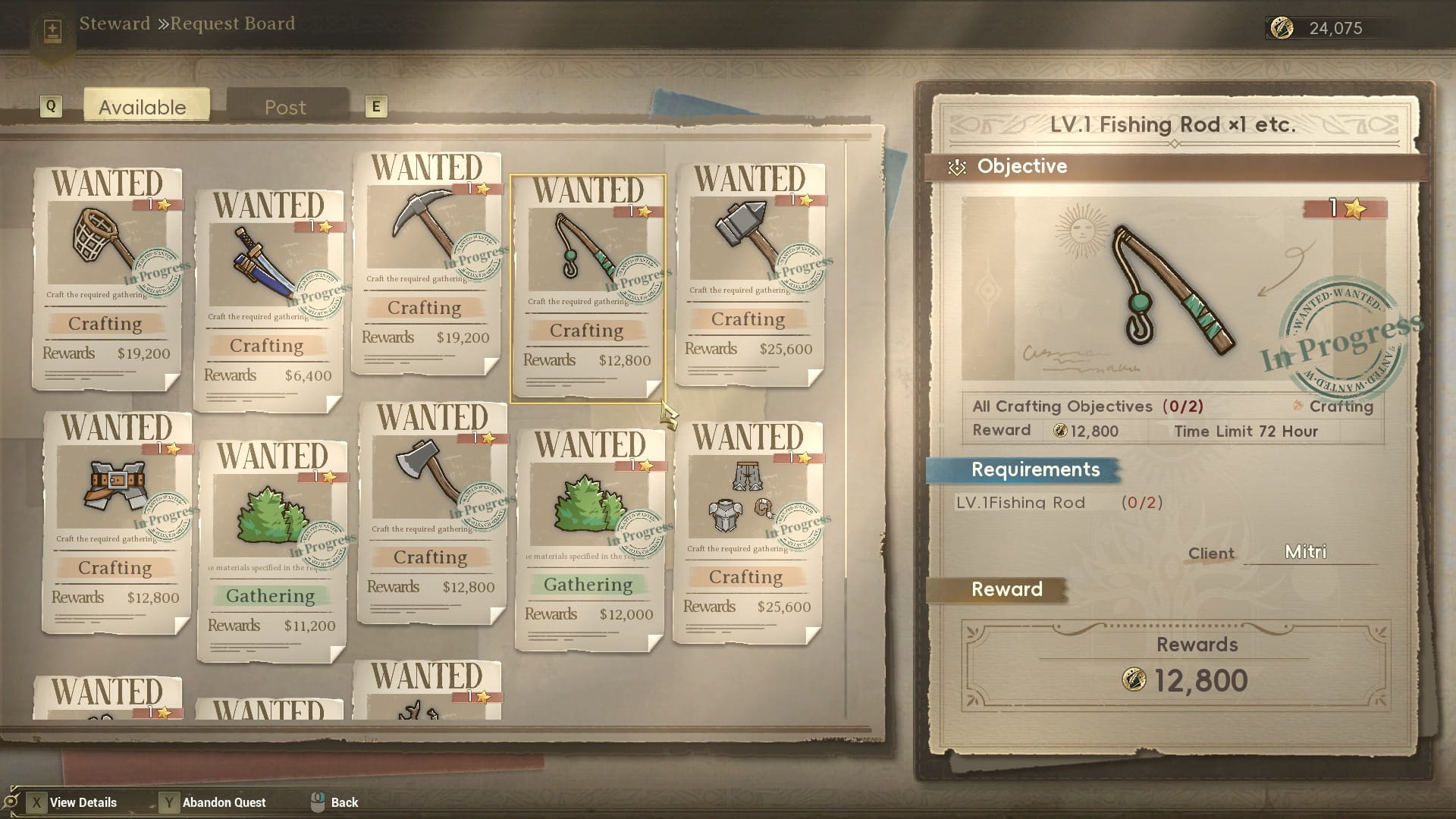
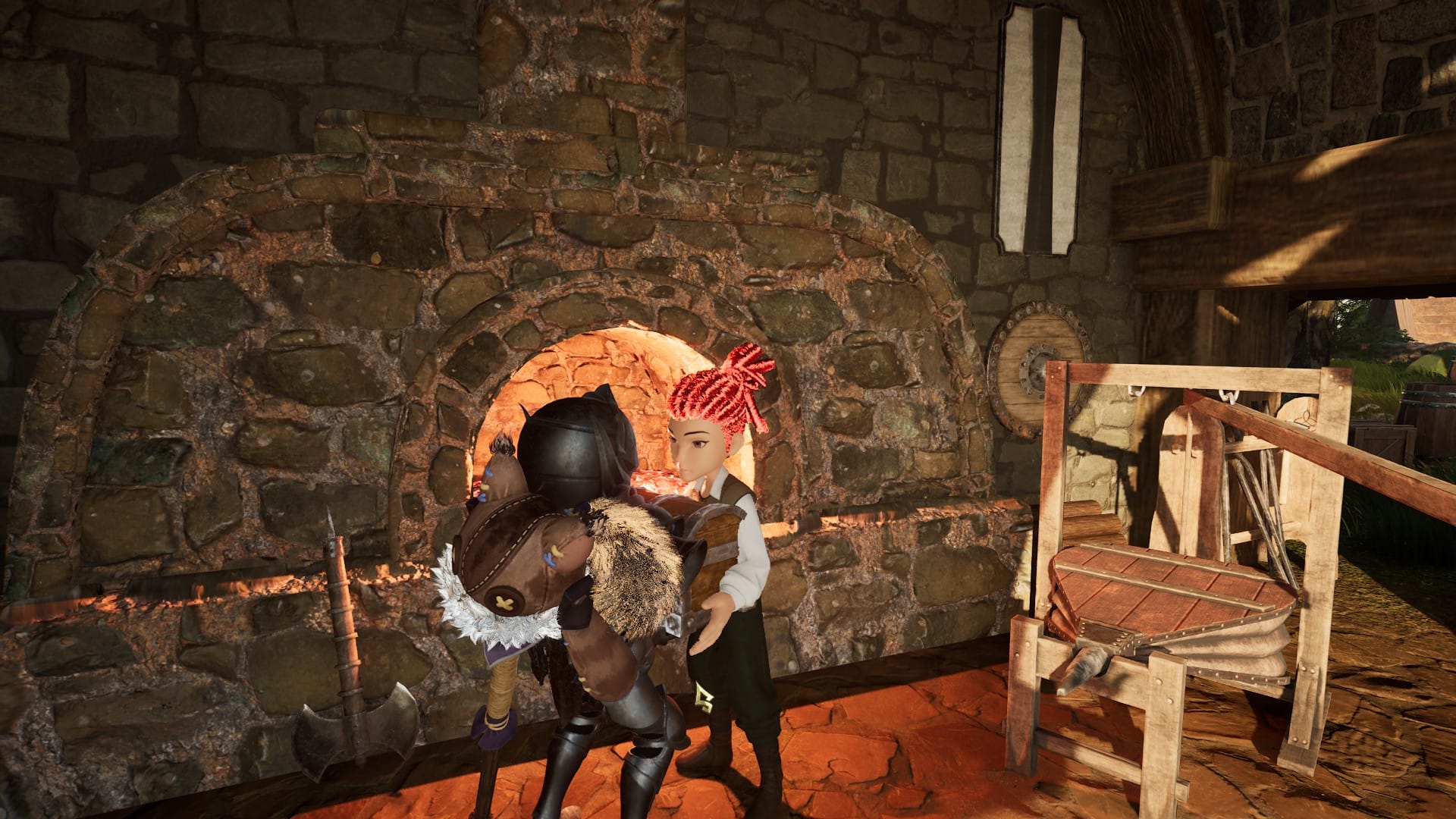
There are several villagers already at the village when we get there, each with their own specialty. Villagers can be traded with to earn gold and clear up inventory space and also acquire stuff you may not have collected while out exploring and hunting, including materials from different monsters. Sometimes they will also have assignments for you to complete, which award mountains of gold upon completion. You don’t have to revisit a particular villager to finish their request. Instead you can claim your spoils from the Available Assignments menu, which I think is a nice touch if you’re struggling to find the villager in question. Villagers do have workstations that they can typically be found at throughout the day, but after ‘business hours’, you can often find them wandering around the village or even tucked into bed at home. Some villagers will also go out to gather resources around the different maps, so you may run into them while you’re out exploring.
Trading, chatting, and completing villager assignments increases their relationship level with your character, unlocking additional dialogue opportunities and even special promotions. Several of my villagers wanted to give me a special nickname to call me by, like Boss or Old Friend, after a handful of interactions. The full depth of the relationship system is still yet to be uncovered, but I’m already having a lot of fun chasing each one around town just to see what they’ll say next.
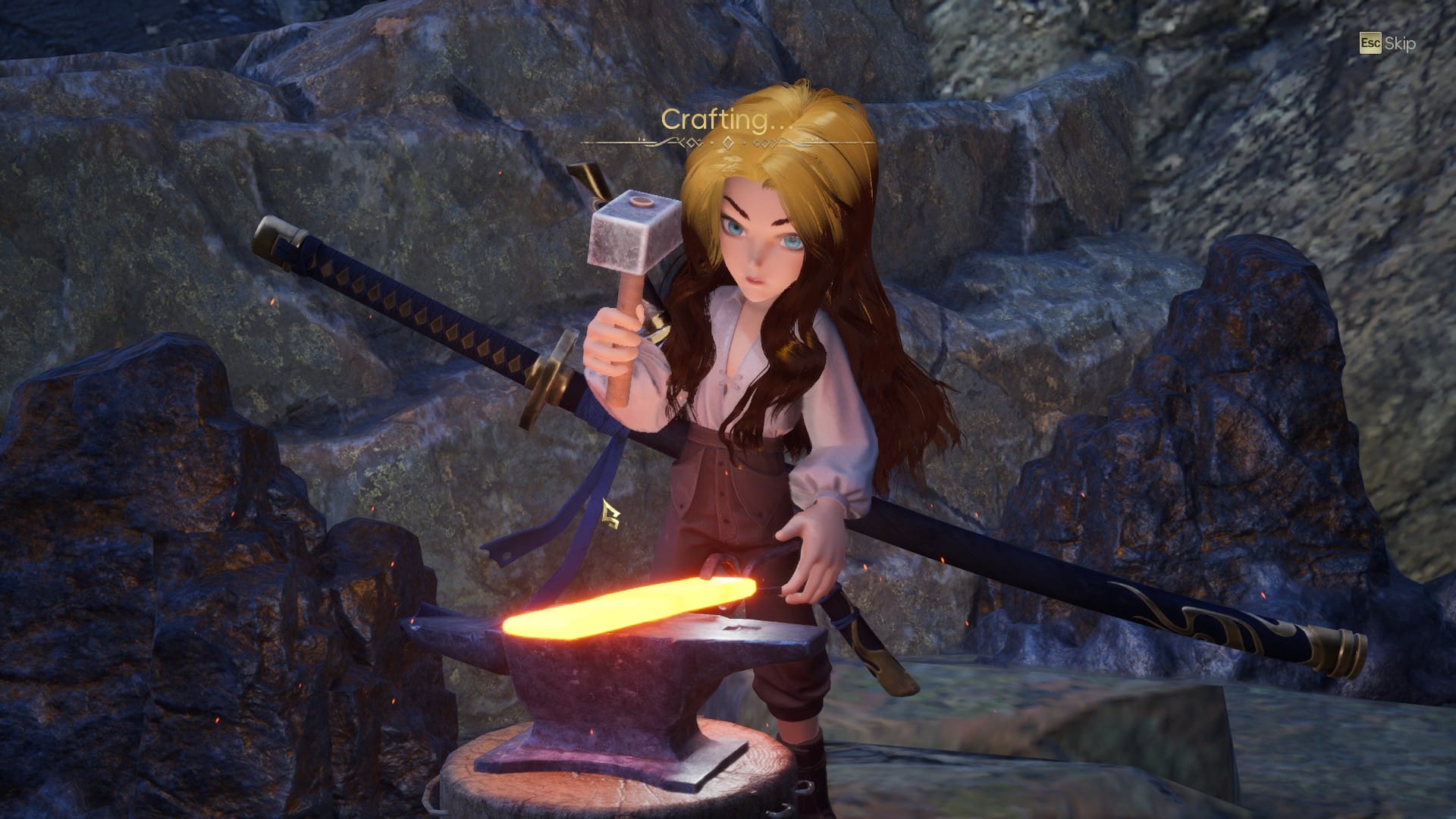
After speaking with different villagers, gathering materials and ingredients, it’s time to check out gear, weapons, potions, and dinner. Blueprints can be acquired that show you how you can craft different armor pieces and weapons using materials collected during expeditions. Similar to other monster hunting games, special weapon and armor sets can be crafted from monster parts, each having a different aesthetic and stat table. The Squirrel Bear makes some particularly adorable Mage gear. Additionally, recipes for potions and different meals can be purchased so you can cook up and brew things to increase stamina, regain health, poison monsters, and much more. Once you’re restocked and geared back up, the loop begins again.
We’ve covered a lot in this gameplay preview, but I still feel like we’ve only scratched the surface of what Monster Fantasy will have to offer. This was a pre-Alpha build after all, so there’s no telling how much more will be added in future testing environments, and how much deeper these systems will become. The game is slated to be released some time next year for PC and console, and while this build was only available on PC, console controls were already fleshed out. I can’t wait to see what the small team at Jotoyo have cooking up for us in the coming months.