While we all let out a collective sigh of frustration at the final season of Game of Thrones, the prior seasons were arguably some of the most compelling television on television. While the interpersonal politics unfolded, the flashy moments were things like the Battle of the Bastards, Castle Rock, Blackwater, Winterfell, Hardhome, Astapor, and others were the vulgar displays of power that made the show shine. It’s these brutal clashes that the team at PlaySide have built their upcoming RTS title, Game of Thrones: War for Westeros. In it we get to play out so many of the possibilities that all of us played out at the water cooler every Monday morning after an episode played. What if Jon hadn’t made it onto the boat at Hardhome? What if Oberyn didn’t forget that a literal walking tank was capable of crushing his tiny head? What if Bran served any purpose whatsoever? What if Jon could refrain from telling his lover / Aunt Daenerys and then his opportunistic sisters about his lineage? What if Danny (and the showrunners) didn’t forget the Iron Fleet…uhm…” existed”? So many decisions it’d be nice to rewrite, and now we have our chance.
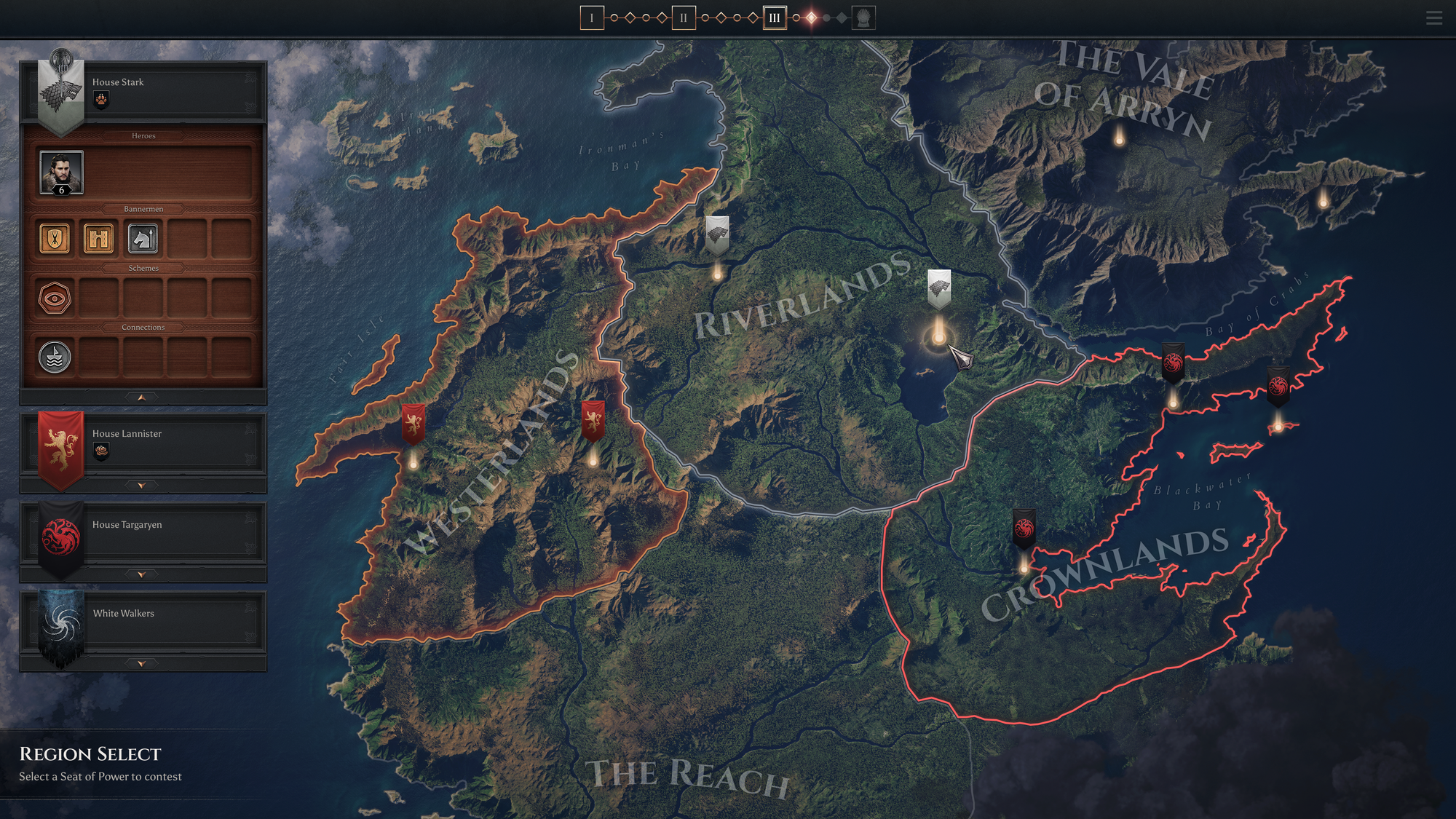
Undoubtedly we’ll eventually gain access to larger aspects of the game, but for this first engagement we got to play a Duel - 1v1 in either Greywater Watch or Ashemark for map options. These two maps could only be played in a combination of two modes: Domination (capture and hold territories) and Annihilation (kill them all). Further greyed-out options allowed team-ups, fog of war being enabled or disabled, randomized start locations, and hidden start locations. You could disable Domination if you wanted to prevent a bloodless coup, but ultimately these are medium-size maps with symmetry. Beyond this, but locked for now, are 2v2 and 1v1v1 battle options as well as a full campaign. With the parameters established, let’s get into what makes this game different from any other RTS.
As an old-school RTS dirt farmer, I’ve seen the evolution of the genre. While sending out collectors to pull resources back home has become passe in favor of placing objects to collect resources in the environment to accomplish the same task, War for Westeros has another spin that completely changes the game in a way that seems subtle at first, but I assure you it is not. The two factions we had access to play for the demo were House Lannister or House Stark, and we’ll start with the latter.
When you start, you’ll have a pre-built Keep that serves as your base – you lose this, you die. Here you can spawn workers and scouts, as well as your heroes. Once you’ve built a single military structure can field Jon and Robb, with Ghost and Grey Wind (so far) being able to be added when you’ve hit a few more requirements. You’ll need more than heroes to win the Game of Thrones, however.
There are three resources for these two factions – gold and influence that you’ll spend for building things, and supply which determines your overall capacity to recruit troops. Gold is gathered by House Stark by placing windmills. These can go anywhere, but when placed onto specific areas, they generate gold at a higher rate than when they are not. This gold source is infinite, but you can only build a half dozen of them for each segment of the map. Influence is gained by placing Weirwood Shrines, which must be placed into pre-defined influence points, again generating at a prescribed rate. Supply is expanded by placing houses. With the “engine” in motion, it’s time to start building for war.
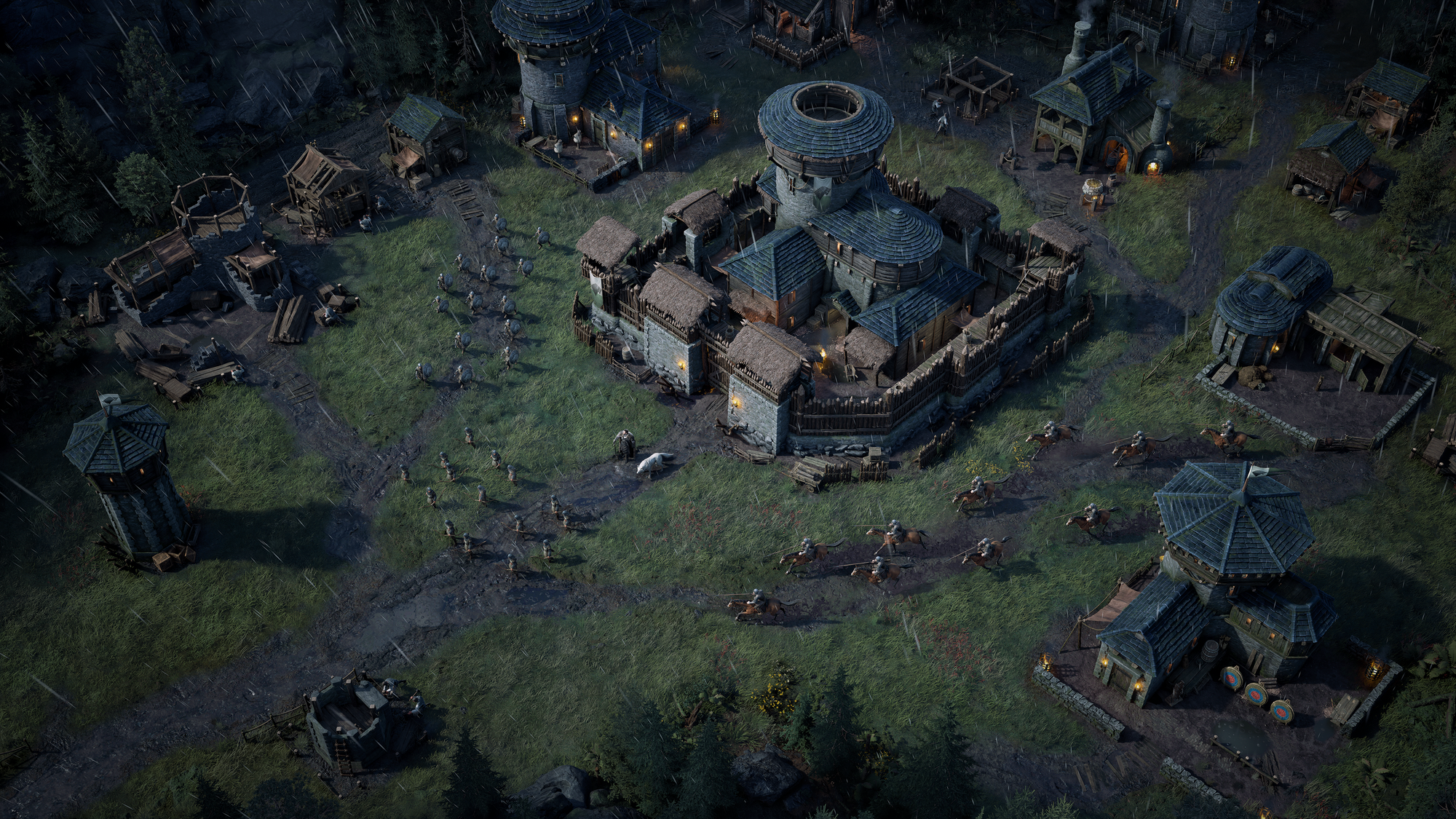
To start recruiting and outfitting your army, you can build a Barracks, Archery Range, Stable, or Blacksmith. The Barracks allows you to recruit Stark Swords and Stark Spears, but you’ll see two Night Watch options greyed out for now. The Archery Range is similar, as you can recruit Stark Archers, but Free Folk and Night Watch archers are unavailable. The Stable gives you access to Stark Lancers and wolves, but again locks you out of the Night Watch Rangers. As you’d expect, the Blacksmith is where you’ll find upgrades to your troops such as expanding their visibility range, regeneration out of combat, and more. Once you have these, you’ll use the resources you’ve gathered to upgrade Castle Stark.
An upgraded Castle Stark allows you to construct the Nightfort, a Free Folk Camp, wooden walls, a Great Hall, a Northern Stronghold, and a basic Guard Tower. The Nightfort is for advanced upgrades for things like siege engines, movement, and other powers that will benefit some or all of your troops. It also gives you access to recruit all of those Night’s Watch troops, as they offer slightly different skills than the House Stark troops do. The Great Hall is your most advanced upgrade, granting more bonuses like fire arrows, additional siege damage, and more. With the Northern Stronghold, we gain access to a catapult, reinforced walls, and an upgraded guard tower. The final upgrade to the Stark Castle is “Northern Alliance”.
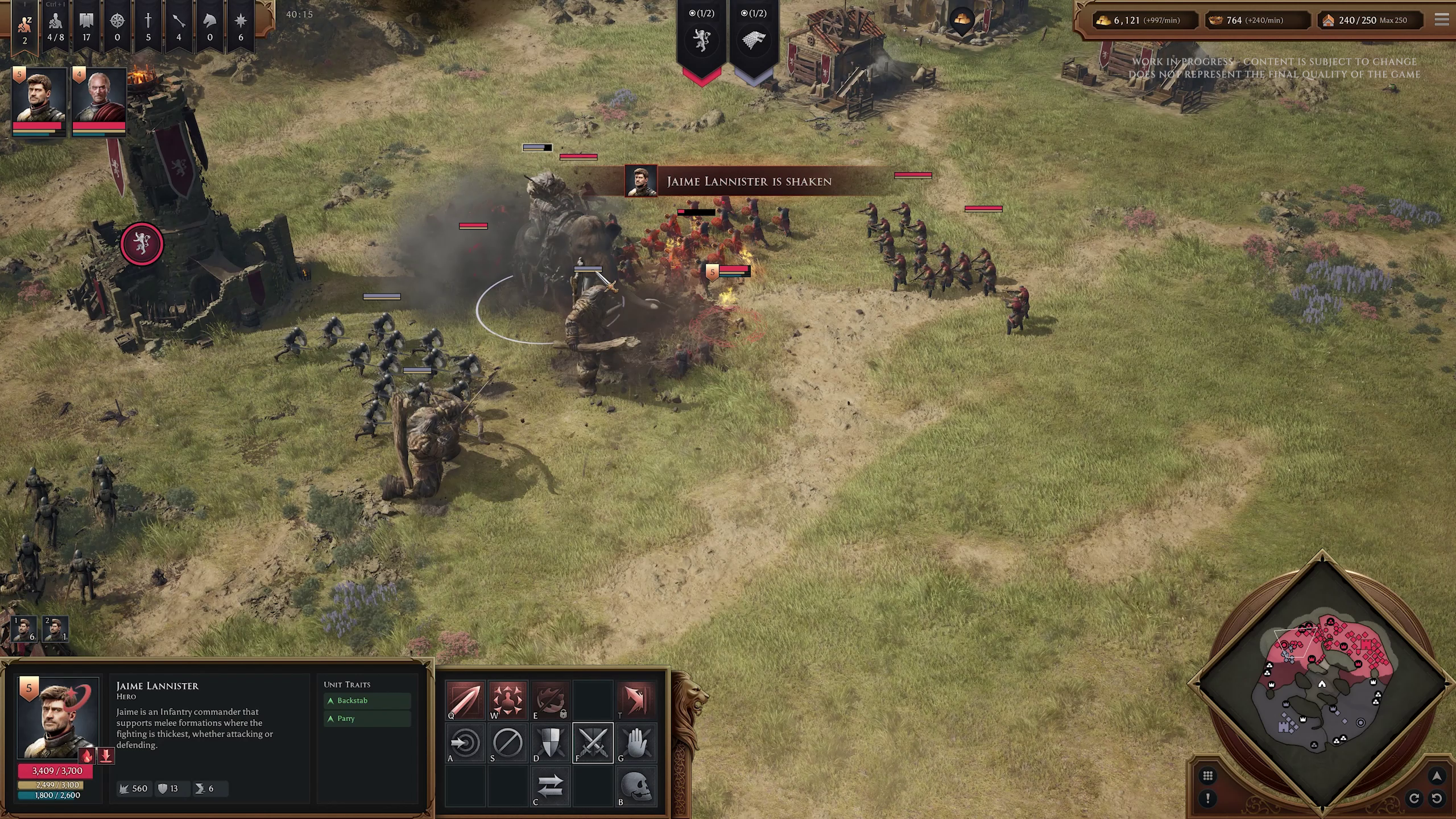
Northern Alliance is exactly what it sounds like - alignment to the Free Folk beyond the wall. This grants access to the final and most powerful troops House Stark can field – Mammoth Riders and Giants. Where siege engines are slow and vulnerable, Giants are never considered “vulnerable”. With upgrades from the camp that introduce fire into the mix, even less so.
So far, this sounds similar to games like Company of Heroes, right? Here’s where things change.
House Lannister is not like any other house. While their official motto is “Hear me Roar!”, hence all the lions, their more well-known phrase is “A Lannister always pays their debts” – ironic when we find just how bankrupt they truly are over the course of the show/books. It’s this irony that serves as the primary mechanical change that had me raising an eyebrow.
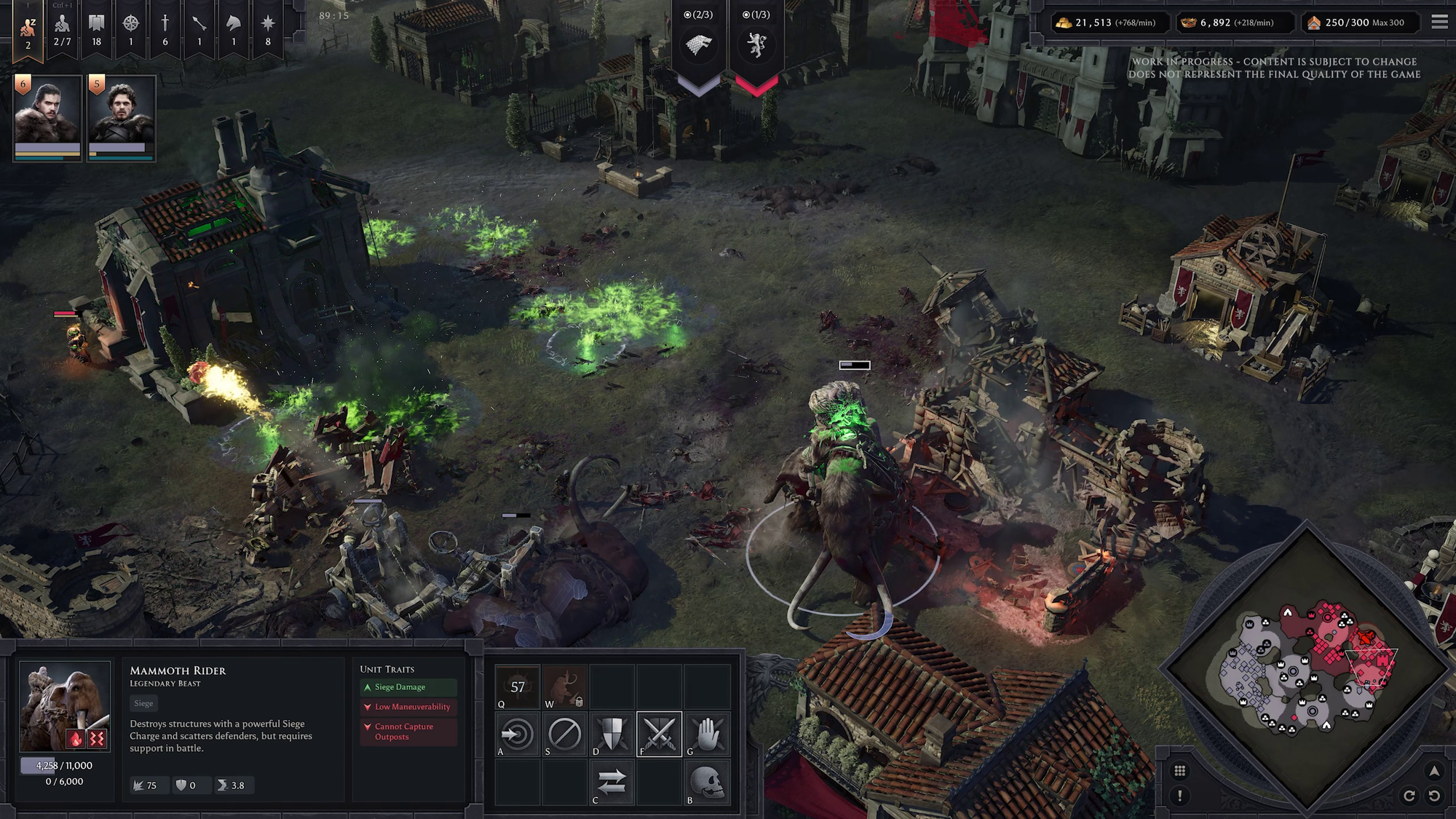
The same resources are used by House Lannister - gold, influence, and supply. Dropping a mine on a basic space gives you 9 gold per tick, per mine, but you can only place 4 to House Stark’s 6 windmills per area. If that wasn’t painful enough, they run out – there’s a timer underneath the mineshaft where, after exhaustion, it drops to 1. If you drop the mine onto a high-yield location, you’ll pull 11 per tick, and these do not deplete, making them remarkably valuable. Influence is gained by placing massive Lion statues instead of weirwood trees, with supply being houses, same as normal…at least for human factions.
House Lannister has access to generational wealth and power, and it shows in their troops. Sure, the pikemen look like they could be kids that had a pole shoved in their hands, but every other troop is a seasoned, armored, career military person. They are well-equipped, not farm hands with plows that have been hammered into swords.
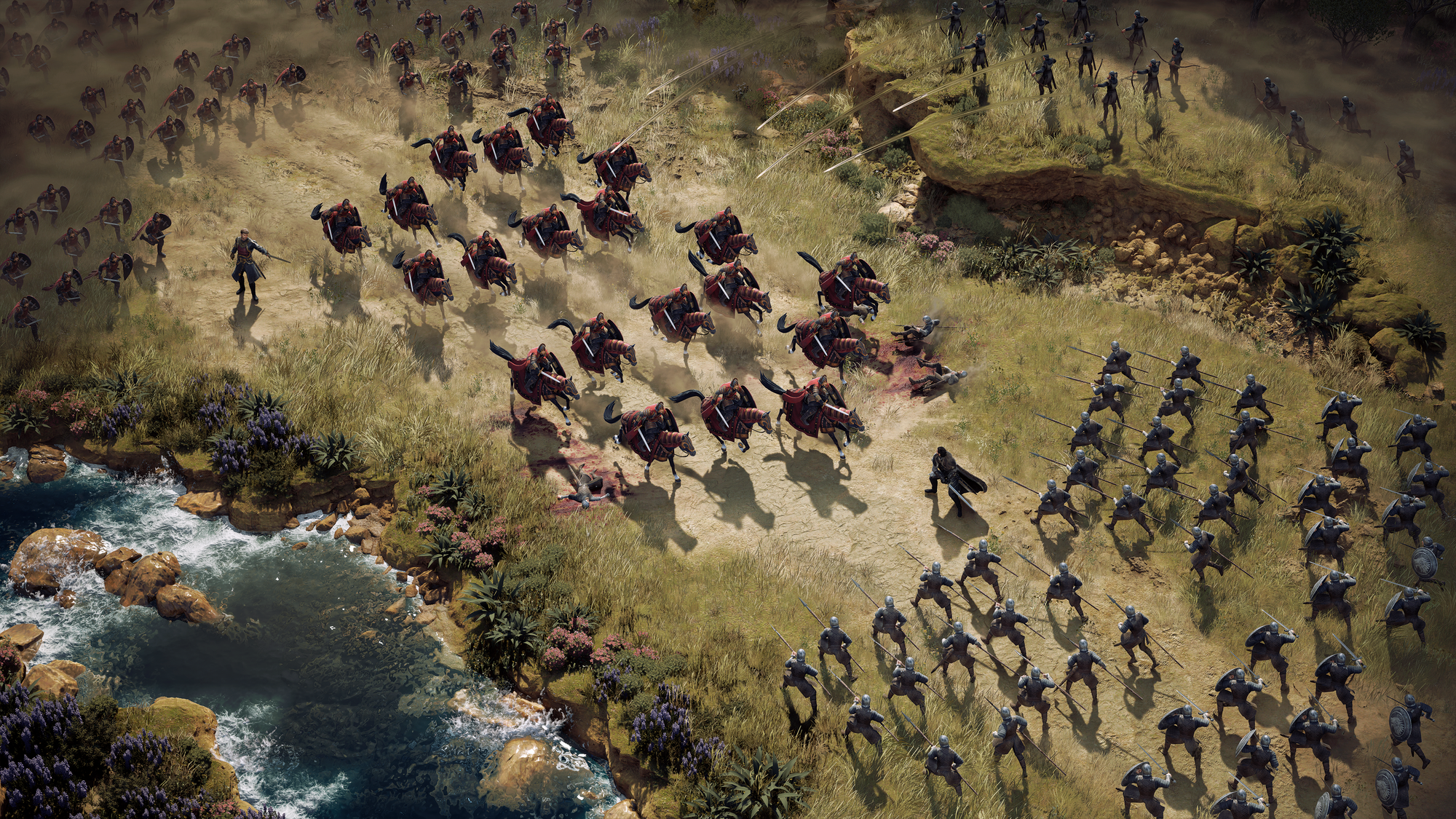
Lannisters are nothing if not arrogant about money and influence, and they can throw around both. Spending 175 influence for 100 gold at your castle, and similarly, you can buy 175 influence for 100 gold – something House Stark cannot do. At the Payhouse, you can buy out contracts to temporarily sign up Stone Crows, Golden Company, or the Knights of Summer instead of basic Sellswords, each with their own powers and advantages, though you can only have one contract active at a time. They can even pay money to move faster and build 50% faster for 60 seconds – there is nothing money cannot buy, it seems. The Lannisters, as the current occupants of the Iron Throne, are able to build the Sept. This holy structure allows them bonuses from the Mother, the Warrior, and the Maiden, including fire and ice resistance, regeneration outside of combat, and extra damage and fortitude. They can also build powerful siege engines that are good for taking down dragons or leveling structures. They also have access to wildfire, which is as dangerous to their own troops as the enemy, as it burns long after being thrown. All of these wonderful tools and toys of war cost money, and as I mentioned earlier, this is where the Lannisters are different.
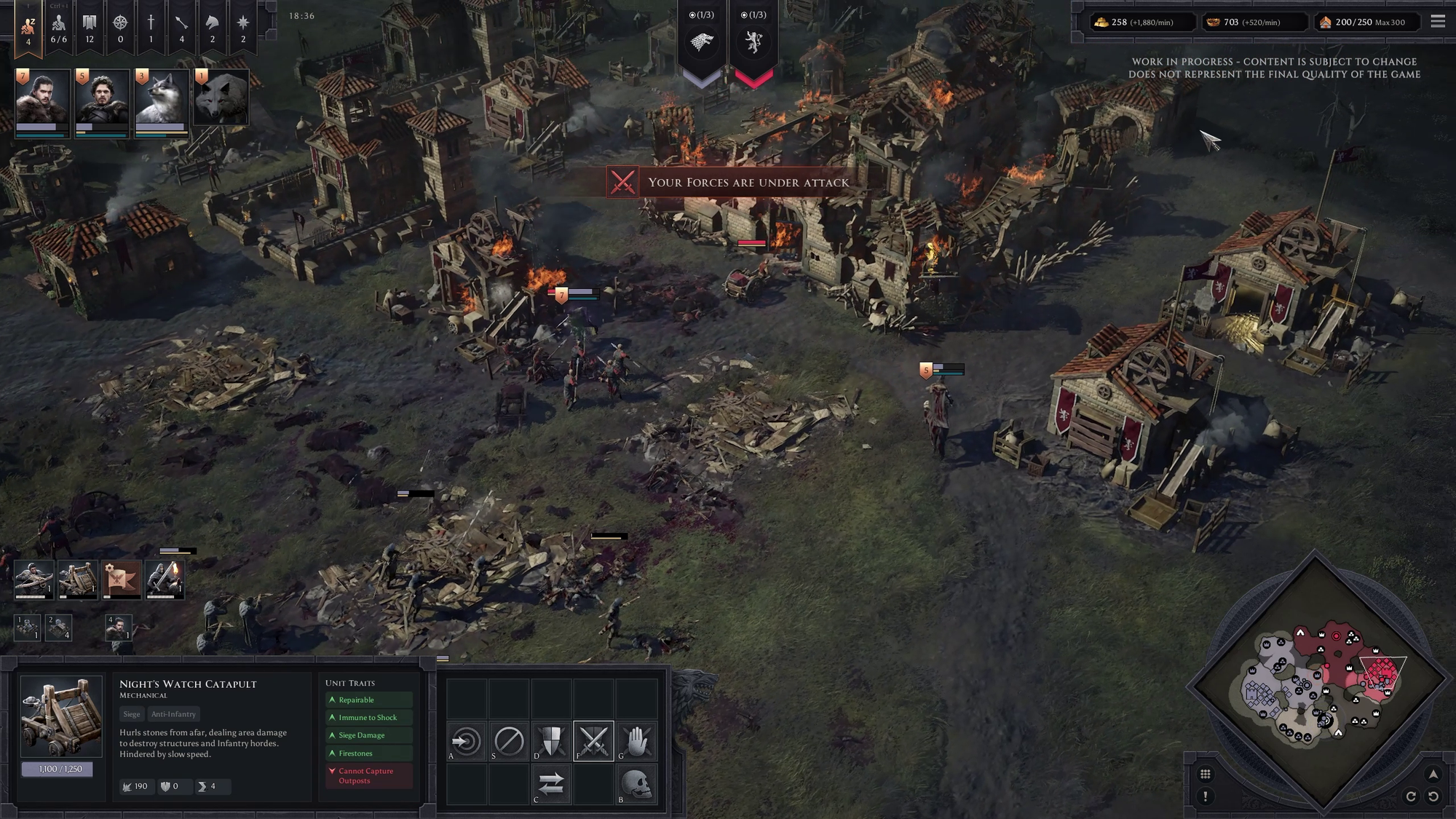
In the workshop is a golden icon called “Debt Negotiation”. You see – the Lannisters can borrow on credit. This simple upgrade allows them to spend more than they have, with the penalty that everything now costs slightly more. The more in debt you go, the more things cost. At the first level, it’s just 250 gold – enough to make another mineshaft to try to see your way out of debt. The second tier is 500, with three being 1000, and the final being 1500 gold – just enough to get in trouble, or get yourself out of it. It’s a slick way of representing a lore that ended up being a throughline for the series, and one that I imagine will turn many a battle that would have otherwise been lost.
For a game that you command from 500 feet up, it is absolutely gorgeous up close. Zooming in, you see the weathering on fences where they make contact with the ground. Mines are active until they are empty, then they get boarded up and look a touch more dilapidated. Before they run dry, they transfer gold on a slide and pulley system, draining the earth of its precious ore. Similarly, the windmills of House Stark are mostly wood instead of stone, with rough-hewn planks and dirty sails amidst a folksy charm that suggests this is more functional than decorative. Stark barracks don’t use carefully crafted dummies, opting instead for flour sacks and buckets to approximate a man. These wonderful buildings come apart spectacularly, sending embers and errant chunks of wood flying when they explode from incoming siege engine bombardment. Similarly, the eerie glow of wildfire gives it an otherworldly look that the team has captured perfectly. Animations are similarly well handled, with each troop swinging weapons, shifting in their saddles, stacking up in formations, and other details normally reserved for close-up RPGs. Looking at Jon Snow, you can see every detail in his armor, and the individual cuts in the grip of Longclaw. Buildings are equally as detailed, with House Stark looking more like buildings constructed by the locals, whereas the Lannister buildings are clearly crafted by artisans brought in to make them beautiful. They aren’t static either, with each one showcasing some level of animations that keep them alive. There’s something satisfying about building a golden lion when you can see the masonry stacked nearby, then the frame of the lion, then the ivy and braziers, and finally the finished product complete with Lannister banners. This game is easily one of the best looking and most detailed RTS titles ever made.
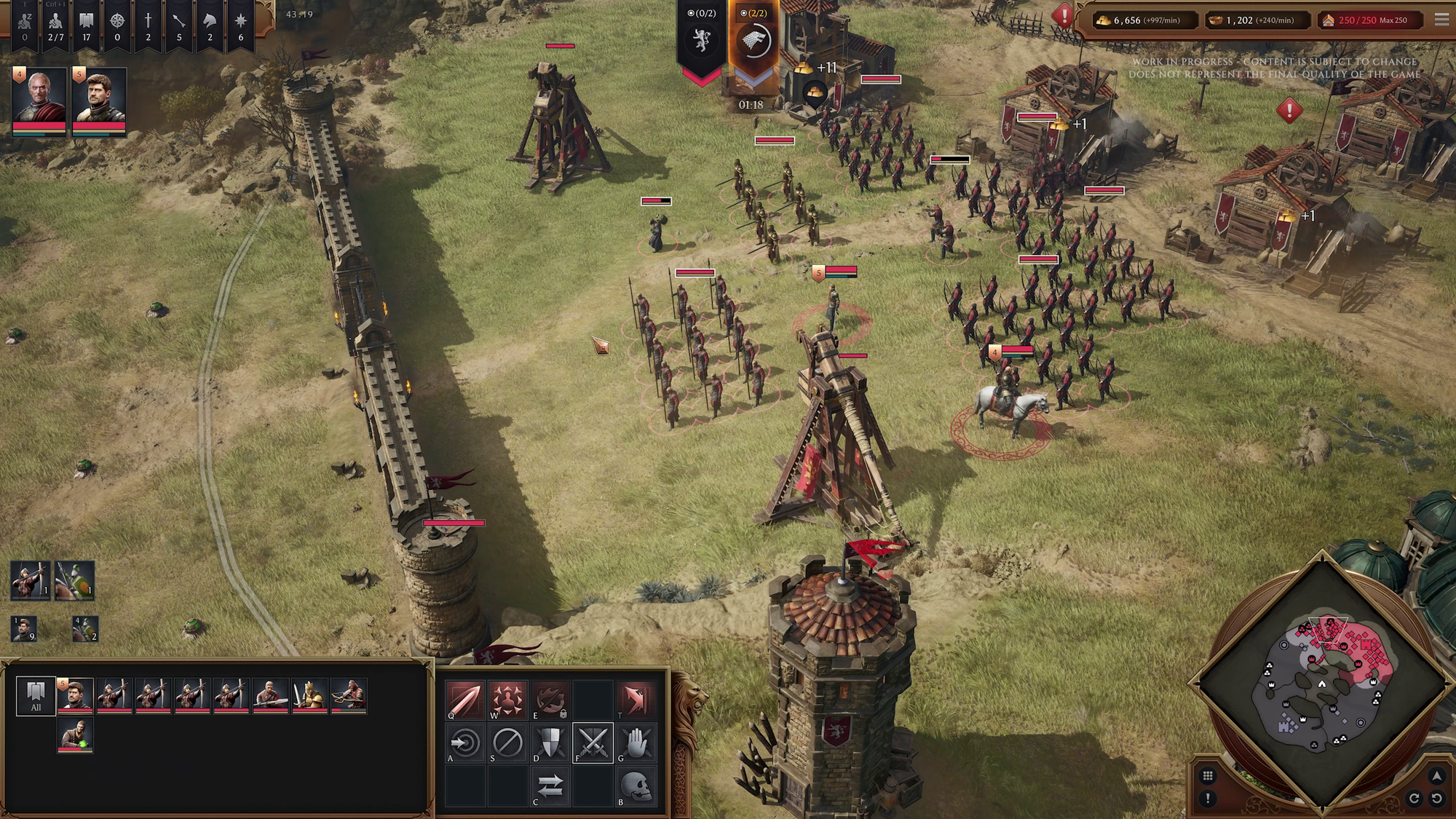
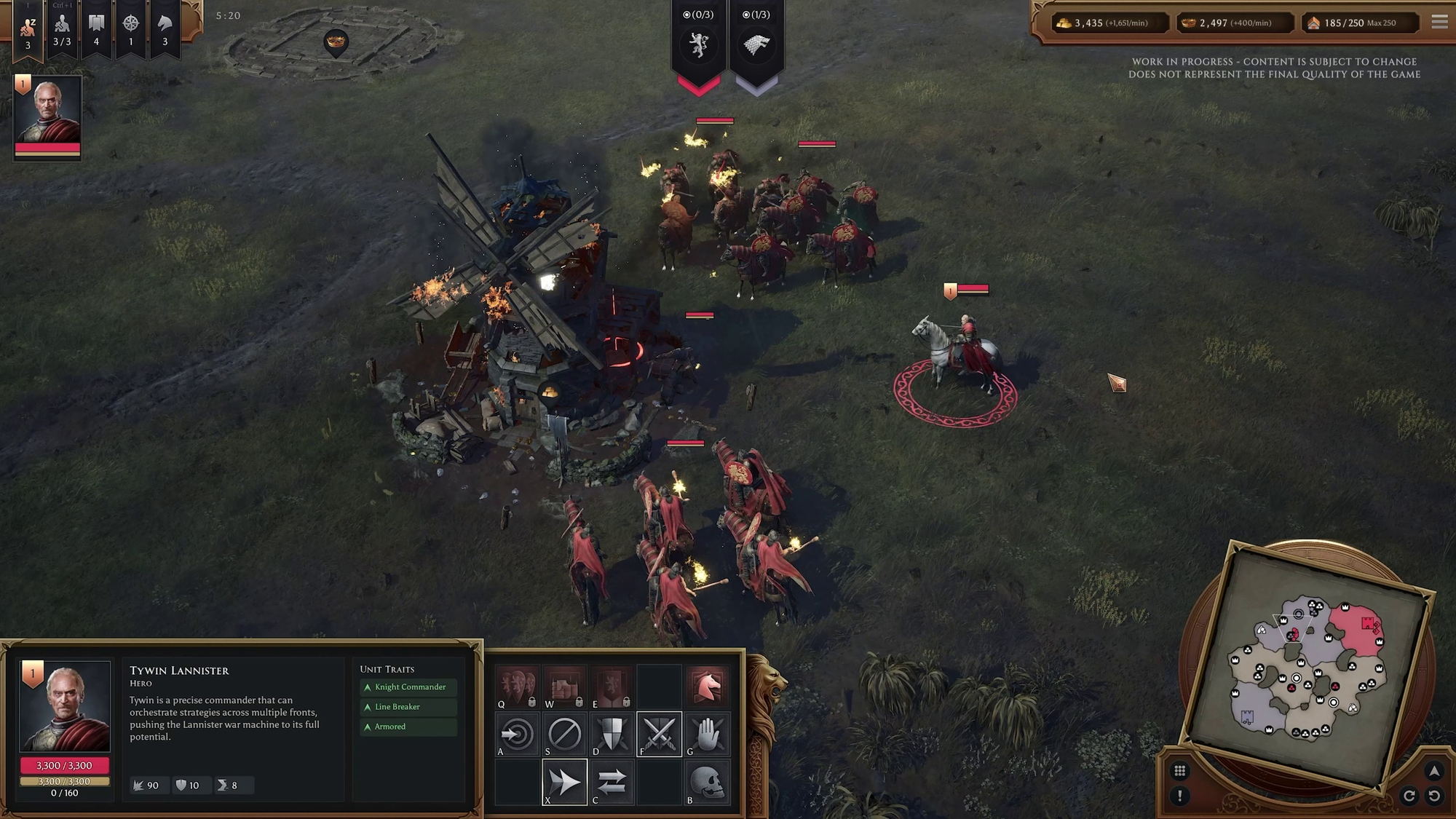
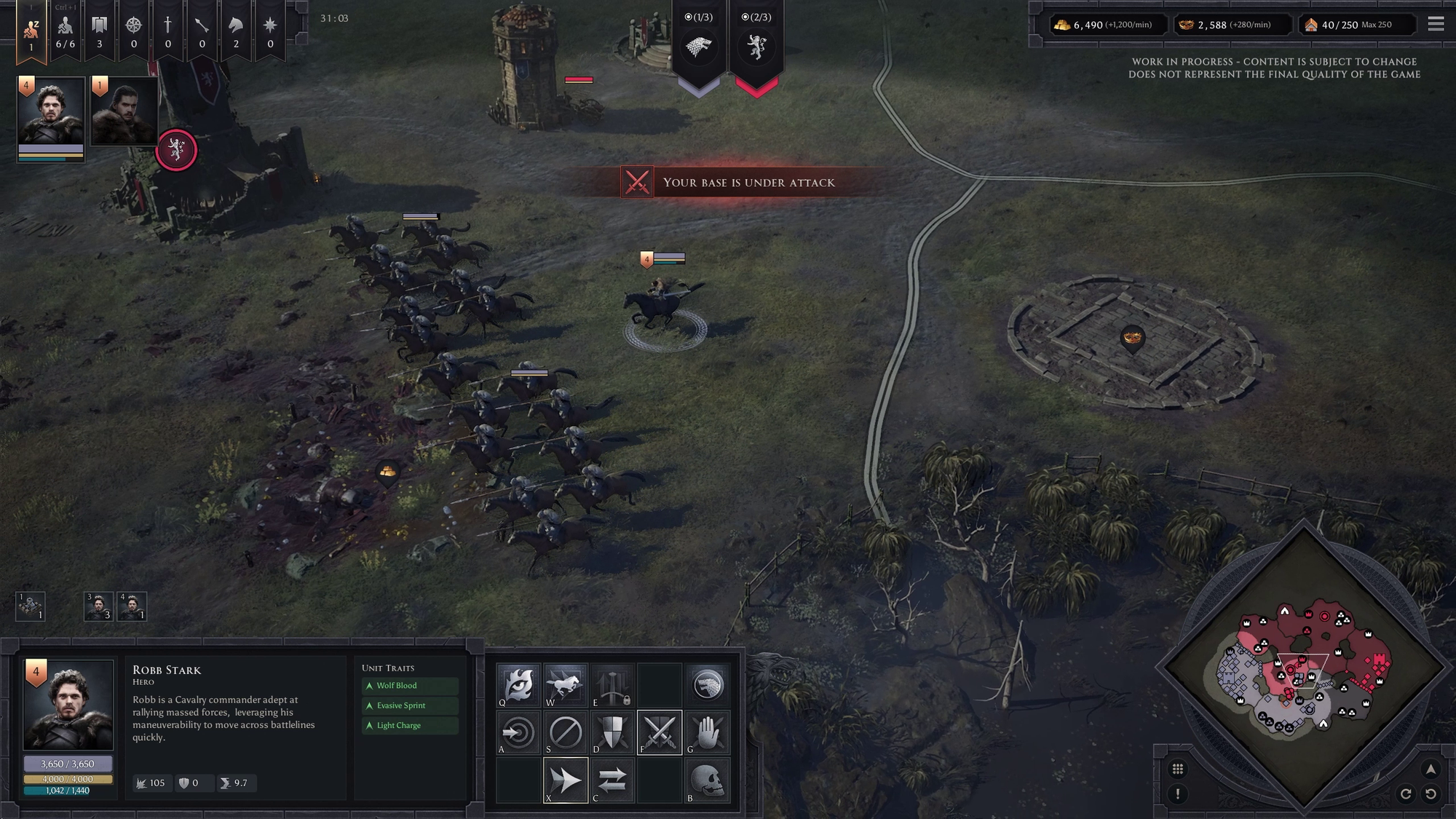
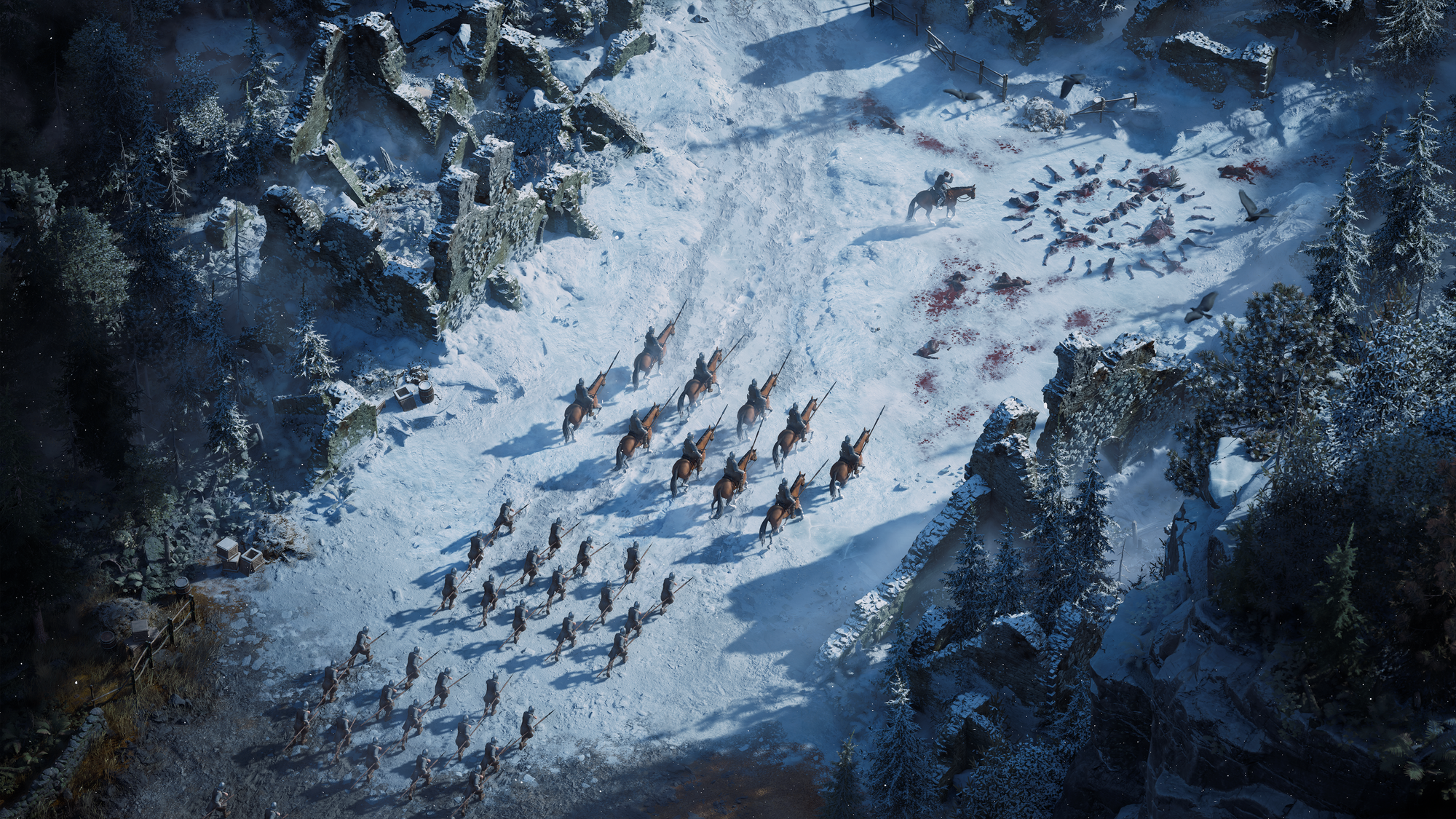
The last piece I wanted to touch on was heroes. I mentioned all of the ones we know for House Stark, and on House Lannister’s side it’s Jaime and his father Tywin Lannister. Both are well voiced with sound-alikes for Nikolaj Coster-Waldau and Charles Dance, as are Jon Snow and Robb Stark. (Though it’s clear the team aren’t quite done with capture, as Jon doesn’t say “Ah dun wan it” repeatedly quite yet.) They serve as major spoilers to the battlefield, and there’s nothing quite so satisfying as seeing either Robb or Tywin ride in on their horses and absolutely destroy soldiers on the ground with their line-breaker technique, sending them scattering. Similarly, Tywin can change the tide of battle dramatically with his Rains of Castamere flag that adds 10% to attack, max fortitude, and resistances for 60 seconds, but for every kill, extends it another 10 seconds – the more bodies, the better. Naturally, you don’t get these powers for nothing, and I appreciate PlaySide’s approach here. Your heroes have to wade into battle and earn some experience to level up. When you hit certain level milestones, you’ll unlock powers and skills, ensuring that you see heroes more frequently and not just at the end of an engagement. As such, they’re inexpensive to field compared to other RTS titles, keeping them on the front lines.
From this early look, it’s already clear that developer PlaySide is not just leaning on the intellectual property of the series but very much leaning into it. Time will tell how House Targaryen or the Night King’s Army of the Dead factions will play, but it will be exciting to see the devastation brought by dragons, and the interminable dread of an ever-expanding, ever-rising army of White Walkers as they take the field.
Game of Thrones: War for Westeros is coming to PC at some point in 2027. Stay tuned here at GamingTrend.com for all the news, previews, and reviews – we’ll see you on the next one.