If you've read any of my write-ups, you may know that I am a public school educator. For years, I've tried to include gaming in the classrooms of the schools that I've worked at. Games that are marked as educational in nature can have differing levels of effectiveness as they try to pack some sort of lesson into a gamified environment. Some succeed, some don't.
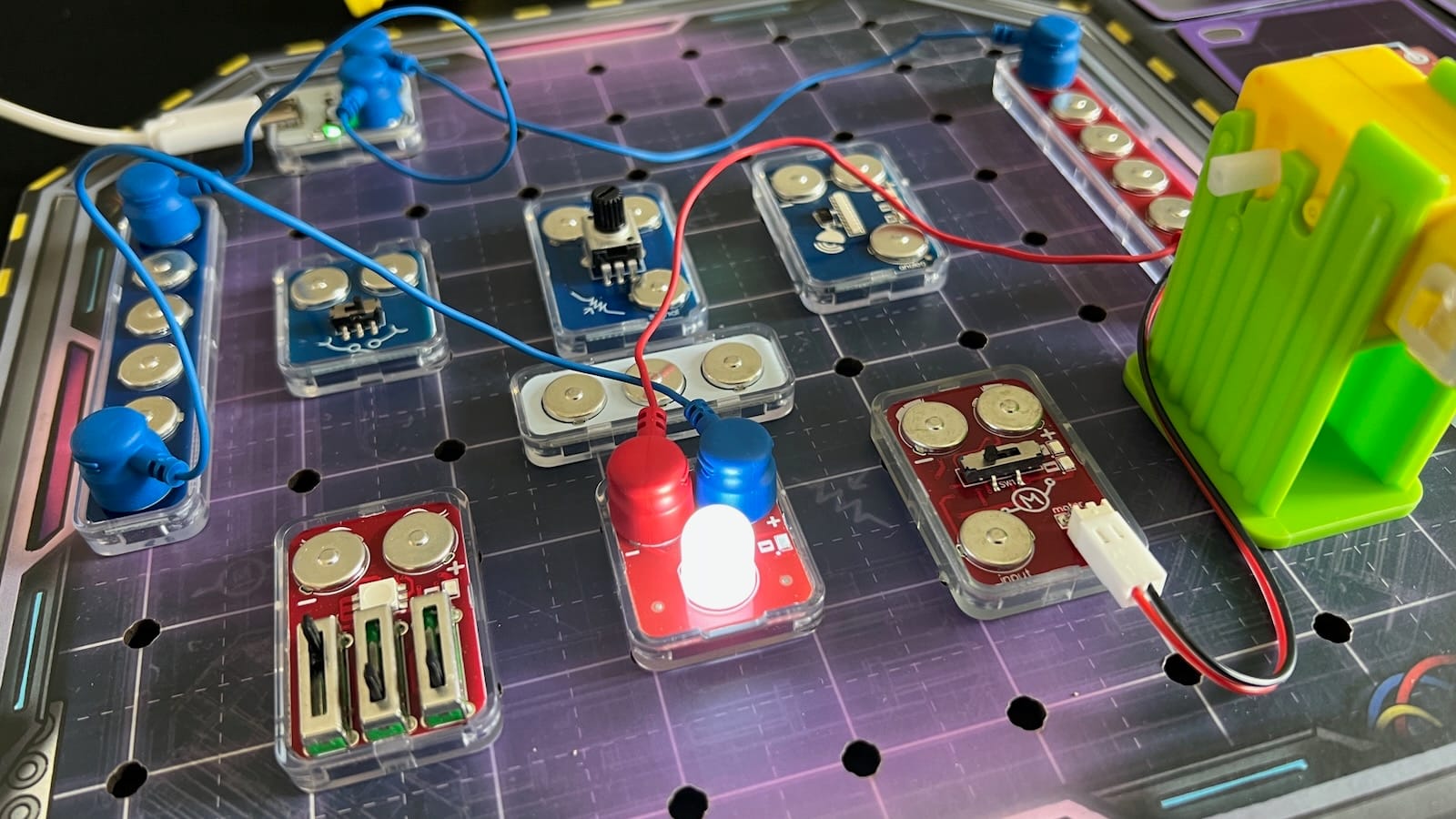
Reactor Rescue from Labbox Education has hit the board game space, touting itself as a game where you learn to build real electronic circuits. In the game, 2-4 players race to repair their spaceship by collecting resources, building electronic circuits under pressure, and collecting a series of repair tokens. The first player to complete all of their repairs on their individual ship boards wins the game.
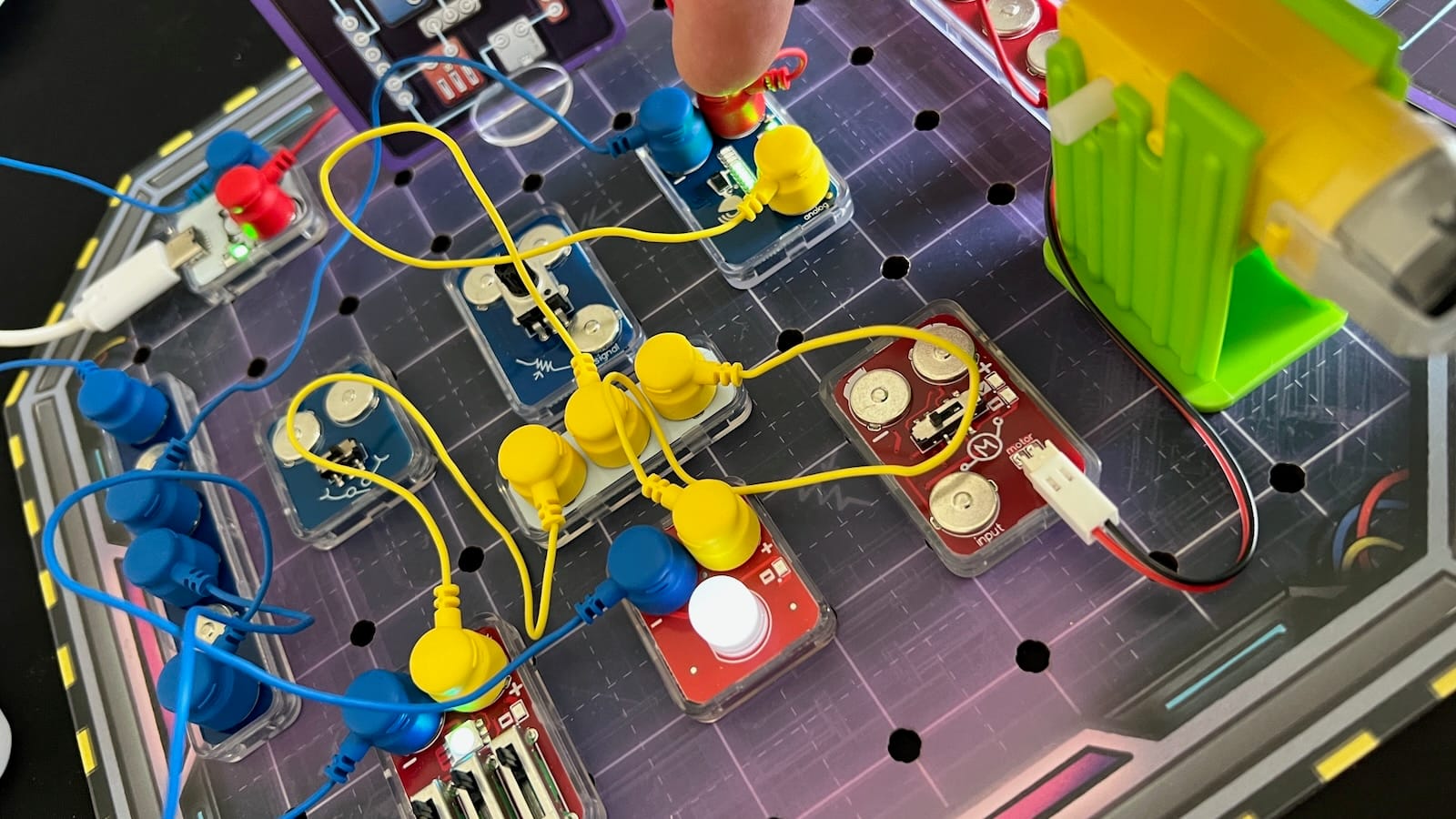
The game centers around the included real and working electrical components on the central board. Labbox, as a company, has been around for years, creating sandbox kits to teach kids about circuitry. Reactor Rescue takes three input boards and three output boards, along with some extension boards from their kits, and creates a workspace for the engineer players to build. The inputs included are a basic switch, a dial, and the coolest of them all, a proximity sensor. Sticking your finger close to the board and watching the intensity of the outputs change is quite satisfying. The outputs included are a Red/Green/Blue light with sliders, a glowing bulb, and a motor. The included red, blue, and yellow wires connect the power supply through the different boards using magnetic connectors that are easy to place.
As you build your circuits, things will inevitably go wrong. The rulebook comes with great troubleshooting guidance and education about the different types of circuits and connections. Even the components will tell you if a connection is wrong, adding to the trial-and-error of learning new concepts.
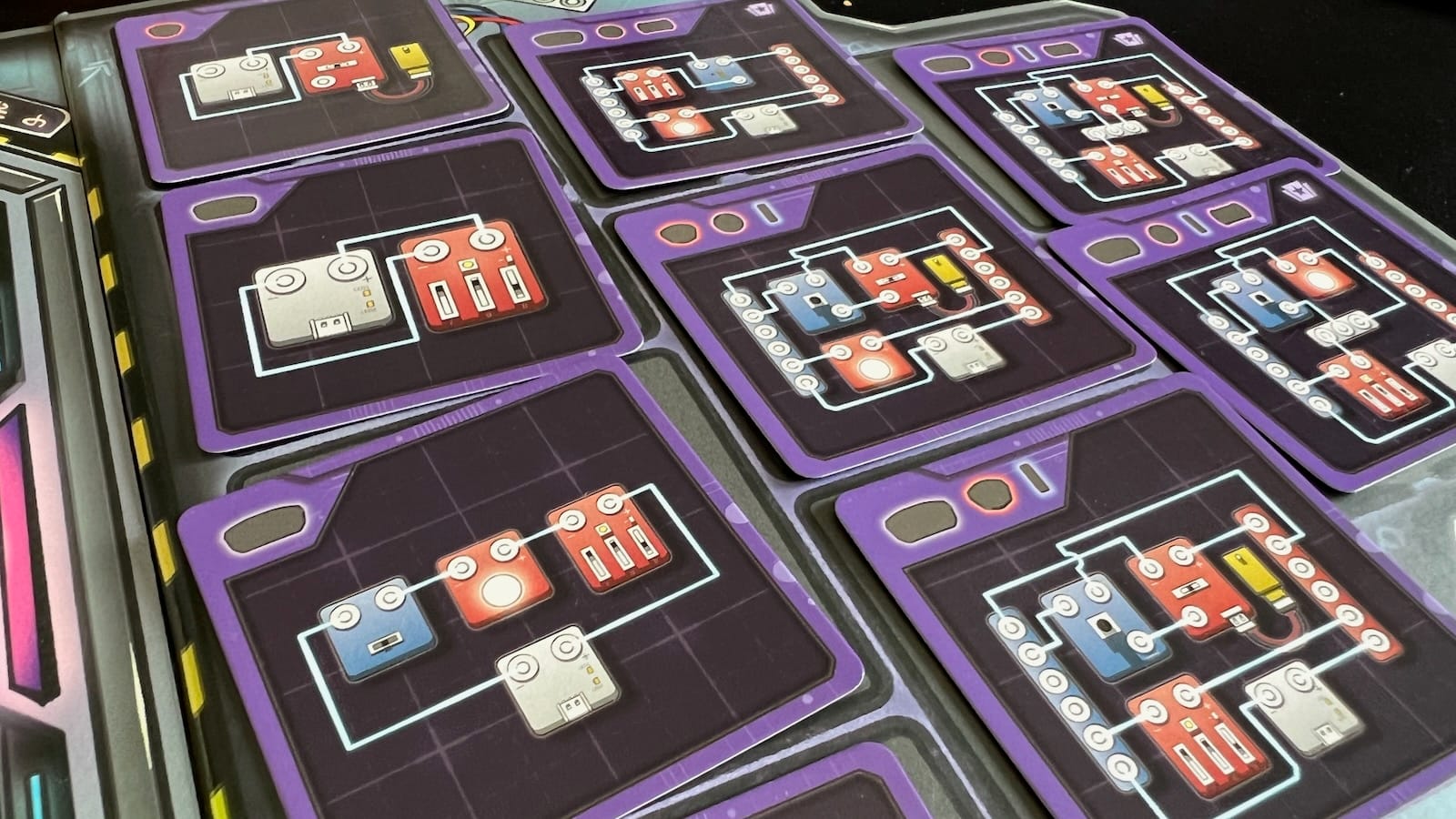
The game comes with two modes: a learning mode for beginners and a more advanced mode for those who have learned the different wiring techniques. The learning mode cards show players every connection and wire needed to complete the circuits, whereas the advanced modes just show the components. It's up to the ingenuity of the player to make the circuit work. Players can use a two-minute timer to make the circuit-building phase more intense, or ditch it altogether if players are just looking for accuracy. Build the correct circuit and place the repair tokens listed on the circuit cards on your board. Some circuits give you further rewards that can give you boons in the game, such as placing extra repair tokens or stealing parts cards from another player. On the flip side, failing to complete a circuit gives you malfunction cards that hurt your game, such as causing you to lose cards or have less time on your next build.
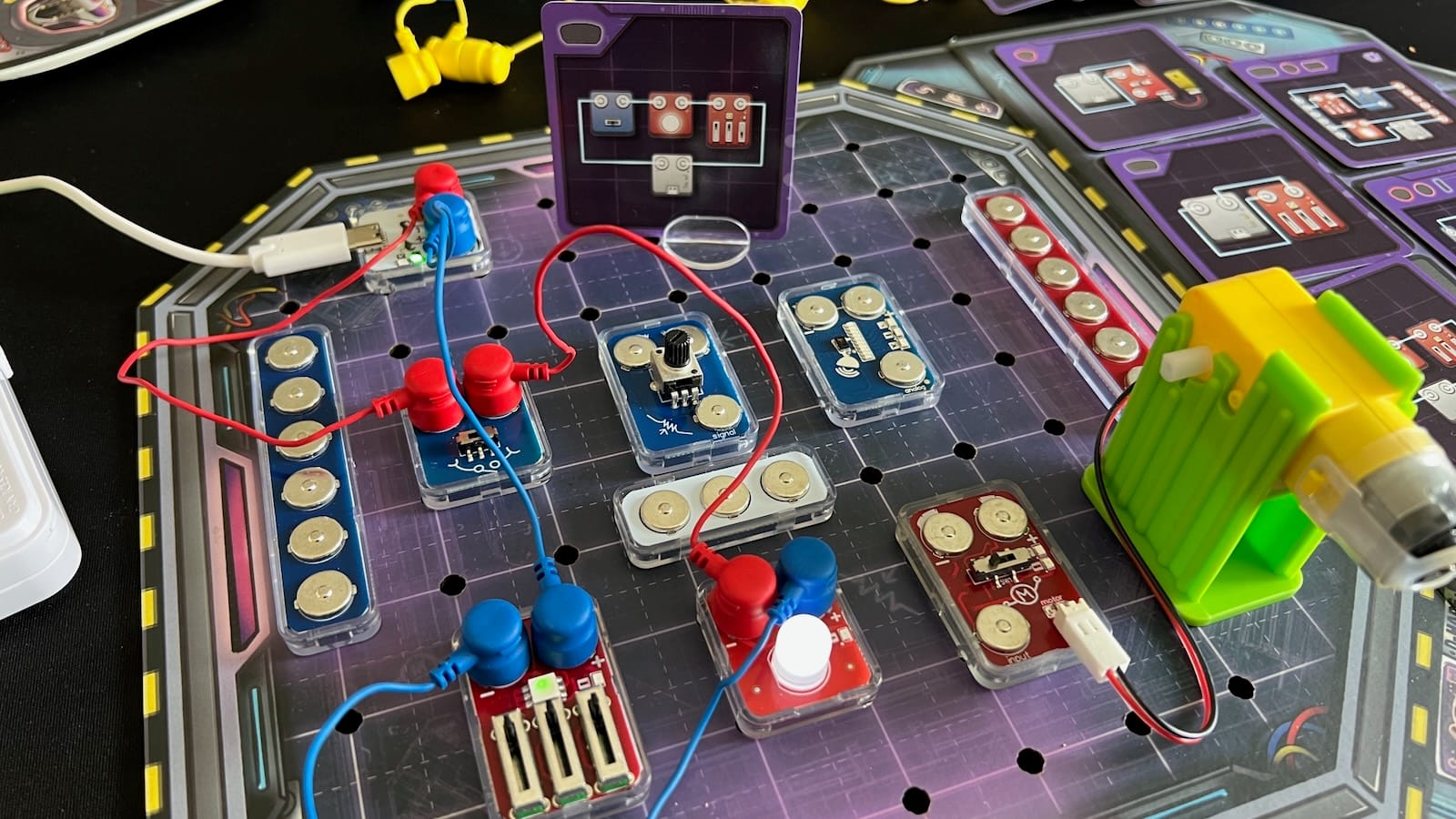
After getting in a few plays of the game, I think the meat of my experience centers around learning how to build and power circuits. The gameplay is really secondary. As someone who doesn’t spend a lot of time in the world of electronics, it was fun to get back to my childhood and play around with the different connections. Rediscovering what happens when you mix up positive and negative terminals or how to chain a current through multiple circuit boards lit up my childhood brain. Flooding back were the memories of RadioShack kits and being psyched up when the light would turn on. My nephews, with whom I played the game the most, were intent on learning how the circuits worked more than completing the game most efficiently.
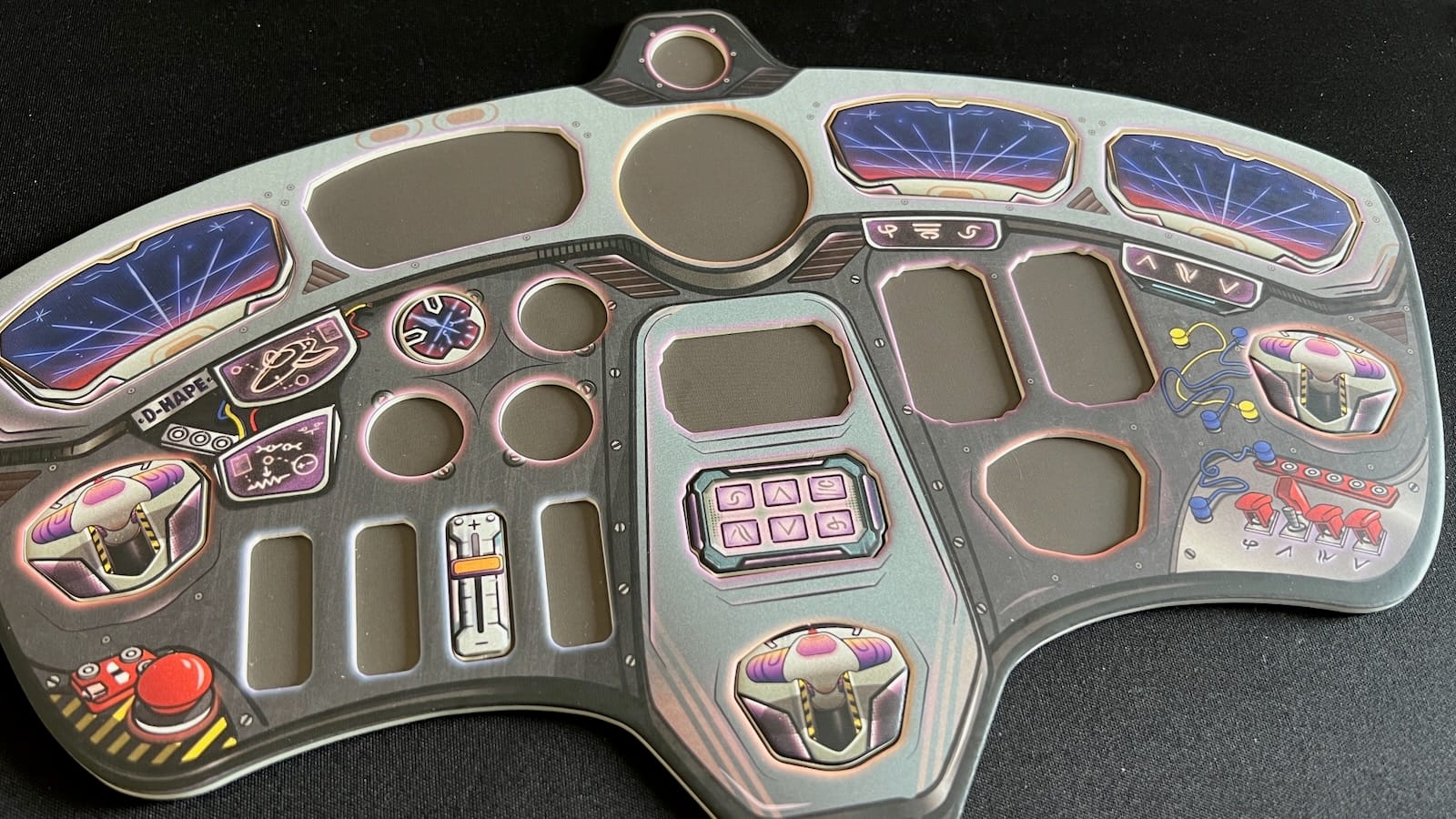
The game, as it stands in prototype phase, was a bit long, and most of our repeated plays used the included shortened game variant to get through. This variant starts you off with some repair tokens already on the board. The rules have also updated to an open market where you have a choice of components to draw on your turn versus blindly drawing each time. There have also been some rebalancing of the resource component deck and some of the circuit cards for a more balanced game experience.
I definitely enjoyed my time with the game and think it is a fantastic introduction to basic electronics. The Labbox components are top-notch, and I will definitely be checking out their other circuitry kits for my son as he gets older!
Interested in getting your own copy of Reactor Rescue? Then check out the crowdfunding campaign here, running through Thursday, May 21st, 2026.
Also, check out LabBox Education and all the great things they are doing to bring STEM education to the classroom and the home.