Five years ago, operant Hershel Wilk (Alias: CASCADE) led her team of spies into one of the Opera’s biggest failures. Not only did this incident split her squad, but it also demolished her reputation within the organization. After years in the freezer, CASCADE is dropped back into her old haunts within the city of Portofiro for one last desperate chance at redemption, only to find her double zeroed out before she even received her assignment. With everything on the line, it’s up to her to gather the broken shards of her shattered spy network before everything comes crumbling down.
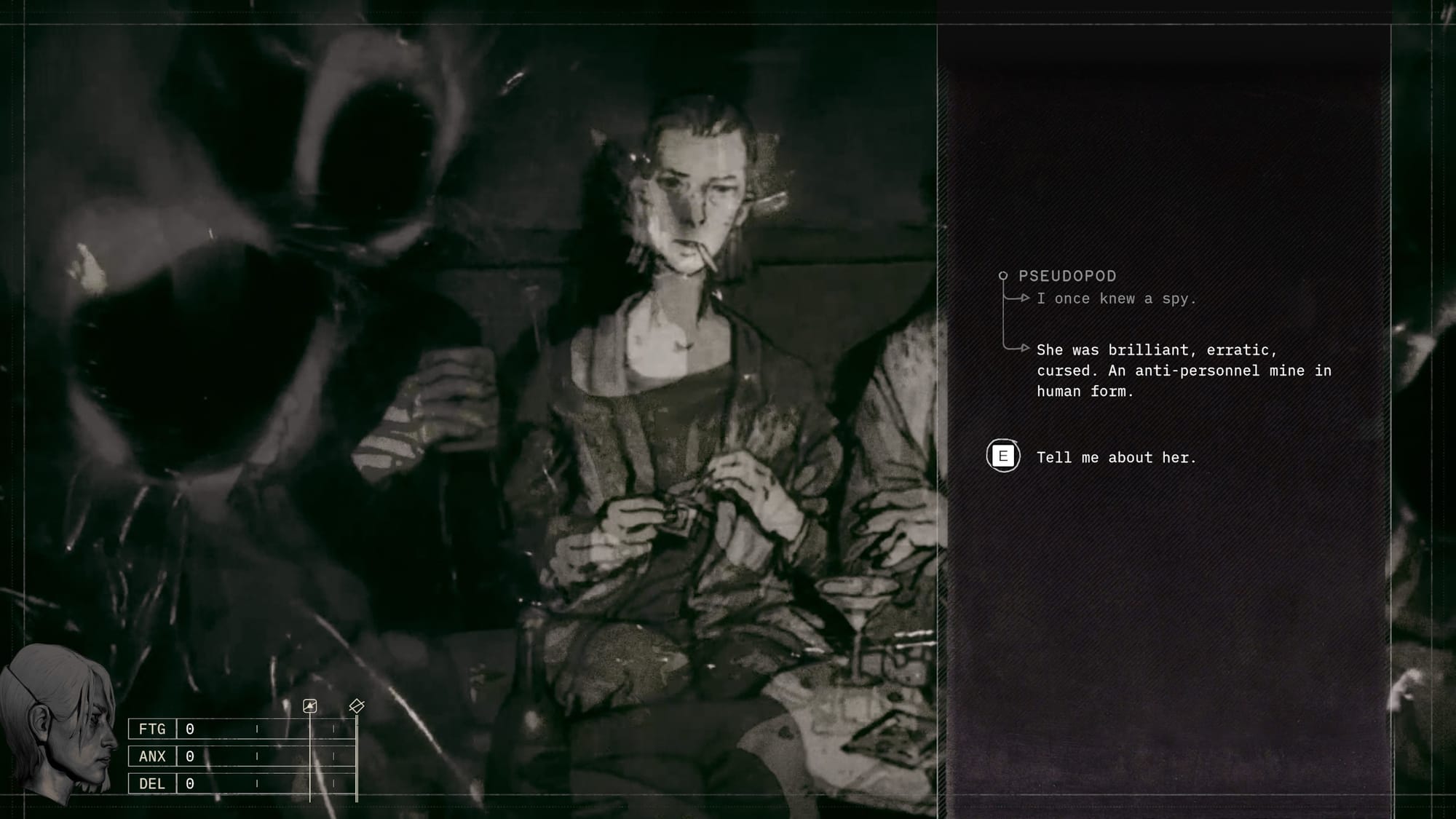
ZERO PARADES is a text-focused CRPG in similar fashion to ZA/UM’s previous game Disco Elysium, but they’ve traded in the detective badge for cryptonyms and espionage this time. Playing as the cursed but brilliant spy CASCADE, you are deployed to Portofiro for a classified assignment, one that will take you to all sorts of strange places. The city of Portofiro has found itself at the center of a political three-way between the communist Superbloc, the banking giant EMTERR and the colonialists known as La Luz, with all sorts of people caught in between.
Most of your time in Portofiro will be spent working towards exploring the city and rebuilding your spy network from the ground up to take on these giants. Rather than the traditional method of RPG leveling coming from fighting enemies, you will instead gain experience by becoming a better spy. Speaking with people, completing odd jobs, learning about city history and contemplating your memories are all ways that you can gain XP, with many more eccentric objectives along the way. It’s a great incentive to be curious when exploring, and with plenty of poetic narration for the dialogue, I was always looking forward to finding my next assignment.
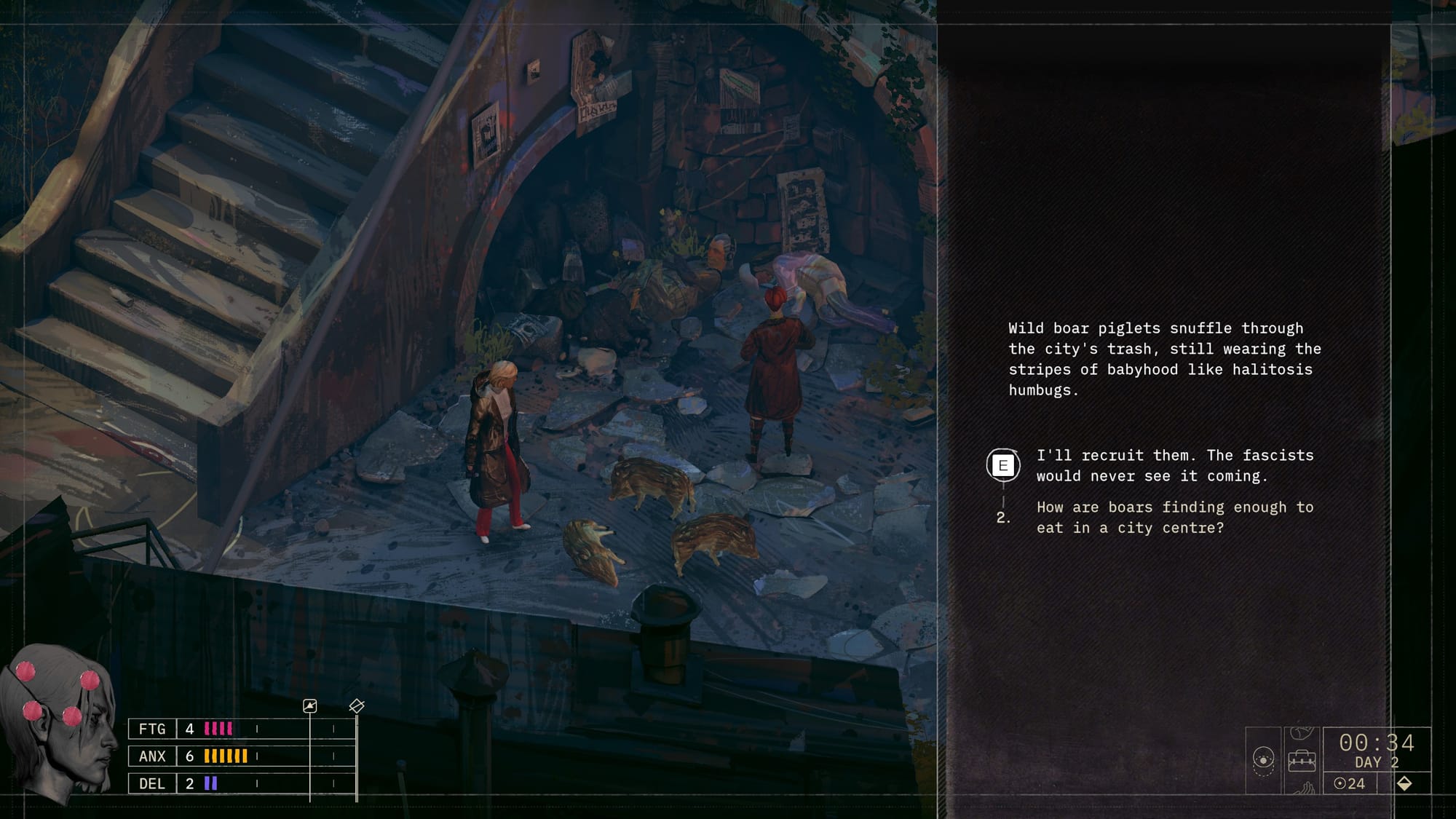
Portofiro feels great to explore and get lost in, as it’s rich with secrets, hidden passageways and varied locales that unfold and open up as the story progresses. Whether you’re shopping for wigs at the Bootleg Bazaar, visiting an old friend on a houseboat or infiltrating secret underground prisons, Portofiro is a feast for the eyes at every corner. The people who live here are also just as colorful as the environments, with a wide variety of folks to engage with. You will speak with undercover operants, fashion trend-setters, doppelgängers, techno-fascists, phone-sex addicts, ghost hunters and more; a spy is always expanding their network of contacts, regardless of their personal hobbies. I was always excited to speak with new people and learn more about the world of Portofiro as my spy network grew larger.
ZERO PARADES lets you tailor your narrative to be as serious or silly as you want, with objectives often having multiple paths to success. Do you take the stealthy route of infiltrating an apartment by stealing a cleaning uniform, or do you choose to hurl your body through the 2nd story window from an adjacent rooftop? There is almost always more than one way to complete an objective, and I found myself appreciating the freedom in creating my own story. I also love that you can take your personality in whichever way you want; you can be a tough and cool spy, an unhinged drug-addled sleuth, a cocky or pensive spy, there's plenty of room for all of it.
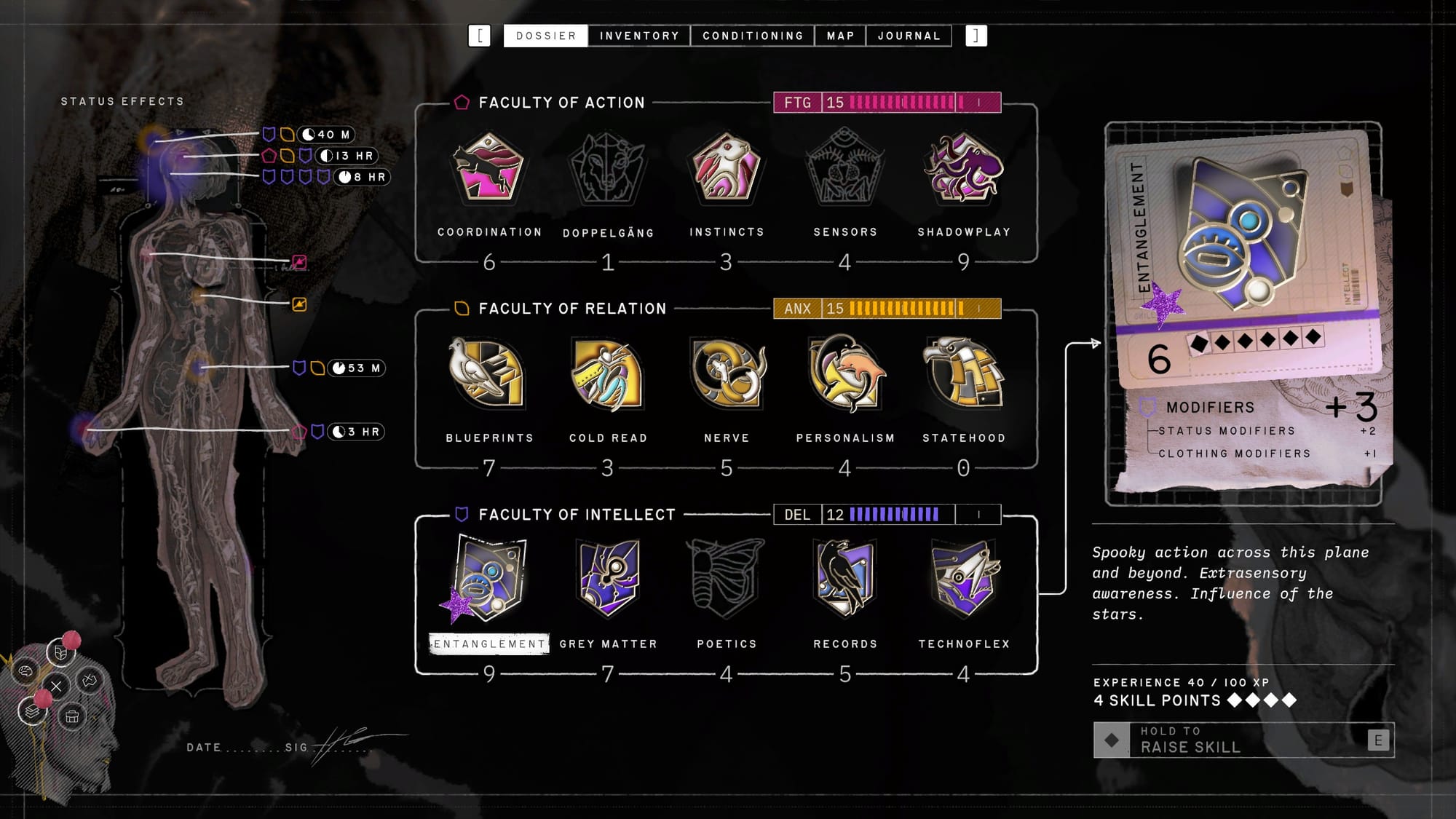
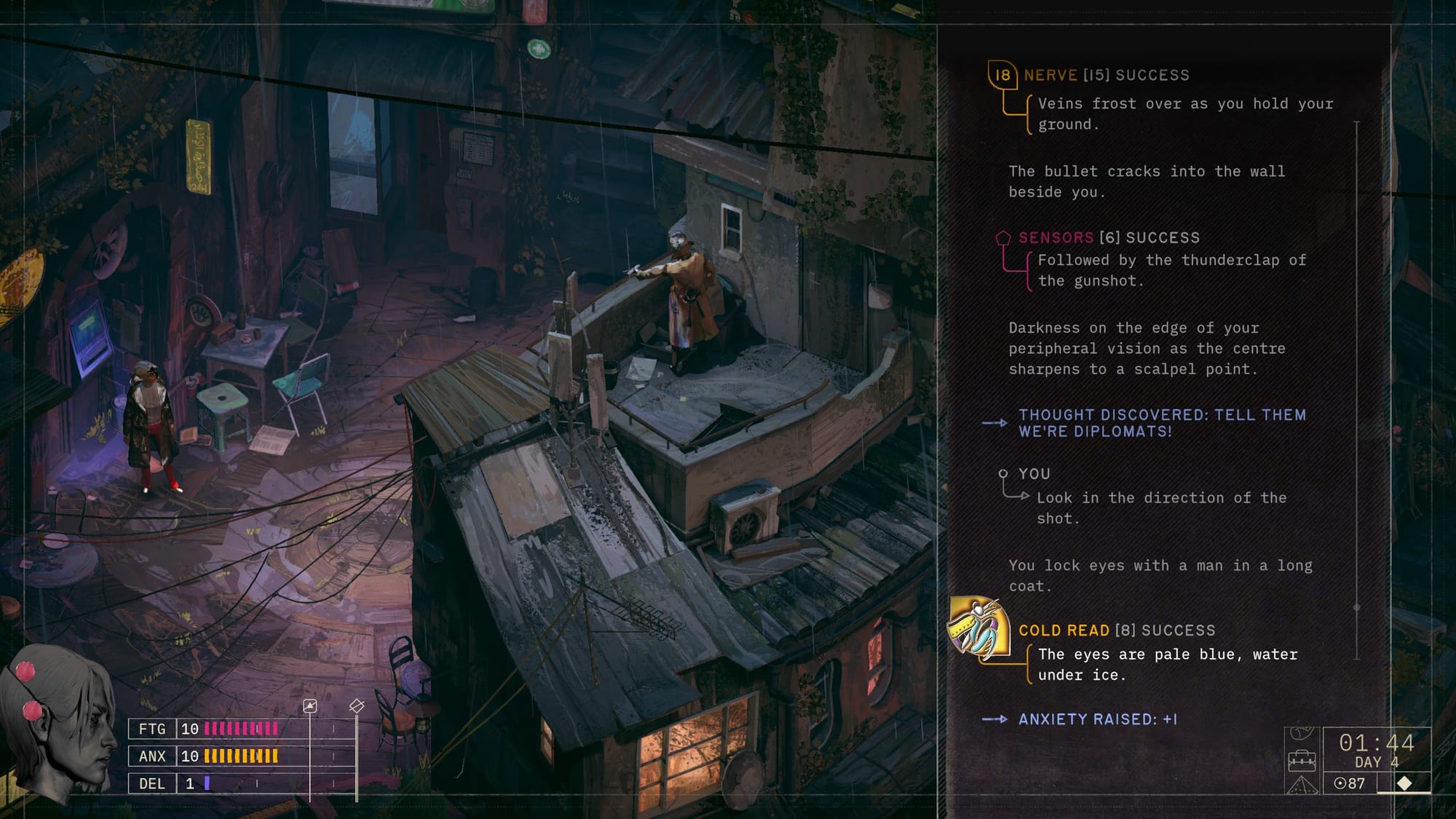
Regardless of which path you prefer, most choices require a dice roll that is influenced by your skills. Some skill checks are white and can be retried any number of times after a day has passed or you level the corresponding skill, but other skill checks are red. These are often important moments in the story or choices that will leave a larger impact on the narrative, and can only be attempted a single time. The randomness of a dice roll can certainly make failing a check feel bad, but there is also a rush when you nail an important moment on low odds too. ZERO PARADES is often about making it up as you go and living with your failures, so this mechanic feels right at home here.
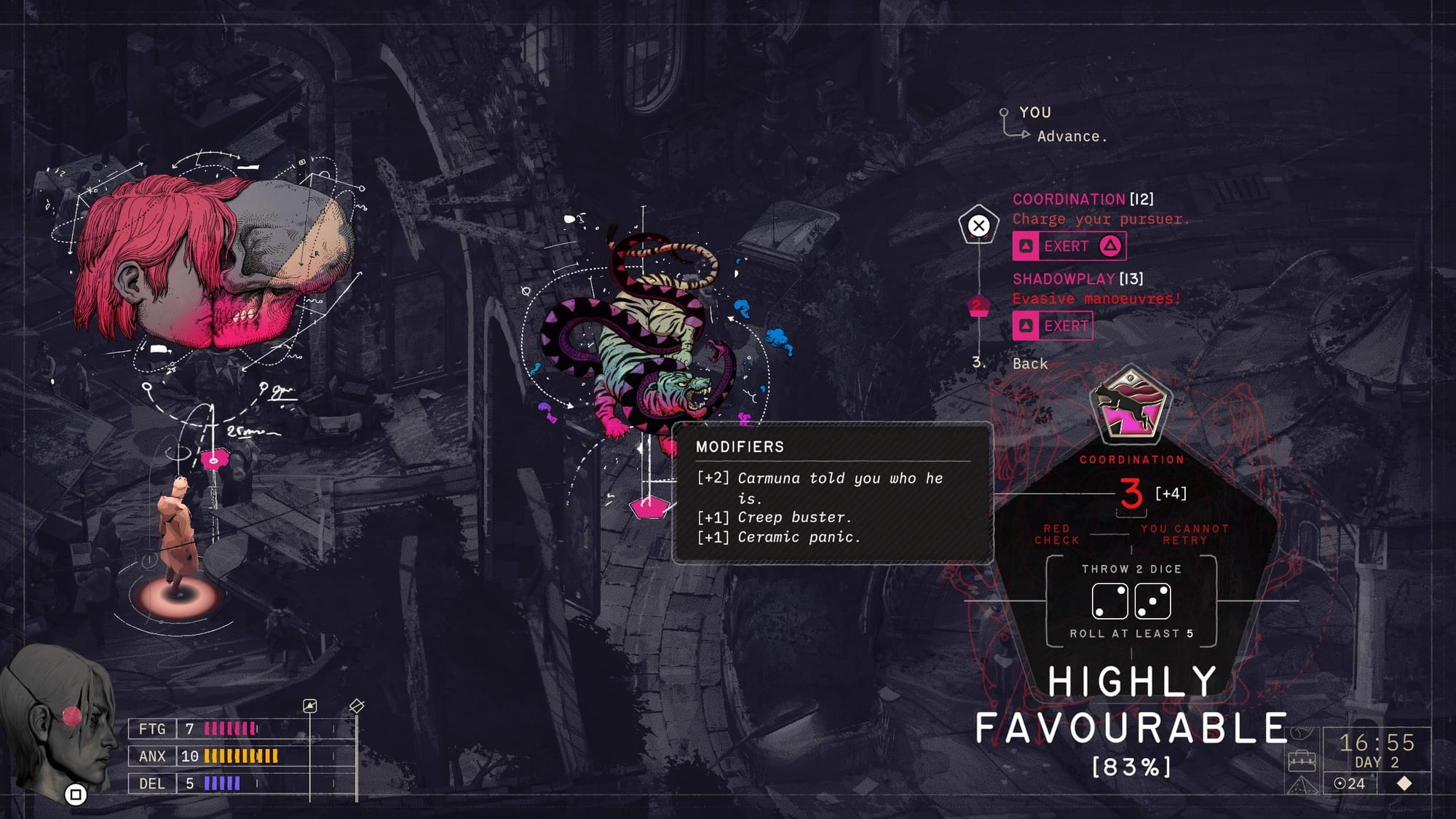
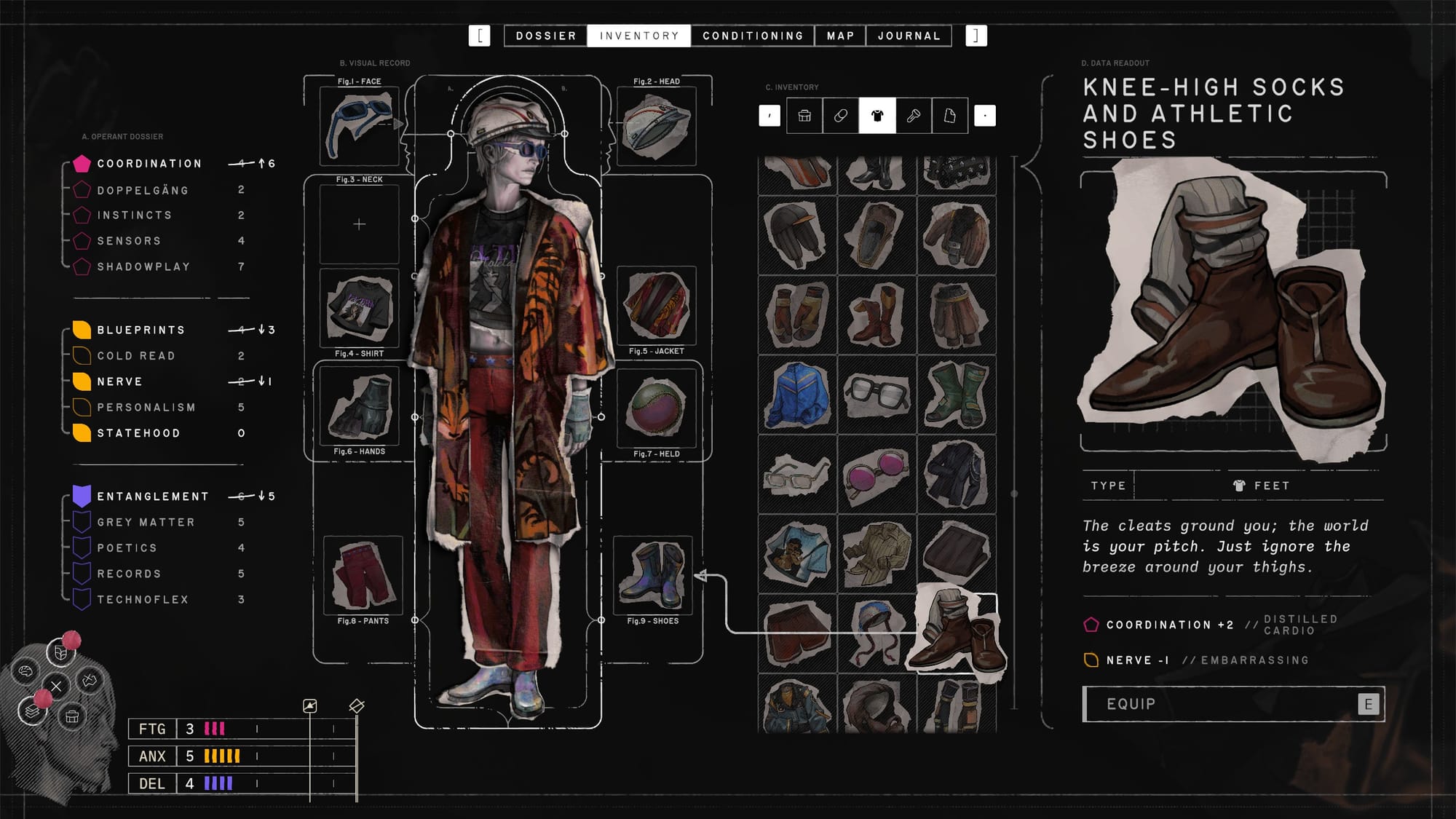
As a spy, your Dossier represents your attributes, both mentally and physically. It’s here where you will spend skill points to choose the direction you want to build into, and shape out your strengths and weaknesses. Instead of having your stats split across five faculties like in Disco Elysium, they have been streamlined into three categories: Action, Relation and Intellect. If you’re a spy who relies on your gut to sense danger and values quick reactions, leveling up the Instincts skill in the Action tree might be your go-to. Depending on how you want to approach people with your Relation skills, you can either level Cold Read for a more quickly calculated assessment or Personalism for an empathetic approach. If you’re a spy like me though, you’ll be leveling the Entanglement skill in the Intellect tree to peel back the veil to reveal cosmic mysteries, even if you’re the only one who can see them. Skills can also be increased based on the clothes you’re wearing, so you’re incentivized to broaden your wardrobe to fit any occasion you might find yourself in. All of this combines into a really immersive gameplay system that was fun to build into over the course of the story.
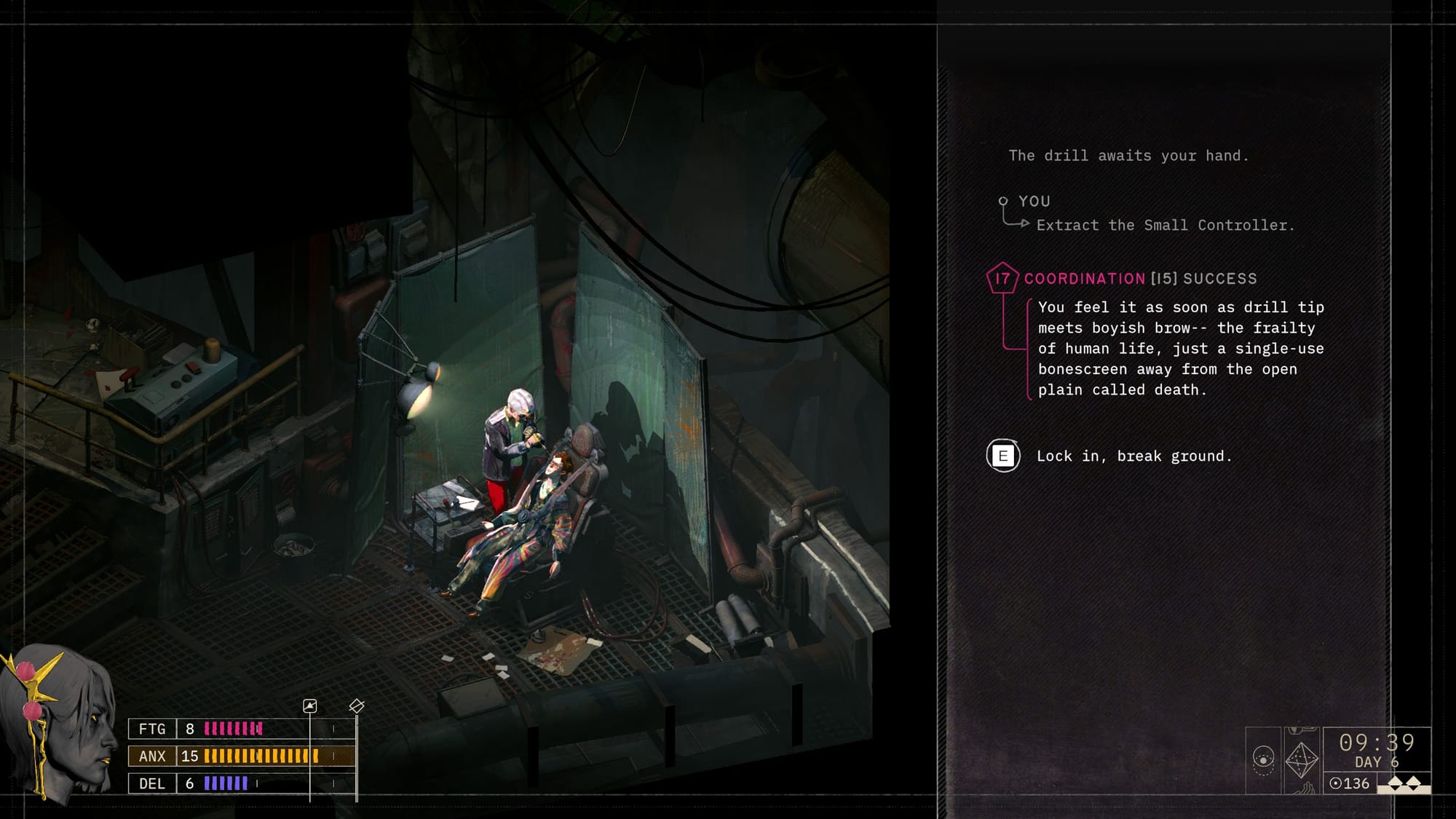
The life of a spy isn’t all fun though, and you’ll need to properly manage your Fatigue, Anxiety and Delirium throughout the day. These can be raised by a number of factors, including your dialogue choices, failing skill checks, how you treat your body and the drugs you do or don’t take. Conversely, they can also be lowered by taking a smoke break, having a coffee, succeeding in your goals and more. If any of these meters get too high, you’ll have to pay the terrible price of lowering one of your skills, so you’re highly advised to keep these under control - as any good spy would. I enjoyed the balancing act of choosing when I could exert myself with a risky play or play it safe when necessary, and with plenty of ways to lower them down, it never felt like it was getting in the way of my progress.
While the Dossier is the main way to upgrade your skills, it isn’t the only way to shape your spy. As you interact with the citizens of Portofiro and complete quests, you will occasionally come across stray thoughts that can expand your capabilities beyond their limits. By conditioning a thought, you can expand the cap on related dossier skills, which will allow you to upgrade them beyond their capacity. You will have to pick and choose which thoughts to condition though, not just because there is limited space in your mind, but also because these thoughts do more than just increase your skill caps. These thoughts come with rules that, when violated, will suppress the positive effects they offer and instead apply a debuff for a short duration. The Umbral Host thought, for example, gives bonuses to the Shadowplay skill, increased luck at nighttime and gives access to ‘shadowy’ dialogue options. This skill becomes suppressed when sleeping at night time though, so I ended up becoming a bit nocturnal during my playthrough. I really enjoyed the buildcrafting aspects of choosing which thoughts to keep and which to ignore, and it provided a unique role-playing aspect to my skills.
ZERO PARADES is a psychedelic spy adventure embroiled in the epicenter of a three-way cultural power struggle that I just couldn’t stop thinking about. It weaves a narrative that manages to be tense, overwhelming, immersive and hilariously bizarre all at once and never seems to miss a beat. Developing my network of assets, thwarting enemy operatives and unfurling the web of mysteries in Portofiro was enthralling, and has established this game as one of my new favorite CRPGs.
ZERO PARADES: For Dead Spies
Phenomenal
ZERO PARADES: For Dead Spies is tense espionage, political dread and arcane philosophy wrapped up in a beautifully crafted CRPG package. The freedom to develop your spy in whatever faculty and fashion you wish is fun to engage with, and the narrative had me hooked from the moment I stepped foot onto the scene.
Pros
- Plenty of ways to shape your spy
- Poetic writing and engaging characters
- Absorbing espionage narrative
- Divergent role-playing opportunities
Cons
- Dice-based skill-checks might not be for everyone
This review is based on a retail PC copy provided by the publisher.