The original Azul was one of the first modern board games I fell in love with. The simple act of drafting colorful tiles from a shared market and turning them into a satisfying puzzle immediately clicked with my puzzle-loving brain. It also became one of my favorite gateway games because of how approachable it was for newer players. Since then, the series has expanded with multiple iterations featuring different materials, tile shapes, and even a chocolatier theme. Eventually, it was only a matter of time before Azul received the now-popular duel treatment.
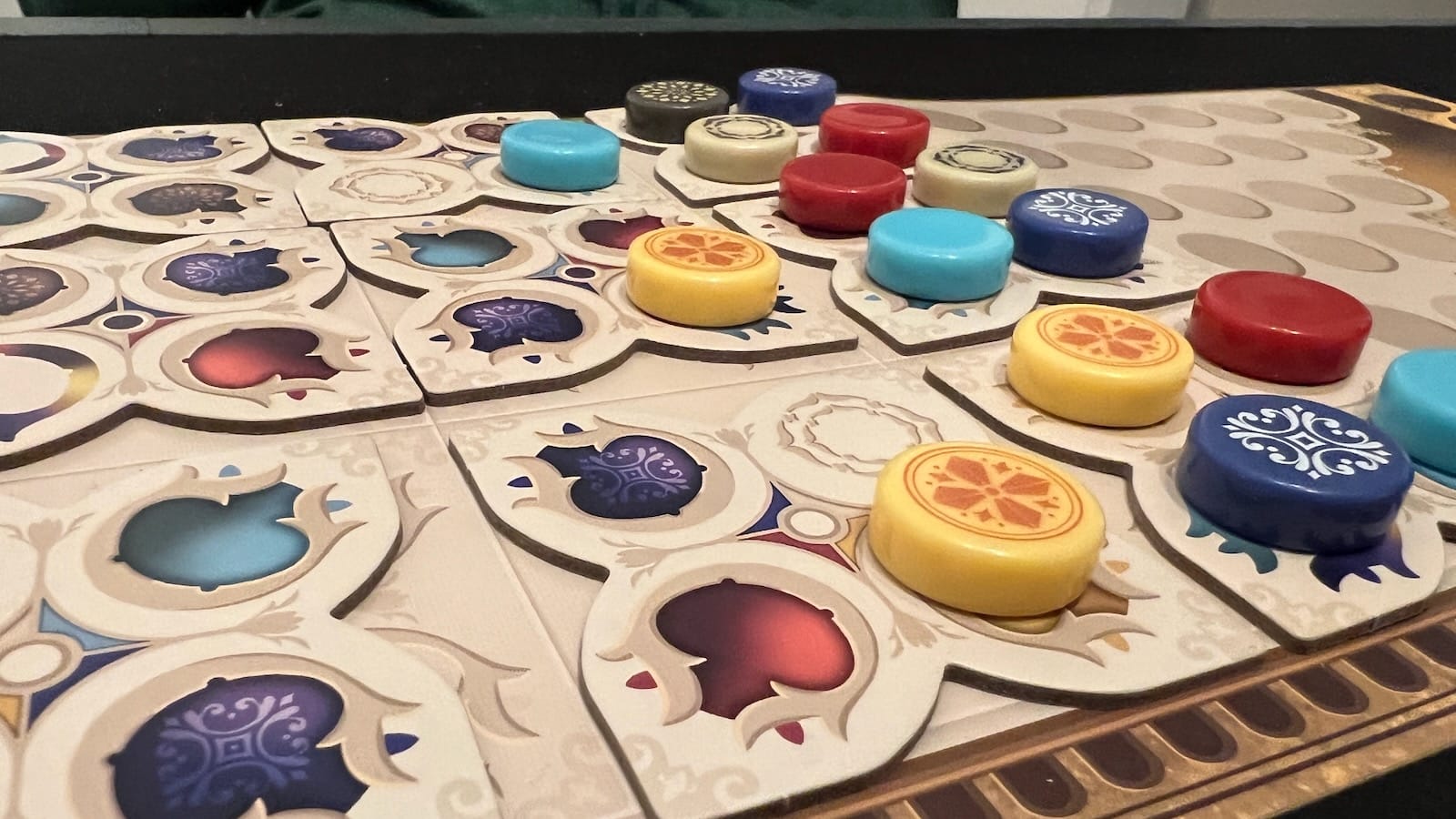
Azul Duel is a dedicated two-player experience from designer Michael Kiesling and publisher Next Move Games. Over five rounds, players draft tiles, Dome Plates, and bonus tiles from a central market to build out their personal mosaic board. Like the original, the core gameplay revolves around efficient drafting, tactical denial, and maximizing adjacency scoring, but Duel introduces a few new elements that slightly reshape the experience.
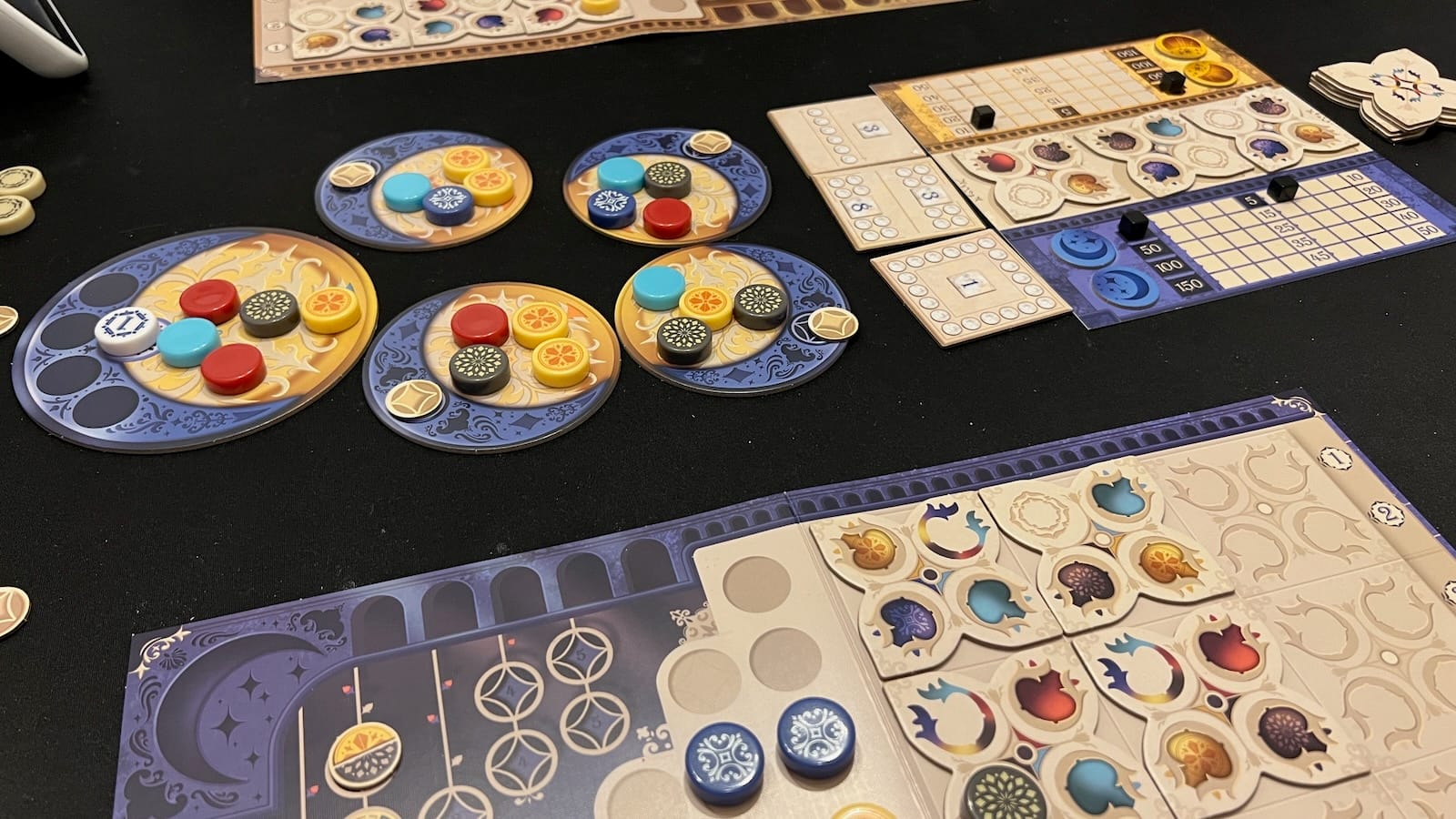
The biggest addition is the Dome-Plates. Instead of building onto a fixed board like the original game, players draft these plates and place them onto their personal board in any orientation they choose. Each plate contains spaces for three colored tiles alongside either a wild space or a bonus scoring space. The added flexibility makes Azul Duel feel a bit less restrictive than the original, allowing players to adapt their board as the game develops rather than committing early to a rigid plan.
The drafting market itself also sees a small but meaningful twist. Players still take all tiles of a single color from one market, but the leftover tiles are now stacked onto a “moon” section instead of being dumped into a central pool. Those stacks can later be drafted from the top, creating opportunities for players to manipulate future turns and set traps for their opponent. In a two-player game especially, this adds a little more tension and intentionality to the drafting. I found myself paying closer attention to what I was leaving behind than I often do in the original game.
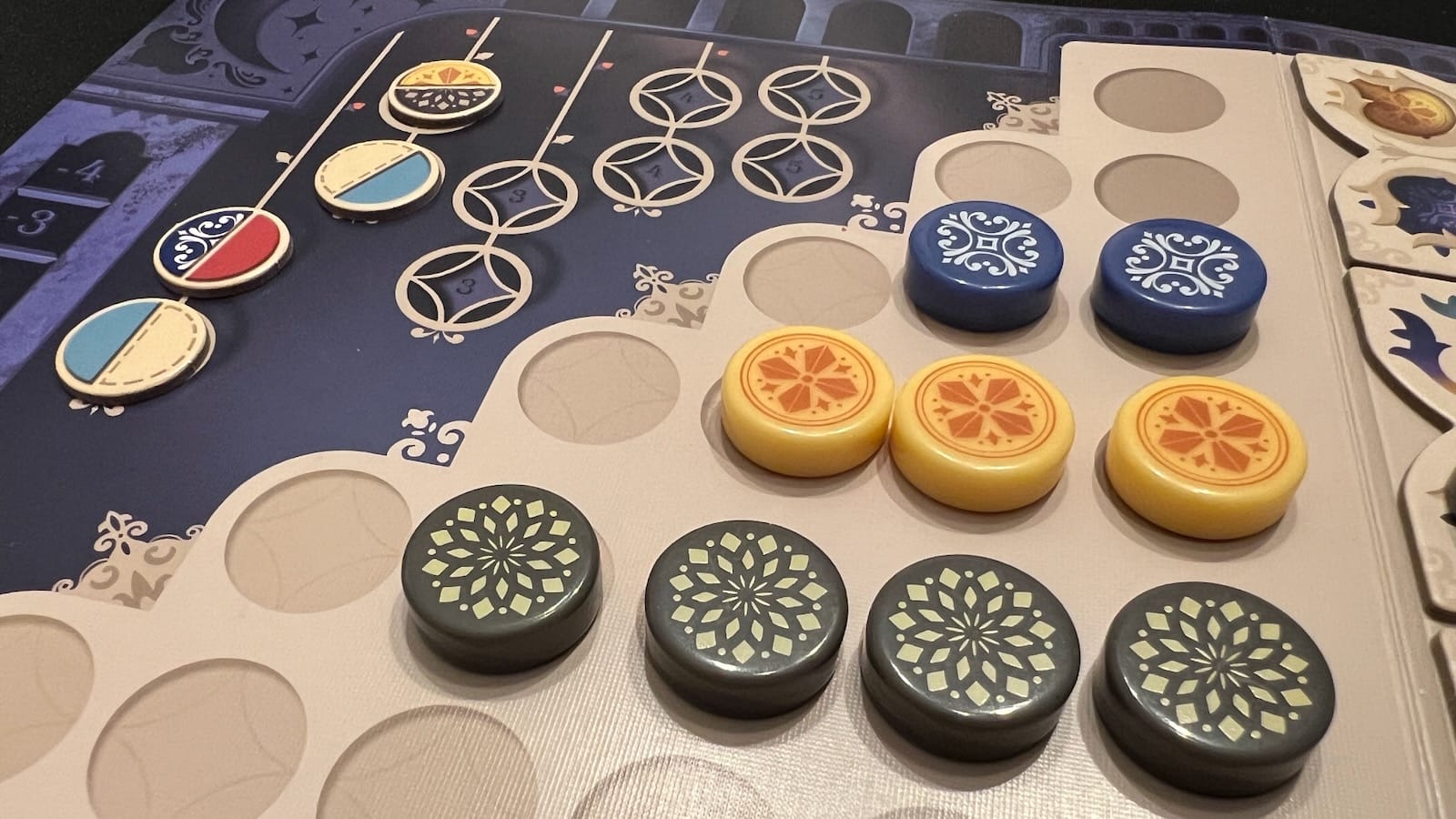
When markets are empty, bonus tiles are revealed that can help complete rows of tiles needing to score. These additions are nice touches and occasionally create satisfying turns where a partial tile perfectly fills a missing space. Still, while these new mechanisms are enjoyable, they never dramatically change the feel of Azul.
That familiarity is both the game’s greatest strength and its biggest hurdle.
I enjoyed my time with Azul Duel because I already enjoy Azul. The new systems add just enough variety to make the experience feel fresh for a few plays, but not enough to supplant the original. In particular, the Dome Plates occasionally felt more obligatory than exciting. There were several turns where I drafted one simply because I needed another placement opportunity rather than because it opened up an interesting strategic path.
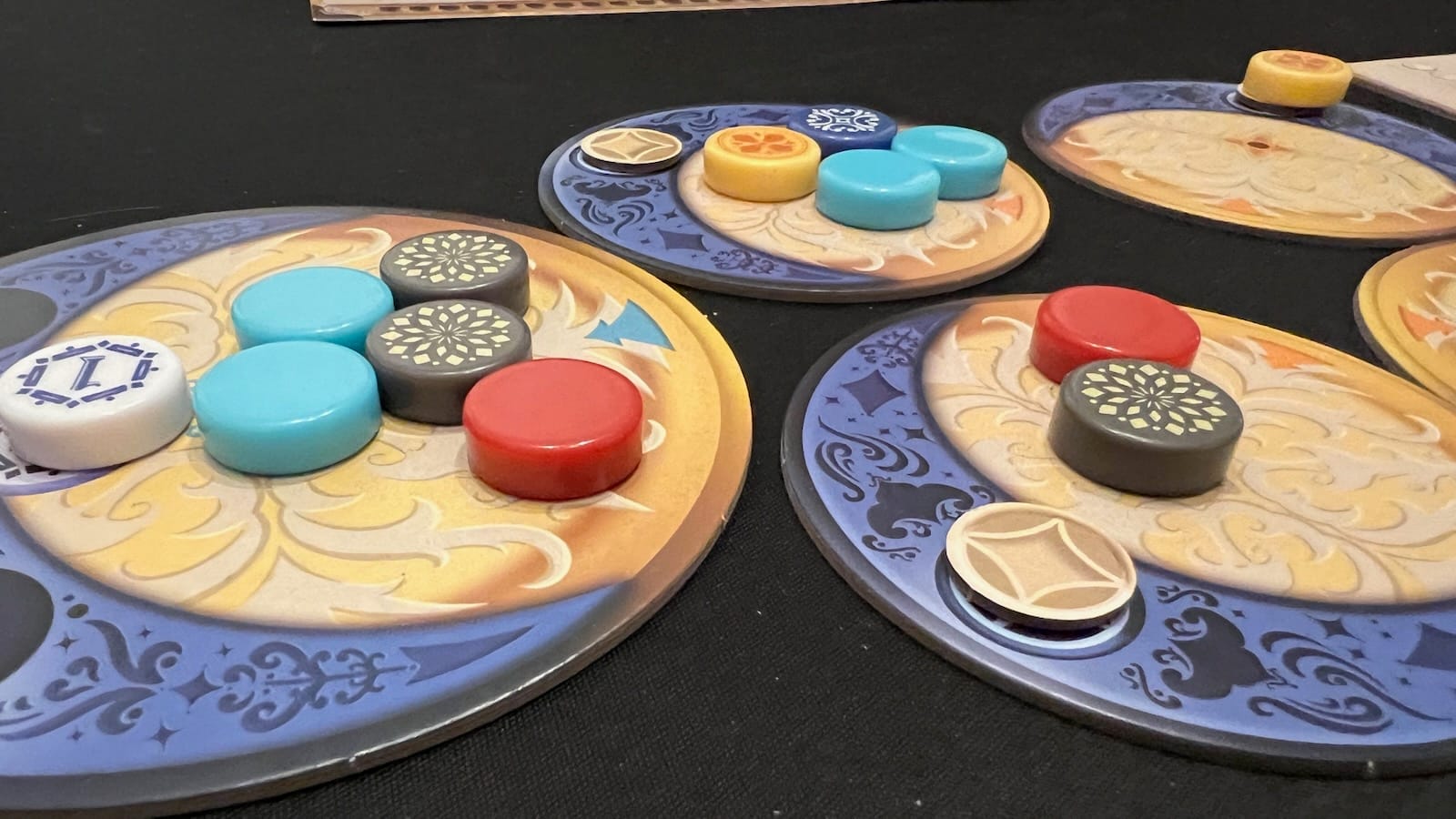
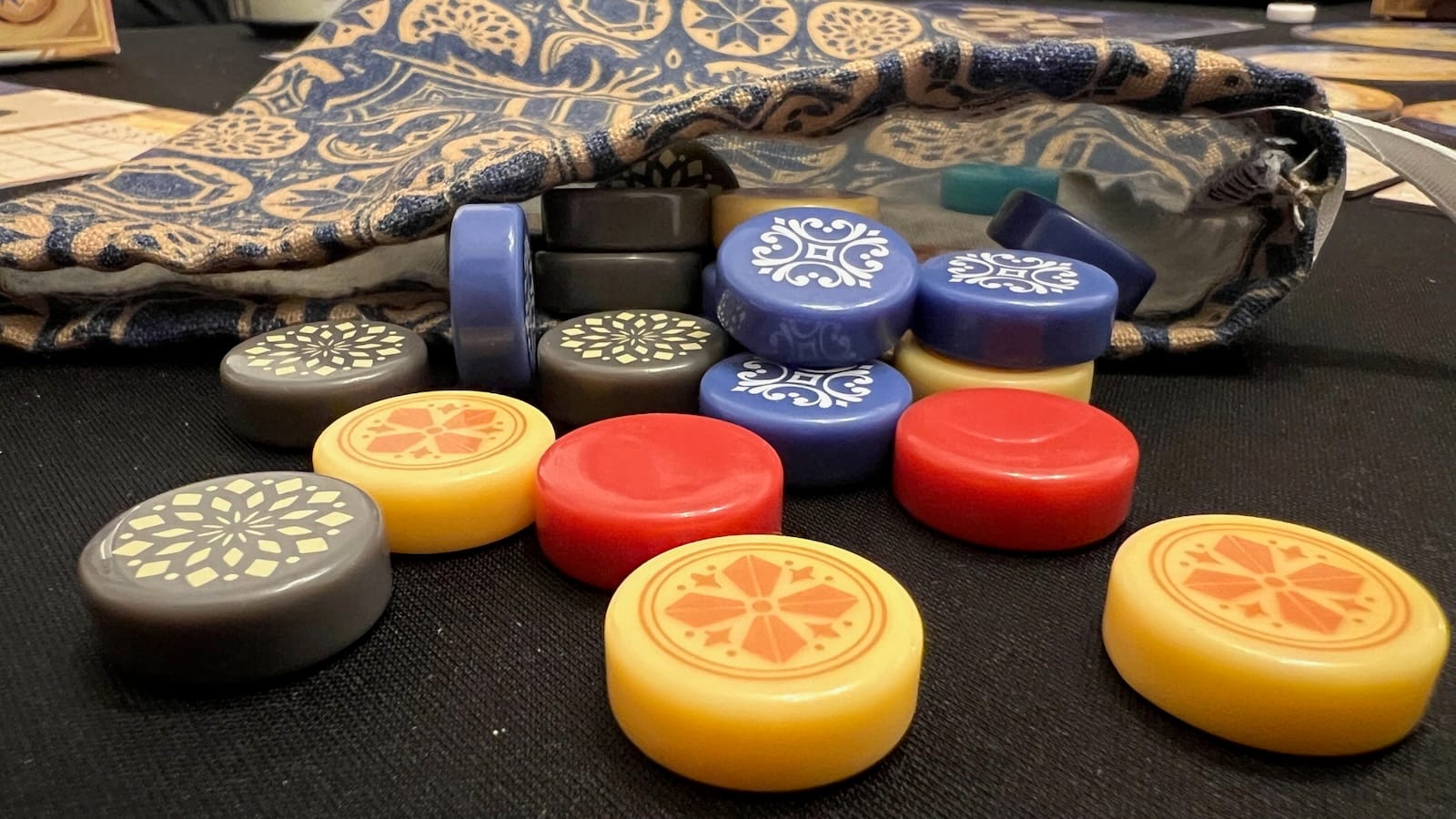
Component quality remains solid overall. The chunky tiles still feel fantastic in hand, and the included tower for discarded tiles makes cleanup and refilling the bag smooth. My one disappointment is the player boards themselves, which are thin folded cardboard and easy to bump during play.
That leaves Azul Duel in an interesting spot. If you primarily play games at two players, this may actually be one of the better versions of Azul for your collection. The tighter interaction and duel-focused structure fit the series naturally, and games move quickly while still retaining the tense drafting decisions the franchise is known for. However, if you already own the original Azul and regularly enjoy it with two players, I’m not convinced this is an essential addition. The original already scales at that count while also supporting larger groups. Duel introduces some smart tweaks, but not enough to fully replace or surpass the classic version for me.
So who is Azul Duel really for? I think there are two groups that will appreciate it most. The first are dedicated Azul fans and collectors who want every iteration on their shelf. The second are couples or strictly two-player households looking for a fast-playing abstract strategy game with approachable rules and satisfying interaction. For that audience, Azul Duel absolutely succeeds.
Azul Duel
Good
A polished two-player adaptation of Azul that adds a few clever drafting twists without straying far from the original formula. May not be necessary for those who enjoy two player gameplay with the original but perfect for newcomers to the system.
Pros
- Excellent head-to-head tension
- Familiar Azul gameplay with a few smart drafting additions
- Quick setup and smooth pacing
Cons
- Doesn’t differentiate itself enough from the original
- Thin player boards are easy to bump
- Some new mechanics feel incremental rather than essential
This review is based on a retail copy provided by the publisher.