As with most "duel" games, Yokohama Duel is based off its 2-4 player big brother, Yokohama, first published in 2016 with an update in 2024. The Duel version was first published back in 2018, but also got the redesign treatment in 2025, featuring an updated layout and new artwork mirroring the full game.
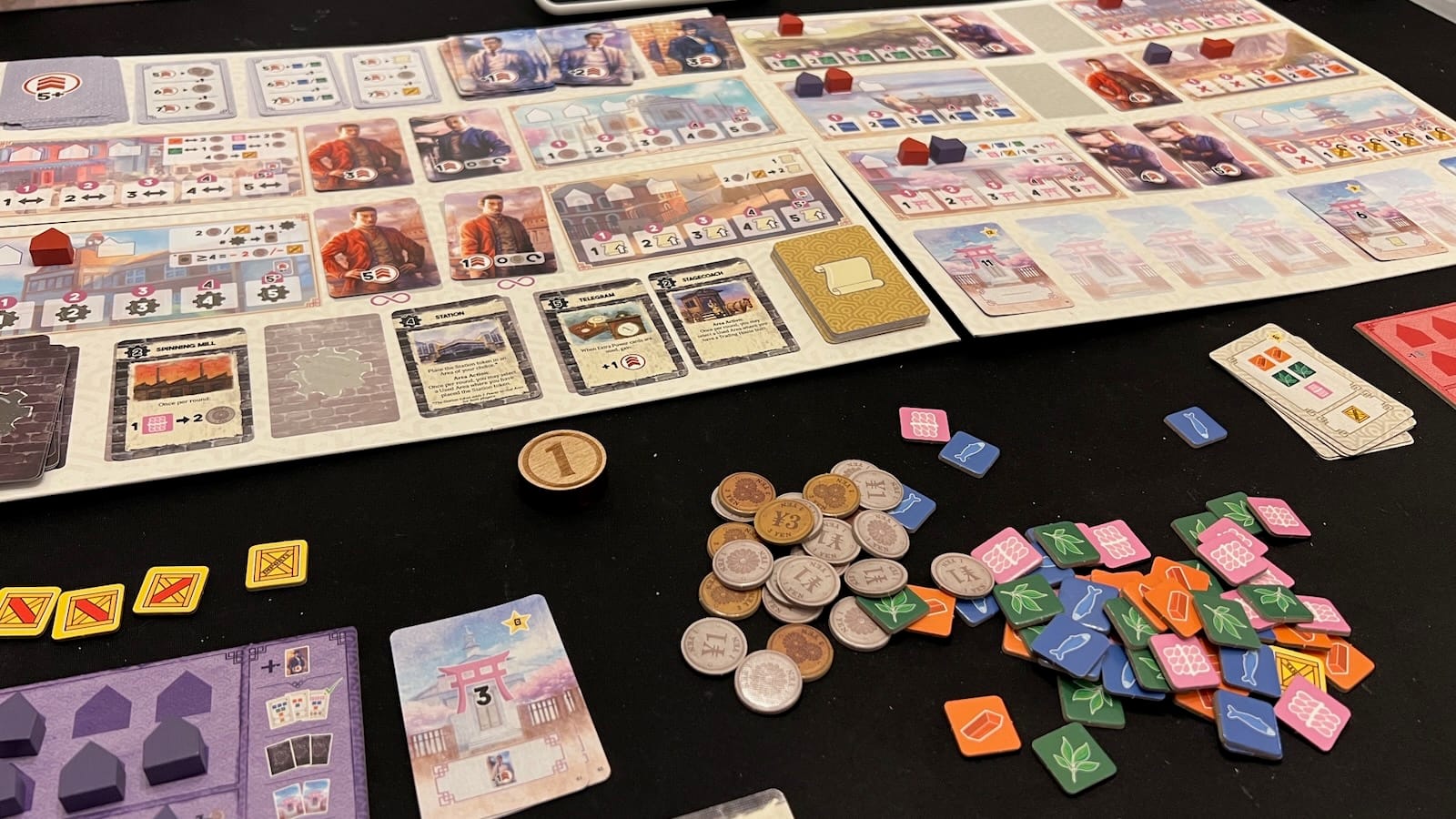
In Yokohama Duel, players compete as merchants trying to exert their influence over the growing town by collecting goods and technology, filling orders from customers, making donations to the church, and utilizing the skills of foreign agents. Over four rounds, players upgrade their capabilities while timing increasingly powerful actions to maximize their turns and score big in the endgame.
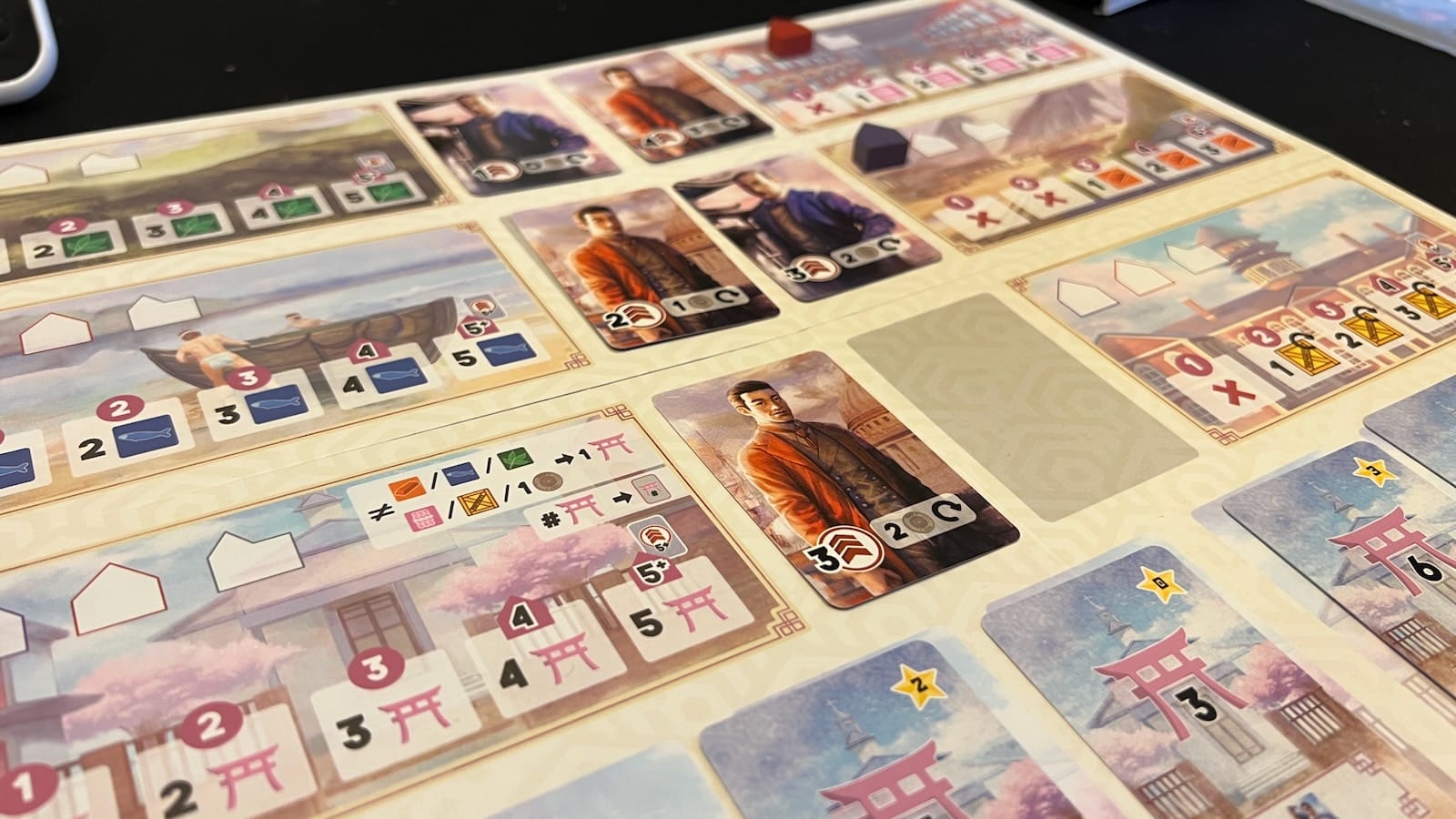
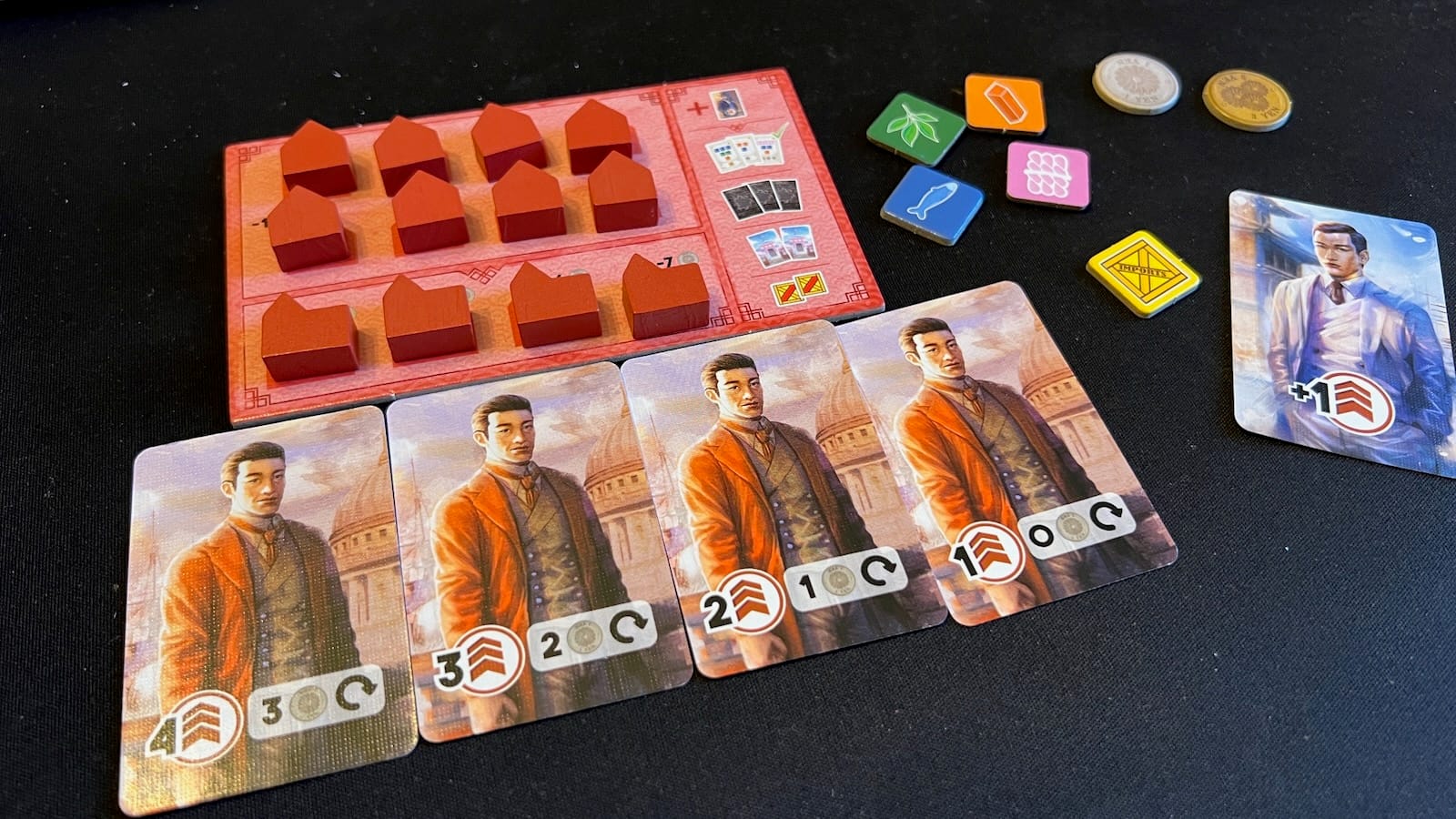
Yokohama Duel is a game where small decisions turn into meaningful ones. Players have to focus on their sequencing, as they are forced to play their lowest power card each turn. Power Cards activate the different locations on the board and, depending on their strength, can be very lucrative. Players have to decide whether to act in the moment or set up a stronger turn later, all with the chance that the other player may block their desired location. But as you learn the system, you'll find that there are always to mitigate this risk.
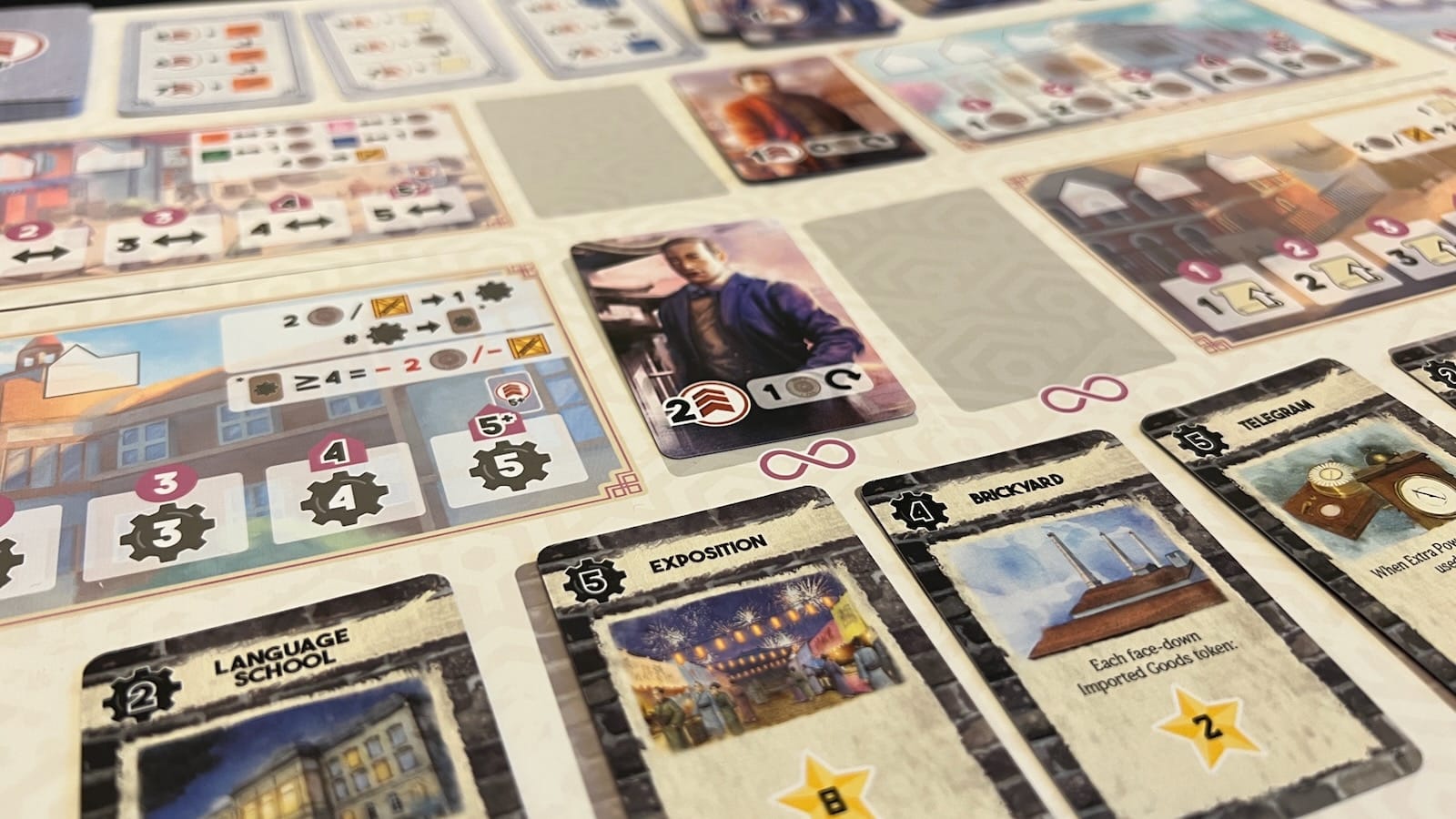
Technology cards, in particular, can shape each player's approach to the game. In one game, I was able to use the Postal System tech card to play a Power Card out of order, allowing me to swoop in and claim a location at maximum power. In another, the University gave me knowledge at the end of each round, so I didn't have to pay money to upgrade a power card, letting me put the resources somewhere else. These technology cards can shift your path throughout the game.
Location spaces being mostly finite opens up some interesting decisions for the players. Players may have to shift their strategy for getting the goods they need if their opponent hits the location first. Foreign Agents are another way to work around this maximize your turns. Earned by hitting certain conditions in the game, a Foreign Agent can give you the flexibility to visit blocked locations and create mini double turns to reach your goals.
What makes Yokohama Duel interesting is the depth it can build through its interlocking systems. From tech upgrades to power bonuses and Foreign Agents, players can usually find a path to reach their goals. The player who does it more efficiently is the one that will come out on top.
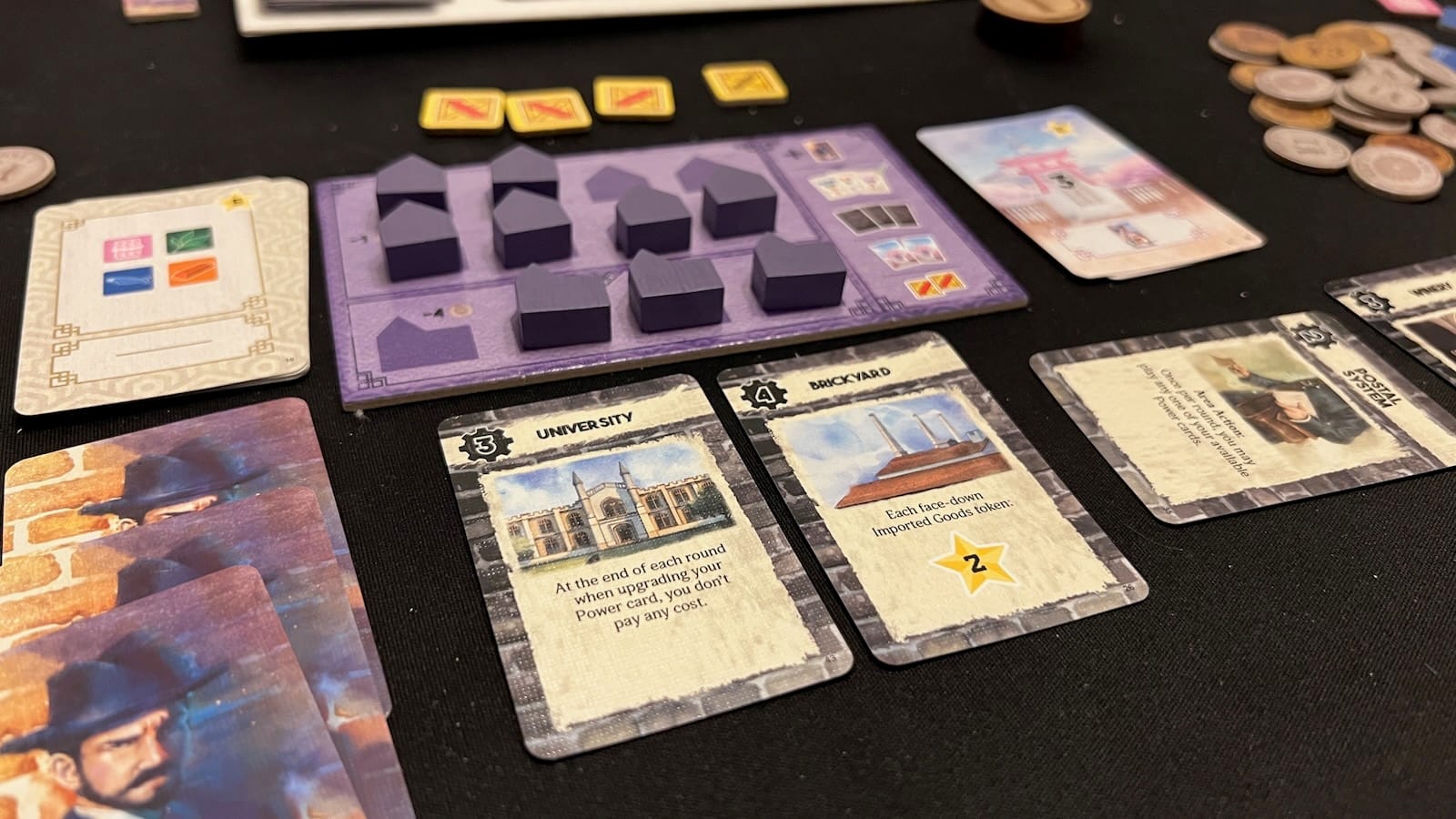
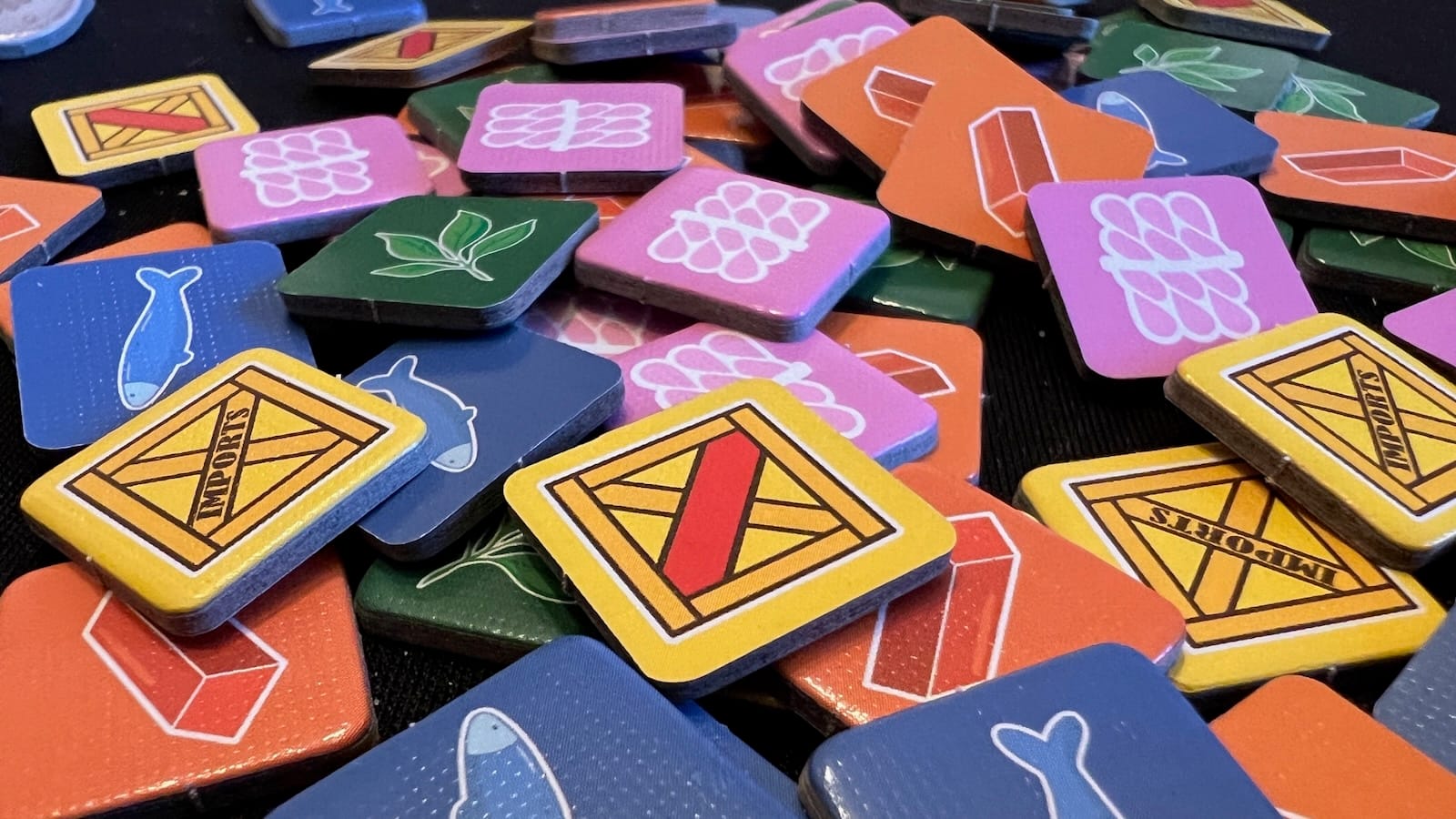
On the production side, the updated artwork was a welcome addition. All of the iconography throughout the game is well designed, and once you are familiar with each location, everything you need is printed on the board, streamlining gameplay. The main play area is separated into two boards rather than many different boards like its predecessor, and can be laid out depending on your table space. These boards hold all the locations and cards needed in the game. One of my biggest gripes, however, comes in the warping of the boards after our first play. The thinner, warped cardboard and light components mean a table bump will send things sliding. The player boards are simple, utilitarian, and provide a reminder of how to recruit foreign agents. As they store all of your shops and trade house tokens, a dual-layer would help organize the components better. The resource and money tokens are also a thinner cardboard, but are vibrant and fit the small box aesthetic. The rule book does a excellent job of outlining gameplay with included examples and descriptions of each location and technology card. A more robust back page reminder sheet would have been nice, but overall, a decent manual.
Yokohoma Duel is great for players who like quick and efficient turn structure games. If figuring out the best path to your goal from what's presented on the board sounds enticing, then I would recommend this for you. It is probably a game that will be added to our "duel" shelf as it provides some different gameplay from other entries. The quick play time and the resource management/order fulfillment mechanisms give a great little brain teaser in a small box. Having only experienced the original game through videos and a quick online tutorial, I'd be interested in getting it to the table to see how it compares. However, I can say that this game brings enough to the table and doesn't need the nostalgia of the original to stand on its own.
Yokohama Duel
Good
Yokohama Duel delivers a satisfying, thinky experience in a compact format. The quick setup and sub-45-minute playtime make it an easy game to get to the table, while the depth of its systems provides plenty of replay value. While component issues hold it back slightly, it stands on its own as a strong addition to the two-player strategy space.
Pros
- Quick-playing strategy
- Nice aesthetic and iconography throughout the game
- Some fun synergies to discover through technology cards
Cons
- Flat boards + Light Components = Bumping hazard
- Main boards warped early
- Takes a game or two to discover gameplay.
This review is based on a retail copy provided by the publisher.