Okay that title technically isn’t clickbait. I did see Ryu and the rest of the Street Fighter gang early in theaters for their appearance in an anticipated adaptation. It just so happens that the adaptation is called Young Ladies Don’t Play Fighting Games, an upcoming yuri anime where multiple gal pals blow off their lesbian tension by duking it out in good ol’ Street Fighter 6. The manga initially debuted in 2020, with an English localization releasing a year later. I got into the series in 2022, and while I haven’t kept up with it past the first few volumes, I deeply enjoyed the early portions of Eri Ejima’s comedic, and intense love letter to competitive fighting games.
Thus, I was elated when I heard that an anime had been announced back in 2021. I patiently waited, and waited… and waited. A live action adaptation got announced and released, having footage from Street Fighter V in it. That was cool… but not the news I wanted. Eventually, a few years turned into half a decade, where the yuri gods finally blessed us with news that Young Ladies Don’t Play Fighting Games is set to have its anime debut in July. Thanks to Crunchyroll’s Anime Nights theatrical showing, I was able to check out the premiere of the first episode early.
The story revolves around Mitsuki Aya, a girl wanting to fit into an elite, all girls’ school she attends on a scholarship. Eventually she meets the most revered student in the academy, Yorue Mio, who embodies the elegance she strives to achieve. That is, until the protagonist discovers Mio’s secret. The dignified young lady is actually an overly-competitive, trash-talking fighting game player. Upon this revelation, Aya reawakens the FGC spirit she thought she left behind, starting a bond with Mio where they make war, not love through matches of Street Fighter 6.
Based on the first episode, this anime adaptation is gearing up to mostly be an animated replica of the manga, rather than an “adaptation”. What do I mean by this? Beyond telling the same story, most shots from the premiere are nearly identical to how they were presented in the manga. While it isn’t unusual for shows to mirror the striking art of their source material, for the most part the panels are used as inspiration to bring the events of the book to life in an animated medium. By contrast, the cinematography in Young Ladies feels like it utilizes the drawings on the pages themselves as a direct storyboard. A series with animated manga panels, rather than using animation to bring the manga to life.
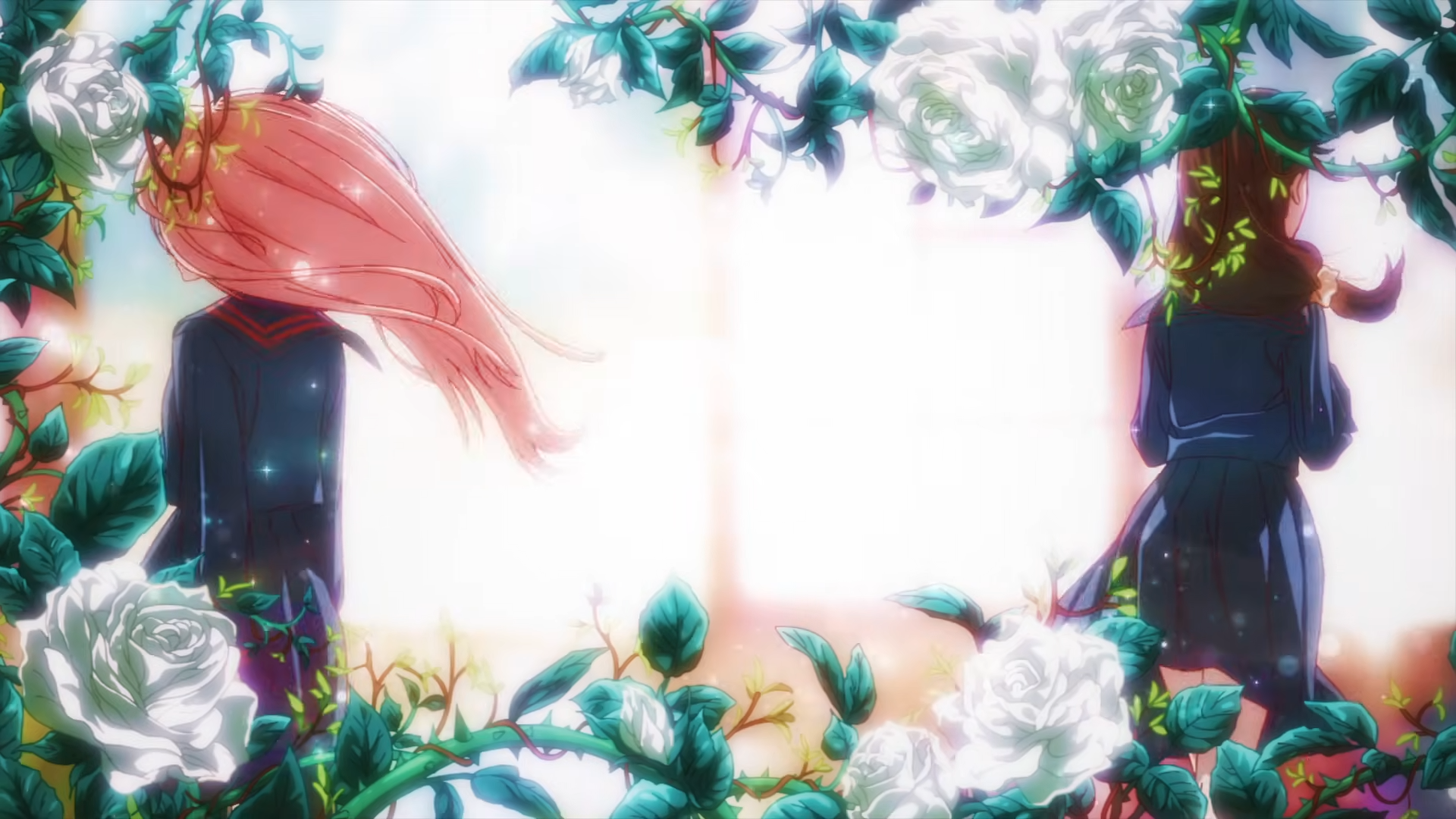
That’s not to say mimicry is inherently bad. For non-readers, being exposed to this content for the first time, it likely won’t even cross their minds as long as the execution is good. Fortunately, this is the case for Young Ladies’ debut episode. For starters, the composition of the manga’s art was already strong, providing fun visual gags and creative angles. Thus, the near identical reproduction in the show also achieves a similar quality. In essence, the anime is a slightly different recipe of an already wonderful flavor.
Furthermore, the premiere circumvents one facet that has plagued my enjoyment for adaptations of series I have already read, the pacing. With comics, the reader can set their own pace for how long they want to spend time with a section. With animation, the length and flow of a scene is dependent on the construction by the director(s) and editor(s), alongside having to account for the timing of the voice acting. Again, for newcomers this is pretty much a non-issue, but this dissonance between the production team’s interpretation of a scene’s flow versus my own reading experience has stopped me from enjoying numerous shows.

Based on the premiere, I left optimistic with how Young Ladies Don’t Play Fighting Games handled my biggest concern, especially learning after the fact that the lead screenwriter of this adaptation is talented Wataru Watari (Oregairu). The episode was efficient at progressing the generic slice-of-life scenes at a snappy pace, while still hitting the core characterizations and emotions of a scene.
When it comes to bringing the chaotic portions of the pages to the screen, the adaptation revels in the intensity of these moments. Did we need an emphasis on Mio kabedon-ing Aya before fondling her hand afterwards? For what amounted to a few one off panels in the manga, not really. Am I glad they chose to prioritize the animation and length of these sequences? You bet I am!

This focus on the unhinged portions leads me to finally address the main hook of the series and the elephant in the room, the anime’s implementation of Street Fighter 6.
Shocking absolutely no one, the series called Young Ladies Don’t Play Fighting Games does indeed have young ladies play fighting games. What was once legally distinct Street Fighter in the books (Iron Senpai) is now legally approved Street Fighter in the show. SF6 is the primary title the girls play, which is funny on a meta level because the series started years before the game was announced. Heck, the PlayStation 5 wasn’t even released yet.
Beyond the hilarious novelty of cutting from a moe-esque 2D art style to Ryu’s bulging muscles in the RE engine, I was impressed at how well this premiere integrated real-life continuity into the events of the manga. During Aya’s flashback regarding her initial love for the FGC, the game she is shown playing with her peers was Street Fighter IV.
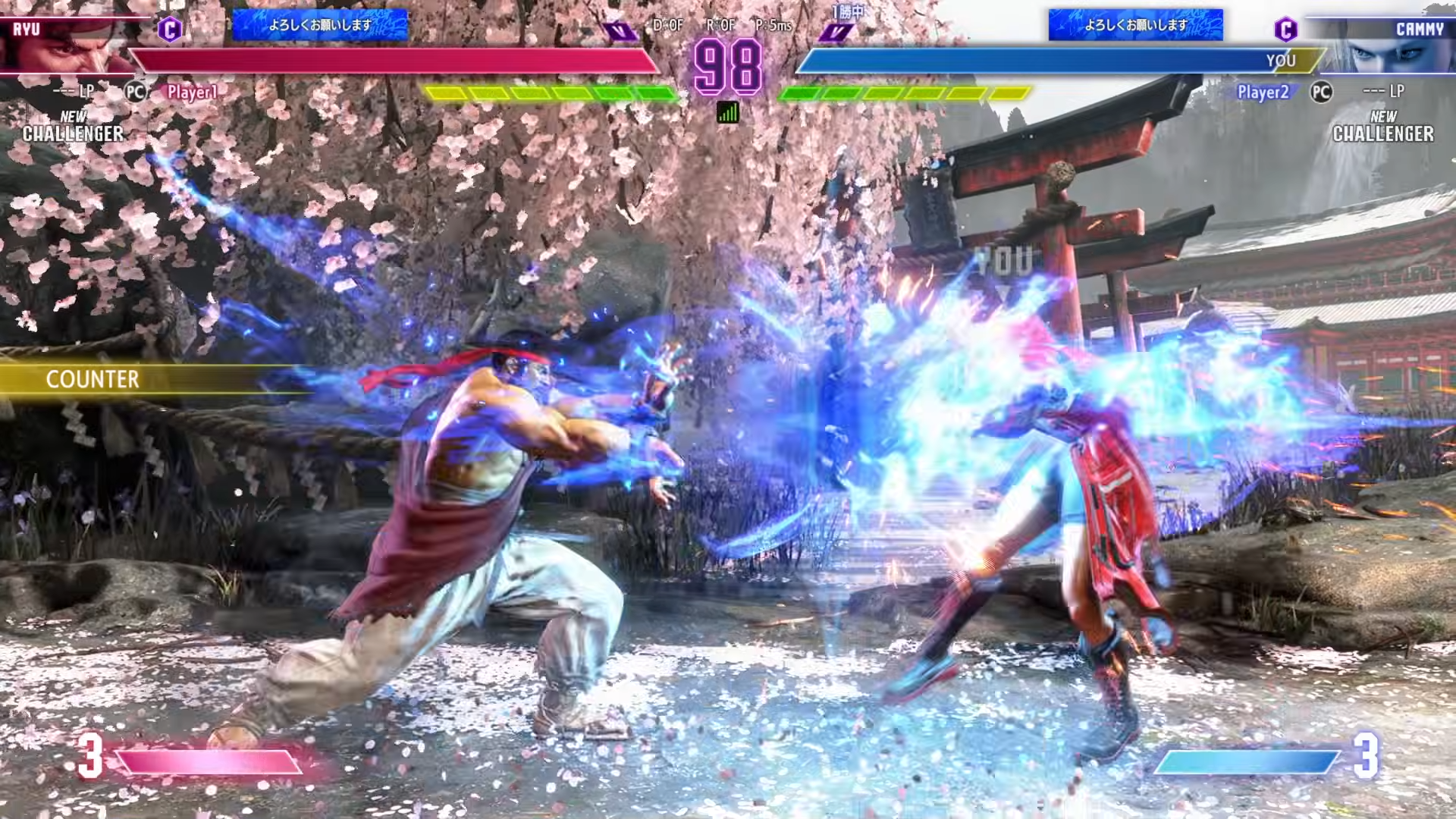
In addition to depicting the burnout that comes with dedicating your time to a singular game, the series touches on the misogyny when it comes to the perception of women playing video games, especially during the era when SF4 released. It is rooted in Aya’s initial motivation of abandoning her inner FGC player to reach the elegance expected of women. Most blatant of all, the series name intentionally being an ironic title. An explicit jab at the perception of how ladies don’t play fighting games.
Based on the bits I have read of the source material years ago, the manga leans more towards the comedy and competition aspects rather than diving deep into its social commentary. However, it is still neat it chooses to touch on these themes at all.

As for how the matches play out in the initial episode, the narrative framing is nearly identical to the manga. Where the anime diverges for the better is how these sequences are visually depicted. As stated previously, the art in the book is fantastic. Unfortunately, the paneling itself is a bit of a mixed bag, often feeling cluttered and unfocused. This is especially apparent during moments when the mechanics and strategies of fighting games are being exposed to the reader. Manga by its nature is a still, visual medium. As a result, the numerous diagrams and text boxes clash to create a mess on the page.
This is partially the reason why I dropped the books to begin with. As a casual fighting game fan, I found the conveyance of information a slight barrier to entry. My eyes would roll back when a page turn unveiled what is basically a mini-textbook entry.
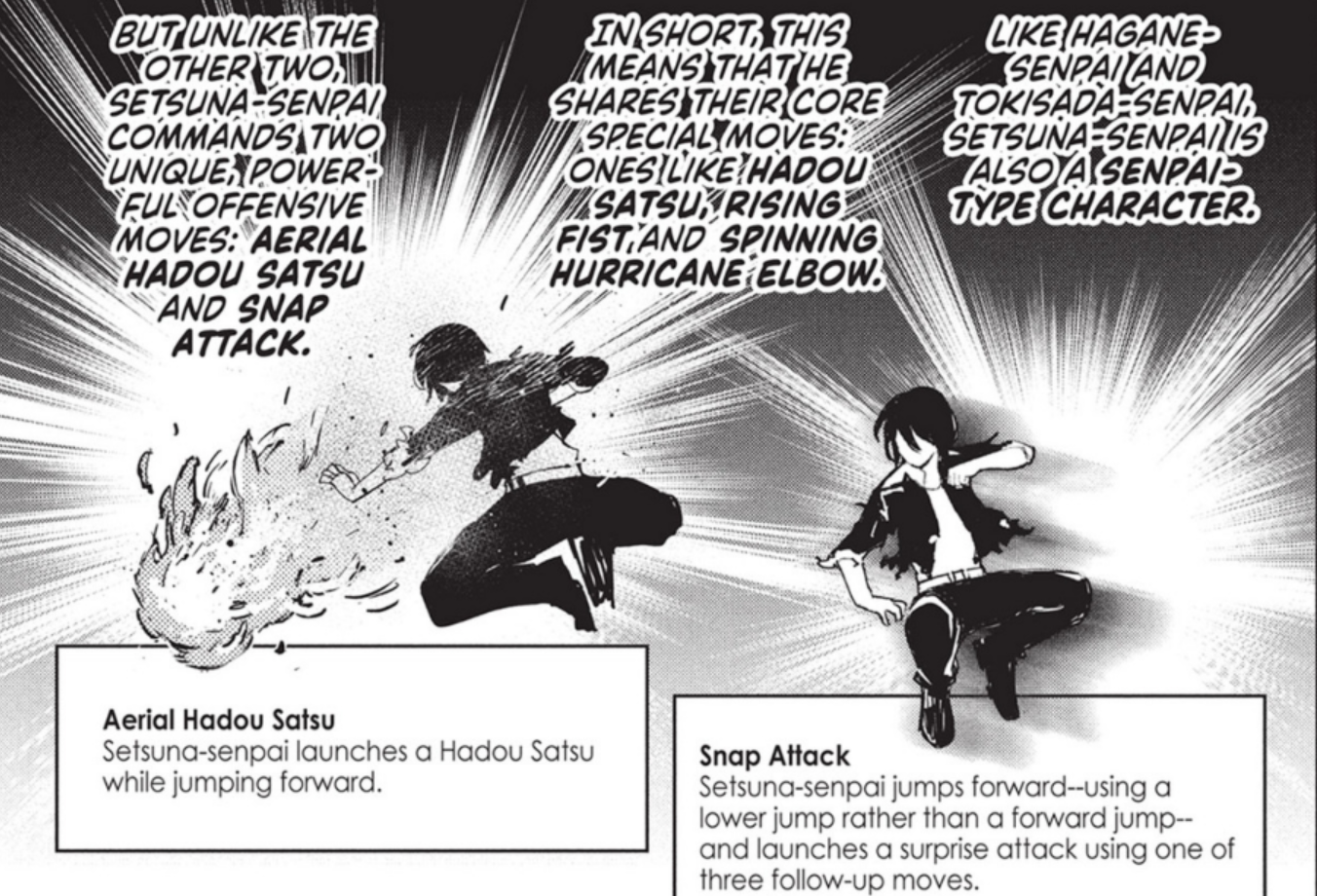
Judging solely on this initial episode, what was once a necessary evil to get back to the over-the-top character banter is now the highlight of the episode. The medium of film and TV allows for moving images, which makes the gameplay of Street Fighter 6 and the voice acting overlaying the visuals to offer a palpable look at how various terms look in practice. Adapting this specific premise from page to screen is similar to looking at gameplay tips from a guidebook versus a video walkthrough.
Again, as a filthy scrub, I have little skill or authority to claim whether the strategies divulged are authentic or not. Regardless, it was a joy seeing the competitive spirit captured so well with the fighting game lingo, crunchy sound design of the Mad Catz arcade fight pads, and of course the trash-talk with a dash of lesbian tension sprinkled on top. The only gripe I have is how some stretches of gameplay linger without any reaction shots or commentary. SF4 and 6 footage is awesome, but ultimately this is a show first, fun Capcom product placement second. I am hoping this gets alleviated in the future when more characters get introduced alongside commentary in the tournament arcs.
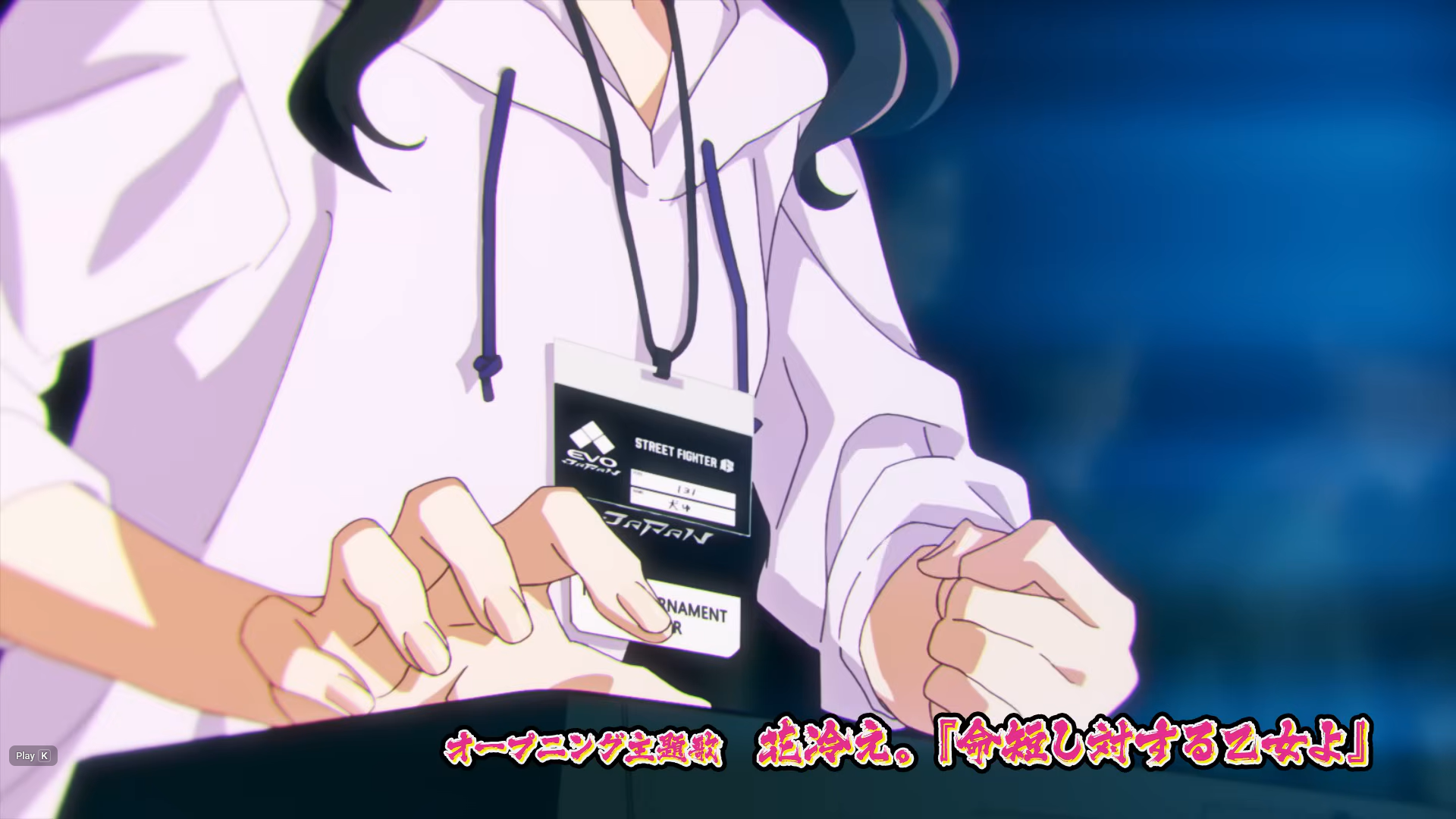
Nitpicking aside, all this is what endeared me to the series to begin with. Both the manga, and now especially the anime banks on evoking the joys of being in the fighting game community. Tearing each other apart in game and with insults (in moderation of course) ironically builds connection. A facet this initial episode touches on is Aya struggling to connect with her prim and proper classmates, only for a spark to reignite in her heart when she sees Mio pop off over winning an online match.
Despite gushing about the premiere, I still remain cautiously optimistic for the rest of the season. Too many yuri adaptations have burned me with stellar first episodes, only for the pacing and/or animation dipping as the series progresses. I couldn’t get halfway This Monster Wants to Eat Me because the show kept spinning its wheels when covering a manga I adore. If Young Ladies Don't Play Fighting Games’ first episode is indicative of the quality of the rest of its season, then we're in for a faithful adaptation enhanced by the medium of animation and utilization of Street Fighter within the show. For now, I will continue to huff up that hopium that the series continues to achieve this bar of quality.

Young Ladies Don't Play Fighting Games will be streaming on Crunchyroll July 7.