I’m not going to lie, I was less than enthused going into my guided, hands-on session with Ninjala 2: Uncharted Planet. The original’s PVP, clearly Splatoon-inspired multiplayer angle, never interested me. Thus when a sequel was announced during the most recent Nintendo Direct, I instinctively gave it a shrug. So consider all that indifference when I say I left my 50-minute preview with director Motoki Kaneda smiling in pure delight.
I bet for many folks, Ninjala getting a sequel, let alone a full open-world adventure, seems out of left field. However, the franchise itself has been a surprise hit, receiving a manga that wrapped up in 2023 and an ongoing anime adaptation that is currently over 200 episodes. As for the first game itself, it’s had a plethora of events, collaborations, and several single-player DLC expansions. Kaneda, fans' enthusiasm for the single-player content alongside the anime’s story led to the sequel being conceived as an open-world PVE title. Despite the massive genre shift, Kaneda gushed how the transition between them ended up being a happy accident, as the mechanics translated well into the new gameplay format.
My 50-minute hands-on session was split between a brief tutorial and two sections of the game: exploring the open world and school activities. The premise revolves around the academy the characters attend being transported through space and stranded on a foreign world, an uncharted planet some might say. Basically, it is a mix of Xenoblade X with the school theming of Pokémon Scarlet and Violet (with similar open world graphics too). For fans of the anime, they will be delighted to hear that characters from the show will be present in this title. If you’re worried about coming in fresh, Kaneda stated that the story was designed to be accessible to newcomers.
On a gameplay front, let’s start with the meat and potatoes of the title, the open world. I am rather simple when it comes to my enjoyment of the genre; I have a high tolerance for world design as long as the mobility options are fun. For example, Xenoblade’s open areas are dense with quests, bosses, and visual splendor made a complete drag by the light jogging speed. In contrast, Sonic Frontiers has shockingly barren open areas, but the blue rodent going zoom-zoom makes my brain go “happy!”
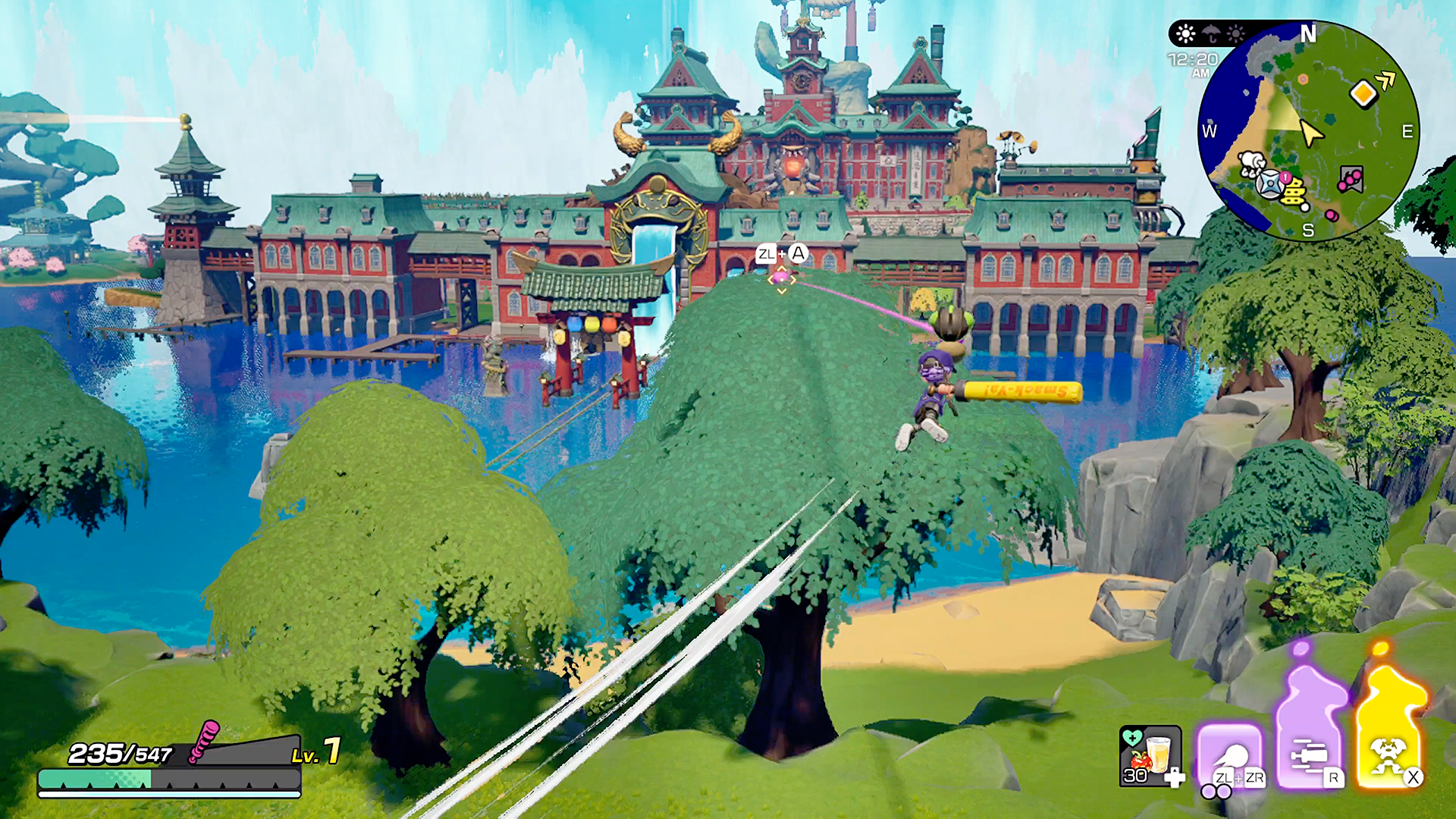
While I haven’t dipped my toes in deep enough to experience the various side activities on the uncharted planet, I can confidently say that Ninjala 2’s movement system absolutely rules. The two pieces that bring mobility to life are the skateboard and Ninja-Gum powers, with the former quickly becoming the method I spent the most time using. On top of being fun to control, the concept of being a ninja while shredding through the monster-infested plains with sick skateboard drifts and tricks is a hilarious bit of dissonance I live for.
Speaking of, the name of the game is Ninjala, not Tony Hawkala, so the ninja theming manifests by adding an extra dimension to traversal. If skateboarding covers grounded navigation, then the ninja aspects cover aerial movement. Ninja-Gum provides you with a grapple made out of gum, essentially functioning as a webzip and point launch from the Spider-Man games. Additionally, the power also gives you the ability to perform air dashes you can find in titles such as Sonic Frontiers or inFamous Second Son. With these powerful abilities, wall running does take a back seat. So far, I've only found situational uses for this ability, mainly using vertical surfaces as a last resort when I barely missed a platform I was aiming to land on.
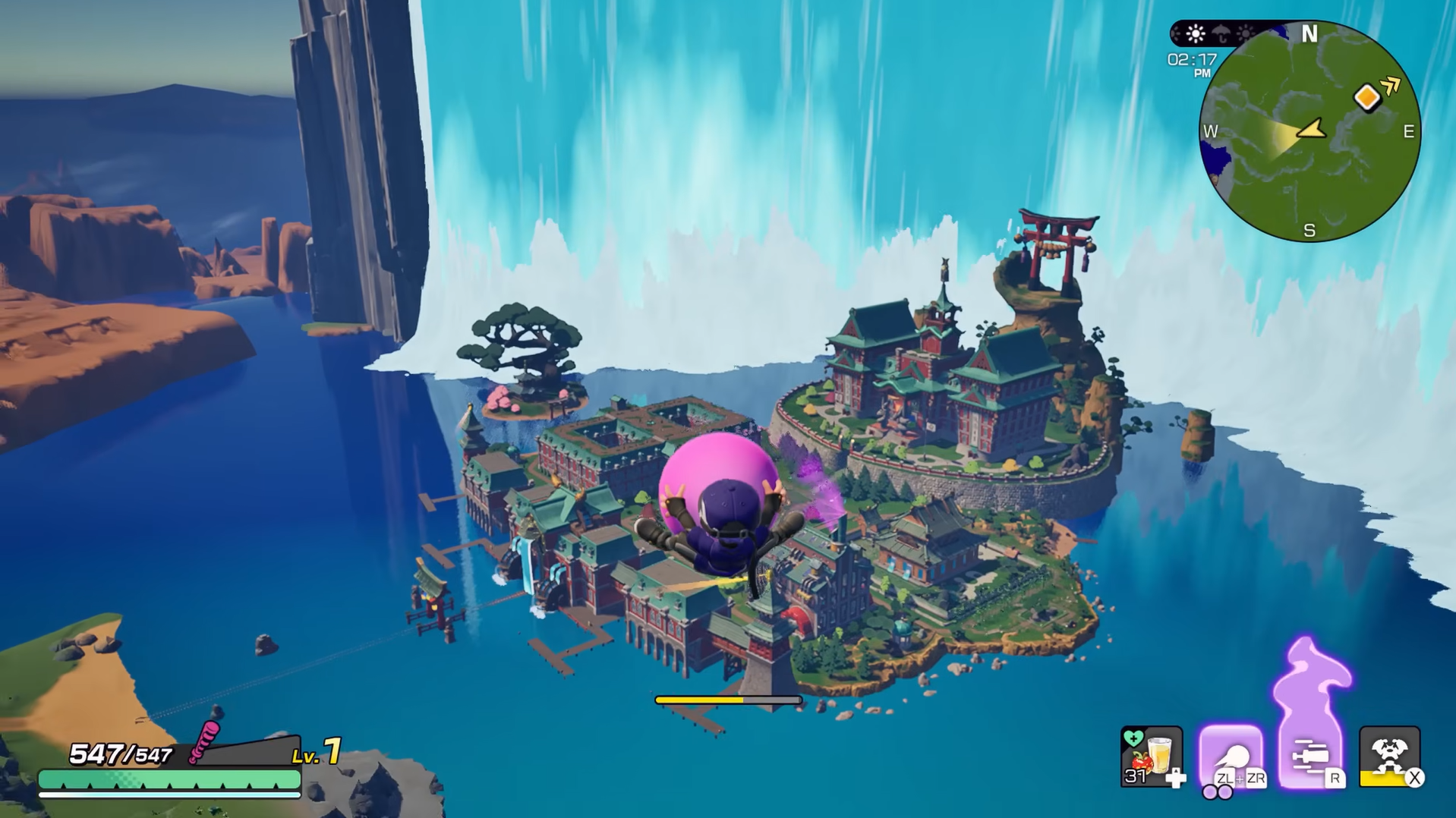
Ironically, this hodgepodge of familiar systems is what allows this title to carve out its own uniqueness. Individually, the two systems of skateboarding and Ninja-Gum are already great; however, chaining them together makes for a thrilling, self-imposed challenge when attempting to keep the momentum going. All of this would crumble if the actual playground of the open world and hub area weren’t fun to move around in, and thankfully so far so good in that department. In addition, Kaneda confirmed that the skateboard can be upgraded to ride on walls, so I am excited to see how an already fantastic foundation gets expanded upon.
As for combat, there is a solid base I’m interested in seeing fleshed out more. Plenty of genre staples are accounted for: light and heavy attacks, perfect dodges and parries, special moves and summons, follow-up attacks with elemental properties. Ninja-Gum can be utilized both offensively and defensively, providing a mix of grounded and aerial skirmishes.
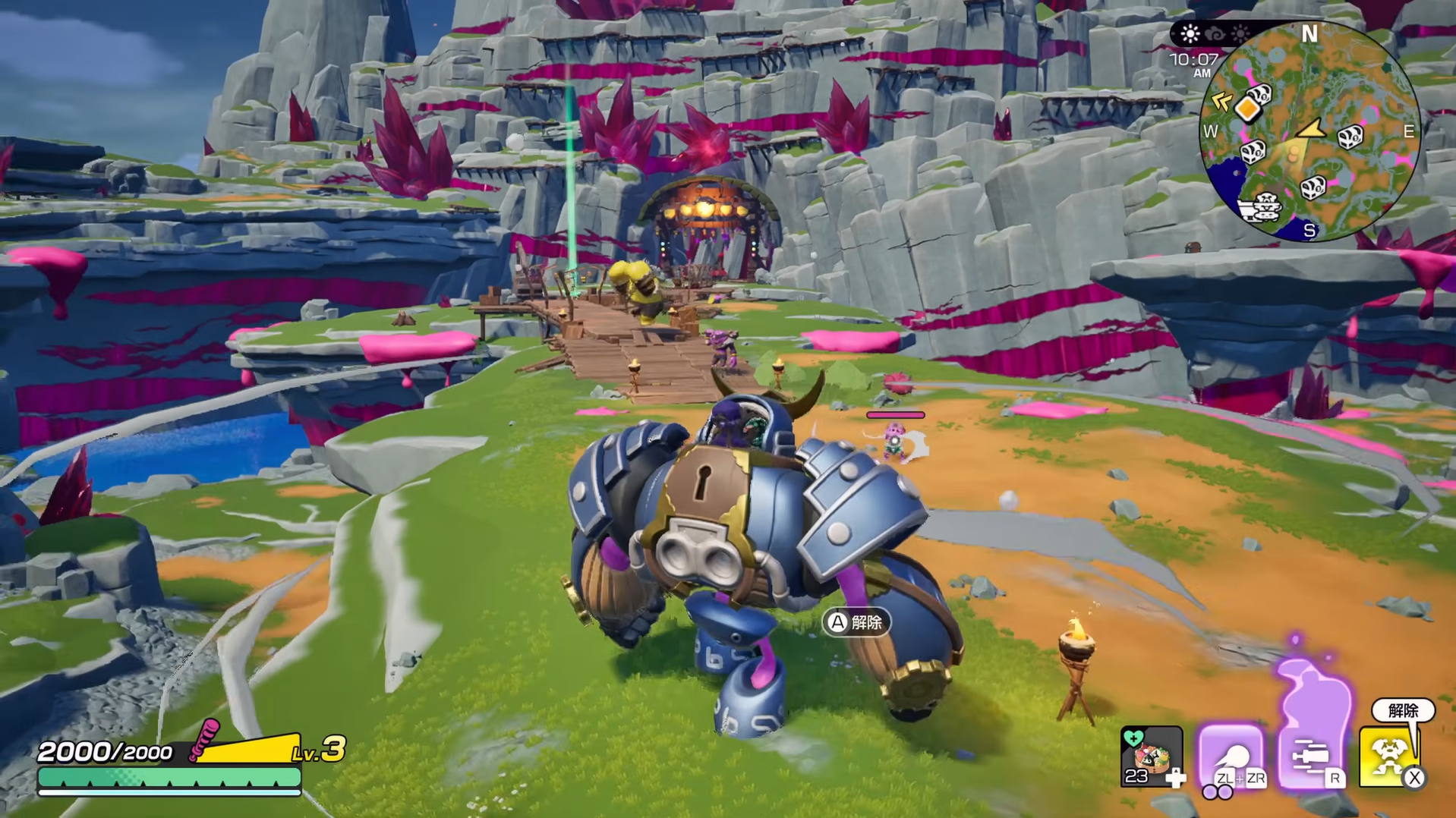
The boss fight served as a great climax of this section of the demo. Button mashing can get you by, but the encounter design provided plenty of opportunities to put the core fundamentals of combat to the test. After a certain point, I found myself in a flow state taking advantage of all of the mechanics to pile on the hurt. Thankfully, this boss addressed one of my concerns going in. Since Ninjala 2 has online cooperative play, I wondered what the experience would be like for a solo player. The game allows players to summon ninja allies to aid during battle as a happy medium. Again, it is too early to see the full depth of combat, enemy variety, and the balancing of online/offline play. But at the very least, I am curious to see more of what this pillar of gameplay has to offer.
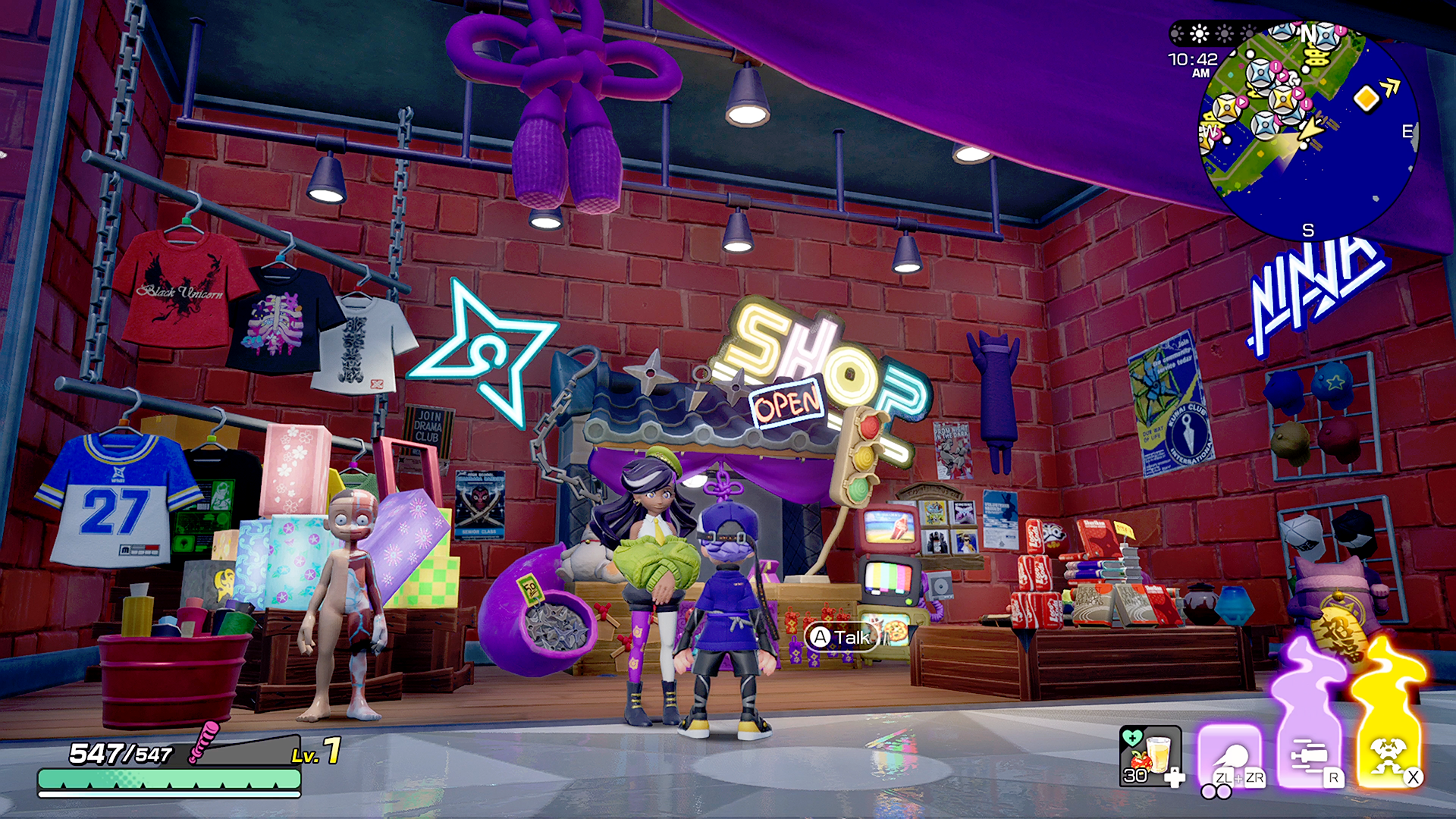
Swinging over to something more lowkey, the academy portions provide a mellow palette cleanser compared to exploring the uncharted world. The mission on offer was your typical open-world fare, tasking me to go around campus and take selfies with the other students and faculty. Nothing mind-blowing, but it is neat how the quest is framed with the school premise in mind. The director stated how these portions aren’t the focus, merely a side dish to the main course of the open world. Moreover, as a newcomer to Ninjala, it was a good opportunity to immerse myself in the world and characters for the first time. One character in particular had Kaneda and me gushing about Hatsune Miku for a few minutes because of how similar their appearances are.
As I alluded to earlier, the highlight of this phase is the level design of the academy itself. Essentially, it functions as a pseudo-skatepark to go buckwild in. From shredding through the open fields, grinding on rails, scaling and grappling across buildings, this was the ultimate playground for me to experiment with the traversal mechanics. Similar to the open world, I can imagine myself willingly doing the academy quests just as an excuse to play around with the mobility options.
Ninjala 2: Uncharted Planet went from a title that I had rock-bottom interest in to one I'm itching to dive back into. You know a game grabs you when you voluntarily disregard all the objectives just to mess around with how it feels to control. Don’t get me wrong, all those foundational aspects of the open world, combat, and mission design are so far a good basis, and I am eager to see how they evolve. But my definition of “rule of cool” is being a skateboarding ninja that uses gum like Spider-Man’s webs. Ninjala 2: Uncharted Planet is looking to embody that when it releases in Spring 2027 on Nintendo Switch 2.