There are a lot of indie 2D Zelda style games out there. Under the Island, Unsighted, Blossom Tales, Oceanhorn, Tunic - I’ve played a ton. Each has their own, unique spin on the classic Nintendo style, not trying to copy or even surpass the series they’re inspired by, instead just trying to capture some of that magic while also doing their own thing. There’s only one Zelda inspired game that I would genuinely consider better than most games in the Zelda series, and that’s Okami. So far, nothing in the top-down, 2D space has managed to surpass the classics. Until Mina the Hollower. Yacht Club Games has created an instant classic here, taking the old style of Zelda, with item based puzzles, and the new style of Zelda, a more freeform experience, and combined them masterfully to create something wholly its own. In all honesty, you don’t need reviews to know you need to play Mina the Hollower, you’re better off simply going in completely blind to see all the surprises in store for you. For those still unconvinced, read on - if you dare.
The opening sees you heading north towards Ossex in a mostly linear fashion, showing you the basics of combat, platforming, burrowing, and sidearms. Mina can perform a basic attack with her currently equipped weapon to defeat enemies and destroy certain objects, with your choice of arms greatly changing how you approach pretty much everything. I stuck with the whip-like Nightstar for most of the game, which has a slight delay on the attack coming out, but allows you to keep some distance. Distance certainly helps a lot when learning the ropes, as your main method of dodging and platforming is to burrow underground after jumping. Mina can’t be hit by most attacks while underground, and after a short time will pop up out of the ground to fly greater distances than a normal jump. You need to be aware both of how long it takes to get underground and how long you can stay under to properly dodge some tricky attacks.
Getting hit isn’t the end of the world though, as attacking enemies while missing some HP will begin to fill up the negative space on the bar with yellow plasma. This represents how much you can heal for by consuming a vial. You have a limited amount of vials you can carry, replenished at the underground checkpoints called Underlabs, so you’re always making a choice: heal now to immediately help you survive, or wait until you have more plasma for a bigger heal. The fewer vials you have on hand, the more difficult the choice becomes. This could make the difficulty feel frontloaded somewhat, as you only have three vials max right at the start, but the game thankfully avoids this by steadily increasing enemy difficulty and damage as you progress. That doesn’t simply mean foes have more health and take longer to beat, although some of them do for sure. Instead, most have attacks that hit harder and take more care to properly avoid. It all feels very natural, and expects you to grow as a player as your numbers get higher through level ups and you acquire more tools and options.
Everything I’ve described so far is conveyed almost entirely without typical tutorials or text. Mina the Hollower teaches you how the game plays by trusting you to observe your surroundings, try new things, and figure it all out on your own. It’s a difficult balance to strike, between player freedom and tutorialization, but Mina constantly makes it look effortless.
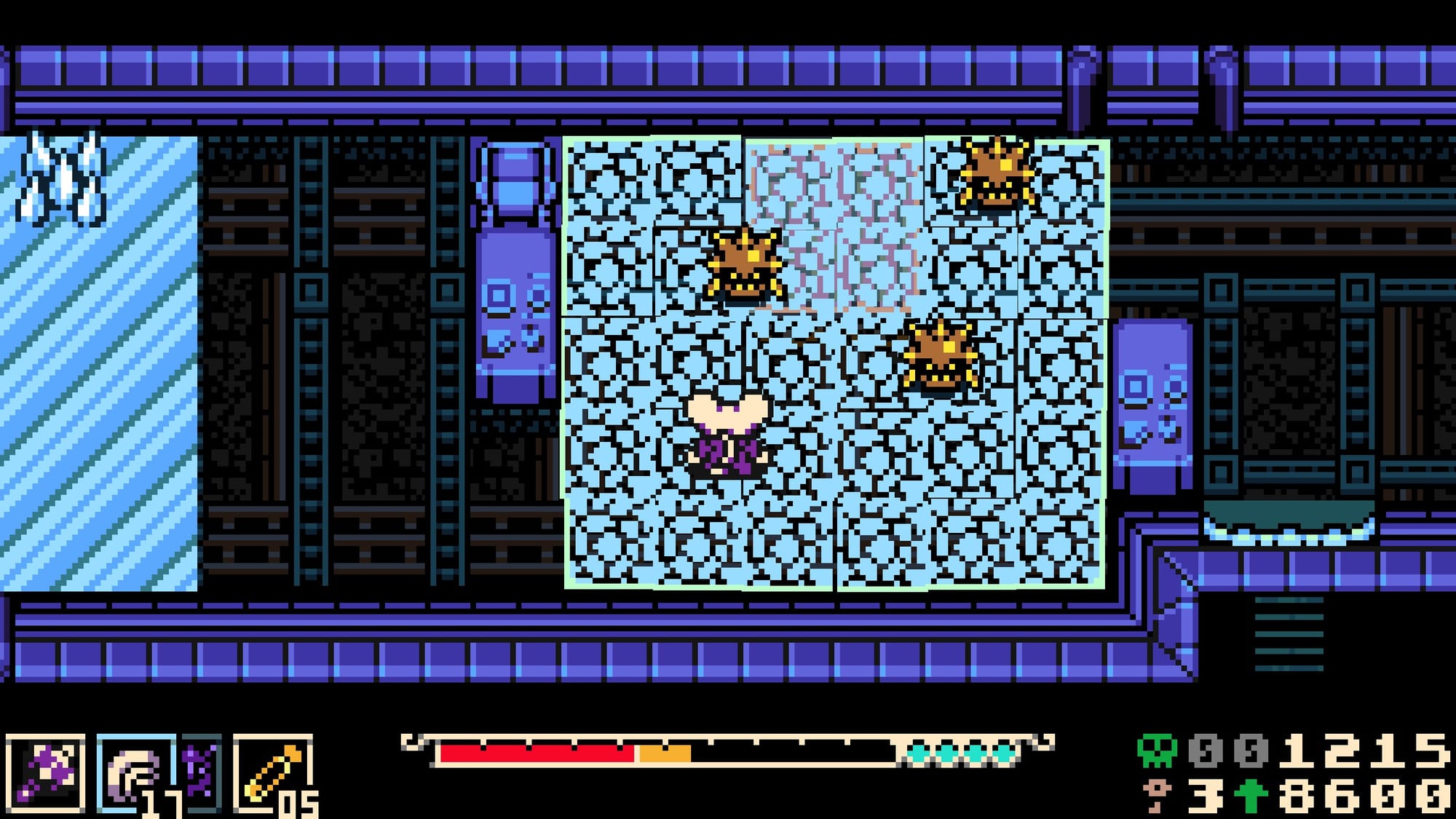
It feels like new mechanics and ideas are constantly being introduced throughout the entire adventure, all taking different spins on your most basic verbs. For example, early on I found a trinket, equipable items which have unique effects, called the Wallower’s Gauntlets. Normally, Mina can only burrow into the ground for a short time, then jump out to reach distant platforms. With the Gauntlets equipped, however, she can also burrow into walls. This completely changed how I played the rest of the game. I skipped entire screens and encounters just by taking creative shortcuts, all through experimenting with the item based on one line of text describing it. The whole game feels like this, frequently upending your playstyle or assumptions in the best way possible and recontextualizing everywhere you’ve already been.
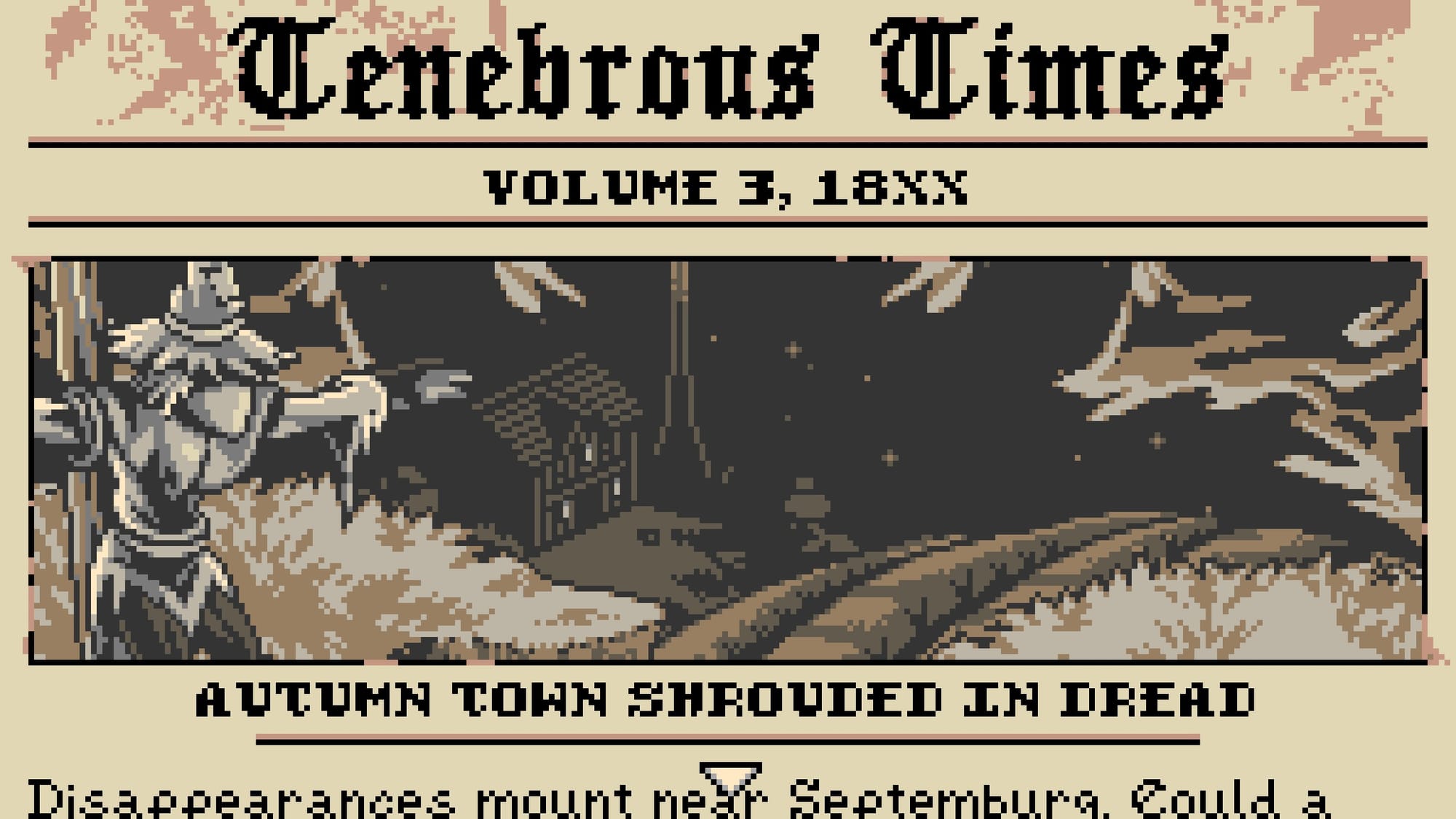
Backtracking, something you’ll be doing frequently, therefore becomes a joy rather than a burden. Despite what the opening and demo might present, the game is mostly non-linear, with you able to visit any of the Spark Generators in any order you wish. There’s certainly an order the developers want you to go in, shown through NPC dialogue or newspapers you can read, but after reaching town and speaking with Lionel you’re free to go where you wish. I mostly stuck with the prescribed order, but deviated right at the end because I was curious about one particular area. The overall difficulty will still increase linearly in the intended order, so you might have some trouble deviating, but that will in turn make some other areas easier. It’s incredibly cool, and makes me want to jump back into the game for new game plus mode or even a fresh save after the credits roll.
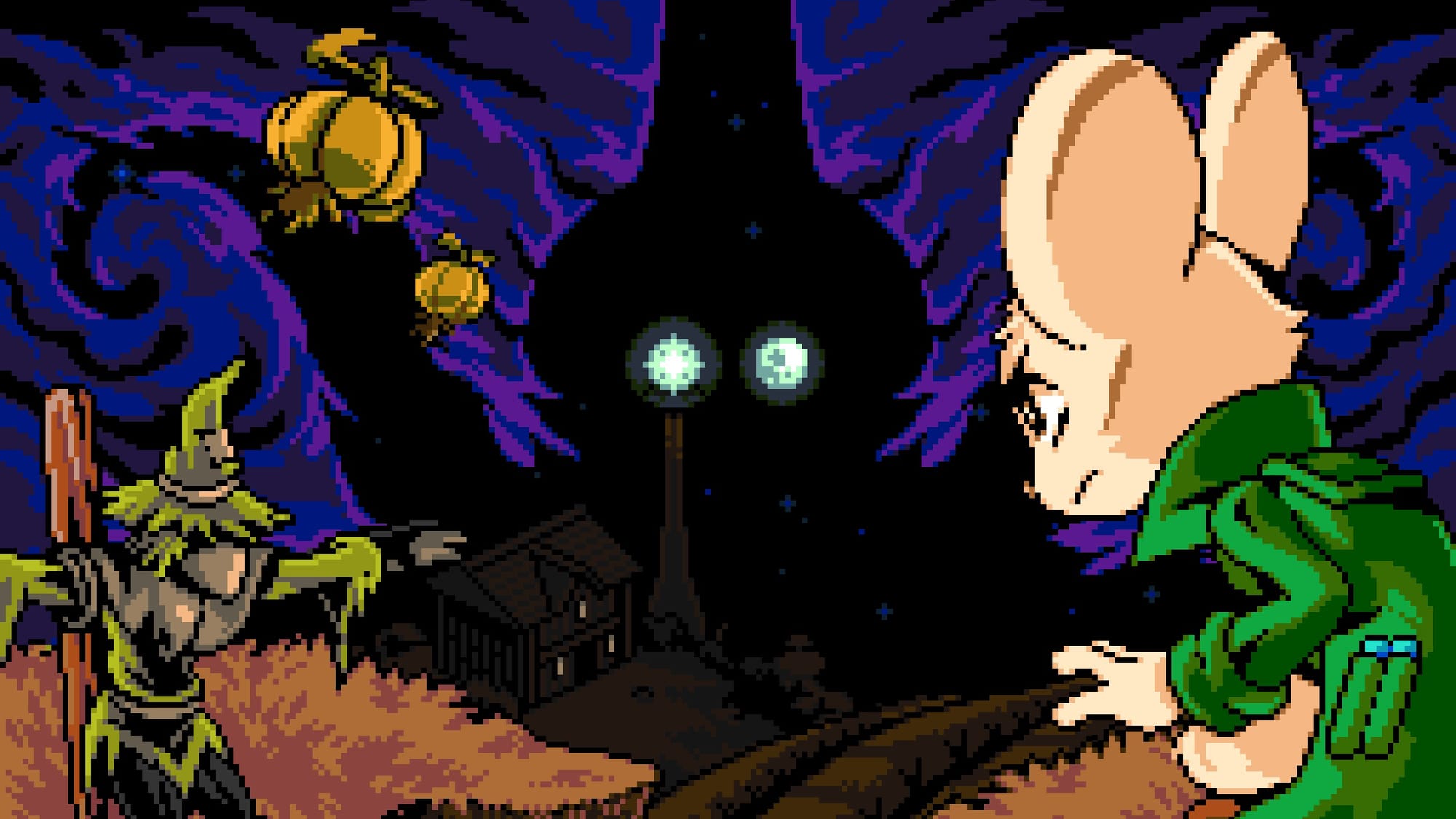
The entire gameworld feels like a dungeon, with secrets strewn about everywhere and tons of puzzles hiding in plain sight. Even when deliberately heading for a Spark Generator, I often couldn’t tell you where the overworld ends and the “dungeon” begins because it all feels seamless, giving you a sense of adventure and danger wherever you go. Oddly enough, what enhances this feeling is the lack of a proper map. At first I was frustrated and had some difficulty navigating, but Tenebrous is easy to remember once you’ve explored a bit. If I was thinking about a specific screen I suddenly realized I had a sidearm to solve a puzzle in, I could pretty easily find my way there and usually find a few more secrets along the way. It’s constantly fun and rewarding to explore and scour the land for secrets.
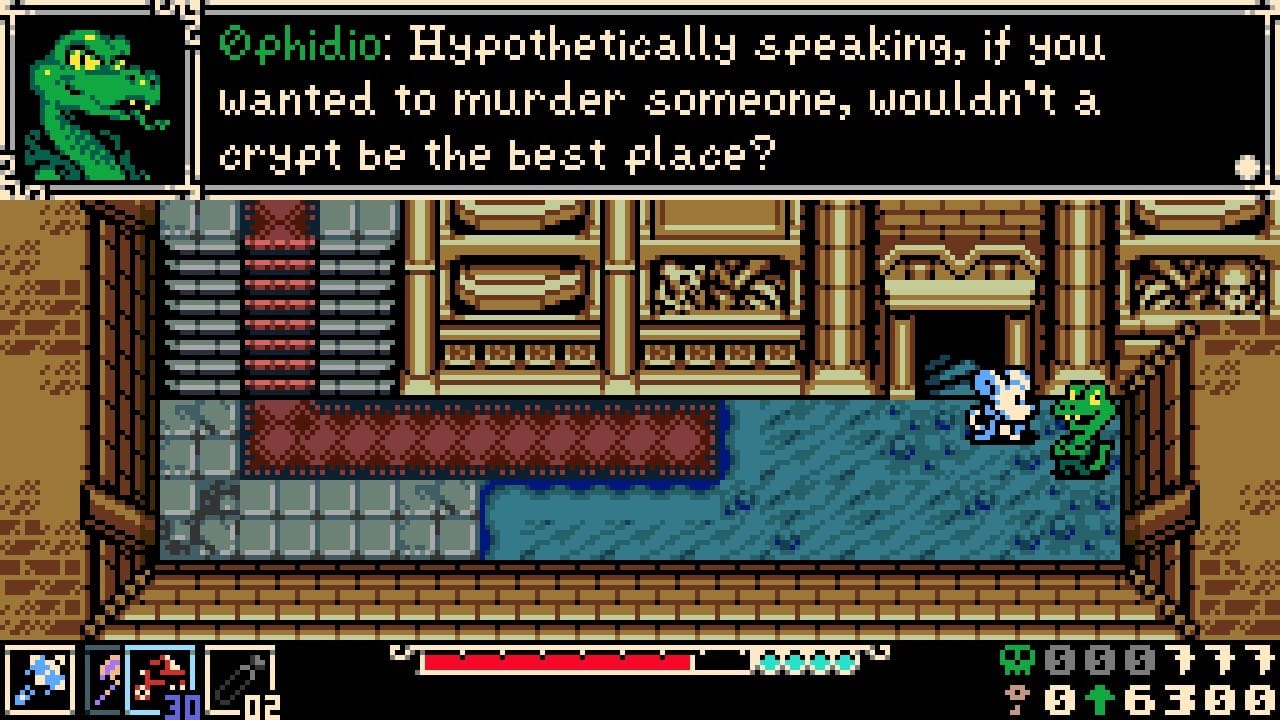
Some direction certainly helps though. You’ll want to speak to NPCs throughout the world for both hints and for the often hilarious dialogue. There’s a creepy clown you can meet in Ossex who will randomly pop up in unexpected places just to tell you a morbid dad joke, and give you some extra Bones - the game’s currency and experience points - if you don’t immediately hit him out of fear. Mina revels in the macabre, with some parts of the game being genuinely disturbing at times, though in a way that reminds me of unorthodox moments in games from my childhood, like Thousand Year Door or Okage. Funny to adults, but potentially scary to children in a way that will scar them for life and form their tastes in the future. You know, in a good way.
Speaking of scarring you for life, Mina has corpse runs. You’ll earn Bones as you explore and fight, which can be spent in shops for upgrades, saved for level ups on your attack, defense, and max sidearm ammo, or stored in your Underlab as gems when prompted on level up. Any Bones you have on your person will be lost upon death, but there’s a catch: if you have a Spark (the little blue pips at the bottom right of your health bar), one of those will be lost instead and absorbed by whatever killed you. You can then head back to where you died to collect your Spark and get another reprieve from Bone loss. I’ve gotten pretty tired of this mechanic being in everything, but Mina actually does it fairly well and puts a new spin on it. Once I had three Sparks, I pretty much never lost Bones again, especially since leveling up will automatically retrieve all of your lost Sparks.
If you really don’t want to deal with that, there are also Modifiers you can activate to change various aspects of the game to your liking. You can turn off Bone or Spark loss, reduce or increase item drops, turn off all the RPG mechanics to normalize difficulty across the game, or even make yourself invincible. You unlock a bunch more upon beating the game, though be aware that turning some on will disable certain Feats, the game’s achievement system. I played without any Modifiers on, but I’m definitely going to turn a bunch on for some chaos in a future playthrough.
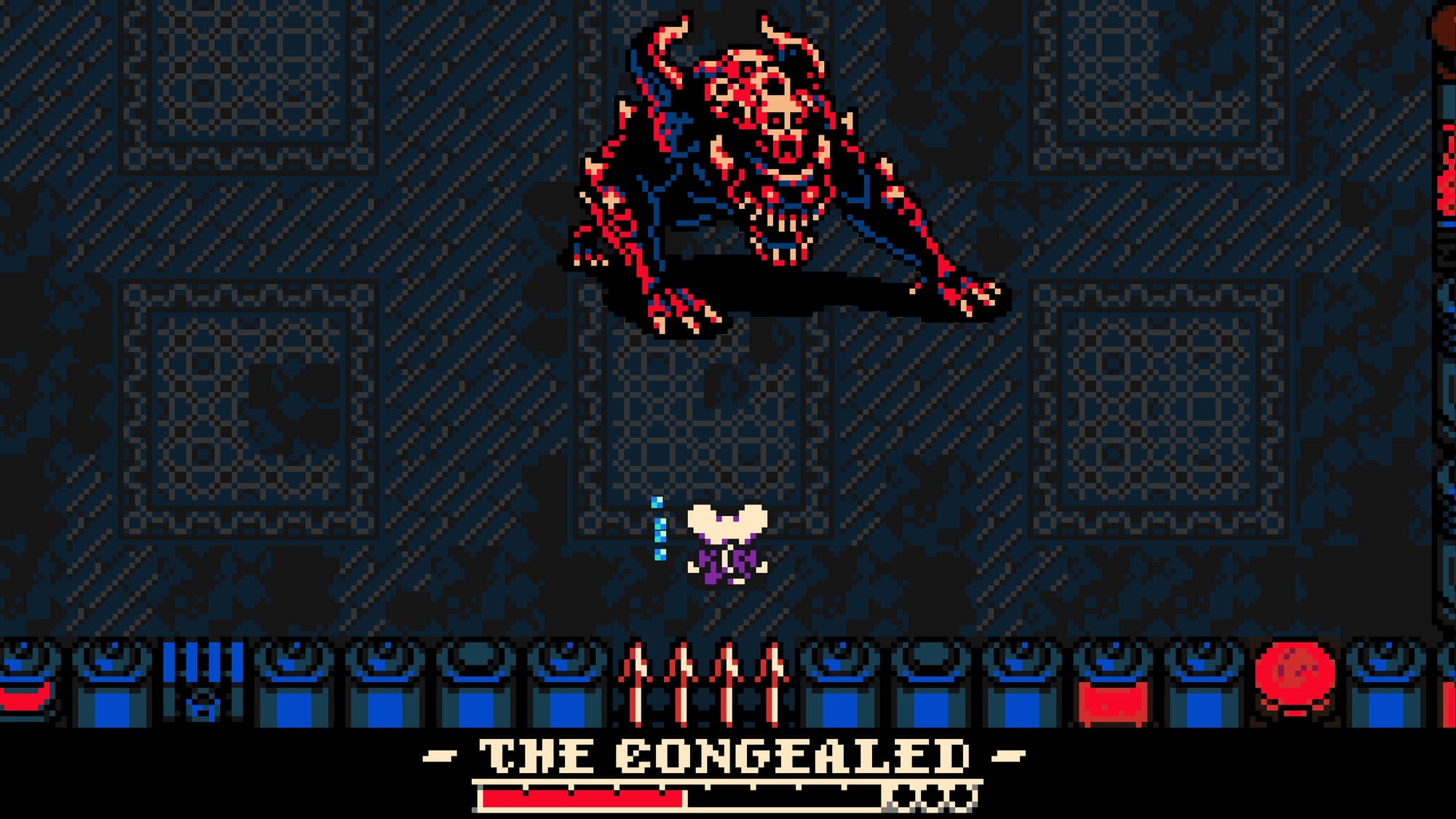
The game encourages multiple playthroughs through new game plus mode, which has multiple Rounds to it. I didn’t have time for more than one run, but Round 1 makes enemies and hazards more dangerous, increases Bone drops and Mina’s level cap, and causes fewer Underlabs to appear. It seems like this is another thing the game is borrowing from Dark Souls, but again I don’t mind here.
I don’t mind the visuals and soundtrack either, both are amazing with some stunning pixel art and catchy chiptunes. I wouldn’t say anything is especially memorable, but the music definitely gets you in the Hollowing mood and accentuates each area. Yacht Club have outdone themselves with the pixel art, though, especially with the cool splash screens that appear when entering a new area. Even without using too many colors at once, the game feels vibrant and lively on every screen. Sound effects are punchy and satisfying as well, while still fitting the Game Boy Color aesthetic. I loved the sound of the tip of my Nightstar connecting with an enemy, and winced every time Mina let out a shriek when caught in a mouse trap.
Frankly, I loved every second I spent with Mina the Hollower. It is simply a joy to play all the way through. Nintendo, take notes: this is how the Open Air era of Zelda should feel.
Mina the Hollower
Phenomenal
Mina the Hollower is another masterpiece from Yacht Club Games, a Zelda style game that manages not only to equal the series that inspired it, but in some ways surpasses it. The world is detailed, gorgeous, and overflowing with secrets. The writing is sharp and often hilarious while maintaining a gothic horror vibe. Best of all, it feels amazing to play, with tons of ways to customize Mina and the game itself to fit your playstyle. It’s filled with freedom and challenge in equal measure, but as a Hollower you are more than up to the task.
Pros
- Masterful level design
- Tons of customization and different playstyles
- Gorgeous pixel art
- Trusts the player to figure things out
- Often hilarious
Cons
- None
This review is based on an early PC copy provided by the publisher. Mina the Hollower comes out on May 29, 2026.