Very rarely does a video game make me want to live in its world. Dishonored drew me in with its stealth mechanics and characters; Prey got me with its mystery and general game mechanics; Abiotic Factor got me with its characters and tone. Joining the list of games that make me want to immerse myself completely is RetroSpace. The world-building, characters, soundtrack, and attention to detail make RetroSpace extremely special.
The characters feel like real people; they have real reactions and have small relationships with each other. They’ve also clearly impacted the world that you're playing in. Audio logs will confirm what they’ve been doing since before you started the game. Emails add depth and make the world feel more alive, and the environmental storytelling is on a whole other level.
Spoiler-Free Section
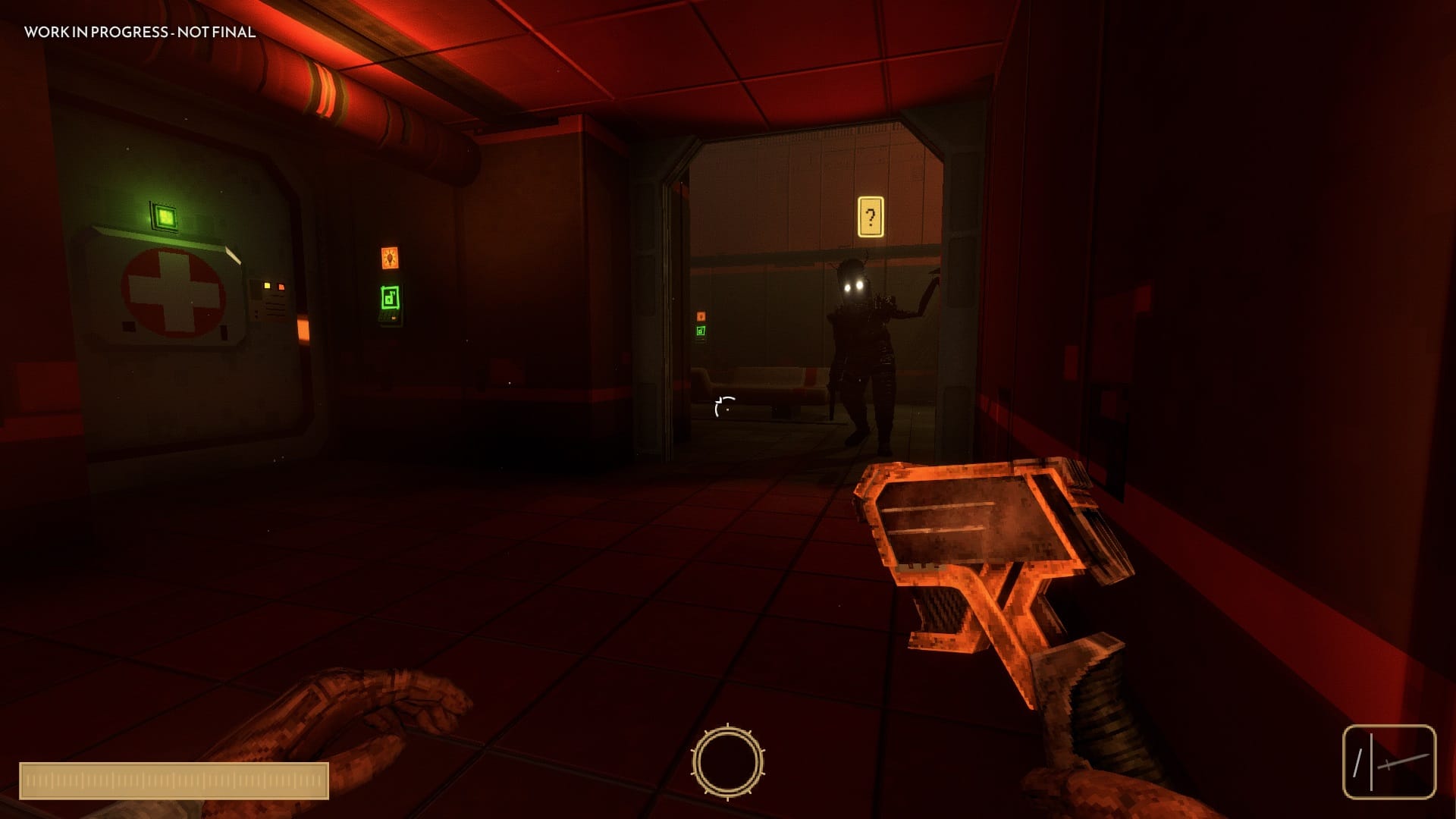
Aurora 5 (the space station where the whole game takes place) is completely explorable. You’ll be able to explore high and low. There is a real sense of verticality here. You play as a Janitor, and in the world of RetroSpace, you need to get around without being seen or heard. That's why Aurora 5 has so many passages and so much verticality, and it all makes sense in the context of the game's narrative.
But what exactly is RetroSpace? It’s an immersive sim like Prey or System Shock. RetroSpace runs on the idea of player choice, which it achieves pretty well even when it comes to small choices. For example, you can remove your helmet at any time, which will remove the HUD from your screen. In this way, you can hide the very limited guidance that RetroSpace gives you. The helmet and thus the HUD never bothered me. A big reason for that is that RetroSpace isn’t littered with waypoints or objective markers.
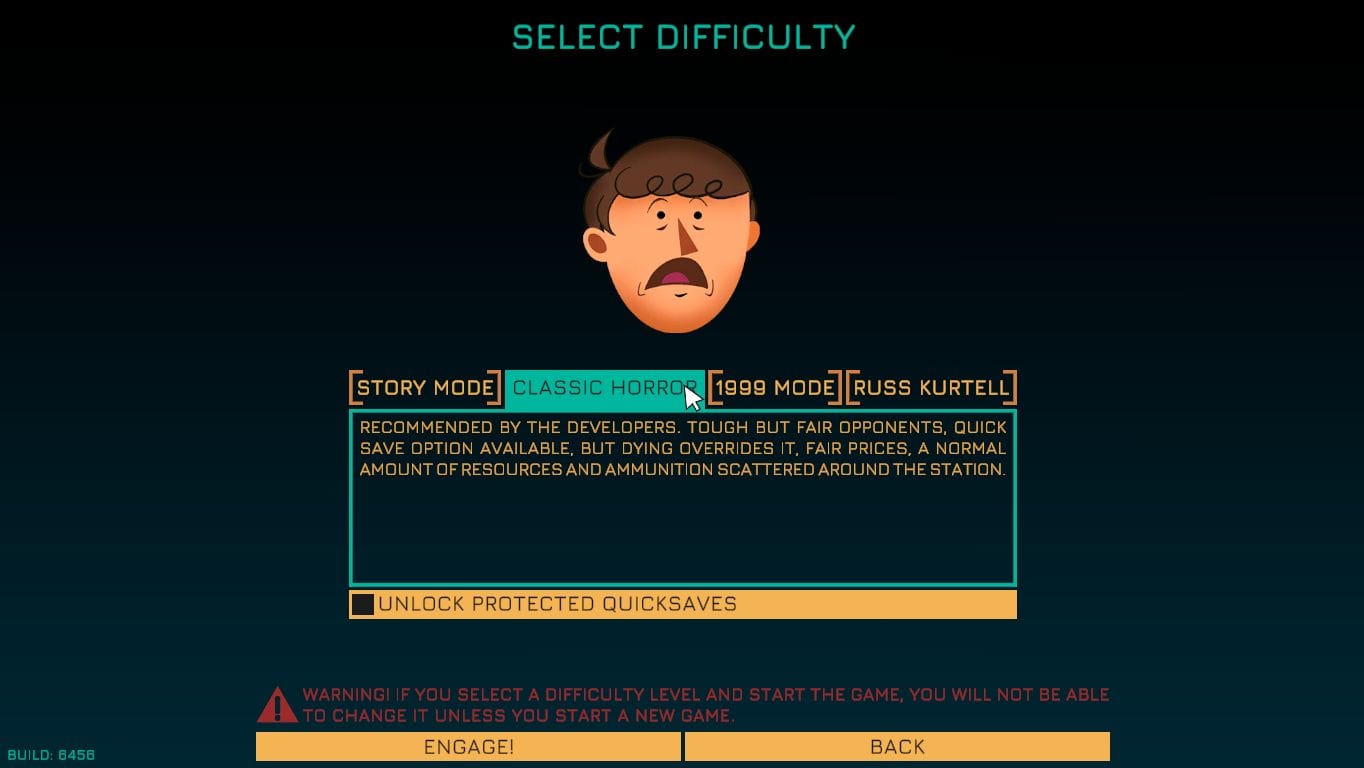
Normal felt fair, and you can tell it’s what the developers recommended. It equally kept combat and stealth fun, which I really appreciated because I love the weapons in this game. I won’t tell you how many there are, but each one is beautifully themed to the game's style and world. The sound effects for the weapons also tickle a specific part of my brain, which makes them satisfying to use.
Shooting isn’t the only way to get past enemies, though. You can lure them into traps, which is fun too, but it's not something I did often. You can have enemies fight each other, which I will praise the developers for, because games don’t do this as much as they should. Technically speaking, you could beat the whole game without killing a single enemy. Everything the game throws at you seems to have multiple solutions, which I did test extensively.
Your character can be enhanced with Mutamods; basically, these will enhance your stealth or combat, and for the most part they don’t come with any side effects. You can have three equipped at any time, and for my whole playthrough, I used the same three. The reason being that each Mutamod seems to be tailored to a specific playstyle. For example, the moth mod, which is my favorite, allows you to heal when standing in the bright lights of the station. The bat mod allows you to hear enemy movement through walls. Each mod will also impact your screen and animations. For example, if you take the pig mod, it will allow you to heal by eating a corpse. Your character will bend down to do so, making you open to further attack. The sonar ears make your screen a sort of fleshy orange, and healing in light makes your character slow down.
So when I was choosing which ones to use, it came down to what will help me stay alive while I shoot things. It was a simple choice, and technically my favorite mod, the moth mod, got the most mileage in terms of use. Technically speaking, if I wasn’t trying to test each mod, I could’ve gone through RetroSpace using just one. Don’t get me wrong though; the Mutamods are all very fun to use in their own way. I got the sense that the developers took a lot of time to consider the practical use of each one of the mods, which is the reason that they feel so even in terms of power. I also like that they have some kind of negative drawback; it keeps the game feeling more balanced.
You can also upgrade your weapons and suit, which is an aspect of the game I wish had been introduced a little earlier. When you reach the point in the game where these options become available, it is technically one after the other. Regardless of which order you choose to unlock things and how slow you play. I think that RetroSpace would’ve benefited from having the weapon and suit upgrades be introduced within the first two or so hours of the game. This way, players can become familiar with how the upgrade mechanics work and have more time to enjoy the upgrades.
This portion of the game in general has weird pacing. The weapon upgrades would’ve best fit the whole security section, for example. Instead of having to backtrack, which was fun to do but made little sense. Each new area is part of the same mission group; it would’ve been nice to have this spread out. Though it is not lost on me that this would change things pretty significantly.
When you die, you’ll respawn as a clone, but the process is not seamless. Which is why you respawn with a negative trait. You’ll get one each time you die, and they can be removed by paying for it or sucking the DNA out of your dead body. Without spoiling too much, there are a few lines about how the technology has never been seamless. Which I think was extremely clever.
You can really tell that the team had a lot of fun creating the various enemies; they all have their own attack patterns, which was awesome to experience. At one point you’ll get an upgrade that will allow you to scan them and get more information about them. But you can also learn a lot just by watching, which I appreciate the most. I strongly believe the little touches make RetroSpace what it is. Everything down to where the bodies are placed around the station feels like it was done with so much attention to detail.
As for the story itself, I was pleasantly surprised with both endings. There is some payoff for the work you do to get to the end, but it’s not as concrete as I’d have liked. Which is not to say that the story is bad by any means; I just wanted a little more. Alongside the main story, there are several side quests you can complete, each enjoyable in its own way. I really enjoyed watching how the characters would react when I completed a quest, and even as I write this, I wonder if there’s additional dialogue for choosing a different path.
Welcome to Aurora 5
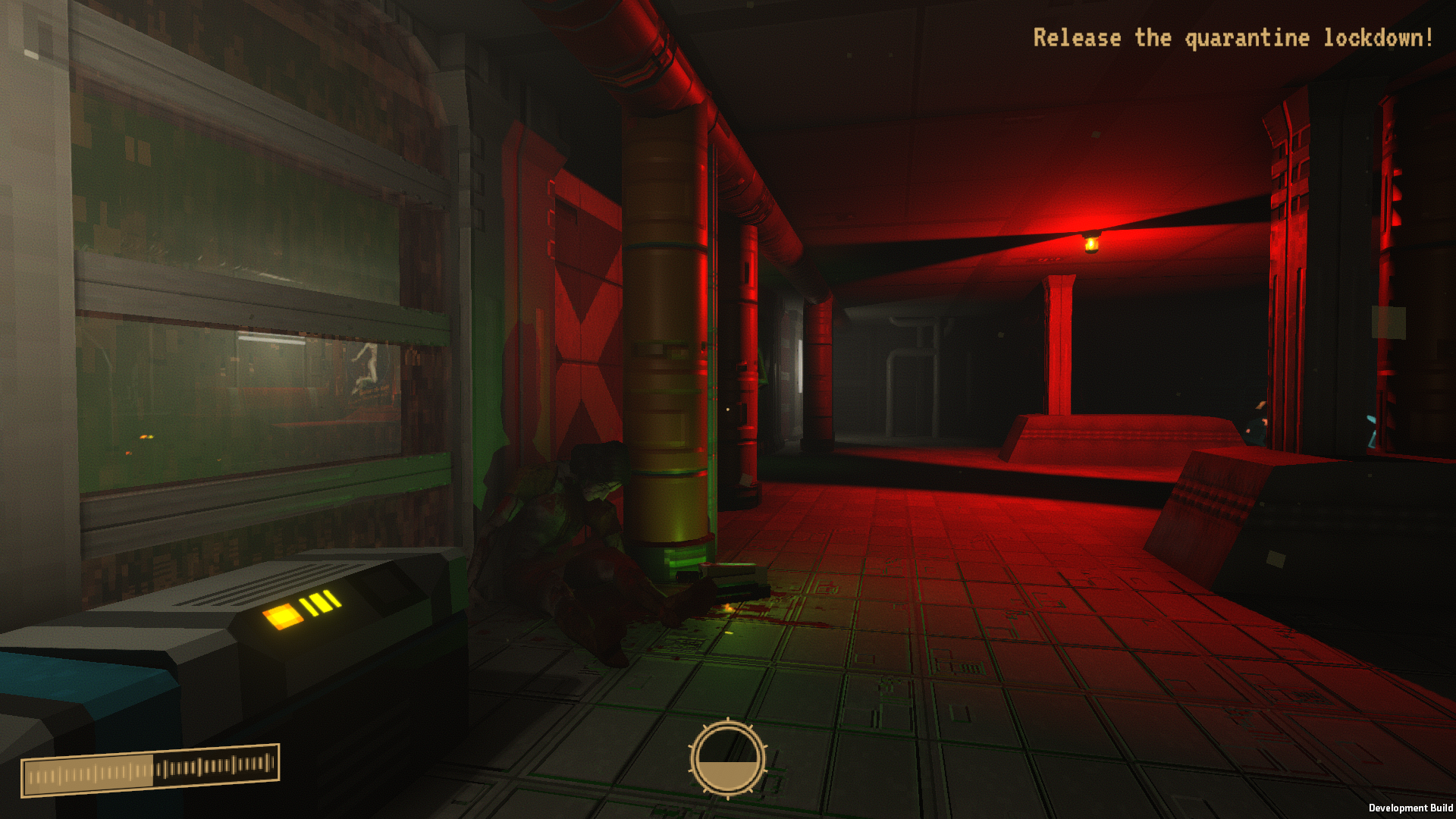
Calling Aurora 5 gorgeous would be a massive understatement. There is so much beauty and charm, and not a single area feels neglected or rushed. As soon as you hit the Medical Section, it becomes extremely apparent that the art direction was a high priority for the team. The blues and reds used work perfectly with the varying degrees of darkness. Even the little bits of light that shine through the vents make the environment pop.
Bodies litter nearly every corner of the Aurora 5, but you never get the sense that the death was on a massive scale. Which makes sense because it’s stressed to you over and over again that there are still thousands of people asleep in their cryopods. So while there is a sense that something awful has happened, the scale feels directly proportional to the events that we experience in the game.
What makes all of this so beautiful is the attention to detail. The light is always bouncing in such a way that it makes the colors and enemies stand out just a little bit. The weapons might not feature bright colors, but browns and silvers never feel muted in RetroSpace. Computer consoles always find a way to stand out without being overbearing or running the immersion. Even the security turrets feel naturally placed, and what I mean by that is I could see the turrets existing in these locations when the station was fully operational.
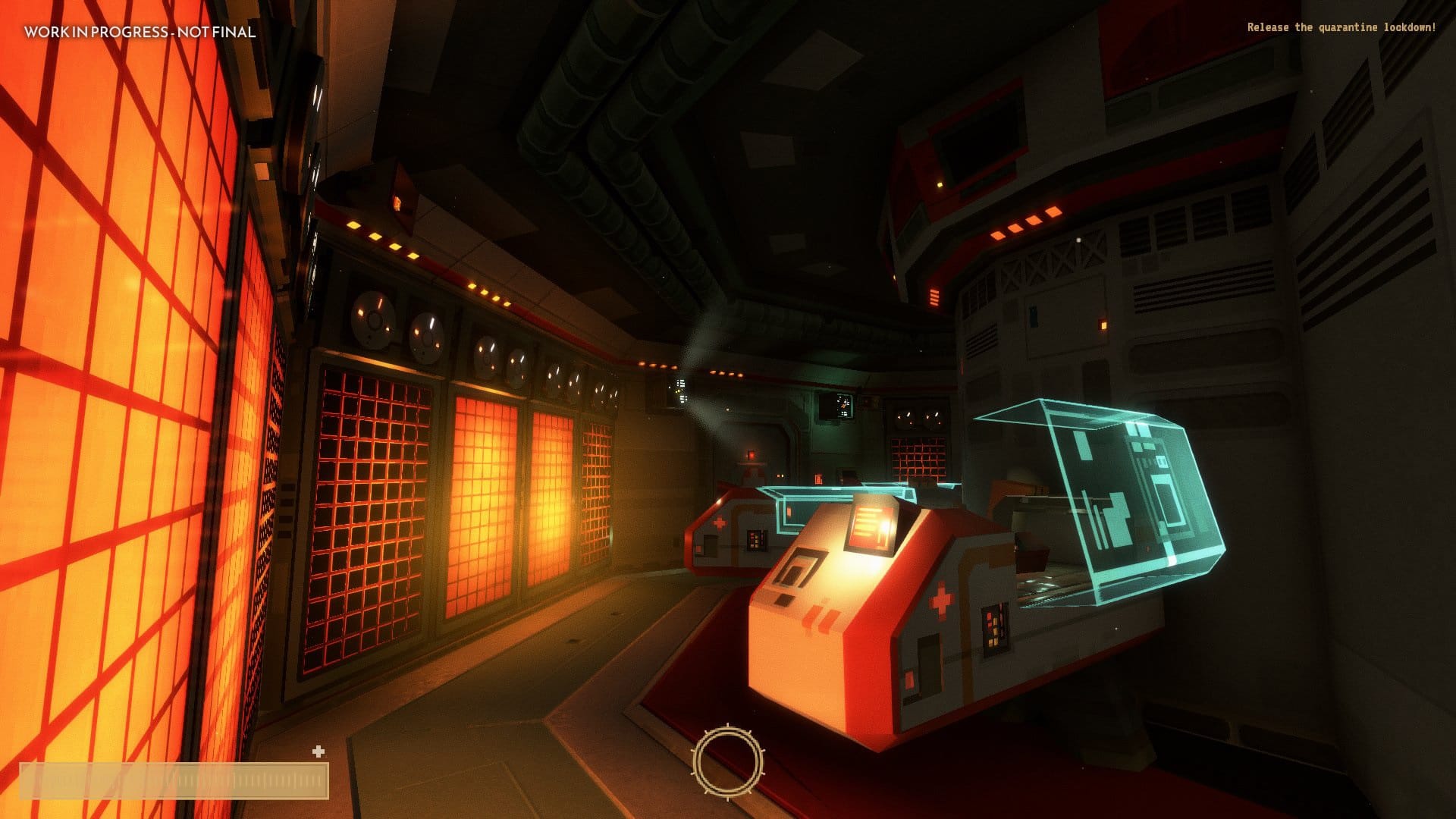
Aurora 5 has four main sectors, which are all attached to the main station. Each one of these sectors usually leads to a smaller area like the Luxury Section or something smaller like a small market. As you move from area to area, RetroSpaces' color palette will change slightly. The theming and palette changes feel natural, which makes the station feel lived in.
I know I spent a lot of time talking about color, which is because I can’t get over how good RetroSpace looks. So I’ll pivot to gush about how much I love the navigation. Moving through each of the areas in RetroSpace becomes a breeze once you start figuring out the layout of the station. Your personal map isn’t labeled, so you’ll have to rely on remembering things to get you around quickly. I’ll admit, I got lost quite a few times and had to refer to the map before choosing where to go. But RetroSpace never made getting lost feel like a punishment. Getting lost is usually rewarded with finding a blueprint, a new way into the Janitors' Heaven (which I talk about a few sections down), lore, or a shortcut loop. Very rarely does something lead nowhere, which I really like.
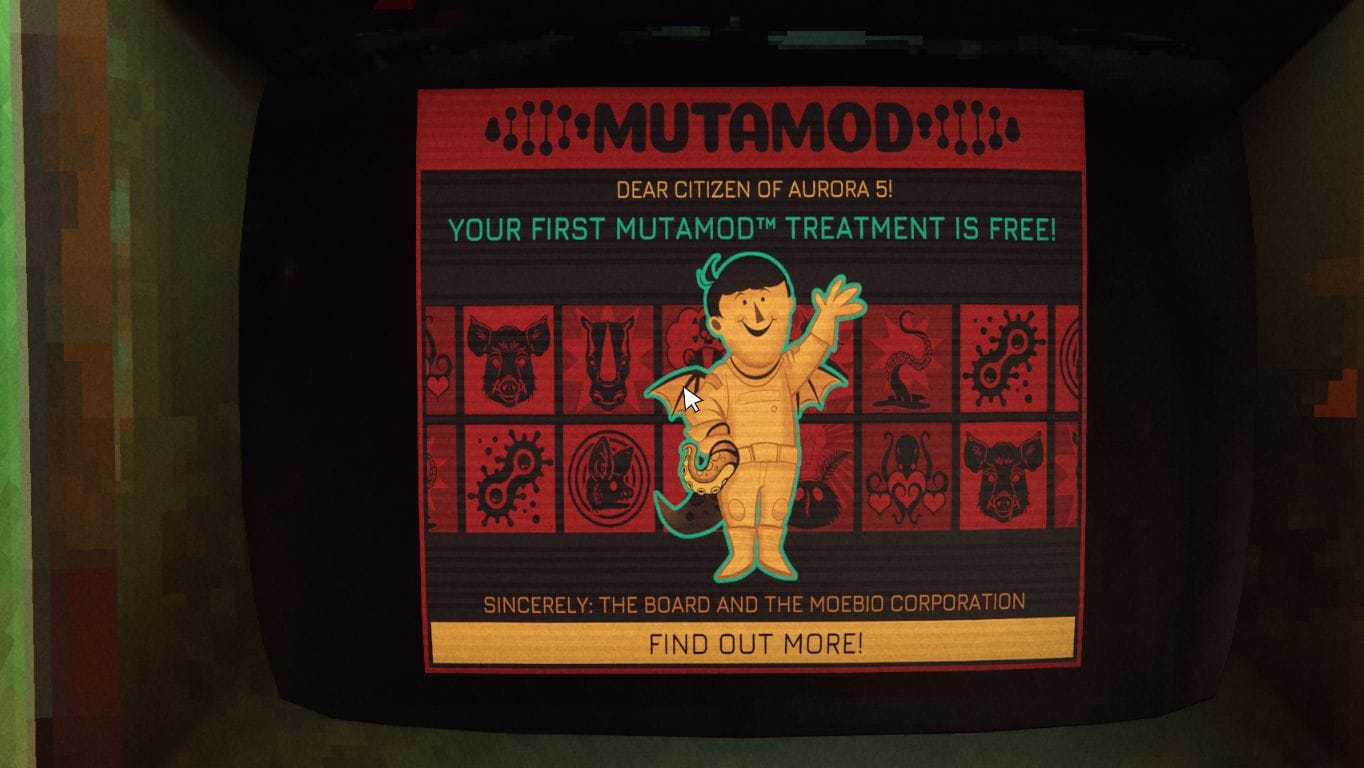
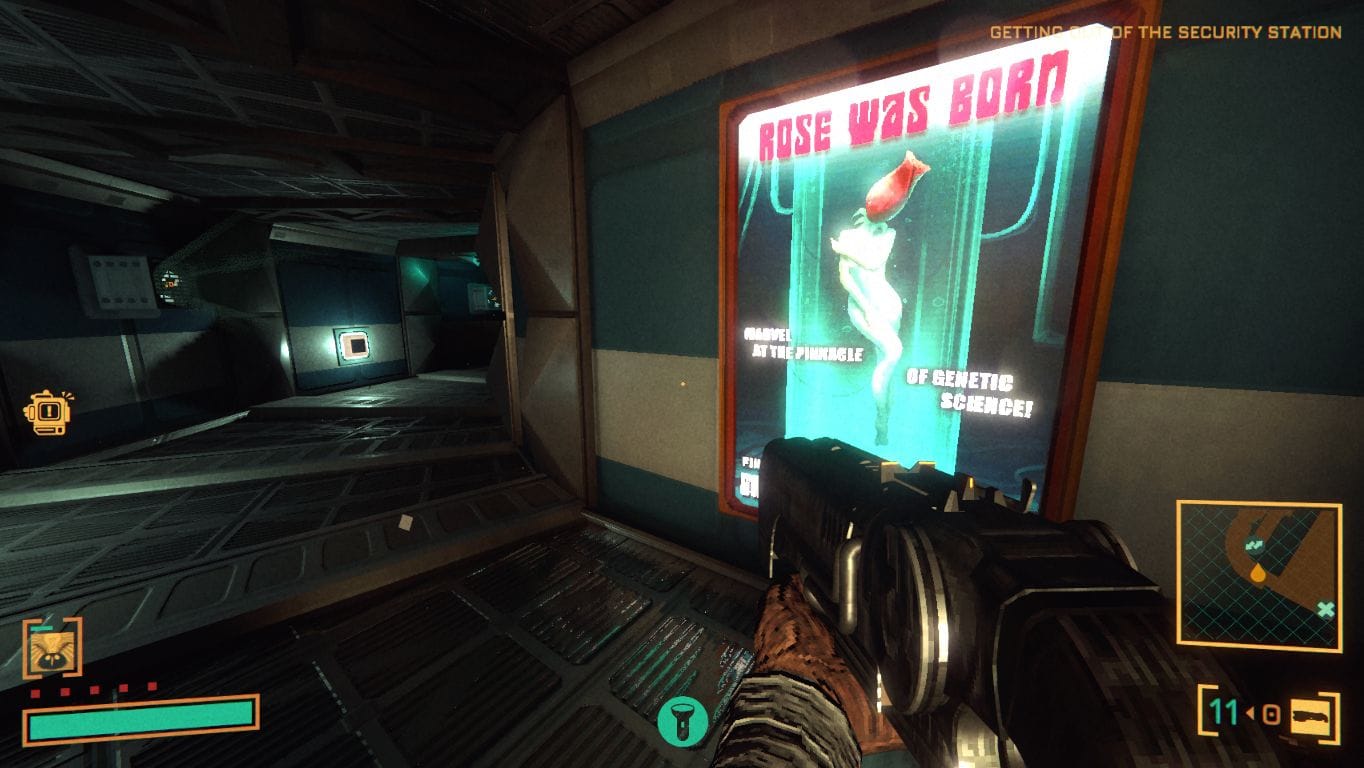
I also really like the artwork and little cartoons placed around the station. There's a constant feeling of being surrounded by marketing. The Mutamod commercial plays on a loop all around the station. In the context of the game, it must’ve been awful to live like this, though I assume they had other things to watch and listen to before everything went wrong.
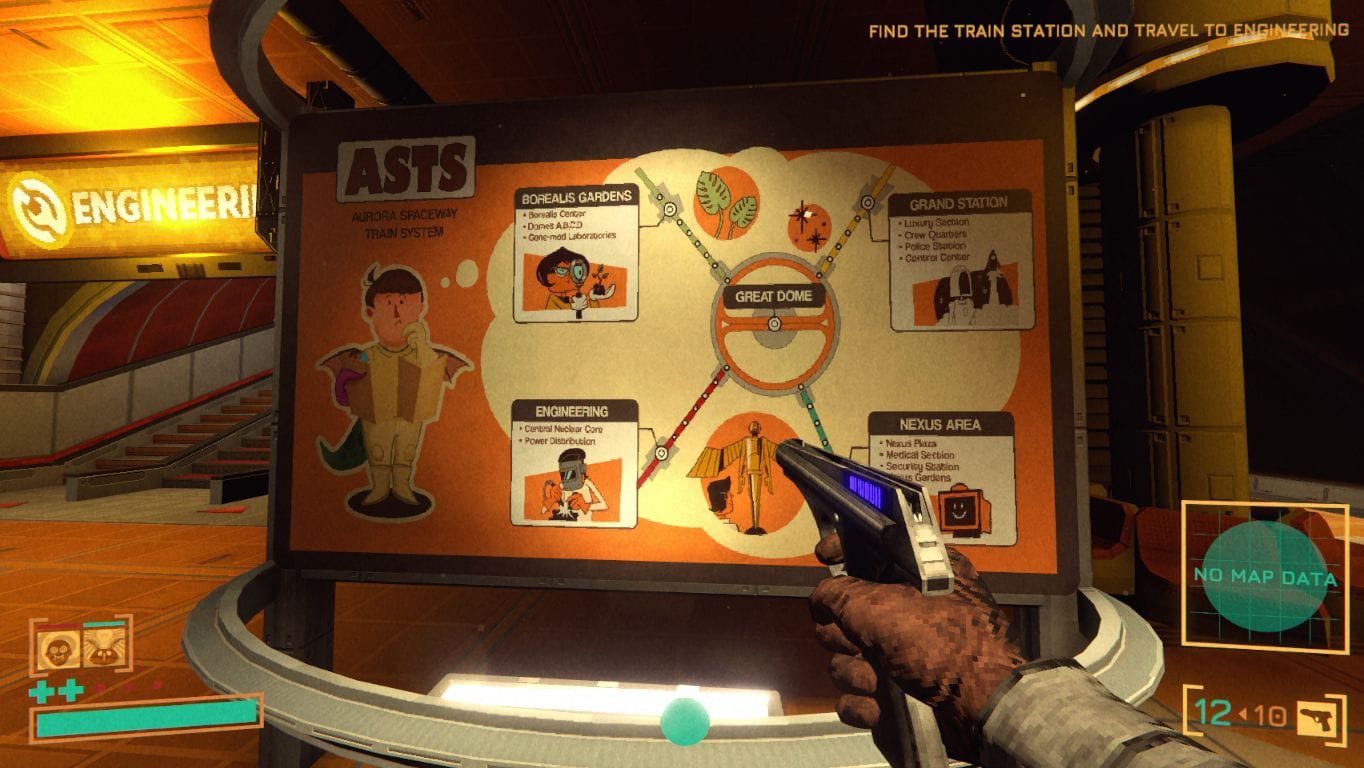
Aurora 5 has a natural flow, which is extremely refreshing. I know how hard it can be to make an environment feel natural, but this station really does feel like a place where people lived and worked. It even has a built-in explanation for why there aren't as many rooms for the crew to sleep in as there should be. The placement of the vents and other shortcuts is clever too.
Learning the routes makes surviving the enemies so much easier. Even on normal difficulty, they still hit hard and can be a real challenge if you let them overwhelm you. Some of the layout's design choices stand out to me in this way. Electrical boxes are placed in the oddest locations, which makes it hard to get any real use out of the mechanic that allows you to spread water and electrocute enemies. Another thing you can do is break pipes and have the hot air hit enemies charging at you; it doesn’t do much damage, but it buys you some time.
I would’ve loved to see a bit more in the way of making Aurora 5 feel more connected. As it stands, the only real way to get from area to area is using the tram station. I tried to get to each one on foot, but my efforts were in vain. This isn’t a knock on the game, though; I just felt as though one more area in the middle would’ve pulled the station together even tighter.
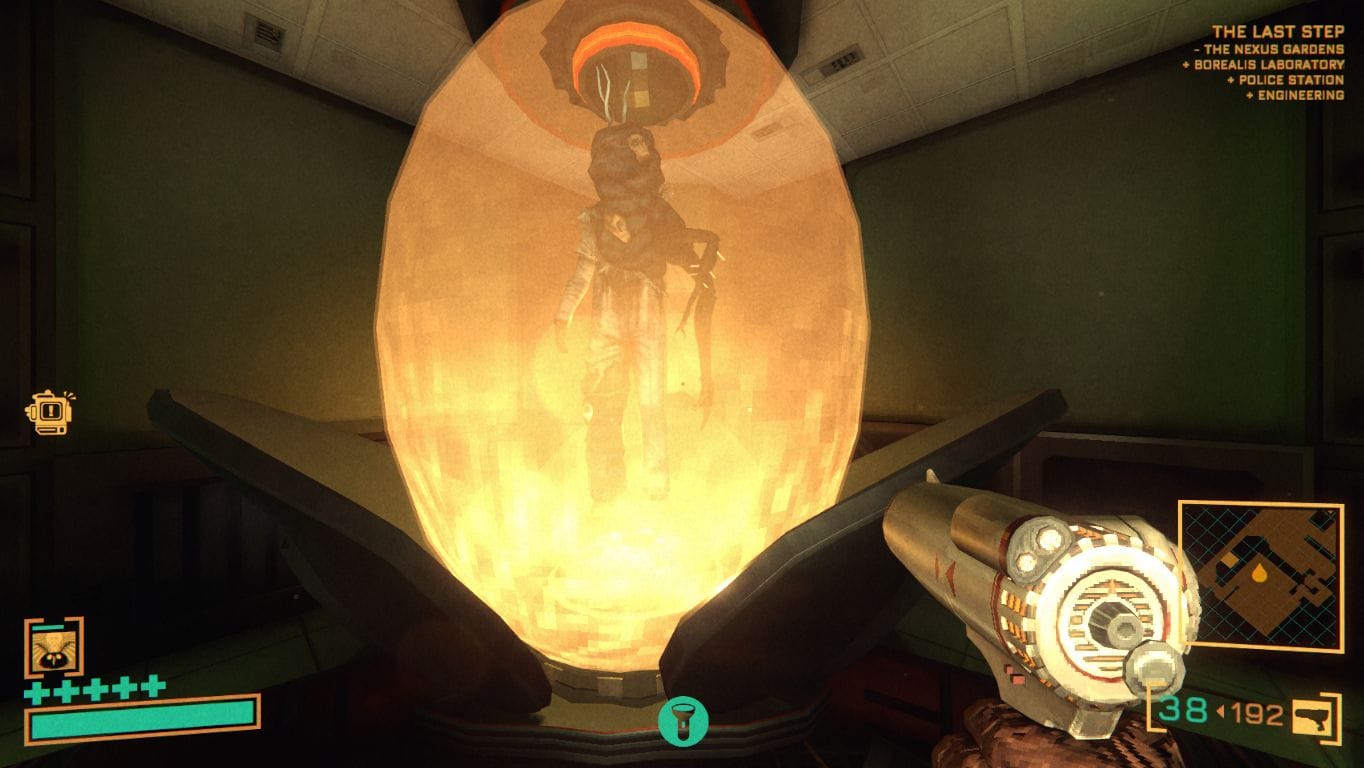
The map isn't interactive, isn't labeled, and generally wasn’t a huge help. The mini map, though, was much appreciated, and I got far more use out of it than the bigger map. Basic things like the healing chamber and elevators are marked for you, but nothing more detailed than that. I really like this. At one point, I sketched bits of the map in my notebook to remember the general area I was in and needed to get back to.
Quests are pretty general too; there are no waypoints to guide you around. So in most situations you’ll have to figure things out for yourself. The dialogue in the game usually gives you a clue about where you need to go. Listening closely and periodically checking my quests is what kept me on the right track.
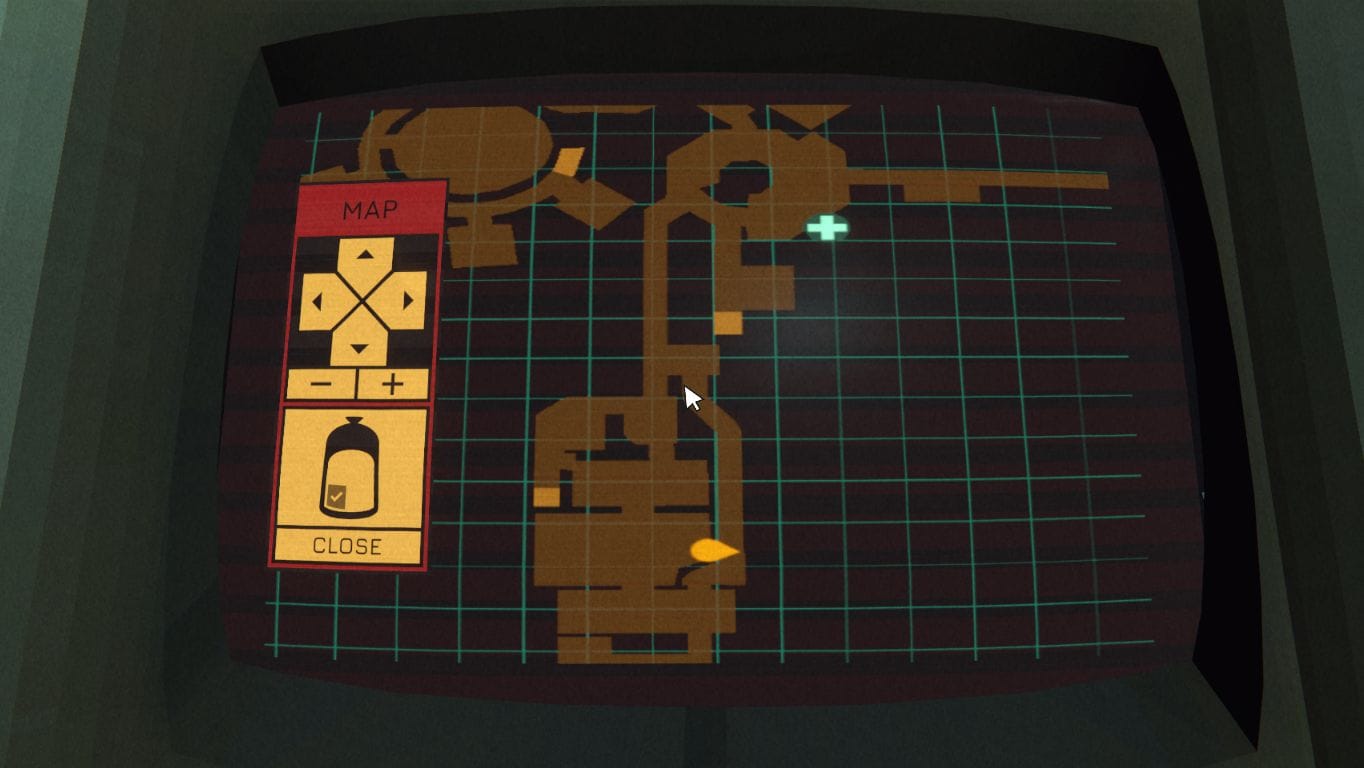
Almost everything in Aurora 5 is interactive. You can break lights to make areas darker, something that I was even doing by accident. This permanently changes the environment. It makes stealth easier but items harder to spot. I love this; it made planning my engagements much more interesting.
Vending machines can be broken too, along with other terminals. The first time I did this, I thought I was screwed, but you can fix these items by hitting the keypad with your wrench, the main tool in the game. Speaking of the vending machines, all of the food is interactive. You can eat it or scrap it for…scrap. I found food to be pretty pointless on normal difficulty. It can heal you, yes, but you have to open your inventory, click the item, and scroll down to an option to actually eat it. It makes it clunky to use during combat.
The Janitors Haven
Janitors Haven is the hub area for RetroSpace. When you first unlock it, it’s pretty empty. It will be you and a character who really should’ve mattered more for a while. But as you progress and find more friends, the haven will expand. This is where you’ll upgrade your weapons, Mutamods, and get a couple of extra side quests.
Janitors Haven is explained in the story in a way that is fluid and also impressive. I’m not going to spoil the ending, but what I will say is that the way RetroSpace technically tells multiple stories at once is very interesting. The story of Janitors Haven never tramples over the main narrative. It’s also quite interesting to see how the haven grows as you add more characters.
The final character you add to the haven, though, feels borderline pointless. As far as I can tell, his story beat is never really resolved. He doesn’t do anything interesting, which is also a shame because every other character has something to offer you. This also leads me into another issue I have.
The heaven also functions as a fast travel location, which is extremely cool and explained well by the narrative. Where this all falls apart is how often characters have new dialogue for you. During the last stretch of the game right before the ending, they have nothing to say. Nothing about what transpired, what could lie ahead, or anything. It’s weird because just before the end you have to talk to everyone, but it doesn’t feel like any kind of resolution. There needed to be a point just before the end where you can catch everyone up on the situation; it would’ve helped fill in the awkward gaps.
Combat and Upgrades
RetroSpace has a fair amount of weapons ranging from a pistol to a broom melee weapon that I became completely obsessed with. There is a hidden weapon to find, and plenty of upgrades for each weapon. Enemies are weak against certain weapons and elements, which I love. I love every time a game does this because it adds a layer of depth.
There are no dedicated stealth weapons, which shocked me. So aside from using traps, don’t expect much in that way. But with the right pistol upgrade, you can bounce bullets off walls, which is not only satisfying but can also make for some interesting kills if you time it right. My only gripe with weapons is that I wish there were more enemies to shoot. I can kind of scratch that itch in the target range, but it’s really not the same.
Aside from weapons, you can upgrade your suit. Upgrades include a built-in cloaking device and a motion tracker. These upgrades can be further upgraded. By the end of the game, I felt like I had a really good handle on my abilities. These upgrades are completely optional too; you can skip this whole mechanic. But one thing I wouldn’t skip is the camera, which was a huge pain point for me.
To use the camera, you have to open your menu, scroll down to camera, track the target, and exit the camera with the triggers, at least on an Xbox controller. There is no button to pull the camera up quickly, meaning if you get caught with it out, you have to exit as quickly as possible. I used the decoy to buy time, but when you upgrade it too much, the explosion gets so strong it's not useful in this situation anymore because it can kill you.
Mutamods, though, are awesome. The story mentions them a lot, so I’ll only touch on one thing: the Moth mutamod is a genius way to make moth game mechanics. It lets you heal when you’re under bright light. Each one serves a different purpose, and I think that if I cranked the game to a greater difficulty, they would make the difference between life and death.
Final Thoughts
If you’re going into RetroSpace looking for a happy ending, this is not the game for you. With that out of the way, I really enjoyed RetroSpace's story. Do I think that it could’ve been a little more? Yes, but for around 17 hours of playtime, what you get is really good. There are two endings, a good and a bad ending, and I have some theories about which might be canon, but this is not the time for that.
There are a few main characters in the game, and none of them got the time I feel like they deserved, which is a massive shame. Each one feels like bits and pieces of their stories are missing. This didn’t make the game any less enjoyable, but it did leave me craving more.
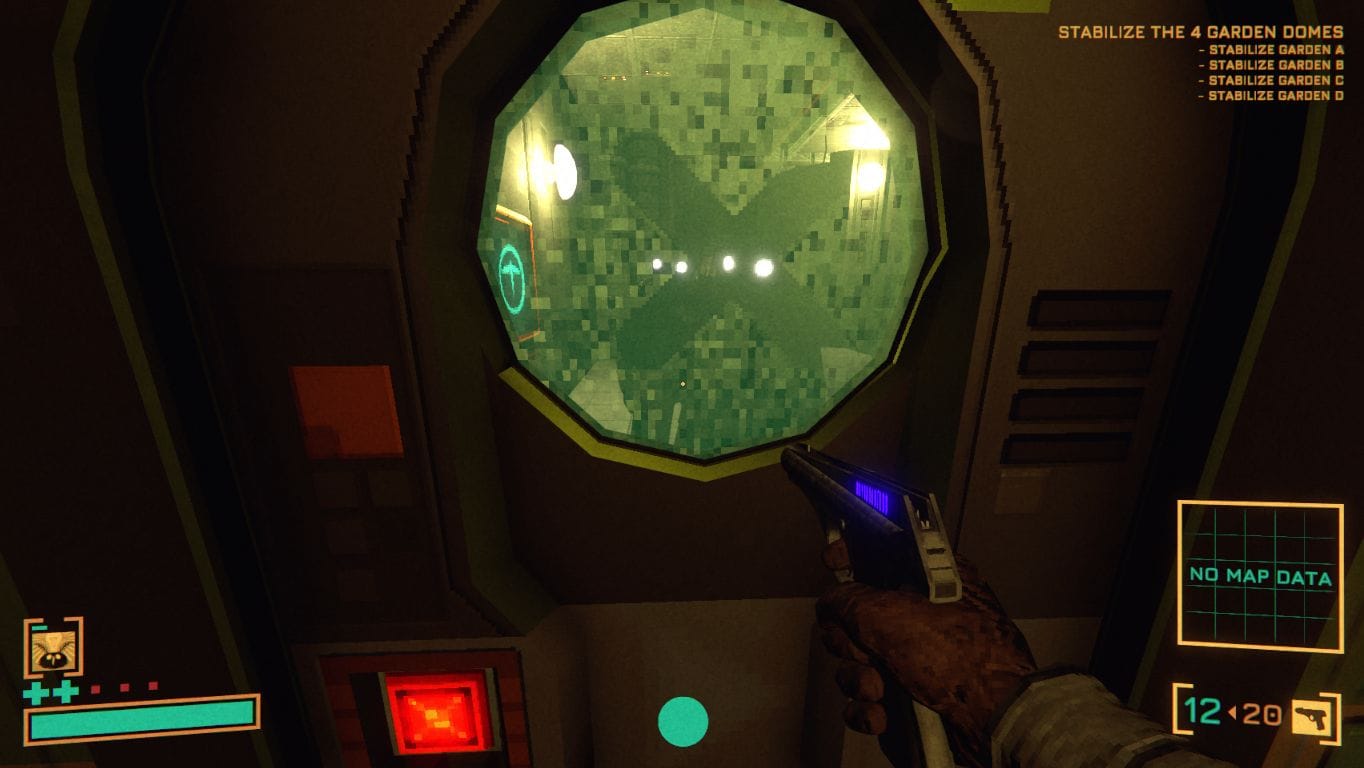
Menu navigation on a controller feels extremely cumbersome. This applies to navigating and scrolling emails, moving around the map, and using the camera. None of these actions feels fluid. I don’t have this issue with a mouse, and while I recognize RetroSpace was likely designed with PC players in mind first, I’d still love to see menu navigation improved overall.
The sound design in RetroSpace is seriously next level. The mutant sounds for the first few hours were enough to make my skin crawl. The sound design is so good that you really don’t even need the motion sensor. The music is amazing too; RetroSpace features one of my favorite game soundtracks from the last two years, and it’s no contest. The voice acting is also very good, which I’ll admit was quite a surprise for me.
I did run into quite a few bugs and glitches. Most of them were patched out, but a few remain. Looting bodies and extracting DNA stopped working, hallways disappeared for a split second, and enemies would rarely clip into vents.
What makes RetroSpace so special to me, though, is the player choice and the care taken to make sure those choices made sense. I love how moldable and interactive the environment is, and how the characters have real depth, even though I wanted more time with them. Yes, I hit a few glitches throughout the game. Even after the patches, I had numerous corridors turn into space and, at one point, got spawn-camped by a deranged rabbit, but none of it took away from what an awesome experience RetroSpace was.
RetroSpace
Excellent
RetroSpace is an immersive sim worth waiting for that will challenge you to think on your feet as you try to figure out who you are. The characters are fun, the design has been clearly thought out, and the soundtrack will keep you grooving for days.
Pros
- Awesome selection of weapons, each with plenty of upgrades. A weapon's look changes as you upgrade it.
- Aurora 5 is huge, fully explorable from the ground up, and feels lived-in.
- Enemies are designed with multiple attack methods in mind.
- Player choice is off the chains here.
Cons
- Menu navigation feels cumbersome on a controller.
- The character pacing is a bit weird, and some characters clearly needed more in terms of story and side content.
This review is based on an early PC copy provided by the publisher. RetroSpace comes out on October 1, 2026.