Mark Stoops is arguably the best coach in the history of the Kentucky football program. When college football changed around him, he didn't change, and the team went back to being a bottom feeder for it. He didn't just magically become a worse coach, just his coaching style was a remnant of a bygone era; the sport's general floor had been raised, and the on-the-field product was worse than everyone else's as a result. Greylune is a redux of Caylus designer William Attia’s Spyrium, both from over a decade ago. I loved Caylus when I played it in the early 2010’s, and though I never played Spyrium, I get the impression that it was good enough, if not great. But as it happened to Stoops, the landscape of board gaming has shifted dramatically in the last decade, and what was once good is now mid at best. The new blood is all quality, and even the best old stuff is showing its age, just fine in comparison. I worry what updates were made that simply sanded off an old design ethos bite.
Don't get me wrong, there's interesting decisions to be made in Greylune. It just winds up that you kind of keep those decisions to yourself, as this is probably the least interactive worker placement I've ever played, because you wind up having to choose a strategy early and just kinda hope it works out. Greylune is played over the course of 5 years (rounds), each with 4 seasons (phases). Winter is setup, which consists entirely of dealing out that round’s 3x3 village grid and encounters. Spring’s the worker placement phase, where you'll drop workers in the non-exclusive space between village cards. Once you're happy with your placements, you shift over to summer, where you resolve your workers. The vast majority of the time, you're picking up a worker to get a coin for each other worker, or just moving to the round's event, another worker placement space. If you're not getting money or resolving the event, you're playing whatever cost plus a coin for every other worker next to a card to activate it. Locations simply provide you with an action but stay on the board for other people to use that round, while items and companions are bought and brought over to your player board. Items have too much diversity of scope to get into right here, but companions offer similar effects, points multipliers, and an additional worker. Some effects will move your horse guy on the board, giving you access to various encounters and quests, which reward you if you meet certain conditions, usually having your stats to a certain level. Once all your workers are resolved, you head to autumn and take your income, and as soon as everyone's done there, perform the winter setup and head on to the next round.
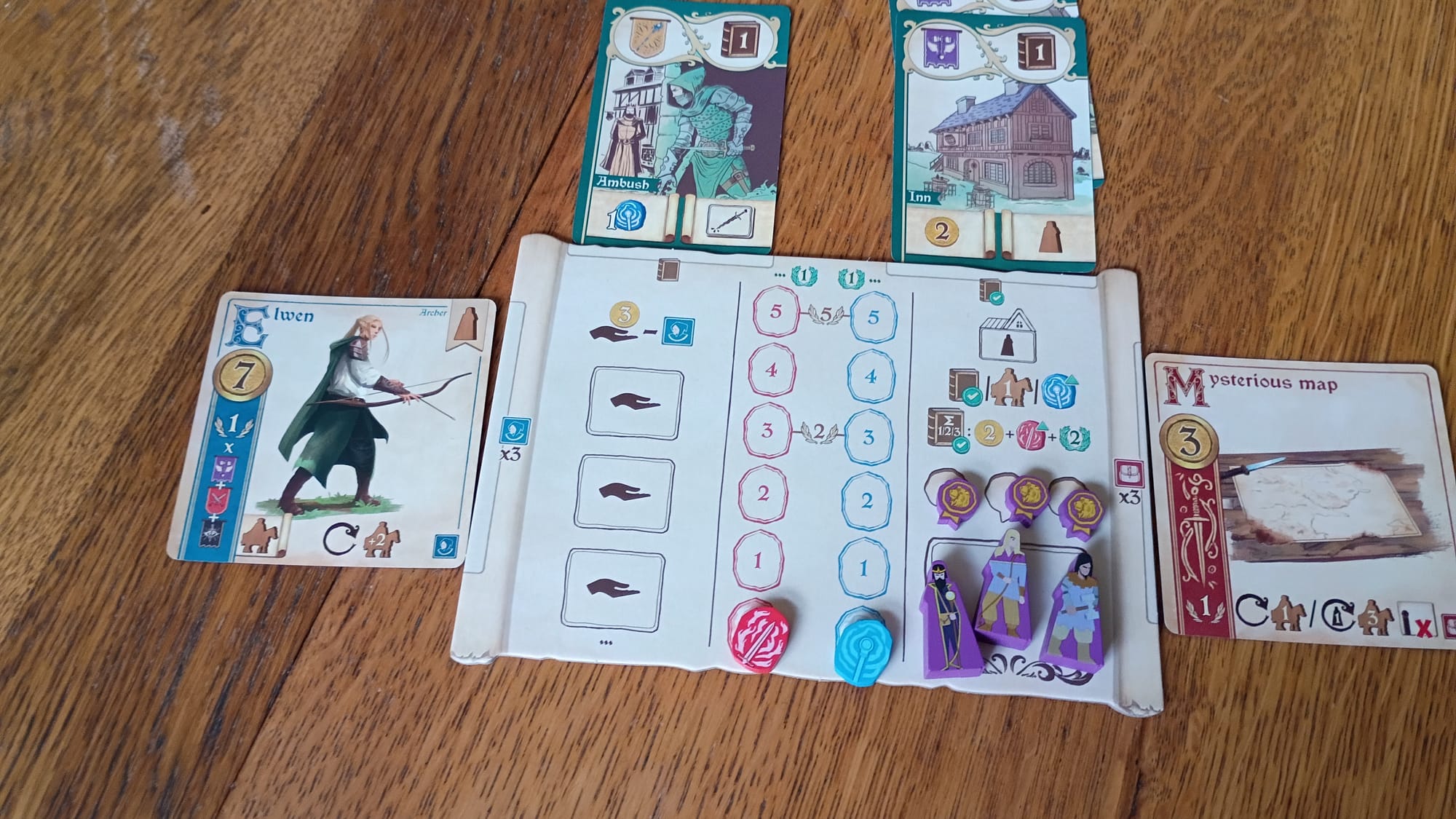
The pitch that Greylune asks you to choose between using all your workers effectively and getting first dibs on resolving them had me hype to get it to the table after reading the rules, but now that I've played it several times, it feels like there's too many variables present to ensure that most of the other decisions feel good. Which cards come out, and the order they come out in, have a huge influence over the game. To an extent, outside of just grabbing extra workers whenever you can, who winds up with the best economic and points engines feels like blind investments. It's not just if a card comes out before or after another (although saving your boots for an encounter that doesn't show does suck), it's also where and how some cards show up that determine how good an earlier companion purchase is at the moment. If that card you want for your alchemist build gets dealt in a corner with a low seal, you can get it at a bargain bin cost. On the other hand, if it's in the center of the village with a high seal, it probably won't be worth your while. The first couple times, the question of where you put your workers and the order you pull them for what effect is definitely fun, but after a few plays, I felt like Greylune was the one asking those questions, not the other players. It's a distinction plenty don't care to make, but I tend to play fewer co-ops due to my preference for the latter. Oddly enough, although there was too much in the air for me to feel like I had agency in choosing the best course of action at any given time, Greylune’s still static enough from game to game that I feel like there's only two or three winning strategies present that you have to just YOLO yourself into early. To be blunt, Greylune reminds me of Mr. Toad’s wild ride, simultaneously too on-rails and chaotic for my taste.
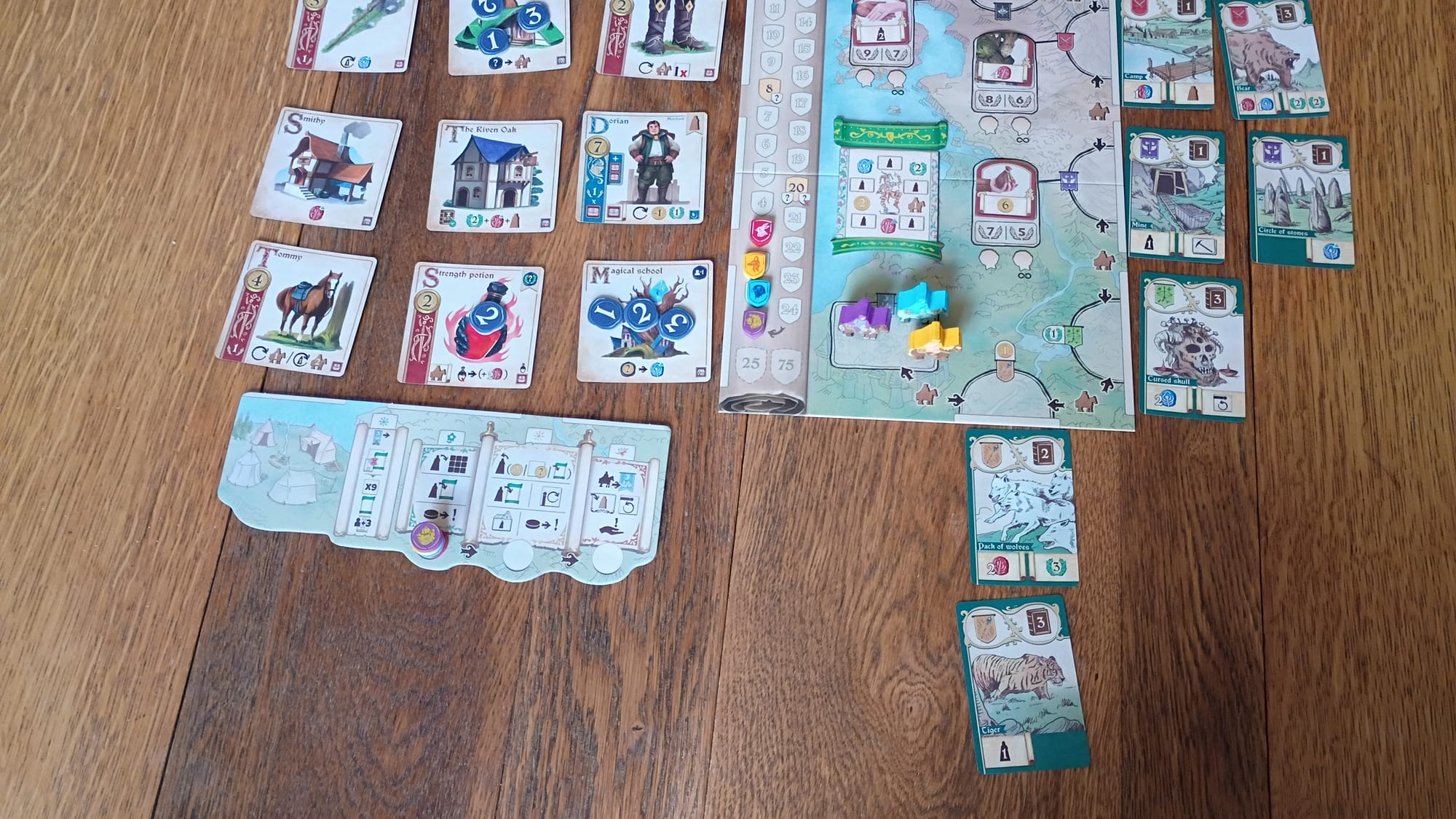
The feeling isn't helped by the production decision to give this the Devir small box treatment. While it works on a technical basis, everything being small and fiddly makes everything feel worse. A VP track that loops at 25 in a game with final scores in the mid 100s should be a crime. Maybe my "American that lives in a house" is showing, but while I can appreciate efforts to make games more affordable and space-conscious, it isn't a small enough box to actually be a small box, and everything inside feels like a compromise for a marginally smaller box. So Greylune winds up in a weird no-man's-land, where everything’s off from what the groups I think about would want in a way that I don't know who it's for.
Greylune
Alright
My feelings about Greylune feel at odds with themselves. it's too old, it's chasing fads. It's too static, there are too many variables. People will love Greylune, I'm definitely not among them.
Pros
- Hidden auctions will make a game balance itself after enough plays
Cons
- Why make this another generic fantasy game?
- The production feels cheap and small
- The shift from Spring to Summer feels like it's supposed to balance one player gobbling up all the extra workers, but it doesn't
This review is based on a retail copy provided by the publisher.