I’m just going to say this right out of the gate: Ethnos is a bad name for a board game…right? It doesn’t communicate anything about the game and could even mislead someone as to what the game is about. Is this game about ethics? No, it’s about becoming the emperor in the land of Ethnos. With that caveat out of the way, this is a second edition of a game originally printed in 2017. It’s usually a good sign when a game receives a reprint. It’s also good for gamers so they don’t have to find overpriced or used copies. So let’s explore the land of Ethnos and see what we find.
Overview
Ethnos finds players scoring points over three rounds by fighting for territory across the main board. Each region will have three point tokens randomly assigned to it, with the lowest being ordered left to right. The leftmost token is scored in the first round. The second round uses the left and middle tokens, and the third round uses all three, creating escalating points throughout the game. Ethnos comes with twelve clans, and you’ll randomly determine six of them at the start of a game. There will likely be additional setup based on the different clans in each game. At the beginning of each round, you will deal out allies face-up from the deck based on the number of players. Then everyone will draw one card to start their hands.
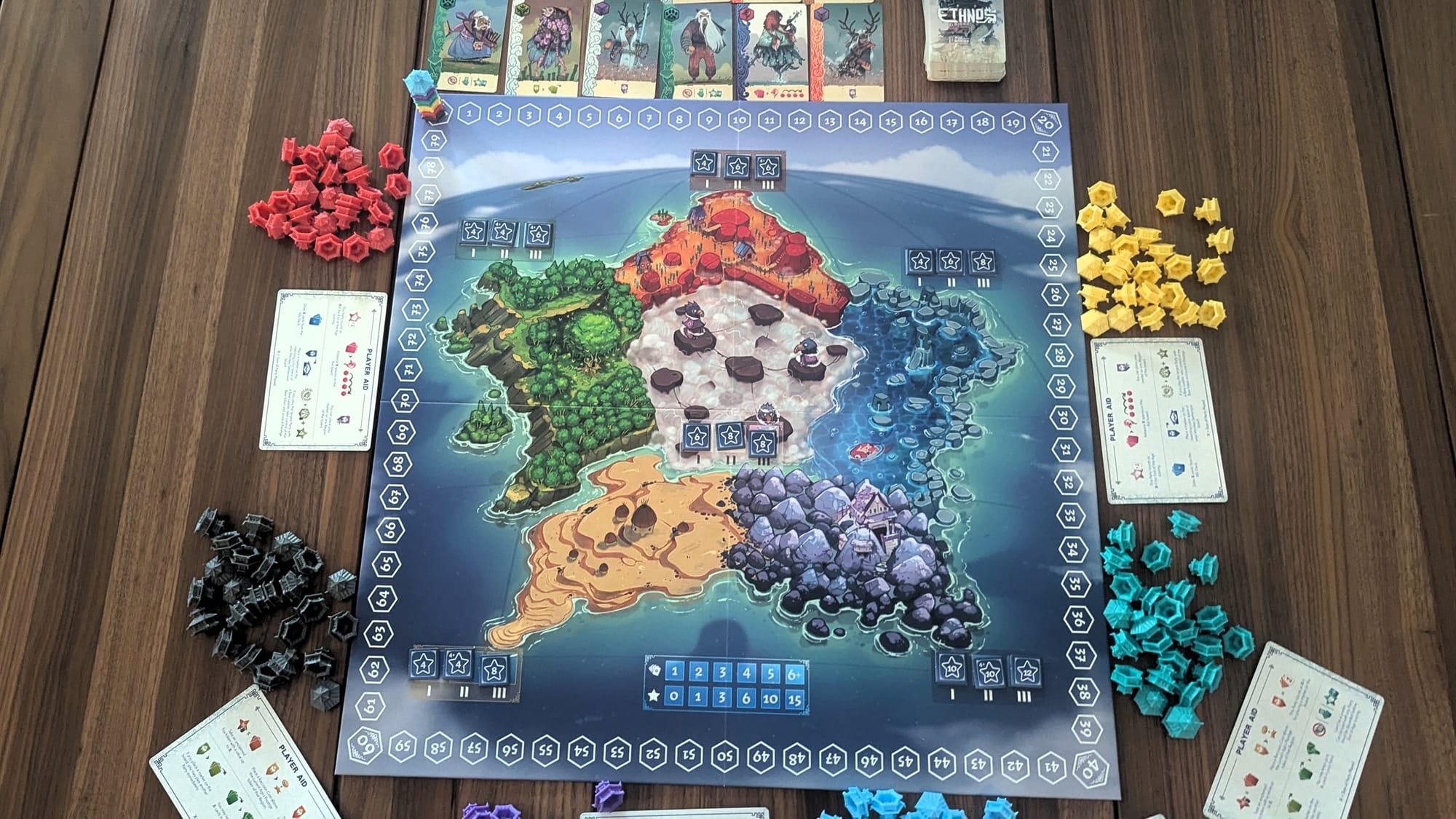
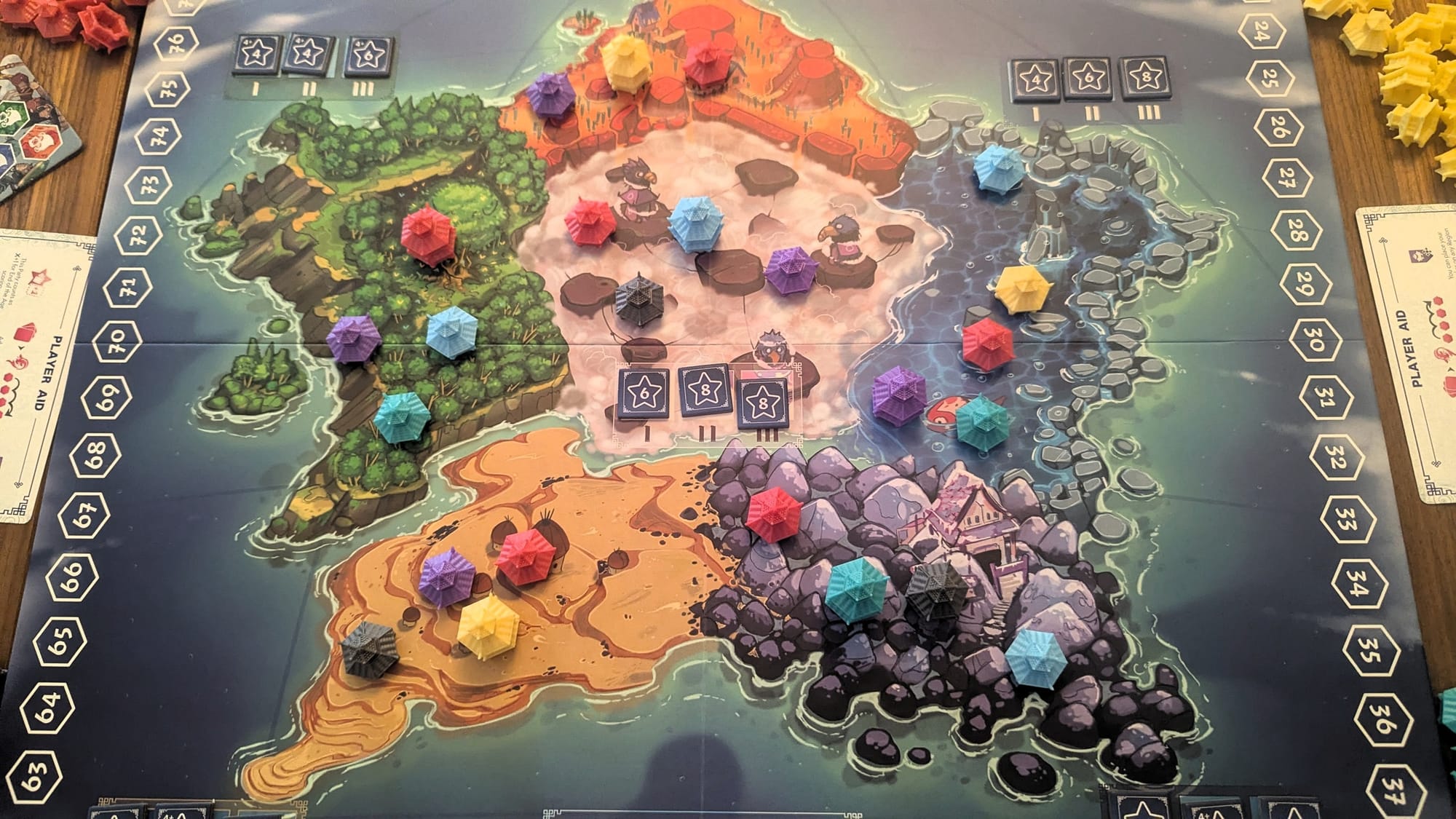
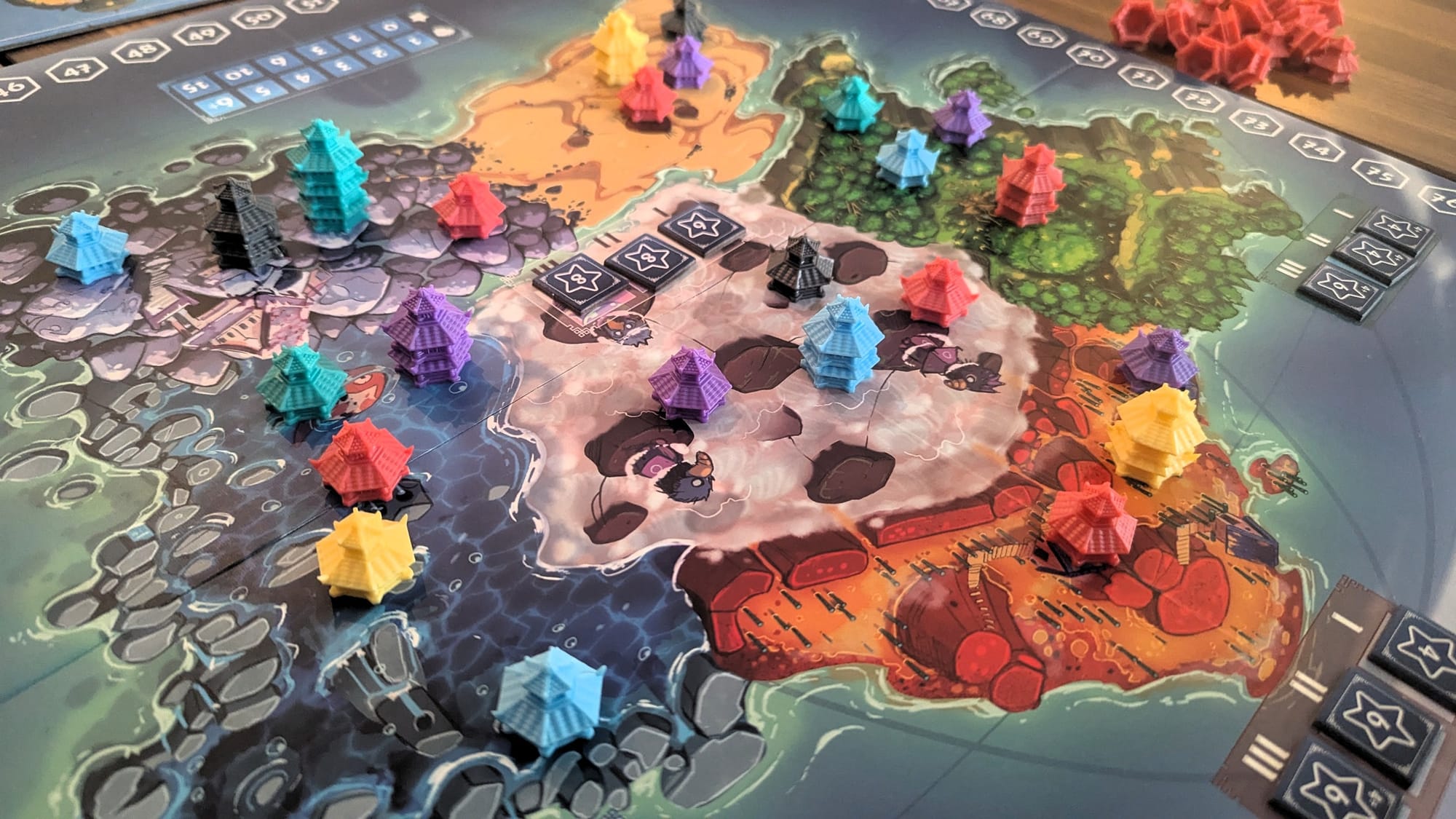
On your turn, you can either draw a card (face-up from the pool or the top card of the deck) or play a party. To play a party, all of the cards must be the same color, or they must be the same clan. When you play a party, you will place a control marker corresponding to the leader of that party, which you’ll place on top of the stack. Note: you can only place a control marker if your party has more members than control markers in that area. Then you can activate any ability the leader may give you. Lastly, you must discard any remaining cards in your hand into the face-up pool of available cards.
Shuffled into the ally deck are three dragon cards that are randomly shuffled into the bottom half of the deck. When the third dragon card is drawn, the round immediately ends, even ending that player’s turn. At the end of each round, you’ll score points for having the most control markers in a territory. In the second and third rounds, you will also score points for being second and third. You will also score points for the size of each party you played that round.
Gameplay Pros/Cons
My favorite thing about Ethnos is that turns become lightning quick once everyone is into the game. You’re either drawing a card or playing a party. You will find yourself staring at your hand wishing you had drawn different cards. The desperation of everyone trying to determine their best plays is palpable. Sometimes, players spend a few turns drawing cards only to hit the hand limit. From there, Ethnos slows down as everyone plays out their parties. In other games, everyone is constantly playing parties, thus refilling the face-up market. Ethnos has a tempo to its gameplay, and figuring out that tempo is pivotal to victory. You’re always engaged with the game with little downtime.
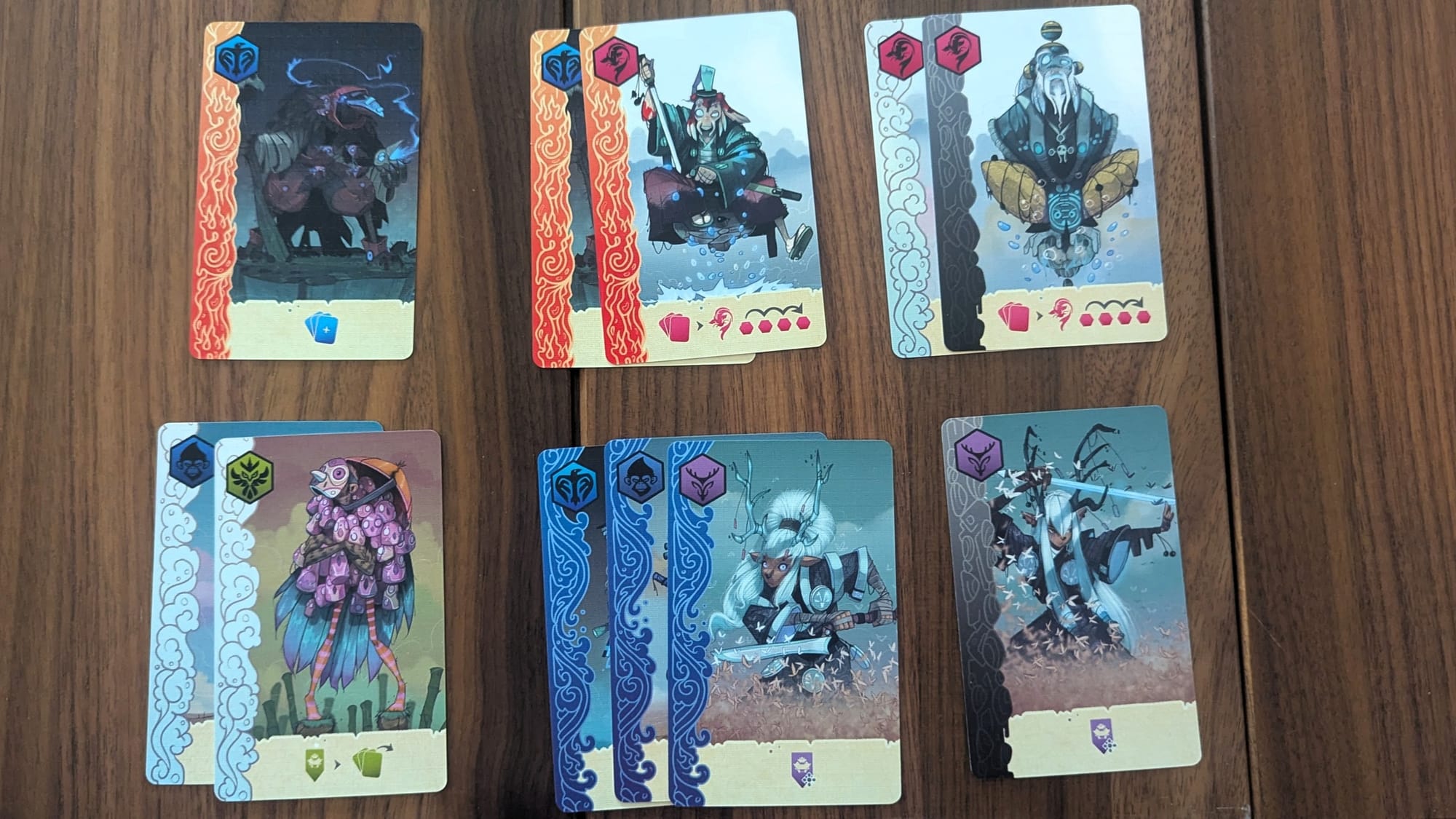
The core concept of having to discard any remaining cards from your hand when you play a party always creates tense decisions. You don’t want to be fueling what your opponents are doing, but how can you know if these are the cards they need? The hard hand limit of ten cards means there’s a timer on every action you take. Do you hold out for more draws or just play what you have? It seems simple, until you’re holding eight cards and if you could just draw one card it would all come together.
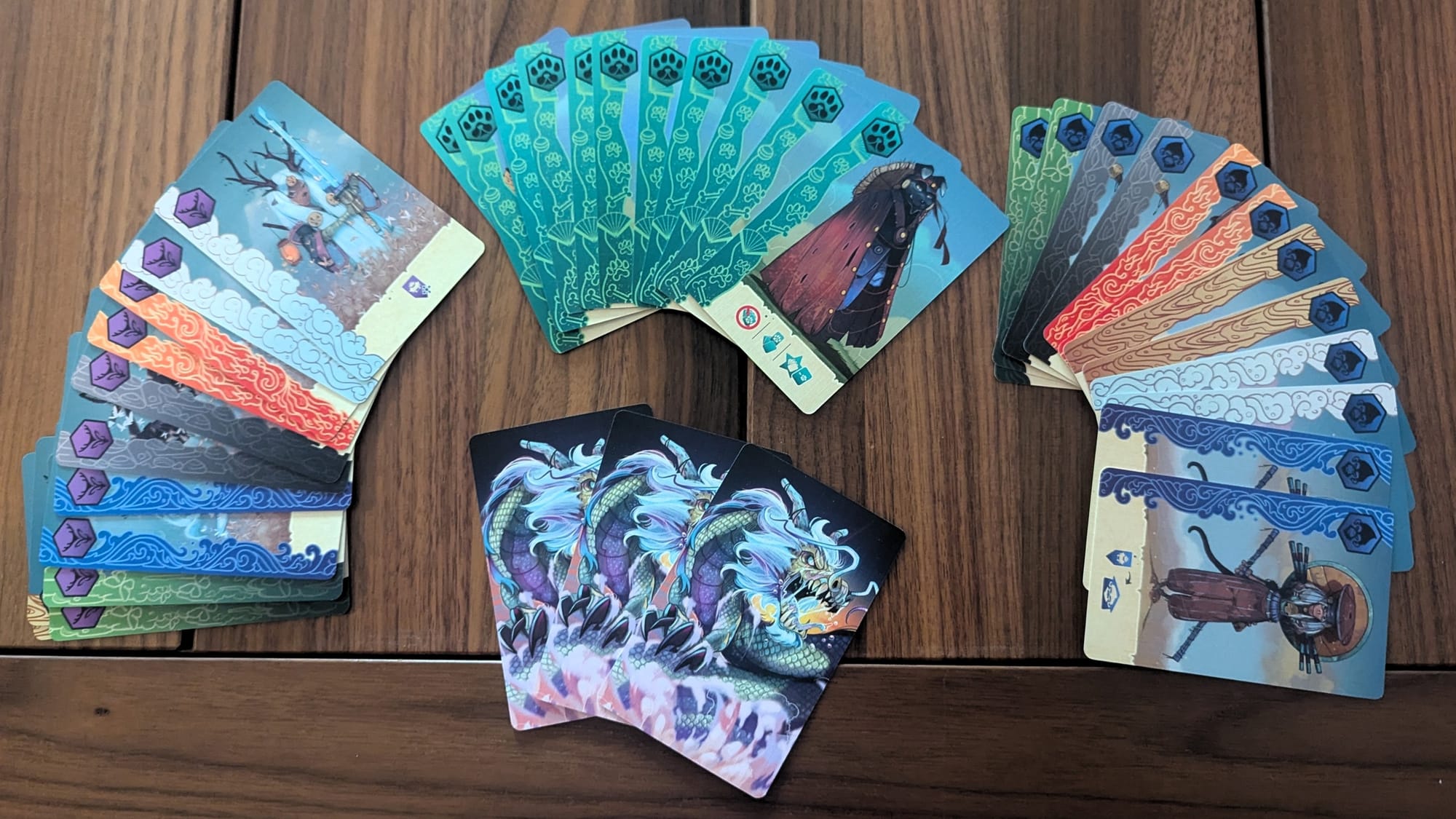
The twelve clans create a huge variety and keeps Ethnos replayable. Each clan changes the game in different ways that complicate the otherwise simple premise. Finding the synergies between the six clans in your current game is a ton of fun. The rabbit, monkey, or koi clans place less emphasis on the main board. If they are in your game, could you win by focusing on points through their minigames? Other clans like the owl, red panda, or raven clans mitigate the cost of playing parties from your hand. Whenever I play the game with new players, I love watching them realize that the raven clan also speeds up rounds, which isn’t always what they want. Ethnos nails the simple to learn, hard to master philosophy found across many great games.
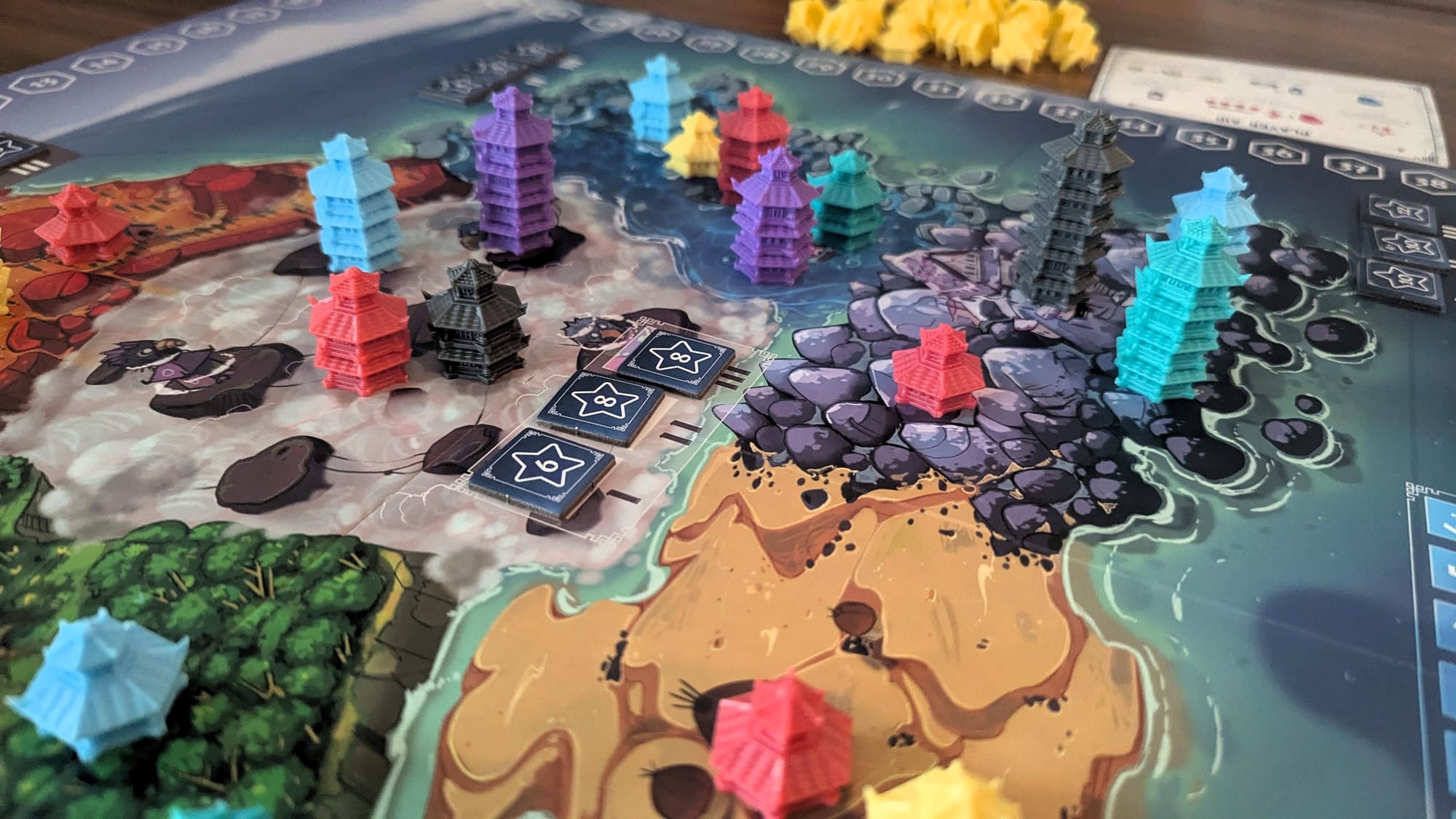
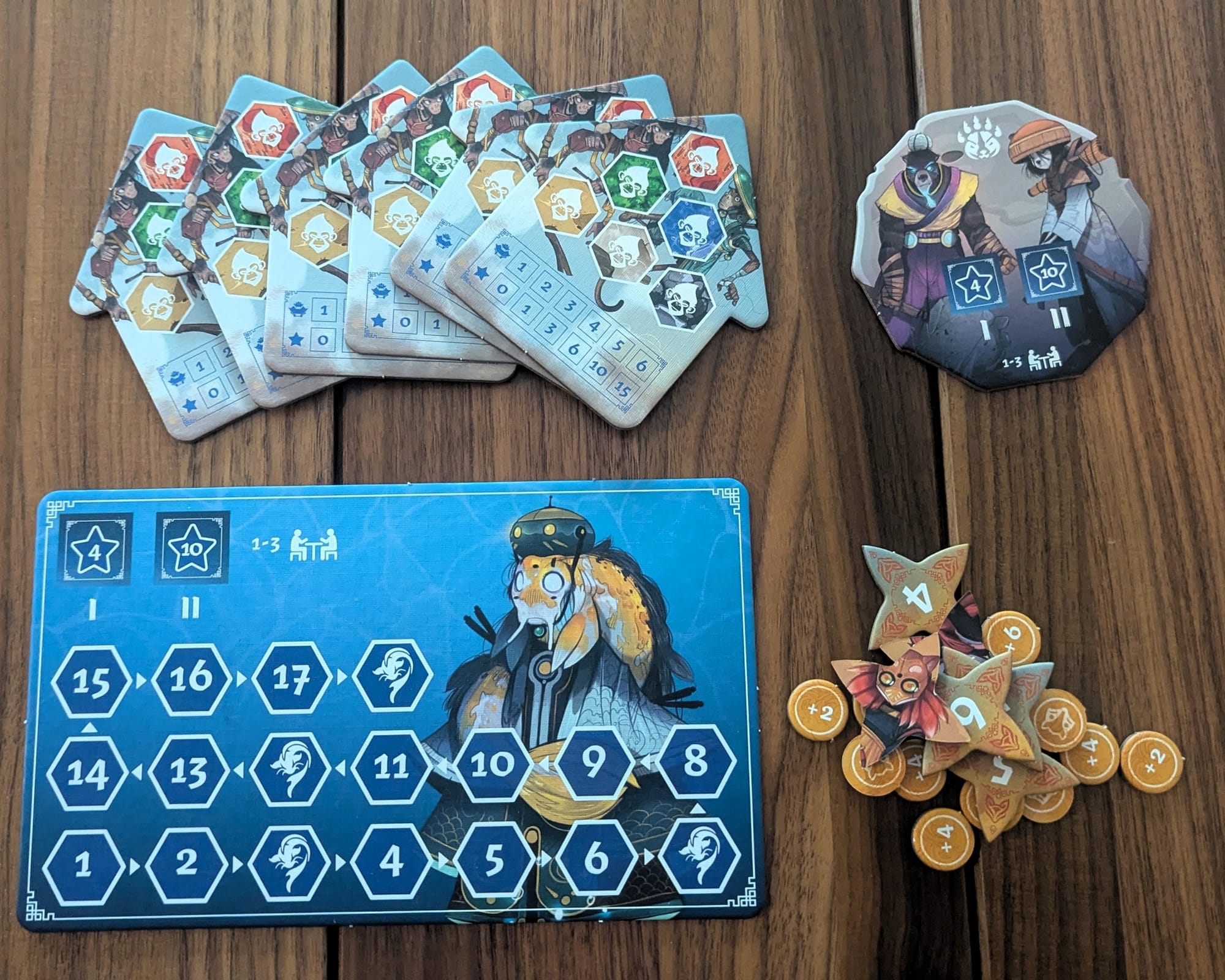
There’s only one major downside with the gameplay, which is the luck factor. It can be painful to watch everyone else play party after party while you’re struggling to draw anything cohesive. It doesn’t happen often, but it is a part of the game. Sometimes you’ll luck into what you want, and other times you won’t. The second edition even adds an optional rule called recruitment mode, which helps mitigate the luck of the draw by always having three face-up cards available to draw. Other changes include rebalancing the victory points, a solo mode, and a new mechanical clan, which are the raccoons.
Components
The biggest change the second edition brings is the updated artwork. The clans are now represented by various animal clans rather than the fantasy races. The artwork is vibrant and full of life and…I don’t like it. I find the actual artwork confusing as to which animal clan it is. I found myself paying attention to the symbol in the upper left corner, which is the clan, not the color of the card. The color is along the left side. This could very well be a me problem. I prefer the artwork of the first edition, which could be described as functional but boring.
The rest of the components are good. The main board is nice, the pagodas that make up the control markers are beautiful colors, and all of the cardboard is solid.
Ethnos 2nd Edition
Great
There’s a reason why Ethnos received a second edition. Ethnos is the epitome of easy to learn, hard to master. Turns are quick, yet at times the decisions can be difficult. This edition has some small improvements to the rules, but the vast majority of the game is the same. The new edition also has all new artwork, which, for me, is a mixed bag. Despite that, I’m happy to see Ethnos available again, and I would recommend this edition if you’re looking to give it a try.
Pros
- Easy to learn
- Tons of replayability
- Turns are quick
Cons
- Card artwork can be confusing
This review is based on a retail copy provided by the publisher.