At a glance, you might think DragonSword: Awakening was a clone of gacha games like Genshin Impact. Especially since it actually got its start as a microtransaction-laden clone of the mobile giant. Thankfully, the team at Hound13 decided to shift their project to a focused single-player endeavor instead of a free-to-play money grab, and as a result, we all get to enjoy a gorgeous game with a fun story.
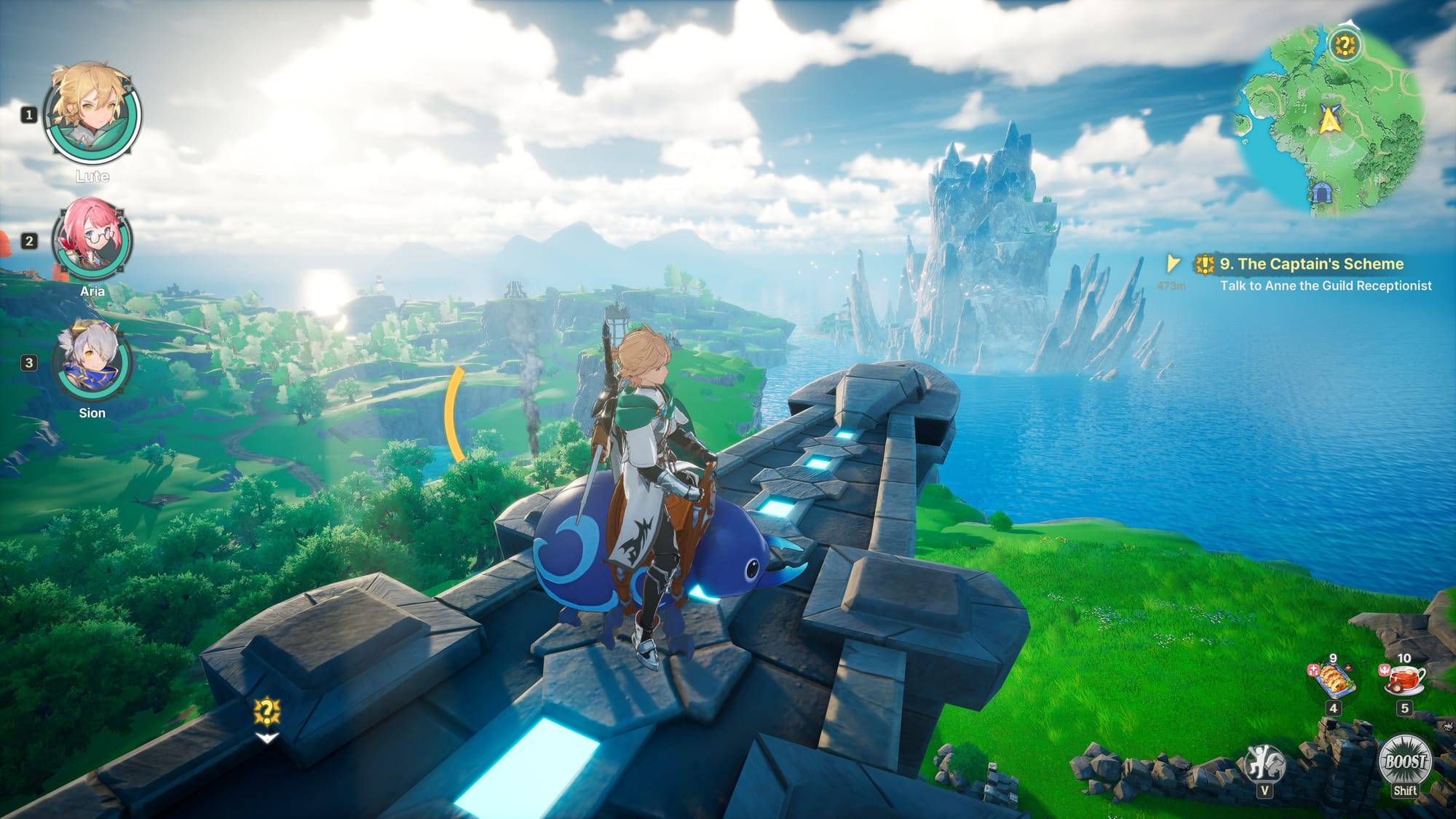
Welcome to the world of Orbis, a rich fantasy world with kingdoms, dragons, and a long, storied past. Our adventure opens on the young Lute, a golden-haired boy who looks strikingly similar to a certain young Hylian. He’s on the way to the capital to meet his dad or an uncle or something when he’s accidentally waylaid by a band of mercenaries. After some peer pressure by the troupe’s boisterous leader, Lute agrees to join the mercenary group, and they begin working to climb the ranks as one of Orbis’ premier mercenaries. After an off-the-books request from a local priestess of some renown, the group is swept up into an ancient conflict that could determine the fate of the world itself.
AI Note - Hound13, the game’s development studio, has said it used AI for translating some in-game dialog, but no AI was used to make in-game content resources.
Mentioned earlier, DragonSword: Awakening just looks like a Genshin Impact clone on the surface. Both share gorgeous anime visuals, and both were clearly built off the same bones. For those unfamiliar with Genshin Impact, the game is a grand open-world action RPG that gives you a wide range of playable characters to acquire, play as, kit out, and level up. At the time of this writing, Genshin Impact boasts 117 possible playable characters, but random chance and mechanisms to spend money are prominent. That’s the difference with DragonSword: Awakening, though. With DragonSword, there are 19 playable characters at launch, but each of them can be acquired without ever spending a cent. You’ll just need to take the time to play through the game.
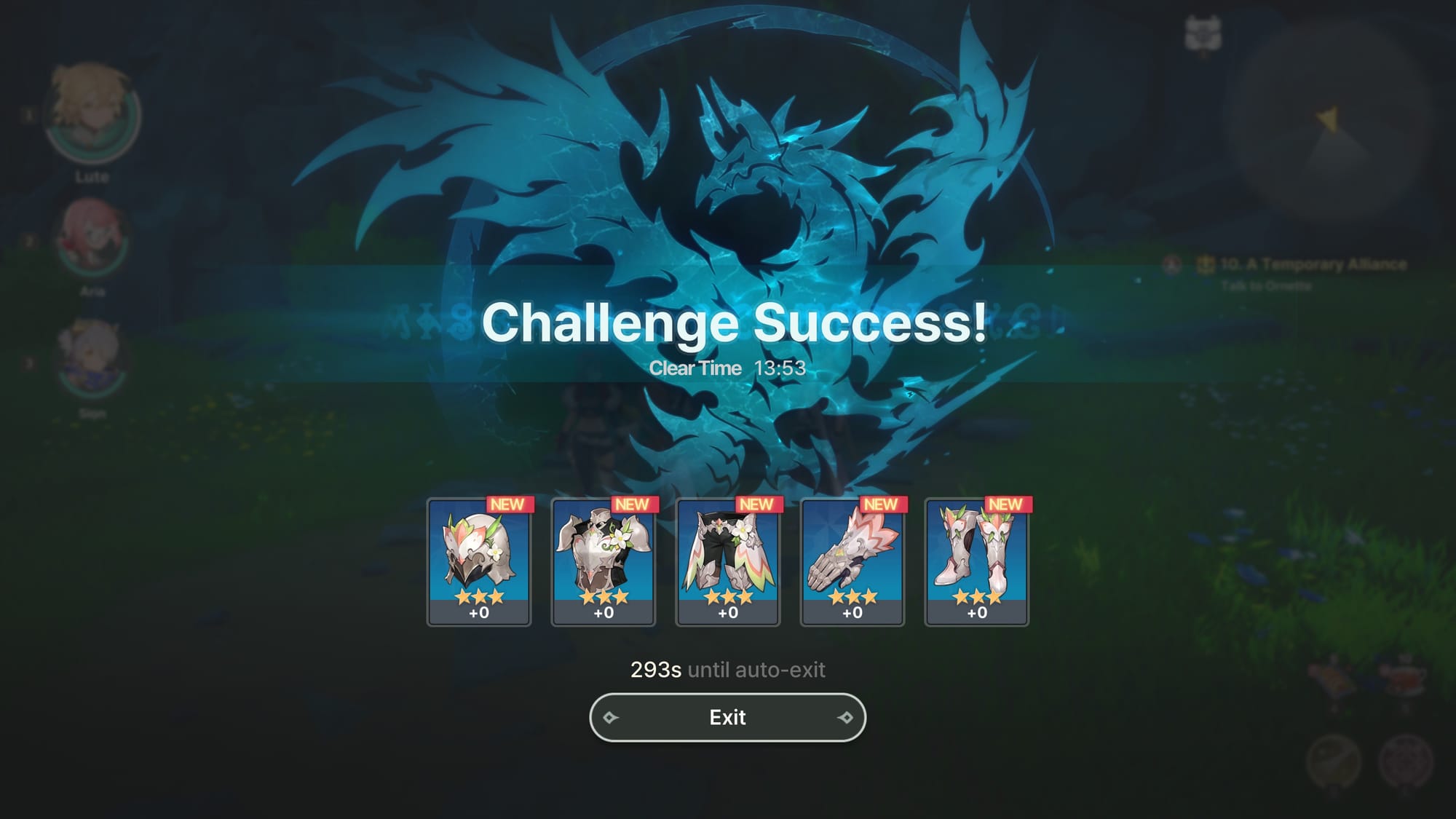
To continue the comparisons, character and equipment progression are handled the same way in both games. You’ll level up both your characters and gear using progression items and money you earn doing dungeons, quests, raids, and story missions. Along the way, you’re intermittently level-capped. As you progress through the story, your mercenary group will become more and more renowned, and you’ll have mercenary rank quests to complete. Finishing these gives you a broadened level cap for your characters and gear, as well as a new title and familiar.
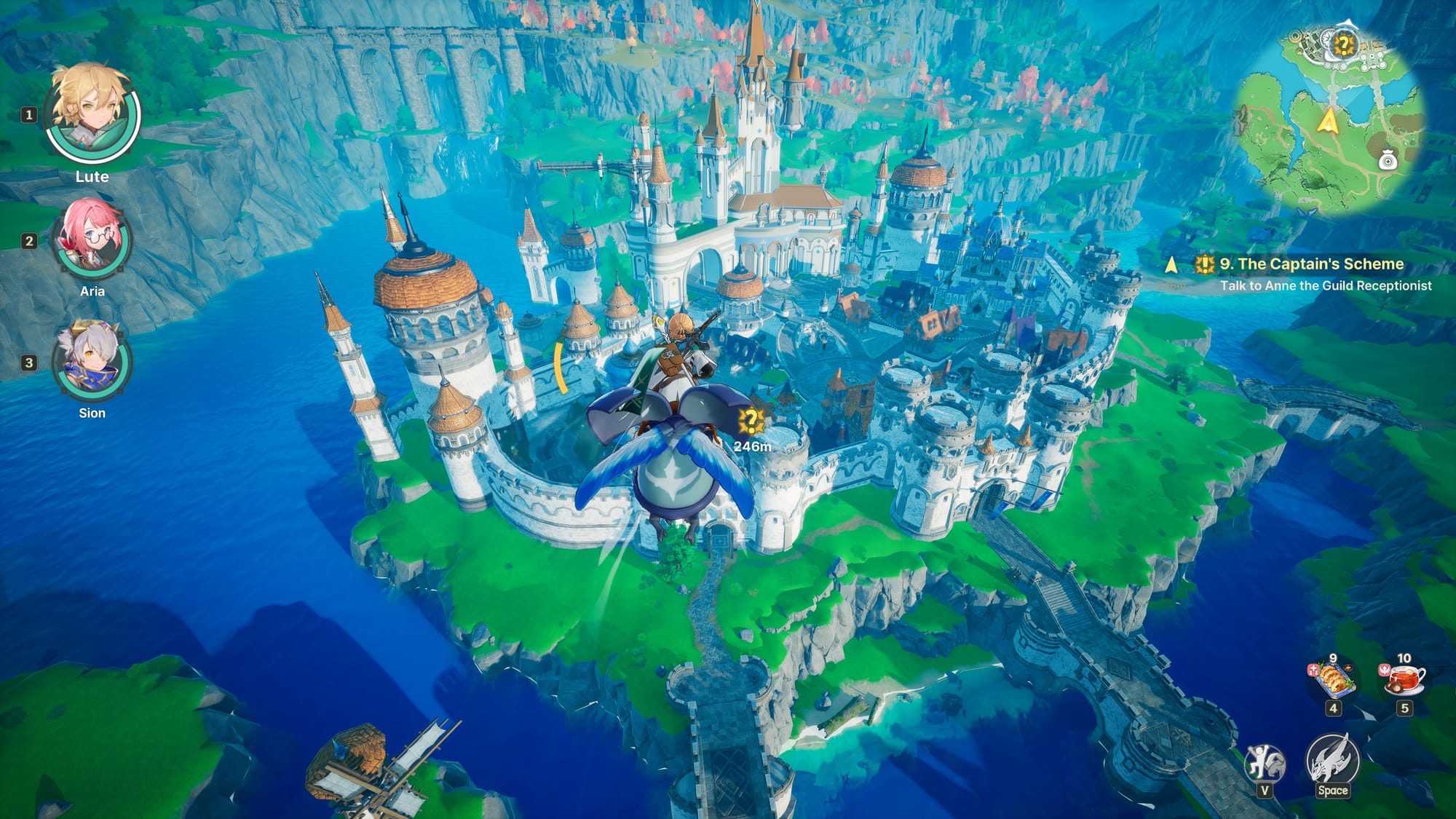
Speaking of familiars, these cute creatures will double as your mounts, and you can summon them almost anywhere, dungeons excluded. Each will increase your ground movement speed, and all of them can glide. Beyond that, each offers some kind of unique added ability, like an in-air speed boost or faster climbing speed. You can get different ones through different in-game challenges, though some are only available via DLC.
While we’re discussing the familiars, which help you get around the world more efficiently, let’s discuss world exploration. The land of Orbis is big, filled with dungeons, fortresses, and other landmarks. There are windmills that, as you find them and solve a related puzzle, will become fast-travel points and an excellent way to uncover and quickly explore a region. Dungeons, once discovered, can be fast-traveled to and many offer various rewards. You’ll want to get comfortable with these, since you’ll probably spend a lot of time grinding them for money and upgrade materials. There are also goddess statues. Each of these requires finding a few broken pieces in the nearby environment. When they’re all collected, they become both fast travel points and the way you refill your team’s health. Statues have a set number of uses (which increases as you find more of them), but a use of the statue will typically take about 10 minutes to refill. There are plenty of hidden chests, enemies, and challenges to tackle as you explore Orbis, too.
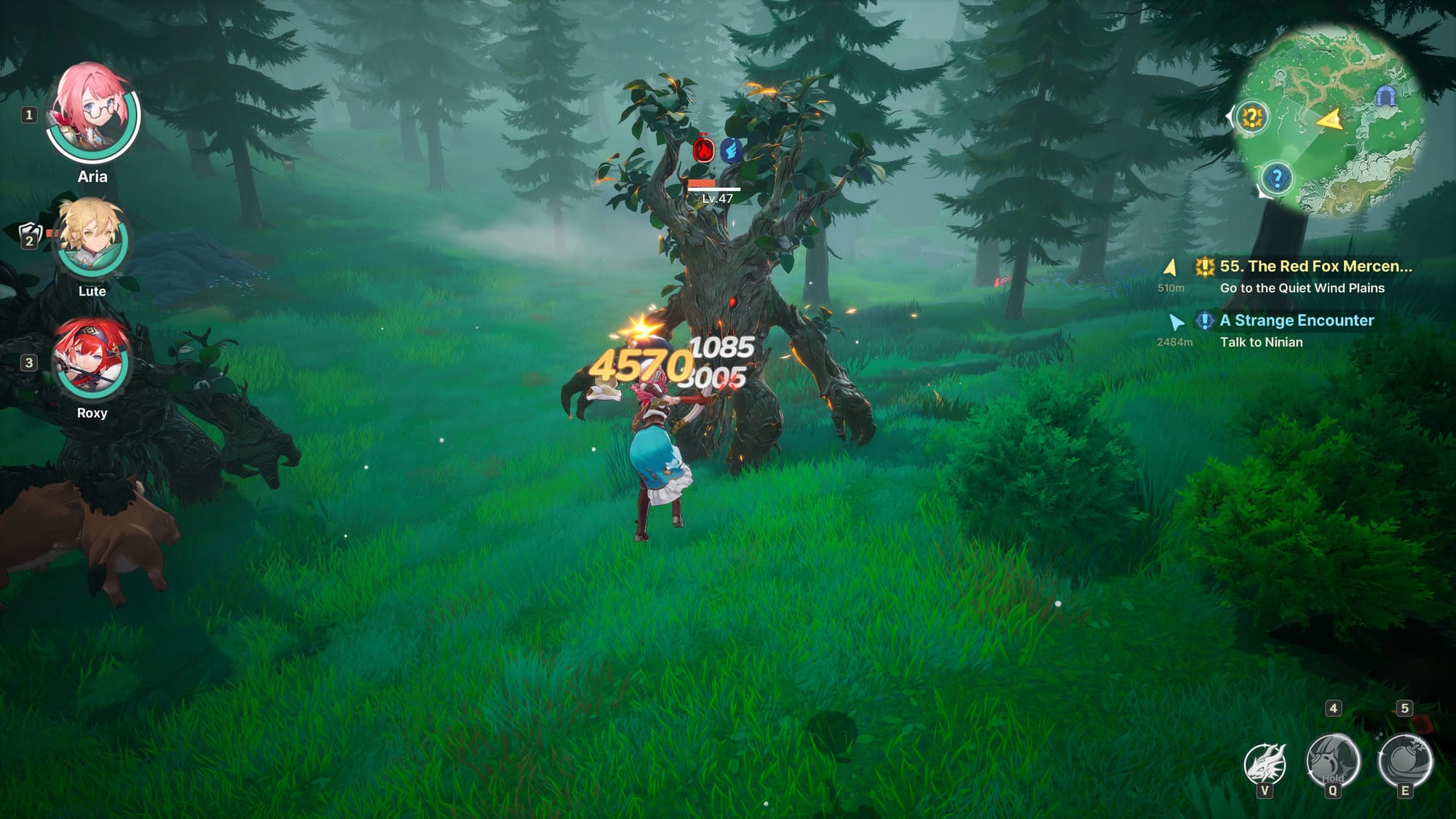
Like Genshin Impact, combat is action-focused with the ability to swap playable characters on the fly. You’ll want your team composition to be made knowing that elemental damage stacks throughout fights. Each character will have a primary attack, a jumping attack, a couple of special attacks, and added abilities that can be used when you get a status meter break. Let’s take one of your starting characters, Aria, as an example. She uses a crossbow and fire elemental bombs. As she attacks, her bomb skills will fill up. Using bomb attacks will apply fire damage. When the fire damage reaches a full stack, you can invoke a couple of extra skills. Her bomb skills are also effective at hitting multiple enemies at once. I like to pair her with Lute, who can focus down a single enemy with Stun damage and heal his teammates. I throw in a nice third character to shake things up, and I’m off to the races. With up to 19 characters to choose from, your options are plentiful.
In your time in Orbis, you won’t just be battling groups of small enemies. There are plenty of big bads you’ll encounter in your time to keep things feeling fresh. The story does a great job of pacing out major encounters. The game also gives you the option of running Hunts and Raids for added augmentation (and some cooperative content!). You’ll be able to perform a Hunt for some of the story bosses over and over again for XP and progression materials. There are up to 5 difficulties you unlock by beating the previous difficulty, and each subsequent difficulty grants you not only more challenge, but also more reward materials. You can join another player to do the hunt together. Raids are multi-stage encounters with up to two other players that can grant you some high-end loot. As with everything else in the game, these can be run solo, but if you’re hitting a wall or want to play with friends, these are great ways to do that. The game also features a few world boss encounters that will refresh each morning, so each day gives you a little shakeup.
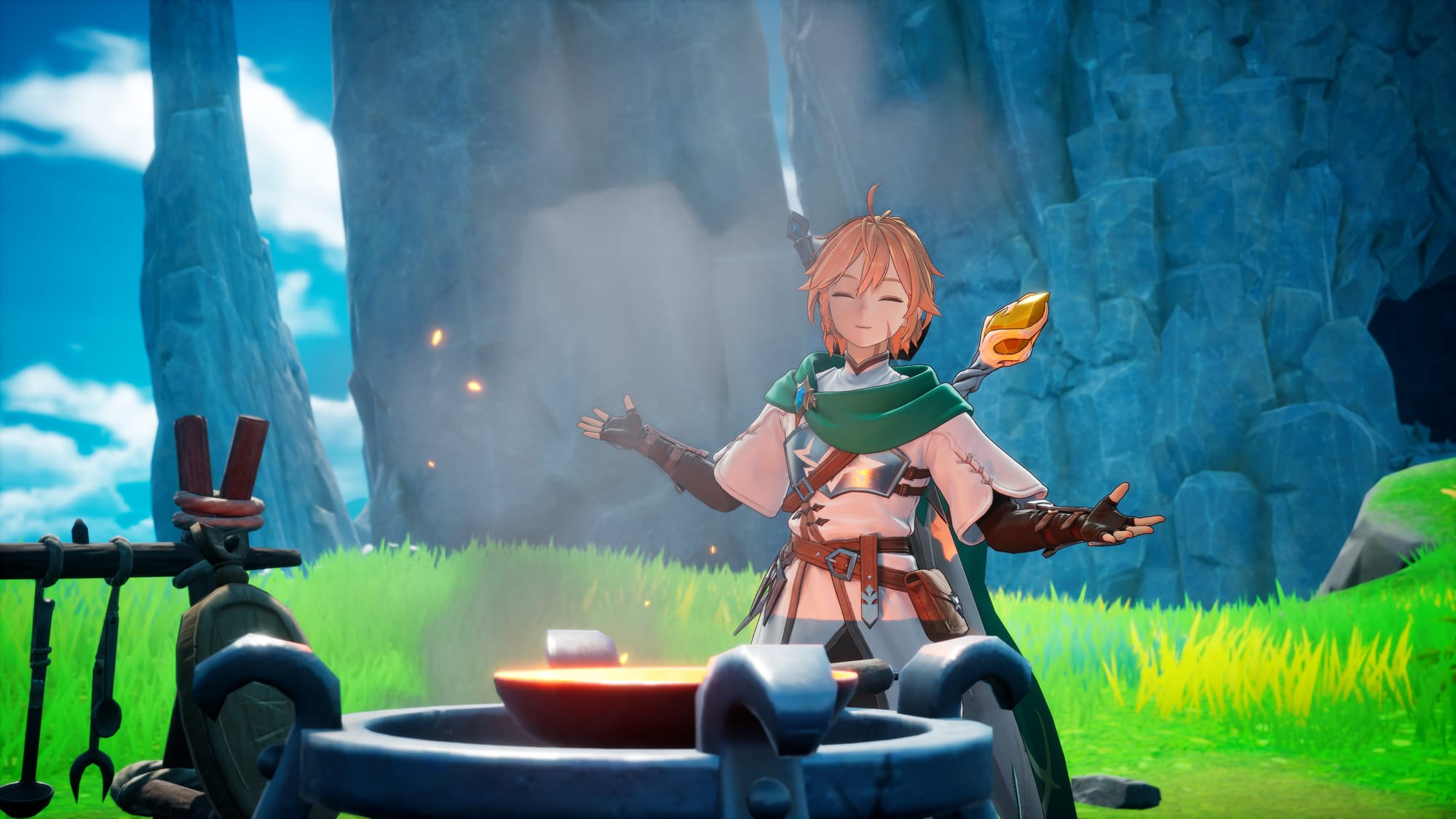
Visually, DragonSword: Awakening is gorgeous. The game is full of bright, bold, striking art. Nature environments bleed rich blues and greens, while characters boast an impressive range of colors. Speaking of the characters, they feel like particularly well-done anime brought to life. The story is fully voice-cast, though at launch it’s just in Korean. The soundtrack feels like a classically beautiful orchestral fantasy soundtrack that accentuates your adventures in Ordis.
If, like me, you enjoyed what Genshin Impact had to offer but were turned off by the predatory gacha elements, DragonSword: Awakening could be a great option. The game is beautiful, combat is fun, the story is interesting, and there’s plenty to uncover. It would’ve been nice to see the grindy elements be set aside for different progression mechanics, but at the end of the day, the game is still fun. Completionists will probably get tired of the repetitive tasks, but for $30, you’ll easily get your money’s worth and then some seeing this story to its conclusion.
DragonSword: Awakening
Great
DragonSword: Awakening is a gorgeous anime game that feels like they took Genshin Impact, stripped out the microtransaction garbage, and tied it together with a fun, interesting story. There’s still plenty of grinding and things to unlock, but nothing requires luck with a predatory gambling mechanic. The game has fun dungeons, solid characters, and big, flashy story moments you’ll have a good time with, all for less than half the price of a triple-A game. If you’re in the market for a fun game that’ll keep you entertained for a few dozen hours, you should definitely consider DragonSword: Awakening.
Pros
- Gorgeous visual design
- Combat is tight and responsive
- Plenty of characters to try out, landmarks to find, dungeons to crawl, and monsters to hunt
- The cutest mounts I’ve ever seen in a game
- Fun, interesting narrative
Cons
- Given its start as a gacha game, a lot of the grindy bones are still there. You’ll be replaying smaller side content, like dungeons and hunts, a lot.
- Progression should have been streamlined to be more like a traditional ARPG instead of a gacha
This review is based on an early PC copy provided by the publisher. DragonSword: Awakening comes out on July 22, 2026.