How far is the horizon? I don’t know, but I do know this – you don’t have to go to space to get the best view of it. If you’ve never found yourself standing at the edge of the ocean or in the wide expanse of Montana’s “Big Sky” where you can see every star in the sky looking back at you, you can’t fully understand the allure of sailing. When you can no longer see the shore, the only thing ahead of you is adventure and ambition. Where does that horizon take you? Anywhere you want. It’s easy to see the allure, and it’s easy to see how that can trap you in a chase that never ends. So it goes with the protagonist of Assassin’s Creed Black Flag. Almost 13 years later, the team at Ubisoft Singapore is once again giving us the helm in Assassin’s Creed Black Flag: Resynced – a complete remaster from stem to stern that promises to once again capture the magic of that far-reaching horizon. Set sail with me; it turns out we’ve much to talk about.
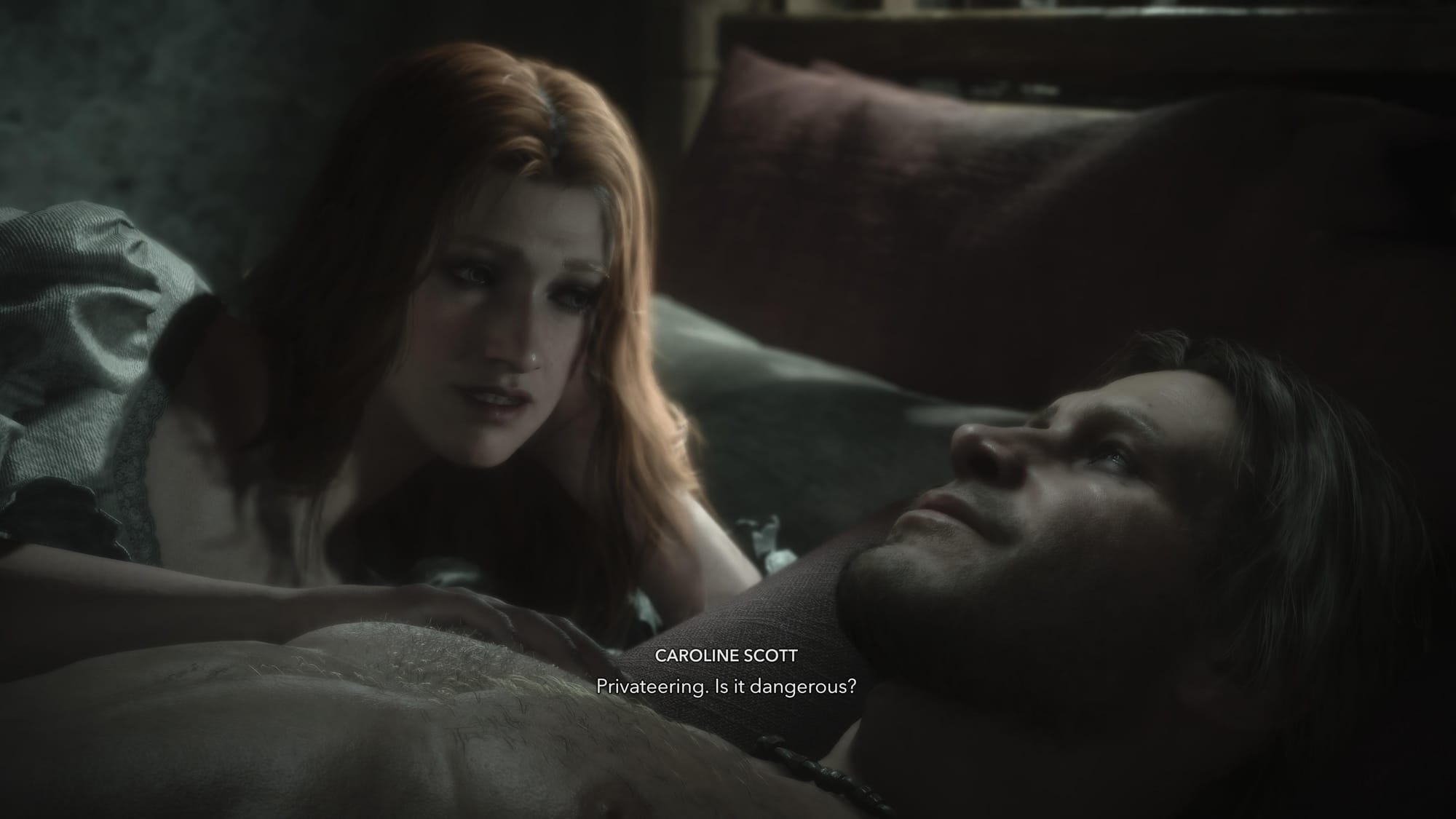
Assassin’s Creed Black Flag was a big step for the series. Where the previous games were practically a checklist in motion, Black Flag gave players the chance to engage with the systems as they saw fit. Yes, there’s a linear thread to follow, but the rigidity of its predecessors was stripped back. Not unlike the freedom of being a freebooting pirate, how you partake, skip, or mix and match activities is entirely up to you, transforming a chore into an adventure that is yours to explore. Later games in the series moved closer to RPG mechanics, emphasizing power progression and loot, but Black Flag made you a dangerous pirate from the second you set foot on the Jackdaw.
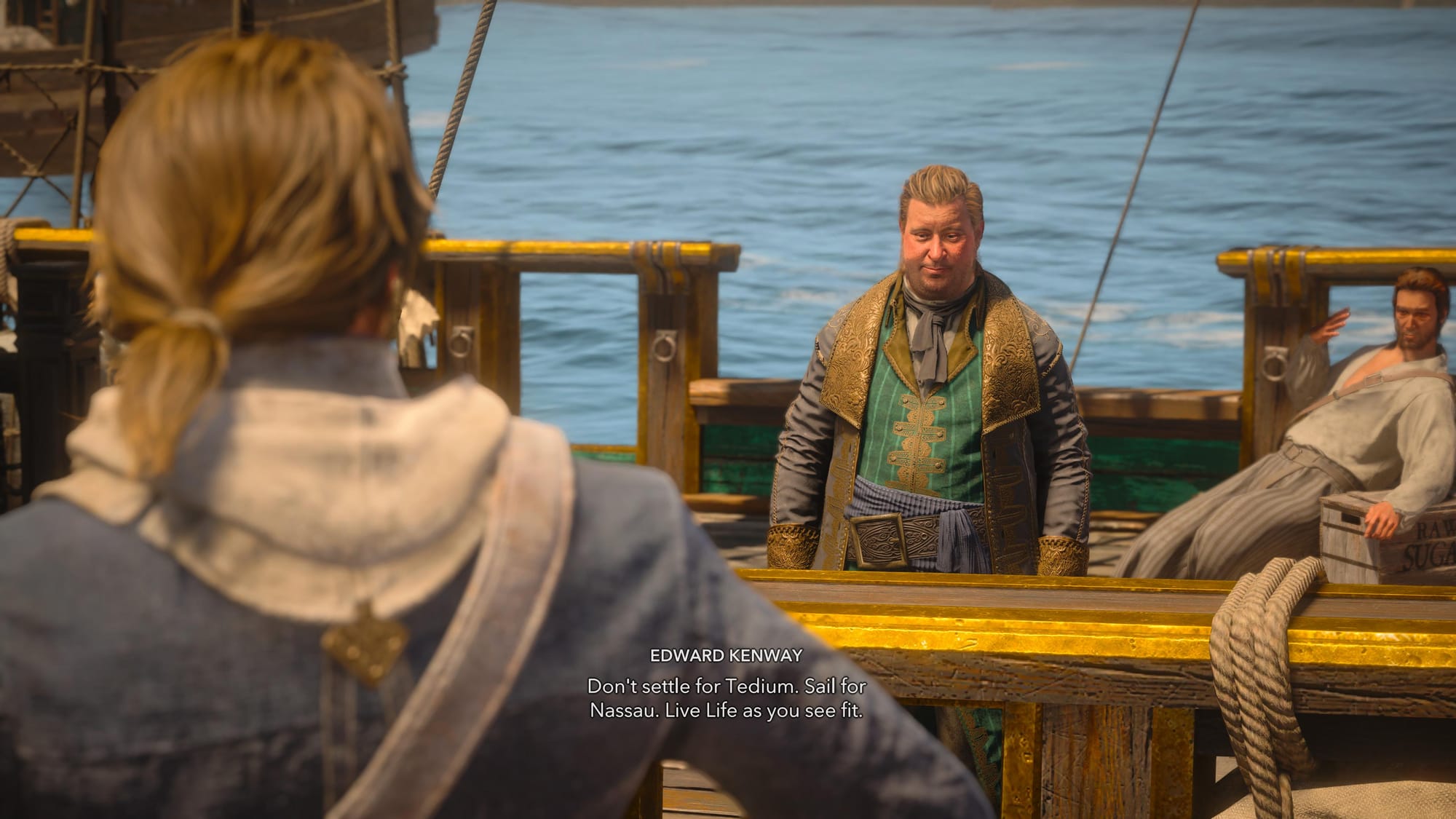
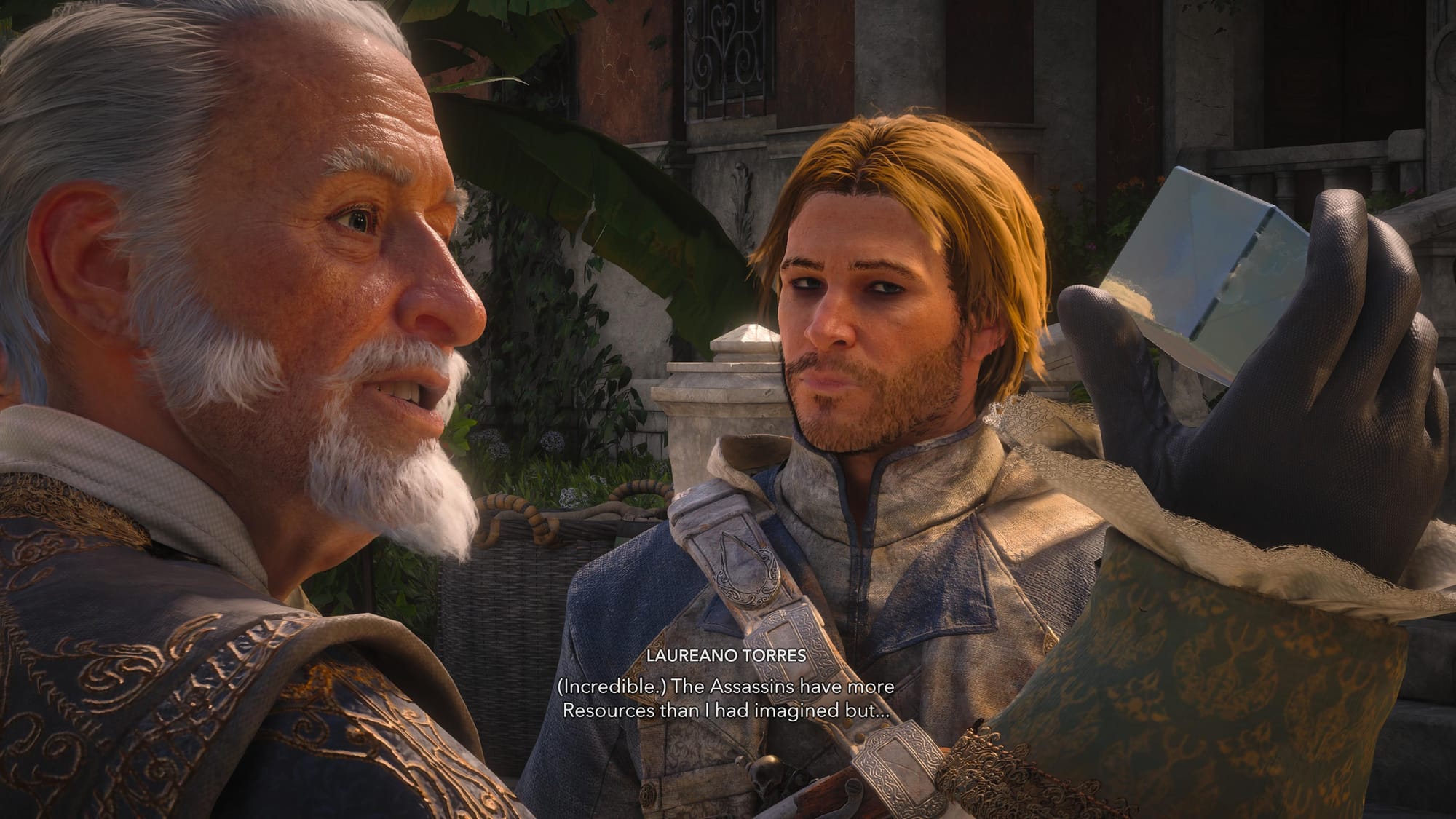
Our protagonist, Edward Kenway, is, in point of fact, not an assassin. Nope, he’s a filthy deckhand who, through complete happenstance, ends up with a new outfit, a new name, and a new life. In the pocket of this slain assassin is a mysterious cube and a reference to a secret meeting. It just so happens that a foppish Englishman (but mostly his boat) is in need of rescue nearby! How convenient. Setting off on his journey, Kenway eventually finds out what the cube is for, who his mysterious would-be benefactors really are, and much more in what is arguably one of the very best stories Assassin’s Creed has to offer.
Assassin’s Creed Black Flag Resynced is another huge step for the series – both forward and backwards. No, I don’t mean in quality, but in the timeline. While there have been arguably nine games (if you could count Rogue, Mirage, and the excellent VR game Nexus) between the original release and now, Resynched actually takes place in the current timeline. Yes, that means this game now exists after Assassin’s Creed: Shadows. It does so by taking what is bound to be a controversial step, though it’s one I actually appreciate – removing the modern-day storyline. The game still starts with a connection to the modern world by dropping you into an Animus EGO, a current iteration of Abstergo’s Animus system that lets you experience the user’s ancestral past courtesy of their DNA. You’ll still periodically take leaps forward in the story for pacing, but the only time you’ll be taken out of Kenway’s journey is when you stumble on breaks in the code. These rifts instead offer up alternative timelines where, for example, Kenway actually fulfilled his promise to his wife and returned home after 2 years. I don’t want to spoil more than that, but these rifts feel more realized than what was on offer in Shadows and more tied into the central narrative.
The biggest improvement for Assassin’s Creed Black Flag Resynced is obviously graphical, but is far more than a simple texture replacement. The game features a completely rebuilt animation system, six hours or more of new content, restructured or completely re-recorded and updated voice lines, and four entirely new ship officers. These officers have their own storylines and motivations, and like any good loyalty mission, you’ll need to finish them to earn their trust.
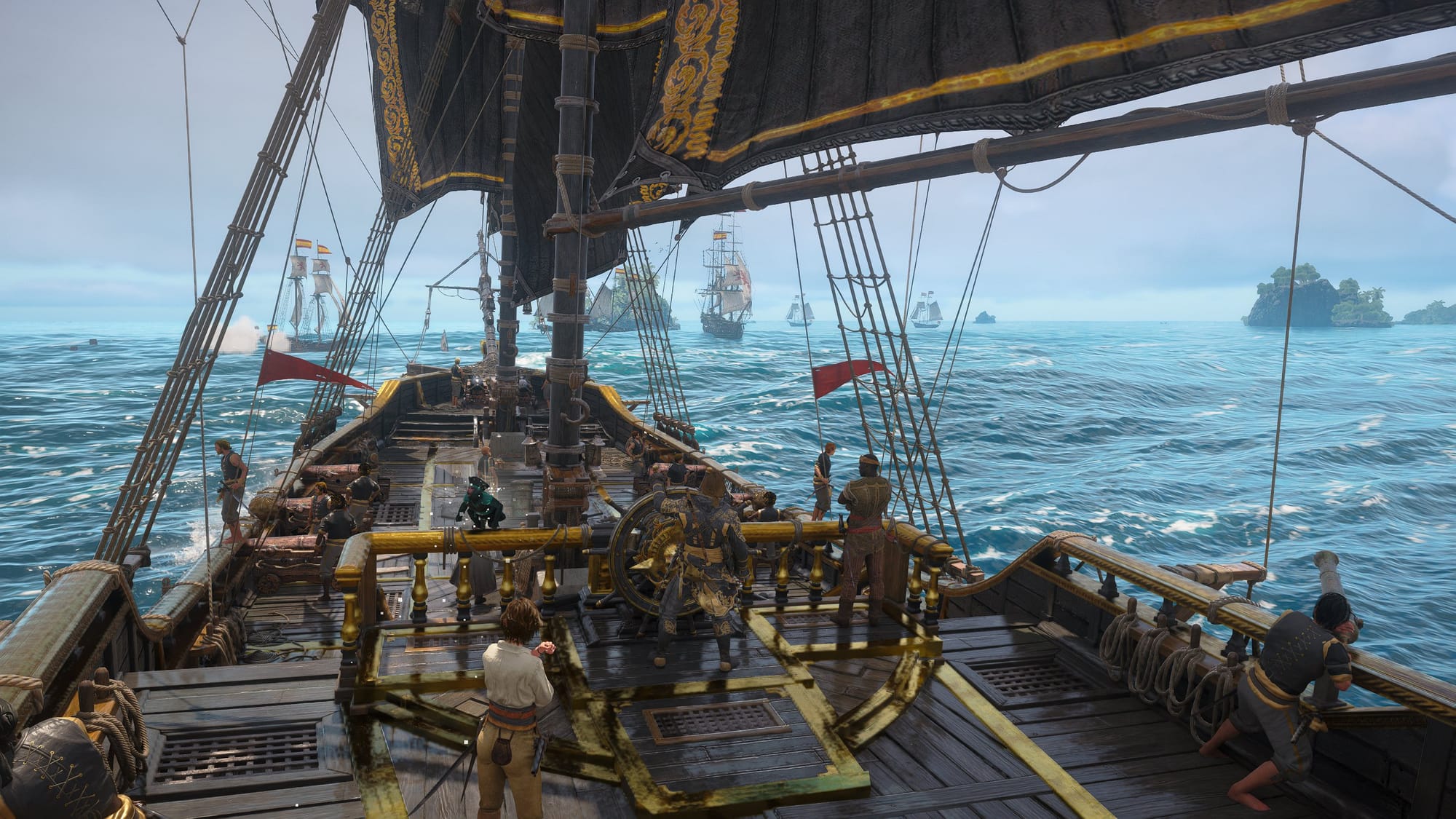
The best part about all of this new content, including the fresh ending that’s been added, is that all of it feels organic. Unless you’re intimately familiar with the original game, you’ll have trouble discerning the new from the old – it’s that well written.
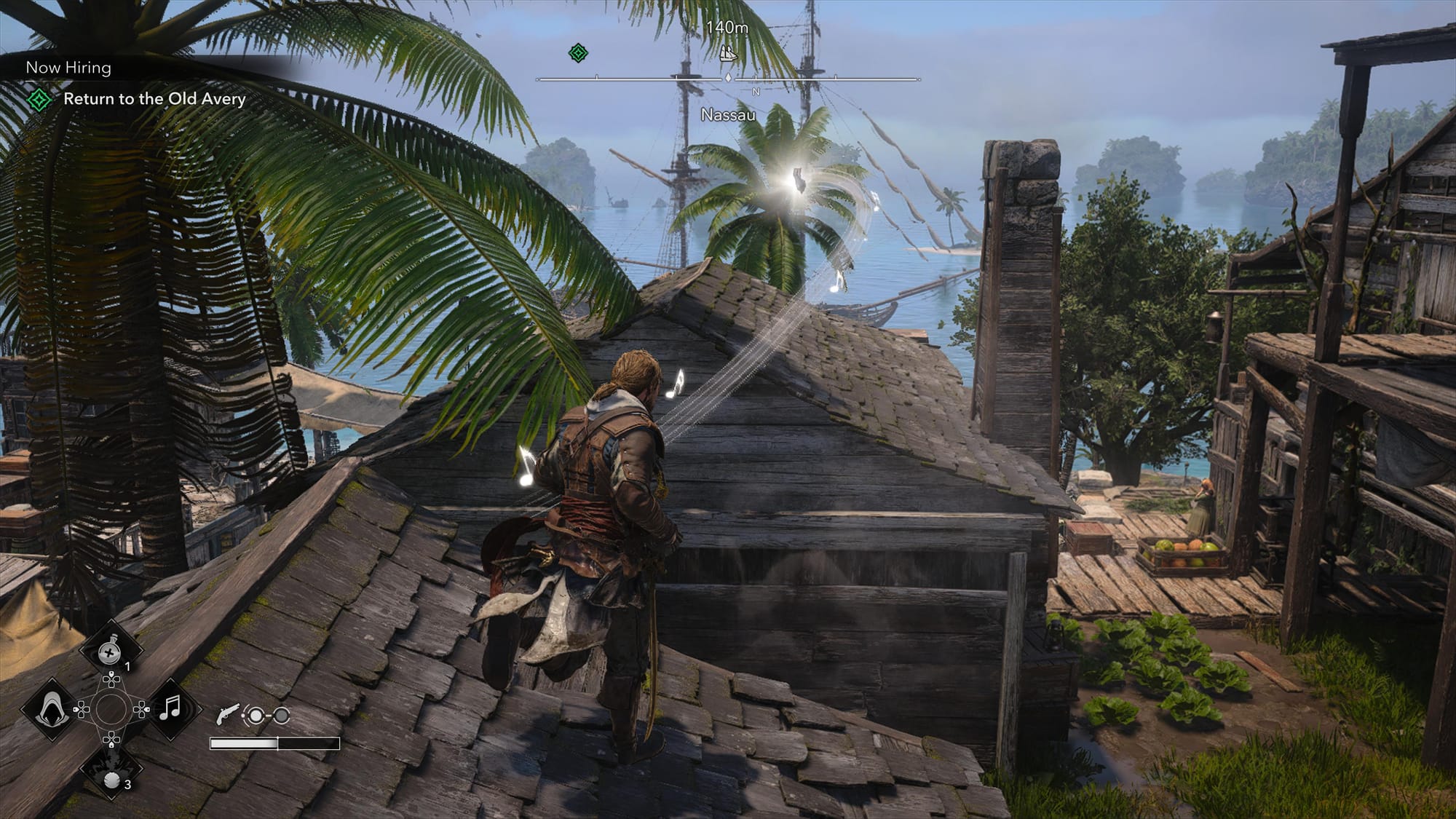
Assassin’s Creed Black Flag spells a different time for the Creed series. While the current titles focus on equipment and upgrades (though there are options for instant-kills), Black Flag is from a period in the series where there were no upgrade trees, no skills to master, and very little gear. Sure, you’ll purchase a sword or two, and there are a dozen or so upgrades for the Jackdaw that’ll prepare you for the war of escalation on the sea, but most of the skills are earned through practice rather than incremental number buffs. You can see where they expanded into RPGs from here, but having upgrades mostly be optional (at least for Kenway himself, the Jackdaw absolutely needs some love) allows you to simply focus on what you want and leave the rest alone.
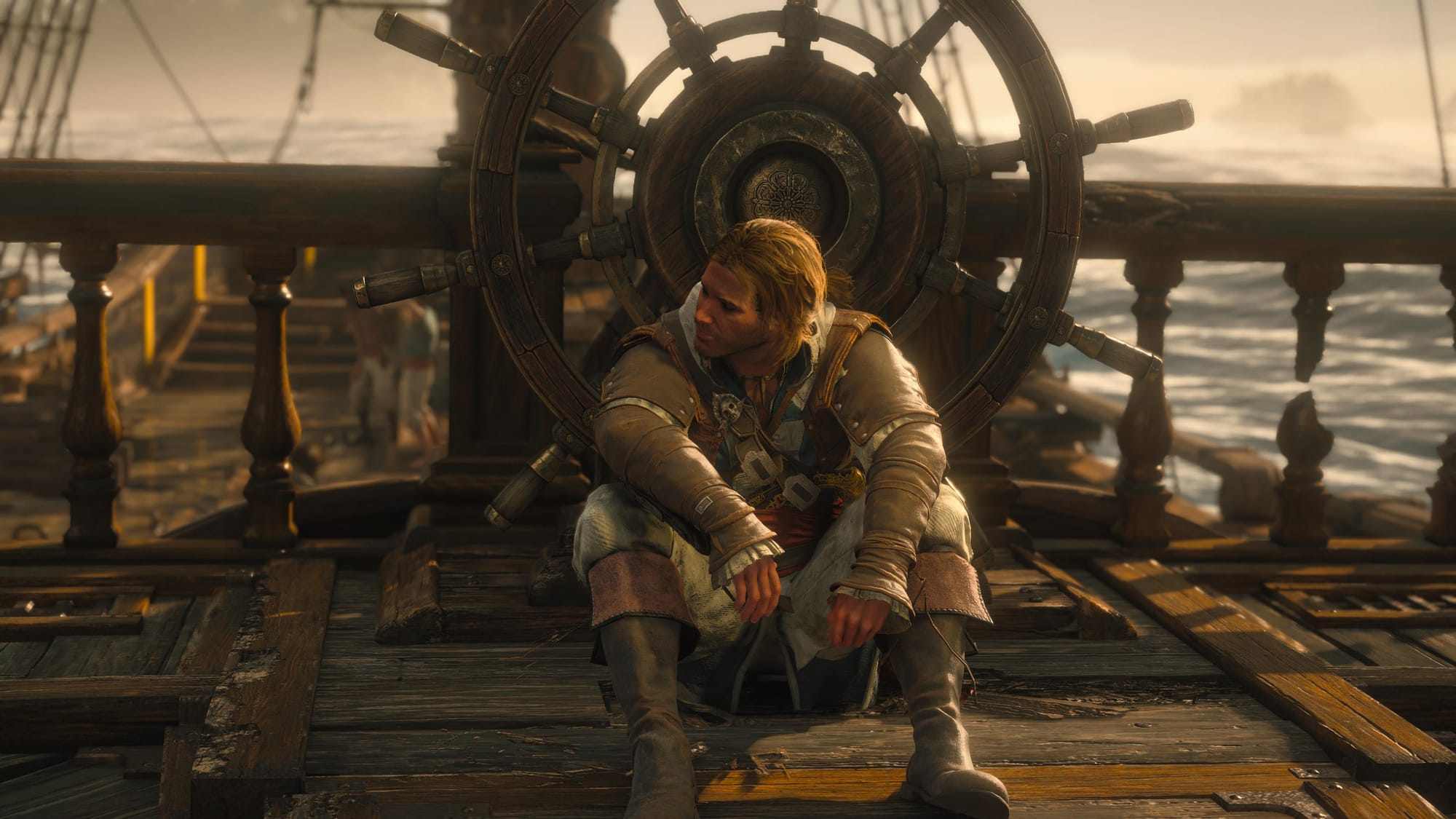
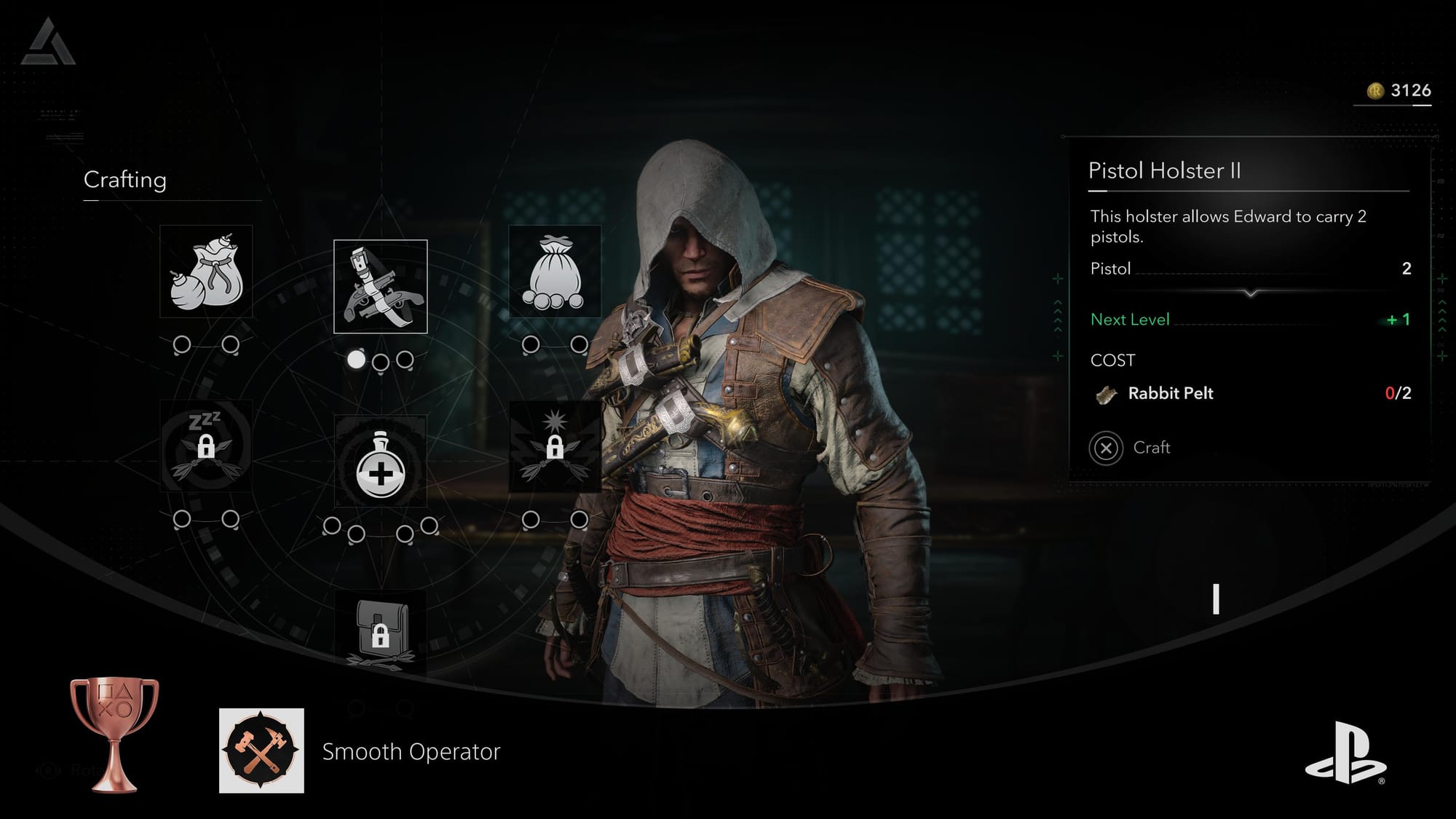
For example, you could put effort into upgrading all of your holsters as quickly as possible for the cool gun-kata moves, leaving out health and ammo upgrades. You’ve instantly made Edward into something of a glass cannon, able to quickly take out multiple enemies with your four pistols. Let a foe get too close, though, and you could be in trouble. It lets you craft your own playstyle without the need for number crunching, skill points, or abilities. It’s simple and fun, while also leaving the door open for you to clean up the rest of the upgrades at your leisure.
The tools Edward acquires on his adventures also play into this. You can always go loud if you want, flintlock pistols ablaze, with many sections of the game reworked to allow for this. Combat is a deadly affair here, even on normal difficulty, and it’s all about breaking an enemy’s guard to move in for an instant kill. You have a variety of ways to do this: by repeatedly attacking to slowly wear them down, performing a perfect parry or dodge to immediately open them up, use a heavy attack to apply some pressure, you can kick them into a wall or sweep the legs, pull them closer for a hidden blade hug with the rope dart, or just go full Indiana Jones and shoot them while they try and swing their fancy swords. Fights are very rarely one-on-one affairs, though, so you need to manage multiple foes at once, which can be difficult, especially with the lock-on not always showing you a great view of the action. It is, however, incredibly satisfying when you can take out one enemy, shoot another, then parry a third, all in one fluid motion. Piracy has never looked so cool.
This is an Assassin’s Creed game, though, and you probably want at least a little of that sneaky assassin fantasy. Edward can crouch at any time now with the press of a button, allowing you to pick and choose when you want to be sneaky. A lot of your skills in combat can transfer to stealth, as well. You can use the rope dart to quickly snatch a guard off of their patrol route and into the bushes for a swift kill, kick an unsuspecting sniper off of their perch, and more. You have a lot of options here, though nothing quite gets the job done like the hidden blades, with tools like the smoke bombs and sleep/berserk darts setting you up to move in for the kill.
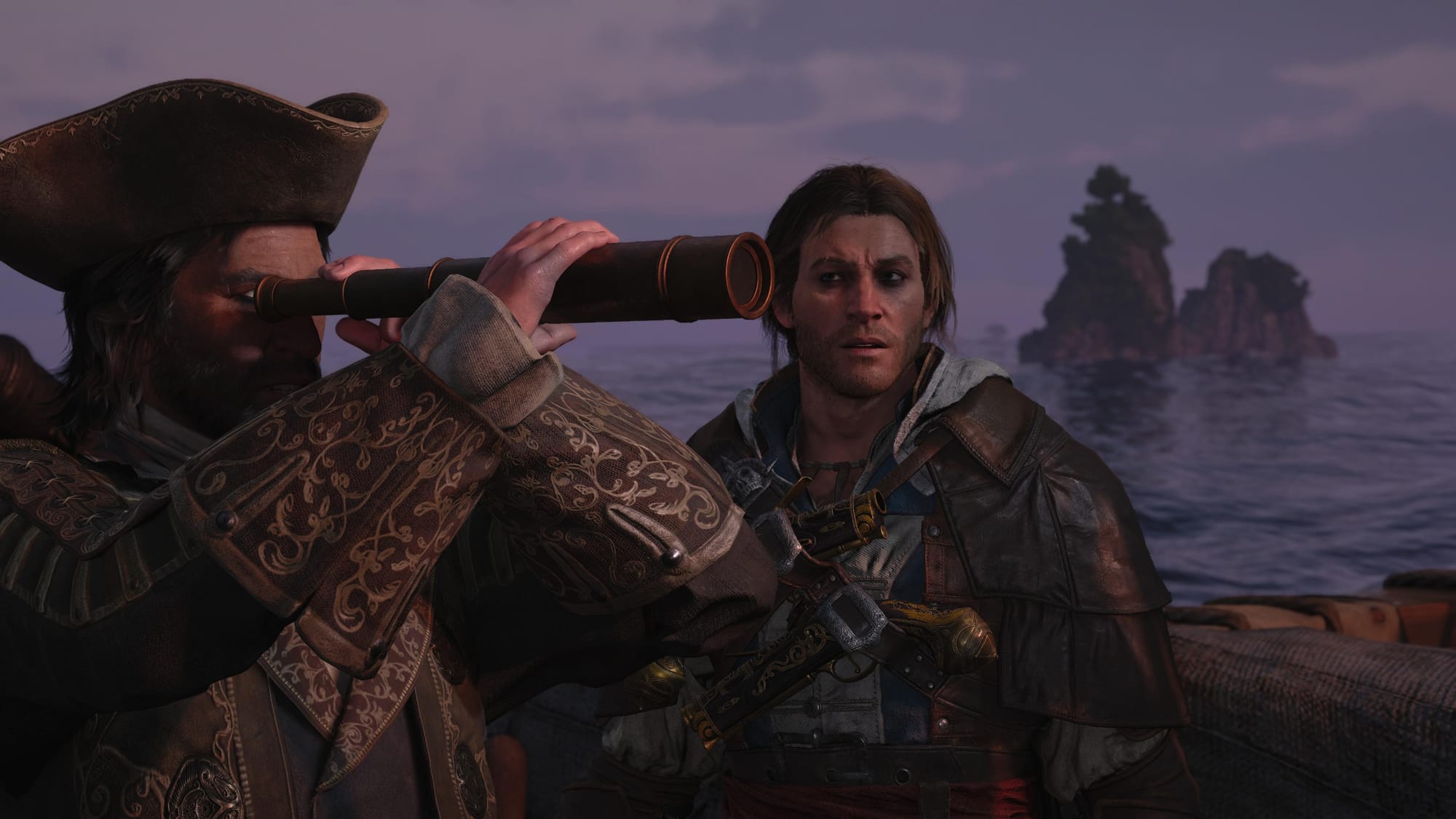
Where combat is quick and deadly, stealth is more like a freeform puzzle. You can mark guards using Eagle Vision, then pick them off as you clear a camp or avoid them all and reach your objective like a ghost. Figuring out the perfect way to eliminate each guard without alerting any of them is a ton of fun, especially with all the options at your disposal. The easy answer is usually to whistle guards over from cover, but that might attract the attention of more than one. A double assassination might do the trick on those two by the campfire, but it would leave you face-to-face with the third. Your target is in a big crowd, so why not assassinate him from on high, then use smoke bombs to get away with less bloodshed? Kenway might not be an Assassin in an official capacity, but he definitely earns the name through skill and cunning.
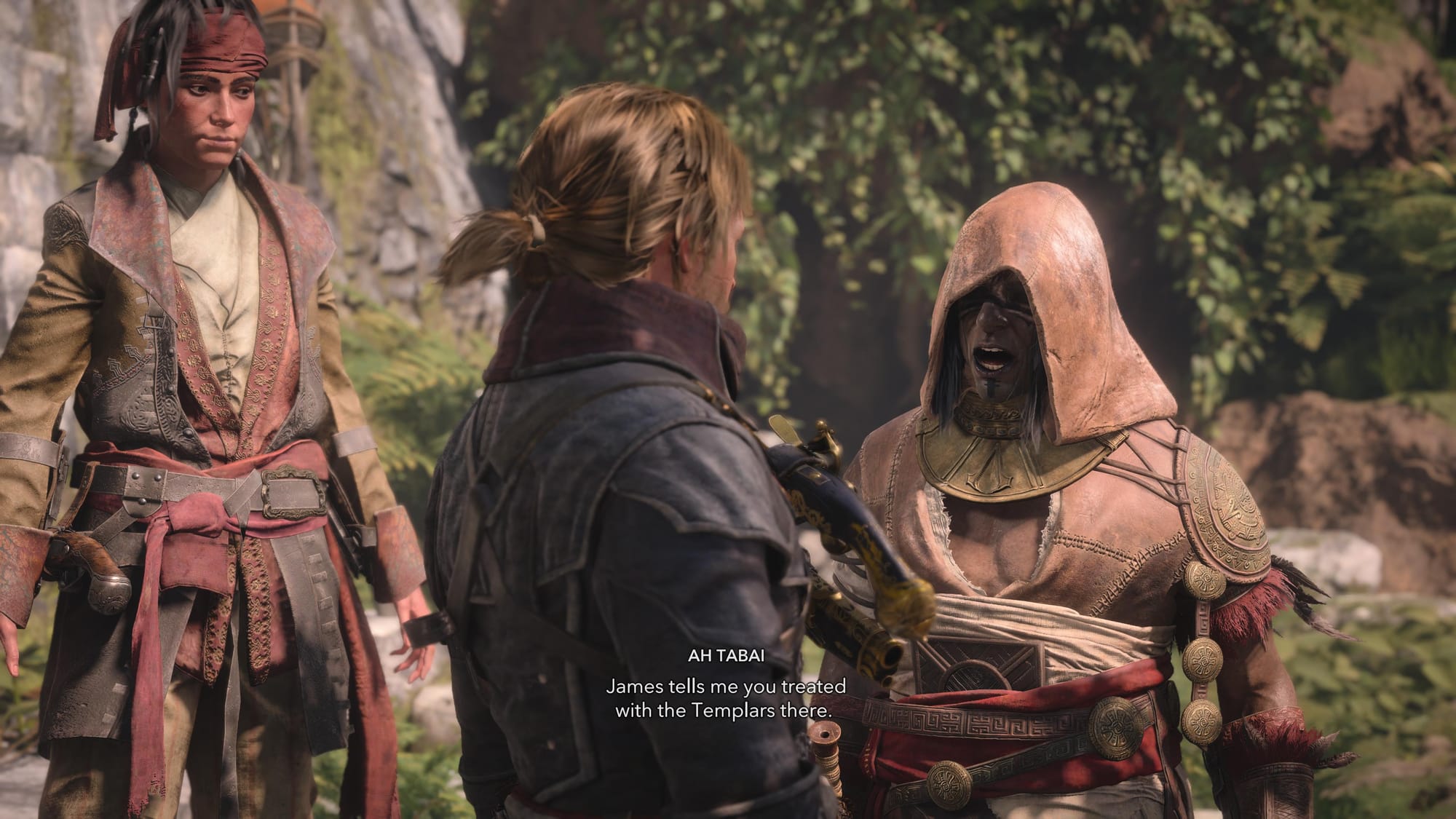
If you are coming off of Assassin’s Creed Shadows, you’ll appreciate that a few of the upgrades that have hit in recent updates are present and accounted for here. Specifically, the parkour is more fluid, there are far fewer hitches in your step as you glide through environments, and both the side and rear ejects are both able to be toggled in the options menu. If you’ve mastered those skills, they translate directly to Edward Kenway’s adventure.
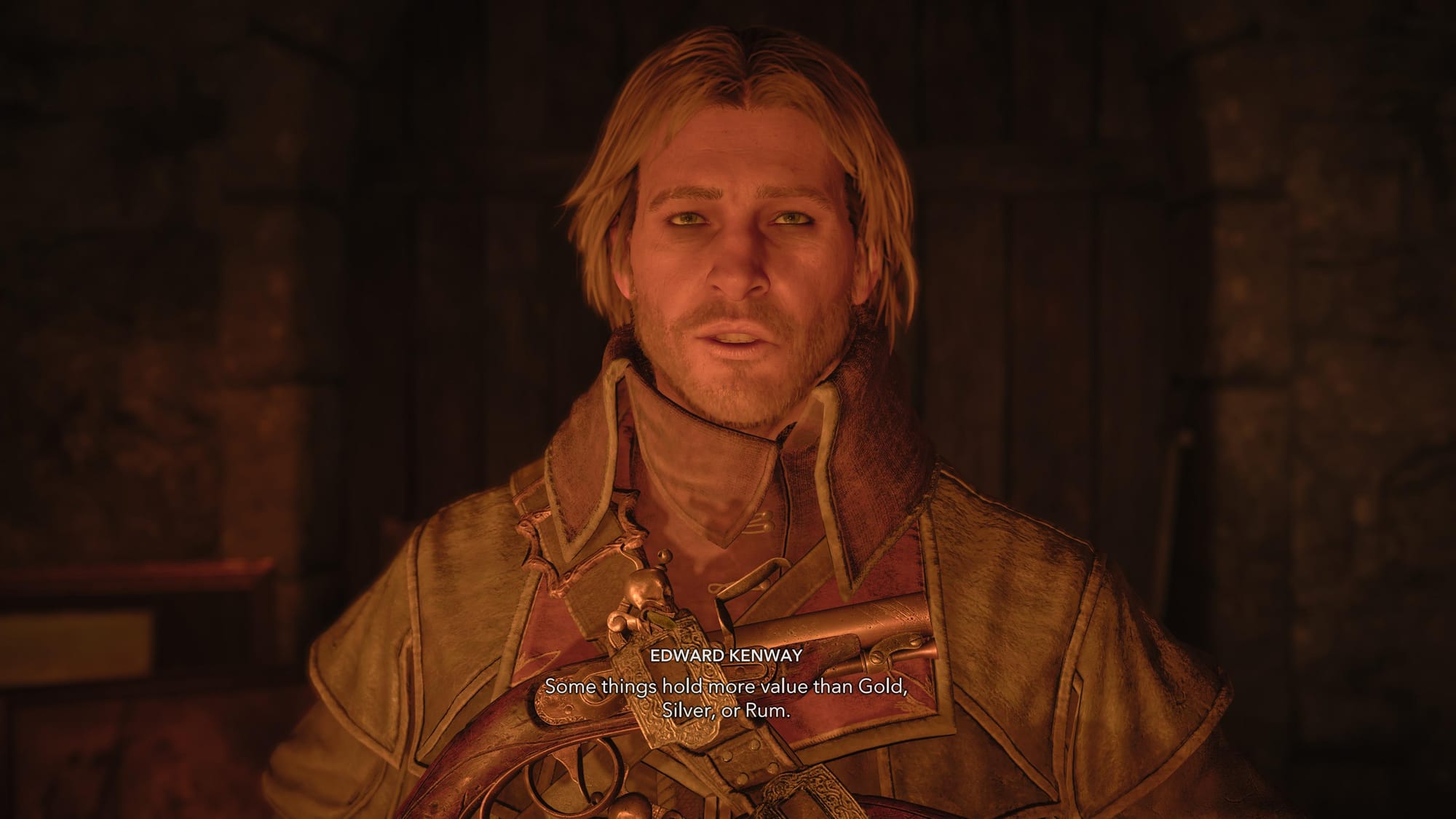
In another nod to Shadows, you can change the visual appearance of any weapon or equipment in the game. If you like the stats of one but the look of another, you can do exactly that. There’s a wide range of outfits and other cosmetics you can find on your journey, and you can swap them in and out at will in the pause menu. The typical assassin outfit is nice and all, but after spending all that time and effort to get the Templar garb, it was hard to go back to anything else.
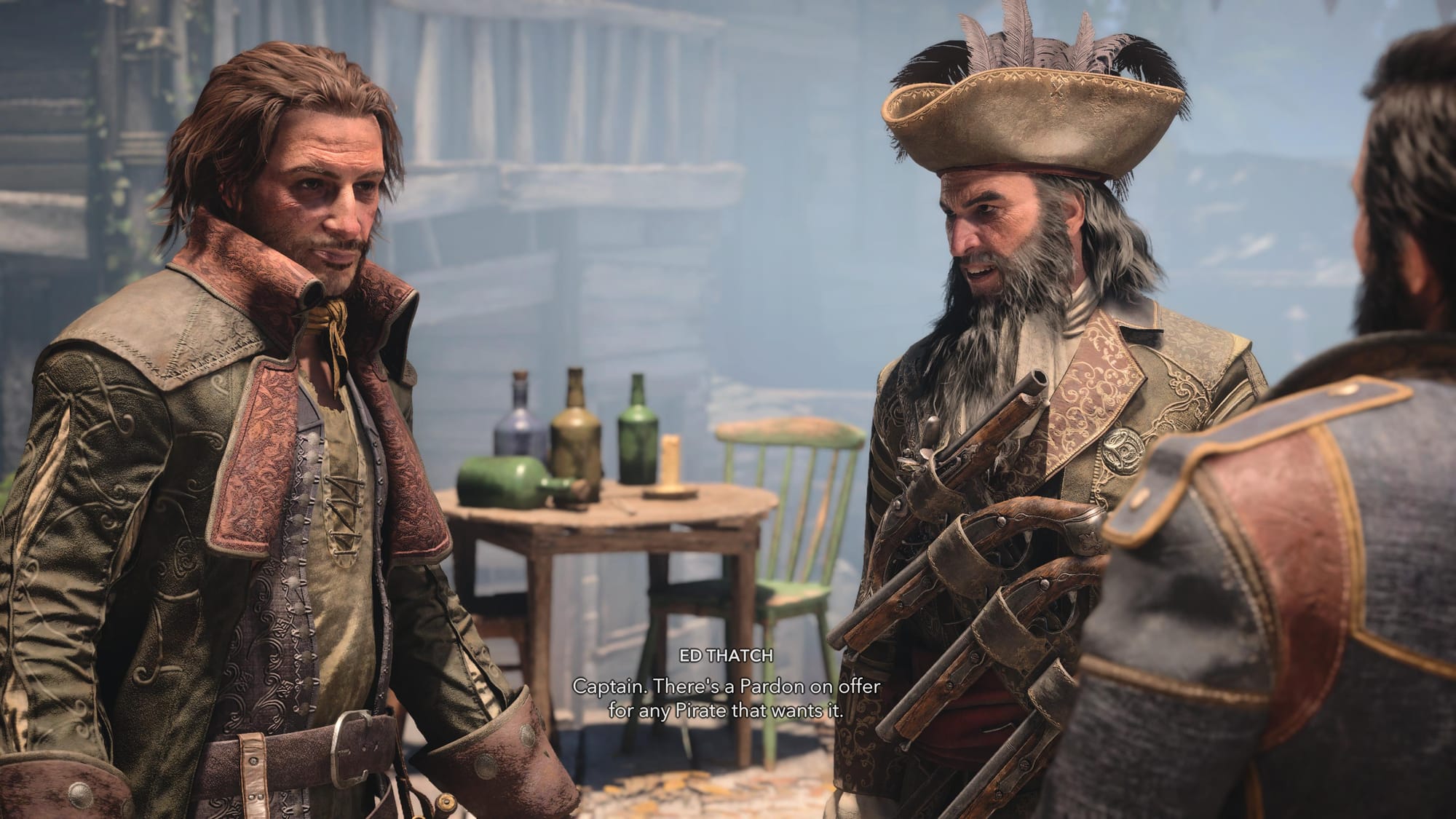
One area that did not make a direct line from the original to this newest installment, however, is Fleet Management. In the original game, you could use a “second screen experience” to allow a second player to pull up maps, read sea shanties, and more. You could also manage Edward’s burgeoning fleet, sending them out on missions for loot and experience. Now, this is handled at a table in the manor or in your Captain’s quarters aboard the Jackdaw. Here, you can send out four mission types in every sector where you’ve forcibly taken the local fortress. Instead of just XP and loot, they now offer specific and unique rewards, but with a few gameplay tweaks to pull them off.
Each mission type requires specific ship types to complete. Trade requires a Schooner, Piracy needs a Brig, Scouting uses a Frigate, and Patrol uses the biggest ships – the Man-o'-War. Each mission carries a risk level. The ship will take damage when completing a mission, and if they are destroyed, they are lost and destroyed forever. However, if the ship survives, they’ll earn levels, which can give them additional attack power, hit points, and more. In the Fleet menu, you can manage your berths and ships, repair them, salvage them for materials, and unlock new berth slots to dock more ships. Again, you have to capture the forts to unlock the area to embark on missions in space, so it’s a mechanic that grows with the power of the Jackdaw.
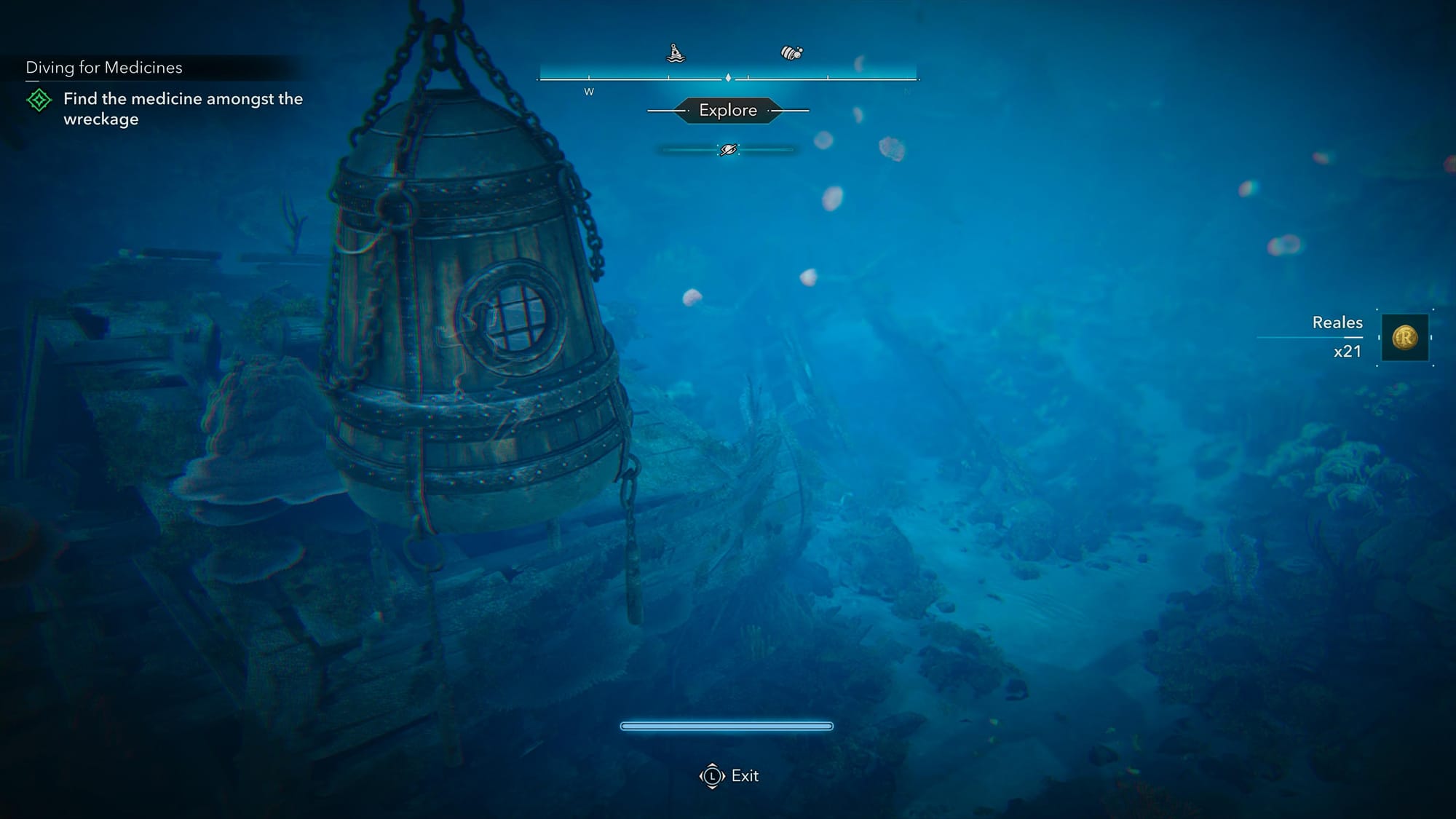
Also making its way over from Shadows is the ability to decorate the space with your hard-earned equipment. In the manor are several spaces where you can display various artifacts, armor, and all of your various weapons. It’s merely cosmetic, but it does make it feel like home.
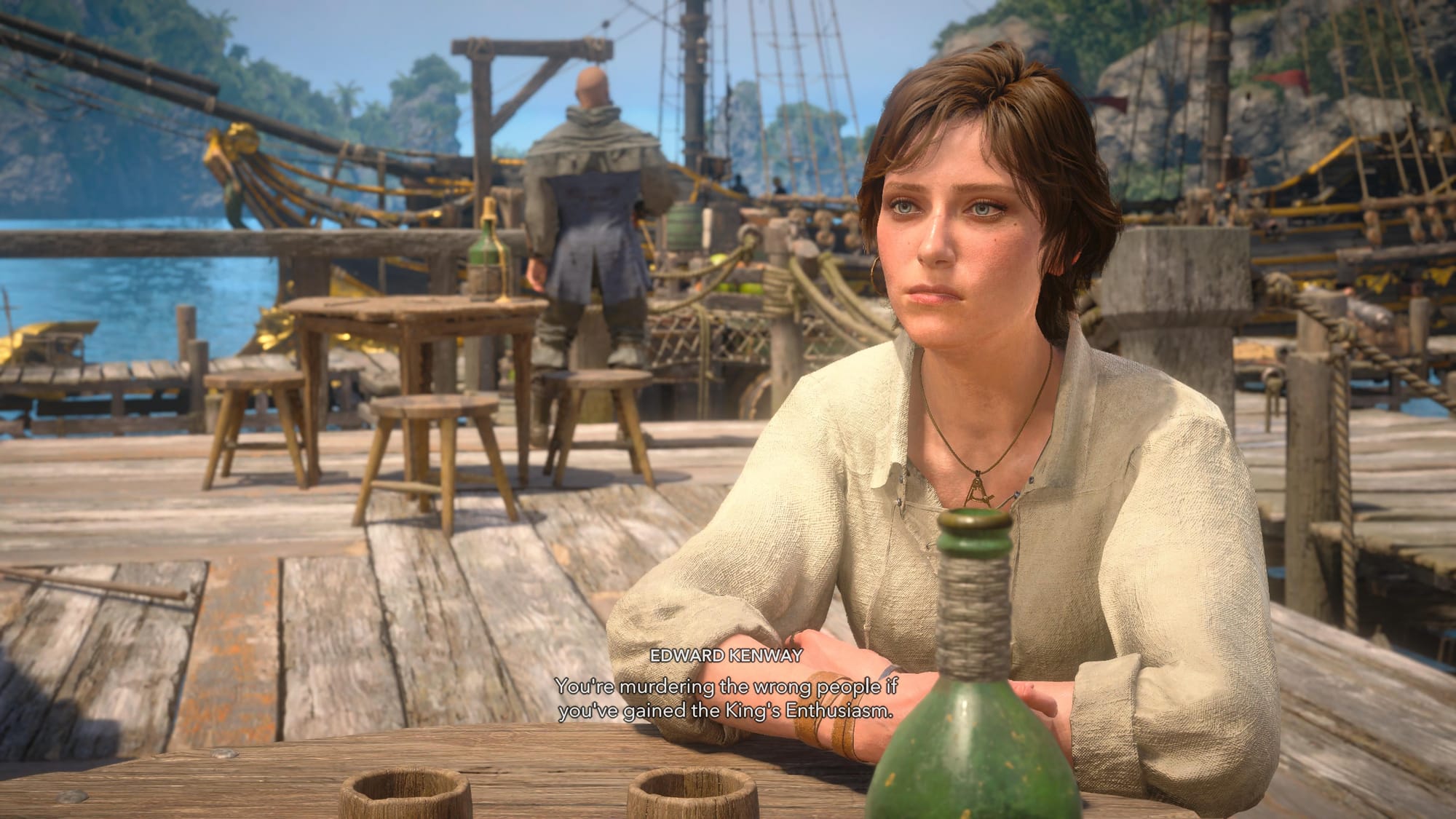
Speaking of growth, Edward’s view of the world of pirates evolves over time. As Nassau rises and ultimately falls, Edward’s role as a ship’s commander and then ultimately the caretaker of a large outpost also grows. You’ll be able to retrofit the space, upgrading it and making it a home. Similarly, the town below the manor can be upgraded, with the general store, tavern, harbourmaster, brothel, beach campfire, treasure dealer, and fisherman’s wharf all seeing improvements. Sure, you’re paying for them, so you reap the various rewards, such as free use of the drunks and harlots in each city, but there’s a welcome addition – buying pelts. In the previous game, the only way to upgrade Edward’s equipment was to hunt creatures, skin them, and use the pelts for gear crafting. Now you can buy your way out of that if killing animals is against your nature, allowing you to buy them instead when you’ve upgraded the harbormaster and general store.
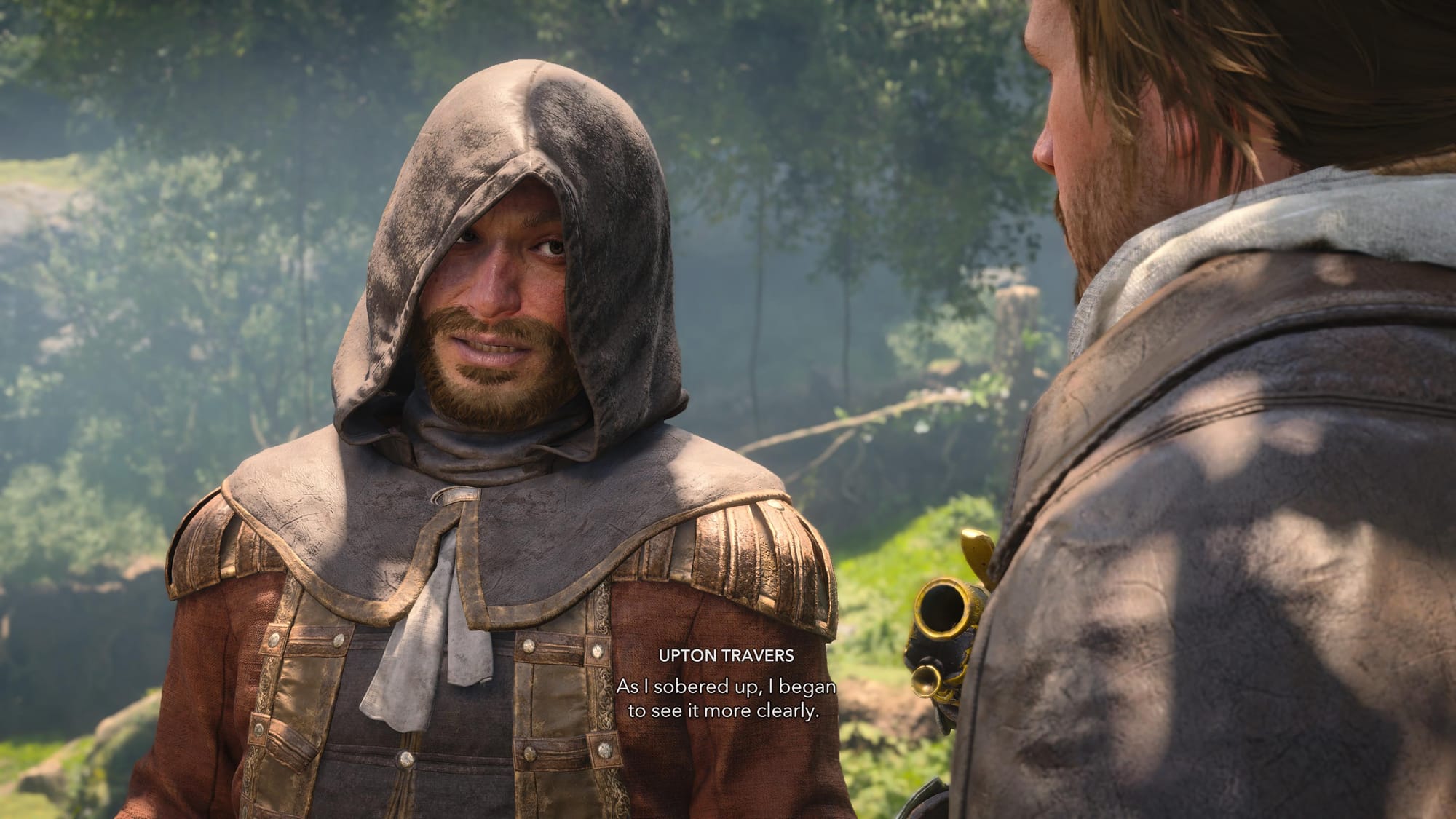
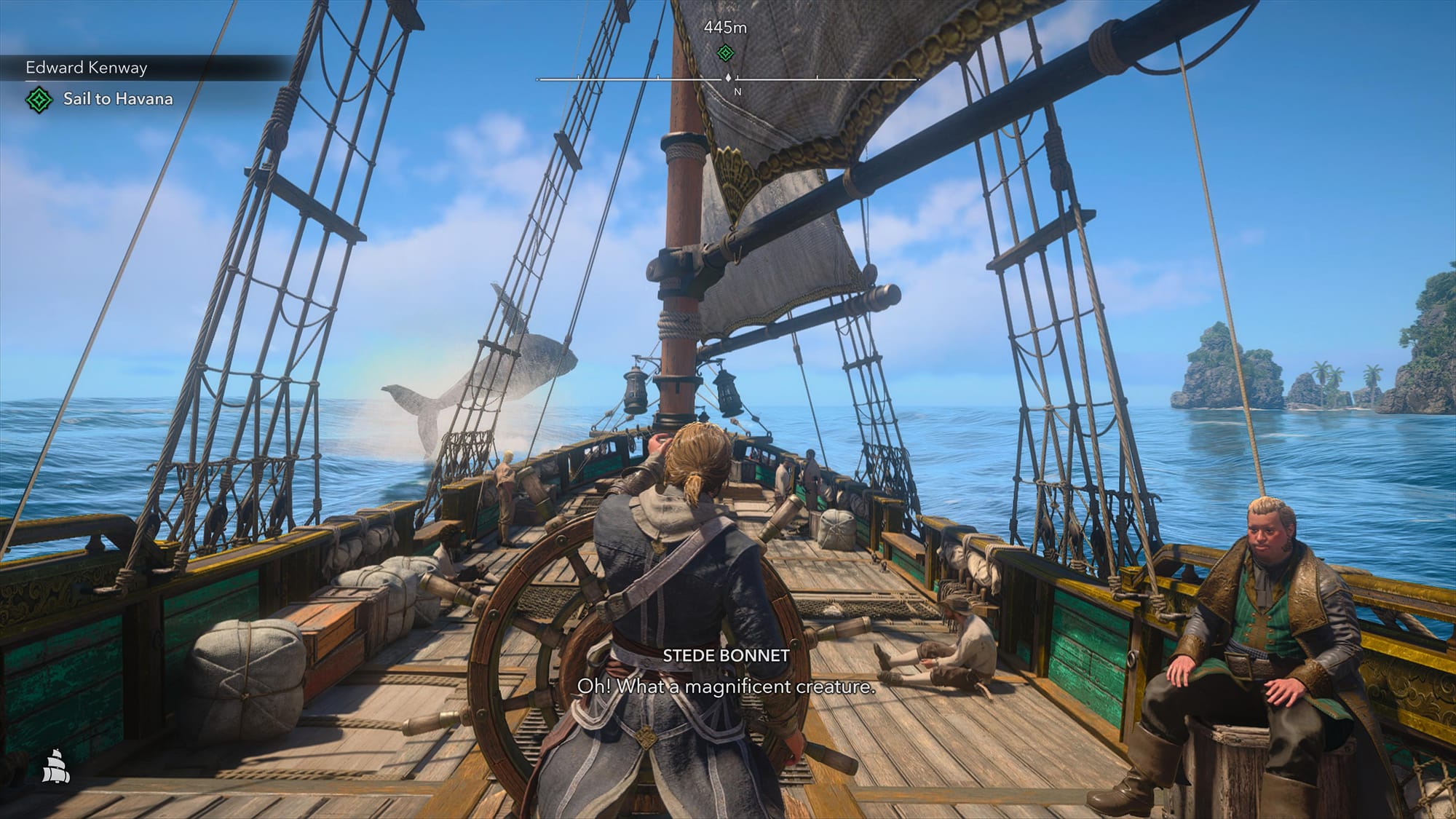
On the ocean you’ll encounter plenty of new things. There are new islands to explore, new ship types such as ones that are on fire but have been abandoned by their crew, and even ships that are corrupted within the Animus. I won’t ruin these, but it’s nice to see a few new additions at sea. In addition, you’ll also hear a bunch of new shanties, a new pathfinding system that lets you guide the boat to its destination without needing to steer it directly, fresh islands to explore, and much more. Frankly, you’re spoiled for choice on the amount of new content, and the way it’s all been expertly blended makes it feel like it was always there.
Sadly, it’s not all sea shanties and sea lions (where are the sea lions, by the way?) as there are still a handful of bugs to contend with, as well as some performance issues on consoles. More than once, and on both PS5 and PC, mission triggers failed to fire. The great news is that the game was able to recover and continue the mission if you shoved it back on track (I had one instance with an invisible soldier – the trigger moved on once I shot him), but these need to get ironed out. On a base PlayStation 5, you’ve got three modes to choose from: Performance for 60 fps, Fidelity for 30 with full graphical effects, or Balanced to target 40 and find a happy medium between the two. All three modes come with drawbacks, however, and none quite meet their targets at all times. Balance is the least stable of all three and is only available with high refresh rate displays, giving you little reason to pick it over Fidelity unless you really want a few more frames. Fidelity looks great, but again dips more frequently than Performance mode and generally feels less responsive, which is important in an action game. Performance mode has the least amount of fps drops, and the game feels great at 60, but all cutscenes are locked to 30, which is consistently jarring. You also lose out on the full extent of ray tracing and there’s a bit more aliasing in Performance. Still, Performance is probably the way to go here if you want your journey across the high seas to be smooth. Glitches like the aforementioned invisible soldier, cutscene cameras taking you through geometry, guards’ AI breaking, and more all seem to be cross-platform, so you’ll see those no matter what unless it gets patched.
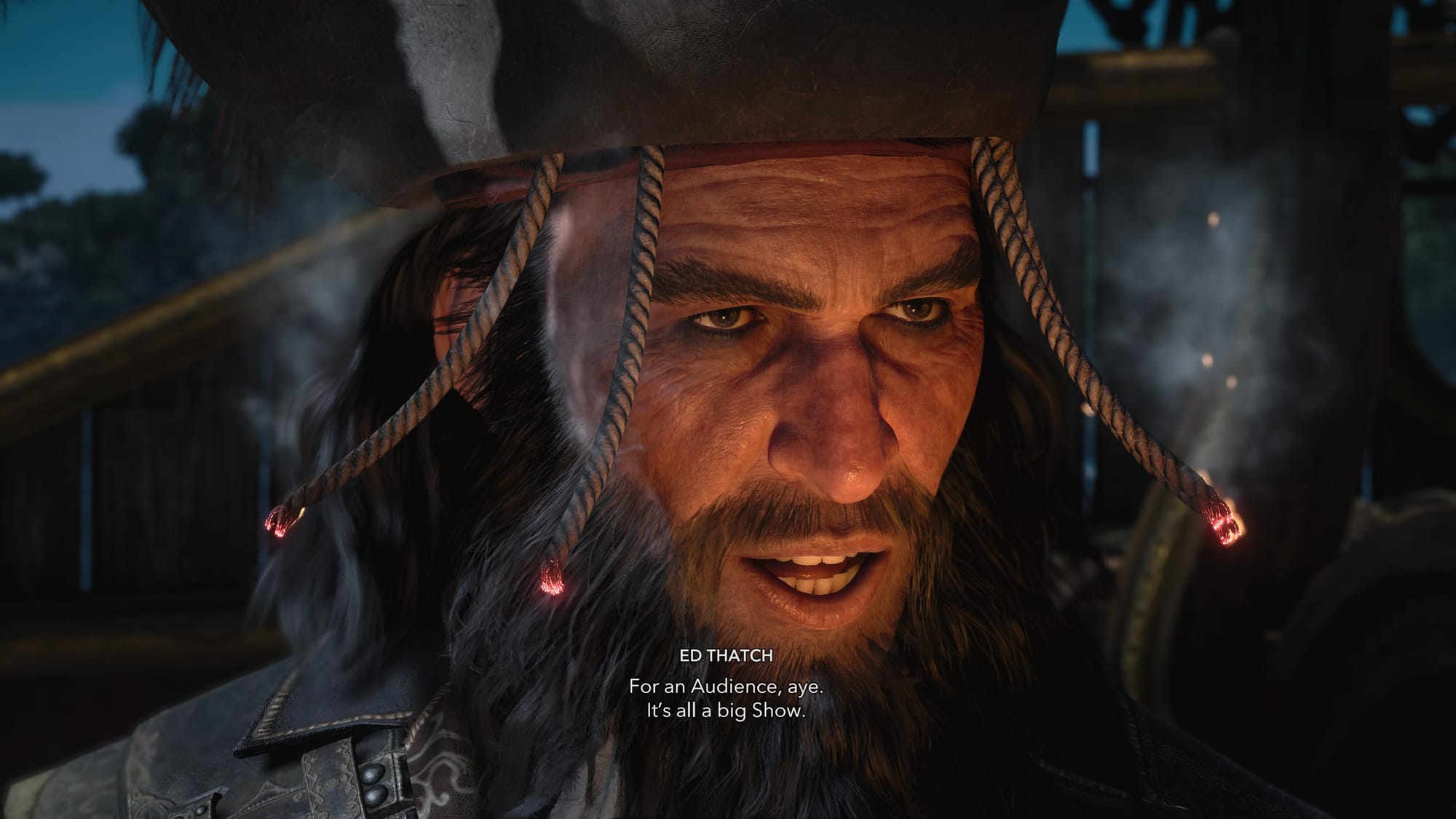
Here’s a bit of info on how the game ran on PlayStation 5 and PC:
Assassin’s Creed Black Flag Resynched is one of the best entries in the entire series, and now it’s born anew. Fresh content, a fresh coat of paint, and more new content than you can hang from a jib, it’s one foot firmly planted in the past, while very much with its eye to the future. Somehow, despite the obvious contradictions with the most recent RPG-like approach, it works here. Whether it’s your first time aboard the Jackdaw or if you’re returning to the helm, it’s one of the very best Assassin’s Creed has to offer.
Assassin's Creed Black Flag Resynced
Excellent
Ultimately, Assassin’s Creed Black Flag Resynched is a wildly successful reboot of a franchise favorite. Delivering more new content than I can readily list (as well as a new lick of paint!), it’s bound to make returning fans and fresh devotees as excited to set sail as we were more than a decade ago.
Pros
- Gorgeous visual upgrade
- Massive content injection across the board
- Rough edges for parkour sanded off
- Fresh shanties ahoy!
- Gameplay holds up nicely
Cons
- Occasional framerate issues on PS5
- Some quest trigger bugs remain
- Camera can be “creative” with its angles
This review is based on a retail PC copy provided by the publisher.