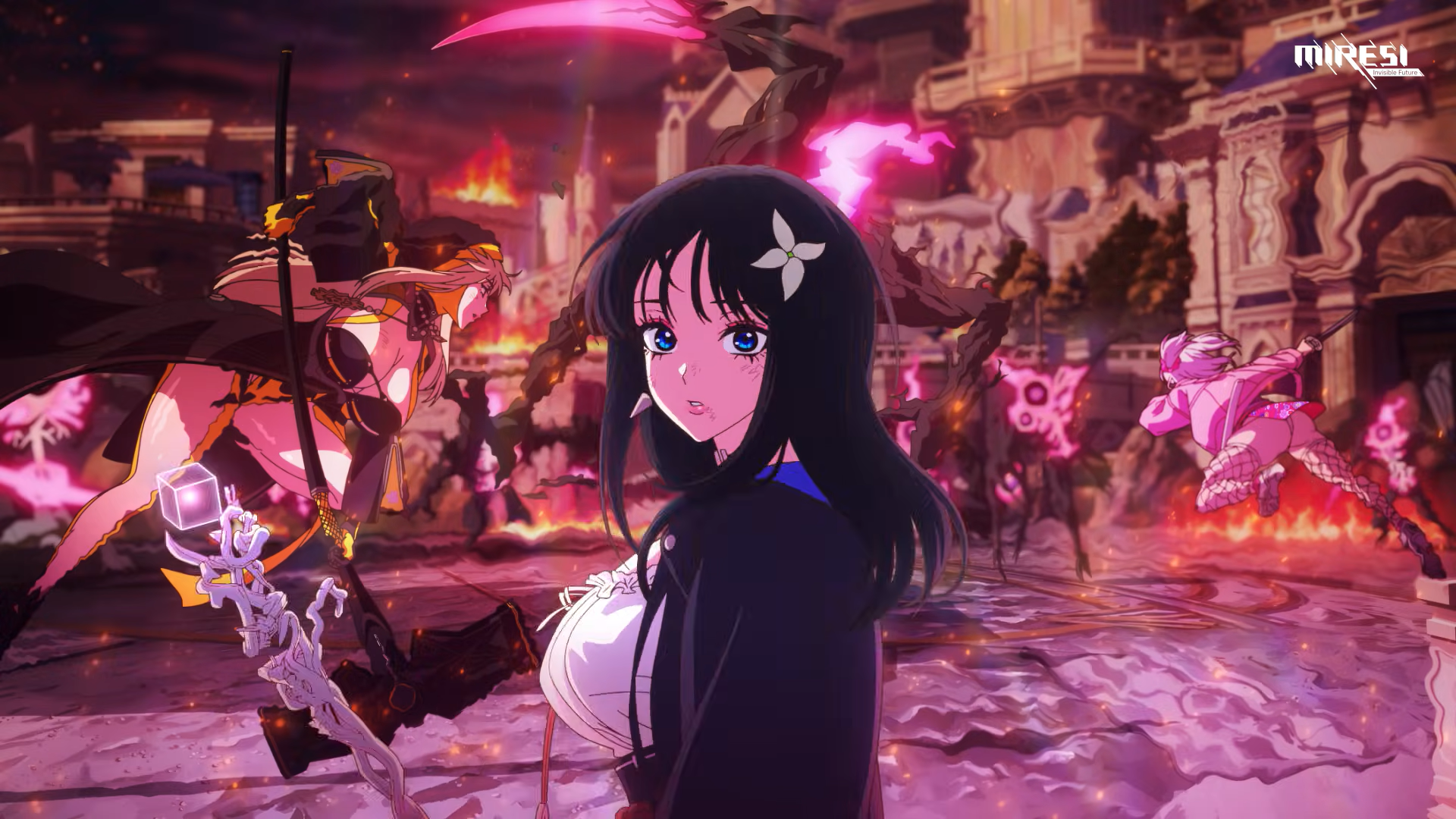
On the Anime Expo show floor, one booth had crowds of people in a chokehold. Characters from MIRESI: Invisible Future would strut across the giant LED screens surrounding the booth, entrancing folks with their enormous bazongas and thighs. All of this exists because the CONTROL9 development team really likes Chrono Trigger. During the convention, I had the chance to interview some of the developers (former NIKKE devs) and Art Director Hyulla (Destiny Child, NIKKE), play a 30-minute demo of the game, and scream a lot internally about the use of AI during development. I’ll get on that soapbox later.
As I already mentioned, the devs at CONTROL9 are big fans of Chrono Trigger, and that adoration inspired them to create MIRESI. Admittedly, the SNES classic is one of my big gaming blind spots, but I am aware that the story revolves around time travel. This plot device is the bedrock that unifies the three major pillars of MIRESI: gameplay, narrative, and art direction.
In MIRESI, you are part of the Future Bureau, trying to save the future by preventing various eras of time from collapsing. While there was only so much I could glean from the gameplay-oriented demo, the team was more than happy to elaborate on their vision for the story. The playable characters in the game are called Returners, people capable of time travel with the caveat of being forgotten by others (conveniently not the player). With the team mentioning how each of the girls has “certain pasts they want to erase.”, the premise is ripe for strong character depth.
Still, even with the implication of tragic backstories, they emphasized not wanting the story to be dark despite its serious elements. The player being the only one who remembers these women is the source of hopeful levity, building a sense of camaraderie between the party. Admittedly, I’m not a fan of the self-insert harem protagonist tropes that have festered in the writing of these types of games, but I hope the time-hopping hijinks can offset that personal preference.
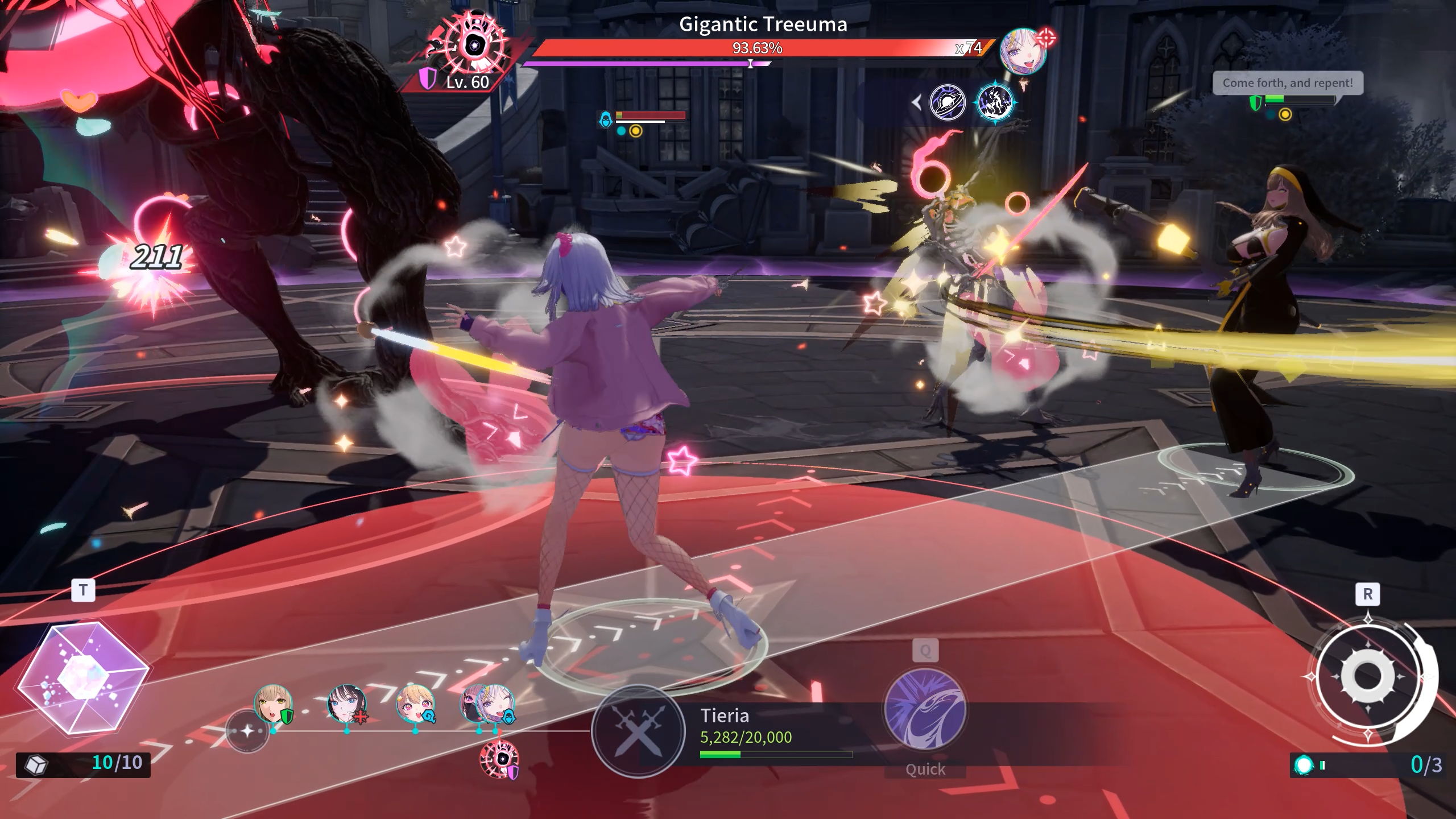
For those who have played Vanillaware's 13 Sentinels: Aegis Rim or FuRyu’s The Caligula Effect, the combat system evokes a similar gameplay loop. Skirmishes occur in an arena and play out in real time, but pause once a party member has completed all their actions. During this moment of stillness, players can direct their abilities and movement, with time resuming to have the commands play out. Similar to the aforementioned titles, each skill has a different range, such as an AOE circle or a straight line.
Because enemies also move and act in real time, keeping track of foes and your team gives battles their frenetic pace. With the battlefield constantly in flux, accounting for the passage of time encourages strategic foresight when positioning and aiming units. Freezing time allows players to fully bask in this planning phase to execute optimal moves. It’s like laying tracks while the train is chugging down, only time occasionally stops for you to decide where you want the train to barrel down next. Further hammering home the premise of time travel is a rewind function. Functionally, it's similar to Fire Emblem: Three Houses’ Divine Pulse, allowing you to go back to earlier turns and correct past blunders.
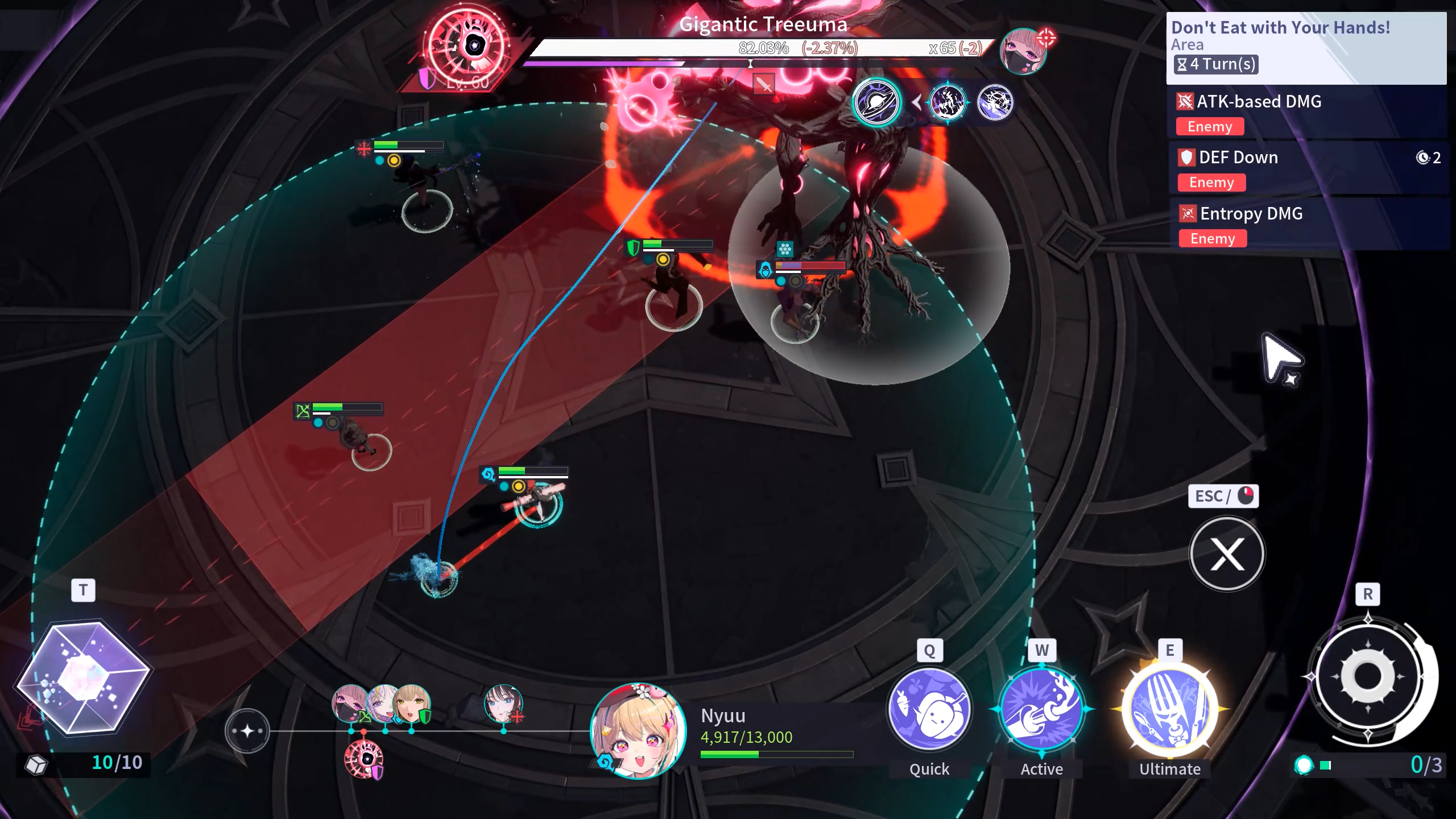
One of my potential concerns for future missions is the encounter design. The few tutorial battles in the demo were intentionally simple with the circular arena design and lack of enemy variety to ease players into the mechanics. I asked the CONTROL9 devs if fights would evolve later on. Despite not elaborating on specifics, they made it clear they aim to craft more varied encounters as the game progresses.
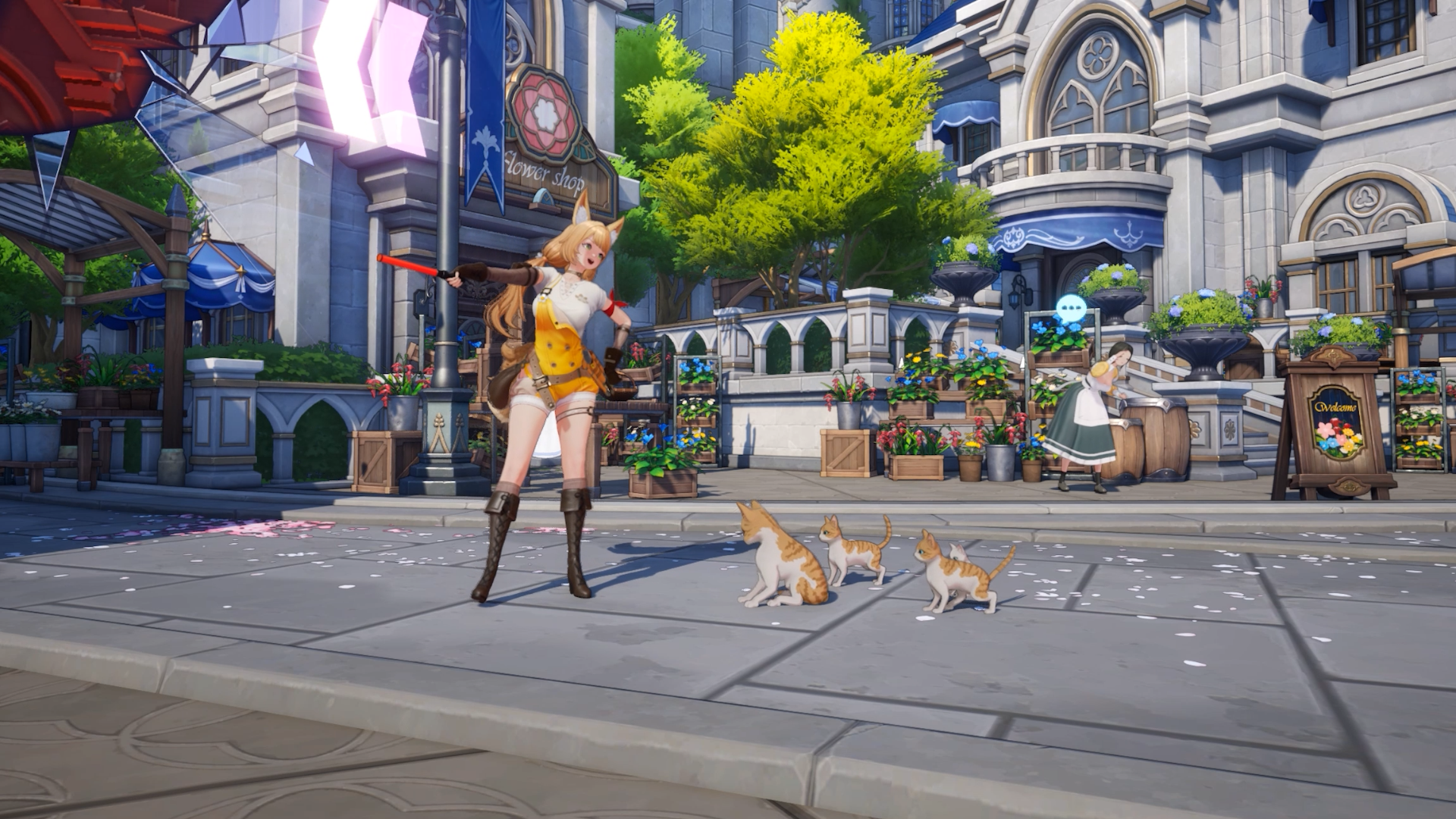
Promising combat aside, we all know the main draw for these types of titles. Someone call Don Cheadle’s Goon Squad from Space Jam 2, because it’s all about the jiggle. Unfortunately, as someone who likes art director Hyulla’s work on NIKKE, this is the aspect of the title I’m mixed on. Let’s get the positives out of the way first. While the cutscenes are presented with gorgeous moving 2D art, the battles and hub world exploration are all in 3D. Seeing Hyulla’s designs in a brand-new dimension is a treat, and the game is not shy about letting the player admire them. MIRESI gives the player free camera movement to capture the action… and other things at every angle. It made for an amusing demo experience seeing dozens of people taking advantage of the pauses to gawk at the screen. The hub world allows you to spend time with the characters and see their personalities shine through events and photo mode.
Now for the issues. Like other facets of the game, the theme of time travel guides the art team's design philosophy. Essentially, each character is meant to convey a blend of two distinctive eras and themes. For example, Itsuka blends ninja elements with modern-day garyu aesthetics. In theory, this concept has the potential to blend distinctive eras and genres of fashion to create something unique.
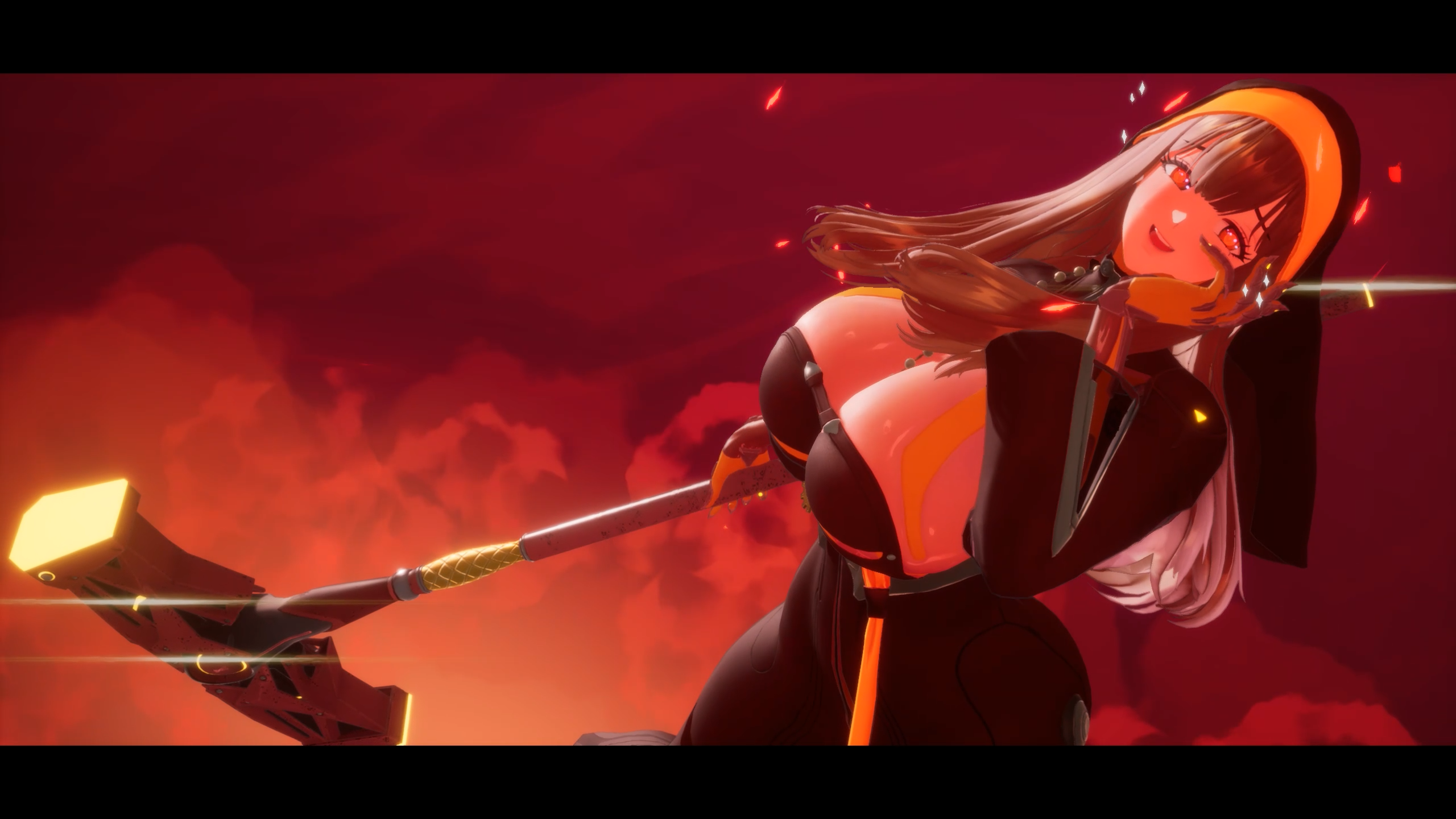
Unfortunately, the execution so far seems heavily restrained. Tieria, the cyborg nun, is the worst offender, as her design at a glance lacks any cybernetics that would set her apart from other anime nuns. The other members don’t fare much better, as their generic anime outfits overpower any sort of theme they are supposed to convey. Generic doesn’t automatically mean bad; the characters are certainly pretty. It just screams missed potential for such an awesome concept.
I want to say that I’m hopeful that future units will look better, but that leads me to talk about the elephant in the room more massive than Tieria’s assets: the use of generative AI. Unfortunately, much like other recent gacha games, AI will be used during the character designing process. The team threw out many reasons attempting to downplay this admission:
“The development process started way before this whole AI thing happened, and also Hyulla is actually known in this 2D illustrated world, and so AI is something Hyulla is depending on [for ideas]... he is really known for good reputation among 2D artists. We tried really careful with the AI.”
They also attempted to reassure that they are aware players don’t like it when games have AI, so the art for the game’s launch will not be generated “with one click.” Regrettably, I didn’t press if its usage would extend to facets beyond character art, or if development would use AI placeholder assets akin to Expedition 33. Still, even if they stressed that AI doesn’t make it into the final game, knowing that it is being embraced as integral to the development soured my excitement for this title.
Concepting is an overlooked aspect of the creative process, and being inspired by the works of others is something human. Additionally, it allows creators to discover other artists during the development process. Animation studio Toei often outsources to freelance animators when working on One Piece episodes, many of whom got their start with fan animations. Granted, Toei has shown interest in implementing AI for their production process in their March 2025 financial report, but that’s another rabbit hole. One of the more notable examples in recent years is with the LEGO scene from Spider-Man: Across the Spider-Verse. That sequence was animated by Preston Mutanga, who caught the eye of directors Phil Lord and Chris Miller when he made a LEGO recreation of one of the film’s first trailers.

Sure, it is unrealistic for studios to hire every single artist behind every fan work they see during the research process, especially smaller studios. Yet, the name of an artist can still be found and associated with each piece.
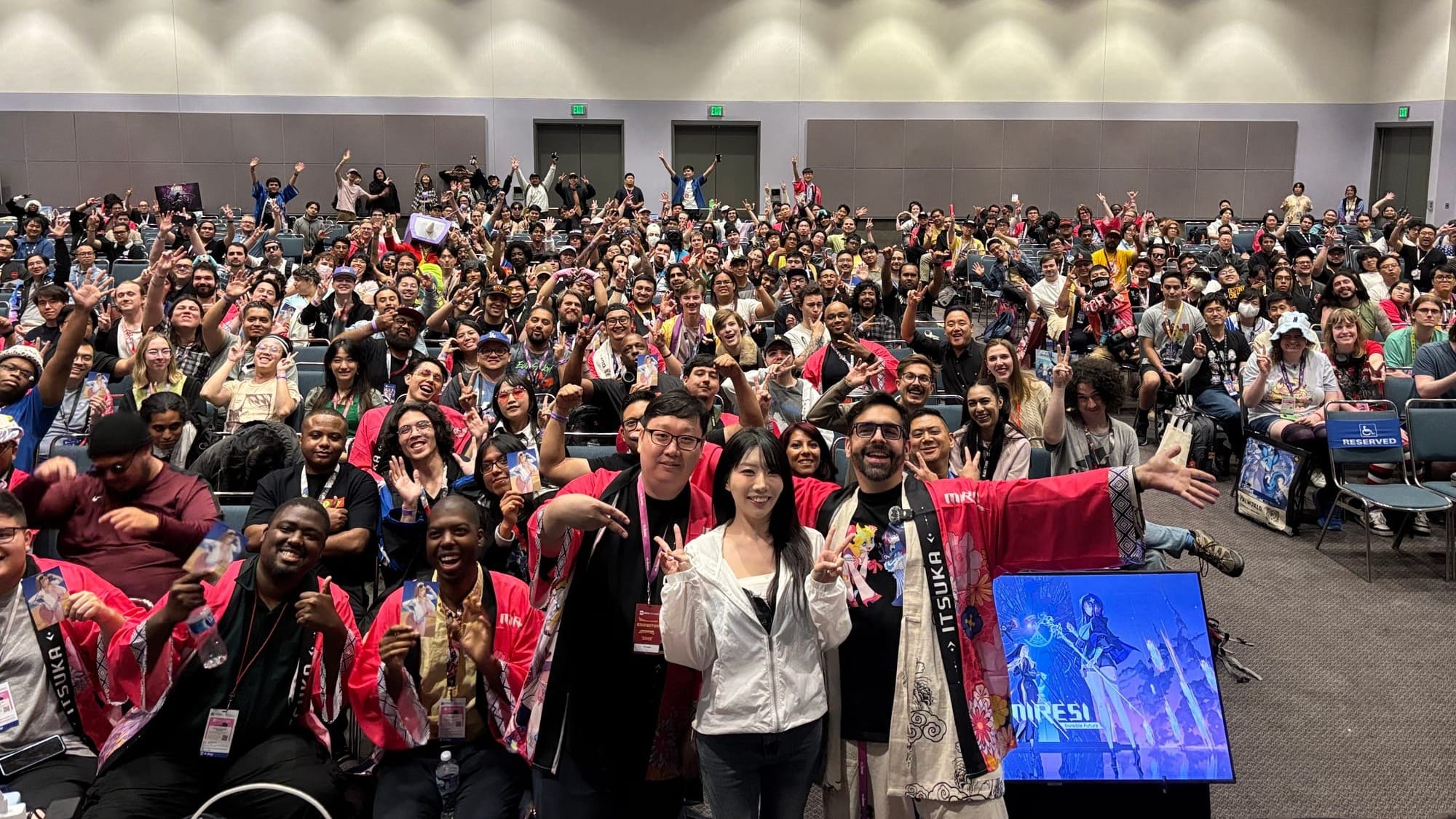
MIRESI’s main pitch is that it is a game with Hyulla’s name attached to it. People showed up in droves to his live drawing panel at Anime Expo because they enjoy and are inspired by art with his name signed next to it. So using a tool built on stealing from other artists and passing it off as a way to form ideas feels gross and hypocritical to me. I would not call it inspiration if you do not know the art or the artist you are being inspired by. That’s not even diving into the can of worms that is the technology’s dreadful environmental impact and contributions to the rising cost of hardware.
Did I enjoy my hands-on period with MIRESI: Invisible Future? Yes, I did. The combat has a lot of promise, and the plot so far is attractive characters going through wacky time travel shenanigans. It is just difficult for me to be enthused for a product that embraces the use of AI during development, even with the promise that it will not make it into the final game. Gyaru ninjas are pretty, but maybe not at the expense of stolen art and a $1000+ PS6.