Planet Zoo is one of my favorite simulation games ever. In general, I love games where you have to manage something. Jurassic World Evolution 3 really showed off what Frontier can do, and it looks like they've improved even more for Planet Zoo 2.
Game Editions
Planet Zoo 2 has two game editions. Both editions contain the base game as well as some extras.
Release Date: October 13, 2026
Systems: Steam, Epic Games Store, PlayStation 5, Xbox Series X|S
Standard Edition
Preorder now to receive the Bonus Content Pack at launch, containing an exclusive Toucan Eat Shop and Signage, 3 Unique Animal Donation Bins, and a Tiger Photo Stand-In Wall and the Base Game.
Price: SRP £39.99 / $49.99 / €49.99
Deluxe Edition
Preorder now to receive the Bonus Content Pack at launch, containing an exclusive Toucan Eat Shop and Signage, 3 Unique Animal Donation Bins and a Tiger Photo Stand-In Wall.
Price: SRP £54.99 / $64.99 / €64.99
6 Additional Species
Planet Zoo 2: Deluxe Edition introduces an additional 6 animal species from across the globe, including the Golden Eagle, Golden Lion Tamarin, Great Hammerhead Shark, Axolotl, Blue and Gold Fusilier, and Longfin Batfish.
Exclusive Animal Signs
Planet Zoo 2: Deluxe Edition features a selection of exclusive animal signs to decorate your zoos as scenery.
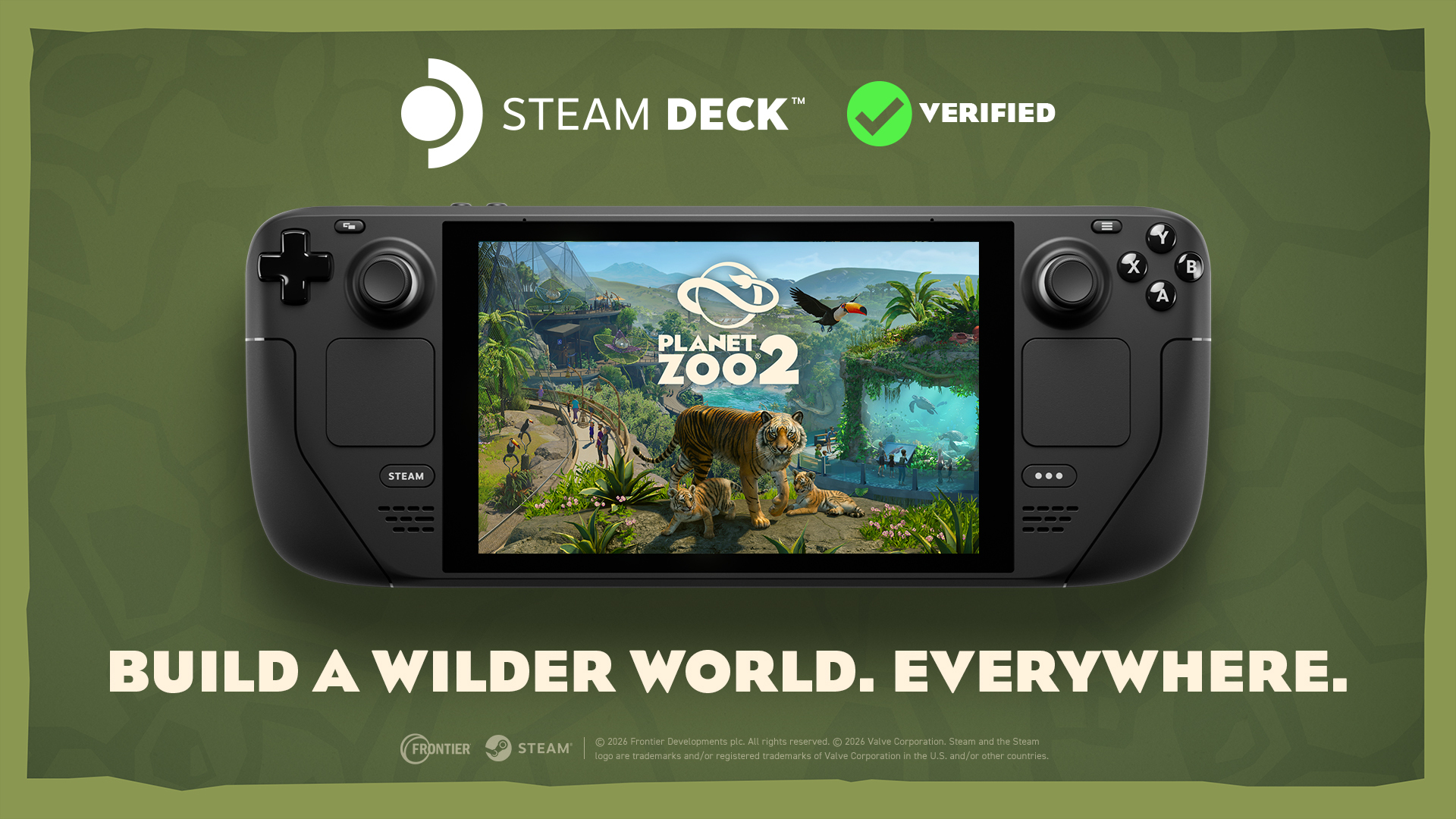
Steam Deck Verified
Planet Zoo 2 is Steam Deck verified. We won't know the extent of the performance until the game launches.
New and Returning Animals
This section brings together everything Frontier has shown so far. The Zoopedia is now live, which I'll like for you. But I did want to showcase some of what you can expect. Planet Zoo 2 will feature a whole range of new animals that I promise you, you won't want to miss out on.
Grey Wolf
I picked the Grey Wolf to highlight the amazing work that the team is doing with fur. Every animal that also appeared in Planet Zoo seemed to have gotten an overhaul here, and when you put the two side-by-side, you can really see the difference.
West Indian Manatee
I am shocked that they're including the Manatee. I'm glad, though, because these animals are beautiful and deserve all the love they can get.
Shoebill
They did an amazing job on this beautiful animal. I adore the way it looks, and from the video, the animations are top-notch.
Check out this behind-the-scenes look at how they make the animals!
The attention to detail that goes into each animal is unmatched. There is a lot of work that goes into making these animals function, especially with all of the new work going on with the game's engine.
The animal brain
I wanted to highlight points from this article to showcase how the game works now. Please check out the full article linked below! You'll be able to experience all of these changes as you play the game. While all of the tools under the hood got worked on, each change impacts the game right in front of your face.
This snazzy system groups all the actions our animals can take and enables them to seamlessly transition based on what is happening around them.
- Routines - the animal engages in normal actions by default e.g. exploring, resting, using enrichments
- Periodics - the animal reacts to environmental changes in between their Routines e.g. finding shelter, escaping predation
- Distractions - the animal reacts to stimuli to change how they are performing their actions e.g. joining a herd while exploring, completing a social call to a nearby peer while resting
- Interruptions - the animal reacts to stimuli and stops their action to do something else e.g. playing with another member of their species, waking up from sleep when disturbed
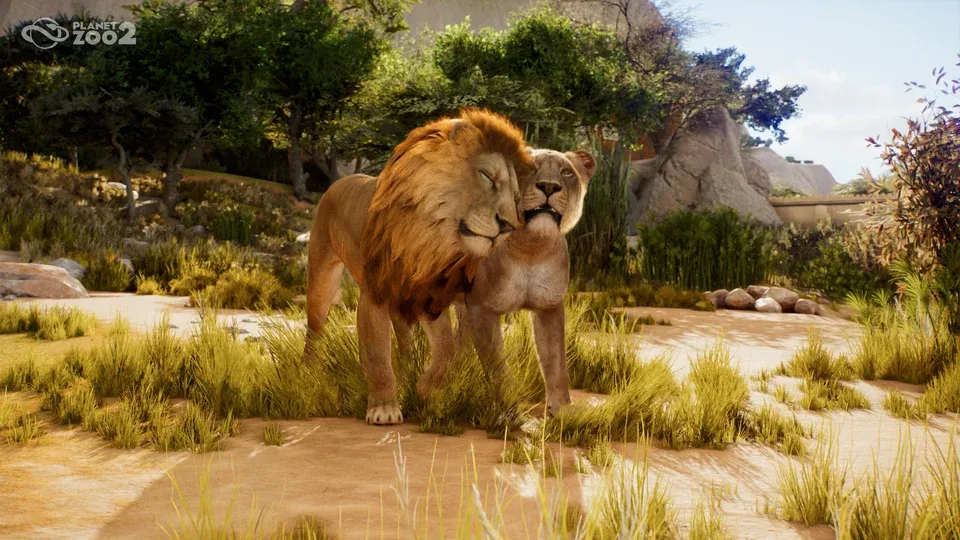
This system also considers how an animal is feeling at any particular time. If an animal is happy, sad, angry or scared, this will impact how they are behaving. For example, a sad animal will complete different actions in a different manner than an animal which is in a happy state. Moods are also visually identifiable, with an animal appearing differently depending on its mood, such as a hot lion panting or an angry tiger flattening their ears.
These moods can even impact the animals around them, such as a scared zebra alerting the rest of their herd to danger.
To support the animal brain, animals in Planet Zoo 2 react to a wide variety of stimuli, including everything from the time of day and weather to the presence of predators and the current season. This can be especially impactful to the courting and breeding behaviour of animals as they move through any seasonal fertility. Animals can also behave differently in the wild compared to within a Zoo as they react to the very different stimuli and circumstances.
In short, the animal brain gives the animals in Planet Zoo 2 a huge amount of reactivity, resulting in even more for you to discover as you care for your zoo and Wildlife Reserves.
Animal Formations
Formations are a new feature for Planet Zoo 2 acting as a layer on top of the animal brain, enabling animals to act as a unified group.
When multiple animals of the same species are close together they can form a formation with their peers. Different types of formation can be formed depending on the animals and their circumstances, including groups for migrating, defending, fleeing and neutral situations. The shape, size and density of a formation depends on its type and species, so a for example a bison may form a defensive ring against a nearby predator, while migrating zebras may form a line-shaped formation with the male at the rear.
Animals in a formation will compare their individual animal brains' Routine behaviours, which determines which behaviour the group wants to do as a whole. Depending on the sociability of a given species, animals are more or less likely to perform this formation-level behaviour or choose another individual Routine behaviour. For example, you'll likely spot zebras and wildebeest all grazing together, while giraffes may more often do their own thing while staying in the vicinity of their herd.
The members of these formations then essentially vote on what action they want to take, such as resting, exploring or grazing together. This allows social animals to behave, well, socially!
Behavior Upgrade
The greatest consequence of all this work tinkering with the animal brain is a huge improvement in the kinds of emergent, unplanned behaviour animals in Planet Zoo 2 will exhibit.
In the original Planet Zoo, animals would perform the same limited range of actions consistently. Now in Planet Zoo 2, they have a huge range of actions which can be completed in different ways depending on their circumstances and the environment around them.
Now a playful chimp could knock an enrichment item into a sleeping troop member waking them up or a lion could get angry if you remove their favourite scratching post right as they were about to use it.
Not only do these new emergent behaviours create exciting and believable interactions for you to discover, they can also have a direct impact on how your zoos and Wildlife Reserves are managed, requiring you to adjust to the unexpected and maintain the welfare of your animals. Your actions will directly impact the mood and behaviour of your animals, so it's up to you to keep them as happy as possible!
We are going underwater!
New for Planet Zoo 2 is all of the gameplay and mechanics that have to do with aquatic life. I really appreciate all of the care that went into making this happen. From consulting experts to recognizing that, in many ways, the ocean is still an alien environment.
I am curious to see how this plays out. Aquatic life in Jurassic World Evolution 3 was cool, but lacking in so many ways. Read further in this section to find out how the underwater gameplay will work.
While fish, turtles, and marine mammals frequently topped wishlists across the community, it wasn't until work started on Planet Zoo 2 that we felt we could do these animals justice. Aquatic animals require a wholly different kind of care to their terrestrial counterparts, alongside habitats which are a touch wetter, requiring new systems and the technology to support them - all of which we needed to build from the ground up!
The differences for aquatic animals even extended to our research and how we selected the species to feature in the game. As covered in our previous behind the scenes, we do a substantial amount of research for every animal that appears in Planet Zoo 2, from speaking to experts and consulting the IUCN Red List to creating extensive catalogues of reference photos and video.
A wrinkle in this process for aquatics was simply that the data for fish and other aquatic animals can be substantially different compared to terrestrial animals, with population numbers for example often coming from the fishing industry. Simply put, the ocean is still such an alien environment for humans that effective studies can be a real challenge!
When selecting our aquatic species we also felt it was essential that we reflect trends in real world husbandry and ethical practices. Conservation and animal welfare is at the heart of Planet Zoo 2's ethos, which is a key consideration for us with our aquatic species. We want to ensure that the species we include are suitable for the habitats available to design when the game launches.
Of course one of the biggest differences for aquatic animals compared to terrestrial animals in Planet Zoo 2 is their home, the aquariums.
Within aquariums animals spend all of their time moving entirely in a three-dimensional space and interact with player-built structures in a different way than our terrestrial animals, requiring a different approach for almost all interactions.
Everything from movement to social interaction needed to be reworked to accommodate this three-dimensional navigation. Due to the fact that most aquatic animals always remain in motion underwater in some capacity, this required a lot of iteration to get looking right!
Most aquatic animals in Planet Zoo 2 have varying preferences as to where in the water column (the relative height of the water) they prefer to spend time. While we can control their time spent doing behaviours at the surface, on the ground or on the aquarium floor, we needed to add new parameters for epipelagic or mesopelagic animals to set their preferred depths, albeit abstracted to make sense for the game (we don't expect players to build >200m deep aquariums!). This means that you'll see aquatic animals express preferences for where they move in the water, for example a blacktip reef shark will generally prefer swimming closer to the surface than a great hammerhead might.
Implementing our aquatic animals led us to ask some unexpected questions like "what exactly does a fish do when it rests?".
Initially, our underwater behaviours didn't support animals just stopping, but when night fell and our humphead wrasse kept swimming round and round we quickly realised, hey, shouldn't these guys chill a bit? Fish may not traditionally sleep like we do, but they do enter periods of rest and less activity which we needed to represent in the game. To support this we created a new hover state for aquatic animals, in which the animal slowly drifts around with little to no propulsive movement. Other aquatic animals tend to sleep on the seafloor, which was incorporated into our new seafloor navigation system.
We are also going into the air!
Birds are what I'm most excited about! Some of my favorite animals on the planet have made it into the game, and I couldn't be more thrilled. I am so impressed with how these animals look. Again, a lot of work went into making these animals possible. Trust me, it did not go unnoticed!
Flying birds were a core part of our vision for Planet Zoo 2 from the earliest days of our planning, but they presented an iceberg's worth of hidden considerations we needed to work our way through.
As with all our animals in Planet Zoo 2, we need to balance game-ready models with anatomical accuracy, trying to be as true to each species as we possibly can. For flying birds, this means considering the number of flight feathers, individual feather silhouettes, how wings work closed and open, colouration and patterns, and sexual dimorphism to name but a few.
We also found there were limited references to look to in the games industry for good examples of how to make game-ready birds at the kind of high visual fidelity we needed for Planet Zoo 2. Birds are often background assets in games and are usually kept fairly simple for performance and budget reasons, but in Planet Zoo 2 our birds are some of the stars of the show!
In order to deliver our new flying avian species, the team here at Frontier developed a bespoke, highly technical pipeline unique to these animals, built around open and closed wing meshes that our animators can swap between freely as the birds move and fly.
The first technical challenge is building separate open and closed wings that align seamlessly with both the body and each other, much like interlocking puzzle pieces. This allows us to switch between the meshes being used by the bird model depending on if the wing is to be open or closed, while keeping the swap as natural (and hidden to the player) as possible.
To do this we create a sculpt of the bird with one open and one closed wing, keeping the body itself completely symmetrical. Once this model has been optimised for use in game, we then split the wings off from the body before mirroring them to create a right and left version of each. This process results in a game-ready model with matching open and closed wings that can be seamlessly swapped.
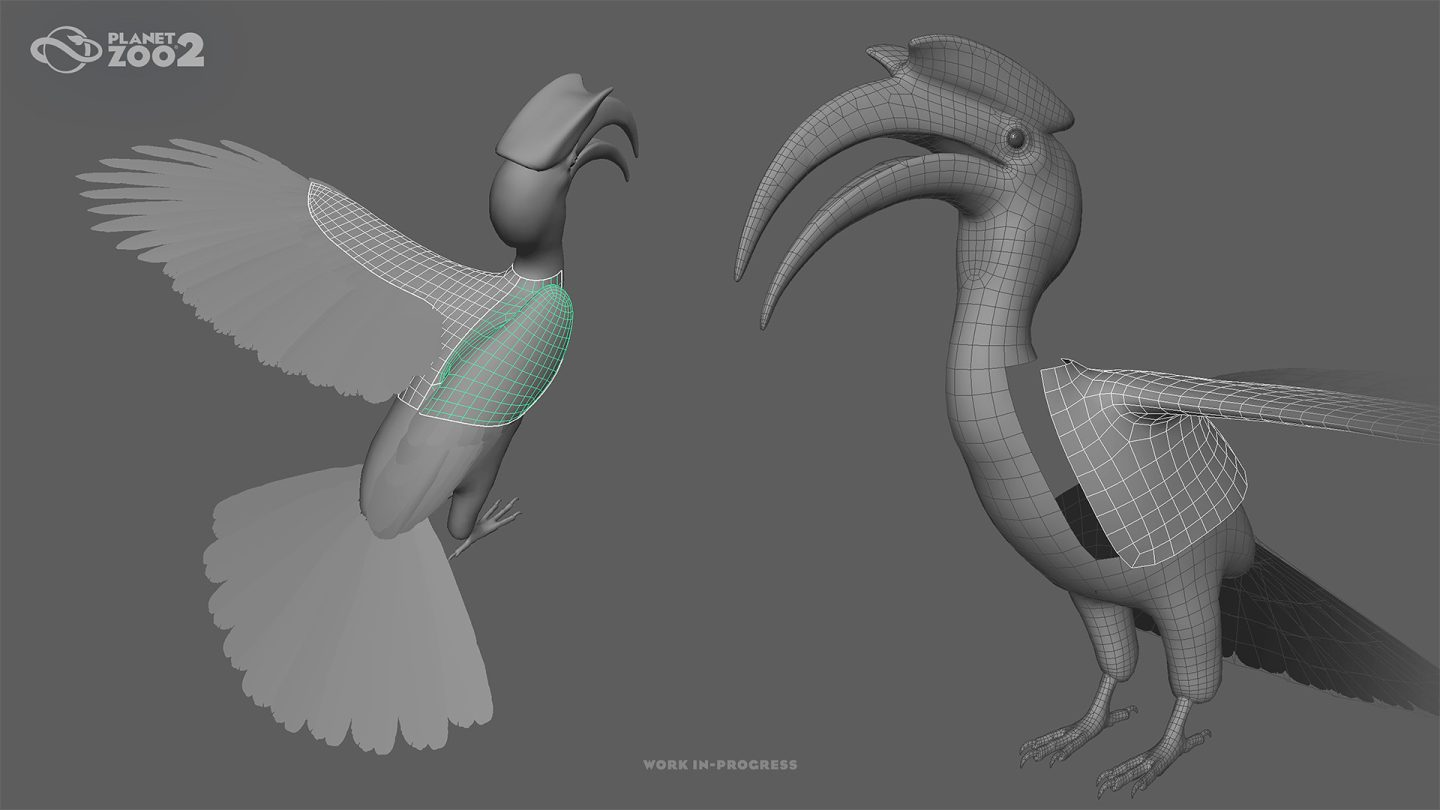
This is key to creating the various layers that make up a bird's wing in Planet Zoo 2:
- The mesh - the bulk of the wing, depicting the skeletal and muscle structure.
- The flight feathers - feather cards slotted into the mesh one by one, stacked closely with each other and provided with individual movement through animation.
- The tertiary feathers - layered above and sometimes below the flight feathers, these feather cards create the transition between the previous layers.
Depending on the requirements of the specific species of bird, an additional two layers can also be added here:
- Capelets - structures overlapping the upper body and wing to represent back feathers. Typically with an open and closed version to go along with our wing swaps.
- Pockets - usually overlapping the chest and lower part of the wing meshes, these allow the closed wing to slot into a pocket of feathers replicating the real behaviour of birds.
Texturing for our birds was also particularly demanding, requiring lots of handcrafted detail to capture the variety of feathers and patterns seen across our birds.
Because each bird calls for such a specific approach, the Character Art team built a huge library of feather brushes and resources to use for this. While texturing our birds, we also had to pay particular attention to the continuity between the wing swap textures and transitions to the body, so the wing swap system can seamlessly change between open and closed wings.
Birds brought to life...
Building systems for our birds to fly was all well and good, but we also had to consider how they land, perch on objects, interact with the environment and utilise our new animal brain framework.
Our flying animals use the same brain and decision making process as other animals in Planet Zoo 2, but their pool of behaviours and situations can differ somewhat to terrestrial animals.
For example, birds that are primarily arboreal (live in trees) will prefer to perch, which is a new type of behaviour that enables animals to perch on trees and certain habitat objects. Depending on their preferences, birds will also exhibit specific behaviours like stretching and sunbathing on these perch points. Other birds which have a more terrestrial preference may prefer to either walk around on the ground or in shallow water.
Depending on their species, birds will also evaluate the cost of flying differently and weigh this into how they behave. A wading bird and arboreal bird that want to get to a feeding station on the other side of a habitat will go about it in different ways. The arboreal bird will consider a flying path to that feeding bowl more efficient than walking there, while the wader will prefer walking there on land or in the water if possible.
Implementing perching behaviour was a fairly complicated problem for us to tackle - just because an animal could perch on something doesn't mean it has a clear, unobstructed path to get there. We also have some physics-enabled perches that add another layer of complexity when animals are perching on them, as they need to react to how the perch is moving and move with it.
We had a lot of fun mishaps along the way while implementing these systems, but they all contributed to more varied and authentic behaviour for our birds!
Time to talk Aviaries
I was most worried about this because a lot of interaction can be lost here. Thankfully, it looks like I'll have nothing to worry about.
What makes an aviary an aviary – the roof!
Aviaries in Planet Zoo 2 make use of the same habitat construction tools as our terrestrial animals, with one key difference, they require a roof to keep both your guests and your birds safe.
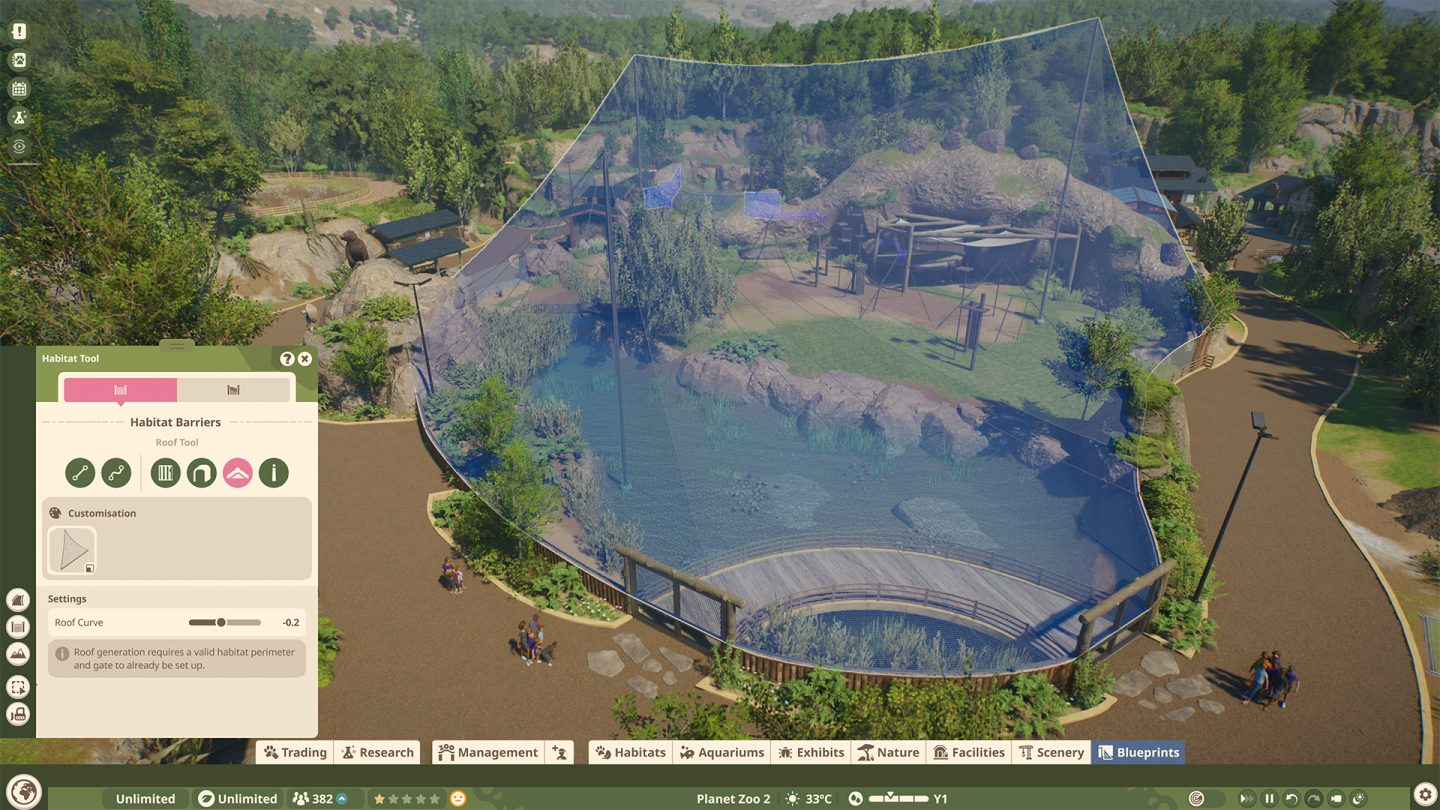
Our goal for aviary roofs was simple – they needed to be quick and familiar.
To create a simple habitat in the original Planet Zoo (and Planet Zoo 2!), all you need to do is build a contained loop of barriers and add a staff gate. Adding a roof in the original Planet Zoo on the other hand was an altogether more complex undertaking, requiring time spent editing scenery, terrain and barriers to get the desired effect.
Now that roofs are a requirement for some of our species, it was important for us to make them as accessible as possible, so absolutely anyone can build them without a significant time investment.
In Planet Zoo 2 to build a roof for a habitat, all you need to do is select a habitat, select “Add Roof” and hey, presto, you have a roof!
With one click, roofs automatically generate from nearby barrier posts to form a cover over the entire habitat, resulting in a habitat with a flat roof spanning over it.
But of course, if you want to customise your aviary, you can!
Pillars can be placed anywhere in the habitat, and the roof will adjust its shape to connect and reflect their placement. Pillar height and rotation can be adjusted as well, as can the material and convexity of the roof itself, in the same way you can customise your habitat’s barriers.
These simple tools provide lots of flexibility so you can really let your creativity soar and create amazing shapes, from tent-like structures to classically domed aviaries.
Comfort was considered
Once you have your aviary, it’s time to welcome some flying birds to their new home.
For the most part, birds have very similar requirements to the other animals in Planet Zoo 2, including needs for enrichment items, access to food and water, and a suitable environment.
Flying birds will also need access to nesting sites to breed, lay eggs and raise their young.
Nests can be placed around an aviary for birds to use, with a wide range of options which are suitable for different types of birds and their nesting preferences. This includes options for arboreal birds such as cavity nests and cup nests, as well as for waders or more ground-based species, such as water platforms and mud nests.
Cavity nests even come with a dedicated camera so you can check-in on any eggs or fledglings whenever you want!
Zoo creation got a massive overhaul
Every area of the game got a massive overhaul. This includes the tools that you'll use to put your zoo together. I also have to call out how wise it was to include the Frontier Workshop in an easy-to-reach spot.
Paths in Planet Zoo 2 have had more than a lick of paint, with a greatly improved and expanded suite of tools that make creating path networks around your zoos a breeze, including:
- Line and Curve Builder - create a path between point A and B.
- Draw Tool - draw an area to create a shape which is then filled with the path.
- Stamp Builder - choose from premade shapes and create paths and plazas at the push of a button.
- Border Edit - fine control over the edges of your paths and plazas.
These tools also come complete with extensive customisation options, enabling you to choose everything from the colour of your paths to railings and supports.
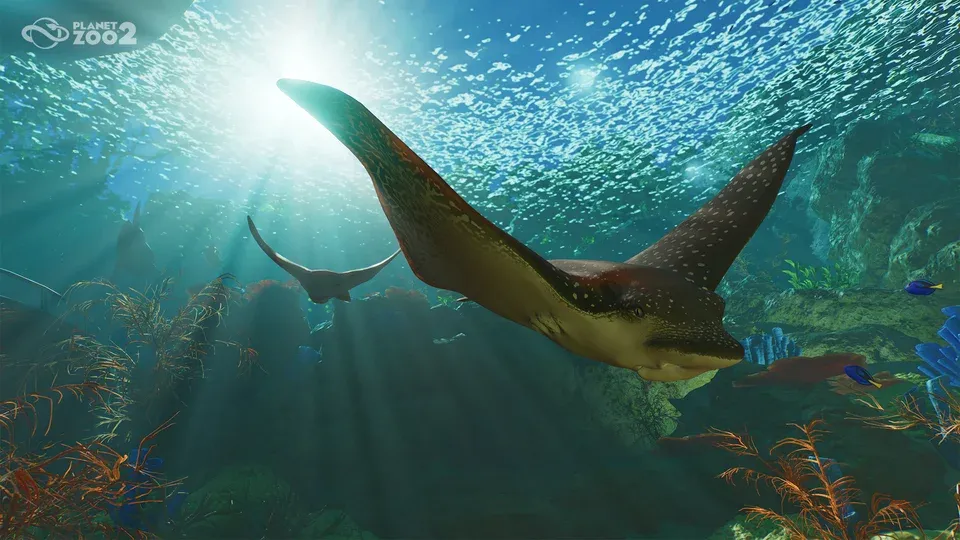
The power to terraform your zoos is at your fingertips in Planet Zoo 2, thanks to returning and enhanced terrain manipulation tools.
Sculpting, stamping and painting are all returning, but these will include some new improvements to help get those little details juuuuuuust right.
Amongst other improvements, dynamic terrain paints will automatically adapt to suit the angle and elevation of the terrain, the curl tool will rotate terrain around the brush into a point and landscape stamps allow you to quickly create terrain features like dunes or rolling hills.
Fans of the original Planet Zoo will also be happy to hear that we've made a frequently requested addition - the new nature brush!
Nature brushes allow you to quickly paint foliage and rocks around your zoo, with settings to configure intensity, how they interact with paths and more.
At launch you'll be able to choose from a wide selection of nature brushes which we've created, but you can also create and save your own. No more placing rocks and foliage one by one, just choose or configure your brush and go!
On top of some of the bigger additions we've made to make Planet Zoo 2's creative tools more accessible, we've also added more ways for you to get down and dirty with the details.
Scenery items can now be scaled and mirrored to add variation around your zoos or to get the perfect scenery piece down to the size you need. Flexicolour has been expanded too, with more objects (including paths!) that can have their colour customised.
Get ready for Seasons!
Seasons look amazing, and it also looks like you'll have to be a little prepared ahead of time.
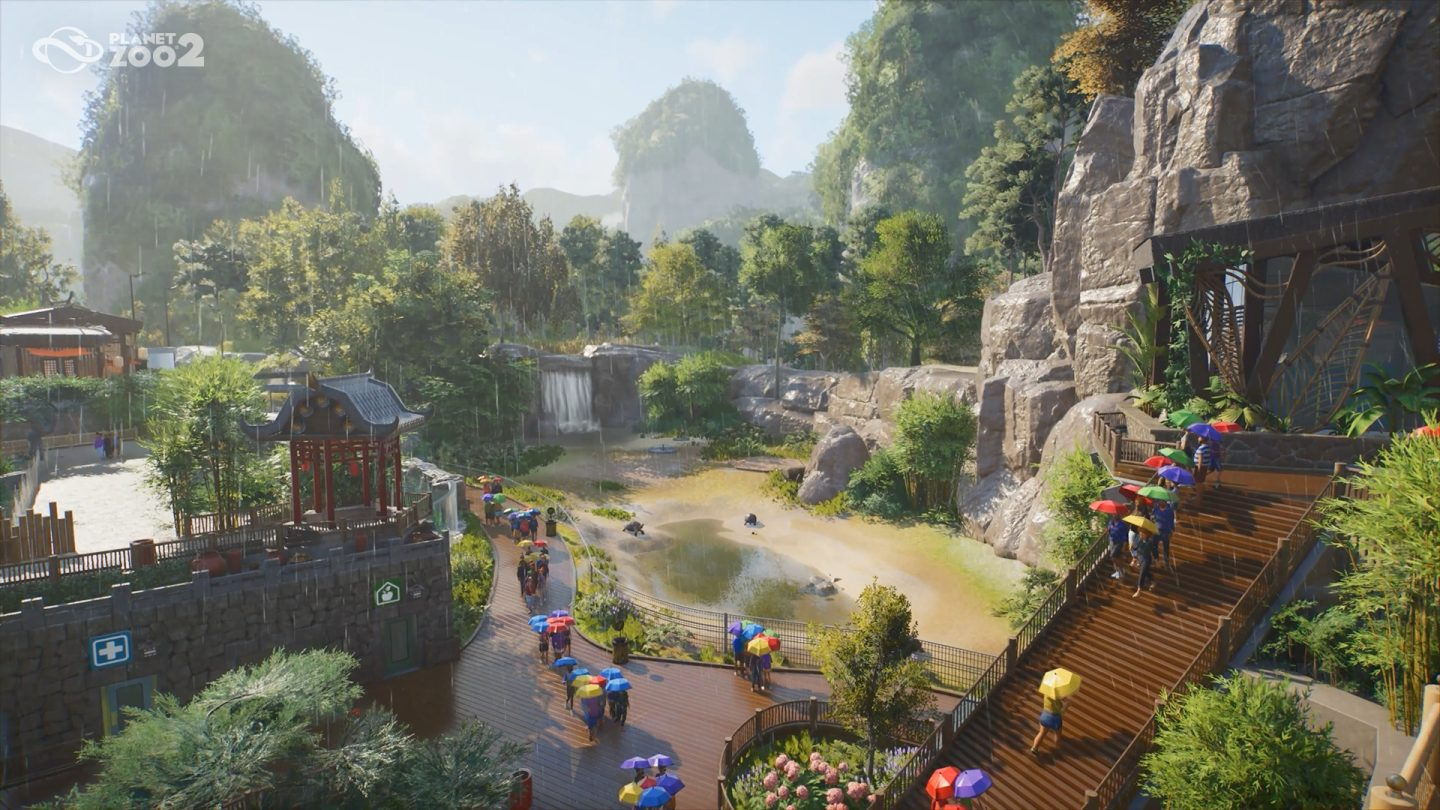
Years in Planet Zoo 2 are broken up into multiple seasons, which have a direct impact on how your zoos and Wildlife Reserves both look and function.
To keep things simple in this article, we'll be focusing on Spring, Summer, Autumn and Winter in temperate locations, but exactly what these seasons are will vary depending on where your zoo or Wildlife Reserve is in the world. For example, a northern temperate zoo will see different changes over the seasons compared to a zoo in the desert.
Unlike the random nature of weather in the original Planet Zoo, weather in Planet Zoo 2 will reflect the current season. This means the likelihood of different types of weather occurring will be influenced by the time of year, with snow likely in Winter and rain uncommon in the Summer.
On top of making our weather systems more authentic and reflective of real biomes, this also makes them more predictable for you!
Aside from the changing weather, perhaps the most noticeable visual effect of the seasons can be seen in the foliage.
As the months pass by, foliage will bloom, trees will bear fruit and leaves will change colour or fall from the trees.
Of course, seasons won't only result in visual changes and different weather.
Depending on the biome of your zoo or Wildlife Reserve, the temperature will also change to reflect the passage of time.
For example, Winters will be colder, which may require some additional planning on your part to keep some of your animals at a comfortable temperature through building heaters or providing shelter. All those heaters will also need a well maintained power network to keep them running, so you better make sure your zoo infrastructure is ready! There's another side to that coin though, so you'll also need to prepare your zoos for the shift back to warmer weather and the highs of Summer.
As a Zookeeper, it'll be down to you to make sure your habitats, aviaries and aquariums are suitable for your animals all year round, whether the sun is shining or snow is falling.
In practice, this greatly shakes up breeding programs to reflect more of the challenges that real zoos and conservation efforts face. In Planet Zoo 2 the welfare of your animals directly influences their fertility and ability to conceive young, so if your animals aren't feeling at their best during the critical breeding season, you'll need to wait for the next year before restarting your conservation efforts.
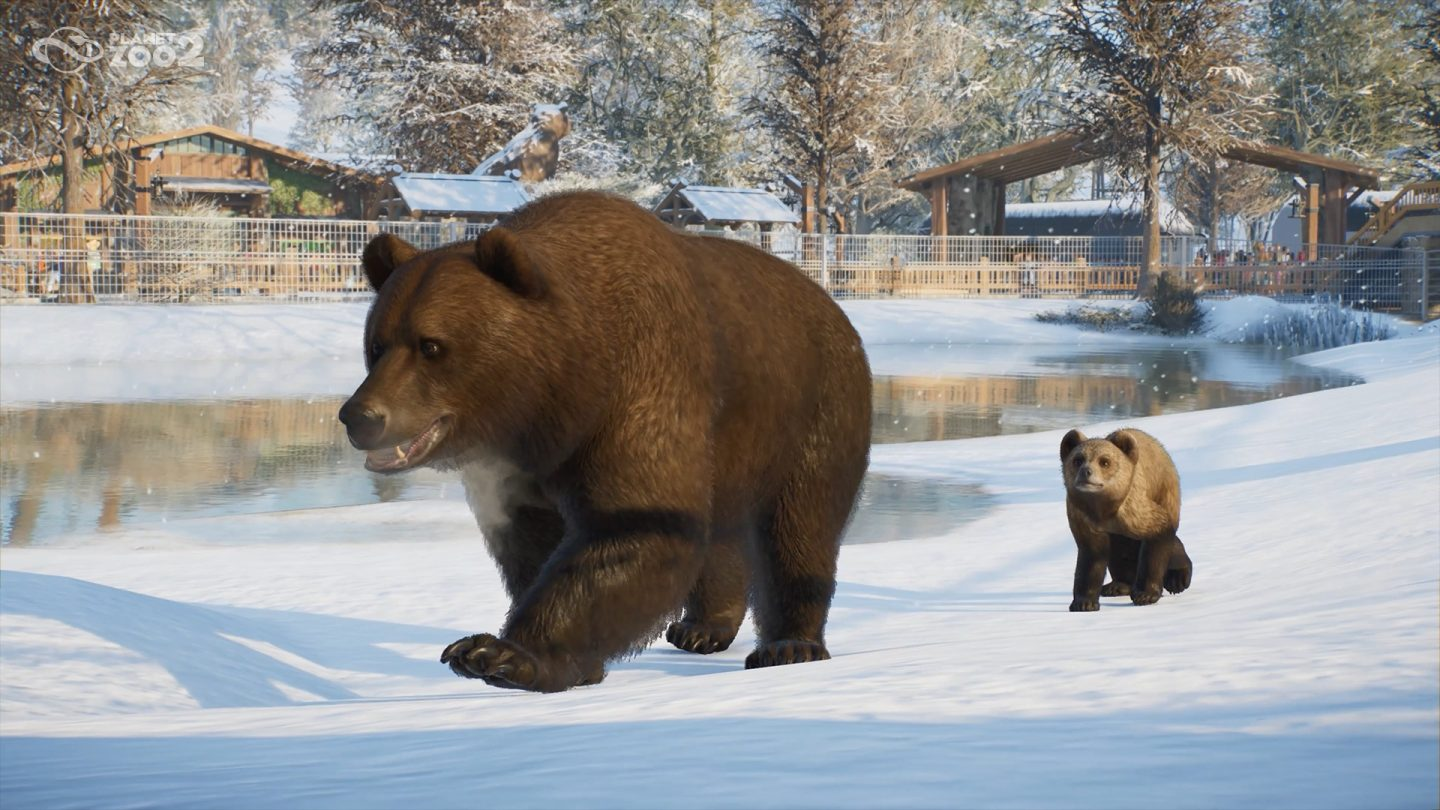
Wildlife Reserves
Wildlife Reserves are coming, and boy do they look breathtaking. You'll be able to observe animals in their natural habitat, complete research, and so much more.
In the original Planet Zoo, releasing your animals to the wild was quite abstracted, simply earning you some conservation credits and bidding a fond farewell.
As reintroducing species into the wild is so critical to real conservation efforts, this felt like a natural area for us to build on and expand for Planet Zoo 2.
Within Planet Zoo 2's new Wildlife Reserves you'll now have a hand in establishing Ecosystems, reintroducing animals to the wild and completing research to support your conservation efforts back at the zoo.
Instead of pushing a button and seeing your lovingly cared for animals whisked away, you can now join them on their journey beyond your zoo, supporting them from afar as they live out their lives in the wild.
Wildlife Reserves in Planet Zoo 2 can be found in locations around the world, from the rainforests of Sumatra to the grasslands of the Great Rift Valley, each offering potential diverse Ecosystems for your zoo animals to call their new home.
These Ecosystems will vary depending on where in the world the Wildlife Reserve is based, such as watering holes in the grasslands or lowland marshes in broadleaf reserves. You can define and create different Ecosystems in Wildlife Reserves to suit the animals you're releasing.
As part of your rewilding efforts, you'll have to contend with various elements that have made these Wildlife Reserves less suitable for their native animals, including environmental pollutants and invasive flora. Before an Ecosystem can be a good home for your animals, you'll need to invest in cleaning them up, removing invasive plants and adding the right ratio of environmental factors, such as water, foliage and terrain.
Once an Ecosystem has been established, you're ready to start reintroducing animals, but there's another layer to consider if you want these Ecosystems to really flourish.
Animals in Planet Zoo 2 perform different roles in their wild Ecosystems, such as rooting in the soil, browsing from the trees or even acting as predators. To help the Ecosystem flourish and stand the test of time, it's important to fill each of these roles with a suitable population of animals to improve the biodiversity and in turn the overall rating of the Wildlife Reserve.
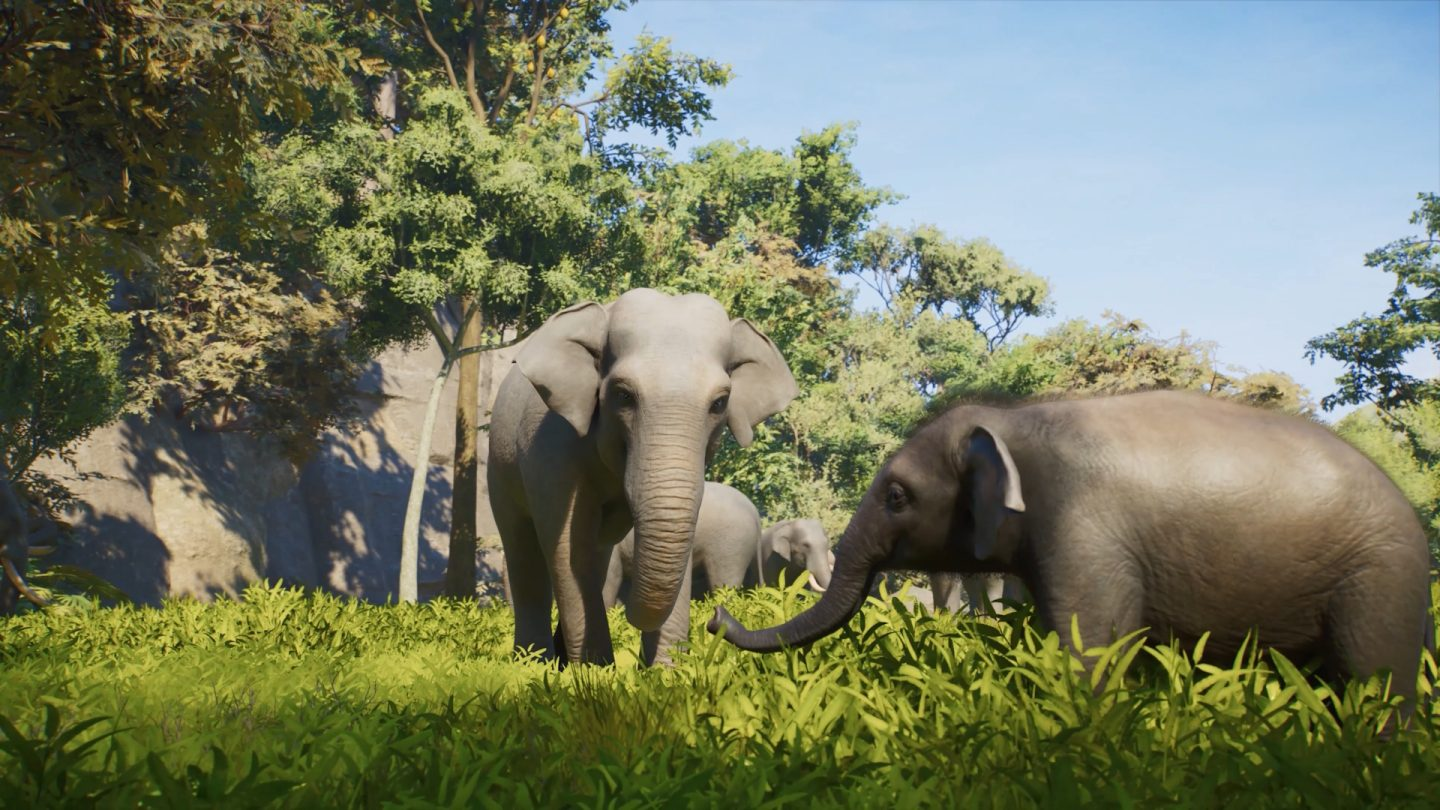
Animals from your zoos can be released into Wildlife Reserves through release groups, which are essentially different groupings of a given species. These will vary from species to species, but generally range from solitary animals to breeding pairs and larger groups.
Different animals and release groups will have various requirements to meet and you'll need to make sure your animals fulfill these before attempting to release them into the wild.
These can include the animals meeting a certain level of longevity, fertility or genetic diversity - all of which make it even more important to maintain good animal welfare in your zoos.
Once your animals have been released into the Wildlife Reserve, they'll live out the rest of their lives in a natural environment, filling their niche in the Ecosystem, raising their young and increasing the wild population of their species.
Aside from their important role in reintroducing animals into the wild, Wildlife Reserves are also a critical part of your global network in Planet Zoo 2.
Wildlife Reserves provide new insights into how animals behave naturally, earning Conservation Credits, unlocking higher levels of species research, learning more about the animals you care for in your zoos and providing new opportunities to help them thrive.
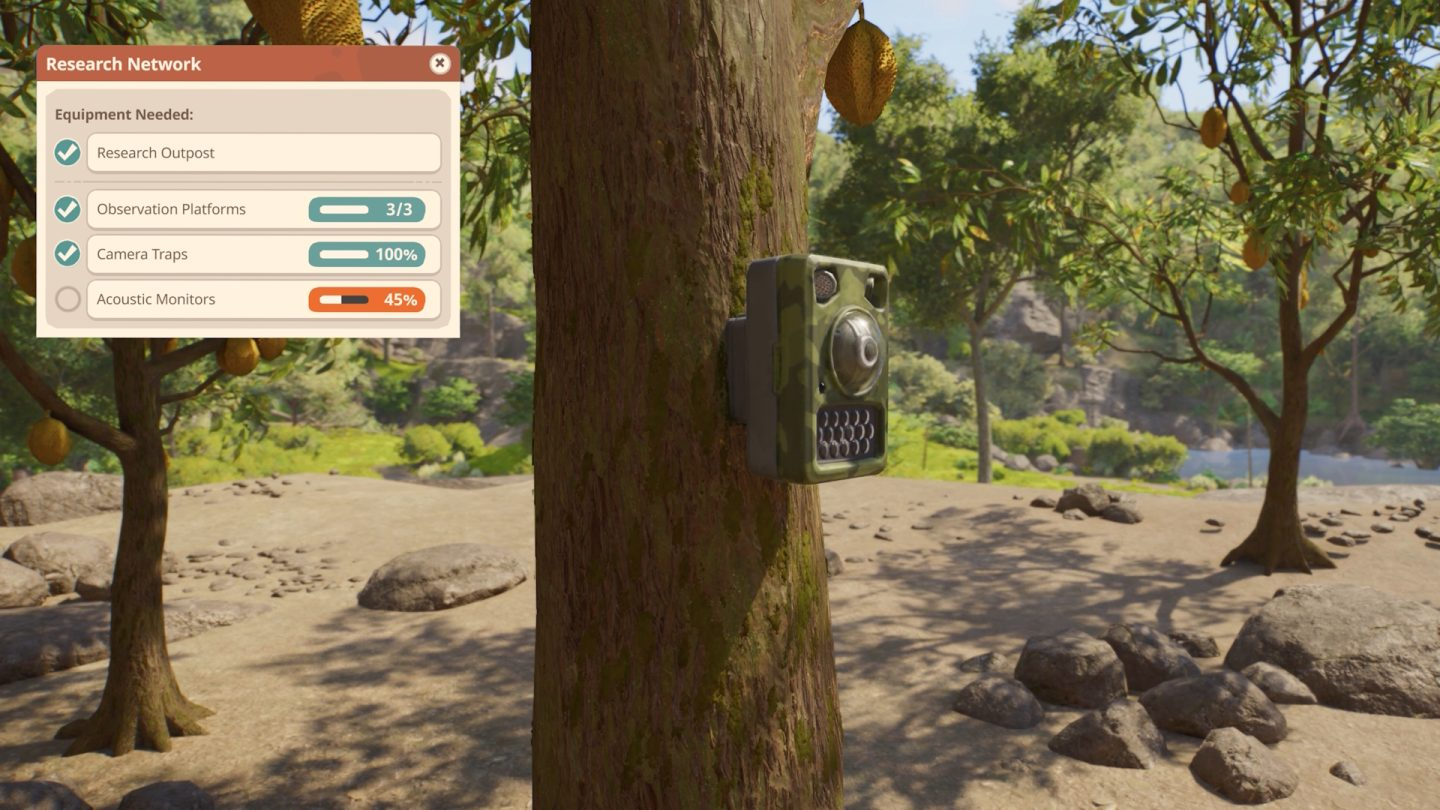
To support your conservation efforts and enable more species to be released, you'll need to build Research Networks within Wildlife Reserves.
The core of your Research Network will be a Research Outpost, complete with its own Research Vehicle (more on that shortly!), but you can also place various pieces of equipment around the Wildlife Reserve to capture important data on the animal's behaviour.
These include Observation Platforms for keen eyed staff to catch glimpses of wildlife, Acoustic Monitors to discretely pick up audio, and Camera Traps to snap footage of animals. Just as when building in your zoo, you can choose from a selection of premade Blueprints or create your own designs when building in Wildlife Reserves.
Once set up, this Research Network allows you to improve the Biodiversity Rating of the Wildlife Reserve.
Well, that's everything I thought you might need to know. I'll see you all when Planet Zoo launches this year!