Atlas: Man of Might embodies the joys that only independent film can provide. While not everyone will appreciate its unique charms, the film stands out because of, or rather in spite of, its technical shortcomings. This animated feature, created almost entirely by writer/director Austin McConnell, breathes fresh air into the superhero genre with layered themes and humanity that can be difficult to draw out of its mega-budget contemporaries. The story of learning strength and perseverance comes through in its visuals, its writing, and its production history, making this an unmissable gem in the world of superhero films. After watching the film, I spoke with Austin about the process of creating this movie and the universe as a whole.
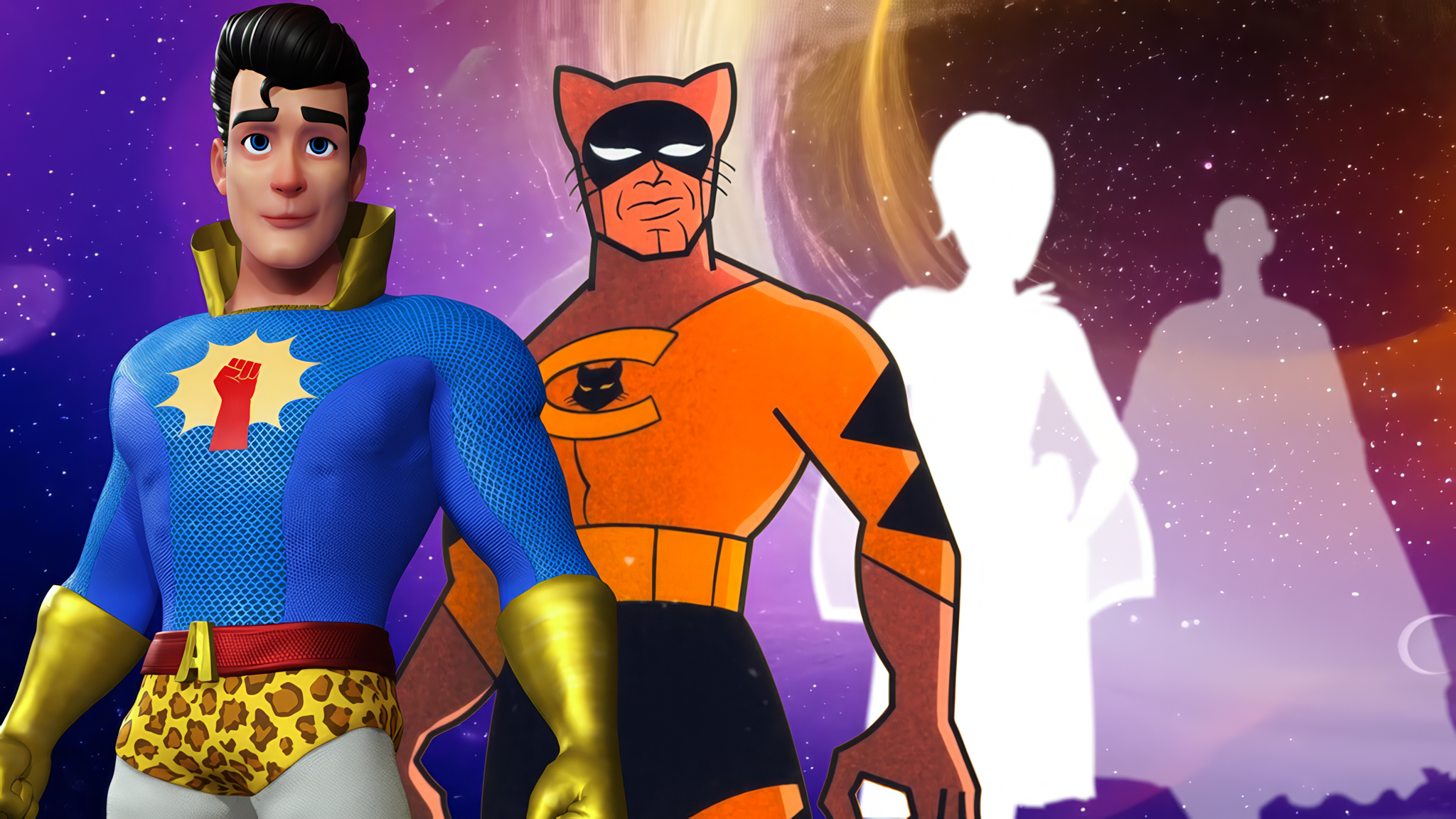
Atlas is only one entry in the ongoing Superzeroes universe; consisting of the upcoming animated feature Catman and multiple novels, this project takes on the mantle of forgotten public domain superheroes to create a new continuity. This back to basics approach, as exemplified in Atlas, is surprisingly refreshing. Austin envisioned this amidst the 2020s grim deconstruction era, in which superhero stories had lost their way a bit. His stories of older style heroes offer something less simplistic and more back to basics. The stories are optimistic and colorful, while bringing along a charm from their unpretentious inventiveness. Six-Gun Gorilla and The Spider-Queen don’t come with the baggage of 60 years of contradictory entries, but do have tons of aesthetic and conceptual potential to unlock.
Observing the cycle of deconstruction/reconstruction that many comics are caught in, Austin found himself dissatisfied with many of the modern superhero movies he saw because of how they consistently failed from the story standpoint. They were ultimately variants of one another, churned out factory-style from the studios, with so much overhead that individual artists have trouble providing their individual voices.
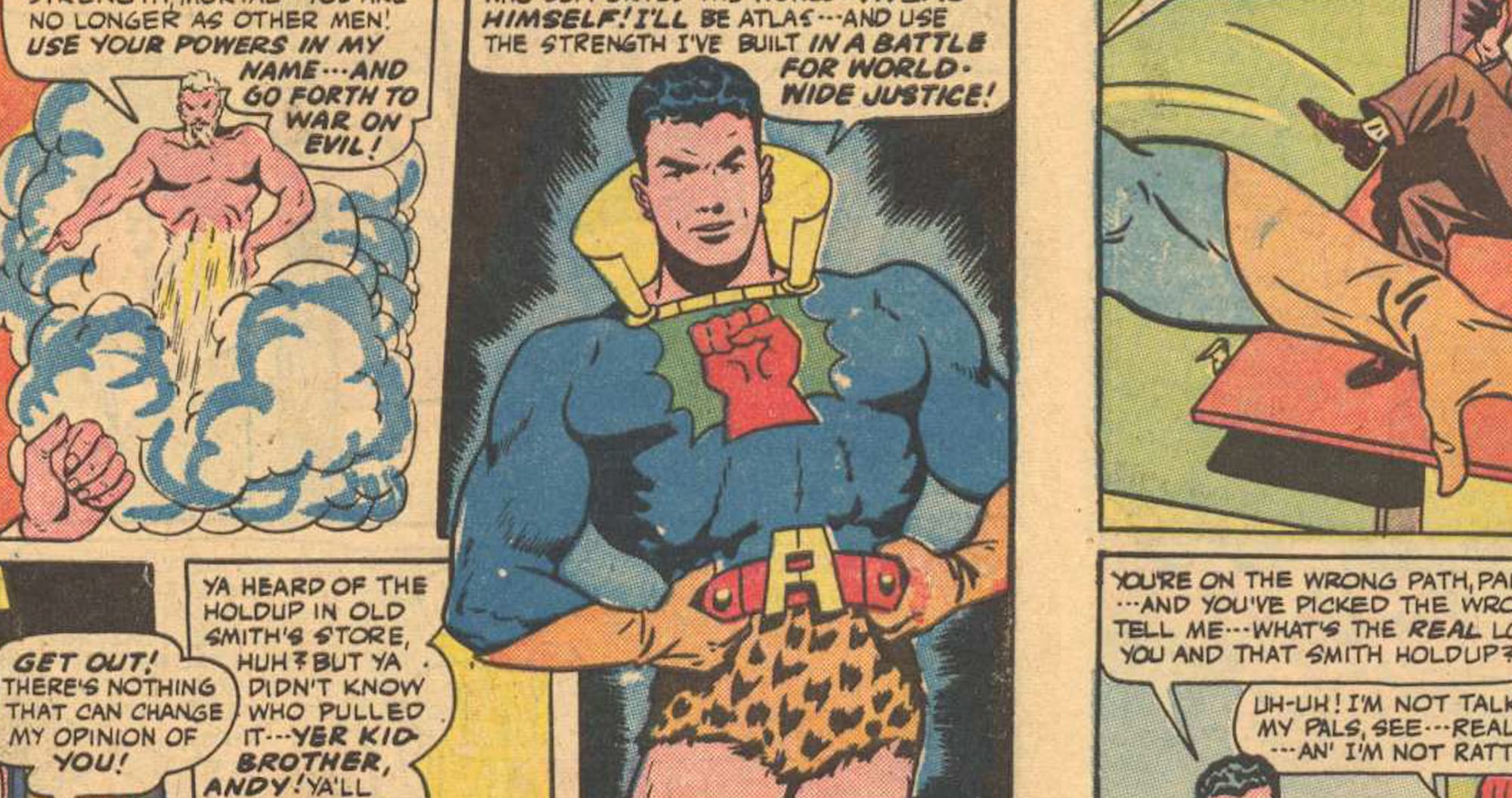
I’m definitely harsher on those productions than Austin is, as I’ve long grown tired of the expensive but vapid miasma that many blockbusters feel like. He was not out to tear anything down, but to build something on his own. Atlas gave him ground zero because the character is effectively unheard of. While doing research on a number of public resources, Austin kept coming back to Atlas. Something about the costume (complete with leopard print underwear, that does have story-significance) and the earnest nature of the story being told offered a bright light. He saw something so unabashed and over the top he thought no one in a million years would try to make a story like this in the modern era. The challenge was whether he could make it work, and I’m here to tell you that he succeeded despite setbacks that could have easily ruined Austin’s entire filmmaking career.
That’s no exaggeration; during the course of creating this film, which he produced on his own, Austin suffered a stroke and heart issues. While teaching himself how to animate, he also had to relearn the use of his own body, all in a movie thematically about gaining strength of body and character.
The film itself is about a somewhat typical modern man: nerdy but unmotivated, he lets his life go by with little effort, ownership, or satisfaction. After miserably failing to step in when a new employee is attacked, he sets out to change himself for the better, catching the attention and assistance of mythic titan Atlas.
Atlas consistently surprised me throughout its runtime. At first blush it’s a Superman clone mixed with the “nerd getting sand kicked in his face” comic, but the story is exactly the opposite. Its lead starts out as weak, physically and mentally, and sets out to better himself. This isn’t because he failed to protect a woman or wants to impress her. It’s because he realized how much he had been failing himself with his complacency and refusal to take ownership of his life. He took his health and his financial security for granted, but his change in attitude kickstarts a titan’s interest and his transformation.
I'm not glad that Austin was hurt while making this film. I would much rather that he wasn’t. No art is worth human suffering, something AAA game studios don't understand. However, that unfortunate development adds onto Atlas’ themes and grants it a power it simply could not have had otherwise. Austin recognizes that the hundreds to thousands of animators working on mainline superhero movies surely had stories of their own which could not make their way into a final product. Children must have been born, injuries suffered, along with innumerable events that I can’t imagine because they had no tangible connection to the movies being presented.
Atlas stands on its own, rounding out into something surprisingly thoughtful about masculinity and the meaning of strength. Its partial focus on physical strength might seem basic, but this is a privileged thing to say about physical health. Some people can’t achieve it regardless of their efforts, and those in better health commit a major sin by squandering their gift. The same is true of anything in life whether it be mind, morality, or politics. Refusing to act is a choice just as much as anything else, and Atlas challenges us to recognize our complicity in the course of our lives, the shape of our environment, and to take action to improve both. Heroism is not a state of being. It’s a series of choices that we can make every day, and too often choose not to.
Along the way, the script has plenty to recommend it. The main character is matched by a female lead with a ferocity to rival any superpowers. She’s not just a woman that he receives as a prize. She is a capable professional and has the better of the main character for most of their scenes, and makes a good partner because she pushes him to achieve his own potential while appreciating his successes. They work together, pushing one another to be more than they would apart. Many of the characters have these same subtle twists and theming, like the boss character who thinks he’s done all the good he can in life until Atlas inspires him to seek more.
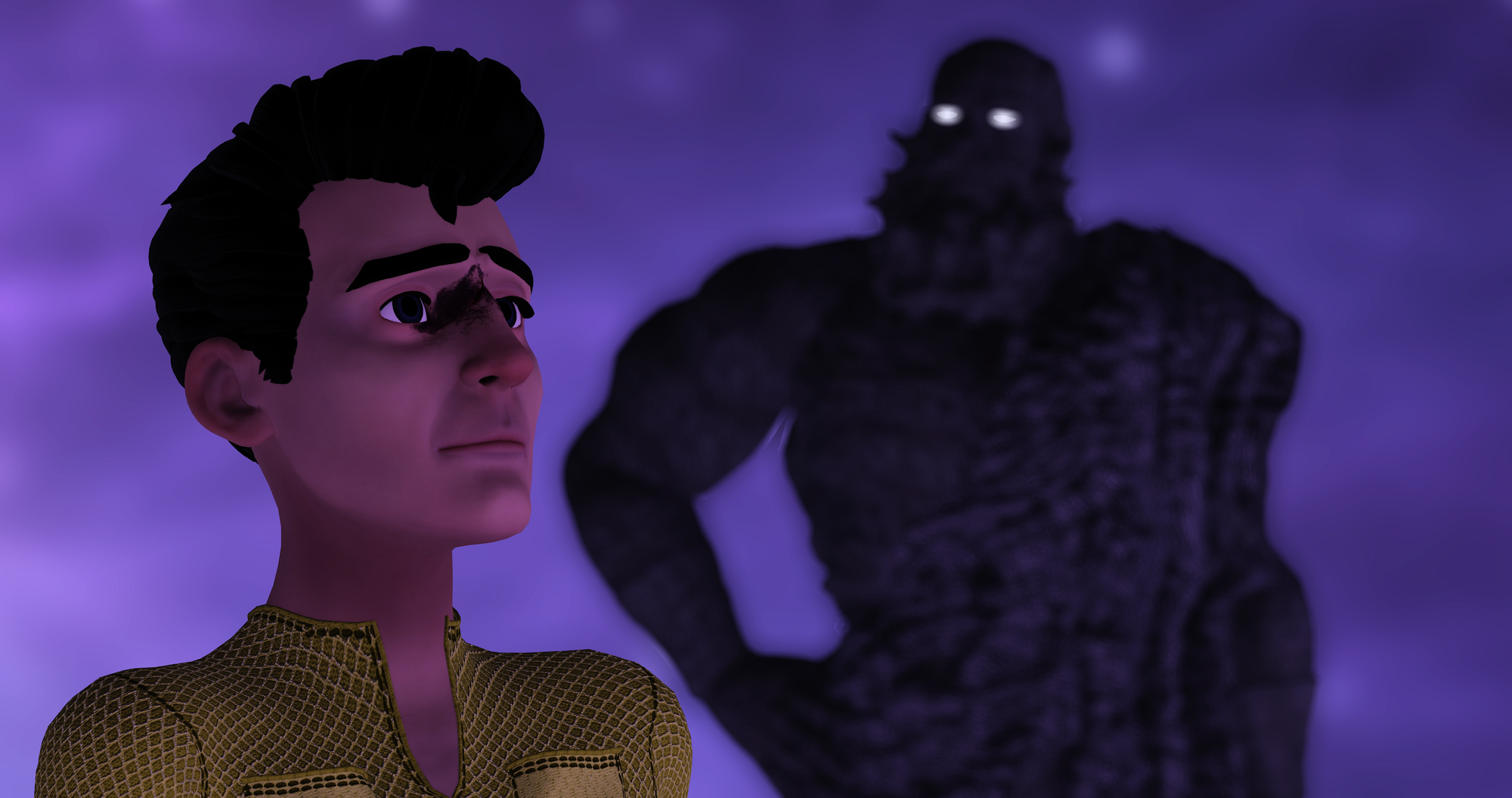
I and the filmmaker both admit that this film does suffer some clear technical shortcomings. The interior sets and some of the character models lack flair, but the framing, pacing, and exteriors are mostly great. Austin knows that he isn’t currently at the level of other animators. In some small ways this pays homage to how these rejected characters and comic books are created. The works of Lovecraft, Clive Barker, and Bill Finger himself began as low budget pulp, but stand now as titans of the culture.
On the other hand, Atlas is a triumph like nothing with a million dollar budget could ever be. The film’s flaws make me recognize its strengths. The character models might be simple, but that highlights every intentional movement of lips, eyes, hands, anything. This is something I think any animator in training should watch as an example of how these mechanics function on screen. Watching a movie gain technical proficiency while its main character gains physical strength, made while the animator was literally relearning how to use his own hands, is an unmatched film-watching experience. That’s alongside a script that more than succeeds at engaging the viewer and recapturing what superhero stories can accomplish.
I’m not asking you to ignore the eccentricities in Atlas. I want you to engage with them. They have more power and more to say than most similar media I’ve watched in years.
At time of writing, Atlas has passed a million views, with a warm reception that’s genuinely reviving some of my faith in the viewing public. Much of the point of this project was to push us into seeking out and supporting independent work, so more stories like this can thrive. To that end, Superzeroes has a crowdfund campaign ongoing now, to fund upcoming entries. You can follow at Austin’s website or Youtube channel.
If this is what Austin can accomplish in a basement with severe medical episodes, are we not all compelled to ask what we can accomplish if we try to do even the minimum?