The Nintendo GameCube – the little purple prism that could...or couldn't. While the system's middling performance was a rough patch for The Big N, many young gamers grew up cherishing its library of games. But do they hold up today? Join Anthony on his quest to find out as he reviews every classic title offered on Switch 2's Nintendo Classics service.
The chime of a gold coin. The smattering of paint. A distorted, mischievous giggle. This sequence of sounds opening Super Mario Sunshine are a siren’s call to a rose-tinted past: calling me back into the waters of Isle Delfino. I wade forth, ushering in the flood of memories. One surfaces giddily above the rest, as it always does: it is August 2002, where ten-year old me is vacationing in New York City with my family, and I’d stepped inside the inviting maw of Times Square’s Toys R’ Us (rest in peace). It’s when I venture into the bottom floor’s gaming section that a familiar chorus of yahoos and wa-heys prick up my ears—I stride into the dimly-lit room, lured by the big glowing monitor of greens and blues to discover none other than Mario’s latest adventure: available to play on a giant monitor just a week before release.
I can hardly contain my excitement. I jump around in the greenery of Bianco Hills, leaping on wires and sliding down water-ridden slopes. I hover with Mario’s new water jetpack and wash away the toxic graffiti covering the town. I venture from kiosk to kiosk, playing other up-and-coming attractions in Star Fox Adventures and Super Monkey Ball 2. It was the perfect coda to an unforgettable summer, for the next wave of next-gen gaming had come.
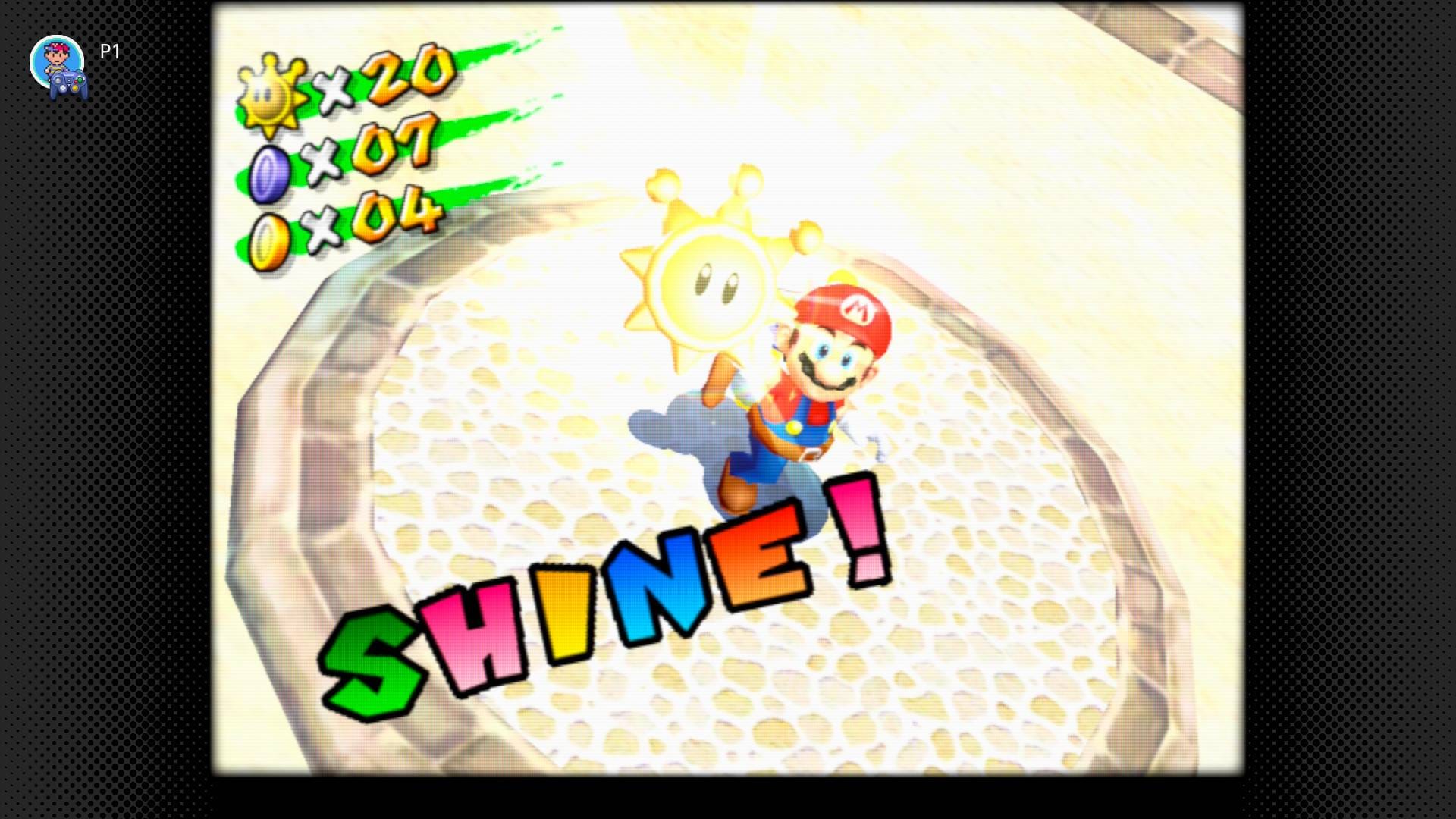
More memories arise as I dive deeper into the waters of this Nintendo Classics re-release: how I’d aimlessly hop from rooftop to rooftop and jet across the waters, pondering out loud what a wonderful book Judy Blume’s Super Fudge was. How my older friend in middle school, who’d initially sneered at Mario and his silly new device, was immediately swept away by its dizzying rockets. How we’d both searched in vain for a Green Yoshi and emailed the wrong Nintendo department to inquire as to its fabled location. (He was everywhere in the game’s promo art and screenshots—surely Mario’s best friend must be hiding somewhere!) How, despite the immense criticism thrown its way, Super Mario Sunshine immediately earned the No. 2 spot in my Top Five Video Games—its tropical setting, jubilant atmosphere and brilliant acrobatics serving an endless helping of fun. Just hearing the samba explosion of cuica drums upon nabbing a Shine Sprite doesn’t just bring back memories of yelling “SHINE GET!”—it’s a deep dive into simpler times.
But then, just as quickly, the waters grow choppier: I remember how, after rediscovering Super Mario 64 the following year, Sunshine slipped to fifth. By the time I’d finally toppled Bowser and his son’s mad plot a year after release, it slipped to ninth. Then ten. Then lower, and lower, and lower still—until Isle Delfino wasn’t so much as a speck in the distance. Yet again, like every other time I’ve revisited Sunshine in the decades since, I’ve lost my way at sea: capsized by rushed craftsmanship and fundamentally flawed design I can no longer ignore.
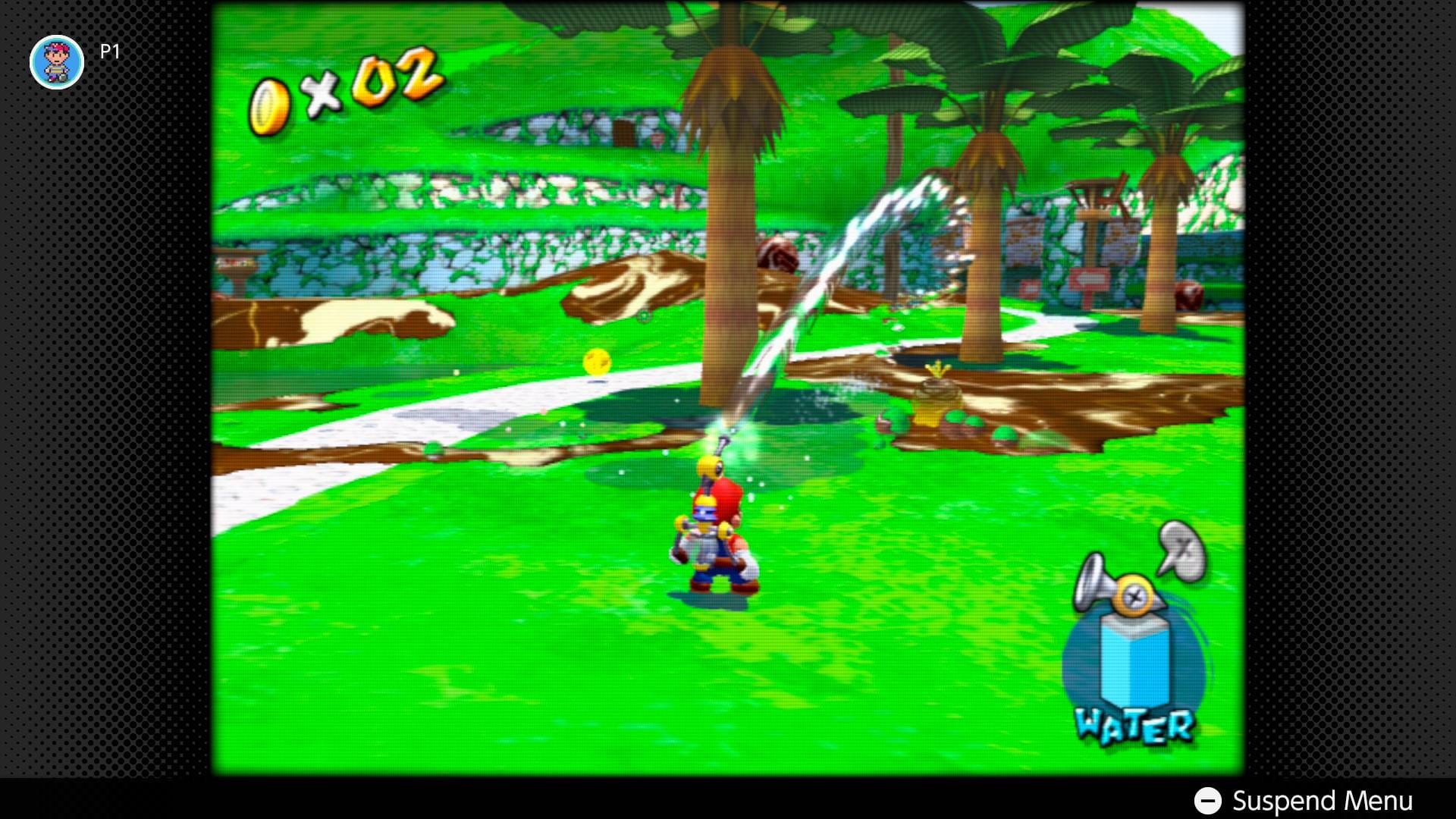
This is yet another elaborate metaphor on how growing up sharpens our critical eye, yielding imperfections that may’ve as well been invisible at a younger age—the same sobering realization I had with another childhood favorite in The Legend of Zelda: The Wind Waker. The honeymoon period has long since worn off, rendering the slimey goop staining Isle Delfino’s waters a figurative statement—Super Mario Sunshine is a mess, aiming for the crown of the sloppiest product under Nintendo’s core banner. This isn’t an observation born out of ill-will as it is one of fascination: Sunshine treads water within an egregious tide of highs and lows, buoyed by Olympic-level acrobatics and festive theming only to get dunked time and again by piss-poor design and cloud cuckooland concepts. The moment a Nintendo-patented flash of brilliance floats to the surface, it’s cruelly drowned by amateur-hour design uncharacteristic for a studio known for their gold-standard polish.
For whatever culprit we can point fingers at—be it an incomplete product rushed out for a summer release or F.L.U.D.D simply being too esoteric of a concept to properly gel together—the result is the same: a fever dream of master strokes and half-baked concepts, clumped together into this big, blotchy ball of neutrality that I struggle to define, let alone know how to feel about. But the whispers of those summer days continue to entice me, compelling me to pick it apart; decipher the beating, shining heart within. And pick it apart I shall.
Super Mario Sunshine is a game, obviously, about water. The F.L.U.D.D jetpack is a vehicle for new mechanics much as it is a useful tool for depth perception: a common deterrent to 3D platforming. Observe how the Hover Nozzle aids the player in direction: by propelling Mario in mid-air, players safely navigate themselves in mid-air from platform to platform by paying heed to their surroundings. It’s a crutch, but it’s a satisfying one, rewarding the player for successfully gauging distance.
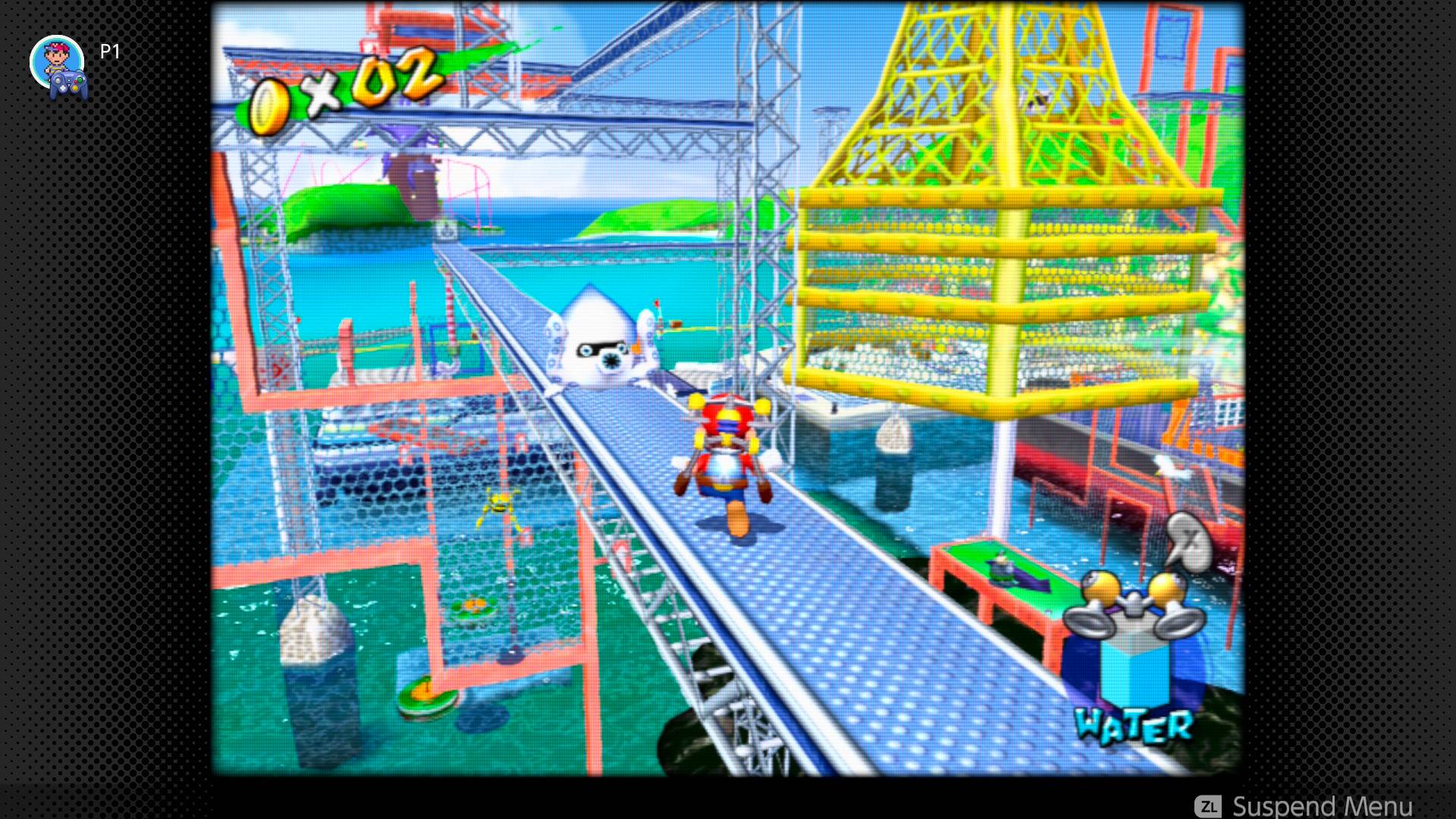
It’s thanks to F.L.U.D.D. that Sunshine best works as a vertical exercise in scale—the construction zones of Ricco Harbor, for instance, compel player experimentation: should we simply play it safe and run along the Blooper-riddled girders as intended, or can we risk it all by blasting off with the Rocket Nozzle and skipping ahead? Meanwhile, Noki Bay’s compact size masks its density: the interactive cliffside paintings invite players to spray every which way with F.L.U.D.D, goading us into a network of caves as we traipse on webs of wires. These circus acts get right to the id of Mario: conquering dizzying heights by mastering motion and momentum.
The physics are Sunshine’s buoyed core—a level of control rendering it neck-and-neck with Super Mario 64 and Super Mario Odyssey as the best-controlling 3D Mario. Mario is a perpetual ball of energy, full of snappy movements and satisfying feedback. The innate rhythm of Mario’s dive-hop has him vault around like a rabbit, quickly rendering it our go-to movement option. Wire-crossing gives way to elasticity, compelling us to bounce again and again to score more air time. Water spraying is a key tool for discovering secrets, we’re naturally left shooting everything in sight—graffiti, birds, plants, whatever—for any sign of feedback.
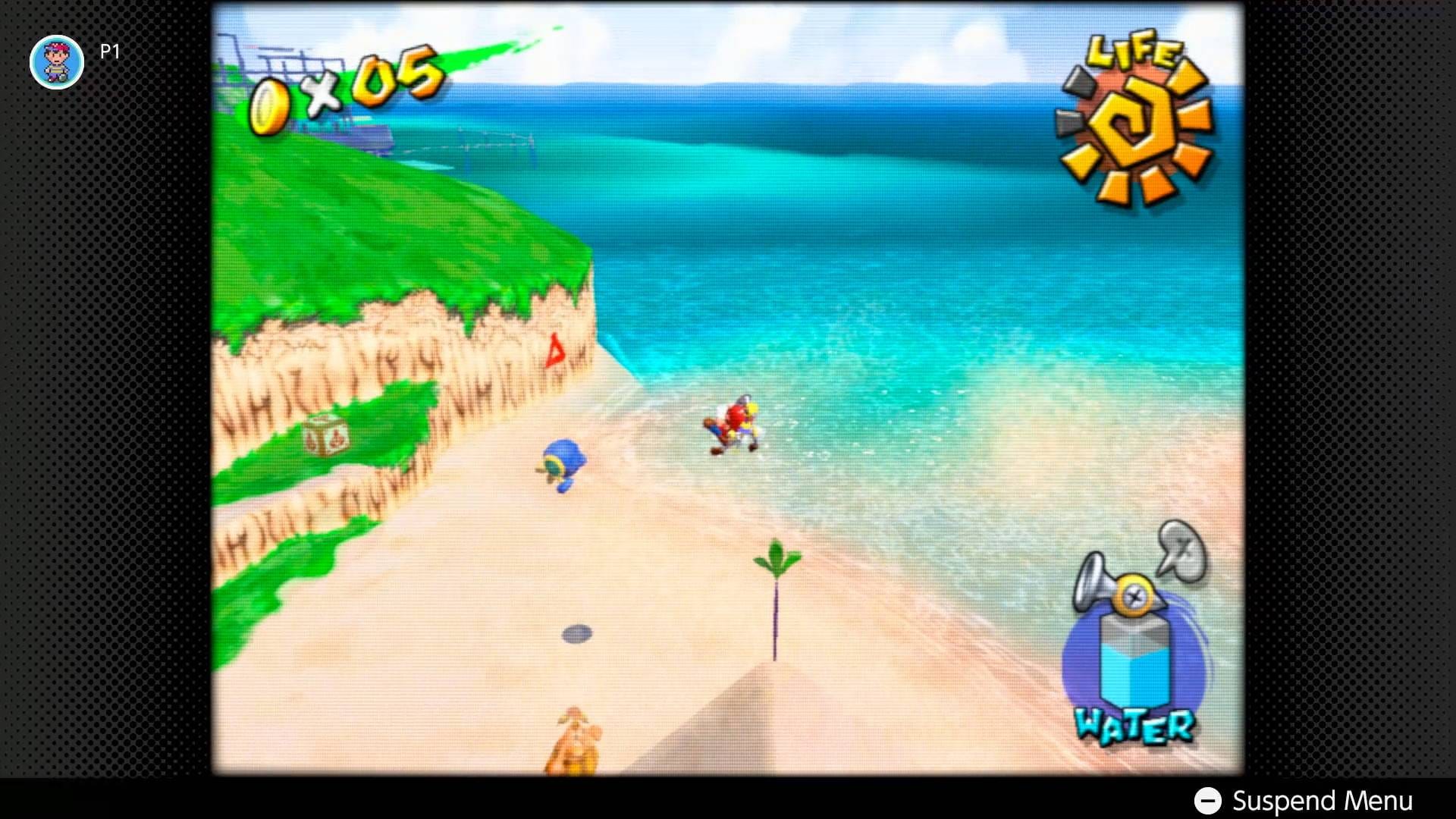
Through all this, Isle Delfino becomes a tropical jungle gym, inviting us to play with cause-and-effect. Spraying water is fun, so naturally it’d be just as fun spraying hapless islanders (Toadsworth’s “geddemblahblahblahblah!” lives rent-free in my head to this day). We let Cataquacks catch us on Gelato Beach and spray the coast’s Dune Buds just so they can toss us up, up and away. The Jet Nozzle has us jetski around the waters for the heck of it. Even messing around with the health-sapping slime is fun, with Mario slipping and sliding every which way with a satisfying gurgle.
Sunshine’s commitment to the tropical theme positions this sense of fun first and foremost. Isle Delfino’s many resorts establish a sense of place, right down to spotting other levels in the far-off distance. The soundscape is a delightful mix of bossa nova, steel drums, water-guzzling, and a symphony of footsteps Kotaku already waxed poetics about. The water still looks incredible some twenty-plus years later, applying some clever texture mixing to craft a timeless mass of shimmering, gleaming blue. Charles Martinet’s unbridled glee as Mario remains his very best performance in the role—his scream of “MAAAAAAAMA!!!” when scalded by lava never not sending me into hysterics.
When invoking the freedom of Super Mario 64, it is Nintendo’s summer hakoniwa; a carefree day at the beach, inviting leisure however we wish. It’s when the design philosophies are put into praxis, alas, that Sunshine falls apart.
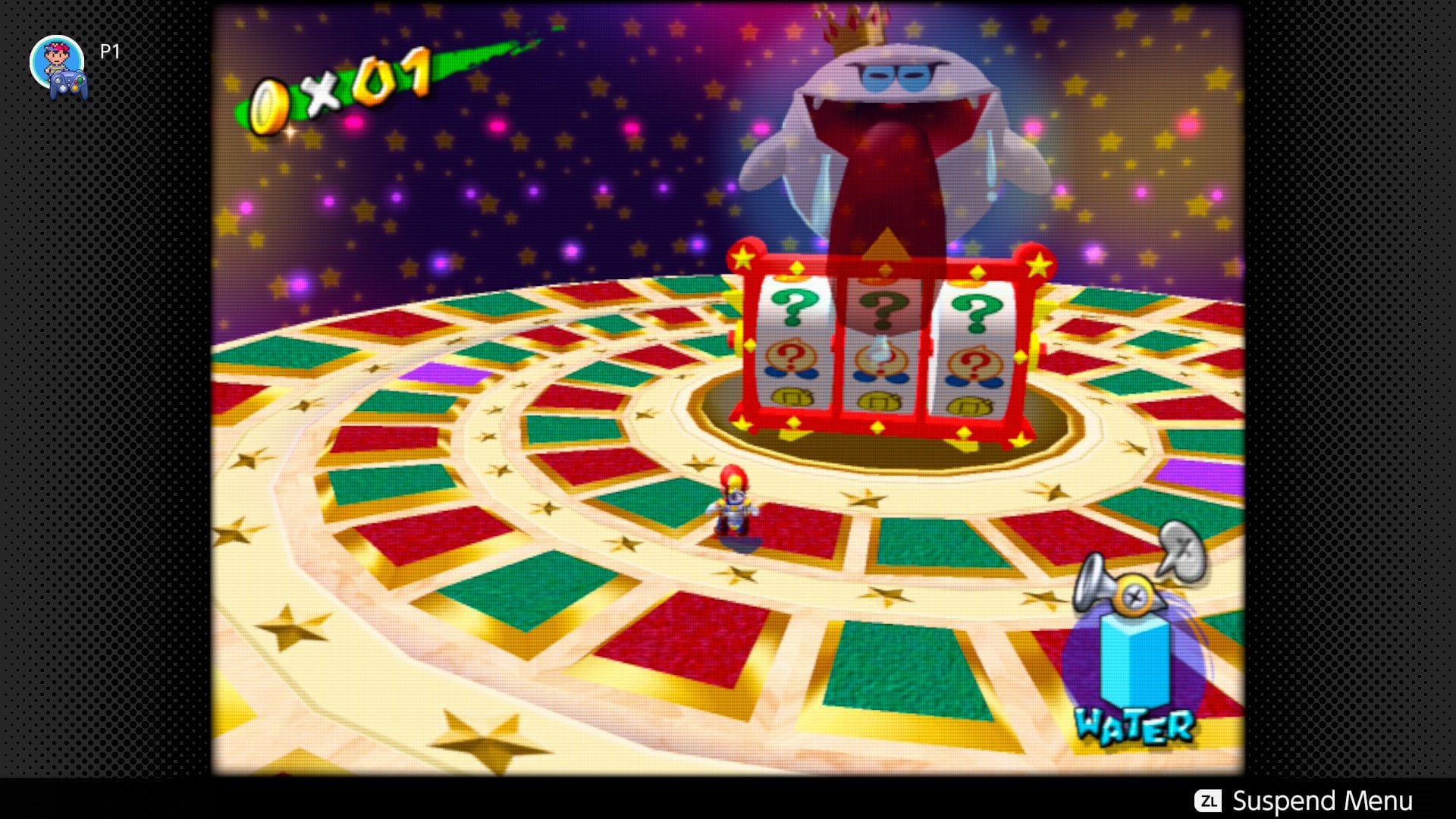
Putting it this way: it’s rare that Sunshine remembers Mario’s shiny new toy is best in service to his trademark gymnastics, instead often chasing arbitrary gimmicks in clean-up, herding, navigation, and what-have-you. This isn’t necessarily terrible in itself—creativity in the pursuit of variety should be commended—yet this imbalance is buffeted by a shocking lack of polish and unintuitive design. Herded watermelons slip away and break apart no matter the amount of water pressure. Makeshift vehicles crash and sink thanks to unclear direction. The (thankfully optional) pachinko bonus level is designed squarely for those who hate life, helplessly rocketing us into a busted machine with momentum beyond our control, often sending Mario screaming into the wild blue yonder.
It’s glitchy, it’s unpolished, it’s, at times, approaching interactive torture. It’s one thing to crank up difficulty to counter-balance F.L.U.D.D’s crutch—I’ll defend the infamous Sandbird on the grounds that there’s telegraphed ways to bypass all the tricky tilting (psst, look for the clouds!). But such signposting is oft-neglected in Sunshine’s madcap rush to prove the value of its exciting new gimmick. Mario games take great care in offering readable intuition to ease players into their running marathons—bottomless pits are preceded by ditches, whereas enemy weaknesses are discernable by their visual language—and while Sunshine doesn’t completely forget this all-important creed, it’s rendered far more frustrating than necessary in this pursuit for innovation.
It’s the absence of quality checks that further stymie the player; the camera, for one. Mario 64, being the first big foray in 3D movement, made some natural mistakes with keeping focus on the player, so Sunshine tries fixing this by a) having a porthole zoom in on Mario whenever he’s concealed and b) displaying Mario as a silhouette whenever that happens. Putting aside how the former almost never works when it’s supposed to, the camera still malfunctions at inopportune moments, flip-flopping behind walls and delicate bouts of platforming as if to purposely mess with poor Mario. (Pinna Park’s metal screen climb, I am looking in your general direction.)
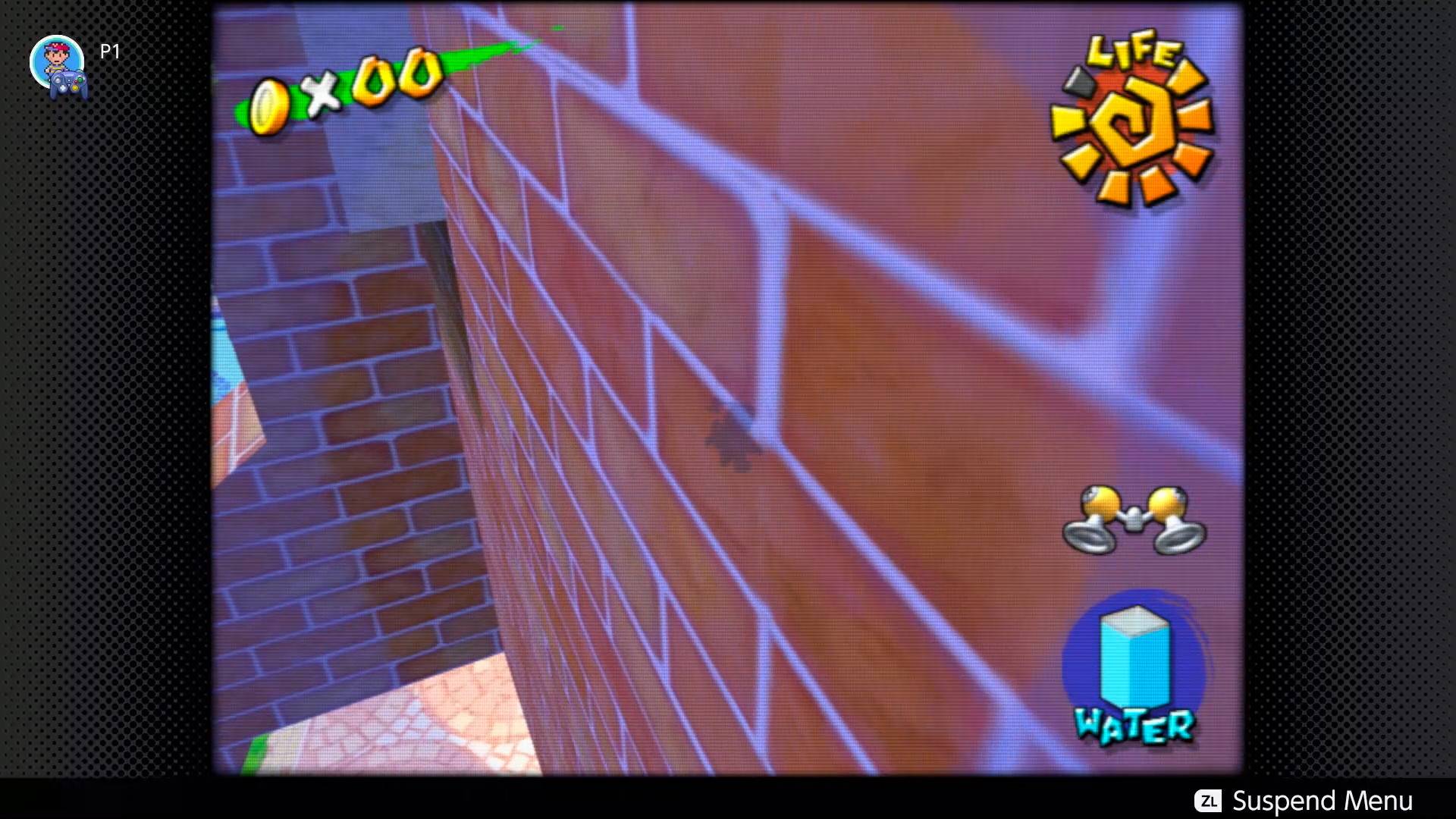
Really, there’s all sorts of bizarre design mishaps like this. I’d elaborate, but I’ll let the following examples from my Bluesky media thread do the talking for me.
When Sunshine isn’t confounding, it’s padded: each course’s mandated Shadow Mario sequences follow nearly the same script of pursuit. The early game recycles the same Piranha Plant mini-boss that, for whatever reason, doesn’t even attack. Optional Shine Sprites are oft-relegated to pixel hunts, not the least in the notorious Blue Coin hunt: over 240 in all, rewarding one Shine for every ten coins (That makes 24, if you’re keeping count). They are the most blatant sign of the game’s rushed development: erratically strewn about in their nichey hidey-holes, segregated into individual episodes and bonus levels with little rhyme nor reason, and punctuated with the most underwhelming 100% reward of any Nintendo game. Only a madman with no life would dare collect them all, and as I happened to be that madman, do heed my warning well: don’t do it. That photograph ain’t worth it.
While certainly a snapshot of the surplus that once bloated 3D platforming (hello, Donkey Kong 64!), Sunshine’s sloppiness presents an interesting stage in the evolution of 3D Mario. The world layouts are more active than Super Mario 64’s singular objectives, but dispenses with freeform progression in favor of individualized episodes; in other words, aside from the hidden Sprites, you won’t be going off the beaten path to nab any glittering star of your choosing. Again, not necessarily bad, but this proceduralized direction means you’re left with a surplus of excess space, populated with extraneous (if not distracting) platforming setpieces and irrelevant NPCs (more on that later). Compare and contrast with future games in the star-collecting model: the Galaxy titles condense its objectives into more more straight-forward affairs, whereas Odyssey accumulates everything into one big scavenger hunt—not letting a single inch of space go wasted in its sandboxes.
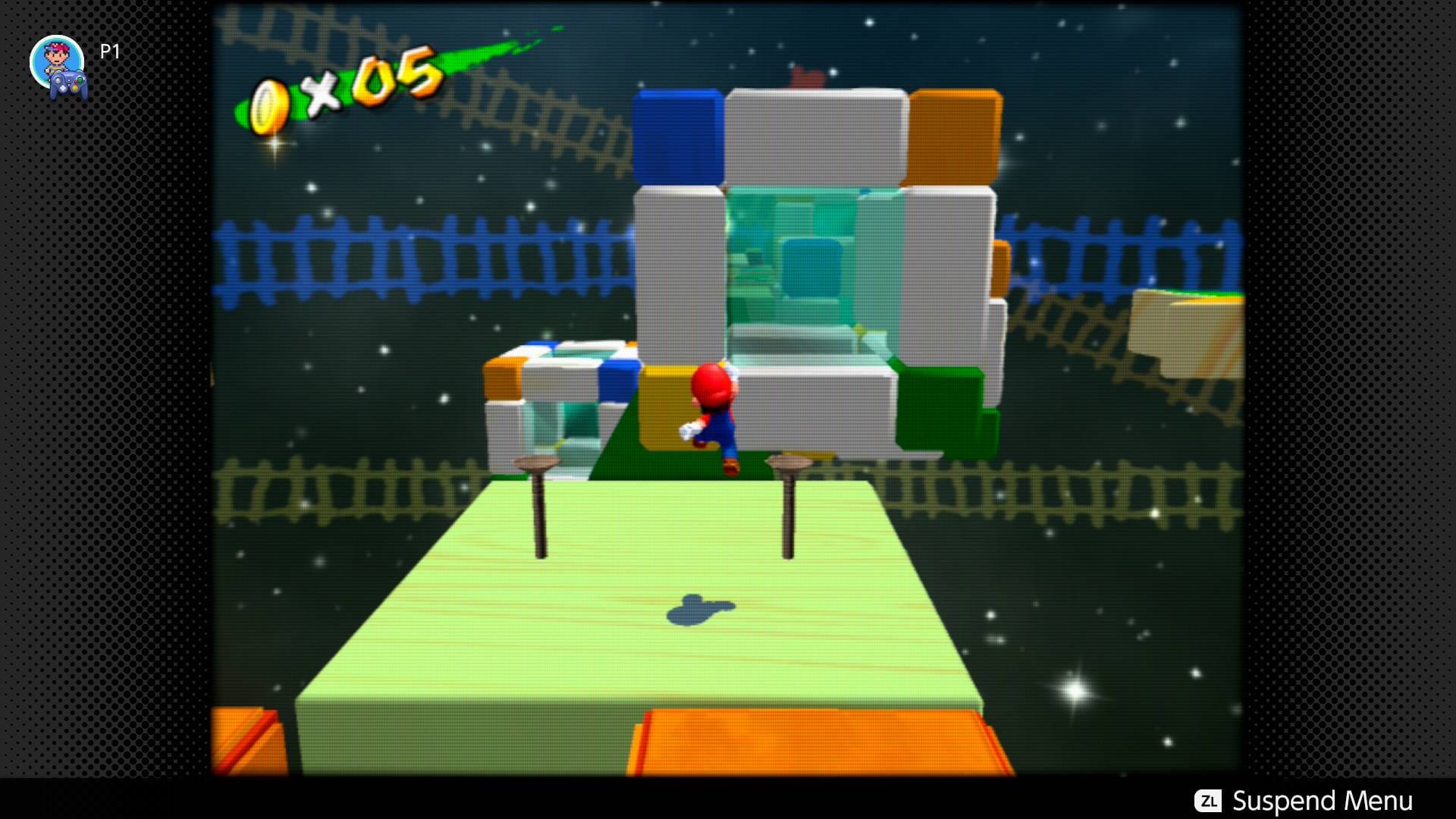
The oft-highlighted 3D obstacle course stages, wherein Mario’s stripped of his jetpack and relies only on pure platforming grit, are another perfect example. Sunshine’s sense of setting frames them as wormholes to other dimensions, but its emphasis on procedure establishes extra busywork in reaching their respective gateways—a process the likes of Super Mario 3D Land/3D World would eventually dispense with and get right to the meat of context-less platforming. Whatever model works for you, they’re hailed as Sunshine’s strongest segments for a reason: they’re certainly frustrating in ways 2D Mario had you throwing controllers, but rarely is that due to broken design; indeed, they are nothing but pure grit, classic platforming operating to Mario’s classic rules of momentum, distance, height, and readability—all dancing to the classic Mario theme by way of Capella.
Sunshine is, then, at a stage of awkward adolescence, haphazardly feeling out this ever-evolving realm of 3D. The F.L.U.D.D jetpack is interesting, but is ultimately too opaque to function and engage at large. Prototypes of a more promising title are left buried beneath its excess, waiting for future entries to iterate and improve upon as their foundational core. Stuck in-between are flashes of brilliance, the game’s thesis shining forth before being clouded once more by poor design.
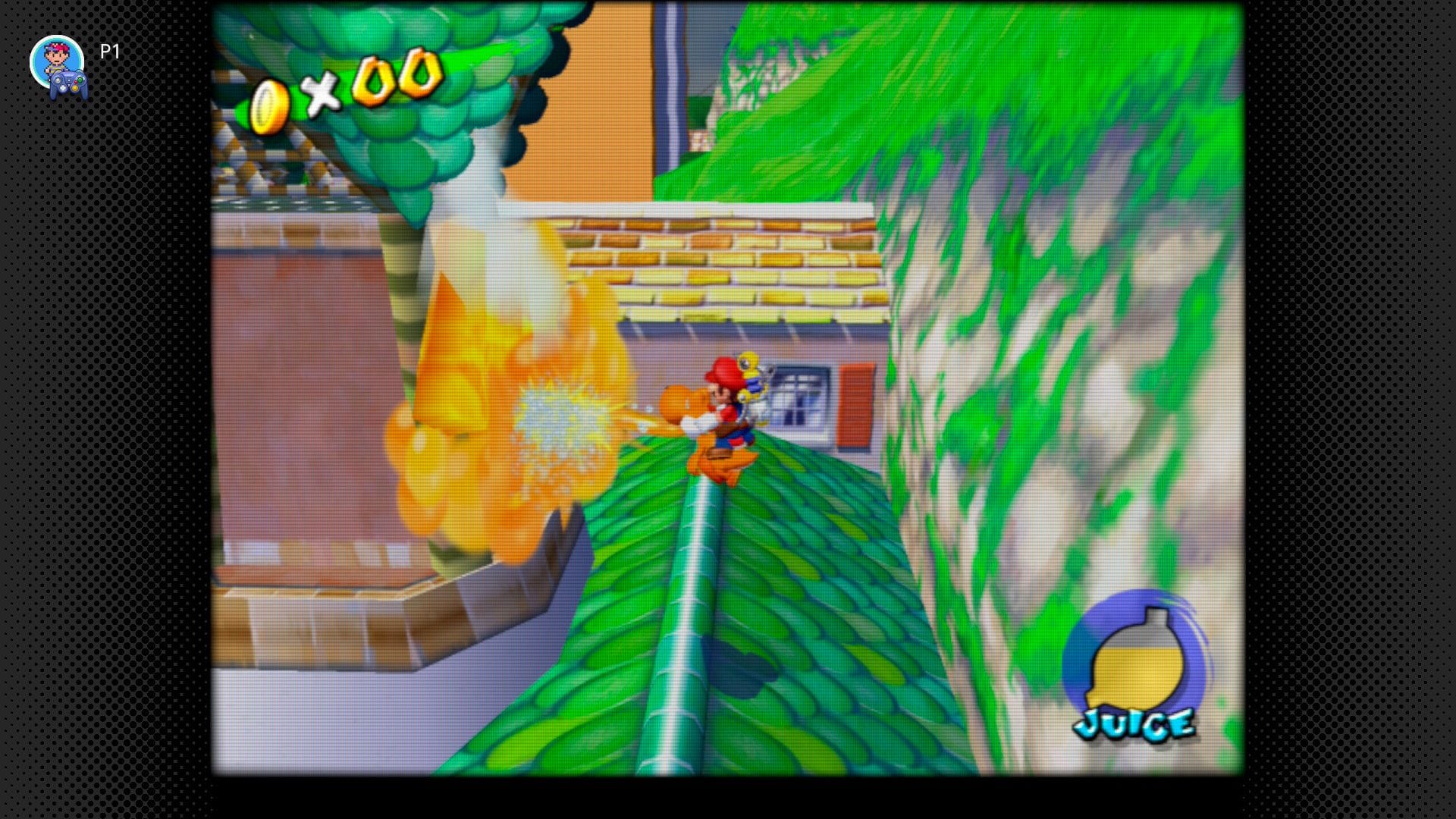
It’s this lack of direction that defines this adolescence, and I refer not to Sunshine’s acne in glitchy jank: it commits to this desperation, carelessly tossing whatever concept’ll stick. What ensues are proverbial non-sequiturs; hats on hats that defy even Mario’s typical Alice in Wonderland logic. It’s funny, perhaps, that the Pianta villagers vent their frustrations by randomly tossing Mario around—it’s not so funny when a bonus level centers around these undependable mood swings, where it’s practically impossible to gauge throwing distance. The prospect of introducing Yoshi in 3D is exciting; clumsily grafting the game’s “spray” mechanic onto the lovable dinosaur is decidedly not, particularly when it involves barfing fruit juice to melt molten cheese. Who asked for this? Why am I doing this? (Actually, while I’m at it, why does he melt in water? Why is green Yoshi absent? Look, I like to think I’m a big boy whose grown past wanting their favorite colored Tootsie Roll Pop, but talk about false advertising, Nintendo.)
Call it rushed development, call it misaligned priorities, the end result is the same: the game rushes to finish a half-written essay ten minutes before class, leaving us with a wet fart of a volcano-themed climax. What begins as a familiar gauntlet of spikes and fire traps randomly devolves into a boat ride guided by F.L.U.D.D’s water sprays. Running on pure evil, it pays no heed to the concept of direction, dead-set only in crashing into the lava-riddled valley of pillars. Whatever hellish metaphors apply, it does little to salvage fears that the game will recover by its end—a hope immediately deflated by the sinking realization that, yes, the final boss fight is fighting Bowser in a hot tub.
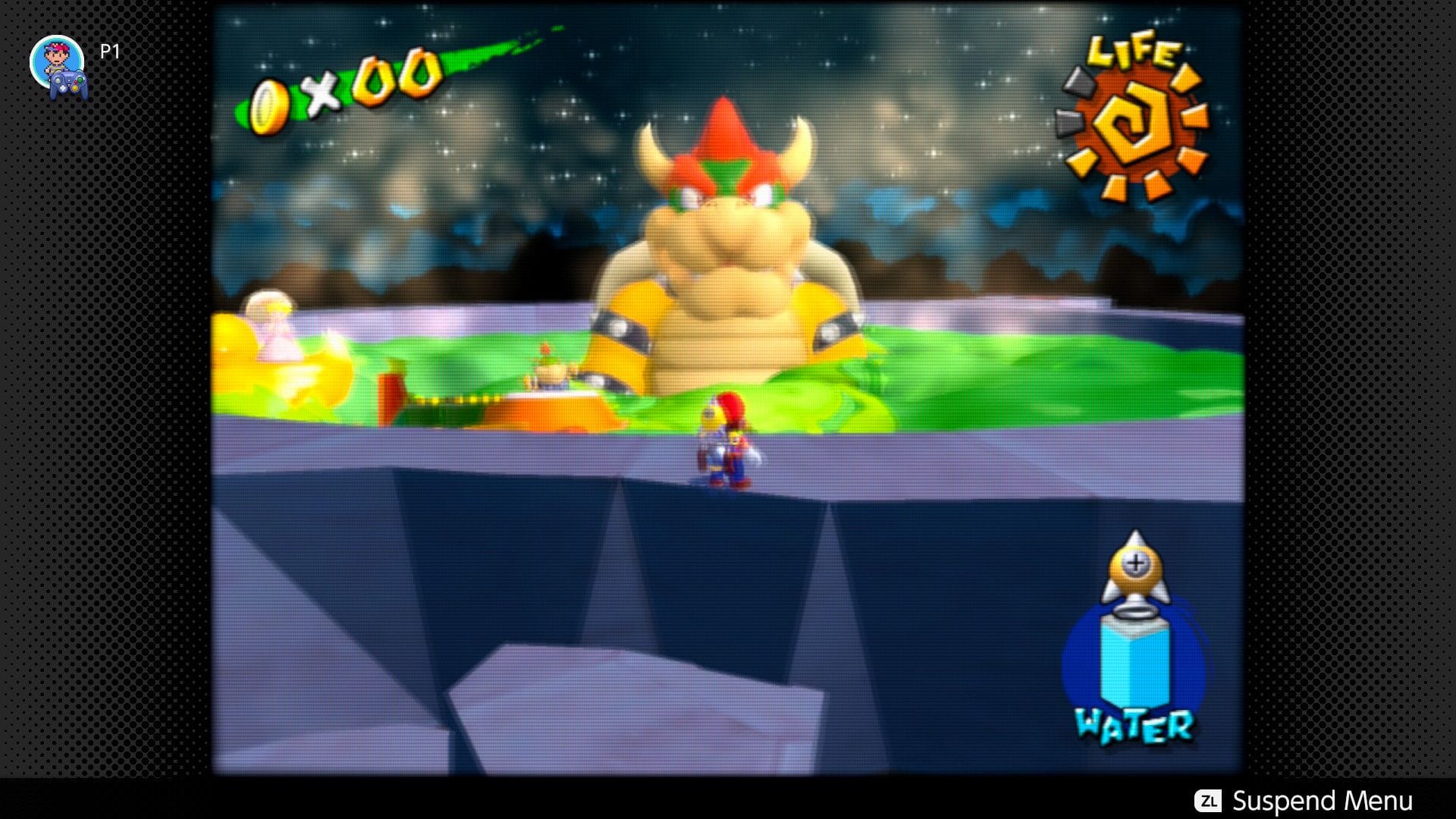
Context is a difficult needle for Mario to thread—it is typically only a pretext for their setting, correctly prioritizing the games’ platforming prowess. Spin-offs earn the meat of its contextualizing: the courses of Mario Kart showcases how the topsy-turvy world works, whereas Mario RPGs go to town with self-deprecating dialogue and references galore to illustrate lived-in worlds as necessary. I enjoy fun scenarios in service to inspired gameplay; I don’t care about learning the banal minutiae of Isle Delfino’s busybody residents, who want to gab about trivial nonsense one typically engages in an overheated dentist waiting room in the middle of July. (Again, another point of evolution: Odyssey and the Galaxy games would wisely offer a balance of text prompts and “pop-up” word bubbles—typically offloading peripheral comments to the latter.)
Hence with my bewilderment at these cutscenes: Sunshine is more cinematic than your typical 3D Mario with its full voice-acting and elaborate set-up, yet it’s born out of a misguided necessity (“games are about cinematics now! We need to do that!”) than any actual passion dictating it as such, and that’s how we’re left with, frankly, abominable work. The unchecked voice direction renders Princess Peach high as a kite (an impression cemented with her perpetual thousand-yard stare), the inglorious debut of Bowser Jr. is marred by poor lip-syncing, and the series’ fairy tale whimsy is disposed in favor of Saturday morning cartoon court drama, as if we’re supposed to take even an ounce of it seriously.
It is second-hand embarrassment condensed into audiovisual form: a reaction compounded by poor Switch 2 presentation. Eagle-eyed readers may’ve caught on, but it was these cutscenes that finally—finally! —forced me to use the CRT filter for GameCube. Alas, there was only so much it could do: look, my dear readers—look upon the horrors of the grain imposed upon this unholy compression, and tremble.
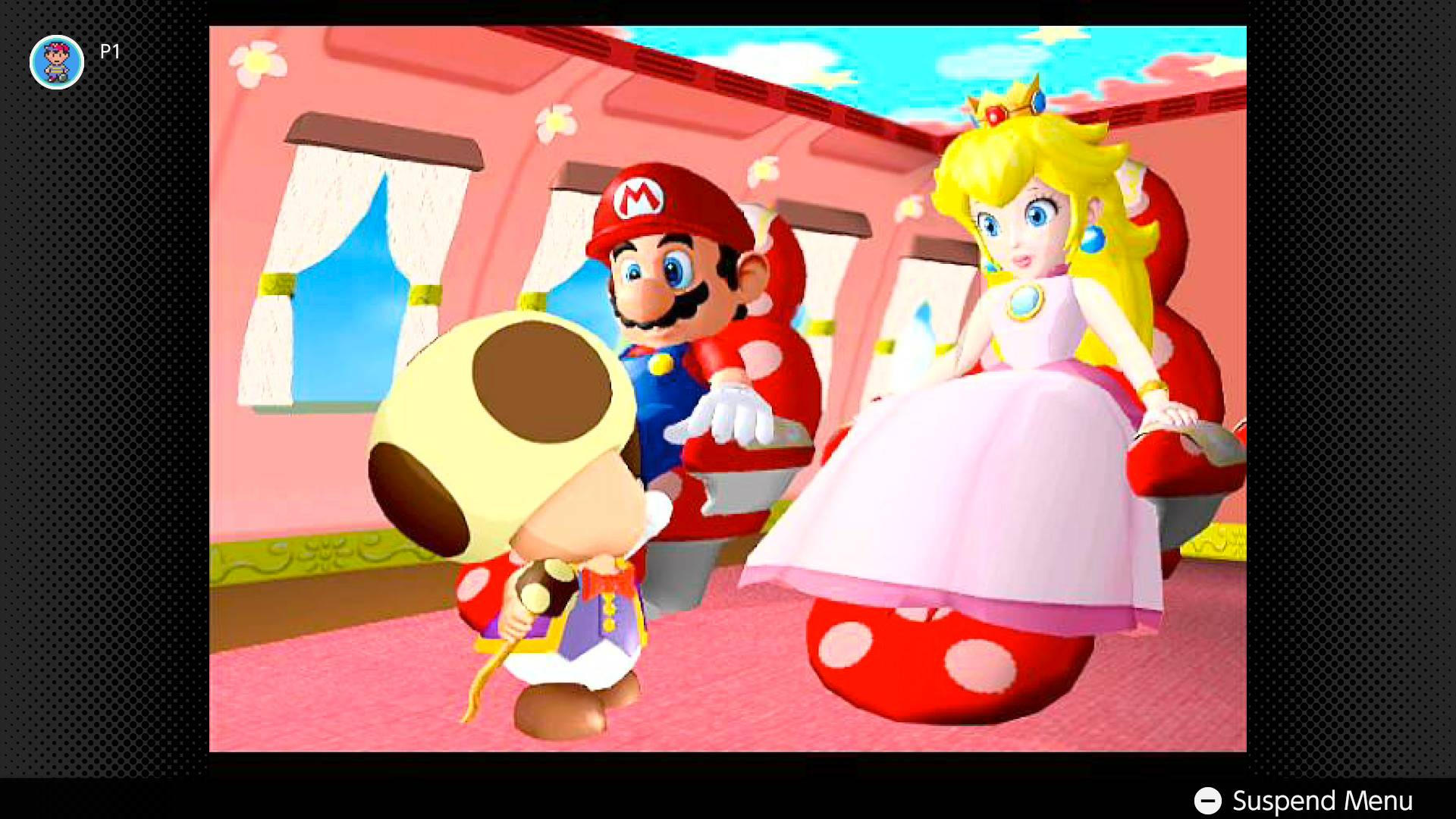
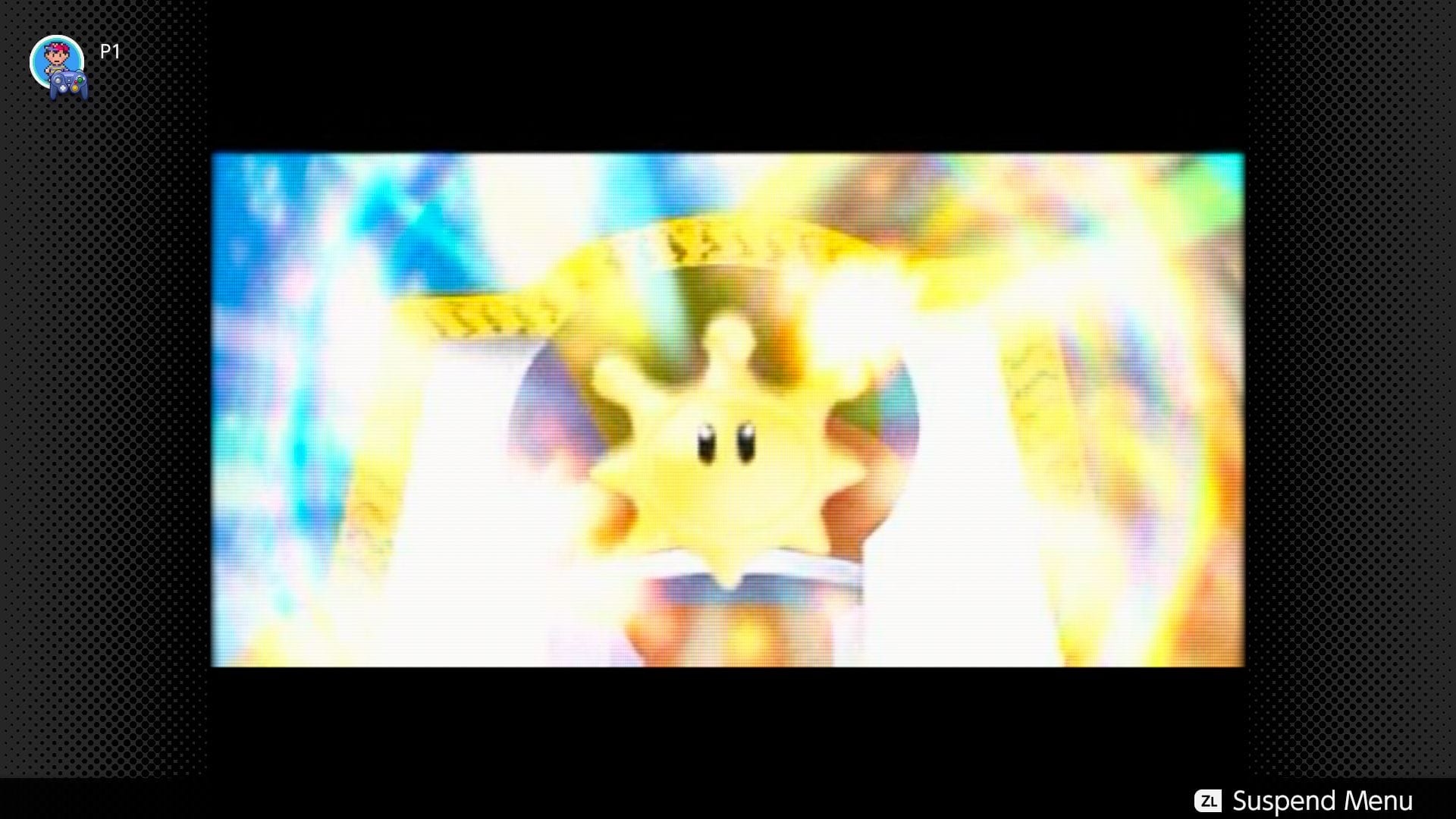
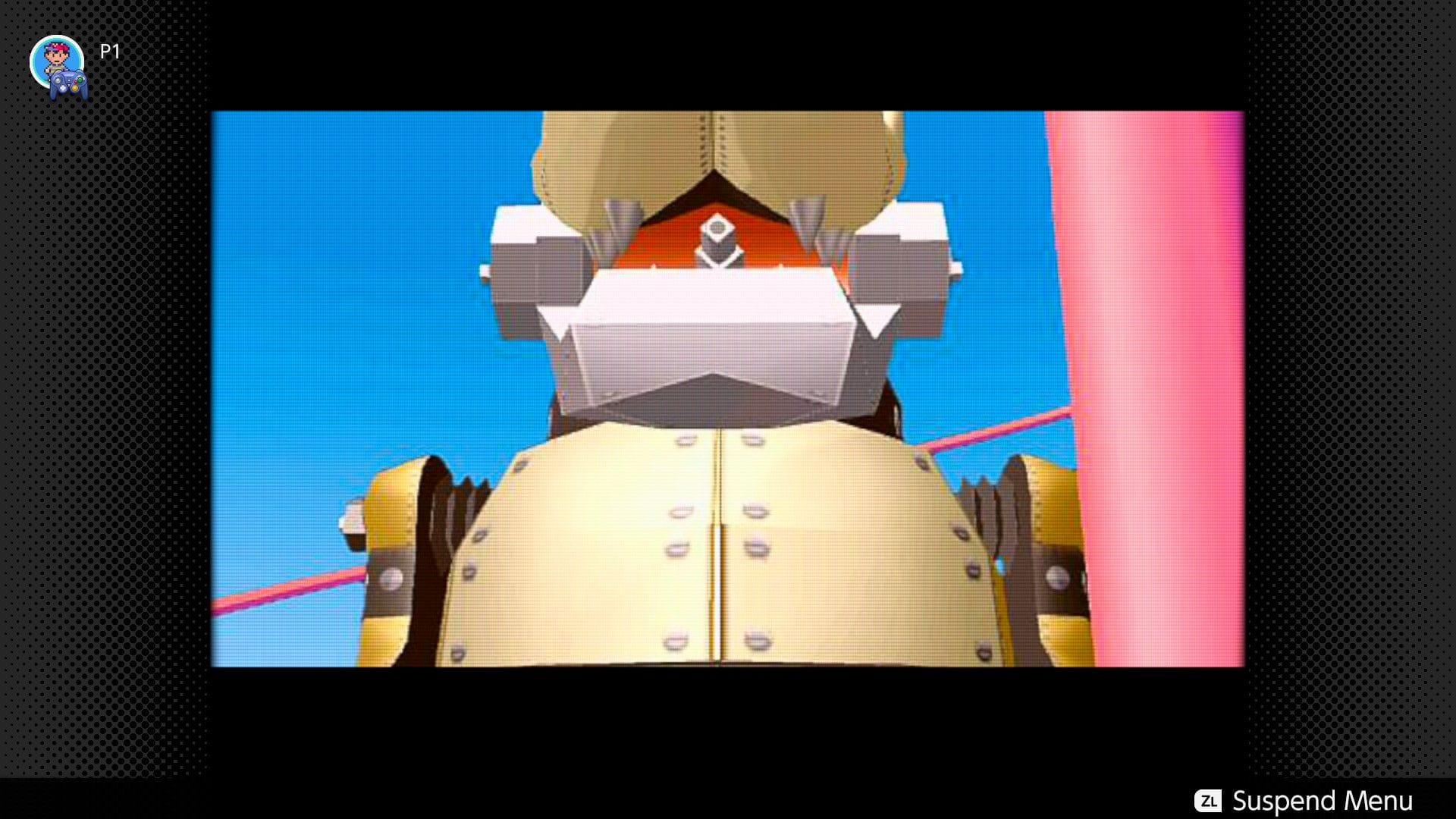
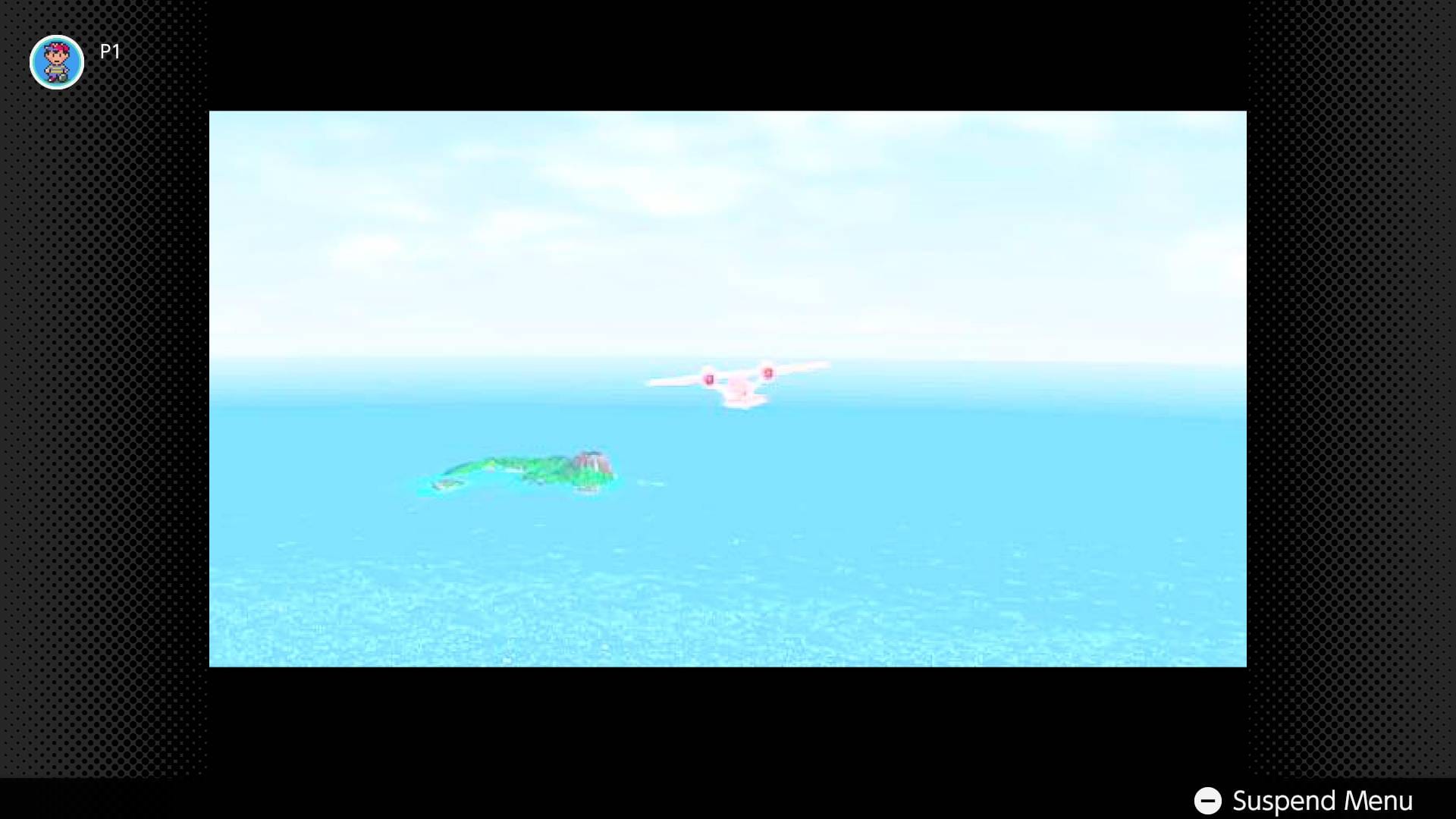
(By the way, here's a torturous game to play: can you spot which one shots have the filter or not? Careful not to strain your eyes.)
I could go on. How, like Wind Waker, the question’s raised as to whether this was the right concept for the GameCube pipeline. (Releasing a game called “Super Mario Sunshine” right when the gaming public’s dismissing Nintendo for being “too kiddie?” And this on top of the equally-embarrassing commercial they had to pull? Hmm.) How it’s representative of GameCube’s unfocused direction. How the dubious quality and half-hearted priorities miss what makes Mario “Mario”.
But truth be told, I’d be punching the game while it’s down, because Nintendo Classics is not the ideal method to play Super Mario Sunshine.
At first glance, it may seem beneficial: save states prove themselves lifesavers, rendering the game’s more irritating segments into tolerable affairs. (No, really, you’ll thank them more than once.) Yet the moment it’s placed in your hands does the problems become evident—my muscle memory’s immediately thrown off by Switch 2’s button placement, with my fingers braiding into pretzels figuring out which button to spray and which one changes nozzles. Sunshine’s innate inverted camera ends up the stumbling block: no matter how I patch things up, I can’t keep perspective on my vacationing plumber, and even the act of cleaning becomes an impenetrable task.
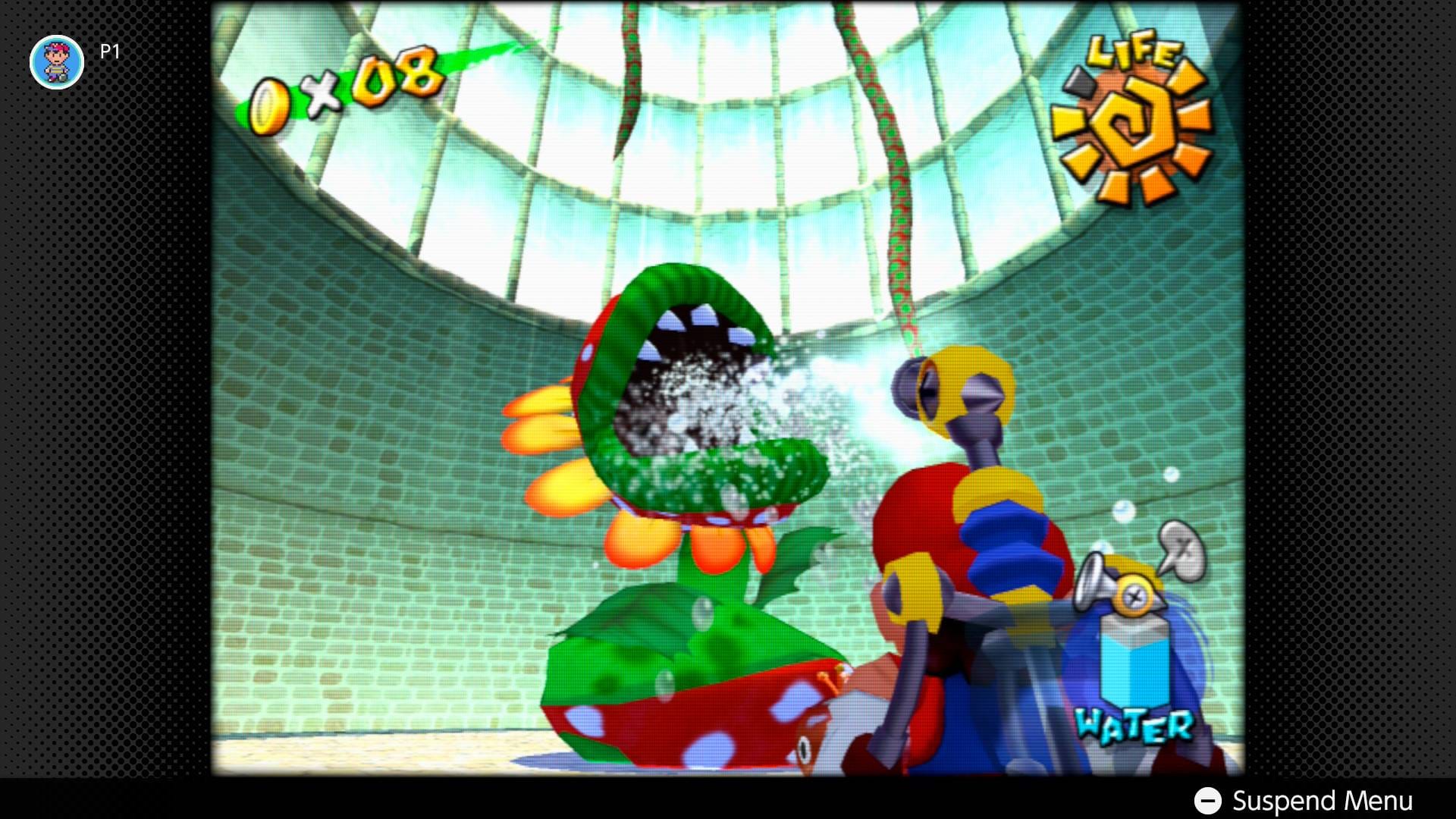
It’s funny I complain about this, because I don’t remember having such struggles with the game’s inclusion in 3D All-Stars: an emulated collection I played entirely in handheld and well before the control patches offered much-needed options. Was I distracted by the HD clean-up? Perhaps—not everything’s perfect (while the cutscene grain is absent, they’re stretched out to fit the widescreen, and the AI upscaling introduces the occasional blemish), but there’s no bad first impression in grainy cutscenes that tripped me up.
Whatever the case, in the end, I’m left scrambling for my NSO GameCube controller. Problem solved; everything feels right.
Or does it? I mentioned the dive hop earlier—right away, I know something’s off. It certainly still works, speedily bouncing along the plazas and beaches. But the rhythm is all wrong; the cadence beneath the drumming of my thumb missing its punch.
“Input lag,” I deduce. Nothing so bad as to outright ruin the controls—not to the extent of F-Zero GX, at least—but I know it’s worth a deeper look. Days later, I pop in my GameCube disc and immediately get to hopping. The rhythm comes back to me: snappy, precise, and fun. Just as I remember.
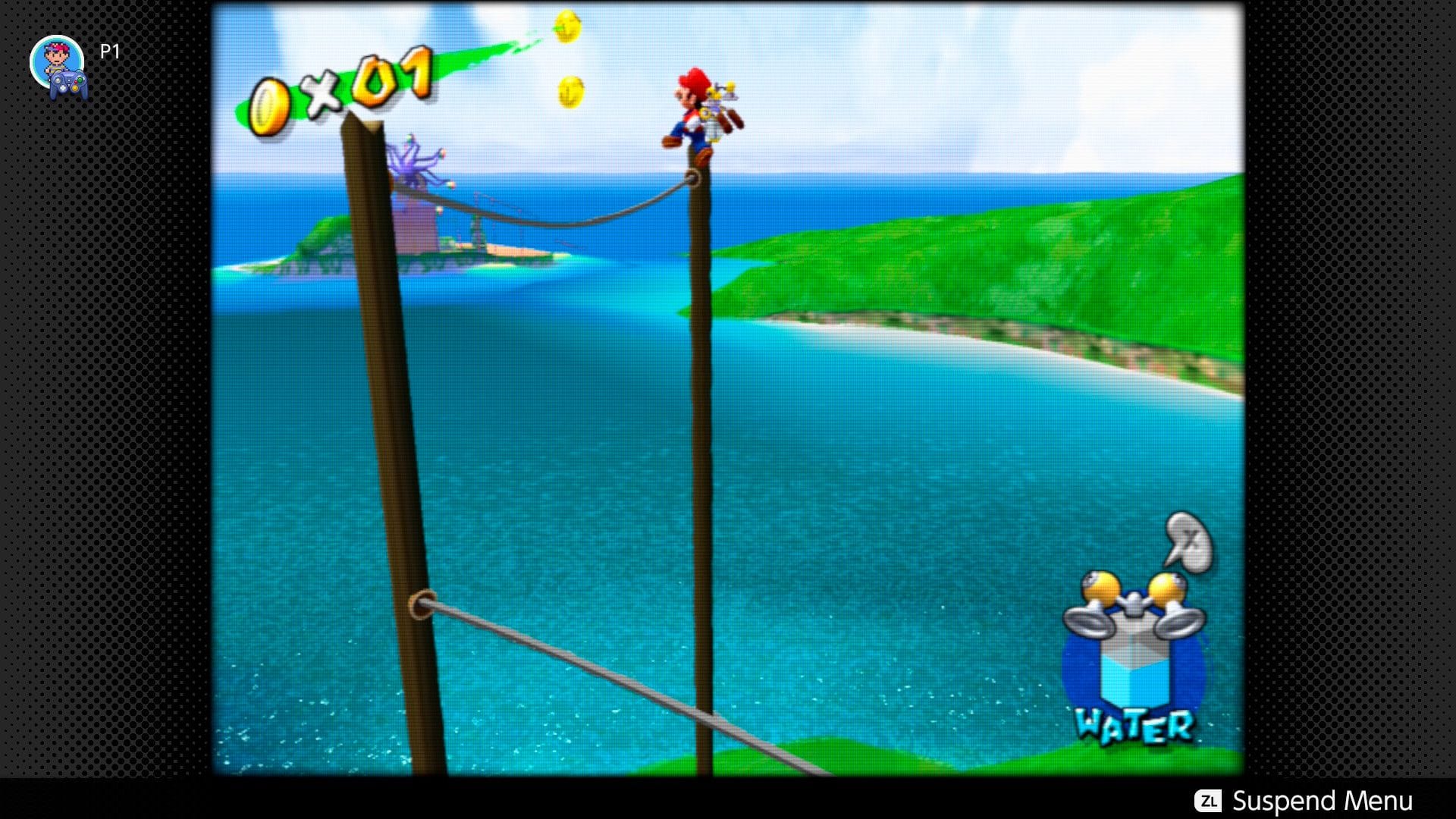
Too fun, I find. Suddenly, I find myself on those buildings again, absent-mindedly leaping from rooftop to rooftop. I go on another F.L.U.D.D-filled rampage, splashing innocent civilians and leapfrogging from head to head. I teleport down to Gelato Beach and race to those tightropes, springing up and down. Amidst my trampolining do I eye the sandy expanses stretched out before me, and my goal is set; away I go, diving miles down into the beach below. I bellyslide painlessly across the shore, coming down from the high. I go up and do it again.
It’s an uncontested thrill, one not repeated again in Mario until Odyssey had me drive off New Donk City’s city hall with a motorbike. Spiritual successor Donkey Kong Bananza had recently done much the same with a set-up involving a giant watermelon. These daredevil stunts allured me again and again, inviting me off the beaten path into the ultimate expression of freedom. Nintendo’s modern hakoniwa gardens have bloomed from the lessons of the past.
Were my negative feelings on Sunshine the consequence of poor emulation, or is there nuance in appreciating the benefits of a flawed experiment? Being in the business of analyzing how media grows up with us, it’s said that varying circumstances can feed into our individual perceptions at any time—a bad mood can spoil a dish and all that. I’m not so quick to dismiss my criticisms, yet amidst my jumbled emotions, I remember doing this very same stunt as a lad and reveling in the awe of next-gen gaming. It took some time, but that moment’s been carefully preserved for the future—in products far more successful, more complementary in spontaneous player expressions.
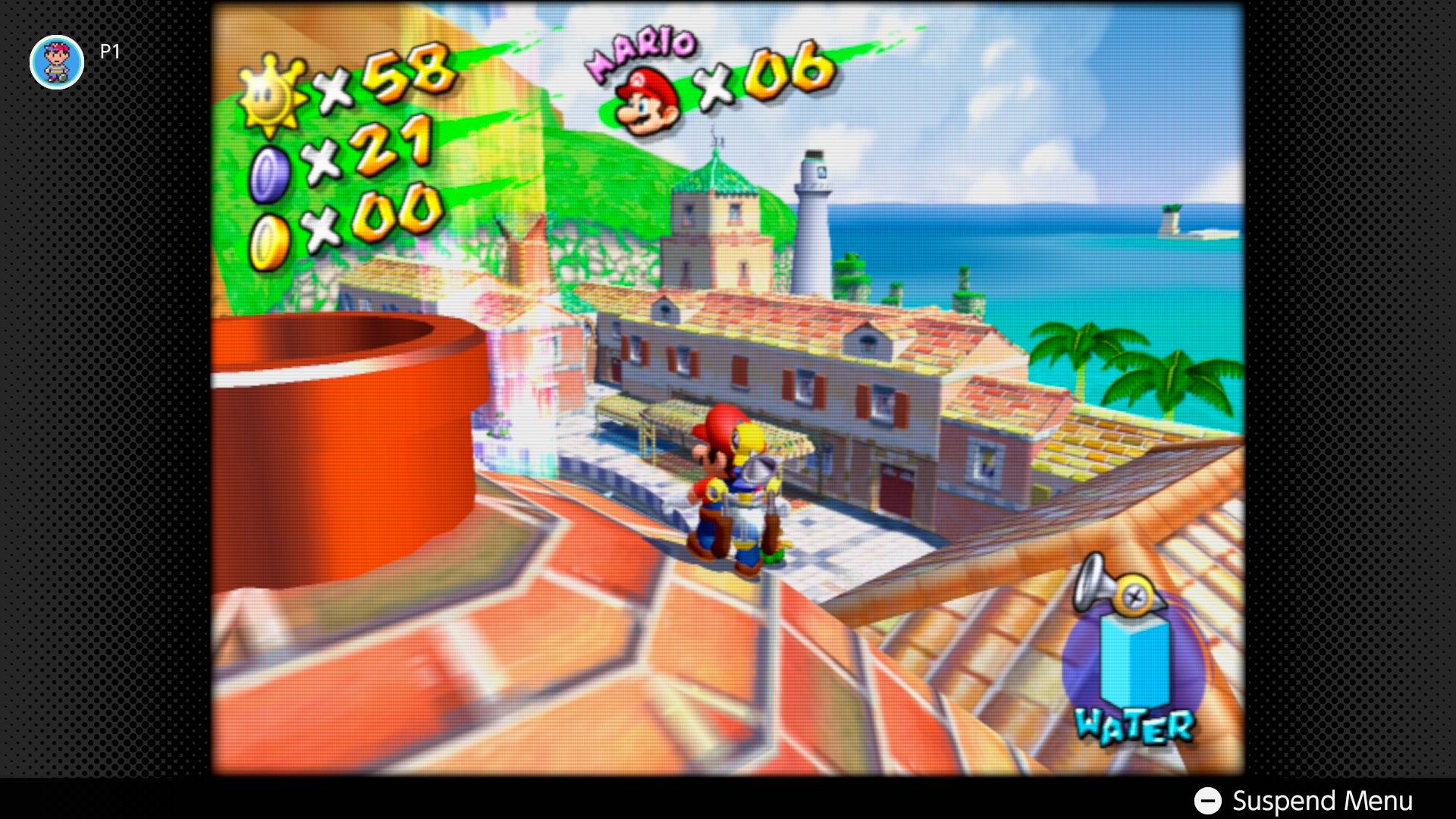
There may come another time where I’ll chase that day under the sun. But for now, Super Mario Sunshine is nothing more than a summer memory of my youth—and I’m content shelving it in a box, knowing its best ideas have been iterated elsewhere.