Have you ever dreamed of returning to the simpler days of 2011? Things were brighter then, games were simpler. In World Order you do just that, to dabble in the exciting realm of international politics; isn’t that what you dreamed of? World Order is a game for 1-4 players brought to you by the makers of Hegemony, in which every player will take the role of one of four international superpowers. You will see the USA, EU, China, and The Russian Federation duke it out to have the most influence in the world before the game ends.
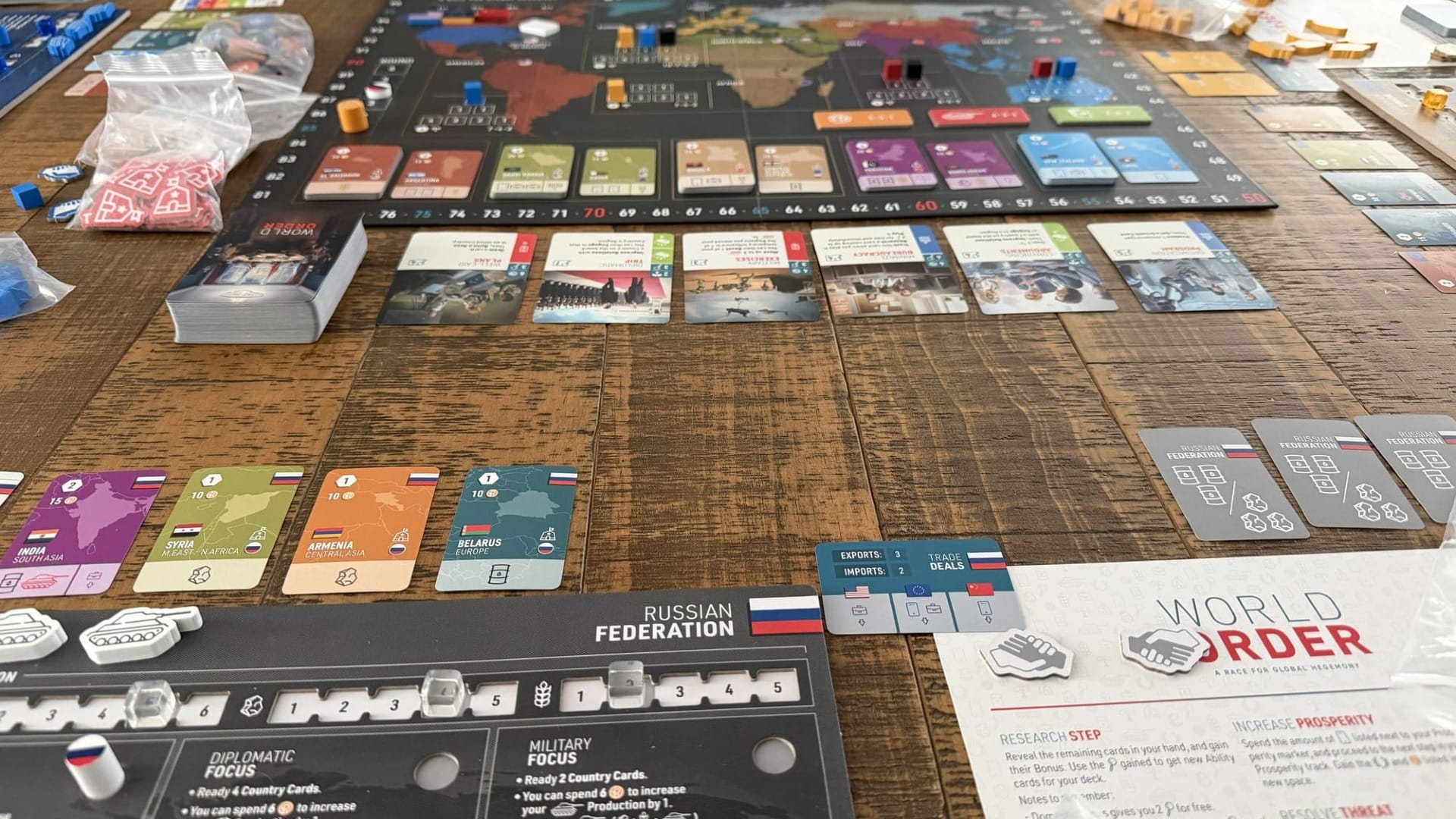
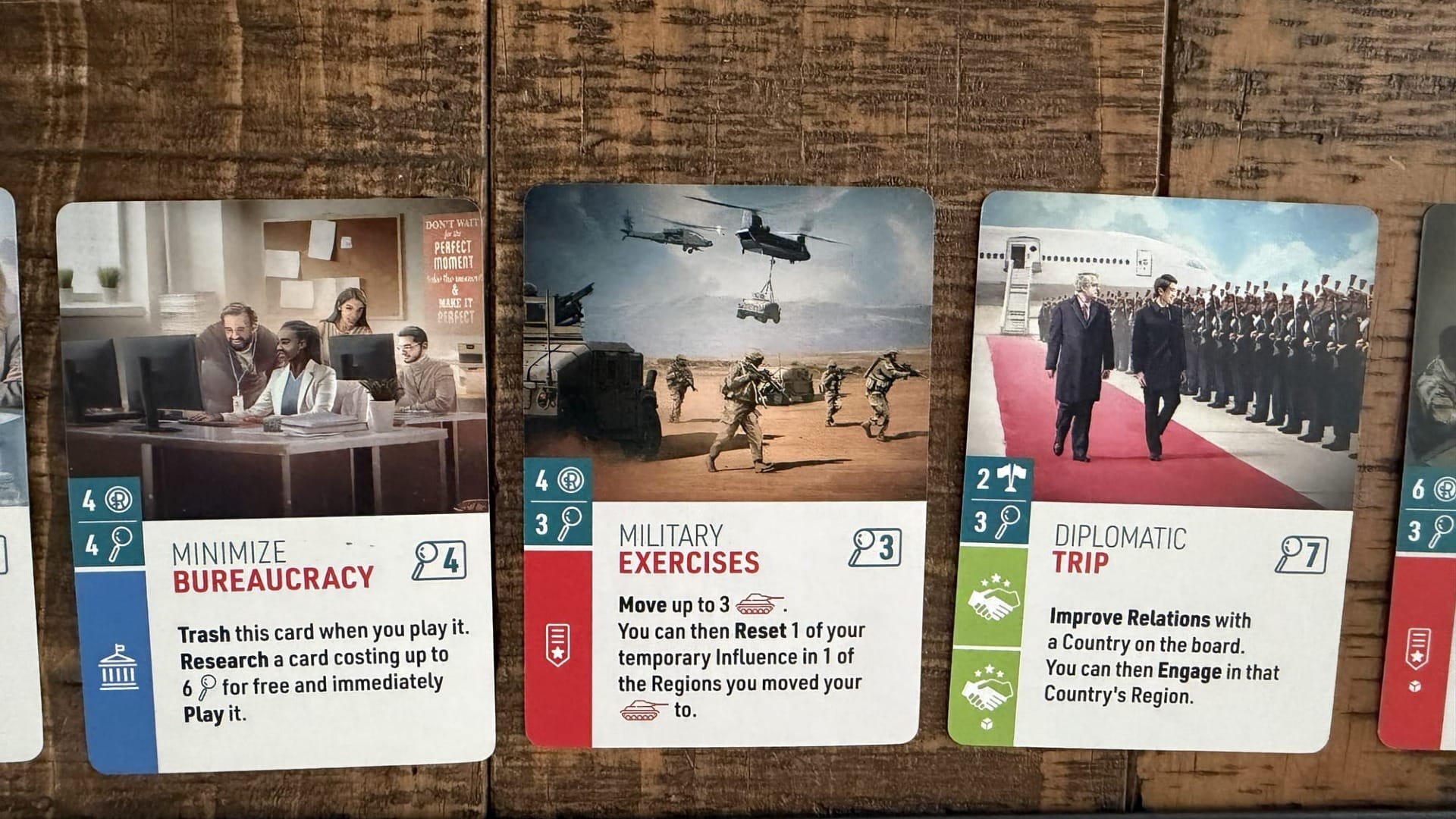
The game consists of six rounds. Each round you will draw six cards. Four of those cards will be used as your actions for the round, while the remaining two will be turned in for resources and power to purchase new cards at the end of the round. Each card will have printed on them one of eight actions, such as making a new ally or building a military base in an allied country. Most of these actions will score you points or allow you to put influence cubes on the board. During round three and again at the end of the game you will score regions of the world based on who has the majority of influence in that region. At the end of the round you will be able to buy new cards to add to your deck of action cards. These cards are all an upgrade to most of the cards in your deck. When you buy a new card instead of putting that card in the discard pile like most deckbuilders, this card will go on top of your draw pile. This allows you a great way of ensuring at least a few actions that you want to take will come up in the next round. At the end of the game whoever has the most points is the winner.
The superpowers you play as all have some asymmetry to them as well. Russia is a raw materials power house and makes more oil than any other power. The USA in the meantime is much more well rounded and self sufficient than any other power. Besides material wealth, most powers also come with some bonus way to score points at the end of the game. China wants to invest in as many countries as possible and will get some bonus points for doing so. USA wants to have influence: if they don't have a majority in a certain number of regions during scoring they will actually lose points. The bonus points generally only amount to 8-10 points, but in a game where the average score I've seen is in the low 100s that is still a significant number of points. This can also be a minor drawback as the game does kind of push you down a specific strategy with certain super powers, not only do you have the end game bonus but each super power has a few special cards they start with that also push you into that strategy. While having a goal put in front of you as a new player is generally good, this can feel limiting by the 3rd or 4th time you've played a specific faction.
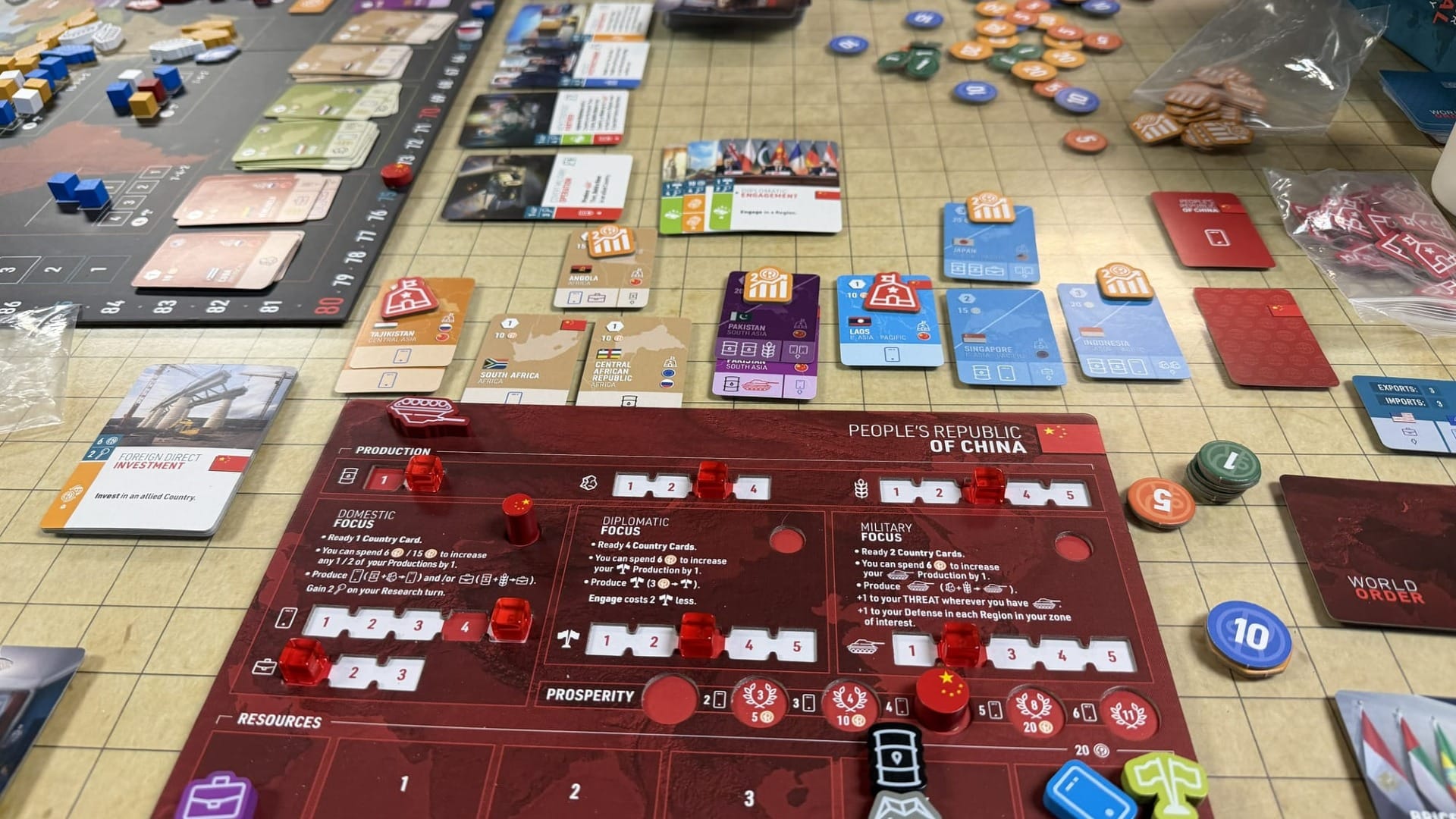
The game itself is presented well, with good artwork, double layered player boards, and nice wood pieces. There are deluxe versions of many of the pieces available from Hegemony games that also look nice, but I do not have those and honestly the base game is nice enough that I don't know why I would upgrade.
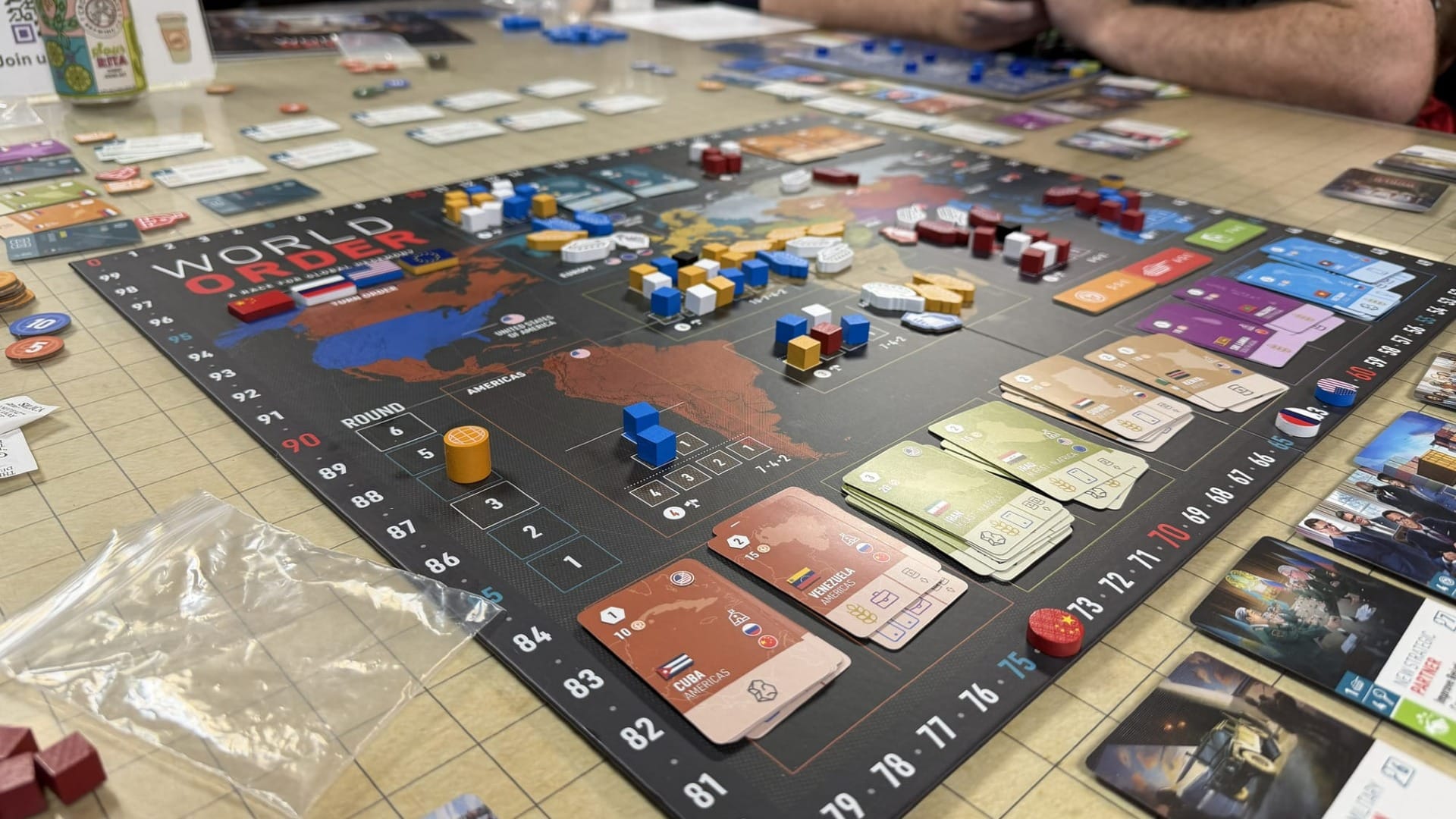
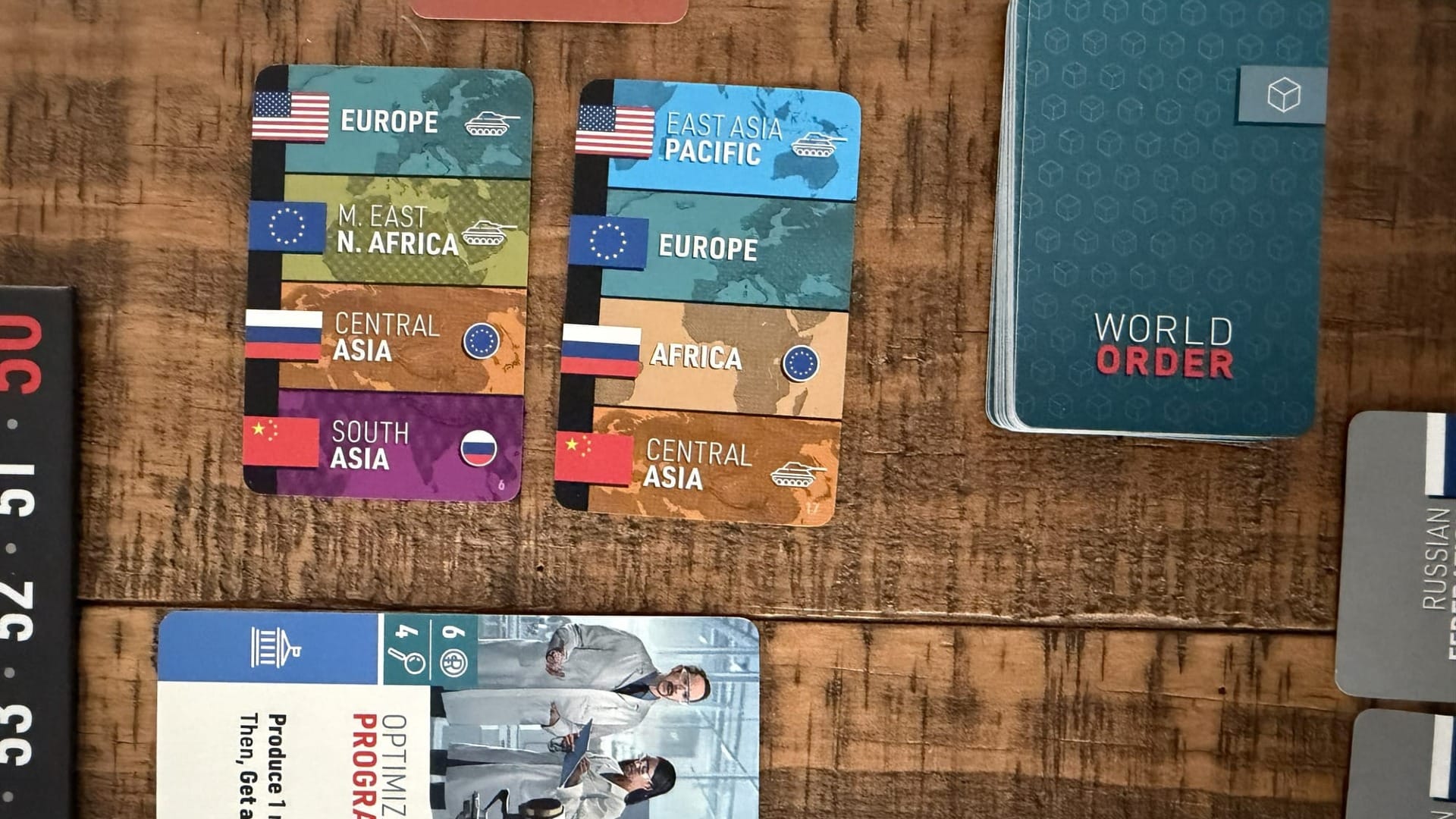
The standout aspect of this game is the theme. I love a good theme in a game and believe that a good theme can elevate a good game to a great game. World order comes through; every action feels impactful and relevant to world politics. While making allies is important there are some who won’t ally with specific super powers, Cuba for example will not ally with the USA. Same with building military bases, just because they are an ally doesn't mean they will allow you to build bases there, only specific allies will. While the game is all about having a majority of influence in regions of the world, your chosen faction will also give you zones of influence where keeping other super powers military out of plays an important role. All of these are very well researched, the thank you page in the rule book has more doctors in it than many hospitals, and adds a layer of polish that isn’t in many games.
One thing to keep in mind with World Order is that it is a four player game. It may say that you can play with only two players, but any time you play under the full player count you will simulate the other players with an automa deck. This works somewhat, putting influence and tanks on the board as if another player was there. But it feels incomplete using that deck. The player pushback and negotiation are nowhere to be found. Depending on the superpower not in play it can also benefit one of the players more than the others. Every time I played the game with three or less players, I was constantly reminded that this game is designed and balanced for four.
The major complaint I have about the game is that it can feel a little long. Each game I played averaged out to around 3:30 hours. While this might not be super long compared to other heavy strategy games, I always felt around the 2:30 hour mark was when the game was getting to the end only to play another hour. This is felt even more as the first few rounds of the game don't feel as impactful. You are mainly just getting new allies and adding relatively few influence cubes to the board.
World Order
Great
A great use of theme and interesting deck building highlight this game over many others.
Pros
- Great Theming
- Interesting Deckbuilding
Cons
- A little too long
- Not great at under 4 players
This review is based on a retail copy provided by the publisher.