The UFC is in a strange space right now, and that’s putting it lightly. The sport has been co-opted by wretched excuses for human beings, cheating, racism, pay, union busting, insider-betting, media-banning, medical issues, more cheating, soooooo much drugs, murder plots, and politics has been interlaced into so much of it that hardcore fans like me are starting to move away from the sport they’d watched for decades. While we collectively groan at the overgrown toddler activity gym hanging over the White House lawn, paid for by $70 million of your tax payer dollars, there is one consolation prize amidst all that awful:
At least the game is good.
UFC 6 is the latest installment from the team at EA and I’m very happy to report that, in many ways, it lacks the spectacle of whatever infectious disease the UFC currently has, instead focusing on solid gameplay, improved mechanics, and a better understanding of what makes for a compelling game overall. Instead of merely trying to emulate or approximate the UFC, it embraces it and harnesses it. After years of incremental updates, half‑steps, and systems that never quite fully gelled, UFC 6 finally lands on systems that feel aligned with what combat sports is all about – speed, timing, threat, and a smoother growth from rookie to fighting world phenom. It hits the best parts of what players want out of a good battler, while shedding some of the complexity that stripped away the fun. Let’s step away from the real-world UFC and into one where it was all a lot more fun.
The biggest shift that UFC 6 brings to the octagon is the way it handles overall momentum. In the beginning, your fighter needs a barrage of strikes to do damage, progressing to something that feels purposeful. It’s not the flash-knockout nonsense of earlier games, but a more grounded sense of strikes having weight. A probing jab, a snappy cross, and that meaty overhand strike all feel very different, and your opponent will feel it too. The animations are cleaner, transitioning in a way that is more natural. The recovery windows are readable, making the game better for players who spend the time to learn the science of it, rather than rewarding button-mashing your way into accidental knockouts. It’s the first time that I’ve felt something I’ve said about martial arts my entire life of training – fighting is a conversation. Short sentences, long sentences, and punctuation that occasionally ends in an exclamation point, but a conversation just the same. It means counters matter, distance matters, footwork matters, and finally, grappling doesn’t feel like a cheat code.
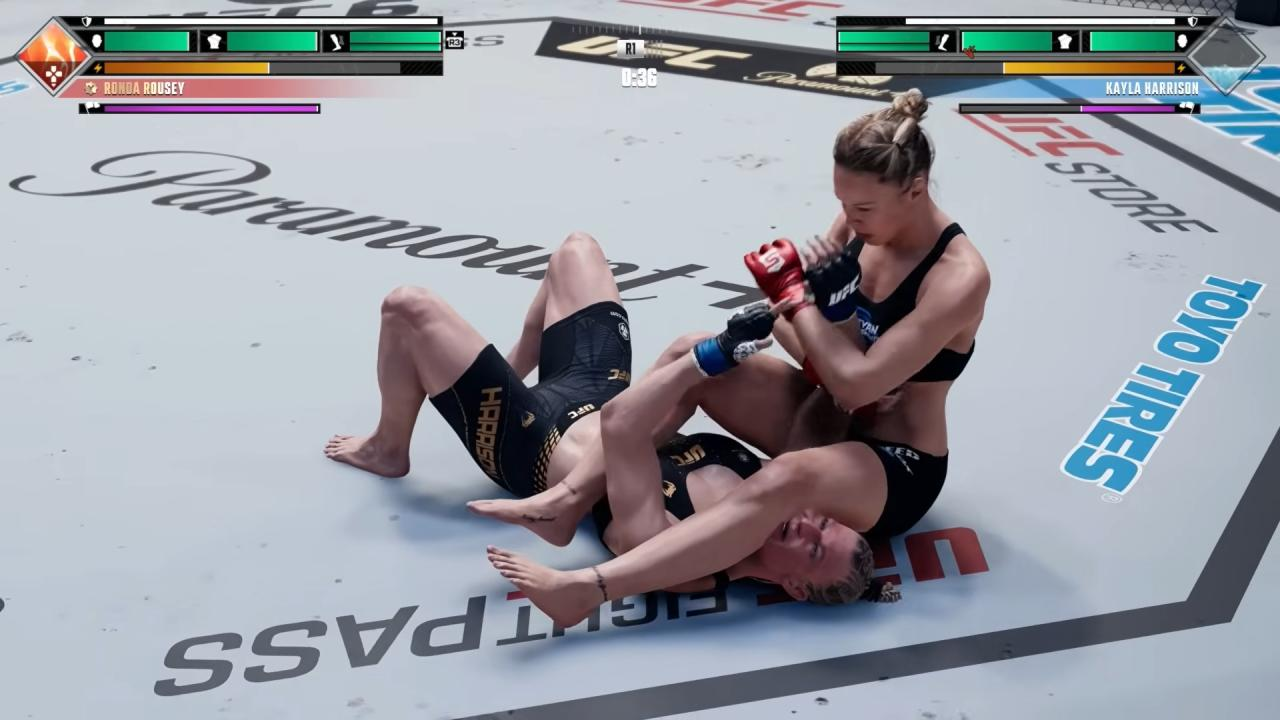
I’ve spent a full five games prior to now trying to figure out how grappling could be improved. We don’t need to burn a hole in our palm with spin moves, complex stick and button presses feel more like memorization than movesets, and strange box-closing UI elements aren’t it. This new hybrid system feels like a great blend of everything we’ve seen before. You can recognize your opponent’s movements and react, you can take corrective or aggressive action, and you can use the tools you’ve unlocked and trained to make groundwork feel like you have a solid chance, even as a striker, and without turning into some tortured minigame.
My favorite improvement is the work the team has put into the career mode. Or should I say career modes, plural? The as-labeled Career Mode returns with a stronger sense of progression and identity, with a little more under the hood than before. It’s incremental, yes, but social media, hype, sponsorship, and the occasional injury feel more like a light storyline, with a slightly tighter training loop. It still results in making stars turn into more stars for stats, but there are fewer of them, and they mean more. This is an area where less is more actually applies.
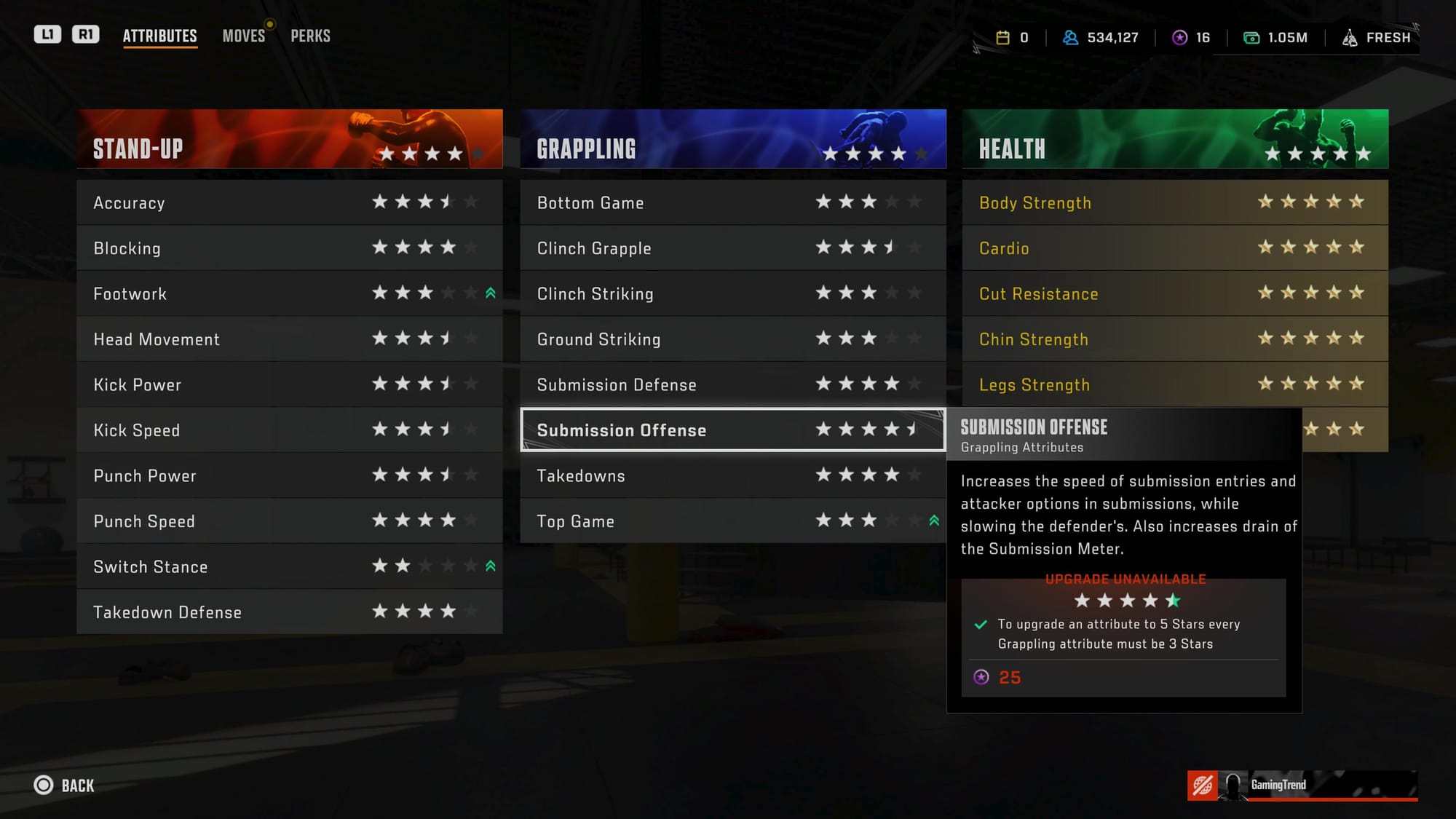
The real win is how the game lets you shape a fighter instead of just leveling one. You can build a pressure boxer, a rangy kick specialist, a clinch monster, or a submission opportunist, and the systems actually support those identities instead of funneling everyone into the same outcome. Yes, by the end, you’ve built somebody who can probably do just about anything, but the moves you’ve earned under the hood are probably very different. If you are spending your time on the mat, don’t expect that jump spin hook kick unless you go out of your way to bring in a trainer to teach you, and then you spend time throwing it enough to make it viable.
The second career mode is one that follows a fighter named Chris Carter. Chris Carter’s career is a fully-scripted rise from somebody in the shadow of his wrestler father sweating in a relatively unknown gym to a title fighter who just might have a chance at taking it all. He and his training partner, Danny “The Dagger” Lopez, both work hard to get their shots in the UFC, but both of their opportunities end up collapsing thanks to some poor youthful decision-making. It’s up to you to help Chris fight back from a serious injury to claw his way back to the top. It’s a great little addition to the formula, giving you a bit more context to your simulation rather than just the traditional career mode we’ve had. A touch of that Rocky Balboa underdog story that makes you root for the outcome more than just giving a walking stat-stick a name and walkout music.
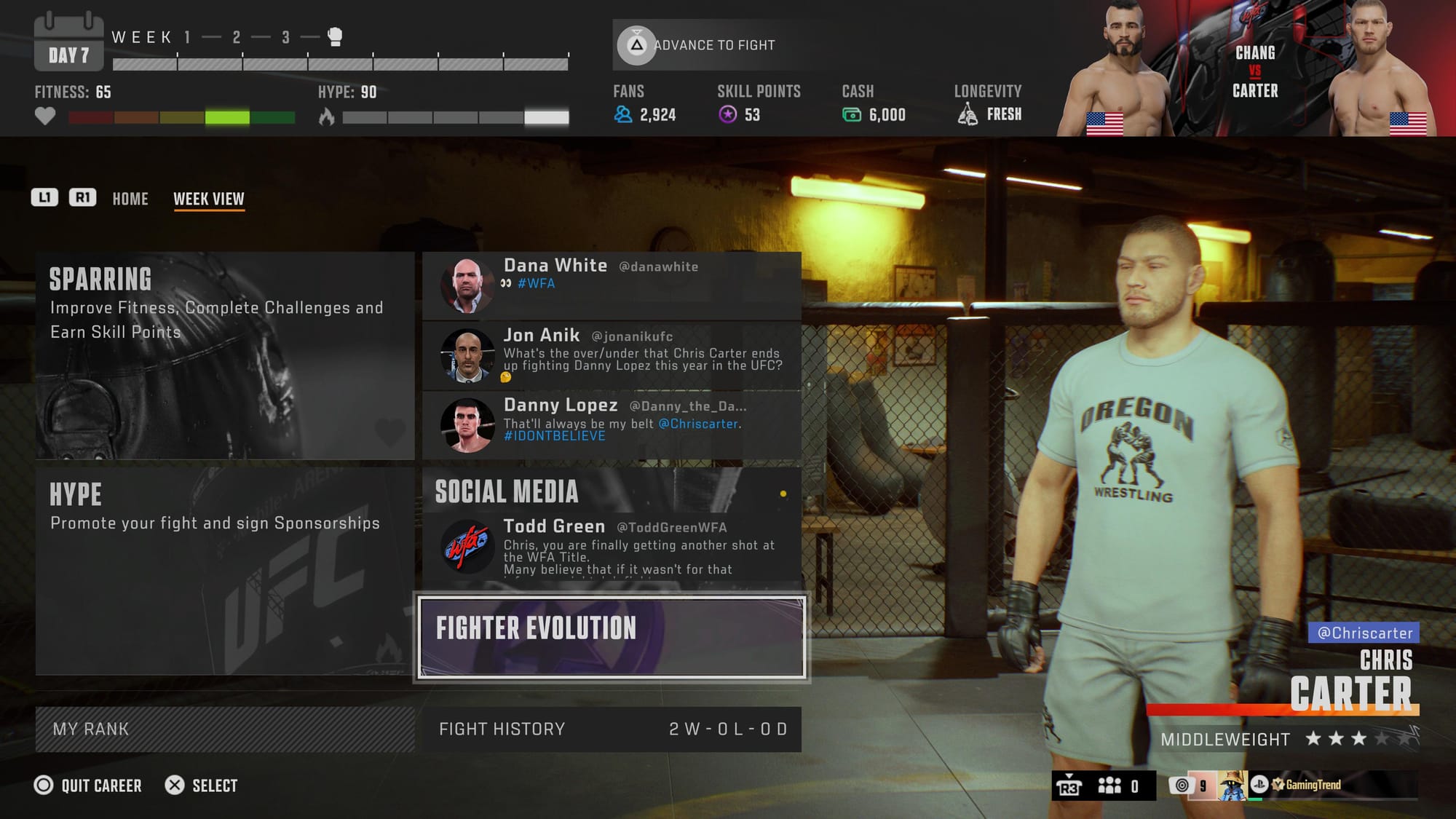
In between fights, you’ll have back-and-forth social media beefs, advice from your coach, and occasionally decisions to be made. When you choose your next fight, you’ll also decide how long a training camp you’d like to negotiate. The longer the camp, the more of a slice out of the profits your gym will take to train you to be ready. These sessions are where you gain your skills, so I’d recommend you spend the time. All of these functions the same as the other Career Mode (minus the story elements), but it didn’t bear repeating, so I’m covering it here.
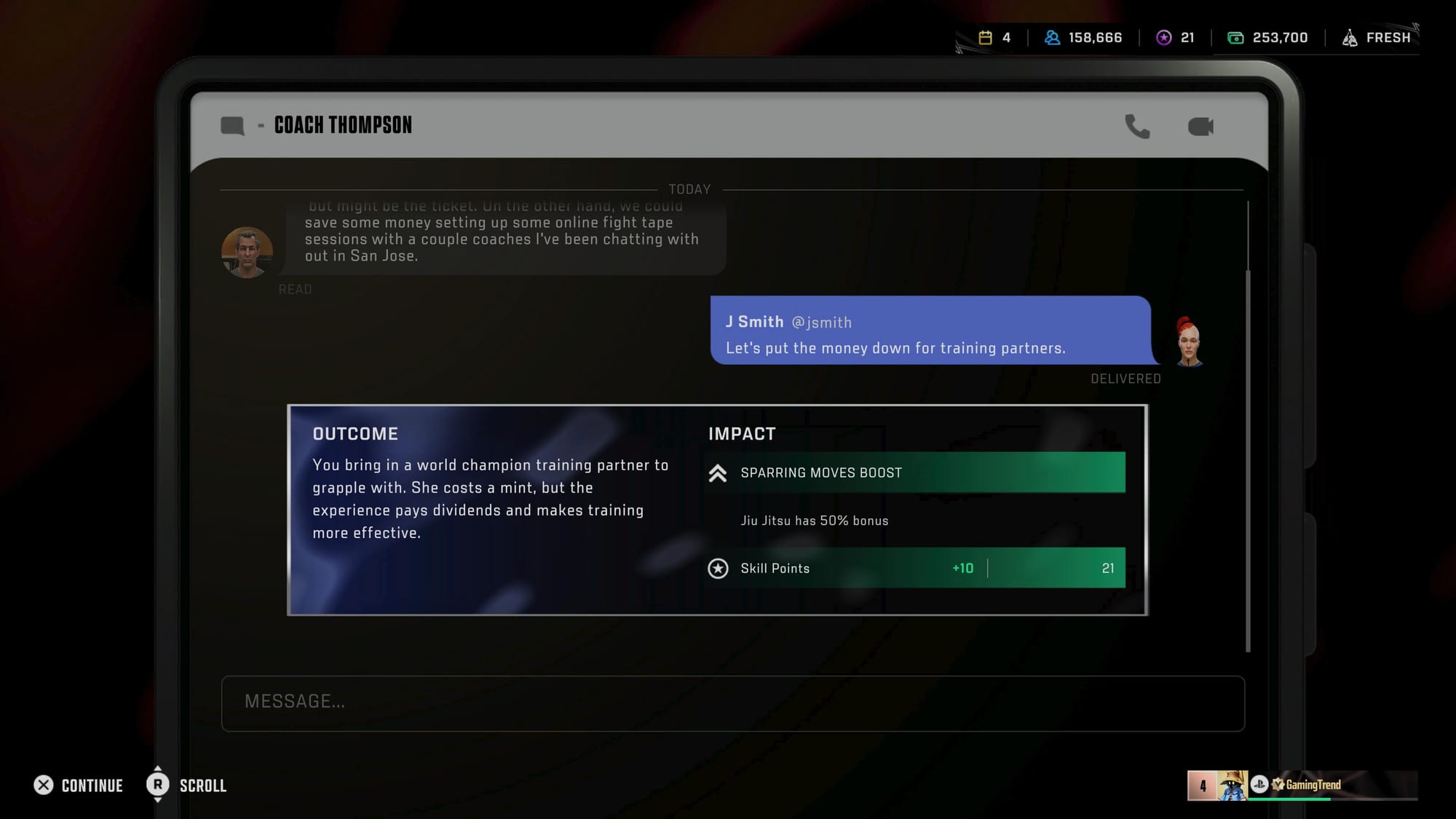
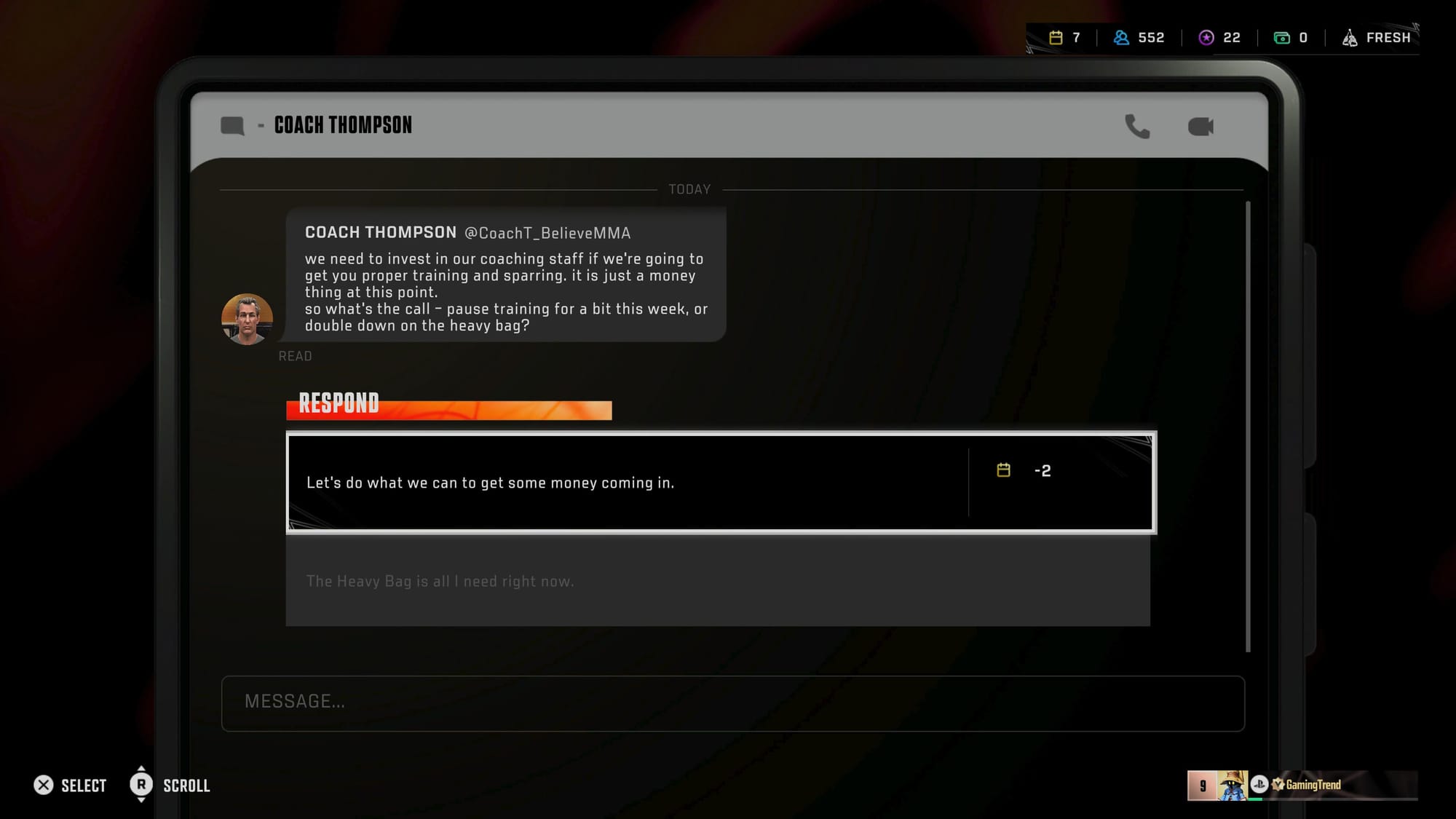
At your training camp, you’ll have seven days to use how you see fit. Heading into sparring, you can Box, do Muay Thai, Wrestle, hit the mats in Jiu Jitsu, or rock the heavy bag. Unfortunately, you’re working at a gym that has none of those things, so you’ll have to earn some cash to hire coaching staff to do just about anything. The bag, on the other hand, is where work gets done, so bang on that until you’ve got some income. Each type of thing takes a certain number of days. The first level is usually 3 days, the second level is 4, and the third is 5. When you tackle these sessions, you’ll be given a handful of training tasks to accomplish, such as landing certain combinations, throws, or techniques. Getting those done during the allotted time will net you a letter grade between D and A. If you manage to ace the whole thing, you can also simulate that instead of doing it again next time. You won’t get as much improvement to your overall health and cardio, but you will get all the training points to allocate, so it’s a tradeoff of time vs. repetition. Just be mindful, if your body conditioning is low, you’ll take a risk of taking an injury to your cardio, body strength, or leg strength if you simulate a sparring session, so I’d recommend getting it out of the red before you do any of that. We’ll talk more about injuries in a bit.
In addition to sparring, you can also study up on your opponents by watching tapes. There are three levels of these, imparting information on their attributes, top moves, and tendencies in the ring. You can also, once you have the cash, unlock new kicks, punches, and submission moves to add to your arsenal. Your more advanced moves, like spin hook kicks, Superman punches, and other flashy moves, are tucked away in here.
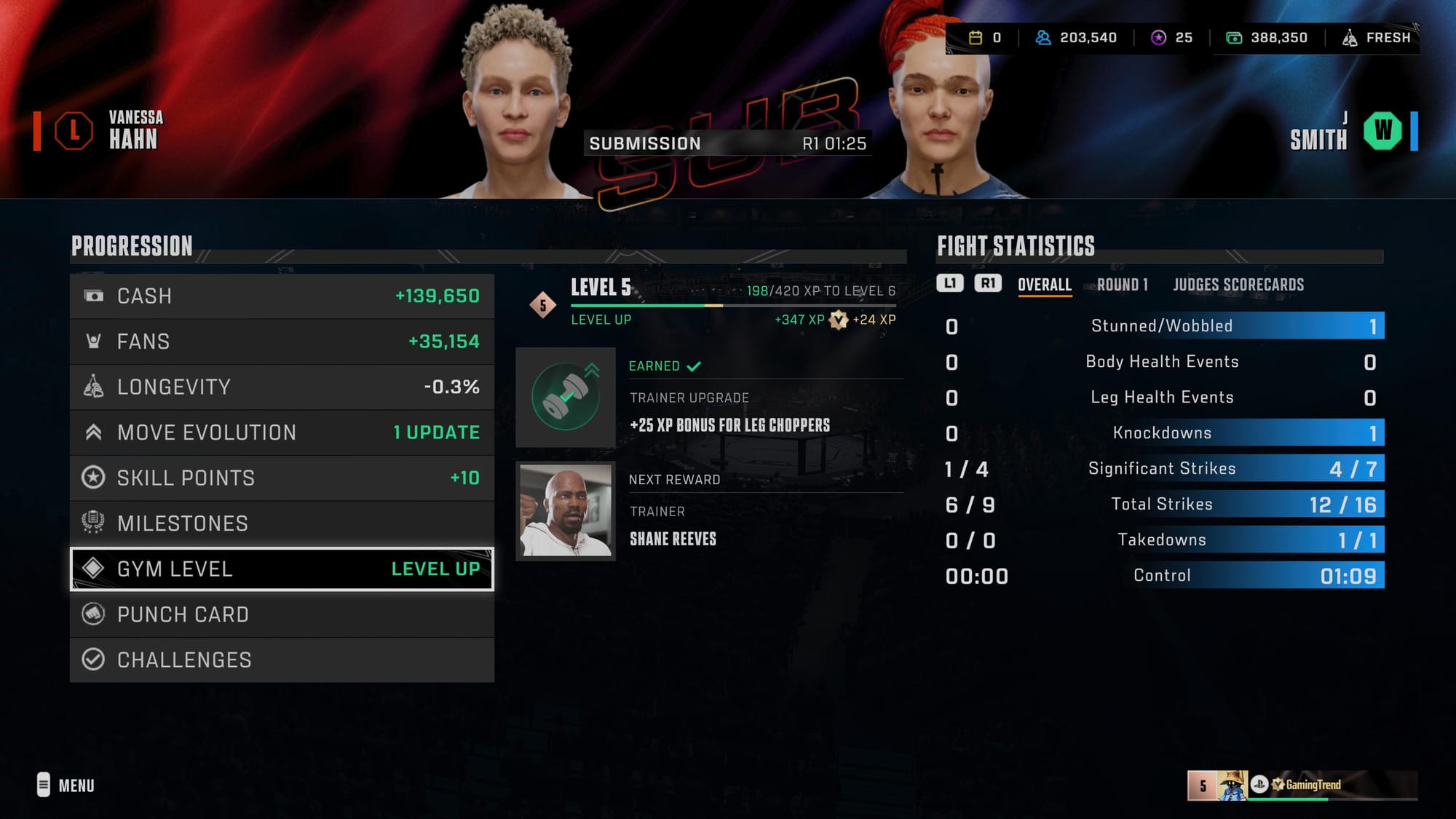
Everything you do in the ring or outside of it will net you fans, skill points, and (for most things), cash. Sometimes you’ll get opportunities to do things outside the ring to help raise one or all of these. For example, you might get into a friendly rivalry with another gym and decide to spend some precious training time instead of running a car wash where the winner gets all the bragging rights, but a local charity nets all the profits. That’s a great way to build goodwill and fans, at the cost of some cash and time. There’s always a chance you slip and twist an ankle or something, so be mindful of how much time you have to heal before you step in the ring.
Injuries happen. Even the best fighters in the world occasionally roll an ankle or catch an errant elbow that cuts an eyebrow. When it happens, you can either rest up for a certain amount of time to heal it, or spend some money (if you have it) to apply bandages, hire a doctor, get a plastic surgeon, and more. Everything costs a shocking amount of money, but it does restore any of the training time you might have lost, so it’s often worth spending the cash if you can afford it. If not, rest and recovery take precious time. Additionally, you might take a “permanent” hit to a particular stat with an injury. These aren’t actually permanent, and can be resolved by spending training points on the affected attribute to restore it to normal once more.
As you prepare for your fight, you’ll have to balance out your week. Spending time on social media is time not spent training. Hyping your fight is time away from the ring. Sometimes you’ll spend your time on a high-value level 3 training session and only have time for hype anyway, so spending a week posting to social media, or three weeks on a Local news at 6 Interview session, or even providing a gym tour can be valuable time spent. Those can raise your popularity and fight hype, which results in more dollars and fans coming in. It’s always a balancing act.
Speaking of dollars coming in, you’ll want to reach out to sponsors. Sponsorships appear as opportunities as your popularity grows, often asking for you to speak up on social media or do a visit for some sort of appearance in return for some extra cash headed your way. Given how expensive training can be, some extra income in exchange for hosting rib night at the local bar might be worth the time. Again, it’s up to you to figure out what works best for you.
The problem that has existed for the past 6 games in a row rears its head. The Sterno bums you hire to be your sparring partners as you start your career are the fragile little flowers you’re expected to use as a partner when your power is overwhelming. It becomes remarkably easy to break them, leaving them unusable for the rest of your training camp. Sadly, if there’s a way to hire a new one, I can’t find it, or it’s severely bugged.
As you grow your fighter, you’ll also be able to add perks to their repertoire. You can have up to five of them, though the last three are gated behind becoming a UFC fighter, hitting ranked status, and the last one being reserved for the UFC champion. There are 30 total, and they’re unlocked with skill points. These can improve your ground and pound, stop incoming damage, improve your counterattacks, and much more. They’re optional, but they can help your fight dramatically.
I really enjoy the story modes and creating my own fighter to step into the ring. When my fighter tangles with the top tier, I do alright. That said, the power envelope problem continues for the sixth game in a row. When you pick a big name and put them against a big name, they don’t behave in a way that is rooted in reality. Because everyone recognizable is effectively “Superman” or “Wonderwoman”, they don’t want to go down like Glass Joe, so they suddenly become nearly indestructible. A fighter with a face that looks like hamburger, where the commentators are screaming that the doctor is about to stop the fight, continues to take you apart. At the end of the final round, they’re tap dancing around with 85% of their overall stamina pool intact and completely unaware that they’re severely hurt and need immediate reconstructive surgery. Nope, injuries make no difference whatsoever. You’re 100% or 0%. Having had my orbital broken in the ring during my time, I assure you, the fight dynamics change dramatically. Having broken my big toe during another fight, I assure you, it affects your movement. Only a handful of shin-on-shin moments and you’ll discover a level of pain you’ve never known. Injuries can end a fight in UFC 6, but in the real world, I assure you that they can change the dynamics of a fight in motion just as profoundly.
One area that has gotten a lot of polish is the overall graphical package. UFC has always been a very pretty game (well, unless you’re a woman – it’s better this year, but the faces are still kinda rough for the ladies), but UFC 6 is really starting to nail the presentation side of things. The lighting is more dramatic, and there seems to be better use of it. Camera angles feel more dynamic and seem to be in the right place nearly all of the time. Fighter likeness looks better than it ever has, but wow, do we have to talk about blood.
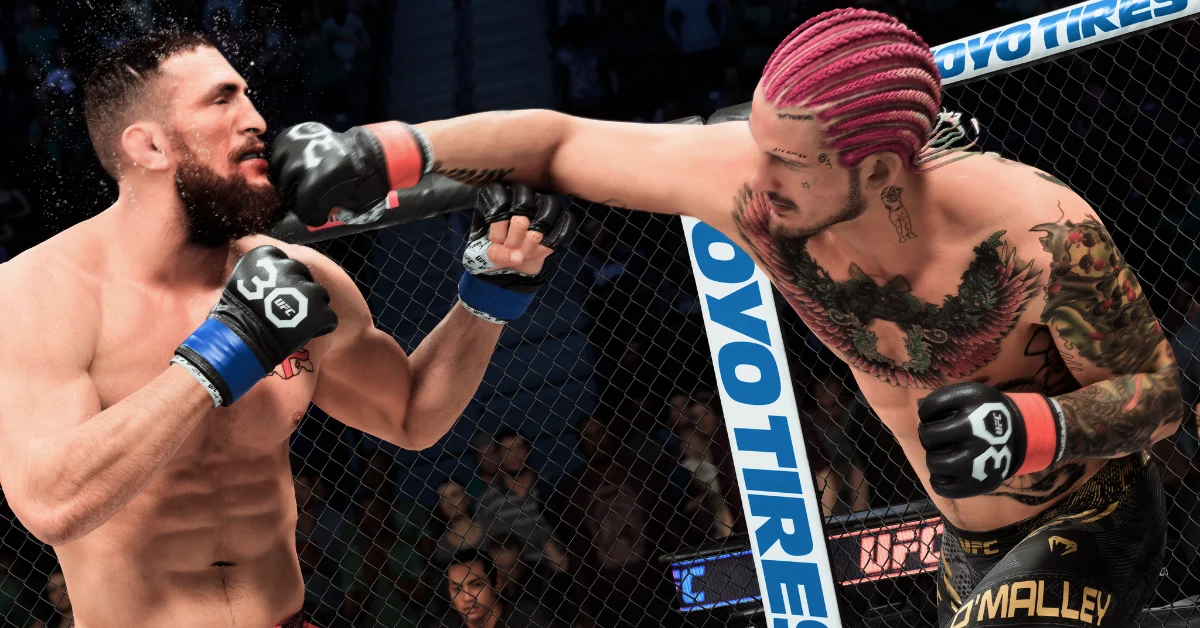
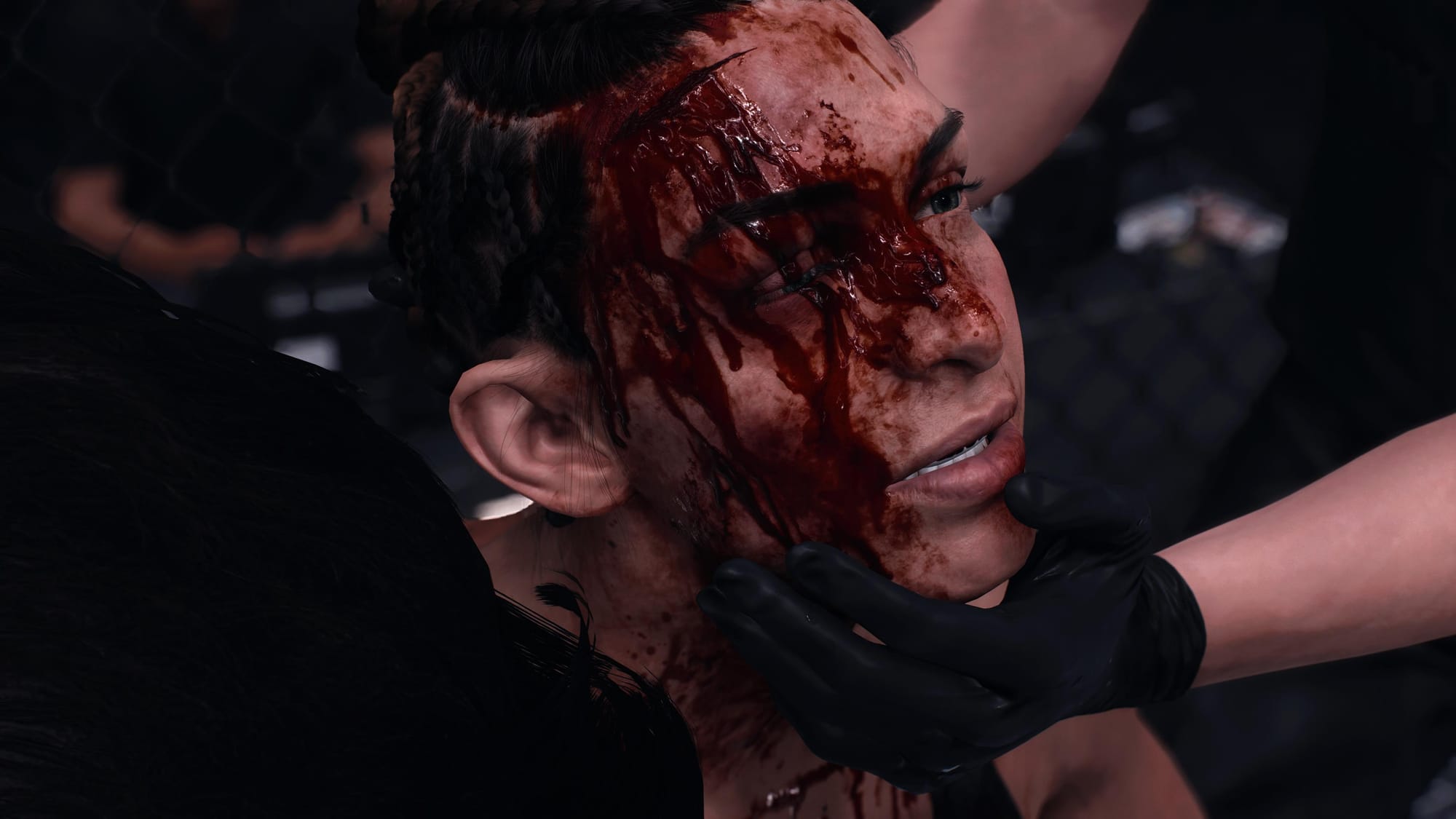
Martial arts is a brutal endeavor. You take a solid strike someplace soft via something hard, and there’s bound to be a gash and a whole lot of blood. The damage modeling on faces is the best we’ve ever seen in any combat sport game to date. An elbow to the eyebrow results in a meaty gash that pools blood and carries it down the face and into the fighter’s eyes. (No stoppages for that yet, or that I’ve encountered anyway) Repeated damage adds purple bruising and deeper gashes and cuts. Over rounds, these can start to look like something out of a horror movie. Blood soaks the mats, and it gets all over both fighters as they end up on the ground. It’s visceral in a way we’ve not seen, while still staying rooted in reality. It’s not gouts of blood Tarantino style, but you’ll know that you’ve not only landed your strike, but you’ve done some real damage. I wish it mattered more, but visually it’s top-shelf.
While online play isn’t necessarily what I come to UFC for, I can already tell that the new pacing makes a difference in the way fighters step into the ring. Fights feel less like running face-first into a blender and more like careful “conversation” as I described earlier. Stepping into the middle like two fighters locked in a phone booth still happens, but most people are more about targeting and striking surgically instead. It’s an improvement made all the better by what appears to be a layer of polish to the netcode as well. If online fisticuffs are your jam, you’ll be happy to see the improvements.
I called UFC 5 a “Winner by split-decision,” and thankfully, the cards aren’t shaking out that way here. There are still some legacy issues, such as commentary that loops a little too quickly or frequently, the occasional animation wobble or fighter that crumples unnaturally (hilariously?) after a knockout, and an AI that occasionally swings between genius and idiot, but none of it derails the experience. Yes, the big names vs. big names stuff is still wonky as described above, but with fighters probably baking into their appearance contract that they can’t be easily knocked out or have certain stats, who knows if that’ll ever change. What’s different here is that they feel like rough edges, not structural cracks. While the real-world UFC faces its own moral and structural crisis, at least we have the virtual one to remind us of far better times.
EA Sports UFC 6
Excellent
While the real UFC struggles, UFC 6 rises to the occasion. Better across the board, it delivers a solid fight-of-the-night performance. Now let’s talk about those damage stoppages…
Pros
- Damage modeling is amazing
- Far better balance on the ground
- Upgraded animations and overall presentation
- Career modes are greatly improved
- Better sense of progression
Cons
- Some bugs remain
- Your coaching staff still doesn’t upgrade?!
- How does damage still not matter?
This review is based on a retail PS5 copy provided by the publisher.