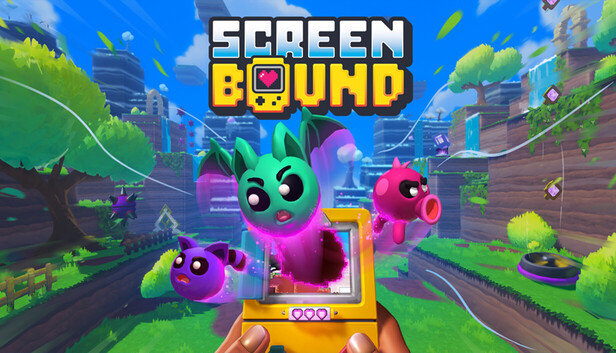
Scrolling through socials at least a year ago, I came across an amazing video game. From the clips, it looked like the player was in first-person, playing a game on a Gameboy-ish device (Qboy), while also jumping around in the game world. Whatever was occurring in the game world, was occurring on the device as well, and vice-versa. It looked super cool, and every time I thought of looking up the name, I forgot in the midst of whatever I was doing.
Until now. At Summer Game Fest, I saw this game at a station. Immediately, I knew I had to try it, especially as it had somehow slipped through my invitations. Thankfully, there was a break in the action and time for me to grab a controller, and let me tell you, I’m glad I did. Screenbound is a game name I’m not likely to forget, and as soon as it releases, I’m going to play so much the battery on the Qboy is going to die (it doesn’t do that, I’m being facetious).
Screenbound has you finding the Qboy, splitting reality, and having to play your way back home. It’s a simple premise, but the game itself is anything but. The Qboy presents an interesting concept – dual worlds, with the one you see on the Qboy and the one surrounding you existing at the same time. It’s an idea I’ve never seen beyond Ratchet & Clank: Rift Apart, and even that isn’t in the same zip code as Screenbound. This is an incredibly unique game, which is why it won one of our Best Of Summer Game Fest awards.
Playing Screenbound is somewhat trippy. What you see on the Qboy in first-person view and in 2D is occurring in the 3D world you occupy. Jump on the Qboy, jump in the game world, strafe right on the Qboy, strafe right in the game world. It’s a wild invention, and one that never got old as I further investigated this “5D” video game.
The beauty of Screenbound lies in its mechanics. Certain hazards or pathways exist in each “dimension”, and separately. For instance, the spike mines that float around in the 3D world aren’t present on the Qboy. Therefore, you’ll have to pay attention to your hops and ignore what's happening on the Qboy. Similarly, there are doors in the 2D world that you can enter that look like a plain wall in the 3D world. It’s a game of splitting your focus, and it works really well.
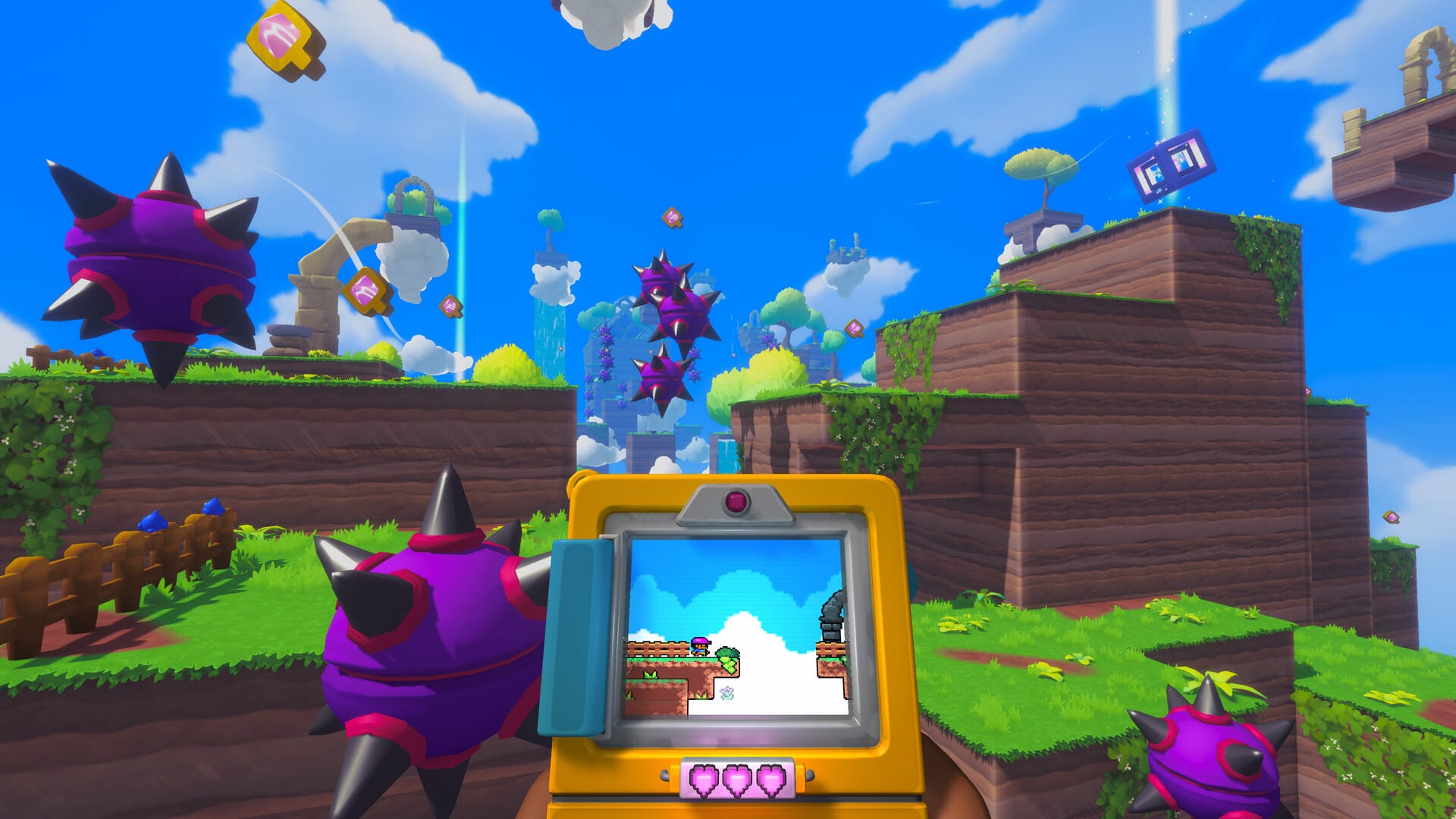
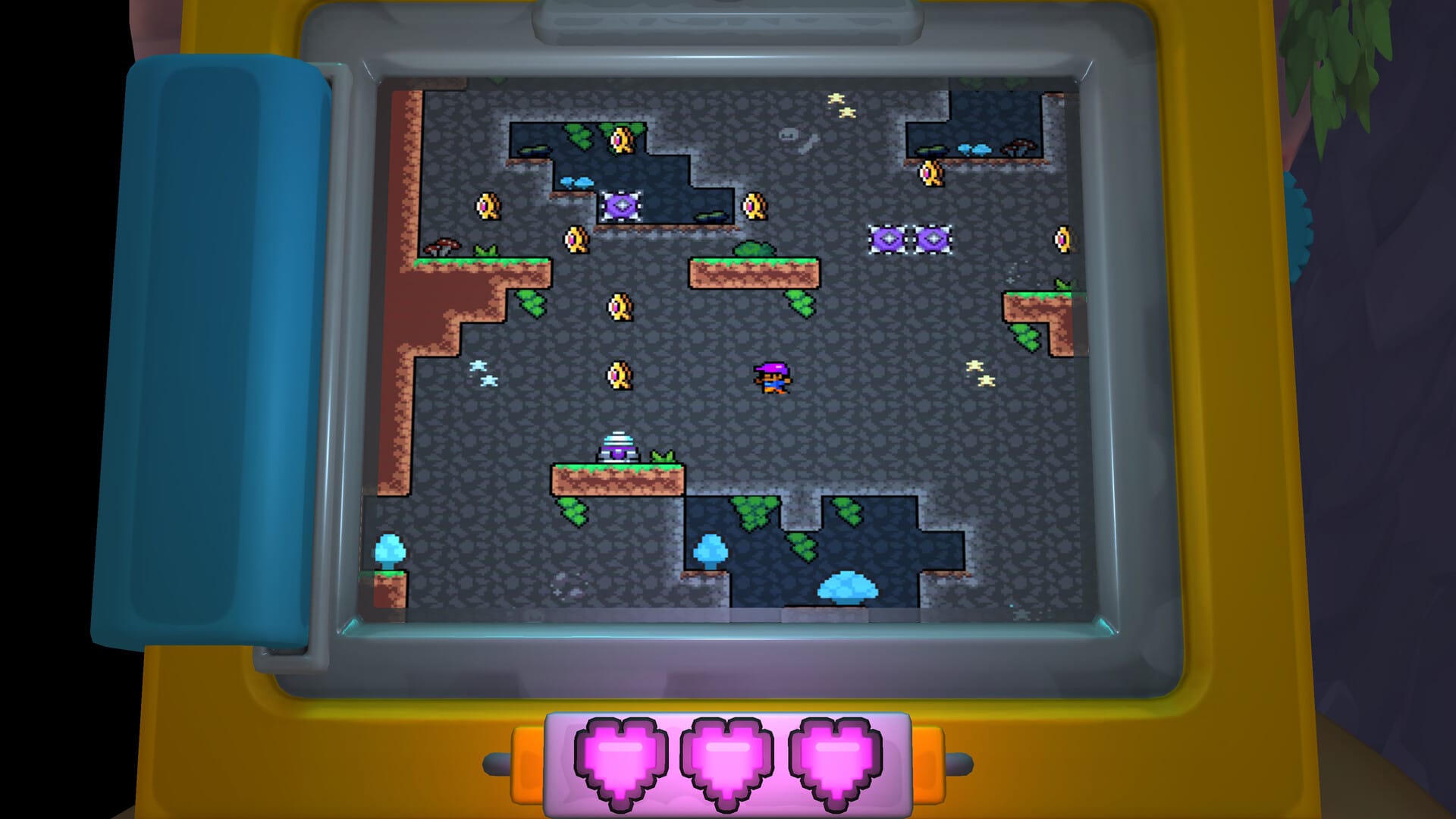
This makes the platforming quite fascinating. You’ll see coins in the 2D world that aren't visible in the 3D world, but you need to dodge hazards in the 3D world that don't exist in the 2D world. There are also jump pads to hit, but of course, with floating blocks sitting in different locations, the Qboy isn’t going to help you. My biggest concern was if each world would be competing against each other, playing as two separate games needing their separate focus. That hasn’t been an issue; I’ve been able to concentrate on both as a whole rather than two halves.
There are also specific moments where you exclusively play in the 2D world. In these short levels, Screenbound functions just like a regular platformer. It’s a neat idea, and a lot of times the only way to grab one of the three nodes needed to fully complete a level. These nodes aren’t required to exit, but completionists will want to find them all. You’ll probably have to jump back in several times, as backtracking tends to be tough with how the game is built.
I got the chance to experience one of the bosses, which resided in the 2D world. You were able to enter this last section of the current “cartridge” (there will be multiple cartridges making up multiple worlds to explore) through an arcade cabinet in the 3D world. Fighting the boss was simple.. The creature would charge at you, and to dodge you’d jump up to blocks to get past it. Then, the boss would fire a few bombs at you, which you pick up and throw at him. It’s fun, and I look forward to seeing how these fights evolve as you get into the later stages of Screenbound.
My final bit of the demo involved a challenge level the developers added to the formula. These will be really tough platforming areas, and are designed to kick your butt in a way the main game doesn't. It's exciting to see there’s more here than just the regular game – even if that has been stellar so far.
A lot of this preview probably sounds confusing, especially when speaking of worlds within worlds; it’s almost Inception-esque. Trust me when I say this is a super cool idea, and I’m glad to have finally gotten my hands on it. You can too, as the demo is now available on Steam! Wishlist it while you’re there. Screenbound will release on September 10th, and launches on PC, Xbox Series consoles, and PlayStation 5.